Quantcast

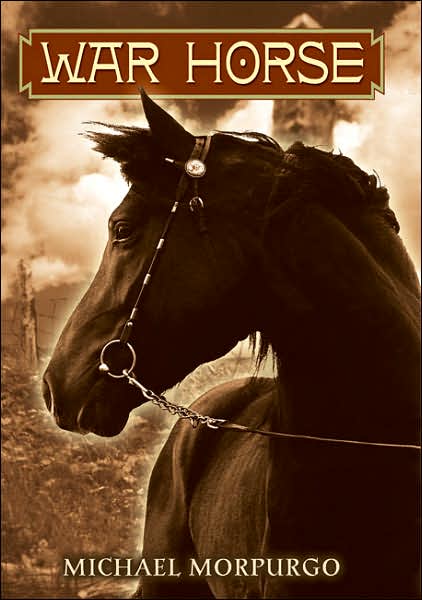
War Horse by Michael Morpurgo

War Horse by Michael Morpurgo is told from the point of view of the horse, who is sold at auction to a drunken farmer and is written for a younger audience, grades 5-8.  In this coming of age story, the young boy Albert Narracott and his Red Bay Joey grow up together and the bond they create lasts through a number of obstacles.  Joey is sold and is off to war — The Great War — to work as a cavalry horse.  Like soldiers in war, Joey must learn maneuvers and be conditioned to fight, which really translates into unlearning farm work and learning how to get his rider safely through the enemy lines.  Morpurgo takes Joey and his readers on a harrowing journey through France where much of the battles take place, and like soldiers, horses were captured as prisoners of war.

“All around me, men cried and fell to the ground, and horses reared and screamed in an agony of fear and pain.  The ground erupted on either side of me, throwing horses and riders clear into the air.  The shells whined and roared overhead, and every explosion soon seemed like an earthquake to us.  But the squadron galloped on inexorably through it all toward the wire at the top of the hill, and I went with them.”  (page 59)

The anthropomorphism of Joey is stunning in this novel.  Morpurgo really understands how to create an animal character who seems more like a human being.  Joey struggles with war fatigue, fear, loss, and a whole set of other emotions, but while away from Albert, he holds onto the love and comfort of his farm life.  Along the way he is treated well and mistreated.

“I found Topthorn was always by me and would breathe his courage into me to support me.  It was a slow baptism of fire for me, but without Topthorn I think I should never have become accustomed to the guns, for the fury and the violence of the thunder as we came ever nearer to the front line seemed to sap my strength as well as my spirits.” (page 44)

What more could readers ask for in a young readers novel about WWI?  A champion horse who earns an Iron Cross and saves his riders from certain death, but who fears and loves just as the young boy he knew did, just as everyone does.  Joey is a hero in more ways than one, and his courage is something that all young readers could learn from, especially how Joey overcomes his fear of strange lands and people.  Additionally, he strives to do his best even when he doesn’t want to do what the humans have him doing and even though it is painful to go on without food and shelter.  Survival is paramount, and Joey not only looks out for himself and his riders, but he befriends and cares for other horses in the regiments.

War Horse by Michael Morpurgo is stunning and engages readers early on in the struggles of a young horse who is taken from his home and thrust into WWI in 1914.  There are images of war, but there is nothing too gruesome that parents should worry about young readers.  On more than one occasion, readers will be moved, and chests will be full of emotion and tears will well in their eyes as Joey relates his story.  A great way to learn about the harrows of war without delving too deeply into the politics or military strategy, while at the same time demonstrating its far reaching impacts on non-military personnel, soldiers, and horses.

This is my 1st book for the 2012 New Authors Challenge.


This is my 1st book for the WWI Reading Challenge.
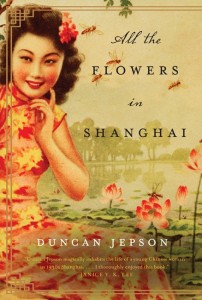
 

All the Flowers in Shanghai by Duncan Jepson

All the Flowers in Shanghai by Duncan Jepson is set in 1930s Shanghai and is told by Xiao Feng as she writes down her past, beginning with the courting of her beautiful sister who has been spoiled by her parents.  Her mother’s ambitions lie with her sister, and Feng is on the sidelines watching her sister be paraded in front of other families with prominence in society and wonders where their ambitions will lead.  The prose is easy to read and captures attentions easily with its bright colors and very descriptive settings, but in many ways, the characters initially seem cliched with the older sister demonstrating her importance over her younger sister and treating her poorly and the younger sister simply accepting the treatment.  However, this is a story about Feng and her relationship with her grandfather as much as it is about the ambitions and corruption of a family and its members when disappointment strikes.

“I hope that what I have written in these rough pages of cloth will show you how we were so bound to tradition and history that we could not see what was so obvious and that though I have always loved you, I never understood that love is nothing unless it is expressed.”  (page 2 ARC)

Feng is very naive about the world around her and the traditions that families use to live their lives, but some of the fault for that lies with her parents and her grandfather who sheltered her from the obligations of women in Chinese society.  Her parents focused all of their attentions on her sister and her grandfather kept her in the dark about the realities of life and treated her more like a boy who would have any number of opportunities.  Jepson’s story is like many others about Chinese families with a naive young girl thrust into a married life she does not want and does not know how to navigate.  Feng is transformed into First Wife, and as such, she learns to command staff and even her husband as she holds the family’s fate of having a male heir in her hands.

Readers will see a desperate woman who wants to control her own fate by any means necessary, and unfortunately ends up transforming herself into a corrupt woman with little joy and many regrets.  Jepson’s characters are more like caricatures, with the overbearing father-in-law and mother-in-law, the pliable husband with no backbone, and the servant maid who does as her mistress tells her regardless of the consequences.  Jepson loses some of the pizazz of his writing once the bustling city streets and beautiful gardens fade into the background of the secluded Sang house; readers feel cramped inside the large home’s walls, much like Feng does.  In this way, Jepson has created a very specific atmosphere and controlled environment for his characters to navigate.

All the Flowers in Shanghai by Duncan Jepson is an engrossing tale that has been told a number of times, but his story will keep readers turning the pages.  There will be times when they will shout at Feng to grow up and stop being so naive, but at other times they will shake their heads as she makes regretful choices and begins to care about the most superficial things in life, abandoning the girl she once was.  Its a quick read, but there is a lack of depth in characters and the story seems like one that has been told several times.  However, it is entertaining and enjoyable giving readers a glimpse of a changing China.

About the Author:

Duncan Jepson is the award-winning director and producer of five feature films. He has also produced documentaries for Discovery Channel Asia and National Geographic Channel. He was the editor of the Asia-based fashion magazine West East and is a founder and managing editor of the Asia Literary Review. A lawyer by profession, he lives in Hong Kong.

Check out the other stops on the TLC Book Tour by clicking the tour host icon.

2012 Hopes

With the end of 2011, I’ve had time to reflect on the hectic year of work and blog and life changes.  I’ve had some good changes, but also some changes that have raised uncertainties and fears.  However, I’m looking forward to 2012 being healthier, wealthier, and happier.  I’m sure that changes will continue to happen, and I know they will with the blog in the new year.

So, as of 2012, I vow to adhere to the following:

  1. Review at least 100 books
  2. Continue to post about poetry and poets
  3. Offer giveaways, interviews, and guest posts
  4. Keep up with the Fearless Poetry Reading Challenge, National Poetry Month blog tour in April, and revisit the Small Indie Press Month.
  5. Read more books from my shelves
  6. Be more choosy in the review copies I accept, which likely will mean more rejections for authors, publicists, and publishers, but it can’t be helped.
  7. Find time to finish organizing my study
  8. Make time to write poetry, novel, or any other projects.
  9. Discover new ways to earn money from this blog (any suggestions are welcome)

What are your 2012 goals?

Mailbox Monday #158

Happy New Year!  Here’s to a happy, healthy, and fun 2012!

Mailbox Mondays (click the icon to check out the new blog) has gone on tour since Marcia at A Girl and Her Books, formerly The Printed Page passed the torch. This month’s host is the At Home With Books.

Kristi of The Story Siren continues to sponsor her In My Mailbox meme.

Both of these memes allow bloggers to share what books they receive in the mail or through other means over the past week.

Just be warned that these posts can increase your TBR piles and wish lists.

Here’s what I received this week:

1.  The Bungalow by Sarah Jio, which I received over the holidays.

2.  War Horse by Michael Morpurgo, which I bought with a gc to Barnes & Noble.

3. 11/22/1963 by Stephen King, which I bought with a gc to Barnes & Noble.

What did you receive?

130th Virtual Poetry Circle

Welcome to the 130th Virtual Poetry Circle!

Remember, this is just for fun and is not meant to be stressful.

Keep in mind what Molly Peacock’s books suggested. Look at a line, a stanza, sentences, and images; describe what you like or don’t like; and offer an opinion. If you missed my review of her book, check it out here.

Also, sign up for the 2011 Fearless Poetry Reading Challenge because its simple; you only need to read 1 book of poetry. Please contribute to the growing list of 2011 Indie Lit Award Poetry Suggestions (please nominate 2011 Poetry), visit the stops on the National Poetry Month Blog Tour from April.

Today’s poem is from Robert W. Service for the New Year; I hope everyone has a great 2012:

The Passing of the Year

My glass is filled, my pipe is lit,
     My den is all a cosy glow;
And snug before the fire I sit,
     And wait to feel the old year go.
I dedicate to solemn thought
     Amid my too-unthinking days,
This sober moment, sadly fraught
     With much of blame, with little praise.

Old Year! upon the Stage of Time
     You stand to bow your last adieu;
A moment, and the prompter's chime
     Will ring the curtain down on you.
Your mien is sad, your step is slow;
     You falter as a Sage in pain;
Yet turn, Old Year, before you go,
     And face your audience again.

That sphinx-like face, remote, austere,
     Let us all read, whate'er the cost:
O Maiden! why that bitter tear?
     Is it for dear one you have lost?
Is it for fond illusion gone?
     For trusted lover proved untrue?
O sweet girl-face, so sad, so wan
     What hath the Old Year meant to you?

And you, O neighbour on my right
     So sleek, so prosperously clad!
What see you in that aged wight
     That makes your smile so gay and glad?
What opportunity unmissed?
     What golden gain, what pride of place?
What splendid hope?  O Optimist!
     What read you in that withered face?

And You, deep shrinking in the gloom,
     What find you in that filmy gaze?
What menace of a tragic doom?
     What dark, condemning yesterdays?
What urge to crime, what evil done?
     What cold, confronting shape of fear?
O haggard, haunted, hidden One
     What see you in the dying year?

And so from face to face I flit,
     The countless eyes that stare and stare;
Some are with approbation lit,
     And some are shadowed with despair.
Some show a smile and some a frown;
     Some joy and hope, some pain and woe:
Enough!  Oh, ring the curtain down!
     Old weary year! it's time to go.

My pipe is out, my glass is dry;
     My fire is almost ashes too;
But once again, before you go,
     And I prepare to meet the New:
Old Year! a parting word that's true,
     For we've been comrades, you and I --
I thank God for each day of you;
     There! bless you now!  Old Year, good-bye!

What do you think?

2011 Reading Challenge Results and More

I knew at the end of last year that I had signed up for too many reading challenges, especially since the little one was going to be born early on in the new year (2011), but I signed up for a ton anyway.

For those who are interested, I’m going to share with you some results.  First I read 107 books this year, which is a feat considering the life changes of a new baby and house that occurred.  I finished 2 read-a-longs (IT by Stephen King and Enemy Women by Paulette Jiles), but failed a third (Villette by Charlotte Bronte).  I hosted my own challenge — 2011 Fearless Poetry Exploration Reading Challenge, which wasn’t as successful as I’d hoped, but was renewed for 2012.

Ok, the challenges I failed to complete are:

  • 2011 Audio Book Challenge, which I signed up for 3 audio books and only listened to 1.  I had grand plans for listening to 2 others, but alas, with no commute and working from home, that didn’t happen.
  • Nordic Reading Challenge 2011, which I signed up to read 3 books, particularly those by Steig Larsson that I’ve wanted to read forever.  It just didn’t happen.
  • 2011 Sookie Stackhouse Reading Challenge, which was informal with Dar of Peeking Between the Pages, and I’m not sure if she read any either.  I only have to read beginning with book 5 through the rest, but it didn’t happen either.

These are the challenges I completed:

Ireland Reading Challenge, which I signed up to read 2 books.

Wish I’d Read That Challenge 2011, which I signed up to read 3 books and actually read 18.

2011 New Authors Reading Challenge, which I signed up to read 25 new-to-me authors and read 77.

2011 U.S. Civil War Challenge that I co-host with Anna and barely finished with just three books.

2011 Fearless Poetry Exploration Challenge that I signed up to read 5-10 books and actually read 33.

South Asian Reading Challenge, which I signed up to read 3 books.

Finally, even though the Reagan Arthur Challenge is perpetual, I’m dropping this from my list because I never seem to get to the books.

This year I’m experimenting with selling my Best of 2011 list to those interested for $9, and the list includes just poetry and fiction since that’s mainly what I read and review here.  Anyone who wants the list can send payment through PayPal to savvyverseandwit AT gmail DOT com or if you need other arrangements send me an email, and I will email you the link and password for the list.

In 2012, I hope to read as much or more books, finish all my challenges, and have lots of fun with the blog and reading. I also plan to get back to writing…

Pemberley Ranch by Jack Caldwell

Pemberley Ranch by Jack Caldwell is a re-imagining of Pride & Prejudice set during the U.S. Civil War and opens during the battle of Vicksburg, Miss., which was the final surge of the war between union or Yankee troops and southern confederates.  Darcy is a captain in the confederate army and readers are dropped right into the action of war as the novel opens.  He’s commanding his troops as union soldiers pin them down, but then they suddenly withdrawn.  Caldwell’s prose is descriptive down to the sidearms used by the battling troops.

The book quickly turns to the Bennets’ story as they mourn the loss of their only brother Samuel and decide to move to Rosings, Texas to run a different cattle ranch and leave their home in Ohio.  Imagine the tensions following the Civil War between former Confederates and the new Yankees who migrate to the rejoined nation of the United States.  Beth Bennet and Darcy meet and sparks fly in more ways than one, and this is coupled with an underhanded attempt by George Whitehead to usurp cattle ranches, land, and power through a complex plan with help from a darker Denny and a gang of former confederate soldiers still bitter from their loss.

“‘I’m sure you did,’ Bingley laughed.  ‘They’re very nice people Will; they’re just a bit . . . boisterous.  There’s not a mean bone in their bodies.  Once you get to know ’em, you’ll see.’

‘And why should I do that?’

Charles frowned.  ‘They’re my family now, Will.  You’ll be in their company in the future if you’re goin’ to be in mine.  I won’t throw off my wife’s family.’

Darcy had the good manners to be abashed.  ‘You’re right, Charles.  I’m sorry.  I shouldn’t have said that.’

‘I know Miz Bennet can talk a blue streak, but she don’t mean anything by it.  It’s just her way.  ‘Sides, you can’t say anything bad about Mr Bennet, or Beth.’

‘She’s a bit of a tomboy, isn’t she?’

Bingley shrugged. ‘She grew up on a farm, Will. What did you expect?’ He elbowed his friend with a grin. ‘She sure cleaned up nice, though. Almost as pretty as my Jane.'” (page 41)

Caldwell’s prose is exactly as it should be incorporating southern manners, but spicing it up with more than sexual tension.  Darcy continues to be proud, but softens around Beth, and Beth continues to be prejudiced against confederates, until she meets her intellectual match in Darcy.  What’s unique is that Caldwell changes the characters just enough to reflect the tensions and angst following the Civil War without losing the spunk of Austen’s characters.

Picturing Darcy as a dark, handsome, rugged cowboy should be enough for some readers, but there is mystery, suspense, and romance to satisfy everyone else.  Austen purists may wonder at the modernity in some of the scenes, but they worked for the most part.  Caldwell also uses some of the most famous lines from Austen’s work in new ways, but they flow so well with the story that readers will smile as they recognized the phrases.  Even more intriguing is the inclusion of another Austen character who is the reverend in Rosings, Texas.  Pemberley Ranch by Jack Caldwell is an escapist novel to a time in American history where things were uncertain and volatile even though the U.S. government had re-unionized.  A quick read, with action and intrigue for any Austen lover.


This is my 3rd and final book for the U.S. Civil War Reading Challenge 2011.


This is my 77th book for the 2011 New Authors Reading Challenge.

2011’s Best Reads

2011's Best

Thanks for purchasing my Best of 2011 list from Savvy Verse & Wit.

This year was a year of changes in my personal life, but reading kept me grounded, and many of the books I read this year were excellent, but there can only be a few that make the Best of list. Here are the ones I thought were the best in fiction and poetry.

Fiction’s 2011 Best:

1. You Are My Only by Beth Kephart (my review) because this lyrical prose transports you into the hearts and minds of characters touched by something utterly devastating — child abduction — without succumbing to the need to judge its characters but let them speak for themselves and tell their story in their own voice.

2. Jane Austen Made Me Do It (my review) edited by Laurel Ann Nattress, which is the best collection of short fiction written by those inspired by Jane Austen, her wit, her characters, and her social commentary about the Regency period. It includes contemporary and historical stories, spinoffs, and re-imaginings.

3. Cross Currents by John Shors (my review) is one of the most moving novels I read this year with its intricate look at how the tsunami impacted Thailand, its families, its economy, and its social constructs. But its more than that, with a look at family dynamics and a will to survive and thrive no matter the circumstance. It’s also about second chances.

4. Dance Lessons by Aine Greaney (my review) is a novel that will make readers think about their own lives and families and what they would do to comfort an in-law, especially an in-law they never knew existed. It’s about family secrets and trying to bury the past. Another wonderful aspect is the setting — Ireland — which Greaney captures superbly; it’s like actually being there.

5. We the Animals by Justin Torres (my review) because its raw, makes you cringe, and causes you to contemplate the old nature vs. nurture debate in new ways. Seemingly autobiographical, this collection of short vignettes demonstrates the struggles of poor immigrant boys in New York whose father is domineering to say the least and whose mother is teetering on depression at nearly every turn as she absorbs her husband’s abusive ways.

Three books on the cusp, which I had a tough time not including, were:

1. Alice Bliss by Laura Harrington (my review)
2. Girl in Translation by Jean Kwok (my review)
3. The Taker by Alma Katsu (my review)

2011 Best in Poetry:

1. The Chameleon Couch by Yusef Komunyakaa (my review) because his poems always encompass personal, societal, and behavioral questions and allow readers to come to their own conclusions about each line’s meaning and focus. He trusts his reader to hear the music in the verse and to follow their own analysis of war and the human condition.

2. Curses and Wishes by Carl Adamshick (my review) because he has peppered his collection with darkness and light. Resembling the reality of the world that has both good and bad, Adamshick’s poems are unique and engage readers with their unusual imagery.

3. Horoscopes for the Dead by Billy Collins (my review) is one the best of his collection’s I’ve read (no I have not read Ballistics — maybe in 2012), and it’s inevitable that an aging poet would take on the topic of death and our preparedness or lack of preparedness to meet our maker or pass on through this world into the next. His images are clear and easy to understand, but like Komunyakaa, he trusts the reader to draw their own conclusions.

4. City of a Hundred Fires by Richard Blanco (my review) details the immigrant experience — the clash between generations as the younger children speak English and adopt American culture and the older generation that tries to hold fast to old traditions. There are some whimsical poems about the younger generation’s attempt to teach their elders about American culture and foods. It’s a well rounded look at the experience and will definitely stay with you as you engage with people of different cultures and backgrounds in the increasingly global world we live in.

5. Beyond the Scent of Sorrow by Sweta Srivastava Vikram (my review) is a quintessential collection that connects not only the abuse of the environment and women, but also demonstrates that these abuses are harmful to everyone and everything we hold dear. Without these two, the world and humanity will perish — and while not expressed directly, there are elements of ecofeminism present in her lines and themes.

These are the ones that are on the cusp of making the list of the best from 2011:

1. The Conference of Birds by Peter Sis (my review), which I loved, but more for its illustrations rather than the poetry, which seemed to be minimal at best. As I haven’t read the original poem, I have no way to compare it to see what is missing. Perhaps I’ll do that in 2012.

2. Three Women: A Poetic Triptych and Selected Poems by Emma Eden Ramos (my review), which I loved until the final poems that were not part of the Triptych. The final poems took away from the brilliance of the preceding poems and the overall focus of the collection.

3. Monster by David Livingstone Clink (my review) because its darkness is so present it makes it hard to read all in one sitting, not that I would recommend that anyone do that with a poetry collection at all. But this one could weigh too heavily on readers at times.

Thanks for checking out the list, and I hope that you pick up some of these great reads and let me know whether you enjoyed them.

Best Reads of 2011

2011's Best

It is the year of an experiment.  With the uncertainty in the economy, added baby expenses, and other things, I’m testing the waters to see how many people are interested in my Best of 2011 list, which will include on the most phenomenal books (even poetry) I’ve read this year.

For those interested in the list, all you have to do is issue a payment to savvyverseandwit AT gmail DOT com through PayPal of $9.00 US and I will email you the document to the email you the password for the protected post.

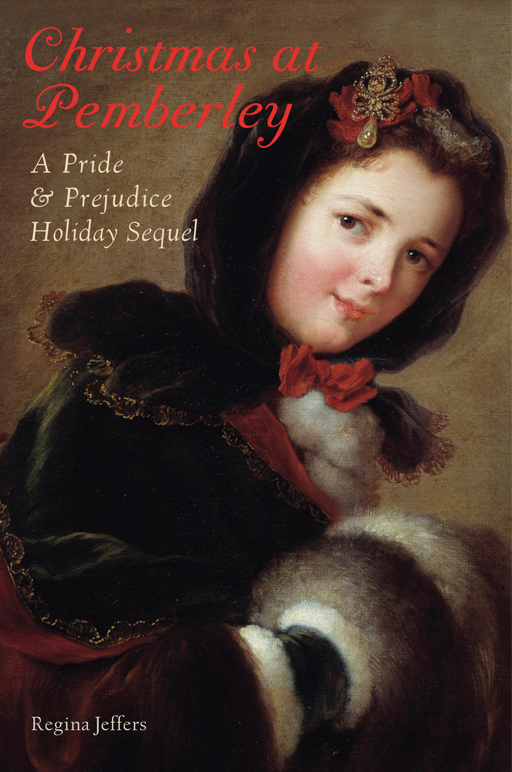
Christmas at Pemberley by Regina Jeffers

Christmas at Pemberley by Regina Jeffers finds Mr. and Mrs. Darcy in a run of the mill inn right before the Christmas holiday as they are stranded by the snow and stormy weather on their way back from Newcastle.  Meanwhile, Georgiana is forced into the roll of Mistress of Pemberley and must contend with Darcy’s guests, including Lizzy’s parents, the Bingleys, and some other unexpected and unpleasant guests.  Jeffers sprinkles her prose with Jane Austen’s classic lines from Pride & Prejudice about Mrs. Bennet’s nerves and Darcy’s pride and Lizzy’s prejudices.  She adheres to Austen’s characterizations ensuring that Austen purists will enjoy her followup novel, but at the same time, she demonstrates how Georgiana evolves from a timid girl in the shadows of her brother and Aunt Catherine de Bourgh to become a capable woman.

“”Yes, our Mary has snatched up a viable candidate.  At least, Mrs. Bennet has said such on countless occasions, so I must believe it so.  After all, Her Ladyship has deemed my wife to have no mental deficiencies.’

Charlotte chuckled lightly before saying softly, ‘Lady Catherine is perceptive in her evaluations.’

Mr. Bennet smiled knowingly.  ‘Lizzy has assured me that nothing is beneath the great lady’s attention.’

Mrs. Collins tightened the line of her mouth.  ‘Her Ladyship is all kindness.  She has taken it upon herself to oversee my domestic concerns familiarly and minutely, offering advice on how everything out to be regulated.'”  (page 67)

Even better, readers experience more of Mr. Bennet’s wit and see Kitty as more than just a silly young girl.  Lizzy’s precarious situation with her pregnancy has Darcy worried, especially so far away from home.  But both take the situation in stride and offer the kindness they have in abundance to those in need.  Darcy and Lizzy are at the inn meeting new people and sharing accommodations with a myriad of travelers.  Meanwhile, Georgiana is juggling unwanted guests, and in many ways the guests are rallying and teaming up against Lady Catherine.

Jeffers adheres to Austen’s characters and social commentary while building upon the original novel to create characters that evolve and come into their own.  Christmas at Pemberley by Regina Jeffers is an quiet novel that meanders, enabling readers to spend the holidays with some of their favorite characters, but those looking for big plot twists and action will not find much of that here.  Jeffers has created a solid novel that could stand alone.

This is my 76th book for the 2011 New Authors Reading Challenge.