Quantcast

Schoolgirl by Osamu Dazai, Translated by Allison Markin Powell

Schoolgirl by Osamu Dazai is a short book of less than 100 pages from One Peace Books and is translated from the Japanese by Allison Markin Powell.  The novella, which reads more like a narrative poem, has readers spend the day with a teenage girl who is adjusting to life after the death of her father and as a blossoming women in a post-WWII Japan.  Readers clearly see the clash between traditional Japanese customs of women who are quiet and subservient to others needs with the young woman’s need to express herself and be an individual.

“Waking up in the morning is always interesting.  It reminds me of when we’re playing hide-and-seek — I’m hidden crouching in the pitch-dark closet and suddenly Deko throws open the sliding door, sunlight pouring in as she shouts, ‘Found you!’ — that dazzling glare followed by an awkward pause, and then, my heart pounding as I adjust the front of my kimono and emerge from the closet, I’m slightly self-conscious and then suddenly irritated and annoyed — it feels similar, but no, not quite like that, somehow even more unbearable.” (page 7)

Like many pieces from Asian culture, spirits make an appearance, but these ghosts are thoughts and images that assail the young girl on a daily basis — perhaps images of war or the regrets she has about how she has treated her mother since her father’s death or even the moments she shared and failed to share with her father when he was alive.  It is clear that she is wavering, stuck between her girlhood and her pending womanhood — the past and the present.  She revels in the simple beauty of nature, while she reviles the obsequious nature of her family life.  The dichotomy of her existence plagues her throughout the novella as she rails against her servile nature and tries to hold back her individuality, at least in the presence of her mother.

“Falling asleep is such a strange feeling.  It’s like a carp or an eel is tugging on a fishing line,or something heavy like a lead weight is pulling on the line that I am holding with my head, as I doze off to sleep, the line slackens up a bit.  When that happens, it startles me back to awareness.”  (Page 93)

Dazai and Powell have captured the inner workings of a teenage mind with ease, and for those who have moved beyond those years, it could be tiresome.  However, there is beauty in Dazai’s simple prose that captures feelings so easily, evoking camaraderie with readers and deep seated understanding.  Not much happens plot wise in the novel, but its not necessary as readers come to understand the protagonist and her motivations.  She’s angsty, eager to please, frightened of the future, and mourning her past.  Schoolgirl by Osamu Dazai, translated by Allison Markin Powell offers readers a stream of consciousness in a young girl’s life during not only her transition from girl to woman, but from her country’s transition from the past to more modern sensibilities and the struggle that places on individuals torn between tradition and change.

**I received this book from Caribousmom, and was eager to read it as part of my efforts to read more translated works in 2012.**

This is my 2nd book for the 2012 New Authors Challenge.

Mailbox Monday #160

Mailbox Mondays (click the icon to check out the new blog) has gone on tour since Marcia at A Girl and Her Books, formerly The Printed Page passed the torch. This month’s host is the At Home With Books.

Kristi of The Story Siren continues to sponsor her In My Mailbox meme.

Both of these memes allow bloggers to share what books they receive in the mail or through other means over the past week.

Just be warned that these posts can increase your TBR piles and wish lists.

Here’s what I received this week:

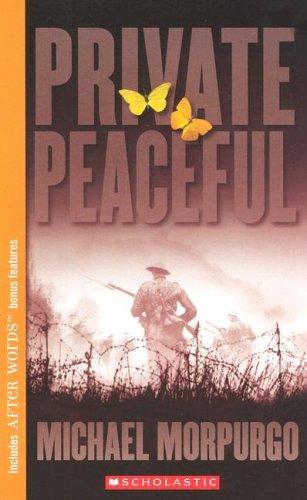
1.  Private Peaceful by Michael Morpurgo, which I purchased after reading War Horse and already reviewed.

2.  Until the Next Time by Kevin Fox, which came unrequested from Algonquin and will be published in February.

3.  The Sleepy Hollow Family Almanac by Kris D’Agostino, which came unrequested from Algonquin and will be published in March.

4.  Pocket Kings by Ted Heller, which came unrequested from Algonquin and will be published in March.

5.  The Coldest Night by Robert Olmstead, which came unrequested from Algonquin and will be published in April.

What did you receive?

132nd Virtual Poetry Circle

Welcome to the 132nd Virtual Poetry Circle!

Remember, this is just for fun and is not meant to be stressful.

Keep in mind what Molly Peacock’s books suggested. Look at a line, a stanza, sentences, and images; describe what you like or don’t like; and offer an opinion. If you missed my review of her book, check it out here.

Also, sign up for the 2012 Fearless Poetry Reading Challenge because its simple; you only need to read 1 book of poetry. Please visit the stops on the National Poetry Month Blog Tour from April 2011 and beginning again in April 2012.

Today’s poems is from Eavan Boland:

 Atlantis -- A Lost Sonnet

How on earth did it happen, I used to wonder
that a whole city—arches, pillars, colonnades,
not to mention vehicles and animals—had all
one fine day gone under?

I mean, I said to myself, the world was small then.
Surely a great city must have been missed?
I miss our old city —

white pepper, white pudding, you and I meeting
under fanlights and low skies to go home in it. Maybe
what really happened is 

this: the old fable-makers searched hard for a word
to convey that what is gone is gone forever and
never found it. And so, in the best traditions of 

where we come from, they gave their sorrow a name
and drowned it.

What do you think?

Savvy Editing Services

As part of my 2012 efforts to generate money from this blog, I’ve decided to use it to publicize and offer editing services.  Since I’m an editor full time for an electronic newsletter company and have worked on PR materials and other items over the years, why not offer my services to my readers and others who need help with grammar, spelling, typos, and even style suggestions.

If you’re interested or know someone who is, please feel free to pass along my information to them.  Here’s the link to the detailed information of my services and the prices:  https://savvyverseandwit.com/policies/editing-services

Thanks for spreading the word.

Interview with Victoria Connelly, Author of Dreaming of Mr. Darcy

I recently read and reviewed and loved Dreaming of Mr. Darcy by Victoria Connelly, which is the second book in her trilogy for Jane Austen addicts — just like me.  If you’re looking for drama on and off the movie set in Lyme Regis as an adaptation of Persuasion is filmed, this book fits the bill and even offers more Austen fun.  Characters resemble Emma, Darcy, and the other characters we know and love, but the story is modern and fast-paced as Connelly’s cast makes their way in the world and take ahold of their passions.

Connelly was kind enough to answer some interview questions about her writing and the book, so please give her a warm welcome and feel free to join in the conversation.

1. Tell us about your writing space. Do you have a specific place that you prefer to do your writing? 

We have just moved to a little cottage in rural Suffolk and I now have my very own study which I love!  From my window, I can see fields full of horses.  It’s lovely and peaceful and I’m surrounded by books and photos for inspiration.  My desk is a big old Victorian pine table, cluttered with pen pots, photo frames and mugs.  I love my desk and I’m very happy working there but I’m equally happy working with my laptop when we go away.  I can work in most places as long as it’s quiet and there aren’t too many distractions.

2. What does a normal writing day look like? 

I like to get a bit of writing in first thing in the morning before walking our dog and taking care of our hens.  Then I work until lunchtime, walk the dog again and then write until the middle of the evening.  I try to write about 1,000 words a day and – if it’s not going well – I can still be writing late into the evening.  The joy of working from home is that you can set your own timetable and make your own rules so, if it’s a lovely sunny day, you can down tools and have a day out or work right through the weekend if you want to.

3. What sorts of things inspire you?  

Well, for the last few years, Jane Austen has been my big inspiration.  I’ve been rereading her books, watching the glorious adaptations and visiting the Austen locations of Hampshire, Lyme Regis and Bath which all helped inspire my trilogy about Austen addicts.  Other things that have inspired past novels have been junk mail (which inspired Molly’s Millions), Venetian masks (inspired Unmasking Elena Montella) and my husband being sent to a war zone inspired my novel Flights of Angels!  Inspiration comes from all around me: people, places, other books and films – I’m never short of ideas which is really exciting.

4. Do you have any quirks when it comes to your writing process? 

When I start a new novel, I like to get a new coloured A4 file and I put all sorts of things inside it like photographs, maps, leaflets etc.  But the very first thing that goes inside it is a spider diagram with all my characters’  names on it.  I can’t begin a new novel until that is in place!

5. Anything else you’d like to share! 

Last year, I released some books on Kindle including three magical romantic comedies that were all published in Germany.  One – Flights of Angels – was even made into a film but this is the first time the novels have been available in the English language and they’re all doing really well as ebooks.  I also plan to write a novella sequel to my Austen addicts trilogy where the main characters from each of the books return to Purley Hall in Hampshire for a special Christmas Austen conference.  It should be available in time for next Christmas so watch out for that!  I think Kindle is a really exciting way forward for books.

Thanks, Victoria Connelly, for answering my questions.

Private Peaceful by Michael Morpurgo

Private Peaceful by Michael Morpurgo is a coming-of-age novel (grades 7 and older) that sets readers up for the dreary and devastating life of a young boy, Tommy Peaceful, whose father dies unexpectedly at work as a forester.  Tommy and his brother Charlie are inseparable, and their other brother Big Joe has special needs and is often protected by the family whether it is in the school yard or at home from their Great Aunt.  Tommo tells the story in a series of flashbacks about his father’s death, his regret about how it happened, his friendship and kinship with his brother Charlie and their schoolmate Molly, and The Great War that invades their lives.  Readers will not immediately grow close to Tommo in the beginning, but as he opens up about his past and present situation overseas, it is revealed that things have changed far more and far too quickly for him.  He’s fallen in love, rushed to become an adult, and headed off on an adventure that was far less exciting and far more harrowing than he expected.  Each chapter begins with a little snippet of his present situation before Tommo relives his past happinesses, until the two moments meet in time.

“I want to try to remember everything, just as it was, just as it happened.  I’ve had nearly eighteen years of yesterdays and tomorrows, and tonight I must remember as many of them as I can.  I want tonight to be long, as long as my life, not filled with fleeting dreams that rush me on towards dawn.”  (page 1)

Morpurgo is at his best here with the subtle foreshadowing at the beginning with the crows caught in the fence, like the cavalry caught in the barbed wire of the battle fields and throughout in how Tommo relates his story.  He was 15 when he enlisted in the British military, but only after Charlie agreed to lie for him and say that they were twins of the same age.  These devoted brothers have shared everything — the sorrow of losing a father, the sorrow of losing a dog, the joy of finding Big Joe alive, and the love of Molly — but sharing everything also can breed secrets and resentment, which Tommo brings to the forefront when he speaks of Molly.  From the beginning, readers are given a clear picture of Tommo’s devotion and love for Molly, but it is clear that she treats him more as a sibling and he refuses to see it.

“Every uniform and every helmet was like our own.  Then, as we came down the gangplank into the fresh morning air, we saw them, the lines of walking wounded shuffling along the quay toward us, some with their eyes bandaged, holding on to the shoulder of the one in front.  Others lay on stretchers.  One of them, puffing on a cigarette between pale parched lips, looked up at me out of sunken yellow eyes.  ‘G’luck lads,’ he cried as we passed.  ‘Give ’em what for.’  The rest stayed silent and their staring silence spoke to each of us as we formed up and marched out of town.”  (page 115)

Morpurgo’s prose is clear and concise to ensure the mood is vivid and the experience of first person has the full impact, particularly during training and in the trenches.  A bit more for maturer audiences with its focus on the war and soldiering, but there are lighter moments of ribbing between the soldiers and talk of girls and even romance.  However, Private Peaceful by Michael Morpurgo is more about a young man coming into his own and dealing with the decisions he’s made and the events he’s witnessed.  Tommo has not only a colored past of poaching and death, but also a soldiering present that has tested his courage and devotion.  An excellent introduction to The Great War.


This is my 2nd book for the WWI Reading Challenge.

Dreaming of Mr. Darcy by Victoria Connelly

Dreaming of Mr. Darcy by Victoria Connelly is the second book in her Austen Addicts trilogy, and is a must have in any Austen fan’s collection for its unique set of characters and the clear references to Mr. Darcy, Captain Wentworth, and more.  Starring Kay Ashton, who works in a dead end and thankless job, and she’s surrounded by a unique cast from her mother’s friend and fellow Janeite to the cast of actors that invade her new Bed and Breakfast in Lyme Regis.  Kay finds herself playing Emma Woodhouse on one occasion, only to find her results end up much the same as Emma’s, but all the while, she’s looking for her own dashing hero and trying to rekindle the passion she has for painting.  Beth is the prototypical actress diva who wants all of the attention for herself, and she surrounds herself with the rest of the cast, including the dreamy Oli Wade Owen.  But Gemma is not the typical actress — she’s shy and often in the shadow of her mother, a famed television and movie actress whose career is practically non-existent until she weasels her way into the production of Persuasion, produced and written by Adam.

“It was funny that she should be dreaming about Mr. Darcy, because she’d been drawing Captain Wentworth for the last few weeks now.  Darcy had been the main subject of her last book — a collection of drawings in pen, and watercolour paintings of scenes from Pride and Prejudice.” (page 5 ARC)

There are moments in the novel when Connelly tells the reader of the Austen connection, which could have been left up to the reader to discover, but that is not bothersome when readers are swept away by the antics of Beth to get Oli’s attention or when Kay is berating herself for falling for an actor like Oli when she knows she shouldn’t.  Nana Craig, Adam’s granny, is a hot little ticket with her poking and prodding of Adam in the right direction to get his love life moving, and she has some choice advice for Kay as well.  Living in Lyme is not as romantic as Kay imagined, but her imagination sometimes runs away with her and gets overblown in more ways than one.  Readers will get the idea that she hasn’t lived much of her life outside the covers of an Austen novel the way she goes on, but its always in fun and helps liven up the interactions she has with her star guests.

“Kay settled back into her seat and adjusted the red hairpiece above her left temple.  It felt like it was slipping.  She looked in the wing mirror.  She wasn’t all that sure about herself as a redhead.  She’d had visions of being transformed into a beautiful pre-Raphaelite nymph, but she believed she looked more like a slightly baffled red Irish setter.”  (page 174 ARC)

Connelly creates characters that are lively and fun, and readers will love hanging around with them as they gossip, maneuver, and fall flat on their faces looking for romance.  While Austen characters and stories do play a role here, they aren’t necessary, as the novel and its characters could stand on their own.  There is a mix of arts here from screenwriters to actors/actresses and painters, which is juggled well by Connelly.  With the number of heroes, heroines, and secondary characters and subplots, it would be easy to get lost if it weren’t for the author’s ability to juggle those story lines and ensure that readers never miss a beat or feel bogged down by one story or another.  On a deeper level, the novel is about making dreams come true, following your passions, and living life to the best of your ability even if it means making a giant leap of faith to do it.  If you’re looking for fun, Lyme is the place for you and Dreaming of Mr. Darcy by Victoria Connelly is an excellent read to take you on an escape by the seaside.

Mailbox Monday #159

Mailbox Mondays (click the icon to check out the new blog) has gone on tour since Marcia at A Girl and Her Books, formerly The Printed Page passed the torch. This month’s host is the At Home With Books.

Kristi of The Story Siren continues to sponsor her In My Mailbox meme.

Both of these memes allow bloggers to share what books they receive in the mail or through other means over the past week.

Just be warned that these posts can increase your TBR piles and wish lists.

Here’s what I received this week:

1.  What Looks Like an Elephant by Edward Nudelman, which I’ll be reading and discussing as part of the Indie Lit Awards short list titles.

2.  Sonics in Warholia by Megan Volpert, which I’ll be reading and discussing as part of the Indie Lit Awards short list titles.

What did you receive?

2011 Indie Lit Awards Short List

After all the prodding and poking my team and I did on Facebook, Twitter, and our blogs, the nominations for poetry rolled in with over 200 nominations coming in for a variety of poetry.

But there were some clear favorites in the voting, with one short listed nominee collecting more than 70 votes alone.

I want to take this moment to thank the judging panel — Diary of an Eccentric, Necromancy Never Pays, 1330V, and Regular Rumination — for all of their help.  And as you know, with the announcement of the short list, your jobs are not over.  It is now time to read and discuss the short listed titles below.

  • Beyond Scent of Sorrow by Sweta Vikram (Modern History Press)
  • Catalina by Laurie Soriano (Lummox Press)
  • What Looks Like an Elephant by Edward Nudelman (Lummox Press)
  • Three Women: A Poetic Triptych and Selected Poems by Ramos, Emma Eden (Heavy Hands Ink)
  • Sonics in Warholia by Megan Volpert (Sibling Rivalry Press)

Luckily, the individual presses of these books have kindly offered to send copies of the books to all the panelists.  I wish all of the poets luck.

Please visit the Indie Lit Awards Short List for the nominees in Fiction, Biography/Memoir, Nonfiction, Mystery, Speculative Fiction, and GLBTQ

131st Virtual Poetry Circle

Welcome to the 131st Virtual Poetry Circle!

Remember, this is just for fun and is not meant to be stressful.

Keep in mind what Molly Peacock’s books suggested. Look at a line, a stanza, sentences, and images; describe what you like or don’t like; and offer an opinion. If you missed my review of her book, check it out here.

Also, sign up for the 2012 Fearless Poetry Reading Challenge because its simple; you only need to read 1 book of poetry. Please visit the stops on the National Poetry Month Blog Tour from April 2011 and beginning again in April 2012.

Today’s poems is from Rita Dove:

Persephone, Falling

One narcissus among the ordinary beautiful
flowers, one unlike all the others!  She pulled,
stooped to pull harder—
when, sprung out of the earth
on his glittering terrible
carriage, he claimed his due.
It is finished.  No one heard her.
No one!  She had strayed from the herd.

(Remember: go straight to school.
This is important, stop fooling around!
Don't answer to strangers.  Stick
with your playmates.  Keep your eyes down.)
This is how easily the pit
opens.  This is how one foot sinks into the ground.

What are your thoughts?