Quantcast

340th Virtual Poetry Circle

Welcome to the 340th Virtual Poetry Circle!

Remember, this is just for fun and is not meant to be stressful.

Keep in mind what Molly Peacock’s book suggested.

Look at a line, a stanza, sentences, and images; describe what you like or don’t like; and offer an opinion. If you missed my review of her book, check it out here.

This poem is from Kenneth Patchen:

The Snow Is Deep on the Ground

The snow is deep on the ground.
Always the light falls
Softly down on the hair of my belovèd.

This is a good world.
The war has failed.
God shall not forget us.
Who made the snow waits where love is.

Only a few go mad.
The sky moves in its whiteness
Like the withered hand of an old king.
God shall not forget us.
Who made the sky knows of our love.

The snow is beautiful on the ground.
And always the lights of heaven glow
Softly down on the hair of my belovèd.

What do you think?

Lost In The Woods: A Photographic Fantasy by Carl R. Sams II and Jean Stoick

Source: Purchased — gift from cousin
Hardcover, 48 pgs.
I am an Amazon Affiliate

Lost in the Woods: A Photographic Fantasy by Carl R. Sams II and Jean Stoick is an adorable story about life in the woods for a fawn left on his own.  A doe must leave her child alone so that danger will not find him, which it won’t because he doesn’t have a scent.  Not only can kids learn about nature and why animals behave how they do, they also can see when it is wise to listen to parents.  The fawn meets a number of other young animals along the way while stretching his legs, and while he does have moments of trepidation, he remembers his mother’s words and remains calm and hides.

My daughter enjoys photographs, particularly ones that are vibrant and have animals.  This is a good book for her because it has a simple story with a lesson, but also eye-catching images that will keep her riveted to the story.  At the back, there are more surprises, as the authors have created a game of find our lost friends, challenging kids to go back through the photographic pages to find animals hidden among the flowers and trees.

Lost in the Woods: A Photographic Fantasy by Carl R. Sams II and Jean Stoick is beautifully rendered.  It’s a wonderful story with sounds and sights to behold, and there are games afoot in the tall grasses for your own young fawns.

About the Authors:

Carl R Sams II and Jean Stoick are professional wildlife photographers from Milford, Michigan. Their images have appeared in hundreds of national and international publications. Honored recipients of the People’s Choice Award for the best of show 11 times at major wildlife exhibits, Carl and Jean were also the first photographers ever to be honored as featured artists at a major wildlife art event.  Find out more about them on their Website.

Dickey Chapelle Under Fire: Photographs by the First American Female War Correspondent Killed in Action by John Garofolo

Source: LibraryThing Early Reviewers
Hardcover, 136 pgs.
I am an Amazon Affiliate

Dickey Chapelle Under Fire: Photographs by the First American Female War Correspondent Killed in Action by John Garofolo, which includes a foreword by former Washington Post war correspondent Jackie Spinner, is dedicated to the brave men and women who serve the United States, which also includes those war correspondents who risk their lives right alongside those with the weapons to uphold freedom.  Their weapons may be different — pens and cameras versus guns and grenades — but both serve their country and the cause of freedom with devotion.  In the foreword, Spinner indicates that when Dickey Chapelle died in Vietnam, she died as a Marine because that’s how the marines who were by her side thought of her.  She started her career young, present at the battles of Iwo Jima and Okinawa in WWII, experiencing the reconstruction of Europe after WWII, and traveling to nations in which rebellions were bloody and devastating before she reached the front lines of the Vietnam War in her 40s.

“I grew up in the heartland of the United States.  I believed that I could do anything I really wanted to do and I still believe it. … But I am going to condition it.  You can do anything you want to do if you want to do it so badly you’ll give up everything else to do it,” Dickey Chapelle said. (Fire in the Wind by Robert Ostroff)

Georgette Louise Meyer, later known as Dickey, was born in Wisconsin and she dreamed of flying.  While she did eventually take flying lessons against her parents’ wishes, she wasn’t that great at it.  She was great at telling stories and seeking out those stories around military installations.  Her passion for stories led her to flunk out of MIT, and while she did return home and later moved to Florida, she soon found herself in New York City at age 18, writing for Transcontinental and Western Air (TWA) in the publicity bureau.  Taking photography lessons on the side with Tony Chapelle led to a new career and husband.  She soon became a war correspondent during WWII so that she could travel with her husband, a WWI veteran who re-enlisted.

“The wreckage resulting from man’s inhumanity to man … was the litany I wrote and the subject I photographed.  And the magnitude of relief devised never matched the magnitude of the suffering caused,” said Chapelle in What’s a Woman Doing Here?

Garofolo has selected and organized Chapelle’s photographs in such a way that they will have readers running the gamut of emotions.  Among the WWII photographs, Chapelle captures not only the immense suffering of a solder caught in a fire during a mine explosion — he was severely burned — but she also highlights some of the happier moments for soldiers, like when they received mail from home or were able to finally shave after gunfire stopped.  The moments when soldiers are smiling or doing mundane activities are those that remind us that these soldiers are people, not machines.  Not all of her work was on the battlefront, Chapelle also found herself drawn to relief work in a variety of countries, and this work still placed her in a great deal of danger, including her own capture by Russians near the Austria-Hungary border.

Dickey Chapelle Under Fire: Photographs by the First American Female War Correspondent Killed in Action by John Garofolo is a book dedicated to the memory of not only Chapelle’s body of work, courage, and dream of flying, but also to the women and men who suffered greatly in wars and conflicts across the globe — whether they were soldiers, nurses, or refugees.  My first book for the Best of 2016 list.

About the Author:

John Garofolo is a former entertainment industry executive and veteran of Operation Iraqi Freedom. A commander in the US Coast Guard Reserve, he has more than twenty-five years of active and reserve military service and taught at the Coast Guard Academy. Thanks to a grant from the Brico Fund through the Milwaukee Press Endowment, he has written a stage adaptation of Dickey Chapelle’s life. John earned a PhD from the University of Southern California School of Cinematic Arts and lives with his wife and daughter in Southern California.


I’m calling this my Nonfiction Book about WWII:

MasterClass: James Patterson Teaches Writing

JamesPattersonMC1MasterClass contacted me about their James Patterson writing course in June 2015.

James Patterson is a best-selling author in the crime, children’s, and other genres, and many critics have said that his books are more plot than characterization in recent years, while others have decried his use of co-authors.  This is a review of the course, not Mr. Patterson’s writing (just so we’re clear).

The course has 22 videos ranging in topics from passion and habit, outlining, first lines, suspense, and his personal story, as well as collaborating with co-authors.  Along with the videos, there are accompanying lesson plan PDFs and a discussion section for the students taking the course.  This allows you to get feedback from other students on the lesson and to share ideas.

There are two versions of the class workbook — one has the full outline for his book Honeymoon, so you can see how he outlines. This was a very helpful document for me because I haven’t written an outline of anything since high school.  This is not your high school outline with Roman numerals, etc.  It is much more detailed, and when he discusses why he outlines, you’ll understand the level of detail and why it is needed.

Patterson also holds office hours in which questions are submitted by students on video, and they answered by the author in the same manner.  He also offers critiques on raw ideas, research assignments, character development, and other topics from students.  The videos and the coursebooks were helpful, and I think his advice about agents, editors, selling books to Hollywood, and other points about writing are well expressed and should provide enough direction for writing students.  He stresses the need for an economy of words, no wasted moments, and clipping out the excess.  He’s amusing and self-deprecating.

MasterClass courses are an affordable $90, but their true worth will be in how dedicated you are to the lessons and the actual work.  One thing to keep in mind as a writer, is that if you are writing about something in science fiction, for instance, Patterson might not be the best mentor/teacher for you.  So, as you look for affordable writing classes to take, think about what kind of feedback and how much help you’ll need.

MasterClass also has offerings in photography, the art of performance, acting, and singing, and these courses are taught by big names like Dustin Hoffman, Usher, Serena Williams, Kevin Spacey, and more. 

Close Quarters by Larry Heinemann

Source: Public Library
Hardcover, 335 pgs.
I am an Amazon Affiliate

Close Quarters by Larry Heinemann provides a stark view of the life of draftees, like Philip Dosier (Flip), and he pulls no punches in his account of this young man’s life in war.  He’s too young at home to buy alcohol or to vote, but in Nam, he can kill, swear, smoke pot, drink, and die for his country all without explanation or understanding.  Troops are to follow orders, and not to question, but in Flip’s case, and those around him, ignoring, circumventing, or blatantly disregarding orders can be a sign of brotherhood or stupidity.  Close quarters is a fine-tuned look at soldiering, the interactions between grunts and officers, and the friendships fired in the kiln of war.

“I can never go home.  I just want to see it.  I won’t say a thing, cross my heart.  I just want to see it one more time.  I want to smell it, touch it ever so lightly, put my ear to it and hear it tap, tap, tap.” (pg. 279)

“When I first came into the platoon, that was what struck me about the tracks.  They were huge and lumbering, stunted animations of some slow and wild thing.  Noisy and fat, grunting cartoons, smelling of thirty-weight oil and gunpowder and beer piss, … And I am filthy all the time.  I feel that grit, that crawl of the skin, something itching all the time, and greasy.” (pg. 280)

As these men run on adrenaline and beer — one to get through the fear and the other to numb the horror — they are unaware that they have changed.  In the lulls between ambushes, missions, and unexpected firefights, these men are like friends who hang out drinking beers and becoming sounding boards.  To become a sounding board for someone else is far easier than dealing with the war’s affect on yourself in some cases, but there are some images that cannot be shaken.

Close Quarters by Larry Heinemann is claustrophobic in its graphic violence, its frank spoken dialogue between male soldiers, and the threat of war that surrounds them all — it’s that unexploded bomb in the next room.  It ranges from lull moments of camaraderie and R&R with a prostitute in Tokyo to the small round hole left in the head of the man next to you.  Heinemann expresses the complexities of war in one soldier’s account, and he examines post-traumatic stress disorder (PTSD) so that readers realize just how real the war still is even when veterans arrive home.

About the Author:

Larry Heinemann (born 1944) is an American novelist born and raised in Chicago. His body of work is primarily concerned with the Vietnam War. Mr. Heinemann served a combat tour in Vietnam from 1967 to 1968 with the 25th Infantry Division, and has described himself as the most ordinary of soldiers. Mr. Heinemann’s military experience is documented in his most recent work, Black Virgin Mountain (2005), his only nonfiction piece. Black Virgin Mountain also chronicles his return trips to Vietnam and his blunt personal and political views concerning the country and the war. He has often referred to his books about Vietnam as an accidental trilogy.

While serving in Vietnam, Mr. Heinemann fought in a battle near the Cambodian border in which filmmaker Oliver Stone also participated. Mr. Heinemann writes of the battle in his first novel, Close Quarters (1977), and in Black Virgin Mountain, and it also forms the basis for the climactic battle scene in Stone’s Platoon.

His fictional prose style is uncompromisingly harsh and honest, and reflects his working class background. His second and critically acclaimed novel is Paco’s Story (1986), which won the 1987 National Book Award for Fiction, topping Toni Morrison’s Beloved in a decision that some thought controversial.[1] At the time, Mr. Heinemann’s only response to the controversy was that the prize, a check for $10,000, was already cashed, and that the Louise Nevelson sculpture, a gift from the National Book Foundation, was not likely to be returned. Paco’s Story relates the quasi-picaresque postwar experiences of its titular protagonist, who is haunted by the ghosts of his dead comrades from the war. These ghosts provide the novel’s narrative voice. The story deals with the role of the American GI as both victim and victimizer. It is interesting to note that ghost stories are common in both American and Vietnamese literature about the war.

His third novel, Cooler by the Lake (1992), departed from the topic of Vietnam and was not very successful, either critically and commercially.

Mailbox Monday #357

Mailbox Monday, created by Marcia at To Be Continued, formerly The Printed Page, has a permanent home at its own blog.

To check out what everyone has received over the last week, visit the blog and check out the links.  Leave yours too.

Also, each week, Leslie, Vicki, and I will share the Books that Caught Our Eye from everyone’s weekly links.

Here’s what I received:

No More Beige Food by Leanne Shirtliffe, illustrated by Ginger Seehafer, for review from Sky Pony Press.

One night Wilma Lee Wu sits down for dinner—in front of some food that might’ve been meat—when she declares she can’t take it: “Please, no more beige food!” She’s tired of the bland and mushy meals her parents make. So Wilma and her little brother venture in search of some neighbors willing to teach them how to cook new food. From Khun Joe’s pad thai to Ms. Azar’s Lebanese kibbe, they learn to make all sorts of tasty dishes. But how will Wilma respond when Monsieur Poutine offers to teach her how to make frog legs?

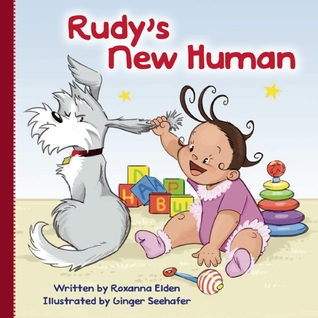
Rudy’s New Human by Roxanna Elden, illustrated by Tina Kugler, for review from Sky Pony Press.

Rudy loves being top dog in his family of three. When Rudy’s human parents tell him that they are having a baby, Rudy thinks the newest member of the family will be interested in the same games he likes—chewing bones, chasing cats, and playing fetch. But Rudy’s new human is not what he expected! The baby cuts into Rudy’s naptime, gets him in trouble, and, worst of all, steals the spotlight! Will Rudy ever find his place again in his family now that he’s sharing it with the new human?

What did you receive?

339th Virtual Poetry Circle

Welcome to the 339th Virtual Poetry Circle!

Remember, this is just for fun and is not meant to be stressful.

Keep in mind what Molly Peacock’s book suggested.

Look at a line, a stanza, sentences, and images; describe what you like or don’t like; and offer an opinion. If you missed my review of her book, check it out here.

This poem is from Bei Dao, read by Kurt Milberger:

New Year
Translated By David Hinton and Yanbing Chen

a child carrying flowers walks toward the new year
a conductor tattooing darkness
listens to the shortest pause

hurry a lion into the cage of music
hurry stone to masquerade as a recluse
moving in parallel nights

who’s the visitor? when the days all
tip from nests and fly down roads
the book of failure grows boundless and deep

each and every moment’s a shortcut
I follow it through the meaning of the East
returning home, closing death’s door

What did you think?

2016 War Reading Challenge

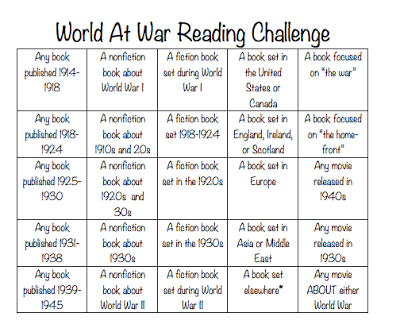
warbirdIn the interest of timeliness; we’ve decided to let the War Through the Generations Reading challenge be empty this year.

Instead, we want to invite everyone to join Becky’s Book ReviewsWorld at War Reading Challenge.

Click on the image below and find out the details. There’s bingo and a wide variety of ways to participate.

Have fun in 2016 with this challenge — I’ll be joining (not sure which books yet).

We’ll see you again in 2017!

2016 Poetry Challenge

In 2015, you were challenge to read 1 book or poetry or 20 individual poems.

This year, I wanted to provide a couple options.

  • Haiku Level: read 1 book of poetry or 20 poems
  • Cinquain Level: Read 2 books of poetry, including Wet Silence by Sweta Vikram or a collection of poems by Emily Dickinson
  • Sonnet Level: Read 3 books of poetry, including Sweta Vikram, Emily Dickinson, Robert Frost, or Ted Kooser
  • Rondeau Level: Read 4 books of poetry, including Sweta Vikram, Emily Dickinson, Robert Frost, Ted Kooser, or haiku poems
  • Villanelle Level: Read 5-10 books of poetry, including 2 of the following: Sweta Vikram, Emily Dickinson, Robert Frost, Ted Kooser, haiku poems, Yusef Komunyakaa, Walt Whitman, John Amen, Arlene Ang, or another poet you’ve always wanted to read.

PoetryChallenge

Grab an image below for your blog:


PoetryChallenge-lrg


PoetryChallenge_Med


Link to your signup post in the comments!


Link your reviews here:


Have a great time this year!

2015 Challenge Wrap-Up

Every year, I check my blog to see if I met my reading challenge goals.  I was a little late in doing so this year, but I did want to see how I did.  Some years I am better at keeping track throughout the year, but this was not one of those years.

I’ll list the books for each challenge and link to the reviews below.

2015 Poetry Reading Challenge (Goal is to read 1 book or 20 individual poems):

  1. Joy Street by Laura Foley (review)
  2. Silent Flowers: A New Collection of Japanese Haiku Poems edited by Dorothy Price (review)
  3. WET by Toni Stern (review)
  4. Crow-Work by Eric Pankey (review)
  5. Doll God by Luanne Castle (review)
  6. Paradise Drive by Rebecca Foust (review)
  7. The Robot Scientist’s Daughter by Jeannine Hall Gailey (review)
  8. Pictograph: Poems by Melissa Kwasny (review)
  9. Vessel: Poems by Parneshia Jones (review)
  10. Medic Against Bomb: A Doctor’s Poetry of War by Frederick Foote (review)
  11. Banned for Life by Arlene Ang (review)
  12. Free Air: Poems by Joe Wenke (review)
  13. Remember the Sun: Poems of Nature and Inspiration by Melanie Simms (review)
  14. The Antigone Poems by Marie Slaight (review)
  15. Looking for Potholes by Joe Wenke (review)
  16. Double Jinx by Nancy Reddy (review)
  17. Pride & Prejudice: Retold in Limericks by Seamus O’Leprechaun (review)
  18. Lost and by Jeff Griffin (review)
  19. The Book of Goodbyes by Jillian Weise (review)
  20. Ohio Violence by Alison Stine (review)
  21. Firefly July: A Year of Very Short Poems selected by Paul B. Janeczko (review)
  22. Citizen: An American Lyric by Claudia Rankine (review)
  23. Changes: A Child’s First Poetry Collection by Charlotte Zolotow (review)
  24. Brown Girl Dreaming by Jacqueline Woodson (review)
  25. Red Sox Rhymes: Verses and Curses by Dick Flavin (review)
  26. Goodnight Songs: A Celebration of the Seasons by Margaret Wise Brown (review)
  27. Wet Silence by Sweta Srivastava Vikram (review)
  28. Dark Sparkler by Amber Tamblyn (review)
  29. The Same-Different: Poems by Hannah Sanghee Park (review)
  30. The Uncertainty Principle: Poems by Roxanna Bennett (review)
  31. Strange Theater by John Amen (review)
  32. Teacher’s Pets by Crystal Hurdle (review)
  33. All the Words Are Yours: Haiku on Love by Tyler Knott Gregson (review)
  34. Underdays: Poems by Martin Ott (review)
  35. National Geographic Book of Nature Poetry: More than 200 Poems With Photographs That Float, Zoom, and Bloom! by J. Patrick Lewis (review)

2015 War Through the Generations – Read Any War (read any # of books about any war):

  1. After the War Is Over by Jennifer Robson (review) WWI
  2. War’s Trophies by Henry Morant (review) Vietnam War
  3. The Secret of Magic by Deborah Johnson (review) WWII
  4. The Trigger: Hunting the Assassin Who Brought the World to War by Tim Butcher (review) WWI
  5. Medic Against Bomb: A Doctor’s Poetry of War by Frederick Foote (review) Iraq Wars
  6. The Mapmaker’s Children by Sarah McCoy (review) U.S. Civil War
  7. The House of Hawthorne by Erika Robuck (review) U.S. Civil War
  8. The Cherry Harvest by Lucy Sanna (review) WWII
  9. The Prince by Niccolò Machiavelli (review) War in general
  10. The Great War: Stories Inspired by Items from the First World War illustrated by Jim Kay (review) WWI
  11. Mireille by Molly Cochran (review) WWII
  12. Crooked Heart by Lissa Evans (review) WWII
  13. The Last Summer at Chelsea Beach by Pam Jenoff (review) WWII
  14. The Race for Paris by Meg Waite Clayton (review) WWII
  15. The Small Backs of Children by Lidia Yuknavitch (review) Bosnia War
  16. Longbourn’s Songbird by Beau North (review) WWII

2015 New Authors Challenge (read 50 New-to-Me Authors):

  1. Jewel Kats
  2. Henry Morant
  3. Deborah Johnson
  4. Mallory Ortberg
  5. Andy Miller
  6. Tony Stern
  7. Lorna Schultz Nicholson
  8. Dora Levy Mossanen
  9. Tim Butcher
  10. Rebecca Skloot
  11. Luanne Castle
  12. Mallory Kasdan
  13. Danielle Paige
  14. Jan Hahn
  15. Rebecca Foust
  16. Melissa Kwasny
  17. Parneshia Jones
  18. Frederick Foote
  19. Joe Wenke
  20. Melanie Simms
  21. Natural History Museum
  22. Marie Slaight
  23. Greil Marcus
  24. Nancy Reddy
  25. Jeff Griffin
  26. Seamus O’Leprechaun
  27. Erika Robuck
  28. Abigail Samoun
  29. Jillian Weise
  30. Jo Nesbo
  31. William Todd Rose
  32. Alison Stine
  33. Lisa Pliscou
  34. Paul B. Janeczko
  35. Claudia Rankine
  36. Charlotte Zolotow
  37. Jacqueline Woodson
  38. Richard Torrey
  39. Jo Baker
  40. Richard Fairgray
  41. Jonathan Lethem
  42. Margaret Peot
  43. Jim Kay, various
  44. Mi-ae Lee
  45. Ae-hae Yoon
  46. Judith Fertig
  47. Robert C. O’Brien
  48. Cassie Premo Steele
  49. Maria Grace
  50. Hee Jung Chang
  51. Molly Cochran
  52. Bryan Ballinger
  53. Lissa Evans
  54. Matthew Jervis
  55. Kim Norman
  56. Dick Flavin
  57. Gillian Flynn
  58. Geert de Kockere
  59. Susan Andra Lion
  60. Rachel Simon
  61. Meg Waite Clayton
  62. Lidia Yuknavitch
  63. L. Shapley Bassen
  64. Amber Tamblyn
  65. Hannah Sanghee Park
  66. Roxanna Bennett
  67. Bella Forrest
  68. Nuala O’Connor
  69. Anna Llenas
  70. Lauren Redniss
  71. Lisa Maggiore
  72. Martin Ott
  73. Joe Hill
  74. Anne Margaret Lewis
  75. Catherine Bailey
  76. Maggie Stiefvater
  77. Jean P. Moore
  78. Linda Ashman
  79. Beau North
  80. Terry Border
  81. Kate Louise
  82. Clement C. Moore
  83. Kimberly Knutsen
  84. Ree Drummond
  85. Alexander McCall Smith
  86. Jussi Adler Olsen

That’s it for me in 2015; now I have to really start thinking about 2016 challenges.

There will be a poetry reading challenge announcement soon!