Quantcast

The Diary of Emily Dickinson by Jamie Fuller

Source: Purchased
Paperback, 224 pgs.
I am an Amazon Affiliate

The Diary of Emily Dickinson by Jamie Fuller is an ambitious project that recreates the life of Emily Dickinson, a hermetic poet from Amherst, with her poetry and from the letters that remain from her life.  Fuller has done her research, which is clear from the annotations that accompany poems and diary entries.  But what’s disappointing is that Fuller’s diary entries — while they mirror Dickinson’s style — do little to extrapolate from the letters or poems to create something new.  Readers will want a fictionalized Emily to be more revealing, not more obscure than what she left behind.

“A captured bird mutes its tune.” (pg. 95)

There are gems in some of the diary entries that allude to Emily’s views on marriage and how it would interfere with her poetic work.  She has been called to write poetry, and while she does household chores, she clearly had greater leeway with her family than she would with a husband or children of her own.  In this way, Fuller has called attention to an age-old problem many women face when they marry — how do you balance the expectations of being a wife and mother with your own dreams and desires.  This would be particularly difficult in Emily’s time.

The prologue is the most creative bit about the book in which Fuller describes the how the diary came to be saved when so many letters were burned by Emily’s sister.  After reading through the poems you remember, you wonder what do the diary entries add.  Unfortunately, they add very little and leave readers wondering if they should have spent their time reading her poems, creating their own narratives for Emily alongside what facts are available from the letters that have survived.

The Diary of Emily Dickinson by Jamie Fuller had potential, and while readers know that Emily was a hermit for much of her life and lived with her family and her poetry, Fuller has not taken the creative leap to bring us into the mind of a poet.  The novel feels flat and two-dimensional.  The saving graces here are Emily’s own poems and the annotations from letters and facts discovered in the historical record.

RATING: Couplet


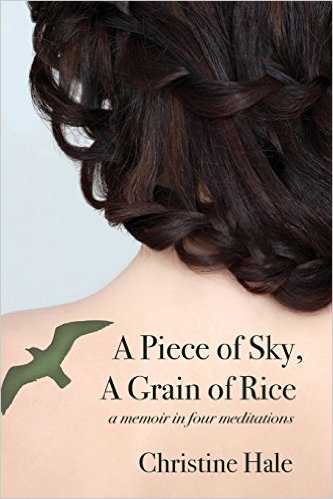
Guest Post: The Gifts of Memoir by Christine Hale

tlc tour hostChristine Hale, author of A Piece of Sky, A Grain of Rice: A Memoir in Four Meditations, is stopping by to talk about the gifts of memoir.  Please give her a warm welcome.

Readers often ask me why I wrote a memoir. I began as a fiction writer (my first book, Basil’s Dream, published in 2009, is a novel). But the year my mother passed away, 2000, the material that would become this memoir asserted itself. In fact, it hijacked me. I was granted a 10-day residency at an artists’ colony, precious time to work on a revision of the novel. But when my busy life dropped away from me, all I could do was grieve my mother: her death, her hard life, and the tangle of love and misery that had been our relationship. I spent the whole residency writing about her life and my childhood. When I went home and got busy again, I completely forgot what I’d written. A year or so later, my computer’s hard drive was failing. Pulling off the files I wanted to save, I found that material– almost 100 pages! I read it, realized it was memoir, gulped, felt sick, and put it aside.

But I couldn’t stop writing about my life. Only after my mother died did I begin to really get to know my father, so that revelation had to be explored on the page. The solitary Buddhist retreats I undertook every year or so were other-worldly I just had to write about them. And the together-tattoos with my teen children, that strange and funny tale had to be told.

Much of what now comprises A PIECE OF SKY, A GRAIN OF RICE was originally published as separate personal essays. I had a nagging feeling that these apparently separate threads all belonged together, but for the longest time– years– I couldn’t figure out how or why. Only in retrospect is the answer crystal clear: the stories belong together because they are all about reconciliation: me coming to terms with the path I’ve traveled– and the people I bruised and learned from and was bruised by along the way.

By the time I began pulling the separate threads together into a book, around 2007, I’d been writing and teaching writing for a long time. So I knew I faced quite a technical challenge. Ultimately I figured that the only structure that could handle so many memories from so many points in time was collage. Think of photos pasted to a poster board– layered, overlapping, some partially obscured, others fore-grounded. The placement appears random, but the creator of the collage has a sense, conscious or intuitive, of where each photo belongs.

I worked on the book by shaping each memory into a little story, with careful attention to sensory detail (this is the advice I give to every would-be memoirist). I cut the longer stories into pieces and arrayed them in the way that felt “right.” I let the tattoo stories, which were happening as I worked on the book, be the through-line, because I wanted the book to have some momentum– some narrative drive– through time. I revised and refined the collage many times, with input from a small group of writer friends I rely on as first readers. It’s very rewarding to discover that my readers do “get” that the book’s structure mimics the way our own processes of recollection and introspection work: seldom a straight line.

I came to understand myself more clearly through the process of creating the book. When I work with people writing memoir, I tell them this is the gift they can expect to receive, if they can be both unflinching– courageous enough to see themselves and others as they really are– and self-compassionate- -merciful enough to accept, forgive, and learn from their humanity.

I want my readers to take away a feeling that they are not alone in their doubts, fears, confusion, strivings, and hopes. That these feelings are the essence of being human. I often hear from readers that they identify with the struggles and the triumphs in the book, that they are reminded of their own sweetest memories, that they feel reconnected with people they’ve lost, or that they have new insight into someone who was a powerful and painful mystery in their life. It’s amazing and satisfying that readers can get from the book their own personal version of what I got from writing it: clarity and release.

About the Book:

Christine Hale grew up amid abuse, depression, dysfunction, alienation and isolation—her mother’s, but also, because her view was the lens that controlled the family—her own, her father’s and her two sisters’. She became a writer, a prodigal daughter, a single parent, a Buddhist disciple, and, late in midlife, a newlywed. In this non-linear memoir, she meditates upon the broken path she’s traveled: two divorces, an abandoned career, too much solitude, an unconventional and transformative relationship with a female spiritual teacher, and two children lost to young adulthood but recovered, in part, through an odd ritual of repeated tattooing.

About the Author:

Christine Hale’s prose has appeared in Hippocampus, Arts & Letters, Prime Number, Shadowgraph, and The Sun, among other literary journals. Her debut novel Basil’s Dream (Livingston Press 2009) received honorable mention in the 2010 Library of Virginia Literary Awards. Hale has been a finalist for the Glimmer Train Short Story Award for New Writers and the Rona Jaffe Foundation Writers’ Award. Presently, she teaches in the Antioch University-Los Angeles Low-Residency MFA Program as well as the Great Smokies Writing Program. She lives in Asheville, North Carolina.

Guest Review: A River Runs Through It by Norman Maclean

A River Runs Through It by Norman Maclean
– Reviewed by Elisha at Rainy Day Reviews

Entertainment Weekly says – “In his semiautobiographical story collection, Maclean paints a sumptuous portrait of the state’s beauty.”

NormanMacLean_ARiverRunsThroughItSummary form Goodreads:

Just as Norman Maclean writes at the end of “A River Runs through It” that he is “haunted by waters,” so have readers been haunted by his novella. A retired English professor who began writing fiction at the age of 70, Maclean produced what is now recognized as one of the classic American stories of the twentieth century. Originally published in 1976, A River Runs through It and Other Stories now celebrates its twenty-fifth anniversary, marked by this new edition that includes a foreword by Annie Proulx.

Maclean grew up in the western Rocky Mountains in the first decades of the twentieth century. As a young man he worked many summers in logging camps and for the United States Forest Service. The two novellas and short story in this collection are based on his own experiences—the experiences of a young man who found that life was only a step from art in its structures and beauty. The beauty he found was in reality, and so he leaves a careful record of what it was like to work in the woods when it was still a world of horse and hand and foot, without power saws, “cats,” or four-wheel drives. Populated with drunks, loggers, card sharks, and whores, and set in the small towns and surrounding trout streams and mountains of western Montana, the stories concern themselves with the complexities of fly fishing, logging, fighting forest fires, playing cribbage, and being a husband, a son, and a father.

Review:

Firstly, I did not know this was turned into a movie. Now that is on my list.

The writing in this book was smooth, cohesive, eloquent, and smart. This novella was mixed with sadness of real life as well as the joys. This story has more than one level, at the surface, it is a good and well written story about Maclean and his father and brother; his family. They all have a shared bond of fishing, it is like the air that they breathe, what seems to hold them to hold them together.

However, going beneath this well-crafted story, I think the moral, the reason behind this book is: relationships that we have, memories that we create with those we hold dear, and the bonds that are made. I think the saddest but truest message to take is, from all that we can learn from this book is, those that are the ‘last survivor’ of those memories, those bonds that were made during the yesteryears, and the relationship that were made before it all changed and while it all changed.

I can definitely see why this is a classic. I’d recommend this to all.

USbooks Montana

Mailbox Monday #386

Mailbox Monday, created by Marcia at To Be Continued, formerly The Printed Page, has a permanent home at its own blog.

To check out what everyone has received over the last week, visit the blog and check out the links. Leave yours too.

Also, each week, Leslie, Vicki, and I will share the Books that Caught Our Eye from everyone’s weekly links.

Here’s what I received:

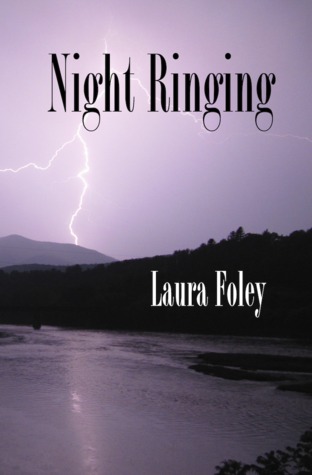
Night Ringing by Laura Foley for review for TLC Book Tours.

“I revel in the genius of simplicity” Laura Foley writes as she gives us in plain-spoken but deeply lyrical moments, poems that explore a life filled with twists and turns and with many transformations. Through it all is a search for a fulfilling personal and sexual identity, a way to be most fully alive in the world. From multicultural love affairs through marriage with a much older man, through raising a family, through grief, to lesbian love affairs, Night Ringing is the portrait of a woman willing to take risks to find her own best way. And she does this with grace and wisdom. As she says: “All my life I’ve been swimming, not drowning.” —Patricia Fargnoli, author of Winter, Duties of the Spirit, and Then, Something

Daffodils (The Katherine Wheel Book 1) by Alex Martin as a free Kindle download.

Daffodils follows the varying fortunes of three people through the turbulent time of the First World War, as Edwardian England’s rigid class structures crumble under its weight. Katy is frustrated as a domestic servant and longs to escape. Jem loves Katy but cannot have her. Lionel, fresh from missionary work in India, is ambitious, arrogant and full of radical ideas. War affects them all in very different ways and each pays a high price for the changes they are forced to make.

Holidays with Jane: Christmas Cheer by Jennifer Becton, Melissa Buell, Rebecca M. Fleming, Cecilia Gray, Jessica Grey, Kimberly Truesdale, a free Kindle download.

Six talented authors make your Christmas lights twinkle with these modern-day adaptations of Jane Austen’s novels. Curl up with some peppermint tea and enjoy something special in your stocking this holiday season.

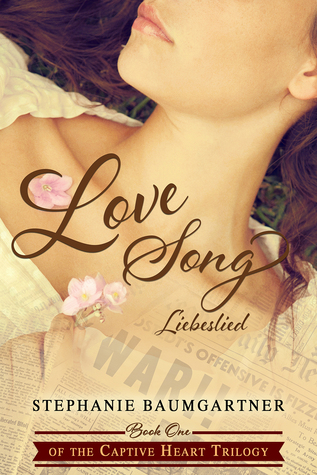
Love Song (Liebeslied) (Captive Heart Trilogy, #1) by Stephanie Baumgartner, which I purchased.

Virginia, 1944: The world is at war and America braces itself for the imminent Allied invasion that will liberate Europe from its Nazi captors. Ignored by her father, bullied by her mother, overshadowed by her brother, sixteen-year-old Cassie Wyndham yearns to do her part for the war effort.

But after years of feeling forgotten and neglected, Cassie doubts she has anything of value to offer, especially when her pastor requests volunteers for a new ministry program at the local POW camp. Risking the ire of her mother, Cassie signs up, despite her fear of the infamous Germans.

There, she meets Friedrich Naumann. Funny and kind, she is drawn to him right away. As their friendship blossoms into something more, Cassie and Friedrich struggle to keep their feelings from the rest of the world. But time is running out, and it won’t be long before the war ends and they have to say goodbye…

If their secret relationship isn’t discovered first.

What did you receive?

368th Virtual Poetry Circle

Welcome to the 368th Virtual Poetry Circle!

Remember, this is just for fun and is not meant to be stressful.

Keep in mind what Molly Peacock’s book suggested.

Look at a line, a stanza, sentences, and images; describe what you like or don’t like; and offer an opinion. If you missed my review of her book, check it out here.

Today’s poem is from Sir Thomas Wyatt:

I Find no Peace

I find no peace, and all my war is done.
I fear and hope. I burn and freeze like ice.
I fly above the wind, yet can I not arise;
And nought I have, and all the world I season.
That loseth nor locketh holdeth me in prison
And holdeth me not—yet can I scape no wise—
Nor letteth me live nor die at my device,
And yet of death it giveth me occasion.
Without eyen I see, and without tongue I plain.
I desire to perish, and yet I ask health.
I love another, and thus I hate myself.
I feed me in sorrow and laugh in all my pain;
Likewise displeaseth me both life and death,
And my delight is causer of this strife.

What do you think?

Make Your Own Zoo by Tracey Radford

Source: Cico Books
Paperback, 128 pgs.
I am an Amazon Affiliate

Make Your Own Zoo: 35 Projects for Kids Using Everyday Cardboard Packaging by Tracey Radford helps parents and kids turn recyclable materials into fun jungle animals and habitats.  My daughter had a babysitter, Anna‘s daughter, for a week, and they attempted to do more of these than the sad-looking lion that she and I did before or the unfinished animal she started with daddy.

IMG_2969

Our sad lion, who is apparently missing his tail.

When my daughter and the girl were working on their projects, we discovered that I somehow missed a step…I forgot to cut out the templates for the lion parts that are included in the back of the book. So the poor looking parts are my poor drawing skills at work. They decided not to cut out the templates either, but their stuff looks better than mine — probably because my daughter used some old stencils my parents gave her from my attic savings at their house.

IMG_2919

Hard a work on their own version of a jellyfish

Trying to make her own animal.

Trying to make her own animal.

You need the templates unless you’re more confident in your drawing skills, glue, scissors, paint, pens, cardboard tubes, egg cartons (cardboard and Styrofoam), old newspaper, and cereal boxes. Animals range from giraffes to parrots, and you can made ice floes, tree houses, and more.

Their giraffe without paint

Their giraffe without paint

The girl's jellyfish in water.

The girl’s jellyfish in water.

Make Your Own Zoo: 35 Projects for Kids Using Everyday Cardboard Packaging by Tracey Radford is an adaptable book that can be used by all ages to create animals and fun dioramas on a rainy afternoon. Some of the directions are a bit complicated for the age 5 group, but with a little help, they can have fun putting these animals together. Make it a group activity and see their creativity become unleashed.

RATING: Quatrain

Obliterations by Heather Aimee O’Neill and Jessica Piazza

Source: Jessica Piazza
Paperback, 80 pgs.
I am an Amazon Affiliate

With the media overload of the 21st Century, poets are bound to ask: How much of this information sticks and is it absorbed in the way that is expected? Obliterations: Erasures from the New York Times by Heather Aimee O’Neill and Jessica Piazza, one of the best new authors according to CBS Los Angeles, explores that process by taking articles found in a variety of sections of The New York Times, including real estate and obituaries, and erasing words until a poem emerges from the detritus. Neither poet knew what the other created, and what has emerged is a collection that speaks not to ephemeral constructs but to concrete concerns and connections.

Most of us know that people who hear or read it at the same time never absorb information in exactly the same way, but what’s most fascinating about this collection is how many of the poems seem to respond to one another when placed side by side. Piazza and O’Neill’s poems for Education use the article “Varied Paths Toward Healing for Sites of Terrorized Schools” by Winnie Hu for inspiration, exploring the aftermath of school shootings. “Healing” provides a sharp, zeroed in image of red, a shade that cannot be forgotten because the memory of that violence is seared into the mind’s eye. In answer, “Toward Healing” takes a look at the broken pieces of the school, the touch of violence only to reclaim those terrifying memories to create a “shrine” of hope. Both poems parallel Hu’s article. Violence of this nature is deeply affecting, and people internalize it in different ways, taking from it a sense of hope for the future in those who survive or feeling that deep pessimism that comes from loss of young potential.

In these poems, Piazza and O’Neill are not only looking at how information is internalized and processed, but they are commenting on the information’s presentation by the journalists who wrote the articles. In most of these poems, it is clear that journalists no longer just report facts and data, but also offer a personal perspective on their subject matter.

For instance, the obituary of J. Robert Oppenheimer, the technical director of the Manhattan Project, explores the man’s career and his regret over how the atom bomb was used, but it also discusses the disconnect he saw between what scientists create and how it is used. “Bomb” and “Atom Bomb Pioneer” both pay homage to the creation of science but never shy away from the connection – both good and bad — between its development and its use.

From “Bomb”, “Art was delicate work. Sciences,/a celebrated ivory-tower, almost/wholly divorced from its gravity.// A change of direction that added/sinister overtones to the awakening/world.// A love affair, now dead.// A continuing fury that unified/the immense, tension-filled world.” But in “Atom Bomb Pioneer,” we see Oppenheimer in a different way with the telling end line, “I have known sin,/ he offered.//” Piazza and O’Neill bring the full weight of that creation to the fore, asking us to consider the consequences not in retrospect but in the present. They also take up that mantle of perspective to show readers a new outlook on the subject at hand.

In the words of Pablo Picasso, “Every act of creation is first an act of destruction.” Obliterations: Erasures from the New York Times by Heather Aimee O’Neill and Jessica Piazza leaves us with the digestible pieces that can be easily swallowed and endured. But within these pieces, we realize that the whole is not destroyed but enhanced in this innovative poetry collection.

RATING: Cinquain

About the Poet:

Jessica Piazza is the author of three poetry collections: “Interrobang” (Red Hen Press), “This is not a sky” (Black Lawrence Press) and, with Heather Aimee O’Neill, “Obliterations” (Red Hen Press, forthcoming). Originally from Brooklyn, NY, she holds a Ph.D. in Creative Writing and English Literature from the University of Southern California, an M.A. in English Literature /Creative Writing from the University of Texas at Austin and a B.S. in Journalism from Boston University. She is co-founder of Gold Line Press and Bat City Review, and curates the Poetry Has Value blog, which explores the intersections of poetry, money and worth. You can learn more and read her work at www.jessicapiazza.com and www.poetryhasvalue.com.

About the Poet:

Heather Aimee O’Neill is the Assistant Director of the Sackett Street Writers’ Workshop, and teaches creative writing at CUNY Hunter College. An excerpt from her novel When The Lights Go On Again was published as a chapbook by Wallflower Press in April 2013. Her poetry chapbook, Memory Future, won the University of Southern California’s 2011 Gold Line Press Award, chosen by judge Carol Muske-Dukes. Her work was shortlisted for the 2011 Pirate’s Alley Faulkner-Wisdom Writing Award and has appeared in numerous literary journals. She is a freelance writer for publications such as Time Out New York, Parents Magazine and Salon.com, and is a regular book columnist at MTV’s AfterEllen.com.


The Secret Language of Stones by M.J. Rose & Giveaway

Source: France Book Tours
Hardcover, 320 pgs.
I am an Amazon Affiliate

M.J. Rose is an author who can transport you into any time and place, weaving in the occult and the mysterious along with history. It is utterly believable. Opaline Duplessi is one of the descendants of La Lune, a famous witch, and whose mother is featured in The Witch of Painted Sorrows, which I loved. In The Secret Language of Stones by M.J. Rose, Opaline has fled her parents and returned to the former home of La Lune — Paris. Rather than live with her great-grandmother, who also prefers to avoid the occult, she lives beneath the jewelry shop where she works for a family of Russian emigres, the Orloffs, who long for tsarist Russia to return from the hands of the Bolsheviks.

Her work with stones in the shop leads her to use her gifts from La Lune to help the mothers, daughters, and wives left behind by the deceased soldiers of WWI. These soldiers have fallen while protecting Paris and others from the Germans, many lying in the trenches alone. Through her gifts, the crushed stones, and other engravings, Opaline is able to reach through the ether and provide these women with a bit of solace in their despair. Motivated by her own loss, and her inability to provide hope to a fallen soldier of her own, Opaline sees it as her duty to help these women with their grief.

Rose has created an entire mythology with the Daughters of La Lune, but readers can read these books individually, though they’d have a richer experience reading them together. Her characters are dynamic and strong-willed women who navigate the unknown and often dark mysteries of the worlds beyond reality. Rose packs her narrative with history and artistry in a way that will fully absorb readers from page one. The Secret Language of Stones by M.J. Rose is captivating, feel yourself being drawn into the netherworld page by page, moment by moment, and uncover the mystery alongside Opaline.

RATING: Cinquain

Other Reviews:

About the Author:

M.J. Rose grew up in New York City exploring the labyrinthine galleries of the Metropolitan Museum and the dark tunnels and lush gardens of Central Park — and reading her mother’s favorite books before she was allowed.  She is the author of more than a dozen novels, the co-president and founding board member of International Thriller Writers, and the founder of the first marketing company for authors, AuthorBuzz.com.

She lives in Greenwich, Connecticut. Please visit her website, her blog: Museum of Mysteries.  Subscribe to her mailing list and get information about new releases, free book downloads, contests, excerpts and more. Or send an email to TheFictionofMJRose-subscribe at yahoogroups dot com

To send M.J. a message and/or request a signed bookplate, send an email to mjroseauthor at gmail dot com

Follow her on Facebook and Twitter.

Entry-Form

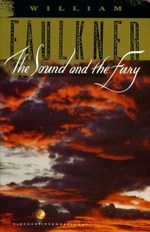
Guest Review: The Sound and the Fury by William Faulkner

soundfuryThe Sound and the Fury by William Faulkner
– reviewed by HC at The Irresponsible Reader

Wow, it took like 2 minutes for me to remember just how much work this guy is to read. This is not the kind of book you take to the breakroom at work for a few minutes during lunch. The Sound and the Fury, like all of Faulkner that I can remember, takes work. You have to think — especially here in Part 1. Don’t get me wrong, Part 2 is no walk in the park, but Benjy’s narration is just so difficult to wade through given his cognitive ability.

Maybe I should back up a bit — this is the story of the fall of the Compson family — a great Southern family from Jefferson, MS, through (primarily) various stream of consciousness points of view. Part 1 is told through the point of view of Benjy. Benjy is 33 year-old developmentally disabled man, and his section is almost impossible to follow. There’s no chronological sense to it, it’s impossible to follow on first read as Benjy talks about a variety of events over the course of his life. Which is not to say there’s not a certain poetry, a power to it. But man . . .

Part 2 is possibly more difficult to understand, honestly, despite being told from Benjy’s older brother’s POV. But I don’t want to talk about the details — I just hate spoilers (even if you’ve had around 90 years to catch up). There are other POVs (including — thankfully, an omniscient third-person).

The plot is one thing — the experience of reading the novel is another. You want to know the power of the English language? Read William Faulkner. I don’t know what else to say. I’m not sure I’m equipped to talk about this, really — P.I.s, wizards, werewolves, dogs? Sure. The kind of thing that wins Nobel Prizes? That’s just beyond me. This is the stuff of history — of legend, really.

There is horrible language used throughout — the kind of thing that gets books banned from schools and classrooms, so if you’re easily offended, skip this. But it’s how people talked (still do), it’s honest, it’s brutal, it’s ugly, it’s human.

This is not my favorite novel by Faulkner — nor is it something I recommend to someone who’s never read the man before (maybe, As I Lay Dying?). That said, it’s full of fantastic writing, insights into the human condition, strange southerners, tragedy, and complexity that I cannot describe. Faulkner, as always, stands so far above the pack that it’s almost not fair to other books. Of course, 5 stars, how could it be anything else?

USbooks Mississippi

Save

Mailbox Monday #385

Mailbox Monday, created by Marcia at To Be Continued, formerly The Printed Page, has a permanent home at its own blog.

To check out what everyone has received over the last week, visit the blog and check out the links. Leave yours too.

Also, each week, Leslie, Vicki, and I will share the Books that Caught Our Eye from everyone’s weekly links.

Here’s what I received:

You and Me, Always by Jill Mansell, which I purchased.

On the morning of Lily’s twenty-fifth birthday, it’s time to open the very last letter written to her by her beloved mother, who died when she was eight.

Learning more about the first and only real love of her mum’s life is a revelation. On the same day, Lily also meets Eddie Tessler, a man fleeing fame who just might have the ability to change her world in unimaginable ways. But her childhood friend Dan has his own reasons for not wanting Lily to get too carried away by Eddie’s attentions.

Before long, secrets begin to emerge and Lily’s friends and family become involved. In the beautiful Cotswold village of Stanton Langley, nothing will ever be the same again.

Prince Noah and the School Pirates by Silke Schnee

It’s time for young Prince Noah to go to school. The prince, who starred in the book “The Prince Who Was Just Himself, ” may be a little slower than other students, but he has no less joy in learning. In his kingdom, children go to school on sailing ships. There is a ship for girls and one for boys. There is a ship for children with an eye patch, a ship for children with one leg, and a ship for children who are slower learners. No one knows why there are so many different ships, but it has always been that way.

Then a terrible storm drives the ships into the hands of pirates. The boys and girls realize that they will only escape if everyone does what he or she does best. Through their adventures, they learn that diversity makes us strong and that every person has something to teach us.

This delightfully illustrated fairy tale instills appreciation for children with Down syndrome and other developmental challenges, making it a valuable aid for teaching tolerance in the home or classroom.”

Ergon by George Singer for review from the poet.

George Singer’s ERGON is precise, delicate and fierce in its engagement with the world.

A Moment Forever by Cat Gardiner from the author as a gift.

In the summer of 1992, a young writer is bequeathed the abandoned home of a great-uncle she never knew. The house has a romantic history and is unlike any home she has ever seen. Juliana Martel felt as though she stepped into a time capsule—a snapshot of 1942. The epic romance—and heartache—of the former occupant unfold through reading his wartime letters found in the attic, compelling her on a quest to construct the man. His life, as well as his sweetheart’s, during the Second World War were as mysterious as his disappearance in 1950.

Carrying her own pain inflicted by the abandonment of her mother and unexpected death of her father, Juliana embarks on a journalist’s dream to find her great-uncle and the woman he once loved. Enlisting the reluctant assistance of a man whose family is closely related to the secrets, she uncovers the carefully hidden events of her great-uncle’s and others’ lives – and will ultimately change her own with their discovery.

This story of undying love, born amidst the darkest era in modern history, unfolded on the breathtaking Gold Coast of Long Island in 1942. A Jewish, Army Air Forces pilot and an enchanting society debutante—young lovers—deception—and a moment in time that lasted forever.

A Moment Forever is an evocative journey that will resonate with you long after you close the book. Romance, heartache, and the power of love, atonement, and forgiveness transform lives long after the horrors and scars of the Second World War have ended.

Undercover by Cat Gardiner from the author as a gift.

A Pride and Prejudice, non-canon variation, Undercover brings a unique voice and new style to the genre: Noir, a romantic, crime fiction novel filled with intrigue, steamy nights, and 20th Century historical fiction. Jane Austen’s beloved characters become entangled in a Philip Marlowe-esque adventure of love and mystery.

It’s November 1952 in New York City where mysterious denizens linger in smoky bars and darkened alleys. The second Red Scare is dredging up a new swarm of “Commies”; “duck and cover” are the lingo of the day. And hard-boiled private eyes aren’t always men.

One audacious dame, Elizabeth Bennet, is undercover in a case of suspected murder: her best friend, Mary King, has been missing for eighteen months. Determined to find the man she believes did the girl in—one George Wickham—her investigation collides with an enigmatic bachelor, Fitzwilliam Darcy and his socialite sister, Georgiana.

Darcy is loaded, from a high-society family with all the money and the right connections for a future in politics. Elizabeth’s a career girl from the wrong side of the East River, but the sexual chemistry between them cannot be denied. She is focused on finding Slick Wick and he is hell-bent on stopping her investigation. But why? He’s hiding something, but she’ll use almost every weapon in her H-bomb arsenal to get his lips flapping.

Murder, kidnapping, and a brainy broad with a body for sin are just enough to break Darcy’s stone-cold reserve. She’s so provocative that maybe he’ll even be taking a trip down the aisle despite where she’s from, what she does, and the fact that she knows George Wickham.

What did you receive?