Quantcast

Robert Plant: A Life by Paul Rees

Sources: It Books, HarperCollins
Hardcover, 368 pages
I am an Amazon Affiliate

Robert Plant: A Life by Paul Rees is an unauthorized biography of one of Led Zeppelin‘s front men — the one some called a golden god.  Beginning with his early years in grade school, Plant was not destined to be the straight arrow his father wanted him to be.  His antics started as a young adolescent stealing small instruments from well-known musicians that visited local clubs.  He was initially influenced by the sway of Elvis, miming his records on the sofa with a hairbrush for a microphone.  But Rees also provides a background on the region and its hardships, which shaped his father and his older family members.  The hardships the family faced also shaped their attitudes toward a young man finding his love of music and barreling headlong into it.

Rees prose is engaging, like an old friends talking to one another, and the smattering of quotes from friends and family about the events that shaped not only Plant, but also the band, make readers feel like their watching a documentary unfold.  And like most documentaries with producers close to the subject, some of the more sordid details of drug use and sex are muted — though a salacious tale about the band and its members has likely been done before and does not need to be repeated.  Rees has a greater focus on the music Plant created in a series of defunct bands, his poor luck with bands when he started out, and his wild success as the lead singer of Led Zeppelin.

“He had felt fear gnawing away at him.  The dread of how he might appear to all the thousands out there in the dark.  Here he was, a man in his sixtieth year, desiring to roll back time and recapture all the wonders of youth.  Did that, would that, make him seem a fool? In those long minutes with himself he had looking in the mirror and asked over and over if he really could be all that he had once been; if it were truly possible for him to take his voice back up to the peaks it had once scaled.  He had so many questions but no answers.” (page 1)

As a young husband, he’d made a pact with his bride that if he had not made it by his twentieth birthday in a successful band, he’d give it up to support his family.  It was just before he was set to find a real job that he was asked to join Jimmy Page to create Led Zeppelin.  Plant soon finds himself separating his personalities in two directions — the devoted family man and the consummate rock star.  Several tragedies and the weight of drugs and violence lead to the band’s demise and Plant’s moving onward — creating more music.

Robert Plant: A Life by Paul Rees leaves analysis of the personalities behind and merely relies on outside sources, interviews, and other insights from those who were there to give shape to a tumultuous time of a rock star.  But beyond that, the biography offers up a human look at a rock god, though one with a limited view.  Readers will feel like its rehashed and glosses over the real man in favor of critiquing the music.  It seems like his early beginnings in music, Plant’s career after Zeppelin was up and down, but he never seemed to lose his love of music.  Just wish there was more fresh research.

About the Author:

Paul Rees has written about music for more than twenty years. In that time he has interviewed everyone from Paul McCartney, Bruce Springsteen, and Madonna to Bono, Take That, and AC/DC. His work has appeared in many publications, including the Sunday Times Culture, the Telegraph, the Independent, and the Evening Standard. He was also editor of two of the UK’s most successful and long-standing music publications, Q and Kerrang!, for a total of twelve years.
This is my 80th book for the 2013 New Authors Challenge.

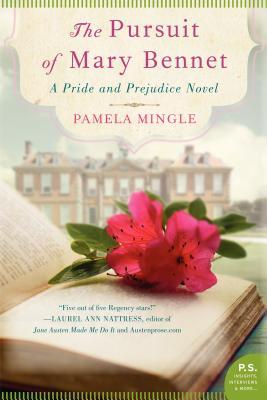
The Pursuit of Mary Bennet by Pamela Mingle

Source: William Morrow and TLC Book Tours
Paperback, 240 pages
I am an Amazon Affiliate

The Pursuit of Mary Bennet by Pamela Mingle is what could be considered a sequel Jane Austen’s Pride & Prejudice, but rather than focus on Elizabeth and Jane Bennet as the heroines, Mingle chooses the more pious and somewhat ridiculous sister Mary.  Mary Bennet has been the butt of the family’s jokes and jibes for much of her childhood, and for the most part Lydia and Kitty Bennet treat her in much the same way even though she is in her early twenties and has clearly changed.  Rather than sing to the detriment of society’s ears, she’s content with refining her pianoforte playing, leaving singing to others who are more gifted.  She once sat idly by and took the criticisms of her siblings and parents and held those resentments inside, but now she’s more inclined to speak her mind, while not being overly rude.  She’s a more matured woman, though still unsure of her feelings and her place in the family.

“I’d always believed I would remain a spinster.  I would disappoint as a wife.  I had not the easy compliance, the ability to defer to a husband, and worst of all, I lacked beauty, conduct, and, at times, even common sense.  But Jane said I had changed.  Truly, I valued her opinion above that of anyone else.”  (page 85)

Told from Mary’s point of view, readers are given an inside look into her growth as a young woman and a sister.  Rather than admonishing her sisters for their poor behavior aloud and in public, she’s taken to more tactful advice.  She’s a more well-rounded woman, though still naive when it comes to marriage, romance, and the bond between men and women.  While readers will enjoy this more evolved Mary and getting a glimpse into the lives of their favorite Bennets — Jane and Lizzy — the parallels between Lizzy and Darcy’s love story is reflected in Mary’s romance.  The close parallels from the quick prejudices and anger over easily explained moments lack an imagination one would expect, especially in this tale.  However, given Mary’s limited contact with men at Longbourn, it does stand to reason she would be unsure how to respond to male attentions.  Readers may have wanted a more inventive romance with trials different from those of Darcy and Lizzy.

The Pursuit of Mary Bennet by Pamela Mingle is a solid novel in the same vein as Austen’s work, and breathing life into the stern and bookish Mary is tough to pull off, but Mingle’s Mary is believable.  She’s a young woman of principle, and given her sisters’ love matches, it is no wonder that she would want to settle for nothing less.

About the Author:

Pamela Mingle is the author of Kissing Shakespeare, a time-travel romance for young adults set in Elizabethan England. She is a member of the Society of Children’s Book Writers and Illustrators, Pikes Peak Writers, Romance Writers of America, and the Jane Austen Society of North America.

Find out more about Pamela at her website, connect with her on Facebook, and follow her on Twitter.

This is my 79th book for the 2013 New Authors Challenge.
Mailbox Monday #247

Mailbox Monday (click the icon to check out the new blog) has gone on tour since Marcia at To Be Continued, formerly The Printed Page passed the torch.  November’s host is Rose City Reader.

Just a note to say that a poll about the hosting issue will be posted on the Mailbox Monday blog.

The meme allows bloggers to share what books they receive in the mail or through other means over the past week.

Just be warned that these posts can increase your TBR piles and wish lists.

Here’s what I received:

1.  Takedown Twenty by Janet Evanovich from my mother.

New Jersey bounty hunter Stephanie Plum knows better than to mess with family. But when powerful mobster Salvatore “Uncle Sunny” Sunucchi goes on the lam in Trenton, it’s up to Stephanie to find him. Uncle Sunny is charged with murder for running over a guy (twice), and nobody wants to turn him in—not his poker buddies, not his bimbo girlfriend, not his two right-hand men, Shorty and Moe. Even Trenton’s hottest cop, Joe Morelli, has skin in the game, because—just Stephanie’s luck—the godfather is his actual godfather. And while Morelli understands that the law is the law, his old-world grandmother, Bella, is doing everything she can to throw Stephanie off the trail.

It’s not just Uncle Sunny giving Stephanie the run-around. Security specialist Ranger needs her help to solve the bizarre death of a top client’s mother, a woman who happened to play bingo with Stephanie’s Grandma Mazur. Before Stephanie knows it, she’s working side by side with Ranger and Grandma at the senior center, trying to catch a killer on the loose—and the bingo balls are not rolling in their favor.

With bullet holes in her car, henchmen on her tail, and a giraffe named Kevin running wild in the streets of Trenton, Stephanie will have to up her game for the ultimate takedown.

2. Tangle by Julie Cameron Gray from Tightrope Books for review.

Teetering on the brink of longing and the downtrodden, Julie Cameron Gray’s poetic debut explores isolation and the distance between human understanding and human experience. Her poems showcase the relationship between people and their work, urban living and the fringe existence of “wild” animals, the flaws that relationships tend to encompass despite best intentions, and the mysteries inanimate objects hold. Tangle is a verdict, a web of dysfunction, and an alibi.

3.  Muse by Dawn Marie Kresan from Tightrope Books for review.

Beginning with an epigraph by Robert Graves, which asserts that “woman is muse or she is nothing,” the poems in Muse explore the concepts of influence, creativity, and gender by evoking the tragic figure of Elizabeth Siddal. As a model, then pupil, she married the Pre-Raphaelite artist Dante Gabriel Rossetti, and although an artist and poet in her own right, Siddal is best known as a Victorian muse and the inspiration for her husband’s paintings. In sensual and evocative language, Dawn Marie Kresan shifts voices and perspectives, from Siddal’s loss and heartbreak over her stillborn daughter to the poet’s lighthearted reproach of artist William Holman Hunt’s depiction of the Lady of Shalott.

What did you receive?

230th Virtual Poetry Circle

Welcome to the 230th Virtual Poetry Circle!

Remember, this is just for fun and is not meant to be stressful.

Keep in mind what Molly Peacock’s books suggested. Look at a line, a stanza, sentences, and images; describe what you like or don’t like; and offer an opinion. If you missed my review of her book, check it out here.

Also, sign up for the 2013 Dive Into Poetry Challenge because its simple; you only need to read 1 book of poetry. Check out the stops on the 2013 National Poetry Month Blog Tour and the 2012 National Poetry Month Blog Tour.

Today’s poem is from Cesare Pavese’s Disaffections: Complete Poems 1930-1950, translated by Geoffrey Brock:

The Cats Will Know

Rain will fall again
on your smooth pavement,
a light rain like
a breath or a step.
The breeze and the dawn
will flourish again
when you return,
as if beneath your step.
Between flowers and sills
the cats will know.

There will be other days,
there will be other voices.
You will smile alone.
The cats will know.
You will hear words
old and spent and useless
like costumes left over
from yesterday’s parties.

You too will make gestures.
You’ll answer with words—
face of springtime,
you too will make gestures.

The cats will know,
face of springtime;
and the light rain
and the hyacinth dawn
that wrench the heart of him
who hopes no more for you—
they are the sad smile
you smile by yourself.

There will be other days,
other voices and renewals.
Face of springtime,
we will suffer at daybreak.

What do you think?

Happy Thanksgiving!

Happy Thanksgiving, everyone! I hope you have a great holiday with family and friends. Don’t stuff yourselves too silly!

The Cellist of Sarajevo by Steven Galloway

Source: Public Library
Paperback, 235 pages
I am an Amazon Affiliate

The Cellist of Sarajevo by Steven Galloway is a truncated look at the siege of Sarajevo in the early 1990s that lasted about three years, though in this novel, it is reduced to about 30 days.  While the cellist is a real individual, Galloway has crafted him into a larger-than-life character, who signifies the hope that the people of Sarajevo cling to even in the face of dead bodies left to rot in the streets.  In addition to the cellist, who is more of an abstraction than a character with his own perspective, there is Arrow, a young, female sniper, Kenan, who has a wife and three children to care for, and Dragan, an older man who works at the local bakery.  Through alternating chapters, the fear and angst felt by these characters becomes heightened for the reader as they watch people fall to their knees after snipers shoot them or as the shelling begins and their own lives are at the mercy of chance.  The novel has a heavy atmosphere, a gray smoldering that permeates through the pages, weighing down the characters, slumping their shoulders and pushing them into darker places.

“If this city is to die, it won’t be because of the men on the hills, it will be because of the people in the valley.” (page 213)

Arrow has joined the resistance to fight against those that wish to destroy her people and the city, but while she’s been given free rein to choose her own military targets, things are about to change for her, and the hatred she feels for “them” — who are never clearly defined — becomes a motivator and a detriment to her.  Her character is pushed to the limit and she’s forced to make a decision that could be detrimental — a move that was rather dramatic and a bit predictable.  Kenan, meanwhile, is merely striving to keep his family alive, running to the brewery with his water containers to ensure they have enough to get through the next couple of weeks.  He makes these trips trembling in fear, but the fear only momentarily paralyzes him as he remembers the life before the siege and what life would be like without it.  He holds onto his daydreams of a family engrossed in its daily chores and entertainments, and keeps moving.  Dragan has been traveling to the bakery in solitude, rarely speaking to strangers and nearly always avoiding conversation with those he knew before the siege, cutting himself off.  Readers spend a great deal of time with him at an intersection where people are forced to take chances with their lives when they cross — some running, some sauntering, and some zigzagging across.

“‘Give Raza my love,’ she says, leaning in and hugging him.  She feels warm and substantial, much larger than when he hugged her only a short time ago.  She has become real to him again.” (page 115-6)

Galloway’s novel is about what it means to be in the midst of war, without understanding the reasons behind it, and yet, still facing the violence on a daily basis.  Readers will be required to ask themselves what is important, and to draw their own conclusions about why the cellist sits at 4 p.m. for 22 days to play Albinoni’s Adagio — the site of a mortar shelling where 22 people were killed while waiting in line for bread. Although lacking actual political/sociological motivations and the time line of the siege, Galloway seems to have a handle on the range of emotions and reactions people can have in war — whether it be a focus on hatred and revenge or the dissociation people can feel from their own country men in the face of uncertainty and death. The Cellist of Sarajevo is a novel in simple prose that belies the complexity of the moral and emotional issues it addresses.

About the Author:

Steven Galloway was born in Vancouver, and raised in Kamloops, British Columbia. He attended the University College of the Cariboo and the University of British Columbia. His debut novel, Finnie Walsh, was nominated for the Amazon.ca/Books in Canada First Novel Award. His second novel, Ascension, was nominated for the BC Book Prizes’ Ethel Wilson Fiction Prize, and has been translated into numerous languages. His third novel, The Cellist of Sarajevo, was published in spring of 2008. It was heralded as “the work of an expert” by the Guardian, and has become an international bestseller with rights sold in 20 countries. Galloway has taught creative writing at the University of British Columbia.

What the Book Club Thought:

Even though three members were unable to make the meeting, those that were able to attend seemed to like the novel, with one member saying that it was an easy and short read. Two members liked the POV of Arrow best, while one seemed to like both Arrow and Dragan and another preferred Kenan. One member believed that Kenan was the most human of the characters because of his interactions with other people throughout his travels to get water, while another thought that Dragan was more realistic in his detachment from others because of the harshness of war and the constant fear the residents endured. Arrow’s POV was more active, and one member enjoyed the use of strategy she employed in her efforts to protect the cellist. It seems as though this book was well received among the members in attendance.

This is my 78th book for the 2013 New Authors Challenge.

Mailbox Monday #246

Mailbox Monday (click the icon to check out the new blog) has gone on tour since Marcia at To Be Continued, formerly The Printed Page passed the torch.  November’s host is I Totally Paused!.

The meme allows bloggers to share what books they receive in the mail or through other means over the past week.

Just be warned that these posts can increase your TBR piles and wish lists.

Here’s what I received:

1.  Brady Needs a Nightlight by Brian Barlics, illustrated by Gregory Burgess Jones for review.

This book is a Mom’s Choice Award Recipient.  Is your child afraid of the dark? Are you having trouble with bedtime? You are not alone! Even those least likely to have a fear of the dark may have a story to share. In this book you will meet Brady, a bat who oddly has a terrible fear of the dark. This poses quite a dilemma for a creature that sleeps in a dark cave and comes out to play at night. Learn how Brady discovers a creative way to solve this problem…with a little help from some special, glowing friends.

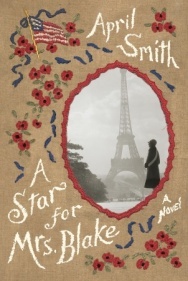
2.  A Star for Mrs. Blake by April Smith for review.

The United States Congress in 1929 passed legislation to fund travel for mothers of the fallen soldiers of World War I to visit their sons’ graves in France. Over the next three years, 6,693 Gold Star Mothers made the trip. In this emotionally charged, brilliantly realized novel, April Smith breathes life into a unique moment in American history, imagining the experience of five of these women.

They are strangers at the start, but their lives will become inextricably intertwined, altered in indelible ways. These very different Gold Star Mothers travel to the Meuse-Argonne American Cemetery to say final good-byes to their sons and come together along the way to face the unexpected: a death, a scandal, and a secret revealed.

3.  Still, at Your Door: A Fictional Memoir by Emma Eden Ramos for review.
Sabrina “Bri” Gibbons has only a few short minutes to pack her things and help her sisters pack theirs before running with their mother to the bus that will whisk them away from Butler, Pennsylvania, an abusive relationship, and a secret that none of them wishes to acknowledge. She was not prepared, though, for her mother to drop them on the streets of New York with the promise that she would be right back. Haunted by the sight of her mother running back to the cab, Bri, with Missy and Grace in tow, settles in with their grandparents. Thoughts of her present and her future collide with memories of her past, her dead father, and her mother’s bizarre episodes. She watches her sisters struggle with school and acceptance, all the while knowing the lack of any sense of security will make it impossible for them to carry on as ‘normal’ children. She finally lets her guard down enough to allow someone else in and sees a faint glimmer that her dreams might be attainable. Disaster strikes again, this time targeting her sister. Is it possible for Bri to find that balance between her dreams and her family’s realities?

4.  Big Girl Panties by Stephanie Evanovich for review.

Holly Brennan used food to comfort herself through her husband’s illness and death. Now she’s alone at age thirty-two. And she weighs more than she ever has. When fate throws her in the path of Logan Montgomery, personal trainer to pro athletes, and he offers to train her, Holly concludes it must be a sign. Much as she dreads the thought of working out, Holly knows she needs to put on her big girl panties and see if she can sweat out some of her grief.

Soon, the easy intimacy and playful banter of their training sessions lead Logan and Holly to most intense and steamy workouts. But can Holly and Logan go the distance as a couple now that she’s met her goals—and other men are noticing?

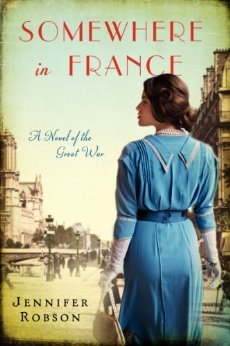
5.  Somewhere in France by Jennifer Robson for review.

Lady Elizabeth Neville-Ashford wants to travel the world, pursue a career, and marry for love. But in 1914, the stifling restrictions of aristocratic British society and her mother’s rigid expectations forbid Lilly from following her heart. When war breaks out, the spirited young woman seizes her chance for independence. Defying her parents, she moves to London and eventually becomes an ambulance driver in the newly formed Women’s Army Auxiliary Corps—an exciting and treacherous job that takes her close to the Western Front.

Assigned to a field hospital in France, Lilly is reunited with Robert Fraser, her dear brother Edward’s best friend. The handsome Scottish surgeon has always encouraged Lilly’s dreams. She doesn’t care that Robbie grew up in poverty—she yearns for their friendly affection to become something more. Lilly is the most beautiful—and forbidden—woman Robbie has ever known. Fearful for her life, he’s determined to keep her safe, even if it means breaking her heart.

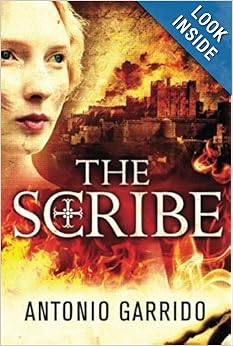
6.  The Scribe by Antonio Garrido, translated by Simon Bruni, which came unexpectedly.

The year is 799, and King Charlemagne awaits coronation as the Holy Roman emperor. But in the town of Würzburg, the young, willful Theresa dreams only of following in the footsteps of her scholarly father—a quiet man who taught her the forbidden pleasures of reading and writing. Though it was unthinkable for a medieval woman to pursue a career as a craftsperson, headstrong Theresa convinces the parchment-makers’ guild to test her. If she passes, it means access to her beloved manuscripts and nothing less than true independence. But as she treats the skins before an audience of jeering workmen, unimaginable tragedy strikes—tearing apart Theresa’s family and setting in motion a cascade of mysteries that Theresa must solve if she hopes to stay alive and save her family. 

What did you receive?

229th Virtual Poetry Circle

Welcome to the 229th Virtual Poetry Circle!

Remember, this is just for fun and is not meant to be stressful.

Keep in mind what Molly Peacock’s books suggested. Look at a line, a stanza, sentences, and images; describe what you like or don’t like; and offer an opinion. If you missed my review of her book, check it out here.

Also, sign up for the 2013 Dive Into Poetry Challenge because its simple; you only need to read 1 book of poetry. Check out the stops on the 2013 National Poetry Month Blog Tour and the 2012 National Poetry Month Blog Tour.

Today’s poem is from Brian Russell’s The Year of What Now:

The Year of What Now

I ask your doctor
of infectious disease if she's
read Williams   he cured
sick babies I tell her and
begin describing spring
and all   she's looking at the wall
now the floor   now your chart
now the door   never
heard of him she says
but I can't stop explaining
how important this is
I need to know your doctor
believes in the tenacity of nature
to endure   I'm past his heart
attack   his strokes   and now as if
etching the tombstone myself   I find
I can't remember the date
he died or even
the year   of what now
are we the pure products   and what
does that even mean   pure   isn't it
obvious   we are each our own culture
alive with the virus that's waiting
to unmake us

What do you think?

Guest Post: Music of the Moon by Erica Goss

Erica Goss, the poet who wrote Wild Place, continues to keep us up to date on her 12 Moons project with vocal talents of Nic S. and the musical talents of Kathy McTavish. We’ll be sure to keep everyone in the look on this collaborative project.  Check out the first guest post, her second guest post, and her third guest post.

Please gave Erica a warm welcome.

In the city I love, I stand
next to strangers who talk
of Mumbai or Beijing
while we wait for fish tacos,
reading enigmas in spray-paint,
solemn obedient children
gathered beneath the fall moon,
resplendent with energy
filched from the sun.

             from “Trapper’s Moon” by Erica Goss

As a child I practiced Beethoven’s “Moonlight Sonata” on my family’s battered Wurlitzer. The music seemed to start and end at the same place, reflecting the waxing and waning of the moon. I can still hear my piano teacher reminding me to “slow down, don’t rush the music,” and the tones I coaxed from that old piano.

I recently learned that Beethoven did not name his piece “Moonlight Sonata.” That name came from German music critic (and poet) Ludwig Rellstab, who compared the first movement of “Piano Sonata No. 14 in C-sharp minor” to the moonlight reflected on the water of Lake Lucerne in Switzerland. Regardless, the name stuck, and certainly influenced my experience of the music.

Cellist, composer and multi media artist Kathy McTavish makes soundscapes that evoke moonlight on water. In 12 Moons, many of the poems incorporate the idea that the moon influences our lives in unseen ways, tugging at us with gravity and forcing us into cycles like ocean tides. Kathy’s music explores that mysterious, liminal place. In her artist’s statement, she writes “My cross-sensory, blurred vision of the world impacts my visual language. I am inspired by emergent, organic forms, beat poets and abstract expressionist art.” Kathy’s soundscapes anchor the mood of 12 Moons, linking image and voice.

I asked Kathy about how she creates soundscapes, and what she thinks makes a good video poem.

“I try to work with poetry in a way that’s somewhat ambiguous. In poetry there’s a sense of the submerged, of hidden things. I want to preserve that strangeness with my soundscapes. You have to be a good listener to capture those qualities, and remember that the poem is a separate thing, apart from even the poet. I feel that video poems work best when they are non-literal, and non-illustrative, since the poet lives in a visual world already. I like images that have a fleeting quality, like seeing people on a train for just a split second.

In an effective video poem, the viewer can’t really follow one element more than any other. There are three things going on: the poem, the sound and the images. Your attention shifts between them, and that gives you a floaty feeling. My favorites have a looseness to them. The images are part of the soundscape, because images are already coming from the poem.”

What’s your process for working with Swoon (Swoon is the video artist for 12 Moons)?

“I started by releasing sound fabrics and textures to Swoon. I wanted a certain quality, almost an iciness to the sound. Swoon took my sounds and morphed them further. I created sound samples, weaving in certain sounds I liked because they were edgy and strange. The last three (Moon) poems I did all of the sound for, keeping it minimal. I looked into the poems, trying to find where they unwound. I have always trusted Swoon’s vision as an artist, so when he asks me to participate in a video poetry project, I’m happy to do it. I know I’ll get to read really good poems – never any bad ones! Our collaborations work and I always learn something.”

How does it feel to play the cello?

“It’s been said that the cello expresses the grief of the world. It’s close to the human voice in pitch and register. You have to be loose to play the cello. You have to let go. The cello rests against the breastbone, and there’s a physical connection between you and the instrument. I was classically trained, but now I do abstract soundscapes, more of a sound art thing, and video installations. In an installation, a space can become like a book. I compose from the cello, and when I play, I visualize. Synesthetic fusions happen for me.”

Do you have anything else to share about this project?

“I love that it’s mapped into a life – a year. Like the moon, it’s luminous and textured. There is an awareness of cycles, of the moon’s influence on our human cycles, and of death.”

12 Moons will appear beginning January 2014 at Atticus Review.

The last post about the process of making 12 Moons appears next month. Here are links to the artists involved in 12 Moons:

  • Swoon’s website
  • Kathy McTavish’s website
  • Erica Goss’s website
  • Erica Goss’s column on video poetry.

I loved that Kathy wants to bring life to the hidden elements in the poems through her soundscapes. 

What are your thoughts so far on this project coming to us in January?

Save

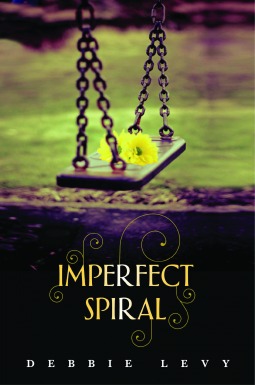
Imperfect Spiral by Debbie Levy

Source: Purchased Hooray for Books
Hardcover, 352 pages
I am an Amazon Affiliate

Imperfect Spiral by Debbie Levy is young adult novel that never speaks down to its reader as it asks questions about what it means to be a friend and what it means to be a neighbor and community member.  When tragedy strikes the fictional community of Franklin Grove in Meigs County, outside Washington, D.C., teen babysitter Danielle Snyder must cope with feelings of guilt and responsibility.  Her fear of speaking in public has haunted her long before the tragedy, but it is the loss of her friend, Humphrey, that causes her to speak out, to advocate on his behalf.  An unlikely friendship between a sophomore babysitter and a five-year-old boy blooms in the summer, but when it’s cut short, how does Danielle reconcile their unlikely connection and what has happened under her watch, especially when the small community is looking for someone to blame.

“I eat; the talk shifts to nothing in particular, which is good.  It’s as though we’re strangers sitting at the same table in one of those family-style restaurants.  We feel the need to make conversation, because that is what polite people do, but we are careful to keep the conversation safe.  Nothing to ignite sparks between Adrian and Mom.  Nothing to upset me.”  (page 4)

Her family life is not necessarily dysfunctional, but its not exactly serene when her brother Adrian is visiting after moving out.  And despite their inability to relate and emote without raising one another’s dander, the tragedy somehow brings them closer to reconciliation.  Shifting between the present after the tragedy and the past before the tragedy, Levy unfolds her story in an intricate way, allowing readers to see the whole complicated picture, even as Danielle begins to see it for the first time.  While her family dynamics play a role in the background, the real focus is on her relationship with Humphrey and the blame she lays at her own door for the tragedy.

“I rapped.  I crooned.  I rocked out.  Somehow dancing outdoors felt easier than in a school gym or hotel party room.  Plenty of space for my arms and legs.  I let myself lose control, and danced like crazy on the planet of Thrumble-Boo.

‘You look like a beautiful daddy longlegs!’ Humphrey said.”  (page 195)

Imperfect Spiral by Debbie Levy is about relationships that surprise us, about the illogical arguments of grief and assigning blame, but more than that, it’s about finding our way out of that grief to recognize the beauty in knowing and experiencing those relationships we may lose sooner than expected.  Levy’s characters are real, they’re the kids down the street searching for a sense of belonging, and they are burdened by the same emotions we all feel as adults.  It’s a highly emotional read that will leave a lasting impression.

About the Author:

Debbie Levy writes books — fiction, nonfiction, and poetry — for people of all different ages, and especially for young people. Before starting her writing career, she was a newspaper editor; before that, she was a lawyer with a Washington, D.C. law firm.  She has a bachelor’s degree in government and foreign affairs from the University of Virginia, and a law degree and master’s degree in world politics from the University of Michigan.  She lives in Maryland and spends as much time as she can kayaking and otherwise messing around in the Chesapeake Bay region.  Visit her Website, Facebook, and Twitter.

The Queen of Bad Decisions by Janel Gradowski

Source: Author Janel Gradowski
Kindle eBook, 43 pages
I am an Amazon Affiliate

The Queen of Bad Decisions by Janel Gradowski is a “cupcake” novellette, volume 2 in the Bartonville series.  Daisy is the protagonist in this prequel, which takes place before Must Love Sandwiches (volume 1 in the Bartonville series).  She’s just realized that her relationship with Gary is not and will never be what she expects it to be, especially when she’s paying half the rent, for all the food, and he stays out drinking all night.  Although her life is less than perfect, she still loves her bookstore job and her life is not as pathetic as her drunk brother’s.  Moving — even temporarily — back in with her parents, she realizes that her life is not as bad compared to some others.  But it takes a swift kick in the pants for her to change her own life.

“All of the useless utensils were in the kitchen drawer when she moved in with Gary.  Everything needed to be replaced.”

“She hadn’t just lowered her standards when she started dating Gary, she sucker punched her morals and left them to wallow in the mud.”

Daisy is an insecure young woman, still looking for her place and looking for the right man.  While her mother is supportive, her father is more of a go-getter — meaning get the kids out of the house ASAP.  Her boss, meanwhile, has kept her mouth shut, but once the floodgates open, there’s no stopping her helpful advice from flowing.  Gradowski creates characters that are three-dimensional, and her dialogue is always punchy and comical, without a single wasted word.  The Queen of Bad Decisions by Janel Gradowski is a short satisfying treat, and the only complaint from readers could be that they want more.  In case of Gradowski’s series, there will be more in store.

This series also includes bonus stories and recipes.

Check out my other reviews:

About the Author:

Janel Gradowski grew up, and still lives, in the mitten of Michigan. She is a wife and mother whose writing companion is a crazy Golden Retriever named Cooper. In the past she has worked many jobs. Renting apartments, scorekeeping for a stock car racetrack and selling newspaper classified advertisements are some of the experiences that continue to provide inspiration for her stories. Now she writes fiction and is also a beadwork designer and teacher. She enjoys cooking and is fueled by copious amounts of coffee.

Her work has appeared in many publications, both online and in print. She is the author of two series. Her first women’s fiction series is The Bartonville Series. Each volume contains stories ranging from flash to novella length. All of the stories are set in Michigan every volume contains accompanying recipes. The 6:1 Series features themed collections of her stories that are based on the title’s theme.  Connect with her on Facebook, Pinterest, and Twitter.

Check out another part in the series, Ready or Not, published in serial format at JukePop.

Mailbox Monday #245

Mailbox Monday (click the icon to check out the new blog) has gone on tour since Marcia at To Be Continued, formerly The Printed Page passed the torch.  November’s host is I Totally Paused!.

The meme allows bloggers to share what books they receive in the mail or through other means over the past week.

Just be warned that these posts can increase your TBR piles and wish lists.

Here’s what I received:

1.  The Queen of Bad Decisions by Janel Gradowski, which I received from the author for review.

Daisy’s life is sliding downhill at breakneck speed. Leaving her worthless boyfriend lands her back at her parents’ home, sleeping on the couch. After only a few days she is tired and annoyed. Her parents give new meaning to the term “early riser” and she can’t avoid unpleasant encounters with her obnoxious brother. The only escape from the familial torture is at her job in a book store. Mary, her boss finds a solution to the housing dilemma, but Daisy will need to change more than her address labels to make the arrangement work.

2.  Undressing Mr. Darcy by Karen Doornebos for review from the publisher in December.

Thirty-five-year-old American social media master Vanessa Roberts lives her thoroughly modern life with aplomb. So when her elderly Jane Austen–centric aunt needs her to take on the public relations for Julian Chancellor, a very private man from England who’s written a book called My Year as Mr. Darcy, Vanessa agrees. But she’s not “excessively diverted,” as Jane Austen would say.

…Until she sees Julian take his tight breeches off for his Undressing Mr. Darcy show, an educational “striptease” down to his drawers to promote his book and help save his crumbling estate. The public relations expert suddenly realizes things have gotten…personal. But can this old-fashioned man claim her heart without so much as a GPS? It will take three festivals filled with Austen fans, a trip to England, an old frenemy, and a flirtatious pirate re-enactor to find out.

3.  Dog Songs by Mary Oliver, purchased from Novel Books.

Beloved by her readers, special to the poet’s own heart, Mary Oliver’s dog poems offer a special window into her world. Dog Songs collects some of the most cherished poems together with new works, offering a portrait of Oliver’s relationship to the companions that have accompanied her daily walks, warmed her home, and inspired her work. To be illustrated with images of the dogs themselves, the subjects will come to colorful life here.

These are poems of love and laughter, heartbreak and grief. In these pages we visit with old friends, including Oliver’s well-loved Percy, and meet still others. Throughout, the many dogs of Oliver’s life emerge as fellow travelers, but also as guides, spirits capable of opening our eyes to the lessons of the moment and the joys of nature and connection.

4.  NOS4A2 by Joe Hill from Novel Books.

Victoria McQueen has a secret gift for finding things: a misplaced bracelet, a missing photograph, answers to unanswerable questions. On her Raleigh Tuff Burner bike, she makes her way to a rickety covered bridge that, within moments, takes her wherever she needs to go, whether it’s across Massachusetts or across the country.

Charles Talent Manx has a way with children. He likes to take them for rides in his 1938 Rolls-Royce Wraith with the NOS4A2 vanity plate. With his old car, he can slip right out of the everyday world, and onto the hidden roads that transport them to an astonishing – and terrifying – playground of amusements he calls “Christmasland.”

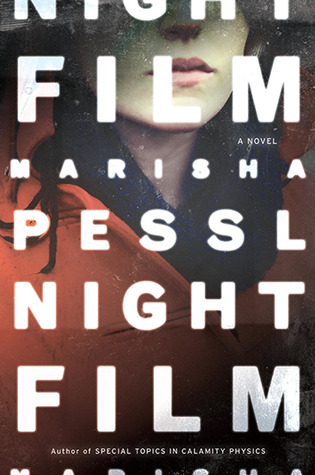
5. Night Film by Marisha Pessl from Novel Books.

On a damp October night, beautiful young Ashley Cordova is found dead in an abandoned warehouse in lower Manhattan. Though her death is ruled a suicide, veteran investigative journalist Scott McGrath suspects otherwise. As he probes the strange circumstances surrounding Ashley’s life and death, McGrath comes face-to-face with the legacy of her father: the legendary, reclusive cult-horror-film director Stanislas Cordova—a man who hasn’t been seen in public for more than thirty years.

For McGrath, another death connected to this seemingly cursed family dynasty seems more than just a coincidence. Though much has been written about Cordova’s dark and unsettling films, very little is known about the man himself.

6.  I’ll Be Seeing You by Suzanne Palmieri-Hayes and Loretta Nyhan from Novel Books.

It’s January 1943 when Rita Vincenzo receives her first letter from Glory Whitehall. Glory is an effervescent young mother, impulsive and free as a bird. Rita is a sensible professor’s wife with a love of gardening and a generous, old soul. Glory comes from New England society; Rita lives in Iowa, trying to make ends meet. They have nothing in common except one powerful bond: the men they love are fighting in a war a world away from home.

Brought together by an unlikely twist of fate, Glory and Rita begin a remarkable correspondence. The friendship forged by their letters allows them to survive the loneliness and uncertainty of waiting on the home front, and gives them the courage to face the battles raging in their very own backyards. Connected across the country by the lifeline of the written word, each woman finds her life profoundly altered by the other’s unwavering support.

7.  The Coldest Girl in Coldtown by Holly Black from Novel Books.

Tana lives in a world where walled cities called Coldtowns exist. In them, quarantined monsters and humans mingle in a decadently bloody mix of predator and prey. The only problem is, once you pass through Coldtown’s gates, you can never leave.

One morning, after a perfectly ordinary party, Tana wakes up surrounded by corpses. The only other survivors of this massacre are her exasperatingly endearing ex-boyfriend, infected and on the edge, and a mysterious boy burdened with a terrible secret. Shaken and determined, Tana enters a race against the clock to save the three of them the only way she knows how: by going straight to the wicked, opulent heart of Coldtown itself.

8.  A Spider in the Cup by Barbara Cleverly from Novel Books.

At dawn one morning in 1933, an amateur dowsing team digging the banks of the Thames for precious metals unearths the body of a young woman with a priceless gold coin in her mouth and a missing toe. The case falls on Assistant Commissioner of Scotland Yard Joe Sandilands’s turf, but he’s been given another assignment—and a very high-profile one. London is hosting a historic global economic conference to try to solve the global Depression, and political tensions are running very high, as very influential participants are starting to take positions allied with or staunchly against the rapidly militarizing Germany. Sandilands’s job is to protect and keep an eye on the visiting American senator Cornelius Kingstone, right-hand man to President Roosevelt, throughout the conference. When a strange set of coincidences link the river bank body to the senator, Joe realizes his assignment is much bigger than he’d thought, and that Senator Kingstone is caught up in a very dangerous game—one that might cost not just one but thousands of lives.

What did you receive?