Quantcast

Angela’s Ashes by Frank McCourt

Source: Borrowed from Diary of an Eccentric
Paperback, 460 pages
I am an Amazon Affiliate

Angela’s Ashes by Frank McCourt is a memoir about his young life and his coming of age.  The memoir does not gloss over the hardships he and his family face, nor does it leave out the bad things McCourt did as a child to survive.  It’s heartbreaking to see how a father can shun his responsibilities in favor of alcohol, while leaving his wife little recourse but to beg for charity on a weekly and daily basis just to feed her young children.  Angela, his mother, becomes a shadow of herself with the trials they face, especially as some of their youngest children perish from starvation and disease in America and even at home in Ireland.  Beginning in America, Angela meets a young man and falls in love, but he’s not the man she thinks he is and soon discovers that he is plagued by the need for drink.  Their hardships continue even as they are sent back to Ireland by relatives in the New World.

“When I look back on my childhood I wonder how I survived at all.  It was, of course, a miserable childhood: the happy childhood is hardly worth your while.  Worse than the ordinary miserable childhood is the miserable Irish childhood, and worse yet is the miserable Irish Catholic childhood.”  (page 9)

Living in a time when women were not allowed to work and when men were not expected to hand over their wages to their wives or to have their wives with them when they got paid — because his father takes the wages when he’s paid and eventually comes home with nothing — becomes a heavy burden on the family.  This leaves his wife to beg the grocer for credit so she can buy necessities for her family, and in Ireland it is worse because with a husband from the North, he’s unable to get a job in the first place.  Even when he does get a job, he often loses it by drinking late into the night and then sleeping in the next day.  These circumstances make it difficult for her and the family to stay healthy and even survive.

Although readers will be surprised at how long this family is able to survive in spite of the deaths and the starvation, they’ll also be surprised at the depth of their own loyalty and love for their father.  Rarely is anything said by the children about their father, though the mother surely speaks her mind about his penchant for the pint and his irresponsibility — to no avail.  McCourt pulls no punches about telling the darkest moments of his early life, including the beatings he took from teachers and family members.  There is still a sense of hope in him even in the most dire of circumstances.

Whether all of the things that happened in the memoir are fact or just his remembrances, there is clearly an atmosphere of struggle that has driven him to make the most of the circumstances he’s given.  He strives to do his best in school, to care for his family as best he can in the absence of his father, and to make something of himself in spite of all he must battle against.  Angela’s Ashes by Frank McCourt is dark and hopeless at times, but there is the light of humor and hope between the lines.  This is a memoir that reads more like a novel.

About the Author:

Frank McCourt (1930-2009) was born in Brooklyn, New York, to Irish immigrant parents, grew up in Limerick, Ireland, and returned to America in 1949. For thirty years he taught in New York City high schools. His first book, “Angela’s Ashes,” won the Pulitzer Prize, the National Book Critics Circle Award and the L.A. Times Book Award. In 2006, he won the prestigious Ellis Island Family Heritage Award for Exemplary Service in the Field of the Arts and the United Federation of Teachers John Dewey Award for Excellence in Education.

This is my 4th and final book for the Ireland Reading Challenge 2013.

Undressing Mr. Darcy by Karen Doornebos

Source: Publisher Berkley Trade
Paperback, 368 pages
I am an Amazon Affiliate

Undressing Mr. Darcy by Karen Doornebos is a contemporary novel steeped heavily in the Austenite world, with Vanessa Roberts’ Aunt Ella one of the leaders of an American chapter of the Jane Austen society.  Vanessa is a social media genius and public relations expert, and as a favor to her aunt — with a bit of matchmaking in the background — she takes on the book tour and American media blitz tour of Mr. Darcy.  The man has stepped out of the pages of Pride & Prejudice, including the breeches and cravat, and he oozes British charm and politeness that’s hard to read, but Vanessa can’t help falling for the storybook fairytale.

“A fortune-teller with heavy makeup lasered in on Vanessa from across the lobby and came right up to her.  ‘I see foreign travel in your future.  It’s what you need, darling.'” (page 29)

Doornebos sets the scene of Vanessa’s world well, from her attachment to the virtual world as a safety blanket to protect her from the real world to the real-world life that comes crashing down around her.  While her relationship with her aunt is tight and endearing, her fallout with Lexi — her former best friend and business partner — is a bit mysterious, but once revealed seems like a deal-breaker for good until the friendship chemistry between the two becomes overpowering, even for the reader.  It’s clear that these two women are strong and will butt heads, but that they sincerely have their friend’s interests at heart.

Mixing the modern world with Austen’s world creates clashes and moments of nostalgia for written letters and face-to-face meetings. While the first half of the book is quick and engaging, once Vanessa hits the streets of Bath and London, the pace slows down as she takes in the sights of Austen’s home and goes on a scavenger hunt for the man of her dreams. Doornebos has created a commentary on the modern pace of life, while at the same time holding true to Austen’s outlook on matchmaking and romance. Things are not always as they seem in this world or in Austen’s.

Undressing Mr. Darcy by Karen Doornebos is full of romance, misdirection, secrets, and sexy men.  Doornebos surely knows what most women want these days in a love story — hot men with substance.  Vanessa is a strong woman who needs to learn how to be vulnerable, and she also needs to learn that being vulnerable doesn’t have to translate into being a lapdog or doormat.

About the Author:

Karen Doornebos is the author of UNDRESSING MR. DARCY published by Berkley, Penguin. Her first novel, DEFINITELY NOT MR. DARCY, has been published in three countries.

She lived and worked in London for a short time, but is now happy just being a lifelong member of the Jane Austen Society of North America and living in the Chicagoland area with her husband, two teenagers and various pets, including a bird.

A fun moment in the book for me is imagining the lecture Dr. Cornel West would give at a Jane Austen Society gathering.  If you think it’s an odd pairing, check out this video:

This is my 81st book for the 2013 New Authors Challenge.

Guest Post & Giveaway: Mulling Over It – Writing Platform 21 by T. R. Patrick

Platform 21 by T.R. Patrick is the first book in the Beyond the Veil science fiction series.  Today, T.R. Patrick, who received the “Best Debut Author of 2013” award from the Bookworm Best Awards, will share a little bit about the creation of his book.  And there’s a giveaway.

Here’s a little bit about the book:

Luke’s life is about to take a dangerous turn. But first he has to die.

In the year 2052, high school sophomore Luke Gibson considers himself an average teenager in a world on the brink of monumental change. Joining his parents and sister, Laura, at the first World Energy Initiative Conference, he is among thousands gathered in a Denver arena to celebrate free renewable energy when a massive earthquake strikes killing everyone in the stadium. The last thing Luke sees before his death is a girl reaching out to him—a stranger whose face he remembers from his dreams.

The end, however, is not the end. Suddenly, inexplicably, Luke is back home in Ohio and everything is different. His sister is gone, the victim in an unsolved homicide years before. Angela, his mysterious dream girl, is here also, and the only person besides Luke who recalls the previous reality. And now their determination to uncover the truth about Laura’s murder and their transformed world is making them targets—forced to flee for their lives from a nameless shadow organization and a government seeking vengeance for an unthinkable act of terror—as they stand on the threshold of a dark conspiracy that threatens all humankind.

Please give Patrick a warm welcome:

Have you ever been so frustrated about something, you needed to find a creative outlet to just get it all out? Writing Platform 21 was a bit like that for me. There are so many things going on in the world, it’s often easier to put it in the back of our minds and just focus on the little things. For whatever reason, I couldn’t do that. There is so much wrong with the world, I wanted to do something – anything to inject a voice a reason into the discussion.

Platform 21 was born from that frustration. The original concept of the book was something so simple, I almost feel a little embarrassed when I think about it. But when I started writing it, things just wouldn’t line up. I knew I was writing one thing, but the story wanted me to write something different. For the first time as a writer, I decided I was going to let the story tell itself. I would simply become the dude lucky enough to be able to write it down. That once embarrassing concept is nothing but a distant memory. It was an idea I’m glad never truly raised to the surface. Instead, I found a world in the shadow of an inexplicable veil that separates humankind from the truth.

If there is one thing constant about each and every one of us, it is the desire for the truth. We’ve seen throughout history how those in power distort and twist the truth. There is a constant struggle for it and humanity has grappled with it since the beginning of time. I believe every one of us desires to do good. We want to see our neighbors succeed as well. Every time a terrible event inflicts harm upon us and our neighbors, there are always good people willing to rise from the ashes and make things right. However, when it comes to the big picture – people just don’t know where the fire is. Some of us feel the fire is simply too big to put out.

So, I set off to write a book about this struggle. Set in a world where every conspiracy theory is real, Luke Gibson and Angela Morgan set off on a journey to discover the truth about Luke’s slain sister. This search for justice is much like our search for the reason why terrible things happen in this world. Luke and Angela’s search for the truth makes them targets of some very powerful enemies. Amidst all the conspiracy, and the lies, they discover anyone could be an enemy. Learning that even people who desire good could work against them, they begin to realize how misled the world has become.

This theme follows Luke throughout his adventure. I’m writing ‘The Vorago Initiative’ (The Sequel to Platform 21) right now, and I find myself thinking about all of those who think they are fighting for truth, or for what’s right – only to discover they’ve been misled all along. How can you discern the truth if you’ve been lied to since the day you were born? What if you don’t like the truth? Is it worth pulling back the veil if it means revealing a world that is nothing like what you once thought? Some would even end up fighting to protect the veil, to continue living the lie because they’ve become comfortable with it. Those who are willing to fight for the truth have their own demons to deal with. Just how much is an individual willing to sacrifice for it? How much would you sacrifice?

It’s difficult to discuss these things without demonstrating what is truly at stake when a person gets close to the truth in a world filled with conspiracy. The general themes of Platform 21 are quite dark, and a very gritty picture is painted. I didn’t want to hide the truth, or pull my punches as an author. It’s simply not fair to the reader when an author hides just how wicked the world can be at times. I stayed hauntingly close to the historical events discussed in the book, all while showing the reader two characters who would stop at nothing to overcome the adversity they faced.

Writing about these themes is tough. I had to write more than my fair share of difficult imagery and depressing moments. There were times I spent many hours staring at a blank screen, afraid to start writing because I knew where it would take me. This is the obstacle I’ve set out to challenge, and with Platform 21, I think I managed to show the brutal truth about our past, present, and potential future.

But you know what? The world ain’t all that bad. The love story in Platform 21 was one of the most enjoyable parts of the writing. Some of my self-proclaimed ‘crowning achievements’ in the book weren’t the fast paced action scenes, or the twists. To me, the book shined because of the characters and how they interacted with each other. There were some extremely tricky topics discussed in Platform 21. I had to imagine how a person would react in the face of one of the most despicable and deplorable acts a person could commit. How would that event change the character, and the existing relationships he or she already had? These were some very tough questions and it isn’t easy, or in my opinion even possible, to just outline this kind of complicated character development. This was the hardest part of the writing, but it was also the most rewarding.

Writing Platform 21 was a challenge. It was the hardest book I ever set out to write. It was also the best book I’ve ever written, which is why I decided to publish it. Having penned two other books, I know what it’s like to write something and realize it isn’t your best. With Platform 21, it just came to me. There isn’t any other way of putting it. I’m the luckiest guy ever! Why this story chose me to share it with the world, I’m not sure. It has been a wonderful joy, and I can’t wait to see where the series takes me next.

About the Author:

Author Timothy R. Patrick, born in 1985, started writing when he was only nine, delivering his first short story to his Mom for her birthday. Since then, writing has been an incredible passion. Every chance he could write, he took it. He even scratched out a few stories in Naval Boot Camp at Great Lakes, Illinois.

Tim spent four years in the Navy achieving the rank of Petty Officer 2nd class. He served three years aboard USS Chosin and was deployed twice in support of the Global War on Terror, and Iraqi Freedom. However, he would always be remembered as the guy who sat in the corner of the mess decks writing a book he would never release. He said it wasn’t good enough.

After his time in the Navy, Tim became a Test Engineer working for companies like Scientific Research Corporation and Hewlett Packard. During this phase of his life he moved to Charleston, South Carolina where he bought a home and tried to settle into the American Dream. But Tim wasn’t content with that, he wanted to do something more than work the 9 to 5. So, he tried his hand at politics and ran for Dorchester County Council as an Independent. They said he was too young and verbose. After losing the election, he decided to try his hand at writing instead.

Today, Timothy Patrick is the author of, Platform 21 – the first installment of the “Beyond the Veil” series. Platform 21 is a novel set in the near future which follows a young man on a journey to solve his sister’s murder in the midst of global conspiracy. His current project is, The Vorago Initiative – which picks up right where Platform 21 left off.

ENTER THE GIVEAWAY BELOW:

a Rafflecopter giveaway

Mailbox Monday #249

Mailbox Monday (click the icon to check out the new blog) has gone on tour since Marcia at To Be Continued, formerly The Printed Page passed the torch.  December’s host is Rose City Reader.

***Here are the results of the Mailbox Monday poll and what we all can expect in 2014 and beyond.***

The meme allows bloggers to share what books they receive in the mail or through other means over the past week.

Just be warned that these posts can increase your TBR piles and wish lists.

Here’s what I received:

1. Ripper: A Novel by Isabel Allende for review.

The Jackson women, Indiana and Amanda, have always had each other. Yet, while their bond is strong, mother and daughter are as different as night and day. Indiana, a beautiful holistic healer, is a free-spirited bohemian. Long divorced from Amanda’s father, she’s reluctant to settle down with either of the men who want her—Alan, the wealthy scion of one of San Francisco’s elite families, and Ryan, an enigmatic, scarred former Navy SEAL.

While her mom looks for the good in people, Amanda is fascinated by the dark side of human nature, like her father, the SFPD’s Deputy Chief of Homicide. Brilliant and introverted, the MIT-bound high school senior is a natural-born sleuth addicted to crime novels and Ripper, the online mystery game she plays with her beloved grandfather and friends around the world.

When a string of strange murders occurs across the city, Amanda plunges into her own investigation, discovering, before the police do, that the deaths may be connected. But the case becomes all too personal when Indiana suddenly vanishes. Could her mother’s disappearance be linked to the serial killer? Now, with her mother’s life on the line, the young detective must solve the most complex mystery she’s ever faced before it’s too late.

2.  The Memory of Lost Senses by Judith Kinghorn for review.

Cecily Chadwick is idling away the long, hot summer of 1911 when a mysterious countess moves into the large, deserted country house on the edge of her sleepy English village. Rumors abound about the countess’s many husbands and lovers, her opulent wealth, and the tragedies that have marked her life. As Cecily gets to know her, she becomes fascinated by the remarkable woman—riveted by her tales of life on the Continent, and of the famous people she once knew. But the countess is clearly troubled by her memories, and by ruinous secrets that haunt her…

Staying with the countess is a successful novelist and dear friend who has been summoned to write the countess’s memoirs. For aspiring writer Cecily, the novelist’s presence only adds to the intrigue of the house. But it is the countess’s grandson, Jack, who draws Cecily further into the tangled web of the countess’s past, and sweeps her into an uncertain future…

3.  Tiny Stories tote.


4.  Mr. Knightley’s Diary by Amanda Grange from the library sale.

Between managing his estate and visiting his brother in London, Mr. Knightley is both exasperated and amused by his irresistibly beautiful, outrageously mischievous neighbor, Emma Woodhouse, whose misguided attempts at matchmaking are wreaking havoc in the village of Highbury.

But when a handsome newcomer arrives and catches Emma’s attention, Mr. Knightley is shocked by his reaction. Amusement gives way to another emotion entirely-for his unreasonable dislike of the handsome newcomer seems suspiciously like jealousy.

5.  Edmund Bertram’s Diary by Amanda Grange from the library sale.

At ten years of age, Fanny Price came to live with Edmund Bertram and his family at Mansfield Park. Far from the brat Edmund expected, Fanny became his closest confidante and dearest friend.

But when the fashionable Crawford siblings? Henry and Mary?come to town, they captivate the Bertram family. Henry embarks on a scandalous flirtation with Edmund?s sister, who is already betrothed to another, while Edmund is enchanted by Mary?s beauty and wit. But when it appears that Mary is not all she seems to be, Edmund will turn to the one woman who has always been at his side to find the happiness he deserves?Fanny.

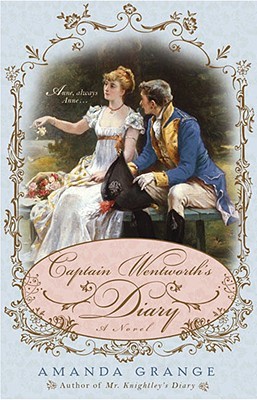
6.  Captain Wentworth’s Diary by Amanda Grange from the library sale.

During his shore leave from the Navy, Frederick Wentworth falls in love with the elegant and intelligent Miss Anne Elliot?only to see his hopes of marrying her dashed by her godmother.

Eight years later, Wentworth has realized his ambitions. A wealthy captain, he has pushed his memories of Anne to the furthest recesses of his mind?until he sees her again. And though Anne?s bloom has faded, Wentworth is surprised to find that his regard for her wit and warmth has not.

7.  The Archivist by Martha Cooley from the library sale.

A young woman’s impassioned pursuit of a sealed cache of T. S. Eliot’s letters lies at the heart of this emotionally charged novel — a story of marriage and madness, of faith and desire, of jazz-age New York and Europe in the shadow of the Holocaust. The Archivist was a word-of-mouth bestseller and one of the most jubilantly acclaimed first novels of recent years.

8.  The Space Between Us by Thrity Umrigar from the library sale.

Set in modern-day India, it is the story of two compelling and achingly real women: Sera Dubash, an upper-middle-class Parsi housewife whose opulent surroundings hide the shame and disappointment of her abusive marriage, and Bhima, a stoic illiterate hardened by a life of despair and loss, who has worked in the Dubash household for more than twenty years. A powerful and perceptive literary masterwork, author Thrity Umrigar’s extraordinary novel demonstrates how the lives of the rich and poor are intrinsically connected yet vastly removed from each other, and how the strong bonds of womanhood are eternally opposed by the divisions of class and culture.

9. Bicycles: Love Poems by Nikki Giovanni from the library sale.

With Bicycles, she’s collected poems that serve as a companion to her 1997 Love Poems. An instant classic, that book—romantic, bold, and erotic—expressed notions of love in ways that were delightfully unexpected. In the years that followed, Giovanni experienced losses both public and private: a mother’s passing, a sister’s too, and a massacre on the campus where she teaches. Yet just when it seemed life was spinning out of control, Giovanni rediscovered love—what she calls the antidote. Here romantic love—and all its manifestations, the physical touch, the emotional pull, the hungry heart—is distilled as never before by one of our most talented poets.

10.  The Wild Iris by Louise Gluck from the library sale.

This collection of stunningly beautiful poems encompasses the natural, human, and spiritual realms, and is bound together by the universal themes of time and mortality. With clarity and sureness of craft, Gluck’s poetry questions, explores, and finally celebrates the ordeal of being alive.


11. Birthday Letters by Ted Hughes from the library sale.

The poems in Birthday Letters are addressed (with just two exceptions) to Plath, and were written over a period of more than twenty-five years, the first a few years after her suicide in 1963. Some are love letters, others haunted recollections and ruminations. In them, Hughes recalls his and Plath’s time together, drawing on the powerful imagery of his work–animal, vegetable, mythological–as well as on Plath’s famous verse.

Countless books have discussed the subject of this intense relationship from a necessary distance, but this volume–at last–offers us Hughes’s own account. Moreover, it is a truly remarkable collection of pems in its own right.

12.  Morality for Beautiful Girls by Alexander McCall Smith from the library sale.

In Morality for Beautiful Girls, Precious Ramotswe, founder and owner of the only detective agency for the concerns of both ladies and others, investigates the alleged poisoning of the brother of an important “Government Man,” and the moral character of the four finalists of the Miss Beauty and Integrity Contest, the winner of which will almost certainly be a contestant for the title of Miss Botswana. Yet her business is having money problems, and when other difficulties arise at her fiancé’s Tlokweng Road Speedy Motors, she discovers the reliable Mr J.L.B. Matekoni is more complicated then he seems.

13.  The Kalahari Typing School for Men by Alexander McCall Smith from the library sale.

Mma Precious Ramotswe is content. Her business is well established with many satisfied customers, and in her mid-thirties (“the finest age to be”) she has a house, two adopted children, a fine fiancé. But, as always, there are troubles. Mr. J.L.B. Matekoni has not set the date for their marriage. Her able assistant, Mma Makutsi, wants a husband. And worse, a rival detective agency has opened in town—an agency that does not have the gentle approach to business that Mma Ramotswe’s does. But, of course, Precious will manage these things, as she always does, with her uncanny insight and her good heart.

14.  The Full Cupboard of Life by Alexander McCall Smith from the library sale.

Still engaged to the estimable Mr J.L.B. Matekoni, Mma Ramotswe understands that she should not put too much pressure on him, as he has other concerns, especially a hair-raising request from the ever persuasive Mma Potokwane, matron of the orphan farm. Besides Mma Ramotswe herself has weighty matters on her mind. She has been approached by a wealthy lady to check up on several suitors. Are these men interested in the lady or just her money? This may be a difficult case, but it’s just the kind of problem Mma Ramotswe likes and she is, as we know, a very intuitive lady.

I did snag some books for gifts for my daughter and some other people, but I won’t post them here, in case they are watching….reading…

What did you receive?

232nd Virtual Poetry Circle

Welcome to the 232nd Virtual Poetry Circle!

Remember, this is just for fun and is not meant to be stressful.

Keep in mind what Molly Peacock’s books suggested. Look at a line, a stanza, sentences, and images; describe what you like or don’t like; and offer an opinion. If you missed my review of her book, check it out here.

Also, sign up for the 2013 Dive Into Poetry Challenge because its simple; you only need to read 1 book of poetry. Check out the stops on the 2013 National Poetry Month Blog Tour and the 2012 National Poetry Month Blog Tour.

Today’s poem is from Stephen Burt’s Belmont:

The People on the Bus

We have had our lives.
The reservoir visible
In the window beside our elbows, and the willow
Branches trailing at our stop
Are the nature we leave
Behind us gladly, since it has no place

For all we have recently learned: that sex
Is temporary, help
Ours to hand down now, and materials science
Not the only kind. We thank
Calm, careful Minerva, goddess
Of adults, who for so many years took us

To school: her voice the timbre of fretless bass,
Her eyes the color of pencil lead, she taught
Us how to behave in order to have our rewards
In twenty years. We have them, and if we wish
Too often, this fall, to have led another life
We do not mean that we would give up ours:

Though we stand in a row and sway
Before an obstructed view, we are able to find
Initials outlined in the crosshatched trees,
And pebbles—calculi—around our ponds
And cherish them; we like to watch the roads
Along which the perennial pollen sifts down

As finely as ever, making a soft powder
Of brass amid the troughs in softball fields.
Our skills are finally in demand.
If you mock us, Pan,
In whom we also believe, do it
As gently as you can.

What do you think?

In Honor of the 12 Remaining Days Until Christmas

christmastreeChristmas is fast approaching here in this house.  We’ve finally decorated the tree with its lights, tinsel, and bulbs, and got the candles in the windows and the stockings above the fireplace.  There aren’t many gifts under the tree this year, but that doesn’t mean I don’t want to share gifts with all of you.

Now through Christmas Eve, I’m going to post on the Savvy Verse & Wit Facebook page one book from the Best of List for 12 days.

I’ll try to post the each book on the Best of List in the afternoon for everyone on the Facebook page and after the holidays, I’ll post the full list here on the blog.

Have a happy holiday everyone, no matter what you celebrate.

Interview with Marianne Harden, Author of Malicious Mischief and Giveaway

Malicious Mischief by Marianne Harden is the first in the Rylie Keyes mystery series.

Today, Harden is visiting my readers to talk about her path to publication, and there’s a giveaway.

But first, here’s a little bit about the book:

Is it strange to have the unemployment office on speed dial? Not for twenty-four-year-old college dropout Rylie Keyes. Her current job at a small retirement home is worlds more important than all her past gigs, though: if she loses this job, she won’t be able to stop the forced sale of her grandfather’s home, a house that has been in the family for ages. However, to keep her job she must figure out the truth behind the death of a senior citizen who was found murdered while in her care. Explain that one, Miss Keyes.

The victim was thought to be a penniless man with a silly grudge against Rylie. However, his enemies will do whatever it takes to keep their part in his murder secret.

Forced to dust off the PI training she needs to keep hidden from her ex-detective grandfather, Rylie must juggle the attentions of two sexy police officers who both excite and fluster her. And as she trudges through the case, she has no idea that along the way she might win, or lose, a little piece of her heart.

Please also check out the book trailer:

Without further ado, here’s the interview with Harden on her path to publication:

How long have you been writing?

I’ve been writing one genre or another on and off since late 1999 or early 2000. Or was it early 1999? I dunno. The same estrogen that gave me breasts and wider hips is robbing my brain of memory thanks to menopause. What was the question again? Oh yeah, the amount of time I’ve been writing. It’s been years and years and years.

Why did you start writing?

The sweet smell of success, the mind-boggling wealth, the respect of publishers, thousands upon thousands of happy readers—hahahaha—then I woke up.

Is there a favorite place you like to write?

My fourth-floor office overlooking Mt. Rainier. I know the view by heart. It’s imprinted on my brain; that is until menopause strips me of it. Damn dwindling estrogen.

What moves you to write?

I’m not much for confrontations, though the abovementioned menopause is changing that a bit. Oh, hello, testosterone. What injustice do you wish to rant about today? This shift in my disposition has been both freeing and disturbing at the same time. However, my M.O has not changed that much. I am peace loving, but many in the world are aggressive. And the aggressors, they are winning. So I write about them, exposing what I believe is wrong, unfair or nasty, and I do so with humor, always with humor because to do otherwise would be too painful.

Are you published?

Yes, with Entangled Publishing.

How did you sell your book to your publisher, directly or via an agent.

Publishing is more backbreaking and lonelier than it looks. I knew I didn’t want to go it alone, so when I finished Malicious Mischief in 2009, I sent out over two hundred queries, but the rejections were quick and numerous. I gave up for a year. A chance to live in Europe distracted me and filled my time, managing to pull me away from writing altogether. Then in 2011, and at the insistence of a friend, I queried again, sending out only two this time. Both hit. I signed with my agent in February of 2011. I’ve never looked back. We’re a team.

How long did it take you to write, sell and release your book?

Malicious Mischief took nine months to write, ten months to sell, and twenty-two months to release due to changes when Entangled Publishing integrated with Macmillan Publishing.

Describe your worst rejection letter.

That’s easy. I remember the letter well and the undue accusation. The agent sent me an email accusing me of submitting to him twice, saying I changed the title of the book to try to slip it past him. He said he didn’t like my story the first time and didn’t like it now.

Describe your best rejection letter.

Another easy one. She called me from New York. She was very kind, and I sensed she wanted to give me better news. Her voice was apologetic, hesitant, and solemn. She paused before she spoke, lingering over her words. She said she thought long and hard over her decision not to offer representation. She felt the mystery market was currently too tight for debut authors.

What is the most difficult part of the publishing industry?

Marketing. Marketing. Marketing. It’s overly time consuming.

What advice would you give to new writers starting out?

Don’t do it. There I said it. This business is brutal. However, take note of the next question.

If you could do anything differently, what would it be?

Steer clear of cynics and naysayers.

About the Author:

Marianne Harden loves a good laugh. So much so, she cannot stop humor from spilling into her books. Over the years she has backpacked through the wilds of Australia, explored the exotics of Asia, soaked up the sun in the Caribbean, and delighted in the historic riches of Europe. Her goals in life are simple: do more good than harm and someday master the do-not-mess-with-me look. She divides her time between Switzerland and Washington State where she lives with her husband and two children. Please visit her Website, Twitter, and Facebook.

Giveaway (Nook HD, US Only) Rafflecopter Code:

a Rafflecopter giveaway

Guest Post: On Writing The Intangibles by Monte Dutton

The Intangibles by Monte Dutton is set in the late 1960s in a small South Carolina town just as the public schools are being integrated.  Black students from Mossy Springs High School are now going to attend the all-white Fairmont High, further ramping up tensions.  Reese Knighton is hired to coach the team and find common ground with Willie Spurgeon, the former successful coach from Mossy Springs.  The high school football team must put aside their differences at a time when the world seems to be unraveling.

Today, Dutton is going to provide some insight on his inspiration and journey in writing the book.  Please give him a warm welcome.  Also, there’s a giveaway!

Years ago, when writing about baseball was part of my job, I used to say that there is only one way to keep score, and that is the way that works for you. I’ve come to believe that it applies to writing fiction.

I taught myself to play guitar, and I taught myself to write fiction. Many sports fans have asked me how they could become a writer over the years. My answer – “The best way to learn how to write is to read” – often seems to disappoint them. Everyone wants a gimmick.

Here’s how I wrote The Intangibles. I started out with a vague idea of what I wanted to write. I then wrote a vague outline and conjured up general attributes to ascribe to the main characters. I’m sort of a seat-of-the-pants guy. I started writing – working my way toward the ending – and at the end of each chapter, I added layers of detail to the outline, as much as a reference tool – I didn’t want a green Buick in Chapter Five to morph into a yellow Mercury in Chapter Eleven – as a means of evaluating how it was all moving along. This haphazard method of mine involves a good bit of time between chapters to think about where I just went and am next going. This is my “mulling time,” which I consider at least as important as the writing time.

The second draft is basically one of economizing, where I discover that the manuscript has plenty of material that, while entertaining, doesn’t happen to move the story along. This was a lesson that The Audacity of Dope imparted, but, suffice it to say, it’s hard.

The third draft is where the story is set but the writing needs polishing. I try to turn a few phrases I left straight before.

The challenge of The Intangibles was to go from a simple story – all the characters revolve around the adventures of Riley Mansfield and Melissa Franklin in Audacity – to a complex one. The Intangibles has what motion-picture fans would refer to as an ensemble cast. It was a new challenge for me.

The Intangibles was also more personal. I’m not sure if there really is a central character, but if it’s Frankie Hoskins, it’s one created out of my own childhood experiences. Frankie’s not I, but he’s a lot like me. I was thinking about lots of real people when I wrote the book, but it’s a long way from being just a story where the names were changed to protect the innocent. Many characters are entirely made up in that I didn’t actually know anyone like them growing up.

One amusing aspect of The Audacity of Dope was hearing from readers who were just sure Riley, or Melissa, was based on them, when, in fact, their mention marked the first time it occurred to me. I thought about lots of real people in The Intangibles, but none of the characters was drawn fully on that basis.

About the Author:

Monte Dutton lives in Clinton, South Carolina. In high school, he played football for a state championship team, then attended Furman University, Greenville, S.C., graduating in 1980, B.A., cum laude, political science/history.

He spent 20 years (1993-2012)wriing about NASCAR for several publications. He was named Writer of the Year by the Eastern Motorsports Press Association (Frank Blunk Award) in 2003 and Writer of the Year by the National Motorsports Press Association (George Cunningham Award) in 2008. His NASCAR writing was syndicated by King Feature Syndicate in the form of a weekly page, “NASCAR This Week” for 17 years.

Monte Dutton is also the author of Pride of Clinton, a history of high school football in his hometown, 1986; At Speed, 2000 (Potomac Books); Rebel with a Cause: A Season with NASCAR’s Tony Stewart, 2001 (Potomac Books); Jeff Gordon: The Racer, 2001 (Thomas Nelson); Postcards from Pit Road, 2003 (Potomac Books); Haul A** and Turn Left, 2005 (Warner Books), True to the Roots: Americana Music Revealed, 2006. (Bison Books); and is an Editor/Contributor of Taking Stock: Life in NASCAR’s Fast Lane, 2004 (Potomac Books).

The Audacity of Dope, 2011 (Neverland Publishing) was his first novel, and Neverland recently published his second, The Intangibles. Another, Crazy by Natural Causes, is in the works.

Visit the author’s website, Facebook, and Twitter.


TO ENTER THE GIVEAWAY
U.S. entrants only, please.

a Rafflecopter giveaway

Guest Post: Visions of the Moon by Erica Goss

Erica Goss, the poet who wrote Wild Place, continues to keep us up to date on her 12 Moons project with vocal talents of Nic S. and the musical talents of Kathy McTavish. We’ll be sure to keep everyone in the look on this collaborative project. Check out the first guest post, her Writing Down the Moon guest post, her Voice of the Moon guest post, and the Music of the Moon guest post.

Please gave Erica a warm welcome.

complex flavors:
bark mulch, oyster shell,
lime, charcoal,
stone releasing
the sun’s warmth
at night.

        from “Strawberry Moon” by Erica Goss

As I wrote in the first blog post for 12 Moons, the video artist Swoon envisioned this project, put the artistic team together, and created the twelve videos using my poems, Nic S.’s voice, and Kathy McTavish’s music. Swoon is a video-quilter, turning poetry, voice, music and images into haunting and beautiful experiences. From the tentative beginnings of this project, which began with two poems I sent him in a “what do you think” email, he imagined a series of twelve videos based on those and ten more poems, each one titled after a traditional name for the full moon.

Swoon’s video poems have been described as dream-like, full of flickering images, color, and sound. They don’t tell stories chronologically; like dreams, they deliver an experience that’s difficult to describe. As Swoon himself says, “Videos should not just show what’s going on in the poem – as in, the poem mentions a leaf falling and sure enough, you see a leaf falling. I want something that takes more imagination.” (You can read an interview with Swoon in my column at Connotation Press.

I asked Swoon about his inspiration for what became 12 Moons.

“You sent me those two poems, ‘Strawberry Moon’ and ‘Snow Moon,’ and mentioned it was going to be a series. I had just done Circle and was looking for another bigger project. I immediately saw a ‘calendar of video poems.’”

Each of the videos is both separate and linked. How did you find the common thread that connects them?

“For me the common thread is your voice in those poems. So when you read them or hear them read out loud by Nic, they all connect by the choice of words, their rhythm…all different but all from the same source. When you watch and listen to the videos, that connection is made stronger because of Kathy’s sounds. I also made visual links between them, small blips from one video appear in the next one.”

12 Moons is a linked work, like your film Circle. Do you anticipate making longer films in the future?

“I would love to. I have this idea for a more ‘regular’ short film, with a regular storyline and characters, but with all of the dialog coming from poetry. It’s going to take time and money to make that, and as we speak, I don’t have enough of both to do so now.”

Can you describe why certain poems attract you as a filmmaker?

“No. I just follow my gut. It can be the poem as a whole, a certain phrase, a word, the rhythm and music of the poem … the title even. When I read (or rather listen, because I prefer to hear poetry) and I get images, it takes me places. It’s a good poem for me. The overall ‘music of the poem’ must appeal. It’s hard to put a finger on – it’s a gut feeling.”

When I watch your videos, I often feel that you make the unseen visible. Is that a deliberate decision you make?

“Yes and no. I look for underlying thoughts in a poem (very often my own thoughts, I guess – my projections) and try to give the video visual hints of that. Not even visualize those thoughts literally, but more of a hint, an atmosphere. I try and combine that with the actual lines or words of the poem.”

Your work respects the poetry. It never uses a poem as a vehicle for visual expression. How do you achieve the balance of image, sound and word?

“Trial and error. I begin, create, mix and hope for the best. Sometimes it works, very often it doesn’t and I try again. But even when it doesn’t, it might still be a good video for another reason, or for something else. It’s like a John Cage quote I recently read: ‘Nothing is a mistake. There’s no win and no fail, there’s only make.’ I think I like to work by those lines.”

Here is the trailer for 12 Moons:

12 Moons (teaser) from Marc Neys (aka Swoon) on Vimeo.

12 Moons is an artwork combining poetry, voice, music and video. Twelve poems written by Erica Goss form the narrative. The poems move through a year of full moons, reflecting the hidden influence of the moon on one person’s life. Kathy McTavish’s original music adds complexity to Nic S.’s intense and compelling narration, framed by Swoon’s precise editing of sound and image, which creates a miniature universe for each poem within the context of the project.

12 Moons will appear beginning January 2014 at Atticus Review.

Here are links to the artists involved in 12 Moons:

  • Swoon’s website
  • Kathy McTavish’s website
  • Erica Goss’s website
  • Erica Goss’s column on video poetry.

How excited are you to get your hands on this project?

Save

Mailbox Monday #248

Mailbox Monday (click the icon to check out the new blog) has gone on tour since Marcia at To Be Continued, formerly The Printed Page passed the torch.  November’s host is Rose City Reader.

***Just a note to say that a poll about what the community wants to do about hosting Mailbox Monday’s meme is on the Mailbox Monday blog. Go Vote.***

The meme allows bloggers to share what books they receive in the mail or through other means over the past week.

Just be warned that these posts can increase your TBR piles and wish lists.

Here’s what I received:

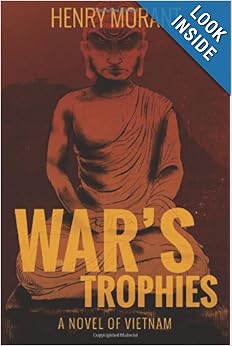
1.  War’s Trophies by Henry Morant from the author for review.

Murder and robbery on a seemingly routine intelligence mission in Vietnam cause a young army officer to exact his own revenge on a band of Viet Cong turncoats and his own senior officer. The lieutenant then settles into the relatively quiet life of a Seattle editor–until the senior officer is released from prison after 20 years and unleashes his own nightmarish game of copycat revenge killings on the editor’s friends and colleagues. Meanwhile, the police suspect the editor is the Seattle serial killer. The two ex-officers wage a deadly cat-and-mouse battle to determine which one will become the war’s last trophy.

2. Chasing Utopia: A Hybrid by Nikki Giovanni for review from William Morrow.

The poetry of Nikki Giovanni has spurred movements and inspired songs, turned hearts and informed generations. She’s been hailed as a healer and a national treasure. But if her reputation is writ large upon the national stage, her heart resides in the everyday where family and lovers gather, friends commune, and those no longer with us are remembered.

And at every gathering there is food, food as sustenance, food as aphrodisiac, food as memory. A pot of beans are flavored with her mother’s sighs, this sigh part cardamom, that one the essence of clove; a lover requests a banquet as an affirmation of ongoing passion; an homage is paid to the most time-honored appetizer, soup.

What did you receive?

231st Virtual Poetry Circle

Welcome to the 231st Virtual Poetry Circle!

Remember, this is just for fun and is not meant to be stressful.

Keep in mind what Molly Peacock’s books suggested. Look at a line, a stanza, sentences, and images; describe what you like or don’t like; and offer an opinion. If you missed my review of her book, check it out here.

Also, sign up for the 2013 Dive Into Poetry Challenge because its simple; you only need to read 1 book of poetry. Check out the stops on the 2013 National Poetry Month Blog Tour and the 2012 National Poetry Month Blog Tour.

Today’s poem is from Steven Schneider’s Prairie Air Show

Chanukah Lights Tonight

Our annual prairie Chanukah party—   
latkes, kugel, cherry blintzes.   
Friends arrive from nearby towns   
and dance the twist to “Chanukah Lights Tonight,”   
spin like a dreidel to a klezmer hit.   

The candles flicker in the window.   
Outside, ponderosa pines are tied in red bows.   
If you squint,   
the neighbors’ Christmas lights   
look like the Omaha skyline.   

The smell of oil is in the air.   
We drift off to childhood   
where we spent our gelt   
on baseball cards and matinees,   
cream sodas and potato knishes.   

No delis in our neighborhood,   
only the wind howling over the crushed corn stalks.   
Inside, we try to sweep the darkness out,   
waiting for the Messiah to knock,   
wanting to know if he can join the party.

What do you think?

A Charlie Brown Christmas: The Making of a Tradition by Charles M. Schulz

Source: It Books, Harper Collins
Hardcover, 192 pages
I am an Amazon Affiliate

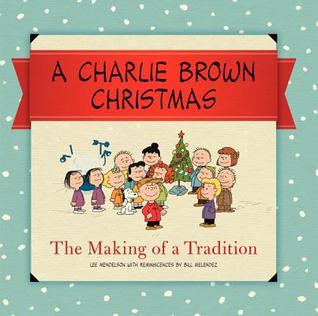
A Charlie Brown Christmas: The Making of a Tradition by Charles M. Schulz is an in-depth look at how the television special, A Charlie Brown Christmas, was conceived and made.  With the collaborative efforts of Charles M. Schulz, Lee Mendelson, and Bill Melendez, the cartoon special was put together in under four months from the green light to make it to the actual production film was screened.  It finally aired in December 1965, and for nearly 50 years, the special has been an American tradition in households across the United States.

“‘We realized that Charlie Brown’s voice had to be “blah”; Lucy’s had to be assertive and even crabby; Linus’s would have to combine intelligence with childlike simplicity, as he was someone who cherished his thumb and blanker,'” said Lee Mendelson. (Page 19)

Readers will love learning about what Schulz wanted to include in the special, and how he insisted that his characters be brought to life by children rather than adult actors acting like children.  Despite having felt that they’d accomplished what they set out to do with the special, they began to get nervous when the executives were less than enthusiastic about the final product and when the screening was met with silence and a handshake.  But once the review from the screener appeared in the newspaper, the team realized the special was more successful than expected.

“This sense of alienation, personified in Charlie Brown, is one of the deeply personal yet universally shared feelings that Charles Schulz infused into each of the Peanuts characters.  With simplicity and wit he pioneered new ground in comics with characters that reflect all the insecurity, anxiety, and joy of being human.” (page 37)

A Charlie Brown Christmas: The Making of a Tradition by Charles M. Schulz is a unique look at the behind the scenes making of not only the special, but also of how Schulz created his characters and worked with others.  The book not only includes reflections from his partners on the project, but also some of the storyboards, the music sheets, and production notes, as well as the complete script for the special.

About the Cartoonist:

Charles M. Schulz, nicknamed Sparky, was an American cartoonist, best known for the comic strip Peanuts. He is widely regarded as one of the most influential cartoonists of all time, cited as a major influence by many later cartoonists.