Quantcast

This Is How I’d Love You by Hazel Woods

Source: Penguin
Paperback, 320 pages
On Amazon and on Kobo

This Is How I’d Love You by Hazel Woods is a WWI novel set in 1917 that demonstrates the power of the written word.  New York Times columnist Sacha Dench, who graciously agrees to be a pen-pal and chess opponent to Charles Reid, is forced to resign from his position as sentiment in the United States leans more toward entering the war than remaining isolated from it.  He and his daughter, Hensley, leave quickly for Hillsboro, New Mexico, to take up the residence of a former mine supervisor.  Dench’s letters to Reid are philosophical debates about the justice of the war and its final outcome, but they are also a test of wills on a chess board that mirror those tensions.  Hensley is intrigued by the letter and utterly infatuated with a play director in New York City, but when she’s forced to decide between staying in New York with her brother or go to New Mexico, she chooses to leave.  Like the notes in the margins of her father’s letters, her life is lived on the outskirts of the proper role she is meant to play as a young 17-year-old woman without a mother.

“Mr. Dench has taken one of Charles’s pawns in the third move of the game, their bishops facing one another and the next move of utter importance.  Charles must be wary of the temptation to play too aggressively, putting his own pieces at risk in the next turn, which, he senses, is probably his opponent’s strategy.  A classic lure.  But playing like this, without body language or eye contact, is a new challenge.” (page 5 ARC)

It is striking how Woods uses the game of chase to depict the art of war on many levels, from the war between Dench and Reid’s competing philosophies to the difficulties in playing chess without the social cues to guide him as they would in hand-to-hand combat.  Reid is not so much a soldier as an ambulance driver from the United States who signed up to make something of his life, rather than live the life expected of him by his rich parents.  While he finds his actions independent, he is also aware as the war goes on just how foolhardy the decision may have been.  Feeling adrift on foreign fronts, Reid holds onto Dench’s letters and later the secret correspondence he has with Hensley as a lifeline.  But her life is far from as simple as she would like him to believe in their forced exile.

“By the end, the lead had become so dull that his signature is hardly more than a thick looping smudge.  Even so, Hennie moves her index finger across the page, mimicking the script, slowing especially over his name, until she can trace his signature perfectly.  Inhabiting his body, exiting her own, she crouches down under the table, imaging the cramped feel of the cellar, the roughness of chapped lips, the stale smell of urine on her clothes, the sound of artillery just outside.”  (page 71 ARC)

Hensley is living in the world of their letters as much as he is, but soon she is forced to make a choice — not once, but twice — that could change the course of her life forever.  This Is How I’d Love You by Hazel Woods explores the power of letters, the devastation of war and grief, and the societal pressures to which we can succumb or fight against.  Woods has made WWI vivid and gruesome as it must have been, demonstrating the irreparable harm that soldiers may face but also the inner strength it requires for them to move forward and to continue doing so even when they return home.  Expectations should be their own and not imposed upon by others, and only through compassion and love can these men soldier onward.

About the Author:

HAZEL WOODS lives in New Mexico with her husband and two children.
30th book for 2014 Historical Fiction Reading Challenge.


20th book for 2014 European Reading Challenge; (Set in France)


25th book (WWI) for the 2014 War Challenge With a Twist.


63rd book for 2014 New Author Reading Challenge.

Mailbox Monday #290

Mailbox Monday, created by Marcia at To Be Continued, formerly The Printed Page, has a permanent home at its own blog.

To check out what everyone has received over the last week, visit the blog and check out the links.  Leave yours too.

Also, each week, Leslie, Vicki, and I will share the Books that Caught Our Eye from everyone’s weekly links.

Here’s what I received:

1.  Remember The Sun: Poems of Nature and Inspiration by Melanie Simms for review from the poet.

Poems on Nature and Inspiration This collection of poems by Melanie Simms (all previously published in magazines, newspapers and poetry journals) covers such themes as Pennsylvania place poetry, inspirational poetry, and reflections on nature and love. Remember the Sun: Poems on Nature and Inspiration offers a wide variety of poems to suit the diverse tastes of the poetic palette. This hardcover volume is 50 pages with numerous photographs.


2.  There’s a Pig in my Class! by Johanna Thydell and illustrated by Charlotte Ramel for review.

A lonely pig dressed and disguised as a student sneaks into school where he enjoys lunchtime and making new friends in this story that expands on the definition of inclusion.


What did you get in your mailbox, virtual or otherwise?

273rd Virtual Poetry Circle

Welcome to the 273rd Virtual Poetry Circle!

Remember, this is just for fun and is not meant to be stressful.

Keep in mind what Molly Peacock’s book suggested.

Look at a line, a stanza, sentences, and images; describe what you like or don’t like; and offer an opinion. If you missed my review of her book, check it out here.

Today’s poem is from Shirley Geok-Lin Lim, recited by Shara Gunawan:

Learning to Love America

because it has no pure products

because the Pacific Ocean sweeps along the coastline
because the water of the ocean is cold
and because land is better than ocean

because I say we rather than they

because I live in California
I have eaten fresh artichokes
and jacaranda bloom in April and May

because my senses have caught up with my body
my breath with the air it swallows
my hunger with my mouth

because I walk barefoot in my house

because I have nursed my son at my breast
because he is a strong American boy
because I have seen his eyes redden when he is asked who he is
because he answers I don’t know

because to have a son is to have a country
because my son will bury me here
because countries are in our blood and we bleed them

because it is late and too late to change my mind
because it is time.

What do you think?

It’s the Great Pumpkin, Charlie Brown by Lee Mendelson and Bill Melendez & Giveaway

Source: Dey Street Books
Hardcover, 160 pages
I am an Amazon Affiliate

It’s the Great Pumpkin, Charlie Brown: The Making of a Television Classic by Lee Mendelson and Bill Melendez provides an inside look at how the television special about the great pumpkin and Charlie Brown came to be.  The prologue illustrates just how engrained Charlie Brown and the gang’s antics are in our popular culture, as politicians recently started using iconic scenes from the comics and movies to illustrate their own disappointments.

When Charles Schulz, Mendelson and Melendez created the Christmas special, they had low expectations that it would do well, but when it ranked #2 in 1965, they figured they earned a little confidence from the network, CBS.  The network executives, however, were still skeptical and were still not convinced even after the creation and success of a second special, Charlie Brown’s All Stars!  The executives basically called on them to create a blockbuster or else.  The recounted brainstorming session with Schulz is fantastic and the back-and-forth is inspiring as the animator and the creator of the comic bounce ideas around the room with Mendelson.

Included in the book are some great strips from the newspaper, photos of the creative team and actors, and the music sheets.  The book also includes the illustrated script for the special.  It’s the Great Pumpkin, Charlie Brown: The Making of a Television Classic by Lee Mendelson and Bill Melendez is another wonderful keepsake or gift for the Charlie Brown aficionado in your life.  Slightly smaller than coffee table size, but great to put on the shelf, pull out on the holidays, and just share with the family any time.

About the Cartoonist:

Charles M. Schulz, nicknamed Sparky, was an American cartoonist, best known for the comic strip Peanuts. He is widely regarded as one of the most influential cartoonists of all time, cited as a major influence by many later cartoonists.

Giveaway:

For U.S. residents.  Leave a comment below about one of your Halloween or Christmas Traditions and one winner will be chosen to get both books — It’s the Great Pumpkin, Charlie Brown: The Making of a Television Classic and A Charlie Brown Christmas: The Making of a Tradition!

Deadline to enter is Sept. 30, 2014, at 11:59 pm EST.

Other reviews:

A Charlie Brown Christmas: The Making of a Tradition

Blue Moon Rising by Simon R. Green

Source: Public Library
Paperback, 480 pages
On Amazon and on Kobo

Blue Moon Rising by Simon R. Green is an adventure story of kings, castles, dragons, and unicorns whose hero, Rupert, is a second son in line for the throne and dedicated to his duty to the Land even at the expense of his own safety.  On his first quest he is sent to slay a dragon, but what he encounters runs contrary to everything he’s ever heard about quests from the minstrels.  Knowing that he can never rule as king, Rupert is aware that he isn’t meant to return from his quest or if he does, he’s to return with something of value that his bankrupt kingdom can use to fight off the Barons who wish to take control.  Unfortunately, he and his unicorn return with a live dragon, not jewels, and a difficult Princess Julia.

In typical adventure fashion, but with humor, Green creates a world in which the darkness threatens to overtake the Forest Kingdom.  Rupert is a reluctant hero and Princess Julia is the antithesis of feminine royals who care more about dresses and balls.  Harald, the prince next in line for the throne, is charismatic and wily, and he has a reputation with the ladies.  He and his brother are often at odds, though readers will wonder if they would get along better if their father didn’t show preference for Harald over Rupert at every turn or if the kingdom was not in such turmoil politically that factions are vying for their own favorite son to ascend to the throne.  Green populates his novel with a few too many quests when one would have sufficed before the kingdom was threatened by the Darkwood and the Demon Prince.

“For a long while the Court stood silent, shaken by the Astrologer’s dark vision.
‘There must be something we can do,’ said Rupert haltingly.
‘There is,’ said the Astrologer.  ‘Prince Rupert; you must journey to the Dark Tower, and there summon the High Warlock.’
Rupert stared at the Astrologer.
‘I should have volunteered to lead an army against the Demon Prince,’ he said finally.  ‘It would have been safer.'” (page 87)

The dragon doesn’t play much of a role here, but the unicorn seems to be the comic relief for the most part.  The debate between the privilege in royalty and being a peasant is consistent throughout the book, as is the tension between duty and desire.  Despite its wordiness, Blue Moon Rising by Simon R. Green is a keen adventure with humor and plot twists, though some may be predictable and less satisfying than expected.

Unfortunately, the book club discussion for this one was postponed do to some illnesses and other conflicts.

About the Author:

Simon was born in Bradford-on-Avon, Wiltshire, England (where he still resides), in 1955. He has obtained an M.A. in Modern English and American Literature from Leicester University and he also studied history and has a combined Humanities degree. His writing career started in 1973, when he was a student in London. His first actual sale was a story titled Manslayer, back in 1976, but it didn’t appear till much later; Awake, Awake…. was his first sale to a professional editor, in 1979. Furthermore he sold some six or seven stories to semi-pro magazines before that market disappeared practically overnight.

After years of publishers’ rejection letters, he sold an incredible seven novels in 1988, just two days after he started working at Bilbo’s bookshop in Bath (this after three and a half years of being unemployed!). This was followed in 1989 by two more, and a commission to write the bestselling novelization of the Kevin Costner film Robin Hood: Prince of Thieves, which has sold more than 370.000 copies.

62nd book for 2014 New Author Reading Challenge.

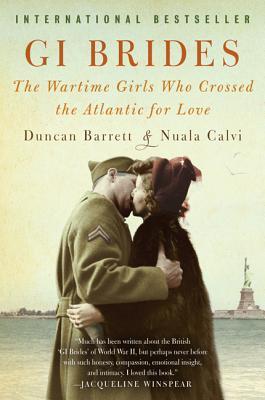
G.I. Brides by Duncan Barrett and Nuala Calvi

tlc tour host

Source: TLC Book Tours and William Morrow
Paperback, 368 pages
On Amazon and on Kobo

G.I. Brides: The Wartime Girls Who Crossed the Atlantic for Love by Duncan Barrett and Nuala Calvi is a biography-memoir hybrid in which the stories of four women who married American soldiers, known as G.I. brides, during WWII are told.  Sylvia Bradley is a bit young and naive but an optimist, while Gwendolyn Rowe is a determined woman.  Rae Brewer is the tomboy to Margaret Boyle’s beauty.  These stories are romantic as these ladies decide to leave the only home and family they have known to marry an American, only to find themselves facing more than just marital challenges.  Culture shock is just one aspect that is well depicted in these stories, especially as the women marry into not only American families, but families that still maintain their old world cultures and traditions — like the Italians big family dinners to the rowdy Irish parties.  As different as their lives had been from each other during WWII, they are vastly different when they reach America.

“During the day, Margaret did her best to get up on deck as much as possible to assuage her seasickness.  Starting out across the endless miles of ocean, she was reminded how cut adrift she had always felt in her life.  Some brides might feel the ache of homesickness, but she had never had a real home to miss.”  (page 98)

“As she packed her bag, she heard a chugging noise coming from outside and looked out of the window.  There in the distance was the menacing outline of a doodlebug passing over hoses opposite.  Then suddenly the noise stopped.  Rae knew what that meant — the flying bomb was about to fall.” (page 114)

Through extensive interviews with these women and their families, Barrett and Calvi have brought to life the home front in England, as these women struggled with rationing and the fear of bombs killing them on the way to work or in their sleep.  As their families struggled, brothers were sent off to fight the Germans, and they found work to support the war effort, these women were introduced to a whole new world outside the cocoon of their family units.  They went to dances with Yanks and volunteered in Red Cross-sponsored facilities, only to find that these Americans were not as crass as they were told by brothers and parents.

“For months Lyn had felt desperate to return home to England, but now she realized that the thing she had been looking for no longer existed.  It was her younger self — that confident, carefree girl who hadn’t had any knocks in life, who could stand on her own two feet …” (page 340)

Once in American, these women must fight another war — a war within themselves.  They feel like outsiders, they struggle to find their place with their new families, and many times they are met with failure.  But even though they long to return to England and walk away, they also realize that they must first stand on their own and learn what they want for themselves.  G.I. Brides: The Wartime Girls Who Crossed the Atlantic for Love by Duncan Barrett and Nuala Calvi may only breathe life into the lives of four G.I. brides from WWII, but it stands to reason that many of those 70,000 brides experienced similar hesitations, failures, and triumphs in their new lives.  Wonderfully told and executed.

About the Authors:

Duncan Barrett studied English at Cambridge and now works as writer and editor, specialising in biography and memoir. He most recently edited The Reluctant Tommy (Macmillan, 2010) a First World War memoir.


Nuala Calvi also studied English and has been a journalist for eight years with a strong interest in community history pieces. She took part in the Streatham Stories project to document the lives and memories of people in South London. They live in South London.

Connect with them through their website.

61st book for 2014 New Author Reading Challenge.


24th book (WWII) for the 2014 War Challenge With a Twist.


19th book for 2014 European Reading Challenge; (Set in England)

Feed by Mira Grant

Source: Book Expo America
Audiobook, 15+
On Amazon and on Kobo

Feed (Newsflesh #1) by Mira Grant (a pseudonym for Seanan McGuire), read by Paula Christensen and Jesse Bernstein, is a post-apocalyptic world in which the traditional news is no longer trusted and zombies have taken over the world, just after humanity created a cure for cancer and the common cold in 2014.  Bloggers Georgia Mason, Shaun Mason, Georgette “Buffy” Meissonier, and Richard Cousins run a semi-popular blog that reports the news about zombies and politics, with Georgia considered a newsy, Shaun an Irwin or zombie poker, and Georgette handling the fictional stories/poems and tech behind the blog, After the End Times.  When they are selected to follow the campaign of Republican senator Peter Ryman, who is running for the presidential nomination in 2040, the blog skyrockets to the top of the feed as the campaign trail is wrought with danger from zombie herds and more.  Once Ryman gains the nomination and selects Texas Gov. Tate as a running mate to balance the ticket, Richard Cousins joins the team as another newsy.

I never asked to be a hero. No one ever gave me the option to say I didn’t want to, that I was sorry, but that they had the wrong girl.

Grant’s zombie book is horrifying, but funny, as Shaun and Georgia banter back and forth as only siblings can.  Virology and the source of the virus that causes the zombies is well explained, as is how it is transmitted, but at no point is any of this information presented in a dry or uninteresting way.  The addition of blog posts from the bloggers is a nice touch as well.  However, there were points while listening that some information about the transmission of the virus is repeated throughout the book and probably could have been cut out, particularly the bit about mammals under 40 pounds not turning into zombies like animals of larger sizes.  The audio is well done, and the characters are easily discerned from one another.  The narrators did a great job making the emotions of the characters tangible.

Feed (Newsflesh #1) by Mira Grant, read by Paula Christensen and Jesse Bernstein is a journey into a world dominated by corrupt government, news, and zombies.  This is a tension-filled, thrilling novel that presents a believable world in which zombies exist and are mostly contained.  The political machinations mirror those of today’s society, as is the government protocols that constrain movement of humans through infected areas.  Grant meshes the horror of zombie apocalypses, blogging, news, and politics very well, and there are nods to previous zombie fiction and movies, which are viewed as helpful to the society’s reaction to the infection.  Blood, death, and tragedy are expected, but the ending could surprise some readers, though as it is a trilogy, it should be anticipated.

About the Author:

Born and raised in Northern California, Mira Grant has made a lifelong study of horror movies, horrible viruses, and the inevitable threat of the living dead. In college, she was voted Most Likely to Summon Something Horrible in the Cornfield, and was a founding member of the Horror Movie Sleep-Away Survival Camp, where her record for time survived in the Swamp Cannibals scenario remains unchallenged.

Mira lives in a crumbling farmhouse with an assortment of cats, horror movies, comics, and books about horrible diseases. When not writing, she splits her time between travel, auditing college virology courses, and watching more horror movies than is strictly good for you. Favorite vacation spots include Seattle, London, and a large haunted corn maze just outside of Huntsville, Alabama.

Mira sleeps with a machete under her bed, and highly suggests that you do the same.

60th book for 2014 New Author Reading Challenge.


This is my 2nd book for:

Peril the Second:

Read two books of any length that you believe fit within the R.I.P. categories:

  • Mystery.
  • Suspense.
  • Thriller.
  • Dark Fantasy.
  • Gothic.
  • Horror.
  • Supernatural.

Mailbox Monday #289

Mailbox Monday, created by Marcia at To Be Continued, formerly The Printed Page, has a permanent home at its own blog.

To check out what everyone has received over the last week, visit the blog and check out the links.  Leave yours too.

Also, each week, Leslie, Vicki, and I will share the Books that Caught Our Eye from everyone’s weekly links.

Here’s what I received:

1.  The Demon Who Peddled Longing by Khanh Ha for review in November with Virtual Author Book Tours.

Set in post-war Vietnam, The Demon Who Peddled Longing tells the terrible journey of a nineteen-year-old boy in search of the two brothers who are drifters and who raped and killed his cousin also his girl. It brings
together the damned, the unfit, the brave, who succumb by their own doing to the call of fate. Yet their desire to survive and to face life again never dies, so that when someone like the boy who is psychologically damaged by his family tragedy, who no sooner gets his life together after being rescued by a fisherwoman than falls in love with an untouchable girl and finds his life in peril, takes his leave in the end, there is nothing left but a longing in the heart that goes with him.

What did you receive?

272nd Virtual Poetry Circle

Welcome to the 272nd Virtual Poetry Circle!

Remember, this is just for fun and is not meant to be stressful.

Keep in mind what Molly Peacock’s book suggested.

Look at a line, a stanza, sentences, and images; describe what you like or don’t like; and offer an opinion. If you missed my review of her book, check it out here.

Today’s poem is from Paul Engle, recited by Dylan Stuntz:

Hero

    I
I have heard the horn of Roland goldly screaming
In the petty Pyrenees of the inner ear
And seen the frightful Saracens of fear
Pour from the passes, fought them, brave in dreaming.

But waked, and heard my own voice tinly screaming
In the whorled and whirling valleys of the ear,
And beat the savage bed back in my fear,
And crawled, unheroed, down those cliffs of dreaming.

    II
I have ridden with Hannibal in the mountain dusk,
Watching the drivers yell the doomed and gray
Elephants over the trumpeting Alps, gone gay
With snow vivid on peaks, on the ivory tusk.

But waked, and found myself in the vivid dusk
Plunging the deep and icy floor, gone gray
With bellowing shapes of morning, and the gay
Sunshaft through me like an ivory tusk.

    III
I have smiled on the platform, hearing without shame
The crowd scream out my praise, I, the new star,
Handsome, disparaging my bloody scar,
Yet turning its curve to the light when they called my name.

But waked, and the empty window sneered my name,
The sky bled, drop by golden drop, each star
The curved moon glittered like a sickle's scar,
The night wind called with its gentle voices: Shame!

    IV
I have climbed the secret balcony, on the floor
Lain with the lady, drunk the passionate wine,
Found, beneath the green, lewd-smelling vine,
Love open to me like a waiting door.

But waked to delirious shadows on the door,
Found, while my stomach staggered with sour wine,
Green drunkenness creep on me like a vine,
And puked my passion on the bathroom floor.

    V
I have run with Boone and watched the Indian pillage
The log house, fought, arrow in leg, and hobbled
Over the painful ground while the warrior gobbled
Wild-turkey cry, but escaped to save the village.

But waked, and walked the city, vicious village,
Fought through the traffic where the wild horn gobbled,
Bruised on the bumper, turned toward home, hobbled
Back, myself the house my neighbors pillage.

    VI
I have lain in bed and felt my body taken
Like water utterly possessing sand,
Surrounding, seething, soothing, as a hand
Comforts and clasps the hand that it has shaken.

But waked, and found that I was wholly shaken
By you, as the wave surrounds and seethes the sand,
That your whole body was a reaching hand
And my whole body the hand that yours had taken.

What do you think?

Blackfin Sky by Kat Ellis

Source: Running Press
Paperback, 304 pages
On Amazon and on Kobo

Blackfin Sky by Kat Ellis is a roller coaster ride at the circus, complete with big top, illusions, and creepy mute-like clown/mime.  In a town named for the whales off the coast of an eccentric town where everyone is just a little bit odd.  Skylar Rousseau tells her story in the first person and as she unravels the mystery of her three-month disappearance, readers will be pulled into the underworld of a circus that thrived 16 years earlier.  Ellis’ novel is atmospheric, creepy, and foreboding, as Sky reconnects with the friends who thought she had died while she thought she went on with her normal daily routines of going to school, studying for tests, and hanging out with her friends in a town where a weathervane is haunted.

“Sky shook her head.  Madame Curio was well known in Blackfin, even though she was avoided by most.

‘How did you even get in there?’ The woods had been secured against intruders for as long as Sky could remember, the talk of roaming wolves and lightning trees that electrocuted passing children not being enough to keep out idle teenagers.”  (page 70 ARC)

Skylar sets on a path to uncover what actually happened to her and where she went for three months with the help of Sean, her friend that she wants to be more.  Along the way she uncovers secrets in Blood House, the family home, as it opens attic doors and pushes her in the right direction, learns things about her family and her mother that upend her world, and gets even closer to the truth through a series of unimaginable journeys.  Ellis’ ability to create a believable world in which the circus becomes a prison and gifted people are anxious to leave but unable to do so is fantastic for a debut novelist.  Beyond the darkness, however, Ellis sprinkles in the humor, making it easy for the reader to relate to these characters because they are not overly serious and the novel is not too dark.

“Sky joined him as he leaned against the back of the Jeep, looking out over the twisted townscape of Blackfin.  The houses looked like precariously stacked playing cards, balancing against the hillside while they waited for a gust of wind to carry them off into the sea.  From this height, Sky saw the thirteen black dots of the cemetery cats lazing on top of the tombstones lower down the mountain slope.  Further still, the school teetered at the seafront, with Silas’s iron form spinning crazily on the roof.”  (page 150 ARC)

Ellis balances characterization, atmosphere, and mystery well and Blackfin comes to life with all of its quirky characters.  She bends the light to reveal new dimensions and hues of the town, its residents, and its history, while maintaining readers’ interest and passion to find out how it all ends.  From the mundane routines of going to school and hanging out with friends to the traveling to the circus for answers, Sky must find the strength within herself to accept her new reality and find a way to save herself and everyone she loves.  Blackfin Sky by Kat Ellis is light refracted, speeding up and slowing down, as Sky uncovers her own truth.

About the Author:

Kat Ellis is a young adult writer from North Wales. Her debut novel, BLACKFIN SKY, is out now in the UK (Firefly Press) and the US (Running Press Teen).

Check out her Facebook, Twitter, GoodReads, and her Website.


59th book for 2014 New Author Reading Challenge.


My 1st book for Peril the Second!

Reflections of Hostile Revelries by Jennifer C. Wolfe


Source: Poet Jennifer C. Wolfe
Paperback, 108 pages
I am an Amazon Affiliate

Reflections of Hostile Revelries: A Collection of Political Poetry Musings by Jennifer C. Wolfe is another collection of political poetry ripped from the headlines, as the narrator comments on the mistakes made by our political leaders and political campaigns gone wrong.  These poems read more like critical essays, rather than verse, using a narrative prose style that grabs a headline and picks it apart with a fine-toothed comb to unveil the unsupported facts of today’s political platforms and the flip-flopping of candidates eager to please the masses.  She covers topics ranging from immigration enforcement to the “nanny” state laws, and some of these poems are hilarious in their re-appropriation of pop culture.

Not Quite the Flintstones (page 87)

In honor of everything having to do with our fumbling friends at the
Federal Emergency Management Agency (FEMA), I would like to present
A memorable TV cartoon sing-song within a new light:

FEMA! Meet the FEMA!
They're a large disaster family;

From the town of D.C.,
They're a sad page out of history,

Someday, maybe they will get things right,
Then they'll be able to fix a plight.

When you're with the FEMA,
It's a Yabba-dabba-do time,

Hard to find food time;
We'll have a dismal time!

[insert cherry, twelve second big band musical interlude]

Repeat: We'll have a dismal time!
(Screaming): FEMA!

Wolfe has an uncanny sense of humor, while still calling attention to the problems in today’s government. Like the horrifying news we hear and see on the radio, Internet, and television, these poems call attention to the problems in government — ones as voters we should be paying attention to and looking for ways to resolve them when voting for candidates — and brings to life the humor of the situation, and sometimes in a particularly ridiculous way.  Wolfe does not stop at just politicians, poking fun and holes in big business like the banking sector’s use of fees to charge money to its own customers for using their own debit cards provided to them by the banks that issue them.  She even crosses the U.S. borders into international politics.

Benghazi, Libya Aftermath -- A Haiku for You (page 69)

Barack Obama,
On four dead Americans:
"A bump in the road."

Reflections of Hostile Revelries: A Collection of Political Poetry Musings by Jennifer C. Wolfe uses longer narrative poems to critique the world around us, but she also uses haiku to comment on events.  And a haiku may be the best way to comment on some of the most tragic events that have occurred in recent years, particularly those that have left us speechless.

About the Poet:

Jennifer C. Wolfe grew up in Maplewood, Minn., and studied fiction writing and poetry at Century College in White Bear Lake. Mississippi. Wolfe has five previous publishing credentials: a poem “If” included within the Century College (White Bear Lake, MN) Spring 2008 Student Lounge literary magazine along with three poetry manuscripts, Kick the Stones: Everyday Hegemony, Empire, and Disillusionment published as an eBook by BlazeVOX Books, New York, October 2008, Yukon Rumination: Great Fun for All in the Land of Sarah Palin’s Joe Sixpack Alaska, published as an eBook by BlazeVOX Books, New York, June 2009, and Healing Optimism, and Polarization, published as an eBook by BlazeVOX Books, New York, February 2010, and two poems “St. Patrick’s Day” and “Roller Coaster,” published within the online edition of Scrambler Magazine, Issue 39, June 2010.

Other Reviews:

Book 24 for the Dive Into Poetry Reading Challenge 2014.

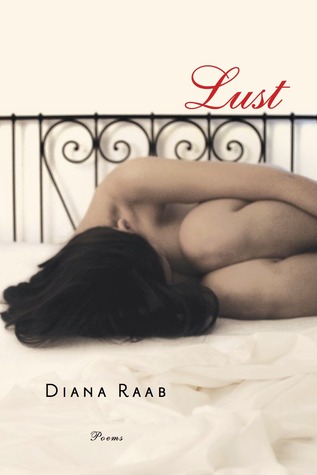
Lust by Diana Raab, Read by Kate Udall

tlc tour host

Source: TLC Book Tours and Diana Raab
Audio, 1hr+;
Paperback, 104 pages
I am an Amazon Affiliate

Lust by Diana Raab, read by Kate Udall, is uninhibited, sensuous, and consumed with physical and emotional pleasure.  The poems, as read by Udall, are impassioned and shocking at times, as Udall breathes life into each stanza and word, painting a titillating scene with each image and story.  The poems explore not only the primal lust of the physical body, but the desire we have to feel and be loved, even as we age.  There is an intimacy that the narrator hopes will open readers up to share their own most secretive selves and desires with their own partners.  There are selves inside that we rarely show to the world, and in the lovemaking that we have with our partners, we can abandon the outer shells to regain a connection with our true selves and that of our partners.

Imagine all of the nerve endings and hair follicles coming alive, that is what this collection is — electrified narrative poems.  Udall’s voice is hypnotic, drawing listeners into the stories and letters Raab crafts with seductive language and imagery.  There are marriages kept alive with passion, there are adulterous affairs that are “burps” disrupting the fake smiles on our faces, and there are one-night encounters.

And even in these passionate moments, there is the acknowledgement that these encounters are temporary and fleeting, even among lovers joined in marriage and commitment.  But there is more than just passion here, there is sorrow, regret, confusion, addiction, fantasy, and love.  Raab’s poems are passionate and temporal, but striving to transcend reality and reach an out of body experience where appearances do not matter.

Lust by Diana Raab, read by Kate Udall, is stunning and memorable on more than one level.  Lovers and married couples should consider reading these poems to one another, so that perhaps they can deepen their own desires for one another, their own passions, and reach a new kind of ecstasy.  Lie upon the bed and take turns reading these verses and passions are likely to flare.

***Handle with care, as the language here is very sexual in nature.***

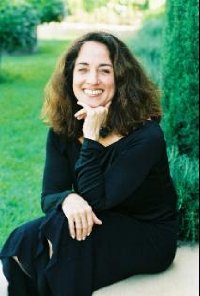
About the Poet:

Diana Raab is an award-winning poet, memoirist, and believer in the healing power of the written word. She began crafting poems at the age of ten when her mother gave her her first Khalil Gibran journal to help her cope with her grandmother and caretaker’s suicide. A few years later she discovered the journals of diarist Anaïs Nin and learned that, like Raab, Nin began journaling as a result of loss (the loss of her father). Much of Raab’s poetry has been inspired by Anaïs Nin’s life and works.

She is the author of four poetry collections, My Muse Undresses Me (2007); Dear Ans: My Life in Poems for You (2008); The Guilt Gene (2009); and Listening to Africa (2011).

Her poetry and prose have appeared in numerous journals and anthologies including Rattle, Boiler Room Journal, Rosebud, Litchfield Review, Tonopah Review, South Florida Arts Journal, Prairie Wolf Press, The Citron Review, Writers’ Journal, Common Ground Review, A Café in Space, The Toronto Quarterly, Snail Mail Review, New Mirage Journal, and Jet Fuel Review.

She is editor of two anthologies, Writers and Their Notebooks (2010) and Writers on the Edge (2012), co-edited with James Brown. Both these collections have submissions from poets and prose writers.

Diana has two memoirs, Regina’s Closet: Finding My Grandmother’s Secret Journal (winner of the 2009 Mom’s Choice Award for Adult Nonfiction and the National Indie Excellence Award for Memoir), and Healing With Words: A Writer’s Cancer Journey (winner of the 2011 Mom’s Choice Award for Adult Nonfiction).

She is a regular blogger for The Huffington Post and writes a monthly column for the Santa Barbara Sentinel, “The Mindful Word.” She lives in Southern California with her husband, and has three grown children. She is currently working on her doctorate in psychology and is researching the healing power of writing and creativity.

Other Books Reviewed:

Book 23 for the Dive Into Poetry Reading Challenge 2014.