Quantcast

Mailbox Monday #292

Mailbox Monday, created by Marcia at To Be Continued, formerly The Printed Page, has a permanent home at its own blog.

To check out what everyone has received over the last week, visit the blog and check out the links.  Leave yours too.

Also, each week, Leslie, Vicki, and I will share the Books that Caught Our Eye from everyone’s weekly links.

Here’s what I received:
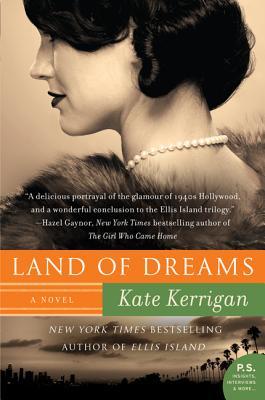
1. Land of Dreams by Kate Kerrigan for review for TLC Book Tours.

Irish immigrant Ellie Hogan has finally achieved the American Dream. But her comfortable bohemian life on Fire Island, New York, is shattered when her eldest adopted son, Leo, runs away, lured by the promise of fortune and fame in Hollywood. Determined to keep her family intact, Ellie follows him west, uprooting her youngest son and long-time friend Bridie.

In Los Angeles, Ellie creates a fashionable new home among the city’s celebrities, artists, and movie moguls. She is also drawn into intense new friendships, including talented film composer Stan, a man far different from any she has ever met, and Suri, a beautiful Japanese woman and kindred spirit, who opens Ellie’s eyes to the injustices of her country.
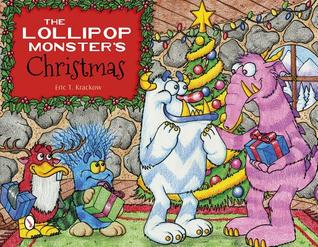
2.  The Lollipop Monster’s Christmas by Eric T. Krackow and Heather M. Krackow for review.

Larry’s favorite time of the year has arrived. He races around his home trying to make everything perfect before his friends arrive for Christmas morning. During the celebration, he discovers a lonely monster named Walter, who is very sad. Larry asks him why he is sad and Walter explains that Christmas is a difficult time of the year because he is always alone and has no family. Larry invites him to spend the holiday with him and his friends. Walter shyly accepts the invitation and follows Larry back to his home. Walter is welcomed by Larry’s friends and ends up having the most merry Christmas ever!
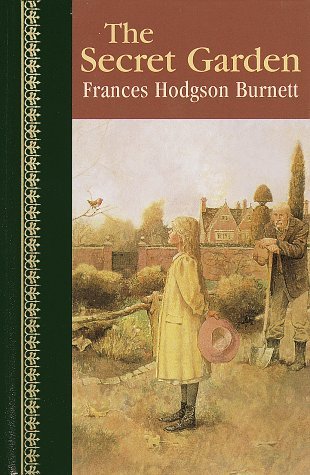
3.  The Secret Garden by Frances Hodgson Burnett, illustrated by Kathy Mitchell from the library sale.

What secrets lie behind the doors at Misselthwaite Manor? Recently arrived at her uncle’s estate, orphaned Mary Lennox is spoiled, sickly, and certain she won’t enjoy living there. Then she discovers the arched doorway into an overgrown garden, shut up since the death of her aunt ten years earlier. Mary soon begins transforming it into a thing of beauty–unaware that she is changing too. But Misselthwaite hides another secret, as mary discovers one night. High in a dark room, away from the rest of the house, lies her young cousin, Colin, who believes he is an incurable invalid, destined to die young. His tantrums are so frightful, no one can reason with him. If only, Mary hopes, she can get Colin to love the secret garden as much as she does, its magic will work wonders on him.

4.  Haroun and the Sea of Stories by Salman Rushdie from the library sale.

Immediately forget any preconceptions you may have about Salman Rushdie and the controversy that has swirled around his million-dollar head. You should instead know that he is one of the best contemporary writers of fables and parables, from any culture. Haroun and the Sea of Stories is a delightful tale about a storyteller who loses his skill and a struggle against mysterious forces attempting to block the seas of inspiration from which all stories are derived.

5.  Ocean of Words by Ha Jin from the library sale.

The place is the chilly border between Russia and China. The time is the early 1970s when the two giants were poised on the brink of war. And the characters in this thrilling collection of stories are Chinese soldiers who must constantly scrutinize the enemy even as they themselves are watched for signs of the fatal disease of bourgeois liberalism.

In Ocean of Words, the Chinese writer Ha Jin explores the predicament of these simple, barely literate men with breathtaking concision and humanity. From amorous telegraphers to a pugnacious militiaman, from an inscrutable Russian prisoner to an effeminate but enthusiastic recruit, Ha Jin’s characters possess a depth and liveliness that suggest Isaac Babel’s Cossacks and Tim O’Brien’s GIs.

6.  Hanna’s Daughters by Marianne Fredriksson, translated by Joan Tate from the library sale.

Anna has returned from visiting her mother. Restless and unable to sleep, she wanders through her parents’ house, revisiting the scenes of her childhood. In a cupboard drawer, folded and pushed away from sight, she finds a sepia photograph of her grandmother, Hanna, whom she remembers as old and forbidding, a silent stranger enveloped in a huge pleated black dress. Now, looking at the features Anna recognises as her own, she realises she is looking at a different woman from the one of her memory. Set against the majestic isolation of the Scandinavian lakes and mountains, this is more than a story of three Swedish women. It is a moving testament of a time forgotten and an epic romance in every sense of the word.

7.  Zorro by Isabel Allende from the library sale.

A child of two worlds—the son of an aristocratic Spanish military man turned landowner and a Shoshone warrior woman—young Diego de la Vega cannot silently bear the brutal injustices visited upon the helpless in late-eighteenth-century California. And so a great hero is born—skilled in athleticism and dazzling swordplay, his persona formed between the Old World and the New—the legend known as Zorro.


8.  Those Who Saved Us by Jenna Blum from the library sale.

For fifty years, Anna Schlemmer has refused to talk about her life in Germany during World War II. Her daughter, Trudy, was only three when she and her mother were liberated by an American soldier and went to live with him in Minnesota. Trudy’s sole evidence of the past is an old photograph: a family portrait showing Anna, Trudy, and a Nazi officer, the Obersturmfuhrer of Buchenwald.

Driven by the guilt of her heritage, Trudy, now a professor of German history, begins investigating the past and finally unearths the dramatic and heartbreaking truth of her mother’s life.

Combining a passionate, doomed love story, a vivid evocation of life during the war, and a poignant mother/daughter drama, Those Who Save Us is a profound exploration of what we endure to survive and the legacy of shame.

9.  W.B. Yeats Selected Poems from the library sale.

“All things can tempt me from this craft of verse: ”
“One time it was a woman’s face, or worse-”
“The seeming needs of my fool-driven land;”
“Now nothing but comes readier to the hand”
“Than this accustomed toil.”
“–“From” All Things Can Tempt Me”
Nobel Prize winner W.B. Yeats laid the foundations for an Irish literary revival, drawing inspiration from his country’s folklore, the occult, and Celtic philosophy. A writer of both poems and plays, he helped found Dublin’s famed Abbey Theatre. The poems here provide an example of his life’s work and artistry, beginning with verses such as “The Stolen Child” from his debut collection “Crossways “(written when he was 24) through “Why Should Not Old Men Be Mad?” from “On the Boiler,” published a year prior to his death.

10.  Hello, Baby! (Amazing Baby) by Beth Harwood, illustrated by Mike Jolley and Emma Dodd from the library sale.

Slide the slider, and say hello, baby! Littleones will love the peek-a-boo slider as youshare the story of some baby friends and their mothers who say hello. Captivating patterns like checkers and stripes, and fascinating animals like bright yellow ducks and big woolly sheep are guaranteed to keep little ones entertained. Share the fun of discovery with your amazing baby!

11.  Alphabet by Matthew Van Fleet from the library sale.

In Matthew Van Fleet’s incredible new multiconcept book, over 100 creatures and plants from A to Z hilariously demonstrate action words, synonyms, opposites, and more. Young explorers are challenged to spot four plants or animals that begin with each letter of the alphabet. Twenty-three textures plus foils, flaps, pull tabs, and even a scratch-and-sniff scent add to the interactive surprises on every page.

12. Play Me Another Song Piano Book by Jimmy Tanka and Jimmy Tanaka from the library sale.

A 24-page board book (10 1/4″ 10 1/8″)- an electronic keyboard with replaceable batteries and color-coded numbered keys- easy-to-follow musical notation- 12 songs: Row, Row, Row Your Boat; Yankee Doodle; Happy Birthday to You; It’s Raining, It’s Pouring; Hot Cross Buns; Humpty Dumpty; Rock-a-bye Baby; Hey, Diddle Diddle; Mary Had a Little Lamb; Pat-a-Cake; Little Miss Muffet; Old MacDonald- ideal for traveling.

What did you receive?
275th Virtual Poetry Circle

Welcome to the 275th Virtual Poetry Circle!

Remember, this is just for fun and is not meant to be stressful.

Keep in mind what Molly Peacock’s book suggested.

Look at a line, a stanza, sentences, and images; describe what you like or don’t like; and offer an opinion. If you missed my review of her book, check it out here.

Today’s poem is from Denise Duhamel, recited by Maia Gilmour:

Ego

I just didn’t get it—
even with the teacher holding an orange (the earth) in one hand
and a lemon (the moon) in the other,
her favorite student (the sun) standing behind her with a flashlight.
I just couldn’t grasp it—
this whole citrus universe, these bumpy planets revolving so slowly
no one could even see themselves moving.
I used to think if I could only concentrate hard enough
I could be the one person to feel what no one else could,
sense a small tug from the ground, a sky shift, the earth changing gears.
Even though I was only one mini-speck on a speck,
even though I was merely a pinprick in one goosebump on the orange,
I was sure then I was the most specially perceptive, perceptively sensitive.
I was sure then my mother was the only mother to snap,
“The world doesn’t revolve around you!”
The earth was fragile and mostly water,
just the way the orange was mostly water if you peeled it,
just the way I was mostly water if you peeled me.
Looking back on that third grade science demonstration,
I can understand why some people gave up on fame or religion or cures—
especially people who have an understanding
of the excruciating crawl of the world,
who have a well-developed sense of spatial reasoning
and the tininess that it is to be one of us.
But not me—even now I wouldn’t mind being god, the force
who spins the planets the way I spin a globe, a basketball, a yoyo.
I wouldn’t mind being that teacher who chooses the fruit,
or that favorite kid who gives the moon its glow.

What do you think?

Read-a-Long Fun….

So, I’ve joined the War Through the Generations read-a-long of The Monuments Men by Robert M. Edsel and Bret Witter with Anna from Diary of an Eccentric.  I hope you’ll join the discussion for chapters 1-14.  We’ll have a discussion for chapters 15-28 next Friday, Oct. 17.

Here’s the discussion for week 1.

I’ve also joined Ti and Sandy for the Something Wicked This Way Comes by Ray Bradbury read-a-long.

I was having a tough time following the narration because the dialogue and the narration prose was a little off.  Will and Jim seem very similar, though I think one is more daring than the other.  Not sure which one that is at this point.  I am hoping to have a better handle on these boys now into the next section, but we’ll see.  The narration is too close to the boys for my liking in a third-person narrator.

I do like the creepy nature of the town and the carnival, especially the “nephew” of their school teacher.  I always am down for creepy carnivals and characters….I’ve always been a little creeped out by these things.  I’m looking forward to what happens next as the boys uncover more about the carnival and its residents/workers.

Bradbury does seem to be keeping things close to the vest here and he does appear to be making fun of adults as naive and the kids more observant and in the know about the carnival and the evil things to come.  I’ll also still be looking forward to uncover the secret between Will and his father.  Are you reading along with us?  What are your thoughts so far?

Children’s Activity Atlas by Jenny Slater, illustrated by Katrin Wiehle and Martin Sanders

Source: Sterling’s Children’s Books
Hardcover, 31 pgs
I am an Amazon Affiliate

Children’s Activity Atlas by Jenny Slater, illustrated by Katrin Wiehle and Martin Sanders from Sterling Children’s Books, is chock full of information about landscapes, national flags, and industry.  This volume focuses mainly on the large continents, and each region is depicted over a two-page spread, complete with mountains, lakes, rivers, and topography like desert and grasslands, etc.  The book comes with a passport that kids can use to answer questions about specific items on the regional maps using the map key and once those questions are completed, the kids can place their seal on the passport page.

Each page is colorfully illustrated, includes local industry and culture on each nation, as well as a key to the land and other facts about those nations.  The back pages have stickers for the individual flags of each nation, which kids can add to each map and stickers for a variety of industries, animals, and local sites.  My daughter and I have started doing a region every few days and placing the stickers and answering the questions, but we’re also talking about what I learned about those nations and where I’d like to visit someday.  She points to things that interest her on the map and we make sure that we fill out the passport together where the questions are and affix her seal when she’s done.  Rather than be a one-time use atlas, this book contains information that can be referred to again and again, and there are postcards included for kids to share with family and friends.

Children’s Activity Atlas by Jenny Slater, illustrated by Katrin Wiehle and Martin Sanders from Sterling Children’s Books, is an interactive look at other countries and regions that kids and parents can use together to discuss different cultures, topography, and industries, etc.  My daughter gets excited when I ask if she wants to bring out the atlas and check out some other countries and regions.  I would recommend this for parents with toddlers eager to learn and interact, as well as older kids who are in school.

68th book for 2014 New Author Reading Challenge.


The Moonlight Palace by Liz Rosenberg

Source: Lake Union Publishing and TLC Book Tours
Paperback, 174 pgs
I am an Amazon Affiliate

The Moonlight Palace by Liz Rosenberg is set in 1920s Singapore, and Agnes Hussein is a teenager living in a rundown family palace, known as Kampong Glam.  The palace is a symbol of the cooperation of among the British and her long dead ancestors, but some view the palace as symbol of bribery by the British.  She is not Singaporean only, but also part British and part Chinese.  Her family is eccentric, and to make ends meet, the family relies on her British grandfather’s pension and the small sum they earn from their equally eccentric borders.  Rosenberg has created a character in Agnes who is a bit all over the place in her thoughts and in her actions, much like real teens, and she’s the strongest part of the novel.

“Perhaps, in order to start afresh, we needed to do away with all the old structures, the old assumptions.  Would these precious old things need to be torn down in order to make way for the new? I had to admit to myself in all honesty that I did not know the answer.” (page 146 ARC)

While there are elements of the 1920s in the novel such as Agnes’ comments on her own hairstyle and clothes, there is little else to suggest the time period, other than her grandfather’s triumphs in the Great War.  Agnes is naive in many ways about men and the political workings of her home nation.  She is like most teens; she falls quickly in love, is blind to the loyalty right in front of her, and is oblivious to the plights and machinations of those around her.  While a quick and easy read, the reader could feel separate from the characters and the main action of the novel, and the novel may have been better served with a focus on the grandfather or her uncle.

The Moonlight Palace by Liz Rosenberg is a coming of age novel that draws in some elements of Singapore and the 1920s, and Agnes is a typical teenager trying to make her own way in the world without offending tradition and without giving up her own dreams.  While she is naive about the larger world around her, she remains loyal to her family and her ancestry as she strives to earn money enough to help keep up their home.  With a little more background on the 1920s and the relationship between Britain and Singapore, this novel could have been fantastic, but as it is, it was just a good read about a young teen growing up.

About the Author:

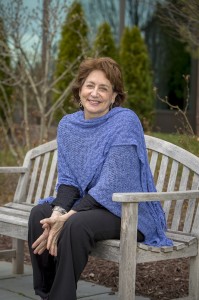
Liz Rosenberg is the author of more than thirty award-winning books, including novels and nonfiction for adults, poetry collections, and books for young readers. She has been the recipient of numerous prizes, including the Paterson Prize, the Bank Street Award, the Center for the Book Award, and a Fulbright fellowship in Northern Ireland in 2014. She is a professor of English and creative writing at Binghamton University, in upstate New York, where she has received the Chancellor’s Award for Excellence in Teaching. She has guest-taught all over the United States and abroad, and has written a book column for the Boston Globe for the past twenty-five years. Her previous novels, Home Repair and The Laws of Gravity, have been bestsellers in the United States, Europe, and Canada. She and her husband, David, were raised on Long Island, and went to the same summer camp at ages seven and eight, respectively.

34th book for 2014 Historical Fiction Reading Challenge.


67th book for 2014 New Author Reading Challenge.

There’s a Pig in My Class by Johanna Thydell, illustrated by Charlotte Ramel

Source: Holiday House
Hardcover, 26 pgs
I’m an Amazon Affiliate

There’s a Pig in my Class! by Johanna Thydell, illustrated by Charlotte Ramel and translated from Swedish by Helle Martens, is a cute book for kids in kindergarten and for parents to read to kids.  A lonely pig dreams of fun at the local school and one day gets his wish.  He is sneaked into the school and dressed up like a kid, so he can fit in.  While the students distract the teachers from the pig and his funny clothes, the other students make sure the pig can play the games and eat lunch with them.  He even gets to take a nap.  But eventually, the teacher becomes aware that this kid is a little bit different from the rest.

Nice pencil and ink drawings make these characters come alive from the honey-haired girl to the lively pig in human clothes.   My daughter adores books with animals and this one is no different, though the text is a bit too much for her, she did look at the pictures as I read it to her.  There’s a Pig in my Class! by Johanna Thydell, illustrated by Charlotte Ramel and translated from Swedish by Helle Martens, is a fun book about nature and how children can be brought out into the world and learn from it, and that nature can be fun.

About the Authors:

Johanna Thydell is a popular YA novelist in Europe, where her books have been published in thirteen different languages.  Her first novel won the prestigious August Award and was made into an award-winning film.  This is her first picture book and was inspired by her young son.  She lives in Stockholm, Sweden.

Charlotte Ramel grew up in Sweden with an American mother and a Swedish father.  Before becoming an illustrator she art directed food magazines.  The first children’s book she illustrated, The Cake Book by Marie Meijier, was an international hit.  She has since worked with Sweden’s most eminent children’s authors and now lives in Stockholm, Sweden.

66th book for 2014 New Author Reading Challenge.

The Paradise Tree by Elena Maria Vidal

Source: Historical Fiction Virtual Book Tours
Paperback, 252 pgs
I am an Amazon Affiliate

The Paradise Tree by Elena Marie Vidal recounts the real life of Daniel O’Connor, the author’s great-great-great-grandfather, based upon his own letters and writing and family lore and woven into a work of historical fiction.  Daniel O’Connor was a young man during the potato famine in Ireland, and watched as his parents struggled against starvation, political wills, and bigotry.  Even as he had dreams of becoming a doctor, laws in the land of his birth forbade his ascension in the profession, despite his skill in setting bones and working as an apprentice with other non-Catholic physicians.  After running out of the funds to attend medical school, he set his sights on a new life — one that would take him across the Atlantic into the harsh wilderness of Ontario, Canada, in the late 1880s.

Vidal has crafted a tale based on fact, and although it is fictionalized, the prose has a very non-fiction feel, which leaves readers at a distance from the characters.  The factual feel of the novel can fall flat for readers looking to connect with the characters, especially as the years pass along and the interactions are few in dialogue and often seem more like a recounting of the past.  Daniel and his family are separated from one another for a long time as he makes his way in a new country and builds his own family, but eventually, he is reunited with some of his kin as they follow him to the new world.  Vidal does an excellent job of demonstrating the lifeline that the Catholic faith becomes for the O’Connor family and how it binds them together in the toughest of circumstances.

The Paradise Tree by Elena Marie Vidal is about the perseverance of family and faith in the face of a number of struggles, though at times the prose is a bit too dry.  The O’Connor family not only faces hardships in Ireland, but in Ontario as they literally cut out a life for themselves from the wilderness.  They must battle against prejudices toward Catholics in both settings and strive to be their own guidance in their faith, as there are few churches close enough to them to tend to their religious needs.

About the Author:

Elena Maria Vidal grew up in the countryside outside of Frederick, Maryland, “fair as the garden of the Lord” as the poet Whittier said of it. As a child she read so many books that her mother had to put restrictions on her hours of reading. During her teenage years, she spent a great deal of her free time writing stories and short novels.

Elena graduated in 1984 from Hood College in Frederick with a BA in Psychology, and in 1985 from the State University of New York at Albany with an MA in Modern European History. In 1986, she joined the Secular Order of Our Lady of Mt. Carmel. Elena taught at the Frederick Visitation Academy and worked as a private tutor as well as teaching children’s etiquette classes. During a trip to Austria in 1995 she visited the tomb of Empress Maria Theresa in the Capuchin crypt in Vienna. Afterwords she decided to finish a novel about Marie-Antoinette she had started writing ten years before but had put aside. In 1997 her first historical novel TRIANON was published by St. Michaels Press. In 2000, the sequel MADAME ROYALE was published, as well as the second edition of TRIANON, by The Neumann Press. Both books quickly found an international following which continues to this day. In 2010, the third edition of TRIANON and the second edition of MADAME ROYALE were released.

In November 2009, THE NIGHT’S DARK SHADE: A NOVEL OF THE CATHARS was published by Mayapple Books. The new historical novel deals with the controversial Albigensian Crusade in thirteenth century France. Elena has been a contributor to Canticle Magazine, Touchstone Magazine, The National Observer, and The American Conservative. In April 2009 she was a speaker at the Eucharistic Convention in Auckland, New Zealand. In August 2010 Elena spoke at The Catholc Writers Conference in Valley Forge, PA. She is a member of the Catholic Writers Guild and the Eastern Shore Writers Association. She currently lives in Maryland with her family.  For more information please visit Elena’s website and blog.  You can also connect with her on Facebook, Twitter, and Goodreads.


23rd book for 2014 European Reading Challenge; (Set in Ireland)


33rd book for 2014 Historical Fiction Reading Challenge.


65th book for 2014 New Author Reading Challenge.


3rd book for the Ireland Reading Challenge.

Mailbox Monday #291

Mailbox Monday, created by Marcia at To Be Continued, formerly The Printed Page, has a permanent home at its own blog.

To check out what everyone has received over the last week, visit the blog and check out the links.  Leave yours too.

Also, each week, Leslie, Vicki, and I will share the Books that Caught Our Eye from everyone’s weekly links.

Here’s what I received:

1. The Madness of Mr. Darcy by Alexa Adams, a nice thank you gift from the author.

The year is 1832 and regrets beleaguer Fitzwilliam Darcy. All he ever cared for has been taken from him: his pride, his sister, and his true love, Elizabeth Bennet. Now, having nearly murdered a man in a fit of rage, he might lose Pemberley, too. More than just his home, his very identity is at stake. In desperation, he seeks the help of Dr. Frederick Wilson, owner and proprietor of Ramsey House, a madhouse for fine ladies and gentlemen. Is Darcy’s confinement the inevitable end to his tortured descent, or will he rediscover what he lost in the most unlikely of places?

2.  First Impressions by Charlie Lovett from the publisher for review.

Book lover and Austen enthusiast Sophie Collingwood has recently taken a job at an antiquarian bookshop in London when two different customers request a copy of the same obscure book: the second edition of Little Book of Allegories by Richard Mansfield.  Their queries draw Sophie into a mystery that will cast doubt on the true authorship of Pride and Prejudice—and ultimately threaten Sophie’s life.

In a dual narrative that alternates between Sophie’s quest to uncover the truth—while choosing between two suitors—and a young Jane Austen’s touching friendship with the aging cleric Richard Mansfield, Lovett weaves a romantic, suspenseful, and utterly compelling novel about love in all its forms and the joys of a life lived in books.

3.  By the Book: Writers on Literature and the Literary Life from The New York Times Book Review edited by Pamela Paul and foreword from Scott Turow for review from the publisher.

Sixty-five of the world’s leading writers open up about the books and authors that have meant the most to them

Every Sunday, readers of The New York Times Book Review turn with anticipation to see which novelist, historian, short story writer, or artist will be the subject of the popular By the Book feature. These wide-ranging interviews are conducted by Pamela Paul, the editor of the Book Review, and here she brings together sixty-five of the most intriguing and fascinating exchanges, featuring personalities as varied as David Sedaris, Hilary Mantel, Michael Chabon, Khaled Hosseini, Anne Lamott, and James Patterson. The questions and answers admit us into the private worlds of these authors, as they reflect on their work habits, reading preferences, inspirations, pet peeves, and recommendations.

By the Book contains the full uncut interviews, offering a range of experiences and observations that deepens readers’ understanding of the literary sensibility and the writing process. It also features dozens of sidebars that reveal the commonalities and conflicts among the participants, underscoring those influences that are truly universal and those that remain matters of individual taste.

What did you receive?

274th Virtual Poetry Circle

Welcome to the 274th Virtual Poetry Circle!

Remember, this is just for fun and is not meant to be stressful.

Keep in mind what Molly Peacock’s book suggested.

Look at a line, a stanza, sentences, and images; describe what you like or don’t like; and offer an opinion. If you missed my review of her book, check it out here.

Today’s poem is from Howard Nemerov, recited by Olivia Cacciatore:

Writing

The cursive crawl, the squared-off characters   
these by themselves delight, even without   
a meaning, in a foreign language, in
Chinese, for instance, or when skaters curve   
all day across the lake, scoring their white   
records in ice. Being intelligible,
these winding ways with their audacities   
and delicate hesitations, they become   
miraculous, so intimately, out there
at the pen’s point or brush’s tip, do world   
and spirit wed. The small bones of the wrist   
balance against great skeletons of stars   
exactly; the blind bat surveys his way   
by echo alone. Still, the point of style   
is character. The universe induces
a different tremor in every hand, from the   
check-forger’s to that of the Emperor
Hui Tsung, who called his own calligraphy   
the ‘Slender Gold.’ A nervous man
writes nervously of a nervous world, and so on.

Miraculous. It is as though the world
were a great writing. Having said so much,   
let us allow there is more to the world   
than writing: continental faults are not   
bare convoluted fissures in the brain.   
Not only must the skaters soon go home;   
also the hard inscription of their skates
is scored across the open water, which long   
remembers nothing, neither wind nor wake.

What do you think?

The Other Girl by Pam Jenoff

Source: NetGalley/Kindle
ebook, 21 pages
I am an Amazon Affiliate

The Other Girl by Pam Jenoff is a complementary story to her new novel, The Winter Guest (my review), in which Maria finds herself married and estranged from her father in rural Biekowice, Poland, during WWII.  Maria, who is married to Piotr, finds that she is an outsider at her in-laws home, and is unable to share even her sense of loss with them after he was conscripted by the Germans.  She fills her days avoiding the scrutiny of her mother-in-law, and dreaming about what life will be like when her husband returns.  She feels alone now that she’s severed herself from her father, whom she caught selling information to the Nazis.  However, her father’s betrayal is the least of the secrets she will uncover.

“War had nipped at the edges of their tiny village, Biekowice, changing little things first, like the requirement of registration cards.  Later had come the food requisitioning that left the market so bare.  Piotr’s family had not been affected as badly as most — the farm produced enough simple fare to keep their stomachs full.”

While she lives in relative comfort, Maria must remain strong for herself and a young Jewish girls she discovers hiding in the family barn.  Maria is a young wife who is still finding her place in her new family, while at the same time trying to make sense of the families around her who turn in their neighbors or make other deals with the Nazis to survive.  When she is faced with the dilemma of a little Jewish girl, it is clear that her father’s betrayal propels her to take a different action.  The Other Girl by Pam Jenoff expounds upon a minor character in her novel, The Winter Guest, giving readers a glimpse into how much the paranoia and fear had begun to permeate even the smallest villages as Nazis traipsed through the city squares and fought through the countryside.  It’s too bad that this story is so short; it would make a good novel.

About the Author:

Pam Jenoff was born in Maryland and raised outside Philadelphia. She attended George Washington University in Washington, D.C., and Cambridge University in England. Upon receiving her master’s in history from Cambridge, she accepted an appointment as Special Assistant to the Secretary of the Army. The position provided a unique opportunity to witness and participate in operations at the most senior levels of government, including helping the families of the Pan Am Flight 103 victims secure their memorial at Arlington National Cemetery, observing recovery efforts at the site of the Oklahoma City bombing and attending ceremonies to commemorate the fiftieth anniversary of World War II at sites such as Bastogne and Corregidor.  Visit her Website and Facebook page.

22nd book for 2014 European Reading Challenge; (Set in Poland)


32nd book for 2014 Historical Fiction Reading Challenge.


27th book (WWII) for the 2014 War Challenge With a Twist.

The Winter Guest by Pam Jenoff

Source: Diary of an Eccentric
Paperback, 352 pages
On Amazon and on Kobo

The Winter Guest by Pam Jenoff explores the bonds between sisters, particularly twins, and how those bonds can be tested and crack beneath the pressures of war and persecution.  The Nowak twins live in a small fictitious town in Poland, Biekowice, and are charged with raising their two younger sisters and brother after the death of their father.  Ruth is considered the more feminine and nurturing of the sisters, while Helena was adventurous, gathering wood and setting animal traps with their father from a young age.  Ruth was the first to fall in love and have her heart broken, and this heartbreak helped to define her views on family and loyalty, while Helena has yet to fall in love and does the best she can to provide for the family as the Nazis move across Poland and take over not only Krakow, but smaller villages along the way.

“As I stroll beneath the timeless canopy of clouds, the noises of the highway and the planes overhead fade.  I am no longer shuffling and bent, but a young woman striding upward through the woods, surrounded by those who once walked with me.”  (page 8 ARC)

Jenoff is a talented story-teller and her ability to transport readers into the harsh conditions of a rural town in Poland during WWII is nothing short of miraculous.  Readers will feel the biting cold, the harsh stares of neighbors looking for information to sell to the Nazis to get ahead, and feel the warmth of the Nowak family even as it struggles to stay together.  Ruth weighs loyalty above everything, while Helena places her family’s happiness above her own for so long that when she sees happiness for herself within her grasp, she wants to hold it close and not have to share it.  Like all sisters, Ruth and Helena share the burdens of bringing up their siblings alone, keeping food on the table and checking on their mother who is in a Krakow hospital.

Helena stumbles upon an American paratrooper in the woods and the Nowak family’s trajectory becomes skewed.  Jenoff has created twin sisters who are connected but seeking their own individuality while keeping their family together.  These dynamic women must face their own fears, as well as the reality of the WWII knocks on their door, literally.  The Winter Guest by Pam Jenoff demonstrates how the unexpected can be a blessing and a curse, how families can pull together even when they don’t really like one another at that moment, and how guilt can compel us forward to make things right.

This book was phenomenal, well told, and would be a great pick for book clubs — also it is likely to make the 2014 Best of list.

About the Author:

Pam Jenoff was born in Maryland and raised outside Philadelphia. She attended George Washington University in Washington, D.C., and Cambridge University in England. Upon receiving her master’s in history from Cambridge, she accepted an appointment as Special Assistant to the Secretary of the Army. The position provided a unique opportunity to witness and participate in operations at the most senior levels of government, including helping the families of the Pan Am Flight 103 victims secure their memorial at Arlington National Cemetery, observing recovery efforts at the site of the Oklahoma City bombing and attending ceremonies to commemorate the fiftieth anniversary of World War II at sites such as Bastogne and Corregidor.  Visit her Website and Facebook page.

21st book for 2014 European Reading Challenge; (Set in Poland)


31st book for 2014 Historical Fiction Reading Challenge.


26th book (WWII) for the 2014 War Challenge With a Twist.

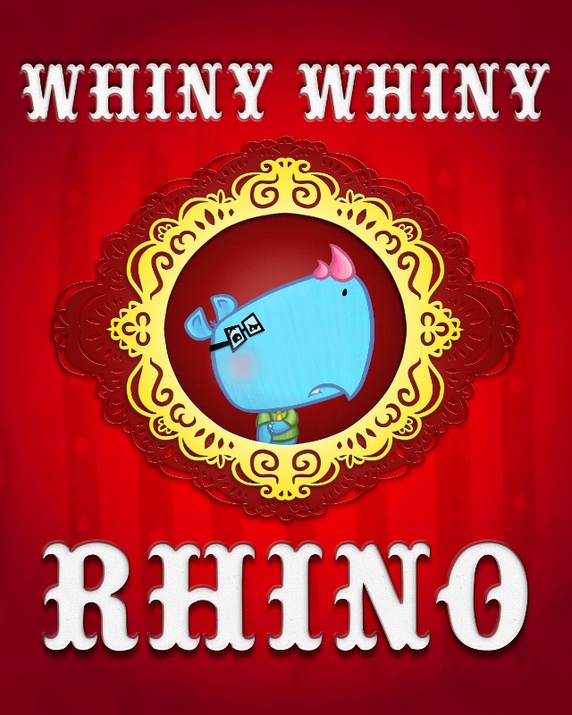
Whiny Whiny Rhino by McBoop

Source: Blue Blanket Publishing and iRead Book Tours
Paperback, 34 pages
I am an Amazon Affiliate


Whiny Whiny Rhino by McBoop, the father-daughter team of Carmin Iadonisi & Amanda Iadonisi-Word, is a vividly illustrated book about overcoming your fears by looking inside and taking a leap for fun.  Tiny Rhino has three older brothers, and they are rough and tough, often telling Tiny that he’s too whiny and scared all of the time.  They say that he needs to be tough to make it out in the world.  He would rather stay inside and read, but one day, he decides he’s had enough of his brothers’ teasing and leaves the house.  Rather than jump at the opportunities presented to him by his friends, Tiny stays away from all the fun.  When he’s in bed thinking about his day and how much fun he didn’t have, Tiny comes to a realization that he needs to be more adventurous.

My daughter was captivated by the vivid images and the fun Tiny encountered.  Her favorite pictures were Tiny’s injured foot and when he’s in bed dreaming about becoming a superhero with a cape.  With easy rhymes, my child followed the story with little confusion and she wasn’t easily distracted from the story as we read and looked at all the pictures.  Whiny Whiny Rhino by McBoop, the father-daughter team of Carmin Iadonisi & Amanda Iadonisi-Word, is about taking a chance, letting go of anxieties, and take life one experience at a time.  These are good lessons for kids to learn, especially as most everything they encounter is new to them.

About the Authors:

McBoop is the creative team of Carmin Iadonisi & Amanda Iadonisi-Word. This father-daughter duo co-wrote and illustrated Whiny Whiny Rhino. They currently live in New England where they enjoy making art, reading comics, playing board games, eating fancy chocolate and whining about the weather.  Connect with them on Facebook, Twitter, and through their Website.

64th book for 2014 New Author Reading Challenge.