Quantcast

“Could You Lift Up Your Bottom?” by Hee-jung Chang, illustrated by Sung-hwa Chung

Source: Independent Publishers Group
Hardcover,
I am an Amazon Affiliate

“Could You Lift Up Your Bottom?” by Hee-jung Chung, illustrated by Sung-hwa Chung, is a math concepts book that explains figures, shapes, and space in a story.  This story centers on a frog who loses his favorite hat and an elephant who sits on it and takes advantage of the situation.  He has the frog get him food in different shapes and sizes, and promises each time to lift his butt off of the frog’s hat.  It becomes clear to the frog that he will have to be more savvy than the elephant who is being unkind.

Although my daughter and I read this book and we called out the shapes together until she was confident herself to shout them out alone, she told me that the elephant — who looks like a mixed media hodgepodge — was scary looking.  It was hard for her to focus on this book given her response to the elephant, but I tried to refocus her on the shapes in the book.

“Could You Lift Up Your Bottom?” by Hee-jung Chung, illustrated by Sung-hwa Chung, includes a great breakdown of categories for shapes — round shapes including circles and ovals, etc.  There are some interesting activities in the back that involve food as well, which my daughter enjoyed.  Overall the concepts in the book are well planned out and discussed, but the drawings here are less pleasant than those in the other books of this series.
Z for Zachariah by Robert C. O’Brien

Source: Public Library
Paperback, 249 pgs
I am an Amazon Affiliate

Z for Zachariah by Robert C. O’Brien, which was our July book club selection, and is a post-apocalyptic young adult novel in which a teen is alone on the family farm when the rest of the family ventures beyond their valley in search of other survivors.  The only survivor of the bombings, but the teen has enough knowledge to know how to grow food and care for what farm animals are left.  Soon, the teen realizes that there may be others, as smoke in the distance moves closer and closer each day.  After being alone for a long period of time, how would you react to another person, a stranger that you don’t know anything about other than that he is a scientist and has some knowledge of radiation.

“I passed the house.  Visions moved behind my eyes, and I saw the house as I had seen it as a child: climbing the front steps on the way to supper; sitting on the porch at night, watching the fireflies; my grandfather rocking me on the swing; sitting there listening to someone singing, or a phonograph; later sitting on the swing at night weaving long, romantic dreams about my life to come.”  (pg. 242)

After observing the stranger for a few days, the teen decides that to meet him face-to-face is the best option, as this is the family home in the valley.  There is a sense of responsibility not only for the farm and its buildings, but for creating a home-like atmosphere even for this stranger.  Mr. Loomis, who claims to be a chemist and knows about radiation, falls ill with radiation sickness when he throws caution to the wind and jumps into the stream without testing it.  The green lushness of the valley has lulled him into a false sense of security, and this mirrors the false sense of security the teen feels when a routine develops between them.

Z for Zachariah by Robert C. O’Brien is character-driven from a first person point of view, and while the protagonist can be insipid at times, there are moments of evolution in her character.  Some readers, however, will be angered by the teen’s reactions to Mr. Loomis and his actions.  There are moments in which readers will want to slap the teen silly, but living a farm life in a semi-religious family, it can be easy to see how the teen would have an outlook that is hopeful and positive, expecting the best from others, rather than the worse.  Mr. Loomis and the teen are nearly foils of one another in terms of worldview, and while he is paranoid and controlling because of the loneliness he felt, the teen views the world optimistically and with wonder.  Is this due to the difference in age, their upbringing, or other factors …  it is unclear.  Background information on the characters is minimal, but the story is engaging for the most part as a teen faces a series of tough decisions.

What the book club thought: (updated 9:12 AM)

Our meeting had a consensus of they liked the book for the most part, but the protagonist drove us crazy and the scientist is someone we thought was just evil — though one member made the argument that he may have experienced more damage during his radiation sickness than we thought.  We liked the premise of a valley isolated in its own weather pattern from the fallout and we liked that the young girl had survived on her own because of her farming skills, and most of us agreed that had it been an urban kid there, they would likely have had a harder time.  There were some religion vs. science themes, but it didn’t seem to be overly done to most of us.  There were two members who absolutely disliked the main character and her decisions, her inability to swear, etc., and her naivete about the world outside the farm and the necessity of killing the antagonist.  Some also had issues with the plot and overall, most were disappointed by the ending — though we agreed that because this is an older book (1973, I think, and was finished by the author’s wife and daughter from his notes) the prose was much different than today’s cinematic-style YA post-apocalyptic novels.

About the Author:

Robert Leslie Conly (better known by his pen name, Robert C. O’Brien) was an American author and journalist for National Geographic Magazine.

Earth Joy Writing: Creating Harmony Through Journaling and Nature by Cassie Premo Steele, Ph.D.

Source: Ashland Creek Press
Paperback, 169 pgs.
I am an Amazon Affiliate

Earth Joy Writing: Creating Harmony Through Journaling and Nature by Cassie Premo Steele, Ph.D., is more than a book about creative writing.  It is a book that will help readers become more creative writers and thinkers through the connections they develop or re-establish between themselves, their family, and nature.  With the right conditions and frame of mind, creativity can grow from not only our own experiences, current interactions with nature, but also through reflection and looking at the unknown.  Steele breaks down the book into the different seasons — Winter, Spring, Summer, and Fall — and each section also has a monthly breakdown with writing exercises, reflections, and connecting with nature and emotions.

Readers will want to get a journal that they can use when reading this book, and they’ll want to do as Steele suggests and begin in the season and month that they are currently in, rather than start at the beginning of the book.  The book is laid out in a way that allows readers to tap into their current environment and season when writing or thinking creatively — generating a dialogue between themselves, nature, and potential readers of their own.  Beyond writing exercises and questions that readers can answer to start creating their own poems and stories, Steele also includes activities and experiences that will help frame the situation for those trying to be more creative.  For instance, she advises that readers take a trip to an art museum or look through an art book — not on the Internet — and journal about what piece of art strikes their fancy and encourages them to take the time to explore why.

Earth Joy Writing: Creating Harmony Through Journaling and Nature by Cassie Premo Steele, Ph.D., is a unique book about inspiring writers to think more creatively and to draw on nature to tap into their own creativity.  The book is about becoming more observant, less stressed, and more focused on connecting with nature, our natural selves, and those around us.  In this hyper-connected, Internet world, many of us find that we have over-scheduled our lives, and this book will help us slow down.  This is a book that will remain with those “prime” writing books in my workspace — one I’ll be using in the future.

About the Author:

Cassie Premo Steele, Ph.D., is the author of twelve books and audio programs on the themes of creativity, healing, and our connection to the natural world. She works as a writing coach with clients internationally.  Check out her website and the Earth Joy Writing website.  (Photo credit: Susanne Kappler)


The Cake Therapist by Judith Fertig

Source: Tandem Literary
Paperback, 304 pgs
I am an Amazon Affiliate

The Cake Therapist by Judith Fertig will have mouths watering all over these pages as these gorgeous confections meld savory and sweet and extrapolates memory, emotion, and the past from flavors.  Claire “Neely” Davis returns to her hometown to clear her head after yet another slip-up by her husband, Luke, a famous NFL player.  She leaves behind her five-star life in New York for a life that requires a bit more grit and persistence.  Slowly she finds that she has more than one bakery talent — she sees the lives of others in flavor and color, much like her grandmother did.

Even as she works through her own emotional issues, she dives head first into work.  She’s building her business, Rainbow Cake, from the ground up, but she’s also reconnecting with her past and her family.  Her grandmother’s home will not be vacant because she’s been moved to a nursing home.  Her hometown friends are happy to have her back, and while she’s still recovering, she begins to feel at home too.

“‘It’s a gift, you dope.’  I pressed the box into his stomach.  He read the card that said, ‘Thank you for helping me feather my new nest.’  He opened the box and saw a tiny cake shaped like a bird’s nest in three small round layers of tender, browned-butter vanilla cake with an apricot filling.  A ‘nest’ border of piped rum and mocha buttercream enclosed a clutch of pale blue marzipan eggs and a sugar-paste feather.  The complicated yin and yang of rum and mocha, the ‘everybody loves’ vanilla, Mr. Social white chocolate, tart and witty apricot, and artistic marzipan — all said ‘Gavin’ to me.”  (pg. 16)

Her culinary skills also come in handy when helping her employees and some others in the town cope with their own situations at home and from the past.  As she helps them see the strength in themselves, she becomes more sure of herself and that path she must take into the future.  Claire is an emotional mess, and like many of us, she throws herself into work and something she’s passionate about, leaving the heavier stuff on the back burner.  She often helps others, and that helps her work through her own issues, sometimes without even realizing it.

The Cake Therapist by Judith Fertig is a delightful confection and perfect for summer reading by the pool with some cake and delightful coffee — tea if you’re into that sort of thing.  Fertig has a clear talent for writing foodie fiction, and perhaps that is because of her background in cooking and writing cookbooks.  Bon appétit!

About the Author:

Novelist and cookbook author Judith Fertig grew up in the Midwest, went to cooking school in London and Paris, and now lives in the Kansas City area. Described by Saveur Magazine as a “heartland cookbook icon,” Fertig debuts a new novel that engage the mind, the heart, and all five senses—and celebrates cookbooks that reflect her love of bread, baking, barbecue, and the fabulous foods of the Heartland.

Novels you can read like cookbooks. Cookbooks you can read like novels. That’s what you get when an English major studies at École de Cuisine La Varenne (formerly in Paris) and The Cordon Bleu in London plus The Iowa Writers Workshop. Fertig often weaves storytelling into her books. Follow her on Twitter.

Mailbox Monday #332

Mailbox Monday, created by Marcia at To Be Continued, formerly The Printed Page, has a permanent home at its own blog.

To check out what everyone has received over the last week, visit the blog and check out the links.  Leave yours too.

Also, each week, Leslie, Vicki, and I will share the Books that Caught Our Eye from everyone’s weekly links.

Here’s what I received:

1. Hotel Moscow by Talia Carner from William Morrow for review.

Brooke Fielding, a thirty-eight year old New York investment manager and daughter of Jewish Holocaust survivors, finds her life suddenly upended in late September 1993 when her job is unexpectedly put in jeopardy. Brooke accepts an invitation to join a friend on a mission to Moscow to teach entrepreneurial skills to Russian business women, which will also give her a chance to gain expertise in the new, vast emerging Russian market. Though excited by the opportunity to save her job and be one of the first Americans to visit Russia after the fall of communism, she also wonders what awaits her in the country that persecuted her mother just a generation ago.

Inspired by the women she meets, Brooke becomes committed to helping them investigate the crime that threatens their businesses. But as the uprising of the Russian parliament against President Boris Yeltsin turns Moscow into a volatile war zone, Brooke will find that her involvement comes at a high cost. For in a city where “capitalism” is still a dirty word, where neighbors spy on neighbors and the new economy is in the hands of a few dangerous men, nothing Brooke does goes unnoticed–and a mistake in her past may now compromise her future.

2.  Killer Beach Reads (Mystery & Romance Short Story Collection) by various writers, including Janel Gradowski, purchased for Kindle for 99 cents.

22 summer themed short stories by bestselling mystery and romance authors! Enjoy mystery, romance, and lots of laughter under the sun with shorts from some of your favorite series. The perfect quick reads for vacation lounging or sipping frosty drinks poolside! **Recipes included!**

Stories include:
One Red Cent (Miranda Vaughn Mysteries) by Ellie Ashe
Brunettes Just Wanna Have Fun (Gilda Wright Mysteries) by Diane Bator
A Spot of Murder (Cookies & Chance Mysteries) by Catherine Bruns
Queenie Baby: On Location (Queenie Baby Mysteries) by Christina A. Burke
Done in the Sun by Mary Jo Burke
Hard to Control (Hard Targets) by Wendy Byrne
Lesson in Fear (Schooled in Murder series) by Tracy D. Comstock
Ice Cream Bombes & Stolen Thongs (Poppy Peters Mysteries) by A. Gardner
Barbecue & Bad Juju (Culinary Competition Mysteries) by Janel Gradowski
A Killing in the Market (Danger Cove Mysteries) by Gin Jones & Elizabeth Ashby
Dashed to Death (Misty Newman Mysteries) by Gina LaManna
Scout Camp Murder (Merry Wrath Mysteries) by Leslie Langtry
Heating Up the Night (Heroes of the Night) by Nicole Leiren
Killer Conch Shell (Health Nut Mysteries) by Patrice Lyle
The Pen is Mightier (Proverbial Crime Mysteries) by Dane McCaslin
Backyard Bar-be-Feud (Working Stiff Mysteries) by Kerri Nelson
Mr. Montana by Ellyn Oaksmith
Motion for Misfits (Jamie Winters Mysteries) by Kelly Rey
Mystic Mojo (Mystic Isle Mysteries) by Sally J. Smith & Jean Steffens
Blondes’ Night Out (Barb Jackson Mysteries) by Anna Snow
Caper at Castle Rock (Amelia Grace Rock ‘n’ Roll Mysteries) by Anne Marie Stoddard
48 Hours in New York by Stacey Wiedower

3. A Winter Wrong (Seasons of Serendipity, #1) by Elizabeth Ann West, free for Kindle.

When Jane Bennet’s illness at Netherfield ends up not being just a trifling cold, but an epidemic that sweeps through Hertfordshire, the lives at Longbourn are turned upside down. Elizabeth Bennet finds herself lost without a cherished loved one and the interferences of one Fitzwilliam Darcy most aggravating. Combating the bombastic behavior of Mr. Collins, Elizabeth runs to London for the protection of her aunt and uncle. But acquaintances and introductions bring Mr. Darcy back into her life and Elizabeth discovers he might just mend her broken heart.

4. The Prosecution of Mr. Darcy’s Cousin by Regina Jeffers, which I won from Diary of an Eccentric.
Fitzwilliam Darcy is enjoying his marital bliss. His wife, the former Elizabeth Bennet, presented him two sons and a world of contentment. All is well until “aggravation” rears its head when Darcy receives a note of urgency from his sister Georgiana. In truth, Darcy never fully approved of Georgiana’s joining with their cousin, Major General Edward Fitzwilliam, for Darcy assumed the major general held Georgina at arm’s length, dooming Darcy’s sister to a life of unhappiness.

Dutifully, Darcy and Elizabeth rush to Georgiana’s side when the major general leaves his wife and daughter behind, with no word of his whereabouts and no hopes of Edward’s return. Forced to seek his cousin in the slews of London’s underbelly, at length, Darcy discovers the major general and returns Fitzwilliam to his family.

Even so, the Darcy’s troubles are far from over. During the major general’s absence from home, witnesses note Fitzwilliam’s presence in the area of two horrific murders. When Edward Fitzwilliam is arrested for the crimes, Darcy must discover the real culprit before his cousin is hanged for the crimes and the Fitzwilliam name marked with shame.

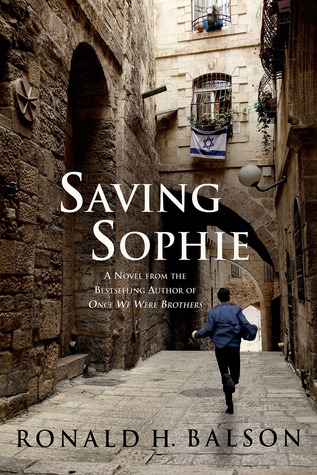
5. Saving Sophie by Ronald H. Balson from St. Martin’s Press for review.

Liam and Catherine team up again to investigate an embezzlement case, and discover a link between their prime suspect, a kidnapping, and a terrorist cell.

Jack Sommers was just an ordinary accountant from Chicago. That is, until his wife passed away, his young daughter was kidnapped, and he became the main suspect in an $88 million dollar embezzlement case. Now, Jack is on the run, hoping to avoid the feds long enough to rescue his daughter, Sophie, from her maternal grandfather, a suspected terrorist in Palestine.

With the help of the investigative team who first appeared in Once We Were Brothers, Liam and Catherine, and a new CIA operative, a secret mission is launched to not only rescue Sophie, but also to thwart a major terrorist attack in Hebron. But will being caught in the crossfires of the Palestine-Israeli conflict keep their team from accomplishing the task at hand, or can they overcome the odds and save countless lives, including their own?

What did you receive?

314th Virtual Poetry Circle

Welcome to the 314th Virtual Poetry Circle!

Remember, this is just for fun and is not meant to be stressful.

Keep in mind what Molly Peacock’s book suggested.

Look at a line, a stanza, sentences, and images; describe what you like or don’t like; and offer an opinion. If you missed my review of her book, check it out here.

Today’s poem is from Rudyard Kipling:

If

(‘Brother Square-Toes’—Rewards and Fairies)

If you can keep your head when all about you   
    Are losing theirs and blaming it on you,   
If you can trust yourself when all men doubt you,
    But make allowance for their doubting too;   
If you can wait and not be tired by waiting,
    Or being lied about, don’t deal in lies,
Or being hated, don’t give way to hating,
    And yet don’t look too good, nor talk too wise:

If you can dream—and not make dreams your master;   
    If you can think—and not make thoughts your aim;   
If you can meet with Triumph and Disaster
    And treat those two impostors just the same;   
If you can bear to hear the truth you’ve spoken
    Twisted by knaves to make a trap for fools,
Or watch the things you gave your life to, broken,
    And stoop and build ’em up with worn-out tools:

If you can make one heap of all your winnings
    And risk it on one turn of pitch-and-toss,
And lose, and start again at your beginnings
    And never breathe a word about your loss;
If you can force your heart and nerve and sinew
    To serve your turn long after they are gone,   
And so hold on when there is nothing in you
    Except the Will which says to them: ‘Hold on!’

If you can talk with crowds and keep your virtue,   
    Or walk with Kings—nor lose the common touch,
If neither foes nor loving friends can hurt you,
    If all men count with you, but none too much;
If you can fill the unforgiving minute
    With sixty seconds’ worth of distance run,   
Yours is the Earth and everything that’s in it,   
    And—which is more—you’ll be a Man, my son!

What do you think?

Who Eats First? by Ae-hae Yoon, illustrated by Hae-won Yang

Source: Independent Publishers Group
Hardcover, 38 pgs
I am an Amazon Affiliate

Who Eats First? by Ae-Hae Yoon, illustrated by Hae-won Yang, is another book in the math concepts of books that teach math basics through story-telling.  This book is a story about placing items and animals in various orders from smallest to biggest, fattest to smallest, and tallest to shortest.  This helps children understand how to differentiate size and type using animals.  The activities in the back are relatively easy to execute from putting numbered cards in order, rearranging them and having people draw them and then being placed in order.  These books would be great for classroom use.

Finding a delicious peach in the rainforest might seem odd, but these animals only care how good it will taste once they bite into it.  While they all want to share it, they are unsure who should go first when taking that first juicy bite.  There are different attempts to measure the animals and determine who should go first, but there are also discussions about differences, like who has the most legs, the longest ears, the longest tail, the longest neck, etc.  The book goes over the various ways to measure things from height to weight and more.  The pictures will help kids understand those concepts clearly.

Who Eats First? by Ae-Hae Yoon, illustrated by Hae-won Yang, is engaging and fun, and the activities can help parents and teachers engage children in math lessons.  My daughter and I have had fun measuring a variety of things in the house and outside, and spying differences between animals and ourselves.

Guest Post: Emotional Abuse by Maria Grace

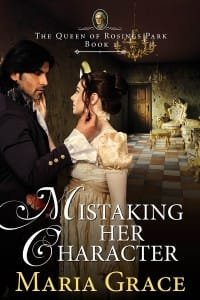
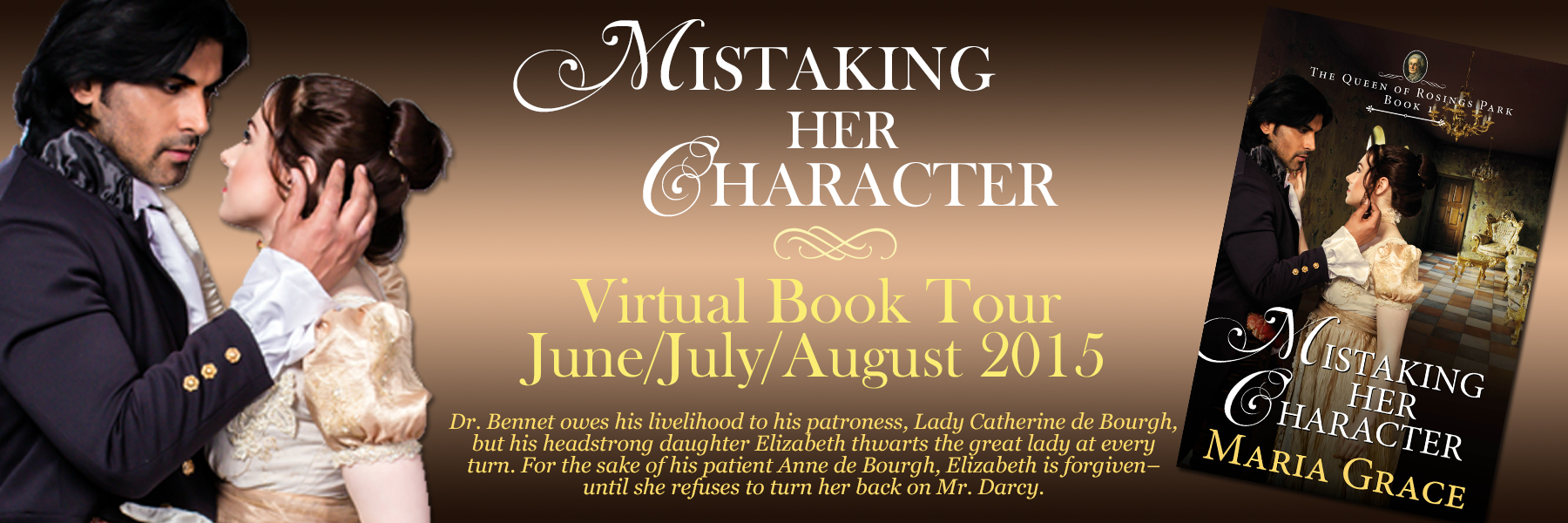
Maria Grace has taken the time to offer a guest post on emotional abuse, which ties into her latest book, Mistaking Her Character.

About the Book:

Lady Catherine de Bourgh is prepared to be very generous when it comes to medical care for her sickly daughter, Anne – generous enough to lure noted physician Dr. Thomas Bennet to give up his London practice and move his family to Rosings Park. But his good income comes with a price: complete dependence on his demanding patroness’s every whim.

Now the Bennet family is trapped, reliant on Lady Catherine for their survival. Their patroness controls every aspect of the Bennet household, from the shelves in the closet to the selection of suitors for the five Bennet daughters. Now she has chosen a husband for headstrong Elizabeth Bennet– Mr. George Wickham.

But Lady Catherine’s nephew, Fitzwilliam Darcy, is not so sure about his aunt’s choice. He is fascinated by the compassionate Elizabeth who seems to effortlessly understand everyone around her, including him. Lady Catherine has other plans for Darcy, though, and she forbids Elizabeth to even speak to him.

As Anne’s health takes a turn for the worse, Darcy and Elizabeth are thrown together as Dr. Bennet struggles to save Anne’s life. Darcy can no longer deny the truth – he is in love with Elizabeth Bennet. But Lady Catherine will do anything to stop Darcy from marrying her – even if it means Elizabeth will lose everything she loves.

Please give Maria Grace a warm welcome:

In my latest book, I ended up tackling the issue of an emotionally abusive family relationship. I say ‘ended up’ because I honestly can’t say I set out to deal with the topic when I started the book. The entire family dynamic I had envisioned when I started ended up turned upside down and a far darker, more complex one emerged as several emotionally abusive characters moved to the forefront. Their behavior was so subtle that my readers were the ones that pointed out to me how abusive the characters were. This goes to show how very difficult emotional abuse can be to identify.

Emotion abuse is a difficult and often misunderstood issue. Very often, neither the abuser nor their victim recognize the abusive nature of the relationship. To both of them, it is just the way things are. Often the abuser never learned healthy coping mechanisms for the normal challenges of healthy, positive relationships. They respond to the normal ups and downs with an offensive pattern of verbal threatening, bullying, and criticism, with more subtle tactics like intimidation, shaming, humiliation, isolation, and manipulation thrown into the mix for good measure. The goal, conscious or not, is to control and subjugate the other person into obedience and even dependence in the relationship.

Although emotional and verbal abuse does not leave physical marks like physical abuse, its victims often assert that physical abuse would have been easier to bear because then, they and others around could more easily have recognized that abuse was happening. As the abuse continues and the emotional wounds deepen, abuse victims feel so emotionally unsafe that they begin to doubt their own feelings and abilities, their senses, opinions, memories, and even their judgement. To prevent negative reactions from their abusers, they will refrain from expressing their opinions and wants, leading to increasing feelings of vulnerability, and insecurity as they are trapped and powerless against the emotional control of their abuser. They become hypervigillant, guarding against anything that might trigger a bad response from the abuser as they accept the maxim that they are at fault for any and everything that disturbs their abuser. In the long run, depression, anxiety disorders and even post-traumatic stress disorder can result.

Abusers often share in a set of common characteristics, often beginning with having been abused themselves or witnessing abuse in their family of origin. Not all abuse victims or witnesses go on to be abusers themselves, though. Abusers often have explosive tempers, fed by possessiveness, jealousy and an intense desire to control the other person. Abusers tend to have low self-esteem and extremely rigid expectations of relationships. The other person and only the other person must compromise to meet expectations. More difficult still, the abuser projects blame for their own bad mood or behavior on the other person. They are never at fault, only the other person. Despite all this, they are able to project a very charming and likeable persona to the world around them.

Many behaviors qualify as emotional abuse. These may look normal, even innocuous in a one-off situation, and in truth, they might be excusable if they were to happen only on very rare occasions. However, one of the things that makes them abuse is the frequency with which they occur. Abusive behaviors include (but ae not limited to) verbally abusive speech like name calling, putting the victim down with constant criticism, yelling and screaming, and intentionally embarrassing the victim in front of others. Abusers often seek to control their victims, isolating them from friends and family, determining what they may or may not do, even what they might wear. Abusers frequently blame their own anger and bad behavior on the victim—‘if you didn’t make me so angry…’. If the victim does not capitulate, the abuser may progress to threatening to damage or destroy the victim’s possessions, to harm the victim or people the victim cares about, or even commit suicide themselves. The list goes on, but taken together, the abuse leaves the victim feeling helpless, powerless, worthless, and wondering if they have any worth apart from their relationship to the abuser.

Consequently, recognizing and breaking free from an abusive relationship is very difficult. Chances are, if one is wondering if their relationship is abusive, there is a good chance it is, especially friends and family hate the way one’s significant other treats them.

Can an abuser change? Very, very rarely, if there is a very deep commitment to change and to an accountability system, like a therapist or group, that will help them along the way. But an abuse victim should not rely upon the abusers promises to change. Ultimately, most victims find that leaving the relationship is their only option to stop the abuse.

If you believe you might be in an abusive relationship, here are some online resources that may be of help: Out of the Fog; Love is Respect

author 7_2014_rbf copyAbout the Author:

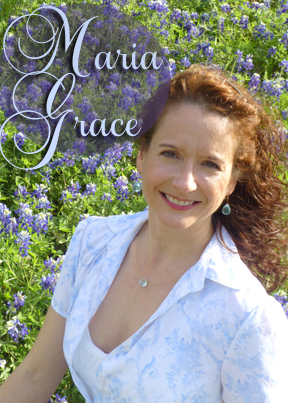
Though Maria Grace has been writing fiction since she was ten years old, those early efforts happily reside in a file drawer and are unlikely to see the light of day again, for which many are grateful. After penning five file-drawer novels in high school, she took a break from writing to pursue college and earn her doctorate in Educational Psychology. After 16 years of university teaching, she returned to her first love, fiction writing.

She has one husband, two graduate degrees and two black belts, three sons, four undergraduate majors, five nieces, six more novels in draft form, waiting for editing, seven published novels, sewn eight Regency era costumes, shared her life with nine cats through the years and tries to run at least ten miles a week.

She can be contacted at by email: [email protected]; Facebook; Google+; Amazon author page; Random Bits of Fascination; Austen Variations; English Historical Fiction Authors; Twitter; and Pinterest.

Buy the book:

MhC tour banner

Revival by Stephen King (audio)

Source: Public Library
Audio, 11 cds
I am an Amazon Affiliate

Revival by Stephen King, narrated by David Morse, is more subtle in its horror than previous novels, but King’s gift for weaving a complex story with dynamic characters shines through.  Jamie Morton is a young boy in a small New England town who is wowed by the new minister, Charles Jacobs.  Like any new, young couple who enters a small town, the Jacobs’ turn heads, with the young ladies fawning over the minister and the young lads gazing at his wife.  When tragedy strikes, Jacobs shocks the small town with a final anti-religion speech that sends him packing, but even Morton cannot forget the minister’s passion or secret obsession with electricity.

Morton, however, has his own path ahead, and much of it is spent in a drug-induced haze of rock n’ roll clubs and motels as a guitar player.  While he feels like an amateur, he has enough talent to take him from band to band and earns enough money to keep his habit up.  Morse does an excellent job with the narration, and he’s sufficiently creepy.  What I found wonderful were the nods that King places to previous novels, such as Mr. Electrico in Joyland, inside Revival to provide a little extra umph to the idea of reviving or living again.

King really has a handle on childhood and growing up in small towns, and the many superstitions that can be spread about among teens and their parents.  Rumors often spread like wildfire, and in many ways, when those of us leave those small towns, we try to reinvent ourselves like Jacobs’ does.  But the difference is that his obsession with revival becomes the only focus of his life, and in the process of pursuing the truth of life and death, he ruins the lives of others, drags Morton into the darkest of places, and ultimately, leads to a truth that can never be unseen.  Revival by Stephen King, narrated by David Morse, is well told, and though slow in some places, weaves an incredible story that will have readers questioning reality and their faith.

About the Author:

Stephen King is the author of more than fifty books, all of them worldwide bestsellers. His recent work includes Doctor Sleep and Under the Dome, now a major TV miniseries on CBS. His novel 11/22/63 was named a top ten book of 2011 by The New York Times Book Review and won the Los Angeles Times Book Prize for Mystery/Thriller as well as the Best Hardcover Book Award from the International Thriller Writers Association. He is the recipient of the 2003 National Book Foundation Medal for Distinguished Contribution to American Letters. He lives in Bangor, Maine, with his wife, novelist Tabitha King. (Photo Credit: Denver Post)

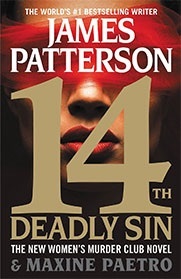
14th Deadly Sin by James Patterson and Maxine Paetro

Source: Public Library
Hardcover, 384 pgs
I am an Amazon Affiliate

14th Deadly Sin by James Patterson and Maxine Paetro brings to light the possibility of police corruption in San Francisco, and Lindsay Boxer doesn’t know who to trust.  When drug houses get hit and all of the perps are killed by men wearing SFPD windbreakers and latex masks, Boxer and her team have to determine if those men are really cops or if they are criminals trying to smear the reputation of the police department.

Meanwhile, Lindsay’s husband, Joe, has to adjust to a new set of circumstances when he becomes a stay-at-home dad.  While he loves his little girl, Julie, the adjustment is a lot harder than he expects.  A former FBI agent at home doing laundry and other household chores, while his wife is chasing bad guys all over the city, what could be more of an adjustment, especially with the long hours she keeps.  At least, that’s until he and his wife begin working on an off-the-books case regarding stabbings that happen on the same date every year.

Patterson and Paetro make a great writing team for this series.  These women are full of spunk and passion, but they’re also not married to their jobs like some.  They love to be able to come home to their families and friends and just have a good time.  These gatherings of the Women’s Murder Club are often pow-wows about their cases or stories, but they also are a great way for the ladies to blow off steam.

14th Deadly Sin by James Patterson and Maxine Paetro is a solid addition to the series, and while the audio for this one was unavailable at my library, I’m sure I would have enjoyed it much the same.  This one has got a little of everything — mystery, fun, relationships, and adjustments to new career/life situations.

About the Author:

James Patterson is a prolific author of thrillers, mysteries, young adult novels and more. His first successful series featured psychologist Alex Cross.

About the Co-Author:

Maxine Paetro collaborates with best–selling author James Patterson, co–writing The 4th Of July, The 5th Horseman, The 6th Target, The 7th Heaven, The 8th Confession, The 9th Judgment, 10th Anniversary and The 11th Hour, just released in May 2012. All are New York Times #1 best–sellers in the Women’s Murder Club Series.

Mailbox Monday #331

Mailbox Monday, created by Marcia at To Be Continued, formerly The Printed Page, has a permanent home at its own blog.

To check out what everyone has received over the last week, visit the blog and check out the links.  Leave yours too.

Also, each week, Leslie, Vicki, and I will share the Books that Caught Our Eye from everyone’s weekly links.

Here’s what I received:

1.  The Moon in the Pines selected and translated by Jonathan Clements, a gift from Emma Eden Ramos.

An illustrated collection of translations of classical and contemporary Japanese haiku. This popular art form is the poetic expression of Zen Buddhism. Traditionally, a haiku poem is just 17 syllables long, which requires the poet, like the follower of Zen, to cut through surface appearances to the heart of an experience. In this collection, translator Jonathan Clements seeks to capture the elusive spirituality that enabled the Japanese poets to preserve their experience of the moment in a mere three lines.

What did you receive?

313th Virtual Poetry Circle

Welcome to the 313th Virtual Poetry Circle!

Remember, this is just for fun and is not meant to be stressful.

Keep in mind what Molly Peacock’s book suggested.

Look at a line, a stanza, sentences, and images; describe what you like or don’t like; and offer an opinion. If you missed my review of her book, check it out here.

Today’s poem is from James Tate (R.I.P.): (read in the YouTube video by UsedBuyer)

The Lost Pilot

        for my father, 1922-1944

Your face did not rot
like the others—the co-pilot,   
for example, I saw him

yesterday. His face is corn-
mush: his wife and daughter,   
the poor ignorant people, stare

as if he will compose soon.
He was more wronged than Job.   
But your face did not rot

like the others—it grew dark,
and hard like ebony;
the features progressed in their

distinction. If I could cajole
you to come back for an evening,   
down from your compulsive

orbiting, I would touch you,   
read your face as Dallas,   
your hoodlum gunner, now,

with the blistered eyes, reads   
his braille editions. I would
touch your face as a disinterested

scholar touches an original page.   
However frightening, I would   
discover you, and I would not

turn you in; I would not make   
you face your wife, or Dallas,   
or the co-pilot, Jim. You

could return to your crazy   
orbiting, and I would not try   
to fully understand what

it means to you. All I know   
is this: when I see you,   
as I have seen you at least

once every year of my life,   
spin across the wilds of the sky   
like a tiny, African god,

I feel dead. I feel as if I were   
the residue of a stranger’s life,   
that I should pursue you.

My head cocked toward the sky,   
I cannot get off the ground,   
and, you, passing over again,

fast, perfect, and unwilling   
to tell me that you are doing   
well, or that it was mistake

that placed you in that world,
and me in this; or that misfortune   
placed these worlds in us.

What do you think?