Quantcast

Guest Review: Shoeless Joe by W.P. Kinsella

Today’s guest review is from Laura at 125Pages.com
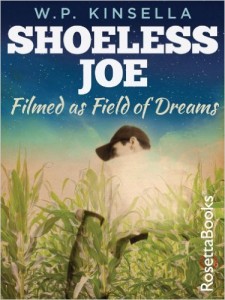
shoelessjoeThis weeks United States of Books brings us to Iowa with Shoeless Joe by W.P. Kinsella.

2 ½ Stars

Entertainment Weekly says – Not only was this novel – adapted for Field of Dreams – set in Iowa, but Kinsella also attended the state’s other claim to fame: The Iowa Writers’ Workshop.

I went into Shoeless Joe with such hope. I have not seen Field of Dreams, but love uplifting sports movies, so I thought I would love one in book form. But this was no uplifting sports movie, it was a strange tale of a man who builds a baseball field on his failing Iowa corn farm then leaves his wife and small child to kidnap famed writer J.D. Salinger and take him on a road trip. I’m sorry what? Where is my tale of a downtrodden man who has a vision and through that builds his dream on his farm? Instead I get a wacky buddy road trip comedy, complete with carnies and diner hold ups. The action on the farm is limited to the very beginning and the very end, and that is where the heart of the story was. A struggling man trying to save his farm and his family with a dream and pure gumption. Those parts were fantastic, but the rest was just ridiculous.

itsiowaThe plot had its moments, but they were sadly few and far between. The family parts were great, but the whole kidnapping road trip aspect totally lost me. The world created was the same, certain select parts were crisp and vivid, then it veered into crazypants territory. The writing was fine, sentence structure wise, but the story was so over the top I couldn’t really see any fine nuances. The characters were a mashup of amazing and then not, they started strong but then went downhill the more I read. I had no emotional tie to any of the characters. Ray was dismissive of the real world and the potential harm he was bringing to his wife and child.

“God what an outfield,” he says. “What a left field.” He looks up at me and I look down at him. “This must be heaven,” he says. “No. It’s Iowa,” I reply automatically.

Shoeless Joe is considered one of the greatest sports books written. I just didn’t see it. Less a book about baseball to me, and more a book about what too much Round-Up in a field will lead to. I do understand the baseball at the heart of the story and how it linked every part together, but failed to see the amazing parts as the random hostage taking of a reclusive writer and a road trip with said writer to pick up baseball ghosts took away from that for me. As did the husband and father endangering the future of his family by leaving them as their farm is about to be foreclosed on. Now, I don’t hate baseball and I know, national sport and all, but this book just didn’t do it for me.

Favorite lines – Pedestrians in the East behave like lemmings rushing dispassionately to their deaths—it takes a good ten minutes to make a left turn into the blinding rush of oncoming traffic, with pedestrians thronging suicidally into the intersections.

Biggest cliché – If you build it, he will come.

Have you read Shoeless Joe, or added it to your TBR?

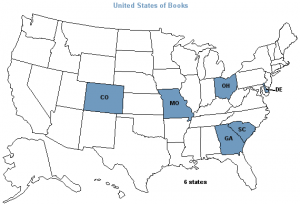
Check out all of the #USofBooks posts here.


USofBooksIowa

Happy Valentine’s Day 2016

Happy-Valentines-Day-2016-hd-wallpapers-free-Images

Happy Valentine’s Day to my family and friends no matter how far away you may be from me.

Love has no geographical boundaries.

Mailbox Monday #362

Mailbox Monday, created by Marcia at To Be Continued, formerly The Printed Page, has a permanent home at its own blog.

To check out what everyone has received over the last week, visit the blog and check out the links.  Leave yours too.

Also, each week, Leslie, Vicki, and I will share the Books that Caught Our Eye from everyone’s weekly links.

Here’s what I received:

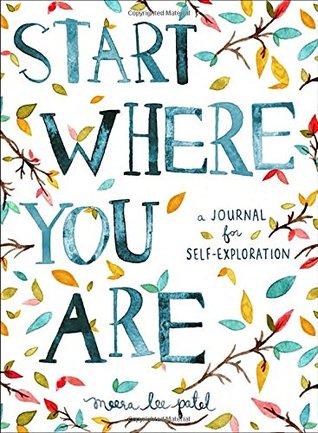
Start Where You Are: A Journal for Self-Exploration by Meera Lee Patel for review from Penguin.

Start Where You Are is an interactive journal designed to help readers nurture their creativity, mindfulness, and self-motivation. It helps readers navigate the confusion and chaos of daily life with a simple reminder: that by taking the time to know ourselves and what those dreams are, we can appreciate the world around us and achieve our dreams.

Featuring vibrant hand-lettering and images that have attracted a large following for her stationery and textile line in boutiques across the country, Meera Lee Patel’s uplifting book presents supportive prompts and exercises along with inspirational quotes to encourage reflection through writing, drawing, chart-making, and more.

Featuring inspiring quotes from writers, artists, and other visionaries paired with open-ended questions and prompts, with plenty of room for writing and reflecting, this appealing full-color book will make a perfect gift and keepsake as well as being a powerful tool for positive change.

A Loaded Gun: Emily Dickinson for the 21st Century by Jerome Charyn from LibraryThing Early Reviewers

We think we know Emily Dickinson: the Belle of Amherst, virginal, reclusive, and possibly mad. But in A Loaded Gun, Jerome Charyn introduces us to a different Emily Dickinson: the fierce, brilliant, and sexually charged poet who wrote:

My Life had stood—a Loaded Gun—

Though I than He— may longer live
He longer must—than I—
For I have but the power to kill,
Without—the power to die—

Through interviews with contemporary scholars, close readings of Dickinson’s correspondence and handwritten manuscripts, and a suggestive, newly discovered photograph that is purported to show Dickinson with her lover, Charyn’s literary sleuthing reveals the great poet in ways that have only been hinted at previously: as a woman who was deeply philosophical, intensely engaged with the world, attracted to members of both sexes, and able to write poetry that disturbs and delights us today.

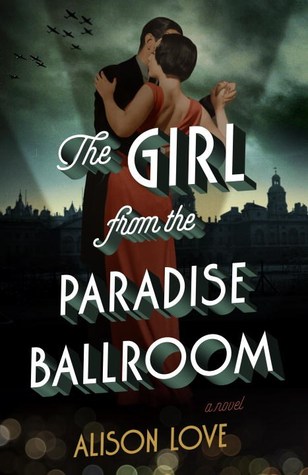
The Girl from the Paradise Ballroom by Alison Love for review from TLC Book Tours. (my second copy, so this one will be passed on)

The first meeting between Antonio and Olivia at the Paradise Ballroom is brief, but electric. Years later, on the dawn of World War II, when struggling Italian singer Antonio meets the wife of his wealthy new patron, he recognizes her instantly: it is Olivia, the captivating dance hostess he once encountered in the seedy Paradise Ballroom. Olivia fears Antonio will betray the secrets of her past, but little by little they are drawn together, outsiders in a glittering world to which they do not belong. At last, with conflict looming across Europe, the attraction between them becomes impossible to resist–but when Italy declares war on England, the impact threatens to separate them forever.

What did you receive?

344th Virtual Poetry Circle

Welcome to the 344th Virtual Poetry Circle!

Remember, this is just for fun and is not meant to be stressful.

Keep in mind what Molly Peacock’s book suggested.

Look at a line, a stanza, sentences, and images; describe what you like or don’t like; and offer an opinion. If you missed my review of her book, check it out here.

This poem is from Major Jackson:

On Disappearing

I have not disappeared.
The boulevard is full of my steps. The sky is
full of my thinking. An archbishop
prays for my soul, even though
we met only once, and even then, he was
busy waving at a congregation.
The ticking clocks in Vermont sway

back and forth as though sweeping
up my eyes and my tattoos and my metaphors,
and what comes up are the great paragraphs
of dust, which also carry motes
of my existence. I have not disappeared.
My wife quivers inside a kiss.
My pulse was given to her many times,

in many countries. The chunks of bread we dip
in olive oil is communion with our ancestors,
who also have not disappeared. Their delicate songs
I wear on my eyelids. Their smiles have
given me freedom which is a crater
I keep falling in. When I bite into the two halves
of an orange whose cross-section resembles my lungs,

a delta of juices burst down my chin, and like magic,
makes me appear to those who think I’ve
disappeared. It’s too bad war makes people
disappear like chess pieces, and that prisons
turn prisoners into movie endings. When I fade
into the mountains on a forest trail,
I still have not disappeared, even though its green façade
turns my arms and legs into branches of oak.
It is then I belong to a southerly wind,
which by now you have mistaken as me nodding back
and forth like a Hasid in prayer or a mother who has just
lost her son to gunfire in Detroit. I have not disappeared.

In my children, I see my bulging face
pressing further into the mysteries.

In a library in Tucson, on a plane above
Buenos Aires, on a field where nearby burns
a controlled fire, I am held by a professor,
a general, and a photographer.
One burns a finely wrapped cigar, then sniffs
the scented pages of my books, scouring
for the bitter smell of control.
I hold him in my mind like a chalice.
I have not disappeared. I swish the amber
hue of lager on my tongue and ponder the drilling
rigs in the Gulf of Alaska and all the oil-painted plovers.

When we talk about limits, we disappear.
In Jasper, TX you can disappear on a strip of gravel.

I am a life in sacred language.
Termites toil over a grave,
and my mind is a ravine of yesterdays.
At a glance from across the room, I wear
September on my face,
which is eternal, and does not disappear
even if you close your eyes once and for all
simultaneously like two coffins.

What do you think?

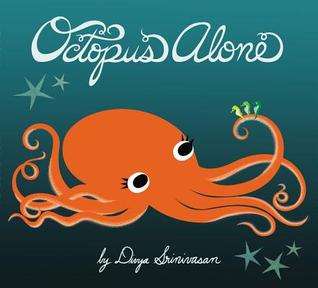
Octopus Alone by Divya Srinivasan

Source: Public Library
Hardcover, 40 pgs.
I am an Amazon Affiliate

Octopus Alone by Divya Srinivasan is a cute story about an octopus who lives in a cave alone.  Sea horses are curious about her, but she likes her solitary life and changes color to escape.  Using camouflage, she is able to see life as it is in the coral reef while she’s hidden from scrutiny.  She’s a shy octopus, but she’s fascinated by the activities of her neighbors.  The octopus, however, also appreciates her privacy.

This underwater world is colorful, but it’s also busy. She wants something a little less busy and finds herself a new home beyond the reef.  When a whale appears and breaches in song, she’s fascinated and remembers the antics of the sea horses as they danced in the reef.  She finds that she misses her old life and her old home.  She’s come to appreciate all that she had, even if there were times when she wanted to be alone.

Octopus Alone by Divya Srinivasan is an engaging story for young readers, teaching them that it is okay to want to be alone sometimes.  It also teaches them about different sea creatures and how to appreciate what they have before it is gone.

Rating: Quatrain

About the Author:

Check out Divya Srinivasan‘s website.

M Train by Patti Smith (audio)

Source: Public Library
Audiobook, 6 CDs
I am an Amazon Affiliate

M Train by Patti Smith, narrated by the author, is a poetic and meandering memoir that illustrates how the writing life can not only be rich with inspiration but also frustratingly slow and difficult.  Smith spends much of her time drinking black coffee in different cafes, and as she interacts with those she meets and in her projects, she is still holding on to the pain of loss, as her husband passed away too young.  While the loss of her husband is there with her as she rides the subway (there is an M train in New York City that travels between Queens and Manhattan), travels to Tangiers and other foreign locations, it does not take center stage.

Memories drag her daily ruminations into different directions, and these memories are all that are left of those she loves and who have inspired her as a woman, an artist, a poet, and as a person.  She is obsessed with crime dramas and coffee, and her writing is on napkins, in blank pages of books she’s reading (for the upteenth time), and on scraps and in notebooks.

You can see some elements of the memoir online.

Like the dilapidated bungalow she buys on Rockaway beach just before Superstorm Sandy, Smith endures the everyday erosion of life, the waves that threaten to break us and smash us into pieces.  The only testament to our strength is to continue onward and to move forward through our lives chasing our passions and enjoying every moment we are graced with.  Her empty house on Rockaway is where her memories rattle around, emerging only when necessary, allowing her to look back on how much her life has evolved and how much she wants to hold onto as much of it as she can.

The self-narrated M Train by Patti Smith is numbing in the amount of loss in one person’s life, but her life is not that different from that of others who struggle against the tidal wave of loss.  Memory can help us hold onto those we love, but even those are eroded by time.  Many of us have a hard time moving on, and in her memoir, she explores this in depth.

Rating: Quatrain

Photo: © Jesse Dittmar

About the Author:

Patti Smith is a writer, performer, and visual artist. She gained recognition in the 1970s for her revolutionary merging of poetry and rock. She has released twelve albums, including Horses, which has been hailed as one of the top one hundred albums of all time by Rolling Stone.

Please visit her Website.


Buddha in a Birdcage and Other Poems by Betty Oliver

Source: Purchased
Paperback, 64 pgs.
I am an Amazon Affiliate

Buddha in a Birdcage and Other Poems by Betty Oliver is a collection of poems and photos of her mixed media art, which was published posthumously by the Haystack Mountain School of Crafts where she once taught.  The executor of her estate Billy Bernstein indicated that she performed her poems, sometimes “fighting her way out of a giant paper bag.”  In the Foreword, Stuart Kestenbaum says, “Reading these poems you may not be able to see Betty fighting her way out to begin to speak, but you will feel the power — and the need to speak — that she brought to this work.” (pg. 1) In many cases, this is true. You can imagine her up on a stage struggling through a paper bag, trying to get those words out. Some of these poems have lines that repeat, and it is almost like there is so much passion behind them that the voice of the poem stutters.

Untitled (pg. 11)

The bear’s purple gutted chest
gave off steam suggesting life
he looked stunned not dead
the men still high from his blood
pranced and preened by the pick up truck
I went closer to look
the heat from his cooling heart
met my gaze.

Her artwork often involves the use of paper in unusual ways, and like her art, these poems are unusual. Her verse is at times playful, but also stern in its criticism of how the world operates or is expected to operate. She’s interested in providing readers with a new perspective on the ordinary, and she holds nature as sacred and tangible. Living on a dairy farm, she had a very close knowledge of milking cows, and what jobs men were expected to do every day. In “Fenceposts,” she talks about how men use posthole diggers and women do not, and how in her family, she has held onto her father’s posthole digger as her mother held onto her father’s twenty-two pistol.

From her time on a dairy farm to her moments in New York City, Oliver’s poems are moments in time that recall things from her past and remind her about the ephemeral nature life, especially when she falls ill. Buddha in a Birdcage and Other Poems by Betty Oliver offers readers just a little of Oliver’s work, and what’s here can seem unfinished at times, but overall, her work is about our moments in time and the thought we do or don’t give them as we live them.

Rating: Tercet

About the Poet:

Betty was truly a multi-media artist. Her visual art was focused on sculpture incorporating paper, paper pulp, and found objects. Though born, raised and perhaps haunted by her childhood in Eastern Virginia, she eventually elected to make New York her home, establishing a home and studio in upper Manhattan and channeling the vibrant texture and rhythms of the city and her neighborhood into her life and work. In a sense, the city became her pallet. She incorporated all manner of discarded and found objects into her art. Old phone books, calendars, Chinatown boxes, newspapers and jigsaw puzzles all were processed into her creative output of sculpture, paintings and photos.

Around 1990 she began to write and perform poetry, and created a powerful body of written work. As a poet, Betty was an engaging and compelling performer, often beginning readings by fighting her way out of a giant paper bag. As in her visual work, her writing echoes the many voices of her experience. A scream from the sidewalk on 110th Street, an impassioned plea to a lover, a strident declaration from the pulpit all resonate with truth, soul, and authenticity.

Betty was a very effective and sought after teacher and led many classes and workshops primarily at Penland School of Craft in the mountains of North Carolina, and Haystack Mountain School of Craft on the Maine coast. The book will be marketed by these schools and any profits will be given to the scholarship funds of these two schools.


Bone Map by Sara Eliza Johnson

Source: Milkweed Editions
Paperback, 96 pgs.
I am an Amazon Affiliate

Bone Map by Sara Eliza Johnson, 2013 Winner of National Poetry Series, is visceral and raw, filled with a great deal of tactile and violent imagery as well as traumatic moments that meld into regenerative water-based forces.  These poems reflect the most basic human needs for shelter, nourishment, and survival, and in these dark images, Johnson reveals a stunning beauty in that underbelly, which many often ignore or avoid.

The collection opens with “Fable,” allowing Johnson to establish the readers expectations that her verse will not be straightforward, but subtle and more instinctual.  “In the forest, the owl releases a boneless cry,” the narrator begins, hearing “your bones/singing into mine.”  A father is observed with his son in the square of a city before a war begins, and he is blissfully unaware of “what his hands will be made to do/to other men.”  However, the boy is the final comment from the narrator, a symbol of innocence and hope that can change the future.

The collection’s title demonstrates how detailed the poems will be, creating a bone map (a visual representation of an excavation site) to understand what has come before.  Like in “Deer Rub” when “the rain scratches at the deer’s coat//as if trying to get inside,” Johnson’s lines bore into the reader’s mind to create vivid and unsettling images.  Readers are forced to watch, to wash “their antlers of blood,” forcing themselves to recognize their transformation into a less “innocent” man or woman and accept those base natures that have children carrying knives.  More than once, Johnson calls the readers attention to a foreignness entering something untouched, like the “tender-rooted flowers/inside the belly of the horse” in “As the Sickle Moon Guts a Cloud.”

In the darkness and uncertainty of the forest, Johnson reveals the devastation of man, but also the unmovable force of nature to encroach where it isn’t wanted.  Bone Map by Sara Eliza Johnson, 2013 Winner of National Poetry Series, is a journey that readers will want to repeat to fully perceive all of Johnson’s subtleties.

Rating: Quatrain

About the Poet:

Sara Eliza Johnson‘s poetry has appeared or is forthcoming in Boston Review, Ninth Letter, New England Review, Best New Poets 2009, Crab Orchard Review, Pleiades, Meridian, and elsewhere. She is the recipient of a National Endowment for the Arts Fellowship in poetry, a Rona Jaffe Foundation Writers’ Award, a Winter Fellowship from the Fine Arts Work Center in Provincetown, a work-study scholarship to the Bread Loaf Writers’ Conference, and an Academy of American Poets Prize from the University of Utah, where she is PhD student in the Literature & Creative Writing program. Her first book, Bone Map (Milkweed Editions, 2014), was selected for the 2013 National Poetry Series.


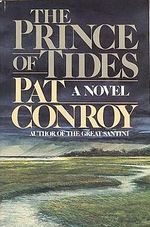
Guest Review: The Prince of Tides by Pat Conroy

Today’s guest review is from H.C. Newton at The Irresponsible Reader

Mixed Rating:
Did I Like It?
★ ★
Did I think it was well-done? (lost a 1/2 star in the last 50 pages or so)
★ ★ ★ 1/2
tides

The story of the Wingos is one of humor, grotesquerie, and tragedy. Tragedy predominates.

So warns Tom Wingo before beginning to relate that story to Dr. Susan Lowenstein. Lowenstein is Tom’s sister’s therapist and needs his help to understand Savannah, who recently tried to kill herself for at least the third time. Savannah’s now institutionalized until she gets back to a place where she can handle her PTSD (my diagnosis, not Lowenstein’s), psychosis, and whatever else they diagnose her with.

As he has done before, Tom has dropped everything and rushed to New York City (from the tiny community of Colleton, South Carolina) to help his sister. The best way to do that, Lowenstein says, is to fill in the large blanks of memory that Savannah demonstrates. Then, she’ll be able to help Savannah remember and move on from whatever trauma has brought her to this stage. Tom agrees — not only has he come to help his sister, he’s also taking a break from home: he’s been unemployed for a year, he just learned his wife is having an affair and might leave him — maybe by helping his sister’s therapist help her, he might get help in the process.

Before he gets the call about his sister and finds out about his wife, Tom’s spending time with his three daughters and jokes with them:

. . .parents were put on earth for the sole purpose of making their children miserable. It’s one of God’s most important laws. Now listen to me. Your job is to make me and Mama believe that you’re doing and thinking everything we want you to. But you’re really not. You’re thinking you own thoughts and going out on secret missions. Because Mama and I are screwing you up. . . I know we’re screwing you up a little bit every day. If we knew how we were doing it, we’d stop. We wouldn’t do it ever again because we adore you. But we’re parents and we can’t help it. It’s our job to screw you up.

That’s not the last time Tom will joke about this, but he’ll spend far more time showing and telling the reader about how parents go about screwing up their kids — he, Savannah and their older brother, Luke, are proof of that (there are four exceptions to this in the novel — but I can’t help but think that with some more investigation, they’d be shown as screwed up, too).

The seeds of this parental function are planted on the night of the twin’s birth, and soon flower while the children are (at least) toddlers — and it doesn’t stop, ever. To detail it would be to give too much away, but Tom, Savannah, and Luke have horrible childhoods and the proof of that is writ large all over their adulthood. Which doesn’t mean that the book is entirely grim — their father has bouts of generosity, of letting his imagination get away from him and getting the family involved in an escapade; they have loving grandparents; they’re successful at school (in differing ways); they adore their mother (rightly or wrongly); they have adventures — they’re actually happy frequently. But then the reality of their poverty, their abusive father, their (I’ll let you fill in the blank if you read it) mother, will revisit them and things will be grim again. Early on, we’re told that something horrible happens to Luke just a couple of years before this most recent suicide attempt, their father is in jail, and that his mother has remarried (to someone Tom hates more than his father). Slowly but inexorably, we march toward those ends. Alternating with the tales of their past, we see Tom in New York, trying to help and understand his sister, as well as the growing friendship between Tom and Lowenstein.

At the end of the day, Lowenstein’s son is the only character that I liked (and maybe Tom’s daughters — but we spend less than ten pages with them, so it’s hard to say). Which doesn’t say a whole lot for the rest of this motley collection of scofflaws, narcissists, manipulators, bullies and gulls. Thankfully, you don’t have to like all the characters to appreciate a well-written, well-structured novel. Which this largely is.

I’m not entirely convinced it’s as good as it thinks it is, however (it, and most readers, it appears). It frequently seems over-written — too much squeezed into a sentence; sentences filled with sesquipedalian words (after paragraphs without any); the humor seems forced sometimes; the dialogue is frequently stilted. The flashback segments appear to be what Tom’s relating to Lowenstein — but I have to wonder if they’re more detailed for the reader than they are for Lowenstein. She complains that Tom’s not forthcoming about the mother (unless maybe his version conflicts with what Savannah has been telling her), because I think I get a pretty clear picture of her from that.

There are some reveals promised early that Conroy doesn’t deliver until towards the end — and he mostly delivers well. However, one of the big reveals (at least Conroy played it as one), was telegraphed so clearly hundreds of pages before I didn’t think it even needed to be mentioned — it could just be assumed. Like he didn’t need to mention that the football coach from South Carolina had an accent. Telegraphing it the way he did made it seem like an authorial or editorial failure. There was one reveal that was promised only a chapter or so before we got it — I’m glad I didn’t have to wait long for it, because of all the things he teased, this was the most vital (and most disturbing) — setting up Savannah’s first suicide attempt and the rest of her life (it seems).

I’m sure I’m in the minority here, but I think the book tries to do too much — especially by the time it gets to the end, where Tom is beginning to tell us the dark thing it’s been hinting at about Luke, the set-up for what happens to Luke was just too much. Conroy covers race, regionalism, psychiatry, feminism, theories of masculinity, how sports can be noble, spousal/parental abuse, marital fidelity, marital love, marital betrayal, sexual assault, school integration post Brown vs. Board of Ed, Vietnam, property rights, the drug war, quixotic faceoffs against the federal government . . . and other things I’m forgetting. It’s just too much — especially to befall one family (even if three generations are in view).

So as part of this United States of Books series, one thing I want to look at is why the book was chosen, what did the novel teach me about the state, why did EW pick it as “the one work of fiction that best defines” South Carolina? It’s definitely not because it paints the residents in the kindest light — the constant contrast between small-town SC versus a fairly idealized New York City (or at least affluent NYC) doesn’t do the state any favors. There’s a sense of a mix of pride and shame about the people, the history, and legacy of the state. The sharp class distinction — not just racial — drove so much of the characters actions and desires that it seems to be part of their DNA (although it can be overcome with the right strategy and dedication). It’s not the best part of the country to live in, the book seems to say, but those who embrace the life, the state, develop a great love that transcends all sorts of regional, intellectual or philosophical chauvinism. Also, I should’ve realized, but didn’t, that there was more to SC coastal industry than tourism, never occurred to me that there might be shrimpers, lobster trappers, etc.

“There’s a difference between life and art, Savannah,” I said as we moved out into the Charleston Harbor.

“You’re wrong,” she said. “You’ve always been wrong about that.”

I knew very little about this book going in. I remembered when I was in college shortly after the movie came out that everyone talked about Conroy as if he were a genius. I knew that the movie (and therefore, probably the book) involved some rough-and-tumble guy and a classy psychologist in therapy (and in bed, based on the movie poster). I’ve seen Conroy interviewed and in documentaries, I knew he considered himself a “Southern Writer” in the tradition of Faulkner, Harper Lee, Flannery O’Connor and James Dickey (his influence is clearly seen). But beyond that, I didn’t know what to expect. I think maybe more than this. I have to give this a mixed review — there’s a lot to admire here, scope, character, the way he told a multi-layered story about very familiar subjects in a way that (mostly) didn’t seem to tired or cliché. But, oh, I spent a lot of time hating this book. There were at least two times, maybe three, that I almost walked away from this — and I probably would have if it wasn’t part of this series. I’m not entirely sure that I’m glad I finished.

USofbooksSouthCarolina

Mailbox Monday #361

Mailbox Monday, created by Marcia at To Be Continued, formerly The Printed Page, has a permanent home at its own blog.

To check out what everyone has received over the last week, visit the blog and check out the links.  Leave yours too.

Also, each week, Leslie, Vicki, and I will share the Books that Caught Our Eye from everyone’s weekly links.

Here’s what I received:

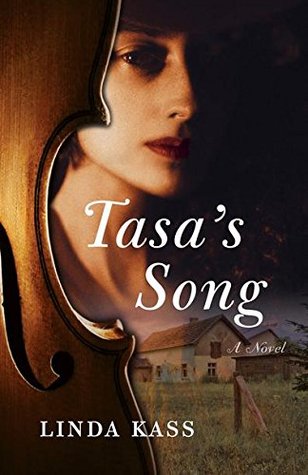
Tasa’s Song by Linda Kass for review from Caitlin Hamilton Marketing & Publicity.

1943. Tasa Rosinski and five relatives, all Jewish, escape their rural village in eastern Poland avoiding certain death and find refuge in a bunker beneath a barn built by their longtime employee.

A decade earlier, ten-year-old Tasa dreams of someday playing her violin like Paganini. To continue her schooling, she leaves her family for a nearby town, joining older cousin Danik at a private Catholic academy where her musical talent flourishes despite escalating political tension. But when the war breaks out and the eastern swath of Poland falls under Soviet control, Tasa’s relatives become Communist targets, her new tender relationship is imperiled, and the family’s secure world unravels.

From a peaceful village in eastern Poland to a partitioned post-war Vienna, from a promising childhood to a year living underground, Tasa’s Song celebrates the enduring power of the human spirit.”

What did you receive?

343rd Virtual Poetry Circle

Welcome to the 343rd Virtual Poetry Circle!

Remember, this is just for fun and is not meant to be stressful.

Keep in mind what Molly Peacock’s book suggested.

Look at a line, a stanza, sentences, and images; describe what you like or don’t like; and offer an opinion. If you missed my review of her book, check it out here.

This poem is from Tess Gallagher:

Choices

I go to the mountain side
of the house to cut saplings,
and clear a view to snow
on the mountain. But when I look up,
saw in hand, I see a nest clutched in
the uppermost branches.
I don’t cut that one.
I don’t cut the others either.
Suddenly, in every tree,   
an unseen nest
where a mountain   
would be. 

What do you think?

Guyku: A Year of Haiku for Boys by Bob Raczka, illustrated by Peter H. Reynolds

Source: Public Library
Hardcover, 48 pgs
I am an Amazon Affiliate

Guyku: A Year of Haiku for Boys by Bob Raczka, illustrated by Peter H. Reynolds, is a book I picked up to read with my daughter because I love finding new poetry books to read with her.  I want her to at least appreciate poetry, even if she doesn’t love it as much as I do later on in life.  Although this says its a year of haiku for boys, I think even girls can appreciate these short poems and the seasons they represent.  My daughter participates in some of the same activities as boys, such as flying kites and bike riding, and I’m sure when she grows older, she’ll be climbing trees and taking other adventures.

The illustrations are great, very simply drawn and colored, reflecting the poems themselves in their obvious and fun witticisms.  In one of the first haikus, a young boy is flying a kite, but he’s engaged in a game of tug-of-war, and he’s not winning.  I bet you can guess who is.  These poems speak to the imagination of children, like boys making their bikes sound like motorcycles by putting baseball cards and other objects in their wheels.  These boys are imaginative and curious, and they take on anything that comes their way.  It’s hard to imagine them ever being bored.

The wind and I play
tug-of-war with my new kite.
The wind is winning.

Guyku: A Year of Haiku for Boys by Bob Raczka, illustrated by Peter H. Reynolds, is a wonderful collection of poems for boys and girls.  Not only are the poems short enough for younger kids to pay attention to them, but they are about subjects that they are familiar with and probably already engage in regularly.

Rating: Cinquain

About the Author:

Bob Raczka loved to draw, especially dinosaurs, cars and airplanes, as a boy. He spent a lot of time making paper airplanes and model rockets. He studied art in college, which came in quite handy while writing a series of art appreciation books, Bob Raczka’s Art Adventures. He also studied advertising, a creative field in which he worked in for more than 25 years. Bob also discovered how much he loved poetry and began writing his own. His message for today’s kids is to make stuff!”