Quantcast

Interrobang by Jessica Piazza

Source: AWP Purchase
Paperback, 72 pgs.
I am an Amazon Affiliate

Interrobang by Jessica Piazza is mostly a collection of sonnets that explore a series of phobias and obsessions that often cause us to go over the edge or come very close to our own destruction. This inner turmoil is rarely seen by outsiders or if it is, it is ignored. Piazza brings these obsessions and fears into the light to share with us just how constraining they can be, but there is also an undercurrent of letting loose and a rolling with the punches as they come.

From "Lilapsophobia" (pg. 24)

... But flood's not much
compared with these cyclonic days. No way
to gauge you: wrath or pleasure, unfixed track
away or toward. Untoward, you leave no wake.

Imagine that sleep is the quiet that soothes your fears, imagine to that the light is not hope but something that is jarring and humbling. This is how Piazza’s poems pack their punches, lulling the reader into a known world only to shake them awake with a new world view — one that is a little disturbing. “Antephilia” (Love of Ruin) is one of the most phenomenal poems in the collection, exploring the wreck of a dysfunctional relationship with graveyard imagery and more. Piazza has taken the mess and created a love that leaves a lasting impression in its dysfunction without delving too far into the melodrama of these lives.

Meanwhile, “Pediophilia” (Love of Dolls) almost becomes an ode to loss and the filling up of the emptiness where a daughter once was, only to find it full of creepy dolls in an orphanage devoid of joy and life. Piazza’s imagery is haunting and devastating, and readers will have to force themselves to take it all in, rather than turn away. These poems want you to take notice of the darkness, of the mess, of the emptiness so that you can be ready for the collection’s conclusion and it’s minor note of hope and change.

Jessica Piazza is a talented wordsmith who can weave pictures that will sear into readers’ minds. Her poems in Interrobang are going to force you to look into the darkness so long that the bright light is almost to blinding to see.

RATING: Cinquain

Other Reviews:

Obliterations

About the Poet:

Jessica Piazza is the author of three poetry collections: “Interrobang” (Red Hen Press), “This is not a sky” (Black Lawrence Press) and, with Heather Aimee O’Neill, “Obliterations” (Red Hen Press, forthcoming). Originally from Brooklyn, NY, she holds a Ph.D. in Creative Writing and English Literature from the University of Southern California, an M.A. in English Literature /Creative Writing from the University of Texas at Austin and a B.S. in Journalism from Boston University. She is co-founder of Gold Line Press and Bat City Review, and curates the Poetry Has Value blog (a must read), which explores the intersections of poetry, money and worth.

Dear Almost by Matthew Thorburn

Source: Purchased
Paperback, 88 pgs.
I am an Amazon Affiliate

Dear Almost: A Poem by Matthew Thorburn, which toured with Poetic Book Tours, is a book length poem exploring a year-long tangle with grief after a miscarriage.  Broken into the four seasons, the poem rises and falls with the ebb and flow of melancholy. It attempts to illustrate the loss of what could have been or what almost was or even what you wanted to be.  It’s the loss of potential … the loss of discovery of that being.

From "Once in Early Spring" (pg. 3)

"So that her flight is
flighty, a hop and flap
flutter skip from
branch to branch to
lower branch -- here-ing
and there-ing -- then
the branch dips"

Thorburn relies not only on the natural world to demonstrate fleeting life or the sudden drop off that catches us off-guard emotionally, but also the wider urban world he notices walking with his wife or when he is alone on the streets. Despite the emptiness the narrator feels at the lost one-ounce life he’d imagined taking flight, there are moments of creative imagining, a filling in of what could have been or might have been had things turned out differently. What’s absolutely stunning is how true it all is, particularly:

From "Once in Early Spring" (pg. 11)

"My own words fall

away now, sound weird,
off, odd jangle-clang
in the ear like when
we say something again
and again until
it slips loose of its mooring,
its meaning, so that
we wind up staring"

Grief often paralyzes us, makes us sound unlike ourselves and unable to articulate what is happening to us emotionally. It is even harder for us to connect with others who reach out to us to help us through that pain, and many times we choose to withdraw, to forget, to hold that grief unto ourselves because we don’t know how to express it, how to share it, or how to process and let it go.

From "Three Deer Beneath the Autumn Moon" (pg. 44)

"this hurt is like a burr
hooked in the haunch
of a deer: I carry it with me
all day.  I think of you still,

so still, not there anymore"

Dear Almost: A Poem by Matthew Thorburn is beautiful in its attempt to articulate that which we cannot explain or even deal with.

RATING: Cinquain

About the Poet:

Matthew Thorburn is the author of six collections of poetry, including the book-length poem Dear Almost (Louisiana State University Press, 2016) and the chapbook A Green River in Spring (Autumn House Press, 2015), winner of the Coal Hill Review chapbook competition. His previous collections include This Time Tomorrow (Waywiser Press, 2013), Every Possible Blue (CW Books, 2012), Subject to Change, and an earlier chapbook, the long poem Disappears in the Rain (Parlor City Press, 2009). His work has been recognized with a Witter Bynner Fellowship from the Library of Congress, as well as fellowships from the Bronx Council on the Arts and the Sewanee Writers’ Conference. His interviews with writers appear on the Ploughshares blog as a monthly feature. He lives in New York City, where he works in corporate communications.

Mailbox Monday #423

Mailbox Monday, created by Marcia at To Be Continued, formerly The Printed Page, has a permanent home at its own blog.

To check out what everyone has received over the last week, visit the blog and check out the links. Leave yours too.

Also, each week, Leslie, Martha, and I will share the Books that Caught Our Eye from everyone’s weekly links.

Here’s what I received:

The Scheme of Things by Hilde Weisert for review from the poet.

With craft, musicality and humor, Hilde Weisert’s poems illuminate the complex interconnectedness of the scheme of things, letting us see in new ways friendship, family, place; illness and war; and even the nature of poetry itself.

Novel Destinations by Shannon McKenna Schmidt and Joni Rendon for a TLC Book Tours.

Follow in the footsteps of much-loved authors, including Ernest Hemingway, James Joyce, Virginia Woolf, Mark Twain, Jack Kerouac, Jane Austen, and many more. For vacationers who crave meaningful trips and unusual locales, cue National Geographic’s Novel Destinations—a guide for bibliophiles to more than 500 literary sites across the United States and Europe. Check into Hemingway’s favorite hotel in Sun Valley, or stroll about Bath’s Royal Crescent while entertaining fantasies of Lizzie Bennett and her Mr. Darcy. The fully revised second edition includes all of the previous sites—with updated locations—plus color images and an expanded section on all things Brontë. The book begins with thematic chapters covering author houses and museums, literary festivals and walking tours. Then, in-depth explorations of authors and places take readers roaming Franz Kafka’s Prague, James Joyce’s Dublin, Louisa May Alcott’s New England, and other locales. Peppered with great reading suggestions and little-known tales of literary gossip, Novel Destinations is a unique travel guide, an attractive gift book, and the ultimate bibliophile’s delight.

Secrets of the Tulip Sisters by Susan Mallery, an unexpected surprise.

Kelly Murphy’s life as a tulip farmer is pretty routine—up at dawn, off to work, lather, rinse, repeat. But everything changes one sun-washed summer with two dramatic homecomings: Griffith Burnett—Tulpen Crossing’s prodigal son, who’s set his sights on Kelly—and Olivia, her beautiful, wayward and, as far as Kelly is concerned, unwelcome sister. Tempted by Griffith, annoyed by Olivia, Kelly is overwhelmed by the secrets that were so easy to keep when she was alone.

But Olivia’s return isn’t as triumphant as she pretends. Her job has no future and, ever since her dad sent her away from the bad boy she loved, she has felt cut off from her past. She’s determined to reclaim her man and her place in the family…whether her sister likes it or not. For ten years, she and Kelly have been strangers. Olivia will get by without her approval now.

While Kelly and Olivia butt heads, their secrets tumble out in a big, hot mess, revealing some truths that will change everything they thought they knew. Can they forgive each other—and themselves—and redefine what it means to be sisters?

Goodnight from London by Jennifer Robson for a TLC Book Tours.
In the summer of 1940, ambitious young American journalist Ruby Sutton gets her big break: the chance to report on the European war as a staff writer for Picture Weekly news magazine in London. She jumps at the chance, for it’s an opportunity not only to prove herself, but also to start fresh in a city and country that know nothing of her humble origins. But life in besieged Britain tests Ruby in ways she never imagined.

Although most of Ruby’s new colleagues welcome her, a few resent her presence, not only as an American but also as a woman. She is just beginning to find her feet, to feel at home in a country that is so familiar yet so foreign, when the bombs begin to fall.

As the nightly horror of the Blitz stretches unbroken into weeks and months, Ruby must set aside her determination to remain an objective observer. When she loses everything but her life, and must depend upon the kindness of strangers, she learns for the first time the depth and measure of true friendship—and what it is to love a man who is burdened by secrets that aren’t his to share.

Goodnight from London, inspired in part by the wartime experiences of the author’s own grandmother, is a captivating, heartfelt, and historically immersive story that readers are sure to embrace.

What did you receive in your mailbox?

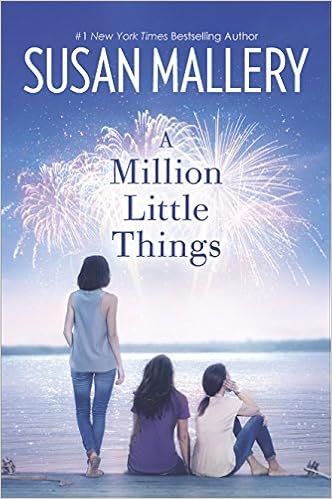
A Million Little Things by Susan Mallery

Source: Tandem Literary
Paperback, 368 pgs.
I am an Amazon Affiliate

A Million Little Things by Susan Mallery came unexpectedly in the mail, but my mom decided to pick it up when she was here on vacation.  She read this one in just a couple of days, and I could hear her giggling on the couch in the evenings.

About the Book:

Zoe Saldivar is more than just single—she’s ALONE. She recently broke up with her longtime boyfriend, she works from home and her best friend Jen is so obsessed with her baby that she has practically abandoned their friendship. The day Zoe accidentally traps herself in her attic with her hungry-looking cat, she realizes that it’s up to her to stop living in isolation.

Her seemingly empty life takes a sudden turn for the complicated—her first new friend is Jen’s widowed mom, Pam. The only guy to give her butterflies in a very long time is Jen’s brother. And meanwhile, Pam is being very deliberately seduced by Zoe’s own smooth-as-tequila father. Pam’s flustered, Jen’s annoyed and Zoe is beginning to think “alone” doesn’t sound so bad, after all.

Mom’s Review:

Kirk, a cop, is Jen’s husband, and they have an 18-month-old baby who refuses to talk to his own mother once he starts talking.  Stephen, Jen’s brother, likes to play the field, and Pam decides to fix him up with Zoe, who has had an off-again on-again relationship with Chad, a married man.  Add to the mix errors at a clinic where shots are given to women who want to avoid pregnancy.  You can imagine what kind of mess occurs.

Very dramatic, very serious, and a bit suspenseful as you didn’t know what was going to happen.  4 stars.

About the Author:

New York Times bestselling author Susan Mallery has entertained millions of readers with her witty and emotional stories about women. Publishers Weekly calls Susan’s prose “luscious and provocative,” and Booklist says “Novels don’t get much better than Mallery’s expert blend of emotional nuance, humor and superb storytelling.” Susan lives in Seattle with her husband and her tiny but intrepid toy poodle. Visit her at www.SusanMallery.com

Save

Save

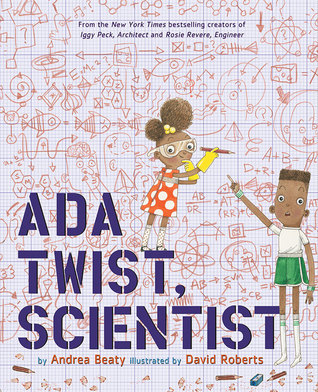
Ada Twist, Scientist by Andrea Beaty, illustrated by David Roberts

Source: Purchased
Hardcover, 32 pgs.
I am an Amazon Affiliate

Ada Twist, Scientist by Andrea Beaty, illustrated by David Roberts, is a delightful story of a young girl bubbling over with so many questions and problems to solve. She reminds me so much of my daughter and her endless questions about why things are and how they became. Many kids inquire, but like Ada, they need to be encouraged to explore, to experiment, to create, and to discover. Ada is a strong girl who is not afraid of failure, with each mishap she begins again, returning to her same questions and moving forward with each new piece of information she learns.

Her parents and teachers have no idea what to do with her inquiring mind, and even when they put her in the “thinking” chair, it’s hard for Ada to stop her exploring and wondering. My daughter and I are just beginning her exploring from rock discovery kits to scientific explosions and creating slime. It’s wonderful to share with her the knowledge I learned and to see how she uncovers the connections and has fun doing so.

The poetry in Beaty’s book is fantastic, if a little awkward in some places. But overall, children will get the bug — the discovery bug — and want to find out for themselves how the world operates and what is going on around them. Ada Twist, Scientist by Andrea Beaty, illustrated by David Roberts, is delightful, and my daughter and I cannot wait to check out the other kids books she has about kids dreaming big, doing great things, and having fun too.

RATING: Cinquain

About the Author:

Andrea Beaty was raised in southern Illinois in a town so small she knew everybody and their pets. And they all knew her. She was one of six kids and spent our summer days traipsing through the fields and forests hunting for adventure. She was a big reader as a kid and LOVED Nancy Drew and Trixie Beldon Mysteries. Then Andrea moved on to Agatha Christie books and then the classics. She attended Southern Illinois University and studied Biology and Computer Science. After that, she worked for a computer software company. Now, she lives in Chicago with her family. Visit her website. Follow her on Twitter and Pinterest.

Also, check out David Roberts’ illustrations online.

Guest Post & Giveaway: My Mr. Darcy & Your Mr. Bingley by Linda Beutler

Today, I’d like to welcome Linda Beutler to the blog to talk about her latest Pride & Prejudice variation and the poetry. But first, read a little about her book below:

About the Book:

One never quite knows where the inspiration will strike. For award-winning author Linda Beutler and My Mr. Darcy & Your Mr. Bingley, the moment of genesis arrived in a particularly contentious thread at the online forum A Happy Assembly. What is the nature of personal responsibility? Where do we draw the line between Mr. Bingley being too subject to Mr. Darcy’s “persuasion” and Mr. Darcy playing too heavily on Mr. Bingley’s “sensibility”? This is a conundrum guaranteed to raise even more questions.

What happens to the plot and character dynamics of Pride & Prejudice if Mr. Bingley is given just a dash more spine? Or if Jane Bennet decides enough embarrassment is too much? How does Mr. Darcy manage the crucial apology a more stalwart Mr. Bingley necessitates he make? What if Mr. Darcy meets relations of Elizabeth Bennet’s for whom she need not blush on their home turf rather than his? Suffice it to say, this is a story of rebuked pride, missing mail, a man with “vision”, a frisky cat, and an evening gown that seems to have its own agenda.

Please check out her post on Dark Poetry and Othello:

Thanks, Serena, for hosting a stop on the My Mr. Darcy & Your Mr. Bingley blog tour here at Savvy Verses and Wit. The focus of your interest in verse and poetry has afforded me the opportunity to revisit my favorite chapter of the book through a new filter, even though I had no thoughts of writing verses when I wrote it! Poetry isn’t always light and happy and flowers that bloom in the spring, tra-la. By setting the chapter in question during a performance of Othello, the narrative could go to a much unhappier place, inhabited by a scorned lover and a lady consumed by regret, following the lead of that most masterful poet, Shakespeare. Let me explain…

One could go on at great length to describe the poetry in prose, and I shall try to avoid excess! During my years as an English major, my tastes evolved away from poetry as such, perhaps due to becoming exhausted with fretting over the components of it to the detriment of simple emotional enjoyment (scansion and meter and rhymes—oh my!). However, in one particular chapter in My Mr. Darcy & Your Mr. Bingley, I did get a chance to delve back into my poetic roots, in the darkest portion of my story and its link to Othello.

In chapter 15, Of All the Theatres in London, Mr. Darcy and Elizabeth Bennet take in an evening at the theatre, watching Othello in adjoining boxes not even two weeks after their disastrous conversation at Hunsford. There are several reasons I chose Othello, the most important of which are that it gives a real-life London actress, Mrs. Siddons, a chance to portray a character much younger than herself at the time of the story (which Mrs. Siddons typically did, vain creature!); that Othello is arguably the bleakest of Shakespeare’s plays (we can see the ending coming ten miles off and are powerless to stop it or look away, and such a wicked villain); Othello was the first Shakespeare I saw staged by a professional company (the Oregon Shakespeare Festival in Ashland, Oregon) and the performance thoroughly opened my eyes to the poetry that is Shakespeare.

Although at various points the chapter unfolds through different perspectives, we end with Elizabeth’s point of view before the omniscient narrator ties everything up with a neat if dismal black ribbon. Even in a darkened theatre, it is a highly visual scene, the sort that might have easily been added to Othello. Elizabeth is fearful of Darcy’s mood. Darcy already feels himself to be a damned soul—with nothing to lose. Their relatives are there to see the full display of their mutual discomfort. Elizabeth is in a stunning gown, yet she (unlike Darcy) is the one spending more time staring. And yet, neither Darcy nor Elizabeth witness their own actions with anything approaching accuracy. It is their families who truly come to understand something has happened.

If we look at Darcy and Elizabeth in this scene as Othello and Desdemona, there is one key difference. In Shakespeare’s play, Desdemona is an unwitting innocent. Her trust in her husband (and indeed everyone, more like a Jane Bennet) has been played against her. Desdemona meets her death scene unwittingly. But Elizabeth Bennet knows she has acted wrongly. She has maligned Darcy unjustly and vociferously. She knows she has hurt him, and this unexpected meeting reveals just how much.

And of course Darcy does not wish to murder Elizabeth, but he does wish himself anywhere else but in this particular theatre. If he could snuff out his attachment to her, he would. And yet, at the key moment of the play, when Mrs. Siddons chews up the scenery whilst being strangled, Elizabeth drops her shawl and Darcy does the gentlemanly thing, bending into the adjoining box to fetch it up. Elizabeth thinks she successfully fights the urge to touch his hair with compassion (his head is briefly near her knees). Everyone except Darcy sees the attenuated spasm of her fingers.

Mrs. Siddons dies with a flamboyant gasp as Elizabeth’s love for Darcy sparks to life. Shouts of “Brava!” do not penetrate Elizabeth’s deepening internal shame. Darcy and Elizabeth leave the theatre with superficial anger, but much deeper sadness. Yes, if I do say so myself, with the example of the poetry of Othello before me, it might be the closest I’ve ever come to writing a prose poem. It has what I see as the typical elements of dark epic poetry: strong visual imagery, a clear plot, determined manipulation of the emotions of both the characters and the readers, not a happy ending in sight.

It has long been debated whether poetry has the more adept and profound ability to elicit emotion than does prose. I would rather say it is when prose nears the poetic that it has any emotional power at all. It is when they join, when an author can provide the imagery and action regardless of the niceties of rhythm and rhyme, that sensation is evoked in the reader. With the emotional veracity and imagery of Othello before me, both as vivid memory and the open pages of the text, I hope readers will connect with a distraught Elizabeth and Darcy, comprehending them as I do, and as they cannot comprehend themselves.

~~~~~

I must say this in defense of lighter verse: In my next story, a mash-up of Jane Austen and P. G. Wodehouse, one character is given to limericks of adoration! And if you really want a brilliantly bawdy ballad, I urge your readers to keep an eye out for a forthcoming Meryton Press title, Mistaken, by Jessie Lewis, due out later this year. Thanks again, Serena, for your support of My Mr. Darcy & Your Mr. Bingley, and the kind attention of your readers!

Thank you Linda for sharing your thoughts on poetry, Shakespeare, and your novel for National Poetry Month.

About the Author:

Linda Beutler’s professional life is spent in a garden, an organic garden housing America’s foremost public collection of clematis vines and a host of fabulous companion plants. Her home life reveals a more personal garden, still full of clematis, but also antique roses and vintage perennials planted around and over a 1907 cottage. But one can never have enough of gardening, so in 2011 she began cultivating a weedy patch of Jane Austen Fan Fiction ideas. The first of these to ripen was The Red Chrysanthemum (Meryton Press, 2013), which won a silver IPPY for romance writing in 2014. You might put this down as beginner’s luck—Linda certainly does.  The next harvest brought Longbourn to London (Meryton Press, 2014), known widely as “the [too] sexy one”. In 2015 Meryton Press published the bestseller A Will of Iron, a macabre rom-com based on the surprising journals of Anne de Bourgh.

Now, after a year-long break in JAFF writing to produce Plant Lovers Guide to Clematis (Timber Press, 2016)—the third in a bouquet of books on gardening—we have My Mr. Darcy and Your Mr. Bingley bursting into bloom.  The eBook is available on Amazon; paperbacks coming soon.

Visit her on Twitter, Facebook, and on her website.

Giveaway:

Enter the giveaway for one of 8 eBooks; It’s open internationally.

Terms and Conditions:

Readers may enter the drawing by tweeting once a day and daily commenting on a blog post that has a giveaway attached for the tour. (1 comment/blog post) Entrants should provide the name of the blog where they commented (which will be verified). You may enter once by following the author on twitter and once by following the author on Facebook.

Remember, tweet daily and comment once per post with a giveaway to earn extra entries. Each winner will be randomly selected by Rafflecopter.

a Rafflecopter giveaway

Good Luck!

Guest Video: Kick-a** Characters Video Series, Pride & Prejudice

Penguin Random House has created a new series of short videos called “Kick-a** Characters”, and today I want to share the one for Pride & Prejudice.

What characters would you like to see next?

Mailbox Monday #422

Mailbox Monday, created by Marcia at To Be Continued, formerly The Printed Page, has a permanent home at its own blog.

To check out what everyone has received over the last week, visit the blog and check out the links. Leave yours too.

Also, each week, Leslie, Martha, and I will share the Books that Caught Our Eye from everyone’s weekly links.

Here’s what I received:

Jane and the Unpleasantness at Scargrave Manor by Stephanie Barron, which I won from Vanity & Pride Press.

On a visit to the estate of her friend, the young and beautiful Isobel Payne, Countess of Scargrave, Jane bears witness to a tragedy. Isobel’s husband—a gentleman of mature years—is felled by a mysterious and agonizing ailment. The Earl’s death seems a cruel blow of fate for the newly married Isobel. Yet the bereaved widow soon finds that it’s only the beginning of her misfortune…as she receives a sinister missive accusing her and the Earl’s nephew of adultery—and murder. Desperately afraid that the letter will expose her to the worst sort of scandal, Isobel begs Jane for help. And Jane finds herself embroiled in a perilous investigation that will soon have her following a trail of clues that leads all the way to Newgate Prison and the House of Lords—a trail that may well place Jane’s own person in the gravest jeopardy.

Concepcion and the Baby Brokers and Other Stories Out of Guatemala by Deborah Clearman for review from TLC Book Tours.

Concepción and the Baby Brokers brings to life characters struggling with familiar emotions and dilemmas in a place unfamiliar to most Americans. From the close-knit community of Todos Santos to the teeming dangerous capital city, to a meat-packing plant in Michigan and the gardens of Washington DC, Deborah Clearman shows us the human cost of international adoption, drug trafficking, and immigration. A Cup of Tears, the opening novella, reveals a third-world baby farm, seen through the eyes of a desperate wet nurse, a baby broker, and an American adoptive mother. In “The Race” a young man returns to his native village to ride in a disastrous horse race. “English Lessons” tells of a Guatemalan immigrant in Washington DC who learns more than English from a public library volunteer. A teenage girl tries to trap her professor into marriage in “Saints and Sinners.”With searing humanity, Clearman exposes the consequences of American exceptionalism, and the daily magic and peril that inform and shape ordinary lives.

What did you receive in your mailbox?

Wildly Into the Dark: Typewriter Poems and the Rattlings of a Curious Mind by Tyler Knott Gregson

Source: publisher
Hardcover, 144 pgs.
I am an Amazon Affiliate

Wildly Into the Dark: Typewriter Poems and the Rattlings of a Curious Mind by Tyler Knott Gregson is an exploration of the unknown, whether that is a physical or emotional place. “There are words that others know … single words that speak paragraphs of meaning,” he says. Poetry is very much like that, using few words to describe complex emotions and situations in a way that is concise but pregnant. Gregson’s poems are often just written on scraps of typewriter paper or are accompanied by photographs, and on the surface they appear simple, but this is deceiving. There is a deeper sense of searching and reaching beneath his lines — a wanderlust for more.

The search we all embark upon is different, but in many ways it is the same. We seek to live, to experience, to love, and how we find those passions is different but the emotional journey is often the same. There are ups and downs, but there are not right or wrong answers to how the journey should be taken, and this is what Gregson chooses to remind us of in his poems.

“I do not know how deep I would have gone
if you did not know how to pronounce my name.
Do I thank you now, drop to my knees
in the shallow waters and kiss the salt on your shoes?”

Readers will love his honesty. These poems are honest in their ramblings and emotions, and they will touch readers deeply. The collection, his third, includes previously published poems, but also new material and breath-taking photos. See the vivid world in Wildly Into the Dark: Typewriter Poems and the Rattlings of a Curious Mind by Tyler Knott Gregson.

RATING: Quatrain

About the Poet:

Tyler Knott Gregson is a poet, author, professional photographer, and artist who lives in the mountains of Helena, Montana. When he is not writing, he operates his photography company, Treehouse Photography, with his talented partner, Sarah Linden.  Visit him on Twitter, Facebook, Instagram, and Pinterest.  Check out his Website.

The Writer’s Guide to Poetry

The Writer’s Guide to Poetry features essays from 11 award-winning poets such as Anne Lamott, Dorothea Lasky, Iain Thomas, Susan Wooldridge, and others who share insights into the art and craft of poetry.

***Free to Download***

The guide also contains artist Nathan Gelgud’s illustrations of poems by Margaret Atwood, Allen Ginsberg, and Madeleine L’Engle. Highlights from the guide include:

  • Insights from 11 award-winning poets.
  • Advice on how to overcome imposter syndrome.
  • 3 classic poems illustrated by artist Nathan Gelgud.
  • Anne Lamott on the devils of perfectionism.
  • Important tips on “telling it slant.”

Check out this illustration by Nathan Gelgud below:

Nathan Gelgud’s illustration of “This Is a Photograph of Me” by Margaret Atwood

Feel free to click on the image and visit Nathan’s website.

Anyone who reads or writes poetry knows that it is a fickle beast, and if there’s anything that gets the muse talking, it’s essays from some great poets and the poems they’ve written.

Also, Signature has a list of 28 books of poetry that you should read this month.  I’ve read Citizen and When My Brother Was an Aztec, and both were very good for different reasons.  If you read any from this list, I’d love to hear what you thought.

Animal Ark: Celebrating Our Wild World in Poetry and Pictures by Kwame Alexander and Joe Sartore

Source: Media Masters Publicity
Hardcover, 48 pgs.
I am an Amazon Affiliate

Animal Ark: Celebrating our Wild World in Poetry and Pictures by Kwame Alexander, photos by Joel Sartore, is a gorgeous book for kids — a photographic ark with poems. The images bring forth the magic of Alexander’s poetry from the silly game playing primates to the large rumbling feet of elephants. These short haiku eek out elements of each animal, helping kids identify some of their behaviors and qualities, while engaging their eyes in a play of color.

In “Chorus of Creatures” near the center of the book, Alexander draws parallels between the animals in this ark and humans, calling on all of us to show respect for the world around us, or we might just share its end. At the end of the book is a key with all of the animals listed that appeared in earlier pages, and near the bottom is a key where readers can find out which animals in this ark are critically endangered, vulnerable, and more.

Animal Ark: Celebrating our Wild World in Poetry and Pictures by Kwame Alexander, photos by Joel Sartore, is an ark you need in your home to teach children and adults about the animals on our planet and how we are connected to them.

RATING: Quatrain

About the Poet:

Kwame Alexander is a poet, educator, and the New York Times Bestselling author of 24 books, including THE CROSSOVER, which received the 2015 John Newbery Medal for the Most Distinguished Contribution to American literature for Children, the Coretta Scott King Author Award Honor, The NCTE Charlotte Huck Honor, the Lee Bennett Hopkins Poetry Award, and the Paterson Poetry Prize. Kwame writes for children of all ages. Some of his other works include THE PLAYBOOK: 52 RULES TO HELP YOU AIM, SHOOT, AND SCORE IN THIS GAME OF LIFE; the picture books, ANIMAL ARK, OUT OF WONDER and SURF’S UP; and novels BOOKED, HE SAID SHE SAID, and the forthcoming SOLO.

About the Photographer:

Joel Sartore has produced more than 30 stories from around the world as a freelance photographer for NATIONAL GEOGRAPHIC magazine. He is an author, speaker and teacher who captivates audiences with his funny and inspiring adventures.

Guest Post: Flanders Field of Grey by Ginger Monette

In 2015, Ginger Monette, author of the Darcy’s Hope series, entered a flash fiction contest, Picture This! Writing Contest, in which she wrote a short story based on a photograph. So was born, “A Flanders Field of Grey,” which she shares with us today in honor of National Poetry Month.

We hope you enjoy it.

Roger stepped away from his companions and swallowed hard as his gaze swept over the Flanders field on the dreary November day. The musty smell of damp earth and the grey sky instantly transported him back to that fateful day fifteen years before.

November 6, 1917. The moment was nearly upon them. He returned his sister’s picture to his pocket and glanced down the trench into the sea of soldiers. Who would death call today? Artillery shells screeched and boomed over No-Man’s land rocketing fountains of sludge into the air. He raked trembling fingers through his red hair and secured his tin helmet. The roiling grey clouds overhead mirrored the churning in his stomach.

The shrill of the signalling whistle pierced the air. The trench erupted in a primal war cry. He added his voice and vigour to the wave of khaki scaling the ladders and pouring over the earthen wall. The staccato of machine-gun fire joined the percussion of artillery and roar of men’s voices. Defying every instinct, he lowered his head and plunged into the firestorm.

As far as he could see, his comrades slogged across the pocked wasteland of Passchendaele. Green-scummed water filled hellholes deep enough to swallow a dozen men. He gagged on a whiff of wet soil mingled with the stench of decaying bodies. Shells bursting on his left and right catapulted men and mud into the air.

Gunfire mowed down the men in front of him. Shuddering with fear, he stepped over two groaning bodies and pressed on. He ignored the grey hand reaching from a murky pool like a tentacle of death lapping at his heels. Flying lead swept over them again.

His legs failed him.

Little did he know that day
His life would be forever changed
On a Flanders field of grey.

~~*~~

Tom thrust his hands into his coat pockets as his gaze swept over the Flanders field on the dreary November day. A barking dog and the grey sky instantly transported him back to that fateful day fifteen years before.

November 6, 1917. A choir of moaning men mingled with the orchestra of artillery. He quickened his pace, splinting, sewing, sawing. An explosion rocked the underground lair, rattling his surgical instruments and raining dirt from the low earthen ceiling.

The company sheepdog sauntered over and nuzzled his leg. “Not now, girl, I’ve got boys to mend.”

Soldier and after soldier came and went from his makeshift theatre. Late in the afternoon he heaved a sigh of relief as he emerged above ground. He squinted upwards; the grey clouds overhead mirrored the tenor of the day. He could only recall laughing once—with a private who’d caught a round in the leg. In spite of his pain, they’d laughed and joked as he prepped the boy for the hospital train.

A sudden boom sent him reeling backwards.

Little did he know that day
His life would be forever changed
On a Flanders field of grey.

~~*~~

Sarah brushed aside a tear as her gaze swept over the Flanders field on the dreary November day. The mud caked on her shoes and the grey sky instantly transported her back to that fateful day fifteen years before.

November 6, 1917. Open and shut; open and shut. The door of the Nissen hut swung back and forth admitting stretcher after stretcher of broken, bloodied soldiers plastered in mud.

What had she been thinking when she volunteered? That it would be amusing to camp in a six-foot bell tent and nurse men gasping for breath with gas poisoning or writhing in pain with a limb blown off?

She hastened across the duckboards under an ominous grey sky that mirrored the fear every woman carried. Fear that a beau or brother would appear. And then it happened to her. A boy moaning on a stretcher stopped her—dead. Her brother.

Her head flew back with an anguished wail.

Little did she know that day
Her life would be forever changed
On a Flanders field of grey.

But the sun broke through the clouds on the November day over the Flanders field of grey. The light glistened off the red hair of her brother Roger walking with his cane beside the doctor. She smiled as the best friends joked about their long-ago ride on the hospital train.

Sarah quickened her pace to join the two and slipped her arm around the wounded surgeon she’d nursed so many years ago. She couldn’t ask for a more wonderful husband.

Indeed all their lives had been changed that day on a Flanders field of grey.

And they wouldn’t have it any other way.

We’d love to hear your thoughts in the comments about the piece and what inspires you to read about WWI or poetry.