Quantcast

One Good Thing by Wendy Wax

Source: Publisher
Paperback, 360 pgs.
I am an Amazon Affiliate

One Good Thing by Wendy Wax is the next installment (#5) in the Ten Beach Road series in which women duped by the Ponzi scheme of Malcolm Dyer find friendship through renovation.  For those who have yet to read this series, what on earth are you waiting for?  I do recommend reading these in order.

Maddie, Avery, and Nikki have grown closer, though Maddie is still viewed as the mother who takes care of everyone, including her ex-husband and their daughter, Kyra.  She’s still finding it hard to let go of her caretaker role and lead her own life, but she’s making some changes, even as Nikki’s time grows near and her nervousness about motherhood strengthens. Meanwhile, their television series Do Over is still in the hands of the network, and they seem to be holding all of the cards, which means the ladies need to find another source of income and fast or they may lose the home, Bella Flora, that brought them together.

As fear creeps in and takes some of them over, it is harder and harder to find just One Good Thing to share at sunset — a tradition that has helped them stay positive and keep things in perspective.  Wax’s ladies are strong, but never too far from their insecurities.  They flourish under pressure, and they must make hard decisions, even if they need a little push from their friends.

One Good Thing by Wendy Wax is another summer read that will make living on the beach sound less than idyllic, but you’ll still want to grab your blended drinks and head down to the beach to catch that sunset with these ladies.

RATING: Quatrain

Also Reviewed:

About the Author:

Award-winning author Wendy Wax has written eight novels, including Ocean Beach, Ten Beach Road, Magnolia Wednesdays, the Romance Writers of America RITA Award finalist The Accidental Bestseller, Leave It to Cleavage, Single in Suburbia and 7 Days and 7 Nights, which was honored with the Virginia Romance Writers Holt Medallion Award. Her work has sold to publishers in ten countries and to the Rhapsody Book Club, and her novel, Hostile Makeover, was excerpted in Cosmopolitan magazine.

A St. Pete Beach, Florida native, Wendy has lived in Atlanta for fifteen years. A voracious reader, her enjoyment of language and storytelling led her to study journalism at the University of Georgia. She also studied in Italy through Florida State University, is a graduate of the University of South Florida, and worked at WEDU-TV and WDAE-Radio in Tampa.

Mailbox Monday #426

Mailbox Monday, created by Marcia at To Be Continued, formerly The Printed Page, has a permanent home at its own blog.

To check out what everyone has received over the last week, visit the blog and check out the links. Leave yours too.

Also, each week, Leslie, Martha, and I will share the Books that Caught Our Eye from everyone’s weekly links.

Here’s what I received:

The Nightlife by Elise Paschen for review from Mary Bisbee-Beek.

In Elise Paschen’s prize-winning poetry collection, Infidelities, Richard Wilbur wrote that the poems “. . . draw upon a dream life which can deeply tincture the waking world.” In her third poetry book, The Nightlife, Paschen once again taps into dream states, creating a narrative which balances between the lived and the imagined life. Probing the tension between “The Elevated” and the “Falls,” she explores troubled love and relationships, the danger of accident and emotional volatility. At the heart of the book is a dream triptych which retells the same encounter from different perspectives, the drama between the narrative described and the sexual tension created there.

The Nightlife demonstrates Paschen’s versatility and formal mastery as she experiments with forms such as the pantoum, the villanelle and the tritina, as well as concrete poems and poems in free verse. Throughout this poetry collection, she interweaves lyric and narrative threads, creating a contrapuntal story-line. The book begins with a dive into deep water and ends with an opening into sky.

Where is North by Alison Jarvis for review from Mary Bisbee-Beek.

Poetry. Winner of the 2015 Gerald Cable Book Award. “In Alison Jarvis’ extraordinary WHERE IS NORTH, a life unfolds between breath-taking love poems. There’s a powerful arc, but it’s a vortex, more visceral than linear. Dramatic moments enclose each other like Russian dolls, ‘the future falling back into itself,’ so that the air between I and Thou becomes charged with the trials of childhood, the rigors of history, the mirror-life of dreams…WHERE IS NORTH is a profoundly necessary book for our strange era.”—D. Nurkse

Library of Small Happiness by Leslie Ullman for review from Mary Bisbee-Beek.

In acclaimed poet Leslie Ullman’s fifth and newest book, she offers a glorious hybrid collection of essays, poems, and writing exercises. Inviting writers and serious readers into the spaces poetry can open up around us and inside us, Library Of Small Happiness focuses on aspects of craft while embracing a holistic approach that makes accessible the unique intelligence of poetry. The essay section of the book addresses subjects such as the interactive role between silence and utterance, finding the center of a poem, and the Golden Spiral as it applies to the structure of a work and the process of its creation. The exercise section offers prompts that can be used by writers, teachers, and students to generate surprising language, fresh imagery, and innovative territories for crafting poems.

Average Neuroses by Marianne Koluda Hansen for review from Mary Bisbee-Beek.

The whole blooming and exasperating world is here in Hansen’s delightfully associative poems, translated from Danish by Michael Goldman with great élan. Hansen’s voice is full of wit, longing, irony (both personal and political), and tender detail about the absurdity of being human. Thrillingly, Hansen has zero interest in presenting herself as an admirable person, which makes me deeply cherish her poems, and helps me to go on being my likewise unadmirable self in this beautiful and impossible world.
Patrick Donnelly, poet and translator, author of The Charge, and Nocturnes of the Brothel of Ruin

Hansen writes movingly about insecurity and anxiety. Her voice is a solitary one, but she taps into a most universal desire—to be accepted by those around us. At the core of the collection is the poet’s struggle to maintain an emotional balance in the face of the extreme beauty and pain of everyday life. Leah Browning, Editor Apple Valley Review: A Journal of Contemporary Literature

With skillful irony Hansen skewers pretentiousness, including herself as a target. It is liberating to read an author who can be self-deprecating and laugh along with the reader. Then she can turn the mood on a dime, to seriousness so poignant that the laughter or smile stiffens on your face. Highly recommended.
Herdis Møllehave, Aktuelt

Hansen transports the reader to that raw place between tears and laughter. She illuminates the causes of our struggling so that our actions are no longer struggles, but natural and completely understandable.
Eva Bostrup Fischer, Jyllands-Posten

Average Neuroses is a remarkable collection of poetic narratives full of brutal honesty, sardonic wit, and wry humor. Hansen’s insight into the desperation and routine of conventional lives—such as her own, which she characterizes as “too good to throw away / and too boring to keep”—is profound: heartbreaking and hilarious all at once. This Danish poet pulls no punches; I admire her and her poetry, beautifully translated by Michael Goldman.

What did you receive?

We Will Not Be Silent by Russell Freedman

Source: Public Library
Hardcover, 112 pgs.
I am an Amazon Affiliate

We Will Not Be Silent by Russell Freedman is a book about a resistance movement started by young boys and girls after they saw what the Hitler Youth movement was really like and what it was about. The White Rose movement ultimately came to the attention of the Gestapo, and while the Nazi regime looked for them, the student network continued to grow.

Through a series of mimeographed leaflets that were left in doors and other locations, the students were able to call attention to Adolf Hitler’s terrible policies and the deaths of Germany’s citizens. Freedman uses a series of historical documents and photographs to chronicle the journey of the Scholls and how they came to oppose the regime and garner supporters.

We Will Not Be Silent by Russell Freedman is a testament to the power of youthful conviction and social networks in opposing forces that are immoral and policies that are wrong.

RATING: Quatrain

About the Author:

Russell Freedman received the Newbery Medal for LINCOLN: A PHOTOBIOGRAPHY. He is also the recipient of three Newbery Honors, a National Humanities Medal, the Sibert Medal, the Orbis Pictus Award, and the Laura Ingalls Wilder Award, and was selected to give the 2006 May Hill Arbuthnot Honor Lecture.

New Authors Challenge

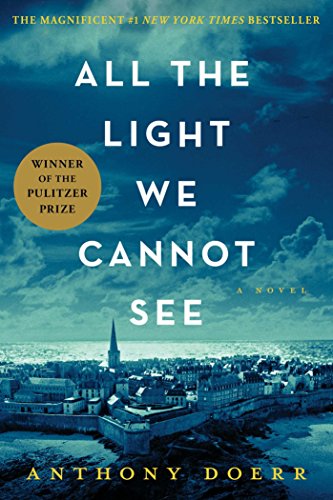
All the Light We Cannot See by Anthony Doerr

Source: Public Library
Hardcover, 530 pgs.
I am an Amazon Affiliate

All the Light We Cannot See by Anthony Doerr is a sweeping tale of World War II from the perspective of a German, Werner, and a French blind girl, Marie-Laure. Werner is a smart, young German boy who lives in an orphanage, while Marie-Laure is a young girl who goes blind and lives with her father in Paris. Both have faced some hardships, but both remain hopeful that life can be beautiful. Told from both perspectives as the war takes hold of Europe, Doerr creates a tale that is carefully woven together and tethered to the myth of the Sea of Flames, a diamond that some say is cursed and others say can provide miracles to those who possess it.

Doerr does an excellent job of not only creating characters on both sides of the war with compelling stories, but also ensuring that there is a light of hope in each story to keep readers going. While the subject of WWII has become fodder for a number of novelists, very few will tell the story from the perspective of a young man swept up into the military because he dreams of a better life and learning that he cannot get in the orphanage. Readers will see a well crafted novel full of dynamic characters and symbolism, but they also will see that men and women on both sides of the war are not that different from each other and that the politics of the time is what drove the violence and indecency.

All the Light We Cannot See by Anthony Doerr won the Pulitzer Prize and for good reason. It’s a must read for those who love historical fiction and are looking for a detailed take on lives on both sides of the war.

RATING: Quatrain

If you missed our read-a-long in March at War Through the Generations, check it out.

Readalong:

Week 1
Week 2
Week 3
Week 4
Week 5
Week 6

New Authors Challenge

Book Spotlight & Giveaway: Middle South by Maya Nessouli Abboushi

When I heard about this book, I wanted more time to read, but I knew I couldn’t fit it in to my schedule now.  I love books about young women who want to be independent and find their own way in life, and Layla sounds like she has some cultural obstacles to overcome too.  What really intrigued me about the synopsis was how Layla embarks on a “hilarious” journey from the Atlanta suburbs to the Middle East.

Check out the book information below:

Layla has recently moved out of her parents’ home in the Atlanta suburbs and into an apartment in the city to assert her independence. Between her job as a feature writer for a small newspaper and her social life, Layla has little time to think about marriage and children, much to the dismay of her Lebanese parents.

On a hilarious journey that takes Layla from the Southeast to the Middle East and back, she finds out a little more about herself and what she is looking for in life and in love.

Buy the Book:  Amazon  ~  Barnes & Noble ~ BookLogix

Add on Goodreads

I think this sounds like a really interesting book about coming of age and learning how to reconcile a desire for independence with cultural expectations.  See below for the giveaway information.

About the Author:

Maya Nessouli Abboushi is a Lebanese American born and raised in the United States. She lives in Atlanta with her husband and three children. This is her first novel.  Connect with the author:  Facebook  ~  Twitter  ~  Instagram

GIVEAWAY:

Win an ebook copy of Middle South (open internationally)
Ends May 13

a Rafflecopter giveaway

Follow the full tour:

Novel Destinations by Shannon McKenna Schmidt and Joni Rendon

Source: TLC Book Tours
Hardcover, 392 pgs.
I am an Amazon Affiliate

Novel Destinations by Shannon McKenna Schmidt and Joni Rendon is a journey into the books and with the authors that we all know and love from Shakespeare to Jane Austen, F. Scott Fitzgerald, and so many more. It is clear that Schmidt and Rendon are book lovers like many voracious readers, and it is their love of reading that has propelled them to take a number of journeys with authors and more. Broken down into two parts: the first part focuses on the journeys that can be taken based on places in books and the places that authors lived, went to, and died; the second part focuses on the places between the pages of the books written by some of the most famous authors known.

“Sometimes a book invites a journey, sometimes we invite ourselves.” (pg. VIII)

Readers know the feeling of falling into a book, walking the streets with characters and becoming part of the local color as they read, but to journey to actual places in search of authors’ homes or lives or even just those spots that inspired their work is a journey not to be missed. Readers would be advised not to treat this as a travel guide with an intuitive layout, as the book does not break down the sites and museums by geographical region and does not group the places by author. It can take a bit of work to create a list of places of interest to see based on a particular region or author, but the intention of this book is the journey, retracing the steps of favorite authors or books.

From the libraries that house some of the oldest books to the literary festivals across the United States and Europe, the authors have packed this second edition with a treasure trove of literary treats, including a list of places where places in novels, like Jane Austen’s Pride & Prejudice, came alive on the movie screen. There are famous hotels where authors have stayed, as well as restaurants and bars where authors have eaten and indulged when they could.

Novel Destinations by Shannon McKenna Schmidt and Joni Rendon is a journey in itself and a compendium of literary spots for the book lover in all of us. Indulge by reading about one favorite author and all the places or dip in and out to learn something new about your authors or nearby literary spots.

RATING: Quatrain

About the Author:

Shannon McKenna Schmidt is the co-author with Joni Rendon of Writers Between the Covers: The Scandalous Romantic Lives of Legendary Literary Casanovas, Coquettes, and Cads. She has written for Arrive, National Geographic Traveler, Shelf Awareness, Gothamist.com, and other publications and websites. A former Hoboken, New Jersey, resident, she is traveling full-time in the United States and abroad and can be found on the web at EverywhereOnce.com and NovelDestinations.wordpress.com.

Mailbox Monday #425

Mailbox Monday, created by Marcia at To Be Continued, formerly The Printed Page, has a permanent home at its own blog.

To check out what everyone has received over the last week, visit the blog and check out the links. Leave yours too.

Also, each week, Leslie, Martha, and I will share the Books that Caught Our Eye from everyone’s weekly links.

Here’s what I received:

Benjamin Franklin You’ve Got Mail by Adam Mansbach and Alan Zweibel, a second surprise copy I’m donating to the library.

If the Future has any remedy for this situation, do not hesitate to provide it. That is to say, Ike and Claire Wanzandae, HELP! HELP HELP HELP.

I am (perhaps not for long),
Benjamin Franklin

Ike Saturday has seen better days. For one thing, his pen pal, Benjamin Franklin (yes, that Benjamin Franklin), is the target of an angry mob after Ike’s plan to help the Founding Fathers with some intel from the future seriously backfired. For another, he’s decided to mail himself back in time with the help of his girlfriend, Claire Wanzandae, and it’s not a particularly comfortable way to travel.

Once Ike tracks B-Freezy down in 1776, it becomes clear that his pal is less than impressed with the irritating, modern-day rescuer, partially because Ike has a habit of making things worse for Ben, and partially because Ben is incredibly cranky when not in the presence of numerous meat pies. Which speaks to another issue for the pair: they have no money, no food, and basically no plan for saving the country. But Claire won’t be able to cover for Ike back home in the future forever, and the British are looking pretty impatient, so Ike and B-Freezy will have to come up with something quickly if they want to avoid an epic, history-destroying disaster.

In this hilarious sequel to Benjamin Franklin: Huge Pain in My . . . , Adam Mansbach and Alan Zweibel take Ike and B-Freezy’s antics to the next level as this ill-paired (and sometimes actually ill) duo hold the future of the world in their not-so-capable hands.

The Beach House Cookbook by Mary Kay Andrews for review.

You don’t have to own a beach house to enjoy Mary Kay Andrews’ recipes. All you need is an appetite for delicious, casual dishes, cooked with the best fresh, local ingredients and presented with the breezy flair that make Mary Kay Andrews’ novels a summertime favorite at the beach.

From an early spring dinner of cherry balsamic-glazed pork medallions and bacon-kissed Brussels sprouts to Fourth of July buttermilk-brined fried chicken, potato salad, and pudding parfaits to her New Year’s Day Open House menu of roast oysters, home-cured gravlax, grits ‘n’ greens casserole, and lemon-cream cheese pound cake, this cookbook will supply ideas for menus and recipes designed to put you in a permanently carefree, coastal state of mind all year long.

Star Trek Psychology: The Mental Frontier by Travis Langley and Chris Gore, an unexpected surprise from the publisher that I will pass on to someone who would enjoy it.

The next entry in Sterling’s Popular Culture Psychology series features 20 chapters and exclusive interviews with cast members and Rod Roddenberry. In a fun and accessible way, Star Trek Psychology delves deep into the psyches of the show’s well-known and beloved characters. The trailblazing franchise spans five TV series, 13 films, and countless novelizations. It celebrated, as no other form of entertainment had before, a world filled with space-traveling dreams and human diversity. In the process, it became one of the oldest and most popular sci-fi franchises of all time. Star Trek Psychology uses academic and scientific theories to analyze and answer such questions as Why do Trek’s aliens look so human? and How can the starship’s holodeck be used for therapy? This compilation examines alien neurobiology, discusses identity formation for shapeshifters, explores the importance of emotion for artificial intelligence, and much more.

What did you receive?

Concepción and the Baby Brokers and Other Stories Out of Guatemala by Deborah Clearman

Source: TLC Book Tours
Paperback, 236 pgs.
I am an Amazon Affiliate

Concepción and the Baby Brokers and Other Stories Out of Guatemala by Deborah Clearman is fraught with gangs, poverty, and class struggle. In Todos Santos, these families barely scrape by to make a living, but even as they fail to see eye-to-eye sometimes, each strives for the dream of a comfortable life — whether that means a husband who stays home with his wife rather than his mistress or a young man seeking his fortune in North America.

Clearman’s strongest stories are the series about Concepción and the baby brokers that provides not only the perspective of a woman who sells a child, but the perspective of the broker who buys children, the parents who search for their lost child, and the parents from North America who are desperate to have a family. This series is so emotionally charged and convoluted, but it’s easy to see that there is always more than one side to a story, even if the selling of babies is abhorrent.

“‘The race is long and hard, like life,’ his grandfather had told him. ‘There is no winner. The purpose is to bear up, to survive.'” (pg. 109 from “The Race”)

Clearman breathes life into Todos Santos and its people, demonstrating that like the United States, class is an obstacle many wish to overcome to reach prosperity. While their circumstances may be reduced compared to those in the United States, their dreams are similar in terms of material wealth and familial wealth. Like many races in the United States, the the Mayan descendants are discriminated against, with the children whipped at school until they speak proper Spanish, etc.

Drawing on folklore and mythology, Clearman pays homage to a culture that is hidden in the jungles and cities of Central America. But she also follows some of these residents as they chase their dreams in America. The different walks of life represented her was interesting and engaging, though in some cases, it is hard to emotionally connect with the characters, like they are not as fleshed out as those in the first half of the stories. Concepción and the Baby Brokers and Other Stories Out of Guatemala by Deborah Clearman provides a new look at a culture often overlooked or hidden in literature.

RATING: Tercet

Photo credit Douglas Chadwick

About the Author:

Deborah Clearman is the author of a novel Todos Santos, from Black Lawrence Press. Her short fiction has appeared in numerous literary journals. She is the former Program Director for NY Writers Coalition, and she teaches creative writing in such nontraditional venues as senior centers, public housing projects, and the jail for women on Rikers Island. She lives in New York City and Guatemala.

The Scheme of Things by Hilde Weisert

Source: the author
Paperback, 118 pgs.
I am an Amazon Affiliate

The Scheme of Things by Hilde Weisert calls to mind how things are connected or organized in our lives. Some of these things are not experienced directly by the narrator of the poems, but tangentially. The pasts of our fathers and mothers can affect our lives even without us realizing it, but our own connections also can call back those moments missed or even moments we’ve forgotten. These poems are a maze of memory, experience, and so much more. Weisert’s verse unwinds this maze and finds the hidden connections.

From "The Scheme of Things" (pg. 11)

So: One morning, from nowhere, an unselected self: A gait
that unrhythms you, a gasp that fills your fist
with nameless stuff. Your skull a holy dome -- A new weight!
But on this plain, the claw-and-hunch will coexist
with you for ages.  All aching appetite, her jaws will snap
flesh, and your fine teeth close. ...

Readers will love how she plays with musicality in her poems, weaving the songs of Gershwin around the encounters with the narrator’s lover or the rhythm of words she and her mother used to create a language only they could understand. Weisert’s fluid vision permeates each poem, packing it full of gems like “Voice is our other body, how we move in the dark.” from “The Dark” (pg. 24). Readers will move with her narrator through the past and the present, looking at the two cities left to her by her absent father or the ravages of war that should not be forgotten and never shall.

The Scheme of Things by Hilde Weisert is not heavy in its musicality, almost creating a dreamlike trance for the reader to easily flow in and out of these connections and, yet, continue to feel the deep emotion, the scars, and awe without plummeting down.

RATING: Quatrain

About the Poet:

Hilde Weisert‘s collection The Scheme of Things was published in 2015 by David Robert Books. Her poem, “The Pity of It,” was winner of the 2016 Tiferet Poetry Award, and she’s had poems in such magazines as Ms, Prairie Schooner, The Cortland Review, Calyx, and several anthologies. She lives in Chapel Hill, N.C., and Sandisfield, Mass.

The Performance of Becoming Human by Daniel Borzutzky

Source: Purchased
Paperback, 98 pgs.
I am an Amazon Affiliate

The Performance of Becoming Human by Daniel Borzutzky, the winner of the 2016 National Book Award in Poetry, is a performance piece written in verse that uses disturbing imagery and rhetoric to examine the boundaries of humanity within the kaleidoscope of immigration, capitalism, and increasing globalization.  Readers will hear and envision a young man on stage speaking truths and satire, picking apart capitalism and so much more in modern society. The collection begins with the poem, “Let Light Shine Out of Darkness,” in which the narrator says, “I live in a body that does not have enough light in it.”  It’s clear that the narrator has been told that he is, or at least he has felt, inadequate.

Borzutzky is exploring humanity from its most vulnerable — a refugee, an outsider — but also how that human must perform in order to find acceptance and not be the subject of violence.  The performance of this book is brutal in its honesty and the reader is forced into frantic reading, almost as one rubbernecks on the road opposite a car wreck.  But in this way, his poems are more powerful because they are “a bedtime story for the end of the world.” (“The Performance of Becoming Human,” pg.15).

So much of the modern world is artifice and natural beauty is shunned or destroyed.  The poet is drawing from current news, from the communities around him, and from the current state of the state. Should the people who live under a regime or a plantation own be asked what they need in order to work or should they merely be expected to work and receive what they are given with gratefulness? Should they expect more for the hard work and the fruits of their labor or should they merely beat down the man next to him on the same social level to receive more?  How does one survive in oppressive circumstances and how do they reconcile the choices they make or don’t make in order to succeed and live?

“The best dictators don’t kill their subjects rather they make their subjects kill each other.”

The Performance of Becoming Human by Daniel Borzutzky is all artifice and all reality. There is a duality being an immigrant and a citizen and there is a balance that must be struck in survival. But this collection lifts the veil to show you a dark underbelly. There are no solutions, just a light shone on the whole.

RATING: Quatrain

About the Poet:

Daniel Borzutzky is a Chicago-based poet and translator. His collection The Performance of Becoming Human won the 2016 National Book Award.

Mailbox Monday #424

Mailbox Monday, created by Marcia at To Be Continued, formerly The Printed Page, has a permanent home at its own blog.

To check out what everyone has received over the last week, visit the blog and check out the links. Leave yours too.

Also, each week, Leslie, Martha, and I will share the Books that Caught Our Eye from everyone’s weekly links.

Here’s what I received:

National Geographic Kids: 125 Pet Rescues for review.

This is a collection of hilarious and heartwarming stories of dogs, cats, and all types of pets given a second chance, and the human animal lovers who rescued them.

From the dog who saved her owner from a fire, to the cat that plays the piano, to the cow that thinks it’s a dog, discover incredible stories of animals in need who went on to become beloved pets.

These uplifting tales are paired with amazing photos and loads of animal facts. Kids learn all about how to be kind to our animals friends and the importance of being a responsible pet owner. There’s tons of furry, fluffy, feathery fun on every page, including tips on how to help save animals in need!

Cat Tales: True Stories of Kindness and Companionship with Kitties by Aline Alexander Newman with a foreword by Mieshelle Nagelschneider for review.

We humans love our cats and these surprising true stories will prove our cats love us back! This collection of tales of playfulness, friendship, heroism, and inspiration is sure to touch the soul, tickle the funny bone, and inspire animal lovers everywhere to be the best kitty caretakers and companions they can be. There’s Bambi, whose owners taught her to respond to commands in American Sign Language; Millie, who loves exploring the outdoors and goes rock climbing with her owner; Leo, a rescued lion who changed the life of one South African family forever, and more.

Seasons of Joy: Every Day Is for Outdoor Play by Claudia Marie Lenart, a kids poetry book that I edited.

The pure and simple delight of children playing outside is captured in needle-felted wool paintings created by Claudia Marie Lenart in Seasons of Joy: Everyday is for Outdoor Play. The picture book pairs dreamy images of multi-cultural children, animals, flowers and trees with verse that expresses the joy young children experience in nature’s seasons. Children can see themselves in the diverse characters and can be inspired to spend more time playing outdoors and connecting to nature.

Illusion of an Overwhelm by John Amen for review from the poet.

Poetry. John Amen’s ILLUSION OF AN OVERWHELM offers four distinct series: Hallelujah Anima, in which the poet explores desire, self- inquiry, and ambivalence, as well as the torturous journey of inner healing; The American Myths, highlighting the intersections between politics, religion, and archetypal dynamics, inspired in part by Black Lives Matter and other progressive forms of populism; My Gallery Days, which focuses on multiple characters and overlapping narratives, offering poetic commentaries on art and the fleeting nature of life; and Portrait of Us, the poet’s celebration of enduring love and romance, presented from multiple viewpoints and timeframes. While covering wide ground thematically and imagistically, Amen makes use of searing language, the book resounding on conceptual and aesthetic levels long after the final line is read.

What did you receive?

Guest Post: ‘Nature Is Imagination Itself’ by Hilde Weisert

“The tree which moves some to tears of joy is in the eyes of others only a green thing that stands in the way. Some see nature all ridicule and deformity… and some scarce see nature at all. But to the eyes of a man of imagination, nature is imagination itself.”  ―William Blake, in a letter.

William Blake is one of the first poets I loved to read.  Perhaps it was his darker poetry or maybe it was his drawings in the collection I had. The quote above is just a glimpse at his poetic thought.  Today, Poet Hilde Weisert offers her thoughts on nature and inspiration.

Please give her a warm welcome.

That quote from a letter of William Blake’s is especially apropos right now, with yesterday Earth Day and a day of Marches for Science around the world, and Poetry Month the month we are in. What Blake saw is what we need to see now, that there is no separation between the natural world and our complementary ways of seeing and understanding it, through science and through the imagination.

I stumbled on the quote late one night many years ago when I was desperately paging through books looking for inspiration for a poem I was expected, as poet in residence at a large school system, to write, and then to read to the entire faculty on the opening day of school – the next day! It was to be an original poem on the theme for the year: Science, and specifically what the rainforest can teach us about diversity.

That is clearly a brilliant concept (the woman who conceived the program was and is a brilliant woman) and a great way to introduce poetry outside the usual “poetry unit.” I had educated myself enough about the rainforest to know, conceptually, that it indeed has volumes to teach us about diversity – millions of different life forms all existing in harmony, interdependence, and beauty. But write a poem about that? By 11 PM on the eve of my reading, the floor around my desk was littered with crumpled sheets from my yellow legal pad, each with some variation of why the rainforest is good, and why we should preserve it, and how our lives depend on it, and if its diversity matters, children, so does yours.

Like political or preaching “poems” so often are, all just words. Words coming from my head, and even my heart – because I did truly care about the rainforest and certainly about diversity – but there was some other essential part of poetry-making that was not engaged.

And then I found the excerpt from a letter of Blake’s. Nature is imagination itself.

That’s what’s at stake. If we lose our ability to see the natural world, we lose something essential inside ourselves, what W.S. Merwin said, in his Inaugural Address as Poet Laureate in 2010, may be what makes us uniquely human. And allows us to see the many ways in which we are, gloriously, different from and yet connected to all the beings in the natural world, as well as each other. To celebrate, with a kind of tingle in our imagination-nerve, when science discovers that the octopus, far from being mentally slow and lumbering, is remarkably intelligent and constantly learning. That trees, according to David Haskell in The Songs of Trees, are “nature’s great connectors,” part of vast networks. That crows know the faces of people who have harmed them.

For those of us in the northern hemisphere, National Poetry Month coincides with spring; in the southern hemisphere, with fall. Both are seasons that offer daily opportunities to see all around us the marvels that (I will change Blake’s line a little) a person of imagination can see. Which, I believe, can give us poetry, and give us ourselves.

What about you? What is essential to your imagination?

***

Here’s the poem I wrote, with Blake’s help.

Imagination Itself

To the eyes of the man of imagination,
Nature is imagination itself.
— William Blake

Who needs half a million unpronounceable forms of life
Half a world away? Ah, you do, they say,
And enumerate the ways:

          Glues, dyes, inks,
          Peanuts, melons, tea,
          Golf balls, paint, and gum,
          Mung beans, lemons, rice,
          And a fourth of all the medicines you take,
          And a fifth of all the oxygen you breathe,
          And countless life-prolonging secrets their wild cousins know
          to tell the Iowa corn and the garden tomato.
          And if that's not enough, think of rubber-
          and where we'd all be, rattling down the Interstate
          on wooden wheels.

And that's only the stuff we know how to use,
And that's only the half-million species we know how to name.

And in the time it took to tell you this
Five thousand acres more are gone.
And by the time that this year's kindergarten class
is thirty-five, most of what is now alive —

But wait. What if — What if this deluge of mind-boggling
statistical connectedness were, true as it is,
only the least of it? What if the real necessity
were of another kind, the connection
not with what you consume, or do, but who you are?

With your own imagination, the necessity there
of places that have not been cleared to till,
of the luxury of all that buzzing in the deep,
of a glimpse of feather or translucent insect wing
a color that's so new it tells you light and sound
are, indeed, just matters of degree, and makes your vision hum

And makes you think the universe could hum
in something like the wild, teeming equilibrium
of the rain forest.

From The Scheme of Things, David Robert Books, 2015, and published originally in The Sun.

About the Poet:

Hilde Weisert‘s collection The Scheme of Things was published in 2015 by David Robert Books. Her poem, “The Pity of It,” was winner of the 2016 Tiferet Poetry Award, and she’s had poems in such magazines as Ms, Prairie Schooner, The Cortland Review, Calyx, and several anthologies. She lives in Chapel Hill, N.C., and Sandisfield, Mass.