Quantcast

Taboo Poetry…A Game

Be sure to click the image above for today’s tour stop on the National Poetry Month Blog Tour!

Have you ever played that early 1990’s game Taboo from Hasbro?  Today, I would invite you all to play along with me as we create a poem in the comments in celebration of National Poetry Month.

The object of the game here is to create a poem about the word below, without referring to that word or any of the other 5 words that are most used to describe it.

The word is ROMANCE

And the forbidden words (and their variations) are:  LOVE, BURNING, PASSION, SWEET, HEART

So each commenter can write one line for the poem that describes ROMANCE, but does not use that word or the five forbidden words.

At the end of the day, I’ll collect all the lines and post the full poem next week; It’ll be fun to see what all the creative minds out there can come up with.

OK, Get started!

AWP 2013 Boston

Although I’m still working on a poetry manuscript and it’s taking me longer than expected, I wanted to take the time to attend the big writer’s conference for two reasons:

  1. It was in Boston, which I miss
  2. I’ve never been to a conference of this size with so many writers and I wanted to see what other people were doing and how they coped with time management and other issues.

Registration opened on Wed., March 6, and I had planned to get my registration and spend the day with my hubby in Boston, while the little one was watched by her grandparents. While I did pick up my conference badge, etc. and we did get to have a lunch at an Irish pub, Sólás, that had phenomenal smoked Gouda and bacon fondue and some great chowda and soup!  Unfortunately, that’s when we got the call that the little one was running a fever and was not eating, etc.  Let’s just say that the plan to go out and about and take photos and just explore did not happen as I had expected and we headed home.  And this was a continued issue for me throughout the remainder of the week — worry over the kiddo and balancing that with the conference that I paid for, plus a lovely blizzard!

Thurs., March 7:

My first panel was “Revival of the Literary Salon with the Cambridge Writer’s Workshop” with Jessica Piazza (whom I’ve interviewed for 32 Poems), Rita Banerjee, Diana Norma Szokolyai, Samantha Milowsky, and Jade Sylvan), which was fun.  We learned about the creation of literary salons or writing groups that mix genres and music or more to experiment with form and just have fun.  It is less about critiquing work outright and more about learning and sharing with others.  A fun environment in which to share work that may be in draft form or that may be hard to finish for some reason, etc.  It can help provide feedback without being formal.  This panel ended with a writing exercise, similar to the game of Taboo, in which groups were randomly formed to write about an object in poetry from without using a certain list of words.  My group’s poem was not as good as the others in my self-critical opinion, but I confess, I’m not really a morning writer and this was the 9 a.m. panel.  I also felt for a long time like the most “normal” person in the room, and I’m far from normal.

I did end up missing 3 panels — “Keeping Track of Your Book,” “Sources of Inspiration” with Matthew Pearl and “The First Five Pages: Literary Agents and Editors Talk” — because I decided to meet with Sweta Srivastava Vikram at her publisher’s booth, Modern History Press, for a chat that turned into a 2 hour lunch!  Sweta is as lovely and honest in person as she is online, and I really love that about her.  You can check out an impromptu photo with one of her other poet friends, Rajiv Mohabir, here on Facebook.  We had such a great discussion of personalities online and offline and how disingenuous it seems when people have separate personas online and off, as well as a discussion about pulling back from friends in need because they seem to always be in need, etc.  Was a great discussion of chowda and lobster bisque!

The second panel I attended, “What a Novella Is,” was moderated by my friend K.E. Semmel, and touched upon the hardships of writing and defining a piece of work.  The panelists talked about how difficult it is to define novella beyond a simple word count, but most agreed that there is a single line of story but that it goes deeper than a short story would.  There were questions from the audience about Novella and it was discussed that writers need to take a hard look at their longer pieces to see if it is a novel in progress or a short story with too much excess before deciding its a novella.  There were some great novella recommendations from the panel, including one of my recent favorites — We the Animals by Justin Torres.  For a more in depth recap, please check out Melville House.  For this panel, I missed these panels “Lady Lazarus and Beyond: The Craft of Sylvia Plath,” “Writing the Great Hunger,” and “Literary Boston: A Living History” — I think it would be great to split panels up between friends and compare notes, since so many panels are at the same time in different rooms.

“The Chapbook as Gateway” panel with B.K. Fischer, Stephanie Lenox, Lyrae Van Clief-Stefanon, Susanna H. Case, and David Tucker was interesting and discussed how poets can use chapbooks as a limited edition to gain audiences and readers before a first book comes out, like a preview to greater work to come.  It was touted as a possible marketing tool at readings, with poets remarking on how many copies are available in the limited edition chapbooks and that only those readers acting quickly will have the gem.  It was interesting to note that some of the poets also have published other chapbooks even since their first book and that they find they like the form as a way to reach new readers at readings and to fill in the gaps between books.  Unfortunately,this panel was at the same time as “Does Place Still Matter,” a panel with Stewart O’Nan.

“Women Poets on Mentoring” with Allison Joseph, Rebecca Dunham, Brittany Cavallaro, Shara McCallum, and Tyler Mills was an excellent panel to end the day with and circled back to the earlier discussion Sweta and I had over lunch.  Each talked about their mentee-mentor relationship and the differences between it with their advisor-advisee relationship.  It was very engaging and it was clear that the relationships between these women were mutually beneficial.  However, there were questions from the audience about how to find mentors if you are not in a college or graduate program, and the women suggested writing programs at local centers, connecting with favorite authors through letters or email and even online, and just attending events, though they cautioned that pushing work and reviewing work early on in the relationship is not advised.  The panel also talked about how to balance the mentor-mentee relationship with other obligations, like jobs and family.

After this panel, I headed home and missed the keynote with Derek Walcott and Seamus Heaney, even though I really wanted to attend.  There was a big time gap between the panel and the keynote and my daughter had a fever and was feeling poorly, so I headed home.

Friday, March 8‘s blizzard hit my parents area harder than Boston, so we received a lovely 22 inches of snow and getting to Boston was going to be difficult, so I chose to miss all the panels I had prioritized and wanted to see more than the others in the schedule (including Fred Marchant’s panel on his 20th anniversary of his first book, etc.) to care for my still sick daughter.  She slept a great many hours on my lap throughout the day.

Sat., March 9:

I chatted with Sweta when I arrived at the bookfair (which is an overwhelming 3+ rooms) and met a couple poet friends of her throughout our chats.  After out morning chat and a couple of stops around the bookfair, I headed to the “Lower Your Standards: WIlliam Stafford in the Workshop” panel with Fred Marchant, James Armstrong, Phillip Metres, Alissa Nutting, and Jeff Gundy.  Jeff Gundy and Alissa Nutting were hilarious, with one of them talking about their own first workshop experience and being half-naked in the bathroom crying even though they had no reason to pee.  It seemed that some of the panelists knew Stafford well when he was alive and they talked about his workshop philosophy and his hands off style of teaching, as well as his negativity toward grading and even praising students as too much guidance, etc.  It was a good panel about guiding writers in their process and remaining less focused on an outcome/finished product.  I did miss a panel with Yusef Komunyakaa for this panel about “Breaking the Jaws of Silence,”

“Bringing Poetry to the People” with Taylor Mali, Samantha Thornhill, Jon Sands, Roger Bonair-Agard, and Michael Salinger was a great panel about how to get poetry out to the community, but it also was more about providing those with stories to tell a way in which they can tell those stories that is accessible.  There were several programs that focused on needle-exchange programs and prisoners and how to get those people to write poetry as a way to cope, etc.  While inspiring, those are not things I could see myself doing, but I’d be interested in supporting those programs for sure because some of the poems these people shared from the participants were emotionally jarring and moving.  PopUpPoets showed a video of breaking down walls among commuters etc. as each poet boards a train, for instance, and stands up to begin reading poetry, and sits down before another stands up in a sort of round robin.  As someone who is incredibly nervous reading in public, this also is not for me, but I really love the idea of getting poetry greater exposure among the general public!

I checked out the rest of the bookfair and met up again with Sweta, who was my buddy this conference.  I felt like a zombie at this point and some of the people walking around the book fair seemed like zombies as well.

My final panel, “Master of None: Surviving and Thriving Without an MFA,” with Ru Freeman (loved Disobedient Girl), Rebecca Makkai, Samuel Park, Marie Myung-Ok Lee, Ida Haffermer-Higgins, has given me hope that I won’t have to incur a lot of debt to get a book published or find an agent, if I get a novel done and need one.  Unless I’m interested in teaching or embarking on another profession, I have no need for an MFA unless like someone in the audience said, “I need a structured program to sit down an write.”  I love that the women on this panel are balancing family and other jobs, and though it is sad to see that they have to hold down other jobs to make ends meet and that they cannot simply write all day, Ru Freeman was witty with her quips.  She even pointed out that big publishers certainly make a ton off of the books they publish when Samuel Park said that the editors no longer edit but have other jobs and duties that they fulfill off the clock.  Freeman also said that she finds men tend to have more time to write than women who are juggling full-time jobs and family obligations, but some male audience members wonder if that’s true for all men.  I’m sure she didn’t mean all men and was just making an observation based on her experiences.

Like most other people, I left the conference after this panel, though I wanted to spend time with family and be with my sick girl, who was feeling better and seemed to be eating solid food again but was still out of sorts.

My overall impression of this conference was that there is a sense of information overload and that you have to prepare ahead of time.  Getting the registration done the day before the panels started, allowed me to plan my days for the most part, rather than wandering around aimlessly.  However, I still felt I missed too many goodies, and would rather do this again with a buddy, maybe 2017 with Anna in DC.  I did want to attend some after conference readings, but alas family life and snow got in the way.  I did like connecting with poets, etc., I know from online in person and having lunch and longer conversations.  That aspect was so much fun, and the panels were great, but packed too close together so you are either forced to eat in a panel after grabbing something quick or skipping food until dinner.  As Fred Marchant told me after his Stafford panel, it’s the nature of the conference to feel incredibly guilty about missing out on friends’ panels or readings and feeling overloaded and lost, but all of us know that we are supporting one another in spirit, and I think that’s something I’d definitely keep in mind for next time.

If you attended AWP 2013, I’d love to hear your thoughts and read about what panels you went to and what you learned.  Feel free to check out my tweets from the conference.

Poetry for Your 2012 Holiday Shopping List

Savvy Holidays!

I’m sure all of you have either completed or have nearly completed your holiday shopping, but I wanted to recommend a couple of poetry books for the readers on your lists.  These books are accessible and could widen the scope of reading of your loved ones and maybe even yourself.

Wild Place by Erica Goss is a stunning chapbook collection that visually renders the wildness within ourselves through a series of images stick with you long after you read the verse.  One look at that cover can tell you the kind of raw power Goss uses in her poetry to explore how humanity can impair nature, but she also talks a little bit about history, particularly in her poems about Berlin, and the hardships of emigrating to another country.  In my review, I said, “Wild and untamed, the verse sings the beauty in the blame as humanity encroaches on nature, sometimes leading to its destruction and at other times unveiling the beauty beneath the scars.”


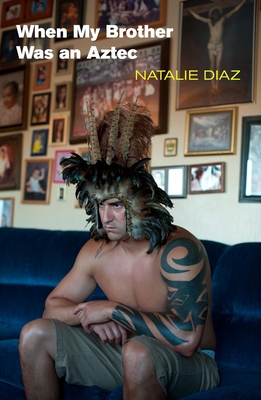
When My Brother Was an Aztec by Natalie Diaz examines the often ignored struggles of Native Americans in the modern world, particularly as they try to integrate into mainstream society.  The kids who are around white students in school are looking to be like their peers, while at home, their parents trying to hold onto their cultural traditions.  Diaz has a frankness in her verse as she not only tackles drug addiction, but also Native American myths and ancestry.  While these poems are steeped in culture, there also is a universality to the lines that make them accessible to people of all cultures.  I consider Diaz’s book “a glimmering debut collection that hums in the back of the mind and generates an emotional aftermath that will leave readers speechless.”

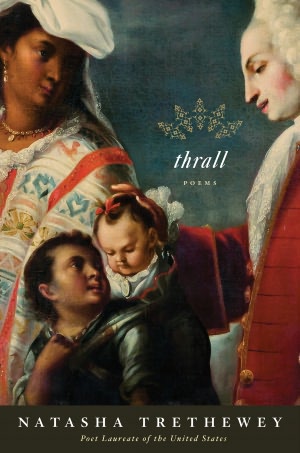
Of the two Natasha Trethewey books I’ve read this year (though one was a reread), this is the one that has impressed me the most and has caused me to reassess some things.  Thrall is an even more mature combination of the personal and historical than Native Guard is.  While her earlier collection examines the struggles of a mixed race child, the latest collection builds upon those insights to create a wider historical record of mixed race children and how they are viewed by their parents and history.  My review indicated, “While her reading can enthrall you and bring you near tears, her careful word selection in each poem will ensure that you reflect on the meaning of each line in each verse before you even think about the overarching themes of separation and connection as well as their juxtaposition.”

I hope that you’ll consider these collections as you do your holiday shopping and have a great holiday, everyone.

Poetry for the Holidays

Today, I’m over at Lost in Books talking about poetry for the holidays as part of the 2012 Holiday Post Extravaganza.

I was pleased when Rebecca said she was “entranced from the first paragraph” of my guest post.  I hope that means everyone else will be.

Please check out my post for 9:00 am today and check out the other posts she has planned throughout the holidays.

For those of you who have participated in the 2012 Fearless Poetry Reading Challenge, I hope you’ll comment here and let me know how you liked the challenge and if you have any suggestions for the 2013 challenge.

Guest Post: What Shows Through by Poet Erica Goss

When you fiercely believe in a poet’s talent and their collection, you want to do everything you can to promote it and him/her to a wider audience.  You stick their book into strangers’ and friends’ hands and say, “Read this.”  Sometimes, that works and sometimes it doesn’t, but if you truly believe in a collection, you press onward.

Today, I’ve got a deeply moving guest post from poet Erica Goss, who I featured during the 2012 National Poetry Month Blog Tour with a review of her book, Wild Place.  She will talk about the joy of publishing her collection, but also the deep sadness that came with it when her father’s body was discovered in the wilderness.

Following the guest post, I hope that you will enter for 1 of 2 copies I am going to giveaway to 2 lucky readers anywhere in the world.  Without further ado, please welcome Erica Goss.

On March 29, 2011, I checked my email late in the afternoon. The subject line “Chapbook Acceptance: Wild Place” caught my eye immediately. I opened the message and read, “Thank you for submitting to us. Your manuscript has been accepted for publication.” Blue capitals announced the sender as Finishing Line Press in Kentucky.

Finishing Line. I loved that name and its connotations: making it to the end and winning. But on March 29, 2011, “finishing line” meant something else. Three weeks earlier, some teenagers out hiking had discovered my father’s body in a remote part of Western Washington State. That was his finishing line: death from exposure, hunger, and thirst, brought on by dementia.

Over the following months, I struggled with grief and depression. Some days were simply too hard to bear. My friends congratulated me about the book, but I felt compelled to qualify their enthusiasm with reminders that I was grieving my father. As much as I wanted to shout with joy over the book’s imminent publication, I was unable to feel much happiness at such a time.

The book did give me some welcome distraction from dealing with my father’s death and trying to put his affairs in order. Choosing cover art, formatting the book, deciding which poems to keep and which to delete, absorbed many hours. At the back of my preparations, however, my father’s death lurked, a persistent ache in the pit of my stomach.

It took me some time to realize that I was living in one of those ironic situations that make good poems. The best poetry is tinged with its opposite emotion; to quote Chase Twitchell, “remember death.” As Linda Pastan writes in her poem “The Death of a Parent,”

Move to the front
of the line
a voice says, and suddenly
there is nobody
left standing between you
and the world, to take
the first blows
on their shoulders.

How often I wanted to share the news of my book’s publication with my father. In phone conversations, I’d told him about sending the book to various contests and small presses. The dementia that had been taking his brain away would lift for a little while, and he seemed genuinely interested. Then, abruptly, he would say, “Well, thank you for calling!” and hang up. When he did that, I knew that he had probably forgotten who I was, and ended the conversation to cover his embarrassment.

My father was never more attentive than when I read poetry to him. A former professor of German, he would fix his hazel eyes on me with the look he must have given his students when they mispronounced something, and listen intently. At the end, he would usually say, “Huh! Too bad he was such an ass,” or some other insulting remark about the poet. That’s when I knew my real father was back, at least for a moment. “Even jerks can write good poetry,” I would respond, hoping for his sudden laugh or the way he would smack the table, making us all jump. But more and more often, he would just look at me, puzzled, and turn back to the television.

My father loved run-down, decaying, decrepit places. This explains why he spent the last few years of his life, before his dementia worsened and he moved to Washington to live with his sister, in a tiny village in Northern California called Locke. Locke sits in the San Joaquin-Sacramento Delta, where two of California’s largest rivers meet. Eleven hundred miles of poorly maintained levees protect Locke, the other small towns of the Delta, and its surrounding orchards and farmland.

The Sacramento and San Joaquin rivers, unruly by nature, seep under the levees, giving Locke and the whole area a lumpy, moldering appearance. Artists love Locke’s tilted buildings and its atmosphere of benign neglect (Locke is the setting for “My Father at Seventy,” one of the poems in Wild Place). The first few years my father spent in Locke were happy ones; he loved the small town vibe, the artists and writers who lived in ramshackle houses where the river bubbled up through the basements, and being so close to Nature. That was before he stopped calling, stopped paying his bills, stopped cleaning his house.

Wild Place’s cover photograph, taken by San Jose artist and architect Howard Partridge, shows a view of the Sutro Baths on the coast of San Francisco. It’s clear from the photograph that the Pacific Ocean is reclaiming that piece of land, wearing down the seawall and the surrounding cliffs. Here’s another place that water will eventually take back, just like in the Delta a few miles east.

Is this a metaphor for death? Maybe. But I’d rather think of it as a demonstration of Nature’s obdurate personality. As the French poet Saint-John Perse (Alexis Leger) writes: “In vain the surrounding land traces for us its narrow confines. One same wave throughout the world, one same wave since Troy rolls its haunch toward us.”

One same wave. “The Death of a Parent” gives us this image:

The slate is wiped
not clean but like a canvas
painted over in white
so that a whole new landscape
must be started,
bits of the old
still showing through.

It’s been over a year since that bipolar month of March, 2011. I’m learning what it means to grieve. Some days I feel my father’s loss as an acute pain; other times it’s heavy and dull, like an overcast, humid day. I have gotten better at allowing myself to feel unqualified joy at the publication of Wild Place. And I look for those places where the old bits show through.

Thanks, Erica, for sharing your story with us. I know that your father would be proud of you, no matter what. Also, please check out this poem she wrote in response to a prompt about what she would tell her 16-year-old self.

For those of you interested in this stunning collection, please leave a comment here about your own father. Deadline to enter will be May 31, 2012.

LGBT Poetry

Today’s monthly poetry event is sponsored by Kelly at The Written World, so go over there and link up your poetry post for February!

After reading and reviewing Resilience edited by Eric Nguyen last week, I started thinking about all the poetry I’ve read and how universal it is.  I really pay little to no attention to what poets are LGBT and which poets are not.  Most of us know that Walt Whitman was gay, as was Oscar Wilde.  But what other classic and contemporary poets are/were LGBT? And could you tell by reading their poetry or were the verse more cryptic about it or more universal in scope?

While I am curious about how many published LGBT poets there are in contemporary society compared to those from the past, I’m more interested in whether we should bother categorizing our artists in this way.  Do we really need to know the sexual orientation of our poets in order to enjoy their art form?  Does it affect how we see their work and whether or not we enjoy it?  And does their poetry have to focus on the struggles of their oppressed minority or can it be broader in focus?

Just some food for thought.  I’d like to hear what everyone has to say.

For now, I’ll leave you with one of my favorite poems from Resilience edited by Eric Nguyen:

The Straight Boys Kiss by Rene Cardona

so they sit
and stare into the air
the secrets texted
make them nervous
more each second
so they lean in--
the smiles stop,
and stares shoot
like evening stars
to the lips of the one across.

For those in NYC:

On March 17 at 3-5PM, an Open Mic night will be held for contributors to the collection at WordUP Books.

For more information about the Resilience project, visit the blog.

I hope you’ll consider joining the 2012 Fearless Poetry Reading Challenge.

For those in the challenge who already have reviewed poetry volumes in February, please put your full links in the Mr. Linky below:

Call for Poetry Book Donations & Looking for Tour Hosts

National Poetry Month 2012 is nearly upon us, with less than two months to go.  I’ve got a few great bloggers willing to talk about poetry and to host reviews and guest posts in April, but I’ve still got some open spots on the schedule.  Won’t you help me fill them in?

I’ve got a few guest posts coming in from poets that need blog tour hosts for them.  Just drop me an email if you want one and what day you want to host.

Also, if you’re a poet or a publisher of poetry, I’m looking for short guest posts from you about poetry for some fellow bloggers who want to join the tour but don’t feel they want to review a book.  I’m looking to help them out with a guest post form you.  Please email me with your ideas at savvyverseandwit AT gmail

Finally, anyone who would love to share the love of poetry through some giveaways in April, please sign up to donate books, poetry workshop classes, poetry journals, literary magazines, and any other poetry-related items.  Send me an email to savvyverseandwit AT gmail with your donations and if you prefer I run the giveaway or you’d like to run it yourself.

OK, that’s it.  I hope everyone can help out.  See you for the big tour in April.

Curiosity Quills Blog Tour Continues…

Hello everyone.  I just wanted to let you know that my crazy obsession with poetry is spreading to another blog this week.  Today, I’m guest posting at The Hopeful Librarian as part of the Curiosity Quills Blog Tour.  I hope you’ll check out my essay, which includes quotes from some of my favorite writers — Beth Kephart, Charles Jensen, and Sweta Srivastava Vikram.

Please stop by and let me know what you think.  Also, you can check out my guest interviewer for the tour, here.

Reason to Drool Over Poetry

I’ve read a number of posts over the years from fellow bloggers about their love/lust of authors from the Book Lady’s Panty Throwing to bloggers like Hey Lady! Whatcha Readin?’s spotlights on the books she’s drooling over.  I know that we all drool over actors and various book series and more, but when it comes to poetry, many people shy away or turn their backs.

I’ve got a little incentive for you to consider reading poetry or looking at the poets who make the poems.  Have you heard of the Naked Muse 2012 Calendar? If you follow my Facebook/Twitter updates, you may have when I shared the Huffington Post article on this little gem.

(I want to formally thank Anna since she sent it to me at a time I was struggling on what to write about for my first poetry post)

I really love that these poets decided to bare all for a good cause — see poets aren’t always purposefully confusing and there to just drive you crazy with seemingly incongruous allusions and metaphors.  In fact, their meanings can be as plain as the skin that they bare to the camera.  I’d love to see some American poets get in on this little project.

I like the idea that 100% of the profits will be used to help those with Type 1 Diabetes through research at JDRF.

What contemporary or classic poets would you like to see in a naked calendar?  What is your poetry post about today?

I hope you’ll consider joining the 2012 Fearless Poetry Reading Challenge.

For those in the challenge who already have reviewed poetry volumes in January, please put your full links in the Mr. Linky below:

The Gauntlet Has Been Dropped: Monthly Poetry Event

Lu, Kelly, and Eva have talked about reading more poetry in 2012, and they want us all to join in.  Stuck for a list of enjoyable poetry books, check out the Indie Lit Awards 2011 list and Lu’s list.

This challenge is open to everyone — from those who love poetry already to those just starting out or returning to poetry — and you don’t even have to read poetry, but post about poetry.  You could post about your favorite poet, why you hate poetry, why you want to read poetry, different poetic forms, something you remember about poetry from school, and anything else you can think of as long as it is about poetry.

This is the schedule for posting ONCE per month:

Poetry: Read More/Blog More – A Monthly Event!

January 31st
February 28th
March 27th
April 23rd
May 29th
June 26th
July 31st
August 28th
September 25th
October 30th
November 27th
December 18th

Once you’ve posted, visit Lu and Kelly’s blogs to put your link in the Mr. Linky!  Once you have your sign up post ready, link up here.

I’ve picked up the gauntlet, will you?!

Guest Review: Delights & Shadows by Ted Kooser

Today’s guest review of Ted Kooser’s Delights & Shadows is by a good friend and blogging pal of mine, Anna from Diary of an Eccentric.  It didn’t take too much arm twisting to get her to participate in Celebrating Indie & Small Press Month; All I had to do was give her a book to read.  She also gets to count this one for the Fearless Poetry Reading Challenge I’m hosting . . . see how diabolical I am?!

Ok, on with the review:

Former U.S. Poet Laureate Ted Kooser won the Pulitzer Prize for Delights & Shadows, which was published by Copper Canyon Press in 2004. Kooser’s poetry is what one would call “accessible” because it doesn’t take much deciphering or pondering to get at least a surface understanding, though some of his poems go much deeper.

Delights & Shadows is a collection of quiet poems touching upon such themes as memory, aging, death, and nature. Kooser obviously spends a lot of time observing his surroundings, and many of his poems bring ordinary objects or simple moments to life. When Kooser looks at the world, he sees things that many of us would miss, and the descriptions of what he sees are fascinating. In “Tattoo,” Kooser describes an old man browsing a yard sale and contemplates his past after he sees a tough-guy tattoo on his arm. In “A Rainy Morning,” he compares a woman pushing herself in a wheelchair to a pianist, writing “So expertly she plays the chords/of this difficult music she has mastered” (page 15).

Kooser manages to say so much in just a line or two. In “Father,” in remembering his father’s illness, he writes “you have been gone for twenty years,/and I am glad for all of us, although/I miss you every day” (page 36). In “Horse,” he calls a horse “the 19th century” (page 56), which calls to mind civilization’s past dependence on the animal. Other poems compare a pegboard to ancient cave drawings, describe the moment in which a bike rider pedals off, and use a spiral notebook to conjure memories of the past.

Delights & Shadows also includes a couple of narrative poems, poems that tell a story in verse. In “Pearl,” Kooser talks about visiting his mother’s childhood playmate to tell her that his mother has died. My favorite poem in the collection is “The Beaded Purse,” about a man taking home the coffin containing the body of his daughter, who’d left home to pursue an acting career and hadn’t been home in years.

Kooser is a master of quiet observation and finding the extraordinary in the ordinary. In Delights & Shadows, he describes the delights in these simple things, as well as the shadows of the past that these objects and observations conjure up.

Delights & Shadows was published by Copper Canyon Press, which was founded in 1972 and publishes only poetry. The company’s pressmark is the Chinese character for poetry, which stands for “word” and “temple.”

Disclosure: I borrowed Delights & Shadows from Serena to review for Independent and Small Press Month. I am an IndieBound affiliate and an Amazon affiliate.

Thanks, Anna, for participating in Celebrate! Indie & Small Press Month!  Seems to me that you really enjoyed this collection.  What other Kooser books will you be reading?

When I guest post at The 3 R’s Blog…

I’ve already announced our good news about the coming baby girl to our family, and when Florinda at The 3 R’s Blog asked for guest posts to cover her recovery from surgery.

I jumped at the chance to share my good news with a wider audience, and of course to solicit book recommendations from her readers.

I hope you’ll stop by her blog today and check out my guest post, A Year of Change & Poetry.  Don’t forget to leave comments; I’ll be watching… 🙂