Quantcast

Once We Were Brothers by Ronald H. Balson

Source: Public Library
Hardcover, 389 pages
On Amazon and on Kobo

Once We Were Brothers by Ronald H. Balson, our August Book Club selection, is part legal thriller and part historical fiction, as Ben Solomon recognizes that one of Chicago’s elite was a former Nazi SS officer Otto Piatek, the butcher of Zamosc, and his one-time brother.  Solomon’s family always strove to help their neighbors whenever possible, and one day take in a German boy, Otto, as their parents face the struggles of lost jobs and opportunities.  On the cusp of Nazi expansion, Poland seems like it is protected from outside forces and immune to Nazi takeover, but suddenly, things change and the Solomons are faced with a variety of tough decisions.  In the present Ben Solomon has aged and is on a crusade to bring Piatek to justice no matter the cost.

“‘Maybe for some.  Not for me.  It is why we must remain diligent and relentlessly pursue men like Piatek.  Evil is contagious.  Much like a pathogen, it must be snuffed out at the source.'” (page 139)

Balson has a great story to tell, but it’s too bad that the modern-day character of Catherine Lockhart is too much of a pain, with her constant interruptions about billable hours and urging Ben to get to the point.  She’s constantly bombarding Ben with questions about property and the basis for his lawsuit and always denying her interest.  While her backstory about a horrible conniving husband gives credence to her lack of confidence as a lawyer and her concern about keeping her current job, her story is pale in comparison to Ben’s Holocaust story.  Moreover, there are times when Ben appears to be spouting off facts in an effort to educate the reader, coming off more as a lecture than a man who is telling his life story.  Despite these flaws, the story is engaging — even if everything that could have happened during the Holocaust happens to Ben and his family — and readers will be sucked into the past, just as Catherine is.

Once We Were Brothers by Ronald H. Balson is intriguing because of the Polish setting, and the story of Ben and his family is engaging, but the lawsuit portion is resolved very quickly and the relationship between Ben and Otto as children is only partially developed.  With that said, Balson knows his history and has created an engaging look into the past that will have readers examining the world today in a new light.  Are we beyond the evil the Nazi’s engaged in or is the potential still here among our own world leaders?

About the Author:

The author, Ronald H. Balson, is a Chicago trial attorney, an educator and writer. His practice has taken him to several international venues, including villages in Poland which have inspired the novel Once We Were Brothers.

What Book Club Thought:

Most of us were displeased with the attorney character and her sob story, which had not place in the book, especially in comparison to Ben Solomon’s holocaust story.  With that said, one member really enjoyed the legal maneuverings near the end of the book, though they were resolved very quickly.  While the novel was readable and went quickly, there seemed to be an abundance of bad things happening to Ben and his family, though like most of these stories there are many who die.  Otto also seemed to be “too” evil and there was little seen of his transformation, which could be because the story was told from Ben’s point of view for the most part.  One member suggested that the modern day characters be cut out or that they be only at the end when Ben makes it to modern day and begins his lawsuit, while another suggested the book be split between the “brothers'” points of view.  Overall, many thought this book could have presented the story in a better way.

20th book (WWII) for the 2014 War Challenge With a Twist.


49th book for 2014 New Author Challenge.


15th book for 2014 European Reading Challenge(Set in Poland)


25th book for 2014 Historical Fiction Reading Challenge.
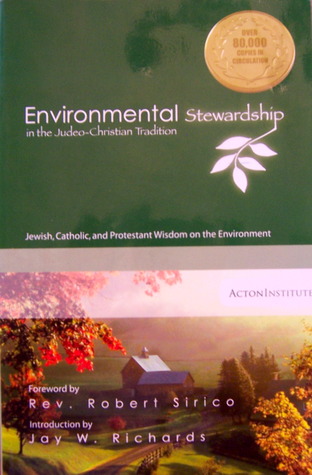
 

Environmental Stewardship in the Judeo-Christian Tradition foreword by Rev. Robert Sirico, introduction by Jay W. Richards

Source: Borrowed
Paperback, 119 pages
I am an Amazon Affiliate

Environmental Stewardship in the Judeo-Christian Tradition, foreword by Rev. Robert Sirico and introduction by Jay W. Richards, from the Acton Institute explores the religious and textual principles that guide Judaism and Christian faith as they apply to responsible environmental stewardship.  Much of this slim volume focuses on the movement for population control, as well as preserving animal species.  The argument for preserving animals only works in so far as how those animals fit into the overall plan for humans and their needs — they can never take precedence over the needs and benefits of humans, in the simplest of terms.  While all life should be considered worth saving, their argument relies upon a sort of cost benefit analysis in light of religious principles.  For those who are less aware of the nuances of human dominion over nature, this book could provide some insight into the argument that radical environmentalists believe religion espouses humans should not merely consume or take over nature for their own purposes.  This text argues that dominion does not mean humans should merely consume and take what they want, that they should use, shape, and add to nature, not merely consume but to guide it.

“Judaism would never countenance loggers suffering the indignity of joblessness in order not to disturb the nesting habitat of the owl.  When homes for people become dramatically overpriced because of the regulatory costs of providing for the habitat of the kangaroo rat, Jewish tradition also must object.  People need not justify their needs of desires to nature.  They are warned only against destroying things for no good purpose.”  (page 25)

There are some great points about the need for societal change and the absence of a sense of community that seems to pervade many highly populated areas.  There is an argument that greater civility is needed to ensure that highly populated areas are not oppressive.  These elements of the book seem more about morality and religious principles, rather than environmental concerns, such as pollution, biodiversity, and climate change, for example.

“Overpopulation is not a question of numbers or objectively measurable figures such as people per square mile.  Instead, it is a question of whether people feel oppressed by the overwhelming presence of others.  This has more to do with the standards of civility and behavior than with actual population numbers.” (page 19-20)

In an economic perspective, which this book uses alongside its religious one, the benefits nature provides to humans is too often couched with the idea that humans are merely consumers by environmentalists.  Animals should only be saved if they can provide some benefit to humans or their preservation does not interfere with the comfort and growth of the human race.  The idea that there is a middle path is a noble one, but at more than one point in this textual argument, the writers suggest that one side or another must be taken in order for a solution to be found and that there is no middle ground.  Much of this analysis is based on old data regarding climate change and some other issues, and a lot of the arguments stem from the arguments of the most radical environmentalist paradigms.

“Hence, the good steward does not allow the resources entrusted to him to lie fallow or to fail to produce their proper fruit.  Not does he destroy them irrevocably.  Rather, he uses them, develops them, and, to the best of his ability, strives to realize their increase so that he may enjoy his livelihood and provide for the good of his family and his descendants.”  (page 39-40)

Environmental Stewardship in the Judeo-Christian Tradition, foreword by Rev. Robert Sirico and introduction by Jay W. Richards, from the Acton Institute provides an interesting basis for discussion about environmental issues and how the religiously faithful can participate in discussions to find solutions to real problems while remaining true to their faith.  However, there is a lot of faith placed in the goodness of man to do the right thing.  As with any religious-based doctrines, there are some ideas that may bristle readers, particularly with regard to what is viewed as “government” programs aimed at population control (i.e. Planned Parenthood in this example).

The Regulators by Richard Bachman (a.k.a. Stephen King)

Source: Public Library
Hardcover, 466 pages
On Amazon and on Kobo

The Regulators by Richard Bachman, a.k.a. Stephen King, is like stepping onto the set of The Twilight Zone, from aliens and horrifying mutant animals to shootouts at the Ponderosa and/or O.K. Corral.  Something is not right with this idyllic town of Wentworth, Ohio, and its residents on Poplar Street.  With a cast of characters ranging from a cheating wife to an alcoholic husband and father, King packs in a wide-ranging cast that also includes a Vietnam veteran turned kid’s author and an ex-cop thrown off the force for allegedly being on the take.  There are the twin teen boys and their girlfriends and the local paper boy with big dreams for his baseball career, but there is something seedy underneath this neighborhood and things are about to go haywire.

King always sets the reader up with a typical neighborhood minding its own business and sometimes it’s in the height of summer when dreams are the biggest and relaxation is high on the priority list.  But with these settings, atmospheres, and scenes in place, readers know that things are about to take a turn for the worse, and when they start turning, they begin spiraling down a rabbit hole.

“Peter rose to his feet like an old clockwork toy with rust in its gears.  His eyeballs jiggled in the silver dreamlight from the TV.” (page 256)

What would the world look like through an autistic boy’s eyes, and how could that world be twisted in the hands of a being with no conscience?  Seth Garin is that autistic boy and his world has become even more like a prison than before when he merely had trouble communicating with his family, but soon he learns that the prison he finds himself in could also lead to his freedom.  King packs so many characters into this novel, illustrating depravity and hysteria on any number of levels, but what’s engaging are the scenes where Seth’s favorite characters come to life and take to the streets.  The devastation they bring with them, on the other hand, is harrowing and graphic.

King’s narration shifts point of view on many occasions, making it hard for the reader to hold onto the sequential story, but in many ways this may have been purposeful — to give the reader the same sense of timelessness that the characters endure.  The Regulators by Richard Bachman, a.k.a. Stephen King, is like a comic book and western sprung to life, but only if it were run by a madman director bent on killing everything and absorbing all of its energy.

About the Author/Pen Name (source: Wikipedia):

King states that adopting the nom de plume Bachman was also an attempt to make sense out of his career and try to answer the question of whether his success was due to talent or luck. He says he deliberately released the Bachman novels with as little marketing presence as possible and did his best to “load the dice against” Bachman. King concludes that he has yet to find an answer to the “talent versus luck” question, as he felt he was outed as Bachman too early to know.

The Program by Suzanne Young

Source: Public Library
Hardcover, 405 pages
On Amazon and on Kobo

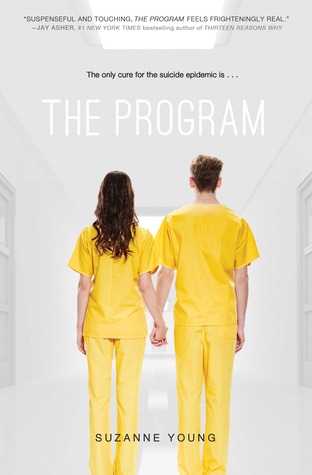
The Program by Suzanne Young, which was our book club selection for July, is a young adult novel in which young people are sent away to The Program if they show signs of suicidal thoughts before committing the act, and in this world, one can never be too careful because suicide is contagious.  At least that’s what the government would have parents and their teens believe.  Every teen lives under a microscope, and the pressure can be unbelievably intense for those who are friends or, especially, related to someone who has committed suicide.  Sloane Barstow is just one teen of many, but her brother committed suicide so she bottles up as much of her anguish and pain as she can so that her parents don’t think she’s suicidal too.  Her only comfort is in the arms of her friend, and her brother’s, James Murphy — a rough and tumble kind of guy who has mommy issues and doesn’t much like school or his dad.

“Teen suicide was declared a national epidemic — killing one in three teens — nearly four years ago.  It always existed before that, but seemingly overnight handfuls of my peers were jumping off buildings, slitting their wrists — most without any known reason.  Strangely enough, the rate of incidence among adults stayed about the same, adding to the mystery.”  (page 9)

The novel is told in first person point-of-view, so if Sloane doesn’t know the reasons or the actions behind the scenes, neither does the reader.  This leaves the reader and Sloane in the dark, especially when she begins to lose parts of herself.  Her relationship with James is hot and cold, mostly because James has a hard time being vulnerable, but her relationship with her parents is even harsher, with her moods constantly negative toward them and them trying to smother her as if that will protect her from getting sick.  There are a great number of issues to discuss, particularly about what it means to be us — do our memories make us who we are or is it something more? Should the government force teens into treatment for suicidal symptoms and their grief over lost loved ones or should they allow them to handle their own emotions?  Is there some other vast government conspiracy at work?

Young’s portrayal of rebellious teens is spot on in her portrayal of Sloane and James, but there is question that builds in the reader’s mind about whether Sloane and James are in love or merely thrown together by mutual loss.  While there are touching moment between the two and it does seem to be love, there relationship does not evolve beyond the mutual lust and desire for one another, and in many ways, it is based on mutual comfort.  Despite the questions about whether The Program is increasing thoughts of suicide among teens that want to avoid it, at its heart this novel is a love story in a dystopian world where kids have little control of their lives, except to run away.  The parents are not as hands on as one would presume them to be in a world where suicide is an epidemic, there is no real explanation of who runs the program or of why the program is so prevalent other than its 100% cure rate, and the last part of the book seems like it was thrown together to explain a subordinate character’s actions in The Program and outside of it.

The Program by Suzanne Young is a fast-paced romance for young adults that raises a number of questions for book clubs to discuss, and it is enjoyable.  For readers looking for a little more about the setting and The Program or other cures that could have been tried, etc., you’ll be left wondering.  The end opens more doors than closes, and its possible that there could be a sequel in the works.  Sloane and James are strong and rebellious, but even they are not immune from the disease or its cure.  Is it better to forget the past and move forward, or should you reclaim as many of your memories as you can?  That’s still the question.

About the Author:

Originally from New York, Suzanne Young moved to Arizona to pursue her dream of not freezing to death. She currently resides in Tempe, where she teaches high school English. When not writing obsessively, Suzanne can be found searching her own tragic memories for inspiration.

Suzanne is the author of several books for teens, including THE PROGRAM, A NEED SO BEAUTIFUL, and A WANT SO WICKED.  Visit her on Facebook, her blog, and Twitter.


What the Book Club Thought:

Most members agreed that the book was an easy read, while one wanted more hope at the beginning at least for the reader.  Others thought that they were in the situation with Sloane (probably due to the first person point of view) and could understand how a teen girl would be so obsessed with a boy and only think about surviving, rather than what her future could be like once she hit 18.  At some length the book club talked about the lack of hope in the beginning, which some said was intentional.  Another aspect of the book that people discussed at length was Sloane’s seeming acceptance of the pills given to her by the psychiatrist, rather than fighting to keep her memories as she said she would early on.  The underground aspect of the book that shows up later in the book was examined as a possible conspiracy as well as The Program itself.  However, there is another book to this series, so we’re waiting to see what that brings (at least some of us are).  In terms of whether members would take the pill to bring back all of their memories, some said they would without hesitation, while others said they would think about it and one said he probably wouldn’t.  When asked about whether they would place their own kid in the program, a few said that they would not immediately do so, seeking out alternative means and others suggesting that they would immediately do so.

45th book for 2014 New Author Challenge.


War Babies by Frederick Busch

Source: Public library
Paperback, 114 pages
I am an Amazon Affiliate

War Babies by Frederick Busch is a novel about two adult children whose lives connect long after their fathers have died in the Korean War and not by accident.  A thirty-plus year-old attorney decides he’s established enough in his career to seek out the answers he wants about his father’s role in the Korean War and how it landed him in jail.  Peter Santore has struggled with the loss of his father, who is said to be a traitor in a Korean War POW camp, and he decides it is time to travel to England to get some answers.  He discovers through his research in the United States that his father may have played a role in the death of Hilary Pennels’ father in the POW camp.  Traveling to Salisbury, he debates how he will find this woman and introduce himself, but clearly he decides that he will use her to get the information he wants if he has to.  Along the way, he also runs into Mr. Fox, a survivor of the Korean War POW camp.

“I had two canvas bags and a wrinkled blazer, and the sure sense, as I left London, that I didn’t know what I would do if I found Miss Hilary Pennels, or whatever her married name might be.  How do you do.  My father committed treason in Korea at about the same time your father, terribly wounded, was saving the lives of his men and distinguishing himself in the eyes of history forever.  I just wondered if my father might have done anything to, er, kill yours?”  (page 6-7)

Busch’s third person narrative, which also changes to first and second person randomly, distances the reader from these characters in a way that makes the instant connection between Hilary and Peter tough to believe.  Moreover, how they interact with one another is by turns sympathetic and hurtful, perhaps more so by Hilary who seems manipulative.  While Peter struggles with his feelings for this woman and the “relationship” they’ve started, he also wants to close a chapter in his life that has to do with the Korean War and his father.  How does he navigate this fragile relationship to get the information he needs?

Mr. Fox is a damaged war veteran, but the horrors of the Korean War are never far from his mind, and how he lurks in the corners of this “conversation” between Hilary and Peter is downright creepy.  His hatred of Peter’s father is evident and understandable, but the projection of that hatred by Mr. Fox demonstrates just how broken and lost the veteran is.  He’s brutal in describing the camps, but he’s also brutal in how he approaches the tale and other people he interacts with.  Busch even describes his rotting breath and fetid teeth and gums, which can only signify his moral depravity.  Fox’s issues go beyond the PTSD, and Busch relays his story of the camps in just the way a veteran who is bitter would, and these are the strongest parts of the story.  Some readers may find connecting with these characters difficult because their motivations are hidden and how they interact really has no context.

“Mind you, I don’t know how easy it might be.  But you should make the effort.  You should prosper in the wake of your past, not live a cripple.  England’s full of cripples.  It’s the country of cripples.  You see them all over the towns, in braces and wheelchairs and with no arms, wheezing and spitting blood and falling over in pubs.”  (page 62)

War Babies by Frederick Busch is complex and deals with the after effects of war on the children of veterans, POWs, and traitors.  It is ultimately about the choice that these families and their individual members must make for themselves — they need to learn to accept the past that cannot be changed and to move forward.  Connections can help strengthen the will to move on from the past, but those connections also must be bred in honesty and mutual respect.

About the Author:

Frederick Busch was an American writer. Busch was a master of the short story and one of America’s most prolific writers of fiction long and short.

Interested in the War Through the Generations discussion, see part 1 and part 2.

13th book for 2014 European Reading Challenge(Set in England)


23rd book for 2014 Historical Fiction Reading Challenge.


16th book (Korean War) for the 2014 War Challenge With a Twist.


39th book for 2014 New Author Challenge.

The Impossible Knife of Memory by Laurie Halse Anderson

Source: Public library
Hardcover, 391 pages
On Amazon and on Kobo

The Impossible Knife of Memory by Laurie Halse Anderson is set five years or more after Hayley Kincaid’s father came back from two tours each in Afghanistan and Iraq.  They had been on the road as he drove semi-trucks and home-schooled her, but they return to his home town to set down some roots and for her to attend senior year in a regular school.  She barely reconnects with her childhood friend Gracie and she is plunged head first into peer-pressure drama as she tries to hide her own past and home life struggles.  She meets mega-hottie Finn, who has stopped being the star swimmer for the high school team, and they strike up an unconventional relationship of him doing her favors she never asks for in exchange for articles for the nearly defunct school newspaper.

“My earbuds were in, but I wasn’t playing music.  I needed to hear the world but didn’t want the world to know I was listening.” (page 5)

As much as this story is about Hayley and her ability to connect with people her own age, it is also a story about the wide-ranging effects of PTSD.  Anderson sprinkles in what look like memories from Hayley’s father, which provide enough background on his experiences to demonstrate how real his nightmares had become.  These nightmares are so real that she loses sleep herself, and like most children of addicted parents, she teeters on the edge of caring for him and allowing herself to live her own life without worrying about him.

“A few days after we moved in, Daddy got unstuck from time again, like the Pilgrim guy in Slaughterhouse.  The past took over.  All he heard were exploding IEDs and incoming mortar rounds; all he saw were body fragments, like an unattached leg still wearing its boot, and shards of shiny bones, sharp as spears.  All he tasted was blood.”  (page 9)

Trauma is tricky, and while many veterans never speak of their experiences, family can glean from their nightmares the events that continue to plague their living hours.  Anderson writes for young adults with a seriousness that ensures young readers will feel at home in the worlds she creates, but she never sugarcoats the realities of war or PTSD.  Hayley is strong, but still teeters on the edge when her father takes a wrong turn or stops coming out of his room.  The only thing keeping her in the present and connected are her relationships with Gracie and Finn.  The Impossible Knife of Memory by Laurie Halse Anderson is highly emotional, could be considered a tearjerker, and will leave a lasting imprint on readers’ memories.

About the Author:

Laurie Halse Anderson is the New York Times-bestselling author who writes for kids of all ages. Known for tackling tough subjects with humor and sensitivity, her work has earned numerous American Library Association and state awards. Two of her books, Speak and Chains, were National Book Award finalists. Chains also made the Carnegie Medal Shortlist in the United Kingdom.

Laurie was the proud recipient of the 2009 Margaret A. Edwards Award given by YALSA division of the American Library Association for her “significant and lasting contribution to young adult literature…”. She was also honored with the ALAN Award from the National Council of Teachers of English and the St. Katharine Drexel Award from the Catholic Librarian Association.

Also Reviewed:

14th book (Gulf Wars — Operation Iraqi Freedom) for the 2014 War Challenge With a Twist.

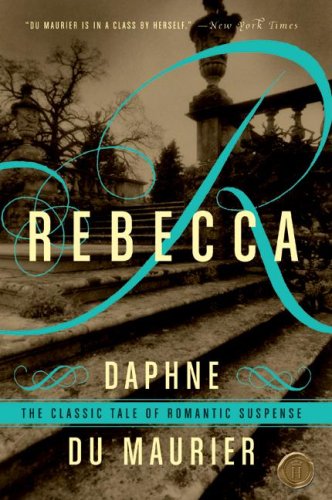
Rebecca by Daphne Du Maurier

Source: Public Library
Paperback, 410 pages
On Amazon, on Kobo

Rebecca by Daphne Du Maurier, which was our May book club selection, is a suspenseful story centered around Rebecca de Winter, who by society’s standards was charming, beautiful, and unmatched by other ladies of the upper class.  It has been about 10 months to a year since her passing when Maxim de Winter meets a young woman, who remains the unnamed narrator of the story, in Monte Carlo as the paid companion of Mrs. Van Hopper a gossipy and grasping woman who uses any tiny connection to weasel her way into parties, etc.  Once her employer contracts influenza, the narrator is free to do what she likes since a private nurses is necessary.  As a result, she ends up spending a number of afternoons with the enigmatic Mr. de Winter and later agrees to marry him.

“The woods, always a menace even in the past, had triumphed in the end.  They crowded, dark and uncontrolled, to the borders of the drive.  The beeches with white, naked limbs leant close to one another, their branches intermingled in a strange embrace, making a vault above my head like the archway of a church.” (page 1)

While my copy’s jacket cover speaks of the novel as a “classic tale of romantic suspense,” there was little romance between the unnamed narrator and Mr. de Winter.  While the new Mrs. de Winter is naive and unable to cope with running a magnificent household like Manderlay, she has zero backbone, even as Mrs. Danvers, the home’s housekeeper, plays the dirtiest trick on her.  This narrator is an unlikeable character from the start with her whiny nature and her inability to speak her mind, even to her husband.  Even though in this time period, women were supposed to be obedient and meek, they also were expected to run entire households with a forceful hand.  The new Mrs. de Winter is Rebecca’s antithesis in every way.

“I listened to them both, leaning against Maxim’s arm, rubbing my chin on his sleeve.  He stroked my hand absently, not thinking, talking to Beatrice.

‘That’s what I do to Jasper,’ I thought. ‘I’m being like Jasper now, leaning against him.  He pats me now and again, when he remembers, and I’m pleased, I get closer to him for a moment. He likes me in the way I like Jasper.'” (page 103)

Neither of the main characters are likeable, as the retrospective narrative keeps readers at a distance from their love affair and their romance.  The highlights of the novel were the comical Mr. Favell, Rebecca’s first cousin, and Beatrice, who is plain spoken.  Rebecca by Daphne Du Maurier is suspenseful, though ridiculous at times, and there are highly descriptive paragraphs about nature.  The narrative is bogged down by the descriptions and the dream-like conversations she has with herself about upcoming events and confrontations.  While the plot is interesting, it is tough to feel empathy for the main narrator and to cheer her on.

About the Author:

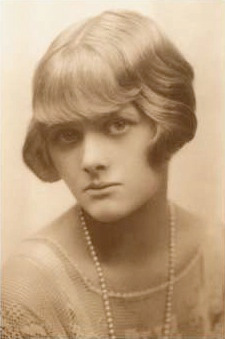
Daphne was born in 1907, grand-daughter of the brilliant artist and writer George du Maurier, daughter of Gerald, the most famous Actor Manager of his day, she came from a creative and successful family.

The du Maurier family were touring Cornwall with the intention of buying a house for future holidays, when they came across “Swiss Cottage”, located adjacent to the ferry at Bodinnick. Falling in love with the cottage and its riverside location, they moved in on May 14th, 1927, Daphne had just turned 20.

She began writing short stories the following year, and in 1931 her first novel, ‘The Loving Spirit’ was published. It received rave reviews and further books followed. Then came her most famous three novels, ‘Jamaica Inn’, ‘Frenchman’s Creek’ and Rebecca’. Each novel being inspired by her love of Cornwall, where she lived and wrote.

What the Book Club Thought:

The book club had a mixed reaction to this one; there were several members who enjoyed the story, but not the descriptions of nature.  There were too many words, one member said.  Others saw the background of the narrator as an obstacle she needed to overcome in order to mature.  One member pointed out that the narrator — even in retrospect — did not seem to offer any judgment about herself and behaviors, leaving readers to wonder whether she had matured at all.  The whiny nature of the character was tough to take for some readers, while other were interested in her little internal debates about others’ reactions to her actions or the actions she could have taken.  A few did not see the relationship between Max and the new wife as very loving, especially when she talks about him petting her like a dog.

11th book for 2014 European Reading Challenge(Set in Monaco)

18th book for 2014 Historical Fiction Reading Challenge.

31st book for 2014 New Author Challenge.

Snow Hunters by Paul Yoon

Source: Public Library
Hardcover, 208 pages
On Amazon, on Kobo

Snow Hunters by Paul Yoon is a character driven novel about the effects of not only the Second World War on Yohan’s father, but the Korean War on Yohan himself.  Yohan is a young farm hand who is conscripted into the military during the Korean War and he’s from the North; he’s captured after being nearly blown to smithereens and sent to a POW camp run by Americans.  Although Yohan could be considered brave because he defects, leaving his country behind, he’s also scared to connect with others because of the trauma he’s faced.  This quiet novel is about learning to reconnect with others and to accept the past and move on, while still holding close the memories of those you loved.

“That winter, during a rainfall, he arrived in Brazil.

He came by sea.  On the cargo ship he was their only passenger.  In the last days of the ship’s journey it had grown warm and when he remarked that there was no snow, the crew members laughed.”  (page 1)

Arriving in Brazil on a chance opportunity and knowing no Portuguese, Yohan is apprenticed to a Japanese tailor, Kiyoshi, who has his own war secrets.  What little Japanese Yohan knew is mostly forgotten, but they get by on those few words and gestures, as the young man begins to settle into a new life, mending clothes for the tailor’s customers and eventually learning the streets enough to make deliveries.  Yoon weaves memories into the narrative seamlessly, almost as if Yohan himself is pulled into the past and the present dissolves into the ether.  “It was as though the world he saw cracked, revealing memories he had forgotten.” (page 27)

As Yohan slowly adapts to a new life, he finds quiet solace in the company of youngsters Santi and Bai, who are patient as they sell their homemade bracelets or make small trades for food in the marketplace.  Yoon describes the physical limitations of those around Yohan, including his friend from the POW camp Peng, to reflect the disabled state in which Yohan has come to Brazil, and it is only through his relationship with the church groundskeeper, Peixe, that he comes to realize that limitations are only as limiting as you allow them to become.

Snow Hunters by Paul Yoon may search through the snow in Korea for anything they can forage to eat, but really it is a metaphor for those of us who live life in isolation either by choice, trauma, or necessity, and how as observers of our own lives and that of others, we are always hunting for that elusive connection.  Yohan and others must learn to make the fateful leap — to connect and to brave the uncharted waters.

About the Author:

Paul Yoon was born in New York City. He lives in Massachusetts and is the Roger F. Murray Chair in Creative Writing at Phillips Academy.


12th book (Korean War) for the 2014 War Challenge With a Twist.


17th book for 2014 Historical Fiction Reading Challenge.


27th book for 2014 New Author Challenge.

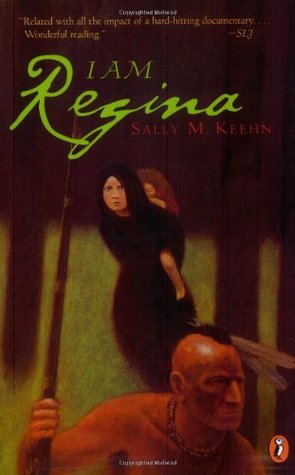
I Am Regina by Sally M. Keehn

Source: Public Library
Paperback, 240 pages
I am an Amazon Affiliate

I Am Regina by Sally M. Keehn (on Kobo) is a book for ages 10+ set during the French & Indian War that re-imagines the story of young Regina Leininger, who was captured by Indians and lived with them during this time.  The protagonist in Keehn’s story, 10-year-old Regina, is taken from her home after her mother leaves to mill the corn before the winter comes.  She’s traumatized by the ordeal that takes the life of her father and one of her brothers.  Her sister, Barbara, is taken as well, but they are soon parted as the tribes divvy up their spoils.

“It must be November now.  My eleventh birthday has passed and I have had no time to mark it.  The cries of geese no longer fill the sky.  Frost coats the ground and ice skims the wide and shallow stream we have been following southward through this wooded valley.” (page 59)

Until the tribes take her, from her German immigrant family, and she is forced to carry a young girl with her through treacherous terrain, Regina has little struggle in her life, except for the chores assigned to her by her parents.  Her mother always considered her a wanderer and a dreamer, but for the most part, she had a settled life in the frontier.  The trek to the village with Tiger Claw, a man who has seen battle with the White man and bears the scars to prove it, nearly exhausts her, but she is still ill-prepared for the life she will lead among the Indians.  Tribe life is hard and the women do most of the chores, and Regina is forced to struggle with her own identity, her faith, and fitting in with this new “family.”

Keehn does a great job balancing more adult themes with a middle grade audience, without sugar-coating or glossing over the dangerous possibilities Regina must face as a white squaw maturing into womanhood.  The author also is never heavy-handed with her treatment of Regina’s faith, but instead demonstrates how it is a source of strength for the protagonist as she acclimates herself and finds her place.

Unlike Indian Captive, which is about another woman captured by tribes, the prose here is more accessible, possibly because of the first-person point of view used.  While Regina does not leave the village, she is still touched by the French and Indian War, and she is subject to the loss of trade when the French are defeated.  She finds solace in the young girl she carried all those miles and in her new friendship with Nonschetto, but the strength of I Am Regina by Sally M. Keehn is in the protagonist and her struggles with identity and what it is to be who we are and who are families are and become.

Check out the discussions Anna and I had at War Through the Generations.

About the Author:

Sally Keehn can remember her childhood days in Annapolis, Maryland – days spent reading, horseback riding, swimming, and exploring the woods surrounding her grandfather’s farm. Though she would bid Annapolis good-bye at the age of nineteen to embark on an English degree at Hood College, Keehn’s days of “exploring” were just beginning.

11th book (French and Indian War) for the 2014 War Challenge With a Twist.


15th book for 2014 Historical Fiction Reading Challenge.


24th book for 2014 New Author Challenge.

Death With Interruptions by Jose Saramago, translated by Margaret Jull Costa

Source: Public Library
Hardcover, 238 pages
I am an Amazon Affiliate

Death with Interruptions by Jose Saramago, translated by Margaret Jull Costa, (on Kobo) reads like a fable with the anthropomorphization of dogs and death.  Saramago’s style lacks punctuation, dialogue separations, and other grammatical elements that many readers come to rely upon, but in this case, these omissions are done with purpose.  Once readers immerse themselves into the narrative, these grammatical signals are not warranted.  The “what-if” scenario in this novel is what would happen if death took a vacation, and no one died — but remained just on the cusp of death and life, unable to improve and get better and unable to fully pass away. 

What transpires is a country in chaos, hospitals overflowing with patients in a sort of stasis before death and nursing homes unable to care for all of the ailing in the most dignified way.  His prose is heavy handed against the government, religion, and business, as well as human nature in general, particularly when explaining the motivations behind the care and disposal of the living-dead.  The absurdity of the scenario and the satire are focused heavily on the internal decision makers and the elite of the church bureaucracy.  Readers will either find his prose humorous in his treatment of these elements, or they will be confused or taking it too seriously that they find the story too limited in scope or too focused on the mundane.

“And then, as if time had stopped, nothing happened.  The queen mother neither improved nor deteriorated, she remained there in suspension, her frail body hovering on the very edge of life, threatening at any moment to tip over onto the other side, yet bound to this side by a tenuous thread to which, out of some strange caprice, death, because it could only have been death, continued to keep hold.” (page 3)

Amidst the heavy handed and grim dealings of the government, religion, and medical fields to deal with the crisis of no on being able to die and be buried, Saramago offers readers a look at the darker side of humanity following an initial euphoria that immortality had been achieved.  A deeply philosophical fable, this novel is almost of two minds — focused on the human institutions and their reaction in one half and then focused on the reasons why death has ceased and wanted a vacation from it all.  While the latter half of the book is very reminiscent of those old myths about the gods falling for humans, Saramago never loses sight of who death is and how manipulative and tactless she can be.  She’s romancing a cellist, but in the only way death can, with veiled threats of harm and mystery about her intentions.  Some readers will either love the last third of the book or find it too cliche.

Death with Interruptions by Jose Saramago, translated by Margaret Jull Costa — our April book club selection — examines what it means to face death or the knowledge of death, whether you get your affairs in order and atone for past sins or go out in a blaze of glory.  Saramago will have readers questioning their own mortality.

What the Book Club Thought:

The book club was all over the place with this one, with some really finding it humorous, a few not even finishing the book, and a few others that simply hated it.  While many abhorred the writing style, others didn’t mind it as much, but wanted a more impactful story about individual families or characters — they wanted to see the more human side of things.  None of the members agreed on who the narrator could be, though some suspected God, the Scythe, or Love as the narrators.  While I was dealing with a toddler during this meeting and a migraine, I probably missed a lot of the discussion, which is unfortunate for me, since I’ve read a few of this novelist’s books before and may have been able to help with a bit of the background, etc. for him and his writing.  There is definitely a great number of issues to talk about and definitely will raise dilemmas, but the members will have to get through the book first.

About the Author:

José de Sousa Saramago (1922–2010) was a Portuguese writer and recipient of the 1998 Nobel Prize in Literature.  He was a member of the Portuguese Communist Party.  His works, some of which can be seen as allegories, commonly present subversive perspectives on historic events, emphasizing the human factor rather than the officially sanctioned story. Saramago was awarded the Nobel Prize for literature in 1998. He founded the National Front for the Defense of Culture (Lisbon, 1992) with among others Freitas-Magalhaes. He lived on Lanzarote in the Canary Islands, Spain, where he died in June 2010.

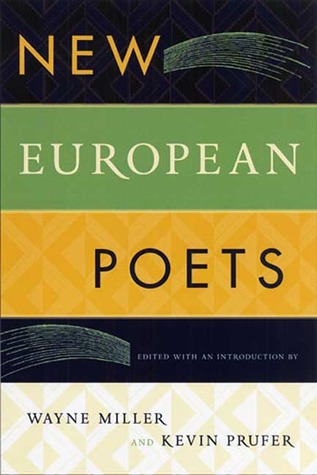
New European Poets edited by Wayne Miller and Kevin Prufer

Welcome to the 2nd day of the National Poetry Month Blog Tour!

I thought that as so much of National Poetry Month seems to focus on classic poets or contemporary U.S. poets, I would review an anthology of contemporary European poets and their poetry. I hope you’ll click the button below to visit with Laura at Book Snob as well.

Source: Public Library
Paperback,
I am an Amazon Affiliate

New European Poets edited and introduced by Wayne Miller and Kevin Prufer is an anthology of European poetry since 1970.  Each poet selected was translated and each poem has the language from which it was translated and the name of the translator below.  Unfortunately, this anthology does not include the poem in its original language, which some readers would prefer as it gives a visual comparison between the texts.  However, the collection does include the short biographies of the poets included, the translators — to which the anthology is dedicated — and the editors, which provides a great reference for finding more of these authors’ works.

Reading through the poems in this collection is like traveling the undulating and varying landscapes of Europe, with climbs through the mountains, sitting in lounges by the seaside, and hunting in the dark forests.  Many of these poems mirror those that are found in American contemporary poetry, but then there are others that are distinctly European in subject matter and style.  In the introduction, the authors talk about the dialogue between poets in American and those in Europe — how poetry informed each style on either side of the Atlantic.  However, that dialogue has mostly stopped, and the authors strive to rekindle that dialogue with this anthology, a real possibility as more reader-poets pick up this volume and begin leafing through it.

From Spain's Luis Garcia Montero's "Poetry"

"Poetry is useless, it serves only
to behead a king
or seduce a young woman." (page 13)

In fact, this collection serves to disprove this early statement in the poetry anthology. Poetry is more than political protest and seduction — it is a connection of the human spirit and an observation of the human condition.  Ranging from the irreverent in “Kiss My Corpse” by Gür Genç of Cyprus to the heartbreaking emptiness of “The Barren Woman” by O. Nimigean of Romania, these poems share a range of emotions that are universal but in a style that is fresh and inviting.

Each poem leaves the reader — more so an American reader — with a sense of understanding and awe and a new way of thinking not only about emotion, life, and living, but also of poetry itself.  New European Poets edited and introduced by Wayne Miller and Kevin Prufer is a collection that should be savored and returned to again and again over time.  Spend a day in one country or two, but visit them often and with an observant eye.

Book 4 for the Dive Into Poetry Reading Challenge 2014.


14th book for 2014 New Author Challenge.


5th book for 2014 European Reading Challenge; these poems are from a number of different countries, but since the ones that most resonated with me were from Hungary, that’s the country I’m choosing for this one.

This is part of the 2014 National Poetry Month: Reach for the Horizon Blog Tour, click the button for more poetry:

Indian Captive: The Story of Mary Jemison by Lois Lenski

Source: Public Library
Hardcover, 272 pages
I am an Amazon Affiliate

Indian Captive: The Story of Mary Jemison by Lois Lenski is based on the true story of Mary Jemison who was captured as a young 12- or 15-year-old girl in Pennsylvania during the French and Indian War and traveled a great distance from the Ohio River Valley to upper New York to live with the Seneca Indian tribe.  The beginning of the novel outlines the facts that are included in the novel, particularly that the entire Jemison family was captured by Indians in 1758 and that only the two eldest brothers escaped capture and Mary was traded to live with the Seneca Indians.

“Then she saw that with the Indians there were white men, dressed in blue cloth with lace ruffles at their sleeves, speaking French in hurried tones.  She counted.  There were six Indians and four Frenchmen.  Were the Frenchmen wicked, too, like the Indians?” (page 19)

While there is foreshadowing about what happens to Mary — known as Molly to family and friends — the technique is not heavy-handed, though there are moments of repetition that she is the only white girl in the Indian village.  Lenski balances the negativity of life with the white man and Indians, careful not to take sides.  The battles between the French and English across the American wilderness sweep up not only the Native Americans, but also the pioneer and frontier families seeking to build lives for themselves.  Molly learns to fit in with her new family, but always she longs for her true family.  She spends many of her early days crying alone in the woods when she’s sent to fetch water, and its easy to see how devastating this new life could be for a child.

“She was living in two places at once, her body with the Indians, but her spirit where she wanted to be — at home with the white people.” (page 160-1)

The Native Americans expect her to work and adapt to their way of life, and some are more harsh toward her failings and her desire to return to the pale-faces at Fort Duquesne or return to the Englishman that arrive seeking the Iroquois help in their battles with the French.  Indian Captive: The Story of Mary Jemison by Lois Lenski is a good introduction for those ages eight to 12 to the French and Indian war and to the Native American way of life at a transitional period in history.

About the Author:

Lois Lenski was a popular and prolific writer of children’s and young adult fiction. One of her projects was a collection of regional novels about children across the United States.


10th book for 2014 Historical Fiction Reading Challenge.


8th book (French and Indian War) for the 2014 War Challenge With a Twist.


14th book for 2014 New Author Challenge.