Quantcast

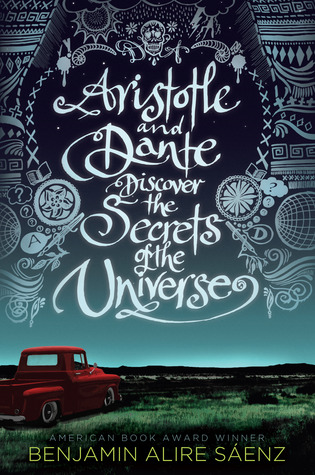
Aristotle and Dante Discover the Secrets of the Universe by Benjamin Alire Saenz

Source: Public Library
Hardcover, 359 pgs
On Amazon and on Kobo

Aristotle and Dante Discover the Secrets of the Universe by Benjamin Alire Saenz is a brilliant coming of age story that examines not only how tough it is to be a young boy — a young Mexican American — but also how these boys struggle with cultural stereotypes of what becoming a man should be.  Dante is an optimistic boy who sees the beauty of the world all around him, while Aristotle (Ari) seems himself as a loner and a pessimist.  These boys meet one summer in 1987 in El Paso at a local pool, and Dante offers to teach Ari how to swim.  Dante loves the water and he wants to share that love with someone who could become his best friend.  These boys are exploring their lives, learning that their lives are not their own, but often dictated by the parents who care for them and they wonder when they will get to create and be in lives wholly their own.

“There is a famous painting, Nighthawks, by Edward Hopper.  I am in love with that painting.  Sometimes, I think everyone is like the people in that painting, everyone lost in their own private universes of pain or sorrow of guilt, everyone remote and unknowable.  The painting reminds me of you.  It breaks my heart.”  (page 185)


In Ari’s home, his brother is dead to them because he is in prison, but Ari knows that he must have loved him and doesn’t understand why there are no pictures of him in the house, why he is never spoken of, and why he doesn’t know what happened to him.  This void is huge and hard to fill, but he’s also impacted by the silence of his father, a Vietnam veteran forever changed by a horrifying war and other deeply felt losses.  Dante’s family is different, it is affectionate physically and emotionally, and his parents are well-educated intellectuals.  But there are secrets here too, secrets held close by Dante, who only wants to share them with someone who could understand — Ari.  Being 15, these are in between childhood and becoming men, and that is a tough time for any adolescent, but its even tougher when you are confused about who you are and who you want to be.  Dante and Ari’s friendship is far from easy, but the understand one another.

“‘Sometimes don’t you just want to stand up and yell out all the cuss words you’ve learned?’
‘Every day.’
‘Every day? You’re worse than me.’ He looked at the hail. ‘It’s like pissed off snow,’ he said.
That made me laugh.” (page 104)

Aristotle and Dante Discover the Secrets of the Universe by Benjamin Alire Saenz is an award winning book for great reasons. It is never forced, it is as easy as a friendship between two boys can be, but it also tackles that harder issues that we as a society continue to struggle with. At its heart, it is a beautiful love story, one that will stay with readers long after turning the last page. Another contender for the Best of 2014 list.

***I want to thank Beth Kephart for her review of this book in August.  She always has the best recommendations.***

About the Author:

Benjamin Alire Sáenz is an award-winning American poet, novelist and writer of children’s books.  He was born at Old Picacho, New Mexico, the fourth of seven children, and was raised on a small farm near Mesilla, New Mexico. He graduated from Las Cruces High School in 1972. That fall, he entered St. Thomas Seminary in Denver, Colorado where he received a B.A. degree in Humanities and Philosophy in 1977. He studied Theology at the University of Louvain in Leuven, Belgium from 1977 to 1981. He was a priest for a few years in El Paso, Texas before leaving the order.

In 1985, he returned to school, and studied English and Creative Writing at the University of Texas at El Paso where he earned an M.A. degree in Creative Writing. He then spent a year at the University of Iowa as a PhD student in American Literature. A year later, he was awarded a Wallace E. Stegner fellowship. While at Stanford University under the guidance of Denise Levertov, he completed his first book of poems, Calendar of Dust, which won an American Book Award in 1992. He entered the Ph.D. program at Stanford and continued his studies for two more years. Before completing his Ph.D., he moved back to the border and began teaching at the University of Texas at El Paso in the bilingual MFA program.
76th book for 2014 New Author Reading Challenge.

The Monuments Men by Robert M. Edsel, Bret Witter

Source: Hachette Books
Hardcover, 473 pgs
On Amazon and on Kobo

The Monuments Men by Robert M. Edsel and Bret Witter expertly combines the search for art with the internal mechanics of military operations.  These Monuments Men are struggling to justify their mission to their compatriots and superiors, even though they are given a mandate from the U.S. government, and they are forced to get creative as they are continually denied the resources they need to locate, transport, and protect the art they are searching for.  Stout at one point decides to place signs on monuments that will ensure they are not disturbed: “Danger — Mines!”  Through a series of chapters that not only delve into the fall of the Third Reich but also the confusion of orders from Adolf Hitler with regard to the Nero Decree, Edsel and Witter personalize the stories of these unassuming and dedicated men.

“But with that, the portrait was complete.  Balfour the British scholar.  Hancock the good-natured artist.  Rorimer the bulldog curator.  Posey the Alabama farmboy.  And, lurking somewhere in the back, dapper, pencil-mustached George Leslie Stout.” (page 58)

“This was not to say the job was easy: far from it.  The men had all realized that they really were on their own in the field.  There were no set procedures to follow; no proper chain of command; no right way of dealing with combat officers.  They had to feel each situation out; to improvise on an hourly basis; to find a way to finish a job that seemed more daunting every day.  They had no real authority, but served merely as advisors.”  (page 86)

These men are not only dedicated to their mission, but some are longing for home and the future they have dreamed about.  Like other soldiers in the war, their lives are at risk as the military meets sustained combat and pockets of resistance even as the Nazis retreat into the Alps.  Even after the art has been found and collected, it takes more than six years after the end of WWII before the art would be returned to the museums, owners, and countries from which they were taken.  In many cases, the success of the mission was aided by luck, infiltration of key French personnel, and the meticulous record-keeping skills of the Germans themselves.

“‘A number of our officers went up to see the camp,’ he wrote.  ‘I did not go, because much of my work depended on friendly relations with German civilians, and I feared that after seeing the horrors of the camp my own feelings toward even these innocent people would be affected. …'” (page 310)

The Monuments Men by Robert M. Edsel and Bret Witter brings to life a part of WWII history that had been buried and forgotten for far too many years, and it pays tribute to the modest and dedicated men who fought to preserve not only works of art but entire cultures in the face of great evil and destruction.  These men were hardly alone in their fight to save the art, but they continued to have the courage to push onward and achieve their goals in spite of the obstacles they faced.  As Jacques Jaujard, one of the integral players in France, said, “It matters little that you are afraid if you manage to hide it.  You are then at the edge of courage.”  Moreover, he said, “There are fights that you may lose without losing your honor; what makes you lose your honor is not to fight them.”

About the Authors:

Robert M. Edsel is the best-selling author of Saving Italy, The Monuments Men and Rescuing da Vinci and co-producer of the award-winning documentary film The Rape of Europa. Edsel is also the founder and president of the Monuments Men Foundation, a recipient of the National Humanities Medal, and a trustee at the National WWII Museum. After living in Florence for five years, he now resides in Dallas, Texas.

Bret Witter has co-authored eight New York Times bestsellers. His books have been translated into over thirty languages and sold over two million copies worldwide.
26th book for 2014 European Reading Challenge; (Set in Austria/Germany)
30th book (WWII) for the 2014 War Challenge With a Twist.

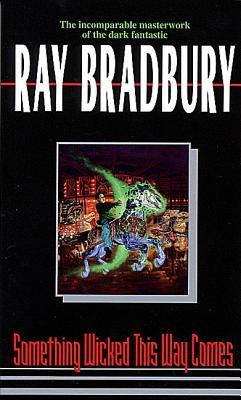
Something Wicked This Way Comes by Ray Bradbury

Source: Public Library
Paperback, 293 pgs
On Amazon and on Kobo

Something Wicked This Way Comes by Ray Bradbury, which I read as part of a read-a-long and for the RIP Challenge, is an odd little book about a strange carnival that enters a Midwestern town and silently creeps through the streets and feeds off of the people in that town.  Will and Jim are your typical boys, about 15-yrs-old, who look for fun and sometimes find it in the wrong places.  They stumble upon a lightning rod salesman who warns them of an upcoming, devastating storm — a storm that is likely to hit someone’s house and destroy it.  Is this foreshadowing of what is to come when the carnival arrives? Perhaps, but Bradbury’s prose is dense in places and cryptic, leaving many readers lost as to what is going on and which boy is which.  Perhaps the similarities are done on purpose to signify that it could have been any set of boys in the town targeted, but readers may want more to go on, a greater connection and an ability to differentiate between the two boys as the story moves forward.  Readers will get some of that when Will’s father enters the picture.

“Dad winked at Will.  Will winked back.  They stood now, a boy with corn-colored hair and a man with moon-white hair, a boy with summer-apple, a man with winter-apple face.”  (page 15)

“‘The library,’ said Will. ‘I’m even afraid of it, now.’  All the books, he thought, perched there, hundreds of years old, peeling skin, leaning on each other like ten million vultures.  Walk along the dark stacks and all the gold titles shine their eyes at you.  Between the old carnival, old library and his own father, everything old…well…” (pg. 188-9)

A lot of the fear permeating the pages is atmospheric from the dark carnival and its sinister cast of characters lurking in the dark, around corners, and popping up when least expected, but there also is a sense of psychological fear, particularly when it comes to the boys and those targeted by the carnival.  Despite the issues with the oddities in the prose and the dialogue, as well as the indistinguishable characteristics of the boys, this story is haunting in its use of spiritual lore and mythology, creating a deadly combination of foes who can be reborn and reconfigured.  There is a lack of detail about the boys’ relationships with their fathers and mothers, but it is the relationship between youth and old age that is the broader picture.

Something Wicked This Way Comes by Ray Bradbury is about a loss of innocence, the things we do as we age, the things we forget as we grow older and begin families of our own, and about the longing in us to recapture those carefree days and relationships.  What is the something wicked coming for you?  Only you can know the answer, and only you know how to fight it.

About the Author:

American novelist, short story writer, essayist, playwright, screenwriter and poet, was born August 22, 1920 in Waukegan, Illinois. He graduated from a Los Angeles high school in 1938. Although his formal education ended there, he became a “student of life,” selling newspapers on L.A. street corners from 1938 to 1942, spending his nights in the public library and his days at the typewriter. He became a full-time writer in 1943, and contributed numerous short stories to periodicals before publishing a collection of them, Dark Carnival, in 1947.

His reputation as a writer of courage and vision was established with the publication of The Martian Chronicles in 1950, which describes the first attempts of Earth people to conquer and colonize Mars, and the unintended consequences.

Deadline by Mira Grant

Source: Public Library
Paperback, 581 pgs
On Amazon and on Kobo

Deadline by Mira Grant is the second in the NewsFlesh series; see my review of Feed and be aware that could be spoilers in this review.  Following the presidential campaign of Peter Ryman, the news blog After the End Times has grown exponentially, and Shaun Mason hardly keeps track of the day to day administration of the site or who actually works for the business.  He’s still in mourning, but he knows that he has a team to lead, and he does it as best he can, while being mentally haunted by the dead.  No longer an Irwin who pokes zombies for ratings, Shaun has jumped to lead the Newsies and has no desire to return to the field.  Unfortunately, stumbling upon a larger-than-life conspiracy significantly changes his plans to hide in the background, pushing him and his team out into the field and on the run.

“‘Mahir, my main man! You sound a little harried.  Did I wake you?’
‘No, but I really do wish you’d stop calling so late at night.  You know Nandini gets upset when you do.’
‘There you go again, assuming that I’m not actually trying to piss of your wife.  I’m really a much nicer person inside your head, aren’t I? Do I give money to charity and help old-lady zombies across streets so that they can bite babies?’
Mahir sighed.  ‘My, you are in a mood today, aren’t you?'” (page 25)

Combining zombie infestations, anxiety, and conspiracy theories with humor, Mira Grant has built a world in which bloggers have replaced traditional news mediums and surviving zombie infestations is an everyday battle.  Kellis-Amberlee is the result of two bio-engineered viruses combining into something unexpected, and it it causes amplification in any mammal of 40 lbs or more to transform them into zombies.  Shaun and his team report on infestations, outbreaks, and other newsworthy items, as well as post fiction poems, stories, etc. on zombies and other things in their lives.  Generating ratings is a tough business following a successful president election.  Grant includes enough background in her second novel that it could be picked up without reading the first, but there could have been additional editing, as there was too much backstory included from the previous novel.

Deadline by Mira Grant is a fun romp in zombie infested waters, and will be a delight for those who love novels with government conspiracies.  While there is little that is resolved in this book, as there is a third book in the series, there is enough here to whet readers’ appetites for more.  Grant’s world is a unique post-apocalyptic rendering in which not only is surviving essential, but the world has irrecoverably changed from politics and media to how families cope and communities interact.

About the Author:

Born and raised in Northern California, Mira Grant has made a lifelong study of horror movies, horrible viruses, and the inevitable threat of the living dead. In college, she was voted Most Likely to Summon Something Horrible in the Cornfield, and was a founding member of the Horror Movie Sleep-Away Survival Camp, where her record for time survived in the Swamp Cannibals scenario remains unchallenged.

Mira lives in a crumbling farmhouse with an assortment of cats, horror movies, comics, and books about horrible diseases. When not writing, she splits her time between travel, auditing college virology courses, and watching more horror movies than is strictly good for you. Favorite vacation spots include Seattle, London, and a large haunted corn maze just outside of Huntsville, Alabama.

Mira sleeps with a machete under her bed, and highly suggests that you do the same.

Before I Go to Sleep by S.J. Watson

Source: Public Library
Audiobook, 11+ hours
On Amazon and on Kobo

Before I Go to Sleep by S.J. Watson, narrated by Orlagh Cassidy, chronicles the disjointed life of a woman who has lost her memory in an accident.  Each night, while she is sleeping, she loses all her memories of her present and past.  She remembers her life up until about her 20s, but only the journal she keeps helps her remain grounded in the life and the husband she no longer recognizes.  This is a fast-paced debut novel that examines the role that memory plays in how we identify ourselves and our own happiness.  Christine Lucas is a writer who is struggling each day to remember her life before an accident wiped out her memories, an accident she doesn’t even remember.  As she begins keeping a secret journal and meeting with Dr. Nash to try some treatments to regain her memory, dark secrets about her life, her past, and her current situation bubble to the surface.

Watson has carefully crafted a character adrift in her own life, and while some of the details are needlessly repeated as she wakes from sleep each morning and struggles to remember her life, readers are swept up in this mystery.  As the book is told from Christine’s point of view, the reader has only her knowledge to draw conclusions from, and this can be frustrating.  While the cues are there to unravel the mystery beforehand, readers will likely enjoy this crazy journey as well as become frustrated with the main character’s stupid decisions from time to time.  There are times when reading the journal should have taken much more time than it seems to, which would have left her little time to do much else in a day, especially for someone who wakes up with a blank slate every morning.

Before I Go to Sleep by S.J. Watson, which was out October book club selection, was an interesting debut, and it did mirror the feel of the movie Memento, but the ending was disappointing and some parts in the middle dragged a bit.  While this is fast-paced toward the end when everything starts to fall in place, there could have been further editing in the middle that would have tightened this up more and made it even more thrilling.

A note about the narrator, her voice really grated on my for some reason and she seemed to lose the tone when speaking as a male character, slipping back into Christine’s voice, which made it hard for me to follow along at certain points.

About the Author:

S J Watson was born in the UK, lives in London and worked in the NHS for a number of years.  In 2011 Watson’s debut novel, Before I Go to Sleep, was released to critical acclaim. It has now been published in over 40 languages, and has become an international bestseller, winning numerous awards.   The movie of Before I Go To Sleep, starring Nicole Kidman, Colin Firth and Mark Strong, is due for worldwide release in Autumn 2014. Watson’s second book is out in Spring 2015.

What Book Club Thought (Beware of spoilers):

Most of the book club felt that this was a quick and entertaining read, even though many of us didn’t think the mystery was much of one.  The writing was well done for the most part, and with it being made into a movie a few people expressed interest in seeing it, either on video or on Netflix, etc. I personally thought a better twist would have been to have Dr. Nash be her son. While one person couldn’t even get into the book at all.  There was quite a bit of repetition, which may have grated on people early on, but when a main character has no ability to make new memories, they tend to repeat things.

73rd book for 2014 New Author Reading Challenge.
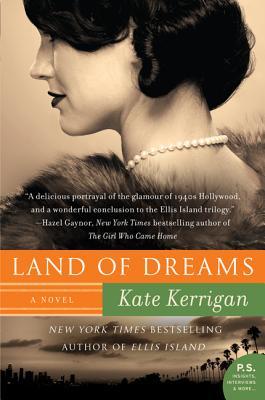
Land of Dreams by Kate Kerrigan

tlc tour host

Source: William Morrow and TLC Book Tours
Paperback, 336 pages
On Amazon and on Kobo

Land of Dreams by Kate Kerrigan, the third book in the Ellis Island trilogy (Ellis Island and City of Hope), could be read alone as Kerrigan provides enough background on Ellie Hogan that new readers could pick this one up without a problem, but readers may find a richer reading experience when they read all three.

(If you haven’t read the other 2 books, this review could contain spoilers for those books)

Ellie Hogan has come into her own as a wife, mother, and artist, only to have her life disrupted when her oldest adopted son Leo runs away from his upstate New York boarding school.  Ellie is a first generation Irish immigrant who has lost a lot to the Irish war against the English, but she’s also gained a sense of purpose in America, learning to make her own way.  Her artist’s life is very isolated on Fire Island, and with her son, Tom, she has a quiet existence among the people who have become like family.  But when her son, Leo, runs away to Hollywood, she has to make a choice — send the police or go after him herself.  Making her away across the United States, Ellie tries to keep her fears at bay while being thankful that her youngest son is in the care of good friends while she makes the journey.  Along the way, she meets Stan, a composer who escaped from Poland before the Nazis took over.

“Yet surely the desire for fame was not so different from the desire to be loved, and everyone in the world wants to be loved.  The desire for fame and love is born from a deep human need to be seen, and I felt as if I could really see this young woman now, beyond the mules and the dye and her ridiculous ideas and affectations.  So I started to draw her.”  (pg. 122)

Ellie may have been a quintessential landscape painter with her own signature for delivering paintings to her clients, but in Los Angeles, she’s a mother in search of a star-struck son.  She must decide whether at 16 he should pursue his dream or return to New York and school, and it is a tough decision for any mother with a son who has finally found something to be passionate about.  Ellie’s experiences in a restrictive Catholic home in Ireland inform her ultimate decisions, as she decides that she would rather be more open-minded than her parents had been with her.  Kerrigan easily tackles the ideas of nature versus nurture in Ellie’s parenting, touches upon the seedier side of Hollywood — though not as much as some readers would expect — and incorporates significant details about World War II and the internment of Japanese-Americans.

Land of Dreams by Kate Kerrigan is a satisfying conclusion to this trilogy about seeking out a home and family, but also stability.  But it is also about the realization of dreams across generations and having the gumption to take the leap.  While everything is not as it appears in Hollywood, the facades of the city also mirror those of Ellie’s own adopted country — a land of freedom and opportunity that still oppresses certain minorities and immigrants seeking a better life.

About the Author:

Kate Kerrigan is the author of three previous novels. She lives in Ireland with her husband and their two sons.  Visit Kate’s website at www.katekerrigan.ie and follow her on Twitter: @katekerrigan.


35th book for 2014 Historical Fiction Reading Challenge.


29th book (WWII) for the 2014 War Challenge With a Twist.


4th Book for the Ireland Reading Challenge 2014.

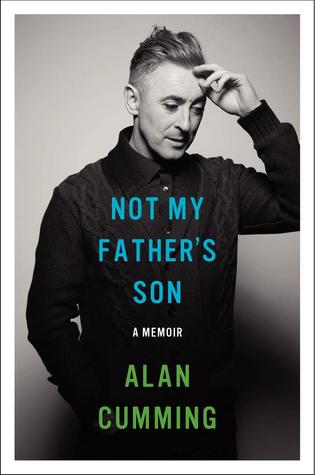
Not My Father’s Son by Alan Cumming

Source: Dey St. and William Morrow
Hardcover, 304 pgs
On Amazon and on Kobo

Not My Father’s Son by Alan Cumming is one of the most honest, heartfelt, and engaging memoirs out there.  Cumming is the son of a Scottish family, and his father was verbally and physically abusive, but that’s just part of this story.  Despite the abuse, Cumming had dreams, dreams that he ultimately hoped to achieve and did, even if they just began as fantasies of escape.  As a young boy, he was given impossible tasks by his father on a Scottish estate where they lived as caretakers, and really they were given so that he could fail and be the subject of his own father’s wrath. His escape from that life was acting and school, but he was careful after several early incidents to never show too much passion or love for anything because his father would take it away.  Although his relationship with his father shaped some of his anxieties that he took with him later in life, it is his relationship with his mother that solidified his confidence in becoming the talented actor he is today.

“You see, I understood my father.  I had learned from a very young age to interpret the tone of every word he uttered, his body language, the energy he brought into a room.  It has not been pleasant as an adult to realize that dealing with my father’s violence was the beginning of my studies of acting.”  (page 4 ARC)

Parallels between Cumming’s past and that of his mother’s father, the grandfather he never knew, are drawn easily in his mind and throughout the memoir after he agrees to uncover the truth about his grandfather’s death in Malaysia sometime after WWII.  Like his mother, Cumming did not have a real relationship with his father, but unlike his mother, his father lived with him for most of his life until he left for Glasgow for acting school.  Shifting between past and present in his own life, Cumming also examines his relationship to his deceased grandfather and how memory is subjective and that most people remember in an emotional way.

Not My Father’s Son by Alan Cumming is not about how his father drops a bombshell on him that he is not his son.  The memoir is about how Cumming is his own man and nothing like the abusive, angry father he had, and in many ways how he is more like the grandfather he never met.  This is a contender for the Best of list this year because it is told with such honesty, self-reflection, and humor that readers will not be able to avoid examining their own lives and familial relationships.

About the Author:

Alan Cumming is an award-winning actor, singer, writer, producer and director. He recently starred in an acclaimed one-man staging of Macbeth on Broadway, and appears on the Emmy Award-winning television show The Good Wife. He won a Tony Award for his portrayal of the Emcee in the Broadway musical Cabaret, a role he is reprising in 2014.  He hosts PBS Masterpiece Mystery and has appeared in numerous films, including Spy KidsTitusX2: X-Men UnitedThe Anniversary PartyAny Day Now and Eyes Wide Shut.  Photo by Ricardo Horatio Nelson.

25th book for 2014 European Reading Challenge; (Set in Scotland and England)


71st book for 2014 New Author Reading Challenge.

The Moonlight Palace by Liz Rosenberg

Source: Lake Union Publishing and TLC Book Tours
Paperback, 174 pgs
I am an Amazon Affiliate

The Moonlight Palace by Liz Rosenberg is set in 1920s Singapore, and Agnes Hussein is a teenager living in a rundown family palace, known as Kampong Glam.  The palace is a symbol of the cooperation of among the British and her long dead ancestors, but some view the palace as symbol of bribery by the British.  She is not Singaporean only, but also part British and part Chinese.  Her family is eccentric, and to make ends meet, the family relies on her British grandfather’s pension and the small sum they earn from their equally eccentric borders.  Rosenberg has created a character in Agnes who is a bit all over the place in her thoughts and in her actions, much like real teens, and she’s the strongest part of the novel.

“Perhaps, in order to start afresh, we needed to do away with all the old structures, the old assumptions.  Would these precious old things need to be torn down in order to make way for the new? I had to admit to myself in all honesty that I did not know the answer.” (page 146 ARC)

While there are elements of the 1920s in the novel such as Agnes’ comments on her own hairstyle and clothes, there is little else to suggest the time period, other than her grandfather’s triumphs in the Great War.  Agnes is naive in many ways about men and the political workings of her home nation.  She is like most teens; she falls quickly in love, is blind to the loyalty right in front of her, and is oblivious to the plights and machinations of those around her.  While a quick and easy read, the reader could feel separate from the characters and the main action of the novel, and the novel may have been better served with a focus on the grandfather or her uncle.

The Moonlight Palace by Liz Rosenberg is a coming of age novel that draws in some elements of Singapore and the 1920s, and Agnes is a typical teenager trying to make her own way in the world without offending tradition and without giving up her own dreams.  While she is naive about the larger world around her, she remains loyal to her family and her ancestry as she strives to earn money enough to help keep up their home.  With a little more background on the 1920s and the relationship between Britain and Singapore, this novel could have been fantastic, but as it is, it was just a good read about a young teen growing up.

About the Author:

Liz Rosenberg is the author of more than thirty award-winning books, including novels and nonfiction for adults, poetry collections, and books for young readers. She has been the recipient of numerous prizes, including the Paterson Prize, the Bank Street Award, the Center for the Book Award, and a Fulbright fellowship in Northern Ireland in 2014. She is a professor of English and creative writing at Binghamton University, in upstate New York, where she has received the Chancellor’s Award for Excellence in Teaching. She has guest-taught all over the United States and abroad, and has written a book column for the Boston Globe for the past twenty-five years. Her previous novels, Home Repair and The Laws of Gravity, have been bestsellers in the United States, Europe, and Canada. She and her husband, David, were raised on Long Island, and went to the same summer camp at ages seven and eight, respectively.

34th book for 2014 Historical Fiction Reading Challenge.


67th book for 2014 New Author Reading Challenge.
This Is How I’d Love You by Hazel Woods

Source: Penguin
Paperback, 320 pages
On Amazon and on Kobo

This Is How I’d Love You by Hazel Woods is a WWI novel set in 1917 that demonstrates the power of the written word.  New York Times columnist Sacha Dench, who graciously agrees to be a pen-pal and chess opponent to Charles Reid, is forced to resign from his position as sentiment in the United States leans more toward entering the war than remaining isolated from it.  He and his daughter, Hensley, leave quickly for Hillsboro, New Mexico, to take up the residence of a former mine supervisor.  Dench’s letters to Reid are philosophical debates about the justice of the war and its final outcome, but they are also a test of wills on a chess board that mirror those tensions.  Hensley is intrigued by the letter and utterly infatuated with a play director in New York City, but when she’s forced to decide between staying in New York with her brother or go to New Mexico, she chooses to leave.  Like the notes in the margins of her father’s letters, her life is lived on the outskirts of the proper role she is meant to play as a young 17-year-old woman without a mother.

“Mr. Dench has taken one of Charles’s pawns in the third move of the game, their bishops facing one another and the next move of utter importance.  Charles must be wary of the temptation to play too aggressively, putting his own pieces at risk in the next turn, which, he senses, is probably his opponent’s strategy.  A classic lure.  But playing like this, without body language or eye contact, is a new challenge.” (page 5 ARC)

It is striking how Woods uses the game of chase to depict the art of war on many levels, from the war between Dench and Reid’s competing philosophies to the difficulties in playing chess without the social cues to guide him as they would in hand-to-hand combat.  Reid is not so much a soldier as an ambulance driver from the United States who signed up to make something of his life, rather than live the life expected of him by his rich parents.  While he finds his actions independent, he is also aware as the war goes on just how foolhardy the decision may have been.  Feeling adrift on foreign fronts, Reid holds onto Dench’s letters and later the secret correspondence he has with Hensley as a lifeline.  But her life is far from as simple as she would like him to believe in their forced exile.

“By the end, the lead had become so dull that his signature is hardly more than a thick looping smudge.  Even so, Hennie moves her index finger across the page, mimicking the script, slowing especially over his name, until she can trace his signature perfectly.  Inhabiting his body, exiting her own, she crouches down under the table, imaging the cramped feel of the cellar, the roughness of chapped lips, the stale smell of urine on her clothes, the sound of artillery just outside.”  (page 71 ARC)

Hensley is living in the world of their letters as much as he is, but soon she is forced to make a choice — not once, but twice — that could change the course of her life forever.  This Is How I’d Love You by Hazel Woods explores the power of letters, the devastation of war and grief, and the societal pressures to which we can succumb or fight against.  Woods has made WWI vivid and gruesome as it must have been, demonstrating the irreparable harm that soldiers may face but also the inner strength it requires for them to move forward and to continue doing so even when they return home.  Expectations should be their own and not imposed upon by others, and only through compassion and love can these men soldier onward.

About the Author:

HAZEL WOODS lives in New Mexico with her husband and two children.

30th book for 2014 Historical Fiction Reading Challenge.


20th book for 2014 European Reading Challenge; (Set in France)


25th book (WWI) for the 2014 War Challenge With a Twist.


63rd book for 2014 New Author Reading Challenge.

It’s the Great Pumpkin, Charlie Brown by Lee Mendelson and Bill Melendez & Giveaway

Source: Dey Street Books
Hardcover, 160 pages
I am an Amazon Affiliate

It’s the Great Pumpkin, Charlie Brown: The Making of a Television Classic by Lee Mendelson and Bill Melendez provides an inside look at how the television special about the great pumpkin and Charlie Brown came to be.  The prologue illustrates just how engrained Charlie Brown and the gang’s antics are in our popular culture, as politicians recently started using iconic scenes from the comics and movies to illustrate their own disappointments.

When Charles Schulz, Mendelson and Melendez created the Christmas special, they had low expectations that it would do well, but when it ranked #2 in 1965, they figured they earned a little confidence from the network, CBS.  The network executives, however, were still skeptical and were still not convinced even after the creation and success of a second special, Charlie Brown’s All Stars!  The executives basically called on them to create a blockbuster or else.  The recounted brainstorming session with Schulz is fantastic and the back-and-forth is inspiring as the animator and the creator of the comic bounce ideas around the room with Mendelson.

Included in the book are some great strips from the newspaper, photos of the creative team and actors, and the music sheets.  The book also includes the illustrated script for the special.  It’s the Great Pumpkin, Charlie Brown: The Making of a Television Classic by Lee Mendelson and Bill Melendez is another wonderful keepsake or gift for the Charlie Brown aficionado in your life.  Slightly smaller than coffee table size, but great to put on the shelf, pull out on the holidays, and just share with the family any time.

About the Cartoonist:

Charles M. Schulz, nicknamed Sparky, was an American cartoonist, best known for the comic strip Peanuts. He is widely regarded as one of the most influential cartoonists of all time, cited as a major influence by many later cartoonists.

Giveaway:

For U.S. residents.  Leave a comment below about one of your Halloween or Christmas Traditions and one winner will be chosen to get both books — It’s the Great Pumpkin, Charlie Brown: The Making of a Television Classic and A Charlie Brown Christmas: The Making of a Tradition!

Deadline to enter is Sept. 30, 2014, at 11:59 pm EST.

Other reviews:

A Charlie Brown Christmas: The Making of a Tradition

Blue Moon Rising by Simon R. Green

Source: Public Library
Paperback, 480 pages
On Amazon and on Kobo

Blue Moon Rising by Simon R. Green is an adventure story of kings, castles, dragons, and unicorns whose hero, Rupert, is a second son in line for the throne and dedicated to his duty to the Land even at the expense of his own safety.  On his first quest he is sent to slay a dragon, but what he encounters runs contrary to everything he’s ever heard about quests from the minstrels.  Knowing that he can never rule as king, Rupert is aware that he isn’t meant to return from his quest or if he does, he’s to return with something of value that his bankrupt kingdom can use to fight off the Barons who wish to take control.  Unfortunately, he and his unicorn return with a live dragon, not jewels, and a difficult Princess Julia.

In typical adventure fashion, but with humor, Green creates a world in which the darkness threatens to overtake the Forest Kingdom.  Rupert is a reluctant hero and Princess Julia is the antithesis of feminine royals who care more about dresses and balls.  Harald, the prince next in line for the throne, is charismatic and wily, and he has a reputation with the ladies.  He and his brother are often at odds, though readers will wonder if they would get along better if their father didn’t show preference for Harald over Rupert at every turn or if the kingdom was not in such turmoil politically that factions are vying for their own favorite son to ascend to the throne.  Green populates his novel with a few too many quests when one would have sufficed before the kingdom was threatened by the Darkwood and the Demon Prince.

“For a long while the Court stood silent, shaken by the Astrologer’s dark vision.
‘There must be something we can do,’ said Rupert haltingly.
‘There is,’ said the Astrologer.  ‘Prince Rupert; you must journey to the Dark Tower, and there summon the High Warlock.’
Rupert stared at the Astrologer.
‘I should have volunteered to lead an army against the Demon Prince,’ he said finally.  ‘It would have been safer.'” (page 87)

The dragon doesn’t play much of a role here, but the unicorn seems to be the comic relief for the most part.  The debate between the privilege in royalty and being a peasant is consistent throughout the book, as is the tension between duty and desire.  Despite its wordiness, Blue Moon Rising by Simon R. Green is a keen adventure with humor and plot twists, though some may be predictable and less satisfying than expected.

Unfortunately, the book club discussion for this one was postponed do to some illnesses and other conflicts.

About the Author:

Simon was born in Bradford-on-Avon, Wiltshire, England (where he still resides), in 1955. He has obtained an M.A. in Modern English and American Literature from Leicester University and he also studied history and has a combined Humanities degree. His writing career started in 1973, when he was a student in London. His first actual sale was a story titled Manslayer, back in 1976, but it didn’t appear till much later; Awake, Awake…. was his first sale to a professional editor, in 1979. Furthermore he sold some six or seven stories to semi-pro magazines before that market disappeared practically overnight.

After years of publishers’ rejection letters, he sold an incredible seven novels in 1988, just two days after he started working at Bilbo’s bookshop in Bath (this after three and a half years of being unemployed!). This was followed in 1989 by two more, and a commission to write the bestselling novelization of the Kevin Costner film Robin Hood: Prince of Thieves, which has sold more than 370.000 copies.

62nd book for 2014 New Author Reading Challenge.

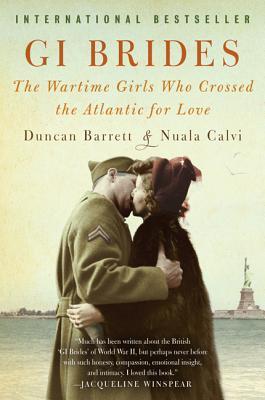
G.I. Brides by Duncan Barrett and Nuala Calvi

tlc tour host

Source: TLC Book Tours and William Morrow
Paperback, 368 pages
On Amazon and on Kobo

G.I. Brides: The Wartime Girls Who Crossed the Atlantic for Love by Duncan Barrett and Nuala Calvi is a biography-memoir hybrid in which the stories of four women who married American soldiers, known as G.I. brides, during WWII are told.  Sylvia Bradley is a bit young and naive but an optimist, while Gwendolyn Rowe is a determined woman.  Rae Brewer is the tomboy to Margaret Boyle’s beauty.  These stories are romantic as these ladies decide to leave the only home and family they have known to marry an American, only to find themselves facing more than just marital challenges.  Culture shock is just one aspect that is well depicted in these stories, especially as the women marry into not only American families, but families that still maintain their old world cultures and traditions — like the Italians big family dinners to the rowdy Irish parties.  As different as their lives had been from each other during WWII, they are vastly different when they reach America.

“During the day, Margaret did her best to get up on deck as much as possible to assuage her seasickness.  Starting out across the endless miles of ocean, she was reminded how cut adrift she had always felt in her life.  Some brides might feel the ache of homesickness, but she had never had a real home to miss.”  (page 98)

“As she packed her bag, she heard a chugging noise coming from outside and looked out of the window.  There in the distance was the menacing outline of a doodlebug passing over hoses opposite.  Then suddenly the noise stopped.  Rae knew what that meant — the flying bomb was about to fall.” (page 114)

Through extensive interviews with these women and their families, Barrett and Calvi have brought to life the home front in England, as these women struggled with rationing and the fear of bombs killing them on the way to work or in their sleep.  As their families struggled, brothers were sent off to fight the Germans, and they found work to support the war effort, these women were introduced to a whole new world outside the cocoon of their family units.  They went to dances with Yanks and volunteered in Red Cross-sponsored facilities, only to find that these Americans were not as crass as they were told by brothers and parents.

“For months Lyn had felt desperate to return home to England, but now she realized that the thing she had been looking for no longer existed.  It was her younger self — that confident, carefree girl who hadn’t had any knocks in life, who could stand on her own two feet …” (page 340)

Once in American, these women must fight another war — a war within themselves.  They feel like outsiders, they struggle to find their place with their new families, and many times they are met with failure.  But even though they long to return to England and walk away, they also realize that they must first stand on their own and learn what they want for themselves.  G.I. Brides: The Wartime Girls Who Crossed the Atlantic for Love by Duncan Barrett and Nuala Calvi may only breathe life into the lives of four G.I. brides from WWII, but it stands to reason that many of those 70,000 brides experienced similar hesitations, failures, and triumphs in their new lives.  Wonderfully told and executed.

About the Authors:

Duncan Barrett studied English at Cambridge and now works as writer and editor, specialising in biography and memoir. He most recently edited The Reluctant Tommy (Macmillan, 2010) a First World War memoir.


Nuala Calvi also studied English and has been a journalist for eight years with a strong interest in community history pieces. She took part in the Streatham Stories project to document the lives and memories of people in South London. They live in South London.

Connect with them through their website.

61st book for 2014 New Author Reading Challenge.


24th book (WWII) for the 2014 War Challenge With a Twist.


19th book for 2014 European Reading Challenge; (Set in England)