Quantcast

Jarrettsville by Cornelia Nixon

Jarrettsville by Cornelia Nixon begins in 1869, four years after the Confederate surrender and the assassination of President Abraham Lincoln, in Jarrettsville, Md., just below the Mason-Dixon line.  Tensions continue to run high in this town with former Confederate and Union soldiers continue to hold their prejudices and wear them on their faces and express them in their venomous words.

With tensions running high, the only possible outcome for a young love between Martha Jane Cairnes, the daughter of a Southern and loyal Confederate family, and Nick McComas, a former Union soldier and advocate of Black rights, is heartache and murder.

Nixon rips pages from events in her family history to create a novel that breaths life into the tensions following the U.S. Civil War.  Despite the reunification of our nation, both sides are unwilling to let go and reconcile.

“‘We’ve got to get the Black Code back, by God.  Negroes roaming around free, reeling drunk, menacing descent women? We can’t have that here!’

‘And the women are worse than the fellows.  They’re degenerates, full of disease, corrupting our youth.  Even the little girls, I swear.’

‘That’s right, Negro girls can’t help themselves.  They’re overheated by nature, worse than the fellows, I swear.'”  (page 106 of ARC)

Martha is a strong-willed woman who sets her sights on what she wants and goes after it, while Nick is more deliberate and cautious in his approach to decisions.  However, when love takes them over, passions get out of control, leading them into compromising situations.  Then the rumors begin among the former Confederates about Nick and Martha, equally untrue and equally damaging to their reputations.  Unfortunately, these rumors are what slices and dices their relationship, particularly since it is so new and untested and both sides are tragically unable to confide in one another with the depth that friends would do.

The novel is broken into four parts, plus an epilogue, and those readers looking for integrated points of view throughout the story will find Nixon took a different approach, instead breaking up the narrative into parts dominated by one point of view or by several witness’ points of views in the final section.  The format is a bit disconcerting when the first sections end in the same place, but are told from different points of view.  However, although the events are similar, there are moments where more is revealed by one point of view than another, which helps explain more of the characters’ motivations.  Although not an ideal format for this historical fiction novel, it is easy to understand Nixon’s decision for choosing it.

Overall, Jarrettsville by Cornelia Nixon provides an inside look at the tensions that still plagued the south following the resolution of the civil war and how it tore apart families, friends, and neighbors.  Additionally, it depicts the struggles that the families in the south faced in light of scarce resources and finances.  Nixon is a talented writer who can deftly translate a portion of her ancestral history into a compelling tale of fiction.

About the Author:

Cornelia Nixon is the author of two novels, Now You See It and Angels Go Naked, as well as a study of D. H. Lawrence. She won first prize in the 1995 O. Henry Awards. She teaches in the M.F.A. program at Mills College, near San Francisco.
I hope you enjoyed this latest Literary Road Trip in Jarrettsville, Md., following the U.S. Civil War and assassination of President Abraham Lincoln.
This is my 1st book for the U.S. Civil War Reading Challenge 2011.
This is my 6th book for the 2011 New Authors Reading Challenge.

Confession time, I’ve wanted to read this book since I picked up an ARC at the 2009 Book Expo America.  This is my 4th book for the 2011 Wish I’d Read That Challenge.
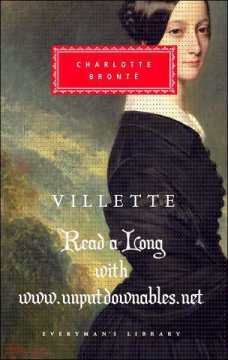
Villette by Charlotte Bronte Read-a-Long Part 1

Unputdownables is hosting a Villette by Charlotte Bronte read-a-long for the next couple of months.  And this is the first week of discussion.

For this week, we had to read the first five chapters of the novel.

The narrator begins by talking of her godmother and her family in Bretton and how she enjoyed being at their house.  We soon learn in the first chapter that her godmother has agreed to take charge of a young girl, Paulina, who has lost her mother and whose father has been told to travel to calm his ailments and recover from grief.

Miss Lucy Snowe is our narrator and she loves to observe her family members and Paulina as they interact with one another and when they are alone.  She has a particular interest in Paulina (Polly) given that the young girl wants to accomplish so much without help, but is not tall enough to complete certain tasks on her own at least not without difficulty.  What’s intriguing is the relationship that blossoms between Mrs. Bretton’s son, Graham, and Paulina.  Without her father, she seems to be seeking another man to look up to and take care of, but Graham is a young man in school with his own priorities and friends, though he does enjoy spending time teasing Paulina.

There also are some similarities between Polly and Lucy in how they interact with others, seeming to want more attention, but unsure how to get it without seeming overly needy.  While Polly takes it to the needy extreme, Lucy often seems too aloof.

Alas, things change and Miss Snowe and Paulina must part company with the Brettons and face the next leg of their own journeys.  The narrator finds herself looking for engagement once at home and is offered one position with a neighbor in need of consistent assistance.  Brontë inserts some Gothic elements in the narration — especially the storms and Aurora Borealis — which provide readers with an atmosphere of mystery and suspense.

While it is unclear where the narration is headed and what will happen to Miss Snowe given her current financial circumstances, it is clear that she is a character of determination and intuition.  It will be interesting to see where this leads.

***As an aside, I’ve purposely not read much about this novel or any reviews to keep my experience with it unencumbered.

Stay tuned next Thursday, Feb. 17, 2011, for the next discussion.

Stephen King’s IT Read-a-Long 2011

Created by Monniblog

Anna and I have talked about reading Stephen King’s IT together for a long while, so we decided this would be the year.  I haven’t read this novel since I was about 10 years old, which is probably why I had nightmares at the time.  I think its time to read it again.

We’ve come up with a schedule, and we’re announcing it early so that other people can join us.

The read-a-long will run from August through December, and we’ll be reading one part per month, plus the immediate interlude following each part.

For example, in August, we’ll be reading Part 1:  The Shadow Before and Derry:  The First Interlude.

We’ve also set up a posting schedule for our discussions:

August 24: Discussion of part 1 on Savvy Verse & Wit

Sept. 28:  Discussion of part 2 on Diary of an Eccentric

Oct. 31:  Discussion of part 3 on Savvy Verse & Wit

Nov. 30:  Discussion of part 4 on Diary of an Eccentric

Dec. 21:  Discussion of part 5 on Savvy Verse & Wit

We welcome anyone who wishes to join us.

You can visit the our blogs on the appointed dates for the discussions or if you prefer right up your thoughts on your own blog and post a link to your post on the day of the discussions.

Call for Guest Posts…

Good afternoon everyone!

As many of you already know, March will be a challenging month for me in terms of reading and blogging since the little one will soon be with us, so I wanted to get prepared.

As a result of brainstorming, I came up with an idea to feature independent publishers on Savvy Verse & Wit in March.  March is going to be Independent and Small Press Month here at the blog.

What I’m looking for:

1.  Guest posts either from the publishers and/or their publicists about their small presses and why the continue to struggle against the mass market producers (i.e. is it a passion for a particular book, local authors, or something more).

2.  Guest reviews from book bloggers about a great book from an independent publisher or small press, including information about the press and whether they’ve read other books by that publisher.

While it would be great to feature some poetry book reviews and publishers, I will be more open minded!  If you want to review some poetry or know a small press that publishes poetry and wants to contribute, please have them contact me.

OK, that’s it.  What do you think?  Are you game?  I want to fill up every day in March, so please send in your date requests early.

***Also, if anyone has ideas about linkable buttons/banners for the month-long event, please email me. ***

Fatal Light by Richard Currey

Richard Currey‘s Fatal Light is an unusual novel in which an unnamed narrator provides readers with an inside view of what it is like to be a draftee before, during, and after the war.  Beyond the bullets, the Viet Cong, the mines, and the brutality of war, soldiers had to navigate a culture they didn’t understand, malaria, injury, and unexpected relationships.  The prose is sparse and the chapters are small, but each line, each chapter can knock readers over or back into their seats after putting them on the edge.

The unnamed narrator’s family is dispersed between West Virginia, Maryland, and Ohio, and the tranquility of the Ohio River and its surrounding landscape acts as the backdrop for the later contrasts of Vietnam’s jungles and the war.

“The festival queen and her court rode into view on a float garlanded with tissue flowers, gliding across the horizon of Main Street like a mirage, small-town madonnas sliding past waving their downy arms dreamily, their eyes the eyes of soft animals turned heavenward from thrones of blossoms and crepe, their faces all a magnificent promise, the romance at the end of the world passing so slowly in those long moments of perfect quiet, like the air over the river, the light and stillness inside the world at daybreak, like a held breath.”  (page 12)

There is a deep sadness in Currey’s prose as the narrator spirals further into the darkness of the jungle and of his memories as he recovers from injury and malaria.  But beyond the sadness and memory, the soldier lives on in grief, denial, and anger.  His anger rises at the military establishment, but his connection to his grandfather and those war stories still grounds him in reality.

“Mist filtered, smoke and constant drip. In the distance, the hoarse choke of approaching helicopters.

‘Choppers coming,’ I said. ‘We’re on the way.’

‘Gonna bleed the rest of my life,’ he hissed. ‘Gonna be coming right out of my bones all the rest of my life. You hear what I’m saying?’

I looked at him and the sound of the helicopters grew closer. ‘I hear what you’re saying,’ I whispered.” (page 80)

Unlike other war novels, Fatal Light is less graphic in describing wounds, battle, and recovery but the emotional connection between the narrator’s feelings and the readers are intertwined as they are drawn into each immediate, vivid observation.  While the observations are descriptive, they are not journalistic or clinical.  Currey’s prose is captivating, but realistic and gritty.  Overall, Currey’s slim novel is a memorable, twisted tale of a Vietnam soldier.

***If you missed my earlier recap of Currey’s reading in Bethesda, Md., check it out.  I purchased my copy of the book at the reading.***

Photo by Vivian Ronay

About the Author:

Richard Currey was born in West Virginia in 1949, was raised there and in Ohio, Virginia, Washington, D.C., and Canada. Drafted in 1968, he enlisted in the U.S. Navy and was detached to the Marine Corps, trained as a combat medic, and assigned to various infantry and reconnaissance units. He began publishing poetry after his discharge in 1972, and he drew upon his military experiences in Crossing Over: The Vietnam Stories. His first novel, Fatal Light, became an international bestseller published in 11 languages. Fatal Light received the Special Citation of the Hemingway Foundation as well as the Vietnam Veterans of America’s Excellence in the Arts Award. Currey’s second novel, Lost Highway, looks at the impact of the Vietnam War on an American family and was called “a rich, incisive American fable” by the Boston Globe. Currey’s short stories have received O. Henry and Pushcart Prizes and have been widely anthologized. A former military book reviewer for Newsday, he is now a contributing editor for The Veteran. A recipient of National Endowment for the Arts Fellowships in both poetry and fiction, Currey has also received the D. H. Lawrence Fellowship in Literature and the State of West Virginia’s Daugherty Award in the Humanities.

This is my 11th book for the 2010 Vietnam War Reading Challenge.


This is my 56th book for the 2010 New Authors Reading Challenge.


I hope you enjoyed this latest Literary Road Trip with Washington, D.C., author Richard Currey.

2010 Green Books Campaign: Crazy Love by Pamela Uschuk

Created by Susan Newman

Welcome to the 2010 Green Books Campaign, sponsored by Eco-Libris!  The campaign is in its second year and aims to promote “green” books being published today. Last year for the first campaign, I read Saffron Dreams by Shaila Abdullah.

Crazy Love by Pamela Uschuk is just one of 200 books you’ll see reviewed or highlighted throughout the day on over 200 blogs.  Those books range from nonfiction and historical to poetry and fiction — and everything in between.  Crazy Love, a collection of poems, is printed with 50 percent recycled fiber.  The publisher, Wings Press, says, “Wings Press is committed to treating the planet itself as a partner.  Thus the press uses as much recycled material as possible, from the paper on which the books are printed to the boxes in which they are shipped.”

Pamela Uschuk uses melodious language in Crazy Love to drawn in her readers, sucking them into the depths of each poem and churning them in a tumbler.  The collection is broken down into four sections and each appears to deal with a different aspect of love whether it’s the passion of “Crazy Love” or the eternal connection of love in “Hit and Run.”

From “The Horseman of the Cross and Vulnerable Word:” (page 3)

I was young and fell in love
with your wounds, your tongue,
half-song, half-glands,
strong as the Calvinist hands
that whacked and fed your swampy youth.
I was young and drank vermouth
while you fell to your knees

Beautifully, Uschuk demonstrates human love through bird and nature imagery, but she also draws parallels between the destructive nature of grasshoppers on crops to that of humans on the overall environment.  There is a light and dark side to love and when love is too intense it can be destructive.

Feeling the Kitchen (page 25)

Talk about exfoliation.  This archaeology will
take weeks.  First comes the ripping, then
total destruction.
+++++++ Wrenching out
nails with screeching crow bars,
we pry huge sheets of cheap paneling
from the old walls to reveal
the smoky history of paint, and under
+++++++ that, a century of wallpapers shed
like snake skins embossing rough sandstone.

Who chose the bottom pattern tattooed
with blue and red flowers or the pink sky
spackled with gold stars, tiny and multitudinous as fleas?
Beneath everything, the harsh ash-smeared
plaster is the logic that holds.

Like an argument that spirals out of control,
my husband and I cannot stop tearing.
+++++++++++ The white celotex ceiling
we’ve despised for years must go, so
with our bare fingers, we yank it
crashing, with its load of coal soot, onto our heads.

When the ceiling lies at our feet, what is there
but more dingy ochre paint, stars
blurred dusty as the distant Pleiades, a silver filigree
some wife may have chosen to mimic moonlight
bathing her spinning head while she sweated
over meals and dishes, waddled with her pregnant belly
between woodstove and table, where
her silver miner sat to slurp her rich soup.

Day after day, I mount the rickety ladder
to avoid my computer, where I should compose
poems that shake their fists at stars or hold
the fevered heads of children in distant warring lands.

It is comforting this peeling back,
the scraper prying up paint chips
the size of communion wafers
while I balance on precarious steps abrading,
the motion repetitive as prayer.

Where all the sweet conformity of yellow
+++++++ once soothed our kitchen, strange maps
of foreign planets bloom, a diasphora of galaxies
blasted into the variegated watershed of hearts
we can never really know.

Perhaps, this simple work is poetry, to strip
chaotic layers revealing the buried patterns
of our stories, charting
love’s labyrinth, the way betrayal,
faith and fear spin us
in their webs, awful and light.

In this poem, Uschuk reminds us of the gems beneath the surface, like those that hover beneath the surface of words and phrases in stories and poems. The editing process fine tunes and refines the lines to reveal those underlying truths. Many of the poems read like folklore and myths from Native American stories. Overall, Crazy Love by Pamela Uschuk is a collection of poems that explores love and human connection and reminds us that we need to reconnect with nature and the planet, as well as one another.

About the Author:

Pamela Uschuk’s work has appeared in over 200 journals and antholgies worldwide, including Poetry, Parnassus Review, Ploughshares, Nimrod, Agni Review, Calyx, and others. Her work has been translated into nearly a dozen languages, including Spanish, Russian, Czech, Swedish, Albanian, and Korean.

Her Wings Press titles include Finding Peaches in the Desert (book and CD), (out of print), Scattered Risks and , which won the American Book Award (Sept. 2010).

Among her other awards are the Dorothy Daniels Writing Award from the National League of American PEN Women, the Struga International Poetry Prize, and the ASCENT, IRIS and King’s English prizes.

Uschuk also writes and publishes nonfiction articles and has been a regular contributor to journals such as PARABOLA and INSIDE/OUTSIDE. In 2005 she gave up her position as Director of the Salem College Center for Women Writers in North Carolina to become Editor In Chief of Cutthroat, A Journal of the Arts and to conduct poetry workshops at the University of Arizona Poetry Center. In 2006, Uschuk was a featured writer at the Prague Summer Writers Workshops, the Meacham Writers Conference and the Southwest Writers Institute. She makes her home in Tucson, Arizona, and outside of Bayfield, Colorado, with her husband, poet William Root.

To check out the rest of the Green Books, please visit the campaign Web site beginning at 1 p.m. EST. I’m a rebel, what can I say!

This is my 54th book for the 2010 New Authors Reading Challenge.

This is my 13th book for the Clover Bee & Reverie Poetry Challenge.

It’s That Time Again, Time to Think Green!

Created by Susan Newman

It’s November; Veterans Day is coming; It’s National Novel Writing Month (NaNoWriMo); and it’s time for the Green Books Campaign.

I’ve tried to keep track of the “green” books I’ve been reading and disclosing that to all of you.  Hopefully, that helps you add to the list of books I know you all keep.

This year, I’ll be participating again with a poetry book, Crazy Love by Pamela Uschuk.  On Nov. 10, at 1 PM, I’ll be posting about the book, its “green” qualities, the author, and my thoughts on Uschuk’s poems, along with 199 other bloggers who will be discussing 199 other books.

The Eco-Libris Green Books Campaign also made a new announcement about the participation of large Canadian book retailer Indigo Books & Music.  There is a list of great supporters to the campaign on the collaborators page, including BookMooch, Strand, and many others.

See you all next week!

Baltimore Book Festival 2010

Normally, I attend the National Book Festival in Washington, D.C., but this year, I was asked to join a panel of Book Bloggers at the Baltimore Book Festival.  Instead of exhausting myself even more this Sept. after an extended visit from my parents and brother, I decided to stick to one event this year.

I’m not the most talkative person and I often shy away from public speaking if I can help it, but this sounded like a good opportunity, and I got to hang out with some of my favorite bloggers in person — Swapna, Julie, Candice, Heather, Nicole, and Allie.  The other bonus for me was being able to talk about blogs and how they can be used to provide greater coverage for poets and poetry; something I hope I accomplished.

I want to thank Heather for setting up the great panel and for the detailed instructions and preparation that she did.  Wonderful job.  Also, I want to thank the Baltimore Book Festival personnel for being so kind and helpful when I couldn’t find the reception room for panelists!  The room was gorgeous in an older Baltimore home turned publisher’s office, and the food was delicious.  They even offered Mimosas, but I had to decline or I would have giggled my way through the panel.

Prior to the book festival, I tagged along with Anna, her family, and my hubby as we checked out the Walters Art Museum.  I left my hubby in charge of photos this time around.  I’d like to have more time to check out the museum, but the rare manuscript and book room was fantastic.   I’ll provide you with a slide show for both the museum and blogger panel.

I was nervous as expected, but once I met everyone on the panel — or should I say met Celeste and David whom I did not know before — I was more at ease.  The panel talked about the basics of book blogging, author/publisher relationships with bloggers, and much more.   Heather did a great job keeping us on track, but the questions from the audience were few. I’m also not sure how helpful I was about cybersecurity for the woman working with Montgomery County Public Schools and other student-teaching programs.  I think I would have liked more questions, so if you have any, feel free to ask them here.

Here are some synopses from other sources:  Reading Local, Baltimore Sun (I’m even quoted in this one and my name is spelled correctly), Read Street,  and I’m sure there are others I may have missed (please send links and I will add them).

And here’s the slide show you’ve been waiting for, I’m sure:

BBAW 2010: Future Treasures

Today is about future goals and treasures.  I’m going to take a new twist on this topic as well.  Since my love of poetry is well known and I know that many of you are reluctant poetry readers, but generous people.  I’m going to put out a call for donations to my favorite poetry organization, The American Academy of Poets.

This organization not only has a free database of information about classic to contemporary poets, but it allows users to read and listen to poems online.  From Apps that bring poetry to your smartphone to local and national events for poets and poetry, the organization’s goal is to not only spread the word about the genre, but also support poets through competition for first book prizes and other awards.

Supporting American poets is one goal, but I’ve always thought one of their overarching goals is to widen the audience for poetry by capturing them online and in person.  I’d like to call on you to donate to this great organization to preserve the future poetry treasure that are yet to be written.

All you have to do to enter this global giveaway is donate — no sum is too small — to the academy, which runs programs for the public and poets, including support for National Poetry Month events across the United States.

  • Go to Poets.org and use the drop-down “Donate” menu to select Donate Now.
  • Fill out the required fields
  • A new screen will give you donation choices from $25-$1,000, but there is also an “Other” selection where you can input any amount.
  • You can designate any program you like from the drop-down menu.
  • After inputting your payment information, please paste the following in the comments section “Savvy Verse & Wit Poetry Donation Drive.”

Once you’ve done that, please come back and leave your confirmation number or email it to me at savvyverseandwit at gmail dot com with “Savvy Verse & Wit Poetry Donation Drive” in the subject.

I’ll pick a random winner for the following books:

1.  Wishing Trees by John Shors

2.  Safe From the Sea by Peter Geye

Deadline for this GLOBAL giveaway is Sept. 30, 2010 — Deadline extension to Oct. 30, 2010, at 11:59PM EST

THIS GIVEAWAY IS NOW CLOSED!

BBAW 2010 Forgotten Treasures

Forgotten treasures abound throughout literature from classics to unknown contemporary novels, but as expected, I want to talk about poetry and the forms of poetry that are not often used or attempted anymore.

A majority of poetry these days is in free verse, though there are some contemporary poets who do dabble in sonnet, which is considered a restrictive form.

Sonnets come in two styles:  Shakespearean and Petrarchan.  Shakespearean sonnets are those most taught in school and consist of 14 lines  in iambic pentameter, which could be thought of a normal speaking rhythm, and contain ten syllables in each line.  These sonnet also typically have the following rhyme scheme:  a-b-a-b, c-d-c-d, e-f-e-f, g-g — with the final lines rhyming one another.  Petrarchan sonnets, on the other hand, have an octave and sestet that offers a resolution at the end of the poem, while the ninth line offers a change in tone or mood.  The typical rhyme scheme begins with a-b-b-a, a-b-b-a, while the remainder of the rhyme scheme offers one of two choice:  c-d-e-c-d-e or c-d-c-c-d-c.

Check out the example from Shakespeare:

Sonnet 20

A woman’s face with nature’s own hand painted,
Hast thou, the master mistress of my passion;
A woman’s gentle heart, but not acquainted
With shifting change, as is false women’s fashion:
An eye more bright than theirs, less false in rolling,
Gilding the object whereupon it gazeth;
A man in hue all hues in his controlling,
Which steals men’s eyes and women’s souls amazeth.
And for a woman wert thou first created;
Till Nature, as she wrought thee, fell a-doting,
And by addition me of thee defeated,
By adding one thing to my purpose nothing.
But since she prick’d thee out for women’s pleasure,
Mine be thy love and thy love’s use their treasure.

Check out the example of a Petrarchan Sonnet by Petrarch:

Sonnet 131

I’d sing of Love in such a novel fashion
that from her cruel side I would draw by force
a thousand sighs a day, kindling again
in her cold mind a thousand high desires;

I’d see her lovely face transform quite often
her eyes grow wet and more compassionate,
like one who feels regret, when it’s too late,
for causing someone’s suffering by mistake;

And I’d see scarlet roses in the snows,
tossed by the breeze, discover ivory
that turns to marble those who see it near them;

All this I’d do because I do not mind
my discontentment in this one short life,
but glory rather in my later fame.

Villanelle is another style that has disappeared from contemporary literature and contains not only rhyme, but a refrain using either trimeter or tetrameter.  Trimeter is three metric feet per line, while tetrameter is four metrical feet.  The poem has 19 lines.  These poems only have two rhyme sounds and the first and third line of the first stanza are rhyming refrains that alternate as the final line of each successive stanza before forming a rhyming couplet at the end of the poem.

Here’s an example from Dylan Thomas:

Do Not Go Gentle Into That Good Night

Do not go gentle into that good night,
Old age should burn and rave at close of day;
Rage, rage against the dying of the light.

Though wise men at their end know dark is right,
Because their words had forked no lightning they
Do not go gentle into that good night.

Good men, the last wave by, crying how bright
Their frail deeds might have danced in a green bay,
Rage, rage against the dying of the light.

Wild men who caught and sang the sun in flight,
And learn, too late, they grieved it on its way,
Do not go gentle into that good night.

Grave men, near death, who see with blinding sight
Blind eyes could blaze like meteors and be gay,
Rage, rage against the dying of the light.

And you, my father, there on the sad height,
Curse, bless, me now with your fierce tears, I pray.
Do not go gentle into that good night.
Rage, rage against the dying of the light.

Sestina has six six-line stanzas with a tercet for a total of 39 lines.  The same six words end the lines of the six-line stanzas, but in alternating order:  123456, 615243, 364125, 532614, 451362, and finally 246531.  “These six words then appear in the tercet as well, with the tercet’s first line usually containing 6 and 2, its second 1 and 4, and its third 5 and 3,” according to Wikipedia.

Here’s an example from Ezra Pound:

Sestina:  Altaforte

Loquitur: En Bertrans de Born.
Dante Alighieri put this man in hell for that he was a
stirrer-up of strife.
Eccovi!
Judge ye!
Have I dug him up again?
The scene in at his castle, Altaforte. “Papiols” is his jongleur.
“The Leopard,” the device of Richard (Cúur de Lion).

I

Damn it all! all this our South stinks peace.
You whoreson dog, Papiols, come! Let’s to music!
I have no life save when the swords clash.
But ah! when I see the standards gold, vair, purple, opposing
And the broad fields beneath them turn crimson,
Then howl I my heart nigh mad with rejoicing.

II

In hot summer have I great rejoicing
When the tempests kill the earth’s foul peace,
And the lightnings from black heav’n flash crimson,
And the fierce thunders roar me their music
And the winds shriek through the clouds mad, opposing,
And through all the riven skies God’s swords clash.

III

Hell grant soon we hear again the swords clash!
And the shrill neighs of destriers in battle rejoicing,
Spiked breast to spiked breast opposing!
Better one hour’s stour than a year’s peace
With fat boards, bawds, wine and frail music!
Bah! there’s no wine like the blood’s crimson!

IV

And I love to see the sun rise blood-crimson.
And I watch his spears through the dark clash
And it fills all my heart with rejoicing
And pries wide my mouth with fast music
When I see him so scorn and defy peace,
His lone might ‘gainst all darkness opposing.

V

The man who fears war and squats opposing
My words for stour, hath no blood of crimson
But is fit only to rot in womanish peace
Far from where worth’s won and the swords clash
For the death of such sluts I go rejoicing;
Yea, I fill all the air with my music.

VI

Papiols, Papiols, to the music!
There’s no sound like to swords swords opposing,
No cry like the battle’s rejoicing
When our elbows and swords drip the crimson
And our charges ‘gainst “The Leopard’s” rush clash.
May God damn for ever all who cry “Peace!”

VII

And let the music of the swords make them crimson!
Hell grant soon we hear again the swords clash!
Hell blot black for always the thought “Peace!”

Cinquain is another often forgotten form that has two styles Crapsey and Didactic, but each has a five-line pattern.  Crapsey cinquains have a syllable count of 2, 4, 6, 8, 2, with a fixed number of stressed syllables in this pattern:  1, 2, 3, 4, 1, using iamb.  Didactic cinquains generally begin with a one-word title, followed by a pair of adjectives describing the title/subject of the poem.  The third line is a three-word phrase that provides more information about the title, and the fourth line has four words to describe feelings related to the subject.  In the fifth line is a single-word synonym or another reference to the title/subject.

Crapsey Cinquain example:

November Night

Listen. . .
With faint dry sound,
Like steps of passing ghosts,
The leaves, frost-crisp’d, break from the trees
And fall.

These forms do take quite a bit of patience and diligence to craft, and I applaud any contemporary poet that takes them on.  I’ve always loved sestinas and villanelles, but I can’t seem to write them well.  It’s something that will take a lot of practice.

For the GLOBAL giveaway:

Tell me which of these forms you would find hardest to write and why.

or

Provide an example of one of your favorite poems in one of these forms.

Deadline is Sept. 19, 2010, at 11:59PM EST

Books up for Grabs:

1.  A Reliable Wife by Robert Goolrick

2.  The Tudor Rose by Margaret Campbell Barnes

BBAW 2010 Unexpected Treasures

I want to thank everyone who has stopped by to check out the giveaway by making their own poem and those that read and commented on my interview with Book Harbinger.

Today’s topic is to discuss an unexpected treasure — a book or genre I’ve tried because of a blogger’s recommendation.  I cannot tell you how many times bloggers have influenced my reading choices.

Dewey began it when she recommended the novella The Uncommon Reader by Alan Bennett.  I miss her dearly — her reading and her enthusiasm for books was infectious.

In the last year, I’ve read Shutter Island by Dennis Lehane on audio book because Sandy at You’ve Gotta Read This!!! was blown away by the audio.  Her thoughts on the audio were infectious, and I had to check if my library had a copy of this audio.  I got it on playaway, and while the narration was eerie and engaging, the story itself didn’t affect me the way that it affected her, but I was OK with that.

On the other hand, My Friend Amy and Things Mean A Lot reviewed Nothing But Ghosts by Beth Kephart and I knew it was a book I had to read.  As a poet, I knew the lyrical and descriptive language would be right up my alley and I was not disappointed.  Kephart’s writing is something I had been searching for in young adult literature.  Her novels deal with universal themes of grief, death, sibling rivalry, love, and coming of age, but her writing pulls you in and will not let you go.

I was so enthralled by this writer and her novel that I’ve read two others since.  I really enjoyed Undercover, which spoke to my inner teenager who wrote in secret and was often on the outside of the social circles in my junior and senior high school years.  Kephart captured a time in my life that I thought no one could possibly understand.  Her latest book, Dangerous Neighbors, is a different young adult novel that is set in 1876 Philadelphia.  Many of the YA novels I’ve read are contemporary, and it was a real treat to read a novel set in the past.

For my second GLOBAL BBAW giveaway, all you have to do is answer one of the following questions.

What bloggers have influenced you this year? And what books have they encouraged you to read?

or

What book do you think readers have been influenced to read by your own blog?

Deadline is Sept. 19, 2010, at 11:59 PM EST

What’s up for grabs: (click the links for my reviews)

1.  The Widow’s Season by Laura Brodie

2.  Short Girls by Bich Minh Nguyen

3.  A Dangerous Affair by Caro Peacock

Stay tuned for more giveaways this week!

BBAW 2010 Interview With Holly Grierson of Book Harbinger

Today’s my Book Blogger Appreciation Week 2010 interview with fellow book blogger Holly Grierson who blogs at Book Harbinger and has been doing so since about May 2010.  She’s an avid reader of fantasy and young adult novels, a mother, a wife, and an assistant librarian.

You can find her on Good Reads and Twitter as well.

1.  You read quite a lot of fantasy and young adult books.  What interests you about these types of books and do you feel differently when reading these books as opposed to when you read literary fiction?

Part of reading for me has always been about transportation to another time and place. Too often contemporary novels seem so familiar, so like my normal day-to-day life that they’re uninteresting. That’s not saying I haven’t read a lot of great contemporary novels, adult and young adult alike, but I tend to alternate them with a couple of fantasy novels. There’s nothing like going to a world with endless possibilities yet one that still feels like home.

With young adult, the potential for genre-bending and original premises also seems limitless. Young adult readers are more flexible than adults in their expectations and authors can get away with anything. At the same time some of the pickiest, most reluctant readers are young adults so some of the most page-turning, entertaining books are found in the young adult section. For these reasons I don’t think YA will ever fail to entertain and excite me. In addition it’s often the teenage protagonists, with angst-y insecurities and challenges and all to whom I relate the most. I can’t seem to get enough of coming-of-age stories and the many “firsts” that young adult characters experience.

I don’t read much literary fiction at the moment but I do feel like I have different expectations when I read it as opposed to fantasy. For example I expect more of the writing in literary fiction more from the setting and characters in fantasy. In some ways anything goes with literary fiction and I definitely would like to get back into that genre.

What three fantasy novels would you recommend to someone who claims to “hate” fantasy novels and why? And what three novels or authors exemplify the best of the genre?

Is there any way I can talk to this fantasy “hater” personally and find out what they don’t like about the genre? That would definitely help. I don’t think I can recommend three novels if I know nothing else about the reader’s individual tastes. There are so many subgenres and different types of fantasy that I honestly believe there is something out there for everyone. It’s usually just a matter of finding the right genre or author. Some fantasy is lighter on the world-building and heavier on dialogue and character development and relationships. Some fantasy is much more realistic and requires less suspension of disbelief from the reader. By contrast epic or high fantasy may not be for everyone – even me – but I think scifi/fantasy, romantic fantasy, or historical fantasy can be many readers’ cup-of-tea occasionally if they find the right authors.

I still feel like too much of a fantasy novice to be doing this but the best authors IMO would be Juliet Marillier for historical/romantic fantasy, Sharon Shinn for scifi/angel fantasy, and Ilona Andrews for urban fantasy.

As an assistant librarian, do you work in a particular capacity or section? Did your library duties inspire you to blog about books or did blogging about books inspire you to work at a library?

Since my position is flexible I’ve worked all over the library, including collection development, reference, and circulation. I’ve even spent several months working with the City’s arts development. My favorite areas have been media, fiction, and general reference.

As far as my library employment affecting my blogging, it was more in an indirect way. After a couple of years of working at the library, some of my co-workers started signing up with Goodreads. After I joined in, I went from rating to writing short mini-reviews and finally to writing full-length ones. From there I began meeting other bloggers on Goodreads and started Book Harbinger.

On your blog, you mention a love of learning. Has this trait spilled over into your reading habits and how? And where do you think this love of learning originated (i.e. parents, friends, etc.)?

I think my love of learning may differ from the traditional sense, but it is true that I love learning both on an independent basis and in a more formal environment. I treasured my university years and would go back to school for an MLS or PhD in a heartbeat. A part of me wanted to stay in school forever and never become part of the real, less fun, and more uncertain working world. Since I’ve been out of school I try to keep up (very badly sometimes) with the latest in art history and keep my brain alive by reading non-fiction sometimes. Mostly I end up reading self-help books whenever I’m facing a problem, whether it be domestic, childcare-related, relationship-related, or concerning childbirth or religion. I enjoy research and find that being knowledgeable on all of the experiences I’m currently facing in my daily life is a given. It’s just who I am.

My love of learning definitely originated from both my parents and my in-laws. My mother-in-law is a professor of English at BYU (my undergraduate alma mater) who has varying interests in a number of subjects like physics, neuroscience, psychology, and religion as well as literature and the arts.

What are some of your obsessions outside of reading and blogging?

Watching TV shows with DH (Project Runway, So You Think You Can Dance, Parenthood, Chuck, and Community are some of our favorites). I live for traveling and tourist activities, which I did quite a bit of when I lived in London. I love exercising, particularly running, and yoga, which I try to teach and practice when I have a chance. I also enjoy discovering new bands and going to concerts. My main albeit mandatory obsession outside of reading is taking care of my 2-year-old son. I am also expecting a girl in January.

Congrats on your pregnancy!

You have two art history degrees. Have these degrees influenced your reading or blogging? Who are some of your favorite artists and do you think their works could be adapted into fantasy novels?

I’d like to think my very ‘style over substance’ interest in discussing book cover art on my blog is due to my art history background. Picking favorite artists is difficult but some of the ones I liked enough to research extensively during graduate school are Alfredo Jaar, a contemporary installation artist; Hannah Höch, a German Dadaist; Gabrielle Münter, a German Expressionist; and Rachel Whiteread, a contemporary British sculptor.

I haven’t ever given thought to the idea of adapting a painting into a fantasy novel, but it’s an interesting concept. Hannah Höch did some Surrealist paintings in the 1920s like Vereinigungen (Associations) which would be both imaginative and abstract enough to form the basis of a scifi or dystopian novel. There are some lovely works of the Pre-Raphaelite movement and paintings by J.W. Waterhouse that would be perfect for more traditional fantasy novels.

Check out this slide show of images to get an idea of what Holly is discussing:

Book Blogger Appreciation Week (BBAW) is a celebration of all book bloggers and continues to grow strong. As a new book blogger, how did you hear about the event and what prompted you to join in?

I heard about BBAW last year when some of the bloggers I’d been following like Angieville were up for awards. I enjoyed voting and reading the memes and blogging topics. It was a given once I’d started my own blog that I’d participate. It’s such a great opportunity to meet new bloggers, improve your own blogging, and promote your blog.

How many blogs do you read and how many are in your RSS reader? Are they primarily blogs that focus on the same genres as your blog?

Right now there are about 30 blogs in my reader. Lol I’m probably one of the rare bloggers that could use more blogs in their reader. I hope this BBAW week will change that! Most of the blogs I follow either focus on fantasy, young adult, or urban fantasy but I do read some that have more of a focus on romance or literary fiction. The writing, opinions, and voice of the blogger often matter more to me than whether they are necessarily reading the same books as I.

Do you see yourself as part of the book blogging community and how so? Did you have to do anything in particular to become a part of the community or did you just blog and hoped readers would find your blog?

Good question! Sure, I see myself as part of the book blogging community. Perhaps a very small portion of it but I couldn’t live without my little corner. I don’t think much is required to become a part of the community. Maybe keeping your blog updated and well-written. Visiting and commenting on other blogger’s posts also is a large part as well as participating in memes and reading challenges. I think any blogger can feel a sense of belonging if they want to. Of course I still hope readers will find my blog, and I participate daily in social websites like Twitter and blogger sites like Book Blogs mostly because it’s fun but also because it gives me a chance to meet new bloggers and get my blog out there.

Write a six word memoir for yourself.

Earnest, factual, loyal, accepting, observer, friend-for-life

Holly, thanks for answering my detailed questions and joining in the BBAW celebration.  I hope everyone will take the time to check out my interview on Book Harbinger.