Quantcast

Short Story Friday #5

Short Story Friday has been revamped for 2015, and I’ll be sharing snippets from my own fiction pieces, mostly short stories.  In addition to the new business, Poetic Book Tours, I’ll be writing and submitting more of my own fiction and poetry this year.

I hope you’ll offer your thoughts on this story that is currently in progress.

Here are the first, second, and third parts posted in previous weeks:

You’re probably wondering why the journal’s called Transcendence. It’s a project that all high school seniors must complete.  We’re supposed to use it to reflect on what we’ve learned here and how it will direct us toward our roles in society.

Now, our city-state is not as rigid as the other communities in the union.  But they still make us complete this project even if we don’t actually do what we conclude by the end.  We’re just checking a box for the unionists.  I’m not even sure what I’ve learned will help me in the real world because there doesn’t seem to be a place for a constant blinker.  I guess I’ll just draw from mom’s pension when she’s gone.  She’s been saving it for me, and says she’ll work until she dies on the job, which could be any day since she chases fugitives of the union who call themselves the No Collars.

Please feel free to share your thoughts on this snippet and let me know what you think.
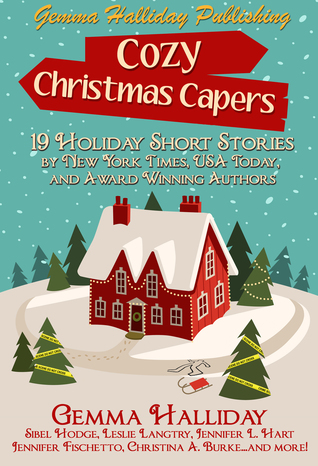
Short Story Friday: Christmas Canapes & Sabotage by Janel Gradowski

In a renewal, I’ve been reading some short stories in collections, and I really love Janel Gradowski‘s writing.  Her cozy mysteries are always full of food and fun.  One of her latest stories was published in the Cozy Christmas Capers: Holiday Short Story Collection.  I wanted to share a little bit about why I am enjoying these cozy mysteries from Janel and why we as a community should support more writers like her.
Christmas Canapes & Sabotage by Janel Gradowski is part of the culinary competition mystery series of books — her new one is coming out this month, Chicken Soup & Homicide — that find an amateur cook embroiled in a deadly mystery at local food competitions.  Amy is a winner when it comes to these amateur cooking competitions, but she is always humble about her skills, even if she is as inventive in the kitchen as some professional chefs.  Why do I gravitate to these books?  1. food 2. humor.

“‘Old Man Winter can ease up any time now.  It isn’t even Christmas, and I’m tired of the deep freeze.  I think the girl who handed my my registration packet had blue fingernails, and the color wasn’t from nail polish.'”

“‘You’re like a foodie super hero, saving the masses with a pot of tea.'”

Janel is the queen of the instant one-liners, and she’s a book blogger who has made her writing dreams a reality.  She started with flash fiction pieces published in online journals, and from there dove into more challenging, longer projects.  I love her spunk in tackling larger projects that challenged her, and I think that she’s found a great niche.

Have you found other book bloggers who’ve entered the world of authorship?  Have you read their books?  I’d love to hear about it.

To enter Janel’s party giveaway, go here.

Short Story Friday #4

Short Story Friday has been revamped for 2015, and I’ll be sharing snippets from my own fiction pieces, mostly short stories.  In addition to the new business, Poetic Book Tours, I’ll be writing and submitting more of my own fiction and poetry this year.

I hope you’ll offer your thoughts on this story that is currently in progress.

Here are the first, second, and third parts posted in previous weeks.

I don’t want you to think that I’ve forgotten about this protagonist or failed to post and let this feature go into the dustbin again.  I have been writing, but poetry!

So the muse has shifted my gears for me.  As soon as I get back to writing this short story, I will share again.  That’s a promise.

In other news, I’ve been visiting other blogs! 

I hope you’ll take the time to check out my home library at Daily Mayo and my thoughts for February Firsts at Book Blogger International.

Short Story Friday #3

Short Story Friday has been revamped for 2015, and I’ll be sharing snippets from my own fiction pieces, mostly short stories.  In addition to the new business, Poetic Book Tours, I’ll be writing and submitting more of my own fiction and poetry this year.

I hope you’ll offer your thoughts on this story that is currently in progress.

Here are the first and second parts posted in previous weeks.  Without further ado, I’d love to hear your thoughts on this girl and what you think is going on:

I’m Lythia, by the way, and this is my journal of Transcendence.  I’ve lived seventeen years with this blinking issue, but I’ve never let it stop me.  I’m what the others call a kiss-face because I get good grades in school, volunteer to help the third-raters in the suburbs, and generally make nice with the school’s interface.

There must be adults in charge of it somewhere, but no one has ever seen them — you know, face-to-face.

While I’m not wildly popular, very few students pull pranks on me.  My mother says this is a good thing, but I disagree.  I think it means I’m excluded.

Please feel free to share your thoughts on this snippet and let me know what you think.

Short Story Friday #2

Short Story Friday has been revamped for 2015, and I’ll be sharing snippets from my own fiction pieces, mostly short stories.  In addition to the new business, Poetic Book Tours, I’ll be writing and submitting more of my own fiction and poetry this year.

I hope you’ll offer your thoughts on this story that is currently in progress.

If you missed the first part posted last week, check it out here.

Finn would be the one I’d flirt with, but even though he’s new here, he already knows about my condition.  That’s the high school grapevine for you.  No way he’ll let me rely on it as flirting now.  Besides, the blinking is too rapid.

He’s still sweet.  He holds open doors for all the girls, even me.  It reminds me of those books on my mother’s bookshelves.  Men held doors for ladies and helped them into their seats at dinner, an idea as antiquated as my mother’s bookshelves.

All of my materials in school are digital and holograms teach us our lessons, making even human teachers obsolete.  I guess it helped reduce student-teacher violence to zero.  That’s something.

Please feel free to share your thoughts on this snippet and let me know what you think.

Short Story Friday #1

In 2013, I introduced Short Story Friday as a way to discuss individual short stories, whether e-short stories or short stories in collections, but I dropped the ball in 2014 and the feature has since disappeared from the blog.

In 2015, I’m relaunching this feature, but rather than discuss published short stories from collections or sold individually, I’ll be sharing snippets from my own fiction pieces, mostly short stories.  In addition to the new business, Poetic Book Tours, I’ll be writing and submitting more of my own fiction and poetry this year.

I’ve decided to share some of that writing here, and you can feel free to leave your feedback on the pieces I share or not.  I’ll leave that up to you, but know that I have a thick skin and can handle it if you don’t like it.

So today, here’s a little of what I’ve been working on:

I’ve been told that my eyes blink too frequently.

The diagnosis must be true because I only see glimpses most of the time. My brain must fill in the blanks to complete the images I see because sometimes I’ll be talking to someone with red hair on one side of their head and dark brown on the other.

Whether the blinking is because of my nearly dried out tear ducts or my fear of germs is anyone’s guess. But when I talk to you, I’m not flirting, batting my eyelashes like some love-sick pup.

Please feel free to share your thoughts on this snippet and let me know what you think is going on with this girl.

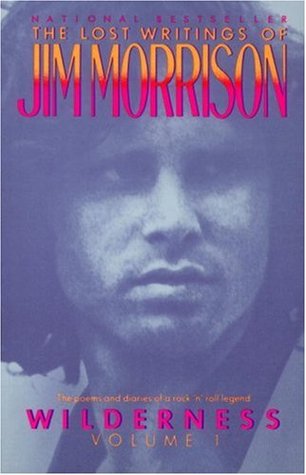
Wilderness: The Lost Writings of Jim Morrison Volume 1

Source: Purchased
Paperback, 214 pages
I am an Amazon Affiliate

Wilderness: The Lost Writings of Jim Morrison Volume 1 is a collection of poems, scribbled notes, photos, and a self-interview from Jim Morrison, lead singer of The Doors.  Like he music produced by Morrison and his band mates, his poetry has a hallucinatory quality.  Foremost a poet who unexpectedly found himself as a lead singer, lyrics of The Doors are in these poems, or vice versa depending on which he wrote first.  Fans of the band will enjoy looking at Los Angeles through Morrison’s eyes in these poems, with several referring to the city as LAmerica.  The seedy sides of L.A. are not glossed over, nor are his nomadic days with his family.  While much of his poetry is psychedelic in nature, dark, and offensive at times about carnal desires, there also is a reverence paid to the military, particularly military veterans, which could be influenced by the fact that his father was a military veteran.  However, like most artists, when compared to one another, the poems often contradict one another, as if the poet is working out some internal struggle of ideas.

“An interview also gives you the chance to try and eliminate all of those space fillers … you should try to be explicit, accurate, to the point … no bullshit.  The interview form has antecedents in the confession box, debating and cross-examination.  Once you say something, you can’t really retract it.  It’s too late.  It’s a very existential moment.” (page 1 — Self-Interview)

There are moments where the poems are lucid and easy to follow, but there are other times when the poems are confusing and make little sense to the reader without some reference point in the literature (i.e. William Blake or Nietzsche) or other knowledge Morrison picked up in his reading and living.  Despite the notes in the back that suggest Morrison often wrote many drafts of his poems (though the editors had a problem with chronology of those unnumbered and undated drafts), many of these poems feel unfinished and unpolished.

Selections from a few untitled poems:

"Men who go out on ships
To escape sin & the mire of cities
watch the placenta of evening stars
from the deck, on their backs
& cross the equator
& perform rituals to exhume the dead" (page 25)

LAmerica

"Androgynous, liquid, happy
Heavy
Facile & vapid
Weighted w/words
Mortgaged soul
Wandering preachers, & Delta Tramps" (page 87)

"Airport.
Messenger in the form of a soldier.
Green wool. He stood there,
off the plane.
A new truth, too horrible to bear.
There was no record of it
anywhere in the ancient signs
or symbols." (page 89)

"Actors must make us think
they're real
Our friends must not
make us think we're acting

They are, though, in slow
Time" (page 117)

As I Look Back

As I look back
over my life
I am struck by post
cards
Ruined Snap shots
faded posters
Of a time, I can't recall (page 201)

Wilderness: The Lost Writings of Jim Morrison Volume 1 is an existential journey of a poet, artist, and musician.  Fans of the band will love this collection, those that want an experience and look at the 1970s in Los Angeles will also love this collection.  Those looking for poetry that wows or connects with them may find it harder to connect with, especially since the poetry is a bit cryptic in purpose.

About the Poet:

Jim Morrison was an American singer-songwriter and poet, best remembered as the lead singer of Los Angeles rock band The Doors.

Book 14 for the Dive Into Poetry Reading Challenge 2014.


22nd book for 2014 New Author Challenge.

Guest Post: Kidlitosphere Progressive Poem by Tabatha Yeatts

It has been a very busy April with a variety of poetry.  I am so happy for all the participants this year, spreading their wings into new territory.

I hope that you’ve all found something new to read for the rest of the year and that it is a new poet or collection.  Click the icon at the left to see the whole tour and more!

Thanks to everyone for joining in the blog tour as a poster, blogger, or commenter.  I appreciate all of your enthusiasm.  See everyone again in 2015.

Without further ado, I bring the National Poetry Month Blog tour to a close with a guest post from Tabatha Yeatts, and a collaborative poem.  Please give her a warm welcome.

Poet and author Irene Latham introduced the idea for the Kidlitosphere Progressive Poem in 2012 and it has become an annual National Poetry Month event.

Each day in April, a different kidlitosphere blogger provides the next line in the poem. No plans for themes or rhyme schemes are worked out ahead of time — everyone is just working on the fly. If you’ve never tried to write collaboratively, you might want to give a project like this a go. It’s a very interesting process, both to participate in and to watch unfold.

Here’s this year’s poem:

Three Blue Eggs

Sitting on a rock, airing out my feelings to the universe
Acting like a peacock, only making matters that much worse;

Should I trumpet like an elephant emoting to the moon
Or just ignore the warnings written in the rune?

Those stars can’t seal my future; it’s not inscribed in stone.
The possibilities are endless! Who could have known?

Gathering courage, spiral like an eagle after prey,
Then gird my wings for whirlwind gales in realms far, far away.

But, hold it! Let’s get practical! What’s needed before I go?
Time to be tactical—I’ll ask my friends what I should stow.

And in one breath, a honeyed word whispered low—dreams—
Whose voice? I turned to see. I was shocked. Irene’s!

“Each voyage starts with tattered maps; your dreams dance on this page.
Determine these dreams—then breathe them! Engage your inner sage.”

The merry hen said, “Take my sapphire eggs to charm your host.”
I tuck them close—still warm—then take my first step toward the coast.

This journey will not make me rich, and yet I long to be
Like luminescent jellyfish, awash in mystery.

I turn and whisper, “Won’t you come?” to all the beasts and birds
And listen while they scamper, their answers winging words:

“Take these steps alone to start; each journey is an art.
You are your own best company. Now it’s time to depart!”

I blow a kiss. I hike for days, blue eggs pressed to my chest.
One evening’s rest, campfire low, shifting shadows brought a guest.

A boy, with hair in wild waves and eyes blue as the sea,
Says, “You’ve traveled far. What did you find—your best discovery?”

“I found a bird, I found a song, I found a word,” I say.
The hidden eggs, I make them known. “I’ve brought these on the way.”

We share an omelet and some talk; is my quest at an end?

Check out the last line, here.

1 Charles at Poetry Time

2 Joy at Joy Acey

3 Donna at Mainely Write

4 Anastasia at Poet! Poet!

5 Carrie at Story Patch

6 Sheila at Sheila Renfro

7 Pat at Writer on a Horse

8 Matt at Radio, Rhythm & Rhyme

9 Diane at Random Noodling

10 Tabatha at The Opposite of Indifference

11 Linda at Write Time

12 Mary Lee at A Year of Reading

13 Janet at Live Your Poem

14 Deborah at Show–Not Tell

15 Tamera at The Writer’s Whimsy

16 Robyn at Life on the Deckle Edge

17 Margaret at Reflections on the Teche

18 Irene at Live Your Poem

19 Julie at The Drift Record

20 Buffy at Buffy Silverman

21 Renee at No Water River

22 Laura at Author Amok

23 Amy at The Poem Farm

24 Linda at TeacherDance

25 Michelle at Today’s Little Ditty

26 Lisa at Lisa Schroeder Books

27 Kate at Live Your Poem

28 Caroline at Caroline Starr Rose

29 Ruth at There is No Such Thing as a Godforsaken Town

30 Tara at A Teaching Life

Also, here’s the link to my collection of poems about imaginary places. It also mentions the Summer Poem Swap I’ll be holding. People are welcome to email me with questions about it or with requests to join.

Thanks, Tabatha!

The Eight Stages of Translation by Robert Bly

Source: Purchased
Paperback, 107 pages
I am an Amazon Affiliate

The Eight Stages of Translation by Robert Bly is a slim how-to manual for amateur translators or those just beginning to dip their toes into poetry translation.  He breaks down the process into eight stages, which he illustrates using a René Maria Rilke poem, XXI.  He translates the poem in several drafts from the German into American English.  The eight stages he talks about and provides examples for through his drafts are:

  1. Setting down the literal translation
  2. Get a handle on the concepts and beliefs presented in the original poem; abandon the poem if the translator does not feel a connection with them.
  3. Rewrite the literal translation to ensure the meanings of the poem are not lost.
  4. Translate the latest draft into spoken English, using phrases that have been heard in natural conversation.
  5. Examine the translation in terms of tone to ensure that it carries over from the original (whether happy, sad, etc.)
  6. Listen to the original for sound and carry those same sounds over to the translation, such as the use of open vowel sounds.
  7. Speak with a native speaker to go over the translation to ensure meanings and tone are maintained.
  8. The final stage is completing the translation with all of the advice given and paying close attention to the original poem’s rhythm and rhymes (which are often less about end rhymes than internal rhymes).

The thought process through which Bly guides the reader through translation can be easily understood in the example given and the drafts presented, but even for those with no interest in translating poems themselves, the book includes some breathtaking translations done by Bly himself.  Although I am not fluent in any language, other than English, reading translations is always a peek inside another culture and world.  These translations are no different.  Bly has taken great care with them, and it shows.  Read The Eight Stages of Translation by Robert Bly not for the how-to, but for the poetry.

About the Poet:

Robert Bly is an American poet, author, activist and leader of the mythopoetic men’s movement. His most commercially successful book to date was Iron John: A Book About Men (1990),[1] a key text of the mythopoetic men’s movement, which spent 62 weeks on the The New York Times Best Seller list.[2] He won the 1968 National Book Award for Poetry for his book The Light Around the Body.


Book 13 for the Dive Into Poetry Reading Challenge 2014.


19th book for 2014 New Author Challenge.


For today’s 2014 National Poetry Month: Reach for the Horizon tour stop, click the image below:

Emma Eden Ramos Interviews Poet Brooke Elise Axtell

Emma Eden Ramos is a poet, middle-grade, and young adult novelist, and I’ve featured her a few times on the blog.  We’re Internet buddies who have a “poking” war from time to time, and we talk poetry and books all the time.  Check out my reviews of Still, At Your Door, The Realm of the Lost, and Three Women: A Poetic Triptych and Selected Poems.  Check out the interviews, and her guest interview.

BRK2Emma will be interviewing poet Brooke Elise Axtell, and we’ll share one of her poems.  Please give them a warm welcome.

be careful with a woman like me 
by Brooke Elise Axtell

be careful with a woman like me
who lives like a drunkard 
for the grey honey of the sea
who sends her singing voice to distant coves
like a hurricane trapped in a green bottle just to see 
if shrouds can be ripped & the dead raised.

be careful with a woman like me
who sharpens her heart like an ivory dagger
& howls her monsoon music to the moon
who wraps her secrets in silver cloths
to hide beneath deck & makes no promises
who is a cloud no hammer can nail to the bed
who will keep you restless & well fed on blackberries.

be careful with a woman like me
who dances in with a brass band
then slips away like a line in the sand
when the slightest wind moves.
it is not that i can't be true.
it is not that you are a red lacquered door
to open & quickly pass through.

but what appears to be 
a delicate locket hanging
from a gold chain at my neck
holds a private tempest & the shipwreck
of every storm-torn night my skin eats.

be careful of a woman like me.
i am true the way rain is true.
i am pure & vanishing. 
when the thirst of brittle leaves is quenched
when the land is a screaming emerald
it is clear. i am no longer here.

i am as restless as a sloop at bay, 
swaying with the seducing wave & her dark granite gaze.

i secretly flunked the school of manners
though i held my spoon at such a graceful angle.
i disguised my dissent behind the careful lifting 
of the teacup & memorized the map of their make believe.

i breathed heavy in the bed of my enemy
so i could overturn the twist of the sordid fist. 
i oiled the gears of my mind like a pleasing machine.
you should be careful with a woman like me.

all the while i trained in guerilla warfare 
chewed rabbit stew, sank my teeth 
into the neck of a god who does not topple 
at the earthquake of the shrine.

i crossed seven purple mountains on my knees.
i sucked on stones until they turned to bread.
i gave my heart to a hungry harlot to eat for breakfast

& you will find only the grey honey of the sea 
rocking, rocking 
in a woman like me.

Emma: The ability to write isn’t always all inclusive. Someone who composes beautiful prose may find that they’re completely hopeless when it comes to writing verse. You, however, are an award winning poet and short story writer. What, for you, is the link that makes both mediums accessible?

Brooke: I start with an initial instinct, a visceral energy that inevitably gives way to a particular form. When I begin writing I know that there is an underlying architecture that will reveal itself, but the line between verse and story in not absolute. Hybrid forms fascinate me. The intersection of text, song, performance and story yields such a rich alchemy. Lately, I’ve been intrigued by journalism as a site of beautiful protest.When you watch the boundaries between genres breed and dissolve, you begin to feel that every form is open to you.

Emma: You are also a very well-established singer/songwriter. You’ve worked with artists such as Terry Bozzio (of Missing Persons and Frank Zappa), Charlie Sexton (guitarist for Bob Dylan), Mitch Watkins (guitarist for Leonard Cohen), and a number of other great musicians. How do you find the collaborative process?

Brooke: It is an incredible honor to collaborate with such powerful musicians. I grew up dancing with a professional ballet company, so I approach the songwriting process as both a poet and a dancer. Music connects language and movement in a way that is completely transformative for me.

Emma: Which do you prefer, collaborating with other artists on a project or creating on your own?

Brooke: I appreciate both modalities. I crave solitude and connection. I am most alive as an artist when I create space for each side of the process. Collaboration challenges me to expand and grow. Solitude renews me and helps me reconnect with my courage. In a media-saturated climate I am vulnerable to distraction. I need to set aside moments to honor the interior life as well as cultivate authentic community.

Emma: Some time back, you won first place in the Young Texas Writer’s Awards for your short story “Maya’s Mirror.” Have you been writing since you were a young girl?

Brooke: Yes. As soon as I could write I started inventing stories about aliens, ghosts and unknown planets. I also wrote mystical poems about nature with themes of isolation. In retrospect, I see that I was working with creative codes to process the trauma I experienced.

Emma: Are there a few poets, fiction writers or lyricists who have deeply influenced you?

Brooke: I am nourished by many sources. As far as poets, I am reading the work of Akilah Oliver, Alice Notley, Bhanu Kapil and countless others. As far as songwriting, I am drawn to the work of Tori Amos, Bjork, Ani Di Franco, PJ Harvey, Billy Holiday and Sarah Vaughan. Fierce, imaginative women who tap into multiple states of consciousness. I am also grateful for the rich legacy of feminist writer/activists such as Audre Lorde and Adrienne Rich.

Emma: What would you say is your greatest inspiration?

Brooke: Mending the aftershocks of violence, honoring the body, healing ruptures through creative alchemy, a fierce hunger for social justice, my love of women, blues and jazz.

Emma: Do you have any advice for aspiring writers?

Brooke: Set aside time to write consistently. It has to become your way of life. This is a core decision, a sacred space you create, a ritual. You write because it is who you are and silence feels like a form of erasure.

I keep a hand-written journal to collect all the fragments: streams of consciousness, postcards of films, research, drawings, poetry. Recently, I found a gorgeous photograph of an anatomical heart and taped it inside. It is important to have private places as a writer, where there is no pressure to perform.

Immerse yourself in writers who speak to you. Join some form of creative community with writers who are more experienced than you. Ultimately, trust the value of you own voice, honor your instincts and stay open to wise counsel.

If you do not connect to someone else’s work they may not be an ideal mentor for you. Teachers and professors can be helpful, but take a look at their body of work before you invest too much in their critiques.

Going to open mics and public readings is a powerful way to come into your voice. For my poetry collections, I engage with performance as part of the editing process. I listen to what resonates and what feels like excess. It brings me back to the original energy of a piece.

Keep writing and refining your process. You deserve to be heard.

Thanks to both Emma and Brooke for this great interview today, as we wind down the April National Poetry Month celebration.

Description from GoodReads:

Brooke Axtell’s mesmerizing poetry explores the thirst for solace in desolate spaces. It is a thirst for cleansing, healing and rejuvenation. In her third collection of poems, she plunges the body of pain, the “remembering body,” into the renewing element of water. With fierce elegance, she reveals the core thirst of life: to experience all as sacred. Her gift of striking imagery and stunning, musical language has the power to haunt and heal. She transmutes pain into incantation. This is the alchemy of the artist.Just as Kore of Greek myth was forced into the underworld and initiated into a cycle of ascension, Axtell investigates a realm of ruin and rises to share a new vision of life. Her poems confront the ravages of violence with the relentless hope of the creative process. She explores the archetype of the wild woman, the sacred marriage of the soul, the cost of injustice, the modern sex industry, the Divine Feminine and the gift of intimacy that honors the emergence of the true untamed nature. Here is the map of one woman’s spiritual journey. You will find solace in these waters, “the healing waterfall behind the ancient wall.”

For today’s 2014 National Poetry Month: Reach for the Horizon tour stop, click the image below:

Guest Poet: Beth Kephart

National Poetry Month is the perfect month for an author like Beth Kephart to launch her next book.  Her poetic prose reads like poetry, with each carefully selected word pregnant with meaning.  Readers of Kephart know that her writing is deep and meaningful, and that they must read her words with reverence.  This month, Beth Kephart and Chronicle Books launched Going Over, a young adult novel about 1983 Berlin and two families separated by the Berlin Wall, about taking risks, about love, and about inner strength.  Feel free to check out my review.

Today, Beth Kephart has come to celebrate National Poetry Month with us, and she’s going to share with us a never before seen or published poem about writing.

Portrait Gallery

My mind off its leash, I wander
The streets at night, after a storm.
Riffling scenes from ambered windows,
Incidents you could name paintings by:
Old Man in Plaid
Cat on Sill
Woman Loosening Auburn Braids
Boy Lit Blue by Fluorescence
And somewhere a catastrophe with a trash can
And a dog dragging its chain,
A guzzle in the drains,
While overhead the squirrels humiliate themselves
Among greasy limbs and leaves.  Save me
From my thoughts, I think.
Keep me innocent as a thief in the dark
Part of these washed-up streets.
Where it’s only the deer and the squirrels
And me, a dog dragging its chain.
You’re a little whacky, he’d said,
And I might have been exuberant
With the praise, might have stressed,
Myself to myself, that in the game
Of being me, I’d won, but who
Are we to measure our sanity by,
And who walks the streets in the dark
After a storm, looking for life
Through the lit-up glass
Of other people’s stories?

I want to thank Beth for sharing this poem with everyone this month, and I’d love to hear from you about what you think about the poem and what it means to you?

251st Virtual Poetry Circle

Welcome to the 251st Virtual Poetry Circle!

Remember, this is just for fun and is not meant to be stressful.

Keep in mind what Molly Peacock’s book suggested.

Look at a line, a stanza, sentences, and images; describe what you like or don’t like; and offer an opinion. If you missed my review of her book, check it out here.

Also, sign up for the 2014 Dive Into Poetry Reading Challenge because there are several levels of participation for your comfort level.

Here’s today’s stop on the 2014 National Poetry Month Blog Tour: Reach for the Horizon

Today’s poem is from New European Poets edited by Wayne Miller and Kevin Prufer:

Walls by Lindita Arapi of Albania (page 126)

And if a wall, long and thick,
A high wall
Should rise in front of you . . . 
What would you do?

I would close my eyes, I would crouch
And rest my cheek against it,
I would find peace in its cool serenity.

And if this wall were death . . .

   -translated from the Albanian by Robert Elsie

What do you think?

This is part of the 2014 National Poetry Month: Reach for the Horizon Blog Tour, click the button for more poetry: