Quantcast

Publication News 2021

Hello everyone!

I have some wonderful publication news to share. It’s been a while since I’ve shared some news on the poetry writing front. I have been updating my Publication Credits page (it’s in the menu), so feel free to check that out, too.

First, three of my poems now are available in The Magnolia Review, Volume 6, Issue 2. The theme for the issue was “A Defining Moment.” You’ll need to download the PDF, but the magazine is worth the download.

My poems appear on pgs. 68, 80, and 115. I hope you check them out, but they are on dark topics regarding gun violence, so be aware.

Secondly, I’m happy to announce that the anthology from the Washington Writers’ Publishing House, This Is What America Looks Like, is available for purchase.

I have 1 poem included in this collection, but I hope you’ll buy a copy because I know many of these writers (fiction and poetry) and their work is AMAZING.

You can purchase the anthology through Amazon or directly from the publisher.

I’ll also have an interview with the poetry editor Jona Colson very soon on the blog. You may recall my review of his collection, Said Through Glass.

Perseverance pays off. I just want to remind you that art is hard work and pleasure in the making, but getting it published is even harder work. If you want it, pursue it.

By Broad Potomac Shore: Great Poems from the Early Days of Our Nation’s Capital edited by Kim Roberts

Source: Publisher
Paperback, 356 pgs.
I am an Amazon Affiliate

By Broad Potomac Shore: Great Poems from the Early Days of Our Nation’s Capital edited by Kim Roberts is a well crafted and contains some well-known poets as well as some obscured by history. In the preface, Roberts says, “These poets were born in, or drawn to, the nation’s capital as it grew from its founding, through such major upheavals as the Civil War, Reconstruction, and World War I. … But I have taken particular pleasure in seeking out poems by lesser-known poets as well, especially women, working-class writers, and writers of color.” The anthology also speaks about the homes in which these poets lived and whether they still exist today, as well as what they are today, with some of them homes to embassies of other nations. Roberts has clearly done her research and it is appreciated.

If there was ever a time for a literary historian, that’s today. Kim Roberts has done painstaking research and it it is evident in this look at 100 years of our nation’s history. Of note in the first part of the anthology is Emma Willard, who was a passionate advocate for women’s rights and dedicated her life to educating women and girls. I loved learning about this early advocate for women to be educated, especially about her speech in which she says that women are “primary existences … not the satellites of men.”

It was also interesting to note that a white man, John Pierpont, wrote a persona poem from the point of view of an enslaved man, which is found in the second part of the anthology. To my modern sensibilities, I was wondered aloud how on earth this white man could capture that point of view, especially a man who worked in finance. “Oft, in the Chilly Night,” is chilling in how it depicts an enslaved man almost at peace looking at the night and seeking God’s guidance, but by the end, it seems the man now simply wishes for the peace of death! But it is not the only persona poem from an enslaved person’s point of view written by a man.

Not only are these poems significant in demonstrating that ideas of equality were present in the early years of our nation, but they also show that even as the country evolved slowly there were very forward thinkers inside and outside government who wrote those ideas in poetry. And some of the homes of these poets became part of antislavery efforts and so many other efforts.

By Broad Potomac Shore: Great Poems from the Early Days of Our Nation’s Capital edited by Kim Roberts is chock full of information about the poets, poems, the nation’s capital and so much more. You can dip into this collection at any time to explore the time period, and you’ll see different styles and topics throughout each second. As you move through the collection, the poems do take on more modern styles and are less antiquated in language. It does provide a good evolutionary look at poetry in Washington, D.C., and written by a variety of poets.

RATING: Cinquain

Check out the Gaithersburg Book Festival Panel discussion with Joseph Ross, Tara Campbell, Kim Roberts, and E. Ethelbert Miller:

Pink by Sylvie Baumgartel

Source: Publisher
Paperback, 62 pgs.
I am an Amazon Affiliate

Pink by Sylvie Baumgartel is startlingly does not have a pink cover. In fact, it has a gray cover, which perfectly mirrors the gray in the relationships explored — mother-daughter, father-daughter, narrator-art, changes in climate, and more.

The collection opens with “The Washing” in which mothers and daughters wash together — a mother who washes secrets — and it is compared to the “washing” of the Sistine Chapel, in which fig leaves are removed to expose genitals and the windows to the soul are lost. It makes you think about what we wash away when the secrets are cleansed or kept hidden — how awful can the truth be?

We move later in the collection to “Pregnancy” (pg. 9) in which the narrator feels numb but everything is out of sorts as the “Blood that feeds my/Part parasite,/Part god, baby boy.//” is a far cry from how it is portrayed in art. The narrator says, “I wonder if what paintings/Really want is to reproduce./A baby of their own.// With many paintings made famous by men, perhaps the narrator is right because those painters are unable to do so naturally.

The collections call on the color of femininity, love, and kindness stands in juxtaposition to the nearly clinical precision with which Baumgartel examines relationships and art. She even explores the abuse suffered by boys at the hands of priests who believed “they could get away with it/Because the boys couldn’t hear each other/Scream.//” (from “The Mission Bell”, pg. 11-2).

Pink by Sylvie Baumgartel is a stunning poet with stark imagery in each poem that will force readers to reorient themselves and rethink the world around them. Between the grotesque and the use of color, she creates a world in which the narrator needs to break through the morass and the societal norms to be born again.

RATING: Quatrain

Mailbox Monday #616

Mailbox Monday has become a tradition in the blogging world, and many of us thank Marcia of The Printed Page for creating it.

It now has it’s own blog where book bloggers can link up their own mailbox posts and share which books they bought or which they received for review from publishers, authors, and more.

Leslie, Martha, and I also will share our picks from everyone’s links in the new feature Books that Caught Our Eye. We hope you’ll join us.

Here’s what we received:

Whirl Away Girl by Tricia Johnson, which I received for review.

The Question: How are You?

What is this new life you have been handed? Where does it lead? How do you even feel? Sometimes the pathway ahead is murky, seemingly impossible to pass through. Life throws you a twist you didn’t see, know or desire.

In the midst of adversity, how do you cope? How do you process? How do you move forward?

Join this poetic journey of intimate details through the ache of life’s unraveling, from the maddening free fall of diagnosis, to emerging and seeing the beautiful possibilities of living with chronic illness.

Whirl away, arms wide to embrace what is yet to come..

What did you receive?

COVID Chronicle #4

Is it unusual to be so busy during a pandemic?

I find that I am envious of those who have additional time during the pandemic to pursue artistic projects and learn new skills and just take time for themselves. I literally have zero time to myself in a house full of six people. Don’t get me wrong, I love being a mom, but there are days when I want her to be more independent. But without social outings and friends to occupy her — being cooped up inside and away from people her age — she’s more clingy. I can’t begrudge her attention, even if I want time to myself to write or just read.

I’ve been volunteering with the Gaithersburg Book Festival this year, like many years in the past, but this year, I have far more responsibility. I think a poetry committee would be far more appropriate to make the work far less daunting. I’m in charge of poetry programming and I feel inadequate. Yes, it is that imposter syndrome. I want to do the best I can and help the festival, but I also want the poets to feel like the time will be well spent for them and their books, especially as virtual events tend not to translate into book sales at the rate they do when events are live and in person.

I’m very busy at my day job, which is good, but I also took on a manuscript editing project sooner than expected (it wasn’t expected to be done until March). I love editing and helping others hone their material and novels and poems, but I also love to write my own work. Again, no time for that.

Perhaps, what I need is a few days off sooner than I thought. I’ll have to think on it. I’m stressed and exhausted. There are other stressors too, but I prefer not to bring those up. However, if anyone has any sure fire financial planning advice or budgeting advice – software recommendations, how to use an excel sheet or whatever — I’m all ears. I feel unorganized.

Reading is going, but mostly submissions for the festival. I do have some fiction reads I really want to crack open soon, and I just hope I can find the time. I perhaps have too many competing interests.

Guest Post, Giveaway, & Excerpt from Jack Caldwell, author of Rosings Park: A Story of Jane Austen’s Fighting Men

It has been awhile since I reviewed The Three Colonels in 2012.

It seems appropriate that I bring to you a guest post and excerpt from author Jack Caldwell for the final chapter, Rosings Park, in 2021. Stay tuned for the giveaway at the end.

About the Novel:

A decade ago, groundbreaking novel THE THREE COLONELS began the epic Jane Austen’s Fighting Men series and transformed Austenesque literature with its blend of Regency romance and historical fiction. ROSINGS PARK is its long-awaited conclusion!

The Napoleonic Wars are finally over, and Britain seeks to rebuild after a generation of war. Gone is the “green and pleasant land” of the early Regency. In its place, a natural disaster on the other side of the world exacerbates the country’s woes: economic depression, widespread hunger, industrialization, and civil unrest. Great Britain faces ruin and revolution.

Fitzwilliam and Elizabeth Darcy agree to take in the young and spirited daughter of Lydia Wickham, and all the while, their beloved Pemberley is being endangered by riotous Luddites. Colonel Sir Richard Fitzwilliam marries Anne de Bourgh but finds the management of Rosings Park no easy matter, especially with Lady Catherine de Bourgh ready and eager to offer advice. Haunted by despair and gravely wounded in body and spirit, a bitter Colonel Sir John Buford returns to England to be nursed by his wife, the former Caroline Bingley. Then, an evil out of the past returns to wreak vengeance on Rosings Park, and the Darcys, Fitzwilliams, Bufords, and their friends face a devastating truth: HAPPILY EVER AFTER MUST BE EARNED.

Doesn’t that sound delicious?! I have this on my TBR list, but for now, please welcome Jack Caldwell:

Greetings, everybody. Jack Caldwell here.

I’m happy to have the opportunity to talk about my latest novel, ROSINGS PARK: A Story of Jane Austen’s Fighting Men. This book is the closing chapter to the series I started with THE THREE COLONELS: Jane Austen’s Fighting Men. There are currently two other books in the series, THE LAST ADVENTURE OF THE SCARLET PIMPERNEL and PERSUADED TO SAIL.

The Jane Austen’s Fighting Men series is a unique one in Austen fiction. I take the immortal characters created by Miss Austen and insert them into the historical events of the Regency period, the most notable being the Hundred Days Crisis of 1815. I also assume that all of her characters knew and interacted with each other. This leads to some interesting stories, I can assure you!

The first three books were companion novels—separate stories that happened in and about the same time, but with some limited interaction. They can be read as stand-alones, but it is more fun to read them all and enjoy the small amount of interweaving between them all.

ROSINGS PARK is different. A sequel to THE THREE COLONELS (which was itself a sequel to PRIDE AND PREJUDICE and SENSE AND SENSIBILITY), ROSINGS PARK acts as the concluding chapter to the series. THE THREE COLONELS was about the Battle of Waterloo. ROSINGS PARK is what happened afterwards. And boy, did a lot happen! Economic depression, rapid industrialization, volcanic explosions, civil unrest, and crop failures. Regency Britain was in turmoil and our favorite characters are caught up in the midst of it.

Who are those characters? Fitzwilliam and Elizabeth Darcy, of course, are major players in my little drama. Colonel Richard Fitzwilliam has been knighted, married Anne de Bourgh, and lives at Rosings with the irksome Lady Catherine. Meanwhile, Sir Richard’s good friend, Sir John Buford, suffers grievous injuries received at Waterloo, and his wife, the former Caroline Bingley, struggles to nurse him back to health. Meanwhile, there are unknown forces out to destroy Rosing Park.

Excited yet? I hope so! Below is an excerpt.

To set the scene, it is the summer of 1817. Darcy, Elizabeth, and their children are at a house party at Rosings Park, now controlled by their cousins, Sir Richard and Anne Fitzwilliam. Also visiting are the Fitzwilliams’ friends, Sir John and Caroline Buford. The Darcys have taken in Chloe Wickham, eldest daughter of the late George Wickham and the former Lydia Wickham (now remarried), and Richard has problems with that.

Dinner that night was far less taxing than Darcy anticipated. Surprisingly, this was due to the attendance of Mr. and Mrs. Collins. Elizabeth, overjoyed with the prospect of renewing acquaintance with the lady who had once been her particular friend, largely spent her time in close and happy conversation with Mrs. Collins, Anne, and Mrs. Jenkinson. She had little discourse with Sir Richard; therefore, her coolness to his cousin was undetected.

The burden of entertaining Lady Catherine, therefore, fell to Darcy, and in this he was joined by Richard and Mr. Collins. That task would have been easier without the tiresome, simpering observations of the Hunsford rector, but it was a burden with which Darcy was well acquainted, and he carried out his duty with perfect composure.

Lady Catherine and the Collinses did not leave until it was nearly nightfall. The ladies excused themselves and retired above stairs. Darcy was not of a mind to play billiards, so he and his cousin had port in the library. Richard took his ease in a chair while Darcy, glass in hand, perused the bookshelves.

“I see you managed to procure a copy of Waverley. I am impressed,” said Darcy.

“It was a gift from Father—one of the last I received before his illness. He was not one for novels, but he loved the book. I suppose I should read it.” Richard gestured at the chair beside him. “I am tired of straining my neck to look up at you. You are far too tall. Come and sit—and tell me why your wife is annoyed with me.”

Richard’s comment caught Darcy off guard while he was in the act of sitting. He paused, and then slowly made himself comfortable. Apparently, Elizabeth’s feelings were detectable after all. Darcy needed a sip to settle his thoughts.

“Well?”

Darcy set down his glass and glared at his cousin. “She took offense at your dismissal of Chloe.”

Richard stared at him as though he thought Darcy had lost his mind. “You cannot be serious.”

“I am.”

Richard sat forward, his face working. “You expect me to welcome Wickham’s brat into my home?”

“Richard. You are speaking of my niece and ward. I shall thank you to keep a civil tongue in your head.”

Richard flushed in anger but nodded. “I mean no offense to you or Lizzy, but I cannot set eyes on that child and not see Wickham’s lying face.”

Darcy beat down his first impulse—to pack his family and leave Rosings at first light—and attempted to speak rationally. “You are a reasonable man, Fitz. Surely, you know Chloe is innocent of Wickham’s sins.”

“I know that!” Richard snorted. “It is just that…” He waved his hands, seemingly unable to say more.

A horrible thought occurred to Darcy. “Pray tell me you do not subscribe to Aunt Catherine’s appalling notion about bad blood.”

Richard shook his head. “Of course not.” He dropped his elbows to his knees and held his face in his hands. Darcy could see his cousin was struggling, but he offered no solace.

The man deserved no such relief.

“It is her eyes,” Richard mumbled.

Darcy did not respond. He simply waited for the rest. It was not long in coming.

“She has Wickham’s eyes, Darce. I hate those eyes.” He looked up at his cousin. “I look at your ward, and I see all the pain that man caused our family.

“I saw it when we were young. I saw he was nothing but a jealous, devious bully and scoundrel. He used everyone and cared for no one. You were blind to it at first. You were so young, so lonely. You wanted a friend badly. I did what I could to protect you, but I was either at Matlock, or school, or the army. You had no one but Wickham. When your blinders finally fell, my uncle would not listen to you. He would do nothing!”

Darcy took a deep breath. “You know how charming, how persuasive Wickham could be, even in his youth. Father felt sorry for him, given the woman who was his mother. He thought I could be a good influence on his godson.

“Later, after Mother’s death, Father lost his way. She was his joy, and joy left him when she was gone. Wickham was agreeable, he was amusing, and I…I was serious and reserved. I was the heir. I was the responsible one. I was the one he depended on to care for Georgiana and Pemberley. He told me this in his last days—”

“Bah!” Richard cut him off. “Uncle George refused to accept what Wickham was!

Sending him to school, paying off his debts. He should have cast him off! He should have been more concerned for you!” He clenched a fist in his other hand. “You cannot know how much I hated Wickham. I wanted to kill him, you know. After Ramsgate, I could have cut him down in the street at the slightest provocation.”

“I am happy you did not,” Darcy said, reaching out and tapping his cousin on the knee. “I have grown used to your annoying presence, as has Georgiana.”

Richard returned his gaze to him.

“I have made my peace with my childhood. I have forgiven Father. No man, no matter how good, is perfect. I certainly am not. I have learned that hate and resentment are a poison to one’s soul.

“Wickham is dead, Fitz. But even he did something good. He left the world three lovely little girls. The Bingleys have Phoebe, and the Tuckers Rosanna. Elizabeth and I are honored we have been given the charge to raise Chloe, and we shall do so to the best of our ability.”

“Yes, you are very generous—”

Darcy cut him off. “This is not generosity, not in the least. You may as well call us selfish at once, because in our hearts, Chloe is ours—Elizabeth’s and mine. We shall raise her as our daughter. And once she is old enough to make the choice, we shall adopt her if that is her wish.”

Richard was shocked. “You…you would adopt Wickham’s—”

“We stand ready to adopt my ward—my sister Lydia’s child,” Darcy stated firmly. “A sweet and loving little girl, virtually abandoned by her mother. We care not who fathered her. I shall be her father now.” He paused. “And we require our relations and acquaintances to respect our decision and accept my family. My entire family.” He offered a smile and softened his tone. “She would like another cousin.”

“I…I do not know if I can do that.” He bit his lip. “I am well rebuked for my treatment of—of your ward. I shall do better. I shall offer her every courtesy. But pray do not ask more of me.”

“You have much to think on.”

“I do.” He looked up bleakly. “I owe you and Lizzy an apology.”

Darcy shrugged. “For myself, I require nothing. Elizabeth is generous, as I have reason to know.”

“And…the child?”

“Treat her well and we shall have no complaints.”

Richard nodded and changed the subject. “Care for another port?”

Darcy eyed his nearly empty glass. “I believe this was your father’s favorite vintage.”

“Yes, the last of the case from his cellar.” At Darcy’s astonishment, he laughed ruefully.

“Port is made to be drunk, Darce. Besides, I think Father would approve. Nothing was more important to him than family.”

“True.” After Richard refilled their glasses, Darcy raised his, looking up at the ceiling.

“To Hugh Fitzwilliam and George Darcy—the two men who taught me what it means to be a father.”

Richard smiled, staring straight at his cousin. “To fathers.”

Thank you, Jack, for sharing this excerpt and for the giveaway!

GIVEAWAY:

To celebrate, I am giving away two (2) ebook copies of ROSINGS PARK – a Story of Jane Austen’s Fighting Men in your choice of MOBI (Kindle) or EPUB format!

Ends Feb. 9, 2021


WINNERS ARE Anna (Diary of an Eccentric) and Alexandra!

Mailbox Monday #615

Mailbox Monday has become a tradition in the blogging world, and many of us thank Marcia of The Printed Page for creating it.

It now has it’s own blog where book bloggers can link up their own mailbox posts and share which books they bought or which they received for review from publishers, authors, and more.

Leslie, Martha, and I also will share our picks from everyone’s links in the new feature Books that Caught Our Eye. We hope you’ll join us.

Here’s what we received:

Emma Lou, the Yorkie Poo: Alphabet Feelings and Friends by Kim Larkins, which I receive for review from the publisher.

Emma Lou and Pearl return with some old and new friends in Emma Lou the Yorkie Poo: Alphabet, Feelings and Friends. Join them as they experience, through a collection of whimsical rhymes, a wide range of emotions. From A to Z, Emma Lou and Pearl invite children to bring emotions to life and provide reassurance that all feelings are expected and accepted.

To cope with our changing world during this vulnerable time in our history, children now more than ever need to feel free to express their fears, worries and joys. Alphabet, Feelings and Friends is a resource for parents, educators and mental health workers to assist children in developing meaningful discussions and insight into their present experiences.

Lost But Found: A Boy’s Story of Grief and Recovery by Laura Persons, illustrated by Noah Hrbek, which I receive for review from the publisher.

Lost But Found: A Boy’s Story of Grief and Recovery deals with one of the toughest issues a parent may ever have to face-explaining to a child that a loved one has died. Often, to protect them, parents leave children out of the grieving process. This book allows adults to travel with a young boy as he works to make sense of his loss-and, in turn, their own.

I wrote this book to allow children to ask questions and talk about their fears and feelings. What I have found is that often children have better insights on these hard life questions than the adults in the room!

En Route by Jesse Wolfe for review.

In this debut poetry collection, Jesse Wolfe meditates on the journeys that carry us through life. In sections that focus on individuals, couples, and families, Wolfe employs a range of speakers and characters: male and female, young and old, wealthy and poor. Some have a clear sense of where they’re going, while others feel cast adrift; some reach back into their memories or look toward the future, while others seek an expansive present moment; some find peace and at-one-ment, while others remain in quandaries. Taken together, they offer a mosaic of consciousness, as people strive and introspect, suffer and heal, each of them en route through their overlapping stories.

Tidal Wave by Kofi Antwi for review.

Tidal Wave speaks to the interconnectedness that explores an aesthetic of abstract art. The use of ‘we’ in Tidal Wave fortifies the merge of collective voices. Akin to the community that harvest a forgotten borough, Tidal Wave emerges returning the objective placement of rhythmic science, as language is reimagined through poetic expressions. Tidal Wave explores identity, the visceral display of subconscious ramifications — bending the abstract ploy of truth. The writing encompasses a lyrical approach as it breaks free from conventional forms.

The Story of Ruth Bader Ginsburg by Susan B. Katz, which I purchased.

In this chapter book for kids ages 6-9, you’ll learn about how Ruth Bader Ginsburg became the second woman ever to serve as a judge on the Supreme Court of the United States. Before she fought for equal rights and made history, Ruth was a curious kid who loved to read about strong women who were making important changes. You can get inspired, too, with this unique standout among Ruth Bader Ginsburg children’s books for grades 1-2.

In school, Ruth wished girls could have as many opportunities as boys. She soon learned that by studying and working hard, she could change her life―and the world. Of all the Ruth Bader Ginsburg children’s books, this one really lets you explore how she went from a Jewish girl during World War II to one of the most celebrated leaders in America.

Celebrate Your Body (and Its Changes, Too!): The Ultimate Puberty by Sonya Renee Taylor and Bianca I. Laureano

Puberty can be a difficult time for a young girl―and it’s natural not to know who (or what) to ask. Celebrate Your Body is a reassuring entry into puberty books for girls that encourages girls to face puberty with excitement and empowerment. From period care to mysterious hair in new places, this age-appropriate sex education book has the answers you’re looking for―in a way you can relate to.

Covering everything from bras to braces, this body-positive top choice in books about puberty for girls offers friendly guidance and support when you need it most. In addition to tips on managing intense feelings, making friends, and more, you’ll get advice on what to eat and how to exercise so your body is healthy, happy, and ready for the changes ahead.

Look Both Ways: A Tale Told in Ten Blocks by Jason Reynolds, illustrated by Alexander Nabaum, which I purchased.

This story was going to begin like all the best stories. With a school bus falling from the sky. But no one saw it happen. They were all too busy—

Talking about boogers.
Stealing pocket change.
Skateboarding.
Wiping out.
Braving up.
Executing complicated handshakes.
Planning an escape.
Making jokes.
Lotioning up.
Finding comfort.
But mostly, too busy walking home.

Jason Reynolds conjures ten tales (one per block) about what happens after the dismissal bell rings, and brilliantly weaves them into one wickedly funny, piercingly poignant look at the detours we face on the walk home, and in life.

What did you receive?

Frankie Sparks and the Big Sled Challenge by Megan Frazer Blakemore

Source: Purchased
Paperback, 128 pgs.
I am an Amazon Affiliate

Frankie Sparks and the Big Sled Challenge by Megan Frazer Blakemore, illustrated by Nadja Sarell, is the third book in the third-grade inventor series that combines science, engineering, and social quandaries in one fun story. Frankie wants to enter the Big Sled Challenge after descending Extreme Maximus, the largest hill in their town on her saucer sled. The experience was a bit jarring, especially when her classmate Lila Jones points out that Frankie did hesitate to go down the big hill not once but twice. Frankie now feels like she has to prove something to herself and Lila. She wants to prove that she’s the best third-grade inventor.

Frankie and Maya need a third teammate, but Frankie soon finds out that her practical choice because of her size and smarts is already on another team. She must cope with disappointment. Ravi is enthusiastic to join the team and he brings with him a lot of ideas, but Frankie is very dismissive and seems to think because she’s an inventor that she’s in charge, but that’s not the meaning of teamwork. In this book, Frankie must expand her horizons, learn patience, and understand what it means to be part of a team.

These books can be read out of order, but you’ll have a greater understanding of Frankie and her struggles in social situations if you do read them in order. Frankie Sparks and the Big Sled Challenge by Megan Frazer Blakemore, illustrated by Nadja Sarell, as always tells a story using science in a kid-friendly way, offers tips for kids at the back of the book on how they can do their own inventing, and provides life lessons about working in teams, socializing with others, learning how to compromise and develop patience.

RATING: Cinquain

Mailbox Monday #614

It now has it’s own blog where book bloggers can link up their own mailbox posts and share which books they bought or which they received for review from publishers, authors, and more.

Leslie, Martha, and I also will share our picks from everyone’s links in the new feature Books that Caught Our Eye. We hope you’ll join us.

Here’s what we received:

Emerge by Francesca Marais for review.

Out of the crushing comfort of the womb-dark ocean, the poems in Francesca Marais’s Emerge rise up to the surface and breathe deeply. “Blood surges through my body, / Refusing to gently creep into the shores / Of my heart’s quiet,” she says. Untangling the tentacles of family and romance and imagination, the poet carries the reader along on a journey toward self-love and acceptance. Her advice to us? “Cherish then savour / The salt of the pain, / Lick your fingers dry.” Salt of tears, of stinging wounds, of breaking waves—to know the self requires all of these. There is ache here, but also nourishment. Emerge shows us how to stop holding our breath; how to see our own reflection in the ocean’s blue eyes.

The Stars Are Fire by Anita Shreve, which I purchased.

In October 1947, Grace Holland is experiencing two simultaneous droughts. An unseasonably hot, dry summer has turned the state of Maine into a tinderbox, and Grace and her husband, Gene, have fallen out of love and barely speak. Five months pregnant and caring for two toddlers, Grace has resigned herself to a life of loneliness and domestic chores. One night she awakes to find that wildfires are racing down the coast, closer and closer to her house. Forced to pull her children into the ocean to escape the flames, Grace watches helplessly as everything she knows burns to the ground. By morning, her life is forever changed: she is homeless, penniless, awaiting news of her husband’s fate, and left to face an uncertain future in a town that no longer exists. With courage and stoicism, Grace overcomes devastating loss and, through the smoke, is able to glimpse the opportunity to rewrite her own story.

How to Raise a Reader by Pamela Paul and Maria Russo, which I purchased.

Do you remember your first visit to where the wild things are? How about curling up for hours on end to discover the secret of the Sorcerer’s Stone? Combining clear, practical advice with inspiration, wisdom, tips, and curated reading lists, How to Raise a Reader shows you how to instill the joy and time-stopping pleasure of reading.

Divided into four sections, from baby through teen, and each illustrated by a different artist, this book offers something useful on every page, whether it’s how to develop rituals around reading or build a family library, or ways to engage a reluctant reader. A fifth section, “More Books to Love: By Theme and Reading Level,” is chockful of expert recommendations. Throughout, the authors debunk common myths, assuage parental fears, and deliver invaluable lessons in a positive and easy-to-act-on way.

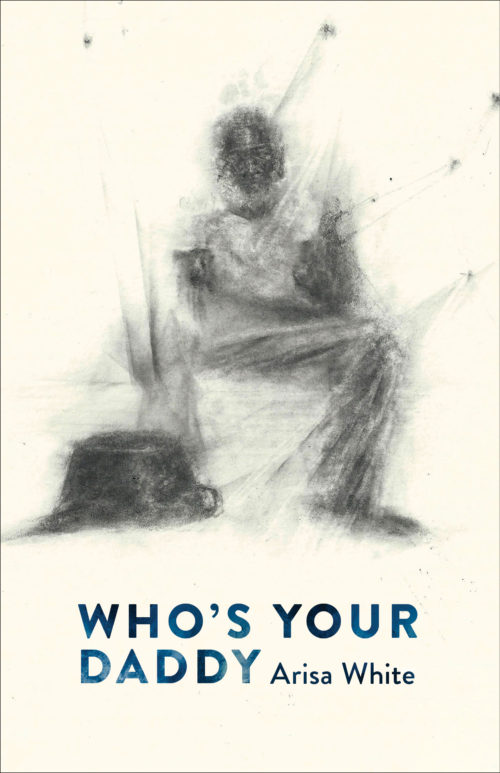
Who’s Your Daddy by Arisa White, which I purchased and reviewed.

A lyrical, genre-bending coming-of-age tale featuring a queer, Black, Guyanese American woman who, while seeking to define her own place in the world, negotiates an estranged relationship with her father.

“This beautifully, honestly conceived genius of a book shook me to the core.” —Dara Wier

“What she gives us are archives, allegories, and wholly new songs.”—Terrance Hayes

“In these crisply narrative poems, which unreel like heart-wrenching fragments of film, Arisa White not only names that gaping chasm between father and daughter, but graces it with its true and terrible face.” —Patricia Smith

What did you receive?

Guest Post: A Memory Behind ‘The Gospel’ by H.L. Hix

Today’s guest is H.L. Hix, author of The Gospel according to H.L. Hix. The book itself is likely to receive some skepticism at the very least given the subject matter, but readers should consider how this book came into being before judging it. “Hix has gone back to the original source materials, both the canonical and noncanonical gospels and histories and stories of the life of Jesus,” according to the synopsis.

Book Synopsis:

First we have to talk about the elephant in the room–though that might not be the most polite term for Jesus! For many millions of people around the world, Jesus is the Son of God, the divine source of their salvation, his story told in the familiar four gospels of the Bible, and any tampering with that story understandably will be met with suspicion, distrust, even hostility.

So let’s begin with what this book isn’t. H. L. Hix covers this in detail in his Introduction to “The Gospel,” but for now it’s enough to say that this isn’t Jesus Christ, Superstar, or The Last Temptation of Christ. Nothing in this Gospel secularizes or desacralizes Jesus Christ. You don’t get less of the divine Jesus here, you get more.

That’s because Hix has gone back to the original source materials, both the canonical and noncanonical gospels and histories and stories of the life of Jesus, and created out of them a single, more comprehensive and nuanced narrative. A good analogy is to film editing. Most movie directors shoot more film than ever makes it into the version we see on the screen, film that ends up on the editing room floor, the result of commercial decisions often far removed from the director’s vision of the film. Occasionally the director gets the chance to re-edit the film to restore that lost material, producing a “Director’s Cut” that may be very different from the commercial film release. So we can think of “The Gospel” as an ultimate “Director’s Cut” of the story of Jesus, with all of those bits that didn’t make the official version (edited by early church leaders to serve a specific agenda) at last restored.

Something for those enthusiasts who want to dig deeper, to know more. But that’s not all he’s done. Among other virtues of his “Gospel,” Hix has restored the meanings of essential words as they would have been understood by contemporary audiences when the source materials were first written, overcoming what he calls “translation inertia”, the tendency to retain a translation over time even after the sense of the word has changed for current readers. Thus “Lord” becomes “Boss”, and the apostles “apprentices”, changes that allow for a novel understanding of the role of Jesus and of believers’ relationship to him.

Also of crucial importance, Hix has eliminated gendered language wherever possible, in the process inventing new terms that decouple our understanding of Jesus and divinity from the limitations of gendered human bodies and relationships. Thus “Son” becomes “Xon”, for example, a form of literary transubstantiation that renders the divine even more transcendent, in the process opening the Gospel and its promise of salvation to greater inclusivity. Gospel, of course, means “good news.” And the very good news of THE GOSPEL ACCORDING TO H. L. HIX  for believers and for non-believers alike, is that what has been called “the greatest story ever told,” the life of Jesus, just got greater.

Please give H.L. Hix a warm welcome.

One of my most vivid memories from childhood in a devout evangelical Christian home has to do with holiday visits to the even more devout home of my paternal grandparents. Celebrations of Christmas there always included plenty of presents, the accumulated results of Grandmama Hix’s year-long labor. She began in January scouring Saturday morning garage sales for unopened six- packs of tube socks, or broken toys Granddad Hix could repair. Someone else’s grandchild may have outgrown this pair of pjs, but they’d fit one grandchild or another of hers. This shirt might not be in fashion any longer, but it was still in good shape. Not one present was opened, though, and not one grandchild threw one wad of wrapping paper into the fireplace to watch the flame change color, until after the reading of what was simply referred to as “The Christmas Story.”

Everyone (aunts and uncles, all those rambunctious cousins I was always afraid of) gathered in one room and listened to Granddad Hix intone, from a script he himself had compiled and typed out at some point long ago, the King James version of the passages leading up to and recounting Jesus’ birth, from the three synoptic gospels, arranged into a single composite narrative. (It was the unmodernized King James version: I remember the archaic phrase “on this wise” from the beginning, “Now the birth of Jesus Christ was on this wise,” and the word “holpen” somewhere in the middle.) To a little boy of, say, seven, it seemed to go on forever, but surely my grandfather would have said that’s the point.

My paternal grandfather would not have approved of The Gospel, my edition and translation of the gospel, just published by Broadstone Books. He would have objected at least to its merging canonical with noncanonical sources, and its referring to God and Jesus without assigning them masculine gender. Probably also to much else.

In at least one way, though, it draws on his example.

His compilation of the various accounts of the nativity in the synoptic gospels into a single narrative was a hands-on approach to the gospel. My premises don’t line up with his: just as one example, his compilation of the nativity stories fulfilled his belief that the canonical gospels, as the inspired and infallible Word of God, possessed an inherent harmony that he had only to discover in his compilation; my redaction of various gospels, canonical and noncanonical, acts out my suspicion that a “conversation” among evocative texts will be itself evocative. Such discrepancies in our premises notwithstanding, our active engagement with the gospel is not without kinship.

My reasons for paying attention to the gospel differ radically from his, as does my understanding of what I’m paying attention to when I pay attention to the gospel, but for my sense that in paying attention to the gospel I can, and should, pay attention actively, he was an important model.

The Gospel does result from the hands-on approach I inherited from my paternal grandfather, but it’s not the first “hands-on” gospel I’ve composed. This is actually the third gospel I’ve published, and each of the three has its own “drift,” its own direction and intent.

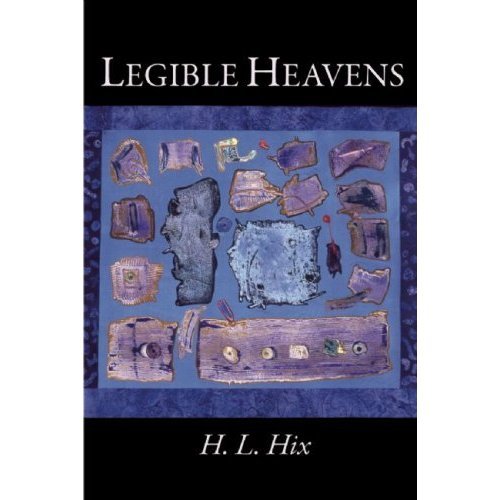
In my 2008 poetry collection Legible Heavens, one of the sections, “Synopsis,” consists of poems based on selected incidents and teachings from the gospels, canonical and noncanonical. By “based on,” I mean that the poems attend with great care to the source (e.g. I went in each case to the original language), but does not attempt simply or straightforwardly to translate it.

For example, “One Sparrow” casts in the form of a villanelle an incident from the Infancy Gospel of Thomas, in which the child Jesus, reprimanded by an elder for molding sparrows from clay on the Sabbath, claps his hands, upon which the molded sparrows fly away. The original is told by a human observer, in the third person, in prose, but in my poem the first-person speaker is one of the sparrows.

Or again, the poem that addresses the beatitudes makes of them a sonnet, and gives for the repeated Greek word μακάριοι not the usual English translation “blessed” but the slightly more aslant word “replete.” Later, in my 2017 poetry collection Rain Inscription, one of the poems, “Near Fire,” creates, by redaction, translation, and modification a “sayings gospel.” It tries, that is, to reverse the historical progression of the gospels, from earlier collections of sayings attributed to Jesus to later detailings of life and travels and deeds. In my poem (my sayings gospel), the isolation of the sayings from the stories of works and wanderings is emphasized by referring to their source not as Jesus but as Sayer.

As for The Gospel itself, my research focused on gathering as many extant gospels, and fragments of gospels, as possible. Once the gathering was more or less complete, I began to translate portions, and to arrange them: this translation/arrangement process was reciprocal and ongoing.

I kept a chart of sections to be translated, but kept “shuffling” translated sections so that the order of sections changed and developed continuously. Similarly, I began with the most literal translation I could manage for each individual section, but modified translations to incline sections toward one another as they became part of the larger, growing whole. My translations got “looser” as their acclimatization to the whole advanced: that is, the integrity of the whole trumped “sticking to the text” of any one portion. After all the individual units had been translated and had entered the whole, the revisions took ever greater liberties, in the sense that they sought beholdenness not to the Jesus of any one passage or any one source gospel, but to the Jesus who lived and spoke in this gospel.

I don’t mean anything to which my paternal grandfather would have granted validity, but I do mean it seriously, when I say I tried in the process of composing this gospel to listen to Jesus. My Granddad Hix would not have approved of The Gospel, but it still proves I was listening to him, too, all those years ago.

Thank you for sharing your research and inspiration for The Gospel.