Quantcast

19th U.S. Poet Laureate Named: Natasha Trethewey

The newest U.S. Poet Laureate Consultant in Poetry was announced as Natasha Trethewey, author of the award-winning collection Native Guard.

Last week, I was able to head into Washington, D.C., to the Library of Congress with a friend and see Trethewey give the inaugural reading for the literary season.  She read from her latest collection, Thrall.

There is nothing like hearing a poet read from their own collection to make you want to buy it and read it for yourself and see the words drape the page.  If you’re interested, here are my impressions of the event.
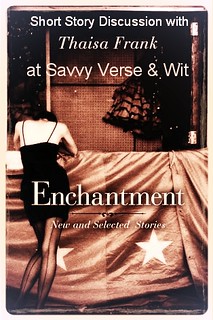
Enchantment by Thaisa Frank Short Story Discussion

enchantment button Welcome to today’s discussion of “The Mapmaker” from Thaisa Frank’s collection of short stories in Enchantment.

I selected “The Mapmaker” because its one of the longer stories in the collection and follows the passage of a “map” throughout the hands of a family.  The story is broken down into different parts:

“Ninevah”
“Dime Store”
“Sandra Greenaway”
“A Hidden City”
“The Journey of the Map”
“My Father’s Study”
“The Antique Writing Chest”
“A Walk in the Snow”
“Eating”
“A Visit to Ninevah”
“The Post Box”
“The Magician’s Eye”
“The Tibetan Book of the Dead”
“Mildred”
“Ashes”
“The Map”

I hope everyone has had a chance to read all of the sections for today’s discussion. I wanted to start everyone off with a few things to talk about.  Please be aware there could be spoilers.

1.  There seems to be a line drawn in this story between myth and reality, where the enchantment of the “fairy tale” is cracked or shattered.

2.   At the same time that the masks are taken down and reality reveals itself, the narrator sometimes continues to believe in a better place, a shining world where dreams are reality.

3.  Do you think that families are like countries, in that each person has their own boundaries and their own cultures that can sometimes clash and more?

OK, that’s enough from me.  Let’s get this discussion started…

Also, if you want to discuss another short story in October, let’s pick a date that we’re all available and see what story we all want to discuss.

Mailbox Monday #194

Mailbox Mondays (click the icon to check out the new blog) has gone on tour since Marcia at A Girl and Her Books, formerly The Printed Page passed the torch. This month’s host is BookNAround.

The meme allows bloggers to share what books they receive in the mail or through other means over the past week.

Just be warned that these posts can increase your TBR piles and wish lists.

Here’s what I received from the library sale a couple weekends ago:

1.  Chosen by P.C. Cast and Kristin Cast

2.  Haunted by P.C. Cast and Kristin Cast, which I already had and didn’t realize, so I’ll be re-donating it to the library for them to sell again!

3.  Untamed by P.C. Cast and Kristin Cast

4.  Burned by P.C. Cast and Kristin Cast

5.  Tempted by P.C. Cast and Kristin Cast; I still need the second book, Betrayed.

6.  Undercover by Beth Kephart, which is my favorite of her books and one I had borrowed from the library but did not own; Thanks, Anna for finding it.

7.  Homer & Langley by E.L. Doctorow

8.  A Working Girl Can’t Win by Deborah Garrison

9.  The Poems of Doctor Zhivago by Boris Pasternak, translated by Eugene M. Kayden

Review books that have arrived:

10.  Between Two Fires by Christopher Buehlman, which came unsolicited from Penguin.

11.  Things Your Dog Doesn’t Want You to Know by Hy Conrad and Jeff Johnson for a TLC Book Tour in October.

12. The Boys of ’67 by Dr. Andrew Wiest for review.

13. One Last Strike by Tony La Russa, which came unexpectedly and will likely be passed onto someone who would love to read it.

14. The Demoness of Waking Dreams by Stephanie Chong, which came unexpectedly from WunderkindPR and will likely also find a new home.

15. With Apologies to Mick Jagger, Other Gods, and All Women by Jane Rosenberg LaForge for review.

What did you receive?

BBAW: Profile of Poetry Blogger Everything Distils Into Reading

BBAW has bled over into the weekend for me for several reasons:

  1. I waited too long to send out my interview questions to poetry bloggers I wanted to profile.
  2. I have a crazy life with a 1 year old.
  3. I remembered at the last minute that it was BBAW and already had a review scheduled for the week.

However, that does not mean that you can’t have fun reading my profile interviews of poetry bloggers.  It’s good to highlight these daring bloggers and to see how they view poetry.  Plus, I hope they will convince you to give poetry a try.

Today, I’ve got a great interview with Gautami of Everything Distils into Reading, who also writes her own poetry, which you can view at Rooted.

As a reader of poetry, what is it that poetry can provide that you think other genres do not or what makes poetry unique? Why do you read it?

Poetry is spirituality for me, the writing of it, the reading of it. Poetry encapsulates so much in so little. I consider myself a poet first and foremost. It is a way of life for me. Take away my poetry and I am merely existing.

Thinking about new readers of poetry, what are some of the mistakes you think they make when approaching a poem? What are some tips that can improve their enjoyment of the genre?

Poetry is seldom literal. One has to look for depth. Many times, the reader interprets differently from what a poet wishes to convey. That is good too, because the poet too learns about what the reader thinks. My advice is to keep on reading poetry and the rest will fall into place.

About how many books of poems do you review each year on average? Do you have an established goal of how many or is it a more organic process?

I used to review 12 poetry books a year. Lately, I have not been able to do so. However, that has not stopped me from reading poetry. I read it all the time, in print form and/or on the net!

As someone who lives outside of the United States, do you find that poetry is more popular, less popular, or about the same as it is in American or other cultures? What kinds of poetry books do you find yourself recommending?

Poetry is not popular at all. No one wants to read it. It requires deep understanding and patience and no one seems to have any time.  I recommend that one should start from reading contemporary poets and go slowly back to classics.  Structured poetry is also a good starting point. I did the other way round. I started with classics and now I read contemporary poetry.

What are you reading now? How do you view the world of poetry and its future?

I am reading Carl Sandburg and loving it.  And I do think poetry has a great future. It is not going to die any time soon. Or maybe never. As long as I live, I will keep on writing poetry.

Thanks, Gautami, for answering my interview questions. And for participating in my BBAW profile experiment.  We are kindred spirits in that without poetry we would merely be existing.

BBAW: Profile of Poetry Blogger Read Handed

As a last profile in honor of Book Blogger Appreciation Week, I sent over a few interview questions to Julie at Read Handed.  Her blog has a bit of everything, from poetry to nonfiction and literary fiction, and she’s a librarian who tells her readers that you’ll probably see books on her blog that aren’t what everyone else is talking about.
Please check out what she had to say about poetry and blogging.

As a reader of poetry, what is it that poetry can provide that you think other genres do not or what makes poetry unique? Why do you read it?

Poetry to me is largely about the words – their sounds, their forms, and (lesser so) their meanings. In poetry, every word is deliberate. In a novel, or even a short story, one word, or even an entire sentence, can be ineffective without lessening the overall work too much. Not so in poetry. That is why it fascinates me so much. Poets are masters of language, knowing when words can be cut to make the feeling more immediate, but also knowing which words are essential to the poem.

Thinking about new readers of poetry, what are some of the mistakes you think they make when approaching a poem? What are some tips that can improve their enjoyment of the genre?

The biggest mistake readers make when they approach poetry for the first time is assuming there is some secret code – some one singular meaning that must be derived. Then, if they don’t “get” that intended meaning, they feel like they failed at reading the poem. This is not true.

Yes, most poets have a “meaning” in mind when they craft a poem, but it is not our job as readers to figure out that meaning. And sometimes, poets leave the meaning intentionally ambiguous. Poetry is what you make of it. Whether it’s a phrase in the poem that just works and stays with you for the beauty of how it sounds, or an image that resonates with you, or a meaning you derived that speaks to you – these things all make for a successful poetry reading.

My main advice would be to stop trying to figure out what the “experts” think the poem means, or even what the poet intended the poem to mean. Instead, simply enjoy the poem. Read it aloud, roll the words on your tongue, and delight at how they fit together.

About how many books of poems do you review each year on average? Do you have an established goal of how many or is it a more organic process?

I review probably 2-3 books of poems a year. It’s really an organic process, though this year I did have a set goal of 2 for the Fearless Poetry Exploration Challenge. In general, I tend to not read books of poems cover to cover, though that is a great way to get to know a poet. Instead, I read poems randomly, pulling from several books at once. For me, reading poetry is more about the individual poems than the collections.

As a librarian, how often do you recommend books of poetry to patrons? Do you find yourself recommending poetry books to friends/family? If so, which ones do you recommend mostly?

Well, I work in an academic health sciences library, so poetry does not come up often (i.e. at all) with my patrons. But I do recommend poets to my friends and family. Again, I tend to concentrate more on the individual poem than the collection, and poets in general more than a specific volume. Some poets that I love recommending are Liz Robbins, Gerald Stern, Sara Teasdale, and Lisel Mueller.

What are you reading now? How do you view the world of poetry and its future?

Not reading too much poetry right now, unfortunately. I’m actually reading an information literacy instruction handbook for work. I have been meaning to read more in my Seamus Heaney collection, so maybe that will be next.

I think poetry will continue to be a sort of niche genre. The proliferation of the Internet has both helped and hurt poetry in that regard – it has exposed more people to poetry, but it has also let anyone “publish” their bad poetry. Either way, I don’t think poetry is going anywhere, but I also think that most poets will continue to have a hard time making a living on poetry alone.

Thanks, Julie, for answering these questions and participating.

167th Virtual Poetry Circle

Welcome to the 167th Virtual Poetry Circle!

Remember, this is just for fun and is not meant to be stressful.

Keep in mind what Molly Peacock’s books suggested. Look at a line, a stanza, sentences, and images; describe what you like or don’t like; and offer an opinion. If you missed my review of her book, check it out here.

Also, sign up for the 2012 Fearless Poetry Reading Challenge because its simple; you only need to read 1 book of poetry. Please visit the stops on the 2012 National Poetry Month Blog Tour.

Today’s poem is from Robert Service:

The Passing of the Year

My glass is filled, my pipe is lit,
     My den is all a cosy glow;
And snug before the fire I sit,
     And wait to feel the old year go.
I dedicate to solemn thought
     Amid my too-unthinking days,
This sober moment, sadly fraught
     With much of blame, with little praise.

Old Year! upon the Stage of Time
     You stand to bow your last adieu;
A moment, and the prompter's chime
     Will ring the curtain down on you.
Your mien is sad, your step is slow;
     You falter as a Sage in pain;
Yet turn, Old Year, before you go,
     And face your audience again.

That sphinx-like face, remote, austere,
     Let us all read, whate'er the cost:
O Maiden! why that bitter tear?
     Is it for dear one you have lost?
Is it for fond illusion gone?
     For trusted lover proved untrue?
O sweet girl-face, so sad, so wan
     What hath the Old Year meant to you?

And you, O neighbour on my right
     So sleek, so prosperously clad!
What see you in that aged wight
     That makes your smile so gay and glad?
What opportunity unmissed?
     What golden gain, what pride of place?
What splendid hope?  O Optimist!
     What read you in that withered face?

And You, deep shrinking in the gloom,
     What find you in that filmy gaze?
What menace of a tragic doom?
     What dark, condemning yesterdays?
What urge to crime, what evil done?
     What cold, confronting shape of fear?
O haggard, haunted, hidden One
     What see you in the dying year?

And so from face to face I flit,
     The countless eyes that stare and stare;
Some are with approbation lit,
     And some are shadowed with despair.
Some show a smile and some a frown;
     Some joy and hope, some pain and woe:
Enough!  Oh, ring the curtain down!
     Old weary year! it's time to go.

My pipe is out, my glass is dry;
     My fire is almost ashes too;
But once again, before you go,
     And I prepare to meet the New:
Old Year! a parting word that's true,
     For we've been comrades, you and I --
I thank God for each day of you;
     There! bless you now!  Old Year, good-bye!

What do you think?

BBAW: Profile of Poetry Book Blogger The Written World

So for my final Book Blogger Appreciation Week (BBAW) profile of poetry book bloggers this week, I’m going with a relatively new reader of poetry, Kelly of The Written World.  She’s also the other half of The Poetry Project.

As a relatively new reader of poetry, how would you describe your experiences so far? What poems or poets have you loved and which have you disliked?

I describe my experiences as a tad bit overly paranoid. I am always worrying that I am not getting the idea behind the poems. As a result I overthink and then miss things entirely. It is a problem I have long had with poetry sadly. I still haven’t read a lot of poetry, but I did enjoy my time with Robert Frost last month. I had read his poetry before, but not in such a quantity. It was basically a poem here and there in school. In the end I read two collections.

Because you’re a new reader of poetry, was there a particular catalyst that started your journey to read more poetry? And why had you not read poetry before?

A conversation on Twitter lead to the Poetry Project. First, there was just a list of poems to read and then it grew into something more wide-spread. I think it is working having a poetry fan and a not so poetry fan reading together. Leslie says “look at all these wonderful poems” and I slowly explore them and decide it is not so bad. I hadn’t really read poetry before because I don’t get the appeal. I am a novel fan over the shorter types of writing. I also don’t read a lot of short story collections. I am trying to get beyond that, though.

As the “other half” of The Poetry Project with Regular Rumination, what are your goals for the project and how did you come up with the monthly themes? Was there a slew of ideas and a particular process of elimination or was it easily agreed upon?

The idea of The Poetry Project is to read more poetry. Now that others are joining in, it is basically to get people reading and talking about poetry more. The themes came about because people felt overwhelmed deciding on what to read. This way they can either read in the themes or still have a chance to explore whatever they want to read. As to the themes, Leslie and I both chose 6 and then rotated months. Some of them are decided for the seasons, holidays, events, etc. that happen during that month. Others were random choices. If we successfully get near the end of a year, we plan to get participants to pick the next 12 themes.

Do you read full books of poetry or do you just read individual poems?  Have you been reviewing books of poetry on your blog, The Written World?

In the beginning, I was just reading a poem here and there. In August, though, the theme was ‘Pulitzer Winners’.  I went back to some of the early award-winners and found their collections in the public domain.  As a result, I read poetry collections in August. Very impressive for me! Every Wednesday one of us says something poetry related. I just say a few short lines about the poems. I sometimes include favourite lines. I wouldn’t call them reviews, though.

What are you reading now? How do you view the world of poetry and its future in your reading life?

The theme for September is classics. I have been trying to decide what to read. There is a lot that would fit into that category. One of the few poetry books I owe is a collected works of Emily Dickinson, so I was thinking maybe I would hunt that down. As to the future, I am hoping that I will become comfortable enough with poetry that even without the Poetry Project I will explore something poetry-related each month. There is so much out there that I haven’t tried. It’s a slow process, but I have made big changes so far this year. I would like to think, anyway!

Thanks, Kelly, for answering my questions, and I can’t wait to see what the Poetry Project has in store in 2013 and what you discover in poetry.

BBAW: Profile of Poetry Book Blogger Regular Rumination

I was honored to win the poetry blogger award for BBAW in the past, but I also thought that any blog featuring poetry should be recognized since there are so few of us.  As part of that process, I looked to my network of blogs that I read and love, and thought it would be great fun to profile at least one poetry blogger this week in honor of Book Blogger Appreciation Week.

To that end, I sent over a few interview questions to one of my blogging and Indie Lit Award judging buddies, Lu from Regular Rumination.  She’s one of the first bloggers I noticed posting about poetry, so I think it’s appropriate that she’s the one I profile today.

When did you first read poetry and what drew you to it? Or if you were initially put off by poetry, what changed your mind?

I think I first read poetry seriously my freshman year of high school. My teacher passed out copies of Pablo Neruda’s “I could write the saddest lines” and I immediately fell in love. I remember inhaling poetry from then on, but my love for poetry also came from wanting to write it and wanting to write it well. In college, I took as many poetry workshops as I could and now I miss it.

I don’t know that I was ever put off by poetry, but I’m not sure I would have fallen in love with poetry if we didn’t have to focus on it in high school. We also were required to write it, which was when I discovered that I really enjoyed it. For me, I often don’t learn to appreciate something until I’ve tried to do it myself. After that project ended, I joined an old AOL message board called My Poetry and Writing, and not only continued to write poetry, but also found my first online community. Now that I’m older and write poetry a lot less than I would like, I read poetry because it is important to me. It is less about learning how to write and more about seeing the world in new, exciting, and beautiful ways.

About how many books of poems do you review each year on average? Do you have an established goal of how many you will read and/or review each year? Or is the process more organic?

My blog has slowly moved away from reviewing books and I often find myself discussing specific poems over specific books of poetry. I have reviewed several collections over the years, but I rarely have established goals of any sort for my blog. I find that makes me avoid doing them; really, if there’s anything I don’t want to do for my blog, I should just say I’m going to do it. I like my reading to be more organic. I have made a conscious effort, though, to read more poetry every week, whether it is an entire collection, the monthly issue of Poetry Magazine or the daily email from Poets.org.

Tell us a little bit about the Read More/Blog More Poetry project (click on the image to learn more) that you started at Regular Rumination and what inspired you to start it and how has participation been? What are some upcoming events associated with the project?

What started out as the Read More/Blog More Poetry event has turned into The Poetry Project, which was started by myself and Kelly, from The Written World. It all started as a request on Twitter from a few bloggers for a list of poems. I wrote a list of my favorite contemporary poems and Jason from Moored At Sea made a list of classic poems. Kelly and I started talking about wanting to share the lists and also to convince more people to blog about poetry. Kelly is a new reader of poetry and I think that’s what makes us a good team: we have two very different experiences with poetry, but we both want to read more of it. The Project isn’t really about reading a specific poem or posting at a certain time, though we do have monthly optional themes, it’s really just about getting your feet wet with poetry and with blogging about poetry, if you’re new to poetry, and about making poetry a more visible part of your blog if you’re already a regular poetry reader.

What I think has been most successful about The Poetry Project is that anyone can participate, whether you’ve just started reading and blogging about poetry or you’re a seasoned poetry reviewer. It’s turned into a small community of people who are blogging about poetry and how they relate to it. The only real requirement is that you blog about poetry and link back to the post. Kelly and I are committed to including a roundup of each participants posts at the end of the month, so there’s one place where everyone can go back and look to see what we’ve all read and talked about. Participants are even contributing original poetry! It’s been really amazing.

Recommend some poets for beginners. Recommend some poetry translations or poetry for those who’ve read more poetry than others.

If you’re new to reading poetry, I think Edna St. Vincent Millay, for an older poet, and Natasha Trethewey, for someone more contemporary, are excellent places to start.

If you’re looking for something that’s a bit of a challenge, I really recommend Derek Walcott and, in translation, Neruda’s Residence on Earth. In the US and around the world, Neruda is famous for his love poetry, but the poems in this book are a love poem of a different sort. They focus on the earth and our relationship with our physical surroundings. They are beautiful and sensual and sometimes difficult.

What are you reading now? How do you view the world of poetry and its future?

Right now, I am still reading some of the collections I have out from the library for last month’s Poetry Project theme of Pulitzer Prize-winning poetry, including Marianne Moore’s collected poems. I am also always reading the Poets.org Poem-A-Day emails.

As for the future of poetry… I’m not sure. I think there are enough dedicated readers of poetry in this world to keep it an active and thriving community, even if it is a very small one. I hope that there will be enough English teachers like mine who help foster young people’s passions about poetry.

About Regular Rumination from Lu:

Regular Rumination is my own corner of the web where I talk about books, poetry, crafts, and whatever else is on my mind. I started it back in 2008, while I was home from college on winter break, looking for a great book to check out from the library. My life has changed a lot since then, but my blog has been the constant.

Thanks so much, Lu, for participating in this week’s BBAW profile of poetry bloggers.

The Siren of Paris by David LeRoy

In The Siren of Paris by David LeRoy, Marc is tempted by the siren call of Paris to return to the place of his birth, a place he does not remember but has the enticements of all he desires: love and art. Set in the time before Paris is invaded by Germans during WWII, LeRoy does well in depicting by turns the fear and the indifference Parisians and expats felt when Germany began to advance across Europe.  Once France begins to realize that negotiations with Germany will amount to nothing and Germany begins to take more territory, the fears become overwhelming for many, and there is an anxiousness that pervades the novel’s pages, especially as Marc’s friends panic about returning to the United States and England.

With that said, there are quite a few missed opportunities in the beginning of this novel when Marc is on a diplomatic mission with Mr. Wells (at the behest of William Bullitt, US ambassador to France) and they meet with not only Mussolini, but also Ribbentrop, who goes on a diatribe for 2 hours, and you don’t get any of the conversations!  Instead, LeRoy spends several pages on news reel footage in the local theater afterward when Marc returns and is on a date with Marie.  Missed opportunities like these set off alarm bells that more research could have been done to learn what might have been said by these high-ranking officials conquering Europe.  It also begs the question of whether this story was as well thought out as it could have been, especially given that the transitions between moments in time and locations are often left out and the reader feels adrift until they get their bearings again as to where they are, what day, and whom they encounter.

LeRoy does have a firm grasp of how to make the plot move along and how to make the reader feel the fear of the Parisians and the expats who are fleeing the city as the German’s approach.  From the overflowing train platforms to the rush out of their apartments with their clothes on their backs, the plot moves along quickly and ramps up the tension.  As Marc seeks to leave at the last minute, his friends Dora, Nigel, and David are not forgotten by the narration as their paths homeward are highlighted as well.  However, in many ways, LeRoy has sketched the character of Dora (a subordinate character) better than he has the main protagonist, Marc.

The Siren of Paris by David LeRoy had the potential to be a great novel, but with the poor plot transitions and missed opportunities for historical information and additional characterization, it becomes a chore to read.  The additional framing in the novel at the beginning and end in which Marc is reviewing his life in flashes and the colors of his soul are changing read a bit overly dramatic and take away from the rest of the story.  With so many styles and techniques running amok in this novel, it is hard for readers to feel fully engaged in the story or connected to Marc.  Unfortunately, this reader didn’t even make it halfway through the novel before deciding she’d had enough.  However, if readers are willing to overlook these issues and focus on the fast-paced plot, it could be an enjoyable read for those that like WWII novels.

About the Author:

In writing his first novel, The Siren of Paris, David LeRoy drew upon his longtime interest in philosophy, the visual arts, myth, storytelling, psychology, and Ocean Liner travel. During a visit to France to study art in the fall of 2012, LeRoy became intrigued by the French Resistance, particularly when his research revealed the role of Americans in the Resistance, as well as the limited means of escape from Europe as the war escalated. LeRoy holds a bachelor of arts in philosophy and religion.

This is my 66th book for the New Authors Reading Challenge 2012.

BBAW: Interview with Lit and Life

Welcome to day two of Book Blogger Appreciation Week (BBAW). Today is the interview swap with another blogger, which is always my favorite part. Lit and Life is a blog that I’ve read off and on, though not always commented on, for several years. She’s one of the participants in the WWI Reading Challenge this year at War Through the Generations, and she’s got some fun features.

Let’s get to the interview, shall we:

1. Lit and Life is your piece of the Internet where you talk about books and life. What have been some of your most popular blog posts? Which books have generated the most discussion? What life posts?

For my first year of blogging, I was obsessed with my stats. Then I came to realize that as long as I didn’t monetize my blog, I didn’t really care how many people read my blog each day since, first and foremost, I’m blogging for me. Along the way, I’m happy that other people do check in and comment but I can’t really tell you which posts were the most popular. I do always notice that I get a lot more discussion when I review non-fiction books and my Sunday Salon posts always seem to get some discussion going.

2. It says on the about me page that you love flea markets (me too!). Do you just go to browse or do you have specific lists of items you are looking for? What is the most unusual thing you’ve found at a flea market that you just love and why?

I always have some things I’m keeping an eye out for when I go to flea markets, “antique” malls and stores and auctions. Old children’s books, pieces of pressed glass that match the ones I collect, frames and architectural elements are always on my radar. But I love to just browse and keep my mind open to interesting new things. Twenty-five years ago, my husband and I found an old kitchen table at an auction that we picked up for five dollars. We refinished it but it’s a table that clearly has a history and I love that about it. I think it tells people a lot about the kind of household we have.

3. If I were to give you a book of poetry, would you read it? Why or why not? If you’ve read poetry in the past, which book or poet have you read and would recommend to others?

Absolutely I’d read it although I might have to check back in with you frequently to have you explain it. It’s probably cliche to say it but I do love Emily Dickinson. I must admit that I struggle to read some poetry – I’ve tried to read “Leave of Grass” several times but Whitman really makes you think and I can only read about one of his poems a day. That makes getting through the book endless and I usually end up setting it aside since it’s so long. I did read my kids a lot of poetry when they were growing up – Shel Silverstein and Jack Prelutsky were big favorites and we often did art projects based on their poems.

4. Fairy Tale Fridays is a unique part of your blog. Do you prefer new or old fairy tales? What draws you to these stories and which would you recommend as must reads?

I’m a sucker for the old fairy tales but I do love to read the new takes on them. I think the history and the darkness of fairy tales is what really draws me to them. I’m also fascinated by trying to figure out what it is about a tale that made it something that people passed on and how so many of the core stories are found in countries all over the world. There are a lot of great collections of fairy tales, although it is hard to find books that encompass tales from more than one source. There are some great books for children based on fairy tales including Rapunzel Illustrated by Paul Zelinsky and The Stinky Cheese Man and Other Fairly Stupid Tales by Jon Scieszka. Check out Goodreads list of the best fairy tales and retellings for some great adult and children’s books.

5. What are your top 3 go-to book blogs for recommendations and why?

It’s funny that my top book blogs have changed over the past three years. In the beginning, I really stuck with the big bloggers, but over the years, I’ve found the blogs that bring me opinions on the kinds of books I like but also expose me to books I might otherwise pass by. Three blogs that are my go-to’s right now are: Book Chatter, Rhapsody In Books Weblog, and Life In The Thumb. But, let’s be honest – after clearing my reader, I still have 75 blogs that I read and enjoy on a regular basis.

If you’re interested in the interview she did with me, check it out.