Quantcast

221st Virtual Poetry Circle

Welcome to the 221st Virtual Poetry Circle!

Remember, this is just for fun and is not meant to be stressful.

Keep in mind what Molly Peacock’s books suggested. Look at a line, a stanza, sentences, and images; describe what you like or don’t like; and offer an opinion. If you missed my review of her book, check it out here.

Also, sign up for the 2013 Dive Into Poetry Challenge because its simple; you only need to read 1 book of poetry. Check out the stops on the 2013 National Poetry Month Blog Tour and the 2012 National Poetry Month Blog Tour.

Today’s poem is from Rosa Alice Branco (translated from Portuguese by Alexis Levitin):

Between Yesterday and Your Mouth

I will spend the night with those days.
With the smile you left in the sheets.
I still burn with the remains of your name
and see with your eyes the things that you touched.
I am here between the bread and table, in the glass
you lift to your mouth.  In the mouth that holds me.
And I don't know what I am between yesterday and what will come.
Yesterday I was the river at evening, the gaze that caressed the light.
My son writes on pebbles on the beach and I invent
steps for deciphering them.  They all roll far away.
That's how the sea is.  I am learning with the waves
to melt away to foam.  There is always a seagull
that cries out when I come near, there is always a wing
between the sky and my floor.  But nothing belongs to me,
not even the words with which I cement the hours.
Perhaps love is just a small difference in time zones
or a linguistic accord that only exists
deep in the flesh.  But here where I am not
what grounds me is the certainty that you exist.

What do you think?

Flow: The Life and Times of Philadelphia’s Schuylkill River by Beth Kephart

Source: Purchased
Hardcover, 120 pages
I am an Amazon Affiliate

Flow: The Life and Times of Philadelphia’s Schuylkill River by Beth Kephart is a well imagined autobiography of the Schuylkill River (Hidden Creek) near Philadelphia told from the point of view of the river.  A hopeful river intrigued by the humans that come upon her, collecting those forgotten items, and enjoying the natural wonders of frozen surfaces and fishing.  Coupled with the poetic narrative are notes on the time period and the major events near and around the river, including the Revolutionary War and the Civil War.  As the industrial revolution takes hold, the river finds that the humans who have been intrigued by her beauty and hidden secrets and those that have piqued her interest are busy moving through their lives with little thought to her, dumping their waste, chemicals, animal parts, and more into her flowing waters.

“Imagine taking a needle to the point of blood on your palm.  Imagine drawing that needle around and around, leaning in on it, forcing an edge, rearing at the creases and the lifelines, the ridges and slightest hills that forecast your happiness.  Imagine the skin giving way.

That’s skating.”  (Page 32)

There are moments of fear, curiosity, and hatred.  “How is it that I became the quickest route to your confession–the door you close to those parts of yourself that you hope no one will see?  Call me what you’ve made me, which is a grave.”  (page 87)  She’s a river (dare I call her Flo) who ages beyond her years thanks to the careless dumping and even direct interference as dams are built to harness power.  Kephart melds her prose with photography, poetry, and factual notations.  There’s a sense of nostalgia in Flow that breathes life into history, ensuring readers sense the culture of the time period, the struggles of the people, and their dreams.  The river just wants to live, but she remains curious about her own environment, curious about how the people use and abuse her, and disheartened when it seems as though she has been forgotten or replaced.

Flow: The Life and Times of Philadelphia’s Schuylkill River by Beth Kephart is a historical look at the river and Philadelphia, handled with a careful and creative hand.  The river comes alive, just like Philadelphia’s people and her history.  Readers will learn a great deal about the river, the industrial revolution, and our nation’s history.  The Schuylkill River is no longer the hidden gem of Pennsylvania.

About the Author:

Beth Kephart is the author of 10 books, including the National Book Award finalist A Slant of Sun; the Book Sense pick Ghosts in the Garden; the autobiography of Philadelphia’s Schuylkill River, Flow; the acclaimed business fable Zenobia; and the critically acclaimed novels for young adults, Undercover and House of Dance. A third YA novel, Nothing but Ghosts, is due out in June 2009. And a fourth young adult novel, The Heart Is Not a Size, will be released in March 2010. “The Longest Distance,” a short story, appears in the May 2009 HarperTeen anthology, No Such Thing as the Real World.

Kephart is a winner of the Pennsylvania Council on the Arts fiction grant, a National Endowment for the Arts grant, a Leeway grant, a Pew Fellowships in the Arts grant, and the Speakeasy Poetry Prize, among other honors. Kephart’s essays are frequently anthologized, she has judged numerous competitions, and she has taught workshops at many institutions, to all ages. Kephart teaches the advanced nonfiction workshop at the University of Pennsylvania. You can visit her blog.  Here’s my most recent interview with her too.

My other Beth Kephart reviews:

Guest Post: Writing Down the Moon by Erica Goss

Erica Goss, the poet who wrote Wild Place, continues to keep us up to date on her 12 Moons project with vocal talents of Nic S. and the musical talents of Kathy McTavish. We’ll be sure to keep everyone in the look on this collaborative project.  Check out the first guest post.

Please give Erica a warm welcome:

I didn’t ask why my country was
moonstruck, deep in the month of July
when I was nine years old. I didn’t
care about the stiff unflapping flag
and even less about steps, leaps or
mankind.
        from “Buck Moon” by Erica Goss

Writing the twelve poems that form the text for 12 Moons, an art project combining words, voice, music, and video, was one of the few times that I have consciously set out to write a series of poems based on a theme. Like any project, I began with a burst of energy and enthusiasm, but found that I needed to work hard to keep the momentum going.

The project involved writing a poem for each full moon, using the traditional names of the moons as titles. I avoided using obvious moon references, and especially any moon clichés. I cast back in my memory for events that had happened during a particular month to use as a place to start, but only a few clear recollections appeared. Mostly I wrote about the feeling of that month, and about how people respond to the seasons, whether or not they are aware of the moon’s influence over their moods.

I had one really good historical event to use: Apollo 11. When I was nine years old, the first man set foot on the moon exactly one week after my youngest brother was born. I blended these events into the poem, “Buck Moon.” I used the voice of myself at nine, unimpressed with the moon landing, having just had my world rocked with the arrival of a new sibling.

Many of the poems, if not most, are located in the culture, people and landscape of California, where I have lived my entire life. As James D. Houston said in an interview for The Bloomsbury Review, “California is endlessly compelling to contemplate and write about. I didn’t choose to grow up here, but by lucky chance – the lucky choice my parents made – it happens to be my habitat. And in my own life I’ve found that a sense of place, that kind of grounding is really essential.” In a place as large and disparate as California, we obey the laws of nature, whether in LA’s Skid Row, or the low round hills of Sonoma County, or while Christmas shopping at a mall in San Jose.

I found that writing the moon poems was not a linear process. I didn’t move sequentially throughout the year, starting with January; instead, certain events associated themselves with certain months, and the poems unfolded from those points. The first moon poem was “Snow Moon,” the full moon of February, then “Strawberry Moon” (June) and “Hunter’s Moon” (October). The rest of the poems appeared the same way: haphazard inspirations over the next five months. I finished the last one on August 30th.

12 Moons will appear beginning January 2014 at Atticus Review.

More about the process of making 12 Moons in the next post. Here are links to the artists involved in 12 Moons:

  • Swoon’s website
  • Kathy McTavish’s website
  • Erica Goss’s website
  • Erica Goss’s column on video poetry.

Are you as excited about this project as I am?

Black Aperture by Matt Rasmussen

Source: Academy of American Poets, part of the membership benefits, with no expectation of review
Paperback, 64 pages
I am an Amazon Affiliate

Black Aperture by Matt Rasmussen, 2012 winner of the Walt Whitman Award from the Academy of American Poets and recently added to the National Book Award 2013 long list, could not be more aptly named.  The light passing through this dark hole is that of the narrator’s brother when he commits suicide, forever changing his family and yet changing nothing in the wider world.  There is a balance Rasmussen tries to strike here between the irrevocable change the family, and in particular the brother, feel and the lack of change outside of their microcosm, even in nature where the hunters and sportsman arbitrarily continue to shoot clay pigeons or deer.

From After Suicide (page 4-5)

I wanted to put my finger
into the hole

feel the smooth channel
he escaped through

stop the milk
so he could swallow it

There is a deep sadness in these poems, but also a sense of confusion and desire to understand, even when understanding is beyond our capacity because we are not those who have taken their lives.  We have different experiences and different perspectives, and while we have the capacity for empathy, that is oftentimes not the same — or enough.  The narrator of the poems even acknowledges this when he says in “Elegy in X Parts,” “There is no refuge//from yourself.” (page 36)  It is because we are trapped with ourselves that suicide may seem like the only solution, especially if we are unable to see solutions outside of ourselves.

Rasmussen has some stark images, haunting pictures of death and lifelessness.  There is an emptiness in those vivid moments, which the poet captures with so few brushstrokes.  As the past slips further away, people and moments fade, but their impressions are still felt — as personified by “Monet as a Verb” (page 19).  And although a tragic loss can be scarring, scars fade and heal.  Black Aperture by Matt Rasmussen examines the light that leaves our lives in a flash, often unexpectedly and without reason, and how we sometimes grieve for long periods of time afterward and in some cases, even want to follow our loved ones through the same dark hole to find peace, understanding and closure.

About the Poet:

Matt Rasmussen’s poetry has been published in Gulf Coast, Cimarron Review, H_NGM_N, Water~Stone Review, New York Quarterly, Paper Darts, and at Poets.org. He’s received awards, grants, and residencies from The Bush Foundation, The McKnight Foundation, The Minnesota State Arts Board, Jerome Foundation, Intermedia Arts, The Anderson Center in Red Wing, MN, and The Corporation of Yaddo. He is a 2014 Pushcart Prize winner, a former Peace Corps Volunteer, and teaches at Gustavus Adolphus College. His first book of poems, Black Aperture, won the 2012 Walt Whitman Award and was published in 2013 by LSU Press.

This is my 25th book for the Dive Into Poetry Challenge 2013.


This is my 59th book for the 2013 New Authors Challenge.

Mailbox Monday #237

Mailbox Monday (click the icon to check out the new blog) has gone on tour since Marcia at To Be Continued, formerly The Printed Page passed the torch.  September’s host is Notorious Spinks Talks.

The meme allows bloggers to share what books they receive in the mail or through other means over the past week.

Just be warned that these posts can increase your TBR piles and wish lists.

Here’s what I received:

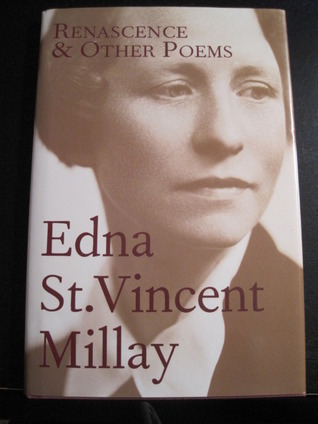
1.  Renascence & Other Poems by Edna St. Vincent Millay for $1 from the library sale.

Treasury of 23 works by American poet renowned for the lyric beauty of her early works. In addition to the title poem, this collection includes “Interim,” “Sorrow,” “Ashes of Life,” “Three Songs of Shattering,” “The Dream,” “When the Year Grows Old,” and others, including 6 sonnets. Alphabetical lists of titles and first lines.

2.  Poetic Meter & Poetic Form by Paul Fussell for 50 cents from the library sale.

The title of this book may suggest that it is designed as a latter-day Gradus ad Parnassum to teach aspiring writers to produce passable verses. It is not. It is intended to help aspiring readers deepen their sensitivity to the rhythmical and formal properties of poetry and thus heighten their pleasure and illumination as an appropriately skilled audience of an exacting art.

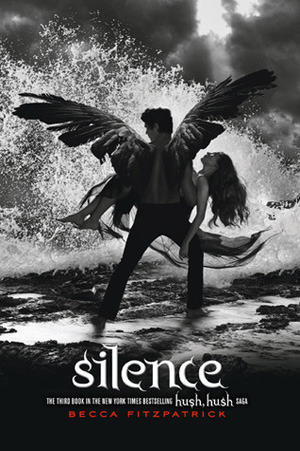
3. Silence by Becca Fitzpatrick for $1 from the library sale.

Nora Grey can’t remember the past five months of her life. After the initial shock of waking up in a cemetery and being told that she has been inexplicably missing for weeks, she tries to get her life back on track. So she goes to school, hangs with her best friend, Vee, and dodges her mom’s creepy new boyfriend.

But there is this voice in the back of her head, an idea that she can almost reach out and touch. Visions of angel wings and unearthly creatures that have nothing to do with the life she knows. And an unshakable feeling that a part of her is missing.

Then Nora crosses paths with a sexy stranger, with whom she feels a mesmerizing connection. He seems to hold all the answers…and her heart. Every minute she spends with him feels more and more intense until she realizes she could be falling in love. Again.

4.  His Majesty’s Hope by Susan Elia Macneal for 50 cents from the library sale.

World War II has finally come home to Britain, but it takes more than nightly air raids to rattle intrepid spy and expert code breaker Maggie Hope. After serving as a secret agent to protect Princess Elizabeth at Windsor Castle, Maggie is now an elite member of the Special Operations Executive—a black ops organization designed to aid the British effort abroad—and her first assignment sends her straight into Nazi-controlled Berlin, the very heart of the German war machine. Relying on her quick wit and keen instincts, Maggie infiltrates the highest level of Berlin society, gathering information to pass on to London headquarters. But the secrets she unveils will expose a darker, more dangerous side of the war—and of her own past.

5.  Wish You Were Here by Stewart O’Nan for 50 cents from the library sale.

Award-winning writer Stewart O’Nan has been acclaimed by critics as one of the most accomplished novelists writing today. Now comes his finest and most complete novel to date. A year after the death of her husband, Henry, Emily Maxwell gathers her family by Lake Chautauqua in western New York for what will be a last vacation at their summer cottage. Joining is her sister-in-law, who silently mourns the sale of the lake house, and a long-lost love. Emily’s firebrand daughter, a recovering alcoholic recently separated from her husband, brings her children from Detroit. Emily’s son, who has quit his job and mortgaged his future to pursue his art, comes accompanied by his children and his wife, who is secretly heartened to be visiting the house for the last time. Memories of past summers resurface, old rivalries flare up, and love is rekindled and born anew, resulting in a timeless novel drawn, as the best writing often is, from the ebbs and flow of daily life.

What did you receive?

220th Virtual Poetry Circle

Welcome to the 220th Virtual Poetry Circle!

Remember, this is just for fun and is not meant to be stressful.

Keep in mind what Molly Peacock’s books suggested. Look at a line, a stanza, sentences, and images; describe what you like or don’t like; and offer an opinion. If you missed my review of her book, check it out here.

Also, sign up for the 2013 Dive Into Poetry Challenge because its simple; you only need to read 1 book of poetry. Check out the stops on the 2013 National Poetry Month Blog Tour and the 2012 National Poetry Month Blog Tour.

Today’s poem is from Matt Rasmussen from Black Aperture:

Chekhov's Gun (page 22)

Nothing ever absolutely has to happen. The gun
doesn't have to be fired. When our hero sits

on the edge of his bed contemplating the pistol
on his nightstand, you have to believe he might

not use it. Then the theatre is sunk in blackness.
The audience is a log waiting to be split open. The faint

scuff of feet. Objects are picked up, shuffled away.
Other things are put down. Based on the hushed sounds

you guess: a bed, some walls, a dresser. You feel
everything shift. You sense yourself being picked up,

set down. A cone of light cracks overhead. The audience's
eyes flicker toward you like droplets of water.

What do you think?

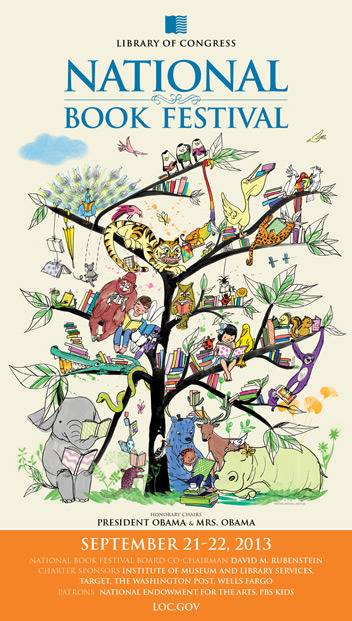
Book News: National Book Festival 2013

The 2013 National Book Festival will be in D.C. again for the 13th year, and there is a stunning lineup.

I usually spend most of my time in the Poetry & Prose tent, and that’s unlikely to change this year, as the Poet Laureate Natasha Trethewey will be there on Saturday.  One of my early morning favorites is also in the same tent, Poetry Out Loud, which is a bunch of high school students performing their own poems or those of others.

Sunday, if anyone likes Joyce Carol Oates, she’s scheduled to appear, but I’ve had bad luck with her at events — i.e. her not showing up as scheduled or at all.  But on Sunday, Alyson Hagy will be in town with her new book, Boleto, which I just received in the mail from the publisher this month.

For the rest of the lineup this year in the Poetry & Prose tent, check out this Washington Post list.

I’m also glad to see that Scholastic will be back with fun activities for kids, since my daughter will be old enough to enjoy them more this year.

“Scholastic will showcase a sneak peek at artwork by beloved children’s illustrators who were asked to demonstrate what “Read Every Day” means to them and will ask kids and parents at the festival to share their thoughts on why they love reading on a giant chalkboard. Festival-goers can visit Scholastic’s Storia™ reading corner for e-read-alouds from its new e-reading app, showcasing Scholastic’s exciting digital offerings and delighting kids. Scholastic also will host the popular “Build-a-Book” station that lets visitors turn a blank book into a masterpiece.”

And beyond Scholastic, PBS is always on hand with a variety of show characters for pictures, which enabled my daughter to meet the Cat in the Hat and some others.

What will you be seeing at the book festival this year?  I’d love to get some recommendations.

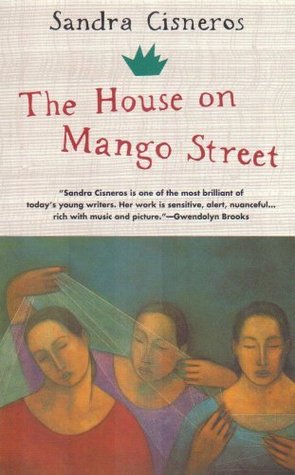
The House on Mango Street by Sandra Cisneros

Source: Purchased at Public Library Book Sale
Paperback, 110 pages
I am an Amazon Affiliate

The House on Mango Street by Sandra Cisneros is a coming-of-age story about Esperanza Cordero in a Latino neighborhood on Mango Street in Chicago.  She doesn’t remember much of the time before Mango Street, and it is clear that things were both good and bad there.  Neighbors she knew were hit by their husbands, while others had given up on their dreams simply because they got married.  In many ways these stories are woven together and are lyrical enough that they could be an epic poem about growing up as an immigrant in America.

Each short vignette tells a story from Esperanza’s point of view, revealing the harsh realities of growing up in an area other people are afraid to step foot in.

“All brown all around, we are safe.  But watch us drive into a neighborhood of another color and our knees go shakity-shake and our car windows get rolled up tight and our eyes look straight.”  (page 28)

Esperanza is growing up and learning how to become a woman, running in the city streets in heels an old lady hands her and her friends.  At the same time, she’s struggling to hold onto her childhood, while she’s admiring the older girls in the neighborhood wearing make-up and nylons.  She’s naive about relationships between girls and boys and she finds herself in situations where she can be taken advantage of, thanks to those she trusts.  But she also comforts her father when he cries.

“They don’t walk like ordinary dogs, but leap and somersault like an apostrophe and comma.” (page 71)

Cisneros paints a bleak picture as seen through Esperanza’s eyes, but at the same time she allows her character to feel something beyond the confines of her neighborhood.  She does not want to be that woman who merely looks at the possibilities and wallows in sadness and regret.  The House on Mango Street by Sandra Cisneros pays homage to these struggling women in a cadence, and she ensures readers not only glimpse a life that may be unfamiliar but that still contains a sliver of hope.

About the Author:

Sandra Cisneros was born in Chicago in 1954. Internationally acclaimed for her poetry and fiction, she has been the recipient of numerous awards, including the Lannan Literary Award and the American Book Award, and of fellowships from the National Endowment for the Arts and the MacArthur Foundation. Cisneros is the author of two novels The House on Mango Street and Caramelo; a collection of short stories, Woman Hollering Creek; two books of poetry, My Wicked Ways and Loose Woman; and a children’s book, Hairs/Pelitos. She is the founder of the Macondo Foundation, an association of writers united to serve underserved communities (www.macondofoundation.org), and is Writer in Residence at Our Lady of the Lake University, San Antonio.

This is my 58th book for the 2013 New Authors Challenge.

Market Street by Anita Hughes

Source: St. Martin’s Press
Paperback, 304 pages
I am an Amazon Affiliate

Market Street by Anita Hughes allows readers to take a peek behind the golden curtain of San Francisco’s social elite.  It’s a highly capitalistic society in which shopping among the women is a sport and those who fail to get the best clothes before everyone else are usually the losers.  Behind this facade, Cassie Blake, heiress to a shopping guru’s dream — the Fenton’s fortune — lives in Berkeley with her ethics professor husband, Aidan Blake, and shuns high society for her vegetable garden and wifely duties.  Her husband is by turns loving and controlling, and repeatedly tells her that even though Fenton’s is the family business, she doesn’t have to take it over.  His behavior toward her and her work (even just volunteer work) outside the home should send up red flags, but Cassie is blissfully unaware until she steps into a customer service role one day at her mother’s store.

Cassie has been taking care of others since she met Aidan, and as his wife, she falls easily into that role until she finds out about his infidelity.  Pushed to reassess her marriage, and by extension her life, she moves out and moves into her best friend’s mansion, while Alexis’s husband is off jet-setting as a hedge fund man.  While Cassie is endearing because of her down-to-earth nature and the duty she has to fulfill her mother’s dreams and take over Fenton’s, some of the other characters are harshly materialistic, very obsessed with image, and focused too much on sex.  If public displays of affection make you uneasy, there are some moments where Aidan makes advances toward Cassie at the most inappropriate times.  These moments may be for effect to demonstrate his hound-dog nature, but readers may wonder what Cassie was thinking staying married to the man so long.

“‘Alexis, you don’t need a discount.’ Cassie giggled.  ‘You’re married to a gazillionaire.’

‘But if I get a discount, I have to buy them.  It would be fiscally imprudent not to.'” (page 127)

“‘She’s going to give Derek a new title and make you store manager.’ Cassie buttered a baguette. ‘If you want the job.’

‘Of course I want the job!’ Alexis opened the freezer and took out a carton of ice cream.  ‘I haven’t had this much fun since Barbie summer camp.'”  (page 155)

Where Hughes really shines in characterization is her juxtaposition of Cassie and her best friend, Alexis.  One is materialistic and loves the high life, while the other would rather have dirt under her fingernails.  But when a crisis — even just insecurities — arises, both women support one another and know just how frank to be.  Even though their outlooks are different, they’re ready with the support and ice cream when necessary.  Market Street by Anita Hughes is a mixed bag of great friendship camaraderie, sex scenes, and some cardboard cutout characters, but the pages fly by, making it a fun trip to San Francisco.

About the Author:  (photo by Sheri Geoffreys)
Anita Hughes was born in Sydney, Australia and had a charmed childhood that included petting koala bears, riding the waves on Bondi Beach, and putting an occasional shrimp on the barbie. Her writing career began at the age of eight, when she won a national writing contest in THE AUSTRALIAN newspaper, and was named “One of Australia’s Next Best Writers.” (She still has the newspaper clipping.)

She received a B.A. in English Literature with a minor in Creative Writing from Bard College, and attended UC Berkeley’s Masters in Creative Writing program.

Check out my reviews of Monarch Beach and Lake Como!

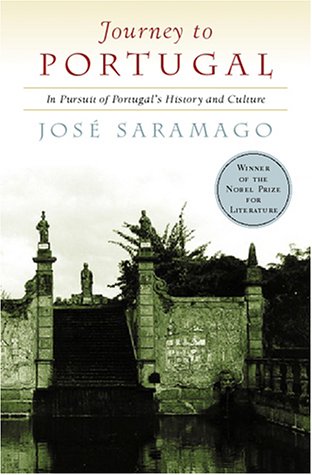
Journey to Portugal: In Pursuit of Portugal’s History and Culture by José Saramago, translated by Amanda Hopkinson and Nick Caistor

Source: Public Library
Hardcover, 464 pages
I am an Amazon Affiliate

Journey to Portugal: In Pursuit of Portugal’s History and Culture by José Saramago, translated by Amanda Hopkinson and Nick Caistor from Portuguese, is a travelogue, but not in a traditional sense of naming specific destinations, their locations, and offering impressions in a straightforward manner.  Readers looking for a travel guide would be best served looking for another book about Portugal.  Saramago refers to himself as the traveler, which can be wearisome throughout 400 pages of text, and many of the visits he makes throughout the country are to either museums or religious locations/buildings, which is odd given his atheism and tenuous relationship with the Catholic church after writing The Gospel According to Jesus Christ.  Moreover, this travelogue is as close to being a memoir as it can be given Saramago’s reflections, daydreams, and observances about the more modern Portugal around him.  (He exiled himself, a Communist, to the Spanish island of Lanzarote following The Carnation Revolution in 1974 where he remained until his death in 2010.)  However, he does say that he wishes these religious relics and pieces to be preserved as works made by human hands.

“The traveller thanks him, and sets off in the direction indicated.  There the palheiros survive, huge barracks made of wooden slats blackened by the wind and the sea, a few already stripped beams exposed to the gaze.  A few are still inhabited, others have lost their roofs to the wind.  It won’t be long before nothing will remain beyond a photographic record.” (page 146)

In many ways, Saramago is reflecting on the life he’s led, the perceptions he’s had and still has, and how as time moves on the ornaments of those memories and perceptions are stripped bare, leaving only the barest outline of the past — until the emotions and personal connections are lost and all that is left is a photo out of context.  “During the lengthy voyage that took nearly six months, the conviction was born in me that in every place I passed through there was a piece of old Portugal bidding farewell to the traveller I was, an ancient Portugal which was beginning, finally, while still doubting whether it wanted to or not, to move towards the twentieth century,” he says. (page xii)  He reconciles the past with the present, as seen through a melancholy perspective, and like the villages and people the traveller approaches slowly, he passes through one town to another, gets lost, and meditates on what he encounters.

Saramago reflects on stonework quite a bit and its ability to stand the test of time, and through his ruminations, readers are likely to see his struggle with the endurance or inability of workers and tributes to stand the test of time — there are some shrines and other edifices he finds hold stories that are no longer accessible.  Journey to Portugal: In Pursuit of Portugal’s History and Culture by José Saramago, translated by Amanda Hopkinson and Nick Caistor, may suffer from poor translation, but there are moments of great reflection and insight that shouldn’t be missed, even if they are mired in melancholia and dark moods, by patient readers.

About the Author:

José de Sousa Saramago is a Nobel-laureate Portuguese novelist, playwright and journalist. He was a member of the Portuguese Communist Party.  His works, some of which can be seen as allegories, commonly present subversive perspectives on historic events, emphasizing the human factor rather than the officially sanctioned story. Saramago was awarded the Nobel Prize for literature in 1998. He founded the National Front for the Defense of Culture (Lisbon, 1992) with among others Freitas-Magalhaes. He lived on Lanzarote in the Canary Islands, Spain, where he died in June 2010.

This is my 57th book for the 2013 New Authors Challenge.