Quantcast

Guest Post: Voice of the Moon by Erica Goss

Erica Goss, the poet who wrote Wild Place, continues to keep us up to date on her 12 Moons project with vocal talents of Nic S. and the musical talents of Kathy McTavish. We’ll be sure to keep everyone in the look on this collaborative project.  Check out the first guest post and her second guest post.

Please give Erica a warm welcome:

The desire that woke you
full and constant,
flickers like antennae.

            from “Corn Moon” by Erica Goss

If the moon had a voice, what would it sound like? As “12 Moons” took shape, I began to hear a narrator in my head, a speaker with distinct qualities. The voice of the moon, I decided, must be a woman’s, full of emotional depth and mystery. I was delighted when Nic S. agreed to be the narrator of “12 Moons.”

I was already familiar with Nic’s work as a narrator, poet and video artist (read my interview with Nic at Connotation Press. Nic’s talents extend into alternative and creative paths to increasing the audience for poetry, which include the nanopress. (The nanopress delivers poetry to readers, listeners and viewers via a variety of media: website, PDF download, e-book, print version and CD. Read the details here.)

The choice of a narrator for a recorded poem is vitally important. Recordings of poetry often disappoint; they serve as documentation of a reader’s voice, perhaps, but don’t do much for the poem. This is sadly true of many recordings of poets reading their own work. I never considered using my own voice for this project, although I’ve made recordings before, nor did I contemplate using multiple voices. I wanted one distinct narrator to form a consistent link between all twelve poems. Nic is that link: her interpretation of each poem creates an individual experience while enabling the connection to the next poem.

I wrote most of the poems in “12 Moons” in either the first or second person. This facilitates intimacy between the narrator and the listener, perhaps even a brief relationship that exists within the context of the project. With that expectation, the vocal qualities of the narrator had to be those of someone whose voice is subtle, distinctive, and able to impart the overtones of a story told in poetry.

I asked Nic how it felt to be the reader of these poems. What was it like to interpret these words?

“Creating a recording of someone else’s work is always exploration, always adventure. I feel it as a beautiful way of both honoring and connecting with others. For me, voice is more than just a transmittal mechanism, more than just simple emission. As I always say, it’s an instrument of active investigation, and brings me information to process in the same way my eyes and ears and nose do. So that engaging only visually and intellectually with someone’s poems on the page is a qualitatively different (and poorer) experience for me than engaging with the same poems through the voicing, recording and editing process.

I will usually make two or three recordings of the same poem, then listen to them in sequence. As this process unfolds, it is often accompanied by little bursts of new understanding, new illuminations and new insights. It’s rare that I will use any single version for the final product – usually there is splicing between the versions, as I gain a better understanding of what the poem is saying to me. With Erica’s poem series, each poem was for me a little universe, a short trip into Erica’s mind, and the series itself was a larger universe, a longer trip, made up of her themes, her images, her metaphors and her word choices. I enjoyed Erica’s rather spare and unadorned diction and loved the imaginative way it engaged with the exotic moon theme in this series.”

As the reader of many poems that other people have written, is there a technique to making the words your own? Are there poems you haven’t wanted to read, or felt uncomfortable with? Why?

“Yes, in the past there were poems I felt I could not read. But a big part of that was an early conviction I had that the poem-on-the-page (the visual artifact) was necessarily tightly and irrevocably married to the poem-as-voice (the aural artifact). Here is a dialogue I had in 2010 with poet David Tomaloff, which convinced me that insisting on such tight linkage impoverished the poem’s potential, and that in fact each type of artefact (visual and aural) has a legitimate stand-alone artistic existence. Now, as long as the basic tradecraft in a poem is good, I am not sure I would say there are any poems I would not read. Any poem represents a dimension of human experience and, as such, no poem can at root be really alien to any of us.”

When did you realize that your voice was something special, a gift perhaps?

“I don’t know just when I realized that I had this ability to enter into poems using my voice and to reproduce them in ways that many poets have appreciated, but it was fairly recently – in the last five years or so. I have been both humbled by and grateful for the gift. I think as a community we fail to pay attention to the art of reading poetry for an audience (see discussion at this post and see Voice Alpha) and for the most part, when we do read for an audience, we unfortunately focus on reading our own poems.

I believe we are the worst readers of our poems, because we bring our entire universe into the reading of the poem and can therefore convey little new to ourselves or others in our reading. The revelations tend to come when you hear others reading your work, when you hear what they have made of your universe. I think the most frequent comment I heard when I was reading at Whale Sound was to the effect that the reading showed them aspects of and connections within the poem of which they had been unaware. It gives me great happiness to contribute in this small way to the poetry community.”

12 Moons will appear beginning January 2014 at Atticus Review.

More about the process of making 12 Moons in the next post. Here are links to the artists involved in 12 Moons:

  • Swoon’s website
  • Kathy McTavish’s website
  • Erica Goss’s website
  • Erica Goss’s column on video poetry.

I really enjoyed what Nic had to say about the universes that came alive for her when reading Goss’ poems.  I also love what she says about poets being the worst readers of their own poems. 

What are your thoughts so far on this project coming to us in January?

Save

Camelot’s Court by Robert Dallek

Source: Harper Collins
Hardcover, 512 pages
I am an Amazon Affiliate

Camelot’s Court by Robert Dallek (who was inspired to write the book after a poll similar to a recent one in Politico) is a highly detailed account of the Kennedy White House, but it also provides an inside look at the political machine the United States has become — from the bureaucrats with aspirations to rise above their stations to the military with its tunnel-vision to stop Communism at all costs.  One of the big takeaways from this book is JFK’s ambition to become president even when he won his first House seat — it was clear that he was bored with “small time” politics and merely cared about big picture issues, particularly foreign policy.  Dallek repeats most of what people already knew about Kennedy — that he liked the ladies, had an illness he hid from the press, and came from a rich family with some skeletons in the closet.  However, what Dallek provides is a comprehensive look at how dysfunctional an executive branch can be, particularly one with a young president at the helm who surrounds himself with the smartest of men (those that accepted the positions) and is forced to keep on less-than-desirable men for political reasons.  The interplay between the groups, the president, and even the brothers Kennedy is contentious, but it also becomes paralyzing.  However, it was not beneath Kennedy to use underhanded tricks or to dupe the press to get what he wanted.

“As Rusk sat in Kennedy’s living room, waiting to see the president-elect, he noticed a copy of the Washington Post sitting prominently on a coffee-table — it announced Rusk as secretary of state.  When Kennedy entered and saw the headline, he ‘blew his top,’ asking Rusk if he was the source of the leak.  Told no, Kennedy called Post publisher Philip Graham to chide him for printing the story.  After Graham explained that Kennedy was the one who had told him, Kennedy said, ‘But that was off the record.’  Hardly, since it was exactly what Kennedy wanted; Kennedy had no interest in giving Rusk a choice of accepting;”  (page 99 ARC)

Dallek carefully demonstrates his statements through dialogue from the men in the room with Kennedy when foreign policy issues were discussed, citing their own books, statements, diaries, and/or notes — not to mention the declassified government documents.  There are even quotes from Jackie Kennedy about private conversations she had with her husband or from conversations she overheard.  What’s telling about the situation when Kennedy was president is that he had the book knowledge from FDR and other presidents to guide him in building the best team, but that circumstances outside his control and his inability to ignore advice and go with his gut instinct often landed his administration in political hot water, like after the Bay of Pigs invasion of Cuba.  The defeat left a bad taste in the administration’s mouth, which may have fueled the military’s fire to win anywhere at any cost against Communism — hence the entry into the Vietnam War.

For those interested in Kennedy the man, this is not the book; but for those interested in how an idealist with big aspirations and big ideas about solving foreign policy issues gets caught up in the political machine and essentially worn down, this is the book for you.  Camelot’s Court by Robert Dallek is not a linear tale, but does touch upon the forces at work against the Kennedy Administration and how the administration pulled the wool over its own eyes when it came to foreign policy issues.  In many ways, the book chronicles a young president’s dream of greatness that fell short of its goals, not because of an assassination, but because of inexperience and failing to ask the right questions.

About the Author:

Robert Dallek is an American historian specializing in American presidents. He is a recently retired Professor of History at Boston University and has previously taught at Columbia University, UCLA, and Oxford.

These are my 68th book for the 2013 New Authors Challenge.

Mailbox Monday #241

Mailbox Monday (click the icon to check out the new blog) has gone on tour since Marcia at To Be Continued, formerly The Printed Page passed the torch.  September’s host is Book Dragon’s Lair.

The meme allows bloggers to share what books they receive in the mail or through other means over the past week.

Just be warned that these posts can increase your TBR piles and wish lists.

Here’s what I received:

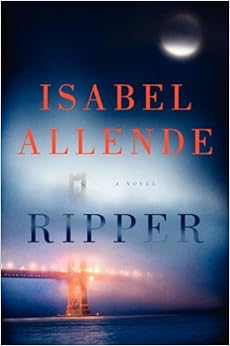
1. Ripper by Isabel Allende for review.

The Jackson women, Indiana and Amanda, have always had each other. Yet, while their bond is strong, mother and daughter are as different as night and day. Indiana, a beautiful holistic healer, is a free-spirited bohemian. Long divorced from Amanda’s father, she’s reluctant to settle down with either of the men who want her—Alan, the wealthy scion of one of San Francisco’s elite families, and Ryan, an enigmatic, scarred former Navy SEAL.

While her mom looks for the good in people, Amanda is fascinated by the dark side of human nature, like her father, the SFPD’s Deputy Chief of Homicide. Brilliant and introverted, the MIT-bound high school senior is a natural-born sleuth addicted to crime novels and Ripper, the online mystery game she plays with her beloved grandfather and friends around the world.

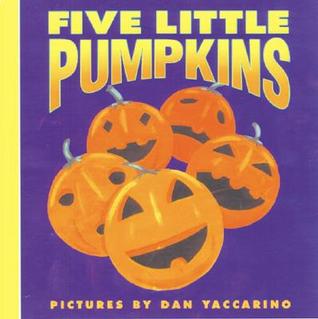
2.  Five Little Pumpkins by Dan Yaccarino, which my mom sent to the little one.

Five little pumpkins sitting on a gate.The first one said, “Oh my, it’s getting late.”Get ready for some wicked fun as these five pumpkins run and roll! Toddlers will want to chant along with this popular rhyme again and again. Dan Yaccarino’s vibrant and bold illustrations bring these pumpkins to life with personality and style. Toddlers are sure to laugh out loud as these pumpkins roll out of sight!

3.  Polarity Bear Tours the Zoo by Sue de Cuevas, illustrated by Wendy Rasmussen, which I received for review.

Polarity Bear Tours the Zoo is a beautifully illustrated book (suitable for ages 3-8) about an imaginary polar bear’s adventures in New York’s Central Park Zoo. Set at the time when the zoo made the transformation from cages to more natural habitats, it also celebrates three leading Central Park attractions: the sea lion pool, the Delacorte Clock, and the carousel.


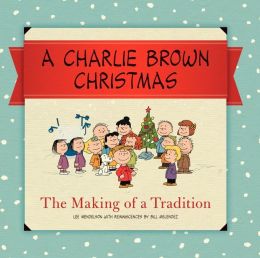
4.  A Charlie Brown Christmas: The Making of a Tradition by Charles M. Schultz for review.

Charles M. Schulz’s A Charlie Brown Christmas: The Making of a Tradition is a lushly illustrated tribute to the beloved television classic that takes readers behind-the-scenes of the Peanuts holiday special that has aired each year since December 1965.

A Charlie Brown Christmas: The Making of a Tradition includes the script of the Emmy Award–winning A Charlie Brown Christmas, more than two hundred full-color pieces of original animation art, Vince Guaraldi’s original score and publication notes for the songs “Christmas Time Is Here” and “Linus and Lucy,” and a look at the making of the feature from producer Lee Mendelson and original animator, the late Bill Melendez.

No holiday season is complete without Charlie Brown, Linus, Lucy, Snoopy, and the rest of the Peanuts gang giving a forgotten tree a little love, reciting the Christmas story, and singing “Silent Night.”

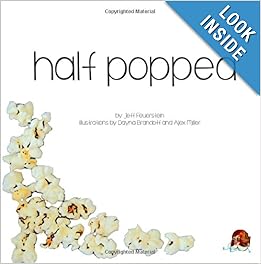
5.  Half Popped by Jeff Feuerstein, Dayna Brandoff, Alex Miller for review.

Half Popped is the heart-warming and whimsical story of Kenny the Kernel, a discouraged but friendly popcorn kernel who believes he never reached his full potential. As Kenny journeys through the kitchen, he helps cheer up other down-on-their-luck snacks by pointing out the bright side to their situations, all the while harboring a half-empty view of himself. Until…. With a silly, story-telling rhyme evocative of Shel Silverstein poetry and unique artwork that combines photography and illustration, the charming tale serves as a lesson in self-confidence and reminds young readers that a genuine compliment has the power to make a friend’s day. Sometimes it takes an outside perspective to see it, but there’s a place and a purpose in this world for everyone – even Kenny the Kernel, who was only half popped, and turned out that way when the microwave stopped.

6.  Robert Plant: A Life by Paul Rees for review.

Robert Plant by Paul Rees is the definitive biography of Led Zeppelin’s legendary frontman. As lead singer for one of the biggest and most influential rock bands of all time—whose song “Stairway to Heaven” has been played more times on American radio than any other track—Robert Plant defined what it means to be a rock god.

Over the course of his twenty-year career, British music journalist and editor Paul Rees has interviewed such greats as Sir Paul McCartney, Bruce Springsteen, Madonna, Bono, and AC/DC. Rees now offers a full portrait of Robert Plant for the first time, exploring the forces that shaped him, the ravaging highs and lows of the Zeppelin years—including his relationship with Jimmy Page and John Bonham—and his life as a solo artist today.

What did you receive?

224th Virtual Poetry Circle

Welcome to the 224th Virtual Poetry Circle!

Remember, this is just for fun and is not meant to be stressful.

Keep in mind what Molly Peacock’s books suggested. Look at a line, a stanza, sentences, and images; describe what you like or don’t like; and offer an opinion. If you missed my review of her book, check it out here.

Also, sign up for the 2013 Dive Into Poetry Challenge because its simple; you only need to read 1 book of poetry. Check out the stops on the 2013 National Poetry Month Blog Tour and the 2012 National Poetry Month Blog Tour.

Today’s poem is from Anne Brontë:

Last Lines

I hoped, that with the brave and strong,
      My portioned task might lie;
To toil amid the busy throng,
      With purpose pure and high.

But God has fixed another part,
      And He has fixed it well;
I said so with my bleeding heart,
      When first the anguish fell.

A dreadful darkness closes in
      On my bewildered mind;
Oh, let me suffer and not sin,
      Be tortured, yet resigned.

Shall I with joy thy blessings share
      And not endure their loss?
Or hope the martyr's crown to wear
      And cast away the cross?

Thou, God, hast taken our delight,
      Our treasured hope away;
Thou bidst us now weep through the night
      And sorrow through the day.

These weary hours will not be lost,
      These days of misery,
These nights of darkness, anguish-tost,
      Can I but turn to Thee.

Weak and weary though I lie,
      Crushed with sorrow, worn with pain,
I may lift to Heaven mine eye,
      And strive to labour not in vain;

That inward strife against the sins
      That ever wait on suffering
To strike whatever first begins:
      Each ill that would corruption bring;

That secret labour to sustain
      With humble patience every blow;
To gather fortitude from pain,
      And hope and holiness from woe.

Thus let me serve Thee from my heart,
      Whate'er may be my written fate:
Whether thus early to depart,
      Or yet a while to wait.

If thou shouldst bring me back to life,
      More humbled I should be;
More wise, more strengthened for the strife,
      More apt to lean on Thee.

Should death be standing at the gate,
      Thus should I keep my vow;
But, Lord! whatever be my fate,
      Oh, let me serve Thee now!

What do you think?

Short Reviews of 3 Children’s Books

Over Dewey’s 24-hour read-a-thon, my daughter and read three books she picked out of the library since I really didn’t have that much time to participate, but I did want to share our impressions of these books.

Freight Train by Donald Crews is a Caldecott Honor Book with few words and vibrant pictures written in 1978, it’s amazing that the book is still so relevant today.  The freight trains still run, and the parts of the train are still the same.  But this book strives not only to teach young children about the parts of a train and how it gets from one place to another, moving on through the day and night, but it also teaches colors with each part of the train a different color.  My daughter was engaged while I read and repeated each color with me, but she loved watching the train go as I flipped the pages.

Where’s Walrus? by Stephen Savage is similar to the Where’s Waldo? books I remember, but with a goofy looking Walrus.  The trick of this book is that many of the other images are gray, similar to the walrus, making it harder for kids to discern the walrus from his surroundings.  It’s a book about observation and recognition.  My daughter and I had fun with this book, as did her daddy.  We made it two games in one  — the first pass we found walrus and on the second pass we found the zoo keeper who was trying to get him back into the zoo.  She liked this one so much she wanted to keep playing it several more times in a row…and she’s almost got the word walrus enunciated correctly.

Halloween Forest by Marion Dane Bauer, illustrated by John Shelley is a book of poetry, or at least that’s how it reads…like the children’s books of my childhood (i.e. Little Miss Muffet).  The illustrations are engaging and unique, and in many ways would seem scary to young kids, since it is a forest made of bones.  However, my daughter is fascinated by the pictures and not scared at all by the bone forest, which could be related to the empowering statements of the poem-like lines in which the child is not scared but demands her trick-or-treat dues.  The little one and I enjoy this one a lot, and it is perfect for the current season.  Our library actually has shelf sections based on holidays and seasons, which is where I found this one for her and I to read.  Really engaging visually and textually.


That’s it, what good children’s books have you shared with your kids that you both enjoyed?

These are my 65th, 66th, and 67th books for the 2013 New Authors Challenge.

Controlled Hallucinations by John Sibley Williams

Source: John Sibley Williams
Paperback, 78 pages
I am an Amazon Affiliate

Controlled Hallucinations by John Sibley Williams is a debut collection that breaks down the barriers between reality and fantasy in ways that will remind readers of Salvador Dalí and the surrealists one moment and a spiraling, broken hearted romantic, the next.  These poems are equally raw in emotion and imagery, like in “XXXIX” (page 49), “The knives I display in this poem/cannot even cut an overripe fruit.//When I thrash them wildly/to hold them to your throat, or mine,/when I threaten an old enemy/with a few unsharpened words/”  Violence only appears in some of these poems, but it is never gruesome or overly graphic.  One main technique used throughout the collection resembles slipstream combining the familiar with the unfamiliar.

XII (page 22)

I would like to crochet a mitten
for my future child,
       to warm another's hands
       with the work of my own.

I would like to build a house for someone,
       anyone,
       a stranger,
       from foundation to wafting chimney,
and then smile at the pain
of pressing on the bruises
left from making.

But all I have is a song to lean on,
       an eager voice,
       a white cane
       related to me as stone is to moss,
and I am hoping
this simple attempt at light will suffice.

Unlike unbidden hallucinations, these poems carefully unravel in slow movements to serve as a reminder to the reader that their own lives can and have spiraled until they were pulled back.  Even as movement speeds up in some poems, there is always a moment where that movement stops, providing a perspective for the reader to examine.  Williams’ poems have the aim of making the untranslatable translatable, and the poems draw parallels between each poem’s narrator and the reader’s world.  “IX” (Page 19) seems to partially showcase the need for control in love, but how equally painful trying to keep control can be: “The paper cut on my palm/runs parallel to my love line./They taper off at the same spot,/under my thumb//” evoking the image that control can smother love.

 From "XLV" (page 55)

Let's be moths together
circling the bright eye,
circling and trying to enter,
then retreating as far as darkness allows.

There’s a constant struggle in these poems from the choices made and the choices that could have been made.  Controlled Hallucinations by John Sibley Williams peels back the skin to reveal what’s underneath, but then veils it with sheer fabric to obscure its harshness.  Some of these poems can be puzzling, requiring a couple of reads, while others seem contrived or unfinished.  Overall, the collection is engaging and accessible for more patient readers.

About the Poet:

John Sibley Williams is an award-winning writer of fiction and poetry. He works as Book Marketing Manager of Inkwater Press, as well as a freelance literary agent, and lives in Portland, Oregon. John is the author of Controlled Hallucinations (forthcoming 2013 by FutureCycle Press), as well as seven chapbooks. John is the winner of the 2011 HEART Poetry Award, and finalist for the Pushcart, Rumi, and The Pinch Poetry Prizes. He has served as Acquisitions Manager of Ooligan Press and publicist for various presses and authors, and holds an MFA in Creative Writing and MA in Book Publishing.

This is my 64th book for the 2013 New Authors Challenge.


This is my 27th book for the Dive Into Poetry Challenge 2013.

Solving the World’s Problems by Robert Lee Brewer

I use Grammarly’s plagiarism checker because it works! Have you tried it?

Source: Purchased
Paperback, 92 pages
I am an Amazon Affiliate

Solving the World’s Problems by Robert Lee Brewer is the debut collection of a poet who has spurred inspiration virtually for many years as part of the Writer’s Digest team, and as a debut, it oozes deconstruction, construction, and reflection in each poem’s white spaces in ways that are thought-provoking and eye-opening.  There are love poems, break-up poems, and get back together poems, but the overwhelming theme seems to be that love is the great connector of us all — no matter how successful the relationships ultimately are — and the poet seems to postulate that love can “solve the world’s problems.”  While some of these poems have a pessimistic hint in them, they are balanced with a certain amount of light.

From "Matters of Great Importance" (page xv-xvi)

poets consider which chair
                is going to inspire them
                                  to write the poem

that inspires other people
                  to build chairs and
                                    drive trucks and write poems

Within each poem there is an expansion, an expanse left open for the reader to explore and think about on their own.  While these poems cover well-worn territory at times, each line break and word choice makes them crisp, inspiring the reader to look at the subject anew.  In “worried about ourselves,” the narrator talks of how the moon was once something godly and now is just a chunk of rock floating in space, but toward the latter half of the poem, the new perception is turned on the reader, examining the never-ending analysis of ourselves to the point we begin to believe our own perceptions about reality are true, even when they are not.  Some of the best lines are the simplest, like in “I think the world is a pin cushion” (page 48):

there's a space between everyday matters
that makes someone feel every day matters

But there are more serious moments, moments in which social issues are addressed, such as global warming in “one day we looked for the snow” (page 49) and living in a fast-paced modern world where appearances matter and wars are inevitable — “why I never mention the traffic report” (page 52).  But more interestingly, there is an exploration of the modern world and the perceived increase in connection between humans, but the reality is that we seek these outlets to distance ourselves from one another — walking out the door has never been easier when face-to-face takes a back seat.

Solving the World’s Problems by Robert Lee Brewer is a chance to find ourselves reflected in ourselves and the world around us.  From “the noises that scare us” (page 30):

to uncover and hope no shots are fired
we're not here to find something new        we want
reminded of who we were when the birds

first spoke  our wings dissolve as we age   and

About the Author:

Robert Lee Brewer is Senior Content Editor for the Writer’s Digest Writing Community. He edits books, manages websites, creates electronic newsletters, crafts blog posts, writes magazine articles, participates in online education, and speaks nationally on writing and publishing topics. As a poet, Robert was named Poet Laureate of the Blogosphere in 2010, has been a featured reader at several poetry events around the country, and is the author of Solving the World’s Problems (Press 53). Follow him on Twitter @robertleebrewer.

This is my 63rd book for the 2013 New Authors Challenge.


This is my 26th book for the Dive Into Poetry Challenge 2013.

Mailbox Monday #240

Mailbox Monday (click the icon to check out the new blog) has gone on tour since Marcia at To Be Continued, formerly The Printed Page passed the torch.  September’s host is Book Dragon’s Lair.

The meme allows bloggers to share what books they receive in the mail or through other means over the past week.

Just be warned that these posts can increase your TBR piles and wish lists.

Here’s what we got at the library sale for the little one:

1.  Bible Friends: Who’s Hiding?

2.  It’s Tigger Time!

3.  The Best Halloween Hunt Ever by John Speirs

4.  My World: A First Look at the World illustrated by Prue Greener

5.  Tarzan: Jungle Adventure

6.  Where’s Waldo? by Martin Handford

7.  Sinbad dvd

These are the ones I found for me:

8.  A Jane Austen Education by William Deresiewicz

Before Jane Austen, William Deresiewicz was a very different young man. A sullen and arrogant graduate student, he never thought Austen would have anything to offer him. Then he read Emma—and everything changed.

In this unique and lyrical book, Deresiewicz weaves the misadventures of Austen’s characters with his own youthful follies, demonstrating the power of the great novelist’s teachings—and how, for Austen, growing up and making mistakes are one and the same. Honest, erudite, and deeply moving, A Jane Austen Education is the story of one man’s discovery of the world outside himself.

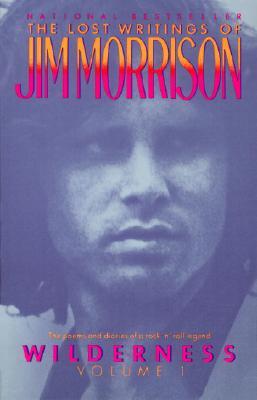
9.  Wilderness: Volume 1 by Jim Morrison

Compiled from the literary estate of the singer who brought a wildly lyrical poetry of the damned to the world of rock ‘n’ roll. Includes unpublished poems, drawings, photos, and a candid self-interview.


10.  World War Z by Max Brooks

The Zombie War came unthinkably close to eradicating humanity. Max Brooks, driven by the urgency of preserving the acid-etched first-hand experiences of the survivors from those apocalyptic years, traveled across the United States of America and throughout the world, from decimated cities that once teemed with upwards of thirty million souls to the most remote and inhospitable areas of the planet. He recorded the testimony of men, women, and sometimes children who came face-to-face with the living, or at least the undead, hell of that dreadful time. World War Z is the result. Never before have we had access to a document that so powerfully conveys the depth of fear and horror, and also the ineradicable spirit of resistance, that gripped human society through the plague years.


11.  The Eight Stages of Translation by Robert Bly


12.  Audition by Barbara Walters, which is really a gift for my mom.

Barbara Walters, arguably the most important woman in the history of television, has had an amazingly full life. In the bestselling Audition, she describes her extraordinary public and private journey.

What did you receive?

Dewey’s 24-Hour Read-a-Thon

Today is the beginning of Dewey’s 24-hour Read-a-Thon.  Although I have other plans today, I will be reading off and on with everyone and cheering people on when I can.

Introduction

1) What fine part of the world are you reading from today?

USA, Washington, D.C.

2) Which book in your stack are you most looking forward to?

Finishing up Camelot’s Court by Robert Dallek, and if I finish it I will consider it a successful read-a-thon.

3) Which snack are you most looking forward to?

Grapes…and coffee…I love Dunkin Donuts French Vanilla!

4) Tell us a little something about yourself!

I loved my Keeshond like he was a child, but with a little toddler running around, I realize caring for a dog was much easier.

5) If you participated in the last read-a-thon, what’s one thing you’ll do different today?

I like to keep my participation laid back; that’s what I’ve learned over the years.  To just have fun!

Blackout Poem Challenge:

THE Chilean poet Pablo Neruda, known for his love poems and leftist ideals, died 40 years ago this September. One would hope he’d be at rest by now. But on Monday, as classical musicians played a Neruda work set to music by Vicente Bianchi, his remains were exhumed to determine whether he died from poison — instead of prostate cancer, the conventional account.

In recent years, other icons of the Hispanic world have suffered the same fate. In 2011, Salvador Allende, Chile’s democratically elected president-elect who was deposed by a military junta in 1973, was disinterred to verify that he’d fatally shot himself. (The finding — yes — is still disputed.) The late Venezuelan president Hugo Chávez ordered in 2010 that the tomb of his idol, Simón Bolívar, be opened to test his theory that the liberator died of poisoning, not tuberculosis. (The theory remains unproved.)

And in 2008, a Spanish judge authorized the unearthing of a mass grave in the southern town of Alfácar to see whether Federico García Lorca, the poet and dramatist who was assassinated by Fascists in 1936, at the outset of the Civil War, was buried there. (The results were inconclusive.)

There is something gothic, but also cathartic, about summoning artists like Neruda, and his close friend García Lorca, back into the realm of the living, making us wonder if death is really the end. A Chilean judge’s decision, in February, to allow an investigation into Neruda’s death, which led to this week’s exhumation, looks like an act of expiation.

Neruda used his pen to denote, to denounce, to decry. He was 69 when the junta took power. By then he had been an embassy attaché, a senator and an ambassador. In 1969, he initially ran for president as a Communist, but later backed Allende’s candidacy. However, passion for political change was only one side of his persona. The other was that of a bon vivant. Many people enjoy life plentifully, but few have been so eloquent about it. The Dionysian sensuality of Neruda’s odes is contagious, joyful and erotic. And also destructive: Neruda’s marriage to Matilde Urrutia, his third wife and the inspiration for “The Captain’s Verses” and “One Hundred Love Sonnets,” unraveled after she learned he was having an affair with her niece.

Neruda died in a clinic in Santiago on Sept. 23, 1973 — 12 days after the American-backed coup that overthrew Allende and brought Gen. Augusto Pinochet to power. Many Chileans have long been skeptical of the official cause of death. In 2011, Neruda’s former driver said the poet told him, on the eve of his death, that he’d been given a harmful injection by a doctor. Conspiracy theorists note that Neruda died in the same hospital where Eduardo Frei Montalva, a politician who had supported the junta before switching sides, died in 1982. A judge ruled in 2009 that Frei had been poisoned.

Could Neruda have suffered a similar fate? Allende had died on Sept. 11, 1973, and another opponent of the junta, the folk singer Víctor Jara, was assassinated on Sept. 16. Finishing off Neruda could have been the junta’s coup de grâce.

Exhuming icons is one way to deal with guilt. Elsewhere in Latin America, the past’s phantoms are resurfacing: in Guatemala, where the former dictator Efraín Ríos Montt is on trial for genocide; in Argentina, whose cities are dotted with memorials to those who were “disappeared” during the “dirty war”; and in Mexico, where a once-pliant media have challenged the former president Felipe Calderón’s handling of the war against drug cartels.

But Neruda holds a special place in this grim look backward. Gabriel García Márquez, the Colombian writer and a fellow Nobel laureate, has called him “the most important poet of the 20th century — in any language.”

Neruda left thousands of poems, a handful of which are of such inspired beauty as to justify the very existence of the Spanish language. Adolescents routinely give his “Twenty Love Poems and a Song of Despair” to their sweethearts. His ideological verses have been read aloud, often from memory, in one revolution after another, from the fall of the Berlin Wall to the embers of the Arab Spring. Some of Neruda’s poems — “I Ask for Silence,” “Walking Around,” “Ode to the Artichoke” — have been rendered into English repeatedly, each version another effort to make him current and vital to a new generation.

What we’ve read so far:

32 pages

32 pages

26 pages

Which hour was most daunting for you?

The 15th hour was brutal for me, that’s when I decided to take a nap. A big mistake because I slept through the rest of readathon.

Could you list a few high-interest books that you think could keep a Reader engaged for next year?

I think kids books with games in them are so fun and peek-a-boo flaps. They are quick reads for when there are distracting little children around or you just need a quick read.

How many books did you read?

We only read 3 whole books, but I did read about 50 more pages of Camelot’s Court.

What were the names of the books you read?

See above the images.

Which book did you enjoy most?

The little one and I really like the Halloween Forest.

Which did you enjoy least?

None really.

How likely are you to participate in the Read-a-thon again? What role would you be likely to take next time?

I think if I have as little time as I did this time, I’ll be a cheerleader instead.

I hope everyone had a great read-a-thon!

223rd Virtual Poetry Circle

Welcome to the 223rd Virtual Poetry Circle!

Remember, this is just for fun and is not meant to be stressful.

Keep in mind what Molly Peacock’s books suggested. Look at a line, a stanza, sentences, and images; describe what you like or don’t like; and offer an opinion. If you missed my review of her book, check it out here.

Also, sign up for the 2013 Dive Into Poetry Challenge because its simple; you only need to read 1 book of poetry. Check out the stops on the 2013 National Poetry Month Blog Tour and the 2012 National Poetry Month Blog Tour.

Today’s poem is from Robert Lee Brewer’s Solving the World’s Problems:

worried about ourselves

we've finally reached the point at which we
       invent reasons to get upset    we cast
               spells on ourselves  curse our own conventions

once  the moon was a ghost haunting these fields
        a confirmation of things to come   now
                the moon's rock surrounded by darkness

we praise our new awareness and question
        our motives   we ask why until we run
               short on answers   what happens when we have

time to think  we transform x into y
        and dismiss the existence of z now
               only a letter that signals the end

What do you think?