Quantcast

United States of Books: Animal Dreams by Barbara Kingsolver

Source: Public Library
Paperback, 342 pgs.
I am an Amazon Affiliate

Entertainment Weekly says, “In this richly moving novel about a woman who returns home to take care of her father, Kingsolver draws heavily on the state’s Native American and Hispanic cultures.” (Arizona)

Animal Dreams by Barbara Kingsolver on its surface is about a broken young woman who finds that she is drawn back into the web of her childhood in Arizona. It’s a childhood that she doesn’t look back on fondly and one that she barely remembers, other than two tragic events and the distance between herself and her father. She had taken the best part of her childhood with her when she moved away, and that was her sister, Hallie. Codi is forced to return home to care for her father because Hallie has taken it upon herself to delve into the political jungles of Nicaragua to help people with their agriculture, despite the danger to herself.

“All morning I’d felt the strange disjuncture that comes from reconnecting with your past. There’s such a gulf between yourself and who you were then, but people speak to that other person and it answers; it’s like having a stranger as a house guest in your skin.” (pg. 40)

Codi is faced with some hard truths about her past and her father’s mythology about who her family is and was, but she also must face the harsh truth that she’s been running away from home since she was 15. She must learn to re-see the beauty in the Arizona dessert, mesas, farmland, and its people, who have a rich Native American history and connection to the land that is dying all around them. She’s a deeply flawed character who pursued a medical degree because she wanted to please her father, only to shy away from becoming a certified doctor by failing to complete her residency. She’s gun shy about relationships and she walks away at a moments notice, but it shouldn’t surprise those around her because she never really settles in — there are no pictures on the wall.

“Pay attention to your dreams: when you go on a trip, in your dreams you will still be home. Then after you’ve come home you’ll dream of where you were. It’s a kind of jet lag of the consciousness.” (pg. 9)

Readers should not expect the issue of the dying land or the environmental issues raised in the book to be resolved, and even the relationships Codi has with her father and her past boyfriend Loyd are a bit murky, though expected given the landscape and how little people speak to one another about their feelings. The weaving of Native American and Hispanic culture is well done, and it is through her time with Loyd that she begins to realize that she is not an outsider and that she never was. Home is where you belong, even if there is pain and heartache attached to it.

Animal Dreams by Barbara Kingsolver is meditative, disjointed, and almost dreamlike in places, but at its core, it is a journey through the heart of family and finding a place in it.

Rating: Quatrain

About the Author:

Barbara Kingsolver is an American novelist, essayist, and poet. She was raised in rural Kentucky and lived briefly in Africa in her early childhood. Kingsolver earned degrees in Biology at DePauw University and the University of Arizona and worked as a freelance writer before she began writing novels. Her most famous works include The Poisonwood Bible, the tale of a missionary family in the Congo, and Animal, Vegetable, Miracle, a non-fiction account of her family’s attempts to eat locally. Her work often focuses on topics such as social justice, biodiversity, and the interaction between humans and their communities and environments. Each of her books published since 1993 have been on The New York Times Best Seller list.

Save

Mailbox Monday #407

Mailbox Monday, created by Marcia at To Be Continued, formerly The Printed Page, has a permanent home at its own blog.

To check out what everyone has received over the last week, visit the blog and check out the links. Leave yours too.

Also, each week, Leslie, Vicki, and I will share the Books that Caught Our Eye from everyone’s weekly links.

Here’s what I received:

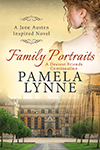
Family Portraits: A Dearest Friends Continuation by Pamela Lynne, a gift from the author.

In Dearest Friends, Pamela Lynne drew complex and interesting characters who joined Darcy and Elizabeth on their road to happily ever after. But, what happened after ‘the end’? Did Lydia survive her time at Rosings? Did Jane find fulfillment as Mrs. Bingley? Did Mary and Sebastian adhere to duty or allow their hearts to lead them? Follow the Fitzwilliams, Bennets, Gardiners and Darcys through portraits of their lives at two, five and ten years after the Darcys’ marriage. Their canvas is studded with heartbreaking loss, new beginnings and, through it all, the indelible bond of family?

A Certain Age by Beatriz Williams for review.

As the freedom of the Jazz Age transforms New York City, the iridescent Mrs. Theresa Marshall of Fifth Avenue and Southampton, Long Island, has done the unthinkable: she’s fallen in love with her young paramour, Captain Octavian Rofrano, a handsome aviator and hero of the Great War. An intense and deeply honorable man, Octavian is devoted to the beautiful socialite of a certain age and wants to marry her. While times are changing and she does adore the Boy, divorce for a woman of Theresa’s wealth and social standing is out of the question, and there is no need; she has an understanding with Sylvo, her generous and well-respected philanderer husband.

But their relationship subtly shifts when her bachelor brother, Ox, decides to tie the knot with the sweet younger daughter of a newly wealthy inventor.

A Jane Austen Christmas: Regency Christmas Traditions by Maria Grace, which I won from JustJane1813.

Many Christmas traditions and images of ‘old fashioned’ holidays are based on Victorian celebrations. Going back just a little further, to the beginning of the 19th century, the holiday Jane Austen knew would have looked distinctly odd to modern sensibilities.

How odd? Families rarely decorated Christmas trees. Festivities centered on socializing instead of gift-giving. Festivities focused on adults, with children largely consigned to the nursery. Holiday events, including balls, parties, dinners, and even weddings celebrations, started a week before Advent and extended all the way through to Twelfth Night in January.

Take a step into history with Maria Grace as she explores the traditions, celebrations, games and foods that made up Christmastide in Jane Austen’s era. Packed with information and rich with detail from period authors, Maria Grace transports the reader to a longed-for old fashioned Christmas.

The Chilbury Ladies’ Choir by Jennifer Ryan for review in 2017.
As England enters World War II’s dark early days, spirited music professor Primrose Trent, recently arrived to the village of Chilbury, emboldens the women of the town to defy the Vicar’s stuffy edict to shutter the church’s choir in the absence of men and instead ‘carry on singing’. Resurrecting themselves as “The Chilbury Ladies’ Choir”, the women of this small village soon use their joint song to lift up themselves, and the community, as the war tears through their lives.

Told through letters and journals, The Chilbury Ladies’ Choir moves seamlessly from budding romances to village intrigues to heartbreaking matters of life and death. As we come to know the struggles of the charismatic members of this unforgettable outfit — a timid widow worried over her son at the front; the town beauty drawn to a rakish artist; her younger sister nursing an impossible crush and dabbling in politics she doesn’t understand; a young Jewish refugee hiding secrets about her family, and a conniving midwife plotting to outrun her seedy past — we come to see how the strength each finds in the choir’s collective voice reverberates in her individual life.

In turns funny, charming and heart-wrenching, this lovingly executed ensemble novel will charm and inspire, illuminating the true spirit of the women on the home front, in a village of indomitable spirit, at the dawn of a most terrible conflict.

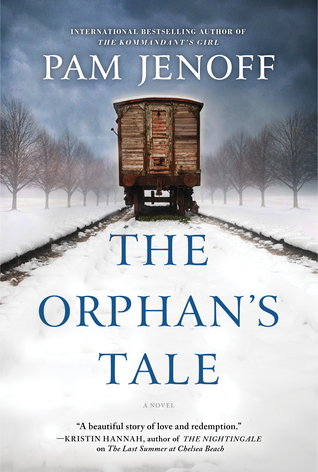
The Orphan’s Tale by Pam Jenoff for review in 2017.

Seventeen-year-old Noa has been cast out in disgrace after becoming pregnant by a Nazi soldier during the occupation of her native Holland. Heartbroken over the loss of the baby she was forced to give up for adoption, she lives above a small German rail station, which she cleans in order to earn her keep.

When Noa discovers a boxcar containing dozens of Jewish infants, unknown children ripped from their parents and headed for a concentration camp, she is reminded of the baby that was taken from her. In a moment that will change the course of her life, she steals one of the babies and flees into the snowy night, where she is rescued by a German circus.

The circus owner offers to teach Noa the flying trapeze act so she can blend in undetected, spurning the resentment of the lead aerialist, Astrid. At first rivals, Noa and Astrid soon forge a powerful bond. But as the facade that protects them proves increasingly tenuous, Noa and Astrid must decide whether their unlikely friendship is enough to save one another—or if the secrets that burn between them will destroy everything.

From my secret Santa:

Overheard in Hell

Take Out From the Writer’s Cafe

By Candlelight: Dark Imagination

Straying from the Path

Dancing on the Edge

If My Sandcastle Drowns… Can I Live With You?

What did you receive?

389th Virtual Poetry Circle

Welcome to the 389th Virtual Poetry Circle!

Remember, this is just for fun and is not meant to be stressful.

Keep in mind what Molly Peacock’s book suggested.

Look at a line, a stanza, sentences, and images; describe what you like or don’t like; and offer an opinion. If you missed my review of her book, check it out here.

Today’s poem is from Cynthia Zarin:

Skating in Harlem, Christmas Day

To Mary Jo Salter

Beyond the ice-bound stones and bucking trees, 
past bewildered Mary, the Meer in snow, 
two skating rinks and two black crooked paths

are a battered pair of reading glasses 
scratched by the skater’s multiplying math. 
Beset, I play this game of tic-tac-toe.

Divide, subtract. Who can tell if love surpasses? 
Two naughts we’ve learned make one astonished 0— 
a hectic night of goats and compasses.

Folly tells the truth by what it’s not— 
one X equals a fall I’d not forgo. 
Are ice and fire the integers we’ve got?

Skating backwards tells another story— 
the risky star above the freezing town, 
a way to walk on water and not drown.

What do you think?

Merry Christmas and Happy Holidays

I’m looking forward to our Christmas Eve gathering of friends where we enjoy Chinese food and company. It will be a fun time of games and gift giving.

I hope everyone has a happy holiday season. We deserve it. 2016 has been tough to take! Here’s to a better 2017.

The Secret Life of Lilykins by Max Goodman, illustrated by Erik Mace

Source: Smith Publicity
Paperback, 28 pgs.
I am an Amazon Affiliate

The Secret Life of Lilykins by Max Goodman, illustrated by Erik Mace, is a charming story about imagination, defeating boredom, and learning to enjoy siblings. Lily is a cat with two dads and a brother, but she also has a vivid imagination. Rather than merely wash her own fur, eat, and nap, Lilykins is a queen and a scuba diver, as well as a huntress.

The illustrations are colorful and kids will enjoy following this cat on her adventures, even if many of those adventures are in her mind. The book reads like poetry, with a gentle rhythm that will keep kids listening. There are context clues for the larger words used, so it also strives to expand kids’ vocabularies. Lilykins can be calm, but she also can be wildly crazy.

The Secret Life of Lilykins by Max Goodman, illustrated by Erik Mace, is an adorable children’s picture book about the power of imagination as a tool against boredom. It also strives to demonstrate that we can be anything. Our limitations are only as high as the skies and as narrow as our own imaginations.

RATING: Quatrain

About the Author:

Max Goodman lives in New York City with his husband and two very important cats. By day, he works as an advertising copywriter. The Secret Life of Lilykins is Max’s first book.


Goliath by Scott Westerfeld (audio)

Source: Public Library
Audiobook, 9 CDs
I am an Amazon Affiliate

***Read Leviathan and Behemoth before reading this one.***

Goliath (book #3) by Scott Westerfeld, narrated by Alan Cumming, takes Alek and Deryn to Siberia to pick up the slightly mad inventor Nikola Tesla, who claims to have created an invention that will end the war – Goliath. Alek continues to believe in his destiny as the next leader of Austria and as the only one who can end the war. As machines and manufactured animals come to battle, Alek uncovers Deryn’s secrets, but learns the true meaning of friendship, whom he can truly trust, and what it means to love something more than destiny.

Cumming continues to narrate this series with aplomb and he engrosses readers from the beginning. Westerfeld has created a believable alternate history, although gender issues are sort of glossed over for the most part, even as one of the main characters is a girl. Alek has grown up quite a bit in this story, and Deryn remains the anchor in the story. With appearances from William Randolf Hearst and Pancho Villa, it is clear that the politics of the war goes far beyond the war between machines and manufactured animals for superiority.

Goliath (book #3) by Scott Westerfeld, narrated by Alan Cumming, is a whole new world with a war threatening everything past and present. The series is strong throughout and the characters have evolved a great deal in the course of three books, with several close calls. Wonderful series.

RATING: Quatrain

Other Reviews:

About the Author:

Scott Westerfeld‘s teen novels include the Uglies series, the Midnighters trilogy, The Last Days, an ALA Best Book for Young Adults and the sequel to Peeps. Scott was born in Texas, and alternates summers between Sydney, Australia, and New York City.

Behemoth by Scott Westerfeld (audio)

Source: Public Library
Audiobook, 8 CDs
I am an Amazon Affiliate

***Leviathan was a book club selection and I’ve finally been able to get back to the series, though this book is our book club selection for June. You’ll need to read the first to read this book.***

Behemoth by Scott Westerfeld, narrated by Alan Cumming, is the second book in a young adult trilogy that is an alternate WWI history rife with steampunk elements. The German Clankers who rely on machines are advancing their war against the British Darwinists, using secretive technology and subversive tactics. Deryn, a young man in the British Air Service, has divided loyalties as he tries to continue hiding his identity from his closest friend, Alek, who is the heir to the empire. The Leviathan’s peace mission has hit a snag, and Alek stumbles upon a resistance in Constantinople even as they find themselves in enemy territory.

Alan Cumming is a stunning narrator; it’s clear that he enjoyed this book and narrating the heart-stopping action of Westerfeld’s alternate history. As the Clankers connive to garner support from Istanbul, the Darwinists seek to appease the government with gifts only to find they are too late. Deryn is quick-witted and eager to prove himself a dedicated soldier, even as he feels a bit of camaraderie and loyalty to Alek and his plight to escape the Clankers. Alek comes into his own away from his guardian, as he is forced to seek out people to trust and to devise his own plans to prevent an all-encompassing war between the Clankers and the Darwinists and get revenge on the Germans.

Behemoth by Scott Westerfeld, narrated by Alan Cumming, is a stunning middle book in the series, providing Alek and Deryn with ample opportunity to prove themselves brave. Even as secrets continue between them, they remain friends. Westerfeld has a vivid imagination and it comes alive in the prose, especially as read by Cumming. Readers will fall into this world of unbelievable animal creations and giant machines of war.

RATING: Quatrain

Other Reviews:

About the Author:

Scott Westerfeld‘s teen novels include the Uglies series, the Midnighters trilogy, The Last Days, an ALA Best Book for Young Adults and the sequel to Peeps. Scott was born in Texas, and alternates summers between Sydney, Australia, and New York City.

Guest Review: Black Hills by Dan Simmons

The week takes us to South Dakota with Black Hills by Dan Simmons (audio book narrated by Erik Davies and Michael McConnohie)

Entertainment Weekly says – “Black Hills breathes life into the tale of a Sioux warrior believed General Custer’s ghost entered him at Little Big Horn.”

Review by Laura of 125Pages

three-half-stars  3.5 Stars

Black Hills was a very interesting listen. It follows Paha Sapa a 10 year-old Sioux boy as he rides through the aftermath of the battle of Little Big Horn, to his time working on the construction of Mt. Rushmore, to his last days. Now interesting doesn’t necessarily mean good or bad, it was different. The first thing to note is the time line of the story. It begins when he is 10 then the next chapter he is in his late 60’s, then he is a man in his 20’s. It took a few chapters to figure out the time line and honestly it would have made an easier time of it if the tale had not jumped back and forth as it did. The second thing to note is that Paha Sapa believes that the ghost of General Custer enters him at the battle and he spends his life listening to the voice in his head. Okay…. that happened. It actually detracted from the main story and the letters from Custer to his wife were pretty graphic and not in a good way. I’m not sure if they were included to add some spice to the tale, but I don’t need to hear about Custer’s sex life and manhood *shudder*. Item three, was the immense length. The audio book was well over 20 hours and at times I grew frustrated with the needless antidotes and facts ( the Chicago’s World Fair had lots of stuff and you will hear about it all). Now on to the good things, the world building was superb and the images the story created were vivid. Paha Sapa is a character that felt deeply and I loved the emotion in him.

Black Hills is a book to read if you have a lot of time and are okay with being bogged down by details. The lush scenery it evoked was superb and I truly felt a part of Paha Sapa’s life. At the end I really did enjoy it, but a good 1/3 of the book was unnecessary to get the heart of the story across.

Favorite lines – Then the young men, streaming blood on their painted chests and backs, would stand and begin their dancing and chanting, leaning back from or toward the sacred tree so that their bodies were often suspended totally by the rawhide and horn under their muscles. And always they stared at the sun as they danced and chanted.

Mailbox Monday #406

Mailbox Monday, created by Marcia at To Be Continued, formerly The Printed Page, has a permanent home at its own blog.

To check out what everyone has received over the last week, visit the blog and check out the links. Leave yours too.

Also, each week, Leslie, Vicki, and I will share the Books that Caught Our Eye from everyone’s weekly links.

Here’s what I received?

A Million Little Things by Susan Mallery, a surprise from Tandem Literary.

Zoe Saldivar is more than just single-she’s ALONE. She recently broke up with her longtime boyfriend, she works from home and her best friend Jen is so obsessed with her baby that she has practically abandoned their friendship. The day Zoe accidentally traps herself in her attic with her hungry-looking cat, she realizes that it’s up to her to stop living in isolation.

Her seemingly empty life takes a sudden turn for the complicated-her first new friend is Jen’s widowed mom, Pam. The only guy to give her butterflies in a very long time is Jen’s brother. And meanwhile, Pam is being very deliberately seduced by Zoe’s own smooth-as-tequila father. Pam’s flustered, Jen’s annoyed and Zoe is beginning to think “alone” doesn’t sound so bad, after all.

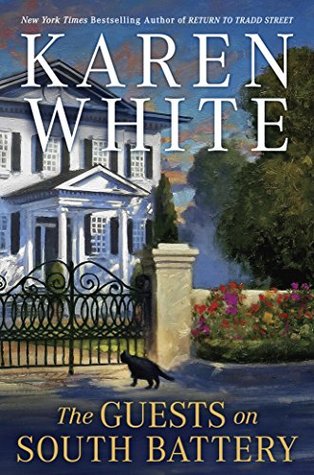
The Guests on South Battery by Karen White for review.

With her extended maternity leave at its end, Melanie Trenholm is less than thrilled to leave her new husband and beautiful twins to return to work, especially when she’s awoken by a phone call with no voice on the other end—and the uneasy feeling that the ghostly apparitions that have stayed silent for more than a year are about to invade her life once more.

But her return to the realty office goes better than she could have hoped, with a new client eager to sell the home she recently inherited on South Battery. Most would treasure living in one of the grandest old homes in the famous historic district of Charleston, but Jayne Smith would rather sell hers as soon as possible, guaranteeing Melanie a quick commission.

Despite her stroke of luck, Melanie can’t deny that spirits—both malevolent and benign—have started to show themselves to her again. One is shrouded from sight, but appears whenever Jayne is near. Another arrives when an old cistern is discovered in Melanie’s backyard on Tradd Street.

Melanie knows nothing good can come from unearthing the past. But some secrets refuse to stay buried….

What did you get?

388th Virtual Poetry Circle

Welcome to the 388th Virtual Poetry Circle!

Remember, this is just for fun and is not meant to be stressful.

Keep in mind what Molly Peacock’s book suggested.

Look at a line, a stanza, sentences, and images; describe what you like or don’t like; and offer an opinion. If you missed my review of her book, check it out here.

Today’s poem is from Claude McKay:

After the Winter

Some day, when trees have shed their leaves
     And against the morning’s white
The shivering birds beneath the eaves
     Have sheltered for the night,
We’ll turn our faces southward, love,
     Toward the summer isle
Where bamboos spire the shafted grove
     And wide-mouthed orchids smile.

And we will seek the quiet hill
     Where towers the cotton tree,
And leaps the laughing crystal rill,
     And works the droning bee.
And we will build a cottage there
     Beside an open glade,
With black-ribbed blue-bells blowing near,
     And ferns that never fade.

What do you think?