Quantcast

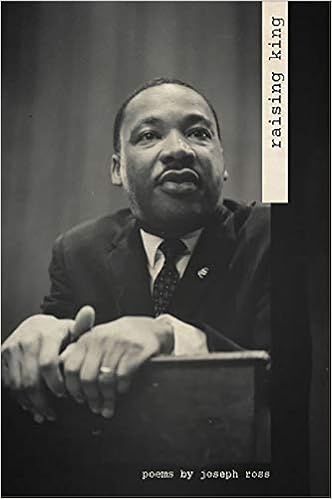
Raising King by Joseph Ross

Source: Purchased
Paperback, 144 pgs.
I am an Amazon Affiliate

As in stated in the introduction to Raising King by Joseph Ross, Dr. King “knew racism disfigured the white people who used it. Thus, he focused his life in such a way, built on compassion, that his work might free both those who suffer from racism and those who inflict the suffering.” Throughout this collection, Dr. King’s compassion infuses each line, even though “the boat [the slaves were on] is dust./The whip//survives.” (“Martin Luther King, Jr. — Prologue,” pg. 9)

The backbone of these poems are Dr. King’s own words in Stride Toward Freedom, Why We Can’t Wait, and Where Do We Go From Here. Through Dr. King’s words and teachings, Ross has recreated a compassionate look at a man frustrated with a system of oppression, but determined to save his oppressors and the oppressed. “a lunch counter/become[s] an altar,” but only after significant training in nonviolence. (“Be Broken,” pg. 32-3) This compassion stems from the realization that many whites who oppress have inherited their hate (it’s what they know, all they know, how they were taught). In “Inheritance,” Dr. King’s voice rings true: “I will not/destroy him just because/someone taught him//to destroy me.//” (pg. 37-8)

Compassion is often seen as a weakness, but in reality it is the strongest weapon we have against barbarity.

Bomb (pg.40)

War is like this: two women,
a baby, a man gone, a man lost.

I was lost like this: a baby
in the back bedroom.

a wife shaking, unable to be
still. A friend, calm but about

to break.

A crowd gathered. I ran home
to see what was left of me.

The crowd was angry.
I wanted their anger 

to love my own. But my wife's
shaking stopped, keeping me

from breaking.

Keeping me from becoming
the bomb I feared.

It is compassion and empathy that strengthen our character and our ability to rise above the baseness of our human nature.”We have not been victorious//over anyone. We want to ride/beside everyone.” (“We Prepared,” pg. 49) The collection also includes commandments as Dr. King’s movement becomes more urgent, almost as though he knows that the opportunity for real change is fleeting.

Ross’s poems are still relevant to the struggles we continue to face, with “Sheet, Cross, and Flame” calling to mind some recent reactions by parties who have lost and continue to rage against those losses. But Dr. King reminds us in Ross’s poems “Manners and decency/reach down and pat us//on the head. This is/about me grabbing//your hand demanding/you ask my permission//before you touch me.//” (“Decency,” pg. 108) With Ross’s words and poems, Dr. King rises again and leads by teaching.

I’m so glad that my last book of 2020 was Raising King by Joseph Ross. It was a comfort to read these words and remember why I treat others with compassion when I can, especially when it is hard to do so. While we must “choose//never to throw them [stones]//at one another” (“Chaos or Community,” pg. 136-7), we also need to “Let the/bones//rest.” (“The Bones,” pg. 119)

RATING: Cinquain

About the Poet:

Joseph Ross is the author of four books of poetry: Raising King (2020), Ache (2017), Gospel of Dust (2013), and Meeting Bone Man (2012). His poetry has appeared in a wide variety of publications including The New York Times Sunday Magazine, The Los Angeles Times, The Southern Quarterly, Xavier Review, Poet Lore, Tidal Basin Review, Beltway Poetry Quarterly, and Sojourners. His work appears in many anthologies including What Saves Us: Poems of Empathy and Outrage in the Age of Trump, edited by Martin Espada. His poems also appear in Collective Brightness, Poetic Voices without Borders 1 and 2, Full Moon on K Street, and Come Together; Imagine Peace. He served as the 23rd Poet-in-Residence for the Howard County Poetry and Literature Society, just outside Washington, D.C. He is a seven-time Pushcart Prize nominee, most recently for “The Mountain Top,” from Raising King. His poem “If Mamie Till Was the Mother of God” won the 2012 Pratt Library/Little Patuxent Review Poetry Prize. As a teacher and writer, Ross was awarded the University of Notre Dame’s Reinhold Niebuhr Award in 1997 and the William A. Toohey, C.S.C. Award in 1993. In 2006, he was awarded Teacher of the Year by the senior class at Carroll High School in Washington, D.C. In 2020, he delivered the Robert L. Giron Global Humanities Lecture for Montgomery College, Takoma Park, Maryland. The lecture was titled: “Literature Consoles and Confronts: When Poetry Is a Tool for Justice.”

Check out the Gaithersburg Book Festival Panel discussion with Joseph Ross, Tara Campbell, Kim Roberts, and E. Ethelbert Miller:
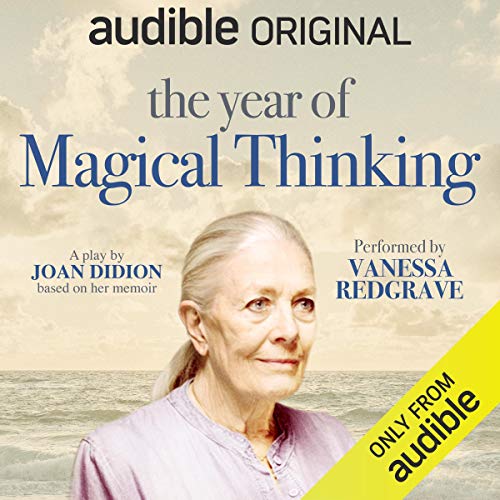
The Year of Magical Thinking by Joan Didion (audio)

Source: Purchased
Audiobook, 1+ hours
I am an Amazon Affiliate

The Year of Magical Thinking by Joan Didion, narrated by Vanessa Redgrave, is an adaptation of Joan Didion’s memoir of the same name. It has been transformed into a one-act play. The devastation felt by Didion is immense but the undulating way in which this story is told is as disjointed as her emotions must have been during this time in her life, losing a husband and daughter. This shattering loss propelled the author into a world of magical thinking.

There’s an examination of marriage and its push and pull and the motherly promise that you’ll never leave your child. There is that magical thinking that your own motherly focus can keep things moving forward into the future as you’d like them to be.

Redgrave is the perfect narrator for this play. Her voice lulls you into the story and breaks your heart when Didion’s is broken. But Didion’s narrative is also very factual and linear in some parts. I honestly think this is probably best viewed as a play, rather than on audio because my mind would wander away from the story when it was a bit too clinical. I might read the memoir at a later date.

RATING: Tercet

Mailbox Monday #612

It now has it’s own blog where book bloggers can link up their own mailbox posts and share which books they bought or which they received for review from publishers, authors, and more.

Leslie, Martha, and I also will share our picks from everyone’s links in the new feature Books that Caught Our Eye. We hope you’ll join us.

Here’s what we received:

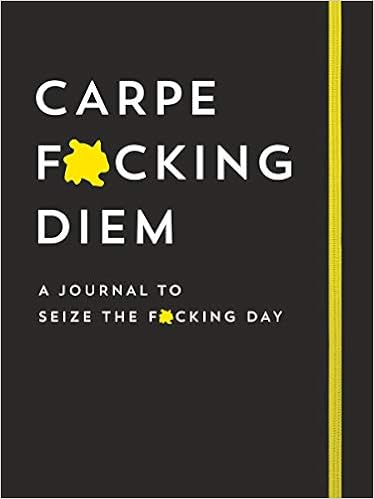
Carpe F*cking Diem, a gift from Anna at Diary of an Eccentric. (She seems to know me too well!)

A journal to stop the bullsh*t and seize the f*cking day―the perfect undated journal for every thought, list, note, or entry!

Packed with profanity and the IDGAF spirit, this is the perfect journal to say it like it is and get back to what matters. Finally ditch the anxiety, shake off the stress, and take a moment each day to focus on the number one f*cking person in your life―you! Based on the bestselling Carpe F*cking Diem Planner, this is the perfect undated journal to replace your tired old notebook and up your stationery game.

With journal pages, space for list-making, and laugh-out-loud swears, this is the journal that encourages you to embrace the c’est la f*cking vie attitude and focus on your happiness.

Hilarious and with a self-care attitude that tells you to take a damn nap and eat that f*cking ice cream, this is the perfect gift for the sweary person in your life and the ideal journal to carry with you all damn day.

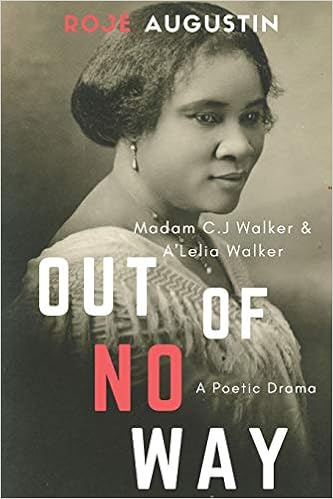
Out of No Way: Madam C.J. Walker & A’Lelia Walker, a poetic drama by Roje Augustin, which I purchased.

Author, producer, and emerging poet Rojé Augustin has written a groundbreaking debut collection of dramatic poems about hair care entrepreneur Madam C.J. Walker and her daughter, A’Lelia. Rojé’s singular and accomplished work is presented through the intimate lens of the mother-daughter relationship via different poetic forms — from lyric to haiku, blackout to narrative. (One poem takes its inspiration from Edgar Allan Poe’s The Raven.) Written in tribute to Walker, Out of No Way deftly and beautifully explores themes of race, motherhood, sacrifice, beauty, and the meaning of success in Jim Crow America.

Raising King by Joseph Ross, which I purchased.

Poetry. RAISING KING urges readers to walk beside Dr. Martin Luther King, Jr. from Montgomery to Memphis, past police dogs, mobs, and fire hoses. Listen to his thoughts, hopes, and fears. You’ll also hear from heroes including Abernathy, Shuttlesworth, and Coretta Scott King.-Joseph Ross

In his beautiful collection of poems evoking the spirit of the Civil Rights Movement, Joseph Ross offers his readers hope and inspiration for our own difficult times. These poems call us to revive our courage, moral convictions, and belief in the ultimate redemption of humanity.-Susannah Heschel

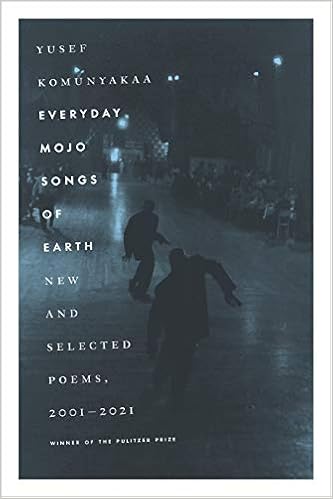
Everyday Mojo Songs of Earth: New and Selected Poems, 2001-2021 by Yusef Komunyakaa for review from the publisher.

New and selected poems from the Pulitzer Prize–winning poet

These songs run along dirt roads
& highways, crisscross lonely seas
& scale mountains, traverse skies
& underworlds of neon honkytonk,
Wherever blues dare to travel.

Everyday Mojo Songs of Earth brings together selected poems from the past twenty years of Yusef Komunyakaa’s work, as well as new poems from the Pulitzer Prize winner. Komunyakaa’s masterful, concise verse conjures arresting images of peace and war, the natural power of the earth and of love, his childhood in the American South and his service in Vietnam, the ugly violence of racism in America, and the meaning of power and morality.

The new poems in this collection add a new refrain to the jazz-inflected rhythms of one of our “most significant and individual voices” (David Wojahn, Poetry). Komunyakaa writes of a young man fashioning a slingshot, workers who “honor the Earth by opening shine / inside the soil,” and the sounds of a saxophone filling a dim lounge in New Jersey. As April Bernard wrote in The New York Times Book Review, “He refuses to be trivial; and he even dares beauty.”

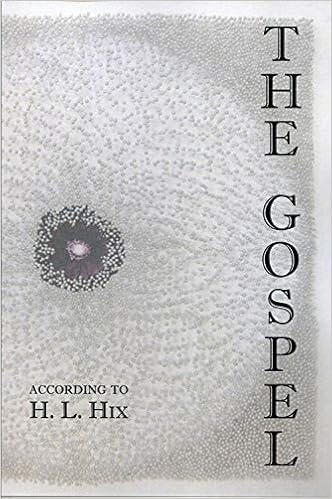
The Gospel according to H.L. Hix for review.

Literary Nonfiction. Religion. First we have to talk about the elephant in the room–though that might not be the most polite term for Jesus! For many millions of people around the world, Jesus is the Son of God, the divine source of their salvation, his story told in the familiar four gospels of the Bible, and any tampering with that story understandably will be met with suspicion, distrust, even hostility. So let’s begin with what this book isn’t. H. L. Hix covers this in detail in his Introduction to “The Gospel,” but for now it’s enough to say that this isn’t Jesus Christ, Superstar, or The Last Temptation of Christ. Nothing in this Gospel secularizes or desacralizes Jesus Christ. You don’t get less of the divine Jesus here, you get more. That’s because Hix has gone back to the original source materials, both the canonical and noncanonical gospels and histories and stories of the life of Jesus, and created out of them a single, more comprehensive and nuanced narrative. A good analogy is to film editing. Most movie directors shoot more film than ever makes it into the version we see on the screen, film that ends up on the editing room floor, the result of commercial decisions often far removed from the director’s vision of the film. Occasionally the director gets the chance to re-edit the film to restore that lost material, producing a “Director’s Cut” that may be very different from the commercial film release. So we can think of “The Gospel” as an ultimate “Director’s Cut” of the story of Jesus, with all of those bits that didn’t make the official version (edited by early church leaders to serve a specific agenda) at last restored. Something for those enthusiasts who want to dig deeper, to know more. But that’s not all he’s done. Among other virtues of his “Gospel,” Hix has restored the meanings of essential words as they would have been understood by contemporary audiences when the source materials were first written, overcoming what he calls “translation inertia”, the tendency to retain a translation over time even after the sense of the word has changed for current readers. Thus “Lord” becomes “Boss”, and the apostles “apprentices”, changes that allow for a novel understanding of the role of Jesus and of believers’ relationship to him. Also of crucial importance, Hix has eliminated gendered language wherever possible, in the process inventing new terms that decouple our understanding of Jesus and divinity from the limitations of gendered human bodies and relationships. Thus “Son” becomes “Xon”, for example, a form of literary transubstantiation that renders the divine even more transcendent, in the process opening the Gospel and its promise of salvation to greater inclusivity. Gospel, of course, means “good news.” And the very good news of THE GOSPEL ACCORDING TO H. L. HIX  for believers and for non-believers alike, is that what has been called “the greatest story ever told,” the life of Jesus, just got greater.

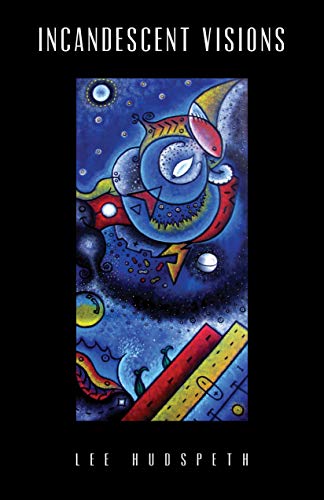
Incandescent Visions by Lee Hudspeth for review.

Having written numerous works of nonfiction, this is Lee Hudspeth’s debut book of poetry. Incandescent Visions explores the meaning of the human experience, as the author encourages his readers to ponder the universe and their place within it and to catalyze their own creative potential. From the sublime shores of the Mediterranean to the majestic expansiveness of deep space, this book contemplates nostalgia, perspective and the gift of love. Through five short yet powerful, thought-provoking chapters of contemporary poems—and a dash of elegant, evocative haiku—Hudspeth takes his readers on a journey across the inner landscape of struggle, triumph, self-realization, and imagination.

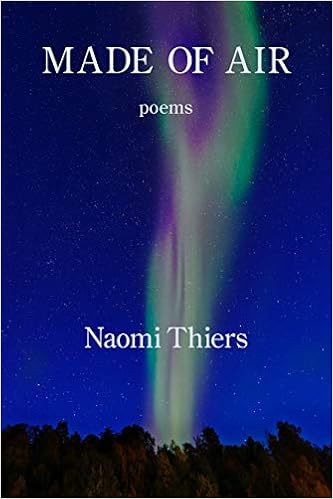
Made of Air by Naomi Thiers for review.

The poems in Made of Air argue for a deeper, more woman-centric definition of courage, a courage borne of the long haul. There are poems on the deaths of loved ones and mothering a teenager. One remarkable sonnet relates how a mother makes a U-turn off a ramp just before a bridge collapses in an earthquake. These poems celebrate the lives of women and girls and commemorate the daily ways they navigate through potential disaster—and come through dancing.

Kim Roberts, editor of By Broad Potomac’s Shore: Poems from the Early Days of Our Nation’s Capital and author of five poetry collections, including The Scientific Method

Naomi Thiers shows women and girls who hold things together. From the “cliff-high condo where we eat” to those sheltering in “a concrete pocket of unremarkable hidden things,” her characters emerge, vulnerable as a flame in a dry season. Like Thiers’ previous collections, her new work transfigures ordinary, “silenced people,” as Tillie Olsen called them, “consumed in the hard, everyday essential work of maintaining human life.” Can we bear to look at who we are now? Thiers’ poetry says yes—and we must, to help each other hold together.

Rose Marie Berger, Senior Editor, Sojourners magazine and author of Bending the Arch: Poems

Naomi Thiers’ Made of Air is a story of courage—or, more to the point, many such stories. It is a chronicle of endurance: the “ordinary women” in the book’s first section endure homelessness, illness, abuse, the murder of their children, and in doing so, become extraordinary. Thiers’ compassion and insight shine through in language that is vivid and luminous. The ending of her poem “Old People Waking” sums up the theme of the entire book: “And if everything hurts, it means / the current is flowing; we hiss inside: / Live. Live.

Miles David Moore, author of The Bears of Paris and founder of the IOTA Poetry Series

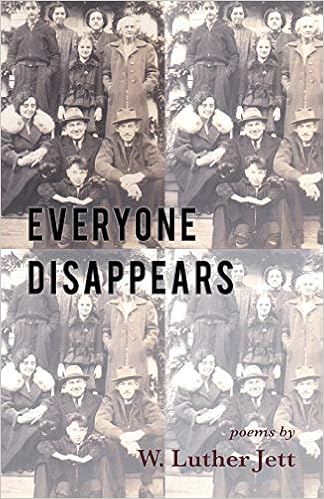
Everyone Disappears by W. Luther Jett, which I purchased.

In this follow-up to his earlier chapbook, Not Quite: Poems Written in Search of My Father (FLP, 2015), Luther Jett confronts the ephemeral nature of our lives, the process of grief, and the endurance of memory. Jett draws upon recollections of family, as well as historical events and forces to weave a tapestry of image and reflection. Loss “… comes with the ticking of clocks …” the author reminds us in his title poem, “… and that is why the ocean tastes of tears.” Jett writes of ghostly grandfather clocks that walk in the night, of forgotten toys scattered in an unmown lawn, of the importance and the hidden dangers of holding on to memory. “What can I sing to tell your feast?” Jett asks in the poem “Seamus”, adding in his later poem, “One by One”, “I chant the names of things long after they have gone.”

Maryland’s Poet Laureate, Grace Cavalieri says of Jett’s work: “[N]ever have the dead been more alive …. Subtle and intelligent stories, realized through the power of Jett’s voice, make life appear on every page.” In this time of world-wide pandemic and upheaval, “Everyone Disappears” may take on additional resonance as we grope for understanding in the face of tragedy and uncertainty.

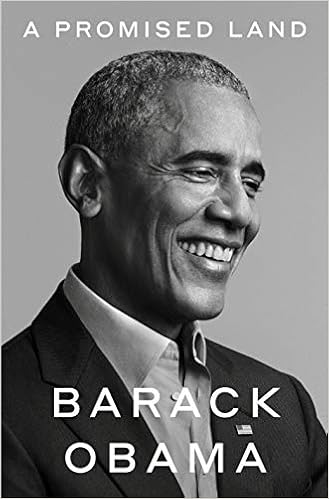
A Promised Land by Barack Obama, which I received as a gift.

In the stirring, highly anticipated first volume of his presidential memoirs, Barack Obama tells the story of his improbable odyssey from young man searching for his identity to leader of the free world, describing in strikingly personal detail both his political education and the landmark moments of the first term of his historic presidency—a time of dramatic transformation and turmoil.

Obama takes readers on a compelling journey from his earliest political aspirations to the pivotal Iowa caucus victory that demonstrated the power of grassroots activism to the watershed night of November 4, 2008, when he was elected 44th president of the United States, becoming the first African American to hold the nation’s highest office.

Reflecting on the presidency, he offers a unique and thoughtful exploration of both the awesome reach and the limits of presidential power, as well as singular insights into the dynamics of U.S. partisan politics and international diplomacy. Obama brings readers inside the Oval Office and the White House Situation Room, and to Moscow, Cairo, Beijing, and points beyond. We are privy to his thoughts as he assembles his cabinet, wrestles with a global financial crisis, takes the measure of Vladimir Putin, overcomes seemingly insurmountable odds to secure passage of the Affordable Care Act, clashes with generals about U.S. strategy in Afghanistan, tackles Wall Street reform, responds to the devastating Deepwater Horizon blowout, and authorizes Operation Neptune’s Spear, which leads to the death of Osama bin Laden.

A Promised Land is extraordinarily intimate and introspective—the story of one man’s bet with history, the faith of a community organizer tested on the world stage. Obama is candid about the balancing act of running for office as a Black American, bearing the expectations of a generation buoyed by messages of “hope and change,” and meeting the moral challenges of high-stakes decision-making. He is frank about the forces that opposed him at home and abroad, open about how living in the White House affected his wife and daughters, and unafraid to reveal self-doubt and disappointment. Yet he never wavers from his belief that inside the great, ongoing American experiment, progress is always possible.

This beautifully written and powerful book captures Barack Obama’s conviction that democracy is not a gift from on high but something founded on empathy and common understanding and built together, day by day.

What did you receive?

Happy New Year!

Happy New Year, and here’s to a 2021 that is way better than 2020 has been.

We usually spend New Year’s Eve at home, so nothing really changed for us.

Music for the Dead and Resurrected by Valzhyna Mort

Source: Publisher

Hardcover, 112 pgs.

I am an Amazon Affiliate

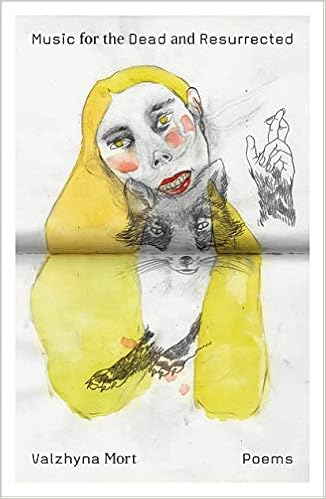
Music for the Dead and Resurrected by Valzhyna Mort is a collection of poems that raises the dead in a new language of verse that recalls the past, including Antigone, and mingles it with more modern history in Belarus. This is a collection that hinges on history and the language of the past and present to create a new language and shared history. Mort’s verses recall the dead in the most beautifully grotesque ways. In “To Antigone, a Dispatch,” “My guts have been emptied/like bellows/for the best sound.//” In this poem, she imagines Antigone as her sister, a life in which death has become something that is an every day thing with bodies buried in hillsides and grave markers in abundance.

Mort’s poems call to the lost men whose “bodies” become “their graves” and the women whose dresses are torn from them and worn by Aryan women in “Singer” (pg. 41) The horrors are laid bare and the larger questions are left in the sound, waiting for answers that never come. “What could a tongue remember after loss and hunger?” (“Music Practice,” pg. 43-45)

Music for the Dead and Resurrected by Valzhyna Mort is lyricless song played on a breathless accordion, calling to the dead and those she wishes to resurrect/breathe life into again. She’s calling not only our attention to the sorrow and grief of her country, but to the loneliness we, ourselves, can cure through song and memory. Our memories may be imperfect and altered truth, but we can sing them and resurrect those we miss most. Mort cautions that in this process “borders spill.” (“Music for Girl’s Voice and Bison,” pg.81-92)

RATING: Quatrain

Guest Post: My Half-Century as a Writer by Verne R. Albright

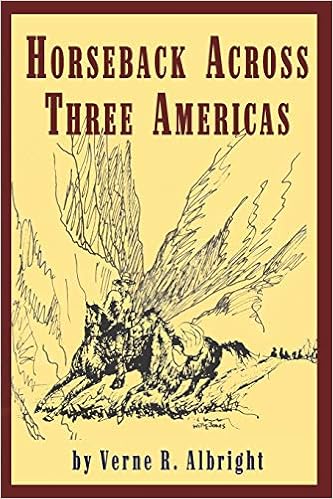
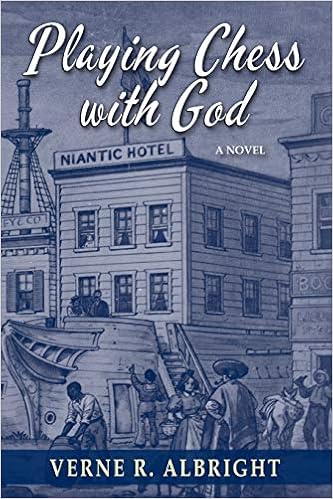
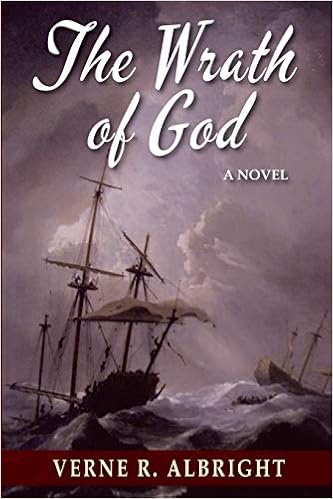
Today’s guest is Verne R. Albright to talk about his writing and his latest book, Horseback Across Three Americas, and Playing Chess with God and the sequel, The Wrath of God.

Before we hear from Verne, I wanted to share a brief synopsis of his books.

Synopsis of Horseback Across Three Americas:

Travel with Verne Albright on his famous Peru-to-California ride. Cringe as he encounters vampire bats. Feel apprehension as he’s chased by bandits, and when he rides into Nicaragua days after a violent revolution. Be there when a road grader driver tries to run him and his horses down. Experience the tension of facing malaria, typhoid, cholera, and bubonic plague. Come with him across the Peak of Death, where travelers have frozen to death standing. Feel his anxiety when he becomes a fugitive from the law in Mexico. And meet countless fascinating people including a witch doctor, bandits, a smuggler, a bullying sheriff, and a beautiful American girl named Emily.

Synopsis of Playing Chess with God:

VOTED ONLINE BOOK CLUB’S 2019 BOOK OF THE YEAR! Henning Dietzel, at the urging of a Chilean prostitute named Encinas, investigates rumors of gold in California prior to the 1849 rush. Intrigued he heads to the Gold Country to stake his claim. When others flee a brutal winter, Henning perseveres, and by the time the Forty-Niners arrive, he’s already a wealthy young man. His saga is a sweeping tale of fortune and misfortune, discovery and tragedy, love and loss. From the backwaters and boardrooms of early San Francisco to malaria infested jungles and a guano island off the coast of Peru, Henning’s search for meaning and purpose eventually brings him to realize that all that glitters is not necessarily gold.

Synopsis of The Wrath of God:

Henning Dietzel’s attempt to rebuild his businesses—destroyed by a massive tidal wave—is complicated by a desire to also enjoy a satisfying personal life. Quick to recognize opportunity, he amasses an agricultural empire the size of a small country. But his fortunes rise and fall during three disastrous wars followed by struggles with an unscrupulous competitor, a crooked judge, and a slave trader.All the while he doggedly courts Martine Prado, a feisty, beautiful, seemingly unattainable Peruvian aristocrat whose liberation is a century ahead of its time. Henning accepts her proposal of a mutually advantageous marriage, which combines their haciendas. Rocky at first, the relationship improves until an astonishing, out-of-nowhere answer to Henning’s prayers threatens to destroy it.

Please give Verne a warm welcome:

When my third grade teacher announced a compulsory writing contest for fictional stories, a boy spoke for everyone but me when he protested, “How will we ever write two whole pages?”

I wrote twenty pages and won. It was the first such success of my young life, and from that day on I loved writing.

My advice to anyone thinking of becoming a writer is to plan on working long and hard while creating your first draft and then to edit, polish, and rewrite—no matter how long it takes—until you’re happy with it. That will take months if not years, and it’s just the beginning.

Unless you are an exception to the general rule, numerous publishers and agents will reject your early submissions. But you must not tell yourself they don’t know what they’re talking about. Instead polish and improve your manuscript until it’s the best it can be.

You will need the input of a first class editor. There are many who correct your grammar and spelling while trying to write your book for you. But the really good ones reach inside you and bring out your best.

“I feel like a failure if I see myself in your finished story,” my editor told me. “What I’m supposed to see is you.”

My talent for writing served me well when I began publicizing the little-known Peruvian Paso horse breed worldwide. I also promoted these horses by riding two from Peru to California and writing a book about my adventures during that unusual tour of Latin America and the Andes Mountains.

During my sixty-five trips to Peru, that country’s culture, history, and colorful characters have provided much material for my books.

My latest effort, Horseback Across Three Americas, is the true story of my 1960’s ride from Peru to the United States. I’ve had twelve books published, three of which were Best Sellers. I consider this the most thoughtful of all.

The following is an excerpt from Horseback Across Three Americas. Enjoy:

As I rode Hamaca and led Ima through a hamlet, a man on a mule reversed course to follow us. This often happened with people on foot and usually meant the person wanted to talk. But this was different. Five men joined him, all riding small scrawny mules, wearing dirty suits, and inebriated. Instead of simply tagging along, they crowded close behind us.

In vain I looked for an army post or police station. Uneasy with riders pushing them, Hamaca and Ima sped up. At the edge of town the group’s leader put his mule in a fast trot and came alongside me.

“I’m the Law,” he declared, staring at my Bowie knife. “I have to see your passport and inspect your bags.”

“Do you have anything to show your authority?” I asked without slowing.

“I’m not making a request,” he replied sternly. “I’m giving an order.”

“How do I know you have that right?”

“Señor, you must stop immediately.”

“As soon as I see proof you’re the Law.”

We’d reached a stalemate. Obviously he couldn’t prove his authority, and I wasn’t about to be talked down off Hamaca.

Besides, I had a feeling the other five would soon give up and go away. The one beside me, however, was another matter. His determination made me wonder if he might indeed be the Law.

But in nearly eight hundred miles, only border guards had asked to see my papers and even they hadn’t inspected my duffel bags. Furthermore I’d slept in police stations without one such request. I was certain I’d regret letting these men go through my belongings.

Incessantly the Law droned on about international law and American imperialism.

When he referred to me as an Americano, I pointed out that most South Americans insisted I was a Norteamericano. He ignored my feeble attempt to sidetrack him.

“Stop and dismount,” he ordered.

I kept Hamaca a few steps ahead, hoping he’d give up. Abruptly he spurred his mule, and it jumped between my mares. He grabbed Ima’s lead rope and started to dismount, intent on searching my bags. By then his companions were surrounding me. I turned Hamaca to face him and untied Ima from my saddle.

“Show me proof of your authority now,” I demanded, hoping he’d produce a convincing badge.

He didn’t.

“Be careful,” I shouted, jumping Hamaca toward him.

He recoiled, still holding the rope. I put slack in it by riding closer, then spun Hamaca and charged in the other direction.

Rather than be jerked off his mule, he let go.

“Halt or be shot,” he ordered.

Thank you, Verne, for sharing your love of writing with us and the excerpt to your latest book.

Mailbox Monday #611

It now has it’s own blog where book bloggers can link up their own mailbox posts and share which books they bought or which they received for review from publishers, authors, and more.

Leslie, Martha, and I also will share our picks from everyone’s links in the new feature Books that Caught Our Eye. We hope you’ll join us.

Here’s what we received:

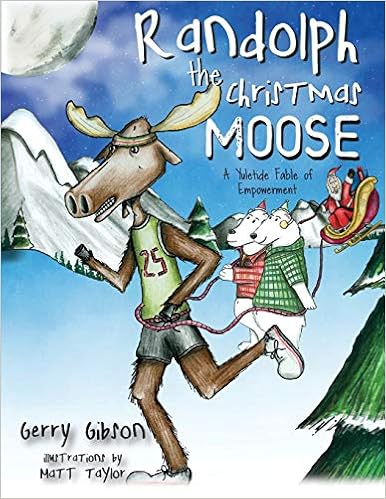
Randolph the Christmas Moose by Gerry Gibson for review.

Randolph the Moose lives with his mother in the Great White North. After a chance encounter with the reindeer from Santa Claus’ sleigh-pulling team, Randolph finds new joy in trail running as he trains to join the reindeer in Santa’s flight school. But when the head elf places him at the workshop loading dock instead (due to his tremendous bulk), Randolph has to use his brains and work ethic to earn respect at his new job… and even save Christmas.

Imagine Rudolf the red-nosed reindeer, except…

  • Randolph has a healthy self-image
  • Randolph has a more positive outlet for his feelings
  • Randolph runs, but not away from his problems
  • Randolph is pro-active, refusing to let Santa’s workshop define him as a moose

BE YOUR OWN MOOSE!

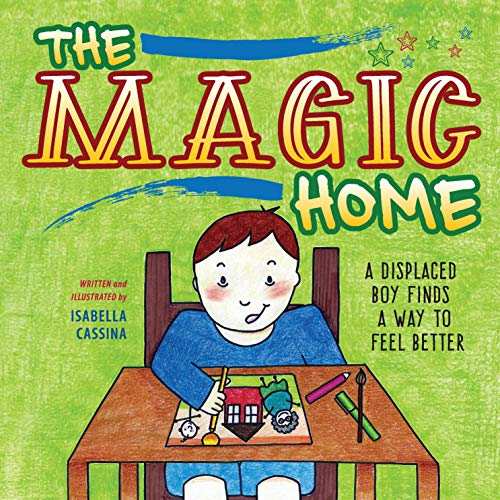
The Magic Home by Isabella Cassina for review.

The Magic Home is a story for those who believe in magic, to turn fear into bravery and let fantasies run wild! This is a tale of a little boy that lives with his family, plays happily in the courtyard with his brother, sister, a brown dog and a fluffy white rabbit, and cannot wait to start school. Suddenly he has to leave for an unpredictable journey…

The Magic Home offers psycho-educational support for children, parents and childhood professionals who are assisting children through the difficult transition of displacement. The author presents a guide for caregivers grounded in the principles of Play Therapy that allows children to be engaged in a dynamic and engaging process based on their capacities and the objectives defined by a caring adult. The book is ideal for easy reading with individuals and groups, and the suggested activities can be used between parent and child, at school, in a healthcare agency or any other place where children spend time.

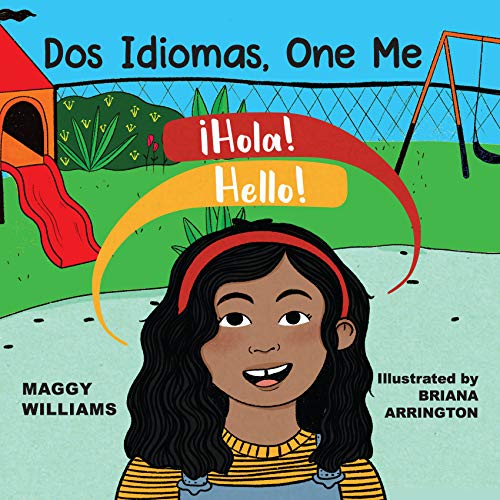
Dos Idiomas, One Me by Maggy Williams for review.

Dos Idiomas, One Me is the story of a young girl who feels torn between two languages. At home, she speaks Spanish, at school, she speaks English, and she finds herself resenting the fact that she has to translate her thoughts and feelings. Then, she realizes that being bilingual is a gift. She begins to have fun navigating the space of inclusivity and starts to relish the role of teacher and translator.

By equally incorporating Spanish and English, Dos Idiomas, One Me promotes biliteracy. As young readers see their experiences reflected in the story of another dual-language speaker, they can feel encouraged to embrace all aspects of themselves.

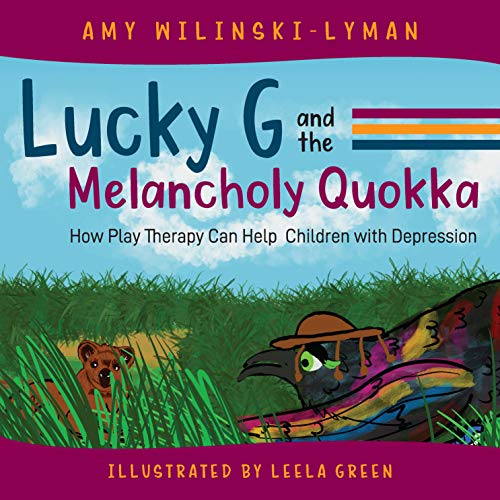
Lucky G and the Melancholy Quokka by Amy Wilinski-Lyman for review.

This book grabs you from the outset and takes you on a hopeful journey: A colorful, spunky raven (with a Ph.D.) travels to Australia to meet a quokka who has lost his true smile, finds it hard to move and isn’t hanging out with friends anymore. Dr. G knows that depression is the culprit, and extends a listening ear and helping hand, all the while reassuring the quokka that lots of adults and kids feel depression, too!

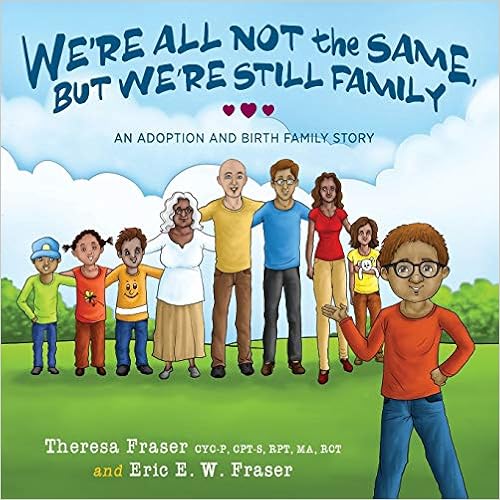
We’re All Not the Same, But We’re Still Family by Theresa Fraser and Eric E. Fraser for review.

This story was written for adoptive families to explore the benefits of adoption openness. The main character, Deshaun, loves his family but always wondered about his biological family. Does he look like them? Did they love him? With the support of his adoptive parents, Deshaun gets to meet his biological family. They develop an ongoing relationship, so Deshaun feels more stable in his adoptive family, but also develops a comfortable relationship with his birth family. Deshaun and his family are reminded (as we all are) that family can include biological, adopted, foster and kin members.

What did you receive?

Merry Christmas & Happy New Year

Winter Lights in Gaithersburg

I know many of you have already celebrated Hanukkah this year, and I hope you enjoyed a blessed season.

For those celebrating Christmas and Kwanzaa, I wish you the best this holiday season.

We did find time to go skating outdoors with our daughter’s best friend’s family, see the winter lights in the car, and have some fun with Elf on the Shelf. It’s been a unique year for celebrations, but we’ve made it work as best as we can. My daughter will do her annual gift opening with her friends via Zoom this year, but they will still see each other.

I’m looking forward to a little bit of down time at the end of the year. But I’ll be happy to see my daughter open her presents.

I’ll post my Best of List next week.

If you missed the annual Poetry Reading Challenge, you can find that here.

Poetry Reading Challenge 2021

In 2020, I read 21 books of poetry and listened to one collection on audio. Some were published last year, but some were languishing on my bookshelf for no good reason. All of these books were 4 and 5 stars.

I think last year’s challenge went well, so the options will remain the same:

  • One of the easiest, and possibly most difficult, will be getting people to sign up to read a poem-a-day through the Academy of American Poets Poem-a-Day service. The challenge is to read a poem-a-day for a week once per month and write about which poems were your favorite and why. You can write up a short blurb on your Facebook page, Twitter, Instagram, or your blog. I’d love for you to share your experience in the comments each month.
  • Second, read at least 1 book of poetry (doesn’t have to be cover-to-cover) and write about your favorite poems and what you learned about yourself while reading those poems.
  • Third, if you want to go all out, feel free to read as many books of poetry as you can in one year and link to your reviews in the comments.

If you accept one of the options or the whole challenge, leave a comment with where you will be posting about your year in poetry.

If you want to leave your blog link, sign up in a post and leave your blog URL to your post below:

Don’t forget to grab the image!

Mailbox Monday #610

It now has it’s own blog where book bloggers can link up their own mailbox posts and share which books they bought or which they received for review from publishers, authors, and more.

Leslie, Martha, and I also will share our picks from everyone’s links in the new feature Books that Caught Our Eye. We hope you’ll join us.

Here’s what we received:

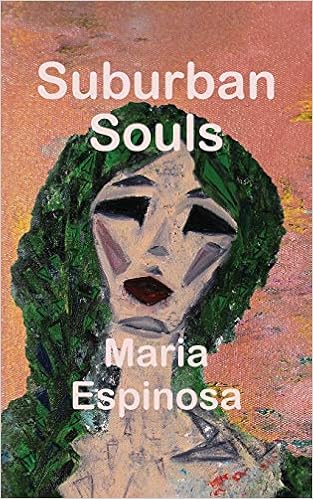
Suburban Souls by Maria Espinosa for review.

Against the vibrant and liberated backdrop of 1970’s San Francisco, a husband and wife-both Jewish immigrants indelibly traumatized by their childhoods in Nazi Germany-face the turbulence of an increasingly sterile marriage. Saul, an emotionally withdrawn scientist, escapes into New Age mysticism with Shivaya, a self-styled clairvoyant Danish healer. Gerda drifts in and out of psychiatric care as her loosening grip on reality leaves its mark on their teenage daughter, Hannah. In this unflinching portrait of a woman’s downward spiral into the nightmare of modern domesticity, Maria Espinosa weaves a deceptively simple tale about the terror of abandonment and the mysterious nature of suffering.

What did you receive?

Who’s Your Daddy by Arisa White

Source: the poet

Preordered book, 138 pgs.

I am an Amazon Affiliate

Who’s Your Daddy by Arisa White, on tour with Poetic Book Tours, is a poetic memoir in which the poet explores the absence of her father in her life, how it has impacted who she has become, and how she can reconnect with her absent father in adulthood.

“When it came to the conjunction “and” I was illiterate. For it makes you larger, more. Expands into distances beyond my eyes.” (pg. 124)

White articulates deftly the nuanced feelings of a desire to belong and the sense that belonging requires the reconnection with an absent father. While she has others in her life who love and care for her, there are traumas that she faces while her father is absent. But reconnecting with a man ejected from the United States and back to Guyana and who fails to even write a letter or call her is a tall order.

“Am I a site of abandonment?” (pg. 97)

“Guyana is abandonment from my father. I feel the weight of the people in me and I in them, guilt I carry myself alone.” (pg. 108)

The poetic memoir begins at home in the United States, as Arisa grows up in a broken home, a home of harsh realities. These realities are not my own, but this collection creates a palpable reminiscence of sorrow, anger, confusion, absence, and more. Despite these trials and her struggles with connections, she is a strong woman — caring for herself, willing to reach out to someone who abandoned her, and seeking self-care and healing.

What she finds in this journey is a man incapable of giving her a sense of belonging — a man who rambles just to hear himself speak, to make him relevant to those who hear him.

“Breaks my heart along the same fault lines that ache for him.” (pg. 83)

Who’s Your Daddy by Arisa White is a journey into the poet’s past as she reconciles the abandonment of her father and her struggles with connecting to others. The poetic memoir is beautiful and the landscapes within it (emotional and physical) are tumultuous and heartbreaking. White is a deft storyteller, and readers will be emotionally spent by this poetic memoir.

RATING: Cinquain

Follow the rest of the blog tour with #WhosYourDaddyMemoir #ArisaWhite

Photo Credit: Nye’ Lyn Tho

About the Poet:

Arisa White is a Cave Canem fellow and an assistant professor of creative writing at Colby College. She is the author of four books, including the poetry collection You’re the Most Beautiful Thing That Happened, and coauthor of Biddy Mason Speaks Up, winner of the Maine Literary Book Award for Young People’s Literature and the Nautilus Book Award Gold Medal for Middle-Grade Nonfiction. She serves on the board of directors for Foglifter and Nomadic Press. Find her at arisawhite.com.

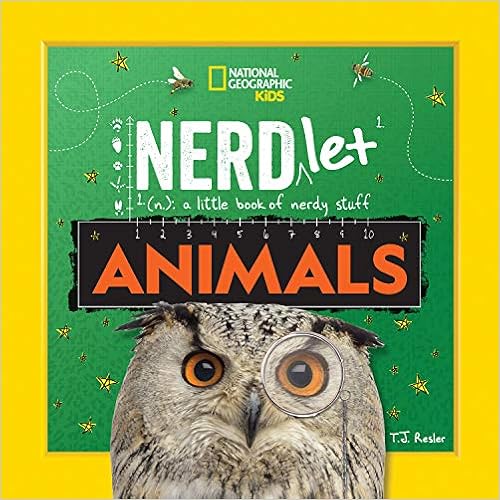
Nerdlet: Animals by T J Resler

Source: Media Masters Publicity

Paperback, 216 pgs.

I’m an Amazon Affiliate

Nerdlet: Animals by T J Resler is another fun and fact-packed book for kids to learn about the animal kingdom. The book includes some fun and unusual facts about animals, including spiders (which we are not too fond of). The pictures are gorgeous as always. Even though we’ve seen some of these animals in other books before, this little gem includes some quirky and fun facts about these animals. You’ll learn about why lemurs sit up and stretch their arms wide and how the cute faced platypus can be dangerous.

One of our favorite parts of the book are quizzes that you can take to find out what superhero you are based on animal characteristics, what species of fox you are based on how you like to play, and what kind of pet is best for you. These are the types of quizzes we love to take and enjoy as a family. We learn how we’re similar and different, but sometimes the choices are hard, especially for my daughter who definitely wanted the pet quiz to demonstrate to her parents that she was best suited for a pet cat.

Nerdlet: Animals by T J Resler can be read together as a family or dipped into occasionally on your own. What we love is that this is a book for sharing. We love animals and this is definitely something we’ll enjoy on more than one occasion. The only thing we wanted more of were those quizzes. We had a blast with those and would have liked at least 3 or 5 or 10 more. A good gift for the animal lover in your life.

RATING: Quatrain