Quantcast

White Fragility by Robin DiAngelo (audio)

Source: Purchased
Audible, 6+ hrs.
I am an Amazon Affiliate

White Fragility: Why It’s So Hard for White People to Talk about Racism by Robin DiAngelo, narrated by Amy Landon, takes a sociologists’ approach to race (which does involve generalizations). White Americans must remember that we are products of our socialization and culture, and no aspect of society lies outside the forces of racism, even if you come from a mixed-race family, had ancestors who were once discriminated against (Irish, Italian, etc.), or experienced poverty, etc. The trick is not to see our unique experiences as making us exempt from racism but to see how those experiences shaped who we are within a racist society and to see the larger picture of how racism impacts others. Secondly, she says we need to redefine the term “racist” — we’ve been taught that racists are immoral and mean and that they consciously hate/oppress others based upon their race. However, this assumption is a societal definition propagated by a racist society. White people need to first examine what it means to be white and what that has brought them in society and cost others — this examination will be a struggle for many.

Superficial differences between races and genders are a result of geographical location and evolution, but biologically we are all the same. The race construct is just that – made up. White supremacy has taken that construct and divided resources based on a false hierarchy, hence the accessibility gaps for non-white groups and non-male groups. Many of these discussions are ones I’ve had before in college with courses and other groups — open dialogue is essential about things that are not “fact” even though they were credited as such. She does touch on exploitation as the catalyst for racism (I would read Stamped From the Beginning for more on this).

Imagine going to court to proclaim you are white because you were misclassified as another race! This actually occurred and scientific experts were called into these cases to provide “expert” testimony. DiAngelo indicates that those European immigrants are the only ones who were successful in becoming “white” after assimilation, etc. Assimilation — think about that — casting aside their customs, speaking English only, and eating only American foods, etc. Those assimilated people now benefit from their whiteness. DiAngelo also points out that if poor and working class Americans across all “races” worked together – they could become a powerful force against the upper “white” classes. However, many perceived as “white” also tend to look down on other poor and working class peoples because of their “whiteness” and the system that oppresses them both. The irony!

“Scholar Marilyn Frye uses the metaphor of a birdcage to describe the interlocking forces of oppression.16 If you stand close to a birdcage and press your face against the wires, your perception of the bars will disappear and you will have an almost unobstructed view of the bird. If you turn your head to examine one wire of the cage closely, you will not be able to see the other wires. If your understanding of the cage is based on this myopic view, you may not understand why the bird doesn’t just go around the single wire and fly away. You might even assume that the bird liked or chose its place in the cage.

But if you stepped back and took a wider view, you would begin to see that the wires come together in an interlocking pattern—a pattern that works to hold the bird firmly in place. It now becomes clear that a network of systematically related barriers surrounds the bird.

Taken individually, none of these barriers would be that difficult for the bird to get around, but because they interlock with each other, they thoroughly restrict the bird. While some birds may escape from the cage, most will not. And certainly those that do escape will have to navigate many barriers that birds outside the cage do not.”

We all have prejudices (it is the way our brain operates) or a sense of discomfort around certain people or groups — acting on those prejudices is discrimination. Racism is a structure (white supremacy) and we need to remember that we have a role to play in that structure. We need to learn to recognize our prejudices and work toward not acting on them and dismantling the structures that employ discrimination against groups different from white males. This is a tall order because many of these ideologies are reinforced in our daily lives.

One notion that came to mind, however, is the “kafkatrap” by which an accused is guilty by merely being silent. Many of us are silent, many of us fail to stand up and point out discrimination (even subtle discrimination), and does this mean we’re all complicit in racism? While this may be true, I prefer less circular arguments and prefer that we work as a human race to improve our systems for all of us. THIS will require us to have discomforting conversations and require actions that run counter to our normal daily actions. It will require us to reform and dismantle white supremacy. We’ll need to widen our view of history, particularly in schools, to acknowledge both the good and the bad, highlighting those who have exploited and committed racism to obtain the upper economic hand, among other things.

My only complaint is that DiAngelo was very repetitive toward the end. She would bring up examples she already used and talk about them again in the same manner she did in the previous chapter. I wouldn’t have noticed it as much if it wasn’t back-to-back repetition. Perhaps she believes repetition will stick with readers more and help them to see the situations she discusses in a new light. I’m unsure.

White Fragility: Why It’s So Hard for White People to Talk about Racism by Robin DiAngelo, narrated by Amy Landon, asks us to recognize our faults, work to fix them, and to question ideologies that are considered the norm. There is much work to do. Challenging racism starts with recognizing your own prejudices and being conscious of how to modify/change your reactions and behaviors going forward. This is a very academic look at racism, which some may find too high-brow for them. Racism is real and present today (across the globe) — it is not a thing of the past, and we need to tackle it head on and in a multitude of ways. While some of her arguments are circular, she provides a good overview of racism in today’s society and the reactions that white people have when confronted with its subtleties.

RATING: Quatrain

Mailbox Monday #619

Mailbox Monday has become a tradition in the blogging world, and many of us thank Marcia of The Printed Page for creating it.

It now has it’s own blog where book bloggers can link up their own mailbox posts and share which books they bought or which they received for review from publishers, authors, and more.

Leslie, Martha, and I also will share our picks from everyone’s links in the new feature Books that Caught Our Eye. We hope you’ll join us.

Here’s what we received:

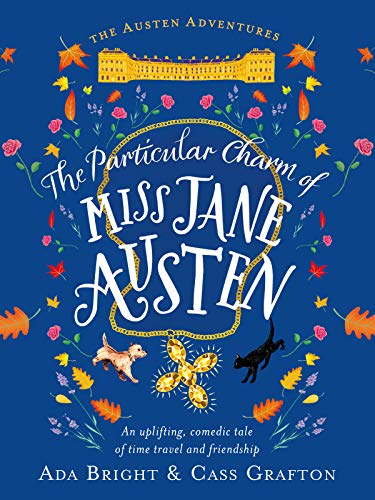
The Particular Charm of Miss Jane Austen by Ada Bright and Cass Grafton, which was free for Kindle.

Rose Wallace’s world revolves around all things Austen, and with the annual festival in Bath – and the arrival of dishy archaeologist, Dr Aiden Trevellyan – just around the corner, all is well with the world…

But then a mysterious woman who bears more than a passing resemblance to the great author moves in upstairs, and things take a disastrous turn. Rose’s new neighbour is Jane Austen, whose time travel adventure has been sabotaged by a mischievous dog, trapping her in the twenty-first century.

Rose’s life is instantly changed – new home, new job, new friends – but she’s the only one who seems to have noticed! To right the world around her, she will have to do whatever it takes to help Jane get back home to write Rose’s beloved novels. Because a world without Mr Darcy? It’s not worth living in!

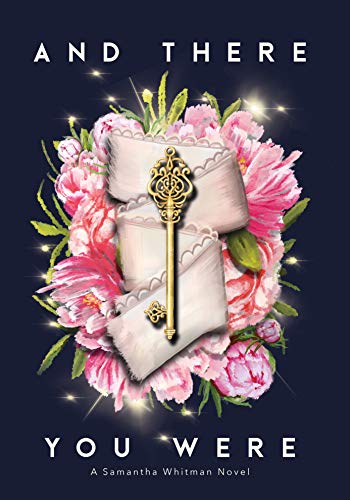
And There You Were by Samantha Whitman, which was free for Kindle.

Interviewing a celebrity was a golden opportunity for aspiring journalist Juliet Evans, and solving a mystery about her past in the city her parents grew up in was even more enticing. A cryptic skeleton key would end up uniting both, and pave the way for an unforgettable quest woven throughout the romantic streets of London. Instead of unraveling the past, however, Juliet would uncover secrets that cause her life to come apart at the seams. Can she come to terms with who she is? Can she repair the damage before it’s too late? Or is everything beyond her control, left entirely up to fate to decide?

What did you receive?

The Last Tree by Emily Haworth-Booth

Source: Media Masters Publicity
Hardcover, 32 pgs.
I am an Amazon Affiliate

The Last Tree by Emily Haworth-Booth will remind readers of The Giving Tree by Shel Silverstein and The Lorax by Dr. Seuss, though here the tree is not personified, there is no Lorax, and the messages are very clear cut. In Haworth-Booth’s book, the focus is on the group of villagers who are seeking a place to live — the desert too hot, the valley too wet, the mountains too windy — until they find a forest with the perfect amount of light and shadow and breeze. But they soon need to build shelters and then homes to protect themselves from the natural elements, and they build and build until they are walled in and blocked from one another. One tree remains, which they call a weed. The children from different families are sent out to cut down that last tree for various structures, but the children have other ideas.

The people in this village are not demonized as taking from the world around them — the message is clear without being heavy-handed. However, it is clear that as they separate themselves from one another by barriers, their happiness declines and their ability to enjoy life falls. But is that because of their use of their resources and the scarcity of them in their present? Not necessarily. While the use/overuse of resources is clear in this book and can be talked about by parents and children, the authors is seeking to address the separation of families from their communities and their perceptions of others as a source of unhappiness.

The Last Tree by Emily Haworth-Booth is a gorgeous picture book that looks like crayon-colored drawings that kids can easily identify with. The text is definitely easy to read for younger readers, and the subject matter is broad and important for parents and their children. It would also make a great addition to school libraries and classrooms. I loved the redemption of this village in the book — we can all make positive changes.

The Other America – A Speech from The Radical King by Dr. Martin Luther King, Jr. (audio)

Source: Purchased
Audible, 25 min.
I am an Amazon Affiliate

The Other America – A Speech from The Radical King by Dr. Martin Luther King, Jr., read by Wanda Sykes, is as relevant today as it has ever been. It is one of 23 speeches and essays from The Radical King, curated by Dr. Cornel West, including words never recorded in public. This is a speech was given at the “Salute to Freedom” organized by the Local 1199 in New York City and outlines his Poor People’s Campaign.

I am on the fence about Sykes’ rendition of this speech. At points I felt like she was passionate about it, but at others I felt like she were merely reading by rote.

“You see, no labor is really menial unless you’re not getting adequate wages. People are always talking about menial labor. But if you’re getting a good (wage) as I know that through some unions they’ve brought it up…that isn’t menial labor. What makes it menial is the income, the wages.”

While not from a Black family, I can tell you that as a women from a working class family, this is no less true. My father toiled for pitiful wages most of my childhood, even if he worked 40+ hours a week. The plague for the Blacks in this country is also compounded by their involuntary work as slaves — forced labor. When you can barely afford food to feed your family after bills are paid even if the labor is honest and hard work, it is clear there is something wrong with the way those jobs are compensated. People in the working class and elsewhere are as equally frustrated as they are now.

Take that 25 minutes to listen to The Other America – A Speech from The Radical King by Dr. Martin Luther King, Jr., read by Wanda Sykes. All men are created equal, but not in a society where wealth gaps continue to grow and justice is not served. We need to DEMAND justice.

RATING: Quatrain

Guest Post & Giveaway: Love at First Sight by Kelly Miller, author of A Consuming Love

Love at first sight is a highly debated topic, but when we read Pride & Prejudice some of us assume that love at first sight happened between Mr. Darcy and Elizabeth Bennet. Today, Kelly Miller will share with us her novella, A Consuming Love, and her thoughts on love at first sight.

Stay tuned for a giveaway later in this post.

But first, let’s learn a little more about the book, A Consuming Love.

Book Synopsis:

The methodical world of rich, proud Fitzwilliam Darcy is in chaos: a country lady of modest origins has utterly captivated him.

The knowledge that Elizabeth Bennet is an unsuitable match fails to diminish Darcy’s fascination for her, nor does his self-imposed distance from the lady hinder her ability to intrude upon his thoughts at all hours of the day. What can solve his dilemma?

When circumstances compel Darcy’s return to Hertfordshire in assistance of his friend Mr. Bingley, he must confront his unfathomable attraction to Miss Elizabeth.

In this Pride and Prejudice Regency novella, one afternoon spent in company with Miss Elizabeth Bennet is enough to make an indelible and life-altering impression upon Darcy, setting him on a rocky course towards the fulfillment of his desires. Will Darcy attain happiness, or will his ingrained pride be his downfall?

Please welcome, Kelly:

In A Consuming Love, my Pride and Prejudice Regency novella, Mr. Darcy falls for Elizabeth Bennet rather swiftly. He is disconcerted by an immediate, robust attraction to her. Does my Darcy experience love at first sight? In order to answer that question, I pondered what love at first sight actually means.

Darcy experiences an unshakable attraction for Miss Elizabeth Bennet in this novella after spending a mere two hours with her. What sort of sentiment can be formed in so short a period of time? Is it possible that Darcy felt anything more than infatuation or lust?

How long does it take for love to develop? In order to solicit opinions from a variety of people, I posted the following question and poll on Twitter:

Do you believe in love at first sight? If so, why? If not, what is the minimum amount of time necessary for someone to fall in love?

My results, with 445 votes cast in a 24-hour period:
1 hour: 19.3%
2 hours: 6.3%
24 hours: 9.4%
longer than 24 hours: 64.9%

I received many comments in which people expounded upon their replies. Many stated they do not believe in love at first sight. Others provided examples of their own experiences with the phenomenon. More than a few people felt themselves to be in love after a first date or within the first few dates. Some of these instances led to a lasting, happy relationship and others did not. I received several responses with tales of how a parent, sister, or friend met their future partner and felt an instant connection with them. Some people described the experience of love at first sight as knowing “this is it” or “this is the person I will marry,” while others described it as a tingling sensation or “electricity.”

One person brought up the “instant love” a parent feels for their new-born child. Although this sentiment differs from romantic love, most people do not question the immediate, abiding, and genuine nature of that emotion.

The responses and comments from my Twitter poll made me wonder if love at first sight needs to be experienced to be believed. In a similar vein, we tend to be skeptical about the existence of ghosts unless we have seen one. (I am still waiting to see my first ghost.)

I disagree with the majority (64.9%) of people who answered my poll saying it takes more than 24 hours for love to develop. Under the right circumstances, I believe it could happen in an hour or two, especially when sufficient relevant information about the person in question is obtained.

Consider, for example, two people who meet via a dating app. They each filled out questionnaires for their profiles that covered their goals, interests, and backgrounds and provided honest answers. After seeing each other’s profiles, the two people meet in person and have a one or two hour conversation.

Could one or both individuals come away in love with the other? I think so. The sentiment would be based, not just on a physical attraction, but also on the facts learned about the other person that assure compatibility and the rapport built over the time spent together.

People living in Regency England did not have the option of dating apps; instead, eligible ladies and gentlemen sought introductions at social gatherings. The chances of any given eligible gentleman being incompatible with an eligible lady in the Regency era were greatly reduced compared to today. People lacked the freedom then to choose lifestyles in opposition to accepted societal norms without paying a hefty price. The characters in Pride and Prejudice shared the Anglican faith, so Mr. Darcy did not need to speculate whether Elizabeth Bennet’s religious beliefs differed from his. Given the dearth of opportunities open to ladies in the Regency, Darcy could reasonably assume that Elizabeth would not pursue a career that would conflict with the duties of being Mistress of Pemberley or decide to quit England for a different country.

I consulted an article for Psychology Today by Theresa E. DiDonato, Ph.D on the subject of love at first sight. She indicated that many people claim to have experienced the phenomenon, including celebrities. Prince Harry claimed to know Megan Markle was the right one for him the first time they met. Portia de Rossi said the same of her wife, Ellen Degeneres, as did Matt Damon of his wife.

In 2017, researchers from the Netherlands (Zsok, Haucke, De Wit, & Barelds) attempted to prove or disprove the existence of love at first sight. They questioned approximately 400 men and women immediately after meeting potential romantic partners. Participants were queried if they experienced love at first sight, and asked to describe the level of attraction they felt for the person.
Their resulting data led the researchers to draw several conclusions:

1. Love at first sight is not simply biased memory.
2. You are more apt to experience love at first sight with people you find beautiful.
3. Men report love at first sight more than women.
4. Love at first sight is not usually mutual.
5. Love at first sight is a genuine occurrence.

It is an immediate, strong attraction that makes one particularly open to the possibility of a relationship. It may fizzle out, but the instances when this initial strong attraction launches a sustained relationship make for a memorable story.

Based upon the conclusions drawn by these researchers, I would say that my Mr. Darcy in A Consuming Love experiences love at first sight, which leaves him disposed to developing a stronger, more abiding sentiment for Elizabeth in a short amount of time. Unfortunately for him, the odds are against the feeling being mutual.

Thank you, Kelly, for sharing your thoughts and research on love at first sight.

About the Author:

Kelly Miller is a native Californian and Anglophile, who made her first visit to England in 2019. When not pondering a plot point or a turn of phrase, she can be found playing the piano (although like Elizabeth Bennet, she is errant when it comes to practicing), singing, and walking her dogs. Kelly Miller resides in Silicon Valley with her husband, daughter, and their many pets.

A Constant Love is her fourth book published by Meryton Press. The first three are novels: Death Takes a Holiday at Pemberley, a Pride and Prejudice Regency romantic sequel with a touch of fantasy; Mr. Darcy’s Perfect Match, a Pride and Prejudice Regency romantic variation; and Accusing Mr. Darcy, a Pride and Prejudice Regency romantic mystery.

Visit her blog, Twitter, Facebook, or GoodReads.

Giveaway Alert!

I wonder what my readers think about love at first sight. Please leave a comment about your thoughts on love at first sight and an email, to be entered into the giveaway for 1 ebook of A Consuming Love.

Last day to enter is Feb. 23, 2021.

Follow the Tour for additional chances to win:

Feb. 18: From Pemberley to Milton
Feb. 20: Donadee’s Corner
Feb. 22: Austenesque Reviews

Mailbox Monday #618

Mailbox Monday has become a tradition in the blogging world, and many of us thank Marcia of The Printed Page for creating it.

It now has it’s own blog where book bloggers can link up their own mailbox posts and share which books they bought or which they received for review from publishers, authors, and more.

Leslie, Martha, and I also will share our picks from everyone’s links in the new feature Books that Caught Our Eye. We hope you’ll join us.

Here’s what we received:

Made to Explode by Sandra Beasley, which I purchased.

In her fourth collection, acclaimed poet Sandra Beasley interrogates the landscapes of her life in decisive, fearless, and precise poems that fuse intimacy and intensity. She probes memories of growing up in Virginia, in Thomas Jefferson’s shadow, where liberal affluence obscured and perpetuated racist aggressions, but where the poet was simultaneously steeped in the cultural traditions of the American South. Her home in Washington, DC, inspires prose poems documenting and critiquing our capital’s institutions and monuments.

In these poems, Ruth Bader Ginsberg shows up at the Folger Shakespeare Theatre’s show of Kiss Me Kate; Albert Einstein is memorialized on Constitution Avenue, yet was denied clearance for the Manhattan Project; as temperatures cool, a rain of spiders drops from the dome of the Jefferson Memorial. A stirring suite explores Beasley’s affiliation with the disability community and her frustration with the ways society codes disability as inferiority.

Quintessentially American and painfully timely, these poems examine legacies of racism and whiteness, the shadow of monuments to a world we are unmaking, and the privileges the poet is working to untangle. Made to Explode boldly reckons with Beasley’s roots and seeks out resonance in society writ large.

Keep Moving by Maggie Smith, which I purchased on Audible.

When Maggie Smith, the award-winning author of the viral poem “Good Bones”, started writing inspirational daily Twitter posts in the wake of her divorce, they unexpectedly caught fire. In this deeply moving book of quotes and essays, Maggie writes about new beginnings as opportunities for transformation. Like kintsugi, the Japanese art of mending broken ceramics with gold, Keep Moving celebrates the beauty and strength on the other side of loss. This is a book for anyone who has gone through a difficult time and is wondering: What comes next?

The Last Tree by Emily Haworth-Booth, which we received for review.

Once upon a time a group of friends were seeking a place to call home. The desert was too hot, the valley was too wet and the mountain was too windy.

Then they found the forest. It was perfect. The leaves gave shelter from the sun and rain, and a gentle breeze wound through the branches.

But the friends soon wanted to build shelters. The shelters became houses, then the houses got bigger. All too soon they wanted to control the environment and built a huge wooden wall around the community.

As they cut down the trees, the forest becomes thinner, until there is just one last tree standing.

It is down to the children to find a solution.

Alone! by Barry Falls, which we received for review.

There once was a boy called Billy McGill
who lived by himself at the top of a hill.
He spent every day in his house all alone
for Billy McGill liked to be on his own…

One day Billy hears the squeak of a mouse, which destroys his peaceful existence. So he gets a cat to catch the mouse. But the cat and the mouse make friends. So he gets a dog to chase the cat. But they all play together. So then he gets a bear… then a tiger… and on it goes, until Billy’s house is so filled with animals that he has to move out. Will he find that he still craves peace and quiet, or is it better to have company and friends? This a laugh-out-loud story of growing chaos, with a subtle message about how it’s good to have friends.

What did you receive?

Suburban Souls by Maria Espinosa

Source: Publicist
Paperback, 232 pgs.
I am an Amazon Affiliate

Suburban Souls by Maria Espinosa is a disturbing story with emotional and physical abuse, but the real crux of the novel is the impact of trauma on not only the generations immediately affected but how that trauma becomes a ripple effect throughout more than one generation. Gerda and Saul are survivors of the Holocaust and after escaping to the United States, they fall into a marriage because of their shared past, but is that enough to heal them.

“It began for Hannah during the winter of eighth grade.

The artificial feeling. I am not acting real, she would think. I am not real. I don’t exist, pressed between my mother’s and father’s spirits, suffocated by their warring. While she responded cheerily to her friends’ overtures, she felt as if she were artificial, a windup doll.” (pg. 91)

Readers will be taken into the tormented mind of Gerda and how her outbursts and physical abuse of Saul and her children leads to her daughter, Hannah, internalizing Gerda’s psychological issues. Readers will be drawn into this family quickly, but at the start, readers will likely be slack jawed in disbelief. Trauma affects people in different ways. Saul is no less affected by trauma, but his manifests in less violent ways. He withdraws from his family completely to protect himself, he doesn’t act to protect his children, he’s a passive observer of his life.

Espinosa is a gifted storyteller and her novel pulls no punches about mental health and its reverberating effects from parent to child. She clearly has some experience with mental illness and it shows in the realistic portrayal of this family and their struggles. Like many with mental illness, there is no resolution or solution that remedies everything in their lives, and Espinosa doesn’t pretend that there will be. Her characters are broken, the edges are sharp, and the story is stark. Don’t miss out on reading Suburban Souls by Maria Espinosa.

RATING: Quatrain

About the Author:

Maria Espinosa, a former Bay Area resident who now lives in Albuquerque, has been an author for over 50 years. A novelist, poet, translator, and teacher, who has been reviewed in Publishers Weekly, Kirkus Reviews, Library Journal, New York Review of Books, and The San Francisco Chronicle, she is featured in the Contemporary Authors Autobiography Series. Her five novels include: Incognito: Journey of a Secret Jew, Dark Plums, and Longing, which received an American Book Award, as well as Dying Unfinished, which received a Josephine Miles Award for Literary Excellence from PEN Oakland. Her fifth and most recent novel Suburban Souls, tells a tale of Jewish German Holocaust survivors in 1970s San Francisco. She has also published two collections of poems, Love Feelings, and Night Music, and a critically acclaimed translation of George Sand’s novel, Lelia. Concerned with human communication on a level that transcends the norms permitted by society, her novels focus on the subtle as well as the obvious forces that shape a human being.

Giveaway & Interview with Jona Colson, poetry editor of This Is What America Looks Like

Full disclosure: I have a poem in this anthology.

Today, we’re talking with poetry editor Jona Colson about the new anthology from the Washington Writers’ Publishing House.

It is their first anthology in a number of decades, and the fiction and poetry included in this collection runs the gamut in terms of what America looks like. Many of these poems and stories were written during the pandemic, the Black Lives Matter protests, and so many other traumatic and pivotal events in recent history.

Please give Jona a warm welcome.

Stay to the end of the interview for a special giveaway.

Savvy Verse & Wit: Congratulations on the new anthology, This Is What America Looks Like, published by the Washington Writers’ Publishing House.

This is the second time you’ve worked with them, since they published your first poetry collection, Said Through Glass. How would you describe the publishing process for a debut poetry collection and was that similar or different from working on the anthology?

Jona Colson: It was similar and different. With your own work and developing a manuscript, you see how the poems speak to each other, and I did the same for the anthology. However, the writers were placed reverse alphabetical (Z-A), so I did not have to consider the order of the poems. I still had to create a balance with the poems—the themes, topics, and forms. This was the first time I put on an editor’s hat, and I learned a lot about working with other writers. I also was able to read so many wonderful poems!

SVW: As the poetry editor for the anthology, how much coordination was there with fiction editor Caroline Bock? Did you both have a game plan in mind before submissions started rolling in or were their themes that emerged on their own as submissions were being read?

JC: The submission’s call offered a prompt in many ways, so I was ready to read submissions in response to that. We didn’t share the specific poems and texts that we were reading, but we did discuss the topics and themes we were getting. The majority of submissions came in during the height of the pandemic and the Black Lives Matter movements. So, many of the topics changed in response to these events, and we had to balance the narratives of the work we accepted.

SVW: How did you view your role as an editor of the anthology? Let us in on what your process was when selecting poems and whether you asked any artists for edits.

JC: I was so pleased with all the submissions we received. Unfortunately, we had a very limited space with the book, so I had to choose what fit the best. There were many poems that I couldn’t take because of space. I asked poets for revisions when I felt that it would improve their poem. I had a few edits—some minor and some major. I found that writers were really responsive to revising their work, and that was wonderful. I love reading poetry, and I have such respect for any artist who attempts to shape experiences into language.

SVW: This Is What America Looks Like provides a very broad landscape in how writers could approach the topic, but how would you describe what America looks like? Does America’s description merely entail its mountains and landscapes or is it about the people within it?

JC: I would say it is all of that. Emotional and physical landscapes. Dreams and visions. The poems in this anthology offer a reflection of America in many different ways. There are many poems that do not directly respond what America looks like, but discuss belonging, childhood, adulthood, expectations. These are all American experiences.

SVW: Thinking about the writers in the Washington, D.C., Maryland, and Virginia (DMV) region, how would you describe their writing styles and overall view as presented in their poems? Is there something that readers could immediately recognize as poetry from this region?

JC: There are many references to locality. Many poems showcase towns in the DMV, or specific streets and locations—Dumbarton Oaks, The Library of Congress, battlefields. In this way, you are immediately placed into a particular part of our country. Some poems are more abstract but suggest places in the area. The poems—and the fiction—solidify the DMV as a literary powerhouse.

SVW: What has been your fondest memory of your poetic journey so far? And what’s next for you?

JC: Getting to know other poets and writers, and being welcomed into the literary community. I got my MFA from American University, and I got to know many writers. However, since I published my book and started working on this anthology, I have met so many more people and the thriving literary community that we have here in the DMV. Discovering more writers and hearing their stories have been the best part of this journey.

Right now, I’m working on poems and some translation projects. Another book may take a while, but as long as I can keep writing, I’m happy.

Giveaway: Leave a comment about what you think America looks like by Feb. 17, 2021.

I will send the winner (age 18+) a copy of Jona’s book, Said Through Glass, and the anthology This Is What America Looks Like.

Please leave a way for me to contact you.

Keep Moving by Maggie Smith

Source: Purchased
Audible, 2+ hrs.
I am an Amazon Affiliate

Keep Moving by Maggie Smith, read by the author, is read in that dreaded “poet voice” that’s been in a number of articles, and it drove me crazy. I had to look past that cadence to hear Smith’s words clearly. So if that cadence bothers you, you’ll want to read the book, as opposed to listen to it.

Beyond that, this book offers notes on loss and grief of a recently divorced woman who is continuing her life journey in a way she never expected – without a life partner. It is clear that “keep moving” was a mantra she used to get through the loss of her marriage and the deaths of others. She speaks about living in the present each day and not dwelling in the past that can pull you deep into sadness and make you immobile. Her notes and stories can help those facing similar losses move forward, but in many ways it is like Smith is speaking to herself. We’re getting a sneak peak into her diary.

I love that she focuses on post-traumatic growth in one section of this memoir. This helps us to see beyond the darkness to see the positives in our trials and losses. I liked this the most about the book. Focus on that beginning, push past our fears and explore new avenues for growth. You can even think about professional growth as a way to fill the emptiness left behind.

There is, however, very little about being creative during this time. This is more of an emotional journey and there are snippets of some creative pursuits and nods to the literary community, but no advice on that front, which is what I wanted when I decided to check this out.

Keep Moving by Maggie Smith is about moving forward after irrevocable change, and we need to learn to move beyond our expectations and sadness to see the good, the moments for growth, and how small steps can lead to great, gratifying changes. She also speaks about how you can snowball that movement into helping others. Moving toward living, not just coping.

RATING: Tercet

Mailbox Monday #617

Mailbox Monday has become a tradition in the blogging world, and many of us thank Marcia of The Printed Page for creating it.

It now has it’s own blog where book bloggers can link up their own mailbox posts and share which books they bought or which they received for review from publishers, authors, and more.

Leslie, Martha, and I also will share our picks from everyone’s links in the new feature Books that Caught Our Eye. We hope you’ll join us.

Here’s what we received:

Diary of a Pug: Pug’s Got Talent by Kyla May, purchased for my daughter as an award for being a Super Virtual Husky student.

Bub’s human, Bella, is putting on a pet talent show! Bub can’t wait to wow the audience with his skateboarding stunts, not to mention his snazzy costume. But when dress rehearsal doesn’t go as planned, Bub finds that it’s up to him — and his archenemy Duchess the cat — to make things right. Can he and Duchess work together to make sure the show goes on?

In the Lateness of the World by Carolyn Forché for review.

Over four decades, Carolyn Forché’s visionary work has reinvigorated poetry’s power to awaken the reader. Her groundbreaking poems have been testimonies, inquiries, and wonderments. They daringly map a territory where poetry asserts our inexhaustible responsibility to each other.

Her first new collection in seventeen years, In the Lateness of the World is a tenebrous book of crossings, of migrations across oceans and borders but also between the present and the past, life and death. The poems call to the reader from the end of the world where they are sifting through the aftermath of history. Forché envisions a place where “you could see everything at once … every moment you have lived or place you have been.” The world here seems to be steadily vanishing, but in the moments before the uncertain end, an illumination arrives and “there is nothing that cannot be seen.” In the Lateness of the World is a revelation from one of the finest poets writing today.

The Lamps of History by Michael Sandler for a TLC Book Tour.

The Lamps of History wrestles with the ambiguities–and choices–between connection/alienation, renewal/decay, and faith/doubt. Its poems explore dimming family histories and our stance toward them, the frayed bonds with our grandparents’ traditions and beliefs, and distances in our current relationships.

There are also poems on our civic estrangements: an ode to a papaya that spills into America’s tribal conflict; elegies to the environment (one on disappearing phytoplankton, another on forests ravaged by pine beetles); a ghazal to a semi-automatic weapon; and a failed recipe for noodle pudding.

Michael Sandler’s writing marshals wit and wordplay in a deft handling of language and form. The poetry navigates the crosscurrents of tradition and post-modernism, steering somewhat closer to the former.

Poet and editor George Bishop concludes: “This language is addictive. A stunning sense of place and story. To be read and read again.”

What did you receive?

Publication News 2021

Hello everyone!

I have some wonderful publication news to share. It’s been a while since I’ve shared some news on the poetry writing front. I have been updating my Publication Credits page (it’s in the menu), so feel free to check that out, too.

First, three of my poems now are available in The Magnolia Review, Volume 6, Issue 2. The theme for the issue was “A Defining Moment.” You’ll need to download the PDF, but the magazine is worth the download.

My poems appear on pgs. 68, 80, and 115. I hope you check them out, but they are on dark topics regarding gun violence, so be aware.

Secondly, I’m happy to announce that the anthology from the Washington Writers’ Publishing House, This Is What America Looks Like, is available for purchase.

I have 1 poem included in this collection, but I hope you’ll buy a copy because I know many of these writers (fiction and poetry) and their work is AMAZING.

You can purchase the anthology through Amazon or directly from the publisher.

I’ll also have an interview with the poetry editor Jona Colson very soon on the blog. You may recall my review of his collection, Said Through Glass.

Perseverance pays off. I just want to remind you that art is hard work and pleasure in the making, but getting it published is even harder work. If you want it, pursue it.

By Broad Potomac Shore: Great Poems from the Early Days of Our Nation’s Capital edited by Kim Roberts

Source: Publisher
Paperback, 356 pgs.
I am an Amazon Affiliate

By Broad Potomac Shore: Great Poems from the Early Days of Our Nation’s Capital edited by Kim Roberts is a well crafted and contains some well-known poets as well as some obscured by history. In the preface, Roberts says, “These poets were born in, or drawn to, the nation’s capital as it grew from its founding, through such major upheavals as the Civil War, Reconstruction, and World War I. … But I have taken particular pleasure in seeking out poems by lesser-known poets as well, especially women, working-class writers, and writers of color.” The anthology also speaks about the homes in which these poets lived and whether they still exist today, as well as what they are today, with some of them homes to embassies of other nations. Roberts has clearly done her research and it is appreciated.

If there was ever a time for a literary historian, that’s today. Kim Roberts has done painstaking research and it it is evident in this look at 100 years of our nation’s history. Of note in the first part of the anthology is Emma Willard, who was a passionate advocate for women’s rights and dedicated her life to educating women and girls. I loved learning about this early advocate for women to be educated, especially about her speech in which she says that women are “primary existences … not the satellites of men.”

It was also interesting to note that a white man, John Pierpont, wrote a persona poem from the point of view of an enslaved man, which is found in the second part of the anthology. To my modern sensibilities, I was wondered aloud how on earth this white man could capture that point of view, especially a man who worked in finance. “Oft, in the Chilly Night,” is chilling in how it depicts an enslaved man almost at peace looking at the night and seeking God’s guidance, but by the end, it seems the man now simply wishes for the peace of death! But it is not the only persona poem from an enslaved person’s point of view written by a man.

Not only are these poems significant in demonstrating that ideas of equality were present in the early years of our nation, but they also show that even as the country evolved slowly there were very forward thinkers inside and outside government who wrote those ideas in poetry. And some of the homes of these poets became part of antislavery efforts and so many other efforts.

By Broad Potomac Shore: Great Poems from the Early Days of Our Nation’s Capital edited by Kim Roberts is chock full of information about the poets, poems, the nation’s capital and so much more. You can dip into this collection at any time to explore the time period, and you’ll see different styles and topics throughout each second. As you move through the collection, the poems do take on more modern styles and are less antiquated in language. It does provide a good evolutionary look at poetry in Washington, D.C., and written by a variety of poets.

RATING: Cinquain

Check out the Gaithersburg Book Festival Panel discussion with Joseph Ross, Tara Campbell, Kim Roberts, and E. Ethelbert Miller: