Quantcast

Grateful American: A Journey from Self to Service by Gary Sinise and Marcus Brotherton (audio)

Source: Purchased
Audible, 12+ hours
I am an Amazon Affiliate

Grateful American: A Journey from Self to Service by Gary Sinise and Marcus Brotherton, read by the Gary Sinise, explores his upbringing, wayward years, and his stumble into acting and building a theater in Chicago from the ground up. These stories are full of antics, and spontaneity, but they also demonstrate the tenacity of a young man who has found his calling. It is this determination that will carry him not only throughout his acting career, but family trials and his charity work with veterans and children.

Sinise is most well-known for Lt. Dan in Forrest Gump and CSI NY but among veterans, he’s Lt. Dan — yes, military personnel have called him that more than one time. While not a veteran himself, Sinise understands the sacrifices many military men and women make for our country and how heavily the PTSD and wounds weigh on not only those sustaining them, but also those caring for the wounded. Listening to this on audio, I was engaged in the story most of the time, unless he was listing accomplishments.

Despite that drawback, Sinise provides a good look at how his wayward early years and stumble into acting not only set him up for success in film, theater, and television, but also in using that success to help others tasked with protecting our freedoms. While there are moments in the memoir where he references things that later proved false (like WMDs in Iraq), the focus on his work is not political — it is humanitarian. This is the work and the part of the memoir that was the most “real” to me. He seemed to genuinely care about the people he tries to help through his foundations and other organizations, and it is clear that he believes in his purpose.

Grateful American: A Journey from Self to Service by Gary Sinise and Marcus Brotherton is an exploration of one man’s journey away from his own concerns and career to a life of service. He’s clearly done a lot of good from uplifting the morale of troops overseas to providing children with school supplies in war zones and ensuring that veterans return home to a place where they can thrive and do more than just survive from appointment to appointment. This is the work to be proud of, work he plans to continue, and work that will leave a lasting impression.

RATING: Quatrain

Interview with Daniel James Brown, author of Facing the Mountain

Facing the Mountain: A True Story of Japanese American Heroes in World War by Daniel James Brown was published last month, and a commemorative stamp for these heroes has been issued by the U.S. Postal Service.

If you’re a stamp collector, like I am, this is one you’ll want to add to your collection.

If you love historical fiction and nonfiction about WWII, this is a book you don’t want to miss.

Here’s a little bit about the book before we get to the interview:

They came from across the continent and Hawaii. Their parents taught them to embrace both their Japanese heritage and the ways of America. They faced bigotry, yet they believed in their bright futures as American citizens. But within days of Pearl Harbor, the FBI was ransacking their houses and locking up their fathers. And within months many would themselves be living behind barbed wire.

Facing the Mountain is an unforgettable chronicle of war-time America and the battlefields of Europe. Based on Daniel James Brown’s extensive interviews with the families of the protagonists as well as deep archival research, it portrays the kaleidoscopic journey of four Japanese-American families and their sons, who volunteered for 442nd Regimental Combat Team and were deployed to France, Germany, and Italy, where they were asked to do the near impossible.

But this is more than a war story. Brown also tells the story of these soldiers’ parents, immigrants who were forced to shutter the businesses, surrender their homes, and submit to life in concentration camps on U.S. soil. Woven throughout is the chronicle of a brave young man, one of a cadre of patriotic resisters who stood up against their government in defense of their own rights. Whether fighting on battlefields or in courtrooms, these were Americans under unprecedented strain, doing what Americans do best–striving, resisting, pushing back, rising up, standing on principle, laying down their lives, and enduring.

Please give Daniel James Brown a warm welcome:

Facing the Mountain is about a topic that isn’t often written about, taught, and told in the U.S. What piqued your interest in the internment of Japanese Americans during World War Two?

The Japanese American experience during World War Two has, in many ways, been over-simplified in history books and in the popular imagination, reduced to a single, stark storyline centered on the forced removal of thousands of families from their homes and their incarceration in camps. That is, of course, a central part of what occurred, but there is much more to the story than that,and it’s something I have always wanted to know more about. My father worked in the flower business in the Bay Area when I was growing up, and many of his customers and colleagues were Japanese American nurserymen and florists. He was also an unusually soft-spoken and gentle man. I almost never saw him visibly angry at anyone. The one exception was whenever he talked about what had happened to his Japanese American customers and close friends during the war, a subject that would inevitably quickly reduce him to rage. So, I was naturally interested when Tom Ikeda started sharing some of his oral histories with me and I began to see the dimensions of a story that went far beyond what I had previously understood about the Japanese American experience during these years.

Facing the Mountain follows four Japanese American families and their sons—Gordon Hirabayashi, Rudy Tokiwa, Fred Shiosaki, and Kats Miho. How did you choose these four to write about when there are so many others? Were any of them alive for you to speak with? Did you talk with their families?

On the one hand, I wanted to tell the big, sweeping story of two generations of Japanese Americans, and yet at the same time, I wanted the book to be focused on the personal experiences of a relatively small cast of characters that readers could easily relate to. I wanted some geographical balance, so the story unfolded primarily in the Pacific Northwest, in California, and in Hawaii. I also needed to find individuals who had left behind plenty of documentation of their experiences and who had living family members interested in helping to unveil their stories. So, with a lot of help from Tom Ikeda and his team at Densho, I eventually settled on four young men (and their families) whose stories pretty much encompassed the range of experiences of both the Nisei and the Issei generations on the mainland and in Hawaii. At the time I started working on the project, only Fred Shiosaki was still alive, and I spent a lot of time talking to Fred, with the help of his son, Michael. The family members of most of the other people in the book—not just the four principal protagonists—were also very forthcoming and helpful in fleshing out the oral histories from which I was primarily working.

Three of the men you focused on joined the military,but Gordon was a resister. Why is it important to share his story?

Japanese Americans, like all Americans, are not now and were not then, a monolith, and their opinions and attitudes about their experiences during the war years varied widely. Individuals and families reacted in different ways to the mountain of problems that suddenly stood in their way beginning with the attack on Pearl Harbor on December 7, 1941. Some felt obliged to submit quietly to the authorities and dutifully go off to live in the camps. Some bitterly resented their incarceration and the loss of their livelihoods. Some young men volunteered for military service as soon as they were allowed to do so, believing it would prove their loyalty to the United States.

Others vigorously opposed service so long as their families were incarcerated. Gordon Hirabayashi was a particularly thoughtful advocate for resisting both the incarcerations and military service, so I felt it was vitally important to balance the stories of military valor with his story of principled resistance. I also wanted to demonstrate that there are different dimensions to courage—that courage on the battlefield and courage in the courtroom may both be virtues worth celebrating, even when they may seem to be in conflict with one another.

Much like The Boys in the Boat, Facing the Mountain must have taken extensive research before writing. Can you speak to the research that went into this book and was there anything while researching that really surprised you?

Indeed. I spent about a year and a half researching various aspects of the story before writing a single word of the manuscript. I listened to countless hours of oral histories, traveled to meet family members, toured battlefields in Europe, read World War Two histories, and spent many, many hours in archives poring over old letters and microfilm of newspapers from the 1940s—all the usual stuff. But in the end,it was a very close study of the recorded oral histories left behind by my four protagonists and talking to those who knew them that was most important. There were many surprises along the way, but I think in the end the thing that really stunned me was just how courageous, earnest, and good hearted all four of my protagonists were, even as they differed enormously in many more superficial ways.

Thank you for bringing this part of history to the forefront.

About the Author:

Daniel James Brown is the #1 New York Times bestselling author of The Boys in the Boat, The Indifferent Stars Above, and Under a Flaming Sky. He has taught writing at San Jose State University and Stanford University. He lives outside Seattle. Visit DanielJamesBrown.com.

Foreword Author:

Tom Ikeda, who has written the foreword, is executive director of Densho, a Seattle-based non-profit dedicated to collecting, preserving, and sharing Japanese American history and promoting social justice and equity.

Mailbox Monday #637

Mailbox Monday has become a tradition in the blogging world, and many of us thank Marcia of The Printed Page for creating it.

It now has it’s own blog where book bloggers can link up their own mailbox posts and share which books they bought or which they received for review from publishers, authors, and more.

Velvet, Martha, and I also will share our picks from everyone’s links in the new feature Books that Caught Our Eye. We hope you’ll join us.

This is what we received:

Escape Velocity by Kristin Kowalski Ferragut, which I purchased.

A courageous testament, lush with startling imagery, Kristin Kowalski Ferragut’s Escape Velocity focuses on the personal in order to illuminate the universal. “Truth leaves words in shambles,” Ferragut cautions us. Nevertheless, “All the days in this long life / fill with such wonder of / words . . .” With each poem standing on its own as a singular story, taken as a whole, this premier collection takes the reader on an Odyssey, unsettling at times, tender at others, through memory and loss, forward with strength and resilience to confront “This love of what grows wild flowers . . . erratic, uncertain, hard to stare down.” The laws of physics cannot constrain this poet’s quest; the reader will be rewarded for accompanying her on the journey. —W. Luther Jett, Author of Everyone Disappears, Our Situation, and Not Quite

“I challenge you to / Unzip your skin and see / if you make it to the West Coast. / Exactly.” In Escape Velocity , Kristin Kowalski Ferragut invites us to experience the moments that make a life with finely honed wording and well-crafted stanzas that awaken every sense, often in unexpected ways. With deep compassion, she delves into relationships with family, loves and loves lost, the joys and sorrows that come with the bits and pieces that make a life and give us our sense of where we are in the world, sprinkled with delectable moments of wry humor. This exquisite debut poetry collection takes us beyond our usual understanding of self and place in a “rare conversation that matters.” —Lucinda Marshall, Founder and Host of DiVerse Gaithersburg Poetry Reading and Author of Inheritance Of Aging Self

Kristin Kowalski Ferragut sends us “Whirling / in our individual little confoundations,” as she reconciles the collective discord we face. She shoulders such universal themes as grief, love, and grace in a uniquely flawless dance. In “Unbearable Lightness” she muses, “We anchor ourselves in burdens, lost causes . . . to keep from floating away.” In lines like this, Ferragut startles us from our safe repose to experience the jeopardy and promise of motion; to believe in second chances and in our ability to “put the blood back / in the stone.” —Alison Palmer, Author of The Need for Hiding

Where the Wolf  by Sally Rosen Kindred for review.

Sally Rosen Kindred’s third book, Where the Wolf, is a wood where a girl-turned-woman, a daughter-turned-mother, goes walking, searching for the warm fur, the hackles and hurts—past and future—inside her. These poems explore how stories—fairy tales, family memories, myths, and dreams—tell us, and let us tell each other, who we are, and what’s wild and sacred in our connections. From “the beast your mother made/ who scans hood and bed,” to the ghost-guard summoned by a child on the night her family fractures, to the teenage son who transforms into “beauty, his dread-body,” the beings in these poems are themselves stories, spells: alchemized through language, always becoming, bearing hope and loss. They fragment in anxiety, and form into new wilderness. They open themselves to reconstruction, redemption. Through it all, “Wolf is the ghost of a hurt remembering itself. Is She. You can hear Her between trees.” These poems are a calling out—through meadows, emptied houses, dark skies—to wolf and self, parent and child, girl and woman, love and grief.

What did you receive?

Go Wild! Sea Turtles by Jill Esbaum

Source: Media Masters Publicity
Hardcover, 48 pgs.
I am an Amazon Affiliate

Go Wild! Sea Turtles by Jill Esbaum from National Geographic Kids offers a look at the sea habitats of sea turtles, including the leatherback, green turtle, hawksbill, and more. Like Go Wild! Pandas, this books includes vibrant photographs and a ton of facts about turtles. There is so much variety in these turtles and what they eat and where they live. The book opens with a beautiful photograph of a sea turtle gliding through the water and a child-like poem about turtles, the reptiles of the world’s oceans.

Turtles live in so many oceans around the world, except the Arctic. The book talks about the turtles’ anatomy, and you learn about how the leatherback doesn’t have a traditional shell and that sea turtles cannot retract their head and legs inside their shells like land turtles can. We learn about how vulnerable these animals are to our own trash, which are dumped in the oceans, as well as how we can help turtles recover and thrive by protecting their habitats and dimming city lights so the babies can find the sea. There are simple things each of us can do, including take a few hours to clean up our own waterways and beaches.

Go Wild! Sea Turtles by Jill Esbaum has a great deal of information about habitats, eating habits, dangers, and human interventions. Like the other book reviewed this week, this one offers tips for parents on how to engage their children in learning more about turtles from writing stories to holding plays. It also has a few games for kids so they understand what they’ve read. Definitely a book you’ll want for your little naturalist.

RATING: Cinquain

Go Wild! Pandas by Margie Markarian

Source: Media Masters Publicity
Hardcover, 48 pgs.
I am an Amazon Affiliate

Go Wild! Pandas by Margie Markarian from National Geographic Kids is chock full of panda facts and vibrant photographs. Kids will open the book to find a panda hugging a tree, but when they turn the page, they’ll be greeted by the smiling panda face and a riddle. Kids will be learning in a fun and interactive way with this book.

We loved all of the facts, the pictures, the riddles, the quiz at the end, and the call to action on how kids and parents can help pandas. Pandas, as many know, are endangered and most of that is because their habitat is disappearing. There are also tips on how to engage your children in learning about pandas beyond reading the book. Some of the ideas include adopting a panda online, doing some math about how much pandas eat vs. how much the child eats, and putting on plays about pandas. The book also contains a glossary for words in the book from “habitat” to “reserve.”

Go Wild! Pandas by Margie Markarian is a great starting point for young readers interested in the natural world. From its interactive quizzes and riddles to its plethora of facts and photos, National Geographic Kids has created a book that can create a lifelong learner and spur kids to explore the world beyond the page.

RATING: Cinquain

Frank: Sonnets by Diane Seuss (giveaway)

Source: Graywolf Press
Paperback, 152 pgs.
I am an Amazon Affiliate

Frank: Sonnets by Diane Seuss is a collection that, at times, tried my patience with its contradictions. But isn’t that what life is — a bucket of contradictions? She says in one of her opening sonnets: “The problem with sweetness is death. The problem/with everything is death. There really is no other problem/” Death is a final stop, and it toys with many of us, taking our friends or family too soon, putting us in situations where death could take us but doesn’t, and it looms in the close distance for us to get there.

Seuss pulls no punches in this collection and remains forthright in her depictions of giving birth, aging, abortion, abandonment by a drug-addicted son, and so much more. Aging is a central theme, even when she speaks of her childhood self. Poetic subjects waste away with AIDS, fade into the distance of space or recollection, or remain behind the larger death that pierces the happiness or contentment she seeks. She explores the falseness of faith in Catholicism, the nationalistic scourge that America finds itself consumed by, and the undercurrent of poverty and it’s traumatic scars. She sees the “undershirt” of it all.

“We all have our trauma nadir,” is the sonnet that guts us. We are her and she us. We all have trauma; we are told to lock it away (get over it); but what place is big enough to hold all of that trauma away so that it will no longer affect us? She adds in a later sonnet, “I can’t live up to normal.” Isn’t normal a fallacy? What exactly is normal and how can you be expected to achieve it when no one knows what it is? Despite these dark topics, it is clear that to live is to live with “sharp things.” Without these traumas and disappointments, where would we be?

Frank: Sonnets by Diane Seuss is a winding trail of darkness that teaches readers about the beauty in that darkness. It is an exercise in owning our own disappointments and traumas and learning how to let them go and move forward with our lives. It is a tough medicine to take, but Seuss is confident that we can take it or nearly die trying.

RATING: Quatrain

To Enter the giveaway: Leave a comment with your email address by June 30. Must be age 18+ and have a U.S. postal address.

Mailbox Monday #636

Mailbox Monday has become a tradition in the blogging world, and many of us thank Marcia of The Printed Page for creating it.

It now has it’s own blog where book bloggers can link up their own mailbox posts and share which books they bought or which they received for review from publishers, authors, and more.

Leslie, Martha, and I also will share our picks from everyone’s links in the new feature Books that Caught Our Eye. We hope you’ll join us.

This is what we received:

Go Wild! Pandas from Media Masters Publicity for review.

Welcome to the wild world of pandas! In this intro to the species, youngsters discover where on Earth this bear lives, what it eats, how big it grows, and how it communicates. Cool photos of adorable panda cubs and panda relatives bring the creatures into full focus. After learning the basics, young readers will discover why pandas need our help and what people around the world are doing to help save them. Filled with fun facts, games, and an activity focused on making a difference in the panda’s world, Go Wild! will inspire kids to care about this adorable animal.

Go Wild! Sea Turtles from Media Masters Publicity for review.

Welcome to the wild world of sea turtles! In this intro to the species, youngsters discover where on Earth this reptile lives, what it eats, and how big it grows. Cool photos of all the different kinds of sea turtles and adorable photos of just-hatched turtle babies bring the creatures into full focus. After learning the basics, young readers will learn why sea turtles need our help and what people around the world are doing to help save them. Filled with fun facts, games, and an activity focused on making a difference in sea turtles’ world, Go Wild! will inspire kids to care about this swimmingly cute animal.

Little Kids First Big Book of Rocks, Minerals and Shells from Media Masters Publicity for review.

Discover how rocks are formed, the three kinds of rocks, and the difference between rocks and minerals. Learn how rocks and minerals are used in art, architecture, industry, and science. Then journey to the oceans to explore seashells and the amazing animals that once inhabited them. Packed with more than 200 stunning photos, including closeups of each specimen, this colorful book showcases breathtaking natural sites such as the Giant’s Causeway and human-built structures such as the Great Wall of China.

What did you receive?

HOWEVER, we do need another host for MM.

We’re looking for a new host to help us with Mailbox Monday — if you have experience with WordPress or Mr. Linky, feel free to apply.

COVID Chronicle #5

Reopening Hesitation?

The vaccination rates in my county and state are rising, which should signal that we are ready to return to normal. Everything in the state will reopen on July 1, the Maryland state of emergency will end, and masks will no longer be required. But why do I feel like we should still be wearing masks? Is it the contagiousness of the variants that worries me? No.

This is what worries me. My daughter is not of the age where she can receive a vaccine safely. Her age group is the most vulnerable to the virus right now, as more adults and teens get their vaccines. I feel as though the state is abandoning its youngest residents, allowing others to be maskless and social distancing going right out the window. It’s mostly the indoor situations I worry about.

Personally, I’m not ready to take public transit yet, but if I had to, I would. Thankfully, I can still work from home and I don’t see a push for that to change anytime soon.

I’m ready to get out and about, but hesitant at the same time — if that makes any sense at all.

This may be the last post on this topic, but I wanted to see how everyone was feeling and coping with the reopening processes where they are.

Forward by Abby Wambach (audio)

Source: Purchased
Audiobook; 5+ hrs.
I am an Amazon Affiliate

Forward by Abby Wambach, read by the author, explores her need for soccer in her life and her early hatred of the game and her talent. But at its heart, it is also a memoir that explores identity and self-love. A lot of her high school and soccer years are spent trying to be seen, but even as she is seen by the public more and more, she feels more unloved. This vacancy in her heart leads her to destructive behavior and she becomes very unbalanced. There is one moment where she turns the tables on herself — asking herself if she knows who she is.

Her life is a roller coaster of emotion where she is on highs and slumps into lows, exchanging booze for pills. However, I feel like when she decides to kick these habits, they are still there but she places less emphasis on them. She talks a lot about getting fit and kicking habits, but she still allows for medications that can be addictive. I found this a bit hypocritical, especially since they mask a larger problem. I sense that there is still denial here in how these pills mask her underlying issues. It begs the question of whether more time apart from soccer and the publicity would have given her more time for reflection and self-assessment, perhaps growth.

Forward by Abby Wambach is an inside look at a woman who has a hard time letting go of control, cannot have faith in others, and learn to love herself and know that she is worthy of love. Soccer is always there for her, even when she doesn’t want it to be. Soccer fans will love the recounting of her championships, Olympics, and more, but these are wider examples of her need for adrenaline and attention. Wambach struggles to be alone and love herself, but she never really recognizes this in the memoir. I think with more distance and further reflection, she would have written a deeper memoir.

RATING: Tercet

Mailbox Monday #635

Mailbox Monday has become a tradition in the blogging world, and many of us thank Marcia of The Printed Page for creating it.

It now has it’s own blog where book bloggers can link up their own mailbox posts and share which books they bought or which they received for review from publishers, authors, and more.

Leslie, Martha, and I also will share our picks from everyone’s links in the new feature Books that Caught Our Eye. We hope you’ll join us.

This is what we received:

Born in a Second Language by Akosua Zimba Afiriyie-Hwedie from NetGalley.

Born in a Second Language investigates how translation shapes and alters both language and identity as speakers travel through space and time.

In this book, languages are a means of conjuring an existence, of full expression and of defining who one becomes. Home exists on a spectrum: Botswana, Zambia, Ghana, one’s body, music, mother, mother tongue etc.

Akosua Zimba Afiriyie-Hwedie’s book is an exploration of African and female identity, navigating what it means to be in-between identities, languages and homes and how those in-between spaces brush up against each other, and are in themselves, a home too.

Home Is Not a Country by Safia Elhillo from NetGalley.
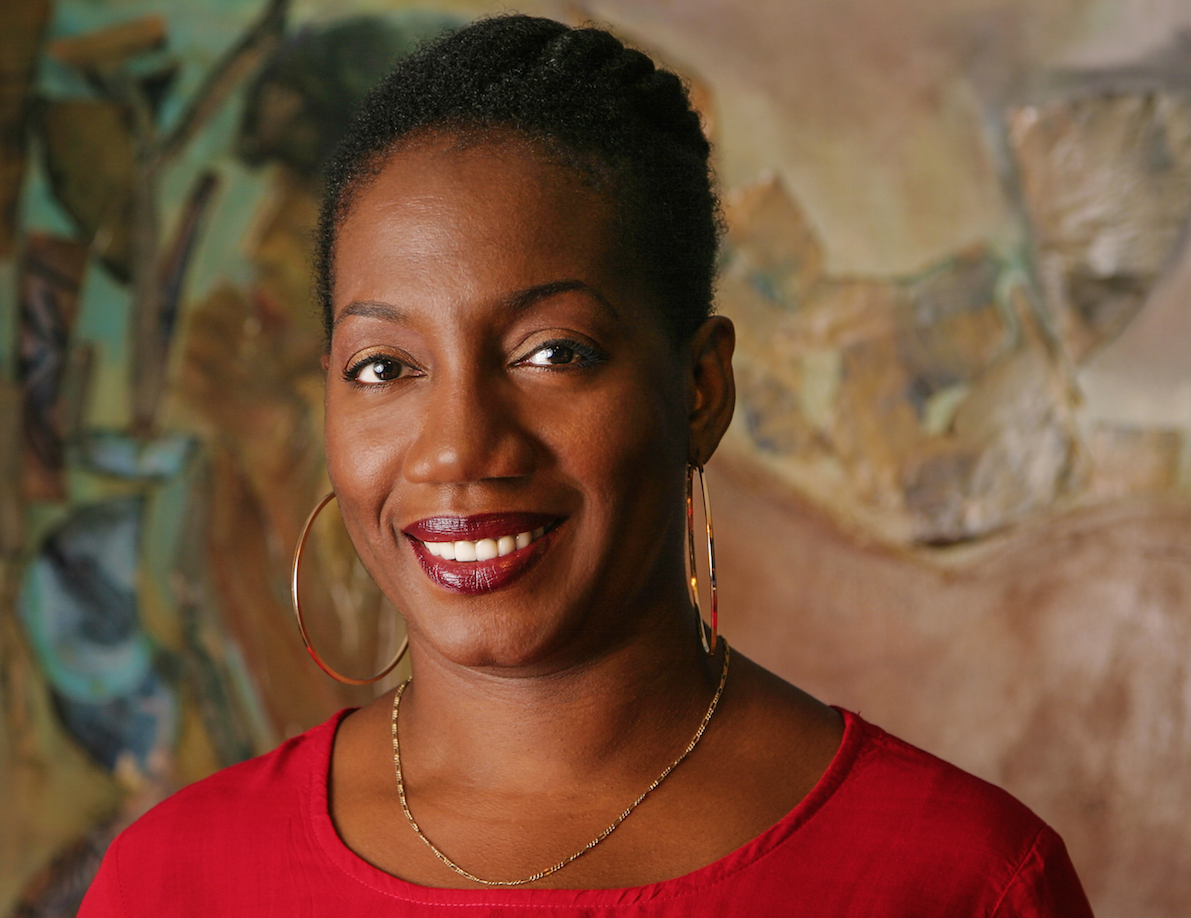
“Nothing short of magic.” —Elizabeth Acevedo, New York Times bestselling author of The Poet X

From the  acclaimed poet featured on Forbes Africa’s “30 Under 30” list, this powerful novel-in-verse captures one girl, caught between cultures, on an unexpected journey to face the ephemeral girl she might have been. Woven through with moments of lyrical beauty, this is a tender meditation on family, belonging, and home.

my mother meant to name me     for her favorite flower
its sweetness     garlands made     for pretty girls
i imagine her    yasmeen     bright & alive
& i ache to have been born her     instead

Nima wishes she were someone else. She doesn’t feel understood by her mother, who grew up in a different land. She doesn’t feel accepted in her suburban town; yet somehow, she isn’t different enough to belong elsewhere. Her best friend, Haitham, is the only person with whom she can truly be herself. Until she can’t, and suddenly her only refuge is gone.

As the ground is pulled out from under her, Nima must grapple with the phantom of a life not chosen—the name her parents meant to give her at birth—Yasmeen. But that other name, that other girl, might be more real than Nima knows.  And the life Nima wishes were someone else’s. . . is one she will need to fight for with a fierceness she never knew she possessed.

HOWEVER, we do need another host for MM.

We’re looking for a new host to help us with Mailbox Monday — if you have experience with WordPress or Mr. Linky, feel free to apply.

What did you receive?

a more perfect Union by Teri Ellen Cross Davis

Source: Purchased
Paperback, 70 pgs.
I am an Amazon Affiliate

a more perfect Union by Teri Ellen Cross Davis opens with “The Goddess of Blood,” a poem emerging from the blood of birth and death, much like a nation ripping itself from it’s parent nation. Davis’s collection doesn’t directly make these parallels but much of it is implied, and the subtlety of it can be overlooked as you get lost in the sensuous language of being a woman, birthing children, and much more in the opening poem. “my sacrifice, a carmine current soaked/the delivery bed.” (pg. 4)

In her narrator’s journey from Washington to Ireland to Kenya, we see a woman who is cognizant of how color is perceived in different situations — the blackest of the blackberries and the darkest current being the sweetest while teasing out deeper tones of darkness in Kenya in the sun is something never considered in the United States. Readers will note in “Black Berries” that there is this sense of forbidden, but we must stop and ask ourselves why is it forbidden when the blackest of berries yields the sweetest, most pleasurable taste?

From "3939 Strandhill Road, Cleveland, Ohio"

. . . Grief unravels

my tightrope. I rage at seeing the ground
rush up, my center of gravity gone.

Davis’ poems leave readers tumbling at times, hearing and seeing the past and the grief, but also the rage at what transpired. It is an anger that boils beneath, and there is a strong sense of family throughout the collection. It is of the utmost importance, so much so, there are gods among us. Stories we haven’t heard. “Baby Girl” is one of the most powerful poems I’ve ever read, and while I don’t want to spoil the read for you, I will say that it could be triggering for those who have experienced sexual assault and other similar traumas. Davis does not shy away from the big issues facing our children today, especially Black boys. In “Knuckle Head,” she takes them head on: “My son cannot continue this path. Black boys/can’t lose control at twelve, eighteen, even forty-three./they don’t get do-overs.”

In the second part of the collection, we’re taken not only a musical journey, but on a journey that creates for us new gods and goddesses — ones that speak the truth no matter how difficult and ones that see sexuality as freedom. “The First Gospel of Prince,” speaks: “The air sears between hips, this melody/is a startled beauty – breathe in halting sips.//” These poems are a musical treat, a homage to musical gods, and a look at how sensuality and sexuality don’t have to be hidden or set aside as we age.

One of my favorite poems, “This Poem Suggests Revolution,” speaks to the America we’ve seen — the one that is asleep at the wheel, coasting along the road with its eyes closed, only startled awake by the “occasional” beeping horn. “If the pursuit of happiness,/life, and liberty came from the creator, she is/about to backhand you in the face.//” We see that anger against an America that is willfully blind to its past and its continued faults. It seethes, but there is still a sense of hopefulness in a “rewriting” of the American story, a move toward an America closer to its ideals. The road is harsh, but the poet, the narrator, and the reader will come away believing in “a more perfect Union.”

a more perfect Union by Teri Ellen Cross Davis was a roller coaster of emotions, as it should be. It begs readers to see the America we are from the perspective of someone we are not (or even may be) and whose history we do share (even if we ignore it) in order to elicit empathy and action. We’re beyond the platitudes here. We are in the thick of the struggle, and we are called to action.

RATING: Cinquain

Don’t forget to check out my interview with Teri.

About the Poet:

Teri Ellen Cross Davis is the author of a more perfect Union, 2019 winner of The Journal/Charles B. Wheeler Poetry Prize and Haint winner of the 2017 Ohioana Book Award for Poetry. She’s a Cave Canem fellow, member of the Black Ladies Brunch Collective, and lives in Maryland.

Becoming the Enchantress by Kristin Kowalski Ferragut, illustrated by Coley Dolmance Ferragut & Giveaway

Source: Author/Publisher
Paperback, 34 pgs.
I am Amazon Affiliate

(full disclosure: Kristin Ferragut is part of my poetry workshop and I was part of a workshop that helped her hone this story)

Becoming the Enchantress by Kristin Kowalski Ferragut, illustrated by Coley Dolmance Ferragut, uses fairy tale-like elements to explain transgender to younger children. It’s an introductory story to help start conversations with kids about large themes, but at it’s core, this is a story about feeling comfortable in your own skin, loving yourself, and finding acceptance and love in your own family and friends.

The Wizard and their children, the Knight and the Dragon, are getting ready to trick-or-treat. When kids and their parents meet the Wizard and their family, they see a loving family eager to celebrate Halloween together. But kids will hear that the Wizard has an unspoken desire. With a quick costume change, the Wizard and their children are out the door. They are laughing and playing and magical things happen.

The streets may be crowded, but they are having a great time together, especially the Wizard. They receive compliments from strangers about their well behaved children, but many of them mistake the Wizard for a mom. Ferragut has created a magical way in which a transgender person finds not only their identity but peace in their own skin.

The illustrations by Ferragut’s daughter are colorful and expressive. The smile on the Wizard will make children smile. It just exudes such happiness. The final scene in the book is beautifully rendered. I look forward to more of her work.

Becoming the Enchantress by Kristin Kowalski Ferragut, illustrated by Coley Dolmance Ferragut, establishes a starting point for conversations about transgender and finding the home in your own skin and family. It will enable parents to talk to their children openly about their own identities.

RATING: Quatrain

About the Author:

Kristin Kowalski Ferragut is the author of the poetry collection Escape Velocity (Kelsay Books, 2021). She teaches, writes songs, poetry and prose, hikes, and participates in readings and workshops in Maryland, where she lives with her two creative, lively, and supportive children. Her work has appeared in Beltway Quarterly, Fledgling Rag, Bourgeon, Mojave He[Art] Review, Anti-Heroin Chic, and Little Patuxent Review, among others. For more information, visit her website: www.kristinskiferragut.com

About the Illustrator:

Coley Dolmance Ferragut is an animator, digital artist, and actor who investigates themes of class and social justice in her work. A high school senior, this is Coley’s first published book.

GIVEAWAY:

1 copy of Becoming the Enchantress to 1 U.S. reader.

Deadline to enter is June 15, 2021.

Leave a comment with your email so I can contact you if you’re the winner.