Quantcast

Short Reviews of 3 Children’s Books

Over Dewey’s 24-hour read-a-thon, my daughter and read three books she picked out of the library since I really didn’t have that much time to participate, but I did want to share our impressions of these books.

Freight Train by Donald Crews is a Caldecott Honor Book with few words and vibrant pictures written in 1978, it’s amazing that the book is still so relevant today.  The freight trains still run, and the parts of the train are still the same.  But this book strives not only to teach young children about the parts of a train and how it gets from one place to another, moving on through the day and night, but it also teaches colors with each part of the train a different color.  My daughter was engaged while I read and repeated each color with me, but she loved watching the train go as I flipped the pages.

Where’s Walrus? by Stephen Savage is similar to the Where’s Waldo? books I remember, but with a goofy looking Walrus.  The trick of this book is that many of the other images are gray, similar to the walrus, making it harder for kids to discern the walrus from his surroundings.  It’s a book about observation and recognition.  My daughter and I had fun with this book, as did her daddy.  We made it two games in one  — the first pass we found walrus and on the second pass we found the zoo keeper who was trying to get him back into the zoo.  She liked this one so much she wanted to keep playing it several more times in a row…and she’s almost got the word walrus enunciated correctly.

Halloween Forest by Marion Dane Bauer, illustrated by John Shelley is a book of poetry, or at least that’s how it reads…like the children’s books of my childhood (i.e. Little Miss Muffet).  The illustrations are engaging and unique, and in many ways would seem scary to young kids, since it is a forest made of bones.  However, my daughter is fascinated by the pictures and not scared at all by the bone forest, which could be related to the empowering statements of the poem-like lines in which the child is not scared but demands her trick-or-treat dues.  The little one and I enjoy this one a lot, and it is perfect for the current season.  Our library actually has shelf sections based on holidays and seasons, which is where I found this one for her and I to read.  Really engaging visually and textually.


That’s it, what good children’s books have you shared with your kids that you both enjoyed?
These are my 65th, 66th, and 67th books for the 2013 New Authors Challenge.

Controlled Hallucinations by John Sibley Williams

Source: John Sibley Williams
Paperback, 78 pages
I am an Amazon Affiliate

Controlled Hallucinations by John Sibley Williams is a debut collection that breaks down the barriers between reality and fantasy in ways that will remind readers of Salvador Dalí and the surrealists one moment and a spiraling, broken hearted romantic, the next.  These poems are equally raw in emotion and imagery, like in “XXXIX” (page 49), “The knives I display in this poem/cannot even cut an overripe fruit.//When I thrash them wildly/to hold them to your throat, or mine,/when I threaten an old enemy/with a few unsharpened words/”  Violence only appears in some of these poems, but it is never gruesome or overly graphic.  One main technique used throughout the collection resembles slipstream combining the familiar with the unfamiliar.

XII (page 22)

I would like to crochet a mitten
for my future child,
       to warm another's hands
       with the work of my own.

I would like to build a house for someone,
       anyone,
       a stranger,
       from foundation to wafting chimney,
and then smile at the pain
of pressing on the bruises
left from making.

But all I have is a song to lean on,
       an eager voice,
       a white cane
       related to me as stone is to moss,
and I am hoping
this simple attempt at light will suffice.

Unlike unbidden hallucinations, these poems carefully unravel in slow movements to serve as a reminder to the reader that their own lives can and have spiraled until they were pulled back.  Even as movement speeds up in some poems, there is always a moment where that movement stops, providing a perspective for the reader to examine.  Williams’ poems have the aim of making the untranslatable translatable, and the poems draw parallels between each poem’s narrator and the reader’s world.  “IX” (Page 19) seems to partially showcase the need for control in love, but how equally painful trying to keep control can be: “The paper cut on my palm/runs parallel to my love line./They taper off at the same spot,/under my thumb//” evoking the image that control can smother love.

 From "XLV" (page 55)

Let's be moths together
circling the bright eye,
circling and trying to enter,
then retreating as far as darkness allows.

There’s a constant struggle in these poems from the choices made and the choices that could have been made.  Controlled Hallucinations by John Sibley Williams peels back the skin to reveal what’s underneath, but then veils it with sheer fabric to obscure its harshness.  Some of these poems can be puzzling, requiring a couple of reads, while others seem contrived or unfinished.  Overall, the collection is engaging and accessible for more patient readers.

About the Poet:

John Sibley Williams is an award-winning writer of fiction and poetry. He works as Book Marketing Manager of Inkwater Press, as well as a freelance literary agent, and lives in Portland, Oregon. John is the author of Controlled Hallucinations (forthcoming 2013 by FutureCycle Press), as well as seven chapbooks. John is the winner of the 2011 HEART Poetry Award, and finalist for the Pushcart, Rumi, and The Pinch Poetry Prizes. He has served as Acquisitions Manager of Ooligan Press and publicist for various presses and authors, and holds an MFA in Creative Writing and MA in Book Publishing.

This is my 64th book for the 2013 New Authors Challenge.


This is my 27th book for the Dive Into Poetry Challenge 2013.

Solving the World’s Problems by Robert Lee Brewer

I use Grammarly’s plagiarism checker because it works! Have you tried it?

Source: Purchased
Paperback, 92 pages
I am an Amazon Affiliate

Solving the World’s Problems by Robert Lee Brewer is the debut collection of a poet who has spurred inspiration virtually for many years as part of the Writer’s Digest team, and as a debut, it oozes deconstruction, construction, and reflection in each poem’s white spaces in ways that are thought-provoking and eye-opening.  There are love poems, break-up poems, and get back together poems, but the overwhelming theme seems to be that love is the great connector of us all — no matter how successful the relationships ultimately are — and the poet seems to postulate that love can “solve the world’s problems.”  While some of these poems have a pessimistic hint in them, they are balanced with a certain amount of light.

From "Matters of Great Importance" (page xv-xvi)

poets consider which chair
                is going to inspire them
                                  to write the poem

that inspires other people
                  to build chairs and
                                    drive trucks and write poems

Within each poem there is an expansion, an expanse left open for the reader to explore and think about on their own.  While these poems cover well-worn territory at times, each line break and word choice makes them crisp, inspiring the reader to look at the subject anew.  In “worried about ourselves,” the narrator talks of how the moon was once something godly and now is just a chunk of rock floating in space, but toward the latter half of the poem, the new perception is turned on the reader, examining the never-ending analysis of ourselves to the point we begin to believe our own perceptions about reality are true, even when they are not.  Some of the best lines are the simplest, like in “I think the world is a pin cushion” (page 48):

there's a space between everyday matters
that makes someone feel every day matters

But there are more serious moments, moments in which social issues are addressed, such as global warming in “one day we looked for the snow” (page 49) and living in a fast-paced modern world where appearances matter and wars are inevitable — “why I never mention the traffic report” (page 52).  But more interestingly, there is an exploration of the modern world and the perceived increase in connection between humans, but the reality is that we seek these outlets to distance ourselves from one another — walking out the door has never been easier when face-to-face takes a back seat.

Solving the World’s Problems by Robert Lee Brewer is a chance to find ourselves reflected in ourselves and the world around us.  From “the noises that scare us” (page 30):

to uncover and hope no shots are fired
we're not here to find something new        we want
reminded of who we were when the birds

first spoke  our wings dissolve as we age   and

About the Author:

Robert Lee Brewer is Senior Content Editor for the Writer’s Digest Writing Community. He edits books, manages websites, creates electronic newsletters, crafts blog posts, writes magazine articles, participates in online education, and speaks nationally on writing and publishing topics. As a poet, Robert was named Poet Laureate of the Blogosphere in 2010, has been a featured reader at several poetry events around the country, and is the author of Solving the World’s Problems (Press 53). Follow him on Twitter @robertleebrewer.

This is my 63rd book for the 2013 New Authors Challenge.


This is my 26th book for the Dive Into Poetry Challenge 2013.

Mailbox Monday #240

Mailbox Monday (click the icon to check out the new blog) has gone on tour since Marcia at To Be Continued, formerly The Printed Page passed the torch.  September’s host is Book Dragon’s Lair.

The meme allows bloggers to share what books they receive in the mail or through other means over the past week.

Just be warned that these posts can increase your TBR piles and wish lists.

Here’s what we got at the library sale for the little one:

1.  Bible Friends: Who’s Hiding?

2.  It’s Tigger Time!

3.  The Best Halloween Hunt Ever by John Speirs

4.  My World: A First Look at the World illustrated by Prue Greener

5.  Tarzan: Jungle Adventure

6.  Where’s Waldo? by Martin Handford

7.  Sinbad dvd

These are the ones I found for me:

8.  A Jane Austen Education by William Deresiewicz

Before Jane Austen, William Deresiewicz was a very different young man. A sullen and arrogant graduate student, he never thought Austen would have anything to offer him. Then he read Emma—and everything changed.

In this unique and lyrical book, Deresiewicz weaves the misadventures of Austen’s characters with his own youthful follies, demonstrating the power of the great novelist’s teachings—and how, for Austen, growing up and making mistakes are one and the same. Honest, erudite, and deeply moving, A Jane Austen Education is the story of one man’s discovery of the world outside himself.

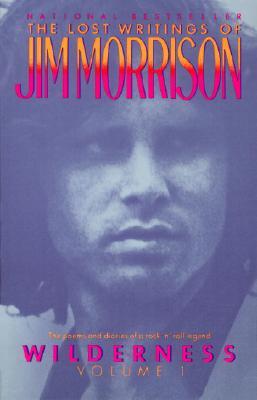
9.  Wilderness: Volume 1 by Jim Morrison

Compiled from the literary estate of the singer who brought a wildly lyrical poetry of the damned to the world of rock ‘n’ roll. Includes unpublished poems, drawings, photos, and a candid self-interview.


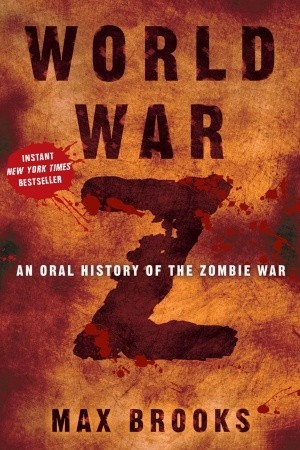
10.  World War Z by Max Brooks

The Zombie War came unthinkably close to eradicating humanity. Max Brooks, driven by the urgency of preserving the acid-etched first-hand experiences of the survivors from those apocalyptic years, traveled across the United States of America and throughout the world, from decimated cities that once teemed with upwards of thirty million souls to the most remote and inhospitable areas of the planet. He recorded the testimony of men, women, and sometimes children who came face-to-face with the living, or at least the undead, hell of that dreadful time. World War Z is the result. Never before have we had access to a document that so powerfully conveys the depth of fear and horror, and also the ineradicable spirit of resistance, that gripped human society through the plague years.


11.  The Eight Stages of Translation by Robert Bly


12.  Audition by Barbara Walters, which is really a gift for my mom.

Barbara Walters, arguably the most important woman in the history of television, has had an amazingly full life. In the bestselling Audition, she describes her extraordinary public and private journey.

What did you receive?

Dewey’s 24-Hour Read-a-Thon

Today is the beginning of Dewey’s 24-hour Read-a-Thon.  Although I have other plans today, I will be reading off and on with everyone and cheering people on when I can.

Introduction

1) What fine part of the world are you reading from today?

USA, Washington, D.C.

2) Which book in your stack are you most looking forward to?

Finishing up Camelot’s Court by Robert Dallek, and if I finish it I will consider it a successful read-a-thon.

3) Which snack are you most looking forward to?

Grapes…and coffee…I love Dunkin Donuts French Vanilla!

4) Tell us a little something about yourself!

I loved my Keeshond like he was a child, but with a little toddler running around, I realize caring for a dog was much easier.

5) If you participated in the last read-a-thon, what’s one thing you’ll do different today?

I like to keep my participation laid back; that’s what I’ve learned over the years.  To just have fun!

Blackout Poem Challenge:

THE Chilean poet Pablo Neruda, known for his love poems and leftist ideals, died 40 years ago this September. One would hope he’d be at rest by now. But on Monday, as classical musicians played a Neruda work set to music by Vicente Bianchi, his remains were exhumed to determine whether he died from poison — instead of prostate cancer, the conventional account.

In recent years, other icons of the Hispanic world have suffered the same fate. In 2011, Salvador Allende, Chile’s democratically elected president-elect who was deposed by a military junta in 1973, was disinterred to verify that he’d fatally shot himself. (The finding — yes — is still disputed.) The late Venezuelan president Hugo Chávez ordered in 2010 that the tomb of his idol, Simón Bolívar, be opened to test his theory that the liberator died of poisoning, not tuberculosis. (The theory remains unproved.)

And in 2008, a Spanish judge authorized the unearthing of a mass grave in the southern town of Alfácar to see whether Federico García Lorca, the poet and dramatist who was assassinated by Fascists in 1936, at the outset of the Civil War, was buried there. (The results were inconclusive.)

There is something gothic, but also cathartic, about summoning artists like Neruda, and his close friend García Lorca, back into the realm of the living, making us wonder if death is really the end. A Chilean judge’s decision, in February, to allow an investigation into Neruda’s death, which led to this week’s exhumation, looks like an act of expiation.

Neruda used his pen to denote, to denounce, to decry. He was 69 when the junta took power. By then he had been an embassy attaché, a senator and an ambassador. In 1969, he initially ran for president as a Communist, but later backed Allende’s candidacy. However, passion for political change was only one side of his persona. The other was that of a bon vivant. Many people enjoy life plentifully, but few have been so eloquent about it. The Dionysian sensuality of Neruda’s odes is contagious, joyful and erotic. And also destructive: Neruda’s marriage to Matilde Urrutia, his third wife and the inspiration for “The Captain’s Verses” and “One Hundred Love Sonnets,” unraveled after she learned he was having an affair with her niece.

Neruda died in a clinic in Santiago on Sept. 23, 1973 — 12 days after the American-backed coup that overthrew Allende and brought Gen. Augusto Pinochet to power. Many Chileans have long been skeptical of the official cause of death. In 2011, Neruda’s former driver said the poet told him, on the eve of his death, that he’d been given a harmful injection by a doctor. Conspiracy theorists note that Neruda died in the same hospital where Eduardo Frei Montalva, a politician who had supported the junta before switching sides, died in 1982. A judge ruled in 2009 that Frei had been poisoned.

Could Neruda have suffered a similar fate? Allende had died on Sept. 11, 1973, and another opponent of the junta, the folk singer Víctor Jara, was assassinated on Sept. 16. Finishing off Neruda could have been the junta’s coup de grâce.

Exhuming icons is one way to deal with guilt. Elsewhere in Latin America, the past’s phantoms are resurfacing: in Guatemala, where the former dictator Efraín Ríos Montt is on trial for genocide; in Argentina, whose cities are dotted with memorials to those who were “disappeared” during the “dirty war”; and in Mexico, where a once-pliant media have challenged the former president Felipe Calderón’s handling of the war against drug cartels.

But Neruda holds a special place in this grim look backward. Gabriel García Márquez, the Colombian writer and a fellow Nobel laureate, has called him “the most important poet of the 20th century — in any language.”

Neruda left thousands of poems, a handful of which are of such inspired beauty as to justify the very existence of the Spanish language. Adolescents routinely give his “Twenty Love Poems and a Song of Despair” to their sweethearts. His ideological verses have been read aloud, often from memory, in one revolution after another, from the fall of the Berlin Wall to the embers of the Arab Spring. Some of Neruda’s poems — “I Ask for Silence,” “Walking Around,” “Ode to the Artichoke” — have been rendered into English repeatedly, each version another effort to make him current and vital to a new generation.

What we’ve read so far:

32 pages

32 pages

26 pages

Which hour was most daunting for you?

The 15th hour was brutal for me, that’s when I decided to take a nap. A big mistake because I slept through the rest of readathon.

Could you list a few high-interest books that you think could keep a Reader engaged for next year?

I think kids books with games in them are so fun and peek-a-boo flaps. They are quick reads for when there are distracting little children around or you just need a quick read.

How many books did you read?

We only read 3 whole books, but I did read about 50 more pages of Camelot’s Court.

What were the names of the books you read?

See above the images.

Which book did you enjoy most?

The little one and I really like the Halloween Forest.

Which did you enjoy least?

None really.

How likely are you to participate in the Read-a-thon again? What role would you be likely to take next time?

I think if I have as little time as I did this time, I’ll be a cheerleader instead.

I hope everyone had a great read-a-thon!

223rd Virtual Poetry Circle

Welcome to the 223rd Virtual Poetry Circle!

Remember, this is just for fun and is not meant to be stressful.

Keep in mind what Molly Peacock’s books suggested. Look at a line, a stanza, sentences, and images; describe what you like or don’t like; and offer an opinion. If you missed my review of her book, check it out here.

Also, sign up for the 2013 Dive Into Poetry Challenge because its simple; you only need to read 1 book of poetry. Check out the stops on the 2013 National Poetry Month Blog Tour and the 2012 National Poetry Month Blog Tour.

Today’s poem is from Robert Lee Brewer’s Solving the World’s Problems:

worried about ourselves

we've finally reached the point at which we
       invent reasons to get upset    we cast
               spells on ourselves  curse our own conventions

once  the moon was a ghost haunting these fields
        a confirmation of things to come   now
                the moon's rock surrounded by darkness

we praise our new awareness and question
        our motives   we ask why until we run
               short on answers   what happens when we have

time to think  we transform x into y
        and dismiss the existence of z now
               only a letter that signals the end

What do you think?

Pat the Beastie and Love the Beastie by Henrik Drescher

Source: Purchased
Board Book, 11 pages
I am an Amazon Affiliate

Pat the Beastie: A Pull-and-Poke Book by Henrik Drescher is perfect for parents with pre-school-age children just learning about the joys of books and reading.  Paul and Judy have a pet named Beastie, and young readers learn alongside these pint-sized protagonists that it’s not very nice to pull Beastie’s hair or poke his eyes.  There are consequences after these children torment Beastie, and my little one calls this the “boogie nose” book.  Each page is full of interactive fun and colorful pages that pop.  She’s had so much fun with this book, she reads it on the potty and wants it read on the couch before bed, at bedtime, and anytime she feels like it really.  The moral of this little story is to be kind to your pets, but the book is just good old fashioned fun for kids.

Source: Purchased
Board Book, 11 pages
I am an Amazon Affiliate

Love the Beastie: A Spin-and-Play Book by Henrik Drescher is the second of the books, but the first my little one picked out at a bookstore — and she chose it over a monkey puppet, which is rare for her.  Paul and Judy have been forgiven by Beastie and learned a lesson since the last book.  In this one, the siblings take Beastie on some adventures and play games with him.  The book pays homage to the power of forgiveness and the love that owners (especially kids) can share with pets.  The colors are vibrant in this book, and yes there are some funny bits, but the kids are not as nasty, which is a good way for parents to teach the same lessons to their own kids.

About the Author:

Henrik Drescher was born in Copenhagen and immigrated to the United States in 1967. He began a career in illustration as a young man and has been traveling throughout the United States, Mexico, Europe and China, creating massive journals of notes and drawings wherever he went.  Check out his Website.

This is my 62nd book for the 2013 New Authors Challenge.

Forge by Laurie Halse Anderson

Source: Public Library
Hardcover, 297 pages
I am an Amazon Affiliate

Forge by Laurie Halse Anderson is the second book in the Seeds of America series for young adults (see my review of Chains, the first book in the series; the third book is expected in 2014).  ***This review could contain spoilers***

Isabel and Curzon have fled New York and the Locktons to seek out Freedom, but when we again meet up with Curzon, Isabel has fled in search of her sister, Ruth, who is known to be in Charleston.  After taking all of the money they had earned, Curzon has little choice but to make it on his own, and in so doing, runs smack in the middle of a skirmish.  During a standoff between a rebel soldier and a British soldier, Curzon makes a fateful decision that has him enlisted as a soldier under General Washington’s command at Valley Forge.  As winter sets in for the long haul, Anderson deftly paints a picture of the desperate times and weather conditions the rebel forces faced, forcing some to go against army rules and steal food from neighboring farms.

“‘We can mine for iron here?’ Eben asked.

‘No, blunderhead,’ Silvenus said.  ‘This camp is a forge for the army; it’s testing our mettle.  Instead of heat and hammer, our trials are cold and hunger.  Question is, what are we made of?'”  (Page 121)

Curzon finds a home among the soldiers, but he still thinks about Isabel and her fate, wondering why she won’t leave his mind.  As the winter digs in, however, Curzon’s luck changes with it once he’s recognized by Bellingham, who thought him dead in Bridewell Prison.  He becomes again that insolent slave looking for freedom and even longing again for the companionship of the army.  He bristles at his new circumstances and even wages an unspoken war against Bellingham until he realizes that his fate is not all that he holds in his hands.  Anderson has created a believable slave seeking his freedom by any means within his grasp, and his ties to Isabel grow stronger as the battle with the British gets closer.

Forge has a dual meaning in that the army’s mettle, as well as Curzon and Isabel’s, are tested, and these characters must forge ahead and overcome the challenges they face.  In a literal sense, Curzon tries to create a counterfeit of himself and pass himself off as a free man to become a soldier, as well as a key’s likeness to turn the lock on freedom.  Anderson peppers the novel with a number of details (having seen Valley Forge recently, these places were fresh in my mind), and she firmly grasps the intrigue of the time, including the use of slaves as spies for the British, and the internal politicking among Congressmen and generals.  Forge by Laurie Halse Anderson is a solid second book in a series of young adult historical fiction novels about the American Revolution, and in some ways an even better book than the first for its multiple layers, including subplots and dynamic characters.

About the Author:

Laurie Halse Anderson is the New York Times-bestselling author who writes for kids of all ages. Known for tackling tough subjects with humor and sensitivity, her work has earned numerous American Library Association and state awards. Two of her books, Speak and Chains, were National Book Award finalists. Chains also made the Carnegie Medal Shortlist in the United Kingdom.

Laurie was the proud recipient of the 2009 Margaret A. Edwards Award given by YALSA division of the American Library Association for her “significant and lasting contribution to young adult literature…”. She was also honored with the ALAN Award from the National Council of Teachers of English and the St. Katharine Drexel Award from the Catholic Librarian Association.

This is my 5th book for the American Revolution Reading Challenge 2013

Fox Forever by Mary E. Pearson

Source: Shelf Awareness
Hardcover, 304 pages
I am an Amazon Affiliate

Fox Forever by Mary E. Pearson is the third installment in the Jenna Fox Chronicles, please read the first two books as this review will contain spoilers.

Locke Jenkins has left California and his past behind to return a favor, and he has no idea what is in store for him or how much his life will change.  But he can never run too far from what he’s become, but he learns quickly that the Boston he knew and loved is gone forever and that he must cope with his new reality.  In exchange for the help he received in book two, Locke must now return the favor, and it’s more than just making sure a non-pact gets bread at a good price or isn’t beaten by citizens just for being a non-pact.  He connects with the Resistance and is asked a lot of questions about himself and his BioPerfect capabilities.

“Closure.  That’s what I came for but now that I’m standing here, I think letting go of the past doesn’t come in a single moment.  Maybe the past has to fade away slowly like letters in granite.  Worn away over time by wind, rain, and tears.”  (Page 1 ARC)

This is another fast-paced dystopian novel for young adults, but unlike the other books that raise ethical questions about what makes us human if we become bioengineered, this novel is more focused on Locke coming to terms with his losses and building a new life.  Pearson twists the coming-of-age novel, molding it into a novel that seems to have an older perspective in which the past becomes something deeply missed and longed for — not the usual perspective for a 17-year-old.  While Locke seems older than his years, he also has the same fault that most teens have — they believe they are invincible.

Fox Forever by Mary E. Pearson is a futuristic whirlwind of a novel, which is part spy thriller and part coming-of-age story.  Locke is a sympathetic character who gets in too deep, and when he’s forced to reveal the truth, readers will be biting their nails to see if he’s forgiven.  With dark and scary half-humans living in the former tunnels of the T in Boston, and an oppressive Secretary of Security on his heels, Locke is in for a journey that is both exhausting physically and emotionally, especially when his past comes roaring back to the present.

About the Author:

Mary E. Pearson is an American author of young-adult fiction. Her book A Room on Lorelei Street won the 2006 Golden Kite Award for fiction.

Mailbox Monday #239

Mailbox Monday (click the icon to check out the new blog) has gone on tour since Marcia at To Be Continued, formerly The Printed Page passed the torch.  September’s host is Book Dragon’s Lair.

The meme allows bloggers to share what books they receive in the mail or through other means over the past week.

Just be warned that these posts can increase your TBR piles and wish lists.

Here’s what I received:

1.  The Artist’s Way for Parents by Julia Cameron, which I received for review from Finn Partners.

“For decades, people have been asking me to write this book. The Artist’s Way focuses on a creative recovery. We re-cover the ground we have traveled in our past. The Artist’s Way for Parents focuses on creative cultivation, where we consciously—and playfully—put our children on a healthy creative path toward the future.” —Julia Cameron

From the bestselling author of The Artist’s Way comes the most highly requested addition to Julia Cameron’s canon of work on the creative process. The Artist’s Way for Parents provides an ongoing spiritual toolkit that parents can enter—and re-enter—at any pace and at any point in their child’s early years.

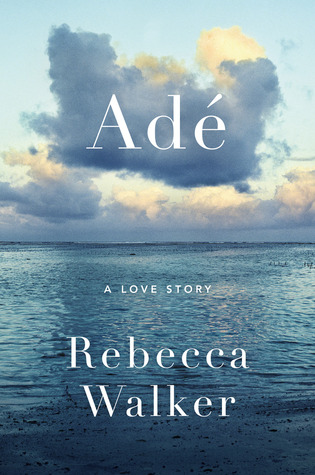
2. Adé by Rebecca Walker, which I received for a TLC Book Tour in November.

When Farida, a sophisticated college student, falls in love with Adé, a young Swahili man living on an idyllic island off the coast of Kenya, the two plan to marry and envision a simple life together—free of worldly possessions and concerns. But when Farida contracts malaria and finds herself caught in the middle of a civil war, reality crashes in around them. The lovers’ solitude is interrupted by a world in the throes of massive upheaval that threatens to tear them apart, along with all they cherish.

3.  The Descent by Alma Katsu, which I received for review from the publisher.

Lanore McIlvrae has been on the run from Adair for hundreds of years, dismayed by his mysterious powers and afraid of his
violenteven murderoustemper. She betrayed Adair’s trust and imprisoned him behind a stone wall to save Jonathan, the love of her life. When Adair was freed 200 years later, she was sure that he would find her and make her existence a living hell. But things turned out far different than she’d imagined.

Four years later, Lanore has tracked Adair to his mystical island home, where he has been living in self-imposed exile, to ask for a favor. She wants Adair to send her to the hereafter so she may beg the Queen of the Underworld to release Jonathan, whom she has been keeping as her consort. Will Lanore honor her promise to Adair to return? Or is her intention to reunite with Jonathan at any cost?

What did you receive?

222nd Virtual Poetry Circle

Welcome to the 222nd Virtual Poetry Circle!

Remember, this is just for fun and is not meant to be stressful.

Keep in mind what Molly Peacock’s books suggested. Look at a line, a stanza, sentences, and images; describe what you like or don’t like; and offer an opinion. If you missed my review of her book, check it out here.

Also, sign up for the 2013 Dive Into Poetry Challenge because its simple; you only need to read 1 book of poetry. Check out the stops on the 2013 National Poetry Month Blog Tour and the 2012 National Poetry Month Blog Tour.

Today’s poem is from Ellen Bass from her forthcoming book, Like a Beggar:

Waiting for Rain

Finally, morning. This loneliness
feels more ordinary in the light, more like my face
in the mirror. My daughter in the ER again.
Something she ate? Some freshener

someone spritzed in the air?
They’re trying to kill me, she says,
 as though it’s a joke. Lucretius
got me through the night. He told me the world goes on

making and unmaking. Maybe it’s wrong
to think of better and worse.
There’s no one who can carry my fear
for a child who walks out the door

not knowing what will stop her breath.
The rain they say is coming
sails now over the Pacific in purplish nimbus clouds.
But it isn’t enough. Last year I watched

elephants encircle their young, shuffling
their massive legs without hurry, flaring
their great dusty ears. Once they drank
from the snowmelt of Kilimanjaro.

Now the mountain is bald. Lucretius knows
we’re just atoms combining and recombining:
star dust, flesh, grass. All night
I plastered my body to Janet,

breathing when she breathed. But her skin,
warm as it is, does, after all, keep me out.
How tenuous it all is.
My daughter’s coming home next week.

She’ll bring the pink plaid suitcase we bought at Ross.
When she points it out to the escort
pushing her wheelchair, it will be easy
to spot on the carousel. I just want to touch her.

What do you think?

Book News: Book Launch for Milk and Other Stories by Simon Fruelund

What: Santa Fe Writers Project Book Launch for Milk and Other Stories by Simon Frueland, translated by K.E. Semmel

When: Oct. 5, 2013, at 6 p.m.

Where: Jackie’s Restaurant (Back Room), Silver Spring, MD

There will be an open bar and plenty of food, if you need additional incentive.

Book description from GoodReads:

The 14 stories in this collection display the often quiet, inconspicuous way in which terrible truths and experiences are intimated: the death of a sailboarder makes a widower see deeper into love and loss; a young poet visits his former teacher only to discover he is literally not the person he used to be; a middle-aged man glimpses the terrible humdrum of his third marriage as his son embarks on a new chapter in his life. Conveyed without grandeur or pathos, the revelations in these minimalist stories demonstrate clearly and effectively Fruelund’s gift of subtlety and nuance; like scenes from life, characters’ dramas are played out in brief but brilliant flashes. Ranging across the wide arc of human experience, from the comic to the tragic, each piece explores the complex emotions of the human heart.

The other book launches that evening are for Black Livingstone by Pagan Kennedy and Charlotte Gullick’s By Way of Water.