Quantcast

329th Virtual Poetry Circle

Welcome to the 329th Virtual Poetry Circle!

Remember, this is just for fun and is not meant to be stressful.

Keep in mind what Molly Peacock’s book suggested.

Look at a line, a stanza, sentences, and images; describe what you like or don’t like; and offer an opinion. If you missed my review of her book, check it out here.

This poem is from Edgar Allan Poe (of course — Happy Halloween):

The Raven

Once upon a midnight dreary, while I pondered, weak and weary,
Over many a quaint and curious volume of forgotten lore—
    While I nodded, nearly napping, suddenly there came a tapping,
As of some one gently rapping, rapping at my chamber door.
“’Tis some visitor,” I muttered, “tapping at my chamber door—
            Only this and nothing more.”
    Ah, distinctly I remember it was in the bleak December;
And each separate dying ember wrought its ghost upon the floor.
    Eagerly I wished the morrow;—vainly I had sought to borrow
    From my books surcease of sorrow—sorrow for the lost Lenore—
For the rare and radiant maiden whom the angels name Lenore—
            Nameless here for evermore.
    And the silken, sad, uncertain rustling of each purple curtain
Thrilled me—filled me with fantastic terrors never felt before;
    So that now, to still the beating of my heart, I stood repeating
    “’Tis some visitor entreating entrance at my chamber door—
Some late visitor entreating entrance at my chamber door;—
            This it is and nothing more.”
    Presently my soul grew stronger; hesitating then no longer,
“Sir,” said I, “or Madam, truly your forgiveness I implore;
    But the fact is I was napping, and so gently you came rapping,
    And so faintly you came tapping, tapping at my chamber door,
That I scarce was sure I heard you”—here I opened wide the door;—
            Darkness there and nothing more.
    Deep into that darkness peering, long I stood there wondering, fearing,
Doubting, dreaming dreams no mortal ever dared to dream before;
    But the silence was unbroken, and the stillness gave no token,
    And the only word there spoken was the whispered word, “Lenore?”
This I whispered, and an echo murmured back the word, “Lenore!”—
            Merely this and nothing more.
    Back into the chamber turning, all my soul within me burning,
Soon again I heard a tapping somewhat louder than before.
    “Surely,” said I, “surely that is something at my window lattice;
      Let me see, then, what thereat is, and this mystery explore—
Let my heart be still a moment and this mystery explore;—
            ’Tis the wind and nothing more!”
    Open here I flung the shutter, when, with many a flirt and flutter,
In there stepped a stately Raven of the saintly days of yore;
    Not the least obeisance made he; not a minute stopped or stayed he;
    But, with mien of lord or lady, perched above my chamber door—
Perched upon a bust of Pallas just above my chamber door—
            Perched, and sat, and nothing more.
Then this ebony bird beguiling my sad fancy into smiling,
By the grave and stern decorum of the countenance it wore,
“Though thy crest be shorn and shaven, thou,” I said, “art sure no craven,
Ghastly grim and ancient Raven wandering from the Nightly shore—
Tell me what thy lordly name is on the Night’s Plutonian shore!”
            Quoth the Raven “Nevermore.”
    Much I marvelled this ungainly fowl to hear discourse so plainly,
Though its answer little meaning—little relevancy bore;
    For we cannot help agreeing that no living human being
    Ever yet was blessed with seeing bird above his chamber door—
Bird or beast upon the sculptured bust above his chamber door,
            With such name as “Nevermore.”
    But the Raven, sitting lonely on the placid bust, spoke only
That one word, as if his soul in that one word he did outpour.
    Nothing farther then he uttered—not a feather then he fluttered—
    Till I scarcely more than muttered “Other friends have flown before—
On the morrow he will leave me, as my Hopes have flown before.”
            Then the bird said “Nevermore.”
    Startled at the stillness broken by reply so aptly spoken,
“Doubtless,” said I, “what it utters is its only stock and store
    Caught from some unhappy master whom unmerciful Disaster
    Followed fast and followed faster till his songs one burden bore—
Till the dirges of his Hope that melancholy burden bore
            Of ‘Never—nevermore’.”
    But the Raven still beguiling all my fancy into smiling,
Straight I wheeled a cushioned seat in front of bird, and bust and door;
    Then, upon the velvet sinking, I betook myself to linking
    Fancy unto fancy, thinking what this ominous bird of yore—
What this grim, ungainly, ghastly, gaunt, and ominous bird of yore
            Meant in croaking “Nevermore.”
    This I sat engaged in guessing, but no syllable expressing
To the fowl whose fiery eyes now burned into my bosom’s core;
    This and more I sat divining, with my head at ease reclining
    On the cushion’s velvet lining that the lamp-light gloated o’er,
But whose velvet-violet lining with the lamp-light gloating o’er,
            She shall press, ah, nevermore!
    Then, methought, the air grew denser, perfumed from an unseen censer
Swung by Seraphim whose foot-falls tinkled on the tufted floor.
    “Wretch,” I cried, “thy God hath lent thee—by these angels he hath sent thee
    Respite—respite and nepenthe from thy memories of Lenore;
Quaff, oh quaff this kind nepenthe and forget this lost Lenore!”
            Quoth the Raven “Nevermore.”
    “Prophet!” said I, “thing of evil!—prophet still, if bird or devil!—
Whether Tempter sent, or whether tempest tossed thee here ashore,
    Desolate yet all undaunted, on this desert land enchanted—
    On this home by Horror haunted—tell me truly, I implore—
Is there—is there balm in Gilead?—tell me—tell me, I implore!”
            Quoth the Raven “Nevermore.”
    “Prophet!” said I, “thing of evil!—prophet still, if bird or devil!
By that Heaven that bends above us—by that God we both adore—
    Tell this soul with sorrow laden if, within the distant Aidenn,
    It shall clasp a sainted maiden whom the angels name Lenore—
Clasp a rare and radiant maiden whom the angels name Lenore.”
            Quoth the Raven “Nevermore.”
    “Be that word our sign of parting, bird or fiend!” I shrieked, upstarting—
“Get thee back into the tempest and the Night’s Plutonian shore!
    Leave no black plume as a token of that lie thy soul hath spoken!
    Leave my loneliness unbroken!—quit the bust above my door!
Take thy beak from out my heart, and take thy form from off my door!”
            Quoth the Raven “Nevermore.”
    And the Raven, never flitting, still is sitting, still is sitting
On the pallid bust of Pallas just above my chamber door;
    And his eyes have all the seeming of a demon’s that is dreaming,
    And the lamp-light o’er him streaming throws his shadow on the floor;
And my soul from out that shadow that lies floating on the floor
            Shall be lifted—nevermore!

What did you think?

I Want to Eat Your Books by Karin Lefranc and Tyler Parker

Source: Sky Pony Press
Hardcover, 32 pgs.
I am an Amazon Affiliate

I Want to Eat Your Books by Karin Lefranc and Tyler Parker was a fun read to get us in the mood for Halloween.  Eric is followed by a zombie to school, but rather than a brain-sucking zombie, he’s chased by a book eating zombie.  Halloween allows the dark and scary to surface in town, and Eric is scared when the zombie approaches.  When the zombie eats his book, the kids and teachers are running scared and trying to save their books.  From fiction to nonfiction, this zombie does not discriminate.  However, teachers would prefer if this zombie kid would read the books, rather than eat them.

Once in the library, the zombie is enlightened to the power of reading.  Eric hands him a book that changes his outlook.  While he is a zombie, he has manners and asks that Eric read to him.  This change is magical, and soon he’s devouring books in a completely new way.  Someone on the paranormal wire must have heard about the goodies in the library and passed along the news, because soon the school library is attracting mummies and zombies.

I Want to Eat Your Books by Karin Lefranc and Tyler Parkeris a fun book about the power of reading, and the knowledge that books can provide.  My daughter and I took to shouting, “I want to eat your books!” as the zombie made his way through the school, and by the end we were giggling.  This book is sure to create bookaholics like me.


Mind Your Monsters by Catherine Bailey, illustrated by Oriol Vidal

Source: Sterling Children’s Books
Hardcover, 32 pgs.
I am an Amazon Affiliate

Mind Your Monsters by Catherine Bailey, illustrated by Oriol Vidal, has a modern style of illustration that brings neighborhoods to life, even as the monsters surface from behind buildings.  These monsters are wreaking havoc in town, terrorizing parents and children.  From zombies and vampire bats to one-eyed and furry monsters, people are unsure how to handle these monsters and their destruction.  Turned over cars, chewed up mailboxes, and more.  Parents are scared for themselves and their children, and without a solution in sight, they are prepared to leave town.

Wally decides that he’s going to take a different approach.  He’s going to talk to them.  When that doesn’t work, he throws his sister at the monsters because he considers her evil enough to fight them — or so it is implied.  He employs other tactics, using tricks and treats, lollipops, and more.  When the parents make the decision to leave, their escape is blocked by a giant ogre.  Everyone is fearful and wants to run, but there is no escape and no where to run to.  Wally, in a desperate plea, asks them to please stop terrorizing the town.  Through the use of his manners, he’s able to get through to the monsters.  The monsters stop making messes and begin to cleanup.

Mind Your Monsters by Catherine Bailey, illustrated by Oriol Vidal, is a colorful and fun way to introduce the idea of using manners to children.  There’s the promise of more fun when the monsters agree to return again.  Most little kids know that “Please” is considered the magic word, and this book plays with that knowledge.  It demonstrates that manners are important in communicating with adults, monsters, and others.  The one thing missing from this story is the use of “Thank You.”


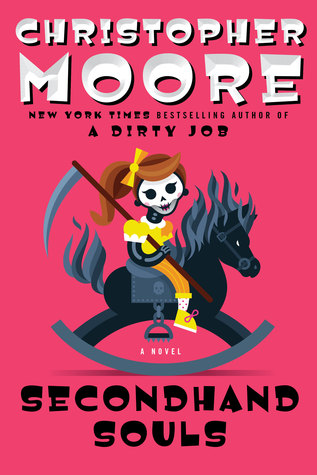
Secondhand Souls by Christopher Moore

Source: LibraryThing Early Reviewers
Hardcover, 352 pgs.
I am an Amazon Affiliate

Secondhand Souls by Christopher Moore is a long-awaited follow-up to A Dirty Job, which I loved.  Readers should start with the first book before reading this one.

Charlie Asher, a death merchant, has taken on a new form, and his daughter is living with his sister even as his situation becomes more hopeless.  Minty Fresh reprises his role as comic relief, but there really is much more of that going around in this novel.  San Francisco is one again under threat from dark forces.  The Big Book of the Dead has sensed the change, and as things happen magically, the instructions in the book morph into dire warnings — most of which are ignored, at least until the banshee shows up.  Through a mix of characters from the previous book, Moore is at his best with these sarcastic, wise-cracking misfits who riff off one another like guitarists in a large band.  Their tune is haphazard but effective in this hunt for balance in the world of the dead.

“‘Sure, you could say talked. Ghosts mostly communicate by odor. Gotta tell you, you got a house that smells like farts, you got a haunted house.'” (pg. 75)

“With that, great clouds of fire burst out the twin tailpipes of the Buick and it lowered its stance like a crouching leopard before bolting out of the turnout.” (pg. 122)

Moore is a talented writer, who can write a funny quip and hilarious dialogue in one stroke and a gorgeous set of literary images in another. This duo of books combines the best of those talents, along with some great supernatural elements that are based not only on Egyptian mythology but also Buddhist teachings. This mash-up is unique and engaging, and his characters bring it to life easily. From Minty Fresh who wears all lime green clothes and owns a secondhand music store to Lemon who wears all yellow and has a calm demeanor that covers his dark motives, Moore’s characters will have readers laughing and questioning every turn of plot.

Secondhand Souls by Christopher Moore is a wonderful follow-up that will have readers wondering about where their soul is headed, who will guide it where it needs to go, and whether they will one day find themselves with a super-ability they never wanted.  It’s another winner from this author.

About the Author:

Christopher Moore is an American writer of comic fantasy. He was born in Toledo, Ohio. He grew up in Mansfield, Ohio, and attended Ohio State University and Brooks Institute of Photography in Santa Barbara, California.


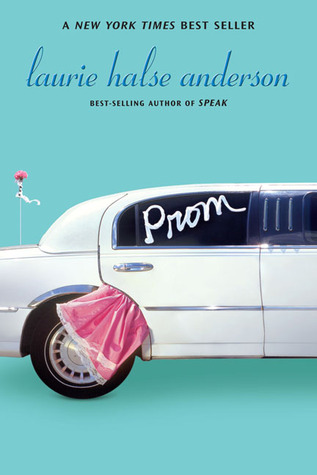
Prom by Laurie Halse Anderson (audio)

Source: Public Library
Audiobook, 5 CDs
I am an Amazon Affiliate

Prom by Laurie Halse Anderson, narrated by Katherine Kellgren, is a story about the chaos of prom, but it also begs the question just how important prom is to teenagers.  Ashley Hannigan is a barely graduating senior who does not care about prom, or dressing up, or other girlie things.  She’s got problems with authority, she steers clear of her mother’s over-exuberance for all things “normal,” and she suddenly finds her bad-girl reputation is on the line as she thrusts herself into the prom planning process just to help out a friend.  Anderson has got the voice of the misfit teen down, and Kellgren is a great narrator, except for the accent that seemed a little too New Jersey some times and a little less Philly.

As the teens scramble to recoup the lost time and money from the prom fund, which was stolen, Ashley suddenly becomes a “good” student.  She comes up with solutions to their problems with vendors who are mad they were not paid and venues that are solidly booked.  Ash helps her friends plan a prom, but she wants to continue hiding her involvement from her own mother.  Secrets always come out.

Her best friend’s grandmother, who’s in the early stages of Alzheimer’s, is a woman who speaks mostly Russian, but she’s got a fantastic talent — sewing.  She may show up in the weirdest places, like pools where people are blessed, but she has a heart of gold.  Prom by Laurie Halse Anderson, narrated by Katherine Kellgren, is a fun novel about teen girls and their top priorities, but it’s also about finding yourself when you don’t really know who you are or where you fit in.

About the Author:

Laurie Halse Anderson is the New York Times-bestselling author who writes for kids of all ages. Known for tackling tough subjects with humor and sensitivity, her work has earned numerous ALA and state awards. Two of her books, Speak and Chains, were National Book Award finalists.

Mother of four and wife of one, Laurie lives in Northern New York, where she likes to watch the snow fall as she writes. You can follow her adventures on Twitter and on her tumblr.

Mailbox Monday #346

Mailbox Monday, created by Marcia at To Be Continued, formerly The Printed Page, has a permanent home at its own blog.

To check out what everyone has received over the last week, visit the blog and check out the links.  Leave yours too.

Also, each week, Leslie, Vicki, and I will share the Books that Caught Our Eye from everyone’s weekly links.

Here’s what I received:

Coming Up Hot: Eight New Poets from the Caribbean for review from Akashic Books.

Featuring poems from Danielle Boodoo-Fortuné, Danielle Jennings, Ruel Johnson, Monica Minott, Debra Providence, Shivanee Ramlochan, Colin Robinson, and Sassy Ross. With an introduction by Kwame Dawes.

With a generous sample from each poet, this anthology is an opportunity to discover some of the best, new, unpublished voices from the Caribbean. This is a generation that has absorbed Derek Walcott, Kamau Brathwaite, Martin Carter, and Lorna Goodison, while finding its own distinctive voice.

Peekash Press is a collaboration between Akashic and UK-based publisher Peepal Tree Press, with a focus on publishing writers from and still living in the Caribbean. The debut title from Peekash, Pepperpot: Best New Stories from the Caribbean, was published in 2014.

Over the River & Through the Wood: A Holiday Adventure by Linda Ashman and illustrated by Kimberly Smith from Sterling Children’s Books for review.

The classic song gets a fresh new twist! The fun begins when Grandma and Grandpa send invitations to their far-flung, modern, and multiracial family: Come to our house for the holidays—and bring your favorite pie! Off everyone goes, driving down snowy roads, riding the train, boarding a plane . . . even sailing along in a hot-air balloon. As each family faces an obstacle that delays their trip, they learn that sometimes the most old-fashioned form of transportation works best . . . NEIGH!

Lego DC Universe Super Heroes Phonics Boxed Set by Quinlan B. Lee, illustrated by Dave White, one of the first orders by my daughter from her Scholastic book club.

Phonics comes to life with LEGO (R) DC Super Heroes (TM) Superman, Batman, Wonder Woman, and more! Learn to read with Superman, Batman, Wonder Woman, and all the other characters in the LEGO(R) DC UniverseTM)!

These books will readily appeal to a wide audience–from LEGO fans to DC Super Hero fans! Beginning readers will enjoy LEGO DC Universe’s well-recognized heroes from movies, TV, comics, video games, and more. This set includes ten books and two workbooks (focusing on short and long vowels), all held in a sturdy box with plastic handle.

Frozen: An Amazing Snowman by Barbara Jean Hicks, illustrated by Olga T. Mosqueda, a second book she ordered.

Featuring Olaf, the happy-go-lucky comic relief of Disney’s Frozen, this humorous tale of what it means to dream is told in verse and features charming illustrations.


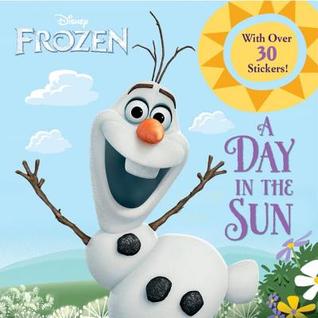
Frozen: A Day in the Sun illustrated by Frank Berrios, her third book.

Love this GoodReads description: “Boys ages 3 to 7 will love this full-color storybook that features Kristoff and Sven from Disney’s Frozen!”


My Little Pony: Tricks and Treats by D. Jakobs, her fourth book selection.

It’s Nightmare Night in Ponyville! Join the ponies and their pals as they celebrate their version of Halloween. They dress up in silly costumes, collect lots of candy, and tell spooky stories about the evil Nightmare Moon!


Trigger Warning: Short Fictions and Disturbances by Neil Gaiman for review from TLC Book Tours and HarperCollins.

In this new anthology, Neil Gaiman pierces the veil of reality to reveal the enigmatic, shadowy world that lies beneath. Trigger Warning includes previously published pieces of short fiction–stories, verse, and a very special Doctor Who story that was written for the fiftieth anniversary of the beloved series in 2013–as well “Black Dog,” a new tale that revisits the world of American Gods, exclusive to this collection.

Trigger Warning explores the masks we all wear and the people we are beneath them to reveal our vulnerabilities and our truest selves. Here is a rich cornucopia of horror and ghosts stories, science fiction and fairy tales, fabulism and poetry that explore the realm of experience and emotion.

What did you receive?

328th Virtual Poetry Circle

Welcome to the 328th Virtual Poetry Circle!

Remember, this is just for fun and is not meant to be stressful.

Keep in mind what Molly Peacock’s book suggested.

Look at a line, a stanza, sentences, and images; describe what you like or don’t like; and offer an opinion. If you missed my review of her book, check it out here.

This poem is from W.B. Yeats:

When You Are Old 

When you are old and grey and full of sleep,
And nodding by the fire, take down this book,
And slowly read, and dream of the soft look
Your eyes had once, and of their shadows deep;

How many loved your moments of glad grace,
And loved your beauty with love false or true,
But one man loved the pilgrim soul in you,
And loved the sorrows of your changing face;

And bending down beside the glowing bars,
Murmur, a little sadly, how Love fled
And paced upon the mountains overhead
And hid his face amid a crowd of stars.

What do you think?

The Runaway Pumpkin: A Halloween Adventure Story by Anne Margaret Lewis, illustrated by Aaron Zenz

Source: Sky Pony Press
Hardcover, 40 pgs.
I am an Amazon Affiliate

The Runaway Pumpkin: A Halloween Adventure Story by Anne Margaret Lewis, illustrated by Aaron Zenz, features adorable pumpkins.  The single-toothed pumpkin boy is dreaming big in this story, and while he talks of running off to play mummy or fly on brooms with witches, his mother is supportive.  Although she wants to protect him from the things that go bump in the night, his mother is aware that kids want independence and want to grow up faster than their parents are ready for.  She knows that without his blanket he’ll be scared at night, so she offers to pack it for him.  Her support does not go unnoticed by the little pumpkin.

We’ve probably read this more than a few times since it’s come into the house, but she loves the adventures of the little pumpkin.  Her favorite parts are when we see his mother watching over him from under the straw on the hayride or in the distance behind some bushes.  It’s like a little game of hide-and-seek.  By the end of the book, we’re both ready to enjoy the adventures of both mother and son pumpkin.

The Runaway Pumpkin: A Halloween Adventure Story by Anne Margaret Lewis, illustrated by Aaron Zenz, is cute and has a great message about giving children some independence to think and do on their own, but it also cautions that parents need to be ready in the wings to step in when they are needed.  My daughter’s favorite parts are when the little pumpkin dresses like a pirate and wears a fake mustache.


Locke & Key: Welcome to Lovecraft by Joe Hill, illustrated by Gabriel Rodriguez

Source: Public Library
Paperback, 168 pgs.
I am an Amazon Affiliate

Locke & Key: Welcome to Lovecraft by Joe Hill, illustrated by Gabriel Rodriguez, is part one in a series of graphic novels about a mysterious house and its locked rooms.  Keyhouse is an unlikely mansion in the Massachusetts town of Lovecraft, and it sits on an island separate from the rest of the town.  It’s a clear set up for a horrifying tale.  The three Locke children are left with their barely functioning, alcoholic mother when their father is murdered at their summer cabin outside San Francisco.  The family starts over across the country, only to be caught in a web of darkness they can’t see until it’s too late.

Tyler is struggling because he blames himself for his father’s murder.  He never could please his father, and they often argued, but he did not really want his father to die.  Bode is the youngest, and he escapes the sorrow through his imagination, flying around the Keyhouse as a ghost, while his sister, Kinsey, struggles to remain unseen by everyone in their new school.  What these kids are unaware of are the childhood antics their father and uncle used to get up to as children in Keyhouse, and even their mother is only mildly aware of some stories.  Rodriguez’s artistry is gritty and the violent scenes are well rendered.  The ghost-like characters are gorgeous, swirling as they move from place to place.

Locke & Key: Welcome to Lovecraft by Joe Hill, illustrated by Gabriel Rodriguez, is a great opener to this dark fantasy series, and the twists and turns are unraveled a little at a time to keep readers on their toes.  There are dark forces at work in this house, and they will stop at nothing to open all of the locked doors.

About the Author:

Joseph Hillstrom King is an American writer of fiction, writing under the pen name of Joe Hill.  Hill is the the second child of authors Stephen King and Tabitha King. His younger brother Owen King is also a writer. He has three children.

Hill’s first book, the limited edition collection 20th Century Ghosts published in 2005 by PS Publishing, showcases fourteen of his short stories and won the Bram Stoker Award for Best Fiction Collection, together with the British Fantasy Award for Best Collection and Best Short Story for “Best New Horror”. In October 2007, Hill’s mainstream US and UK publishers reprinted 20th Century Ghosts, without the extras published in the 2005 slipcased versions, but including one new story.

About the Illustrator:

Architect, artist and illustrator. He started his career with myth based illustrations for card games, and then jumped into the world of professional comics working with IDW Publishing. In addition to his current work in Locke & Key, his collaborations with IDW include Clive Barker’s The Great and Secret Show, Beowulf, George Romero’s Land Of The Dead, as well as several CSI comics and some covers for Angel and Transformers.


Underdays: Poems by Martin Ott

Source: Bostick Communications
Paperback, 72 pgs.
I am an Amazon Affiliate

Underdays: Poems by Martin Ott is a collection that seeks to dissect human motivations to love, to hate, to soldier on, and more.  His poems express this search through a dialogue within their lines and between one another, almost like people in deep conversation.  Readers may see this technique as an extension of his days as a U.S. Army interrogator, as Ott continues to dig deeper to find kernels of truth and fact.  He opens with a poem that examines the undercarriage of retirement, what does it mean to retire, how does it feel.  In the poem, it’s clear that there is an expectation about retirement that does not come to pass:

From "The Interrogator in Retirement" (pg. 3)

He wants to love recklessly
but his eyes remain desert
dry, unable to view clear skies
without seeing the curtains,

He examines this new found freedom with a critical eye. How do you move beyond what came before, even if you have no further obligations and you’re beholden to only yourself and your desires?  Ott creates tales that unfold and fold unto themselves, taking readers on winding journeys — much like those in real life that are never a straight line from point A to point B.  His images are fresh and nuanced, and will force readers to rethink their own perceptions of retirement, work, and death.

From "Survivor's Manual to Love and War" (pg. 6)

Death is a loving dog
with no children or chew toys
to occupy its attention.
It will lick you into submission,
this inevitable pack instinct,
to join the vast departed.

He examines what it means to face death and how alluring it can be when things are hopeless, but he also counters these examinations with a look at how much we do to stave off death and avoid it altogether just so we can eek out just a little bit more time with loved ones. Ott’s images will stay with readers long after poems are read, like a man who turns into “a dragon … sucking fumes in motor pools” or the clacking of Salinger’s typewriter on the battlefield sounding “like gold fillings against wet pavement.”

Some poems seem to be about the mundane, like why he doesn’t set the clock in his car or why he doesn’t carry an umbrella, but these poems, too, become something more — a time travel journey with kids or the hidden dangers of the umbrella and how it can die just from being opened.  Underdays: Poems by Martin Ott, winner of the , turns over the rocks in our lives to find the darkness, the humor, and the introspective nature we hide as we trudge through daily activities.

About the Poet:

Born in Alaska and raised in Michigan, Martin Ott served as an interrogator in U.S. Army military intelligence. He moved to Los Angeles to attend the Masters of Professional Writing Program at USC, and often writes about his adopted city, including in the novel The Interrogator’s Notebook (currently being pitched by Paradigm as a TV pilot) and poetry books Captive, De Novo Prize Winner, C&R Press and Underdays, Sandeen Prize Winner, University of Notre Dame Press (Fall 2015).

Social and political themes are prevalent in all of his books, particularly Poets’ Guide to America and Yankee Broadcast Network, coauthored with John F. Buckley, Brooklyn Arts Press and his short story collection, Interrogations, Fomite Press (Spring 2016).


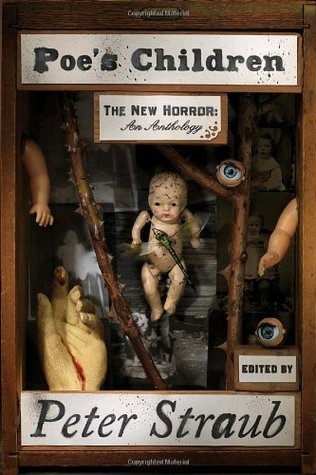
Poe’s Children: The New Horror edited by Peter Straub

Source: Public Library
Hardcover, 544 pgs.
I am an Amazon Affiliate

Poe’s Children: The New Horror edited by Peter Straub, which was our October book club selection, is billed as an anthology that includes horror stories that can be deemed literary, rather than “formulaic gore.”  Although some of these stories are by turns surreal and unsettling — some may even be literary — they are a far cry from the disturbing and nightmarish tales of Edgar Allan Poe.  Readers may appreciate the nods to Poe or even other authors, like Franz Kafka, but those nods to previous greats on their own do not make a story worthy of note.  “Cleopatra Brimstone” uses the idea of people turning to bugs found in Kafka and turns it into a story about strong female sexual identity, but at the same time, the story lacks verve.

“The Bees” and “The Man on the Ceiling” will leave readers wanting more, particularly in the development of the characters, while “The Great God Pan” offers an interesting premise and a shadow that lurks behind the lives of three friends who underwent a ritual together, but the story fizzles out by the end.  “In Praise of Folly” is a slow moving story in which Roland Turner seeks out the Jorgenson estate in his quest for a folly to be saved, and it’s a tale of watch what you ask for because you just might get it — and then some.  While the story itself is not particularly unique, the anxiety stems from what happens when Turner finally finds the estate and its “Little Italy.”  Although it is not horrifying in the gory sense, it does make readers gulp for air as they consider what happens to him.

Even the stories by Stephen King, Joe Hill, Peter Straub, and Neil Gaiman are lackluster, though Gaiman’s story is the most enjoyable and uses his writing style well.  King’s story was not what readers will expect, Hill’s is unimaginative, and Straub appears to be too bogged down in his own introductory statements about literary horror fiction.  Unfortunately, Poe’s Children: The New Horror edited by Peter Straub does not live up to expectations and is mediocre at best.

What the Book Club Thought:

Many of us were disappointed by the horror collection, with many of the stories only moderately creepy and others were just surreal or odd.  Some stories felt very unfinished, and others had endings that came out of left field.  A few felt that the introduction set us up for disappointment, as many of the stories were lacking in the horror or Poe quality we expected.  The cover of the hardcover edition seems to tell you what the book will not be — it is not about dead babies and other horrors traditionally found in the genre.  One member, however, thought that the introduction helped lower expectations and made the collection more enjoyable.  Overall, the discussion about each of the stories was animated, even though no one really LOVED this one.

About the Author:

Peter Straub was born in Milwaukee, Wisconsin in 1943, the first of three sons of a salesman and a nurse. The salesman wanted him to become an athlete, the nurse thought he would do well as either a doctor or a Lutheran minister, but all he wanted to do was to learn to read.

He went to the University of Wisconsin and, after opening his eyes to the various joys of Henry James, William Carlos Williams, and the Texas blues-rocker Steve Miller, a great & joyous character who lived across the street, passed through essentially unchanged to emerge in 1965 with an honors degree in English, then an MA at Columbia a year later.


Mailbox Monday #345

Mailbox Monday, created by Marcia at To Be Continued, formerly The Printed Page, has a permanent home at its own blog.

To check out what everyone has received over the last week, visit the blog and check out the links.  Leave yours too.

Also, each week, Leslie, Vicki, and I will share the Books that Caught Our Eye from everyone’s weekly links.

EMPTY! Now I can catch up on the other books in the TBR.

What did you receive?