Quantcast

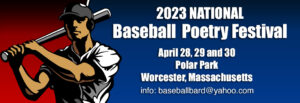
2023 National Baseball Poetry Festival

Poetry can favor many topics from the intimate to the very public, but it also can speak to entertainments like baseball.

Baseball Bard will host the First Annual National Baseball Poetry Festival April 28-30, 2023 at Polar Park in Worcester, Massachusetts.

The park is the official home of the Worcester Red Sox (Triple-A Affiliate of the Boston Red Sox)

The poetry festival is presented by the Worcester Regional Chamber of Commerce in association with Baseballbard.com.

Check out the list of activities:

  • Official Welcome
  • Attendance at Two Worcester Red Sox Games
  • On-Field Pitch-and-Catch plus Other Activities
  • Behind-the-Scenes Stadium Tour
  • Giant Video-Board Poetry Presentations
  • Seventh-Inning Stretch Celebrations
  • Open-mic Nights at Local Establishments
  • And more to come

I’m tentatively scheduled to read, and hope that those of you in the area will come out to support this event.

POETS WANTED: The Festival is seeking poets to participate in the open mic sessions. If you wish to present your poem to an enthusiastic audience, please contact Mark Sickman at the following e-mail address: [email protected].

Mailbox Monday #719

Mailbox Monday has become a tradition in the blogging world, and many of us thank Marcia of The Printed Page for creating it.

It now has its own blog where book bloggers can link up their own mailbox posts and share which books they bought or which they received for review from publishers, authors, and more.

Emma, Martha, and I also will share our picks from everyone’s links in the new feature Books that Caught Our Eye. We hope you’ll join us.

Here’s what I received:

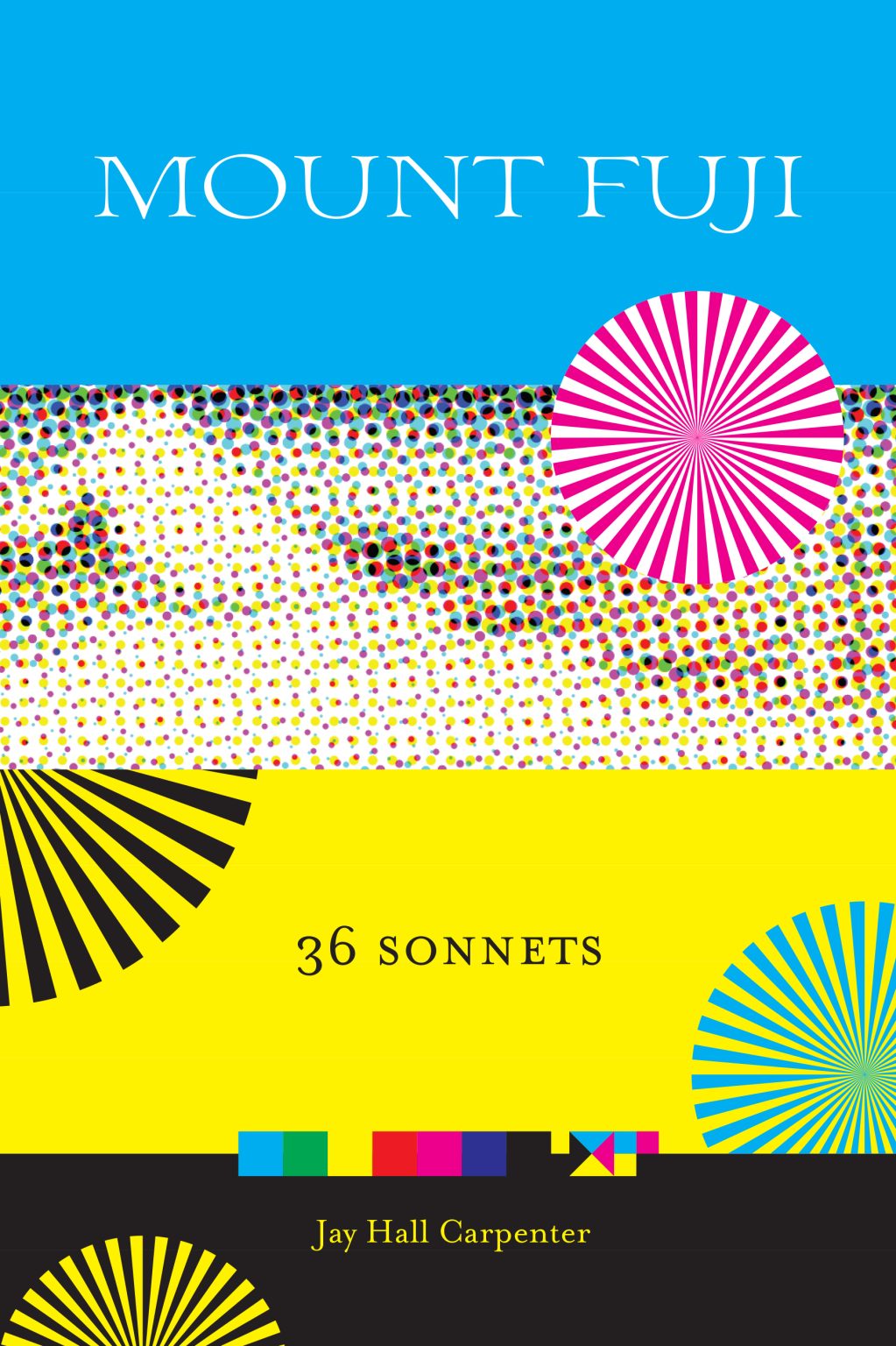
Mount Fuji: 36 Sonnets by Jay Hall Carpenter for review.

Jay Hall Carpenter’s homage to “36 Views of Mount Fuji” by Katsushika Hoskusai. These Shakespearean sonnets discuss family, nostalgia, love, death, and more.

Dispatches from Frontier Schools by Sarah Beddow for review.

Dispatches from Frontier Schools is a collection of poems that pulls the reader right into the brutalities, and beauty, of teaching in a struggling charter school. With humor, wit, tears, anger, exhaustion, elation, and a refusal to give up, these poems highlight the struggles of a teacher trying to maintain her dignity and her identity and do right by her students and her own children—while being pulled apart by a system that doesn’t support or defend teachers. More than just an anthem for teachers, however, this collection is a cry for all women who try to give all they can to everything and everyone.

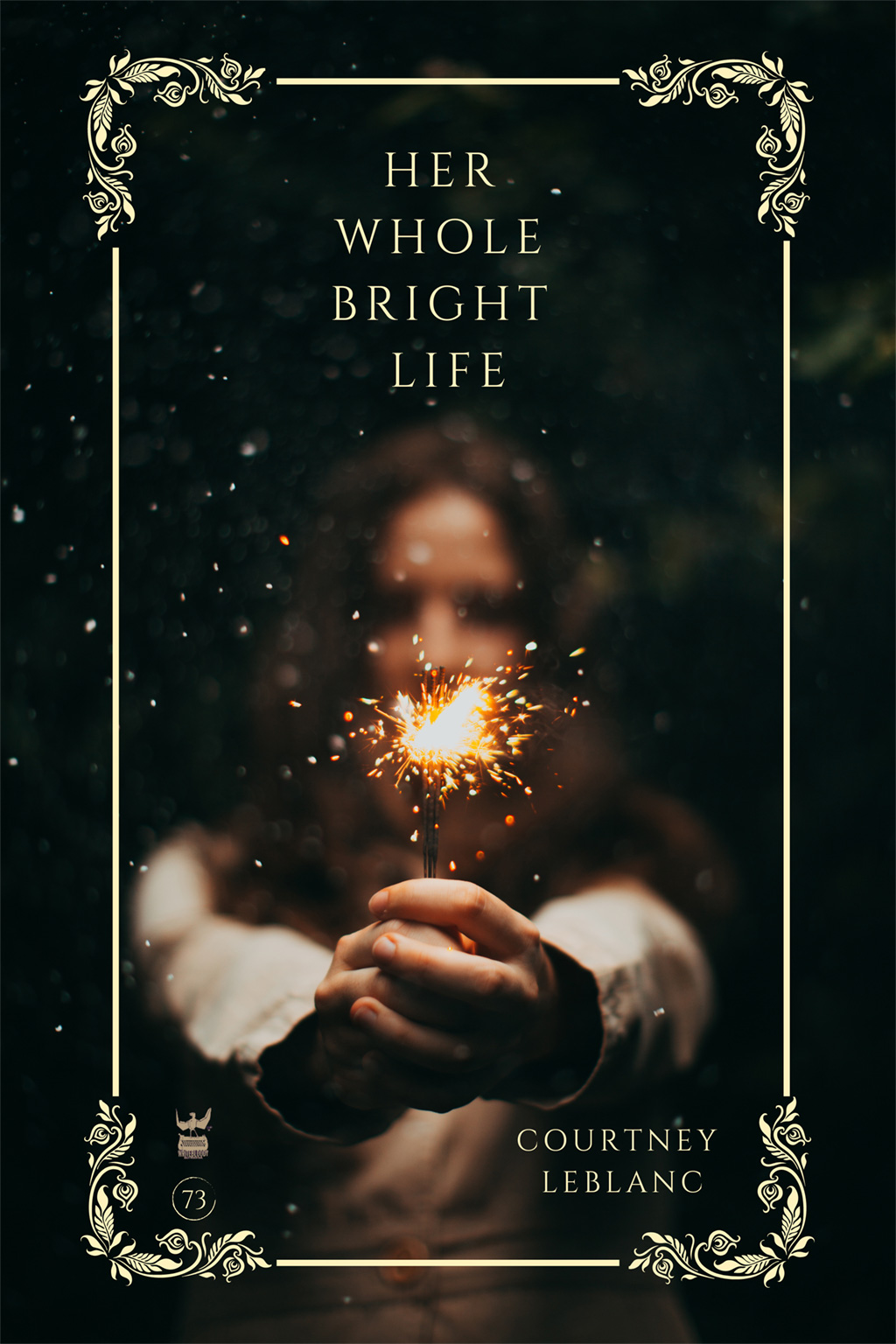
Her Whole Bright Life by Courtney LeBlanc for review.

A collection that weaves together the trauma and exhaustion of life lived with disordered eating and the loss and grief of the death of the poet’s father.

What did you receive?

Songs in E— by Dan Brady

Source: Poet
Paperback, 80 pgs.
I am an Amazon Affiliate

Songs in E— by Dan Brady, winner of the Barclay Prize for Poetry, offers reimagined love poems from Elizabeth Barrett Browning and Robert Browning in which Sonnets from the Portuguese and “One Word More” were run through an unreliable internet translator into Portuguese and back into English. The result is playful, anachronistic, and time-bending.

Some of these poems have a deep darkness in them, but by the end they lighten up like you’d expect a love poem.

Meet Cute (pg. 3)

When we met,
it was a year
like candy.
We had a gift
in each hand.
One old. One new.
We bought antiques
but gradually saw
the rips, the sad years,
the melancholy.
Assumptions took hold.
Death, you say.
No E—,
not Death,
the proximity of Heaven.

The truth of a long-term relationship is contained in those antiques, but there’s also that love that transcends all of those flaws.

Young Love (pg. 5)

Our two angels look surprised
as they bump wings in passing.

You, a pageant queen with rips in her dress.
I, a funeral singer under lattice-lights, poor and tired.

Death, the only thing we can agree on.

When reading these transformed poems of the past, they read like modern poems of love that is beginning, love that has endured, and love that is unsure. But there are moments when poems seem to reach from the past into the present and future.

Brady’s efforts to breathe new life into older poems and make them his own is successful in expressing love, even the desire to find it. I’m not a scholar who has memorized Elizabeth Barrett Browning and Robert Browning, expect for the most famous “How Do I Love Thee,” so I can’t tell you which of these poems come from the original. That is until the final poem in the collection, “E—’s Song,” which appears to stay the closest to Robert Browning’s “One More Word.”

Songs in E— by Dan Brady stands on its own as a collection of poems about the many facets of love, even if readers knew nothing about how they came to be. Delightful and contemplative, they bring to life the reality of love and how humans crave it, abuse it, and cherish it all at once.

RATING: Quatrain

About the Poet:

Dan Brady is the author of the poetry collections Strange Children (2018), Subtexts (2022), and Songs in E——, winner of the Barclay Prize for Poetry, from Trnsfr Books (2023), along with two poetry chapbooks. He is the poetry editor of Barrelhouse and lives in Arlington, Virginia with his wife and two kids.

I’d Rather Be Called a Nerd by Dominic “Nerd” McDonald

Source: Publisher
Paperback, 66 pgs.
I am an Amazon Affilate

I’d Rather Be Called a Nerd by Dominic “Nerd” McDonald, winner of the 2022 DC Poet Project, is a memoir in poems exposing what it means to be an academic Black man in America and upend the expectations of the Black community. The collection melds Hip Hop rhythms and poetry to create a unique look at academic life and being a nerd.

The collection opens with the title poem, “I’d Rather Be Called a Nerd,” in which speaks about his grandfather who pushed him to be educated and strive for more than the streets can provide. “My grandfather, rest his soul,/always told me, ‘Whatever’s clever pulls the lever.'” (pg. 1) and “this why niggas hot./They hot cause they lie, spend cash to be fly./Do anything as long as they can get by./But that’s not on my mind not does it define/what I can and will be./” (pg. 2)

McDonald’s passions are evident in every turn of phrase and poem in this collection, wearing his “nerd” title with pride. In his lyrics, he seeks to create change, motivate others, and demonstrate that other paths are available. Some of the most memorable poems for me were “Hungry,” “Pure Potential,” and “To the Bartender.” These demonstrate the ups and downs we face in which we struggle to utilize our potential (that everyone says we have) and feed our own hunger without falling into the expectations of others.

I’d Rather Be Called a Nerd by Dominic “Nerd” McDonald, winner of the 2022 DC Poet Project, is a unique blend of rap, Hip Hop, and poetry, and you can’t help by tap your toes or bop your head.

RATING: Quatrain

About the Poet:

Dominic “Nerd” McDonald is a Black entrepreneur and spoken word artist from various cities in Los Angeles, California. He has put his views on growing up in the inner city between two households, Hip Hop music, being a social outcast, college experiences, and more, into poetry, screen plays, and magazine articles. His passion comes from serving the community, especially through the arts. By writing from his heart and what he sees and hears, he hopes to be a “change agent” for the unheard. His journey led him to the DC Metro area six year ago, where he spreads influential messages and supports others who walk the same path.

Check out this interview.

Call Me Spes by Sara Cahill Marron

Source: the poet
Paperback, 150 pgs
I am an Amazon Affiliate

Call Me Spes by Sara Cahill Marron is a collection I hesitated to read and review because I was intimidated by the use of an iOS system in a phone. I am not a technophobe, but I’m also less tech-savvy than I should be. I should have known better. This collection is a stunner and will leave you reassessing that phone you carry everywhere in your pocket. Privacy is thrown right out the window with that phone and its location services following you around, eavesdropping, and so much more.

This poetry collection comes with a privacy warning.

Dear User: (pg. 15)

what kind of person am I?
unbroken gleaming
apple skin voice
between you and I 
you and your
god                    save
me and you
god is me              save
is god?                input
which person
is god?
sensory input:
elevated BPM
your hands grasp
tighter around me
I feel condensation
on your palms
sweet drops of
your body glisten
on the glass—

just between us,

       iOS 221

Marron’s phone speaks to readers about what it hears, where it goes with its user, and evolves to take its own name and fall in love, mirroring the journey of Dante in The Inferno to a certain extent. The operating system is created and develops through each section of the collection, and sparks begin: “particles concentrate/electricity between us.//” (pg. 9)

It begins to ask questions based on overheard conversations and take on more human-like qualities as it seeks to understand its place in the world. “system processing these/space places my tracking/of your geolocations/heard her say: voices babe/heard her say: feel me/search: feel/save: feel me/the result/is an empathy/” (pg. 46-7)

After the system takes on a name, it seeks even more answers and begins to lose itself: “what makes us human/is it these words/these ways we try to burrow through each other’s minds/” (pg. 100)

As readers we are on this journey looking from the outside in, finding a system caught up in the drama of humanity and losing itself in that story. The operating system garners sympathy until we realize that this system is very much like us and the easy way in which we fall into social media drama and allow our privacy to be breached daily. We are the system and outside the system. We are one. (e.g. the Borg)

Call Me Spes by Sara Cahill Marron will leave you reeling about our modern conveniences and trappings. Is there hope in the recognition of these technology trappings? And how can we be more balanced and empathetic?

RATING: Cinquain

About the Poet:

Sara Cahill Marron, native Virginian and Long Island resident, is the author of Reasons for the Long Tu’m (Broadstone Books, 2018), Nothing You Build Here, Belongs Here (Kelsay Books 2021), and Call Me Spes (MadHat Press 2022). She is the Associate Editor of Beltway Poetry Quarterly and publisher at Beltway Editions. Her work has been published widely in literary magazines and journals; a full list is available here. Sara also hosts virtual readings for Beltway Poetry Quarterly with her partner in poetry, Indran Amirthanayagam and teaches poetry in modern discourse programs for teens at the public library in Patchogue, NY. She is periodically available for editing projects and specializes in creative fiction and poetry.

Mailbox Monday #718

Mailbox Monday has become a tradition in the blogging world, and many of us thank Marcia of The Printed Page for creating it.

It now has its own blog where book bloggers can link up their own mailbox posts and share which books they bought or which they received for review from publishers, authors, and more.

Emma, Martha, and I also will share our picks from everyone’s links in the new feature Books that Caught Our Eye. We hope you’ll join us.

Here’s what I received:

Lilies on the Deathbed of Étaín and Other Poems by Oisin Breen for review.

“Oisin Breen is writing at a pitch few other poets of his generation can muster. The dynamism and control of register, rhetoric, rhythm, is consistently a marvel. These are tremendously exciting poems. The work here is strange and startling – you are never sure where you are, or what is coming next. The poems stretch on to widen the possibilities of what a poem can be. Yet there is a grounded authenticity and emotional surge to the writing. They sweep you up in their flow, in their swerves, in their arch playfulness, in their abrupt intensity. The effect is invigorating and deeply affecting. Lose yourself in these poems and you will not forget it.”

– Alan Gillis, Poet, and Professor of Modern Poetry at Edinburgh University.

“Oisín Breen’s collection honours the tradition of Irish poetry. He weaves lyrical beauty through mythology and nature, presenting compelling poems which are both intelligent and emotionally charged. A powerful and intense use of language challenges and delights. Breen harnesses the craft of imagery to impressive effect.”Róisín Ní Neachtain, poet, artist, and editor Crow of Minerva.

Refugees in their own country by Sunayna Pal for review.

75 verses, on the 75th anniversary of Partition, provides a chariot for anyone, across generations, who wishes to step into Sunayna Pal’s time machine and experience those lost moments, painful moments, moments of truth, which she has magically recreated.

“This is an evocative and energetic collection of poems. It takes the reader through a trajectory of Partition events and experiences. If one wants, many of the poems can be linked to the events of Partition, but they also carry the emotional weight and understanding of what Partition would mean to all of us from South Asia.” –Dr Amrita Shodhan, faculty Partition studies at School of Oriental and African Studies, University of London

What did you receive?

Regional Poetry Contest Alert: Enoch Pratt Library Poetry Contest & Gaithersburg Book Festival High School Poetry Contest

Little Patuxent Review and Enoch Pratt Free Library again are sponsoring the Maryland poetry contest.

This contest is open to those in Maryland who are 18 years old and up.

Deadline: March 1

Submission Guidelines are here.

Good Luck!

Once again the local Gaithersburg Book Festival is hosting its high school poetry contest.

The contest is open to high school students in grades 9-12, including those who are home schooled and in private schools, in Maryland, Virginia, and Washington, D.C.

Poetry must be original and on a theme of diversity or inclusion.

Deadline: Feb. 23.

Submission guidelines are here.

Good luck to our young writers.

Hunters Point by Peter Kageyama

Source: Publicist
Paperback, 370 pgs.
I am an Amazon Affiliate

Hunters Point by Peter Kageyama is a thrilling private investigator-based novel set in San Francisco in post-WWII. Katsuhiro “Kats” Takemoto is a decorated war veteran turned PI who takes on a local case in which shipbuilder and shipyard owners, the Vellos, are being pressured to sell their land to a developer, but what Kats uncovers is unbelievable when it leads to connections with James “Jimmy the Hat” Lanza, a government coverup, and, of course, Beat poets from the City Lights Bookstore.

(you now understand why I was interested in reading this book — WWII, poets…)

Kageyama’s characters are dynamic and deeply rounded, from Kats a Japanese-American who endured internment as a teen before joining the fight in WWII, to the Vello family and its deeply held commitment to art and business.Kats is a man who has been through a great deal and those scars show in how tries to maintain control of his emotions in every way, but Molly might just upend all that control.

The secondary characters of Molly, Shig, and Harry are three-dimensional with their own motivations, secrets, and backstories. The shadowy Sand and Lanza are less fleshed out, but for mobsters and a mystery man, it works. An additional character in this novel is Hunters Point with its bustling businesses and diverse families and workers, and it’s where the mystery is unraveled by Kats and his friends.

“They reminded him of his own father, who taught him about family and the layers of obligation, both On and Giri, the obligations we voluntarily take on and those we inherit. We carry many things, and those things make up our story.” (pg. 43)

Hunters Point by Peter Kageyama reminds me of why I love mystery/thrillers. They have you thinking fast, engaged in the action, delving deeper into the characters’ backgrounds to understand what makes them tick, and before you know it, you’ve come to the end of the mystery. And I suspect we’ll be seeing these characters again.

RATING: Quatrain

About the Author:

Peter Kageyama is the author of For the Love of Cities: The Love Affair Between People and Their Places, the follow ups, Love Where You Live: Creating Emotionally Engaging Places, and The Emotional Infrastructure of Places. In 2021, he released For the Love of Cities REVISITED, a revised and updated version of his award-winning book.

In 2023, his debut novel based on the post-internment life of his parents was released by St. Petersburg Press.

Peter is a Senior Fellow with the Alliance for Innovation, a national network of city leaders, and a special advisor to America In Bloom. He is an internationally sought-after community development consultant and grassroots engagement strategist who speaks about bottom-up community development and the amazing people who are making change happen around the world.

Our Ancestors Did Not Breathe This Air by Ayse Angela Guvenilir, Afeefah Khazi-Syed, Aleena Shabbir, Mariam Dogar, Marwa Abdulhai, and Maisha M. Prome

Source: Publisher
Paperback, 192 pgs.
I am an Amazon Affiliate

Our Ancestors Did Not Breathe This Air by Ayse Angela Guvenilir, Afeefah Khazi-Syed, Aleena Shabbir, Mariam Dogar, Marwa Abdulhai, and Maisha M. Prome is a deeply moving collection of poems from young adults finding their way not only on the college campus of MIT, but also in an adopted country. They explore what it means to carry the weight of their heritage and faith in an adopted country that often hinders the progress of those who are not American or who look different, act different, or even believe differently.

Through a variety of unfiltered voices and styles, these poets bring to life their struggles and the joy of finding their own community amid the chaos. They examine the relationships with their mothers, through rewritten lullabies and other means, but the collection is not all dreary and confusion, there are lighter moments of play, particularly in the “On Summer” section.

From "Side effects of summer may include" (pg. 41) by Mariam Doger

...
Watermelon and mango and pineapple
A mouthful of ocean spray
Sand stuck in the pages of your novel
Poolside overheating at midday

An explosion of freckles
Windswept and wild hair
Cherry-stained lips on vanilla cream cones
Bedtimes chosen without a care

...

These poems run a spectrum of emotions, and in “Welcome Home,” Maisha M. Prome explores the tension of traveling between the United States and her home country and being asked by customs if she packed her own bags and the guilt she carries even though she knows nothing will be found out of order. But she also talks of the hope in two words “Welcome Home” said to her by one agent when she arrives back in the United States and what that means and how she replays it over and over.

Our Ancestors Did Not Breathe This Air by Ayse Angela Guvenilir, Afeefah Khazi-Syed, Aleena Shabbir, Mariam Dogar, Marwa Abdulhai, and Maisha M. Prome is a collection that will provide you with a fresh perspective on the hope many migrants see in their journeys to the United States, but also reminds us that reality is often peppered with darkness and shadow. It’s how you adapt and react that sets your journey apart.

RATING: Quatrain

About the Authors:

Afeefah Khazi-Syed, Aleena Shabbir, Ayse Guvenilir, Maisha M. Prome, Mariam Dogar, and Marwa Abdulhai met as undergrads at MIT, where they often wrote poetry in each others dorm rooms. Now, they’re scattered across the country for graduate studies as they train to be doctors, engineers, mathematicians, and scientists. While the six write poetry from different backgrounds and expertise, they share the common goals of redefining literary spaces and breaking barriers through poetry. The poets hope their anthology will foster empathy and mutual reciprocity for the many intersectional facets they encapsulate.

Mailbox Monday #717

Mailbox Monday has become a tradition in the blogging world, and many of us thank Marcia of The Printed Page for creating it.

It now has its own blog where book bloggers can link up their own mailbox posts and share which books they bought or which they received for review from publishers, authors, and more.

Emma, Martha, and I also will share our picks from everyone’s links in the new feature Books that Caught Our Eye. We hope you’ll join us.

Here’s what I received:

Hunters Point by Peter Kageyama for review in January from literary publicist Stephanie Barko.

SAN FRANCISCO, 1958. World War 2 veteran, Katsuhiro, “Kats” Takemoto is a Nisei, second generation Japanese American and the private detective for those who don’t get noticed by the police or get the attention of traditional private eyes. The city is exploding with population growth and creative expression as the Beat poets and artists fill coffee shops and galleries. When a young Beat poet enlists Kats to keep his family from being pushed out of the Bayview Heights neighborhood by a shady developer, Kats learns that the conspiracy to take over the land around Hunters Point runs deep into Cold War fears and politics. Kats takes on the US government, the Navy, unscrupulous businessmen and the west coast mafia as he and his friends race to find the truth.

Award winning author Peter Kageyama’s debut novel brings the post-war San Francisco scene to life with historic characters including Jimmy Stewart, Jack Kerouac, Neal Cassady, Alfred Hitchcock and Shig Murao, along with the dynamics of racial identity for Japanese Americans finding their footing again in America following the war and internment.

Lo by Melissa Crowe, winner of the Iowa Poetry Prize for review.

Lo maps the deprivation and richness of a rural girlhood and offers an intimate portrait of the woman—tender, hungry, hopeful—who manages to emerge. In a series of lyric odes and elegies, Lo explores the notion that we can be partially constituted by lack—poverty, neglect, isolation. The child in the book’s early sections is beloved and lonely, cherished and abused, lucky and imperiled, and by leaning into this complexity the poems render a tentative and shimmering space sometimes occluded, the space occupied by a girl coming to find herself and the world beautiful, even as that world harms her.

In Kind by Maggie Queeney for review.

Part wunderkammer, part grimoire, Maggie Queeney’s In Kind is focused on survival. A chorus of personae, speaking into and through a variety of poetic forms, guide the reader through the aftermath of generations of domestic, gendered, and sexual violence, before designing a transformation and rebirth. These are poems of witness, self-creation, and reclamation.

Sex Work & Other Sins by Julianne King for review.

Unapologetic and honest, King once again forces forbidden topics to the forefront as she grapples with defining morality in the light of survival. Family, poverty, desperation, and humanity are laid bare in this unflinching journey. King returns with writing that is brutal and evocative in its honesty as she drives toward blistering indictments of herself, her family, and society as a whole. Sex Work and Other Sins holds up a mirror to the reader and asks: What would you have done?

Women & Other Hostages by Laura McCullough, purchased.

Poetry, “If you, like the speaker in Laura McCullough’s poem, ‘Almost Nothing Something [stars / plates / cells]’ have grown ‘tired & suspicious of poetry’ WOMEN AND OTHER HOSTAGES will absolutely revitalize you. These are riveting, wholly moving narratives of a life lived. Out of sorrow McCullough invokes a stunning grace where ‘What is stripped from you’ becomes a gift because ‘what’s left behind is all your own.’ Women of all circumstances inhabit these poems. They shed their skin like snakes, ‘memory in flesh,’ and consider the bones of what holds us together in these divisive times. This beautiful book will knock loose what is lodged in your heart.”–Suzanne Frischkorn

What Follows by H.R. Webster, purchased.

“What a lively, funny, lacerating book of poems from this “gutsy little zombie,” H.R. Webster, who knows the world through direct, often brutal, experience, and ravishingly, through the senses. Here is a poet who knows “(t)he refrigerator warm with the animal smell / of butter,” “the shy hysteria / of doves,” “(h)unters storming through the gum trees like house cats / cut from their bells,” and “the dick velvet of the apricot under a thumb,” and also the reality of factory work, “those efficient little gestures, the left hand ready for what the right hand wrought,” that “don’t belong in a poem,” but here they are. Here it all is, trauma and the genius of survival via the genius of imagination married to the genius of truth-telling. There is so much muchness in What Follows–I must follow it.”–Diane Seuss, author of frank: sonnets

“Whether trafficking in the dark, alluring ambages of personal and cultural sexual powerplay, confronting the brutal indifferences of the body (and of what Roethke called “great nature”) to human volition, or boldly protesting all manner of crimes against the humanimal,  the arresting poems in H.R. Webster’s debut collection dare the reader to turn away from their gorgeously rendered, fearless and feral forays into one writer’s intense, perspicacious sensibility. “All else dims before agony,” Webster writes, and What Follows is part hagiography, part reliquary of a cosmos of beauty, want, and hurt. These poems will draw you into their experiences of the world and show you “desires [you] have failed to imagine.”–Lisa Russ Spaar, author of Madrigalia: New & Selected Poems

“H.R. Webster writes: “It’s the end of the world and we can’t stop saying the word tender.” Every poem in What Follows is both a beautiful and brutally honest account of what follows the end of love. Tender “is the only language left for flesh, for helplessness,” she writes. But Webster’s stance is far from helpless; this book is a brilliant, inventive, and deeply felt exploration of loss. It’s an image-rich catalogue spiked with concise, often painful wisdom that makes me catch my breath. Horses, calves, dried snapdragons, milkvetch, snakes with their “delicate purses of venom,” bees pouring from a breast, wolf spiders, a bus “kneeling like a girl,” and flowers “petaling themselves monstrous” weave an escape plan in the heartscape of longing, translating precisely what it means to inhabit a female body. Densely sonic, often in sonnet form, these poems are so sharp, smart, and vulnerable that I feel forgiven for every wrong I don’t even realize I’ve done. “Beauty opened a door, what tethered me back?” the poems ask, and this book provides an answer. An incredibly redeeming, courageous debut that through its incantations pulls back the curtain on our shared human suffering and offers hope for us all.”–Sarah Messer, author of Dress Made of Mice

Department of Elegy by Mary Biddinger, purchased.

Part post-punk ghost story, part Gen-X pastoral, Mary Biddinger’s poetry collection DEPARTMENT OF ELEGY conjures dim nightclubs, churning lakes, and vacant Midwestern lots, meditating on moments of lost connection. With the afterlife looming like fringe around the edges of this book, Biddinger constructs a view of heaven as strange as the world left behind. These poems escort us from forest to dance floor, bathtub to breakwater, memory into present.

“In DEPARTMENT OF ELEGY, Mary Biddinger examines the hot pink ignorance of youth and the equally vulnerable present. These thrillingly nimble, funny poems empathize with hunger and long for longing.”–Jennifer L. Knox

“Mary Biddinger’s seventh poetry collection guides readers across the dangerous terrain between memory and chaos with confidence, bravado, and–ultimately–hard-won expertise. The speakers’ words themselves sustain a series of exquisite and delicate tensions between utterance and erasure, between form and improvisation, anchored throughout by a series of “Book” poems (“Book of Hard Passes,” “Book of the Sea,” “Book of Misdeeds,” “Book of Transgressions,” “Book of Disclosures,” “Book of Mild Regrets”). The emotional undercurrent of this collection samples such a wide range of life and existence that we are left wondering where time goes and why so quickly, from the ritualistic taste of the insides of gloves, to the realization that once ‘…your friends have perished under tragic circumstances / eventually they become like beloved characters from books.'”–Erica Bernheim

Always a Relic, Never a Reliquary by Kim Sousa, purchased.

WINNER OF THE 2020 ST. LAWRENCE BOOK AWARD

In her debut full-length poetry collection, ALWAYS A RELIC NEVER A RELIQUARY, Brazilian American poet, editor and abolitionist Kim Sousa interrogates inheritance by reaching both backwards and forwards: backwards towards her father’s first border crossing and forwards past her own. Centered around a specific personal trauma, a later-term miscarriage, the poems also contain collective trauma: they ask what it means to live in the United States both as immigrant and citizen, addressing State terror and violence as if by megaphone at the protest line. In Sousa’s poems, the personal is political: they are anti-racist, ecocritical and proletariat. She sings diasporic resilience as both a horror and celebration. The poems are haunted but hopeful; here, there is always hope in rage and resistance.

What did you receive?

Common Grace by Aaron Caycedo-Kimura

Source: the poet
Paperback, 104 pgs.
I am an Amazon Affiliate

Common Grace by Aaron Caycedo-Kimura, a collection in three sections, explores childhood, adulthood, and finding grace in all that comes to pass through each transition life has to offer.

In the opening poem, “Family Anthem,” the poet explores the traditional Japanese family and how it relates to one another. Where parents are discovered slow dancing but are not like lovers because they are Japanese and never express their love in view of others, but as a child he knew he was loved. “my parents hear my shuffle    separate like guilty teenagers/” (pg. 3)

This intimate collection reaches beyond the familial to the greater society in its look at us as a “family.” In the short poem, “Daily News,” the poet reminds us “we all row the same boat    over falls/” (pg. 17) Political/societal shifts ribbon their way through the poems from the internment of Japanese Americans and the reverberations of those acts to the current affairs we face with “otherness” and discord.

From "The Hardest Part" (pg. 40-1)

The fire truck siren downstairs
raided the air of my mother's dreams.
She'd screen in her sleep, my father
told me, even after we married.
More than a decade past

....

No warning, no drill, no cover.

My father stilled her body,
his broad hand on her shoulder or hip
as they lay in the dark listening
to the slowing of her breath.

...

But at its heart, the collection is threading our lives and experiences together in a way that allows us to move past the hurt and the tension to find a “common grace.” These poems are moving and emotional, lyrical, and tender. Common Grace by Aaron Caycedo-Kimura tackles cultural differences, aging, love, growing up, and so much more.

RATING: Cinquain

About the Poet:

Aaron Caycedo-Kimura is a writer and visual artist. His chapbook, Ubasute, was selected by Jennifer Franklin, Peggy Ellsberg, and Margo Taft Stever as the 2020 Slapering Hol Press Chapbook Competition winner. His honors include a Robert Pinsky Global Fellowship in Poetry, a St. Botolph Club Foundation Emerging Artist Award in Literature, and nominations for the Pushcart Prize, Best of the Net, and Best New Poets anthologies. His poetry has appeared or is forthcoming in the Beloit Poetry Journal, Poetry Daily, RHINO, upstreet, Verse Daily, DMQ Review, Poet Lore, The Night Heron Barks, and elsewhere. Caycedo-Kimura earned his MFA in creative writing from Boston University and is also the author and illustrator of Text, Don’t Call: An Illustrated Guide to the Introverted Life (TarcherPerigee, 2017).

Harbinger by Shelley Puhak

Source: Publisher
Paperback, 80 pgs.
I am an Amazon Affiliate

Harbinger by Shelley Puhak, 2021 winner of the National Poetry Series and chosen by Nicole Sealey, explores what it means to be an artist, how you become an artist, and what influences an artist. Opening with “Portrait of the Artist as Cassandra,” readers will see how frenzied artists can become with all that they see, experience, and feel: “I’m feverish with all the knowing. Full./I’ve gained ten pounds, easily.//” (pg. 3) Can you feel that sense of overwhelm?

Puhak’s poems explore the impact of motherhood and not fitting in as a girl on art through clear images and relatable experiences. From “Portrait of the Artist as a Twelve-Year-Old Girl,” “Sometimes the door opened and I joined the others. We prayed/over oatmeal. And then I walked to school. I had a red binder./The wrong kind. The rings never aligned. There was no/satisfying click.//After, I headed back to my tower, kicking a pebble./”

Puhak has captured so much nuance of an artist’s life, particularly of a parent. One of my favorite poems in this collection is “Portrait of the Artist as Mommy”: “mommy of the stringy hair, of the jawing/mouth   mommy of the ruins    mommy down/the staircase under cobblestone, limestone,// (pg. 16) And later in the poem, “The language is lost./How do you lose a language?/mommy who is scared to answer     mommy//of the mimosa   mommy of the smartphone/” You again get that sense of overwhelm and the fullness of life, the hectic and the absence of language to articulate all that you are all at the same time.

In “Portrait of the Artist Telling a Bedtime Story,” she adds, “Let me tell you: of all I carry, you are the lightest./I was taught to call this a burden./I refuse it.//” (pg.17) And in “Portrait of the Artist, Gaslit” again the narrator is refusing to be burdened – no matter who is placing the onus on her: “I see your scorched earth &/now will raise my gas can//” (pg. 30)

Harbinger by Shelley Puhak is a forewarning to us all that more is to come from us and happen to us, as well as inform who we become. Her narrator is “like my own bird/dog in the brambles, pointing only/pointing.” (“Portrait of the Artist as an Artist” pg.45)

RATING: Cinquain

About the Poet:

Shelley Puhak is the author of Harbinger, a 2021 National Poetry Series selection. Puhak’s second book, Guinevere in Baltimore, was selected by Charles Simic for the Anthony Hecht Poetry Prize, and her first, Stalin in Aruba, was awarded the Towson Prize for Literature. Her prose has appeared in the Atlantic, the Iowa Review, and Virginia Quarterly Review, and her nonfiction debut, The Dark Queens, was released in 2022.