Quantcast

The News from Spain by Joan Wickersham

Source: Public Library, though Beth Kephart’s review had me seek it out.
Hardcover, 208 pages
I am an Amazon Affiliate

The News from Spain: 7 Variations on a Love Story by Joan Wickersham explores what it means to love in its many forms, and how that emotion can be caught up with and distorted by other emotions and desires.  From the woman whose husband is a serial cheater even as she lays partially paralyzed and dependent upon him to the woman who is drawn again and again to a co-worker who is just out of reach, Wickersham demonstrates the power love has over our bodies and the helplessness we feel as we try to fight off that power.  Each story is titled “The News from Spain,” harkening to the segues used in conversation to divert attention or change the subject from something more personal and deeply wounding, as if calling attention away will make relationships and connections easier to bear or ignore.

“What they had together was pleasant.

But still that word continued to bother her, whenever she thought of it.  The fact that it appeared to be lauding, but the thing that it praised was a limitation.”  (Page 40)

There are characters here who are emotionally detached for a number of reasons, but even they find themselves in the midst of relationships, waffling through the navigation of their emotions.  Each character is seemingly stuck in a pattern of love, and these patterns continue infinitely through time as some of them long separated from these emotional or physical affairs continue to mull them over and remember them either fondly or quizzically.  Wickersham explores what it means to love and be loved, but also what it means to hurt the ones we love, to struggle in the quest for giving and receiving forgiveness, and also what it means to move beyond the hurt and pain to find peace and fondness without the bitterness and regret.

In one story, the narrator talks of unrequited love and the emotions running throughout her body becoming an unruly mob when she tries to rein them in after confessing to the man.  And this frenetic movement within her is reminiscent of those first flushes of love — requited or not — and the passions they inflame, but as she professes to continue to love her husband, readers may begin to wonder if it is love she feels at all for this other man or a want for those feelings of passion to reignite her life.  The News from Spain: 7 Variations on a Love Story by Joan Wickersham is at times an emotional roller coaster and at others a dark comedy on the passions of love, but her characters struggles are brought to life in a way that will leave a lasting impression on readers.
About the Author:

Joan Wickersham was born in New York City and grew up there and in Connecticut. Her new book of fiction, The News from Spain: Seven Variations on a Love Story, will be published by Knopf in October 2012. Her memoir The Suicide Index: Putting My Father’s Death in Order (Harcourt 2008) was a National Book Award Finalist. She is also the author of a novel, The Paper Anniversary.

Please visit her Website and her Facebook page.
This is my 49th book for the 2013 New Authors Challenge.

Survival Skills: Stories by Jean Ryan

Survival Skills: Stories by Jean Ryan is stunning, absorbing the reader into the lives of her characters — animal and human — and forcing them to contemplate wider questions of what it means to love, change, and grow.  The collection melds nature and human nature flawlessly as Ryan explores the parallels between the natural world and the human world.  For an example of this, please check out my short story spotlight of the story “Greyhound.”

There are moments when characters connect with animals in ways that are astonishing, like a goose that follows a human who never feeds it in “Migration,” and the love between a woman and an an octopus in “A Sea Change.”  But each of these stories is more than a moment in time, and in some cases, they examine a lifetime in just a dozen or so pages.  Ryan has a gift for creating characters and relationships that are realistic, without leaving the reader wondering what’s next by the end of the story.  Encapsulating the right moments and memories, she demonstrates her short story creating skills in a way that ensures readers remember her characters vividly.

“She had read that many Canada geese were no longer bothering to migrate, particularly those in populated areas.  The margins between people and wildlife were beginning to blur, and there was something unnerving about the intersection:  pigeons living on dropped French fries; raptors nesting on sooty skyscrapers; geese, sated and lazy staggering through city parks.  How many generations would pass before their wings grew stunted and useless?  Fly, she thought, staring at the flock.  Fly before it’s too late.”  (page 69 ARC)

There are so many well written and emotional stories in this collection, and it’s clear that Ryan is a observer of not only nature and how it operates, but also how humans have shown similar attributes and skills.  But these characters are more than just studies in how they interact and resemble other animals in the wild, they live and breath the calm experiences of the world around them, sometimes without even realizing its influence.  There are subtle messages about slowing down, enjoying the moment and loved ones while they are here, but there are also calls to action.  Act on that love or that need for change, do more than just survive, which is interesting given that one of the stories is called “Survival Skills.”

Survival Skills: Stories by Jean Ryan, which will be published in April 2013 by Ashland Creek Press on paper from Sustainable Forestry Initiative Certified sources, is a highly enjoyable collection that will get readers thinking about their own lives, the nature around them, and even their own pets, but most of all, readers will be entranced by these stories.

***If you haven’t read novels or short stories from Ashland Creek Press, you are missing out on some really great finds.  Might I suggest you start with Ryan’s collection?***

About the Author:

Jean Ryan, a native Vermonter, lives in Napa, California.  A horticultural enthusiast and chef of many years, Jean’s writing has always been her favorite pursuit. Her stories and essays have appeared in a variety of journals, including Other Voices, Pleiades, The Summerset Review, The Massachusetts Review, The Blue Lake Review, Damselfly, and Earthspeak. Nominated twice for a Pushcart Prize, she has also published a novel, Lost Sister.  Visit her Website.

This is my 17th book for the 2013 New Authors Challenge.

Short Story Friday: Greyhound by Jean Ryan

Survival Skills: Stories by Jean Ryan is a slim volume, but each of the stories packs a visual and analytical punch as she draws parallels between what it means to be human and the behaviors found in nature.  While I’m still absorbing these stories at a slow pace, I wanted to share a bit about the short story, “Greyhound.”

The narrator seeks out a gift to cheer up her significant other, and finds herself at a greyhound rescue.  These dogs are retired from dog racing after just a few years and mostly due to injury, but Clara’s Gift is special because she chose to stop running at a young age.  While she is like the other greyhounds, shying away from human touch and affection at first, there is a certain intelligence in her eyes.  She meets her new owner, Holly, and the home they will all share, but coaxing does not win the dog over. Ryan paints a cohesive picture of this new family and its tentative steps around one another, but she also draws parallels between Holly and the dog — both wounded and unsure — and how they need to be approached to come out of their shells.

“…she rarely imparts information about herself; most of what I know about her I’ve had to piece together.  If she has fallen short of her goals, if she yearns for something more than me and this house we’re constantly mending, she doesn’t burden me with it.”  (page 10)

Wounded animals generally have a couple of base reactions — lash out or retreat — and in the case of “Greyhound,” retreating seems to be the best option.  While the narrator enjoys fixing things, like the house, there are some things that cannot be fixed, but must heal on their own.  The experience with the new dog teaches her to back away, to patiently wait on the sidelines, something that she’s clearly not accustomed to doing.  Even her role as a homeopathic seller imparts to the reader her desire to fix things, to offer comfort to others, and to provide aid where needed, even if it isn’t.

Ryan’s subtle style builds with each page of this story, and her links between nature and humanity become stronger with each connection.  “Greyhound” is just one powerful story, and I look forward to finishing this collection.

What are your thoughts on short stories?  Do you find them as powerful as novels?

About the Author:

Jean Ryan, a native Vermonter, lives in Napa, California.  A horticultural enthusiast and chef of many years, Jean’s writing has always been her favorite pursuit. Her stories and essays have appeared in a variety of journals, including Other Voices, Pleiades, The Summerset Review, The Massachusetts Review, The Blue Lake Review, Damselfly, and Earthspeak. Nominated twice for a Pushcart Prize, she has also published a novel, Lost Sister.  Visit her Website.

Short Story Friday: Rules for Virgins by Amy Tan

It’s Friday again, and as promised, here is one of the occasional Short Story Friday features. Today’s feature will focus on Amy Tan’s e-short story, Rules for Virgins.

Rules for Virgins by Amy Tan is a short story in which a virgin courtesan is being told the ins and outs of the profession.  Set in 1912 Shanghai, Magic Gourd is explaining the ways in which courtesans gain favor with the wealthiest of men.  Violet, a young woman whose mother owned a similar house of women, is being tutored in the ways of beguiling and pampering not only the men they want to attract, but the other women in the house so that competition does not become deadly.

“While you are still a virgin courtesan, you must know all the arts of enticement and master the balance of anticipation and reticence.”

The way in which the story is told is in the form of teacher-student, and while Magic Gourd is harsh at times and provides unabashed detail about the expectations of men.  She exposes the inner workings of the house and the other women’s jealousies, but she also explains the function of the “mosquito press” in spreading rumors that build the reputations of new girls and houses.

“Few men are capable of preserving their ideal self.  If he is a scholar, what philosophical principles were sacrificed to ambition?  If he is a banker, what oath of honesty was dirtied by favors?  If he his a politician, what civic-minded policies were destroyed by bribes?  You must cultivate his sentimentality for moral glory and help him treasure his myth of who he was.”

The narration is reminiscent of Tan’s earlier work, but in this case, the women are not related by birth, but by situation, and the older, wiser Magic Gourd is imparting her wisdom to the younger courtesan.  Rules for Virgins by Amy Tan is a great look into this mysterious world of entertainment and enticement, but it seems too short and would have been great to see Violet begin to navigate this world at the guiding hand of Magic Gourd.

About the Author:

Amy Tan is an American writer whose works explore mother-daughter relationships. Her most well-known work is The Joy Luck Club, which has been translated into 35 languages. In 1993, the book was adapted into a commercially successful film.

Short Story Friday: The Witch Sisters by Alma Katsu

typewriter short story friday

In addition the occasional book news on Fridays, Savvy Verse & Wit would like to introduce Short Story Friday, on which I will highlight a recent short story I’ve read and enjoyed either on Kindle or in book form. Today’s is an e-short story by Alma Katsu.

The Witch Sisters by Alma Katsu is an e-short story spin-off from The Taker series that continues the Gothic feel of her previous novels.  Adair finds himself in England on a nervous steed as he gallops through fens wood, a forest of many superstitions and secrets.  He seems to be still be on his journey to acquire magical knowledge, but he’s also already begun collect his consorts.  In the darkest of evenings, Adair meets Penthy, a fair-haired young woman, who lures him back to her cottage that she shares with her more wily sister, Bronwyn.

Adair is intrigued by these women living alone together in the woods, but he also is aware of his own power and gives into his own vanity, remaining with them for several days as they dote on him.  Readers will find this story a departure from the character depicted in Katsu’s first book, The Taker, but Adair is similar to the man who evolves into in The Reckoning.

“The forest here was not like forests elsewhere. The salty soil had turned it into a nightmarish landscape. It made trees into stunted hunchbacks, gnarled and twisting in on themselves.” (page 1)

Penthy is the more pliable sister, but Katsu’s description of her resembles Lanore in terms of her attractiveness and damaged nature.  It is easy for readers of the series to see why Adair would be attracted to her, but she is less like Lanore in that she allows her sister to lead the way.  These sisters are resourceful medicine women, and they pride themselves on the good they do for the village women.  It is not until they look beyond the sexual object in their cottage do they realize the magic they have at the tip of their fingers.

Readers looking for more of The Taker and Katsu’s characters, The Witch Sisters is a great way to reduce the angst of waiting for the third and final book in the series, but the story could have been longer and included more magic.  Readers may want more spells, illusion, and displacement either on the part of Adair under the control of the sisters or from Adair as he decides how best to punish these women — in true Adair fashion.

AlmaKatsuAbout the Author:

Alma Katsu lives outside of Washington, DC with her husband, musician Bruce Katsu. Her debut, The Taker, a Gothic novel of suspense, has been compared to the early work of Anne Rice and Elizabeth Kostova’s The Historian.  The novel was named a Top Ten Debut Novel of 2011 by the American Library Association and has developed an international following.  The Reckoning, the second book in the trilogy, was published in June 2012.  The Taker Trilogy is published byGallery Books/Simon Schuster.

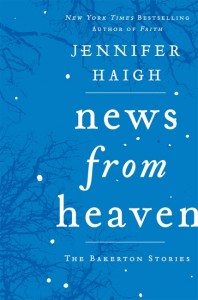
News From Heaven by Jennifer Haigh

News From Heaven by Jennifer Haigh is a collection of interconnected short stories about Bakerton, Pa., and while the characters in these stories all have roots in that former coal-mining town, the town itself is a character — matter of fact, it is the character — that holds these stories together.  Haigh has created a heartbreaking and hopeful story about the death and rebirth of a town and its people.  As the founding members, the Bakers, brought glory and industry to the town that ensured its prosperity, they also have a hand in its decline.

From WWI to the 1970s and 1990s, Haigh chronicles the rise and fall of a town tied closely to its founding family and the coal beneath its hills.  By the end, readers will be as connected to Bakerton as they are to their own hometowns and families.  From the coal hacked out of the mines to the black lungs carried by its resident miners, there is a deep sense of place and the people who inhabit it are as flawed and as memorable as the school teachers, mechanics, small business owners, and others of memory.

“The town lay before them in a deep valley, settled there like sediment:  the main street with its one traffic light, the rows of company houses, narrow and square — some brick-cased now, or disguised with porches and aluminum siding, but at this distance you could see how alike they all were.”  (page 166, “The Bottom of Things”)

Beautifully, each story builds upon the foundation of the last from the high flying days of the coal boom and the nepotism it wrought in the town to the ultimate crashing down of the town around the ears of the residents who relied too heavily on the Bakers to carry them through.  There are glimpses of how war can build up a town, while at the same time tear down its people, and there are other moments where the destruction of war is keenly felt at home when a soldier returns.  Haigh’s collection runs the emotional gamut, but the most striking passage comes in the final story, “Desiderata,” referencing the prose poem by Max Ehrmann.  She infuses the final story with a deep sadness of grief and the devastation of a secret revealed, but returns to the hopeful tone of rebirth and beginning anew amidst this unwanted baggage and knowledge.

In many ways, this collection depicts a slice of American history, with particular attention paid to how immigrant groups interacted with one another and to each other even in a new country.  Even as war is far away, many of the prejudices bred abroad continued in their new homes, and these interactions continued to reflect in future generations.  News From Heaven by Jennifer Haigh has a blasé title, but given the final moments of the collection and the reference to the prose poem, it is reflective of Haigh’s focus on faith.

About the Author:

Jennifer Haigh is the author of the New York Times bestseller Baker Towers, winner of the 2006 PEN/L. L. Winship Award for outstanding book by a New England author; Mrs. Kimble, which won the PEN/Hemingway Award for debut fiction and was a finalist for the Book Sense Book of the Year; and The Condition.

Her fiction has appeared in Granta, Ploughshares, Good Housekeeping, and elsewhere. She lives in the Boston area.

Find out more about Jennifer at her Website and connect with her on Facebook.  Also check out her Book Club Girl discussion.

This is my 7th book for the 2013 New Authors Challenge.

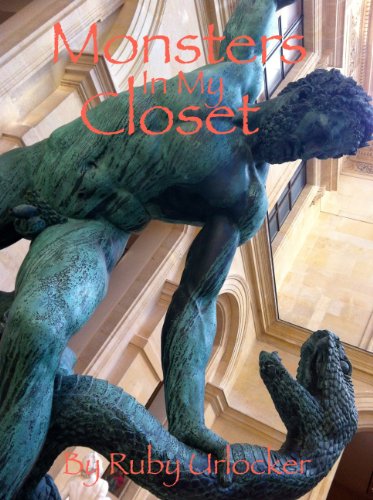
Monsters in My Closet by Ruby Urlocker

Ruby Urlocker’s Monsters in My Closet is a collection of poems and short stories by a talented young writer with a fresh voice who explores the uncertainty of her teenage years and the harsh realities of adolescence.  She explores themes of growing older, losing one’s innocence, and battling inner demons.  Even though she deals with harsh realities, her images are playful and sometimes whimsical, like her short story about a banana dreaming of becoming human — reminiscent of Kafka’s Metamorphosis but in reverse.

From "Walking Around the World":

I walked across the world today
in my old running shoes.
Because I was free on a Saturday
And wanted to beat my blues.
From "Fallen Angel":

My shadow, hanging onto the wall.
I watched it turn to meet my gaze,
My eyes, a desperate wish.
Those stares, those sugar coated liars
Stealing away who I am.
From "The Storm":

There's a gust of wind inside my throat,
Hands clutching it tightly so as not to hurt anyone.
But I grow sick and weary of choking myself

Urlocker has a childlike way of expressing emotions, but she also displays a mature grasp of the darkness that lurks within all of us. Alongside the shadows and ghosts her narrators chase around corners and into the darkness, religious verse and stories ground the reader in a belief that there is something more to this life — whether it is a reincarnation of the same soul until the goal is achieved or the passage of the soul into the afterlife. Unlike other teenage writings that are often full of angst and despair, Urlocker infuses her stories and poems with hope and color — a beacon in the darkness.

One of the most surprising and most developed pieces is “Hidden People,” which is more than a homage to Edgar Allan Poe’s The Cask of Amontillado. Urlocker talks about imaginary friends and growing up, which in some cases means leaving those beloved friends behind along with are more innocent selves. Even though this is a short piece, readers will become emotionally invested in the story the narrator weaves about her past and friends. There is a deep sense of regret and loss, but also the fondness of those memories.

Monsters in My Closet by Ruby Urlocker is a well crafted debut that explores themes of adolescence, lost innocence, and the hormonal battle that teens experience as they sort through friendships, memories, and love. The collection also includes illustrations, which merit a mention as they are unique and childlike, but also demonstrate a complexity that mirrors the work Urlocker does in prose and verse. She’s an up-and-comer with room to grow and surprise us.

If you’re interested in winning a copy of her book, enter the giveaway here.

About the Author:

Ruby Urlocker is a teenaged author, singer and songwriter. She has been writing and publishing stories since she was seven. Ruby lives with her family and dog, Rufus, a wheaten terrier.


This is my 1st book for the Dive Into Poetry Challenge 2013 and the 2013 New Authors Challenge.

The Marriage Price by Alma Katsu

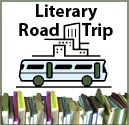
The Marriage Price by Alma Katsu is another short story from The Taker series and it reunites readers with Jonathan’s hometown just before he marries child-like Evangeline.  Told from Evangeline’s point of view, readers will get a taste of her less than innocent side as she talks of the finery and the house that will be hers once she is married to Jonathan.  There’s is clearly not a love match in more ways than one as Jonathan’s family chose her for him, and she clearly has ulterior motives of her own.
She’s a naive girl who is chosen by his family to become his wife as Jonathan’s father declines in health. While Lanore from The Taker and The Reckoning does not appear in the short story, her presence is clearly felt by Evangeline, who — while naive about the sexual relationships between men and women — is not blind to the emotional connection between Jonathan and Lanore.

Evangeline’s character becomes more nuanced through this short story. Although she is portrayed as innocent in The Taker and even child-like, she is more of a strategist in The Marriage Price. She’s looking forward to the big house and the finery she can obtain through her marriage, and while Jonathan is preternaturally gorgeous, his behavior toward her is forward and aggressive by her standards. Their relationship is more student-teacher, though Evangeline’s eyes are more on the prize than on the “love” they can share together.

“Now, it was all she could think about, those shameful things Jonathan had coerced her into doing. That was why she was certain a woman would come forward on her wedding day: it would be a punishment for what she did with Jonathan before they were legally wed.” (Kindle short story)

Katsu creates a dynamic subordinate character that can stand on her own and gets a taste of what her married life will become.  Evangeline may have thought she would gain a great deal through her marriage, but she may have fooled herself into believing that what happened between them in the marriage bed would stay there.  The short story raises questions about arranged marriages, marrying for money and position, and the dark secrets that spouses can hide about not only their pasts, but also their passions.

About the Author:

Alma Katsu is a 30-year DC veteran who lives in two worlds: on one hand, she’s a novelist and author of The Taker (Simon & Schuster/Gallery Books). On the other hand, she was a senior intelligence analyst for CIA and NSA, and former expert in multilateral affairs.  Check out this Interview With Alma.

This completes my first series for the Finishing the Series Reading Challenge 2012.
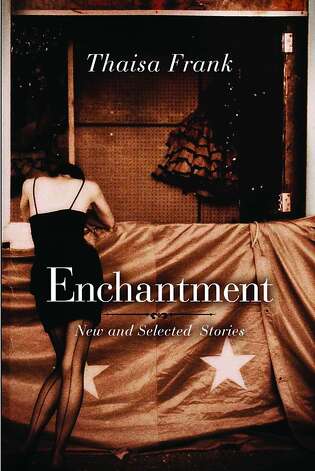
Enchantment: New and Selected Stories by Thaisa Frank

Enchantment by Thaisa Frank, author of Heidegger’s Glasses (my review),  is a collection of short stories that offers a variety of perspectives on the real and imagined, and some stories have a more other-worldly feel to them than others.  Each story wears a mask of beauty and fantasy in which characters themselves take journeys or dream of traveling to cover up the heartbreak and dissatisfaction with their lives.

Frank’s prose is beautiful and mysterious, and her characters are genuine and real, even the vampire from “The Loneliness of the Midwestern Vampire.”  Each story has an undercurrent of longing as each character searches for a connection to something or someone, and in some cases, there is a longing to repair even broken connections as a means of regaining some of that lost sense of wonder that most of us feel when a connection is first made.

From “The White Coat” (page 147 ARC)

“She remembered almost nothing of her life back home–the cramped little alcove where she did translations, their sprawling city apartment–everything vanished in this air of limitless depth.”

Starting out the collection are some more fanciful stories, like “Thread,” “Enchantment,” and The Girl with Feet That Could See,” but further into the collection the stories are less fanciful and less playful and more realistic, like “Henna” and “Postcards.”  However, the real gem of the collection is the collection of stories within the collection — a series of stories — that make up “The Mapmaker.”  These stories or vignettes told from a single point of view focus on one family and its most intimate secrets, like who made the map that hangs in the father’s study and was it really the narrator’s grandfather.  There is even a story that touches on the manipulative nature of children when adults have a secret they don’t want others to know and of course, there is the overarching story of families and communication and how broken it all becomes.  In this section of the collection, it is clear that Frank is a novelist and in many ways, these stories could become their own full fledged novel.

Enchantment by Thaisa Frank straddles the world between the real and the imagined as her characters try to capture some of that awe that we often feel as children about life and to connect with others in the deepest way possible.  Frank is a talented writer with a firm grasp of characterization and storytelling, and while not all of the stories feel complete, they all will transport readers to another world, another time, and another place in the hope that they will once again become captivated with their own lives.

About the Author:

Thaisa Frank grew up in the Midwest and the Bronx, the granddaughter of a Presbyterian theologian and a Rumanian Chassid, who consulted each other about Aramaic texts. Her father was a professor of medieval English and her mother a director of small theater groups.  She earned an honors degree in philosophy of science and logic from Oberlin College, studied graduate linguistics and philosophy at Columbia and worked as a psychotherapist before becoming a fulltime writer. She has traveled extensively in France and England, and currently lives in Oakland, California.

The Rose of Fire by Carlos Ruiz Zafón

Carlos Ruiz Zafón, author of The Shadow of the Wind, is like many other authors these days in that he is pumping out short stories for digital devices.  The Rose of Fire is one such story, but this story tells the tale of how the Cemetery of Forgotten Books was born at the time of the Spanish Inquisition in the fifteenth century.  The labyrinth of books is an intriguing idea, and Zafón’s prose is at once lyrical and absorbing, transporting readers into another time and place.

As fear and suspicion are around every corner, many Spaniards keep to themselves in the hope that they will be spared the wrath of the church.  Raimundo de Sempere, who knows too many languages to stay outside the church’s suspicion, is a printer who is asked to translate a mysterious notebook found on Edmond de Luna, the only surviving man of a ship left battered and adrift near Barcelona just after a plague has ravaged the city.

“Edmond de Luna could see himself reflected in those eyes that resembled huge pools of blood. Flying like a cannonball over the city, tearing off terrace roofs and towers, the beast opened its jaws to snap him up.”  (ebook)

Zafón has created a tantalizing back story for his series of books about the library, and for those who have not read his previous books in the series, The Rose of Fire serves as an introduction to that fantasy world he’s created in which magic and nightmares come alive.  While the story is enchanting and absorbing, it is likely to leave readers wanting more in the way of character development that would likely come with a longer piece of work.  In many ways, this ebook release achieves its goal of ensuring the reader will look for more of the author’s work, but it seems to be a means to an end only, rather than a well developed short story.  With that said, Zafón is a talented author who creates believable worlds full of adventure and conflict.

About the Author:

Carlos Ruiz Zafón is a Spanish novelist. Born in Barcelona in 1964, he has lived in Los Angeles, United States, since 1994, and works as a scriptwriter aside from writing novels.

This is my 53rd book for the New Authors Reading Challenge 2012.
Revenge (6:1 Series, Volume 2) by Janel Gradowski

Revenge (6:1 Series, Volume 2) by Janel Gradowski is even more well crafted than the first volume of short stories and flash fiction, beginning and ending with a wallop.  Once again there are six stories in this collection: “Persistent Foe,” “Kaboom,” “Check Out,” “Inconvenience,” “Anniversary,” and “Addendum.”  Some are longer than others, but each is well paced, with only one typical revenge story — “Kaboom.”
Agnes from “Persistent Foe” is the neighbor you wish you could be when you have loud, inconsiderate neighbors of your own.  While she does not complain too much outright and doesn’t call the cops, she exacts her revenge little by little each day envisioning a big payoff in the end.  And the ending of this one is inspired and unique. Gradowski does a great job of foreshadowing in this short story as well: “She plucked the invasive vine out the basket and dropped it into the tangle of weeds flourishing on the other side.  ‘Time to join your ancestors.'”  Readers will be sitting alongside Agnes as she watches the show unfold in her neighbors backyard one late evening.

“Kaboom” was the most predictable of the stories, but what made this one heart-pumping was the descriptions Gradowski uses as she tells the revenge yarn from the point of view of the perpetrator as she’s performing the act of revenge on her ex.  Meanwhile, Josie’s revenge is only possible because of Erik’s pride in “Check Out.”  Working as a grocery store check out clerk can be incredibly mundane and tiring, but there are moments in life when even that kind of job can be satisfying, especially when you exact revenge on a boy who ditches you across town.  “Inconvenience” brings to the surface many of the emotions that swirled about following the financial crisis and the persistent unemployment born by much of the U.S. population in recent years.  With bills to pay, should the “breadwinner” in the family swallow his pride and take any paying job to support the family, or should he hold out for a better position?  The short story tackles this question and more, but the revenge exacted in this story will leave readers agape.

“Anniversary” is not the happy occasion you expect, but it twists the idea of a celebration into a revenge scenario that celebrates the ability to break free.  Gary has some serious concerns about his wife and his boss, but being an accountant, he takes stock of the situation — its pros and cons — and comes up with the best solution for everyone.  Bartender Amelia doesn’t have a clue how her luck is about to change when Gary walks into her bar.  “Addendum” is one of the longer short stories in the collection, and Karen is a bit of an enigma given her risk averse mentality when it comes to guys and her reaction to her boyfriend Don’s cheating ways.  In an apartment that has eyes and ears in the form of Mrs. Conway, its hard to keep secrets.  “She was either a gossip super hero or had bugged everybody’s apartments with microphones and hidden cameras.”  Living under a microscope must have added undue pressure on Karen.  There is a great deal at work in this short story, and could be a precursor to something longer from Gradowski.

Revenge (6:1 Series, Volume 2) by Janel Gradowski is an even more well rounded collection of short stories and flash fiction pieces with characters that are dynamic and crafty.  The characters she creates in this collection will have readers snickering and smirking as they are reminded of the revenge plots they’ve created when wronged by lovers, neighbors, and friends.  Deliciously devilish, a joy to read.

About the Author:

Janel Gradowski grew up, and still lives, in the mitten of Michigan. She is a wife and mother whose writing companion is a crazy Golden Retriever named Cooper. In the past she has worked many jobs. Renting apartments, scorekeeping for a stock car racetrack and selling newspaper classified advertisements are some of the experiences that continue to provide inspiration for her stories. Now she writes short fiction and is also a beadwork designer and teacher.

Her work has appeared in many publications, both online and in print. The 6:1 Series features themed collections of her stories. Each volume will have six stories, a mix of flash and short fiction, that are based on the title’s theme.  Visit her blog, Janel’s Jumble.

***And yes, for those keeping track, this is the third item I’ve read on my Kindle.

Haunted (6:1 Series, Volume 1) by Janel Gradowski

Haunted (6:1 Series, Volume 1) by Janel Gradowski is part of her six stories with one theme series and was the first she published as an ebook after much success in publishing her flash fiction in literary journals.  This collection is a quick read and can be read in about a day.  There is a surprising breadth of characters and situations representing the theme from a woman haunted by her jilted lover to a ghost unaware of his present state.

There are six stories in the collection: “Sequestered,” “New Friends,” “Retirement,” “Grandma’s Treasures,” “Uncleansed,” and “Strangers.”  Each cast of characters is haunted in one way or another whether by the past, the supernatural, or their deeds.  Among some favorites in the collection are “Sequestered,” “Strangers,” “Grandma’s Treasures,” and “Uncleansed” that have very dynamic characters in normal situations that turn a bit abnormal.  However, “New Friends” reminded me of other stories involving ghost children causing mischief in houses and mothers who don’t believe their children at first and think that their kids are exhibiting signs of trauma.  Readers may want a new twist in this kind of story, but the characters of Wendy and her daughter Mia are playful and have a charming relationship that makes them endearing.

In “Sequestered,” Stacie is jilted by her fiance and escapes to the woods to forget.  Haunted by a unrequited love and a future that can never be, she gets more than she bargains for.  The ending will knock the socks off readers, and there are some great descriptions in this short story.

“Naked trees contorted like tortured skeletons in the frigid, autumn wind.”

“Wisps of fog rose from the lake’s glassy water, materializing like an army of ghosts.”

Even in “Retirement,” Gradowski has a way of painting the scene so that readers are captured by the moment and emotionally charged.  “Autumn thunderstorms are always more vicious than their summer counterparts, like they are enraged by the cold air.”  She generates the heartache of Cecily as a palpable being that reaches beyond the page, haunting not only the character created, but also the reader.

Readers can identify with the oddities of family members from the crazy grandmother to the strange behavior of parents after a tragic event and the rituals they rely upon to keep their sanity.  “Grandma’s Treasures” and “Uncleansed” explore these relationships and their odd rituals in a unique way and each story uncovers family secrets that the protagonists Lindsey and Eva, respectively, never expected.

Haunted (6:1 Series, Volume 1) by Janel Gradowski is an excellent debut from a talented flash fiction and short story writer.  Short story is a difficult form to generate connections between readers and characters, but Gradowski achieves this easily through her word choices and narrative flow.  Haunting prose, unique characters, and surprising twists will keep readers coming back for more.

About the Author:

Janel Gradowski grew up, and still lives, in the mitten of Michigan. She is a wife and mother whose writing companion is a crazy Golden Retriever named Cooper. In the past she has worked many jobs. Renting apartments, scorekeeping for a stock car racetrack and selling newspaper classified advertisements are some of the experiences that continue to provide inspiration for her stories. Now she writes short fiction and is also a beadwork designer and teacher.

Her work has appeared in many publications, both online and in print. The 6:1 Series features themed collections of her stories. Each volume will have six stories, a mix of flash and short fiction, that are based on the title’s theme.  Visit her blog, Janel’s Jumble.

***And yes, for those keeping track, this is the second item I’ve read on my Kindle.

This is my 44th book for the 2012 New Authors Challenge.