Quantcast

Interview With Poet Andrew Kozma

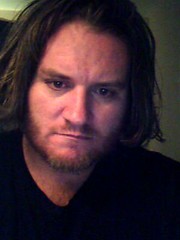
Poet Andrew Kozma

This month at the Poetry Blog of 32 Poems Magazine my interview with poet Andrew Kozma was posted. He’s a contributor to the magazine and was a delight to interview, especially since he seems to enjoy the distractions of cafes as much as I do, though I more people watch than anything.

First, let me tantalize you with a bit from the interview, and then you can go on over and check the rest out for yourself.

Without further ado, here’s the interview.

Do you have any obsessions that you would like to share?

General obsessions or writerly ones?

Generally, I’m obsessed with bad films (and generally interested in bad art of all kinds). I co-founded a bad movie club at my undergraduate school and have roped people into watching horrible films with me wherever I’ve moved. It’s sad, I suppose, that I’m always more interested in watching a bad movie than a good one (or, at least, one that is seen as “good” by the general populace). But people always want to watch what’s good. Where’s the love for the bad?

In writing, I find myself obsessed with extreme situations. An early poem of mine was inspired by nuns who “cut off their noses and lips to avoid violation.” More recently I’ve written about the Japanese Giant Hornet: a swarm of thirty can kill thirty thousand bees in a matter of hours.

More generally, I’m obsessed with form regardless of what genre I’m writing in. I try to treat everything I write as an experiment, pushing myself in a direction that I have yet to fully explore. In poetry, this means often writing in traditional forms, but also, more truthfully, that every poem I write inhabits a form even if it’s not immediately recognizable.

Most writers will read inspirational/how-to manuals, take workshops, or belong to writing groups. Did you subscribe to any of these aids and if so which did you find most helpful? Please feel free to name any “writing” books you enjoyed most (i.e. Bird by Bird by Anne Lamott).

I belong to a writing group now for working on novels, but this is relatively new to me. My default learning vehicle for writing has been the academic workshop from freshman year of high school to my last years of my Ph.D. It’s true that, now, I would have to say that I find my writing group more helpful than workshops, but the reason for that is because all the people involved are experienced writers, have workshop experience, and like each other’s work. The writing group is really only an evolution of the workshop for me. The first thing I learned about workshops is that you quickly have to determine whose comments are useful to you and to filter out the rest, essentially creating your own private writing group within the larger workshop context.

The writing books that I enjoyed most are Burning Down the House by Charles Baxter and Stephen King’s On Writing. I don’t really like reading straight how-to books on writing. Both of those books are more a symptom of the way I do like to approach learning about writing book-wise: criticism. King’s Danse Macabre. Samuel R. Delany’s The Jewel-Hinged Jaw. James Blish’s Issues at Hand, and a Collections of essays by William Logan and Randall Jarrell.

Do you have any favorite foods or foods that you find keep you inspired? What are the ways in which you pump yourself up to keep writing and overcome writer’s block?

Coffee. And I don’t mean coffee in the sense that I need the caffeine to kickstart my heart or to keep me going – I drown my coffee in cream and sugar – it’s more that I like to have something hot at hand while writing. Drinking it (slowly) gives me something to do, and the heat from what I’m drinking makes me feel active. I think it has something to do with the fact that a hot beverage is a sort of clock. It only stays hot for so long.

Similar to the countdown inherent in a cooling cup of coffee, I use time to overcome writer’s block. When working, I’ll say that I have to write for a certain amount of time – when working on my novel it was two hours a day – and for that time I actually have to be writing. Yes, in theory, I could be staring at a blank screen for those two hours. In practice, if you set me in front of a computer and I have no other way to distract myself, I’ll begin stringing words together. Of course, whether those words will be coherent is anybody’s guess.

Here’s a sample poem from Andrew as well:

A Firm Belief in Unfettered Joy

Here is what I was going to tell you:
+++The Dalstroi orchestra played for them
+++as they approached over the ice
+++that had caught fast the ship
+++transporting the prisoners
+++through winter
+++to Magadan.

Here is what it was going to mean:
+++Even so, even here, even without knowledge.
+++There is joy in an attempt at joy by the Dalstroi
+++orchestra forced by the camp supervisors
+++to welcome with music those survivors
+++who saw the sun shining beneath the ice.

Here is the space between:
+++A siren carries itself across the city.
+++Against the pale grey sky, the dark branch.
+++The litter of dead petals on the church floor.
+++After the explosion, the absolute silence.
+++Snow becomes the icing on the earth.
+++Where the footprints stop, beauty lies untouched.

Please check out the rest of the interview on 32 Poems Blog.

Guest Interview: Jennifer Flescher Talks With Adam Deutsch of Cooper Dillon Books

Jennifer Flescher, the editor of Tuesday; An Art Project, kindly volunteered to participate in the Celebration of Indie & Small Press Month with an interview of Adam Deutsch of Cooper Dillon Books.  This press is based in San Diego and has a number of books headed to the market, including Pretty Rooster by Clay Matthews.

Without further ado, please welcome Jennifer and Adam.

This is a great blog project – it is important to celebrate small presses and the very exciting projects they produce! I’m not, on the other hand, a writer of reviews . . . I was trained as a journalist and prefer to keep my opinions out of the conversation – I think by exploring motivations and stories we have a better in road to discovering new experiences and voices.

Cooper Dillon Books, a new poetry press out of San Diego, and their book, Pretty, Rooster, are just the kind of projects worth talking about. The book, third out of five titles for the press, is a collection of sonnets, interspersed with cartoons, including a flip-book of a clucking rooster. I was interested to hear about what the motivation behind this endeavor of the traditional and non-traditional.

So I offer for you an interview with the editor/publisher of Cooper Dillon Books, Adam Deutsch.

JSF: It’s a very cool book — tell me a little bit about how you see the creation of this book in relation to the creation of the press, if that makes sense . . .

AD: Clay Matthews’ Pretty, Rooster is very much a reflection of he intention that helped create the press.  We decided, before we even had our first title, that we would approach artists for covers rather than use stock art, or work in the public domain.  We never wanted to see an image from one of our books also printed on a copy of a coffee table book, or on a billboard for an erectile dysfunction drug.  Just as the press involved a number of like minds coming together, so does this particular title–poems by Matthews, comics by Shannon Wheeler and Micah Farritor, a flipbook and section breaks designed by Max Xiantu, and a cover photograph by Misha M. Johnson of a sculpture by Spencer Little.  The press was developed with the idea of art and community in mind, and Pretty, Rooster is a communal effort.

JSF: How important was the art to you?

AD: Working on the art was great fun. Clay had mentioned that, because it was a collection of sonnets, it might be fun to add something that could interact with the 14-line shape on every page.  He had a chapbook that came out with a little horse in the corner.  He told us he loved that horse.  Max was in a flippy mood, and made the strutting bird to put in the corner. Meanwhile, I know Micah Farritor (The Living and the Dead) from days in the Midwest, and had just met Shannon Wheeler at ComicCon, and got to talking with him because I use a Too Much Coffee Man Lunchbox.  It didn’t take much to talk either one into picking a sonnet and drawing a little 2-page comic.  Their styles are so different, and they chose poems with such different energy, and they worked beautifully as end caps to the collection.  The cover was just the topper–Taylor Katz keeps a wire rooster sculpture from Spencer Little in her kitchen, and Misha Johnson photographed it in front of a fence in their yard.  Considering the flipbook and the larger section breaks, we didn’t feel the need to have another entire rooster on the cover, so we just decided to show a little leg.

Art is always important.  The cliche about judging a book by a cover is just a poor philosophy if you’re trying to draw people to a book that is supposed to share art. Any publisher is taking a collection of poems they have fallen in love with; why dress it up in rags?  The idea is to make a cover interesting, inviting, and have it visually capture something that relates to the atmosphere inside the collection.  So many collection of poetry come out every year with covers that are poorly designed–sometimes straight ugly–and we’re not sure why this happens.  I leave the visual design to Max (a successful artist) because he understands details about composition and color and the process of printing color that I’m only just learning.  We also don’t print a single thing unless the poet love the way his or her own book looks.

JSF: How do you see those elements fitting together with a collection of sonnets?

AD: Jason Schneiderman (Striking Surface) writes, “The sonnet was invented as a vehicle for self-examination, and Matthews takes that literally, driving each one like it had a manual transmission.”  The sonnets are full of scenes and living things in motion.  But it’s a book for form, and with form comes a shape on the page that doesn’t vary much over the course of 72 pages. For Pretty, Rooster, the art is somewhat of a companion while you travel through the pages.

JSF: How did you choose the manuscript — was it solicited? did you fall in love at first pass?

AD:  It was kind of solicited, but not really.  In our first reading period, Clay had sent in a full-length manuscript, and it really kicked us, but something about it didn’t knock us over. I’d seen his work around in journals for years, and told him that I’d love to see something else, and didn’t hear anything until the next reading period.  He could have just emailed me with an attachment, but Clay Matthews is such a humble guy, so respectful and easy going, he simply submitted according to the guidelines the next year with Pretty, Rooster.

And I did fall in love at first pass. I read through it, and immediately emailed, asking if anyone else was considering it.  I wanted to take some time with it, but I also knew that it was a magical collection, and I didn’t want it to slip through our fingers.  Turns out he’d sent it to Cooper Dillon, exclusively.  I must have read it 5 times in a few days, then made an offer.

JSF: How has it been received?

AD:  We release our books, typically, in the fall/winter, so AWP becomes something of a coming-out party for our titles. People were drawn Pretty, Rooster, and once they saw the comics, they got really excited.  People are enjoying it.  We don’t set out to make giant splashes with our books–we believe the poems we’re publishing are timeless.  With that in mind, we like to let the buzz swell in its own time.  When people are excited about a book, they tell their friends, and they share it with classmates and loved ones, and that’s a process that needs to breathe.  Some presses insist that their authors line up readings, and use a lot of resources to get the word out. Sometimes it can be pretty forceful.  But we don’t demand anything from our authors. We just want them to love their own books.

Besides, we don’t do contents.  We don’t want $25 dollars from anyone to read a manuscript in the reading period, and we hope we can take two full-length books, and two chapbooks each year.  Rather, we ask poets who submit to buy a book (or pay $10) as a reading fee.  I think a number of people who are excited to pick up Pretty, Rooster, or any of our other books, are waiting for that submission period to open on April 1st, so they can order the book, and send us their manuscript.

JSF:  What did Matthews think of all the animation?

AD:  He loved the flipbook.  The little bird has made a lot of friends.

JSF: What did you learn from this book?

AD:  If you would have asked me when we started the press if we’d be interested in a collection of sonnets, I would have politely smiled and thought, probably not.  Every book that’s come in and really excited us has been something that’s challenged my perception of what I think I love in poem.  Each one has shown me something I didn’t think would do anything for me.  It’s like when I discovered the chocolate shake, only about a year and a half ago.  I had tried one as a kid, and didn’t like it, so I thought I didn’t like chocolate milkshakes.  Then I had one down at Hodad’s in Ocean Beach, and thought, “Holy cow!”  I’ve learned to fall in love with the sonnet–all over again, really–because of Pretty, Rooster.

It’s a healthy thing to let your mind change, and to discover new joys, and to let go of what we think we know.  Some of us insist that we won’t be interested this or that.  In poetry, I’ve heard people say, “I hate form,” and “I hate prose poems!”  They use the word “hate.”  They almost build an identity around the insistence and resistance to the decisions some artists make.  Not only does it keep them away from so many wonderful pieces of beauty and art, but it stifles their growth as writers because they aggressively fight against trying new things, and experimenting with their own creativity.

JSF: Why did you want to start a poetry press?

Cooper Dillon Books came from the same inspiration as many small presses do–we read all these books, and we’re always searching for a kind of craft or experience or event, but there are small voids out there.  It seemed like the poems I wanted to read weren’t available to me.  I wanted to produce books of poems that embraced certain values that I found when reading some of my favorite contemporary poets, but, more so, turned toward a certain transcendentalism.  We (Colleen Ryor, Max Xiantu, and I) boiled those values down to “joy in aesthetic, beauty, honesty, and intimacy.”  We also felt that there is always room in the community for people looking to make positive contributions, and we’ve been embraced by so many good people.

Cooper Dillon does not receive grants, government funding, endowments, or donations. We do not publish (select, print, advertise, etc.) at the expense of our authors. We earn money by selling books we believe in, in service of art and community. To buy Pretty, Rooster and to look at other titles please visit the website CooperDillon.com

About Tuesday: An Art Project Publisher/Editor:

Jennifer S. Flescher is publisher/editor of Tuesday: An Art Project. Her publications include Lit, The Harvard Review, Jubilat, Agni-online and The Boston Globe. She has an MFA in poetry and an MsJ in journalism. She teaches writing and editing to college students.

About the Publisher/Editor of Cooper Dillon Books:

Adam Deutsch was born on Long Island, New York and has his M.A. from Hofstra University (2005) and M.F.A. from the University of Illinois at Urbana-Champaign (2008). He’s been on the editorial staff of a number of presses and journals, including Ninth Letter and Barn Owl Review. He presently teaches at community college, and keeps a fairly active blog over atadamdeutsch.blogspot.com. He lives in San Diego.

About the Author of Pretty, Rooster:

Clay Matthews has published two previous full-length collections: Superfecta (Ghost Road Press, 2008) and Runoff (BlazeVox Books, 2009). He’s also published a couple chapbooks, and a handful of poems and etc. in journals such as The American Poetry Review, Willow Springs, Black Warrior Review, Gulf Coast, New Orleans Review, and elsewhere. He completed his Ph.D. in creative writing at Oklahoma State in 2008, and he’s now teaching at Tusculum College outside of Greeneville, TN, where he also edits poetry for The Tusculum Review. He’s got some poems floating around out there in the internet he’d love for you to look up and introduce yourself to, and he always enjoys hearing from folks.


Thanks to Jennifer and Adam for participating in this month’s celebration of Indie & Small Presses.

Interview With Margaret C. Sullivan, Author of The Jane Austen Handbook

I recently read and reviewed The Jane Austen Handbook by Margaret C. Sullivan (check out my review) by Quirk Books and adored the set up, the illustrations, and the information within its pages about the Regency period in England and the instances it plays a pivotal role in Jane Austen’s novels.

Author and Jane Austen blogger, Margaret C. Sullivan kindly agreed to answer a few questions about her book and her writing.  I’m happy to have this interview as part of the Celebration of Indie & Small Presses this month, and I hope you enjoy it.

1.  When did you begin to fall in love with Jane Austen and her writing and why?

I didn’t read Jane Austen’s novels until I was in my late 20s, and even then it took me a few years to work my way through them. I read Emma and Pride and Prejudice a year or so apart and liked them well enough to keep going. The third of her novels I read was Persuasion and I fell in love, hard. I loved the language and the dark humor and the intensity of feeling, not to mention the best love letter in the history of Western literature. “You pierce my soul.” All these years later those four words still make my toes curl.

2.  When did this love of Austen transform itself into more than just a hobby and into a passion with its own blog and other books?

Not long after I started becoming really enthusiastic about Austen’s work, we had the mid-1990s rush of film adaptations—first Sense and Sensibility, then Persuasion, then Emma (it actually took me a couple of years to get around to watching the 1995 Pride and Prejudice—I didn’t have cable, and was really intimidated by the idea of renting six videotapes). Around the same time there was a big rush of Austen biographies, and it was easy to feed the beast. Things calmed down around 1999, and then in early 2004 it started up again—a new film version of P&P was being planned, the producers were trying to get financing for Becoming Jane—and there was very little information, so rumors were being passed around as fact. I thought the fandom needed a news site, like the Harry Potter fandom site The Leaky Cauldron, dedicated to news about Jane Austen in popular culture, and I started AustenBlog. There is still a lot of interest in Austen-related films, despite the generally disappointing nature of the recent batch of films (in my opinion, which is not widely shared).

3.  Explain your thoughts on the phenomenon or retellings, sequels, and mashups with zombies that now attach themselves to Jane Austen’s novels?

I’ve been writing Austen fan fiction, some of which I have published, for more than ten years, so obviously I’m quite open to the idea in general. However, some of the quality of these productions is not good. Some are very well-written, but I personally prefer those that adhere more to the originals. There are some books that have been very popular that go far afield of the originals, but they are not to my own taste unless they are doing it for satire and humor.

Speaking of far-out satire, I thought the idea of the first monster mashup, Pride and Prejudice and Zombies, was really funny, and I still do—and funny on many levels, not just the whole crazy juxtaposition of Austen and zombies, but the idea of repressed 19th-century British gentry being “zombies” like the suburbanites in the Living Dead movies. I also liked the presentation of the book as an edited “classic” novel—that kind of humor is very much to my taste, and I think would have been to Jane Austen’s taste as well, as she was a gifted satirist and understood a subtle, straight-faced approach to humor.

I had no idea it was going to be such a big hit, and I had no idea that it would create such a really nasty backlash against Jane Austen. The hipsters who hated being forced to read her books in school now had an excuse to trash her, and sometimes in a manner that showed the critics distressingly ignorant of the actual novels (“they’re all bonnets and tea-drinking!”). I realize Austen’s books are not to everyone’s taste, but she took the novel and dragged it into its modern form from a morass of 18th-century melodrama and overwritten romance (in the literary sense, meaning not reflecting real life) and showed that it was okay and even interesting to write about everyday people and events. A lot of the “rules” we now follow for writing fiction can be found in the way Austen shaped her books differently from her predecessors—write what you know, concentrate on your hero’s story, and leave out stuff that doesn’t move the plot along, however amusing or interesting. You don’t have to like or even read her books, but I submit that all those writing fiction today owe her a debt. We can draw a line in the development of the novel from Richardson, Burney, Radcliffe, and Fielding through Jane Austen to Dickens, Eliot, James, right up to the present. I doubt that in 2011 we would be writing 12-volume epistolary romances if Austen hadn’t published, but I think literature would be poorer for the loss.

4.  Do you have a retelling, sequel, or film adaptation?  Why do you enjoy those particular ones over others?

I don’t know if I have one over-arching item that stands out, but certainly within the individual categories I have favorites.

My favorite retelling is Colonel Brandon’s Diary by Amanda Grange. Brandon has a really romantic, dramatic backstory, and it’s all right there in Sense and Sensibility if you look carefully! But Grange did a great job not making it overly melodramatic and unAustenish. When Eliza died in Brandon’s arms, I cried; being on the train at the time, it was kind of embarrassing. But if you ever thought Marianne Dashwood should not have married Brandon because he was a boring old guy in a flannel waistcoat, read his backstory, because it’s as romantic as she could ever have wished. I mean, he fights a duel, for crying out loud!

A sequel I read a long time ago and then re-read quite recently for my Jane Austen book group is Pemberley Shades by D.A. Bonavia-Hunt. It is a really charming sequel to P&P, about four years after the Darcys are married. Lizzy is witty and amusing, just as she ought, and it’s fun to watch Darcy not only take her teasing but actually enjoy it and tease her back—clearly he has learned! Bonavia-Hunt obviously read J.E. Austen-Leigh’s Memoir of his aunt, in which he passed on some tidbits Jane herself let drop about the lives of her characters after the novel ended, and some whimsical bits in her letters about Mrs. Darcy’s and Mrs. Bingley’s favorite colors.

My favorite film adaptation is the 1995 Persuasion (which is also my favorite Austen novel). While not a perfect adaptation, it is beautiful and romantic and feels very real, and the cast is just marvelous. It’s the only adaptation of Persuasion that doesn’t mess up Captain Wentworth’s gorgeous letter to Anne. Also it makes me want to drink tea, and tea is good for you. They are forever drinking tea in that movie.

Some other books and films I’ve enjoyed that are not directly in those categories are The Jane Austen Book Club (both book and film), Michael Thomas Ford’s book Jane Bites Back, which is a hilarious sort of spoof of the worst excesses of Janeitism that I think Jane herself would have loved, and Laurie Viera Rigler’s books Confessions of a Jane Austen Addict and Rude Awakenings of a Jane Austen Addict. The thing all these have in common is that they celebrate our love of Jane Austen without being twee or overly sentimental.

5.  Beyond reading Austen-related materials, what other books have you read recently and would recommend to others?

Unfortunately I haven’t had much time to read non-Austen-related stuff lately! I read a lot of classics, but in many cases they are books that Austen would have read, so that makes them kind of Austen-related. However, I do recommend them on their own: anything by Fanny Burney, The Mysteries of Udolpho by Anne Radcliffe, and the rest of the “horrid novels” named in Northanger Abbey.

I’m a big fan of Elizabeth Gaskell’s work and there’s a Gaskell Blog that is running a reading challenge for 2011. Austen fans should check it out—I think they would like Gaskell’s work.

My favorite modern book that I’ve read in the last year or so was The Guernsey Literary and Potato Peel Pie Society by Mary Ann Shaffer and Annie Barrows. What a charming, thoroughly delightful book, sweet and romantic and heartbreaking. I just loved it. It’s not a very recent book, but I recommend it highly!

6.  Please describe your ideal writing space versus your current writing space or if you currently have your ideal writing space, please describe it (you can also include a few photos of your favorite aspects of that room).

I think my ideal writing space is in my head more than a physical place. It’s hard for me to write when I am busy and stressed out—there is too much furniture up there (as Gandalf said of Barliman Butterbur in The Lord of the Rings, my mind is like a lumber-room: thing wanted always buried). So anywhere where I am left alone and have time and space to clear out my head and concentrate on my task works for me. That can be anything from a busy coffee shop to the balcony of my apartment on a warm spring day. Lately I’ve been getting a lot done by getting up very early (5 a.m.). If I went to bed early and am well-rested, that’s the best time of day for me to write.

7.  What projects are you working on now? Could you provide my readers with a few hints?

A few years ago, I wrote a novella for the Jane Austen Centre at Bath’s online magazine, a sequel to Northanger Abbey called There Must Be Murder. It was serialized over a year. I had some requests for hard copy publication, so recently I published it as a paperback, and it’s also available as a free ebook—I’m very enthusiastic about ebooks and have four ebook readers, plus my smartphone! I also have a short story in an anthology being published by Ballantine later this year called Jane Austen Made Me Do It, edited by my friend and fellow Jane Austen blogger Laurel Ann Nattress. My story is a tidbit of backstory from Persuasion, inspired by my love for Age of Sail novels such as the Hornblower series.

I’m also working on a couple of things off and on, some Austen-related and some not. I don’t like to talk too much about stuff in progress, though, in case it goes pear-shaped, as it so often does. I have lots of concepts but they don’t often develop into actual plots. 😉

Thanks for having me! This was fun.

Thank you, Margaret, for being part of the March Celebration of Indie & Small Presses.

About Quirk Books:

An independent publisher from Philadelphia, Pa., Quirk Books/Classics blends the work of classic literary masters with new scenes of horrific creatures and gruesome action. The publisher strives to mesh class literature with pop culture with the hope of creating literary cult-classics.

Also from a publisher letter: “Quirk Books isn’t just a creative publishing company, it’s also a place where dreams come true (especially the ones involving monkeys), where there are no stupid ideas, where words and pictures live together in ironic bliss, and where bills are paid, invoices are sent, and numbers are crunched. In Quirk, you’ll find a publisher of impractical reference and irreverent nonfiction (probably the first ever). You’ll find a publisher of humor books, of pop culture books, of gift books, of reference books, and of hybrid books that cross over from market to market and genre to genre.”

Interview With Poet Joseph Milford

This week at the Poetry Blog of 32 Poems Magazine my interview with poet Joseph Milford was posted.  He’s a contributor to the magazine and was a delight to interview.

First, let me tantalize you with a bit from the interview, and then you can go on over and check the rest out for yourself.

Without further ado, here’s the interview.

Do you see spoken word, performance, or written poetry as more powerful or powerful in different ways and why? Also, do you believe that writing can be an equalizer to help humanity become more tolerant or collaborative? Why or why not?

Obviously, when we hear the poems or see them “performed”, they become altered, and many times more powerful, vehicles. To see the shape of the poet’s mouth, the body posture, the diaphragm expand, the throat constrict, etc.—this is an incredible organic experience all leading to the convocation of voice. It’s a great sharing. I do think that in these moments, which at their greatest extreme could border on shamanistic, we may find ways to temper our human nature, to tune it into a more harmonious instrument, maybe. Although, I do hear my inner skeptic creeping in, so I will stop here.

How do you stay fit and healthy as a writer?

I wish I could decline this question! In any case, I don’t do much at all. I need to get fit—that’s for sure—I want to be around to watch my daughters grow into women—I have noticed that running from my responsibilities is not callisthenic.

What current projects are you working on and would you like to share some details with the readers?

I am currently shopping around a collection of poems I am calling DRUNKEN LOCUST, which I think is my best work to date. Of course, Chenelle and I are publishing SCYTHE, our literary journal, three times a year and doing The Joe Milford Poetry Show once a week. I am working on a very long poem which I doubt no one will ever be nuts enough to publish—it is currently titled BLIZZASTERISK. I think that sums it up for now—and thanks for this opportunity to talk about my interests and my love of poetry. I’m super happy to be in your journal.

Check out a sample of this mysterious large poem, BLIZZASTERISK:

From The Blizzasterisk

i wanted the specific procedure to bleed the TV sitcom families out of me.
vendettas spill over verandas and fertilize the gardens.
things were more insidious than asbestos lingering in our catacombs.
the entire population was just a few French fries short of a Happy Meal.
the ghosts of books read find slippage under the screen door into the grass to fume.
the stagecraft was amazing as the postcards shot through the crowd maiming all of us.
a mystery creature comes to you with a set of keys. you ask which door. it gnashes its teeth.
there is no power-source for the great apparatus. we still hung from the giant killswitch.

*

one can never have enough LEGOS during a mid-life crisis this is the cure to Alzheimer’s.
they kept saying my future was held in my hands’ palms. i sliced that future up with farmwork.
i can smell the musk, the scat, the sulphur, the burnt metals and plastics of a poem passing by.
like that pumpkin on the counter about to become a gourd to be hollowed out for a birdnest.
if you ever see a kid standing in golden wheat or goldenrod–rescue him. America kills.
i am made of tusks covered in leather. i move like a golem through religions. dream me.
some pop-songs are so covered in suntan lotion that i remember my sharkbites. ah, spring break.
on a white piece of construction paper, my stepdaughter killed my ninjas. it hurt nanoseconds.

*

if you paint a garden and do not like the branch then finish the painting and grab a ladder & saw.
a morphic field altered by language is a word or series of words you must own as a badge.
one must always attain a maximum intensity with a minimum of means said Miro the bullfighter.
the red fox implanted with her RFID chip runs constantly around our house stealing identities.
how does one separate the dust from anything he or she has done how does one leave earth?
amoebic vehicles harvest skeletal and biological growths amongst a sea of germinations.
without dirt there would be no clouds. without hammocks there would be no drunks. kick dust.
as a kid we had honeysuckle, crab-apples, grounded pecans, muscadines, sour-grass—plenty.

*

the ash falling was the closest thing to snowfall this hellpocket was ever going to be blessed with.
there are no inhospitable islands to vanquish sinners on–they become convenience store cashiers.
as we spread lime for next year’s tomatoes the world writhed in endless top ten lists. cuckolds.
crawdads circle like an underwater zodiac as i unhook the catfish from my chickenwire hook.
Ascletario was eaten by dogs when he should have been burned. the stars, the stars, the stars.
if i had been named Cadillac Williams and not Joe Milford i wonder what could have happened.
sea urchins thrive about the planet like the halitosis of your hangover and dust of bad checks.
Algol mer. 6:25 ev. Moon Leo. 35 degrees N. Lat 75 degrees. Long. Sun sets at 5:28. days too short.

Please check out the rest of the interview on 32 Poems Blog.

About the Poet:

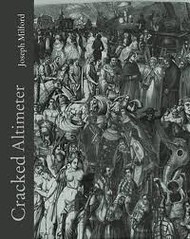
Joseph V. Milford is a Professor of English at Georgia Military College south of Atlanta. His first book, Cracked Altimeter, was published in 2010. He is the host of the weekly Joe Milford Poetry Show, which he maintains with his wife, Chenelle. He also edits the literary journal Scythe with his wife from their shack in rural Georgia. Currently, he is trying to figure out how to convert armadillo roadkill into a fuel-efficient substitute for fossil fuels.

Guest Interview: Melanie Huber Speaks With New York Quarterly Editor Raymond Hammond

Today’s interview with The New York Quarterly‘s Editor Raymond Hammond is brought to you by the prose editor of Leaf Garden and her own blog, Melanie Huber.

New York Quarterly is a literary magazine I’ve read off and on for several years, but the organization also publishes books.

Without further ado, please enjoy Melanie’s interview with Raymond Hammond:

1. What made you first decide to venture out into the poetry book publishing game?

Our founding editor, William Packard, had always spoken of an NYQ Books and his wish to make that happen. Shortly after his death we found several proposals that he had written over the years and we knew books were in the original charter, so it was always something in the back of my mind as well.  With the onset of one off printing and the subsequent increased quality of that industry, it became viable to begin thinking about setting up an imprint. We bounced around several ideas for a couple of years and then when the 40th anniversary came around in 2009, it seemed like the perfect time to do something like this and a fitting gesture to both the magazine as well as Bill.  So beginning in the first weeks of January of 2009 I set about releasing the older ideas we had bounced around and just made the decision to go full steam ahead with a non-profit model.  Just to do it.  By June of 2009 we released our first book.

I would like to add that in addition to the nostalgic value, I think having a press is important because it allows you to provide another venue to the poets, and to publish more work of those poets than we ever could in a hundred issues of the magazine.  There has always been at times those submission packages where you read it and want to publish the entire packet, and everything else you can get your hands on by that person.  Now we can do that.

2. I know your stance on contests, you are doing this without requiring authors to submit to contests…

You are correct, we do not believe in or run contests.  We invite our authors to publish a book from the list of poets who have already been published or accepted for publication in the magazine.  This means the vetting has already been done and we already have an established relationship with the author before embarking upon the journey to book publication.  And more importantly, it did not cost the author a dime to get noticed.

About a year or so ago I was speaking with one of our authors who told me that their first book would have never been published if it had not been for a contest.  Really? I then began asking around.  It was then that I realized how accepted the practice of the book contest path to publication had become. I was astonished, and saddened, and deeply disheartened. I knew that contests had become prevalent, but what disheartened me was to think that the book contest route has seemingly replaced the editorial route to publication in the hearts and minds of so many people.  I mean I know the editorial route to publication was a bitch and certainly lamentable for many reasons.  But contests require the same amount of energy to get noticed, offer the same if not narrower opportunity (contest=1 winner, editorially we see hundreds of poet’s work a year), get you the same result if you are lucky (book publication) all while costing you tons and tons of money. And to be clear, if you enter a contest you either win or you might as well have not entered—it is all or nothing.  Whereas with the editorial process you may not “win publication” the first or even the tenth time around, but you got noticed one way or the other—you are in the back of someone’s mind that makes the decisions, not just a guest judge.

I just do not believe in solely passing the plate in the choir loft, others have to want to keep the church doors open or there is no point in having a preacher or a choir.

3. How are you managing to stay viable?

K.I.S.S. – we keep it simple.  We are an all-volunteer non-profit.  We keep overhead to a minimum, there is no office space to rent, no salaries to pay, every dime that we get goes to publishing either the magazine or the books, and every dime we receive from the sale of those books gets returned into the upfront costs of producing another book.  The money just rolls right back into the program.  Because we use print-on-demand, we do not have large press run costs, we do not have to warehouse the books once they are printed—we simply print what we need at the moment.  We also do not sell the books directly, we only sell them through our distributors, so again, no press run, no warehousing, no fulfillment, no shipping.  And when you think about this even further, no direct sales means sales tax is kept to a minimum, accounting is kept to a minimum, everything is simpler and more manageable; therefore, cheaper; therefore, viable.

4. Contests seem to be the bread and butter of most small presses, it’s how they are able to publish what small amount they do publish and keep going, so what hopes and goals do you have for 2011?

The plan is to keep building our catalog. Build as large a catalog as quickly as possible to build the name of NYQ Books and so that the books all work together for sales—so that there is a unit of NYQ Books to promote, not just a few books.

Since January we have released 3 books, with a fourth coming out this week, then 2 more in the immediate weeks after that.  Plus we have 3 more ready and waiting to be released over the next several months.  And then for the remainder of the year we are probably looking at about a dozen in the hopper at minimum. We should end the year with approximately 20 new books all total.

5. How are you able to publish so many books?

It is simply a matter of perseverance. To this point I have done the bulk of the work on most of the books. A few books have been laid out and designed by some friends of the poets, but under our direction.  We have a wonderful cover designer who steps in on the covers that give me pause to do, and we just got another computer outfitted so that one of our other editors can assume a majority of the layout work.  Another key ingredient is organization. We have a 25+ page reference manual that each author is given at the beginning when the book is accepted for publication.  This manual takes them through everything from our philosophy, to legalities, to how to proof, to what happens after the proof is accepted–start to finish.  The more organized the author is in preparing the manuscript and the more they know what to expect along the way, the more efficient our production time can be.

The last reason we can publish so many books lies in the simplicity and economics of it all.  Again, low overhead, print on demand technology, no warehousing, no shipping, simplified accounting, etc.  The simpler one keeps all the ancillary things, the more one can get done.

6. How does the long tradition/philosophy behind the NYQ factor into your decision making regarding book publishing?

One of the philosophies of NYQ, to publish regardless of status in the literary community, contest winnings, school of thought, station in life, accomplishments, sex, race, religion, etc., provides us a great base from which to draw.  It also keeps the book series as eclectic as the magazine of which I am very proud.

And the simplicity and economics of it all allows us to publish a book that might now sell many copies right alongside a book that will sell hundreds if not thousands of copies. To be able to choose the book based upon the quality of the poetry rather than a forecast of sales, and keep it in print, is paramount to running the book program in the spirit of the magazine – the poetry first, always.

Thanks to Melanie for conducting the interview with Raymond Hammond and for Raymond for participating. Both of you rock for participating in the Indie & Small Press Celebration! You’ll be seeing more from Melanie later this month, so stay tuned.

Raymond Hammond; Copyright Amanda J. Bradley

About Raymond Hammond (from NYQ):

Raymond P. Hammond is a poet and critic who, originally from Virginia, now resides in Brooklyn and works at the Statue of Liberty NM as a law enforcement officer half of the week and as editor-in-chief of The New York Quarterly the other half. He holds an MA from New York University where most of his classes were intense studies of poetics with William Packard at the Chelsea Gallery Diner over a hamburger.

An Interview With Dan Cafaro, Publisher of Atticus Books in Maryland

Today we’re kicking off Savvy Verse & Wit’s First Annual Indie & Small Press Month Celebration with Dan Cafaro from Maryland’s very own Atticus Books.  He was gracious enough to answer a few questions about his business, books, and some more personal matters, like obsessions.

Rather than provide you with all the connection details at the end of the interview, please check out their Facebook page, the Independent Book Sellers That Rock Our World Page, and Book Blogger Central (you may even find a picture of Dan on one of these pages).

1.  As founding publisher of Atticus Books in Maryland, how long has it taken to make a name for the publishing house in the industry, and what frustrations have you overcome to make it such a local success?

We haven’t yet made a name for ourselves, but writers, damn good writers, continue to find us and that’s more than half the battle for a small press in its infancy. We began in earnest less than a year ago when we signed our first novelist (Alex Kudera) to a book contract. I had just hung our shingle in Kensington when Alex took a leap of faith in me (and I in him).  I was a solo act with no staff support in sight. He was a former adjunct from Philly with a bitterly funny academic satire to sell.  I had worked in print media for 20 years and I had just ended a publishing consulting contract with an aerospace society; trade publishing was a far cry from rocket science; it was a whole new animal and I was elated to be in position to give it a whirl.

When the entrepreneurial muse came calling, little did I know what she had in store.  After exploring every conceivable hybrid book business model known to man and industry insiders—complete with storefront, café, antiques, wine, and/or an espresso book machine (to print books on site and on demand), I elected to conserve my capital, minimize the overhead, mitigate the out-of-pocket risk, and focus my energies on the writing.  My goal became an all-consuming, wildly passionate ambition—to find the greatest writers out there who simply are not getting the attention they deserve. I wake up equally frustrated and intrinsically rewarded every day, knowing in my old-school bohemian bones that I’m driven by a desire that defies all monetary-minded rationale.  If I somehow can make a living at doing what I love by 1.) forming micro-literary villages of likeminded souls online, and 2.) helping innovate a long established (some say, struggling if not dying) profession, then I’ll be the happiest working man-child alive.

2.  What’s the breakdown of books you publish (i.e. how many poetry books, fiction, etc.)?  How many are written by local authors?

We currently have produced three titles of fiction, including two novels and one novella (The Absent Traveler & Other Stories).  In 2011, we have five titles of fiction planned for release, all novels, with other book proposals pending and in development.  We’re taking a serious look at publishing more collections of short stories (a terrific weakness of mine) as I truly admire those who can say more with less, and I believe that the short story form is due a cultural revival. Short stories often provide a taste of better things to come from developing writers, so it excites me to think that I’m supporting a fertile mind from the beginning of its artistic bell curve.  Not that all writers follow this path, but those who have mastered the short form sometimes go on to use those same characters and charming turn-of-phrase aptitude in longer, more fully layered works of magnificence.

Our writers, more than half of whom are college English professors, scatter the map, from Massachusetts, New York (3), and Maryland to South Carolina, Tennessee, and Oklahoma. Eric D. Goodman, whose debut novel, Tracks, comes out in the summer, resides in Baltimore. Tracks contains a thread of stories told by characters traveling on a train from Baltimore to Chicago. It’s richly laced with colorful descriptions and insights of the city of Baltimore. Eric is heavily involved in Baltimore’s literary scene and supports the arts regionally through his participation in DelMarVa events, readings on NPR-Baltimore, and his blog.  His dedication to the area and involvement with the Maryland Writers’ Association, the CityLit Project in Baltimore, and the F. Scott Fitzgerald Literary Conference in Rockville, Md., factored in my wanting him in our camp.

3.  From the list of authors, online contributors, editors, etc. listed on Atticus Books Website, it seems as though the working environment at the publishing house is very collaborative, almost like a large family.  Was this environment intentional, and how well does it work when deadlines arise?

In an effort to keep this answer short, let’s just say, we’re one happy, dysfunctional family—and the dysfunction comes from none other than the patriarch.  One rule, besides unceremoniously leaving the seat down in the bathroom for Libby and Lindsey (my part-time, guardian angels), is to not take ourselves (and myself) too seriously.  As a former daily news schlep, I work better under deadline, particularly when that deadline is self-imposed and I get to revise it.  Once you’ve survived the pressure of filing stories on time, within length constraints, and without typos under the watchful eye of a half-crazed editor breathing down your neck in a noisy newsroom, a mostly quiet and serene book publishing environment is a piece of cake (filled with buttercream and surprise).

4.  Atticus also has an aggressive environmental policy against using paper from endangered forests, using at least 30 percent recycled fiber, and more.  Some publishers have said adopting an aggressive stance will increase costs so much that making a profit is nearly impossible.  What prompted your decision to adopt the policy, how did you justify it, and has it been as costly as other publishers have indicated it would be?

To be honest, I’m not sure we currently print enough books to know how much impact this is having (or will inevitably have) on our bottom line.  Our books are printed on recycled paper; we’re living in environmentally conscious (and limited natural resource-sensitive, i.e., tree-hugging) times and that practice doesn’t seem to be too much to ask of any business or individual, no matter how cynical or mercenary.  Perhaps if I pinched nickels and was hyper vigilant about economies of scale, I might care to calculate the loss of margin, but that’s not how I operate.  In poetic step and verse with Oscar Wilde’s definition of a cynic, I’ve never set out to be a man who knows the price of everything and the value of nothing.  That statement someday may spell my financial ruin, but for now, it’s part of how Atticus Books says grace and carries on.

5.  In these tough economic times, do you think small publishers can make their mark on literature and the book selling market?  How best can small presses accomplish their goals?

If I didn’t think small presses and indie booksellers could make a mark on literature—I mean a real whale of a red-wine, dark chocolate-stain doozy, then I wouldn’t be in this Goethe-forsaken business.  I chose this vocation and lifestyle, partly because my selfless, well-compensated wife and a string of lucky breaks have afforded me the opportunity.  I believe in giving back to society when your circumstances grant you the luxury.  Will I always be in this fortuitous position?  Hell, if I know.  Will I fight the noble fight to the last breath to preserve the legacy of my authors?  You bet your life.

Small presses possess the opportunity to upset the landscape, upend the apple cart, tilt the paradigm, cloud the prism, and spoil the harvest of large publishers just by being.  Existing.  Resisting.  Insisting.  This is a game of Darwinian perseverance and as the inimitable Billie Holiday sang in “God Bless the Child”: “The strong survive while the weak ones fade.”  What makes the strong, strong and the weak, weak?  Beats the Oliver Twist out of me.  I’d rather leave that to sideline prognosticators and armchair quarterbacks.  Small presses need to rattle the right cages and make enough noise or create stirring silence to demand attention.  It won’t be easy, but there’s no such thing as impossible.

6.  Online reviewers, such as book bloggers, have gained additional recognition at Book Expo America and with publishers and PR staff.  Has Atticus Books tapped this market of reviewers to spread the word about its books and how formal or informal and/or important are these relationships?

We (staff aides Lindsey, Libby & I) love bloggers and I say that as a fan of anyone who has the wherewithal to post religiously without monetizing their effort.  Book Blogger Central, a page that we created on Facebook, is a service to those who blog and is a tribute to the work that book bloggers tirelessly perform.  And I say that not in the “brown-nosing, gosh, we need you to like us” sort of way, but more in the respectful, compassionate way that only a blogger (a fellow writer with far more faults and insecurities than time or patience) could understand.

I write (inconsistently).  I blog (just as inconsistently).  And I publish (consistently, I hope, though that’s a relative measurement).  What separates me, besides discipline, from those who do the first two things, but not the third?  Not much, really.  Do I have a pedigree in marketing or a Ph.D. in public relations?  No.  What I do have is instincts that I trust, authors whose abilities I believe in enough to invest hard-earned cash, and relations with individual media of which I’m just beginning to form.  Do I consider the opinion of bloggers as vital as the third rail of publishing (e.g., the New York Times Book Review section, Publishers Weekly, and/or Kirkus Reviews)?  Yes, without hesitation or fear of retribution, I can say I do.  Bloggers have their fingers pressed firmly on the pulse of contemporary culture as much as—if not more than—the establishment. In sum, bloggers, on the whole, are thoughtful, voracious readers who immeasurably influence their loyal, fast growing flock of followers as much as—and increasingly more than—those who represent the view of far-reaching institutions.

Now for a couple of fun questions:

7.  You’ve become a publisher to sift new writers into the market.  Who helped guide you to where you are today and has writing or reading  been a driving force in your own life?

Not to sound cliché  or patronizing, but I’ve been guided mostly by my parents to work hard and believe in myself, and I’ve been guided creatively by my friends and peers, particularly my best friend and contemporary—my beacon of a wife, to follow my dream.  I’ve also been guided by countless teachers, writers, artists, and people of unmistakable (though sometimes misunderstood) honor to pursue an honest living.

As an undisciplined writer and reader with undiagnosed ADD and an aversion to truthiness (vs. truth), I am driven by the responsibility of raising the clout and visibility of this generation’s unrecognized seers—i.e., the distinct, undiscovered voices of meaningful prose and poetry with unpublished works tucked away in the recesses of their underwear drawer.  My hope is that I forever keep in mind the indelible impressions left by those who’ve suffered for art and justice, the proverbial (but oft times, literal) starving artist, who personifies our best-in-class and highest-in-integrity ancestors.

8.  Do you have any particular obsessions, literary or otherwise, that help reduce your stress levels or ensure you remain on track?

My main obsessions are the Mets, Jets, pasta, single-malt scotch, and the security and well-being of my family, not necessarily in that order. These all prove to consume my time, passion, and addictions, usually more so than any Anne Sexton stanza or Edward Abbey diatribe, though I have to admit I’m affected daily by the things I haphazardly pick up to read.  One of the benefits of dropping out of the corporate world is being able to justify just about any casual reading or new literary discovery with research.

9.  When you were a young man, what was your dream job?  What’s your dream job now?

Heavy question, but definitely fun to consider.  I dreamed of being a baseball player and a doctor, but mostly, I dreamed of being a writer because it was the only vocation I thought suited me.  Writers (those who prefer words to just about anything else) are traditionally ill-suited for most conventional careers, not to mention situations.  As I grow older and make compromises (not of integrity, but age- and lifestyle-related), I realize now I’d probably make a good government worker (e.g., contract consultant) who happens to own both a funky small press and a minor league baseball franchise that barely make a profit between them.  As long as I can keep the two businesses in the black, afford to buy a round of hot dogs with relish, and support the career of the next John Steinbeck, then I’m not only living the dream, I’m creating it, too.  And that’s a dream worth pursuing.

10.  If you could give new and local writers one piece of advice about finding a publisher, particularly a small press, to publish their work, what would that be and why?

Explore and loiter on websites and blogs that speak your language; travel in the same circles as the writers and indie presses you admire.  There’s little good in being a lone wolf; run with the pack.  Find a community, a tribe that’s rightfully yours, and claim your stake in it.  Read works (and reviews of books) by small presses of kindred spirits and burrow in their collective skulls a while; plant your thoughts there; read between the lines of their fictional characters; see if you’re cut out of the same tapered cloth.  Then introduce yourself.  Howl at the yellow moon.  Play nice and bare your crooked smile.  Compliment your peer’s efforts.  (We’re all in need of a hug.)  Think of the publishing world as one large playground and the kindergartners have turned it upside down.  The runts of the litter are beginning to twist the upturned noses of the intellectually stunted bullies.  Take part in this leveling of the landscape.  Celebrate the renaissance.  Join the indie movement.

Instead of closing with a shameless plug about Atticus, let’s close with this piece of advice from E.B. White whose writing has inspired me a great deal over the years: “Advice to young writers who want to get ahead without annoying delays:  don’t write about Man, write about ‘a’ man.”

Read E.B. White.   There’s more wisdom in that man’s one pinkie (on his writing hand, of course) than I have in my entire body.

So, what did we learn today from this interview?

I can tell you what I learned:  First and foremost that there is a Indie/Small Press publisher in my own backyard!  How fantastic is that! And this big publisher (at least in my mind because of its ideals) loves bloggers.  What else do we need to know?!

I hope you enjoyed the first stop as we celebrate Indie and Small Press this month, and if you couldn’t have guessed, this was another stop on the Literary Road Trip.

Interview With Poet Matthew Roth

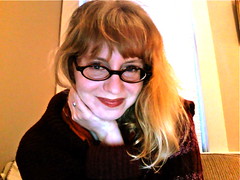
Poet Matthew Roth

This week at the Poetry Blog of 32 Poems Magazine my interview with poet Matthew Roth was posted. He’s a contributor to the magazine and was a delight to interview.

First, let me tantalize you with a bit from the interview, and then you can go on over and check the rest out for yourself.

Without further ado, here’s the interview.

How would you introduce yourself to a crowded room eager to hang on your every word? Are you just a poet, what else should people know about you?

I am perfectly content to claim the mantle of poet, if only because saying so might inspire me to write something. Power of suggestion, etc. I also teach at a great little school in central Pennsylvania, Messiah College. Add to that husband and father, fledgling Mennonite, tender of illegal backyard chickens, bread enthusiast, and now we’re well into the archipelago of mundane islands barely worth a visit.

Poetry is often considered elitist or inaccessible by mainstream readers. Do poets have an obligation to dispel that myth and how do you think it could be accomplished?

Labeling readers as mainstream or non-mainstream seems as unhelpful as trying to judge which Americans are more “real.” To then try to write for one imaginary group or another seems like a waste of energy. To those poets who want to return to the 19th century, I invite you to read a month’s worth of poems from the daily newspapers in 1877. When you’re finished gouging out your eyes, give me a call.

How do you stay fit and healthy as a writer?

Sonnets + Hip Hop Abs!

Check out a sample poem from Matthew Roth:

No Mark

There was a high stone wall
separating our land—the small yard,
half sand, where my father grew

tomatoes—from the royal preserve.
Years ago, I was told, the king himself
hunted there among well-ordered trees,

made camp by the stream that coils
through its heart. There was even—
still it’s there, though overgrown—

a small orchard of sweet peaches
and apricots. Now thickets
lie stripped by a tangle of deer,

the high wall my father disappeared
behind one day, overthrown
by slow degrees of frost and thaw.

Many days, I have stepped through
a breach, found myself in that
odd, forbidden state, my own

and not my own. And once,
beneath the government
of a twin row of sycamores,

I found the hoofprints of a horse,
each shallow C filled in
with tarnished bronze. Amazed,

I followed, until the hooves
stopped short in a clearing
by the edge of a small reflecting pool.

A stone in its middle made it look
like a human eye. To one side
a thick-trunked magnolia leaned.

This must have been April,
the water clotted with pink,
fleshy petals. I stood wondering

when all at once the surface cleared
a moment, and I started
at the sudden flare of my face

peering into the pool, or well,
or deep oubliette, where I lay
staring up at the shadowed face,

which hovered like a stone
in the sky’s open eye. Somehow
I knew, whoever it was,

he had not come to save me.

–published in Bird Silence.

Please check out the rest of the interview on 32 Poems Blog.

Interview With Authors Anthony Del Col and Conor McCreery

Yesterday, I told you about a great event (happening tonight in Washington, D.C., at the Folger Shakespeare Theater) with Authors Anthony Del Col and Conor McCreery, who co-wrote Kill Shakespeare a graphic novel that mixes classic literature and fantasy.  I’ve got another treat for you from the authors, an exclusive interview in which they discuss their inspiration for the graphic novel and the role of graphic novels in today’s society and literature.

Without further ado, here are Anthony and Conor:

Kill Shakespeare seems to be a graphic novel that mixes classic literature with fantasy.  Did you or your colleagues read Shakespeare’s work before writing the graphic novel?  How long ago have you read those plays and did you enjoy them?

A: I’ve been a fan of the Bard’s work for years – since high school. But it wasn’t until after I graduated from university and started to see theatrical performances of his plays with my sister – who has always been a HUGE Bardolater – that his stories and characters really came alive for me.

C: I was like most students. I read a number of Shakespeare’s work in high-school. I enjoyed all of the plays I read with my favorites being The Tempest and Julius Caesar.

What was your main reason for adapting Shakespeare’s characters into a graphic novel with fantasy elements?

C: We didn’t have a main reason per se. The idea of a world where Shakespeare’s characters co-exist came to us and comics ended up being the right medium for us. A.) because the stage and comics have so much in common. Both are at their best when there are elements that are larger than life, and both are visual mediums than also really reward the poeticism of language.

And B.) a comic was something we felt we could do at a high level right out of the gate. Especially once we found the very talented Andy Belanger as our artist.

A: Shakespeare’s plays feature many great dramatic elements, including fantasy – drama, violence, love, romance, comedy, double-crossing and cross-dressing. It’s the height of storytelling. And we wanted to add as many of these elements into our tale as possible.

The images in your graphic novel are vivid. How did these images come to pass? Were they extrapolated from Shakespeare’s actual text?

A: A lot of the credit goes to our artist, Andy. Andy, in our first meeting, talked about adding a lot of detail to each and every panel, so that each would tell its own story. He’s done a significant amount of research into the time period and the costumes used in Shakespeare’s plays, and then done a lot of stylistic additions to them.

C: We definitely worked to find great “bits” from Shakespeare’s canon that Andy could play with (Hamlet’s Father’s ghost, some of the gory bits from Titus), but it is Andy’s imagination that gives flesh to ours.

Working with a co-writer and a graphic artist must take a lot of time and collaboration. Please describe any writing routines or techniques you employed during the process to ensure the project was completed.

C: We really just talk things out with each other and with Andy. One of us tends to write an issue and the other guy edits it. And then Andy puts in his thoughts and we sort of push and pull until we get something everyone can at least live with.

A: And, of course, when there is an argument, everything is settled with a simple game of Rock-Paper-Scissors. . .

What role do you think graphic novels play in the world of literature, and do you think that they help readers ease into reading other genres, including classics like Shakespeare?

A: Graphic novels have been fighting for years to be seen as a credible piece of literature. I think this is a shame. I myself used to hold the opinion that comic books are just superhero stories for children but when I started to read some of the recent (past ten years) titles I came away really impressed – Y The Last Man, The Walking Dead, Blankets, Fables.

C: I think the question unintentionally sheds light on a big part of the problem comics have. Comics are NOT a genre. They are a MEDIUM that encompasses every genre. In North America, we’ve been slow to realize what the Europeans and Japanese have known for decades – that comics are a sophisticated medium that can be used for limitless thematic purposes. If you’re a reader, I GUARANTEE I could find you a comic you’d enjoy if you gave it a chance.

Today, Feb. 15, you’ll be speaking at Washington, D.C.’s Folger Shakespeare Library. What prompted the visit and do you have any specific plans for the event?

C: I chatted with people at the Folger well over a year ago when we were just starting the project and got them excited by our vision. THEY were the ones who so foolishly invited Canucks into their midst. But I think they were intrigued by the opportunity to show how the perception of “stuffy Shakespeare” is more a dead stereotype than reality. The Folger is really hip in their relation to the Bard, they are trendsetters as well as the keepers of the flame.

A: Some of the best reviews have been by Shakespeare fans who have never read a comic book before but after reading ours have started to read others. I hope that we can convert some Bardolaters to comic book readers while there!

What other projects are you working on?

A: Kill Dickens? We’ve love to continue our series beyond the current twelve issues that we have scheduled at the moment, and then see if we can get a film version of Kill Shakespeare off the ground. We have a lot of interest in it and we’ll see what happens in the next six-twelve months.

C: And Anthony and I had worked on a number of projects before this one. A neat kids show set in the world of rock-paper-scissors, a very fun comedy involving outsourcing, a kitchen-sink family drama, a vampire epic — we have interests in a lot of very different types of story. Hopefully our work with Kill Shakespeare will give us a chance to tell those stories.

I, for one, would love to see a series of Kill Dickens, but only if that entails that mysterious Edwin Drood.

Thanks to both of you, Anthony and Conor, for answering these questions. I wish you luck with the novel and the event. Most of all have fun.

Dear readers, please do check out the YouTube video, and some great graphics from the book, here, here, and here.

About the Authors:

Anthony Del Col has worked in the music, film and television industries, produced two independent feature films and most recently assisted with the management of international pop star Nelly Furtado and her world tour.

Conor McCreery has served in both creative and business positions for film and television companies, contributed over 1,000 stories and articles for media outlets and also provided expert analysis for Canada’s Business News Network.

Andy Belanger works out of the Toronto-based Royal Academy of Illustration & Design and has done work for comic book publishers D.C. Wildstorm, Devil’s Due, and Boom! He is the creator of Zuda Comics’ “Bottle of Awesome”.

Interested in attending tonight’s event?  Authors Anthony Del Col and Conor McCreery will be at the Washington, D.C., Folger Shakespeare Theater on February 15, 2011, at 7:30 p.m.  Tickets are $15 each.

Interview With Sweta Vikram

Sweta Vikram‘s poetry has been featured more than once on this blog, and you can check out my reviews for Kaleidoscope:  An Asian Journey of Colors and Because All Is Not Lost.  I’m so glad that I discovered her work because it is not only vivid, but multicultural.  Her style is full of child-like imagination and sophistication as she tackles cultural themes pertaining to the human condition and the residual impact of grief.

Today, I’m happy to share with you an interview I conducted with her following my latest review.  Please feel free to leave your comments and questions following the interview.

How would you introduce yourself to a crowded room eager to hang on your every word? Are you just a poet, what else should people know about you?

Introductions vary depending on the audience. I usually never plan ahead of time. Whatever comes most naturally to me at that instant when I walk inside a crowded room and hold the microphone, I go with it. That said, there is something you should know about me: I am an obsessive-compulsive planner. My definition of spontaneity is telling my husband, “Let’s do something impromptu today.” No kidding. But, when it comes to reading my work, I let the moment take over.

I have an honest, secure, and grounded relationship with words. Frankly, there is a certain vibe to every reading venue. And I rely on that energy to guide me: whether humor would work or a more serious, informal interaction in a given scenario. But the objective is to never pretend to be someone I am not. The audiences are smart; they can sniff out fakes. I have witnessed a poet take that phony-route, and it wasn’t pretty. Every performer should be respectful of those in attending.

I was a radio jockey for a leading South Asian radio station in NYC. Believe me, you could never be ready for some of the questions or compliments or comments. I think it prepared me to not easily get fazed.

Aside from being a poet, I am also a novelist (first fiction novel, “Perfectly Untraditional,” upcoming in April 2011), an essayist, a dancer, an oenophile, and a dedicated-walker. I do love to cook, entertain, and play the piano. My family and friends are an integral part of my life. And yoga and meditation are my mantras for keeping my sanity and creativity intact.

How long have you been writing poetry and what inspired you to first write verse?

I grew up in a family of poets. My father, my aunt, and few others share a special relationship with words. One could say that given my upbringing, words come naturally to me.

I have been consciously writing since I was a pre-teen, if not before that. I spent my formative years in a boarding school in Mussoorie, India. I am a city person, so I didn’t take very well to the placidity of the Queen of Hills. The green mountains, the unassuming fog, the nippy air, and damp weather, though depressing, turned the place into a writer’s paradise. Every free minute that I had, I would scribble poems in my little blue diary. I often isolated myself from my peers, mentally. I could be sitting in a big group but inside my own creative-bubble. It was as if the pen and paper would call out to me, and I would relinquish the entire world.

I feel the solitude of the hills not only pushed me to express my experiences on paper but also disciplined me to write everyday. Now I go away to writing residencies, in desolate locations, in search of inspiration. Look at the irony—what I wanted to run away from, as a teenager, is what I look for as a professional.

Do you see spoken word, performance, or written poetry as more powerful or powerful in different ways and why? Also, do you believe that writing can be an equalizer to help humanity become more tolerant or collaborative? Why or why not?

Poetry is a deeply embodied form of art and science. It can ignite passion and liberate. Poetry is about discovering yourself both as a human being and a writer.

Sure, performance poetry gives a poet the power of transmission: to add life to what’s written on paper. It’s such a personal method of narrating. But if the content doesn’t resonate with the audience, however evocative the style, it’s immaterial. Similarly, written poetry carries a different onus. The power of reach is dependent on the ink, not the act.

Ultimately, be it spoken word, performance, or written poetry, I feel the candor and fervor in the work shows through. Not too long ago, I was invited, along with half a dozen other poets and artists, to perform at an event’s launch. I was one of the last performers that night. And all other poets were spoken word specialists while I was going to read my written poetry. The pressure was high and unique. However, after my reading, two of the performers walked up to me and said, “Wow, that was awesome! No wonder you have a book deal.” Just like me, they had both assumed that only spoken word could have an impact on the audience. But none of us once considered that even in a crowded room, it’s ultimately the quality of words that hold the power.

I have a simple rule: never underestimate or insult the intelligence and emotional quotient of a reader/listener.

Oh, absolutely. I believe writing can be an equalizer to help humanity become more tolerant. I think poetry can save lives and cure the world of all its ailments. A little zealous? Perhaps, but I have faith.

Poetry has a therapeutic and healing quality to it. It has the ability to take us into those dark places, which otherwise we might not want to visit or confront.

Robert Frost said succinctly, “Writing a poem is discovering.” I have been in workshops where strangers have revealed personal stories about abuse, illnesses, and personal failures. When we received our writing prompts, I don’t think my fellow poets knew they were going to open up their Pandora’s Box and disclose secrets to a bunch of strangers.

Poetry also makes you empathetic. I remember hugging and crying with my peers in my classes and residencies. And none of it was pretentious. Something inside of me felt moved with their stories. And I too trusted them with my personal, untold tales. Once you have shared your deepest fears with people, they become a part of you. There is a reason many of us suffer from withdrawal symptoms after spending a week at a poetry getaway and continue to stay in touch long after it’s over.

I recently taught a poetry workshop in Kolkata, India, to a group of children between the ages of 6-12. The idea behind the workshop was that poetry could:

(a) Help keep children out of trouble: I was amazed how much I found out about each child and his or her background through that one workshop. The thoughts lurking around the corner of minds were so uninhibitedly printed on paper.

(b) Introduce them to diversity: We, humans, are predisposed to prejudices and stereotypes. A significant amount of chaos in the world today is because there isn’t the right dialogue and awareness. I think “Unfamiliarity breeds contempt.”

Poetry dissipates geographic boundaries and brings together cultures. It doesn’t seek the ethnicity or race or gender of a writer. The written expectations aren’t pigeon-holed. For instance, one of the literary agents (When I was sending out query letters for my fiction novel) said to me that my novel was unlike other “ethnic novels.” In that, it was a happy, immigrant story, which isn’t what the market is used to. I was baffled; in my day job in marketing, I was trained to respect a unique selling proposition. But in the case of my book, given my South Asian background, I was expected to write about the challenges of assimilation and the trauma of being an immigrant. Umm, as if that’s not been written about, innumerable times. And secondly, immigration is such a personal journey. It’s unfair to add all immigrants or their experiences under the bucket of melancholy.

Times have changed and so have attitudes. The world has become global. I mean, my generation moved out of their parent country but not necessarily for money. It was to attain higher education or to experience a new culture or grow as an individual.

While my husband’s aunt, who migrated from India to the United States over forty years ago, told me when they had moved there wasn’t an Indian grocery store in Detroit. She and her husband would drive to Canada to buy their basic supplies. In today’s day and age, my non-South Asian friends cook Indian recipes from scratch at home, and I cook multi-cuisines too.

I believe, poetry makes you more understanding of issues and humanity.

Poetry is often considered elitist or inaccessible by mainstream readers. Do poets have an obligation to dispel that myth and how do you think it could be accomplished?

I don’t think there is one right or wrong answer. Each poet is different and so are his or her sensibilities.

When I speak with mainstream readers, they often tell me that they don’t like feeling unintelligent and poetry can sometimes intimidate them. But it also excites them. These folks explore “accessible” poetry. Take for example American Poet Laureate Billy Collins. His work is comprehensible and widely read. In my eyes, it makes him an intelligent writer, if non-poetry devotees read his poems too.

But that doesn’t mean ambiguous poets are dimwits. Not at all. It’s their style. And then are mainstream readers who enjoy complex, abstract, and open-ended works.

I have wondered if poets even deliberate how and what their outcome on paper should be. Derek Walcott once said, “If you know what you are going to write when you’re writing a poem, it’s going to be average.”

Some poems just come to you while others have to be manifested by tapping into a certain part of the brain. I write both literal and abstract poems. I can tell you honestly, often times, the poem has its own intent. I don’t even realize which path I am going to choose. It also depends on topics and my sense of comfort with them. All writers face the problem about writing what scares them.

Ultimately, it’s up to the poet to define their sense of purpose in the landscape of writing. There is space for different kinds of works. But I can’t imagine any poet would get upset if their readership increased. And people went crazy buying their books.

Do you have any favorite foods or foods that you find keep you inspired? What are the ways in which you pump yourself up to keep writing and overcome writer’s block?

Oh, my dentist knows when I have emerged from a pile of crazy deadlines.:-) There are tea stains visible only to her professional-eyes. I drink a lot of organic teas to get my rhythm going. The warm beverage tingles my creative-palate. I also rely on meditation, walking, and yoga to connect with my subconscious mind.

With the demands of day-to-day life, it’s easy for cacophony to enter the place where unused, creative thoughts reside. I set time aside, even if for a few minutes, to connect with myself. Just shut my brains and let go. I rent writing space where, thankfully, there is no tolerance for any kind of noise. But the days I work from home, I always have soft jazz playing in the background. Or any music that connects the mind and body and spirit.

I am extremely disciplined about my work and my schedule. I don’t treat it any differently from my old, day job. I believe, if I don’t respect my schedule, no one else will. And being a freelance writer takes a very different kind of commitment. It’s so easy to prioritize everything else but your work. I never wanted that to happen. This is my bread and butter and my passion.

I believe the only way one can overcome writer’s block is by writing every day. There might be days that I scribble as opposed to write. But that’s better than doing nothing. Ink on paper is better than blank paper. The more you look at empty paper, the more nervous it makes you about those unproductive days. It’s a destroying, self-fulfilling prophecy. You have to train your brain like Pavlov trained the dog: see the clock at a certain time and start to write.

Also, writing involves researching and reading. If words won’t come to you, go looking for them. It’s funny how many ideas come through because of one word you read in a book or magazine or a journal.

But aside from hard work and long hours, I make time for my family and friends. Personal life, social commitments, and a good glass of wine are integral to my existence. Writing is here to stay, so I have to find sustainable ways of nurturing it.

Do you have any obsessions that you would like to share?

Off late I have been obsessed with hot chocolate with marshmallow at City Bakery in New York City. Of course I drink that and then walk for a ridiculous distance to burn those calories. But I find my muse in that blob of porous goodness.

Ha, another one:  I don’t allow anyone to touch my laptop. My husband, my father, and my eight-year-old niece, Sana, poke my laptop, just to bother me, and say, ‘Oh, I just touched it.”

Other than that, I can’t work (or breathe?) if there is any sort of mess around me. Cluttered space clutters my brain. Did I mention that I literally worship words?

What current projects are you working on and would you like to share some details with the readers?

If all goes well, I have three books scheduled for release this year: One chapbook, one collaborative poetry collection (along with a visual artist), and a fiction novel.

I recently finished editing my upcoming fiction novel (“Perfectly Untraditional”). Given this is my first fiction novel; this book is incredibly close to my heart.

The novel, set in both India and the United States, is the story of one such immigrant who realizes the truth about her universe after she moves away. As I mentioned earlier, it’s a happy immigrant story about a modern, Indian family with all its spice galore. Women, families, youngsters, and others will be able to relate to this book.

I met an Australian artist at an artist-in-residence program. She and I became friends and took to each other’s work. To cut the long story short, we both decided to work on a project together: poetry speaks to art responds to poetry. A publishing house liked our concept and made an offer. Our collaborative book (“Not all birds sing”) is scheduled for a February 2011 release.

Just last week, I signed a book contract for another poetry collection tentatively titled “Clearing the fog.” I conceptualized this book while in Portugal. It’s unique in how it uses landscape to narrate the content of the book.

I hope your fine readers will grab a copy of each. And if they’d like to stay updated, they can always visit my website or follow me on Twitter (@ssvik) or join my author page on Facebook.

Thank you, Sweta, for taking the time out of your busy schedule to answer these questions. I wish you luck with all of your projects and look forward to reading your novel, Perfectly Untraditional.

Interview With Poet Danielle Sellers

Poet Danielle Sellers; Copyright Chris Hayes

On Feb. 3 at the Poetry Blog of 32 Poems Magazine my interview with poet Danielle Sellers was posted. She’s a contributor to the magazine and was a delight to interview, especially since we share a similar obsession with the soap opera, The Young and the Restless!

First, let me tantalize you with a bit from the interview, and then you can go on over and check the rest out for yourself.

Without further ado, here’s the interview.

How would you introduce yourself to a crowded room eager to hang on your every word? Are you just a poet, what else should people know about you?

My mother loves to tell the story of me, age 4 or 5, called up with the other children by the preacher at Old Stone Methodist church in Key West. When I arrived at the front of the church, all the other children were already seated, the preacher had begun his sermon, and I interrupted with a big wave and an overly-enthusiastic, “Hi, Kids!” So once that would happen, what people would most likely find out about me is that I’m a single mom to a very silly girl, much like the one about whom I just told you. I’m a foodie, and a lover of animals. I do rescue work when I can. I am spiritual, but not religious.

Most writers will read inspirational/how-to manuals, take workshops, or belong to writing groups. Did you subscribe to any of these aids and if so which did you find most helpful? Please feel free to name any “writing” books you enjoyed most (i.e. Bird by Bird by Anne Lamott).

I have been faithful to the workshop scene since college, but I find the readership of one or two close friends to be the best kind of intimate discussion. But it’s hard to find friends whose work you admire who aren’t insanely busy. I do have several good readers I’d like to keep in a brass bottle, to call on them whenever I wished. But then they’d be servants, not friends, and that would defeat the purpose.

In terms of friendships, have your friendships changed since you began focusing on writing? Are there more writers among your friends or have your relationships remained the same?

I’m sad to say my friendships have changed. I still keep in touch with pals from high school and college, but my fellowship with other writers is more immediate. It’s important to feel as though someone “gets” you. When I was a graduate student at Johns Hopkins, we had a very small, intimate class, and most of us were about the same age. We are still very close. I also made good friends with my classmates in the MFA program at Ole Miss, and count them as some of the most important friendships of my life. Friendships have also been made at the Sewanee Writers’ Conference, which I’ve attended twice, once as a participant, and once as a scholar. Even for those who choose not to attend MFA programs, conferences like these are key to a writer’s development and socialization.

She also included a poem for readers to check out:

STRANGE-COUNTRIED MEN

My daughter, alive only twenty months,

climbs up to the World Market

polished oak table, to rearrange

my fall tribute of gourds and maize.

She takes a withered husk

in her mouth, new teeth gnaw

the dry texture. Her fingers

grip the technicolor kernels.

I think of our Cherokee ancestors,

Georgia and Mexico, who married

young and hungry, forced

from the lush Smokies to the bluffs

of Cooter, MO. On the other side,

Stonewall Jackson’s a distant cousin.

She has his blue eyes, stubborn

streak, and the aptitude to shoot.

Senator-talk moves through the house:

immigration cases on the rise, the need

for an electrified perimeter, protection

from the outside. Now, my daughter

flaps her arms like a turkey, feathered

boa slung across her human neck.

Her father volunteered to kill

Sunni and Shiite men in war.

I married him for his blue-collar

arms, nimble hands

and thick cock. He liked me tan,

soft-bellied, full with child.

In the desert, he wrote letters

home, the squat script promising

me daughters. He delivered one,

but does not love her well.

–previously published by Old Red Kimono

Please check out the rest of the interview on 32 Poems Blog.

Interview With Poet Lesley Jenike

This week at the Poetry Blog of 32 Poems Magazine my interview with poet Lesley Jenike was posted.  She’s a contributor to the magazine and was a delight to interview, especially since she seems to gravitate toward self-deprecation like I do.

First, let me tantalize you with a bit from the interview, and then you can go on over and check the rest out for yourself.

Without further ado, here’s the interview.

How would you introduce yourself to a crowded room eager to hang on your every word? Are you just a poet, what else should people know about you?

I think my first approach would be self-deprecation; in fact, I’d probably make a joke about having spent quite a few years in costumes and wigs singing and dancing. I find that once one admits to an improbable love for musical theatre, any crowd immediately relaxes.

When writing poetry, prose, essays, and other works do you listen to music, do you have a particular playlist for each genre you work in or does the playlist stay the same? What are the top 5 songs on that playlist? If you don’t listen to music while writing, do you have any other routines or habits?

I love listening to music as I write! I used to listen to music with lyrics, but, much in the same way that I can’t stay up too late anymore, I can’t focus on my own songs these days while someone else is singing to me. So lately I’ve been listening to, and trying to teach myself something about, traditional Indian music and orchestral music. I like what it does to my brain and what it does for a budding poem’s potential tone or atmosphere. At the moment I’m especially into Arvo Pärt, John Adams, and Erik Satie.

How do you stay fit and healthy as a writer?

I run quite a bit, but I don’t have any desire to run in races or anything like that. For some reason (and this may sound unreasonably kinky and/or ascetic), pounding my body into submission gives my mind more clarity. Plus my regular running route takes me through the park so I can check out the birds. Hawks! Herons!

Also check out a sample of her poetry:

A Rauschenberg Conversation

“The artist’s job is to be a witness to his time in history.”
-Robert Rauschenberg

He asked me about the painting that’s black. Just black.

And wondered if its blackness is somehow representative

of the twenty-first century dead, dead because we had

every opportunity and blew every opportunity and I sd,

No. This was painted during the twentieth and so reflects

an apocalyptic return to what’s original and what’s more

original? No. I see possibility in futures that will contain

the hum of a breathing machine carried in an easy breeze

through a window just to catch in the arms of a potted tree.

This is the twenty-first century. Encoded in the DNA

of every living thing is a sketch of the man or woman

that will bear witness to your demise, my demise,

the demise of a pet that in sleep twitches in an incalculable

pet dream world and all the while Florida will grow more

Florida with its sun, prehistoric mid-section sprouting

embarrassingly thick, dark hair where hair should never

grow. And I reminded him: Below the black is a strip

of news and the news, I guess, never ends even after

history has etched its loss and its gain into recusant

material, I mean recyclable. In the middle of the gallery

he just looked at me, at the painting, back at me

and said, Where is the human figure? What happened

to the figure who in terrible gesture remakes the air

around him? Isn’t he both the blackness and the news

and isn’t he, asleep in amnion, even then, before birth

and after stellar reconnaissance, the textbook definition,

the end and the all that is and was—no god , no fall?

Please check out the rest of the interview on 32 Poems Blog.

Interview with Author Rosy Thornton

On Friday, I posted my glowing review of Rosy Thornton‘s latest book, The Tapestry of Love.  A novel about an older woman’s journey to France from England after her divorce to start her own needlework business, and she eventually falls in love with not only the countryside she remembers from her youth, but the community she finds there.

Rosy kindly agreed to an interview, and without further ado, let’s see what she had to say about writing and getting published.

1.  When you began your career as a writer and teacher, what time management skills did you have to learn and use to balance the two?

It was actually three things I was trying to balance, rather than just two, because I’m also a mum. My daughters were aged eight and five when I began to write novels. The only way I could fit everything in was to write in the very early mornings – typically from 5.30 to 7 am – before I got the girls up and dressed and breakfasted. It sounds as if that would take a lot of self-discipline, but in fact it never felt that way. For me, writing fiction is pure escape, pure pleasure – it’s my ‘me time’.

2.  You say on your Website that you didn’t write your first novel until you were near 40 years of age. What inspired you to finally write a novel and how would you describe your experience writing, revising, and publishing it?

It was honestly not a thing I’d ever thought of doing. I am a lawyer, and lawyers (as we all know) are famed for their narrow, convergent thinking and complete lack of creative imagination! Then six years ago I watched a BBC television adaptation of Elizabeth Gaskell’s ‘North and South’. I loved it, went online to discuss it with other devotees, and discovered ‘fan fiction’ – a phenomenon I had never known existed. I thought I’d try my hand at writing some myself – and three months later found I had completed a full-length pastiche sequel to Gaskell’s novel.

Of course it was utter tripe. But by the time my fanfic was finished I had caught the writing bug. I carried straight on and began my own independent story, which in 2006 became my first published novel, ‘More Than Love Letters’. I was lucky enough to find an agent (the wonderful Robert Dudley) who saw something in the book. The first draft was rather a shambles – in particular, Robert pointed out that I had made the rookie error of forgetting to include a plot – but he worked with me through two re-drafts, and knocked it into good enough shape to find a publisher (Headline).

3.  When writing poetry, prose, essays, and other works do you listen to music, do you have a particular playlist for each genre you work in or does the playlist stay the same? What are the top 5 songs on that playlist? If you don’t listen to music while writing, do you have any other routines or habits?

Sorry, I don’t listen to music as I write – although if there were music or other background noise it wouldn’t put me off. When I am writing, my absorption tends to be complete – as my children will testify. (‘Mum, isn’t it tea-time? Mum, I’m hungry. Mum!’ ‘Hmm?’)

4.  Which writers have inspired you or have you emulated?  How so?

My initial inspiration was Elizabeth Gaskell (see question 2!) and I am a keen reader of the classics and of period fiction as well as contemporary fiction. My own writing tends to focus less on a fast-moving or complex plot and more on the minutiae of everyday relationships, and in that – without for a moment presuming to make hubristic comparisons –  I suppose I have been influenced by some of the great mid-twentieth century women novelists, such as Barbara Pym. (Goodness, how pretentious that sounds!)

5.  How do you stay fit and healthy as a writer? (physically or mentally)

I must admit that writing has taken a toll on my physical fitness – because the early mornings when I now write used to be when I went for a daily run. But we have dogs – two inexhaustible spaniels – and walking them gets me out of the house. In fact, dog-walking time is a great time for wrestling with a plot problem, or outlining the next scene in my head.

My mental health (such as it is) I ascribe to my partner, the children, my job – all of which leave me no time to take my writing too seriously or get it out of proportion.

6.  Some authors live for reviews, while others never read them.  In which category do you fall and why?

I’ll admit I do enjoy reading reviews – especially right at the beginning, when a book is first out. Until then, it has been seen by maybe three people, beside the author: agent, editor, copy editor. There is a huge curiosity (for which, read ‘terror’!) to know what other people are going to think of it. After all, writing is essentially an exercise in communication: writers write to be read. So receiving feedback from a satisfied reader – whether a reviewer, or an ordinary person who picks up the book in their local library and takes the trouble to send a quick e-mail – is what makes the whole thing worthwhile.

Bad reviews do hurt, of course – and any author who tells you otherwise is lying. But you can become good at putting them behind you. No book, after all, is going to please everyone.

7.  What books have you been reading, and which would you recommend that others give a try even if they are not on the best seller lists?

The best book I read in 2010 was Hilary Mantel’s ‘Wolf Hall’ – a towering achievement, not least for making the most hated man in Christendom into a warm, human, sympathetic character. I have just finished Lorrie Moore’s ‘A Gate at the Stairs’, and am now wondering how I managed to miss her before and busily ordering all her other books. For something less mainstream, I recently read and loved a new collection of short stories by Susannah Rickards entitled ‘Hot Kitchen Snow’, published by a small UK press called Salt. Well worth seeking out.

8. What current projects are you working on and would you like to share some details with the readers?

I am not actually working on a novel at the moment. But I have a completed book currently doing the rounds of publishers, looking for a home. It is a domestic story, like my other books, exploring family relationships – but with just a very slight edge of psychological mystery about it.

Thanks, Rosy, for answering my questions.  If you haven’t checked out my review, please do.