Quantcast

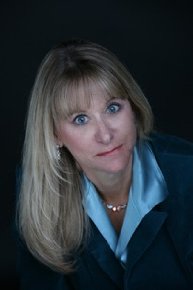
Interview With Author Linda Gray Sexton

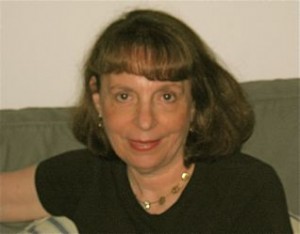
Today, I’m honored to share with you an interview with author Linda Gray Sexton, whose latest memoir — Half in Love:  Surviving the Legacy of Suicide — I had the opportunity to review.  I don’t usually read memoirs, but this powerful and informative memoir examines the legacy of suicide and mental illness within the Sexton family, whose famous poet Anne Sexton committed suicide in 1974.

I hope you’ll check out the review and interview.  Please give Linda a warm welcome:

Writing confessional fiction seems similar to writing confessional poetry, but all of your published work has been in memoir and fiction.  What prompted you to stray from poetic verse and do you miss it?

I decided that delving into poetry would be too “close” to my mother’s work and so I stopped working in the genre at the time I began writing my first non-fiction book.  I can’t say I miss it, because I feel very fulfilled with memoir and before that, fiction.
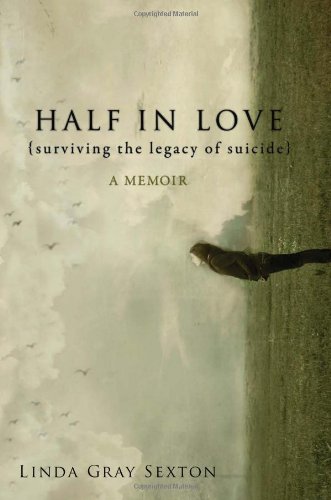
Half in Love is about family legacies and suicide.  It seems that both of these shaped who you are as a writer, mother, and wife.  Do you think of this as inevitable?  Why or why not?

For me, it was inevitable, given the lack of knowledge about suicide.  I am hoping, as a mother, that my children will not be so affected because I know so much more about “legacy” and have hopefully passed that on to them, and because we have so many more medications and ways of dealing with suicidal ideation. To some extent I have passed the legacy of suicide on to my children, but I don’t believe they have to handle it in the same way.  I didn’t die.  I am still here.  I am once again acting like their mother.

And do you have advice for other children dealing with similar circumstances?

I would tell anyone who grew up in the shadow of suicide to get themselves all the possible help they can.  If they feel depressed they have to guard against the possible consequences.  Therapy is one great way to do it.  Self examination through any means is crucial.  If you understand the process you have a much greater chance to defeat it.

The “rabbit hole” often brings to mind a trip into another world, like that of Alice in Wonderland, but your rabbit hole is very different.  Would you consider them the same in terms of the emotions they generate or in other ways?

I think my rabbit hole is very different.  It generates emotions of fear.  I only disappear down it when I am depressed and suicidal, which, thank God, I no longer am, thanks to great medication improvements in my life.  I wouldn’t wish this black, black rabbit hole on anyone.

Parental approval is often something children crave, but in your opinion, can children grow up healthy and survive without it?

If you have someone in your life who provides that support and approval, then I don’t think you necessarily need to get it from your parents.  You can grow up healthy as long as you get it from somewhere.  I found a woman who gave me that kind of support when I was in my twenties and a young mother.  She let me know how great a person she thought I was; she made me feel special, and that brought my self-confidence to the surface.  I couldn’t have done it without her.

Have you continued to read poetry, attend readings, or have you broken completely away from that world since your mother’s death?

I really have broken away from that world completely since my mother’s death.  It is too painful.  Also, my work now is in a different genre, so it is more likely that you will find me at a reading of memoir or fiction rather than at one of poetry.

How would you have introduced yourself to a crowded room as a child, a young adult, and now?  How would those introductions have been different or the same?

As a child, I would have been speechless.  I don’t think I knew much about who I was.  As a young adult, I would have introduced myself as my mother’s daughter and let her put her arm around me possessively.  As a woman now, I would introduce myself as Linda Gray Sexton, memoirist, mother, wife and friend.  I have grown up and am proud of who I now am.

When writing poetry, prose, essays, and other works do you listen to music, do you have a particular playlist for each genre you work in or does the playlist stay the same? What are the top 5 songs on that playlist? If you don’t listen to music while writing, do you have any other routines or habits?

Sometimes I listen to music, but not any one playlist specifically.  Sometimes it is music with lyrics, but often the words interfere with what I am trying to write.  I find that classical music usually works better, so it can Beethoven or Mahler, depending.  As to habits: I get up early because I am an early riser writer; I work at the same desk at the same time everyday; I don’t answer email or the phone while I am working except under unusual circumstances.

How do you stay fit and healthy as a writer? (physically or mentally)

I go to the gym so that I get off my butt (too much sitting as a writer).  I read a lot to keep my mind active.

What current projects are you working on and would you like to share some details with the readers?

Right now I am working on the very beginning of another memoir, this time on a more positive subject—but it is in a fledgling stage and I’m a little superstitious about talking about it so early on.  At the same time, I have been spending a lot of time putting up a terrific (if I do say so myself) website, which I invite all of your readers to visit.

For the website I have been posting blogs so that my readers can see what I am thinking, feeling and ruminating about.  I hope lots of people will join the website’s Blog and Message Board to let me know what they think about my work and the topics it raises.  I am also spending a lot of time doing guests posts and Q & A’s for my book blog tour!

Thanks, Linda, for answering these questions and for writing a captivating memoir.

Interview With Poet Kim Bridgford

This week at the Poetry Blog of 32 Poems Magazine my interview with poet Kim Bridgford was posted.  She’s a contributor to the magazine and was a delight to interview, especially since she seems to have an obsession like mine — books.

First, let me tantalize you with a bit from the interview, and then you can go on over and check the rest out for yourself.

Without further ado, here’s the interview.

How would you introduce yourself to a crowded room eager to hang on your every word? Are you just a poet, what else should people know about you?

I would call myself “a woman poet entrepreneur.” I like making things happen and creating communities. For example, I edit Mezzo Cammin, an online journal of formalist poetry by women, which is now approaching its fifth anniversary, and I founded The Mezzo Cammin Women Poets Timeline Project, a comprehensive database of women poets, which was launched at the National Museum of Women in the Arts last March. These projects have brought poets together from all over the world. My new job is directing the West Chester Poetry Conference, so my preoccupations, in many ways, are all coming together.

Do you have any obsessions that you would like to share?

I’m obsessed by wonderful books. I loved Nick Flynn’s The Ticking Is the Bomb, for example, and Brigit Pegeen Kelly’s The Orchard. I was profoundly moved by Marilyn Nelson’s A Wreath for Emmett Till.

If I’m working on something, I am obsessed by reaching for what might seem impossible. I would rather have reached for excellence and fallen short than not have reached high enough in the first place. I don’t think there is enough grandeur in modern life.

Do you have any favorite foods or foods that you find keep you inspired? What are the ways in which you pump yourself up to keep writing and overcome writer’s block?

I don’t know that I’m inspired by food, but I currently live in Philadelphia: in other words, I can’t help finding wonderful food wherever I go.

I’m very work-obsessed, so writer’s block is not really an issue. The issue is finding time to write, given my other responsibilities.

She also included a sample poem:

Of Course

There’s no such thing as an ordinary cat.
Lucky Numbers 20, 34, 12, 7, 38, 2

There’s no real way to disagree with that.

A cat will place its faith upon the air,

Believing in the solid of somewhere.

There’s no such thing as an ordinary cat.

There’s no real way to disagree with that.

It brings a mouse as gift, or else a bird,

The way a poet springs upon a word.

There’s no such thing as an ordinary cat.

There’s no real way to disagree with that.

A cat and poet place themselves outside,

And find an open place in which to hide.

There’s no such thing as an ordinary cat.

A dog’s superior? Don’t tell me that.

If you want beauty, there’s the poet-cat.

From Take-Out, reprinted from Poem.

Please check out the rest of the interview on 32 Poems Blog.

Interview With Poet Sebastian Matthews

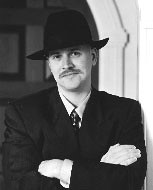
Poet Sebastian Matthews

Today, at the Poetry Blog of 32 Poems Magazine, my interview with poet Sebastian Matthews was posted.  He’s a contributor to the magazine and was a delight to interview.  What’s not to like when the guy sends you a photo of a “two headed monster” — his caption not mine.

First, let me tantalize you with a bit from the interview, and then you can go on over and check the rest out for yourself.

Without further ado, here’s the interview.

How would you introduce yourself to a crowded room eager to hang on your every word? Are you just a poet, what else should people know about you?

I start by assuming they aren’t ready to hang on my every word. I hope they want to but just need a little help getting into the mood. I will start with a poem that I hope has some extra energy, a little spark—maybe something funny or dramatic—and I try to introduce the work in such a way that a conversation with the audience begins to develop. What I am aiming for is that back-and-forth talk inherent in all good readings. The work should provide any necessary biographical info. Too much back story provided by the poet can kill the reading’s momentum. The banter should merely frame and light the work at hand.

More and more, I see giving poetry readings as akin to stand-up comedy. Problem is, I’m not that funny.

He also included this poem he often uses to open his poetry readings:

Poetry Scene Blues

I’ve been slapped

+++++++ fucked

++++++ & fired

been played

+++ spun

++++++ & spurned

& the funny thing is

+++ Look out

++++ for No. 1

++++ all I ever learned.

Ever learned.

How do you stay fit and healthy as a writer?

Walking, making collages, taking breaks from the work, hanging with my family, shooting hoops with my son, traveling, etc. I try to spend as little time at the computer as possible, if that makes sense. I go to cafes with pages to mark up. I even write on some of my favorite walking trails. It only works when you’re good terms with the rocks and roots.

There’s something entirely unhealthy, or unbalanced, about writing. At least for me. So I try to build a life around it—which includes a small amount but not a large amount of teaching—to balance the equation.

Do you have any favorite foods or foods that you find keep you inspired? What are the ways in which you pump yourself up to keep writing and overcome writer’s block?

An awesome question. Chocolate, of course. Coffee, if that’s a food.

As for writer’s block, I don’t believe in it. The little weasel is imaginary. Make a quick PB&J sandwich and get back to work, I say.

Please check out the rest of the interview on 32 Poems Blog.

Also please check out his blogs:
3 by the fire
Merz Pictures

Interview with Pamela Jane

Pamela Jane, author of A Vampire Is Coming to Dinner! 10 Rules to Follow, has been a children’s author for some time. She has agreed to answer a few interview questions and offer a giveaway to one lucky reader.  I’ve also got a special guest reviewer.

Please welcome Pamela.

1.  When did you first begin writing children’s books?

I was eight when I wrote my first “book” about my parakeet, Winky Blue.  I had looked for a story about a parakeet in our local library without success, so I decided to write my own.  This eventually led (many years later) to the “Winky Blue” series published my Mondo.  The series is featured on my website http://www.pamelajane.com.  My first published book, NOELLE OF THE NUTCRACKER, illustrated by Jan Brett, came out in 1986.

2.  Have you ever considered doing your own illustrations for your books?

I would love to do my own illustrations because I can picture them so well in my head!  However, they don’t translate well on paper, and I’ve been very fortunate in my publisher’s choice of illustrators for my books.

3.  What is the relationship between author and illustrator like?

It various with each book and project.  Often, I do not get to know the illustrator until after the book is out.  In cases where the book is historical fiction, there may be earlier contact between the author and illustrator because it’s so important that the illustrations are factually correct.  I’ve just finished writing my first historical children’s picture book, so it will be interesting to see how this process unfolds.

4.  Could you explain how you got involved in writing for an animation series? and what that entails?

A former children’s book editor contacted me about writing for the animation series.  It’s quite different from writing in book form because there is no description; the writing is simply dialog although I indicate the action in separate comments on the manuscript.  The next step is having actors read the parts and animators illustrate the story (or perhaps it’s the other way around.)  I’m excited to see how it will turn out!

5.  When you are not writing what are your other interests and hobbies?

I love to walk in nature while listening to books on my iPod and I play the piano, albeit badly!  I also like watching old movies and British mystery series such as “Foyle’s War.”

Now, here’s out guest reviewer, The Girl from Diary of an Eccentric:

A Vampire Is Coming to Dinner! 10 Rules to Follow by Pamela Jane is funny and the pictures are cool.  I really like the first picture with the invitation from the vampire stuck to the door with a skull knife, the picture where he gets ready to meet the vampire and puts his shirt on backwards, and when the kid shakes the vampire’s hand with a stick.

Rule 5 and Rule 6 are funny because the kid decides to ignore those rules and do the opposite.  I also liked rule 3 and rule 11.  The pictures were detailed.  Rule 11 was my favorite.  I think smaller kids would like the book if parents read the book to them.  I love the book.

Thanks to The Girl for her review.

Now for the giveaway.  I have one copy for 1 lucky US/Canada reader.

1.  Please leave a comment about your favorite monster or Halloween book.

2.  For a second entry, spread the word on Facebook, Twitter, etc.

Deadline is Oct. 30, 2011, at 11:59 PM EST.

BBAW 2010 Interview With Holly Grierson of Book Harbinger

Today’s my Book Blogger Appreciation Week 2010 interview with fellow book blogger Holly Grierson who blogs at Book Harbinger and has been doing so since about May 2010.  She’s an avid reader of fantasy and young adult novels, a mother, a wife, and an assistant librarian.

You can find her on Good Reads and Twitter as well.

1.  You read quite a lot of fantasy and young adult books.  What interests you about these types of books and do you feel differently when reading these books as opposed to when you read literary fiction?

Part of reading for me has always been about transportation to another time and place. Too often contemporary novels seem so familiar, so like my normal day-to-day life that they’re uninteresting. That’s not saying I haven’t read a lot of great contemporary novels, adult and young adult alike, but I tend to alternate them with a couple of fantasy novels. There’s nothing like going to a world with endless possibilities yet one that still feels like home.

With young adult, the potential for genre-bending and original premises also seems limitless. Young adult readers are more flexible than adults in their expectations and authors can get away with anything. At the same time some of the pickiest, most reluctant readers are young adults so some of the most page-turning, entertaining books are found in the young adult section. For these reasons I don’t think YA will ever fail to entertain and excite me. In addition it’s often the teenage protagonists, with angst-y insecurities and challenges and all to whom I relate the most. I can’t seem to get enough of coming-of-age stories and the many “firsts” that young adult characters experience.

I don’t read much literary fiction at the moment but I do feel like I have different expectations when I read it as opposed to fantasy. For example I expect more of the writing in literary fiction more from the setting and characters in fantasy. In some ways anything goes with literary fiction and I definitely would like to get back into that genre.

What three fantasy novels would you recommend to someone who claims to “hate” fantasy novels and why? And what three novels or authors exemplify the best of the genre?

Is there any way I can talk to this fantasy “hater” personally and find out what they don’t like about the genre? That would definitely help. I don’t think I can recommend three novels if I know nothing else about the reader’s individual tastes. There are so many subgenres and different types of fantasy that I honestly believe there is something out there for everyone. It’s usually just a matter of finding the right genre or author. Some fantasy is lighter on the world-building and heavier on dialogue and character development and relationships. Some fantasy is much more realistic and requires less suspension of disbelief from the reader. By contrast epic or high fantasy may not be for everyone – even me – but I think scifi/fantasy, romantic fantasy, or historical fantasy can be many readers’ cup-of-tea occasionally if they find the right authors.

I still feel like too much of a fantasy novice to be doing this but the best authors IMO would be Juliet Marillier for historical/romantic fantasy, Sharon Shinn for scifi/angel fantasy, and Ilona Andrews for urban fantasy.

As an assistant librarian, do you work in a particular capacity or section? Did your library duties inspire you to blog about books or did blogging about books inspire you to work at a library?

Since my position is flexible I’ve worked all over the library, including collection development, reference, and circulation. I’ve even spent several months working with the City’s arts development. My favorite areas have been media, fiction, and general reference.

As far as my library employment affecting my blogging, it was more in an indirect way. After a couple of years of working at the library, some of my co-workers started signing up with Goodreads. After I joined in, I went from rating to writing short mini-reviews and finally to writing full-length ones. From there I began meeting other bloggers on Goodreads and started Book Harbinger.

On your blog, you mention a love of learning. Has this trait spilled over into your reading habits and how? And where do you think this love of learning originated (i.e. parents, friends, etc.)?

I think my love of learning may differ from the traditional sense, but it is true that I love learning both on an independent basis and in a more formal environment. I treasured my university years and would go back to school for an MLS or PhD in a heartbeat. A part of me wanted to stay in school forever and never become part of the real, less fun, and more uncertain working world. Since I’ve been out of school I try to keep up (very badly sometimes) with the latest in art history and keep my brain alive by reading non-fiction sometimes. Mostly I end up reading self-help books whenever I’m facing a problem, whether it be domestic, childcare-related, relationship-related, or concerning childbirth or religion. I enjoy research and find that being knowledgeable on all of the experiences I’m currently facing in my daily life is a given. It’s just who I am.

My love of learning definitely originated from both my parents and my in-laws. My mother-in-law is a professor of English at BYU (my undergraduate alma mater) who has varying interests in a number of subjects like physics, neuroscience, psychology, and religion as well as literature and the arts.

What are some of your obsessions outside of reading and blogging?

Watching TV shows with DH (Project Runway, So You Think You Can Dance, Parenthood, Chuck, and Community are some of our favorites). I live for traveling and tourist activities, which I did quite a bit of when I lived in London. I love exercising, particularly running, and yoga, which I try to teach and practice when I have a chance. I also enjoy discovering new bands and going to concerts. My main albeit mandatory obsession outside of reading is taking care of my 2-year-old son. I am also expecting a girl in January.

Congrats on your pregnancy!

You have two art history degrees. Have these degrees influenced your reading or blogging? Who are some of your favorite artists and do you think their works could be adapted into fantasy novels?

I’d like to think my very ‘style over substance’ interest in discussing book cover art on my blog is due to my art history background. Picking favorite artists is difficult but some of the ones I liked enough to research extensively during graduate school are Alfredo Jaar, a contemporary installation artist; Hannah Höch, a German Dadaist; Gabrielle Münter, a German Expressionist; and Rachel Whiteread, a contemporary British sculptor.

I haven’t ever given thought to the idea of adapting a painting into a fantasy novel, but it’s an interesting concept. Hannah Höch did some Surrealist paintings in the 1920s like Vereinigungen (Associations) which would be both imaginative and abstract enough to form the basis of a scifi or dystopian novel. There are some lovely works of the Pre-Raphaelite movement and paintings by J.W. Waterhouse that would be perfect for more traditional fantasy novels.

Check out this slide show of images to get an idea of what Holly is discussing:

Book Blogger Appreciation Week (BBAW) is a celebration of all book bloggers and continues to grow strong. As a new book blogger, how did you hear about the event and what prompted you to join in?

I heard about BBAW last year when some of the bloggers I’d been following like Angieville were up for awards. I enjoyed voting and reading the memes and blogging topics. It was a given once I’d started my own blog that I’d participate. It’s such a great opportunity to meet new bloggers, improve your own blogging, and promote your blog.

How many blogs do you read and how many are in your RSS reader? Are they primarily blogs that focus on the same genres as your blog?

Right now there are about 30 blogs in my reader. Lol I’m probably one of the rare bloggers that could use more blogs in their reader. I hope this BBAW week will change that! Most of the blogs I follow either focus on fantasy, young adult, or urban fantasy but I do read some that have more of a focus on romance or literary fiction. The writing, opinions, and voice of the blogger often matter more to me than whether they are necessarily reading the same books as I.

Do you see yourself as part of the book blogging community and how so? Did you have to do anything in particular to become a part of the community or did you just blog and hoped readers would find your blog?

Good question! Sure, I see myself as part of the book blogging community. Perhaps a very small portion of it but I couldn’t live without my little corner. I don’t think much is required to become a part of the community. Maybe keeping your blog updated and well-written. Visiting and commenting on other blogger’s posts also is a large part as well as participating in memes and reading challenges. I think any blogger can feel a sense of belonging if they want to. Of course I still hope readers will find my blog, and I participate daily in social websites like Twitter and blogger sites like Book Blogs mostly because it’s fun but also because it gives me a chance to meet new bloggers and get my blog out there.

Write a six word memoir for yourself.

Earnest, factual, loyal, accepting, observer, friend-for-life

Holly, thanks for answering my detailed questions and joining in the BBAW celebration.  I hope everyone will take the time to check out my interview on Book Harbinger.

An Interview With George Bishop, Jr., Author of Letter to My Daughter

Tomorrow is my TLC Book Tour stop for George Bishop, Jr.’s Letter to My Daughter with a review of the book and a giveaway.

Today, I wanted to share with you my interview with George about his book and his writing.

1. Letter to My Daughter is written from the point of view of a mother. As a man writing from the point of view of a woman, what were the challenges you encountered and how did you tackle them?

Readers have asked about this before. It did take some time to overcome my doubts about writing from a woman’s point of view. I worried that I was somehow imposing on the territory of women writers. After I got over my initial doubts, though, I was surprised at how easy it was. (Not the writing–the writing’s always hard. I mean that it was surprisingly easy writing from a different gender.)

What I realized was that the big emotions–fear, love, hate, regret–are the same no matter who you are. The tricky part is getting the specific details right. What does a teenage girl see when she looks at a teenage boy she admires, for instance? Or what, specifically, does a girl worry about when she enters a new school as a transfer student? Those things took some imagining. But that’s what we’re supposed to do as fiction writers, after all. Imagine.

2. Was Letter to My Daughter your first novel, or the one that got published? In other words, how many other unpublished novels sit in your desk drawers waiting to be released?

This is actually the fifth novel I’ve written but the first one to be published. There’s a reason for this, I think:  my previous novels just weren’t that good. A couple of them still might be salvageable. I plan to take a look at them again when I finish the one I’m working on now.

3. According to your biography, you’ve lived a number of years abroad as an ex-pat. How do you think those experiences informed or didn’t inform you when crafting the Vietnam War-related sections of the book?

I’ve never been to Vietnam, but I’ve traveled and lived in other countries in south and southeast Asia (Thailand, Indonesia, Singapore, India, Japan).

I’ve always loved the people and cultures in these places, and in this respect, I found a lot of sympathy with Tim Prejean, the boy in my novel who goes to fight in Vietnam and falls in love with the country.

The encounter with the baby ducks and the woman in the sarong that Tim writes about, incidentally, comes from a similar encounter I had in India.

4. In a recent interview with The Hot Author Report, you indicated that you once wrote poetry and short stories. Have any of those works been published? If so, where? And do you have plans to put together a collection of poetry or short stories in the future?

I’m not a good enough poet to ever want to publish my poems. But I would like to publish a collection of short stories eventually. I think I need to write a few more first.

5. Please share a few of your obsessions or writing habits (i.e. a love of chocolate, writing so many words or pages per day, listening to music while writing)?

Chocolate as a writing habit? I don’t think I’ve ever heard of that one. Whiskey, maybe, but not chocolate.

For me, I try to write every day. I feel like I’m slacking if I don’t. I usually listen to classical music when I write. Also, I revise endlessly, obsessively. If I can finish a paragraph, it’s been a good day for me.

6. Finally, give us an inside look at your writing space; what’s on your desk, what do you need to stay productive at that desk, what books are always on hand, etc. And please include a photo or two.

I write at home at a desk in a corner of my front room. I work on an old Apple laptop. I like to keep my writing space uncluttered if I can. I have a few reference books on hand: a dictionary, a thesaurus. Since the novel I’m working on now has astronomy as a background idea, I also have some astronomy reference books nearby. And a star map up on the wall, to inspire me.

I don’t see how other writers can work in public places, like cafes. I like to talk to myself and get up and walk around while I’m writing. I know some writers like to disconnect from the internet while they’re working, too, but I use the internet a lot for research and fact checking while I’m writing. Also, it’s good for a break now and then.

The photos I provided –not of my writing space, which seems incredibly boring to me — are of a few scenes from my work overseas, which I think helped to inspire the Vietnam episodes in Letter to My Daughter.

Thanks George, for sharing with us your inspiration and your thoughts on Letter to My Daughter.  Stay tuned for tomorrow’s review of the book and a giveaway!

Interview With Pam Jenoff, Author of Almost Home

Welcome to my interview with author Pam Jenoff, author of the recently released (in paperback) Almost Home, The Diplomat’s Wife, and The Kommandant’s Girl (click here for Diary of an Eccentric’s mini-review).

Author Pam Jenoff is a former resident of Maryland and graduate of George Washington University in Washington, D.C.  After attending Cambridge University in England, she took a variety of jobs in American government, including positions with the Pentagon and the State Department.  Since then, she’s graduated the University of Pennsylvania and works as an attorney in Pennsylvania.

However, her latest pursuits have involved novel writing, and one of her earlier novels, The Kommandant’s Girl, became an international best seller and was nominated for the Quill Award.  Her recent novel, Almost Home, was released in paperback and is set in both Washington, D.C., and London as the main protagonist, diplomat Jordan Weiss searches for the truth behind the death of an old college boyfriend and tries to uncover corporate connections to the Albanian mob.

Please welcome, Pam Jenoff and stay tuned for my review of her latest novel, Almost Home.

How would you introduce yourself to a crowded room eager to hang on your every word? Are you just an author, or what else should people know about you?

I jokingly say that I am boring and grumpy.  What I mean by that is I still have a day job (most people are surprised to learn this) as a law school professor.  So I have to go to bed very early in order to get up by five to get the novel writing done But I love every part of my crazy, hectic life and wouldn’t trade a minute of it.

Please share a few of your obsessions (i.e. a love of chocolate, animals, crosswords).

I’m a huge eater.  I would always rather eat than drink, and mostly healthy stuff, though I could eat my own body weight in Twizzlers and cheesepuffs.  I’m a shameless napper.  Big football fan (Philadelphia Eagles).  And I love a good sudoku puzzle.

How do you stay fit and healthy as a writer? 


I chase after my one year old son a lot.  I try to run and get to the gym and once upon a time I was a second degree black belt.

Which books have you been reading lately, and are there any you would recommend in particular?  Which books do you think should be read by more readers?

I’ve been reading a lot of children’s books to my son, like Is Your Mama a Llama and Dr. Seuss.  That might be all I have time for at the moment! I’ve also enjoyed authors such as Tracy Chevalier, Kate Atkinson, Laura Lippman, Barbara Kingsolver and Anita Shreve.  I think everyone should read what they want…just read!

What current projects are you working on and would you like to share some details with the readers?

The sequel to Almost Home is called Hidden Things and it will be out this July.  And I’m working on something next about which I am super-excited.  It brings together elements of all of my other books.  It’s tentatively called The Anniversary Clock, but it’s really too early to say more beyond that.

Thanks, Pam for taking time out of your busy schedule to answer my questions.  

Check out the second part of the interview on D.C. Literature Examiner.


FTC Disclosure:  Clicking on title links or images will bring you to my Amazon Affiliate page; No purchase necessary.

Interview With Frank Delaney, Author of Venetia Kelly’s Traveling Show

Look to your right and you will see a dashing photo of Frank Delaney taken by Jerry Bauer!  He — Delaney, not Bauer — is the author of Venetia Kelly’s Traveling Show, which will hit stores Feb. 23.

I’ve been reading his book and enjoying the author’s style, but since I want to do the work justice, I figured I would postpone my review until Feb. 22.  Instead, I’m going to bring you a fun interview with Delaney where he talks about books, writing, and more.

Without further ado, here’s the interview. Please give Frank Delaney a warm welcome.

1.  Venetia Kelly’s Traveling Show takes place in the 1930s, and many of your previous novels have either dealt with or been set in Ireland during previous decades.  Has it been your intention to revisit Ireland in each book with a new decade?  Why or why not?
I wanted to write a “history” of Ireland in the 20th century, when so much happened to create the country we know today, and in which I grew up. And it’s a place and period full of rich incident, eccentric character, and arresting themes. Also, I love the idea of taking the readers into an unknown world – which was after all so familiar to me – and allowing them to stand on the sidelines and observe what’s happening in that world, sharing with them what I saw and know. 

2.  Venetia Kelly’s Traveling Show reminds me of the gypsy shows seen in many movies.  Did you have a particular inspiration for the traveling show and is it based on an actual show you’ve seen or researched?

I’ve seen so many of them! There was one I actually used to follow across the country; it was part theatrical, part medicine show, with the worst and goofiest performers you ever saw. But there were others, gifted acting troupes, who brought Shakespeare and Sophocles and Strindberg and all the great dramas to small country towns, and they live for ever in my mind. I was captivated by them.

3.  Tackling the betrayal of a spouse can be difficult, especially for a child.  Ben MacCarthy must take a journey to bring his father home after he runs off with the caravan.  How would you say your coming-of-age novel that sets a young man out on his own differs from other novels of a similar ilk?
Great question! This is what I was trying to do: I was trying to apply some of today’s experience, where children routinely observe such upheavals in their families, to an unlikely time and place – rural Ireland in the 1930’s, because I wanted to show that whenever it happens, distress is distress, and therefore a bond is created between past and present. The time-lapse, I felt, might sharpen the edge of his rite of passage. As a consequence, the book is full of deliberate mistakes (perpetrated by Ben or his father), misunderstandings and unexpected discord – as they would be in a story from today’s family experience. It’s also packed with mythological references, some hidden, some not,, because I like to do that stuff! I believe it gives a book depth and subtlety, all smuggled into a “story,” which – like all my novels – starts deliberately slowly, and then (when, as I hope, I’ve captured you) begins to go much, much faster.
4.  You were born in Ireland and made a name for yourself in broadcasting.  Could you describe the transition you made from being a broadcaster in Ireland to an author in America and any hardships you may have encountered?
It’s been a long journey. I don”t know if I’d use the word “hardships” – but there certainly have been obstacles. In the UK I worked as a broadcaster for the BBC for many years and learned so much about one-air audiences at their excellent hands (I hope it shows in my audiobooks: I always read the recordings of my own novels). But that didn’t dim or reduce the requirement to learn the skills necessary in reaching an audience for writing, and that will always be, as for every professional writer, the “hardship” of the ongoing challenge. In fact the world is now so full of challenges for authors that I’ve actually started writing a book about the future of authorship.
5.  Please share a few of your obsessions.(i.e. a love of chocolate, animals, crosswords)? 
Ha! Crosswords, certainly – though I do genuinely believe that the language barrier across the Atlantic makes the New York Times crossword v. difficult for me, so I download the Daily Telegraph Crossword from London instead! Chocolate – Yummmm! BUT – take note; on a significant birthday I made myself a promise that I would never let a day of my life go by without eating ice-cream. By and large I’ve kept to that. As to animals – if I could, I’d have a Sumatran elephant as a pet. And watch out (in a year or so) for a significant animal pet in the novel I’m writing at the moment.
6.  When writing poetry, prose, essays, and other works do you listen to music, do you have a particular playlist for each genre you work in or does the playlist stay the same? What are the top 5 songs on that playlist? If you don’t listen to music while writing, do you have any other routines or habits?
I have specific music that I use for different phases of work. Dominant of these is techno – and I have a number of Internet radio stations (some coming out of France) that I listen to. I prefer the truly insistent house stuff, I find the the drive of it very energizing. I also try to find North African music; I developed a taste for it in Greece many years ago and it fires me up. I’m looking at my lists now and – a random glance – I see Diana Krall, Manhattan Transfer, Bob Dylan, Willie Nelson, and one of my all-time favorites, Gundula Janowitz‘s’s recording of The Four Last Songs. For the ultimate kick-start on a slow day – Wagner. Bach for warming down! 
7.  Which books have you been reading lately, and are there any you would recommend in particular?  Which books do you think should be read by more readers?  
Am reading Game Change, the bestseller of the 2008 election campaign; am finishing an excellent biography of John Fowles (whom I knew); re-reading (again) The Great Gatsby; will always be dipping into Ulysses – that’s the book more people should read, because it’s so huge and rich. Just finished an old Ed McBain thriller – took not much more than an hour or two, but oh, boy! Did he know how to roll a story? To declare my interest – I’m also re-reading my wife, Diane Meier’s deliciously edgy first novel, The Season of Second Chances. (And from what I’ve seen – her second will be even better!) If there’s a new Alan Furst coming, I’ll be onto it straightaway. And Shakespeare, always Shakespeare. 
8.  As an author and interviewer of authors, what is the one question you would like to be asked and answered?  How would you answer it? 
Good question! Yes, there is – it has been asked a few times and it’s always welcome: The question is this: “Frank Delaney, -is there more to your books than meets the eye? Is there more to them than just the simple story?” And my answer is, with a big smile, “You bet! But go looking for it – because the fun I’ve had building in the layers and references and subtleties might just transmit itself to you.”

Thank you for answering my questions, Frank.  We wish you luck in all you do.  Stay tuned for my review of Venetia Kelly’s Traveling Show on Monday, Feb. 22. 

FTC Disclosure:  Clicking on title links will bring you to my Amazon Affiliate page, no purchase necessary.

Interview With Moira Egan

I thought I would do a little something different today as part of FreeVerse over at Ooh…Books.

Bar Napkin Sonnet #17
We pause in conversation and the air
around us stills. It feels as if a globe
of yellow light’s enveloped us, alone,
and everyone around has disappeared.
His callused hand is gentle in my hair.
He’s only twenty-five, yet somehow knows
to kiss me now: “It feels like we’re alone.”
(I halfway fall in love with him right there.)
He’s never been to Europe, so we drink
sangria made of white wine, brandy, pears
and apples. “It’s the sugar in the fruit
that gets you gone,” I tell him, as I think
tonight he’s going to travel. Then we share
an eau-de-vie, ephemeral as youth.

Here’s part of my interview with Moira Egan at 32 Poems Blog.

How would you introduce yourself to a crowded room eager to hang on your every word? Are you just a poet, what else should people know about you?
 
My father was a poet, so I guess I can say I was infused with the Muse through nature and nurture both. That didn’t make it any easier, and there have been years-long stretches when I didn’t even consider myself a poet, didn’t want to be a poet. But here I am.

And here means Rome, where I live with my husband, Damiano Abeni, who, when he is not being an epidemiologist, is (if I may say so) a very well respected translator of American poetry into Italian. He’s done books of poems by Mark Strand, Elizabeth Bishop, Charles Simic, C.K Williams, and many others, and now I am happy to say that he translates my work as well. In fact, now he and I also work as a team on translations, going in both directions, but mostly from English into Italian. Together we worked on Un mondo che non può essere migliore: Poesie scelte 1956-2007, a substantial selection of poems by John Ashbery, which just won a Special Prize from the Premio Napoli. We have several translation projects on the front and back burners, and next summer we will spend a month at the Rockefeller Foundation’s Bellagio Center, translating the “Italian” poems of Charles Wright.

Do you have any obsessions that you would like to share?

They’re there in the poems.

How do you stay fit and healthy as a writer?

Living in the land of pasta, that’s a constant, uphill battle. I try to take a good long walk every day, and it’s true enough that crossing the street in Rome is an Extreme Sport: very aerobic, even if you didn’t mean it to be. I also enjoy yoga.

What current projects are you working on and would you like to share some details with the readers? 

I am a very superstitious poet, so I am not going to say what I am working on right now, but I can happily say that my chapbook, Bar Napkin Sonnets, has just been published by The Ledge (where it won the 2008 Chapbook Competition) and that SPIN, another full-length collection will be coming out from Entasis Press in spring 2010.

To find out her favorite foods, about her writing space, and more, read the full interview.

FTC Disclosure: Clicking on title links or images will bring you to my Amazon Affiliate page; No purchase necessary.

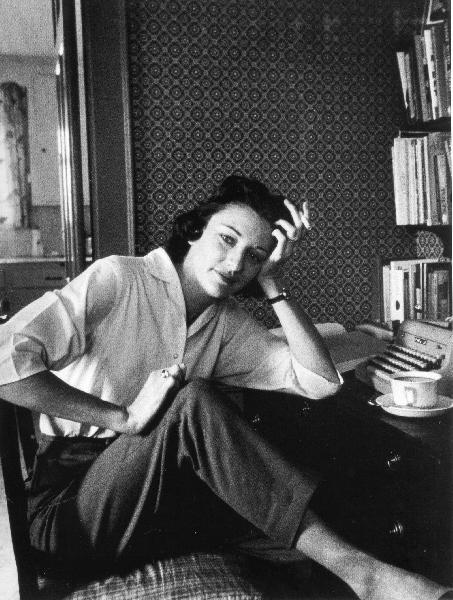
Interview With Lisa See, Author of Shanghai Girls

My review of Shanghai Girls is slated for Jan. 19, 2010, and I had arranged a D.C. Literature Examiner interview with author Lisa See.

However, due to crazy changes going on at my part-time gig, I will be unable to post the interview with Lisa over there.  I thought it was only fitting to share what she had to say with my blog readers.  I think this is a good deal, don’t you?

Please welcome Lisa See.

Forgotten history plays a large role in your novels.  How do you come upon these forgotten stories?  And what about them inspires you to write novels based on those stories?

I think my interest in forgotten history and stories goes back to my own family. I come from a large Chinese American family. We had lots and lots of secrets, and most of them were tied to the larger history of the Chinese in America that no one wanted to talk about or write about.  What has struck me is that so much women’s history and stories have been lost, forgotten, or deliberately covered up.  We’re taught that in the past there were no women writers, no women artists, no women chefs . . . . I could go on and on.  But of course women did these things! 

It’s been a great honor and privilege for me to look for those stories, find them, and then use them in my novels.  How do I find them?  All kinds of ways.  I discovered nu shu – the women’s secret writing – when I was reviewing a book on footbinding for the Los Angeles Times.  Sometimes I find things when I’m doing research for something else. 

That happened with Peony in Love.  I was doing research on death rituals in 17th century China and came upon ghost brides and ghost marriages.  I thought:  Oh, I’ve got to use this.  It’s been happening a lot now as I’m writing the sequel to Shanghai Girls.  I can be looking up something about the weather or shipping schedules when all of a sudden I come across some truly surprising detail.  I know a lot of writers hire researchers.  I could never do that.  They wouldn’t know what to look for.  And I want to experience wow! cool! moments myself.

Shanghai Girls is about two sisters who go to America for arranged marriages.  Do you find sisterly relationships more complex than other relationships and why?

Oh my gosh, yes! The sibling relationship is typically the longest relationship we’ll have in our lives. Typically, your parents will die before you do, you won’t meet your mate until you’re an adult, and your children won’t come along until after that.

A sister, on the other hand, has known you from birth and will know you until one of you dies—hopefully not for a very, very long time. A sister should stand by you, support, you, and love you no matter what. Yet she is also the person who knows exactly where to drive the knife to hurt you the most. (And you know where to drive the knife to hurt her the most too.)

I have a lot of personal experience with sisters. I’m one of four sisters: I have a former step-sister that I’ve known since we were three and four, a half sister who’s my mom’s daughter, and a half-sister who’s my father’s daughter. But it wasn’t enough to rely on my own experience when I was writing Shanghai Girls. For two years, I asked everyone I knew and everyone I met about their relationships with their sisters. I had women tell me they hadn’t spoken to their sisters in two, five, ten, forty years!

I asked the one who hadn’t spoken to her sister in forty years if she even felt like she had a sister anymore. She answered, “Yes, because sisters are for life.” I think this is true—for good or bad. And it’s this sense that sisters are for life that distinguishes the relationship and makes it different from all others. We may have friends “who are just like sisters,” but they aren’t necessarily for life.

Please share a few of your obsessions.(i.e. a love of chocolate, animals, crosswords)?

Your examples made me laugh. I love chocolate, but I can’t eat it because I have migraines. I love animals, but I can’t have them either. When I was young, I had twenty cats, ducks, chickens, a goat, and a coyote mix, but I haven’t had any animals in years because my son Alexander has terrible allergies. (We tried fish and iguanas, but they aren’t great for cuddling or petting.)

I’m mad for crossword puzzles, and this is something I get to do! I start every Sunday morning by doing the crossword puzzle. Then my mom and I talk on the phone to help each other with our one or two missing letters. Of course, I have other obsessions, thankfully. I love going to movies. I love Dexter. (Last season was the best television I think I’ve ever seen.) I love gardens. I love to walk. And I might as well admit it, since I’ve been thinking about it since I first read your question. My husband and I are going to celebrate our thirtieth anniversary this year, and I am still utterly and happily obsessed with him.

(All I have to add is congrats on 30 years to Lisa and her husband!)

When writing poetry, prose, essays, and other works do you listen to music, do you have a particular playlist for each genre you work in or does the playlist stay the same? What are the top 5 songs on that playlist? If you don’t listen to music while writing, do you have any other routines or habits?

I really like the way you asked this question, because usually people only ask what I listen to when I’m writing my novels.  You’re so right to know – or guess – that people would listen to different types of music for different types of writing.

Right now as I’m writing this, I’m listening to Bob Dylan. I’m a huge Dylan fan, but I could never ever listen to him when I’m writing a novel. So when I’m doing this kind of writing – e-mail, interviews, essays – I listen to Dylan, Mary J. Blige, music from the Theme Time Radio Hour.

For writing novels, my playlist is very small: I listen to Puccini without Words, Mali to Memphis, Township Jazz ‘n’ Jive, Mozart Sonatas played by Mitsuko Uchida, and a collection of Yo-yo Ma’s cello concertos.

Which books have you been reading lately, and are there any you would recommend in particular?  Which books do you think should be read by more readers?

When I’m writing, I’m very careful about what I read. I read very few novels because I don’t want someone else’s voice to creep into my head. The only fiction I’ll read when I’m writing will be things like short stories, poetry, plays, operas, or the rare novel written in the time period that I’m writing about.  That puts me in the Yangtze delta in 17th century China or in Shanghai in 1937. It helps me with the images and ways that people spoke in those times and places.

Otherwise, I read a lot of obscure non-fiction about the subject that I’m writing about. By obscure, I mean published and unpublished dissertations that even the writers’ mothers didn’t read. Right now I have some books out from the UCLA library.  I’m the first person to check out some of those books in ten or twenty years!

When I’m done writing a novel, I take about three months to treat myself with all the books I’ve missed or longed to read. I loved Astrid and Veronika¸ and I’ve recommended it to a lot of book clubs. But there are other books that I absolutely love: Angle of Repose by Wallace Stegner, The Age of Dreaming by Nina Revoyr, and The Handyman, by my mom, Carolyn See.

I want to thank Lisa See for graciously agreeing to an interview. 

Don’t forget to check back on Tuesday, Jan. 19, 2010, for my review of Shanghai Girls and a giveaway.

Please visit today’s tour host, The Book Faery Reviews, and click on TLC Book Tour logo for other tour information.

FTC Disclosure:  Clicking on the title and image links will bring you to an Amazon Affiliate page; No purchase required, though appreciated.

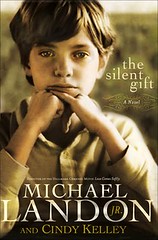
Interview with Michael Landon, Jr., Author of The Silent Gift

Sometimes, I have an opportunity to interview an author, even though I don’t have time to read their novel.  In this case, I’ve interviewed a Christian fiction author, Michael Landon, Jr.  If this name sounds familiar, it should.  His father was the same Michael Landon of Highway to Heaven and Little House on the Prairie fame.

Check out my interview on D.C. Literature Examiner, here and here.

D.C. Literature Examiner Goodies

I know we’ve all be busy with the holidays and reading our new books.

I’ve been busily interview poets and authors on D.C. Literature Examiner again.  You knew I couldn’t resist.

Please check out my latest interview with Poet and Musician John Amen!  We talk about his writing habits, his thoughts on how music and poetry are similar, and what poets he recommends.  Check out the interview here and here.

One of his books, More of Me Disappears, made my 2009 top poetry books list.

I’ve also had the pleasure of talking about John Shors’, author of Dragon House, charity efforts in providing books to street children in Vietnam.  If you’d like to see how well his project has gone or how his book sales are connected to the charity, please go here.

Finally, I had the pleasure of interviewing Into the Beautiful North author Luis Alberto Urrea.  We discuss how movies influenced him, particularly with this novel, his writing, his playlists, and more.  Don’t forget his recommended reading.  Check out the interview here and here.

Urrea’s book made my best of audiobooks for 2009!

I hope you’ll be checking these interviews out in your down time.