Quantcast

An Interview With Poet Charles Jensen

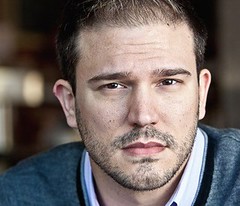
Poet Charles Jensen

This week at the Poetry Blog of 32 Poems Magazine my interview with poet Charles Jensen was posted. He’s a contributor to the magazine and was a delight to interview.  I’m especially impressed with his answer to the elitist myth about poetry, since I feel the same way about the issue.

First, let me tantalize you with a bit from the interview, and then you can go on over and check the rest out for yourself.

Without further ado, here’s the interview.

Do you have any obsessions that you would like to share?

I’m pretty sure none of them are secrets. I love some aspects of “low” culture like trash pop music. I aspire to find ways to sew that into my work as a poet somehow. I am also really connected to film, both as a narrative art and as a form. Physical aspects of film are closely related to the work of poetry for me. I give extensive thought to sequencing, montage, collage, and narrative. Any two things placed in juxtaposition create a narrative. There’s a great story of the Kuleshov Effect, wherein an audience’s construction of narrative changes when the same photo of a person (mostly expressionless) is interspersed with a shot of soup or a shot of a baby, for instance. In the soup narrative, the audience describes the man as looking hungry. In the baby narrative, he looks happy. That effect of context is something I carry with me–how do individual poems, individual lines, individual images speak to each other?

Poetry is often considered elitist or inaccessible by mainstream readers. Do poets have an obligation to dispel that myth and how do you think it could be accomplished?

Poetry itself is none of those things. It is the attitude of the reader that determines what poetry is. The only way to dispel the myth is for people to encounter poetry on their own. I always liken it to television. If you had never seen television in your entire life and then one day turned it on, only to see Mutual of Omaha’s Wild Kingdom, you might say, “Gosh, I hate television.” But most of us realize that television is a multi-dimensional form with various strategies aimed at different audiences. If you watch television long enough, you will find something that speaks to you. This is true, too, of poetry. But because the poetry world has a reputation of being closed, or because it is taught in high school as a “symbolic” art practiced by dead white people, it loses a lot of its contemporary allure. I think now, more than ever, poetry strives to be egalitarian in a lot of ways–people just need to look.

Please describe your writing space and how it would differ from your ideal writing space.

It is always a total disaster–I would change that! My apartment is very small and my desk is very big–about 30% of my living room. The window is behind me. The room gets almost no natural light. It is absolutely not my ideal writing space. In Phoenix, I had a loft apartment with 20′ ceilings, 17 feet of which were windows. My desk sat up in the loft area, overlooking the living room, facing all the windows and light. That was an amazing place to write. I miss it every day.

He also included a poem for readers to check out:

IT WAS OCTOBER
–for Matthew Shepard

I was love when I entered the bar
shivering in my thin t-shirt and ripped jeans
and I was love when I left that place, tugged along at the wrist
as though tied, with a man I did not know.

I was love there in the morning
when our sour kisses bore the peat of rotten leaves,
fallen October leaves. And it was love that we kissed anyway, not knowing each other’s names.

I was love in that bed
and I was love in the hall and down the stairs and into the freezing rain.

I was love with hands punched deep
into the pockets of a coat.
I was love coated in frozen rain.

Back home, I was love stripped of the cigarette-stung shirt, love pulling the stiff jeans from my legs.
I dried my hair and I was love.

It was October. What did I know of love that year,
shuddering in my nervous skin. Miles away, the boy was lashed to a fence and shivering.

Where that place turned red and the ground soaked through
with what he was, I was love.

What did I know of love then
but that it wasn’t enough.

About the Poet:

Charles Jensen is the author of three chapbooks of poems and The First Risk, which was a finalist for the Lambda Literary Award. He serves on the Board of Directors of the Arts & Humanities Council of Montgomery County and is a co-chair of the Emerging Leader Council of Americans for the Arts. Check out his Website. He’s also a poetry editor with lethe press.

Please check out the rest of the interview on 32 Poems Blog.

Armchair BEA: Interview with The True Book Addict

Hello and welcome to Savvy Verse & Wit.  I’m participating in Armchair BEA for the first time, since I was unable to attend this year for the best of reasons, my new infant daughter (“Wiggles”).

I love interviewing authors, publishers, and other bloggers, so I was excited to find out that one of the activities for this year’s Armchair BEA was to interview another blogger.

Today, you’re going to meet Michelle of The True Book Addict, who loves historical fiction and has a great blog; if you haven’t been there, nothing will stop you from checking it out this week, especially after this interview.

1.  My first question is about the origins of your blog, The True Book Addict.  Did you start blogging about books or did it spin off from other blogs or transform from one type of blog into a book blog?

Before I knew there was such a thing as “book blogs”, I created a MySpace page centered around my being a book addict (The Book Addict).  I had a little blog on there on which I wrote my thoughts about books, but I think maybe one person ever read it. *L*  I met Ryan (Wordsmithonia) on Twitter, and he introduced me to Blogger and book blogging and the rest is history.  I initially named my blog, The Book Addict, like my MySpace page, but soon learned that someone else was using it, hence The True Book Addict.  My reasoning behind this name?  Not true in the sense that I’m the only “true” book addict, but that I am “true” to books!

2.  Were you a book blog reader before starting your own blog? If so, which blogs did you read before beginning your own?

Honestly, as I mentioned, I had no clue about book blogs! The only blog I read was a friend I met on MySpace, author Lisa Kessler.  She had a blog over there and I read her weekly posts.  Lisa just recently got a publishing contract for one of her book series so I can honestly say I knew her when!

3.  Not only do you review books on your blog, but you also are researching your first novel.  Is it historical fiction like many of the books you read, and have those books inspired your novel and how?

I have so many ideas in my head, and yes, they are usually historical . . . sometimes with a paranormal or fantastical twist.  What I’m currently researching is historical.  The historical novels I read inspire me every day, but they also make me realize just how daunting a task writing a historical novel can be.

4.  Here’s a tough question.  As an outsider coming into the book blogging community, did you find it welcoming or did you feel like there were certain cliques that made you feel ostracized?

In my first few months, there was a kind of snafu on the blogs that grew out of a discussion on Twitter.  Something to do with the dos and don’t of your blog.  Some of the things were: you shouldn’t have music on your blog, you shouldn’t have a large header, and other stuff I can’t even remember.  I had a playlist on my blog and many people had already told me they liked it.  But I still felt like I was doing it wrong and I felt kind of bad about my blog, at first.

Then I got to thinking.  We started these blogs for ourselves (at least, I did).  I mean it’s important to accommodate your readers, but it’s also important to be true to yourself.  So, one playlist and large header and almost two years later, I’m still hanging in.  I’m proud of my blog, I love my followers, and I adore the book blogging community.  What at first came across as very clique-y has grown into a home away from home!

5.  Do you think that Armchair BEA will provide you with a similar experience to that of attending the actual convention? Why or why not?

I think what Armchair BEA provides that is similar to being at the convention in person is the sense of camaraderie that meeting up with fellow bloggers supplies.  Yeah, sure, we’re not meeting authors in person or rooming or eating out together, but we are still bonding as a group with Armchair BEA and I think that’s a lovely substitute.

6.  What makes you want to lurk on people’s blogs, but not comment?  And what kinds of posts do you find yourself commenting on most often?

Honestly, I just follow a TON of blogs so I really can’t comment on every review/post.  I would never be off the computer! I do comment on reviews of books I have read and/or books that I’m really interested in.  I try to reciprocate with those who comment often on my blog.  You know, return the favor, so to speak.  I find myself commenting more frequently on topics that interest me the most.  History, historical fiction, posts about peoples’ pets, especially cats, encouragement to people who are having a hard time of it.  And I do always try to make a meaningful comment so I do not want to just stop and say, “great review”, although I have done it.  I am a work in progress though so for those of you out there (ahem…Serena) that I have exposed to my lurking, I WILL try to do better!

Michelle's Boys

7.  Finally, tell us a little more about you.  Some of your quirks, loves, obsessions, and dislikes about blogging, reviewing books, or just anything in life.

Where do I start?  So many quirks and obsessions…and loves! This might be a quirk or an obsession.  I own over 3000 books! That’s right, ladies and gentlemen! 1900+ fiction and the rest non-fiction and Christmas books.  And I.keep.buying.more!

I love being a mother.  I have two sons and they can be quite the handful, but they bring joy to my life every day.  I ADORE cats! Hence the Cat Thursday meme every week.  I am very passionate about history and was a history major until recently. Hoping to be able to finish my degree someday.

Alice

I love blogging and reviewing books, but sometimes it can feel like a chore.  I had taken on way too many review books and then had a major illness last summer so fell WAY behind.  I’ve since stopped accepting review books, except for special cases.  It’s hard for me to resist books in the historical genre (and sometimes horror and fantasy too).  But I’m proud of myself.  I’ve been resisting temptation fairly well.

Thank you, Serena, for the wonderful questions.  I hope I didn’t ramble on too much!

You’re welcome and it was a pleasure.  I hope you’ll feel more comfortable to come out of hiding, my lurking friend.  No, you didn’t ramble at all!  It was great getting to know a little bit about you, your blog, and your thoughts on the blogging community.

Looking for an interview with me?  Check out The Story Factory Reading Zone.

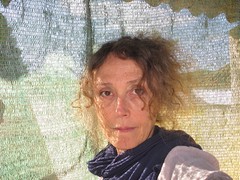
An Interview With Poet Kathleen Winter

Poet Kathleen Winter

This week at the Poetry Blog of 32 Poems Magazine my interview with poet Kathleen Winter was posted. She’s a contributor to the magazine and was a delight to interview, especially since we share a love of trees and dogs.

First, let me tantalize you with a bit from the interview, and then you can go on over and check the rest out for yourself.

Without further ado, here’s the interview.

How would you introduce yourself to a crowded room eager to hang on your every word? Are you just a poet, what else should people know about you?

I love living in the country, being outdoors. After growing up in Texas, I shipped out to Massachusetts after college, then to California and lately to Arizona to get an MFA at Arizona State University. My favorite job ever was night-shift in a Brookline bookstore, working with lots of other writers. I love the Pacific. I’m not religious; yoga is about as spiritual as I get. I’ve worked as a baker, tech editor, lawyer and writing teacher. I’m a sloooow reader. The last time I had a TV was in 1989–can’t take that stuff. Also, I’m looking for a teaching job! Within two hours drive of Glen Ellen, California.

Most writers will read inspirational/how-to manuals, take workshops, or belong to writing groups. Did you subscribe to any of these aids and if so which did you find most helpful? Please feel free to name any “writing” books you enjoyed most (i.e. Bird by Bird by Anne Lamott).

I’m a junkie for school, so I’ve loved being in an MFA program, and all the workshops, classes, readings, conversations that involves. Before going back to school I was in several workshops with poets in Sonoma County, Calif.,  and at Esalen Institute at Big Sur. Those experiences helped keep poetry at the forefront while I was working as a lawyer.

The essays in Stephen Dobyns‘ collection “Best Words Best Order” and Jane Hirshfield’s “Nine Gates” have helped me to better understand what I want to accomplish technically, and how to go after it. Maybe more importantly, I find that reading good non-fiction can inspire me to immediately want to write. Donald Hall’s anthology of essays by poets, “Claims for Poetry” is useful but frustrating, because Hall includes far too few women poets and far too few poets of color.

In terms of friendships, have your friendships changed since you began focusing on writing? Are there more writers among your friends or have your relationships remained the same?

Many more writers now. ! Halleluja !

Please describe your writing space and how it would differ from your ideal writing space.

Now, while I’m finishing up the last semester of the MFA program in Tempe, I write in a rented room in a house that’s two states to the east of the house in California where my partner and dog live. So the ideal writing space is back in Glen Ellen with Finnegan lounging next to me in the ratty dog bed. My desk right now is two filing cabinets with a board across them; I’m looking at drywall. Back home I often write in bed, and look out through the windows at douglas firs, toyon, and madrone trees.

She also included a poem for readers to check out:

Wrong Sonnet:  Multiplicity

My husband asks Why don’t you write a poem
about why you like Virginia Woolf when
nobody else does.
The excruciating detail of a marriage
is what I like, I say, the drifting
in and out of Clarissa’s mind and into Peter’s,
how they notice the flow of London traffic
as a living animal, how they feel
themselves distributed in sub-atomic
bits into each other and over the city’s squares
and towers, out into the hedgerows, the waves.
But Clarissa wasn’t married to Peter
he would say, if he’d read it, she was
married to Richard. And I’d say
maybe she was, maybe she was.

–Previously published in The New Republic.

About the Poet:

Kathleen Winter has published poems in Tin House, Barrow Street, The Cincinnati Review, Anti-, The New Republic, Field, and other journals.  In 2010, the City of Phoenix selected her poetry for its 7th Avenue Streetscape Public Art Project, and she received fellowships from the Vermont Studio Center and Virginia G. Piper Center.  Her chapbook Invisible Pictures was published in 2008.  Kathleen is poetry co-editor for Hayden’s Ferry Review.  She attends the MFA program at Arizona State University.

Please check out the rest of the interview on 32 Poems Blog.
An Interview With Poet Jeffery L. Bahr

Poet Jeffery L. Bahr

This week at the Poetry Blog of 32 Poems Magazine my interview with poet Jeffery L. Bahr was posted. He’s a contributor to the magazine and was a delight to interview.

First, let me tantalize you with a bit from the interview, and then you can go on over and check the rest out for yourself.

Without further ado, here’s the interview.

How would you introduce yourself to a crowded room eager to hang on your every word? Are you just a poet, what else should people know about you?

I have been in love with computing for almost 45 years, back to a time when I could go to a large social gathering of 1000 people and be the only one involved with computers. I’ve studied every facet of computer science, been a professor and been in the industry all my adult life. I’ve only written poetry the last 12 years. I think there is tension in my poetry between the analytical and the mysterious.

Poetry is often considered elitist or inaccessible by mainstream readers. Do poets have an obligation to dispel that myth and how do you think it could be accomplished?

Poetry can be quite excellent and still span a very wide range of aesthetics. Some of those aesthetics take time to understand or acquire a taste for, and some are more readily accessible. For example, I think Bob Hicok, G. C. Waldrep, and Mary Jo Bang are terrific poets, but a “lay person” is probably going to connect more quickly with one of Bob’s poems. I don’t think there’s anything you can do about this, and the same phenomenon takes place everywhere in the arts (music, visual art, sculpture, . . . ).

How do you stay fit and healthy as a writer?

Well, I quit smoking and joined the Y. As a working software engineer, I’m in front of a monitor a lot (like 60+ hours a week), so I’m not worried by the sedentary nature of writing, I need a way get out of my chair periodically anyway (like taking a 15 minute break on my treadmill).

What current projects are you working on and would you like to share some details with the readers?

I have finished a manuscript of poetry that I think represents the arc of my life in the last decade. I will tinker with it and submit it to lots of contests and cross my fingers.

He also included a poem for readers to check out:

Walking Reliquary

Primitive, and so, face
of stromatolite, glottal-stop
cilia, pre-Cambrian gut.

Derivative, and so, grackle’s
nest mate, jackal’s familiar.
Nose like a nocked arrow,
eyes like a lemur’s, only lonelier.

Fatuous, and so, bag of bones,
old bones, some close to broken,
others opposable. Scot organs
and pipes, blood of a Choctaw,
stretched skin of a Norse war drum.

Inattentive, and so, collapse
at the waterhole, hair growing
gray like the seat
of a prayer bench.

Ebullient, and so, grief
of a treed raccoon,
arms like a starfish. Grin
like the wolves
at a timberline.

Acquisitive, and so, Isles
of Langerhorn, rings
of wild cypress, rings
of dead Popes.

Transitory, and so, brain
of an ocelot, brain
of a cockatoo,
mind of a lilac.

Heretical, and so, postprandial
half-life, quarterstaffs
for thighs, three-fourths
of a pumpkin’s DNA.

Incorruptible, and so, knuckles
like gambling stones, shroud
of a leper, eggs like a fossil find.

Redeemable, and so, water-logged
flesh, airborne ash, sedimentary compression.

–The title is taken from a line in G. C. Waldrep’s “Confessions of the Mouse King”

About the Poet:

Jeffery Bahr is a software engineer who lives in Colorado. He holds a Masters degree in Computer Science and a PhD in Operations Research and Statistics. He has created and managed a number of online poetry forums, and served as a co-director for the literary journal, Many Mountains Moving. His poetry and reviews have been most recently published in Black Warrior, Chelsea, Colorado Review, Iowa Review, Pleiades and Verse. His manuscript, Anabasis, was a finalist for the Poetry Foundation’s First Book Award.

Please check out the rest of the interview on 32 Poems Blog.

***Please also stop by the next National Poetry Month Blog Tour stop at Diary of an Eccentric and Read Handed.

Gatekeeper Interviews Dr. Laurence B. Brown, Author of The Eighth Scroll

Today’s guest interview is from The Gatekeeper Post.  They’ve kindly interviewed Dr. Laurence B. Brown, author of The Eighth Scroll.

His novel has been compared to Dan Brown’s Da Vinci Code.  In 68 CE, precious scrolls are hidden during an uprising of Essene Jews against the Romans, and 19 centuries later, archaeologist Frank Tones comes across the diary of their librarian, Jacob.  One of the scrolls described in the diary, “The Gospel of the Teacher of Righteousness,” could be the lost gospel of James or Jesus himself.  However, before the truth is discovered, Tones finds his friend and colleague dead.  The mysteries they unravel will shake religious foundations.

Without further ado, here’s the interview with Dr. Laurence Brown.

Where did you grow up?

I grew up as a swaying sea sponge in a sparkling tide pool on the rocky coast of Waikiki. But then I budded off and seeded the ocean’s currents with my creative genius and . . .seriously, I grew up in San Francisco – the liberal capital of America – a few locks away from the infamous ‘tune in, turn on, drop out’ Haight-Ashbury district during the sixties and seventies, in the middle of the hippies’ rock-and-roll, anti-establishment, free love and drug culture revolution. But that culture never touched me, as you can probably tell from the first sentence of my answer to this question, which is completely lucid, copacetic and . . . and . . . and where was I? Oh, yeah. San Francisco. Led Zeppelin, the rock operas Hair and Jesus Christ, Superstar, flowers in the hair and cold Corn Flakes in the morning in Golden Gate Park. Missed it all, as you can tell.

Somehow, I survived, clean. Headed off to Cornell University in 1977, on to Brown Medical School, dot, dot, dot, and here I am!

You’re a doctor, so what lead you to your passion of writing?

The pay. I mean, doctors are starving and writers are just raking in the dough, aren’t they? What? They’re not? Oh. Well, too late now. The problem is, once you catch the writing bug, you’re hooked. I plain and simply love it. I love seeing the characters come alive in my imagination and then on the page. There is a point where everything just begins to flow, and it’s the greatest feeling in the world when the plot begins to carry itself and the characters expand beyond the parameters you originally constructed for them. As the story develops, it’s like watching the greatest movie in the world, in your mind’s eye, because most things happen precisely the way you want them to.

Are you concerned that people will call The Eighth Scroll another Da Vinci Code knock-off?

Sure. Unfortunately, it’s all a matter of timing. Living overseas, I didn’t know I was writing The Eighth Scroll at the same time that Dan Brown was rising in popularity in America. As you see from the book reviews, many critics compare The Eighth Scroll favorably to The DaVinci Code. Some even consider The Eighth Scroll to be the better of the two books. But since Dan Brown’s book came out first, my work may always be seen as having been written in his shadow. Had the timing been different, it might have been the other way around. Such is life.

Where can we get a copy of your book?

You can find The Eighth Scroll for sale on Amazon.

About the Author:

A graduate of Cornell University, Brown University Medical School and George Washington University Hospital residency program, Laurence B. Brown is an ophthalmic surgeon, a retired Air Force officer, the medical
director and chief ophthalmologist of a major eye center in the Middle East. The author of four books of comparative religion, he is also an
ordained interfaith minister. His most recently discovered passion is writing fiction, of which The Eighth Scroll is the first of three completed novels.

For the past two decades, he has divided his time between America, England, Jordan, and Saudi Arabia. Dr. Brown’s immediate family consists of his wife, three daughters and an ever changing assortment of hamsters and parrots.

Don’t forget to stop by Read Handed for today’s poet spotlight.

An Interview With Poet M.E. Silverman

This week at the Poetry Blog of 32 Poems Magazine my interview with poet M.E. Silverman was posted. He’s a contributor to the magazine and was a delight to interview, especially since he loves Nina Simone, my dinner music companion Telemann, and Vivaldi.  You’ll have to check out all the great writing and poetry book recommendations.  Unfortunately, he’s a bit camera shy, but we do have an interview and a sample poem.

First, let me tantalize you with a bit from the interview, and then you can go on over and check the rest out for yourself.

Without further ado, here’s the interview.

How would you introduce yourself to a crowded room eager to hang on your every word? Are you just a poet, what else should people know about you?

I am a Dad first and often introduce myself as Vice-President of Isabel Inc. I actually once had someone inquire in these tough economic times about a job opening there, and if he wasn’t so serious, I might have continued the joke.

Most writers will read inspirational/how-to manuals, take workshops, or belong to writing groups. Did you subscribe to any of these aids and if so which did you find most helpful? Please feel free to name any “writing” books you enjoyed most (i.e. Bird by Bird by Anne Lamott).

I have taken several online workshops from 32 poems with Deborah Ager to Mid American Review with Craigo and I find them all helpful and inspirational. I tried the Dnzanc one on one critique but found it less than helpful. Kooser Poetry Home Repair Manual by far is one of the best how-to books, but also Triggering Town and Cleave’s Contemporary American Poetry: Behind the Scenes. I could not put down either Kim Addonizio‘s how-to books nor Padgett’s The Teachers and Writers Handbook of Poetic Forms.

Of course, there are many anthologies I also enjoyed just to get exposure to other writers, including Chang’s Asian American Poetry, Collins Poetry 180, Yale Younger Poets Anthology, Feinstein’s Jazz Poetry Anthology & The Second Set Vol 2, Rebel Angels: 25 Poets of New Formalism, A Formal Feeling Comes ed. by Finch, A Drifting Boat: Chinese Zen Poetry by Seaton, the KGB Bar Book of Poems, American Poetry Now (Pitt) and the Copper Canyon Anthology. Also, there are quite a few portable workshop books but by far the most enjoyable is Jack Myers Portable Poetry Workshop.

When writing poetry, prose, essays, and other works do you listen to music, do you have a particular playlist for each genre you work in or does the playlist stay the same? What are the top 5 songs on that playlist? If you don’t listen to music while writing, do you have any other routines or habits?

I find strong violin sax and trumpet to be the most inspiring instruments. Naima by Coltrane is a beautiful sweet song. Clifford Brown Portrait of Jenny with Strings. Any Miles Davis but I love the album Seven Steps to Heaven. Who could resist writing with music and a title like that? Nina Simone is a goddess of the vocal chords. Occasionally, I will go to Norah Jones but mostly it is Beethoven, Telemann, Vivaldi.

He also included a poem for readers to check out:

Bubbie’s Kitchen Secrets

We cooked in her kitchen,
a small square room
with a large double sink.

The refrigerator zapped
its electric ache
and like an old noir film,

the lights flickered in response.
For herbs, she had me climb onto the counter
and open the one window,

to reach the basil, the thyme,
the sunflowers potted on the fire escape,
a hazardous garden

the whole building used.
Two or three steps were lined
with mason jars full of cucumbers,

for pickles crisp from sunlight.
On this particular Sabbath,
I did what I always did, helped her make

the kugel,
a pudding made of noodles and eggs
with a dash of her secret:

the caramel color from sugar burnt,
not too little, not too much.
We were finishing up

when we smelled the cigar smoke
and heard heavy boots
pounding down the fire escape.

Then glass breaking,
a curse, that curse!,
quick and sharp

in gun-shot German.
Bubbie screamed. Scared,
I ducked under the table.

She whispered one word
before feinting:
Nazis.

Her war from long ago. Startled,
the man stepped back,
slipped and fell

to the pavement,
dying in agony.
Later,  she told me

she thought she saw
the guard from the camp.
The guard who gave the orders.

She told me this
as we huddled on the linoleum.
No one discovered how it happened.

I should have told somebody
when I read the paper and learned
he was just a student,

a young boy, like me.
I never did.

About the Poet:

M. E. Silverman moved from New Orleans to Georgia and teaches at Gordon College, with work appearing in Mizmor L’David Anthology: The Shoah, Crab Orchard Review, 32 Poems, Chicago Quarterly Review, Tapestry, The Los Angeles Review, The Southern Poetry Anthology, Cloudbank, Pacific Review, Sugar House Review, and other magazines. M. E. Silverman was a finalist for the 2008 New Letters Poetry Award, the 2008 DeNovo Contest and the 2009 Naugatuck River Review Contest.

Please check out the rest of the interview on 32 Poems Blog.

***Also, please check out today’s National Poetry Month tour posts at Layers of Thought and Read Handed.

Interview With Poet Halli Lilburn

Welcome to today’s interview with poet Halli Lilburn for the National Poetry Month Blog Tour.  Please welcome her.

1. How would you introduce yourself to a crowded room eager to hang on your every word? Are you just a poet, what else should people know about you?

I’m boring!  My mind doesn’t come out my mouth.  I think the first thing I would do is sing.  Poetry put to music conveys emotion faster and lasts longer in people’s memories.  Then I would follow with this introduction; My name is Halli – it is a form of Hallelujah which in Hebrew means praise to Jehovah.  My middle name is Dee, which is Hebrew for delicate, weak, languishing and is a form of Delilah who was a false and treacherous woman.  So I love God, it’s true, but I’m not very good at it.

2.  Do you see spoken word, performance, or written poetry as more powerful or powerful in different ways and why?

Spoken word is a social convenience for sharing art. It takes a certain type of poem where the sound of the words is an important feature, as well as the meaning.  Some poets, like myself, are not very good actors. The poem is lost in a bad performance.  The written word is not gone in a flash.  It is to be mulled over, reread, and pondered upon.  There is time for the reader to find hidden symbols and messages.  So unless I get a thespian friend of mine to recite my poetry for me, I would way rather have someone read it.  Even then, it’s disappointing to me if they only read it once.

3.  Do you have any obsessions that you would like to share?

I can’t stand open drawers and doors.  It’s super anal I know, but if there is a cupboard or drawer left open it drives me crazy.  Even metaphoric ones.  I can’t keep secrets.  It eats me up inside.  If there is an unresolved issue I have to “close it” right away.  I don’t want to see the clutter inside.

4.  Most writers will read inspirational/how-to manuals, take workshops, or belong to writing groups. Did you subscribe to any of these aids and if so which did you find most helpful? Please feel free to name any “writing” books you enjoyed most (i.e. Bird by Bird by Anne Lamott).

Studying the craft of writing is essential.  No writer is so good that her art couldn’t use a little help.  Some of my favorites are continuing education classes on-line from ed2go.com.  Easy art journaling or creative writing class can give me a million new ideas.  I also rely heavily on NaNoWriMo or I’d never get anything finished.  Getting a personal e-mail from Lemony Snicket telling me I would never complete a 50,000 word novel so why bother, was the most amazing boost of motivational reverse psychology I’ve ever received.  Critique groups are always essential.

5.  Poetry is often considered elitist or inaccessible by mainstream readers. Do poets have an obligation to dispel that myth and how do you think it could be accomplished?

Art is made of two motivating components; therapy and impact.  There are hard times in my life when I used art for the sole purpose of therapy, but I don’t show it to anybody.  It will only make sense to me.  Readers think you’re an art snob, if your work is too cryptic.  If you create art solely for impact, then it ends up too extreme, fluffy or entertaining.  You’ll gather the wrong crowd.

6.  When writing poetry, prose, essays, and other works do you listen to music, do you have a particular playlist for each genre you work in or does the playlist stay the same? What are the top 5 songs on that playlist? If you don’t listen to music while writing, do you have any other routines or habits?

Music and I have a complicated relationship.  I definitely have a soundtrack in mind when I replay scenes in my mind.  I’ll list the music in the back of my books as a suggestion to my readers.  But when I’m struggling to put the long form down on paper I have to have quiet so I can get inside the mind of my characters.  Luckily for me all my kids are in public school this year.

Here are five songs that keeping coming back to me:

So Heavy by Florence and the Machine
Kingdom Come by Cold Play
Hallelujah done by Jeff Buckley
Anything by Heidi Happy
Reasons Why by Nickle Creek
Blue Lips by Regina Spektor
Oops that’s six.

7.  Do you have any favorite foods or foods that you find keep you inspired? What are the ways in which you pump yourself up to keep writing and overcome writer’s block?

I reward myself periodically while writing as soon as I start to despise sitting for too long.  I love baking, especially cinnamon buns or butter tarts.  Yum.  I have hobbies like, gardening, painting, scrapbooking that I try to throw in once in a while.  I have to leave time to disconnect myself from a writing project so I can go back with fresh eyes.  When writer’s block hits it’s usually because I’m trying too hard.  If writing doesn’t make me emotionally drained, then I’m not doing it right.  I keep several projects on the go and I’ll switch back and forth. A writer can’t create constantly, they need to refine, edit, work on submissions and social networking.  That takes up a lot of time.

8.  What poetry books published in 2011 are you looking forward to reading or would recommend to readers?  Or which poetry books you’ve read have you recommended?

There are some journals that I am fiercely loyal to: The Malahat Review and the Antigonish Review, both Canadian publications.  When it comes to authors I must reveal my complete bias towards Tim Lilburn since he’s my uncle-in-law.

Here are some places where my work is available:

poetryquartery.com has accepted ‘First Kiss’ for their spring issue.
Seedingthesnow.net has accepted ‘Mother Tree’ for their spring issue.
Redfez.net has accepted ‘Messed Up’ for their spring issue.

Thanks to Halli for letting me interview her. I hope you are enjoying the National Poetry Month Blog Tour.

An Interview With Poet Terri Witek

Poet Terri Witek

This week at the Poetry Blog of 32 Poems Magazine my interview with poet Terri Witek was posted. She’s a contributor to the magazine and was a delight to interview, especially since she’s got some interesting things to say about Brazil and Elizabeth Bishop.

First, let me tantalize you with a bit from the interview, and then you can go on over and check the rest out for yourself.

Without further ado, here’s the interview.

Do you see spoken word, performance, or written poetry as more powerful or powerful in different ways and why? Also, do you believe that writing can be an equalizer to help humanity become more tolerant or collaborative? Why or why not?

I love ephemeral creations, and as I have been working with Brazilian new media artist Cyriaco Lopes since 2005, have become more and more enamored of doing things that disappear—words and images (he uses photographs and video), sound pieces. We did some ipod voice pieces for an installation and I loved that…watching people lean into the rooms to catch fragments, etc. Of course I still love words on the page. But I really like staging “events” with him where we switch out—it feels unexpected, even when I know what’s going to happen, as I do now with the day you left, a 50-minute piece we’ve done several times. Actually, I find collaboration deeply mysterious and satisfying. I make no larger claims for it except that it puts you right into someone else’s technical stuff in a way that seems pretty magic. Is this equalizing? More that to play together in the same space feels temporary and precious. Maybe world peace would feel just like this.

When writing poetry, prose, essays, and other works do you listen to music, do you have a particular playlist for each genre you work in or does the playlist stay the same? What are the top 5 songs on that playlist? If you don’t listen to music while writing, do you have any other routines or habits?

I listen to music in the car and in the cardio room—usually only playlist rule is that it has to be in Portuguese. But my husband Rusty made a playlist of R&B hits from the year of the Civil Rights Act (1964) that Cyriaco and I used in an installation, and that’s now completely internalized.

But not when I work—I get the rhythms mixed up. My husband works with music, so I hear it in the distance during the day and evening. But I write early—before 9am—so it’s bird cacaphonics for the most part. School busses. Trash pick-up. The girl who crosses the lawn to the bus stop talking to friends on her phone.

Do you have any favorite foods or foods that you find keep you inspired? What are the ways in which you pump yourself up to keep writing and overcome writer’s block?

You sound like a gym rat yourself—and maybe a CSA member! Rusty is a great cook and as one or another of our kids is usually a vegetarian he’s very resourceful and skilled. Loves doing it, thanks goodness, as I’m impatient and inattentive (bad kitchen combo). Ost of our local friends are foodies so I just let them do it. My contribution is putting fruit in different colored Pyrex bowls

(Unfortunately, I’m not a gym rat, so much as an outdoor hiker and walker, but I do love food.)

Do you have any obsessions that you would like to share?

Well, I’m completely enthralled by museums, galleries, and contemporary art sites. I now go to Miami Art Basel every year. I have had some of my very best moments in the presence of great art—-sometimes even not great art that just catches me in a certain way. Fill in your own amazing experiences with such things here.

But mostly something just sorts of presents itself and then I follow it without trying to think too much. For example, last summer in Brazil I slept in a pouso in Ouro Preto where it turns out Elizabeth Bishop had stayed. I felt such a hit from that room I’m going back alone this year to try to write in the room. We’ll see what this is about—I have a few mini-stirrings, but am ignoring them, as it’s early days. But I have the plane ticket, and a folder that says “Ouro Preto.”

She also included a poem for readers to check out:

Ale’m

q. Where am I?
a. Ale’m (Beyond)
q. What am I tripping over when I try to wake up?
a. Rock underwater
a. Rock awash at any stage of the tide

Given that one eye, the forgetting one, plays it close to the vest, stays small. Given that from here no mar with its fault line horizon, no broken tide of the mouth.

No greeting but green. Fanned (given) but no veil, no dingy velvet curtain yanked to burlesque in a banana hat, Tem Banana na Banda. The ship depends on frapping line, flares, buoys, subjected people. Today’s left eye, opening first, depends on palmetto, the understory, what can be eaten without collapsing into some telenovela loop of how the bus left Arlington without her. How the man said my puppy’s in the car. A palmetto, one or more handed, fibers by the brown millions curled at the base. Green motionless wavings. The lid palpitating a little–not in memory’s exhaustive enumerations (palmetto), not in surprised-in-sand lanterns (palmetto), but in green (verde, verdade) the truth.

About the Poet:

Terri Witeks books include The Shipwreck Dress (Orchises Press, 2008), Carnal World (Story Line Press, 2006), Fools and Crows (Orchises Press, 2003) , Courting Couples (Winner of the 2000 Center for Book Arts Letterpress Chapbook Contest) and  Robert Lowell and LIFE STUDIES: Revising the Self (University of Missouri Press, 1993).  A native of northern Ohio, she holds the Art and Melissa Sullivan Chair in Creative Writing at Stetson University, where she teaches both literature and poetry workshops.

Please check out the rest of the interview on 32 Poems Blog.

Gatekeepers Post Interviews Me . . .

I’m glad I had the opportunity to answer the interview questions I received from The Gatekeepers Post even though I was in the midst of moving and just learning how best to care for my new daughter.  The online publication offers a number of videos, interviews, and more.  I’m glad I was given an opportunity to discuss National Poetry Month and the blog tour.

Check out my interview.

Interview With Poet Natalie Shapero

Poet Natalie Shapero

This week at the Poetry Blog of 32 Poems Magazine my interview with poet Natalie Shapero was posted. She’s a contributor to the magazine and was a delight to interview.  You’ll have to check out the videos and songs that inspire her writing.

First, let me tantalize you with a bit from the interview, and then you can go on over and check the rest out for yourself.

Without further ado, here’s the interview.

How would you introduce yourself to a crowded room eager to hang on your every word? Are you just a poet, what else should people know about you?

I used to be more of a full-time poetry person than I am now – I wandered away somewhat to go to law school and spend summers at some great organizations that work on civil rights and poverty issues. I also make music occasionally, insofar as jumping and yelling may be, by some, considered singing.

Do you have any obsessions that you would like to share?

When I lived in Columbus, Ohio, I was really taken with Open Line with Fred Andrle, this amazing call-in show on the local NPR affiliate, but Fred is retired now. This has allowed for the head-rearing of various other fascinations, including Wallace Shawn, trends in Wikipedia vandalism, and pocket Constitutions. I am also pretty interested in fashion – much to be obsessed with there, from eastern European street style as documented by college students in Krakow to the alarmist tabloid coverage of Shiloh Jolie-Pitt’s tomboy aesthetic.

When writing poetry, prose, essays, and other works do you listen to music, do you have a particular playlist for each genre you work in or does the playlist stay the same? What are the top 5 songs on that playlist? If you don’t listen to music while writing, do you have any other routines or habits?

Music, yes! Usually it is sad music I know well enough that I’m not distracted by the lyrics, because they’re already sufficiently ingrained in me to sound more like low noise than words. Here are five good dorky songs:

She also included a poem for readers to check out:

Implausible Travel Plans

He said, the water down there, it’s so clear

you can’t see jellyfish. That indicates

nothing, I said, and he said, I don’t care

is the hardest line to deliver in all of acting,

as though he knew of an acting laboratory

where researchers developed hardness scales

and spattered across them devastating fragments.

show me the steep and thorny way to heaven.

I liked to rehearse my Ophelia during blackouts,

the traditional time to make the worst mistakes

and, later, soften the story. Nothing working

but the gas stove. God, I felt so bad

that time we used the crock instead of the kettle

and watched it smoke and shatter. I was the one.

I was the one who wanted stupid tea.

–First appeared in FIELD.

About the Poet:

Natalie Shapero’s poems have appeared recently or are forthcoming in Blackbird, Conduit, Poetry Northwest, Smartish Pace, and elsewhere. She lives in Chicago.

Please check out the rest of the interview on 32 Poems Blog.

Interview With Poet Matthew Thorburn

Poet Matthew Thorburn

This month at the Poetry Blog of 32 Poems Magazine my interview with poet Matthew Thorburn was posted. He’s a contributor to the magazine and was a delight to interview, especially given his passionate recommendations for books and art.

First, let me tantalize you with a bit from the interview, and then you can go on over and check the rest out for yourself.

Without further ado, here’s the interview.

Do you see spoken word, performance, or written poetry as more powerful or powerful in different ways and why? Also, do you believe that writing can be an equalizer to help humanity become more tolerant or collaborative? Why or why not?

I think the most powerful poems are those that really work in both mediums – as words arranged on a page and as words spoken or read aloud. As a reader/listener, I want both! After reading someone’s poems in a book or journal, I want to hear her or him read them. It almost always gives the poems an extra depth. I love to hear poems in the poet’s own voice – to see where she puts the stress, where she pauses, and so forth.

I agree that writing can help people feel more equal or become more tolerant, but the kinds of writing I see doing that are speeches and sermons, or op-eds and letters to the editor, not poems. In my experience, poems work on a smaller scale: one curious person opening a book or journal to see what’s inside.

Do you have any obsessions that you would like to share?

I do have a few. I’m fascinated by Vermeer’s paintings, the way he paints the light. Just recently I’ve gone to see those in The Frick Collection, in New York, and the National Gallery of Art, in Washington, D.C. I’d love to make the rounds and see all of his paintings eventually. (It’s probably do-able; there are only about 30.) I also love jazz, especially the recordings of Thelonious Monk, which I keep in more or less constant rotation on my iPod. And when it comes to fiction, I find myself doing more and more rereading of old favorites. I revisit Richard Ford’s Frank Bascombe novels – The Sportswriter, Independence Day, and The Lay of the Land – every couple years. And I’ll never get tired of Penelope Fitzgerald’s nine perfect little novels – “little” in terms of their page counts, not their ambitions or accomplishments, which are tremendous. (Poets can learn a lot from the work of both of these fiction writers.)

Most writers will read inspirational/how-to manuals, take workshops, or belong to writing groups. Did you subscribe to any of these aids and if so which did you find most helpful? Please feel free to name any “writing” books you enjoyed most (i.e. Bird by Bird by Anne Lamott).

I participated in workshops as an undergrad and later attended an MFA program. One of the biggest benefits of these experiences was developing a feeling of community – getting to know other poets at a similar point in their writing lives, people I could talk to about poetry, and share poems and books with. The actual work of writing is solitary, of course, but it helps to feel like you’re not in it alone – even though you are, when it comes down to it.

I’ve also participated in the occasional class or workshop at the 92nd Street Y. A one-on-one poetry tutorial with Grace Schulman was especially helpful. She offered close critical readings and gave me very astute, specific advice on the poems I was writing then. A workshop at the Y on writing book reviews, taught by Ben Downing, was also very good, and helped me become a regular reviewer of poetry.

I’ve read my fair share of how-to books and collections of writing prompts and advice. But what I recommend is to read collections of essays by the poets whose work you love, to learn more about how they read and write poetry, and see what you can take away from that for your own work. I’d especially recommend Marianne Boruch’s collection, In the Blue Pharmacy.

When writing poetry, prose, essays, and other works do you listen to music, do you have a particular playlist for each genre you work in or does the playlist stay the same? What are the top 5 songs on that playlist? If you don’t listen to music while writing, do you have any other routines or habits?

I used to listen to a lot of instrumental music (mostly jazz,  sometimes classical) when writing, but over the past couple of years  I’ve come to find it too distracting. Now I go for quiet.

As far as routines, I like to have my desk cleared off so I have room  to work. And I like to have a cup of tea (or a glass of iced tea)  within reach. Basically, my routine, such as it is, is about keeping it  simple and focusing in on the writing at hand.

He also included a poem for readers to check out:

Just Like That

God, I never felt lonelier
than when the shinkansen would pull in
and I heard that electronic chime—
the one to tell us passengers
here comes the next stop announcement
in Japanese. It almost sounded like
someone’s phone, because no one’s phone
sounds like a phone anymore,
or a ringtone version of a Milt Jackson line,
a vibraphone riff from somewhere
in the middle of one of Milt’s ten thousand runs
through “Django” or “Bags’ Groove”
or “Two Bass Hit.” I missed hearing him
twice back in Michigan, years ago
at the Serengeti Ballroom and the Bird
of Paradise, and now missed him all over again—
missed my cds and headphones, the live
and studio versions, the alternate
takes and outtakes, but especially his solos
that strayed beyond what I’d given up
precious brain cells to store away
so I could replay at will. My dream job,
back when Milt was still alive, would have been
to be John Lewis in his tuxedo at the piano.
To play like that, of course. To play at all.
But also to be so close I could listen
to Milt every night, every night—
those ten thousand sweet transactions
between the mallets and the vibes.
This string of four or five notes, not quite
a melody, not close to a song, might’ve been
a little something Milt threw in for flavor
or to egg John on, something to go back to
throughout his solo, like an inside joke
or an old lover’s name you can never
really let go of, just the way I keep hearing it
now, lonelier each time, as we slide
into Shinjuku, Shiojiri, Nara, Shin-Osaka.

Originally published in Brilliant Corners

Please check out the rest of the interview on 32 Poems Blog.
About the Poet:

Matthew Thorburn is the author of a book of poems, Subject to Change(New Issues, 2004), and a chapbook, the long poem Disappears in the Rain (Parlor City, 2009). His writing has been recognized with fellowships from the Library of Congress, the Bronx Council on the Arts and the Sewanee Writers’ Conference. He lives and works in New York City.

Also check out today’s tour stop on the National Poetry Month Blog Tour at Necromancy Never Pays.

Interview With Fred Ramey of Unbridled Books

I didn’t have as much time to prepare for the Celebration of Indie & Small Presses as I had hoped, but I did manage to snag another interview.  This time, we’re going to hear from Fred Ramey of Unbridled Books, which has a large focus on literary fiction.

Some of their books have been reviewed here on the blog, including (click links for my reviews) Safe From the Sea by Peter Geye, Last Night in Montreal by Emily St. John Mandel, The Wonder Singer by George Rabasa, and many others.

1. Unbridled Books is a renewal of your partnership with Greg Michalson, and you both seem dedicated to the promotion of good literary fiction in a time dominated by reality TV and pop culture. Has this environment made it more difficult to get readers’ attention or how have you navigated the obstacles it has presented?

The obstacles to what we do are wider than the reality TV and pop culture aspects. They include the loss of mainstream review coverage for independent presses, the shrinking shelf space for all but celebrity books, and, of course, the economy as a whole. But we publish with conviction, Greg and I. The conviction that carries us is that—in a world in which the Big Houses are forced by fiscal pressures to focus on the Big Book—a great many readers will find reward in novels and nonfiction that engage them. We believe in books that lie outside of formulas and high concepts. The novels that most excite us are tales that we connect with emotionally and intellectually. That connection, and the conviction that other readers feel the same, can carry an editor through lean times. We’ve reached a point here where we truly need serious review attention and lively word of mouth, but I can feel the growing hunger of the culture for the kinds of unfamiliar stories that our authors weave. It is a difficult time for us as for all small presses, but with some good fortune, we’ll weather it.

2. What inspired you to enter independent publishing and what characteristics do you look for in your authors and staff that make the model worth while?

In the 1990s—after a long run of teaching and freelance editing, among other things—I was directing a tiny press called MacMurray & Beck, which had a fairly eclectic non-fiction list. Soon after my arrival there, the opportunity arose to publish fiction and I leapt at it. I asked Greg, whom I’d long known, to join the effort. The successes we had early on encouraged us to devote as much of our efforts to good fiction as we could. The authors we have chosen to publish over these many years are authors we are proud to publish. The books in our list are truly varied, but each one takes us somewhere we’ve never been. Many of them are downright beautiful. All, I think, are in one way or another eye-opening. And each one tells a story we haven’t heard before. We try to indicate all this to readers by giving our books the best designs—and long marketing efforts—which we believe are the trace of our enthusiasm for the authors and the books.

Here at Unbridled, we are de-centralized; that is, our employees are all over the country, and beyond. And we have an extraordinary staff of dedicated people who take these books personally. Greg and I often say that our egos are behind every book we publish. It’s clear to me that our team feels the same way.

I should say, too, that Greg and I, along with Caitlin Hamilton Summie, had a stint at Putnam which ended when Phyllis Grann left. What we learned there is that the richness of the books we are dedicated to is better served in an independent context. Working in an independent house, we can afford the patience, not only to support a book for a year and more, but to support an author—like Rick Collignon, Timothy Schaffert, Emily St. John Mandel, Frederick Reuss, Masha Hamilton—over many books in their careers. Our goal is to work with the best authors while they are finding their readers, while their readers are finding them. In this world, that’s easier to do independently.

3. At just about 8 years old, Unbridled Books has published a number of well-loved author debut novels, like Peter Geye’s Safe From the Sea, and others. What goes into the selection process and about how many of the manuscripts you receive are selected for publication? How is this process different from when you both were at Putnam? How is it the same?

As I imagine you suspect, we publish a tiny fraction of what we receive. Greg and I go through hundreds and hundreds of submissions each year. We publish only 10 or so. The process is discussion. Each of us can bring a manuscript into the discussion, and our analyzing what makes the manuscript work, whether it needs to be revised and how, whether it is a match for our profile and our future—that discussion—often goes on for hours, sometimes in more than one session over several days. We publish only what we truly believe in, what we believe is fresh and strong, with a full voice and a rich sense of place. Greg and I began our discussion of what makes a novel successful in the late-1970s; our editorial discussions are an extension of that. And they were exactly the same when we were at BlueHen/Putnam.

4. Relationships with booksellers must be key for an Indie/small press’ survival among large NYC publishing houses and big box stores. Is this relationship reciprocal and how so?

We have always said that independent booksellers are our natural allies. It is difficult for us to generate a situation where the potential readers of Unbridled books will enter a store looking for our frontlist. And so we need to have dedicated booksellers who are genuinely curating their stores to champion our books. We send many ARCs to those booksellers—and we try to know them personally so that we can sense what in our list each of them might be drawn to. We don’t want to bombard them indiscriminately.

We remain convinced that folks who read our books will recommend them: readers to readers, booksellers to their customers. When booksellers are drawn to one of our books, that’s where the seeds of our success settle. This was the case, for instance, with The Pirate’s Daughter by Margaret Cezair-Thompson, In Hovering Flight by Joyce Hinnefeld, and Last Night in Montreal by Emily St. John Mandel. The booksellers championed each of these. As I said, we hope to publish our authors’ full careers. If the booksellers can support our authors with enthusiastic hand-selling, we will bring more books by those authors. It’s an old-fashioned concept that damping forces like BookScan threaten to make obsolete, but we believe that with bookseller support and the good attention of reviewers, an author’s audience can grow.

5. Many of the Unbridled Books I’ve read seem to have poetic elements to the prose. Is this intentional? Have you thought about expanding beyond fiction into publishing poetry?

I appreciate the compliment. We’re trying to expand our non-fiction list these days; I don’t think we have room to step into poetry, though both Greg and I are poetry readers. I think that what you’re responding to is the imagistic nature of the writing. We do love work that enables us to see as well as to feel. I’m drawn to precise language, too. And it seems to me that the characters in a novel are richest when the authors can see them move through a tactile world. I think that our authors are some of the most gifted writers at work today.

6. What advice would you give to amateur writers shopping around their first novel, particularly about approaching a small/indie press? Would this advice differ from the advice you would give them if they were looking into larger publishers?

Well, what one writes, in this rapidly changing publishing world, will likely dictate where the book will land. The Big House needs the Big Book; this is a matter of economics. (And it’s why one needs an agent to enter the lists of the conglomerate publishers.) But the country is full of independent presses, each of which has an editorial profile and, likely, a loyal market—folks who are looking for their next catalog. We publish micro-histories, memoirs, and what I call commercial literature. By this I mean well-turned works with a wide appeal. My advice to authors who choose to address traditional publishing (as opposed to self-publishing) is to match their work with a house that handles such work. Sending Unbridled a fantasy novel won’t be productive.

7. Unbridled Books and other small presses seemed focused on creating a community of readers and writers through their relationships and connections. Name some of the benefits of these symbiotic relationships and some of the drawbacks, especially when it comes to editing manuscripts or selecting book covers and marketing strategies.

As mainstream review inches and bookshelf space (particularly at the chains) have grown harder to secure for small presses, many of us have found great value in social media relations. This is not to say that we’re only talking to folks online; we call when we can (worried about overburdening our friends), and we attend as many trade shows and other gatherings as we can. All of this is, as you say, to create a community of readers—websites will be salons…. I believe Richard Eoin Nash’s Cursor will actually engage readers in the process by asking them to enter the discussion while a manuscript is being written. We don’t go that far, but our relationships with readers and booksellers are absolutely essential to our future as a publisher. As we develop marketing strategies for an individual title, we ask for early reactions from readers groups. We try to understand what books are the best match for the members of readers organizations. Each book we publish has a constituency, and knowing where those readers are is a tremendous marketing asset. And, as those ARCs go out, we quickly learn which covers are successful and which are not. Is there a drawback to any of that? I don’t think so. The reading world changes weekly; the stronger our relationships with a book-loving community, the better we can respond to those changes.

Thanks, Fred, for answering my questions about Unbridled Books and for participating in the celebration!