Quantcast

Interview With Abigail Reynolds, Author of Mr. Fitzwilliam Darcy

Abigail Reynolds, who wrote Pemberley by the Sea (which I reviewed), has written other variations of Jane Austen’s Pride & Prejudice characters and situations.  In her latest novel, Mr. Fitzwilliam Darcy:  The Last Man in the World, Reynolds examines what would have happened had Elizabeth Bennet not refused Mr. Darcy’s proposal.

Abigail took time out of her busy schedule to answer a few interview questions for her tour stop here.  Please give her a warm welcome, and stay tuned for giveaway information.

1.  Mr. Fitzwilliam Darcy:  The Last Man in the World is just one of a number of Pride & Prejudice variations you’ve written.  Is this the first one you’ve published through Sourcebooks?  How did that come to pass?  

The first variation I published through Sourcebooks was Impulse & Initiative, and this is the second.  There are four more on the way, including the brand-new Mr. Darcy’s Obsession coming out in October 2010.  I took an unusual road to publication.  I wrote the variations for fun and posted them on the internet, then eventually self-published them just for myself and for some of my online readers.  To my astonishment, Deb Werksman, acquiring editor of Sourcebooks, found them on the self-publishing site and bought the publication rights.  Now Sourcebooks is gradually bringing out the entire series.  I’d never have guessed in a million years that I’d be published!

2.  Your variations on Pride & Prejudice look a significant turning points in Jane Austen’s novel and asks the question “What if?” (such as the ill-fated proposal from Darcy to Elizabeth, which she promptly refuses).  Do you have other major scenes from other Austen novels in mind for a similar series of books
?  

I love all of Austen’s novels (well, maybe I don’t exactly love Mansfield Park, but I admire it), but none of them play out in my head the way Pride & Prejudice does.  Part of the appeal is that I love the characters so much.  When I’m writing, my characters take up residence in my head for months on end, so it’s helpful if they’re characters I like!  I’m not sure I could put up with, say, Emma in my mind for such a long time, given that I always want to strangle her when I read Emma.

3.  Do you have any particular writing habits, like listening to music while writing or having a precise page count to reach by the end of each day or week?  

I tend to write late at night, often with solo classical piano playing in the background because it puts me in a Regency frame of mind.  I often pick up Pride & Prejudice or Jane Austen’s letters and read a couple of pages to get the rhythm of her language going, and sometimes I even type some of it out to get myself started. 

4.  Who is your favorite Jane Austen hero and why? 
 

Mr. Darcy, with Colonel Brandon as a close second.  Darcy’s shift from his early unpleasant behavior to his later changes fascinates me, and of course his devotion to Elizabeth for her wit and intelligence rather than her beauty is a major item in his favor!

5.  Most authors using classic characters and stories to spur their own creations fell in love with those characters and stories early on, but wanted something more.  Is this how you felt about Pride & Prejudice?  What motivated you to craft your own tale based upon Jane Austen’s story
?  

I’ve always thought that Pride & Prejudice was too short for my taste, and I wish Jane Austen had written out all those scenes she refers to in passing, just so I could have a little more Elizabeth and Darcy.  You won’t be surprised to hear that Pride & Prejudice is my favorite book, and it’s gotten to the point where I sometimes talk back to the characters.  One day I was re-reading the scene at the Lambton Inn for the umpteenth time.  When Darcy left giving Elizabeth only a long, serious look, I wanted to scream, “No!  Don’t do it!  Tell her how you feel!  Give her some hope!  She can’t read your mind, idiot!”  I was so annoyed with him that I sat down and started writing From Lambton to Longbourn, just to show Darcy what I meant.  Yes, sometimes I’m a little too obsessed with Pride & Prejudice

6.  Why choose Jane Austen novels versus other classic authors’ novels. 
 

Sheer love of the characters and of Jane Austen’s voice and world view.  As one of my characters says in Pemberley by the Sea, I like my coffee with cream and my literature with optimism.  There isn’t that much classic literature that deals with loveable characters and ends happily ever after.  I like books that can be comfort food of the soul.  I don’t think I could take the darkness of Charlotte Bronte for long, for example. 

7.  Which books have you been reading lately, and are there any you would like to recommend? 
 

I’ve just finished Marilyn Brant’s delightful According to Jane, which tells the story of a modern young woman who has Jane Austen giving her advice in her head.  Another recent favorite is Robin Kaye’s hysterically funny Romeo, Romeo.  I’ve also been reading Maria V. Snyder’s Poison Study series with my teenage daughter.  I’d happily recommend all of those!

8.  Finally, following Mr. Fitzwilliam Darcy: The Last Man in the World, do you have any other projects in the works? Do they deal with other classic literature or do you see yourself flourishing in the Pride and Prejudice market?   

I’ve finished the first draft of another Pride & Prejudice variation, and I have some ideas for a Pride & Prejudice sequel in my mind.  I’ve been working on a series of modern novels that continue the story of Pemberley by the Sea (which is being re-released in mass market paperback in Spring 2010 as The Man Who Loved Pride & Prejudice) but aren’t directly Jane Austen-related, but it remains to see if those will ever see the light of day because the market for general contemporary romance isn’t strong these days.  I write for love more than for the market, so I write whatever my muse sends me, but the Pride & Prejudice related stories are the ones that are most likely to be picked up by a publisher.
Thanks for inviting me!

Thanks Abigail for answering my questions and for writing fun novels with our beloved Elizabeth and Darcy!

FTC Disclosure:  Clicking on image and title links will bring you to my Amazon Affiliate Page; No purchase necessary, though appreciated.

***Giveaway Details***

Sourcebooks is offering 2 copies of Mr. Fitzwilliam Darcy:  The Last Man in the World to U.S./Canadian readers of this blog.

1.  Leave a comment on this interview about what you would like to ask Abigail Reynolds.
2.  Leave a comment on tomorrow’s review of Mr. Fitzwilliam Darcy.
3.  Blog, tweet, Facebook, etc. this giveaway and leave a link here.

Deadline is Jan. 11, 2010, 11:59PM EST

Examiner Interviews & Poetry Gift Ideas

It seems that I’m behind in alerting you to my latest interviews and articles at D.C. Literature Examiner.  Better late than never, I say.

First for all you last minute shoppers, I have a list of poetry books that will meet the needs of a variety of family members and friends in your social circles.  I cannot recommend these titles enough.

Here’s the latest interviews:

I’ve interviewed Karen White about her latest novel in the gothic, Southern, mystery series The Girl on Legare Street.  Check it out here and here.

We talk about her book and her reading and writing habits.

Beth Kephart, which I’m sure many of you have heard about from Amy at My Friend Amy and other blogs, graciously submitted to my questions.  We talk about Nothing But Ghosts, her writing, reading, and young adult fiction.  Check out the interview here and here.

I hope you’ll be checking them out in your down time.  Have a great holiday everyone!

Interview With Poet Liz Gallagher, Part 2

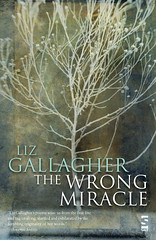
Liz Gallagher’s collection of poems, The Wrong Miracle, are not only love poems, but poems with a unique view on love.  Check out the synopsis at Salt Publishing.

If you missed the first part of my interview with Liz, please check it out here.

Most writers will read inspirational/how-to manuals, take workshops, or belong to writing groups. Did you subscribe to any of these aids and if so which did you find most helpful? Please feel free to name any “writing” books you enjoyed most (i.e. Bird by Bird by Anne Lamott).

I’ve never been a member of a ‘real-life’ writer’s group because of there not being any that I know of in existence here in the Canaries. I’ve only ever been to one or two workshops. My mainstay for writing has been online workshops, namely Inside the Writers´ Studio Forum that is run by Rachel Mallino.  I’ve had lots of inspiring experiences in there on the thirty poems in thirty days forum.  I’ve  also dipped into some writing manuals . . . one in particular that I found very useful at the beginning was “The Practice of Poetry” edited by Robin Behin & Chase Twichell.

When writing poetry, prose, essays, and other works do you listen to music, do you have a particular playlist for each genre you work in or does the playlist stay the same? What are the top 5 songs on that playlist? If you don’t listen to music while writing, do you have any other routines or habits?

I don’t listen to music when writing, I need complete silence, which means I can only really ‘write, write’ in my writing den at home. : ) I drink tea too. Most of the poems in The Wrong Miracle were written while my cat, Mr. Puss, sat alongside me purring and kneading the cushion, sadly, he is no longer with us, that may be why I am finding it very hard to find time and the will to sit down and write just now. I definitely miss him, he was my writing mascot. 

In terms of friendships, have your friendships changed since you began focusing on writing? Are there more writers among your friends or have your relationships remained the same?

My ‘real-life’ friends are mostly non-writers but great readers. Practically all of  my online friendships are with writers. I have met some online writer friends in person who have then become ‘real life’ writer friends. 

Do you have any favorite foods or foods that you find keep you inspired? What are the ways in which you pump yourself up to keep writing and overcome writer’s block?

No, no favourite foods.  I don’t really believe in the idea of having to wait for inspiration to hit. There may be times when I feel more in the humour for writing than others but in general, I think it is a case of just getting started and keeping with it for a set time to see what comes up.  Reading usually kick-starts me into wanting to write.  And a commitment to daily writing is really the ideal way for me to keep going.

Please describe your writing space and how it would differ from your ideal writing space. 

I love the writing space I have: futon, laptop, low-level lighting, quietness, a valley and vivid natural light on the doorstep.  I can’t think of anything else to add other than having a constant supply of tea at hand, and maybe the sound of the faint pull and sway of the sea outside.  : ) 

Please share with the Savvy Verse & Wit readers a little about your latest projects.

For the next 6 months, I’ll be involved in ‘non-creative writing’ writerly things, but come July 2010, I want to revise a load of poems that I have and begin writing more non-fiction. I am also toying with the idea of writing poems and stories for children. I’ll have to wait and see though;it seems very far off just now.

Plans for the immediate future include some readings of The Wrong Miracle that are coming up here in the Canaries. 

Thanks very much for having me here on your Blog, Serena, it has been a pleasure, I have enjoyed your thought-provoking questions. Have a great festive season and all the best for the New Year. 

If you’ve enjoyed this interview, please feel free to check out the next stop on her online tour today, Dec. 17:  South Africa-based Michelle’s Blog Peony Moon

Also, I wanted to let you all know that a portion of the proceeds from The Wrong Miracle will benefit SAND:  Stillbirth and Neo-natal Death Charity.

Interview With John Shors

Welcome to the first part of John Shors’ blog tour.  Stay tuned for my review of his latest book, Dragon House, on Dec. 15.

John Shors kindly took time out of his busy schedule to answer a few questions, and there’s a giveaway copy for my wonderful readers (US/Canada).

Please give the author a warm welcome.

Could you explain how it felt and challenging it was to switch from your previous work with historical fiction to a contemporary fiction novel, like Dragon House

Actually, I think that writing historical fiction is more difficult than to bring life to contemporary fiction. For instance, I spent month after month doing research for my first novel, Beneath a Marble Sky, which is based on the story behind the creation of the Taj Mahal. With my recent novel, Dragon House, which is set in modern-day Vietnam, all I did was fly to Vietnam and spend several weeks getting a good feel for the country (which I had visited earlier as well). So, by switching to contemporary fiction, I removed a whole layer of work from the process of creating a novel.

It is noted on your Web site that a portion of the book sales will go to the Blue Dragon Children’s Foundation.  What inspired you to make this donation and have you seen the effect of this charity on children in Vietnam? 

Dragon House is the story of two Americans who travel to Vietnam to help street children. I’ve had hundreds of experiences with street children, and found such children to be remarkably resilient, hopeful, and bright. I wanted Dragon House to not only benefit me and my family, but these children as well. Partnering with Blue Dragon Children’s Foundation was an easy decision. I’m donating some of the proceeds from Dragon House to this group, which supports street children in Vietnam. I’ve had quite a few readers finish Dragon House, and then email me, asking how they might help support children in need. To date, we’ve raised enough money to buy complete sets of school books for about 500 street children.

The protagonists in the story open a center to help street children, did this foundation serve as a starting point for your novel?

No, I had the idea to do Dragon House long before I encountered any such foundation. It just seemed obvious to me that there was a tremendous need for such foundations. Street children are very prominent in Vietnam, and other parts of Asia. They need support. I wanted to bring the remarkable stories of these children to life, and then to find a foundation to partner with.

If you were to pick 5 songs as an accompanying playlist to Dragon House, what songs would you choose and why? 

That’s a tough question for me, as Dragon House occurs in Vietnam, and any music that wasn’t Vietnamese would strike me as being out-of-place. Oftentimes in the book, the characters are listening to Vietnamese pop music, so such songs would be a good fit.

Beside a Burning Sea, Beneath a Marble Sky, and Dragon House have distinct Asian elements.  What about the Asian culture drew you in and how well do you believe you’ve captured it in your books?

I’ve been lucky enough to live in Asia for about four years, so I know the region well. I’m a big fan of the culture, people, natural beauty, food, climate, history, and affordability of that part of the world. I continue to go back, year after year. As far as the believability of my Asian settings, I think that one of my skills as a writer is the ability to really bring a setting to life on the page. I take that part of writing very seriously, which is why I only write about places that I have spent a lot of time in. I want the reader to feel like they have visited India or Vietnam after finishing one of my novels.

Do you have any particular writing habits, like listening to music while writing or having a precise page count to reach by the end of each day or week? 

Sometimes, while I’m working on the rough draft, I do listen to music. It has the ability to inspire me, if I seem to be spinning my wheels. U2 is a personal favorite. I also give myself very concrete goals. For instance, I’ll write five pages every day until my rough draft is done. Or I’ll edit eighty pages a day if I’m on my twelfth draft.

Which books have you been reading lately, and are there any you would like to recommend?

I recently finished Skeletons at the Feast, which is a very unique and memorable book, and is written by a friend of mine, Chris Bohjalian. To be honest, though, I don’t read that much when I’m on deadline. I don’t like to be influenced by the voices of other writers, as I think I have my own style, and I really like to focus on it, to have it resonating in my head 24/7.

Please share some tidbits about your latest writing projects.

I’m working on my fourth novel, The Wishing Trees, which will come out next September. The Wishing Trees is a story about a father, a mother, and a ten-year-old daughter who are planning a trip around the world. A few months prior to their trip, the mother gets sick and dies. A year later, the father and daughter embark upon the trip, which takes them on an emotional, spiritual, and a physical journey. I’m really excited about this novel, which is quite poignant, I think, and is due to Penguin in February. Then it’s on to book number five! I also continue to speak with several book clubs (via speakerphone) a day about my novels. And I’m helping to transform my first novel, Beneath a Marble Sky, into a major motion picture.

Giveaway for US/Canada Readers:
 
1.  Leave a comment on this interview about what you learned.
2.  Get a second entry for commenting on the 12/15 review of Dragon House.

Deadline is Dec. 21, 2009 at 11:59PM EST

FTC Disclosure:  I want to thank John Shors for providing me with a free copy of Dragon House for review.  Clicking on images or titles will bring you to my Amazon Affiliate page; No purchase required.

Interview With Liz Gallagher, Author of The Wrong Miracle

Liz Gallagher’s collection of poems, The Wrong Miracle, are not only love poems, but poems with a unique view on love.  Check out the synopsis at Salt Publishing.  Here’s a selection from her collection:

Sun Over a Tree Line

I was buying a croissant when I saw
the execution photo. Sometimes we focus
on the explorer — the tangled weed inside

every Because they said so. Nerves can
be as frayed as a sofa. Faint hoof prints
take over and a last wish for a dictator

is a pedicure. Measures of change are
contained in names once held
in a cell phone — a baker missing,

a family, moved. A city under siege
is a Humpty Dumpty — its people grab
door handles and door frames collapse.

Moth-eaten fabric covers all wars.
A problem is dead bodies — blankets
waterlog, headlights turn off and it is

all about inching forward like thieves.
A mistake magnifies within its own
dimensions. Under the gaze of a camera,

there are epiphanies — God becomes
a ragged fellow who moves
from tree to tree in the back of the mind.

He pursues the living and the dead stay dead.

Liz Gallagher took time out of her busy schedule to answer some interview questions.  I hope you will give her a warm welcome.

Thanks for inviting me here. It’s a great looking Blog and I know I am going to feel very relaxed and at home here.

Could you describe a little bit about what inspired you to become a poet and how The Wrong Miracle came about?

Well, Serena, truthfully, I never set out to be a poet as such, it sort of ‘happened.’  I’ve always loved writing and after a spell of maybe 20 years without writing in a creative way, I found myself going back to writing creatively after I went through a rather long and disciplined time of studying and being very much in the academic world., that is up until about 4 years ago.  I remember being at a beach barbeque and thinking: ‘Freedom’ ‘I’m going to live for the moment, no more studying’ and actually saying to a friend that I was finished with studying and being all academic and I remember she said to me something in the line of ‘You’re so disciplined in your study, what do you think you will do with all that free time you are going to have?’ And I remember answering that that was exactly it . . . free-time was going to be free-time and nothing was going to take that away from me!  But before I knew it, I was seeking out online writing forums and writing poetry and getting ultra-involved and addicted.

So as not to bore any readers who have been lovely enough (and interested enough) to follow the tour from the beginning, and to answer the question for you, Serena, (and any new readers who might be following,) I spoke on TFE’s blog about how The Wrong Miracle came about….(at TFE’s we had a poetry poteen party and danced till dawn . . . The address is the following if you want to pop over there.   While approaching the answer, mind the poteen bottles and plead total ignorance of everything if Inspector Columbo or Inspector Clousseau approach to ask questions . . . ‘I know nothing’ is the preferred answer . . . . TFE will explain why . . . I truly know nothing ; ))

Poetry is often considered elitist or inaccessible by mainstream readers. Do poets have an obligation to dispel that myth and how do you think it could be accomplished?

I think that, yes, poetry up until recently had been hijacked (and consequently suffocated and quietened) by certain academics to the extent that it had become exclusive terrain. This is something which definitely has happened, however, poets are now, literally, re-claiming poetry for themselves and for their audiences.  They are metaphorically (and sometimes literally) climbing academic ladders and dusting down books and blowing dust off and saying ‘Listen, here!’  Poets, and consequently, people in general, through poetry readings and poetry performances and literary festivals are breathing life back into poetry and taking it on to the streets to show that, yeah, poetry does matter.  It is not just a subject for academic study.  The thing that I feel amazed by and very motivated by is that people are willing to give poetry a second chance, as most people (of my age, anyway) would have had awful classroom experiences of poetry been analysed to death in an excrutiatingly boring way . . . I remember my English teacher in secondary school saying something like: ‘None of you are going to appreciate any of this poetry that we are about to do now, but in 20 years time, you might want to re-pay all of this a visit . . . and in doing so, you might remember me and what I said to you regarding poetry.’  I remember thinking I am going to remember him saying this and I bet to myself then and there that it wouldn’t be true . . . that I wouldn’t be going within a hair’s breadth of poetry ever again . . . but here I am!  What a shame a teacher like that couldn’t have thought of a more creative way to get poetry to us, we were ripe for poetry with all our 16 and 17 year old emotions seeking some form of outlet . . . Poetry, with justice done to it, would have been ideal here.  

So, Serena, basically, with the live poetry scene taking off really well, especially in Ireland, and in a tiny way, here in the Canaries, I think that poetry is becoming relevant in people’s everyday life.  Hopefully, it will keep on happening and that more and more people will get involved.

Do you have any obsessions that you would like to share?

Well, let’s see, I love the dark and writing in and into the dark.  I love being up drinking tea on my own at dawn.  

When I find a new poet’s work that I love, I become easily obsessed by them and seek their work out, high and low, and think ‘I’ve got to read everything they have ever written!’

Also chocolate at around 5 pm!  And a glass of wine at 10 pm. ; ) And also Thai massage, Thailand . . . and planning getaways! : ) 

How do you stay fit and healthy as a writer?

I have got two very demanding (and very amusing) dogs who bark the house down if I don’t take them on daily treks into the valley.  We also own a tumble-down farm so most days I try to do something there to make it less tumble-down looking!  The farm has six terraces which are step-like land masses and going from one spot to another involves lots of climbing.  And I eat lots of oranges because we have about twenty orange trees on the farm so that means oranges the whole year round!  Oh and yes!  I’m a 2-litre-a-day water drinker . . . I am always to be seen with a bottle in my hand (not the TFE-poteen-party type bottle!) 

Thank you so much for having me here, Serena…looking forward to popping back next week to continue our chat.

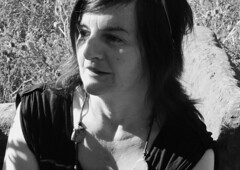
About the Poet: (Photo Credit: Vladi Valido)

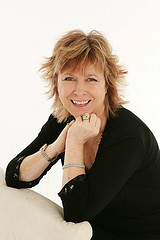
Liz Gallagher was born and brought up in Donegal, Ireland. She has been living in Gran Canary Island for the past 14 years. She has an Education degree where she specialised in Irish language. She also has a Computer Science degree. She is at present doing research into online debating for her PhD. She began writing about 5 years ago and has won a variety of awards in both Ireland and the US: Best New Poet 2007 (Meridian Press, Virginia University) First Prize in The Listowel Writers’ Single Poem Competition 2009 and she was selected by Poetry Ireland for their 2009 Introductions Series in recognition of her status as an emerging poet.

Interview With Karen White

I recently had an opportunity to interview Karen White, author of The Girl on Legare Street, for the D.C. Literature Examiner.  It will be another two part interview.

If you are interested in my review of her book, The Girl on Legare Street, check it out.

You also can check out my review of The House on Tradd Street and her guest post about writing.

Ok, really what you want are the links to my interview with her, so here you go — part one and part two.  I hope you enjoy them!  Leave a comment, sign up for email alerts when new interviews are posted, and become a subscriber.

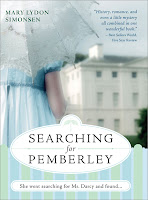
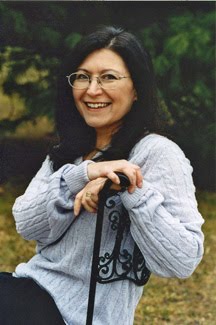
Interview With Mary Lydon Simonsen, Author of Searching for Pemberley

Mary Lydon Simonsen’s Searching for Pemberley hit stores earlier this month and takes place shortly after World War II as American Maggie Joyce uncovers the mystery of which English families inspired Jane Austen to write Pride & Prejudice.

Ms. Simonsen was kind enough to take some time out of her busy schedule to answer a few questions about her book and her writing.  I hope you’ll enjoy the interview, stay tuned for my review of her book, and think about entering the giveaway.

Please welcome, Mary Lydon Simonsen.

Searching for Pemberley explores how real people could have inspired Austen’s Pride and Prejudice.  Is this an idea that you’ve discovered elsewhere or how did you decide to write about this aspect of the novel? 

I don’t know of anyone else who has written about Elizabeth Bennet and Mr. Darcy being modeled on real people. But I was intrigued by the idea of a man from England’s upper class marrying the daughter of a gentleman farmer “whose station in life is so decidedly beneath my own.” I was curious about what a real Lizzy and Darcy would have experienced in their courtship and marriage because they had a wide chasm to bridge because of their different places in society.

How much research did you do to create these characters who inspired Jane Austen?  And do you find that any of your characters are inspired by real people that you know or have known? 

I’ve been reading and studying about the Georgian/Regency Era since I first read Pride and Prejudice in my high school English class, and that’s going back decades. When I started to write the story, I already knew a lot about that time period, so there’s about 35 years of research in my novel. As for my inspiration for the characters, I don’t know anyone who is even remotely close to the privileged Fitzwilliam Darcy, but I do know a lot of down-to-earth Lizzy Bennets. My life experience is much closer to Maggie Joyce, my main character, who grew up in a coal mining town in the 1930s. I’m actually a coal miner’s granddaughter. (I hear Loretta Lynn singing in the background.)

Who is your favorite Jane Austen hero and why?
 

Definitely Elizabeth Bennet because she has spunk, something I definitely didn’t have when I was 21, Lizzy’s age. It took a lot of courage to stand up to Mr. Darcy and to say “no” to an offer of marriage from a man who had it all: looks, wealth, rank, and who was a scion of a prestigious family. Lizzy is her own person, and I’d like to think her independence is part of her attraction.

Most authors using classic characters and stories to spur their own creations fell in love with those characters and stories early on, but wanted something more.  Is this how you felt about Pride and Prejudice?  What motivated you to craft your own tale based upon Jane Austen’s story? 

As a teenager, I was very shy, and because of that, I wanted to be like the self-confident Elizabeth Bennet. If you read Pride and Prejudice, you will see that Mr. Darcy actually has very little dialog, but I took care of that. Over the years, Mr. Darcy and I, as Lizzy Bennet, have had some very interesting conversations, which always ended in his asking me to marry him. Who wouldn’t want to be the wife of Fitzwilliam Darcy? In a recent survey, Australian women voted for Mr. Darcy over Brad Pitt as their dream guy. I’m in full agreement with the results.  

Why choose Jane Austen novels versus other classic authors’ novels. 

I love Jane Austen’s wit, especially in Pride and Prejudice. Once you get into Victorian Era literature, things get a lot more serious, e.g., Jane Eyre and Mary Barton, and I didn’t want that. I write Austen fan fiction for meryton.com, and my stories are light, funny (I hope), low angst, and always have a happy ending.

Do you have any obsessions that you would like to share?
 

The only obsession I have at the moment, other than chocolate, is writing. Once I started writing fiction, which was only four years ago, I found it to be addictive, and I have to force myself to leave the computer room to do things like dust, run a vacuum, cook dinner. I’m sure I have carpal tunnel syndrome because of all the typing I do.

Which books have you been reading lately, and are there any you would like to recommend? 

May I recommend my own modern novel, The Second Date, Love Italian-American Style? It’s a light-hearted look at love in the Italian-American community of North Jersey. Personally, I thought it was really funny. I recently finished The Wordy Shipmates by Sarah Vowell and Murder at Longbourn by Tracy Kiely, both of which I enjoyed. I’m also reading a biography of Andrew Carnegie.

Finally, following Searching for Pemberley, do you have any other projects in the works? Do they deal with other classic literature or do you see yourself flourishing in the Pride and Prejudice market?  

I seem to have found a home at Sourcebooks, the leading publisher of Austen sequels in the country. They have bought the rights to two more novels with tie-ins to Pride and Prejudice. Longbourn to Pemberley (working title) will be out in December 2010, and More Than Tolerable (also a working title) will be out probably a year after that. I’ve also written a parody of Persuasion and a love story where Mr. Darcy is a werewolf for meryton.com

Obviously, I’m a big Austen fan. Thanks again for having me on your blog!

Thanks to you Ms. Simonsen for taking time to answer my questions.  Ok, here’s the giveaway details: 2 copies of Searching for Pemberley for U.S./Canada only.

1.  Leave a comment on this interview about what you found most interesting.
2.  Leave a comment on my review, which appears Dec. 8, for a second entry.
3.  Purchase a Pride & Prejudice spin-off or Jane Austen’s novel through any of the enclosed Amazon Affiliate links and email me (savvyverseandwit AT gmail DOT com) the purchase information for 3 additional entries.
4.  Follow this blog for another entry.

Deadline is Dec. 14, 2009 at 11:59 PM EST.

THIS GIVEAWAY IS NOW CLOSED!!

FTC Disclosure:  Clicking on images or titles will bring you to my Amazon Affiliate page; No purchase required. 

New Interviews With Jill Mansell, Garth Stein, Lynn Levin

I’ve been a busy bee over at D.C. Literature Examiner, interviewing fiction authors and poets.

Jill Mansell took time out of her blog tour schedule to answer a few questions about her latest U.S. invastion, Perfect Timing (click on for my review).

Jill talked about the book, her inspiration, her writing, and her reading habits.  Check out her interview, here and here.

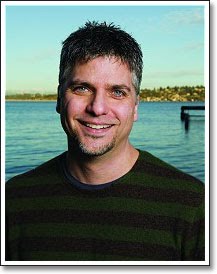
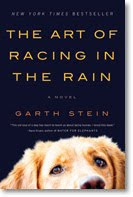
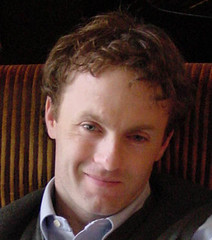
I’ve also had the pleasure of interviewing Garth Stein (Photo Credit:  Frank Huster), the author of The Art of Racing in the Rain (click for my review).

You can find out what Garth’s working on now, what he’s reading, and his obsessions.  I also asked a bunch of questions about Enzo and his narration of The Art of Racing in the Rain.  Check out the interview here and here.

Most recently, I had the pleasure of interviewing poet Lynn Levin, author of Fair Creatures of an Hour (click for my review).

We discussed her collection, her obsessions, and her latest reads.  From John Keats and how he inspired her collection’s title to other poets that have influenced her, Levin clearly knows her poetry and her passions.  Check out that interview here and here.

Interview With Garth Stein

If you haven’t seen my review of Garth Stein’s The Art of Racing in the Rain, you should check it out, here.

Garth Stein kindly took some time out of his busy schedule to answer a few interview questions for me over at the D.C. Literature Examiner.

I know we’re all busy with the holidays, but I hope you will take the time to pop over and comment on my interview and the second part.

Interview With Poet Temple Cone

Temple Cone recently agreed to an interview with myself and 32 Poems. And here is what he had to say.

How would you introduce yourself to a crowded room eager to hang on your every word? Are you just a poet, what else should people know about you?

I love telling people that I’m a poet. Just a poet. Not vaguing it up by saying that I’m a “writer” or qualifying it by adding that I’m a professor of English at the U.S. Naval Academy. I think that, deep down, people appreciate the uselessness of poetry, its lack of clear market value and profit potential. “For poetry makes nothing happen,” as Auden said in his elegy for Yeats, adding a little later that poetry is “A way of happening, a mouth.” For just a moment, they encounter something that can’t really be bought and sold, or at least not dearly.

Some people feel a bit threatened by that, or indifferent to it, but most are curious, and then a little amazed, as if they’d just met someone who could photosynthesize and therefore didn’t need to spend time working in order to buy food. Of course, the question “How can you live on that?” inevitably comes up, to which I always say, “Prize money.” That way they get the impression that they’ve met a really good poet. And who knows, maybe they’ll look me up.

Most writers will read inspirational/how-to manuals, take workshops, or belong to writing groups. Did you subscribe to any of these aids and if so which did you find most helpful? Please feel free to name any “writing” books you enjoyed most (i.e. Bird by Bird by Anne Lamott).

I completed two graduate degrees in creative writing (one at Hollins, one at UVA), and while I’d say I write quite differently from how I wrote back then, I think that those workshop experiences were crucial for me, because they allowed me to accelerate through many styles (and errors) that likely would have taken me a decade to reach, let alone write through.

Before that time, I was a bit isolated as a writer (I wasn’t even an English major in college), but I was lucky in the writing books I encountered, and a few have stuck with me. When I began writing poetry in college, a close professor friend of mine sent some of my poems to James Merrill, who was a good friend of his. Merrill sent me some very encouraging letters, along with a copy of John Hollander’s Rhyme’s Reason, which I read religiously for years. Richard Hugo’s The Triggering Town was a wonderful practical aid, and Hugo’s wry gruffness made him a good companion during less productive stretches. I’m also truly thankful for my copy of Walter Skeat’s Etymological Dictionary of the English Language, which I delve into constantly, stunned by the marvelous ways our words refer to ‘the things of this world.’ And these days, the book that’s most on my mind is Robert Bly’s Leaping Poetry; Bly is wonderful when one doesn’t take him too seriously.

How do you stay fit and healthy as a writer?

I run (rather slowly these days), and whenever I’m stalled on a line, I do push-ups. Eat well, etc. Try to stay away from booze, but coffee’s another story.  

A Psalm Before Healing

A bowl of noodles with oil and sesame on a drizzly night,
A mug of scalding coffee, a braid of chala from the neighbor,
These small services uphold the firmament of stars, selah.
Never forget that the dove grieves but won’t share her story.
The hunters never understand. When she bolts skyward,
She is the skiff the exile rows through morning rain, selah.
How lissom the homerun swing of the left-handed catcher,
As if his bat had caught a comet’s arc and made it shine.
He shall never read this poem or know his own grace, selah.
With its notched legs, the Jerusalem cricket can’t help but sing.
The Alps can’t help but storm. The corn can’t help but grow.
The world is a second language we can’t help but speak, selah.
Once healed, the blind must be taught the ways of vision.
Diamonds in a green cloud are sunlight showing through leaves.
They learn, but dream of seeing in the dark once more, selah.
Just when you think you’re coming to the end of these poems,
Of your life, of a bowl of noodles, there’s an unexpected sweetness,
A last trace of oil you can sop with a handful of bread, selah.

If you’ve enjoyed Temple’s answers so far, I suggest you check out the rest of my interview with him over at 32 Poems Blog. Once there, you can find out about his workspace, inspirations, and much more. Feel free to leave me comments about his interview or your thoughts on poetry in general.

About the Poet:

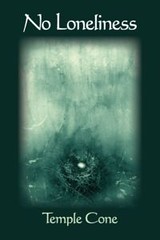
Temple Cone is an associate professor of English at the United States Naval Academy.  His first book of poems, No Loneliness, received the first annual Future Cycle Poetry Book Award in 2009.

Awards for his work include two Dorothy Sargent Rosenberg Prizes in 2007 and 2008, the Christian Publishers Poetry Prize in 2008, a Maryland State Arts Council (MSAC) Individual Artist Award in Poetry in 2007, and the John Lehman Award in Poetry from the Wisconsin Academy Review.

Cone holds a PhD in English from the University of Wisconsin, an MFA in creative writing from the University of Virginia, an MA in creative writing from Hollins University, and a BA in philosophy from Washington and Lee University.  He lives in Annapolis with his wife and daughter.

Interview With Poet Kelle Groom

Kelle Groom recently agreed to an interview with myself and 32 Poems. And here is what she had to say.

How would you introduce yourself to a crowded room eager to hang on your every word? Are you just a poet, what else should people know about you?

I also write personal essays/memoir. For the last year, I’ve been poetry editor for The Florida Review, and have now shifted into an advisory editor position. I work full-time as the Grants & Communications Manager for Atlantic Center for the Arts, an international artists-in-residence program in New Smyrna Beach, Florida. Prior to this, I was the Director of Grants Administration for the Coalition for the Homeless of Central Florida.

Do you have any obsessions that you would like to share?

Writing, of course. And books. Coffee. Oceans. Ireland. Prehistory.

When writing poetry, prose, essays, and other works do you listen to music, do you have a particular playlist for each genre you work in or does the playlist stay the same? What are the top 5 songs on that playlist? If you don’t listen to music while writing, do you have any other routines or habits?

I always listen to music when I write, but feel weirdly secretive about it. A few of the pieces are Antony and the Johnsons cover of Dylan’s, “Knockin’ on Heaven’s Door.” Gorecki’s Symphony # 3 with soprano Dawn Upshaw, especially the second movement (that should count for at least two…). Steve Earle’s Ft. Worth Blues, Jeff Buckley’s cover (and John Cale’s) of Leonard Cohen’s Hallelujah. It’s pretty much the same songs/pieces for a year or so, regardless of the genre I’m writing in.

LOUD HOUSE

Het up boys, skitter boys, muttonchop
go-go boys, gurgle music, kidney stone
music, muchachos party, rubicon sand fire
flaring party, thunderbird ski hats in summer
party, sweaty head party, pound & thump,
socket burning beach party, orange forklift
beach, orange moon ba-boom, hooch smoke,
ta-ta smoke, stonkered house, pandemonium
tetherballed, turtle orbitted, oriflamme ant
house, rust hilled, I know I’m violating
myself house, Maybe you’ll see me
on MTV house, No, dude (to a dog) house,
evening knock knock knock knock
house, evening anamatter clink: glass and tin,
goo food jars, chest hammer music, earthmover,
dog bark music, beep beep back-up
talk, rag and straw sleep, panic sleep, dart
sleep, rummage, rumple, canyon sleep,
sulky bunco, mittenheaded boys, saw-
voiced reclamation boys, fumarole,
radio pale, tar breathing boys
in the chewed grass, white sail an exhale.

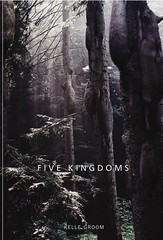
(originally appeared in 32 Poems; forthcoming in Five Kingdoms, Anhinga Press, 2009)

If you’ve enjoyed Kelle’s answers so far, I suggest you check out the rest of my interview with her over at 32 Poems Blog. Once there, you can find out about her workspace, her inspirations, and much more. Feel free to leave me comments about her interview or your thoughts on poetry in general.

About the Poet:

Kelle Groom’s poems have appeared in The New Yorker, Ploughshares, and Poetry, among others. Her poetry collections are Five Kingdoms (Anhinga Press, 2009), Luckily, a 2006 Florida Book Award winner (Anhinga), and Underwater City (University Press of Florida).

She’s received awards from Atlantic Center for the Arts, The Millay Colony, Sewanee Writers’ Conference, Virginia Center for the Creative Arts, State of Florida Division of Cultural Affairs, Barbara Deming Memorial Fund, United Arts of Central Florida, Volusia County Cultural Council, and New Forms Florida.

Interview with Jane Odiwe, Author of Willoughby’s Return

Jane Odiwe, author of Lydia Bennet’s Story (click link for my review) and most recently Willoughby’s Return (review forthcoming), took time out of her busy schedule answer a few interview questions.

Please welcome Jane Odiwe.

Most authors dealing with classic characters fell in love with them early on, but wanted something more.  Is this how you felt about Willoughby, and what is it you sought to do that Jane Austen had not?
  
Rather than falling in love with Willoughby, I suppose it was really that ideal of romantic love that I fell in love with early on, and the relationship that Willoughby first shares with Marianne Dashwood. Jane Austen painted him initially as the epitome of the dashing hero and that is very attractive!

I wanted to discover if Marianne had truly recovered from the heartbreak that he caused and wondered how she might react if he re-entered her life. I also felt we needed to know more about Marianne’s relationship with Colonel Brandon who is her husband, a subject Jane Austen hardly touched upon.

Willoughby is often considered the villain of Sense and Sensibility, is this what attracted you to writing about his character or was it something more?  

He is a villain, but I think his character is more complicated than that. I think a little part of me wanted to believe that he was not all bad and even Jane Austen made him remorseful in Sense and Sensibility. What was more important to me was examining the way Marianne perceived him – we see him through her eyes – and I wanted to take her feelings on a journey.

Many readers are eager to know which character or characters authors most identify with, so in your latest novel, which of the characters do you identify with and why?  

I’d like to say Marianne or Margaret Dashwood, both romantic and passionate heroines who think with their hearts not their heads. Like Marianne, I can wax lyrical on a falling leaf from the sky and a picturesque scene, but that’s where the comparison ends. I think these days I probably identify more with Mrs Jennings, the interfering busybody friend of Colonel Brandon – I have a habit of asking totally outrageous and embarrassing questions of my children’s friends much to their great mortification!

Why choose Jane Austen novels versus other classic authors’ novels?  

I just love them – I’m actually obsessed, as my family will tell you. Jane’s writing is the best and her books work on so many levels. I’m still discovering new wonders in every one, which is just as well, as there are only six.

Who is your favorite Jane Austen hero and why?  

Captain Frederick Wentworth. The story of Persuasion has a special significance for me and that’s why he’s my favourite. It is the most wonderful love story – whenever I go to Bath my husband and I like to stroll along the Gravel walk and follow in the footsteps of Anne and Captain Wentworth. I also think Colonel Brandon would be gorgeous and I have to include Mr. Darcy in this trio of equally splendid heroes.

Do you have any obsessions that you would like to share?  

I just asked my youngest son what he thought for an answer to this question and he immediately answered – your computer! I’m afraid it’s true, but it’s really my writing that is the obsession. I also Google anything and everything on Jane Austen every day – I told you I was obsessed!

Which books have you been reading lately, and are there any you would like to recommend?  

I’ve been reading Jane Austen’s Letters and Persuasion, Emile Zola’s The Ladies’ Paradise, Samuel Richardson’s The History of Sir Charles Grandison, Sarah Waters’ Dancing with Mr Darcy, and Sue Wilkes’ Regency Cheshire. I’d recommend them all.

Finally, following Willoughby’s Return, do you have any other projects in the works? Do they deal with other classic literature or do you see yourself flourishing in the Jane Austen market?   

Sourcebooks will be publishing my next book, Mr. Darcy’s Secret, in the Spring 2011, so that’s exciting to be having a third book published by them. I have started two other books which are both Austen related. I have other non-Jane books I want to write, but I’m really happy living in Austenland at the moment. I’d be really interested to hear what kind of books your readers would like to see – more Jane Austen inspired fiction or maybe another classic author. What do you all think?

Stay tuned for my review of Willoughby’s Return on Nov. 5.  In the meantime, Sourcebooks has sponsored a giveaway for U.S./Canada residents.  You can win 1 copy of Willoughby’s Return.  To Enter:

1.  Leave a comment on which classic author you think Jane should take on next or if you think she should continue with Jane Austen.

2.  For a second entry, leave a comment on my review tomorrow.

3.  Blog, tweet, or otherwise spread the good word about this giveaway (@SavvyVerseWit) for a third entry.

4.  If you follow, I’ll give you an extra 5 entries.  If you are a new follower, you will get 3 extra entries.  Be sure to leave a comment and let me know.

Deadline is Nov. 11, 2009, at 11:59PM EST.