Quantcast

Guest Post & Giveaway: Writing Process of Riana Everly, Author of Teaching Eliza

I’ve always loved My Fair Lady — the movie — and George Bernard Shaw’s Pygmalion is on that list of classics I hope to finish reading some day. Riana Everly has taken this classic and mashed it up with Jane Austen’s Pride & Prejudice.  How could I resist? I couldn’t obviously, so today’s the day she stops by to talk about her writing process and my review will appear later in the month.  Enjoy!

About the book:

A tale of love, manners, and the quest for perfect vowels. From a new voice in historical romance comes this sparkling tale, wherein the elegance of Pride and Prejudice and the wit of George Bernard Shaw’s Pygmalion collide. The results are clever, funny, and often quite unexpected….

Professor Fitzwilliam Darcy, expert in phonetics and linguistics, wishes for nothing more than to spend some time in peace at his friend’s country estate, far from the parade of young ladies wishing for his hand, and further still from his aunt’s schemes to have him marry his cousin. How annoying it is when a young lady from the neighbourhood, with her atrocious Hertfordshire accent and country manners, comes seeking his help to learn how to behave and speak as do the finest ladies of high society.

Elizabeth Bennet has disliked the professor since overhearing his flippant comments about her provincial accent, but recognizes in him her one opportunity to survive a prospective season in London. Despite her ill feelings for the man, she asks him to take her on as a student, but is unprepared for the price he demands in exchange.

“With her clever mash-up of two classics, Riana Everly has fashioned a fresh, creative storyline with an inventive take on our favorite characters, delightful dialogue and laugh out loud humor. Teaching Eliza is certain to become a reader favorite. It’s a must read!” – Sophia Meredith (author of the acclaimed On Oakham Mount and Miss Darcy’s Companion)

Please give Ms. Everly a warm welcome:

Some authors are incredibly disciplined. They are able to stick to a routine, and have their plots mapped out chapter by chapter, character by character, with the precision and detail of Sherlock Holmes considering his latest case.

I am not like that! In high school I never missed a deadline, but I was the kid who was up until midnight finishing my papers. In university, I clearly remember one term paper that was due in the professor’s office at 5:00pm. I frantically finished typing up at 3:57, and then flew into a panic because I had no white paper on which to print it, and no time to run out and buy some. But I did have bright green paper! Into the dot-matrix printer it went (yes, I’m THAT old), and with my precious package in hand, I dashed across the city in desperate hopes of making it on time. 4:55! I just made it. I also scribbled a note apologizing for the green paper. I did alright in that course, so I guess the green paper didn’t damage my research paper too badly.

I’ve learned to manage my time a bit better since then, but I still write the seat of my pants. I approach a new story with a general plot outline in mind, but with almost nothing written down. In the case of Teaching Eliza, the story had to conform to both Pride and Prejudice and Pygmalion, but all the details were very, very vague at first. In fact, I tend to let my characters tell me what they want to do, where they want to go. Sometimes I’ll approach a scene with a polite conversation in mind, only to be horrified when an argument breaks out. Other times, I’ll plan for a heart-rending confession, but my characters will end up discussing the weather instead. Occasionally I whip them back into my plot, but more often I give them free rein and see where they take me. (Spoiler alert: I had no notion of anything developing between Richard and Charlotte when I began writing Teaching Eliza, but they fell in love. What was I to do? Break them up? That would have been cruel!)

My next planned story will be a bit of a challenge for me. For this year’s NaNoWriMo, when much of my writing gets done, I have a mystery in mind. I have always thought that there is no much more to Mary Bennet than we see in Pride and Prejudice, and wanted to explore that a bit. She’s quiet and bookish, but I think she’d make a great investigator because she sees so much and thinks about what she’s seen. However, I need to plan this out a lot more carefully than my usual stories. We need a cogent plot, a series of clues, an overarching narrative involving existing and new characters, and a resolution that makes sense but (hopefully) isn’t obvious, and all of that can’t happen by the seat of my pants. I’ll be as interested as anyone to see whether Mary will follow along with the story line I’m planning for her.

In general, I write quickly. As I mentioned, National Novel Writing Month (NaNoWriMo) is my best friend because it gives me a deadline and a word goal, and I need those. My family hardly sees me in November, but I can usually write about 100,000 words in those 30 days. Most of them are garbage, but it’s a necessary place to start.

Then the real work begins. I tend to let my first draft sit a very long time before I pick it up to edit. Often I’ll write another story in the interim, before going back to reread my draft with fresh eyes. I find this gives me the distance I need to see the flaws and problems and to begin the whole process of editing and rewriting. The scene that I thought was so brilliant at first might now be dull, and I might decide to complete rewrite or even cut it. And characters who I threw in for plot purposes might suddenly take on new life and become much more important to the story as a whole.

After this second go-through I send the story to my amazing beta readers. Usually they have the best ideas, and contribute so much to the stories that I feel I ought to list them as co-authors. There aren’t enough words to express my appreciation. Donna and Sophia – you ladies ROCK!

*~*~*~*~

My Writing Space

I have included a few photographs of my writing space. My desk is usually quite messy, and even cleaned up, it’s messy! You’ll see I have a magnet board for my notes. Despite being quite comfortable with matters digital, I find that I prefer to jot down my notes on paper. Sometimes I use diagrams which don’t work so well on a computer, and sometimes I like to have things sitting there in front of me without having to find the right screen or program for my notes.

I have a few writing buddies who live on my desk as well. I love to crochet, and sometimes interesting creatures emerge from my craft bag. Book Cat was just fun to make, and who could resist Poe and his raven? And when I found this pattern for Jane Austen herself, well, it was fated! Reading Fairy was a gift from Sophia Meredith, a very fine author, a dear friend, and my inspiration to get my stories off the computer and out into the world.

About the Author:

Riana Everly was born in South Africa, but has called Canada home since she was eight years old. She has a Master’s degree in Medieval Studies and is trained as a classical musician, specialising in Baroque and early Classical music. She first encountered Jane Austen when her father handed her a copy of Emma at age 11, and has never looked back.

Riana now lives in Toronto with her family. When she is not writing, she can often be found playing string quartets with friends, biking around the beautiful province of Ontario with her husband, trying to improve her photography, thinking about what to make for dinner, and, of course, reading! Visit her website and on Facebook.

ENTER the Giveaway!

A Monster Calls by Patrick Ness

Source: Public Library
Paperback, 225 pgs.
I am an Amazon Affiliate

A Monster Calls by Patrick Ness, which was our October book club selection, is a deeply emotional book about loss and guilt and letting go. Conor O’Malley is 13, but his burdens are great as he cares for himself the best he can while his mother clearly ill from chemotherapy. She is barely able to wake up and move about. At school, his life is gray and the only color he finds is in his encounters with the bullies at school because they provide him what he wants — punishment.

“It swung him out of his room and into the night, high above his backyard, holding him up against the circle of the moon, its fingers clenching so hard against Conor’s ribs he could barely breathe. Conor could see raggedy teeth made of hard, knotted wood in the monster’s open mouth, and he felt warm breath rushing up toward him.” (pg. 8)

It is a deeply atmospheric novel in which the gray and black emotions of Conor permeate all that goes on.  The Monster who visits him each evening tells him three stories, and Conor expects them to teach him something, but what Conor must learn is something he can only teach himself through experience.  The Monster, however, is not his recurring nightmare.  And the Monster, though fearsome, seems to be the darkness inside him and not an actual monster.  We all carry monstrous emotions and we try to keep them hidden — sometimes even from ourselves.  Through magical realism, Ness has created a tale for teens and adults alike that will ensure they look inward and assess their own pain, guilt, and loss in a new way.

Sometimes people need to lie to themselves most of all.” (pg. 67)

A Monster Calls by Patrick Ness is deeply affecting.  Readers will long feel the sorrow and the heaviness of this one, but it is darkly humorous in parts.  While one of the monster’s tales is a bit muddled, it could be attributed to the 13-year-old’s imagination in how it fails to fully parallel the other tales.  Ness is a crafty storyteller, and his Conor is every boy ever deeply impacted by loss, abandonment, and other dark emotions.

RATING: Quatrain

What book club thought?

Everyone at the meeting liked the book very well and really felt engaged with the narrative and Conor’s emotions.  The biggest debate was whether the monster was a real entity or in Conor’s mind.  It was interesting to listen to the theories that members had about the individual tales the monster told and how they paralleled Conor’s predicament.

About the Author:

Patrick Ness, an award-winning novelist, has written for England’s Radio 4 and Sunday Telegraph and is a literary critic for The Guardian. He has written many books, including the Chaos Walking Trilogy, The Crash of Hennington, Topics About Which I Know Nothing, and A Monster Calls.

He has won numerous awards, including the Guardian Children’s Fiction Prize, the Booktrust Teenage Prize, and the Costa Children’s Book Award. Born in Virginia, he currently lives in London.

Guest Post: Fanny vs. Mary, an Austenesque Showdown

Welcome to Day #3 of the great Fanny and Mary Debate!

If you missed Day 1, visit JustJane 1813, and Day #2 at Diary of an Eccentric.

Hello, I’m Lona Manning, author of A Contrary Wind, a variation on Mansfield Park, and author of true crime articles.

And I’m Kyra Kramer, author of Mansfield Parsonage and the nonfictional historical books, Blood Will Tell, The Jezebel Effect, Henry VIII’s Health in a Nutshell, and Edward VI in a Nutshell.

Lona: Please join us for the knock-down drag-out (maybe) Fanny versus Mary debate of the decade/epoch/millennium. We will take turns posing each other questions. Please feel free to join in the comments!

Kyra: Everyone who comments will be entered in a draw to win a gift pack of Austen goodies from Bath, England.

Today, the authors will discuss: What was Mary Crawford’s “real” character?

Lona: I feel upon reading (and re-reading) your book that you have been very respectful of Austen’s conception of Mary Crawford. She is still essentially who she is in Mansfield Park. She is witty and charming – no, more than that, she is one of those lucky creatures blessed with true charisma. No plain or dull woman can get away with an impish laugh and a line like: “[Y]ou must forgive me. Selfishness must always be forgiven, you know, because there is no hope of a cure.”  While “your” Mary is loyal and affectionate with her sister Mrs. Grant and her brother Henry, she’s still self-centred and occasionally thoughtless and she gets very irritated with people who don’t agree with her.

Kyra: *blushes* Thank you. I tried my absolute best to stay true to Mary – warts and all, so to speak. Even in the original Austen novel, where Mary Crawford is the antagonist, she has an excellent heart, a quick wit, and a joie de vivre that is worth much more to me than all of Fanny Price’s soggy moralizing. In fact, the character that Mary reminds me of the most is Elizabeth Bennet – her personality is a similar mixture of sweetness and archness that is very captivating indeed! In Mansfield Parsonage, I try to keep Mary Crawford within the lines of the “really good feelings” she was almost entirely motivated by, with the understanding that she is essentially misanthropic as a result of living among the Ton.

Lona: Austen acknowledges Mary was almost [my emphasis] purely governed by good feelings, in that one particular instance, when she comforted Fanny after she was insulted by Mrs. Norris. She is intelligent and charming, but benevolence is definitely not a quality I associate with her.

Kyra: Hmmm … I don’t think Mary was trying to impress Edmund. She was very out of charity with him just then for his refusal to be in the play (regardless of its effect on Mary’s comfort), and she was still determined to never marry a second son even if she had been less angry with him at the time. Mary’s sole motivation was to comfort Fanny, who had been cruelly humiliated by Mrs Norris.

Lona: [Cough] Much as it pains me to contradict you, dear Kyra, here is the quote, directly after Mary intervenes: “By a look at her brother she prevented any farther entreaty from the theatrical board, and the really good feelings by which she was almost [my emphasis] purely governed were rapidly restoring her to all the little she had lost in Edmund’s favour.”

Kyra: [Cough, Cough] I must regretfully disagree with you, dearest Lona. The narrator/Austen is telling us that Mary was recovering in Edmund’s esteem. Mary, herself, neither knew she had fallen out of his esteem — nor cared about what Edmund thought of her at that moment. She was irked at him. She had been sharply rebuffed when she tried to coax Edmund to be Anhalt, and just a few paragraphs before “with some feelings of resentment and mortification, moved her chair considerably nearer the tea–table, and gave all her attention to Mrs. Norris, who was presiding there.” She only moved her seat only to give comfort Fanny, and did not address Edmund again at all.

Lona: You still haven’t explained the “almost.”

Kyra: True, so I’ll point out that while Mary DID sometimes do thoughtless things that hurt people, there are many instances of her efforts to be helpful or kind. Again, at the December ball she spent the first half of it trying to make everyone happy (albeit erring greatly with Fanny). You can say that was just selfishly attempting to be popular, but she could have been witty without endeavoring to bring personal pleasure to the listener. She also warned her sister to keep her friends Maria and Julia Bertram at a distance from Henry Crawford for their heart’s sake. Additionally, she told Mr Rushworth Maria was being “maternal” when she acting with Henry in Lover’s Vows. Yes, it spared Henry embarrassment — but it spared Maria much more than mere embarrassment and it spared the dim-witted Rushworth immediate pain. Was Mary perfect? Nope. But she did TRY to be kind most of the time.

Lona: Everybody says that Jane Austen introduces very little of the wider world (politics and war) to her novels, but in your variation, Mansfield Parsonage, we get a lot of discussion of politics, literature, fashion and society gossip. We sense that Austen’s Mary Crawford is well-read and well-informed about her world, both social and political, and your Mary is almost a bluestocking: she can quote poetry and literature extensively and she avidly follows politics. Your Mary Crawford is a Whig (that is, she is a reformer, a progressive, in her views); she’s an Abolitionist who sympathizes with the downtrodden working poor of her day. But while she loves humanity in the abstract, she wants nothing to do with poverty or squalor in person and she shrinks from making charitable visits in the village, as Fanny does. In short, you’ve designed her to be a flawed heroine. In what ways do you feel you’ve made Mary more sympathetic? Because I couldn’t help thinking that you have described a Regency “limousine liberal.”

Kyra: I actually set out to make Mary a textbook “limousine liberal”. I wanted Mary to be a political foil for Austen herself, who (though an abolitionist) was a “country Tory” who disliked change and sociocultural liberalism. The French Revolution had created a backlash against progressive mores among the English upper and middle class, and in Austen’s original novel Mary Crawford had all the light disdain for the church and authority expected of a rebel-sympathising Whig. Mary and Henry Crawford represented the moral hazards of the Enlightenment to propriety and hierarchical values. Therefore, what could possibly be more appropriate for an antagonist than for her to be a “limousine liberal”; an essentially good elitist progressive whom Austen would have nonetheless disdained?

Lona: Yes, I’m very interested in talking about Mansfield Park in the context of the times in which it was written. But we’ll save that for another day. I think that we would be in total agreement, and this is supposed to be a debate.

Kyra: Good point. I’ll simply say that I believe Mary’s once-removed charity work is representative of Austen’s original characterization, but is also part of my argument that she was worthy of being a heroine in her own right. While throwing money at a problem is not as good as a Mother Teresa-like devotion to helping the needy (ala Flawless Fanny), I would argue that to be a limousine liberal is better than ignoring poverty or assuming it derives from the moral/intellectual failings of those who suffer from it.

Lona: I think the readers should weigh in. Was Mary, as Kyra insists, almost wholly good, or did she have a more chequered personality than Kyra would like to admit?

We’d love to hear what you think in the comments.

About the Authors:

Lona Manning is the author of A Contrary Wind, a variation on Mansfield Park. She has also written numerous true crime articles, which are available at www.crimemagazine.com. She has worked as a non-profit administrator, a vocational instructor, a market researcher, and a speechwriter for politicians.

She currently teaches English as a Second Language. She and her husband now divide their time between mainland China and Canada. Her second novel, A Marriage of Attachment, a sequel to A Contrary Wind, is planned for release in early 2018. You can visit her website where she blogs about China and Jane Austen.

Kyra Kramer is a medical anthropologist, historian, and devoted bibliophile who lives just outside Cardiff, Wales with her handsome husband and three wonderful young daughters. She has a deep – nearly obsessive – love for Regency Period romances in general and Jane Austen’s work in particular. Ms. Kramer has authored several history books and academic essays, but Mansfield Parsonage is her first foray into fictional writing. You can visit her website to learn more about her life and work.

Follow the rest of the tour for more chances to win:

Whose team are you on?

The Welcome Home Diner by Peggy Lampman (giveaway)

Source: TLC Book Tours
Paperback, 352 pgs.
I am an Amazon Affiliate

The Welcome Home Diner by Peggy Lampman offers a platter of new characters set in Detroit, which is beginning its renaissance. Cousins Addie and Samantha risk everything to buy a nearly hollowed out diner and a crumbling home that they divide into two livable spaces. They hope that through the meals they serve, using organic ingredients, they can make a successful eatery. However, they fail to take into account how their new venture will be received by the community.  As pressures mount, their relationship begins to fray and readers will see just how the past and present influence their future.

Through alternating points of view between Samantha and Addie, readers are able to see the quirky characters that make up their diner family. But through the atmosphere built by Lampman, it is clear something ominous is on the horizon, especially after an unexpected letter arrives. The author has drawn not only the main characters well, but also the secondary characters, creating a well rounded meal on which to chew. Some of the best parts of this book involve food and those recipes are in the back of the book, and I loved the material about WWII polish immigrants like Addie’s grandparents.

The Welcome Home Diner by Peggy Lampman is a succulent dish served in the evening with wine and a good dose of humor.  Readers will have watering mouths as they work their way through this renaissance for Detroit, Addie, and Samantha.

RATING: Quatrain

GIVEAWAY:  U.S. residents age 18+ Enter by leaving a comment about this review and book by Oct. 31. Good Luck.

About the Author:

Peggy Lampman was born and raised in Birmingham, Alabama. After earning a bachelor’s degree in communications—summa cum laude—from the University of Michigan, she moved to New York City, where she worked as a copywriter and photographer for a public-relations firm. When she returned to Ann Arbor, her college town, she opened a specialty foods store, the Back Alley Gourmet. Years later, she sold the store and started writing a weekly food column for the Ann Arbor News and MLive. Lampman’s first novel, The Promise Kitchen, published in 2016, garnered several awards and accolades. She is married and has two children. She also writes the popular blog www.dinnerfeed.com.

Mailbox Monday #450

Mailbox Monday, created by Marcia at To Be Continued, formerly The Printed Page, has a permanent home at its own blog. To check out what everyone has received over the last week, visit the blog and check out the links. Leave yours too.

Also, each week, Leslie, Martha, and I will share the Books that Caught Our Eye from everyone’s weekly links.

Here’s what I received from Anna:

Meet Me at Beachcomber Bay by Jill Mansell

Heart-stopping romantic entanglements, crossed wires and sisterly dilemmas – all the ingredients for an unputdownable read from international bestselling author, Jill Mansell

When Clemency meets the brilliant Sam Adams, she could just about fall in love with him—if he weren’t married. Three years later, Clemency has settled into her cozy home village of Cornwall to focus on her career. Everything is smooth sailing until Sam upends her entire life…by showing up as her stepsister’s boyfriend.

Caught in the midst of a love triangle, Clemency has to pretend she’s never met Sam…and choose between the love of her life and the bond of sisterhood.

Good at Games by Jill Mansell

Who will make the next move?

How does one become accidentally engaged? That’s what Suzy Curtis thinks when she suddenly finds herself very publicly engaged to handsome Harry Fitzallan, local town hero. Harry wants famous rock star Jaz to be his best man-only he’s Suzy’s ex-husband and a recovering alcoholic. Suzy’s half sister Lucille loves getting to know the family she’d never met, but she can’t help her attraction to Jaz, nor can Suzy quash her entirely inappropriate feelings for Leo, Harry’s engaged brother!
With all these wild players at the table, mayhem is bound to ensue. As each new piece comes into play, everyone has more to lose, and the only way to win is if you’re good at the games of love…


Pride and Prejudice Adhesive Page Flags

Aren’t these the cutest!

Teaching Eliza by Riana Everly for review.

A tale of love, manners, and the quest for perfect vowels.

From a new voice in historical romance comes this sparkling tale, wherein the elegance of Pride and Prejudice and the wit of George Bernard Shaw’s Pygmalion collide. The results are clever, funny, and often quite unexpected….

Professor Fitzwilliam Darcy, expert in phonetics and linguistics, wishes for nothing more than to spend some time in peace at his friend’s country estate, far from the parade of young ladies wishing for his hand, and further still from his aunt’s schemes to have him marry his cousin. How annoying it is when a young lady from the neighbourhood, with her atrocious Hertfordshire accent and country manners, comes seeking his help to learn how to behave and speak as do the finest ladies of high society.

Elizabeth Bennet has disliked the professor since overhearing his flippant comments about her provincial accent, but recognizes in him her one opportunity to survive a prospective season in London. Despite her ill feelings for the man, she asks him to take her on as a student, but is unprepared for the price he demands in exchange.

What did you receive?

24-Hour Readathon

As you may know, this weekend is the 24-hour read-a-thon. In honor of the event and Dewey, I’m talking about some read-a-thon memories.

Join me and share your memories.

Mom & Me: An Art Journal to Share, Create and Connect, Side by Side by Lacy Mucklow and Bethany Robertson

Source: QuartoKnows
Paperback, 128 pgs.
I am an Amazon Affiliate

Mom & Me: An Art Journal to Share, Create and Connect, Side by Side by Lacy Mucklow and Bethany Robertson is a way to foster greater communication with young children, especially those who are just learning how to cope with their feelings and address issues in their school lives or at home.  For a mother and daughter or even a father and son, this journal could be a jumping off point for deeper conversations about what may be causing a child to act out or cause trouble. However, parents should be careful in using it and make sure that it remains a stress-free and fun activity and not something the child feels pressured to do.

Each 2-page section includes a prompt for both the parent and child to draw or even write how they feel on their own page, and when they are done, they can share those pages aloud or in silence with a few questions to clarify. Parents also will need to remember this is a journal to foster greater communication and that the quality of the art inside created by themselves or their child is irrelevant to its purpose.  If you both become better doodlers, all the better.

From drawing out our feelings to creating a coat of arms for the family and depicting yourself with the best animal qualities, these activities will have parents and their children laughing together and sharing quality time, as well as communicating. One of the best activities in the book is drawing your inside self and drawing your outside self, which can not only be enlightening for the child, but also the parent when they contemplate how they view themselves.

Mom & Me: An Art Journal to Share, Create and Connect, Side by Side by Lacy Mucklow and Bethany Robertson includes activities to reflect on the past, on emotions of the moment, self-image, qualities we want to have and do have, and much more. Once this journal is filled, it could give way to more activities together and greater communication as well as the creation of your own personalized journals that you can share together.

RATING: Quatrain

About the Author:

Lacy Mucklow (MA, ATR-BC, LPAT, LCPAT) is a registered, board certified, and licensed art therapist who has been practicing art therapy in the Washington, DC area since 1999. She has experience working with a variety of mental health populations and settings, including schools, home-based counseling, and hospitals with adolescents, families, and adults. Lacy holds a Bachelor of Arts degree in Psychology with a minor in Studio Art from Oklahoma State University, and a Master of Arts degree in Art Therapy from The George Washington University.

Scratch and Create: Enchanted Forest: 20 Original Art Postcards by Kailey Whitman

Source: QuartoKnows
Postcards, 20
I am an Amazon Affiliate

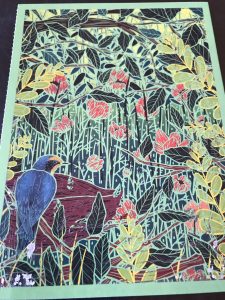
Scratch and Create: Enchanted Forest: 20 Original Art Postcards by Kailey Whitman comes with its own tool for scratching off the metallic coating, and it has its own plastic storage space attached to the book.  Kids may want to be careful with the plastic storage case, as it could easily be ripped off or damaged when trying to access the tool.  Others shouldn’t have a problem at all.

My daughter hasn’t had a chance to use these yet, but I’m sure that she will soon.  I, on the other hand, have had a stressful few weeks and was looking for something mindless to do and relieve stress.  This seemed to provide some relief, especially as I’ve had very little time to do anything outside of work and other life projects. I’m going to send my first one out this week.  I hope that my cousin will be able to take a picture because I want to see how well it arrives to her. I’ll keep you posted on that.

You will want to place even pressure on the tool to scrap away the metallic coating and not too much pressure because it will tear away the coloring underneath if you are not careful.  You’ll see the little bit of color that I tore away on my near the bottom of the bird on the left-hand side at the bottom of the postcard. I was a little bummed, but learned how to add just enough pressure to make the image appear. You can also use a coin if you’d rather do that. I tested it out and it works just as well.

Scratch and Create: Enchanted Forest: 20 Original Art Postcards by Kailey Whitman is a good way to send art in the mail and keep in touch with family or friends.  It’s as fun as a scratch ticket from the convenience store, but with much better results.

RATING: Quatrain

About the Illustrator:

Kailey Whitman is a Philadelphia based illustrator and designer. She is a graduate of the University of the Arts illustration program and when she’s not drawing, she is thinking about drawing.

Her work has been recognized by the society of illustrators 2016 student competition and she was the recipient of the Roger T. hane award. Her work has been featured on behance, brown paper bag, and she was named one of Adobe Creative Cloud’s Artists to watch.

clients include the new york times | the village voice | The Phoenix New Times |grid magazine |Main Line Today | Cincinnati Magazine | Delicious Living Magazine | middlebury college magazine | At Buffalo Magazine | Parragon | Quarto | wASHINGTON SQUARE WEST CIVIC ASSOCIATION |eastern state penitentiary.

Mistaken by Jessie Lewis

Source: Meryton Press
Ebook, 424 pgs.
I am an Amazon Affiliate

Mistaken by Jessie Lewis is a Pride & Prejudice variation that will take Mr. Bingley to task for his easy-going manners that allow others to influence his decisions and will demonstrate how mistaking another’s actions can lead to disaster.  Misunderstandings in Jane Austen are nothing readers are unused to by now, but Lewis amps up the miscues and the drama in her variation.

“Life was muted in her absence.” (from Mistaken)

Much of the story from Austen remains intact here and Lewis shows readers what may have happened behind Austen’s scenes.  She also engages Austen’s characters in new ways and creates her own subplots. What worked well was the main love story between Elizabeth Bennet and Mr. Darcy, and his demonstrable grief and her anger are tangible in Lewis’ deft hands.  Their romance is believable, despite the obstacles, and his fierce protection of Lizzy rings true.

“‘Cease hiding behind the Titan and admit it. You agreed with him.’

‘I did?’

‘Aye! He did not make you leave. You chose to do it.'” (from Mistaken)

However, in ramping up the misunderstandings, we see a side of Jane, Lizzy’s sister, that is less than pleasant as jealousy and resentment consume her to the point where her relationship with Lizzy appears altered forever. As Jane’s behavior dragged on and worsened to the point where this reader no longer liked her, it was hard to watch Lizzy deal with not only her new responsibilities, but also the absence of her best friend and sister and the repeated flirtations of men she had no interest in.  It read a little too much like a daytime drama in some instances, but the scenes where the ton are gossiping was exactly as readers would imagine it to be and demonstrates how fragile a woman’s reputation was in those times.

Mistaken by Jessie Lewis is unique in the number of misunderstandings that occur and how they are resolved in a series of puzzles that are laid out in pieces for the reader.  Lizzy is still headstrong and lively, but it is clear that this personality could get her in loads of trouble among upper society.  Readers of Pride & Prejudice will recognize various differences in their beloved characters, and the lack of resolution at the end for one plot may leave the door open for another part to come. Lewis’ novel is engaging and terrifying all at once, especially if you’ve grown attached to the Bennets and their new husbands.

RATING: Quatrain

About the Author:

I’ve always loved words—reading them, writing them, and as my friends and family will wearily attest, speaking them. I dabbled in poetry during my angst-ridden teenage years, but it wasn’t until college that I truly came to comprehend the potency of the English language.

That appreciation materialised into something more tangible one dark wintry evening whilst I was making a papier-mâché Octonauts Gup-A (Google it—you’ll be impressed) for my son, and watching a rerun of Pride and Prejudice on TV. Fired up by the remembrance of Austen’s genius with words, I dug out my copy of the novel and in short order had been inspired to set my mind to writing in earnest. I began work on a Regency romance based on Austen’s timeless classic, and my debut novel Mistaken is the result.

The Regency period continues to fascinate me, and I spend a good deal of my time cavorting about there in my daydreams, imagining all manner of misadventures. The rest of the time I can be found at home in Hertfordshire, where I live with my husband, two children, and an out-of-tune piano. You can check out my musings on the absurdities of language and life on my blog, Life in Words, or you can drop me a line on Twitter, @JessieWriter or on my Facebook page, Jessie Lewis Author, or on Goodreads, Jessie Lewis.

Mailbox Monday #449

Mailbox Monday, created by Marcia at To Be Continued, formerly The Printed Page, has a permanent home at its own blog. To check out what everyone has received over the last week, visit the blog and check out the links. Leave yours too.

Also, each week, Leslie, Martha, and I will share the Books that Caught Our Eye from everyone’s weekly links.

Here’s what I received:

Sketch Now, Think Later by Mike Yoshiaki Daikubara for review.

Sketching is more popular than ever, but busy lives leave almost no room for sitting down with a pad and pen, and practicing. Many people give up on their potential hobby (and artistic outlet) because they feel they just don’t have the time to lay the groundwork. Here’s a secret though: you do have time each day to practice, you just need to incorporate sketching into your daily life.

Sketch Now, Think Later covers the tools, techniques and tips that author and Urban Sketching Correspondent of Boston Mike Daikubara has developed in his more than 15 years as a practicing artist, and will show you how to fully dive into any sketching situation with limited time and tools, and still be able to produce memorable, great looking, fun sketches!

How to Draw Almost Every Day: An Illustrated Sourcebook by Kamo for review.

The perfect book for budding artists, How to Draw Almost Every Day challenges and inspires you to draw one simple illustration each day of the year. Organized as a calendar, illustrations are presented as daily exercises.

Each image is broken down with step-by-step diagrams, making the process easy to understand. You’ll learn to draw items from everyday life, like food and clothing, as well as seasonal images including snowmen and pumpkins. We have also included inspiring project photos to show you how to incorporate the doodles into greeting cards, calendars, invitations, gift wrap, and more!

Just for Fun: Perspective by Lise Herzog for review.

Just for Fun: Perspective takes a complicated topic and makes it easy and fun for aspiring artists and art enthusiasts! Even if you’ve never picked up a pencil or paintbrush, you can follow the simple, step-by-step instructions, and create realistic, proportionate artwork using perspective.

Featured subjects start with basic lines and shapes, then slowly progress with each new step to fully rendered artwork. Just for Fun: Perspective saves the technical aspects of drawing and painting for more advanced students and prefers to touch upon the key concepts and fundamentals of perspective.

Learn about the differences between one-, two-, and three-point perspective; vanishing points; and methods for measuring and dividing areas of a subject or scene proportionately. Use basic lessons on depth and distance to add color and create your own drawings and paintings with step-by-step instructions for shapes, architecture, portraits, animals, street scenes, and more.

With approachable and contemporary drawings and paintings as well as lots of tips, instructions, and inspiration, Just for Fun: Perspective will have even the most artistically challenged individuals mastering perspective in no time.

Learn to Draw: Star Wars Force Awakens for review.

Learn to Draw Star Wars: The Force Awakens brings modern Star Wars iconography to life in stunning graphite pencil, transforming memorable characters including Rey, Poe Dameron, BB-8, and Kylo Ren (along with Leia, Han Solo, and R2-D2) into detailed, realistic portraits. Lucasfilm collaborator and professional artist Russell Walks guides artists step by step and provides insightful notes, drawing tips, and memorable moments for each character from the film. This book allows readers to develop and strengthen their drawing skills, while experiencing this legendary series in a whole new light.

What did you receive?

It’s Just Nerves: Notes on a Disability by Kelly Davio

Source: purchased
Paperback; 144 pgs.
I am an Amazon Affiliate

It’s Just Nerves: Notes on a Disability by Kelly Davio, on tour with Poetic Book Tours, is a candid collection of essays and vignettes that illustrate how having an autoimmune disease not only affects how you live, but also sharpens your perspective on pop culture, healthcare systems, advertising, trite statements from well-meaning people, and much more.  Her writing is precise and sharp, forcing readers to reassess their views on disability and how to engage with those whose bodies are not “healthy.”  Even the term “healthy” takes on new meaning in these essays.

Davio is serious and funny, and what she has to say is something that we all need to listen to.  All people deserve respect and compassion, and no one should be made to feel like they are worthless or not who they once were should disease strike.  Compassion is a tough business, but we have a duty to defend it and to engage with it head on.  Stories like hers will make you yelp in shock, and make you angry that others treated her as they did.  But what’s even more telling is how Davio views herself.  Has society played a role in how we view ourselves and aren’t those lenses just a little bit too cloudy with other people’s judgments?  I think so.

It’s time to be real with one another and with ourselves.  Davio does nothing less in this essay collection. A stunning read and one you won’t want to put down once you get started. I know I didn’t. I read it in one sitting. It’s Just Nerves: Notes on a Disability by Kelly Davio is a memoir and essay collection in one.

Don’t forget to enter to win:

ENTER THE GIVEAWAY (3 copies up for grabs for U.S. residents, age 18+; ends Oct. 31, 2017)

RATING: Cinquain

About the Author:

Kelly Davio is the author of Burn This House (Red Hen Press, 2013) and the forthcoming The Book of the Unreal Woman. She is the founding editor of Tahoma Literary Review and the former Managing Editor of The Los Angeles Review. While in England, she served as the Senior Editor of Eyewear Publishing. Her work has appeared in Best New Poets, Verse Daily, The Rumpus, and others. She earned her MFA in poetry from Northwest Institute of Literary Arts. Today, she works as a medical editor in New Jersey.

Jane & Me: My Austen Heritage by Caroline Jane Knight (Audio)

Source: publicist
Audible; 8+ hrs.
I am an Amazon Affiliate

Jane & Me: My Austen Heritage by Caroline Jane Knight, narrated by Alison Larkin, is a memoir of one of the last people to live in Chawton House — the home of Jane Austen — as part of a family.  Knight peppers her family stories with historical notes from the ancestors, the letters, and the stories she heard as a child, but she also incorporates the words of Jane Austen from her novels at the most opportune moments.  Readers will be delighted to learn how elements from her books were taken straight from her family’s experiences.

From the beginning readers know that Knight was forced from her home at age 17 due to financial distress.  You can imagine how being forced from an ancestral home would be disconcerting and lead her to distance herself from Jane Austen. But readers will want to learn how her life comes full circle and leads to the creation of the Jane Austen Literacy Foundation.

Jane & Me: My Austen Heritage by Caroline Jane Knight, narrated by Alison Larkin, provides a unique look at Jane Austen’s ancestors and explores how family members many years removed can carry some of the same traits and interests.  Knight is a curious woman who loves to weave stories about her family members with those of Austen’s novels and real life.  She mirrors Jane’s streak of independence, which readers have found so compelling about Elizabeth Bennet.

RATING: Quatrain

About the Author:

Caroline Jane Knight shares more than Jane Austen’s name and DNA. As a direct descendant of Jane’s brother, Edward Knight, Caroline is the last of the Austen Knight family to grow up at Chawton House on the estate where her fifth great-aunt Jane Austen lived and enjoyed the most productive period of her writing career. Caroline explored the same places around Chawton House and its grounds as Jane did, dined at the same table in the same dining room, read in the same library and shared the same dream of independence.