Quantcast

Lilac Girls by Martha Hall Kelly (audio)

Source: Public Library
Audiobook; 14 CDs
I am an Amazon Affiliate

Lilac Girls by Martha Hall Kelly, narrated by Cassandra Campbell, Kathleen Gati, and Kathrin Kana — which was our September book club selection — is an expertly woven tale of Caroline Ferriday’s lilac girls, or the Ravensbrück rabbits, who were experimented on in a German WWII camp.  Ferriday, who was a real woman, is a socialite who soon realizes that her work with French nationals is more about helping others than it is about her social status, even as she falls for a married French actor and considers a different life for herself.  Told in alternate points of view — Ferriday, polish teen Kasia Kuzmerick, and a young ambitious German Dr. Herta Oberheuser — Kelly’s trifecta pushes readers deep into the emotional baggage of WWII and the relationships that carry each woman through.  Clearly well researched, Ferriday comes to life as a woman with little else to do but mourn her father and help those in need, while Kasia has a lot to learn even as she plunges headlong into the resistance to impress a boy.  Meanwhile, Herta — the most educated of the three — seems to have learned little compassion for others, instead remaining focused on how to get ahead as a medical professional, no matter the cost.

Even the German doctor appears sympathetic at first, until we see how camp life hardens her against humanity.  Kasia wears her camp damage on her at all times, pushing even her family away when it is clear she needs them most.  Meanwhile, Ferriday’s romantic troubles seem trivial in comparison, though it is clear they will push her into something that will become her life’s work — a search for justice for those who need it most.

It will be hard to look away from these women as they deal with the harsh experiments perpetrated by the Nazis, and they are set on their own paths and learn how best to move on with their lives after the war is over.  Kelly has lived with these women for some time, and it shows in her deeply dynamic characterization of the real-life Ferriday and Oberheuser; Kasia and her sister also are clearly based on real life accounts as their sisterly bond becomes a rock on which they can rely in even the toughest moments.  Even if you think you’ve read everything about WWII, this is not to be missed.

Lilac Girls by Martha Hall Kelly, narrated by Cassandra Campbell, Kathleen Gati, and Kathrin Kana – is a harrowing look at guilt — misplaced or not — and the affects of bonds between siblings, mothers and daughters, and even strangers during wartime.  Nurturing supportive relationships with other women can ensure survival.

RATING: Cinquain

About the Author:

Martha Hall Kelly is a native New Englander who lives in Connecticut and Martha’s Vineyard. She worked as an advertising copywriter for many years, raised three wonderful children who are now mostly out of the nest and Lilac Girls is her first novel. She is hard at work on the prequel to Lilac Girls.

Mailbox Monday #444

Mailbox Monday, created by Marcia at To Be Continued, formerly The Printed Page, has a permanent home at its own blog. To check out what everyone has received over the last week, visit the blog and check out the links. Leave yours too.

Also, each week, Leslie, Martha, and I will share the Books that Caught Our Eye from everyone’s weekly links.

Here’s what we received:

#RESIST: Poems, which is free from Yes Poetry (get your copy today, it’s an ebook)

Poetry by Gregory Crosby, Kristin Chang, Chris Roberts, Laura Buccieri, Nathan McClain, John Maher, and more.

What did you receive?

Imagine That! How Dr. Seuss Wrote The Cat in the Hat by Judy Sierra, illustrated by Kevin Hawkes

Source: Random House
Hardcover, 40 pgs.
I am an Amazon Affiliate

Imagine That! How Dr. Seuss Wrote The Cat in the Hat by Judy Sierra, illustrated by Kevin Hawkes, is a whimsical biography of Dr. Seuss and his creation of The Cat in the Hat, which happens to be one of my favorite books from childhood.  The book, which came unbound that promptly became disordered when my daughter pulled it out of the envelope and took a bit for me to get in the right order, has very colorful illustrations of Seuss and his creations.

Young readers will learn that Dr. Seuss had already written a number of books before the Cat, and that the Cat was what came of a list of words his friend challenged him to use when creating a first-grade reader book.  It’s fun how the mind of Seuss is said to have worked to come up with the Cat and his adventures.

My daughter was happy to see the pictures and read some of the words in this one with me.  She would prefer a real bound book, she says.  Something we’ll have to look into.  Until then, we’ll enjoy revisiting the author in Imagine That! How Dr. Seuss Wrote The Cat in the Hat by Judy Sierra, illustrated by Kevin Hawkes.

RATING: Quatrain

2017 New Authors Reading Challenge

From the Author:

I was born in Washington DC and grew up a few miles away in Falls Church, Virginia. My father was a photographer. When I was little, he took hundreds of photographs of me.

​My mother was a school librarian. She and my father read to me every day, and I learned the words in books by heart long before I could read them myself. Later, they encouraged me to learn longer poems from Alice in Wonderland, Alice Through the Looking Glass, and Old Possum’s Book of Practical Cats.

I began writing and illustrating my own books when I was seven. Sometimes I wrote my school reports in rhyme. I also wrote plays and performed them with my friends. Our favorites were tales of Robin Hood, and the Greek myths.

Pride and Prejudice by Jane Austen, Annotated by Sophie Turner (Giveaway)

This is not precisely a review of Pride and Prejudice: A Novel. In Three Volumes. (Annotated and Restored to 1813 Egerton First Edition) by Jane Austen and Sophie Turner, as much as it is a look at why this revised edition was created. I’ve read this novel more times than any other, and because I do love it so much, I wanted to take a look at what Sophie Turner found in her endeavor to return the novel as close to Jane Austen’s original as possible. As grammar rules as we know them today were not as established when Austen wrote, there is a sort of free flow with her use of grammar and words.

This is particularly of interest, as the examples cited by Turner indicate how well placed Austen’s commas are in an effort to create a distinct voice for her characters. I also loved that the exclamation points we often think of as part of Mrs. Bennet’s character are not as plentiful as one would assume. I thoroughly enjoyed reading through this novel again, as well as Turner’s annotations. As an editor, I’m obviously fascinated with the choices that novelists make in word choice and punctuation.

Check out Pride and Prejudice: A Novel. In Three Volumes. (Annotated and Restored to 1813 Egerton First Edition) by Jane Austen and Sophie Turner to find Austen’s more authentic voice.

RATING: Cinquain

About the Book:

The novel needs no introduction. But readers may not have realised that we have been losing “Pride and Prejudice” over the years, particularly digitally. Grammar, spelling, and punctuation have eroded significantly from the 1813 Egerton first edition, and many digital copies suffer from poor formatting.

In 2017, the 200th anniversary of Jane Austen’s death, her “darling Child” has been painstakingly restored to the three-volume 1813 first edition. Adjustments have only been made where there were errors in the 1813 text, and are noted in detailed annotations at the end of the novel.

Please enjoy this beloved story, restored to Jane Austen’s original voice.

About the Sophie Turner:

Sophie Turner worked as an online editor before delving even more fully into the tech world. Writing, researching the Regency era, and occasionally dreaming about living in Britain are her escapes from her day job.

She was afraid of long series until she ventured upon Patrick O’Brian’s 20-book Aubrey-Maturin masterpiece, something she might have repeated five times through.

Alas, her Constant Love series is only planned to be seven books right now, and consists of A Constant Love, A Change of Legacies, and the in-progress A Season Lost.

She blogs about her writing endeavours at sophie-turner-acl.blogspot.com, where readers can find direction for the various social drawing-rooms across the Internet where she may be called upon. Visit her: Facebook, Twitter, Sophie Turner’s Blog, Goodreads, Pinterest, and Amazon.

International Giveaway:

To enter, leave a comment about why you’d like to read this new ebook edition of Pride & Prejudice by Jane Austen, annotated by Sophie Turner.  Enter by Sept. 15, 2017, 8 p.m. EST.

Good Luck, everyone.

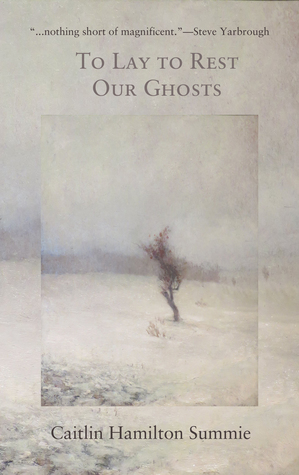
To Lay to Rest Our Ghosts by Caitlin Hamilton Summie

Source: the author
Paperback, 216 pgs.
I am an Amazon Affiliate

To Lay to Rest Our Ghosts by Caitlin Hamilton Summie is a collection of short stories pregnant with emotion as characters deal with grief in a variety of ways.  From the WWII homefront to New York, Summie’s characters have experienced deep loss, whether it is the loss of a child or the loss of a father to war.  Grief comes in many forms, but its effects can be devastating, leaving you with a sense of hopelessness and emptiness.

“My father seemed vague and shadowy to me already.  I didn’t think I could lose him any more than I had, but I saw those tags, and touched them, and they were hard and smooth and warm from Jimmy’s constant agitation of them, and I knew this: that I could lose my father completely…” (pg. 14, “Tags”)

Summie has a deep sense of how grief can turn into inaction, reaction, and withdrawal.  She writes from a variety of perspectives, a young boy waiting for his father to return from war, a brother who has removed himself from his family, sisters who have grown apart after the death of a grandfather, and so many more.  These perspectives call to mind the universality of grief and how it impacts us all.  Lest you believe this collection of short stories is too depressing, it is not.

Summie offers characters a glimmer of hope, a moment of clarity, and a way through the grief.  We all struggle with loss, but we all must find a way to move on.  Through this collection, we find the solutions are not always the same, but the journey through grief is often possible with a little will and strength — either from within or through the help of others.

“February rolled in with a storm.  The snow came, and it hung in the air like a bad mood.” (pg. 99, “Patchwork”)

“We leaned against one another, against the pressure of what was coming as slowly and stealthily as that snow, wild in the wind outside yet silent.” (pg. 120, “Geographies of the Heart”)

Summie’s imagery is phenomenal; readers will be swept into the snowy landscapes, heavy with drifts.  Like the grief these characters experience, the snow weighs them down.  It’s devastatingly beautiful and poetic.  To Lay to Rest Our Ghosts by Caitlin Hamilton Summie is gorgeous in every word.  These stories remind us, “‘The grief never leaves. You just have to learn how to carry it.'” (pg. 199, “Taking Root”)

RATING: Cinquain

About the Author:

Caitlin Hamilton Summie earned an MFA with Distinction from Colorado State University, and her short stories have been published in Beloit Fiction Journal, Wisconsin Review, Puerto del Sol, Mud Season Review, and Long Story, Short. Her first book, a short story collection called TO LAY TO REST OUR GHOSTS, was published in August by Fomite. She spent many years in Massachusetts, Minnesota, and Colorado before settling with her family in Knoxville, Tennessee. She co-owns the book marketing firm, Caitlin Hamilton Marketing & Publicity, founded in 2003.  Discussion questions.

2017 New Authors Reading Challenge

Mailbox Monday #443

Mailbox Monday, created by Marcia at To Be Continued, formerly The Printed Page, has a permanent home at its own blog. To check out what everyone has received over the last week, visit the blog and check out the links. Leave yours too.

Also, each week, Leslie, Martha, and I will share the Books that Caught Our Eye from everyone’s weekly links.

Here’s what we received:

These Dreams by Nicole Clarkston for review.

Pride and patriotism lend fervor to greed and cruelty, and Fitzwilliam Darcy is caught at the centre of a decades old international feud. Taken far from England, presumed dead by his family, and lost to all he holds dear, only one name remains as his beacon in the darkness: Elizabeth.

Georgiana Darcy is now the reluctant, heartbroken heiress to Pemberley, and Colonel Fitzwilliam her bewildered guardian. Vulnerable and unprepared, Georgiana desperately longs for a friend, while Fitzwilliam seeks to protect her from his own family. As the conspiracy around Darcy’s death widens and questions mount, Colonel Fitzwilliam must confront his own past. An impossible dream, long ago sacrificed for duty, may become his only hope.

Newly married Lydia Wickham returns to Longbourn- alone and under mysterious circumstances. Elizabeth Bennet watches one sister suffer and another find joy, while she lives her own days in empty regrets over what might have been. Believing Darcy lost forever, she closes her heart against both pain and happiness, but finds no escape from her dreams of him.

When We Are Married by Caitlin Williams for review.

Two sisters, one man. Someone’s heart is about to get broken.

Elizabeth Bennet quickly realises she has misjudged Mr Darcy. In Kent, she learns first impressions are not always accurate. His proposal is disastrous, insulting even, but when she reads his letter her heart begins to thaw, and her objections and prejudices start to melt away. Elizabeth decides to offer Mr Darcy a sliver of hope, an apology, and a second chance.
Yet when he begins to call at Gracechurch Street, determined to become a better man and humbled by Elizabeth’s reproofs, he unwittingly stirs the romantic hopes of another lady altogether.

Jane Bennet, bereft and confused, rejected by Charles Bingley is fearful of becoming an old maid. She is eager to fall in love with the very first gentleman who takes notice of her, and Mr Darcy’s is, after all, everything her mother has wanted for her, rich and handsome, the perfect suitor.

Through crowded, industrious Cheapside, to the elegant ballrooms of Mayfair, Mr Darcy chases Elizabeth Bennet, unaware that the quiet unassuming girl who smiles too much, is fully intent on chasing him.

Pride & Prejudice by Jane Austen, annotated by Sophie Turner for review.

-Restored to the grammar, spelling, and punctuation of the 1813 Egerton first edition, save clear errors
– Forward by the editor
– Notes on historical context, including entails, debt, housekeeping, etiquette, and travelling
– Notes on Austen’s grammar
– Detailed annotations for each volume
– List of recommended further reading

The novel needs no introduction. But readers may not have realised that we have been losing “Pride and Prejudice” over the years, particularly digitally. Grammar, spelling, and punctuation have eroded significantly from the 1813 Egerton first edition, and many digital copies suffer from poor formatting.

In 2017, the 200th anniversary of Jane Austen’s death, her “darling Child” has been painstakingly restored to the three-volume 1813 first edition. Adjustments have only been made where there were errors in the 1813 text, and are noted in detailed annotations at the end of the novel.

Please enjoy this beloved story, restored to Jane Austen’s original voice.

Imagine That! How Dr. Seuss Wrote The Cat in the Hat by Judy Sierra, illustrated by Kevin Hawkes, which is for review.

A lively new picture-book biography of the most beloved children’s book author of all time: Dr. Seuss!

Have you ever wondered how the great Dr. Seuss wrote his most famous book? Did you know that for The Cat in the Hat, he wasn’t allowed to make up the fun words he was known for—like OOBLECK and IT-KUTCH and HIPPO-NO-HUNGUS? He was only allowed to use words from a very strict list!

This bouncy account of the early career of Dr. Seuss (a.k.a. Ted Geisel) proves that sometimes limitations can be the best inspiration of all.

Kid-friendly prose (with Seussian rhyme for Ted’s dialogue) and whimsical illustrations by award winner Kevin Hawkes recall the work of Dr. Seuss himself. Writing tips from Dr. Seuss and exclusive letters from the author and illustrator, detailing how they created this book, are included!

What did you receive?

Join Me at Bourgeon

Over the last weekend while on vacation, I got the wonderful news that a very personal poem about my Vovó, who passed away two years ago.  I knew that she was ill and didn’t have much time left, and I was furiously writing.

I planned to read it at her funeral, but I was so emotionally wrecked, I was unable to do so.  I did the next best thing — after seeking sage advice from a few writer friends — I let the poem rest with her.

Fast forward two years, I tried to read Pergola at the poetry reading I participated in this year, but failed miserably at that as well.  However, during that reading, I met the wonderful Gregory Luce, who suggested I send him a few poems.

I was happy when he told me Pergola found a home at Bourgeon.  Please feel free to check it out.

Stitching with Jane Foster by Jane Foster

Source: QuartoKnows
Hardcover, 52 pgs.
I am Amazon Affiliate

Stitching with Jane Foster by Jane Foster is similar to the Suzy Ultman book of stitching with its templates and fun designs.  Many of these are animals, which my daughter loves. You need the same materials for this: embroidery thread, embroidery needles, and a needle threader.  This one also has step-by-step instructions for cross-stitching.  We haven’t gotten to that step yet, but I’m sure we will.  There are other stitches as well, including seed stitching and back stitching.

This one includes bookmarks, which I’m hoping she’ll make me one.  Some of these designs also can be colored by the artist before they do the stitching.  This has so many possibilities for little artists.


Stitching with Jane Foster by Jane Foster is another great project book for kids as young as age 6.  She has a great time picking out her templates and matching the colors.  She creates her own designs with simple stitches.  Since her and nana started, she can’t seem to stop making them.  Right now, she’s working on a frameable one and it is only 9 a.m.

RATING: Cinquain

About the Author:

Jane Foster is an illustrator and screen printer living and working in south Devon. Her work, which is strongly influenced by Scandinavian and British design from the 1950s and 60s, has been featured in many publications including Vogue, Homes & Antiques, and Mollie Makes. She is a designer for Clothkits and has done commissions for Ikea. Jane’s products are stocked throughout the world.

She’s recently been working with the company Make International who are using her designs on ceramics, glasses and kitchen textiles. These are sold globally.  Jane is the author of Creative Craft With Kids (9781909397439) and Fun with Fabric (9781908449900), published by Pavilion. Jane’s recent two books (May 2015) are for pre-school children – 123 and ABC, published by Templar.  Follow her on Twitter. Visit her Website and check out her Instagram.

Fun with Stitchables by Suzy Ultman

Source: QuartoKnows
Hardcover, 36 pgs.
I am an Amazon Affiliate

Fun with Stitchables! by Suzy Ultman is a simple way to get kids interested in creating things through sewing. My daughter and I had to grab some essentials for this book, such as embroidery needles and embroidery thread.  It took me a while to grab these materials, but once we got them, she was off to the races.  She even learned how to use a needle threader when her nana was here visiting.  She already learned how to make knots at summer camp with the Girl Scouts, so she had that part down.

It was good to see her enthusiastic about these designs and learning to use different colors in the designs.  The book includes step-by-step instructions on how to thread the needle, how to tie the knot, and some stitching basics, as well as knotting the end.  The book includes frameable prints, ornaments, embellishments for greeting cards, and so much more.

Fun with Stitchables! by Suzy Ultman is a fun activity for kids to learn about sewing and coordinating colors and creating patterns.  My daughter and her nana had a fun time creating together, and I’m sitting here next to her while she does another one.  She must love it if she keeps going back for more.

RATING: Cinquain

About the Author:

Suzy Ultman was born in Pennsylvania, but colorful and vibrant Amsterdam also plays a large part in her work. She has lived on three different continents and embraced the culture and communities of each, allowing them to influence her visual aesthetic. Suzy’s style of illustration is influenced by her childhood, love of nature, and travel experiences. She enjoys being in beautiful habitats among nature’s playful palette of forms, textures, and colors. Suzy explores the worlds within our world, the little details that make us smile, and the connections that make us all part of the global community.

2017 New Authors Reading Challenge

Stamped from the Beginning: The Definitive History of Racist Ideas in America by Ibram X. Kendi

Source: Public Library
Hardcover, 592 pgs.
I am an Amazon Affiliate

Stamped from the Beginning: The Definitive History of Racist Ideas in America by Ibram X. Kendi traces the origins of racism in the United States, noting that it began long before the civil war.  In this volume, Kendi explores anti-racist ideas, uplift suasion (the idea that white people could be persuaded away from their racist ideas if they saw that Black people had improved their behaviors), and racism through the lens of five historical figures — Cotton Mather, Thomas Jefferson, William Lloyd Garrison, W.E.B. Du Bois, and Angela Davis.  Through these interwoven histories, the myths of ignorance and hate causing racism and discrimination are dispelled to reveal that racial discrimination begot racist ideas and bred ignorance and hate, which to me should have been well understood by now.  The fact that a comprehensive book of this nature is still needed and probably not as widely read as it should be shows how little we have traveled away from our past.

“But no racial group has ever had a monopoly on any type of human trait or gene — not now, not ever.  Under our different-looking hair and skin, doctors cannot tell the difference between our bodies, our brains, or the blood that runs in our veins.  All cultures, in all their behavioral differences, are on the same level.  Black Americans’ history of oppression has made Black opportunities — not Black people — inferior.”  (pg. 11)

Beginning with Aristotle and the barbarians of old, racism has a deep-seated hold on humanity, and these chains must be broken.  The term “race” first appeared in a poem in 1481 called “The Hunt” by Jacques de Brézé, and it was used to refer to hunting dogs, but over the next 100 years it was used to “animalize” Africans.  Reading this makes it clear to me that the penchant humanity has for categorizing everything into neat little boxes has only divided us for very little reason.  The term “negars” was used in 1627, placing African slaves below servants in a hierarchy following the death of George Yeardley and the court decision regarding his estate.  Africans were little more than cattle under this decision.  It is these moments in history where a lack of understanding and a failure to properly research another culture and people have led European and American societies to denigrate the African people and their culture.

Repeatedly, throughout history, the victims of this failure are abused — sometimes at the hands of their fellow Africans and blacks.  Even W.E.B. Du Bois failed to grasp anti-racist ideals after he was afforded a college education that many of his brethren would never achieve.  But here’s the rub, his education was at the hands of those who already had failed to properly research and understand a culture unlike their own and who had quickly labeled it inferior because of their own failure to understand or wish to understand.

Kendi also delves into the inferiority of the Black woman, who as a group has been placed lower than the Black male because white men could not help but want to sleep with them and their mannerisms were not like the demur, white woman.  Many of the stereotypes heaped on Black women today stem from these times, and they were never more plain than they were in the early suffragist movement.  Even when it was clear that Africans knew more about how to combat smallpox, many white physicians failed to heed their advice because they are an inferior race.  Logic and research again failed to permeate this scientific world.

In more modern history, Kendi examines the role of the NAACP, providing a wider perspective of their role in racism.  Although Kendi makes valid points about the group relative to his over-arching arguments, we also must remember that in our wider failings some good can be achieved — small as it may be — though after more than 200 years of oppression one can see why there is a growing impatience and anger about the continued racism against a people that are not inferior.  There also is a section on Harper Lee’s book in which Kendi decries the classic as more racist propaganda in which Blacks must wait for white saviors like Atticus Finch.  This perspective made me view the book a bit differently because I had always viewed it as a book in which a young girl first realizes that discrimination exists against Black people and that her father was fighting against that discrimination.

One point I thought was really well made was on cultural appropriation, such as when cornrows were worn by Bo Derek and when Eminem rose to rap fame.  “What was the most amazing about the whole uproar … was the hypocrisy of Black people.  Some of those Black people who had permed their hair — an appropriation of European culture — were now ridiculing Bo Derek and other White women for braiding their hair and appropriating African culture.”  (pg. 421)  He also points out the economic policies of Reagan as harmful to not only Blacks, with the “median income of Black families declin[ing] by 5.2 percent.”

Stamped from the Beginning: The Definitive History of Racist Ideas in America by Ibram X. Kendi is a comprehensive look at American racism through the Obama administration’s first years.  It is not only Whites he takes to task for their racism, as he point out how Blacks also held racist ideas about their own culture and brethren.  In the epilogue, he offers some ideas about how racism can be eliminated, such as the elimination of the mechanisms that generate racial disparities and the use of local protests to focus on immediate areas of discrimination and ensure greater equality.  This is a book that should be read in classrooms and by everyone.

RATING: Quatrain

About the Author:

Ibram X. Kendi is a New York Times best-selling author and historian located at the University of Florida. He won the National Book Award for Nonfiction for his book, Stamped from the Beginning: The Definitive History of Racist Ideas in America.

2017 New Authors Reading Challenge

Mailbox Monday #442

Mailbox Monday, created by Marcia at To Be Continued, formerly The Printed Page, has a permanent home at its own blog. To check out what everyone has received over the last week, visit the blog and check out the links. Leave yours too.

Also, each week, Leslie, Martha, and I will share the Books that Caught Our Eye from everyone’s weekly links.

Here’s what we received:

Unbound by John Shors for review from the author.

With Unbound, Shors recreates an ancient and celebrated Chinese legend about a pair of young lovers separated by war and the Great Wall.

The year is 1548, and the Chinese Empire faces an imminent Mongol invasion. All that prevents the violent end of a dynasty is the Great Wall. Yet even this famed fortification has weaknesses, and against his will, a talented Chinese craftsman is taken from his home and wife, so that he may labor alongside the wall’s defenders.

Fan has been missing for a year when his wife, Meng, decides to do the impossible—to leave everyone and everything she knows in a daunting effort to find him. At a time when many women fear even stepping outside their homes, Meng disguises herself as a man and begins a perilous journey of deliverance.

As two armies gather at the Great Wall, the fates of Fan and Meng collide with a Mongol horseman seeking redemption, a Chinese concubine fighting injustice, and a ruthless general determined to destroy them all.

What did you receive?

The Inseparable Mr. and Mrs. Darcy by Jennifer Joy (Audio)

Source: the author
Audible, 9+ hrs.
I am an Amazon Affiliate

The Inseparable Mr. and Mrs. Darcy by Jennifer Joy, narrated by Nancy Peterson, takes place after the first two in this mystery series, and I would recommend reading these books in order. I love Joy’s turn of plot and her characterizations of Mr. Darcy and Lizzy Bennet. As grief appears to weigh very heavily on Mr. Bennet, Lizzy and Darcy must navigate their engagement and desire for a quick union. A secret correspondence is discovered, and Lizzy is concerned about the influence of her sister on Miss Darcy, who is taken with the cute pup Lydia has adopted.

But is her father merely ill with grief, is Mr. Collins plotting to gain his inheritance earlier, and is Lydia planning to tie her matrimonial fortunes to Miss Darcy?  Joy is adept at creating successful mysteries in this time period, while adhering to social norms and bending them slightly.  After solving several murders in Meryton, it would seem that Darcy and Elizabeth would never be separated by the likes of Lady Catherine. The intrigues are intricate, but the love between these main characters are never lost in the shuffle.

Elizabeth grows ever concerned about her father’s health, but when it appears to be more, she worries that someone has become incredible desperate because murder or attempted-murder has to be an act of desperation.  The Inseparable Mr. and Mrs. Darcy by Jennifer Joy, narrated by Nancy Peterson, is a wonderful diversion in the Regency era with two of the best classic characters created.  Joy’s mysteries are often very surprising in one way or another, which can be a breath of fresh air for people who can easily discern the perpetrator ahead of time.

RATING: Cinquain

Other Reviews:

About the Author:

When Jennifer isn’t busy dreaming up new adventures for her favorite characters, she is teaching English, reading, perfecting her doughnut recipe, or going to the park with her family. She currently lives in Ecuador with her husband and 2 beautiful kids. All of them are fluent in Spanglish. Visit her Website.