Quantcast

Mailbox Monday #625

Mailbox Monday has become a tradition in the blogging world, and many of us thank Marcia of The Printed Page for creating it.

It now has it’s own blog where book bloggers can link up their own mailbox posts and share which books they bought or which they received for review from publishers, authors, and more.

Leslie, Martha, and I also will share our picks from everyone’s links in the new feature Books that Caught Our Eye. We hope you’ll join us.

Here’s what we received:

Thresholds and Other Poems by Matt Hohner for review in April.

Matt Hohner’s Thresholds and Other Poems is a poetry of loss, violence, beauty and love. In this collection, Hohner addresses the toll and joy of living, head-on and honestly. Facing rough social and political headwinds blowing at home and abroad, Hohner speaks with full voice against the storm of malevolence that so often seems the norm. In this terror, though, there is a desperate clinging to love, which Hohner returns to simply and elegantly. Perhaps it is in his reaching for solace that Hohner’s poems offer their greatest strength, while promising something more relatable: catharsis. The value of Thresholds and Other Poems is not in the path to peace this collection seeks, but in the pressure release valve it gives the reader from a tumultuous world. Friendship and marriage, the sensual act of eating an oyster, a hike in the woods at dusk—all find celebration in these pages. There is hope in these poems, and you will laugh and smile, too. Thresholds takes us to that frontier at the edge of the darkness, where the light lives.

Becoming the Enchantress by Kristin Kowalski Ferragut, illustrated by Coley Dolmance Ferragut

Becoming the Enchantress is the story of a transgender parent that faces personal longing for change. Given the acceptance and encouragement of her children, the parent magically transforms from a Wizard into an Enchantress on Halloween night. The story highlights themes of acceptance and the love between child and parent. Becoming the Enchantress is unique in that it is written for children whose parent is the one discovering their dysphoria and seeking reassignment, rather than that of the child or teenager themselves.

Becoming the Enchantress fills a heretofore neglected niche in children’s literature. It conveys the struggle of a parent to find, in this case, her true identity, and the children’s loving acceptance of it. It should prove a useful resource for families with a transgender or non-binary parent.

-W. Luther Jett, retired Special Educator, Montgomery County Public Schools, author of Our Situation and Everyone Disappears

Becoming the Enchantress is a beautiful story about a life-changing transition. It uses imagery that children can understand to discuss a difficult topic. The book details the emotions of someone who is learning how to be their true self. The story shows that while children may not fully understand the issue, they are accepting and are willing to love others for who they are. -Stacy Whipp, M.Ed.

A wonderful story for all ages of unconditional love and acceptance for people! Be true to who you are and love yourself and you will feel completely fulfilled. This story teaches us that no matter what, a person’s heart and soul is what defines them. -Katherine R Stull, LCSW-C

Becoming the Enchantress is a wonderful tale for anyone who has questioned their identity or has loved someone doing so. It treats the delicate subject in the most loving way possible, with gorgeous illustrations, spotlighting the magic that positive self-image and family acceptance can create. – Michelle Zibrat, Art Educator

I am both the parent of a trans child and a therapist that supports transitioning children, teens and adults. I love Becoming the Enchantress as it is a lovely story that explains the need to transition from your sex assigned at birth to your true self. Children will connect both with the Wizard and his family in this story. Using the experience of “trying on” a different persona is a lovely way to introduce the children to the wizard and the concept of transitions. -Theresa Fraser, CYC-P, CPT-S, NSCCT, MA, RP, Trauma and Loss Clinical Specialist

What did you receive?
Virtual Poetry Circle: Gwendolyn Brooks

For 2021, I’m experimenting with the Virtual Poetry Circle in which I share a poem and leave the comments open for discussion, first impressions, emotional reactions. I’d love to hear what you think about today’s poem from Gwendolyn Brooks.

Feel free to share poems you are reminded of, favorite lines, and whatever comes to mind when reading this poem.

When I first read this poem, I was struck by the Jazzy tone of it, or what I imagined Jazz to be — improvisational. But the last line still upsets me.

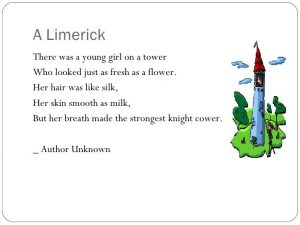
Limericks

Limericks are often humorous poems, with three long and two short lines with the rhyme scheme aabba. Some times these can be bawdy.

I share with you the Poetry Generator for Limericks.

Here’s mine:

There was a man named Trygg
Who used to dance a jig
But during a break
He made a mistake
What a terrible day for Trygg

There are days when you just need a little bit of fun.

Emerge by Francesca Marais

Source: Poet
Hardcover, 25 pgs.
I am an Amazon Affiliate

Emerge by Francesca Marais is a chapbook about learning to let go of our angst, anxiety to learn to trust our selves to be us without worry. Marais’ water imagery calls to mind the tumultuous waves and stormy seas we can face, but also the gently lapping waves that can cradle us into calm. In “Bookworm,” the comfort of books “We could safely escape/Rattling instability,/Where our safety and fears/Were in our own hands.//” In this image, the poet reminds us that our own hands are where our safety and our fears reside. We may not always be in control of our emotions, but we can be and learn to trust ourselves.

Moving to “Inheritance,” the poet weaves in generational passage of traits from one generation to another and that there is a lineage we pass along without knowing it. “He sees them bloom amidst their agony–/Their ability to prevail, his joy./In the smiles of his children,/He sees the youth he once knew/And how it continues in them–/”

Marais’ poems teach us to breathe, learn how to be calm and observe and live. Emerge by Francesca Marais is a journey and one we all embark on at some point in our lives. Gather your own power from the darkness and the trials of your life, emerge from the ashes.

RATING Quatrain

National Poetry Month 2021

Welcome to National Poetry Month!

Please share your poetry related posts below, so I can stop by!

I have no hard and fast plans this month, but there will be reviews and activities, and perhaps some videos. I hope you stop by and check out some of the fun poetry.

I’d love to inspire some of you to write your own poetry, too. It can be cathartic, but you don’t have to share those poem drafts if you don’t want.

Frankie Sparks and the Lucky Charm by Megan Frazer Blakemore

Source: Purchased
Paperback, 128 pgs.
I am an Amazon Affiliate

Frankie Sparks and the Lucky Charm by Megan Frazer Blakemore, illustrated by Nadja Sarell, is another strong book in the series that helps kids learn about science and investigation, while having fun. We love that this series provides tips on how to make your own designs and solve your own problems through science. In this one, Frankie is wondering about whether leprechauns are real, and she decides that setting a trap is the best way to find out. One problem, if she proves they don’t exist, her friend Maya might just be devastated, since she believes they are real.

Kids will learn about designing foolproof traps for leprechauns and how to design things with potential failures in mind. But how Frankie tackles her friend’s possible sadness over the results of her experiment will teach children to consider others’ feelings and work together to solve problems. It also was good to see that Frankie has more scientists in her family. Her Aunt Nichelle is working on a space garden, but of course she has to do some experiments on Earth, rather than space, but the ultimate goal is to enable astronauts to grow their own food in space. The exchange between Frankie and her aunt was fantastic. It demonstrated that kids are not alone and that they can lean on their elders to learn more and grow.

Frankie Sparks and the Lucky Charm by Megan Frazer Blakemore, illustrated by Nadja Sarell, is a strong series of books in which kids can not only learn how to work with friends and classmates, but also adults. Along they way they will garner skills in experimentation and design, among others. We highly recommend these books.

RATING: Cinquain

Mailbox Monday #624

Mailbox Monday has become a tradition in the blogging world, and many of us thank Marcia of The Printed Page for creating it.

It now has it’s own blog where book bloggers can link up their own mailbox posts and share which books they bought or which they received for review from publishers, authors, and more.

Leslie, Martha, and I also will share our picks from everyone’s links in the new feature Books that Caught Our Eye. We hope you’ll join us.

Here’s what we received:

The Last Night in London by Karen White for review.

London, 1939. Beautiful and ambitious Eva Harlow and her American best friend, Precious Dubose, are trying to make their way as fashion models. When Eva falls in love with Graham St. John, an aristocrat and Royal Air Force pilot, she can’t believe her luck—she’s getting everything she ever wanted. Then the Blitz devastates her world, and Eva finds herself slipping into a web of intrigue, spies, and secrets. As Eva struggles to protect her friendship with Precious and everything she holds dear, all it takes is one unwary moment to change their lives forever…

London, 2019. American journalist Maddie Warner, whose life has been marked by the tragic loss of her mother, travels to London to interview Precious about her life in pre-WWII London. Maddie has been careful to close herself off to others, but in Precious she recognizes someone whose grief rivals her own—but unlike Maddie, Precious hasn’t allowed it to crush her.  Maddie finds herself drawn to both Precious and to Colin, her enigmatic surrogate nephew.  As Maddie gets closer to her, she begins to unravel Precious’s haunting past—a story of friendship, betrayal, and the unremembered acts of kindness and of love.

What did you receive?

Reading: The Inner Loop and This Is What America Looks Like

For those who missed my March 16, 2021, reading with The Inner Loop, watch the recording. I’m at about 14:15, but don’t miss some of these phenomenal writers.

Instant Gratification by Lauren Blakely (audio)

Source: Purchased
Audible, 8+ hrs.
I am an Amazon Affiliate

Instant Gratification by Lauren Blakely, an audio with a full cast, was so much fun to listen to. Jason Reynolds and Truly Goodman have significant chemistry but a pact she made with her brother nearly a decade ago stands in their way of getting together, even if they had a one night of hot romance. Both of these workaholics also don’t have time for dating. Jason Reynolds is The Modern Gentleman Of New York and a best man for hire, two jobs he doesn’t want to see collide, and he needs to finish his work as a best man in order to help pay for his sister’s medical school.

While the sexual tension is palpable and the heat rises on more than one occasion, Blakely shines in her comedy. The zingers between the men and their friends, the banter between Truly and Jason is hilarious, and there is so much more fun to be had in this audiobook. There is a full cast of audiobook narrators on this one, and they clearly had a grand time making this one.

Instant Gratification by Lauren Blakely is a riot, and I was laughing out loud. My daughter was dying to know what I was listening to, but sadly this is not for young ears. I needed a good laugh and this book hit the spot. The characters are well drawn and their interactions are believable — for high-end Manhattanites.

RATING: Cinquain

Guest Post & Giveaway: Kara Pleasants’ The Unread Letter

Welcome to another Jane Austen World Excerpt and guest post for a newly published book, The Unread Letter by Kara Pleasants.

Please check out the synopsis:

After rejecting Mr Darcy’s proposal at Hunsford, Elizabeth Bennet is surprised when he finds her walking the next day and hands her a letter. Without any expectation of pleasure—but with the strongest curiosity—she begins to open the letter, fully intending to read it.

It really was an accident—at first. Her shaking hands broke the seal and somehow tore the pages in two. Oh, what pleasure she then felt in tearing the pages again and again! A glorious release of anger and indignation directed towards the man who had insulted her and courted her in the same breath. She did feel remorse, but what could she do? The letter was destroyed, and Elizabeth expected that she would never see Mr Darcy again.

Home at Longbourn, she discovers that her youngest sisters are consumed by a scheme to go to Brighton—and Elizabeth finds herself drawn to the idea of a visit to the sea. But the surprises of Brighton are many, beginning with a chance meeting on the beach and ending in unexpected romance all around.

Doesn’t this synopsis just say there will be some very, very awkward moments? I can’t wait to read it.

Please give Kara a warm welcome:

Thank you, Serena!

Thank you so much for having me share a bit of my novella The Unread Letter with you! This excerpt takes place when the Bennet family has just arrived in Brighton. The premise of the story explores the question of what might happen if Elizabeth had never read Darcy’s letter—and didn’t know that she shouldn’t go anywhere close to Wickham!

So, the Bennets have all gone to Brighton together, but of course they could not afford to stay at an inn or rent a house for an extended holiday. Instead, they planned their trip by agreeing to help care for an aged and distant relative—the widow Mrs. Bartell. I conceived of Mrs. Bartell as a woman who speaks her mind because she can—she is now independent of a husband, has a place of her own, and only herself to please.

I hope you will enjoy meeting her in this excerpt:

With exceedingly great raptures the Gardiners’ note was received accepting the change in plan from the Lake tour to the Brighton seaside. The Gardiners were delighted by the idea of a visit that included the entire family and noted that Brighton was close to the Seven Sisters chalk cliffs, which they longed to see. The only difficulty was that they must postpone their journey by two weeks because of Mr Gardiner’s business. This threw Kitty and Lydia into a flutter of nerves over the thought of even the briefest separation from the officers, until it was decided that the Bennets would travel ahead to Brighton and, within a short amount of time, be joined by the rest of their party.

Elizabeth briefly doubted her impulse to travel with her family during the chaos of packing trunks and gowns and hats and trims with two younger sisters who fought over every item of clothing. At last, once the coach was loaded, the journey was spent in the highest of spirits and Elizabeth felt her doubts give way to eager anticipation. Even Mary, who never before expressed approval of the scheme and mostly observed her youngest sisters’ antics with a frown, now turned to her oldest sisters with a smile. “I have been reading about the benefits of sea bathing,” she pronounced, “and the sea itself seems to be a great testament to the power of a great God. I do not care for the parties or the dresses, but I do look forward to seeing this wonder.”

“So you are to go sea bathing?” Mr Bennet asked with a wry grin. “Do wonders never cease? I surmise that these new environs will provide opportunities for laughter at other people’s expense in every corner.”

After a stop in London, where the Bennets spent a merry evening with the Gardiners in high anticipation of them all being together again as soon as Mr Gardiner’s business was concluded, the second leg of their journey was more subdued, with nearly all of the party sleeping along the road.

It was evening when the Bennets arrived at the home of their relation. The young ladies were all abuzz when the coach stopped on St James’s Street, and Mr Bennet led them through a narrow alley and back to a quiet lane, known as St James’s Place, where a row of town houses and gardens stood. The four-story red brick town house where they would spend their holiday had a small garden full of roses enclosed by an iron railing.

“How charming! And you cannot hear the noise of the street!” Elizabeth said.

“But my dear you did not tell me that Mrs Bartell lived so close to the shops! So close to everything! Why, what a thing for our girls! I am sure they shall always be thrown in the path of many eligible men. I can hardly speak for happiness.” Mrs Bennet’s mouth was agape at the sight of the stately home.

“You need not speak at all,” Mr Bennet replied. “I would not put much hope in Mrs Bartell’s potential as a matchmaker.”

“Why ever not?” Mrs Bennet said, but Mr Bennet had already opened the gate and walked up the steps to rap on the door. Behind him, the coachmen were huffing as they carried the many trunks.

The door was opened by a woman much advanced in years who led them through a narrow hall into a sitting room where another woman even more advanced in years sat dozing in a blue velvet chair.

The attendant, a Mrs Smith, shook the shoulder of her employer with some vigour. She managed to knock the lady’s cap askew but did not wake her.

With all of them crowding the hall, and the trunks piling up along the wall, there was a moment of tension as they were not entirely sure what to do next. It was relieved by Mrs Bennet, who marched up to their relation and shouted into her ear, “It is so very kind of you to allow us to stay!”

Mrs Bartell opened one eye and shifted slightly. “You are looking old, Mrs B,” she croaked.

Mrs Bennet was so offended that she moved off immediately, whispering to Elizabeth, “She is farther gone than I imagined. Pay no mind to her ramblings. Indeed, I have half a mind not to speak with her much at all—I daresay she cannot understand a word.”

Elizabeth did not rebuke her mother, but moved over to Mrs Bartell. “And you, madam,” she laughed, “do not look a day over twenty!”

Mrs Bartell deigned to open both eyes. “Tom Bennet, this one will do nicely,” she declared, reaching to take Elizabeth’s hand. “You will have to oblige me. My granddaughter has left this morning for the North, and I need looking after. It is part of the arrangement.”

“Lizzy is always very obliging.” Mrs Bennet felt that she must speak again. “We are so very grateful for the most warm welcome into your home.”

“And will you oblige me now by removing all of your relations from my sitting room.”

Mrs Bartell addressed Elizabeth, “Your rooms are on the third floor.” Kitty and Lydia scampered from the room and up the stairs, with the older sisters following closely.

While the others settled their trunks into their rooms, Elizabeth moved through the entire house, curious to see each room and the views they afforded. Upon returning to the blue room that she and Jane had settled on with Mary, Elizabeth flung open the tall windows to breathe in the salty air of the sea. The lights of the city twinkled before her, but in spite of the pleadings of Lydia, who wanted to go and tour the public gardens (where she was certain the officers were waiting), it was decided that the party would go to bed and explore in the morning.

Thank you, Kara, for sharing this excerpt with us. I can’t wait to read the book.

About the Author:

Kara Pleasants lives in a lovely hamlet called Darlington in Maryland, where she and her husband are restoring an 18 th century farm in Susquehanna State Park. They have two beautiful and vivacious daughters, Nora and Lina. A Maryland native, Kara spent a great deal of her childhood travelling with her family, including six years living in Siberia, as well as five years in Montana, before finally making her way back home to attend the University of Maryland.

Kara is an English teacher and Department Chair at West Nottingham Academy. She has taught at the secondary and collegiate level at several different schools in Maryland. Her hobbies include: making scones for the farmer’s market, writing poetry, watching fantasy shows, making quilts, directing choir, and dreaming about writing an epic three-party fantasy series for her daughters.

GIVEAWAY:

Follow the blog tour and leave a comment to be entered in the tour-wide giveaway for an ebook of The Unread Letter.

Mailbox Monday #623

Mailbox Monday has become a tradition in the blogging world, and many of us thank Marcia of The Printed Page for creating it.

It now has it’s own blog where book bloggers can link up their own mailbox posts and share which books they bought or which they received for review from publishers, authors, and more.

Leslie, Martha, and I also will share our picks from everyone’s links in the new feature Books that Caught Our Eye. We hope you’ll join us.

Here’s what we received:

Where Do You Hang Your Hammock? Finding Peace of Mind While You Write, Publish, and Promote Your Book by Bella Mahaya Carter for review in June.

In Where Do You Hang Your Hammock? seasoned coach and author Bella Mahaya Carter shows writers how to use their present circumstances as stepping-stones to a successful and meaningful writing life, navigated from the inside out. It encourages writers and authors to rethink their ambitions (which may be fueled by the tyrannical demands of the ego) and trust in their heartfelt purpose and values in the journey to becoming, or continuing on, as authors.

Many writers believe their self-sabotaging thoughts are trustworthy and true. They take rejection personally. They surmise that if they don’t achieve their goals they have failed, and lose sight of who they are and what matters most.

This book is for writers looking for inspiration and for authors daunted by the publishing process, who might lack the requisite author platform to get published the way they dreamed, or whose careers may not be unfolding as expected. It aims to be the friend and trusted expert writers turn to when hijacked by their own thinking. Ultimately, it reminds authors that they are infinite creators.

The Unread Letter by Kara Pleasants, a guest post in March.

For every one of his smiles, she thought of his letter and blushed with shame of what she had done. Oh, that she might have just looked at it!

After rejecting Mr Darcy’s proposal at Hunsford, Elizabeth Bennet is surprised when he finds her walking the next day and hands her a letter. Without any expectation of pleasure—but with the strongest curiosity—she begins to open the letter, fully intending to read it.

It really was an accident—at first. Her shaking hands broke the seal and somehow tore the pages in two. Oh, what pleasure she then felt in tearing the pages again and again! A glorious release of anger and indignation directed towards the man who had insulted her and courted her in the same breath. She did feel remorse, but what could she do? The letter was destroyed, and Elizabeth expected that she would never see Mr Darcy again.

Home at Longbourn, she discovers that her youngest sisters are consumed by a scheme to go to Brighton—and Elizabeth finds herself drawn to the idea of a visit to the sea. But the surprises of Brighton are many, beginning with a chance meeting on the beach and ending in unexpected romance all around.

What did you receive?

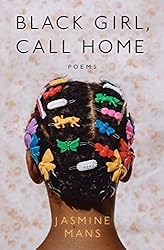
Black Girl, Call Home by Jasmine Mans

Source: Publisher
Paperback, 256 pgs.
I am an Amazon Affiliate

Black Girl, Call Home by Jasmine Mans is a collection of poems that explore mother-daughter relationships, identity, and the racism many Blacks face every day. There are so many moments in this collection where your heart will break, just as the relationship between mother-daughter breaks. The narrator of these poems struggles with who she is and how to reconcile that with her mother’s disappointments about that identity.

In “We Host These Variables,” she says, “There’s something I want to honor here. I/ want to honor the silent story, the emotions/unaccompanied by human language. I want to/honor the weight of stillness. I want to/honor the silent ceremony between mother/ and daughter.” In this poem she explores the silence that become tense between mother and daughter because they are mirrors of one another. Later, she says, “I know the/distance between mother and daughter. How/we are many burned bridges, as well as a/wealth of brick and clay, ready to be made/anew from everything unmade of us.”

Mans explores the harsh history facing Blacks — women who get the worst part of it all. Men with the dreams, but the women who bear the burden of those dreams. One of the most powerful poems in this collection that brings this history to the forefront is “Nerf Guns: Christmas 2019 Tulsa” where the past and the burdens of racism are never far away. “The/only way a bullet becomes laughter is when it/plays pretend in its own foam shadow./” In this poem, little boys play with nerf guns and play dead and the narrator was never allowed to until she was grown and playing with her cousins. She realizes the ironies and implications of this game, while her cousins do not. “My father knew death too well to let us mimic it. Or, maybe death mimicked us too well for him to allow it’s ‘pretend’ in his house.” She wraps “herself in/that joy. The joy that nothing spilled of them/but the sound of their own silly.”

Black Girl, Call Home by Jasmine Mans is a journey of identity and learning how to cope with the past to bring oneself into the future. There are truths in this collection that shouldn’t be shied away from, especially for Black men and women. We need these stories to remind us that we can do better. “I know trauma uses silence as a survival mechanism.” Let’s break that cycle and break that silence.

Rating: Cinquain