Quantcast

96th Virtual Poetry Circle

Welcome to the 96th Virtual Poetry Circle!

Remember, this is just for fun and is not meant to be stressful.

Keep in mind what Molly Peacock’s books suggested. Look at a line, a stanza, sentences, and images; describe what you like or don’t like; and offer an opinion. If you missed my review of her book, check it out here.

Also, sign up for the 2011 Fearless Poetry Reading Challenge because its simple; you only need to read 1 book of poetry.  Please contribute to the 2011 Indie Lit Award Poetry Suggestions, visit the stops on the National Poetry Month Blog Tour from April, and check out Holocaust Remembrance Week.
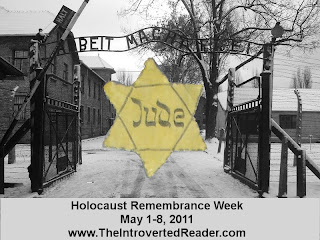
In honor of Holocaust Remembrance Week, hosted by The Introverted Reader, we’re going to look at a Holocaust related poem from Holocaust Poetry compiled by Hilda Schiff:

Shipment to Maidanek by Ephraim Fogel (page 57)

Arrived from scattered cities, several lands,
intact from sea land, mountain land, and plain,
Item: six surgeons, sightly mangled hands,
Item: three poets, hopelessly insane,

Item: a Russian mother and her child,
the former with five gold teeth and usable shoes,
the latter with seven dresses, peasant-styled.

Item: another hundred thousand Jews.

Item: a crippled Czech with a handmade crutch.
Item: a Spaniard with a subversive laugh;
seventeen dozen Danes, nine gross of Dutch.

Total:  precisely a million and a half.

They are sorted and marked — the method is up to you.
The books must be balanced, the disposition stated.
Take care that all accounts are neat and true.

Make sure that they are thoroughly cremated.

Let me know your thoughts, ideas, feelings, impressions. Let’s have a great discussion…pick a line, pick an image, pick a sentence.

I’ve you missed the other Virtual Poetry Circles. It’s never too late to join the discussion.

Also, please visit and enter the National Poetry Month giveaway.  The giveaway is international.
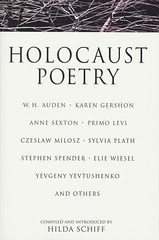
Holocaust Remembrance Week

Holocaust Remembrance Week is hosted by The Introverted Reader.  The only connection I have to WWII was my grandfather who passed last year.  He was not stationed near combat in Europe, but he was stationed overseas on the Azores.  He was proud of his service and was a member of the Greatest Generation.  I have no Jewish ties, but as any human on this planet should react, I react with utter disbelief and disgust when I read or hear about the atrocities of the Holocaust.

In honor of those who survived and those who lost their lives, I want to point out that beyond memoir, fiction, and nonfiction, poetry also demonstrates the innate horror of the Holocaust and can emotionally rip through readers’ hearts with its use of imagery.

Holocaust Poetry compiled by Hilda Schiff is one such collection that will bring the horrors and the simple joys many of the victims and their families experienced to life.  Here’s an excerpt from my review of this collection:

“Beyond the poems in the collection depicting the horrors and the losses of persecuted people in Germany, the poems of bystanders, perpetrators, and others are surprising.  They talk of how they stood by and did nothing, how they want to help even if they are too late.  Despite the time for help being long passed, these narrators express not guilt so much as regret — a deep regret at having been so paralyzed by fear that they did nothing or acted contrary to who they believed themselves to be.”

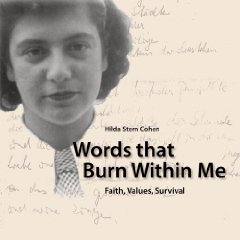
If reading an entire book of poetry is not for you, Words That Burn Within Me by Hilda Stern Cohen combines poetry with prose and nonfiction observations. This book is a compilation of her writings that her loving husband and friends put together after her death.  Please check out a part of my review:

“While the collection does illustrate one Jewish woman’s journey during WWII and the Holocaust, it stands as a testament — a record — of how inexcusably these humans were treated and how their debasement impacted their lives, their relationships, their faith, and their souls.”

Whether you take a moment to reflect on the Holocaust or pick up a book to learn more about that time in history, you are sure to feel a deep emotional attachment to those who lived through and endured some of the most horrifying events in history.  We all could learn a lesson from the past — to treat one another with more dignity and respect in our every day lives.

Some Winners . . .

The winners of The Eighth Scroll by Dr. Laurence B. Brown were chosen at random by my husband after a couple of tries not to pick myself or the author who commented on the interview post.  The winners are:

for the physical copy:  #13 Margie, who said, “Looks like a fascinating book! Thanks for the giveaway and interview.”

for the digital audio download:  #3 Nana, who said, “Interesting interview. Answers made me laugh. Yes, I agree. Sometimes you do your own thing somewhere and unbeknownst to you, someone might be doing a ‘similar’ and definitely one would be judged to have imitated the other. It’s a question of timing. In research, as you know, we call it Publish or Perish (POP).”

Congrats to the winners.

An Interview With Poet Kathleen Winter

Poet Kathleen Winter

This week at the Poetry Blog of 32 Poems Magazine my interview with poet Kathleen Winter was posted. She’s a contributor to the magazine and was a delight to interview, especially since we share a love of trees and dogs.

First, let me tantalize you with a bit from the interview, and then you can go on over and check the rest out for yourself.

Without further ado, here’s the interview.

How would you introduce yourself to a crowded room eager to hang on your every word? Are you just a poet, what else should people know about you?

I love living in the country, being outdoors. After growing up in Texas, I shipped out to Massachusetts after college, then to California and lately to Arizona to get an MFA at Arizona State University. My favorite job ever was night-shift in a Brookline bookstore, working with lots of other writers. I love the Pacific. I’m not religious; yoga is about as spiritual as I get. I’ve worked as a baker, tech editor, lawyer and writing teacher. I’m a sloooow reader. The last time I had a TV was in 1989–can’t take that stuff. Also, I’m looking for a teaching job! Within two hours drive of Glen Ellen, California.

Most writers will read inspirational/how-to manuals, take workshops, or belong to writing groups. Did you subscribe to any of these aids and if so which did you find most helpful? Please feel free to name any “writing” books you enjoyed most (i.e. Bird by Bird by Anne Lamott).

I’m a junkie for school, so I’ve loved being in an MFA program, and all the workshops, classes, readings, conversations that involves. Before going back to school I was in several workshops with poets in Sonoma County, Calif.,  and at Esalen Institute at Big Sur. Those experiences helped keep poetry at the forefront while I was working as a lawyer.

The essays in Stephen Dobyns‘ collection “Best Words Best Order” and Jane Hirshfield’s “Nine Gates” have helped me to better understand what I want to accomplish technically, and how to go after it. Maybe more importantly, I find that reading good non-fiction can inspire me to immediately want to write. Donald Hall’s anthology of essays by poets, “Claims for Poetry” is useful but frustrating, because Hall includes far too few women poets and far too few poets of color.

In terms of friendships, have your friendships changed since you began focusing on writing? Are there more writers among your friends or have your relationships remained the same?

Many more writers now. ! Halleluja !

Please describe your writing space and how it would differ from your ideal writing space.

Now, while I’m finishing up the last semester of the MFA program in Tempe, I write in a rented room in a house that’s two states to the east of the house in California where my partner and dog live. So the ideal writing space is back in Glen Ellen with Finnegan lounging next to me in the ratty dog bed. My desk right now is two filing cabinets with a board across them; I’m looking at drywall. Back home I often write in bed, and look out through the windows at douglas firs, toyon, and madrone trees.

She also included a poem for readers to check out:

Wrong Sonnet:  Multiplicity

My husband asks Why don’t you write a poem
about why you like Virginia Woolf when
nobody else does.
The excruciating detail of a marriage
is what I like, I say, the drifting
in and out of Clarissa’s mind and into Peter’s,
how they notice the flow of London traffic
as a living animal, how they feel
themselves distributed in sub-atomic
bits into each other and over the city’s squares
and towers, out into the hedgerows, the waves.
But Clarissa wasn’t married to Peter
he would say, if he’d read it, she was
married to Richard. And I’d say
maybe she was, maybe she was.

–Previously published in The New Republic.

About the Poet:

Kathleen Winter has published poems in Tin House, Barrow Street, The Cincinnati Review, Anti-, The New Republic, Field, and other journals.  In 2010, the City of Phoenix selected her poetry for its 7th Avenue Streetscape Public Art Project, and she received fellowships from the Vermont Studio Center and Virginia G. Piper Center.  Her chapbook Invisible Pictures was published in 2008.  Kathleen is poetry co-editor for Hayden’s Ferry Review.  She attends the MFA program at Arizona State University.

Please check out the rest of the interview on 32 Poems Blog.

Girl in Translation by Jean Kwok

Jean Kwok‘s Girl in Translation is a coming of age story involving immigrant Kimberly Chang, who comes to America with her mother from Hong Kong and finds that the land of opportunity is what you make it.  Kimberly is a smart girl and was often praised by her teachers in Hong Kong, but when she and her mother were forced to come to America following the death of her father, she finds that school is harder for her.  Facing a number of obstacles to her successful education from the language and cultural barriers to misplaced accusations of cheating and teacher bias, Kimberly must work ten times as hard as her fellow students.  But her hardships do not end with her new school, she and her mother also must repay Aunt Paula and her family for bringing them to America by working diligently in a clothing factory.

“A sheet of ice lay over the concrete, I watched my rubber boots closely, the way the toes slid on the ice, the way the heels splintered it.  Ice was something I had only known in the form of small pieces in red bean drinks.  This ice was wild ice, ice that defied streets and buildings.”  (page 5 of ARC)

Told from Kimberly’s point of view as she looks on her past, readers retrace her steps as a young girl finding her way into adolescence.  She has many of the same challenges of her American counterparts, but as she matures, finds boys attractive, and searches for peer approval, she must overcome her “foreign-ness,” cultural norms she’s grown up with on how to act ladylike, and her self-imposed separateness.

“Even now, my predominant memory of that phase of my life is of the cold.  Cold like the way your skin feels after you’ve been slapped, such painful tingling that you can hardly tell if it’s hot or cold.  It simply registers as suffering.  Cold that crept down your throat, under your toes and between your fingers, wrapped itself around your lungs and your heart. ”  (page 44 of ARC)

Kwok’s prose is full of imagery, emotion, and passion that weaves a vivid tale of poor Chinese immigrants in New York, who face a number of financial hardships — even at the hands of their family.  As depressing as their situation becomes, there are lighter moments when Kimberly remembers the joy her mother felt playing music and the awkward moments of bra shopping when her mother does not speak English and she barely speaks it.

Unlike other Asian-American stories, including those from Amy Tan, Kwok relies less on the mystical beliefs and traditions of Chinese culture and the clash between mother and daughter and more upon the love between mother and daughter and a daughter’s determination to improve their situation to craft a memorable story of growing up.  In spite of those obstacles, Kimberly maintains a sense of self.  One element that readers will enjoy is the use of skirts to quantify the Chang family’s purchases of new shoes or gum, which emphasizes the youth of the narrator.

“There’s a Chinese saying that the fates are winds that blow through our lives from every angle, urging us along the paths of time.  Those who are strong-willed may fight the storm and possibly choose their own road, while the weak must go where they are blown.  I say I have not been so much pushed by winds as pulled forward by the force of my decisions.”  (page 1 of ARC)

Overall, Girl in Translation provides a look at the life of a poor immigrant and her family and the determination that it takes to adapt and mature enough to create their own future.  Readers will become absorbed by the Chang’s plight and cheer them on as they make headway against the forces working against them.  Kwok’s novel could generate hours of discussion for book clubs as it demonstrates cultural differences, the harsh realities and bravery required to emigrate to another country, and the consequences and regret that sometimes accompany the hardest decisions we can make in our daily lives.

***If you missed yesterday’s guest post from Jean Kwok, please check it out here.


This is my 16th book for the 2011 New Authors Reading Challenge.


This is my 7th book for the 2011 Wish I’d Read That Challenge.

Guest Post: Inside the Writer’s Studio by Jean Kwok

Jean Kwok’s Girl in Translation comes out in paperback today.  The novel chronicles the immigrant story of Kimberly Chang who comes to America from Hong Kong, China.  She must navigate between her culture and the new world she finds herself in and the struggles that occur.  If you haven’t seen this book or read this book yet, you’ll be even more swayed to do so when you read Booking Mama‘s review and if you visit Jean Kwok’s Website, you’ll find that much of the story comes from her own life.

Today, we’re going to get a glimpse of Jean’s writing space and her three cats, who seem to be her constant writing companions . . . distractions.  Without further ado, here’s a peek at her writing space:

I have a tiny pink laptop on which I do my easy, practical writing – email, Facebook posts and the like – but when the going gets tough, I bring out the big guns. Up in my writer’s studio in the attic of my house, I do all of my novel-writing on a double quad-core Mac Pro, complete with 24-inch screen and an ergonomic, split-style Kinesis keyboard.

I know, you’re thinking, “How much power do you need to run Word?” It’s true. I guess I don’t actually need an octo-core computer, but facing the blank page is intimidating. When I turn on my Mactopus, as I call her, I know I have sheer power backing me up. Then, for more holistic support, I keep a bottle of lavender room spray on my desk, which I always use to keep me focused and calm. To my left is a statue of Kuan Yin, peeking over my shoulder to help guide my process. All around the walls of my attic are bookcases, filled with books by wonderful authors like Margaret Atwood and Maxine Hong Kingston.

I have all sorts of inspirational notes stuck to the edges of my computer screen. They say things like, “I sat down here and I turned my life around.” I’d heard some author say that in an interview long ago and when I was struggling to finish my first novel, I returned to those words again and again. It’s hard for any writer to know if they’re on the right path or not. For me, it was especially difficult because I’d worked in a sweatshop as a child and lived in an unheated apartment that was not only bitterly cold in the winter but also overrun with cockroaches and rats. I wondered often if I’d made the right decision or not, choosing a profession as financially risky as being a writer.

The notes also have more practical reminders, like, “Don’t check email!” and “Do the big stuff first!” The rest of my enormous desk is piled high with books, papers and items that have to do with my next book. Right now, I’m looking at a pair of professional Latin ballroom dance shoes because my next novel is set in the ballroom dance world. Next to them is a stack of baby naming books, which I used to choose names for my characters. By the way, if you ever want to give the person you’re dating a heart attack, just start leafing through your baby name books.

Then I’ve also got a stack of photos of Chinatown factories and apartments, research for the heroine of my next book as well. I’ve also got a tape measure here because sometimes I’ll start wondering things like, “How big is a person’s head anyway and could you possibly get it stuck inside a goldfish bowl?” and then I’ll whip out my tape measure and wrap it around my head.

The entire right side of my desk is taken up by a folder system for all of my foreign book contracts and correspondence. My debut novel, Girl in Translation, is being published in 15 countries so at a glance, I can see the Italian promotional pamphlet lying on top of the Swedish book, a set of Dutch tissues with the cover of the book printed on top, a lovely note from my UK publisher sticking out from in between a few very official letters about accounting from my German publisher that I don’t understand at all. Oh, and I have three extremely furry cats who all think it’s the funniest thing in the world to lie across my keyboard while I’m trying to type.

In other words, my desk is an unholy mess, which is why I’m not submitting a photo of it for this article. However, it’s a creative mess. It has everything I need to keep writing, which is what this is all about.

Thanks, Jean, for sharing your writing space with us. Now aren’t you all wondering what the new book is about? I know I am.

Stay tuned for my review of Girl in Translation tomorrow.

Big Thank You . . .

I wanted to take a moment to thank everyone who participated and commented during National Poetry Month. The blog tour was not as well organized this year given I’ve had a few life changes in recent months, but overall, everyone who participated did a great job and made me smile with each comment and contribution.

As a thank you, I’ve extended two poetry-related giveaways until mid-May. One is US/Canada only, the other is international.

Please feel free to check out the giveaways and spread the word:

******L.A. and Dog Years and I Can Be the One EP by Luke Rathborne; Deadline May 14 (US/Canada)

******Choose 1 of 5 poetry books to win; Deadline May 14 (Global)

You must enter through the links provided, NOT on this post.

Mailbox Monday #126

Mailbox Mondays (click the icon at the right to check out the new blog) has gone on tour since Marcia at A Girl and Her Books, formerly The Printed Page passed the torch.  This month our host is Mari Reads.  Kristi of The Story Siren continues to sponsor her In My Mailbox meme.  Both of these memes allow bloggers to share what books they receive in the mail or through other means over the past week.

Just be warned that these posts can increase your TBR piles and wish lists.

Here’s what I received this week:

1.  Vlad: The Last Confession by C.C. Humphreys; 2 copies: one for review and one to giveaway; stay tuned in June.

2. A Wife for Mr. Darcy by Mary Lydon Simonsen for review from Sourcebooks for July/August.

3. A Weekend With Mr. Darcy by Victoria Connelly for review from Sourcebooks for July/August.

What did you receive in your mailbox?

95th Virtual Poetry Circle & Giveaway

Welcome to the 95th Virtual Poetry Circle!

Remember, this is just for fun and is not meant to be stressful.

Keep in mind what Molly Peacock’s books suggested. Look at a line, a stanza, sentences, and images; describe what you like or don’t like; and offer an opinion. If you missed my review of her book, check it out here.

Also, sign up for the 2011 Fearless Poetry Reading Challenge because its simple; you only need to read 1 book of poetry.  Please contribute to the 2011 Indie Lit Award Poetry Suggestions and check out the National Poetry Month Blog Tour.

For today’s poem, we’re going to look at Andrew Kozma’s “Agoraphobia” from City of Regret, which I reviewed this week:

Agoraphobia

Look up and a nutshell carves itself into the sky,
wormholes draining light
like a car dripping oil.  Under this coffee-shop roof,

surrounded by glass and the pop
of empty air, concrete is quicksand.
But your hand lies there

like a painted anchor, a string of fishhooks
dulled with wear,
a twin I cannot name, a gag,

a one-way mirror, a mannequin
on a thin lattice of steel, a trellis
for thorns, a cupped nest,

there, on your side of the table, prepared.
A mug steams between us
like a wall merging with air.

Let me know your thoughts, ideas, feelings, impressions. Let’s have a great discussion…pick a line, pick an image, pick a sentence.

I’ve you missed the other Virtual Poetry Circles. It’s never too late to join the discussion.

***For the giveaway, I’m offering one of the poetry books I’ve reviewed during National Poetry Month up for grabs.  The winner can choose from the following books (click the links for my reviews):

1. The Poets Laureate Anthology edited by Elizabeth Hun Schmidt
2. City of Regret by Andrew Kozma
3. Bone Key Elegies by Danielle Sellers
4. City of a Hundred Fires by Richard Blanco
5. White Egrets by Derek Walcott

To enter leave a comment about why you would choose one of those books if you win the giveaway.

Deadline is May 14, 2011, at 11:59 PM EST; This giveaway is international.

The Poets Laureate Anthology Edited by Elizabeth Hun Schmidt

The Library of Congress recently collaborated with Elizabeth Hun Schmidt to collect a select group of poems from the 43 U.S. Poets Laureate in The Poets Laureate Anthology, which lays out the poems in reverse chronological order (click for a list of the poets laureate) from the current laureate W.S. Merwin through the first poet laureate Joseph Auslander.  The table of contents also points out that poems in brackets listed for each laureate are considered their signature poems.  The collection contains a foreword by former poet laureate Billy Collins and an introduction by the editor, Elizabeth Hun Schmidt.

In the foreword, Billy Collins reveals the ceremony or lack thereof that comes with the office of U.S. Poet Laureate, noting that there is no formal naming ceremony, simply a phone call from the Librarian of Congress who selects the latest laureate.  The post does come with an office in the Jefferson Building, but each laureate approaches the appointment differently, though former laureate Howard Nemerov explained that the laureate spends more time explaining the duties he or she performs than actually accomplishing much.

Elizabeth Hun Schmidt’s introduction discusses the placement of the poet laureate’s office in a remote wing of the Library of Congress near the rooms used by U.S. House teenage pages, “You might think our country wants to both flaunt and to hide the fact that the only official job in the arts in the United States is for a poet” (page xiv of The Poets Laureate Anthology, published by W.W. Norton in association with the Library of Congress).  The office of Poet Laureate actually receives mail, and appointed laureates often travel the country exposing new people and communities to poetry, but only Robert Frost was asked to read at a presidential inauguration.

It is clear that some laureates were more active than others, engaging the community either through “brown-bag lunches,” educational projects, or through Websites and lectures.  Billy Collins is the most well-known for his work on Poetry 180, but Ted Kooser also began a project to garner a wider audience for poetry — American Life in Poetry.  Readers will applaud these poets for their commitment to a wider audience, including students, to erase the wall between readers and poetry.  Other laureates focused more on helping amateur poets hone their craft.  But each approached the office as differently as they tackle their verses, and it is this variety that makes the anthology unique, resembling a history of U.S. poetry.

Collins, like many readers, approached this anthology as a way to familiarize themselves with poetry piece-by-piece, dipping back into it over the course of their lives.  Anthologies are often created with this purpose in mind, and many are crafted to provide a reference for the best selections of a certain genre.  In this case, it’s poetry.  Each anecdotal comment from the laureates and their biographical snippets provide a backdrop for the poems that follow, but which, if any, of these poems were written while the laureates were in office is unclear.  Readers may have found it interesting to see which laureates wrote poems during their tenure and to read those poems for themselves.

Overall, The Poets Laureate Anthology edited by Elizabeth Hun Schmidt is a collection worth adding to anyone’s library shelves.  Whether looking for poems by a particular laureate or searching for a particular poem, the anthology provides a broad look at each poet’s efforts to define their moments, their lives, and humanity.  Reaching into history or dealing in the present, these laureates earned the title and executed the office with aplomb, and this anthology celebrates their accomplishments.  Readers looking to dip into poetry will enjoy this volume as much as those who dive deep into verse on a regular basis because it offers something for everyone.


This is my 9th book for the Fearless Poetry Exploration Reading Challenge.


This is my 15th book for the 2011 New Authors Reading Challenge.


***This is a part of the National Poetry Month 2011 Blog Tour.

This Just In . . . One Time Only . . .

This just in from The Writer’s Center in Bethesda, Maryland:

April 28 and April 29 a free Webcast of the Poetry Out Loud competition will be held live between 9 am and 8pm and 7 pm and 9 pm, respectively.  On April 28, the semifinals with all 53 competitors will be held, with the finals held on April 29.

This is a one-time only event for National Poetry Month and the Webcast cannot be viewed after the events are held.

Please check the events out at this link:  http://www.ustream.tv/channel/poetry-out-loud-finals

If you do listen to some of the poetry, please stop by and let me know what you thought.

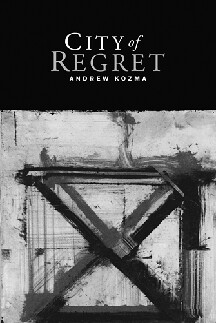
City of Regret by Andrew Kozma

City of Regret by Andrew Kozma is broken into five parts and each section is named for some element of the city — entrances, walls, living spaces, alleys, and exits.  (You can check out my 32 Poems Magazine interview with the poet, here. And please visit Saturday’s Virtual Poetry Circle –link will be live April 30 — for a look at one of his poems).

As a prologue to the collection, Kozma begins with the poem “Dis” (page 1), which is a fictional city in Dante’s The Divine Comedy containing the lower circles of hell.  Like Dante, Kozma goes on a journey through hell, but the poet is traveling through these circles to find his father who has died and with whom he has unfinished business as he says in the final lines:  “When a ravine splits the sky, Earth’s muddy light/unearths my father.  We have much to talk about.//”  This poem sets the tone for the remainder of the collection with its melancholy and mournful tone.

In the first section — entrances — Kozma uses individual poems to explore the various ways people and other beings meet, greet, avoid, and rush toward death.  In “That We May Find Ourselves at Death” (page 8), he echoes the lines of Emily Dickinson, who could not stop for death, when he asks where you go when you are late for death?  He questions how death is confronted when it has already happened and there is no way to turn back the clock.  But in other poems — such as “Night Meeting” (page 6) — the poet evokes violent images of a dead squirrel’s body pulsating with ants to demonstrate not only the sudden impact and violence of death, but the messy aftermath that often follows.  However, death need not always be violent and unexpected, it can come silently . . . gradually like in ” Your Sketch of the Church in Mourning” (page 13):  ” . . . You step with silence,/walking out, and walk slowly.  Navigate the marble floor/softly, or you will not hear the dead/call after you.//”

The poems in the second section — walls — all seem to personify the denial that comes with the stages of grief.  In “Blood Perimeter” (page 25), the narrator speaks of embracing the grief like one would embrace rust, an illustration of how tough it is to come to terms with grief.  In many cases, the poems speak of vanishing moments and people, events that are baffling yet make sense when impermanence of relationships and life are examined and understood.  Kozma uses rhyme and repetition in these poems to ensure the narrator’s meaning is not lost among the vivid images like that of the Acropolis or the hunting dogs.

In the third section — living spaces — the stage of acceptance is discovered beyond the walls of denial, but acceptance is not as tame as the word suggests.  Accepting death means letting go of the person you lose to death and in a way the narrator suggests that you have to rip free from the notion that they are still present by figuratively setting it afire, like in “Quarantine” (page 31).  These living memories and moments of joy and anger with loved ones often resurface during the grieving process, and it is these fragments that will ease the pain of acceptance, but they also become painful.  In “The Butcher” (page 38), accepting the loss and remembering the lost one is like slitting the wrist and letting the blood flow — tortuous but necessary to purge the immediate pain of grief.  Kozma’s images in this section are both violent and jarring, but effective.

In the final sections of the collection — alleys and exits — Kozma’s poems become darker, more melancholy as the loss sets in and becomes consuming.  Whether the darkness in these poems is tied to the narrator’s lack of faith in an afterlife or merely the deep emotional scarring of grief is unclear.  However, there are tinges of hope that death brings about a renewal as the ashes of a cremated body are returned to nature.

Overall, City of Regret by Andrew Kozma is a deeply moving homage to a deceased father and acts as a guide through the journey of grief.  While a different journey than the one taken by Dante in The Divine Comedy, Kozma’s journey does take the poems’ narrator through hell and more.  This collection is deeply evocative and will stay with readers long after the last page is turned.


This is my 8th book for the Fearless Poetry Exploration Reading Challenge.


This is my 14th book for the 2011 New Authors Reading Challenge.


***This is a part of the National Poetry Month 2011 Blog Tour.