Quantcast

Mailbox Monday #234

Happy Labor Day, everyone!

Mailbox Monday (click the icon to check out the new blog) has gone on tour since Marcia at To Be Continued, formerly The Printed Page passed the torch.  September’s host is Notorious Spinks Talks.

The meme allows bloggers to share what books they receive in the mail or through other means over the past week.

Just be warned that these posts can increase your TBR piles and wish lists.

Here’s what I received:

1. Boleto by Alyson Hagy, which came unexpectedly from Graywolf Press.

Will Testerman is a young Wyoming horse trainer determined to make something of himself. Money is tight at the family ranch, where he’s living again after a disastrous end to his job on the Texas show-horse circuit. He sees his chance with a beautiful quarter horse, a filly that might earn him a reputation, and spends his savings to buy her.

Armed with stories and the confidence of youth, he devotes himself to her training — first, in the familiar barns and corrals of home, then on a guest ranch in the rugged Absaroka mountains, and, in the final trial, on the glittering, treacherous polo fields of southern California.

What did you receive?
Winners

I’ve been remiss in congratulating some winners, here’s the latest batch:


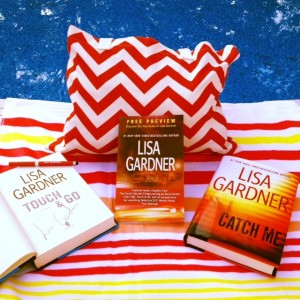
Lisa Gardner Beach Back Winner was Carolyn, who said, “I like to read suspense novels and thrillers.”


The winner of Lauren Yanofsky Hates the Holocaust by Leanne Lieberman was Anita Yancey, who said, “It sounds like a great story, and I’m glad there is some humor in it. I would love to read the book and find out what decision Lauren makes.”


And to the winner of Beth Kephart’s Handling the Truth, Ellie!  She said, “Goodness, this is fascinating. I would write about my family so that further generations could benefit from the knowledge.”

217th Virtual Poetry Circle

Welcome to the 217th Virtual Poetry Circle!

Remember, this is just for fun and is not meant to be stressful.

Keep in mind what Molly Peacock’s books suggested. Look at a line, a stanza, sentences, and images; describe what you like or don’t like; and offer an opinion. If you missed my review of her book, check it out here.

Also, sign up for the 2013 Dive Into Poetry Challenge because its simple; you only need to read 1 book of poetry. Check out the stops on the 2013 National Poetry Month Blog Tour and the 2012 National Poetry Month Blog Tour.

Today’s poem is from the (now) late Seamus Heaney, who recently passed away after a short illness this week:

Casualty

I   

He would drink by himself   
And raise a weathered thumb   
Towards the high shelf,   
Calling another rum   
And blackcurrant, without   
Having to raise his voice,   
Or order a quick stout   
By a lifting of the eyes   
And a discreet dumb-show   
Of pulling off the top;   
At closing time would go   
In waders and peaked cap   
Into the showery dark,   
A dole-kept breadwinner   
But a natural for work.   
I loved his whole manner,   
Sure-footed but too sly,   
His deadpan sidling tact,   
His fisherman’s quick eye   
And turned observant back.   

Incomprehensible   
To him, my other life.   
Sometimes, on the high stool,   
Too busy with his knife   
At a tobacco plug   
And not meeting my eye,   
In the pause after a slug   
He mentioned poetry.   
We would be on our own   
And, always politic   
And shy of condescension,   
I would manage by some trick   
To switch the talk to eels   
Or lore of the horse and cart   
Or the Provisionals.   

But my tentative art   
His turned back watches too:   
He was blown to bits   
Out drinking in a curfew   
Others obeyed, three nights   
After they shot dead   
The thirteen men in Derry.   
PARAS THIRTEEN, the walls said,   
BOGSIDE NIL. That Wednesday   
Everyone held   
His breath and trembled.   

                   II   

It was a day of cold   
Raw silence, wind-blown   
surplice and soutane:   
Rained-on, flower-laden   
Coffin after coffin   
Seemed to float from the door   
Of the packed cathedral   
Like blossoms on slow water.   
The common funeral   
Unrolled its swaddling band,   
Lapping, tightening   
Till we were braced and bound   
Like brothers in a ring.   

But he would not be held   
At home by his own crowd   
Whatever threats were phoned,   
Whatever black flags waved.   
I see him as he turned   
In that bombed offending place,   
Remorse fused with terror   
In his still knowable face,   
His cornered outfaced stare   
Blinding in the flash.   

He had gone miles away   
For he drank like a fish   
Nightly, naturally   
Swimming towards the lure   
Of warm lit-up places,   
The blurred mesh and murmur   
Drifting among glasses   
In the gregarious smoke.   
How culpable was he   
That last night when he broke   
Our tribe’s complicity?   
‘Now, you’re supposed to be   
An educated man,’   
I hear him say. ‘Puzzle me   
The right answer to that one.’

                   III   

I missed his funeral,   
Those quiet walkers   
And sideways talkers   
Shoaling out of his lane   
To the respectable   
Purring of the hearse...   
They move in equal pace   
With the habitual   
Slow consolation   
Of a dawdling engine,   
The line lifted, hand   
Over fist, cold sunshine   
On the water, the land   
Banked under fog: that morning   
I was taken in his boat,   
The Screw purling, turning   
Indolent fathoms white,   
I tasted freedom with him.   
To get out early, haul   
Steadily off the bottom,   
Dispraise the catch, and smile   
As you find a rhythm   
Working you, slow mile by mile,   
Into your proper haunt   
Somewhere, well out, beyond...   

Dawn-sniffing revenant,   
Plodder through midnight rain,   
Question me again.

What do you think?

The Real Jane Austen by Paula Byrne

Source: Harper and Public Library
Hardcover, 361 pages
I am an Amazon Affiliate

The Real Jane Austen: A Life in Small Things by Paula Byrne (which I began reading as a review copy, but opted for a finished borrowed copy to finish because the photos and images were inserted after the ARCs were distributed) is expressive, carefully crafted, and incisive in how it sketches out the true Jane Austen.  In this non-linear biography, Byrne debunks a few of the myths around Austen, particularly about her alleged romantic encounters and her homebody persona.  Through careful analysis of her novels, characters, the correspondence she had with her family and others, and other tidbits from other documents at the time, Byrne demonstrates the careful and perfectionist nature that was Jane Austen, particularly as a novelist.  With that perfectionism also came a penchant for telling her family members exactly what she thought, knowing that they would not take her criticism lightly, especially if they were writing their own stories or poems.  But she also was critical of their life choices and worried about childbirth and the consequences of marriage, especially as a means of stifling a woman’s voice.

“Strikingly, Jane Austen’s heroines are rarely described as beautiful and accomplished.  Even Emma Woodhouse is ‘handsome’ rather than ‘beautiful.’  Physical descriptions of her heroines are rare.  Austen shows instead how they grow into loveliness or possess a particular fine feature, such as sparkling eyes.”  (page 82)

In addition to the importance of family — such as sisterly bonds — Austen seems to have drawn her characters and many of the situations in her novels from real life, things she herself may have experienced on her “expeditions” or to her family members.  Another parallel: the mysterious ways in which her heroines are described — with none being detailed as beautiful or their features particularly outlined to give readers an impression of the whole — and the mystery surrounding her surviving portrait, which may not be her, but a sketch drawn by her sister is most likely her, but she is turned away and her features are unknown.  Byrne also points out there is evidence to suggest that like modern-day Janeites, Austen thought of her characters as real people as well, and often scribbled out afterlives for characters from some of her contemporaries after reading those novels.

“The acknowledgement of the incompleteness of human disclosure [in Emma] strikes at the very heart of Jane Austen’s creative vision.”  (page 255)

Byrne uses her knowledge of the Regency period to better grasp Austen’s daily routines and jaunts, noting that the “turnpike system” was introduced during her lifetime and that while her mother may have suffered from travel sickness, Austen did not.  The author of so many great “domestic” novels traveled a fair share, including to the seaside, which became integral parts of her later novels.  And through her distant relations, her connections to royalty and those engaged in the plantation and slave ownership trade were not as far flung as one would expect for an impoverished woman.  These relationships and sources enabled her to maintain as close to truthfulness in her novels as she could without experiencing things first hand.

The Real Jane Austen: A Life in Small Things by Paula Byrne is a must have for those who have read Jane Austen’s novels and wish to get a better handle on the author and her influences, and while some of those influences may be small in comparison to the wars abroad during her lifetime, they shaped her writing and her expectations in countless ways.  There are moments in which the biographer takes some liberal turns in determining Austen’s character and motivations, and in some cases they may seem plausible, while in others they do not.  But with an absence of facts, thanks to Cassandra Austen’s burning of her sister’s letters, biographers are left with gaps in time that are hard to fill.  From whether Chatsworth or Stoneleigh Abbey is the model for Pemberley in Pride & Prejudice to how an unnamed lady came to be published first by a military publisher, Byrne handles each aspect of Austen’s life with care and consideration, but she never shies away from the more mischievous side of Austen, either.  For those looking for lost secrets, this is not the book for you, and many of us will have to be contented with what we do know about Austen and forget about what moments are lost to us forever.

About the Author:

Paula was born in Birkenhead in 1967, the third daughter in a large working-class Catholic family. She studied English and Theology at the college that is now Chichester University and then taught English and Drama at Wirral Grammar School for Boys and Wirral Metropolitan College. She then completed her MA and PhD in English Literature at the University of Liverpool. She is now a full-time writer, living with her husband, the Shakespeare scholar Jonathan Bate, and their three young children (Tom, Ellie and Harry) in an old farmhouse in a South Warwickshire village near Stratford-upon-Avon.

Paula is represented by The Wylie Agency. She is an Executive Trustee of the Shakespeare Birthplace Trust and a Royal Literary Fund Fellow at the University of Warwick.

Paula is the author of the top ten bestseller Perdita: The Life of Mary Robinson (HarperCollins UK, Random House USA).  Check out her Website and join her on Twitter.

This is my 54th book for the 2013 New Authors Challenge.

Guest Post: 12 Moons, a Video Poetry Project Coming in 2014 by Erica Goss

You may remember Erica Goss and her glorious collection Wild Place, which I reviewed here on the blog last year. Her verse was as untamed as the nature inside the poems and her words made the “beauty beneath the scars” tangible.

Collaborative projects require a great deal of patience with time lines and creative sensibilities, and when the project requires not only a poet, but also a video artist and musician, the potential for something groundbreaking can increase exponentially, and the challenges can be large, but overcome.  When Goss told me about her latest collaborative project, I was thrilled to offer her some space to share it.


When I was born

they gave me a name

that itched like a rash

and demanded ritual objects.

-from “Flower Moon” by Erica Goss

One day last winter, my son mentioned in passing that each recurring full moon has a traditional name; i.e., the full moon of January is called “Wolf Moon,” and the full moon of December is the “Cold Moon.” The names of the moons vary only slightly from culture to culture, proving that regardless of where humans live or what they believe, they share an understanding that the moon influences not only the seasons and climate of Earth, but also the imaginations of its people.

This knowledge inspired me, and I wrote “Snow Moon” and “Strawberry Moon” within a few days of each other. I sent those poems to Swoon (Marc Neys), a groundbreaking video and sound artist whose work in video poetry is exceptional, with the hope that he would find them worthy subjects for his art.

Swoon suggested that I write twelve poems based on the traditional names for each month’s full moon, and that he create a video for each one. He also suggested that we include the vocal talents of Nic S., and the musical talents of Kathy McTavish, both artists that he’s worked with before and whose work I admired.

The result is 12 Moons, an artwork combining poetry, voice, music and video. Kathy McTavish’s original music adds complexity to Nic’s intense and compelling narration, framed by Swoon’s precise editing of sound and image, which creates a miniature universe for each poem within the context of the project.

Beginning in January of 2014, we will release one video per month for viewing on the Internet. A DVD and chapbook will be available in via print-on-demand, and for distribution at poetry festivals around the world.

Check back here for more updates on the project, i.e., where you can view the videos, how to order the DVD and chapbook, and more about the making of 12 Moons.

Swoon’s website: http://www.swoon-bildos.be/

Nic’s website: http://verylikeawhale.wordpress.com/

Kathy McTavish’s website: http://www.cellodreams.com/

Erica Goss’s website: www.ericagoss.com

Erica Goss’s column on video poetry: http://www.connotationpress.com/video-poetry

I know that I’m anxiously awaiting the results of this project. 

What do you think about collaborative projects between visual, textual, and musical artists?

Save

His Majesty’s Dragon by Naomi Novik, narrated by Simon Vance

Source: Public Library
Audiobook, 9 CDs
I am an Amazon Affiliate

Our August book club selection, His Majesty’s Dragon (Temeraire book 1) by Naomi Novik, narrated by Simon Vance, meshes the Napoleonic wars with dragons.  The novel opens with the capture of a French frigate run by a crew unwilling to give up its prize, a near hatching dragon egg, to the British HMS Reliant and Capt. Will Laurence.  While the prize is a great find, the hatchling will be very dangerous should it emerge while they are at sea where there are no mates, trainers, or food available. The situation forces the captain to have the men without families draw straws to determine who would become responsible for the dragon and its egg while aboard.

Handlers of dragons are considered second-class citizens, causing severe disappointment among families and generating a great separateness between handlers and their families.  Generally, children as young as seven are taken away from home for training.  While the young John Carver, who is afraid of heights, is selected to be the dragon’s handler, the dragon has other ideas.  When the dragon speaks, the men are astonished as they expected there to be a trick to getting them to speak.  Once named, Temeraire becomes the focus of the Reliant and its crew, and its relationship to Laurence takes an unexpected turn.

Vance’s voices are easily discernible as different characters and he excels at expressing the character’s fears and awe as he speaks their dialogue, but Novik tends to rely a great deal on adverbs to demonstrate fear or anxiousness and in some cases at the beginning the narration seems to contradict itself — either the dragon egg is an unusual find or a well-known item captured in the surgeon’s books about different dragons or there is a three hour trip to London from Madeira or a three hour trip from London to Scotland, but it is unlikely that both would take that long by transport or dragon.  There is a great deal of explanation through the characters about what they know and don’t know about the dragons, which can get tiresome as the descriptions become longer than necessary.

However, the growing relationship between Temeraire and Laurence is endearing.  And the conflicts between handlers about the care for the dragons and Laurence’s expectations about the training build up the tension as Napoleon continues to mount his forces.  While the first half of the book seems to be setting up the world for the dragons and can drag on a bit, the second half picks up speed with the battles and fighting.  The audio, as narrated by Vance, enables readers to become more closely engaged in the relationship between Temeraire and his handler, as they learn how to fly formations in training for battle and as they get to know one another.  There are a number of endearing scenes in which the handler and the dragon curl up together, with the handler reading to the dragon about mathematics, naval history, and more.

His Majesty’s Dragon (Temeraire book 1) by Naomi Novik satisfactorily meshes history with dragons, but the strength of the novel is in the relationships built between the dragons and their handlers.  These relationships are caring and strengthen with the passage of time, so much so that handlers often plan their futures around them.


This is my 53rd book for the 2013 New Authors Challenge.


About the Author:

An avid reader of fantasy literature since age six, when she first made her way through The Lord of the Rings, Naomi Novik is also a history buff with a particular interest in the Napoleonic era and a fondness for the work of Patrick O’Brian and Jane Austen. She studied English literature at Brown University, and did graduate work in computer science at Columbia University before leaving to participate in the design and development of the computer game Neverwinter Nights: Shadow of Undrentide. Over the course of a brief winter sojourn spent working on the game in Edmonton, Canada (accompanied by a truly alarming coat that now lives brooding in the depths of her closet), she realized she preferred writing to programming, and on returning to New York, decided to try her hand at novels.  Naomi lives in New York City with her husband and six computers.

What the book club thought:

It seemed as though most of the members enjoyed the book, and one member said that the historical facts about the Napoleonic wars were accurate for the most part.  Some expressed an inability or slight difficulty in determining the size of the dragons or transports used to move the dragons.  One member, who led the group, pointed out that the illustrator in the back of the book got some of the details wrong in the section that explains the differences between the dragons and their features.  One member said that she was not really excited to read the book because she doesn’t usually read fantasy books, but the author made it seem plausible that dragons would fit into our world.  She also indicated that she wanted one of her own dragons to curl up with and read to, and she would like to read the other eight books in the series.  Another member said that if Napoleon really did have dragons the world might have been more in trouble than it was at the time.  One male member had not finished the book, but said that he would continue reading.  Overall, is seems like the club enjoyed this foray into fantasy novels.

Mailbox Monday #233

Mailbox Monday (click the icon to check out the new blog) has gone on tour since Marcia at To Be Continued, formerly The Printed Page passed the torch.  August’s host is Bermudaonion The Reading Fever.

The meme allows bloggers to share what books they receive in the mail or through other means over the past week.

Just be warned that these posts can increase your TBR piles and wish lists.

Here’s what I received:

1. A Constellation of Vital Phenomena by Anthony Marra, which I won from Caribousmom.

Two doctors risk everything to save the life of a hunted child in this majestic debut about love, loss, and the unexpected ties that bind us together. “On the morning after the Feds burned down her house and took her father, Havaa woke from dreams of sea anemones.” Havaa, eight years old, hides in the woods and watches the blaze until her neighbor, Akhmed, discovers her sitting in the snow. Akhmed knows getting involved means risking his life, and there is no safe place to hide a child in a village where informers will do anything for a loaf of bread, but for reasons of his own, he sneaks her through the forest to the one place he thinks she might be safe: an abandoned hospital where the sole remaining doctor, Sonja Rabina, treats the wounded. Though Sonja protests that her hospital is not an orphanage, Akhmed convinces her to keep Havaa for a trial, and over the course of five extraordinary days, Sonja’s world will shift on its axis and reveal the intricate pattern of connections that weaves together the pasts of these three unlikely companions and unexpectedly decides their fate.

2. Everyday Book Marketing by Midge Raymond, which includes a Q&A from me! I was so surprised when the book came.

Book publication is just the beginning… Everyday Book Marketing is for the published author who is not only a writer but who also may have another career, a family, and any number of other obligations that require fitting book promotion into a budget where both hours and dollars may be hard to find. This book will guide you on the journey from Writer to Marketing Pro, offering essential marketing tools along the way-including such book promotion basics as how to schedule a book tour and how to make the most of social media to how to keep the buzz going long after your launch date. Everyday Book Marketing is divided into easily accessible sections that cover not only what you’ll need to handle before publication, such as establishing a blog and website, but what you can do during your book launch and beyond. It also offers tips and advice for how to keep the never-ending tasks of book promotion manageable, whether you have ten minutes a day or two hours a day. Also included are Q&As with a range of authors and industry experts-from fiction authors and poets to librarians and event managers-who provide such invaluable tips as how to present yourself as an author, how to reach out to event coordinators, and how to find new readers both within your community and beyond.

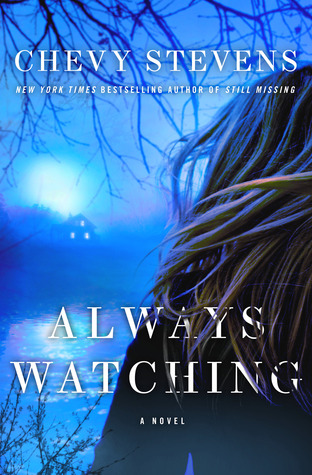
3.  Always Watching by Chevy Stevens, which I snagged from Novel Books‘s ARC free pile.

In the lockdown ward of a psychiatric hospital, Dr. Nadine Lavoie is in her element. She has the tools to help people, and she has the desire—healing broken families is what she lives for. But Nadine doesn’t want to look too closely at her own past because there are whole chunks of her life that are black holes. It takes all her willpower to tamp down her recurrent claustrophobia, and her daughter, Lisa, is a runaway who has been on the streets for seven years.

When a distraught woman, Heather Simeon, is brought into the Psychiatric Intensive Care Unit after a suicide attempt, Nadine gently coaxes her story out of her—and learns of some troubling parallels with her own life. Digging deeper, Nadine is forced to confront her traumatic childhood, and the damage that began when she and her brother were brought by their mother to a remote commune on Vancouver Island.  What happened to Nadine?  Why was their family destroyed? And why does the name Aaron Quinn, the group’s leader, bring complex feelings of terror to Nadine even today?

4.  TransAtlantic by Colum McCann, which I snagged from Novel Books‘s ARC free pile.

Newfoundland, 1919. Two aviators—Jack Alcock and Arthur Brown—set course for Ireland as they attempt the first nonstop flight across the Atlantic Ocean, placing their trust in a modified bomber to heal the wounds of the Great War.

Dublin, 1845 and ’46. On an international lecture tour in support of his subversive autobiography, Frederick Douglass finds the Irish people sympathetic to the abolitionist cause—despite the fact that, as famine ravages the countryside, the poor suffer from hardships that are astonishing even to an American slave.

New York, 1998. Leaving behind a young wife and newborn child, Senator George Mitchell departs for Belfast, where it has fallen to him, the son of an Irish-American father and a Lebanese mother, to shepherd Northern Ireland’s notoriously bitter and volatile peace talks to an uncertain conclusion.

5.  The Kashmir Shawl by Rosie Thomas, which I snagged from Novel Books‘s ARC free pile.

On the eve of 1941, newlywed Nerys Watkins leaves rural Britain to accompany her husband on a missionary posting to the exotic city of Srinagar, India. But when he leaves to take on a complicated mission elsewhere, Nerys discovers a new world. Here, in the heart of Kashmir, the British dance, flirt, and gossip against the backdrop of war, and Neryssoon becomes caught up in a dangerous liaison. By the time she is reunited with her husband, she is a very different woman.

Years later, Nerys’s granddaughter Mair Ellis clears out her dead father’s house and finds an exquisite shawl. Wrapped in its folds is a lock of a child’s curly hair. With nothing else to go on, Mair decides to trace her grandparents’ roots back to Kashmir, embarking on a quest thatwill change her own life forever.

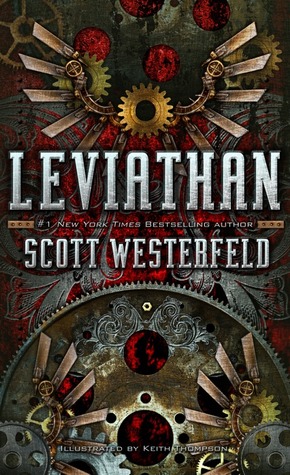
6.  Leviathan by Scott Westerfeld, which I purchased at Novel Books as it is the October book club selection.

It is the cusp of World War I. The Austro-Hungarians and Germans have their Clankers, steam-driven iron machines loaded with guns and ammunition. The British Darwinists employ genetically fabricated animals as their weaponry. Their Leviathan is a whale airship, and the most masterful beast in the British fleet.

Aleksandar Ferdinand, a Clanker, and Deryn Sharp, a Darwinist, are on opposite sides of the war. But their paths cross in the most unexpected way, taking them both aboard the Leviathan on a fantastical, around-the-world adventure….One that will change both their lives forever.

7. Foreign Devils on the Silk Road by Peter Hopkirk, which I purchased at Novel Books as it is the September book club pick.

The Silk Road, which linked imperial Rome and distant China, was once the greatest thoroughfare on earth. Along it traveled precious cargoes of silk, gold, and ivory, as well as revolutionary new ideas. Its oasis towns blossomed into thriving centers of Buddhist art and learning. In time it began to decline. The traffic slowed, the merchants left, and finally its towns vanished beneath the desert sands to be forgotten for a thousand years. But legends grew of lost cities filled with treasures and guarded by demons. In the early years of the last century foreign explorers began to investigate these legends, and very soon an international race began for the art treasures of the Silk Road. Huge wall paintings, sculptures, and priceless manuscripts were carried away by the ton and are today scattered through the museums of a dozen countries.

What did you receive?

216th Virtual Poetry Circle

Welcome to the 216th Virtual Poetry Circle!

Remember, this is just for fun and is not meant to be stressful.

Keep in mind what Molly Peacock’s books suggested. Look at a line, a stanza, sentences, and images; describe what you like or don’t like; and offer an opinion. If you missed my review of her book, check it out here.

Also, sign up for the 2013 Dive Into Poetry Challenge because its simple; you only need to read 1 book of poetry. Check out the stops on the 2013 National Poetry Month Blog Tour and the 2012 National Poetry Month Blog Tour.

Today’s poem is from David Ferry:

In the Reading Room

Alone in the library room, even when others
Are there in the room, alone, except for themselves:
There is the illusion of peace; the air in the room

Is stilled; there are reading lights on the tables,
Looking as if they're reading, looking as if
They're studying the text, and understanding,

Shedding light on what the words are saying;
But under their steady imbecile gaze the page
Is blank, patiently waiting not to be blank.

The page is blank until the mind that reads
Crosses the black river, seeking the Queen
Of the Underworld, Persephone, where she sits

By the side of the one who brought her there from Enna,
Hades the mute, the deaf, king of the dead letter;
She is clothed in the beautiful garment of our thousand

Misunderstandings of the sacred text.

What do you think?

Interview with Beth Kephart, author of Handling the Truth, & Giveaway

It has been several weeks since I posted my review of Beth Kephart’s August release, Handling the Truth: On the Writing of Memoir, but that doesn’t mean I haven’t been thinking about those wise words.  My review of the book heaped on the praise, and I think that I’ve merely joined a widening group of reviewers who are in love with this writing reference/memoir — from other bloggers like Florinda and Patty to her former student, Stephanie Trott, the New York Journal of Books, and Booklist.  And let’s not forget the elite list the book landed on in O Magazine, alongside another of my favorites, Stephen King.

Kephart is on the touring circuit for her book and she’s made a splash with the launch event at the Free Library of Philadelphia to a discussion on WHYY; both of which you can listen to via podcast.

In addition to all of this talk about her book and her extremely busy schedule, she took a few minutes between the end of her corporate work and her dinner to answer some interview questions about her book and about writing memoir. I’m forever grateful.  Please give her a warm welcome:

Do you recommend changing friend/family names in memoir? By the same token, should an author consider a pen name when writing memoir? Why or why not?

Although I try never to say never, I advocate against changing names. It is a slippery slope. A name changes, a detail changes, a scene changes, a year changes, and then…we have fiction. Yes, I recognize the importance of protecting others. But if the story is so dicey that people will be upset if their real names are used, should you be telling the story? For truly, at the end of the day—name changed or not changed—the person who is being written about is going to recognize herself/himself. And so, most likely, will the neighbor.

In the book, you talk about asking your students to take photos and then write about something in the background, rather than the foreground. Should students apply this to their own memoir writing by not writing about the first most obvious memory or issue they think of and seek the memories or ideas just at the periphery?

A great question. I believe that we often write our very best when we don’t take the straight on path toward a story. Approach the memoir from multiple angles. Value the oblique. Dwell in the unexpected tangent. See what happens.

As a follow-up to that question, how would you advise a student who also dabbles in photography, but prefers to fill the frame with their chosen subject (i.e. a niece’s face, a tree, et. al.) so that nothing, if just a bit of sky is visible in the background?

Well, there you go. Another great question. But, Serena, even with a macro lens there is something just beyond the image’s true focus. There is something unintentional, in other words. What is it? Why is it there?

When you began your writing of memoirs, what types of fears did you suppress in order to send out that first manuscript? Did you think it was polished enough and how did you know? Was it a different type of fear because it was memoir and more personal, rather than separateness that fiction affords sometimes or do you find that the anxieties are similar?

I was a completely naïve first-time writer, with no connections, no expectations, no real sense of the writing life. Remember, this was the pre-blogging era. This was me—a full-time mother and freelance business writer with no writing friends, no book groups, no teacher until I went to Spoleto on a family vacation and met Rosellen Brown and Reginald Gibbons. I did not know what I was in for, and so I meandered toward dangers I did not even foresee. I believed I’d written a story that only a handful of friends might read. When Television came knocking, Radio, Prizes, Off Broadway (I capitalize, for I grew to fear these things), I was both unprepared and anxious (and to most things I also said no). I’ve written history, poetry, fable, and young adult literature since. There are anxieties bound up in every genre.

What vulnerabilities do you see showcased in memoir that are not observed in poetry or fiction?

The best memoirs are born of absolute vulnerability. It is the writer saying not, This happened to me, but, This happened to me and I need to know what it means. The search for meaning is the human being at her most vulnerable. We search for meaning in fiction and poetry, too. All good writing comes from this raw place.

What poets/poems or fiction have taught you techniques or styles that would work well in memoir? Please feel free to share any examples.

I could go on and on in answer to this question. But, simply: Gerald Stern, the poet, teaches what the conversational sounds like, even within the space of a monologuing poem. Michael Ondaatje and Alice McDermott teach the power of honesty, no matter the form. I never think about technique. I think about impact.

Finally, what would you have done for a career had you not taught and written books?

Well, I smile, for I guess I am living that career. I’ve had my own business since I was twenty-five, writing annual reports, histories, books, and employee magazines/newsletters for companies and not-for-profits. It consumes upwards of eighty hours each week. Writing and teaching are what I do on the side.

What are your thoughts on memoirs — the writing and reading of them?

If you want to learn more, there’s also this great interview Kephart does with herself. And this interview with Priscilla Gilman and another chance to win the book.

For one lucky reader interested in writing memoir or otherwise, please comment about what your memoir would be and why.

You’ll be entered to win a copy of Beth Kephart’s Handling the Truth.

This giveaway is international. Deadline to enter is Aug. 30, 2013 at 11:59 PM EST.

Lake Como by Anita Hughes

Source: St. Martin’s Press
Paperback, 274 pages
I am an Amazon Affiliate

Lake Como by Anita Hughes is a summer read that will sweep readers away to Lake Como, Italy, and wish they were being romanced and fed so well!  Hallie Elliot is part of a competitive interior design firm in San Francisco, Calif., and she has a journalist boyfriend, Peter, who dotes on her while wooing the famous and infamous to spill their secrets.  While her life is humming along in America, her half-sister Portia’s marriage is falling apart in Italy.  Hughes has crafted a novel about building and rebuilding family ties, particularly between sisters, and how unexpected events can change the course of one’s life in better ways.

Hallie’s mother, Francesca, was a carefree teen studying and playing abroad when she met Pliny and quickly married him.  Unwittingly, she had entered the old world of family politics, becoming a part of Italian aristocracy with their own ideas of motherhood and obligation.  As a teen, Francesca could not handle the pressure, leaving her two children, Marcua and Portia, behind.  Hallie has lived a privileged life in California, thanks to Francesca’s mother, Constance, a socialite and constant mothering presence.  Hallie’s life is not as cohesive as many family units with a mother and father and siblings living together, but she’s able to rise above and carve out her own life.  Hughes peppers the story with elements of Hallie’s growing-up years to ensure that readers understand her foibles.

Readers will be immersed in Lake Como’s romance — the glittering light playing off the waves and the sleek satin dresses hugging the curves of each woman — and swept up in the family drama caused by a clash of old world tradition and the realities of the modern world.  Portia is struggling with the pull between those worlds, but Hallie is there to pull her back to simpler times when they shared music and sleepovers one summer as kids.  She brings her back to life just by being her sister, and while at one point Hallie forgets that connection amidst her own troubles, these sisters have a concrete bonds.

Lake Como by Anita Hughes is about finding out who you are, even in the worst circumstances, and relying on the bonds you know to be true when you find yourself waffling.  Hughes is an exceptional dramatist, weaving in the past and present to create a fuller picture of the family.  The bonds tying these members together will last for many years to come, and some readers may even want to see a sequel. (I know I do!)

About the Author: (photo by Sheri Geoffreys)

Anita Hughes was born in Sydney, Australia and had a charmed childhood that included petting koala bears, riding the waves on Bondi Beach, and putting an occasional shrimp on the barbie. Her writing career began at the age of eight, when she won a national writing contest in THE AUSTRALIAN newspaper, and was named “One of Australia’s Next Best Writers.” (She still has the newspaper clipping.)

She received a B.A. in English Literature with a minor in Creative Writing from Bard College, and attended UC Berkeley’s Masters in Creative Writing program.

Check out my review of Monarch Beach!

Joyland by Stephen King

Source: Purchased at Public Library sale
Paperback, 283 pages
I am an Amazon Affiliate

Joyland by Stephen King showcases that same storytelling ability King has demonstrated his entire career, but rather than focus on the gruesome or horror, Joyland is about amusements, growing up, and tangentially crime.  Devin Jones is a 21-year-old college kid who goes down to North Carolina from New Hampshire on a whim to become a greenie at the local amusement park, Joyland.  The park, which houses a number of rides and is fading in popularity in 1973, has a haunted past.  Jones is just getting the hang of being on his own away from college, finding a room to rent and learning how to butter-up the powers that be to get the job.  While he’s great at making friends and impressing the supervisors, he’s also crap with women from the girlfriend who’s leading him on a string and bucking his attempts at romance to the sisterly love of Erin Cook.

“The truck’s headlights went out.  I heard the door open and shut.  And I heard the wind blowing through the Spin’s struts — tonight that sound was a harpy’s screech.  There was a steady, almost syncopated rattling sound, as well.  The wheel was shaking on its tree-thick axle.”  (page 258)

This summer, Jonesy learns a whole new language and way of life — carny from carny — and at the same time nurses a broken heart while having as much fun as he can with the kids who attend the park looking for Howie the Hound and his young friends, Erin and Tom Kennedy.  He’s constantly surrounded by a typical cast of carnies from Madame Fortuna to Lane Hardy and Eddie Fu****g Parks.  These subordinate characters are far from that, playing an integral part in Jonesy’s experiences during the summer and into the fall when the other college kids have gone back to school.  Unlike, King’s typical horror novels there is little gore and slashing here, but he makes up for it in setting, character, and story.  Readers will be immersed in the carny life and language, getting caught up in the lingo, the scams, the rides, and the sheer summer fun just like his main character, Dev.

King is adept at building stories from the ground up, weaving in details from several story lines through the nostalgic point of view of his main character (aged and wiser) in a way that never gets bogged down.  Readers will feel as though they are sitting by the campfire listening to a tall tale, much like the feeling Dev experiences when his landlady, Mrs. Shoplaw, tells him about the Linda Gray murder in Horror House.  Very much a period piece, this novel is the 1970s from the cultural references and the religious fervor that held women to a certain standard, but it also has a modern feel in how it is told through the eyes of an older Dev looking back on this summer of firsts and lasts for him.

Joyland by Stephen King in some ways is reminiscent of IT‘s story telling as characters look back on themselves and their actions from the present, extracting things and feelings they may not have expressed at the time, providing a new perspective on their experiences.  Dev does this, and while not as steeped in the supernatural as IT was, there is murder, psychics/seers, ghosts, and an early televangelist.  King has brought to life the childlike joy of carnivals and amusement parks and brought in a dose of reality as Dev is put to “wearing the fur” and scrubbing down the rides until the sweat pours off of him, while at the same time unraveling a murder mystery to its gyrating climax.

Like IT, this will be on the coveted Best of King shelf and likely will be re-read.

About the Author:

Stephen King is the author of more than fifty books, all of them worldwide bestsellers. His recent work includes Doctor Sleep and Under the Dome, now a major TV miniseries on CBS. His novel 11/22/63 was named a top ten book of 2011 by The New York Times Book Review and won the Los Angeles Times Book Prize for Mystery/Thriller as well as the Best Hardcover Book Award from the International Thriller Writers Association. He is the recipient of the 2003 National Book Foundation Medal for Distinguished Contribution to American Letters. He lives in Bangor, Maine, with his wife, novelist Tabitha King.

Mailbox Monday #232

Mailbox Monday (click the icon to check out the new blog) has gone on tour since Marcia at To Be Continued, formerly The Printed Page passed the torch.  August’s host is Bermudaonion The Reading Fever.

The meme allows bloggers to share what books they receive in the mail or through other means over the past week.

Just be warned that these posts can increase your TBR piles and wish lists.

Here’s what I received:

1.  The Water’s Edge by Karin Fossum, translated by Charlotte Barslund, which I received from a friend.

Reinhardt and Kristine Ris, a married couple, are out for a Sunday walk when they discover the body of a boy and see the figure of a man limping away. They alert the police, but not before Reinhardt, to Kristine’s horror, kneels down and takes photographs of the dead child with his cell phone. Inspectors Konrad Sejer and Jakob Skarre begin to make inquiries in the little town of Huseby. But then another boy disappears, and an explanation seems more remote than ever. Meanwhile, the Rises’ marriage unravels as Reinhardt becomes obsessed with the tragic events and his own part in them.

2.  Bad Intentions by Karin Fossum, translated by Charlotte Barslund, which I received from a friend.

In this chilling addition to the internationally best-selling Inspector Konrad Sejer series, the detective must face down his memories and fears as he investigates the deaths of two troubled young men. The first victim, Jon Moreno, was getting better after a mysterious guilt had driven him to a nervous breakdown one year earlier. His psychiatrist said so, as did his new friend at the hospital, Molly Gram, with her little-girl-lost looks. So when he drowns in Dead Water Lake, Sejer hesitates to call it a suicide.

Then the corpse of another young man is found, a Vietnamese immigrant. And Sejer begins to feel his age weigh on him. Does he still have the strength to pursue the elusive explanations for human evil? A harrowing, masterfully wrought mystery from the celebrated Karin Fossum.

What did you receive?