Quantcast

Young Jane Austen: Becoming a Writer by Lisa Pliscou

Source: Author Lisa Pliscou
Paperback, 188 pgs
I am an Amazon Affiliate

Young Jane Austen: Becoming a Writer by Lisa Pliscou is an unusual biography in that it is written from the perspective of a young girl, the now famous Jane Austen.  In the introduction the author said she has created a “speculative biography” because there is so little known about Austen’s younger years.  She includes a time line for the biography and a list of sources, as well as a delightful annotated version of the biography in the back of the book.  Annotations help provide context to the well crafted narrative of young Jane’s early life.  An overarching theme in this biography is what makes a writer become a writer?  Are they born as such? Does it require simply a fondness for words or an observant nature and does it need to be nurtured just by the individual or by their own support system?

“But people aren’t born writers; they become writers.  They’re shaped by the circumstances of their lives — their personality, their interests, their experiences, their family and friends — and it’s never a certain thing that a talent with words, no matter how abundant, will find its full expression in both accomplishment and recognition.”  (pg. 141)

With this thesis in mind, Pliscou sets about illustrating how this may be true for Jane Austen, called Jenny by her family.  In many respects, she was not considered the writer of the family, and many in her family also wrote, including her mother.  And again, like most writers will tell you, reading can shape your craft as a writer, and as Jane read more and more, she began to use her knowledge to pick apart novels and other writing to learn how it functioned.

“Like Mama ripping apart an old gown of Cassy’s, only to put it together in a different way, creating a new gown for Jenny, Jenny was going to rip apart everything she had read.”  (pg 75)

Pliscou does touch upon the limited options available to women of Jane’s time, even in her transitions between different parts of the book.  At the heart of this biography is a strong young lady who sees an opportunity to become more and to be fulfilled in an unconventional way.  Had she different parents or siblings, perhaps there would have been no famous novelist.  But thankfully, that was not to be.  Young Jane Austen: Becoming a Writer by Lisa Pliscou is delightful, and would make a great introduction to young writers still toying with words on the page.  It demonstrates a young lady’s life as it is shaped by the world around her and the words on the page, and it also includes delightful illustrations.

About the Author:

Lisa Pliscou is an acclaimed author of both fiction and nonfiction — funny, thought-provoking, educational, inspiring — for adults and children, with a highlight on the coming-of-age experience.

Her work has been praised by the Wall Street Journal, the Los Angeles Times, the Chicago Sun-Times, Publishers Weekly, Booklist, the Associated Press, The Horn Book, and other media.
 

How Tiger Says Thank You! and How Penguin Says Please! by Abigail Samoun, illustrated by Sarah Watts

Source: Sterling Children’s Books
Hardcover, 22-24 pgs
I am an Amazon Affiliate

How Penguin Says Please! and How Tiger Says Thank You! by Abigail Samoun, illustrated by Sarah Watts, are both part of the little traveler series of board books for ages 2-4. Kids love learning new words and why should learning a foreign language be any different.  At this age, kids are sponges ready to absorb anything they can get their hands or ears on, which also can spell trouble if you’re not careful when filtering your own behavior.  These little board books contain not only colorful illustrations of Penguin and Tiger’s travels, but also maps that illustrate the routes they took around the world.

Although there is no storyline per se, tiger and penguin are teaching kids and parents how to say Please and Thank You — which are some of the most important words in teaching children manners — in different languages, ranging from Chinese to Russian and Indian.  Tiger not only thanks a flight attendant, but also a balloon vendor, a market merchant, and others on her journey, while Penguin says please to an airline ticket agent, a bakery clerk, someone who takes her picture and others.

How Penguin Says Please! and How Tiger Says Thank You! by Abigail Samoun, illustrated by Sarah Watts, offer a great place to start learning new languages for kids.  They make travel to other countries less frightening, and make it easy for parents to pronounce the foreign words with the a key on each page for sounding out the words.  My daughter and I had fun with the travels and we talked about each country and what information I could provide in addition to the please and thank you word pronunciation aspect.  She loves books with maps and different cultures, soaking up all the information she can.  She is full of questions, and I cannot wait to hear her start trying to pronounce these words right alongside their English counterparts.

The House of Hawthorne by Erika Robuck

Source: Penguin Random House
Hardcover, 416 pgs
I am an Amazon Affiliate

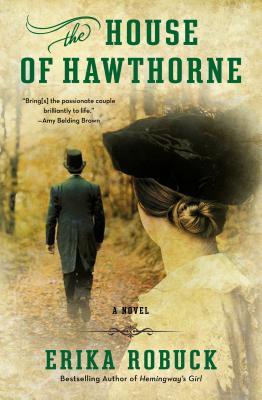
The House of Hawthorne by Erika Robuck is word portrait of Sophia Peabody and Nathaniel Hawthorne’s courtship, marriage, and family, as well as the tensions that arise from two artists balancing their passions with their family.  Spoken in the voice of Sophia Peabody, readers are given a glimpse of her passionate painting and love of life despite her debilitating headaches before she meets Nathaniel, an aloof writer who feels the inadequacy of his words on paper.  From the 1830s to the U.S. Civil War, readers are taken through their early romance and their marriage.  While readers will find Sophia passionate about her work, she still finds joy and love in being a wife and mother, though she does miss her painting.  Despite the vacillation between poverty and moderate wealth, the Hawthornes are a family unit that loves deeply and remain loyal to their friends.

“One hand is open, overflowing with an abundance of joy and vitality; the other is a fist, clutching a void so desperately that the nails dig holes in the skin.” (pg. 247)

Like many artists there are period of abundance and times when the land is fallow, and this is true in terms of both writing and painting artistry as well as the funds they earn.  Sophia is a headstrong woman, but she quickly learns how to navigate her husband’s moods and comfort him in the best way she can for a reserved man.  Nathaniel is an enigma, but we get to see him through Sophia’s loving eyes, which can help soften some of his more anti-social behavior that others may see as mean or aloof.  It is wonderful to see the circle of friends the Hawthorne’s have and how those relationships evolve over time, particularly in light of the coming Civil War between the North and South.  From the drifting away from the Emersons to the effusive complements of Melville, the Hawthornes remain a tight knit family and rally around each other in times of loss and suffering.

“Our country simmers like a covered pot over the issue of slavery, and while Nathaniel and I do not approve of owning slaves, we cannot imagine what a division or even a war between the Northern and Southern states would do to our young nation.” (pg. 264)

The House of Hawthorne by Erika Robuck is a stunning narrative that illuminates the often overshadowed life of Sophia Hawthorne and demonstrates how two artists can live together and build a life despite their differences and their own need for solitude and succor.  The novel raises questions of self-identity, self-expression, compromise, and the desire to create and have it all.

About the Author:

Historical fiction writer, book blogger, voracious reader. Erika’s first novel, RECEIVE ME FALLING was self-published. Penguin Random House published HEMINGWAY’S GIRL, CALL ME ZELDA, FALLEN BEAUTY, and a short story anthology to which Erika contributed, GRAND CENTRAL: ORIGINAL STORIES OF POSTWAR LOVE AND REUNION. Her forthcoming novel THE HOUSE OF HAWTHORNE will release on May 5th, 2015.

Erika writes about and reviews historical fiction at her blog, Muse, and is a contributor to fiction blog, Writer Unboxed. She is also a member of the Historical Novel Society, the Hemingway Society, the Millay Society. and the Hawthorne Society.


Looking for Potholes by Joe Wenke

Source: Meryl L. Moss Media Relations
Paperback, 93 pgs
I am an Amazon Affiliate

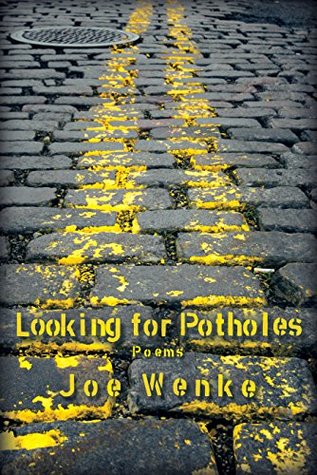
Looking for Potholes by Joe Wenke explores the changing fluid world in which live and the fluidity of the relationships we have with one another.  Like in “Then and Now,” it starts off simply discussing how when we are young, we can shoot baskets and drink soda, but when we age we cannot.  But he goes deeper to suggest that as we age we tend to close ourselves off to new experiences and relationships, but also to even those relationships and experiences we already find ourselves in.  “You used to keep going./Now you stop.//We’re here for the moment./No one knows/how long you stay open,/when you close.”  (pg. 3)

Life is full of potholes, those moments where things are thrown off track.  Wenke is adept at twisting subtle insults and jabs into something that can be admirable, like being considered “Choosy” which means the narrator had the fortitude to choose the partner he’s with and calling him choosy.  Wouldn’t you want some who is discerning pick you?  Many of these poems lack a sense of regret, but applaud the sense of acceptance and living in that moment and making it the best.  “Lying Liars” is a poem steeped in irony, with the liars continuing to spin their tales to your face and behind your back because that’s all they know how to do.  But the rub is that the people they speak to don’t believe them, and the liars end up deceiving themselves.

The Stranger (pg. 33)

Last night
we saw each other
for the first time
in years.
My fears
of an epic confrontation,
an ugly conflagration
sparked by a chance encounter -- 
the accidental meeting
of two people
who once loved
but then profoundly
hated each other --
were unfounded.
You look at me
for just a moment 
with no change in expression
or sign of recognition
that I could see.
Then you turned away
from me
and walked on --
as if you were
a total stranger.

Looking for Potholes by Joe Wenke is a little bit more serious than Free Air, but these poems are still infused with wit and satire.  The turns of phrase can sometimes catch readers off guard as well, but these poems are well worth the read.

About the Poet:

DR. JOE WENKE, an outspoken and articulate LGBT rights activist, is the owner and managing partner of Xperience, a multi-million dollar marketing communications and production company with offices in New York, Boston and Detroit. He is also the founder and publisher of Trans Über, a publishing company with a focus on LBGT rights and promoting freedom and equality for all people.

He began his career as an editor at the Foundation Center in New York City. He was a speechwriter at Avnet for Tony Hamilton, the founder of the global electronics distribution industry, and wrote speeches for George Conrades, the head of IBM US. As a senior vice president at Caribiner International he served as the company’s lead communications strategist and head of global accounts.

Wenke received an M.A. in English from Pennsylvania State University and a Ph.D. in English from the University of Connecticut. He is a regular columnist in the Huffington Post. His books look into the religious underpinnings of LGBT discrimination in America, including YOU GOT TO BE KIDDING! The Cultural Arsonist’s Satirical Reading of the Bible. His next book, PAPAL BULL: An Ex-Catholic Calls Out the Catholic Church, will be published later this Fall. He is also author of “Mailer’s America” about the lifework of Pulitzer-prize winning American author Norman Mailer.


Take a Peek with Peek-a-Bear by Jill Mangel Weisfeld

Source: STRATEGIES Literary Public Relations
Hardcover, 12 pgs
I am an Amazon Affiliate

Take a Peek with Peek-a-Bear by Jill Mangel Weisfeld, illustrated by Garry Thorburn, is one of the latest favorites in my house.  My daughter can just spend some quiet time with this one in her lap and experience what Peek-a-Bear experiences even without someone reading the text to her.  She knows the various modes of transportation the bear finds himself traveling on already, which probably helps with her own version of the narration.

Peek-a-Bear has some interactive parts that readers can pull, lift, open, and rotate to see the latest scene.  He rides all kinds of transportation vehicles from a Ferris Wheel to a boat and train.  He takes a number of trips in this book and sees some fascinating creatures, including an octopus who likes peanut butter.  Take a Peek with Peek-a-Bear by Jill Mangel Weisfeld, illustrated by Garry Thorburn, is fun and can be turned into a game of what do your kids see outside the window.  This game can be carried over into your own travels on vacation or just to the grocery store.

The Antigone Poems by Marie Slaight with charcoal drawings from Terrence Tasker

Source: Altaire Productions & Publications & TLC Book Tours
Paperback, 104 pgs.
I am an Amazon Affiliate

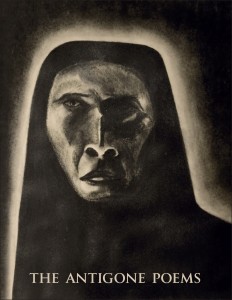
The Antigone Poems by Marie Slaight, with charcoal drawings by Terrence Tasker that resemble the one on the cover (who may be is Antigone), is unique in that it is inspired by the Sophocles play but that it is not explicit in its references.  Antigone is the third in the Theban plays written by Sophocles and she was a very stubborn character who fought for her familial duties.  She is not only stubborn but very passionate about her beliefs.  The Antigone we meet in these poems is very passionate and very torn, but there also is an underlying darkness to her actions.  Slaight brings out her inner fears of death, which she believes is imminent even as she continues to defy the authorities and the gods with her actions out of duty.

Slaight employs some fantastic imagery, like “If this perfume doesn’t burst/It will twist into venom.” (pg XVII) and “Silence and decline/And a veil of grey descending.” (pg. LXXIII)  Coupled with the stunning charcoal drawings from Tasker, which remind me of the Greek masks worn when the old plays were acted out, the collection evokes deep sadness, turmoil and concern.  One of my favorite images is a side profile in which just the face is shadowed on a cream background and the hair is left without definition.  There is a fierceness in the woman’s brow and chin, but sadness can be found in her down-turned mouth.

From pg. LVII

Carver
Twist
You mark
In flesh.

Sculptor

Smash
This stone
In death.

Your anguish sought this blackened veil.
Your anger wrought this iron hell.

The Antigone Poems by Marie Slaight, with charcoal drawings by Terrence Tasker, is a fascinating collection of passionate and terrifying poems depicting the inner turmoil of Antigone, who fought for what was morally right and what she thought of as her duty to her brother.  She gives up everything with her battle to bury her shamed brother, including her betrothal to the prince of Thebes.  Slaight has a deft poetic hand when it comes to this tortured and head-strong character.  Her poems are cryptic, but infused with strong emotion.  Some surface background on the character of Antigone may be needed to fully grasp these poems, but on the surface, they could be spoken by any such woman or man.

About the Poet:

MARIE SLAIGHT (1954-) has worked in Montreal, New Orleans, and Buenos Aires as a writer, producer, and performer. Now based in Sydney, Australia, her poetry has appeared in American Writing, Pittsburgh Quarterly, Poetry Salzburg, The Abiko Quarterly, New Orleans Review and elsewhere. Slaight is currently the director of Altaire Productions & Publications, a Sydney-based arts production company, which has been involved in such films as the award-winning documentary Bury the Hatchet, Kindred and Whoever Was Using This Bed.

About the Illustrator:

TERRENCE TASKER (1947-1992) was born in Saskatchewan, Canada. Raised in rural western Canada, he went on to become a self-taught artist and filmmaker. He co-founded and built the original Studio Altaire, a 90-seat theater and visual art gallery that also ran after hours jazz concerts in downtown Montreal. He worked as a set builder as well as working in construction, mining, finance, industrial installations, taxi driving and film projectionist. He created the artwork for The Antigone Poems in the 1970s, while living in Montreal and Toronto.

tlc tour host

ABC Universe by American Museum of Natural History

Source: Sterling Children’s Books
Hardcover, 18 pgs
I am an Amazon Affiliate

ABC Universe by American Museum of Natural History is not your typical book about the alphabet.  Whether you have daughters, sons, nieces, or nephews who are just starting to learn their letters, this board book presents vivid and interesting pictures for kids to associate with their new letters.  Young kids always find things they are unfamiliar with in their daily lives fascinating.  Outer space is a big wide and different world from that here on Earth.  My daughter LOVES outer space stories, and this combines learning new words with things she’s interested in.  I think since this book entered the house in March, my daughter and I have read it about 10 times or more.  She’s starting to know some of the words on her own by looking at the picture, like Astronaut, and she can tell me what letter the words start with.  Harder words, like Quasar, are more difficult, but she does recognize the Q at the beginning of the word.

ABC Universe by American Museum of Natural History is a fun introduction to not only the alphabet, but also things found in outer space.  It will get kids thinking about words that they are not readily familiar with and they will see outer space in a different way.  We have fun with this book, and we’ll probably read it another 10 times before the year is out.

Remember the Sun: Poems of Nature and Inspiration by Melanie Simms

Source: The poet
Ebook, 35 pgs
I am an amazon Affiliate

Remember the Sun: Poems of Nature and Inspiration by Melanie Simms, published by Sunbury Press, features poems and Lawrence Von Knorr’s photographs of Sunbury, Pa., and other local areas in the region.  In many cases, the photographs give additional life to the poems in Simms’s volume, but in others it is unclear how the poems and the photos connect.  Despite that, the photos are gorgeous, particularly the local shops and the pictures of the Susquehanna River.  Simms’s poems are chock full of imagery from ghosts harkening back to the past journey of Edison to the shadow puppets on the walls, but her verse examines not only the natural world, but the relationships between mothers and daughters, mothers and sons, and lovers.

From "Mother's Ashes" (pg. 7)

I love Emilio
for driving the long way
He doesn't have to do this.
"She's your mother," he says.
"We have to honor her spirit."
(I'd kept her ashes for years
in the cupboard in the kitchen).
I don't want to let go.  I wanted to
wake up each morning, knowing
some part of her remained.

Don’t we all want to keep a piece of our loved ones close, and we often very rarely realize how selfish that is. Is it better to honor their wishes or to keep them close? We all struggle with this dilemma at one point or another. Simms’s verse is historical and modern, and it is emotional and contemplative. There is something for every reader in this collection. Her collection also contains quite a few poems in which journeys are made — journeys to bury the dead, journeys away from and returning to loved ones, and journeys of emotion. When readers talk of place as a character in novels, there are moments like that in this collection as well, like in “Beauty and Magic at Barone,” about the Barone Beauty Academy in Sunbury.

From "The Suitcase" (pg. 3)

I watch you leave, but as the evening falls I imagine you
back in your chair.
I imagine that you have only stepped out for an evening walk.
How has it come to this?
All our dreams
packed away into one little suitcase
and carried off so easily?

Remember the Sun: Poems of Nature and Inspiration by Melanie Simms is a satisfying collection of poems and photographs that breathe life into the activities of a small town.  These people are no different than those that live in big cities; they still have dreams and big loves, and devastating losses.


About the Poet:

Melanie served as the Perry County Poet Laureate from 2005-2006 and has published in over 180 newspapers, magazines, and poetry journals; her poems have been featured on state and local television shows and over fifty poetry radio programs. She has been a featured artist at various Pennsylvania colleges, high schools, and landmarks including but not limited to National Poetry Month at the Degenstein Community Library with presentations by State Rep. Lynda Schlegel-Culver and Sunbury mayor David Persing.  Her awards include a Sophie Award, Finalist in the Richard Savage Poetry Award (Bloomsburg University), Perry County Poet Laureate (2005-2006), a Vermont Writers Studio Award, a Pushcart Prize Nomination, Marquis Who’s Who of The World, Cambridge Who’s Who of Women in Publication, Poet of the Week (Poetry Superhighway), and an Evvy Award nomination for Waking the Muse (best self-published book in the poetry category).

She is a President and Founder of the Association of Pennsylvania Poet’s Laureate (founded 2006) and a member of the World Poetry Society and The Daughters of the American Revolution.  To learn more, visit her Website.


Free Air: Poems by Joe Wenke

Source: Meryl L. Moss Media Relations
Paperback, 80 pgs
I am an Amazon Affiliate

Free Air: Poems by Joe Wenke is a satirical collection of poems that deftly plays with rhythm and rhyme.  These poems appear at first glance to be off-the-cuff statements and observations, but that’s if they are taken too seriously.  Take the “Lament of an Old Man” who is saddened by the passing of time and facing his own mortality where the narrator jokes about how he is just getting the hang of life and it is about to end.  There’s a self-deprecating humor at play here, but aren’t these many of the same observations we make as we age?

Readers will enjoy these playful pieces in which the narrator is tricked by his own brain in “I Think Without Thinking.”  Wenke is almost whimsical in his choice of words, ensuring that they rhyme or provide the necessary sing-song nature of these poems.  However, there are some beautiful poems as well that are less about being humorous, though they still may contain humor.  One of my favorites, “Star Stuff,” begins with a quote from Carl Sagan and how we are made of star stuff because our DNA is made of nitrogen, iron, calcium, and other elements found in collapsing stars.

From "Star Stuff" (pg. 33)

1

Billions of years ago,
millions of light years away,
we made a pact inside a star
to meet again.
Was it that distant memory,
a sweet explosion of wills,
that brightened your face
as you turned
to meet me again?

2

I've waited for you, my love,
in all the familiar, desolate places,
in train stations, bus stations, airports
and apartments.
I've waited for your return
from New York City, Hartford, Boston
and Rome.
I've waited across the vacuum of space,
across the emptiness of our former lives,
across distances beyond all
but our imaginations.

Free Air: Poems by Joe Wenke is a fine collection to pass a warm, spring day reading in the sun.  Stopping to chuckle at the lines or to reflect on the deeper meaning.  But there is much more beneath the surface of these lines, as Wenke seeks to raise awareness about how “free” we really are and how finite the time we have is.

About the Poet:

Joe Wenke is a writer, LGBTQ activist and the founder and publisher of Trans Über, a publishing company with a focus on promoting LGBTQ rights, free thought and equality for all people. Wenke received a B.A. in English from the University of Notre Dame, an M.A. in English from Penn State and a Ph.D. in English from the University of Connecticut.


Banned for Life by Arlene Ang

Source: the poet
Paperback, 81 pgs
I am an Amazon Affiliate

Banned for Life by Arlene Ang is a collection of poems in which all is not as it seems.  She is an inventor of transforming verse in which death takes on a new life and ghosts are the living.  The collection begins with a quote from Anatole France that sets the tone: “All changes, even the most longed for, have their melancholy; for what we leave behind us is part of ourselves; we must die to one life before we can enter another.”  Whether we are looking at the crime scene and all the parts except for the dead girl at the center or considering the mass extinction of pigeons in Venice, Ang has caused us to pause and rethink our perceptions.

Death is a clear preoccupation in these poems, as the narrator examines what it means to be a dead woman floating down the river in “The Model Particular.”  She examines how that minutiae serves as a sign to a larger picture, like the bracelets that become scars on the girl floating in the river, revealing more about her past and how she may have ended up there.  “When a red shoe finds/the silt, it may take up to thirty years/before it reaches the ocean.//The girl is wearing bracelets/of scars. She is purpling under both eyes./She is all poise and dead leaves.”  (pg. 15)

Her poems speak to not only the temporary nature of life in the body, but also the temporary nature of the impressions we make while we live and interact in society.  Ang juxtaposes the beautiful and the horrifying, challenging her readers to see the gruesome allure of death, murder, and more.  In “Field Trip,” “The man under the bus was previously dead.  … The smell of rot became his speech and, towards the end, we were all talking about it … There was oil all over him and oil all over the dead man in the manner of really good excuses to start a war.”  Stories within stories unfold in these poems as the characters tell lies to themselves, to the narrator, and the reader.  It is up to the reader to uncover the truth.

From “Process of Forgetting” (pg. 19)

That’s how we knew mortality is all
about forgetting.  Even as we observed each other,
the holes were already in place: the skull is structured
around them, the senses merely tenants
who might suddenly choose to go for a swim
in something as absurd as ballet shoes and plastic gloves.

Banned for Life by Arlene Ang is filled with the beautiful moments of sitting by a dying mother in her last days to offer comfort in any way the narrator can (“To Sweat”), which are then juxtaposed with the deaths of women and men who may or may not have had the same comfort (“Pictures”).  Stunning in many ways, readers will want to read every last poem to reach “Rediscovering Paris Through Female Body Parts,” which is by turns exquisitely sensual and unsettling.

***Another contender for the best of 2015 list***

About the Poet:

Arlene Ang is the author of “The Desecration of Doves” (2005), “Secret Love Poems” (Rubicon Press, 2007), and a collaborative book with Valerie Fox, “Bundles of Letters Including A, V and Epsilon” (Texture Press, 2008). Her third full-length collection, “Seeing Birds in Church is a Kind of Adieu” was published by Cinnamon Press in 2010. Her poems have appeared in Ambit, Caketrain, Diagram, Poetry Ireland, Poet Lore, Rattle, Salt Hill as well as the Best of the Web anthologies 2008 and 2009 (Dzanc Books). She lives in Spinea, Italy, where she serves as staff editor for The Pedestal Magazine and Press 1.


The Mapmaker’s Children by Sarah McCoy

tlc tour host

Source:  TLC Book Tours
Hardcover, 320 pgs
I am an Amazon Affiliate

The Mapmaker’s Children by Sarah McCoy is a dual narrative in which Eden and Sarah both deal with a personal dilemma.  Sarah lives during a time of turmoil for the United States, when the Underground Railroad has flourished and ensured the escape of slaves to the North and civil unrest has taken something most dear to her.  Eden lives in the modern day and she and her husband have moved into New Charlestown to start a family and slow life down a bit.  Unfortunately, their plans are sidetracked and disappointment and self-loathing are Eden’s dominant emotions, until one day she finds the head of a porcelain doll in her root cellar.

“The Old House on Apple Hill Lane shuddered against the weighty snow that burdened its pitch.  The ancient beams moaned their secret pains to the wintering doves in the attic.  The nesting duo pushed feathered bosoms together, blinked, and nodded quickly, as if to say, Yes-yes, we hear, yes-yes, we know, while down deep in the cellar, the metal within the doll’s porcelain skull grew crystals along its ridges.  Sharp as a knife.  The skull did all it could to hold steady against the shattering temperature for just one more minute of one more hour.” (pg. 1)

McCoy is a gifted story-teller who immediately captures the attention of her readers with detail and mood.  Her books always transport readers to another time and/or place, and her characters are strong and flawed, like most of us.  Readers can connect with their struggles because they too have struggled similarly or know someone who has.  Eden’s modern problem and Sarah’s are the same, but how they deal with it is very different.  Eden shuts down and tries to cocoon herself against the pain and the disappointment, while Sarah takes her time and accepts it, giving up the one she loves in the process for a greater cause. Eden looks within herself for far too long and has alienated her life, but Sarah seeks an outward cause to turn her energy toward.  And the mystery that ties these women together is well woven and readers will enjoy unraveling it with Eden.

The Mapmaker’s Children by Sarah McCoy is wonderful, and beautifully written.  It had me reading into the late hours until I finished!  McCoy’s book is brilliantly told and chock full of research about the Underground Railroad.  But at its heart it’s about learning what family is and how much that one word can include, particularly outside of one’s immediate relations.

***Another contender for the Best of 2015 list!***

***If you are in Gaithersburg, Md., you’ll be able to catch Sarah McCoy live at the local book festival on May 16, 2015.


Giveaway:

To win a copy, please leave a comment below by April 30, 2015, at 11:59 p.m. EST.  U.S. and Canadian residents only.

About the Author:

SARAH McCOY is the  New York TimesUSA Today, and international bestselling author of The Baker’s Daughter, a 2012 Goodreads Choice Award Best Historical Fiction nominee; the novella “The Branch of Hazel” in Grand Central; The Time It Snowed in Puerto Ricoand The Mapmaker’s Children (Crown, May 5, 2015).

Her work has been featured in Real Simple, The Millions, Your Health Monthly, Huffington Post and other publications. She has taught English writing at Old Dominion University and at the University of Texas at El Paso. She calls Virginia home but presently lives with her husband, an Army physician, and their dog, Gilly, in El Paso, Texas. Sarah enjoys connecting with her readers on Twitter at @SarahMMcCoy, on her Facebook Fan Page or via her website, www.sarahmccoy.com.

The Robot Scientist’s Daughter by Jeannine Hall Gailey

Source: the poet
Paperback, 82 pgs
I am an Amazon Affiliate

The Robot Scientist’s Daughter by Jeannine Hall Gailey, which will be on tour with Poetic Book Tours this month, is a collection that blends invention with a cautionary tale.  Imaginary friends and close connections we make as children often help fill in the holes we have because of our own family dynamics, and the robot scientist and his daughter are no different.  While the scientist experiments for the pure joy of discovery, the consequences of his actions often take a backseat even if those consequences are widely devastating.  In the author’s note, Gailey says, “One reason I wrote this book was to raise awareness that nuclear research is never harmless; that the half-life of the pollution from nuclear sites is longer than most human lifespans; that there is, from reading my father’s research as well as my college classes, no truly safe way to store nuclear waste.” (pg. 6)

These poems will definitely make you think deeper about nuclear research and the effects of not only disposing of waste, but also the impact of atomic bombs and nuclear meltdowns.  Some of Gailey’s signature references to comic book characters and myths are present in these poems if you know where to look, like Dr. Manhattan who found himself transformed by an accident in a lab — an accident that resembles one caused by physicist Louis Slotin — and his modified outlook on humanity, which resembles the attacks of conscience felt by Oppenheimer.  While there are references to the Manhattan nuclear project, the bulk of the collection focuses on the Oak Ridge National Laboratory in Tennessee.

America Dreams of Roswell

The forbidding sugar of hot desert sand
and hallucinations of mushroom clouds

linger in a city where you can still get pie
with a fried egg on top, where you might catch

a glimpse of UFO dazzle, even the lampposts bloom
into alien heads, where barbed wire might keep out enemies

of the American dream, where the tiny famous lizard’s legs
cling to sad, solid rock.  On the Trinity site, that sand

turned to green glass.  The scientists were unsure
about igniting the whole earth’s atmosphere, nevertheless

the violet light demanded goggles; the shadows
of ranch houses burned into the ground.

Like most young girls, our narrator tries to fit in, which is hard in a secretive community where the government has sought waivers from its workers and those living and working in the community cannot speak to anyone about the research being done. Even children get a sense of being cloistered, being penned in.  While some poems are about the past and the nuclear research at the Tennessee labs, some poems take a more recent approach in examining the fallout from the Fukushima disaster, the direct result of a earthquake-generated tsunami.  From butterflies born without eyes to the beautiful disaster that is the art of an explosion, the poet calls into question human curiosity and the vanity that sometimes comes with that, in which the scientist believes only good will result from research and experiments, despite historical evidence to the contrary.

The Robot Scientist’s Daughter by Jeannine Hall Gailey has a gift of putting the bigger questions into a more manageable world within her poems.  From “They Do Not Need Rescue,” “No one needs rescue here in America’s Secret City./…/Not the children/dying of leukemia quietly in hospitals funded/by government grants, uncounted because/their numbers might seem damning.//”  We want to bury our sins and hide from the truth, but it cannot be secreted away, no matter how hard we try.

About the Poet:

Jeannine Hall Gailey is the Poet Laureate of Redmond, WA and the author of Becoming the Villainess, She Returns to the Floating World, and Unexplained Fevers, available spring of 2013. Her work has been featured on NPR’s The Writer’s Almanac, Verse Daily, and The Year’s Best Fantasy and Horror. Her poems have appeared in The American Poetry Review, The Iowa Review, and Prairie Schooner. She teaches part-time at National University.