Quantcast

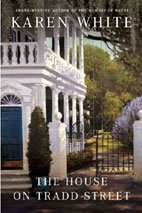
The House on Tradd Street by Karen White

Karen White‘s The House on Tradd Street is part romance, part ghost story, part mystery. The narration of this novel grips the reader with its beautiful descriptions of South Carolina and the historic neighborhoods of Charleston. Melanie Middleton specializes in historic home sales, though she hates historic homes and believes those who buy historic homes are saps willing to waste thousands of dollars on renovations. Fate brings her into the home of Mr. Vanderhorst, who asks Melanie if she saw a woman in the garden. Days later, he suddenly dies and leaves her his home.

Melanie is given a historic home and the money to renovate and repair it as part of the Vanderhorst estate. There are a great cast of characters in this book from Mr. Vanderhorst to his mother’s ghost and Melanie, her father, and Jack Trenholm. Melanie is a barracuda in the real estate world, but her inability to relate to her family or male companions hampers her ability to widen her horizons. She’s a strong character in spite of these weaknesses. Meanwhile, Jack uses his good looks and fame to woo women to his side and charm them out of information so he can uncover historical mysteries and publish books. His charm and good looks are just a cover.

The restoration at Tradd Street begins, and Melanie is overwhelmed by her responsibilities and the two attractive men that have fallen into her life–Marc Longo and Jack Trenholm. In spite of the restoration, Melanie gets wrapped up in the mystery surrounding Mr. Vanderhorst’s mother’s disappearance and the ghosts that haunt her new home.

White easily draws the reader into the beauty of Charleston and her ghost mystery. The intricate relationships between these characters are complex, and in spite of the convenient connections between Melanie’s family, the Vanderhorsts, and the Trenholms in a big city like Charleston, I was enveloped in the storyline.

Here’s one of my favorite passages from the novel (page 130):

“I was so relieved to see him that I didn’t waste any time asking him what in the hell he was talking about. I threw back the dead bolt and disarmed the alarm before pulling open the door and launching myself at him.

‘Wow, Mellie–it’s good to see you too. But could you wait until I got my clothes off first?'”

The mystery doesn’t get heavy with humor like this sprinkled in. The interactions between Melanie and Jack are contagious and will make readers smile.

I recommend this book to those who love a good mystery and a good ghost story. Stay tuned tomorrow for Karen White’s guest post on the writing and publishing process.

Want to win a copy of The House on Tradd Street by Karen White?

1. Please leave a comment on this post for one entry.
2. Leave a comment on tomorrow’s guest post for a second entry.

Deadline: November 14 at Midnight EST. The contest is open to international entrants.

Thanks to Dorothy at Pump Up Your Book Promotion for sending me The House on Tradd Street.

Also Reviewed By:

Musings of a Bookish Kitty
S. Krishna’s Books
The Book Czar
Library Queue
Diary of an Eccentric
In Bed With Books
The Tome Traveller’s Weblog
The Book Connection
Cafe of Dreams

Christopher Moore Audiobook Winners!

Out of 24 entrants, randomizer.org selected #8 and #21, which means Lenore of Presenting Lenore and Wrighty of Wrighty’s Reads are the winners of one audiobook by Christopher Moore.

Wrighty selected Fluke.

Lenore will have to choose between her top two picks of The Stupidest Angel and You Suck!

Stupidest Angel by Christopher Moore

Christopher Moore’s The Stupidest Angel: A Heartwarming Tale of Christmas Terror is another audiobook to entertain, even at 5 A.M. on the commute into the city. My husband and I have gotten into a habit of listening to audiobooks in the car when we travel to and from work, and when we take little road trips.

Christopher Moore’s books seem to be the most addictive for us even with the sometimes dark humor and harsh content. The Stupidest Angel is no exception.

The book is set in Pine Cove, Calif., where the Archangel Raziel is set upon Earth to grant a Christmas wish to one child. That child is Josh Barker. Unfortunately, Josh has no idea what is in store when he asks the angel to bring Santa Claus back to life.

With characters like a Warrior babe named Molly, a pot-smoking constable–her husband, a DEA helicopter pilot, and a evil developer, among others, there was nothing to do but sit back and laugh at the follies, misunderstandings, and interactions between these characters. Of course, there had to be a speaking, sunglasses wearing, fruit bat named Roberto! These characters stumble around in their relationships with one another, insulting their spouses and their friends, only to make up in the end, but the ride is raucous.

It gets even crazier in Pine Cover when Molly goes off her medications and starts hearing the narrator in her head, giving her direction. She wonders off into the woods naked and carrying a Japanese sword where she meets Raziel who only wants to eat the marshmallows out of the cocoa packets. Meanwhile, zombies are raging war against the townspeople at the Lonesome Christmas celebration in the local church. The resolution to this story is truly in the Christmas spirit, but the ride to its conclusion is hilarious and action-packed.

Also Reviewed By:
Firefly’s Book Blog
SomeReads
Books I Done Read

Interview with Poet Nikki Giovanni

Welcome Nikki Giovanni, a poet and author, to Savvy Verse & Wit. She was gracious enough to take time out of her busy touring schedule for Hip Hop Speaks to Children to answer some questions about her writing process, the book, and poetry. Thanks to Sourcebooks for sending Hip Hop Speaks to Children to me for review, which you can read here.

1. What prompted you to become involved with the Hip Hop Speaks to Children? And do you think poetry is important for children and adults and why?

I became interested a long, long time ago because my son listened to hip hop. I began even then to try to learn where this “new sound” was coming from since I well know everything old is new again, as the expression goes.

2. Poetry and music seem very akin to one another; do you feel that other genres can apply the rhythm of Hip Hop and other styles to generate passion among children, such as a passion for reading?

I think there is an ebb and flow to everything; there is a rhythm to all speech whether spoken or written. The most important sound is always silence. It is the pauses that make up the meaning. I wanted to give some sense of that rhythm to young people as well as a bit of history.

3. Do you believe that writing is an equalizer that can help humanity become more tolerant and collaborative?

Writing is an equalizer only in so far as what is being written is truthful. Written lies promote hatred and we’ve seen a lot of that lately. Writing is only a tool of the truth, and we who believe in a more tolerant world need to keep putting that truth out.

4. Do you see spoken word, performance poetry, or written poetry as more powerful or powerful in different ways and why?

I think all art has its moments and reasons. I don’t see any special reason to rank effectiveness since we all cross over and learn from each genre. (Well said!)

5. Do you have a set writing routine? Do you get up early and start writing or do you write when the mood hits?

I am a early morning or late night writer. I am more comfortable when I know I will not be disturbed. I must say that mood has nothing to do with professionalism. All writers study all the time; learning something all the time; looking at things differently all the time. That’s what is important.

6. Can you describe your writing space?

I write in essentially a tight space. It is a small room with lots of books, a CD player, some photos, and my computer. I have a phone in here but it seldom rings. Also my fax and xerox machine. I sit on a rocker.

7.
Do you have any advice for writers/poets just starting out?

The only advice I have is you, the young writer, should always be reading something. A book, a magazine, a newspaper, anything. A writer who is not reading isn’t doing her homework.

Thanks again to Nikki Giovanni for sharing her unique perspective with us.

Also, here are some reminders about the latest Savvy Verse & Wit Contests:
(Deadlines are Nov. 5)

1. Win a copy of Black Flies by Shannon Burke

2. Win a copy of Life After Genius by M. Ann Jacoby

3. Win a copy of Lydia Bennet’s Story by Jane Odiwe

Lydia Bennet’s Story by Jane Odiwe

Lydia Bennet’s Story by Jane Odiwe is a different type of sequel to Jane Austen’s Pride & Prejudice; it does not retell the lives of Elizabeth Bennet and Fitzwilliam Darcy, their children, or modernize their story as a 20th century romance. Lydia Bennet’s Story transports the reader back to 19th Century England to tell Lydia’s woeful and headstrong tail of romance and intrigue, rather than the tales woven by Jane Austen for Lizzy and Jane Bennet.

We join Lydia on her journey from the balls at the Assembly in Hertfordshire, England, through Brighton, and Newcastle. Headstrong and willy-nilly Lydia is just as vivid in these pages as she is in Jane Austen’s novel. Although her character plays a minor role in Austen’s novel, she takes center stage in Odiwe’s, but with journal entries sprinkled amidst the storyline, the reader begins to see what motivates Lydia to act as she does in public and with the soldiers. As the youngest daughter in the Bennet family, she seeks acceptance and love in all the wrong places.

Once in Brighton, Lydia is shameless in her pursuit of a husband and begins lavishing her affections on George Wickham. Despite his declarations that he can love no one, Lydia will have none of it, shunning Captain Trayton-Camfield, who seems to truly care for her. Lydia and Wickham run off to London together, and she expects them to get married, though it only materializes when Wickham is pressured by none-other-than Mr. Darcy. This is where Austen’s Pride & Prejudice leaves Lydia.

Lydia Bennet’s Story does not miss a beat, Odiwe has a strong command of Austen’s language, style, and characters, but she puts her own flare on the wild maven that is Lydia. Despite winning her prize–Mr. Wickham–Lydia soon realizes married life to her charming soldier is not all she expected it to be as his gambling and womanizing continue. In a way, Odiwe’s Lydia continues to fool herself that Wickham’s character is merely misunderstood, but soon his character is undeniable, and she is forced to not only deal with her loveless marriage, but their poor station in life.

Here’s one of my favorite quotes from Lydia is on page 290:

“Even in my reckless alliance, I believed I was in love and yes, a state of confusion it might be, but I submitted to it and felt my regard most wholeheartedly. And though I now believe my love was not truly returned, that I was mislead, I still believe in the power of true love.

Here Lydia expresses the evolution of her character and highlights how she has matured on this journey of love, hardship, and growth. She is no longer the silly, younger sister of Lizzy and Jane, but her own mature woman, though more bold than conventions are prepared to handle.

Readers of Jane Austen and Austen enthusiasts will enjoy this novel, but even those readers looking for a fast-paced “romance” will enjoy Lydia Bennet’s Story.

About the Author:

Jane Odiwe is an artist and author. She is an avid fan of all things Austen and is the author and illustrator of Effusions of Fancy, consisting of annotated sketches from the life of Jane Austen. She lives with her husband and three children in North London.

Check out Jane Odiwe’s blog here.

Thank you to Danielle Jackson at Sourcebooks for sending Odiwe’s Lydia Bennet’s Story along for me to review, and stay tuned for a guest post from Jane Odiwe on Oct. 31. See what she and Lydia have to say about Halloween!

Want to win a copy of Jane Odiwe’s Lydia Bennet’s Story, check out the guest post tomorrow to learn how.

Also Reviewed By:
Diary of an Eccentric
A Book Blogger’s Diary
Austenprose
Becky’s Book Reviews
The Book Zombie
Library Queue

***Contest Reminders for Readers:

A copy of Black Flies by Shannon Burke is up for grabs until Nov. 5

A copy of Life After Genius by M. Ann Jacoby is up for grabs until Nov. 5

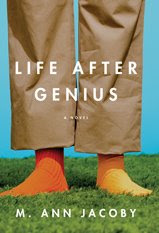
Life After Genius by M. Ann Jacoby & Giveaway

Welcome to Hachette Group’s Early Birds Blog Tour for Life After Genius by M. Ann Jacoby, a book that examines one young genius’ struggle to find himself and his place in his own family and society; Thanks to Miriam Parker at Hachette for sending the book along for the tour.

Theodore Mead Fegley’s father runs a furniture store and funeral home with his brother Martin, while his mother’s main goal in life is to push her son to achieve as much as possible and not squander his intelligence. The pressure mounts for Mead as he speeds through his elementary and high school years, reaching the University of Chicago at age 15.

Mead is an awkward “geek” who tries to keep his head down and make it through what he believes is the roughest period of his life, high school. Despite attempts by his cousin, Percy, to pry Mead out of his shell, Mead stuffs his nose in his studies to graduate high school and head off to college away from his overbearing mother and the small town that despises and ridicules him.

The narrative easily shifts from the present to the past, and the chapter breaks make it easier to keep the timeline in perspective with details about what period in Mead’s life is witnessed and what location he is in.

Mead is a young teen thrust into academic life with peers who are much older and experienced. Even though he looks forward to college life and mingling with his peers, he finds the experience to be as difficult and confusing as his high school years. Mead’s life takes a stark turn when he meets Herman Weinstein, a fellow mathematics student at the university.

Mead meets Dr. Krustrup, who agrees to mentor him and Weinstein at least until Weinstein’s family fortune and connections convince him otherwise. Mead is easily pushed aside when Dr. Krustrup becomes chair of the mathematics department. While he is initially angry, he learns that his new mentor, Dr. Alexander, is much more inspiring. Under the tutelage of Dr. Alexander, Mead throws himself into the Riemann Hypothesis, and he hopes to either prove or disprove the hypothesis, which has been debated for more than 100 years.

Jacoby carefully intermingles events from Mead’s past into his present as a way to show how Mead’s character has developed and explain the reasons behind some of Mead’s reactions and behaviors at the university. As Mead grows closer to a solution, Herman insinuates himself further into Mead’s life. Tensions between the two friends–and I use this term loosely–continue to intensify, until a family tragedy and university pressure mount, forcing Mead to run home to rural Illinois several days before graduation, his major mathematical presentation, and his valedictorian speech.

While math problems make me cringe, this story brought me back to high school with the discussions of matrices–math I actually understood at one point–but Jacoby does a great job of including this information without burdening or boring the reader. As Mead’s life unfolds and the mystery grows more intense, the pages flow quickly, making the reader more anxious to learn the reason why Mead flees his sanctuary at the university when he is on the verge of success. Although this novel is dubbed an academic thriller that portion of the story fell flat. The descriptions, perceptions, and events in Mead’s life point the narrative more in the direction of a coming of age story. Jacoby’s academic thriller plotline did not have the foundation or twists and turns necessary to a successful thriller narrative. However, at the conclusion of the narrative, the reader will be pleased to see Mead find himself, what’s important to him, and how to cope with his reality.

About the Author:

M. Ann Jacoby has been an art director at Penguin USA for more than two decades. Life After Genius is her debut novel.

Without further ado, here is M. Ann Jacoby about her writing process.

Do you have a set writing routine? Do you get up early and start writing or do you write when the mood hits?

I do have a routine. After getting my errands out of the way Saturday morning, I sit down around noon and write for about six hours. The first hour or two involves a lot of staring out the window and getting back into the world of my novel. By Sunday I’m into it. I get started around 8 or 9am and can go all day. I have to remind myself to stop and eat. Then, reluctantly, I have to put it all away and go back to my Mon-Fri job. I commute to work on the train and usually wait till midweek to read and edit what I wrote over the weekend. I don’t write during the week. I need large blocks of time without interruption to get lost in the world of my characters. I usually get 12-15 pages written over a weekend. It’s a long, slow process but I find the breaks in between give me a chance to step back from my work and rethink before plunging in again.

Was the research and writing process for Life After Genius different from your normal writing process?

Research takes time away from writing. And I find that I write too much of my research into the story at first. I want to put all that new information to good use! But eventually I edit most of it back out so that the research feels more like a natural backdrop.

Do you have any advice for writers just starting out?

It’s very hard to sort out criticism in the beginning. What to listen to, what not to. For me, there was a lot of trial and error. A lot of crying. Try not to let the negative remarks destroy you. Look at them as an opportunity to learn and grow.

What are your favorite rewards for reaching your writing goals and why?

To create something that speaks to another person is a reward in itself. Immeasureable. Plus, it means I can go back and create more characters and more imaginary worlds. To get to do what I most love and get paid for it is like winning the lottery.

Are you working on any other projects, and if so would you care to tantalize my readers with a few hints?

The novel I’m working on now is loosely based on my mother’s parents who were bookies in West Palm Beach, Florida. The main character is Libby Freybaker who shared the pants in the family with her husband, my grandfather. She’s funny and smart and unconventional. It opens with them being handcuffed and arrested, then flashes back to tell the story of what led up to that point.

***Want to win a copy of Life After Genius by M. Ann Jacoby from Savvy Verse & Wit and Hachette Group?

I will pass along my copy to one International winner, please let me know in the comments if you are international! Hatchette Group will pass along a copy to a winner with a U.S. or Canada address.

***Make sure you leave me a way to contact you either an email address or through your blog. Those not leaving emails or blog links, will not be entered. Deadline is November 5, 2008.

1. Leave a comment on this post for one entry telling me what you find most interesting about the book or Jacoby’s writing process.

2. Post this contest on your blog or sidebar and return here to leave me a link to where you posted it for a second entry.

3. For those of you that do not have blogs, email five friends and cc savvyverseandwit AT gmail DOT com for your second entry.

Check out the other stops on the Life After Genius tour!

Marjolein Reviews
The Book Nest
Seaside Book Worm Blogger
Books by TJBaff

Linus’s Blanket

The Optimistic Bookfool
The Printed Page
My Friend Amy
Shooting Stars Mag
Books, Pungs, and More
A Novel Menagerie
The Tome Traveller’s Weblog
medieval bookworm
Book Critiques
B&b ex libris
Sharon Loves Books and Cats
At Home With Books
A Circle of Books
Book Line and Sinker

***More contests from Savvy Verse & Wit:

A copy of Black Flies by Shannon Burke

A copy of The Safety of Secrets by Delaune Michel! Deadline is Tonight at Midnight EST. Go here, follow the rules, and enter.

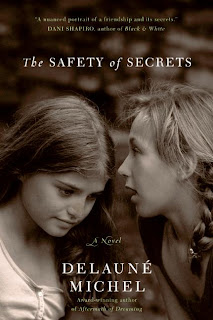
Safety of Secrets by Delaune Michel & Contest

I received The Safety of Secrets by Delaune Michel from Book Club Girl, who will be hosting a book discussion with the author on Oct. 22 at 7 PM. For those of you have read the book, I encourage you to join the discussion in the chat room or on the phone lines. Here’s the call in number: (347) 945-6149. ***Delaune Michel just indicated that the girls on the cover are girls that she knows, daughters of her editor and another employee at Harper Collins. The photo was taken on the spur of the moment at a local park. How adorable!***

This novel takes the reader on a fluctuating journey between Louisiana and Los Angeles with two friends, Patricia, a semi-famous actress, and Fiona, her less-famous friend. The work examines the secrets that are told to friends, about friends, and to spouses about friends and how those secrets impact long-term relationships. Fiona has grown up with Patricia and they move to Los Angeles to become actresses and escape their abusive home lives. Their lives have diverged a bit, with Fiona still starring in independent films and guest star roles, while Patricia has hit the big time as a host of a popular reality show and is primped and ready for every occasion. The distance in their relationship has grown and so have the number of secrets between them.

The narration told from Fiona’s point of view moves in and out of the past so quickly, the reader can easily get lost. I often reread passages of this book looking for signs of where I was in Fiona’s life, whether it was her past miscarriage or her a haircut she got against her mother’s wishes when she was a pre-teen. In spite of the narration, the story unfolded in a suspenseful way. Patricia’s continued lack of support for her friend Fiona and her self-centered behavior darkens the friendship and leaves Fiona feeling left out and abandoned by her long-time friend. Overall, both of these characters represent the perception of typical Los Angeles actresses who are worried about wearing the right clothes, meeting the current mold for the latest television roles, and what others are thinking about them.

The book doesn’t reach its pinnacle until late in the work when one of the deepest, darkest secrets between Fiona and Patricia is revealed on national television and it places their friendship under significant pressure.

Also Reviewed By:
Everyday I Write the Book Blog
Literate Chick
Bertram’s Blog (guest post from Delaune Michel)
Books on the Brain

Redlady’s Reading Room
Peeking Between the Pages

***Another giveaway from Savvy Verse & Wit.

Deadline is Oct. 29 at Midnight EST.

1. Leave a comment on the post for one entry
2. Blog about or spread the word about the contest and leave a link on my review post for another entry.
3. Also provide me with a way to contact you either through email or your blog address.

***Just another reminder that the contest for Marilyn Meredith’s WingBeat ends on Oct. 22. So hurry and enter the contest.

Testimony by Anita Shreve

Testimony by Anita Shreve, which will be released on Oct. 21, was such a surprise in my mailbox from Hachette Group’s Miriam Parker. Thanks, Miriam! I met Anita Shreve at the 2002 National Book Festival signing in Washington, D.C. I’ve been in love with her writing since I first read The Pilot’s Wife many years before that, and I will admit here that I’ve tried to emulate her style in my own writing, though my writing has not met muster.

Testimony is one of those novels that slowly draws you into a prep school known as Avery Academy in Vermont where four boys and one girl make a decision that will change their lives and the lives of other students, teachers, administrators, families, and neighbors for years to come. Testimony is given throughout the novel from a number of characters–minor and major characters–illustrating the depth to which decisions of one or several people can impact others who are seemingly unconnected to the decision-makers. Jacqueline Barnard, a researcher from the University of Vermont, receives the interviews either in written form or through personal encounters with several of the characters.

The videotape that surfaces in Avery Academy Headmaster Mike Bordwin’s office is central to the story that unfolds in the novel, but another decision among a pair of adults also impacts the students and others in the town. Shreve is a master of character development and setting. I was drawn into the bitter cold winter snow of Vermont and the coziness of the town and the school, as well as the dark undercurrents in each of these characters’ lives. Shreve is adept at highlighting the nuances of how underage sex and drinking affects the students, the faculty, and others, while not preaching to the reader.

Silas and Noelle, two of the main adolescents in the novel, share a deep connection to one another at a tender age. It was tough to watch how this connection was tested and ultimately severed. Silas and his mother, Anna, also have a tight bond and naturally this connection is tested. Another adolescent boy, J. Dot and his bravado, serves as a foil to Silas’ hard-working, compassionate, and dutiful persona. Noelle is the naive and romantic girl-next-door, while Sienna is the wild girl looking for trouble even if it is on a subconscious level.

As always, Shreve has outdone herself in this novel, weaving a series of disjointed testimonies into a coherent and heart-wrenching story of love, loss, responsibility, and adolescence. I’ve often wondered if Shreve has ever tried her hand at poetry because the language she creates on the page paints a vivid image, and those images often conjure deeper meanings and emotions for the reader.

Also Reviewed By:
A Writer’s Pen
The Sleepy Reader
J. Kaye’s Book Blog
Reader for Life
At Home With Books
For the Good Times
CaribousMom
Bookshipper
S Krishna’s Books
Peeking Between the Pages
Breaking the Spine
Booking Mama
Literarily
Redlady’s Reading Room
B&B Ex Libris
Pop Culture Junkie
She Is Too Fond of Books

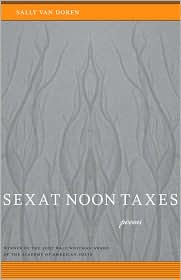
Sex at Noon Taxes by Sally Van Doren

Sex at Noon Taxes by Sally Van Doren arrived in my mailbox from the American Academy of Poets. Van Doren’s volume won the Walt Whitman Award from the Academy. I read the title and spent a great deal of time pondering it before I opened the book. Is the sex at noon taxing or is it taxed at noon? There is a play on words here.

The book is broken down into four parts.

Sex at Noon Taxes is the first poem in the book, and the inscription mentions a painting by Ed Ruscha (at right). Here are some of my favorite lines from Van Doren’s poem: “avalanche turns snowfall into/uncorraled horseshoes.//”

The images in Van Doren’s poems leave the reader thinking, not because they are difficult to understand, but because they expel a number of meanings in a minimalist fashion.

As a writer, I’m always fascinated with how writers take on the craft in their work whether it’s punctuation or poems themselves. Some of my favorites from this volume include “Preposition,” “Conjunction,” and “Pronoun/Punctuation.” I’ll leave those a mystery, but I will share with you some of my favorite lines from “Gephyrophobia.” “If there is a bridge,/I cannot see it,/but I know I want/to cross it, to walk/” As you can see from the language, it is simple, tells a story, and holds an undercurrent of something deeper.

A lot of these poems display playful language and at times it is musical. Molly Peacock says that Van Doren’s poems’ “vocabulary fizzles off the page.”

About the poet:

Sally Van Doren was born and raised in St. Louis, Missouri. She is a graduate of Phillips Academy and Princeton University and received an M.F.A. from the University of Missouri-St. Louis.

Her poems have appeared in many journals, among them: Barrow Street, Boulevard, Cincinnati Review, Colorado Review, LIT, Margie, Parthenon West Review, Poetry Daily, Pool, River Styx and Southwest Review. She was a semi-finalist in the 2006 “Discovery”/The Nation Poetry Contest. Her poem, “The Sense Series,” was the text for a multimedia performance at the Contemporary Art Museum St. Louis.

Van Doren has taught creative writing in the St. Louis Public Schools and curates the Sunday Poetry Workshops for the St. Louis Poetry Center. She divides her time between St. Louis and Cornwall, Connecticut.

***Reminder: You can win a copy of Wingbeat by Marilyn Meredith, go here. Deadline is Oct. 22

Kindred Spirits by Marilyn Meredith, Interview & Giveaway

Thanks to Cheryl at Pump Up Your Book Promotion and Marilyn Meredith for sending this great mystery book, Kindred Spirits, my way. Keep reading to learn about the giveaway.

Kindred Spirits is part of the Tempe Crabtree Series, and Tempe is a deputy in Bear Creek, who is part Native American and married to a Christian minister Hutch Hutchinson. Her police counterparts in Dennison don’t seem to take her seriously, even though she takes care of business in Bear Creek and beyond.

The main case in this mystery is the death of Vanessa Ainsworth, formerly the wife of Acton Ainsworth, a major furniture shop owner and philanthropist. While a wildfire rages in Bear Creek, displacing many residents, Deputy Crabtree and firemen discover a body–Vanessa Ainsworth–after having contained much of the fire. Crabtree is on the case even when her legal counterparts push her to the sidelines. She’s quickly sent to speak with Vanessa’s family and friends in Crescent City, which is when the real twists and turns begin. You’ll meet some intriguing characters along the way, including my personal favorite, the trench coat, VW bus driving Lanny Hargrove.

The twists and turns in this novel will keep you guessing most of the way, but even if you figure out who the killer is before Tempe and the other detectives do, the way Meredith meshes in Tempe’s troubled marriage and her questions about her heritage will keep you interested. What worked best for me about this novel is the evolution of Hutch from the beginning to the end; he grows even more compassionate and grows to understand the importance of Tempe’s drive to find the truth. He also learns to open his heart to issues and situations he normally would disapprove of, fear, and dismiss. Tempe is easy to love and her drive to discover the truth is addicting.

I’d like to thank Marilyn Meredith for taking the time to answer a few questions about her writing process, and to thank Cheryl at Pump up Your Book Promotion for sending Kindred Spirits and putting me in contact with Marilyn Meredith. Without further ado, here’s Marilyn:

1. Was there a great deal of research involved in terms of the Tolowa and the other Indian tribes and the tinges of discrimination found in the novel?

The book came about because I met a Tolowa woman four years ago when I was giving a workshop at a writers conference in Crescent City. We spent a couple of hours together before a booksigning event held in the Gushu Galleria–a real place that’s in the book.

In merely a few minutes as she told me about herself, her life as an Indian, some of the history of the Tolowa and a few legends, I knew I had to write a book that included some of this information. My first thought was Tempe has to meet a woman like her.

I grew up in California and never heard anything about the Indians like I was hearing from her. However, I do live quite near our local reservation, have met quite a few Yokuts, and had researched their history so was well aware of the discrimination and prejudice the Indians have faced.

I also did more research about the Tolowa as I was writing, but Junie Mattice, the Tolowa woman in Crescent City was my major resource for Kindred Spirits.

2. What character do you most identify with and why?

I don’t identify with any of the characters in the way that you mean. As I’m writing, I get inside the head of whoever I’m writing about. I know Tempe Crabtree better than I know anyone in my family because I know how she thinks. Tempe Crabtree lives inside my head whether I’m writing about her or not.

I’ve lived for a long, long time, had many experiences–good and bad–and I do draw on them as well as the emotions that go along with them.

3. Could you explain the significance of your title, Kindred Spirits, in terms of the plot, characters, or themes in the novel?

Kindred Spirits just seemed to be the perfect title. Some titles reveal themselves almost immediately as this one did. I recognized Junie as a kindred spirit not long after we began talking to each other. We kept in contact via email through the years and I told her what I was writing and she answered questions I had. The book launch was held in Crescent City and she signed books right along with me. It was a special time for both of us.

In the book, Tempe realizes she is a kindred spirit to the two Tolowa women in the Crescent City part of the story. And then, I also thought of the ghost of the murdered woman as being another kindred spirit. There are several books with the same title, which I knew, but Kindred Spirits was definitely my only choice.

4. Do you have a set writing routine? Do you get up early and start writing or do you write when the mood hits?

When I am working on a book (which is nearly always) I try to work on it at least three or four hours a day–and mornings are best–unless I’m on a roll, then I might just keep plugging away.

5. Do you have any advice for writers just starting out?

Learn the writing craft by going to writers conferences, reading books on writing, reading the kind of books you hope to write, then write, write, write.

6. What are your favorite rewards for reaching your writing goals and why?

I always feel terrific once I’ve actually finished a book, had it edited and send it off to a publisher. Of course then it means I have to get busy on the promotion.

7. Are you working on any other projects, and if so would you care to tantalize my readers with a few hints?

My next Deputy Tempe Crabtree mystery is scheduled to come out a year from now. It’s titled “Dispel the Mist.” Tempe has an encounter with the Hairy Man, who is similar to Big Foot. I loved writing that book.

Want to win a copy of the latest Tempe Crabtree novel, Wingbeat, which is a book about a hidden marijuana farm and the murder of a long lost granddaughter that keep Tempe busy, while her husband has troubles of his own–when the description of a man who exposes himself to school children sounds just like Hutch.

1. Leave a comment here about what you found most interesting about the book or the interview

2. Blog about the contest on your own blog or spread the word in another way and leave me a comment with a link to where you posted it.

If you don’t have a blog or another way for me to contact you, PLEASE leave an email address or you will not be counted for the contest. Thanks!

Deadline for the contest will be Oct. 22 at Midnight EST.

Also Reviewed By:

Bermudaonion

Hip Hop Speaks to Children Edited by Nikki Giovanni


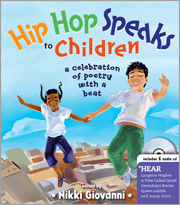
I received Hip Hop Speaks to Children edited by Nikki Giovanni from Danielle at Sourcebooks, and Giovanni continues to make television and radio experiences about the book.

Poetry often has an internal rhythm like everyday speech does, and Hip Hop has taken that rhythm and modified it to create a modern day form of poetry, which engages younger generations and children by making poetry fun.

This book came with an audio CD, which you can use to read along with the book or skip around in the book to a variety of poems, and the CD also includes separate introductions to various pieces.

The book touts the talents of Nikki Giovanni, Gwendolyn Brooks, Eloise Greenfield, Maya Angelou, Queen Latifah, Young MC, and many others. The audio CD has poems read aloud, poems set to music, and some poems are sung. When I first started reading this book and listened to the CD at the same time, I was a bit confused because the poems on the CD were not in sequential order with the book. Then I realized that the poems on the CD have headphone designations and track numbers–check out the sample page to the right.

The beats would make any kid want to get up and dance, and I think the idea of incorporating music with the poetry will keep kids interested. It also makes it easier for children to follow along on their own, which makes this book something parents can sit with their children and work alongside them or set those kids off on their own with the book and CD in hand.

The illustrations are modern, abstract, crisp, and impressionistic and closely relate to the subject matter of each poem. Check out the page for Rapper’s Delight, which is a poem/song from the Sugarhill Gang.

The introduction to the poem is read by Nikki Giovanni and helps explain where the inspiration for the poem/song came from. I found that to be the most captivating introduction.

Queen Latifah makes an appearance in the book and on the audio CD as well. One of my favorites from the CD is Dat Dere by Oscar Brown, Jr., which was inspired by is “inquisitive child” asking questions about everything.

We Real Cool by Gwendolyn Brooks is read by the poet, which is followed by a live performance with Nikki Giovanni, Oni Lasana, and Val Gray Ward “hamboning” the poem. I remember the inherent sadness in this poem from middle school, and it still stirs up emotions, particularly hearing it when read aloud.

About Nikki Giovanni: (Picture at Above)

Nikki Giovanni is a world-renowned poet, writer, commentator, activist, and educator. Over the past thirty years, her outspokenness, in her writing and in lectures, has brought the eyes of the world upon her. One of the most widely-read American poets, she prides herself on being “a Black American, a daughter, a mother, a professor of English.” Giovanni remains as determined and committed as ever to the fight for civil rights and equality. Always insisting on presenting the truth as she sees it, she has maintained a prominent place as a strong voice of the Black community. Her focus is on the individual, specifically, on the power one has to make a difference in oneself, and thus, in the lives of others.

Also Reviewed By:
Becky’s Book Reviews
The Friendly Book Nook
Cafe of Dreams

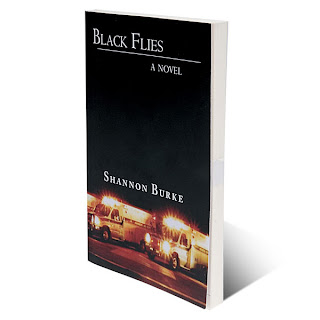
Black Flies by Shannon Burke

Black Flies by Shannon Burke is a masterpiece of characterization and plot. Burke, a former paramedic in Harlem, New York, weaves his disjointed plot through a series of in-depth characterizations and vivid event descriptions. He traces the steps rookie Ollie Cross takes as he tries to fit in with the Station 18 crew and still hold onto his dreams of medical school, and along the way he spirals out of control, only to emerge on the other side of a black hole with his first save and a sense of purpose.

Ollie is green according to the other paramedics in his unit, simply because he wants to save lives and is gung-ho about his job. Rutkovsky is assigned as his partner, and he’s a hard-nosed paramedic with a military past. LaFontaine is the department nut, while Verdis is his foil, interested in following the book and attending each patient with courtesy and care. Hatsuru is often in the background with a medical text in his hand while they await the next call or are on lunch break, and Marmol and Rivett round out the rest of the crew.

Ollie joins the paramedic unit to gain experience while he studies for the MCATs, hoping to improve his scores and get into medical school. Amidst high crime rates, homelessness, and rampant drug use in the streets of Harlem, these medical professionals strive to save the lives of people some would say are unworthy of saving. This novel examines the struggle these paramedics face daily, regarding split-second decisions that could either save drug addicts who will only end up back on the street strung out or ending their misery by refusing to treat them. The moral imperative driving these paramedics to save lives is constantly tested on the streets.

One fateful event in the novel pushes one of these paramedics over the edge, causing him to lose everything, while leaving the remaining paramedics to rationalize his decision and examine their own moral compass to determine whether that decision is something they all agree with or something that casts a shadow over all of their medical decisions and actions. In a way this decision becomes like so many black flies hovering over Ollie and the rest of the station.

Check out the excerpts from Black Flies, here.

I want to thank Anna at Diary of an Eccentric for recommending this book. It was a great, fast paced read. I’m thinking about picking up Burke’s other novel, Safelight.

Also Reviewed By:
Diary of an Eccentric