Quantcast

The Confessions of Catherine de Medici by C.W. Gortner

C.W. Gortner‘s third book, The Confessions of Catherine de Medici, has all the best elements of historical, royal fiction from political strife to women sold in marriage to keep the peace.  Like his previous book, The Last Queen which I reviewed, The Confessions of Catherine de Medici is chock full of drama as Catherine is taken from her home shortly after surviving an angry mob in Florence and betrothed to Henri, one of the sons in line for the throne of France.

“How little they know me.  How little anyone knows me.  Perhaps it was ever my fate to dwell alone in the myth of my own life, to bear witness to the legend that has sprung around me like some venomous bloom.  I have been called murderess and opportunist, savior and victim.  And along the way, become far more than was ever expected of me, even if loneliness was always present, like a faithful hound at my heels.

The truth is, not one of us is innocent.

We all have sins to confess.”  (Page 3)

Catherine learns of her gift at a very young age but is frightened by what her visions mean for her and her future.  Despite her misgivings about her gift, she relies on seers and fortunetellers to guide her path and that of her blossoming family.  Her marriage is in name only as her husband favors his mistress blatantly in court, and she is forced to endure the shame of it.  Catherine is a strong woman determined to maintain her pride and courtly manner even though it is constantly tested by Henri’s mistress Diane de Poitiers and the thorny politics of her new nation.

Enter, Nostradamus — yes, THE Nostradamus — to issue cryptic predictions and advice to Catherine as she and her adopted nation of France teeter on the brink of religious war.  His advice is invaluable to her as she navigates the political and religious turmoil of France, though his appearances are brief, almost as if he were an apparition.

“As I passed the alcove, I sensed a presence.  I whirled about.  I couldn’t contain my gasp when I saw Nostradamus materialize as if from nowhere.  ‘You scared me to death! How did you get in here?’

‘Through the door,’ he said, ‘No one noticed.'”  (Page 182)

The novel reads like a set of confessions from Catherine herself as she analyzes her past, her faults, and her passions.  Gortner crafts very strong, royal women that draw from historical fact and weaves in a captivating narrative that will leave readers struggling to adjust to their own lives once they’ve finished the last page.  The Confessions of Catherine de Medici will round out the character of the woman thought to be one of the most ruthless leaders of France as she acted as regent for her young sons, highlighting the motivations of her decisions at a time when there were no right answers.  One of the best books I’ve read this year.

Check out the Q&A about Confessions of Catherine de Medici.

About the Author:

C.W. Gortner‘s fascination with history is a lifetime pursuit. He holds a Masters in Fine Arts in Writing with an emphasis on Renaissance Studies from the New College of California and often travels to research his books. He has experienced life in a medieval Spanish castle and danced a galliard in a Tudor great hall; dug through library archives all over Europe; and tried to see and touch — or, at least, gaze at through impenetrable museum glass — as many artifacts of the era as he can find.

The Giveaway:

I have 1 reader’s copy up for grabs.  The giveaway is international.

***added bonus for the winner, a Catherine de Medici medallion***

1.  Leave a comment about what confession you hope to read about in Gortner’s book.

2.  Blog, Tweet, Facebook, or otherwise spread the word about the giveaway and leave a link in the comments.

Deadline is July 4, 2010 at 11:59PM EST

Alex Cross’s Trial by James Patterson and Richard DiLallo

While I attend some great panels and meet some authors and publishers in New York City this week, I didn’t want to leave my readers high and dry for reviews. My mom, Pat, has supplied me with enough reviews to get you through until my return. Please give her a warm welcome. If you want, check out my thoughts on Alex Cross’s Trial.

Alex Cross’s Trial by James Patterson and Richard DiLallo begins with Alex Cross transcribing the story of his great uncle Abraham to make sure his children know there is more than one hero in the family.  The story takes place in Eudora, Mississippi, in the 1900s.  Ben Corbett has been asked by President Roosevelt to investigate ruors of the Ku Klux Klan and lynchings of Black folk in the south.

In this story, attorney Ben Corbett heads back to his hometown in the south to investigate the rumors.  Dealing with slavery, racism, and more, Alex Cross’s Trial is an action packed, suspenseful story.  It will have readers on pins and needles at all times, keeping you interested until its conclusion.  Another five-star read from Patterson.

Thanks to Hachette for sending a free copy of this book for review.

On Folly Beach by Karen White

Karen White‘s On Folly Beach shifts between two time periods — 2009 and 1942 — and between two women’s lives — Emmy Hamilton and Lulu.  Emmy lost her husband six months ago to the war in Afghanistan and loves solving mysteries with old documents and books, and Lulu is a complicated older woman with a lot of secrets and a penchant for bottle tree artistry.

“The shirt was a poor substitute for his arms, and wearing it in Ben’s absence was something her mother had told her was like swimming with a raincoat.”  (page 2)

Emmy is empty in her grief and unwilling to move on, but her mother convinces her to move from Indiana to South Carolina and buy a bookstore, Folly’s Finds, which served as the model for her mother’s bookstore.  Once in her newly rented house, she meets Lulu, her grandson Heath, Heath’s mother Abigail, and the rest of the family.  But her journey begins with a box of old books, and she strives to unravel the mystery of two star-crossed lovers.  Emmy has a journey back to the living to embark upon as well.

“‘Like right now? Don’t you need a bathing suit?’

He smiled and the wrinkles at the corners of his eyes reminded Emmy of his mother.  ‘Don’t need one.’  He walked past her, then stopped when he realized she wasn’t following him.

‘I’ll wait here.’

“I’ll keep my shorts on, promise.'”  (page 129)

White’s characters have their own personalities and evolve carefully over the alternating chapters.  The WWII chapters transport readers back in time, making the fear of war as vivid as the dances on the ocean pier.  But with the prevalence of chapters in the present, it is clear that this is Emmy and Lulu’s story. Emmy becomes the amateur detective that Lulu played when she was a young girl living with her sister, Maggie and cousin Cat.

On Folly Beach by Karen White uses a variety of water and wind imagery to mimic the foolish choices made by the main characters and mirror the dramatic choices that they make out of loyalty and love.  White creates dynamic characters who are deeply flawed and who are in search of peace and love, like many of us.  Bibliophiles will enjoy the literary references, the characters named for Elizabeth Bennet and Heathcliff of Wuthering Heights, and the quotes in the margins.  Another Karen White novel that engages, mystifies, and satisfies readers as they unwind the puzzles of On Folly Beach.

Please check out the rest of the stops on the tour. And check back tomorrow for a guest post on Karen White’s writing space.

About the Author:

Karen’s novel The Memory of Water was a WXIA-TV Atlanta & Company Book Club Selection. Her work has been reviewed in Southern Living, Atlanta Magazine, the Atlanta  Journal-Constitution, and by Fresh Fiction, among many others, and has been adopted by numerous independent booksellers for book club recommendations. Last year her 2007 novel Learning to Breathe received several honors, notably the National Readers’ Choice Award and the Booksellers’ Best Award, which in 2009 was again presented to Karen, this time for The Memory of Water.

US/Canada Giveaway for 2 copies of On Folly Beach by Karen White:

1.  Leave a comment about what historical period fascinates you and why.

2.  Blog, Tweet, Facebook, or otherwise spread the word about the giveaway and leave me a link.

Deadline May 20, 2010, at 11:59PM EST.

Let the Great World Spin by Colum McCann

What do you do when your world spins out of control and changes so drastically that you begin to feel adrift?  Colum McCann‘s Let the Great World Spin examines these issues, while at the same time demonstrating how individuals can be connected to one another without even realizing it.

“But it struck me, as I sketched, that all I wanted to do was to walk out into a clean elsewhere.” (page 153)

“No newspapers big enough to paste him back together in Saigon.” (page 81)

McCann focuses his story in 1974, mostly in New York City, where a tenuous thread is stretched between a series of characters from an Irish monk and a grieving mother who lost her son in the Vietnam War to a young artistic couple and a black prostitute. That thread is the a tightrope walker, Philippe Petit who traversed the still under construction World Trade Center towers.

“It was the dilemma of the watchers:  they didn’t want to wait around for nothing at all, some idiot standing on the precipice of the towers, but they didn’t want to miss the moment either, if he slipped, or got arrested, or dove, arms stretched.” (page 3)

In a way, the tightrope walker is all of us, teetering on the edge of every decision we make, but what we often do not have is the courage to enjoy the moment or revel in the thrill of each step we take in our lives.  McCann is a gifted storyteller, but some readers may find the shifts between story lines hamper their ability to become emotionally tethered to the characters.  There are some moments where the prose takes on a list making quality, which is a bit overdone and jambs up the narrative.

The Vietnam War plays a significant role in the novel, touching lives in immediate ways and peripherally.   In many ways the tightrope walker symbolizes the perceived precariousness of the world at large in the 1970s, with the threat of communism and the deteriorating situation in Vietnam.  Overall, Let the Great World Spin by Colum McCann is a satisfying examination of the 1970s, the Vietnam War, and modern society, and would be a good selection for book club discussions.

About the Author:

Colum McCann, a Dublin born writer, is the internationally bestselling author of the novels Let the Great World Spin, Zoli, Dancer, This Side of Brightness, and Songdogs, as well as two critically acclaimed story collections. His fiction has been published in thirty languages. He has been a finalist for the International IMPAC Dublin Literary Award and was the inaugural winner of the Ireland Fund of Monaco Literary Award in Memory of Princess Grace. He has been named one of Esquire’s “Best and Brightest,” and his short film Everything in This Country Must was nominated for an Oscar in 2005. A contributor to The New Yorker, The New York Times Magazine, The Atlantic Monthly, and The Paris Review, he teaches in the Hunter College MFA Creative Writing Program. He lives in New York City with his wife and their three children.

Check out the other tour stops.  Thanks to TLC Book Tours and Random House for sending me a free copy of Let the Great World Spin by Colum McCann for review.


This is my 5th book for the 2010 Vietnam War Reading Challenge

This is my 31st book for the 2010 New Authors Challenge.

This is my 2nd and final book for the 2010 Ireland Reading Challenge.

Letter to My Daughter by George Bishop Jr.

George Bishop Jr.’s Letter to My Daughter is narrated by a Louisiana mother whose daughter has just run away from home after a typical fight with her parents.  To cope with the anxiety, the mother writes a demonstrative history of her own teenage angst to provide them some common ground from which to begin anew.

“But believe it or not, I was your age once, and I had the same ugly fights with my parents.  And I promised myself that if I ever had a daughter, I would be a better parent to her than mine were to me.  My daughter, I told myself, would never have to endure the same inept upbringing that I did.”  (Page 4 of ARC)

Laura Jenkins takes her daughter back in time to when she is a young high school girl during the 1970s and the Vietnam War.  She falls in love with a young man, Tim Prejean, but he’s the wrong kind of man in her parent’s eyes.  How can she make them see that he’s exactly the man they should want her to be with and love.  But it all hits the fan one night and she’s sent away to Catholic school even though her family is Baptist.  Charity runs deep at Sacred Heart Academy, but Laura’s love still burns for her sweetheart, Tim.

Bishop’s prose is conversational as Laura continues to write her letter to Elizabeth, whom she named after the poet Elizabeth Barrett Browning.  Browning’s Sonnets from the Portuguese #43 says, “I shall but love thee better after death,” and her poems would complement this novel well.  There is a great sadness and love in this letter.  Laura wants to make amends to her daughter and to generate the closeness she always dreamed would be between them.

“Up until that day I had known her only as a pale older nun who seemed unnaturally preoccupied with grammar; she smelled musty, like a library, and she rustled when she walked, like her very insides were made of parchment.”  (page 35 of ARC)

“And then there was silence:  black silence, that in the moments as I gripped the phone seemed to grow deeper and deeper until it was black as the dark spaces between the stars.” (page 59 of ARC)

Bishop’s prose is poetic and easily absorbing, transporting readers to a tumultuous time in U.S. history when the country was divided about war.  But as young men and women engaged one another in high school, how would these larger issues have impacted them?  Letter to My Daughter answers these questions in a way that will tear into the hearts of readers, generate a profound sympathy and confusion about what motivates humans to make war, and how teens handle not only the typical struggles they face of which boy to date and which dress to wear, but also the larger issues that permeate their lives.

About the Author:

George Bishop, Jr. graduated with degrees in English Literature and Communications from Loyola University in New Orleans before moving to Los Angeles to become an actor. He later traveled overseas as an English teacher to Czechoslovakia, Turkey and Indonesia before returning to the States to earn his MFA in Creative Writing at the University of North Carolina in Wilmington, where he studied under Clyde Edgerton, Wendy Brenner, and Rebecca Lee.

Giveaway; I have one copy of the book for U.S./Canada only:

1.  Leave a comment about whether you think a male can do justice to the mother-daughter relationship.

2.  Blog, Tweet, Facebook, etc. the giveaway and leave me a link.

Deadline is May 11, 2010, 11:59 PM EST.

Check the other stops on the tour.


This is my 4th book for the 2010 Vietnam War Reading Challenge.

This is my 30th book for the 2010 New Authors Challenge.

Alex Cross’s Trial by James Patterson and Richard DiLallo

Alex Cross’s Trial by James Patterson and Richard DiLallo is a book within a book in which the introduction is written by the character Alex Cross and sets up the impending story of his ancestors.  Abraham Cross lives in Eudora, Miss., and he helps the narrator, Attorney Ben Corbett uncover the truth behind the alleged lynchings in Mississippi and the rest of the South and to collect evidence for President Theodore Roosevelt.

“On the front lawn two adorable white children in a little pink-painted cart were driving a pony in circles.  On the wide front veranda I could see the children’s mother observing their play and a small army of black servants hovering there.

This was a vision of the old South and the new South, all wrapped into one.  There, gleaming in the drive, was a handsome new motorcar, brass fittings shining in the sun.  And there, rushing across the yard in pursuit of a hen, was an ink-black woman  with a red dotted kerchief wrapped around her head.”  (Page 136)

Ben Corbett is a progressive attorney who moved from Eudora, Miss., joined the military, became an attorney at Harvard University, and moved to Washington, D.C., with his young wife and twin girls.  He’s asked by Roosevelt to investigate the lynchings in the South and bring back evidence so that he can deal with the problem.  Patterson and DiLallo offer up an authentic step back in time for this mystery, with appearances by W.E.B. Dubois and other historical figures.

Alex Cross’s Trial is a well-written off-the-beaten path novel in the Alex Cross series.  Abraham Cross, a former baseball player with the Philadelphia Pythians, is an unassuming Black man living in the South, who has struggled against racism, but is willing to stake his life to make a real change in the nation.  Readers will enjoy the quick page of the novel, the historical setting, and examination of issues that still exist today.  Patterson and DiLallo have done a fantastic job in making a unique addition to the Alex Cross series.

For a couple takes on Cross Country, visit my mom’s review and my review.  Also take a look at Washington, D.C., and my Alex Cross poem.  Check out the other bloggers posting for Detectives Around the World Week. Thanks to Hachette Books for sending me a free copy of Alex Cross’s Trial to review.

Giveaway Details:

For those who have been following the Detectives Around the World Week, anywhere in the world, please answer the following question in the comments and leave me your email:

What has been your favorite post during the week and why?

Those who do not answer the question will not be entered, and I will select a random winner for the three latest Alex Cross novels, Cross Country, Alex Cross’s Trial, and I, Alex Cross through Randomizer.

Deadline is May 2, 2010, at 11:59 PM EST.

***

Please also stop by today’s National Poetry Month Blog Tour stop at She Is Too Fond of Books and A Circle of Books.

This is my 6th book for the 2010 Thriller & Suspense Reading Challenge.

The Lotus Eaters by Tatjana Soli

The Lotus Eaters by Tatjana Soli takes place in Vietnam between 1963 and 1975 and becomes a journal of Helen Adams’ evolution into a photojournalist from a young woman chasing the ghosts of her father and brother.  The Vietnam War was one of the most controversial in American history, and journalists were on the front lines of the battles — political and physical.

“When they were fired on, the advisers called down airpower, but it dropped short, falling on them and civilians.  A free-for-all clusterfuck.  The SVA panicked and started firing on their own people, on civilians instead of the enemy, who had probably long retreated.”  (Page 55 of ARC)

The Vietnam War thrust Americans in Asia at a time when Communism was considered one of the biggest threats to democracy.  Americans entered the war following the failure of the French to colonize Vietnam and keep Ho Chi Minh out.  Journalists flooded the nation, took some of the most raw and vivid shots of death, life, and struggle, but many of these were men.  Women were not expected to last long in country, particularly with the SVA, corruption, American bungling in the jungle, and the NVA.  Helen tags along with Sam Darrow to learn the ropes, but quickly finds that he’s not a mentor but a kindred soul.  They connect on more than one level, but the war has ravaged him, leaving a shell of man who is unable to reconcile his role in the war with the ideals he once held about changing the world.

“Helen’s Saigon had always been about selling — chickens, information, or lovely young women — it didn’t matter.  It had once been called the Pearl of the Orient, but by people who had not been there in a very long time.  Saigon had never been Paris, but now it was a garrison town, unlovely, a stinking refugee shantyville filled with the angry, the betrayed, the dispossessed, but she made it her home, and she couldn’t bear that soon she would have to leave.”  (Page 4 of the ARC)

Soli’s multi-layered tale unveils not only the horrors of war and the toll they take on individuals and the nation, but on the relationships cultivated in the most dire circumstances.  Linh, Darrow’s photography assistant and ex-NVA and ex-SVA soldier, adds another complication to the mix when he falls for Helen, but seeks to protect her from harm in honor of his friend, Darrow.

“Darrow moved forward with the rest of the men, entering the waist-high marsh.  She saw him as if for the first time, the truest image she would ever have:  a dozen men moving out single file, visible only from the waist up, only packs, helmets, and upraised weapons to identify them; a lone bare head, an upraised camera.”  (Page 91 of ARC)

Soli has a gift; she crafts a scene filled with heavy, conflicted emotion like a painter uses oil on canvas.  Her characters are multi-faceted, evolving, and devolving at the same time, and like the lotus eaters in the Homer quote at the beginning of the novel, they lose sight of their home, their pasts, and themselves as they are absorbed by the beauty and the terror of the Vietnamese and their nation.  The Lotus Eaters is an excellent selection for readers interested in the Vietnam War and a perspective beyond that of the soldiers.  Another book for the best of list this year.

About the Author:

Tatjana Soli is a novelist and short story writer. Born in Salzburg, Austria, she attended Stanford University and the Warren Wilson MFA Program.

Her work has been twice listed in the 100 Distinguished Stories in Best American Short Stories and nominated for the Pushcart Prize. She was awarded the Pirate’s Alley Faulkner Prize, teh Dana Award, finalist for the Bellwether Prize, and received scholarships to the Sewanee Writers’ Conference and Bread Loaf Writers’ Conference.

She lives with her husband in Orange County, California, and teaches through the Gotham Writers’ Workshop. @TatjanaSoli


Check out the rest of the TLC Book Tour.


This is my 25th book for the 2010 New Authors Challenge.


This is my first book for the 2010 Vietnam War Reading Challenge.

***

Please also remember to check out the next stops on the National Poetry Month Blog Tour at Monniblog and Ernie Wormwood.

FTC Disclosure: Thanks to St. Martin’s Press for sending me a free copy of The Lotus Eaters for review.

Watermark by Vanitha Sankaran

Some of us are born with an inclination to create beauty and live it no matter what the cost, while others follow traditions and keep their heads low.  Vanitha Sankaran’s Watermark weaves an intricate tale in the shadow of dark forces that once held sway over the Church and through which a young woman blossoms and carves her path in the world out of love and sacrifice.

“‘For crimes of heresy and thoughts against our Church,’ he began, ‘the condemned who have repented are forthwith instructed to wear the yellow cross of the heretic upon their clothes at all times, so all may know their crimes and trust or mistrust their words and deeds as is just.’  He brandished a parchment roll and read off names followed by crimes in his sonorous voice.  Relief rose in cries after each name.

Auda watched the archbishop’s mouth move.  More than ever, he seemed like a puppet.”  (Page 298 of ARC)

Auda is a mute Albino living in France during the 1300s at the time of the inquisition when heresy and witches are seen even among the innocent.  Her father is a papermaker and her sister, Poncia, is a young wife of a merchant in Narbonne, a prospering and sheltered city.  Innocent activities in Narbonne can be misconstrued into heresy by those who dislike you, misunderstand you, or simply wish to be devoid of suspicion.  Making paper and providing it to anyone, rather than parchment to nobles and the church, is unwise, but Auda and her father have unflappable dreams.  Auda wants her voice to be heard — clearly and loudly — despite her disability, but already she is an anomaly being a woman of letters.

“‘The Italians and the Spainards have sold their broadsheets for years,’ her father said, glancing at Auda.  ‘The Church has done nothing –‘

‘Because Her eyes are fixed on France.’

‘Oc, because France houses her pope, not because of any heresy!’ His voice rose.  ‘Even if paper brought cause for concern, that doesn’t put me in the same barrel as witches and heretics.'”  (Page 189 of ARC)

Rising fortunes bring her to the forefront of society after being sheltered since her mother’s passing, but can Auda handle what is to come, how her life will change, and where her conviction will lead?  Watermark transports readers to a time when many in France were carefully watching their own actions and those of their neighbors, looking for sinister subtleties in their behaviors.  It will emotionally tug at the heartstrings as Auda learns to come into her own, makes adult decisions, and learns that even simple actions can have hefty consequences and that love can transcend the physical.  One of the best books of the year!

About the Author:

Vanitha Sankaran holds an MFA in creative writing from Antioch University. In addition, her short stories have been published in numerous journals, such as Mindprints, Futures, Prose Ax, and The Midnight Mind. She is at work on her second novel, which is about printmaking in Italy during the High Renaissance.

Check out the rest of her TLC Book Tour here.

***
Also don’t forget to check out the next stop on the National Poetry Month Blog Tour at Reading Frenzy with Edgar Allan Poe.

This is my 23rd book for the 2010 New Authors Challenge.


FTC Disclosure: Thanks to TLC Book Tours, HarperCollins for sending me a free copy of Watermark for review. Clicking on title and image links will lead you to my Amazon Affiliate page; No purchase necessary, though appreciated.

© 2010, Serena Agusto-Cox of Savvy Verse & Wit. All Rights Reserved. If you’re reading this on a site other than Savvy Verse & Wit or Serena’s Feed, be aware that this post has been stolen and is used without permission.

Fireworks Over Toccoa by Jeffrey Stepakoff

Jeffrey Stepakoff’s Fireworks Over Toccoa is a romance set around World War II — a time when decisions between young couples were made in haste and passionately.  Lily Davis runs against the grain of her family and society’s expectations, but she’s trying to curb her wayward inclinations and carve out her own life.

“It was a gorgeously plated meal that was ordered for her, one she was reluctant to disturb with immutable matters rendered by the fork, but even more loath to send back untouched.”  (Page 10 of ARC)

Lily meets Paul Woodward, and they fall in love just before he is shipped off to the war overseas.  She spends three years alone, living at home with her parents as their marital home stands empty.  In many ways, her life was put on hold, but just as her “life” was coming back to her it is turned upside down.  She meets a fireworks technician and her soul mate, Jake Russo.

“The smell from the furnaces lingered.  It ruminated through the woods well beyond the razor-wire-topped fences that surrounded the muddy camp like a nightmare that remains upon waking.  Indeed, it was a smell that would haunt him for the rest of his life.  Sulfurous and singed, coppery sweet, the remains of deer after a wildfire.  It was nauseating, the stench of madness.”  (Page 222 of ARC)

Readers will be immediately drawn into Lily’s story and the effects of war on Jake, Lily, America, and the entire world.  There was much more WWII in this novel than readers may expect, but it is integrated well from how it impacts the characters and their decisions to their environments.  However, one element that may bother readers is that Lily’s granddaughter Colleen is introduced early on in the story and by the end seems little more than a plot device to get Lily to revisit her past.  Readers may feel cheated in that the lesson they expect Lily’s story to illustrate for Colleen is not as clearly defined and interaction between the two characters is very flat — especially given parallels drawn between their lives.  Overall, Fireworks Over Toccoa is a well-written romance that offers a look at a tough time in America’s history, the passions of young love, and the duty-bound decisions many of us have made.

For more information about the author or the novel and to enter the sweepstakes (through 3/30/10), visit the Web site.

As an aside, I’m trying to keep track of where I first see reviews of books, and in this case, I saw Fireworks on The Printed Page and BookNAround.

This is my 21st book for the 2010 New Authors Challenge.

FTC Disclosure: I’d like to thank St. Martin’s Press for sending me a free copy for review.  Clicking on title and image links will lead you to my Amazon Affiliate page; No purchase necessary, though appreciated.

© 2010, Serena Agusto-Cox of Savvy Verse & Wit. All Rights Reserved. If you’re reading this on a site other than Savvy Verse & Wit or Serena’s Feed, be aware that this post has been stolen and is used without permission.

The Wives of Henry Oades by Johanna Moran

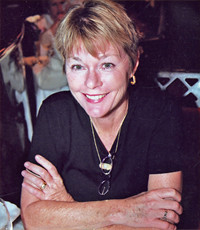
Johanna Moran’s The Wives of Henry Oades begins with the journey of a young family to New Zealand from England, but once on foreign soil, the family is met with tragedy.  Henry Oades leaves New Zealand for a new life in America where he becomes a farmer and rebuilds his life.  The story is based upon a 19th century court case involving a man with two wives, according to Moran’s Website.
“Henry introduced the children, clapping a proud hand to John’s shoulder, prying six-year-old Josephine from Margaret’s leg.  Margaret turned back to the watery haze that was her parents, spreading her feet for balance, her pretty going-away shoes pinching.  She’d been told the river was calm.”  (Page 5)

Moran’s story is unique and even more intriguing because it has a basis in fact, but in many ways the writing is stilted and it is difficult for readers to picture the settings in detail.  Additionally, there are some details that could be excluded in favor of speeding up the plot, which drags for the first 75 pages.

Margaret is a prim woman from a proper English family, who is thrown into a colony where not everyone is as well-bred as she is.  There’s a period of adjustment for the Oades family, but even that adjustment is just the beginning.  With much of the point of view focused on Margaret, the sudden shift to Henry’s viewpoint once Margaret and the kids disappear from his life is a bit jarring.  Readers could find that they are not as well connected with Henry and that he is not as developed as Margaret’s character.  This stumbling block can take a while to overcome, but then readers are thrust into another story, that of Nancy Foreland, a recently windowed, pregnant woman.

Despite these drawbacks, the struggle of Margaret and Nancy to adapt to a new situation in which they both find themselves as the wives of Henry Oades will keep readers turning the pages.  Overall, The Wives of Henry Oades by Johanna Moran is a detailed account of one family’s immigration journey and an exploration of what it truly means to be a family.


To win a copy of The Wives of Henry Oades by Johanna Moran (US/Canada):

1.  Leave a comment on this post about what court case you’ve found fascinating.
2.  Blog, tweet, Facebook, or otherwise spread the word about the giveaway and leave me a link in the comments.

Deadline March 18, 2010, at 11:59PM EST

About the Author:

Johanna Moran comes from a long line of writers and lawyers. She lives on the west coast of Florida with her husband, John. The Wives of Henry Oades is her first novel.

Check out her Website.

This book is my 15th book for the 2010 New Authors Challenge, and thus signifies my completion of the challenge, though I could be reading more new-to-me authors throughout the year.

If you are interested in the rest of the TLC Book Tour for The Wives of Henry Oades, check them out.

Venetia Kelly’s Traveling Show by Frank Delaney

Venetia Kelly’s Traveling Show by Frank Delaney is a coming of age novel set during a tumultuous time in Ireland’s history.  Set in the early 1930s, Ireland and Britain were in the midst of an economic battle in which farmers refused to keep paying back the loans that enabled them to buy farmland.  And Britain consequently began placing tariffs on all Irish goods — all the while the political system in Ireland was tenuous.

“Of course it was all still being run by politicians.  We have an old saying here:  ‘No matter who you vote for, the government always gets in.'”  (Page 15)

The narration is conversational in tone as Ben MacCarthy tells his family history, with tales on the side about the political climate of the time.  Although he digresses from the main story of his father’s disappearance and reappearance with the Venetia Kelly Traveling Show, MacCarthy warns you ahead of time that he often falls off topic, but that most of his stories have some relevance to the main narration.  A quirky technique, but enjoyable given that the digressions are entertaining.

“So, throughout this story you can expect three kinds of sidesteps:  Important Digression, which will usually be something to do with factual history; Important Digression, where a clarification needs facts and I will ferry them in from a side road; and — my favorite — Unimportant Digression, which can be about anything.”  (Page 10)

Delaney has created a multitude of characters with their own depth and meaning in the story, and there are references throughout to other classic works.  He has created an energized menagerie through which readers will see and experience through Ben’s eyes as a young man in search of his father and himself.  In many ways Ben is like his father, especially as the narration progresses.  Readers will find that he is unwinding his story slowly and deliberately, mirroring how his father contains his emotions and his true passions from his family.

“Beside me, my father reacted so hard that he made the bones of his chair creak.  He pulled back his hands, tightened them into fists, and held them in front of him like a man containing himself.”  (Page 79)

The deliberate way in which the story unfolds enables readers to learn more about the MacCarthy family, the Kelly’s, and the climate of Ireland at the time.  A nation and families stuck between the old traditions and the modern ways of the world, seeking the best path through to the other side.  What propels Ben on this journey and what does he learn?  Readers will want to pick up a copy of Venetia Kelly’s Traveling Show to find out.

To enter for 1 signed copy of Venetia Kelly’s Traveling Show or 1 audiobook narrated by Frank Delaney (US/Canada only):

1.  Leave a comment on this post of what you would like to see in Ireland.
2.  Leave a comment on my interview with Frank Delaney.
3.  Blog, Facebook, Tweet, or spread the word about the giveaway.

Deadline March 1, 2010, at 11:59PM EST.

About the Author: (Photo Credit: Jerry Bauer)

Frank Delaney was born in Tipperary, Ireland. A career in broadcasting earned him fame across the United Kingdom. A judge for the Booker Prize, several of his nonfiction books were bestsellers in the UK, and he writes frequently for American and British publications. He now lives with his wife, Diane Meier, in New York and Connecticut. Ireland is his first novel to be published in the United States.

 This is my 11th book for the 2010 New Authors Reading Challenge.

My 1st book for the 2010 Ireland Reading Challenge.

FTC Disclosure:  I received a free copy of Venetia Kelly’s Traveling Show by Frank Delaney from publicist Leah Paulos and Random House.  Clicking on title links or images will bring you to my Amazon Affiliate page; No purchase necessary.

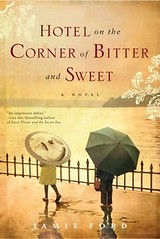
Hotel on the Corner of Bitter and Sweet by Jamie Ford

First, I want to apologize to the author, TLC Book Tours, and the publisher for failing to meet my deadline for this review.  I think this is one of the only times I’ve missed a deadline, and in my defense, I erroneously wrote today as my tour date and not yesterday.  Clearly, my mind was not focused!  I apologize.  OK, on with my review.

Jamie Ford’s Hotel on the Corner of Bitter and Sweet is a pot of water on the stove that takes a long time to boil.  Henry Lee is the main protagonist, but really his story happens nearly 45 years in the past, and those are the chapters that breathe and live.  Much of the present day (1986) life of Henry Lee is somber and lifeless.


“He’d meant to finish it when his son, Marty, went away to college, but Ethel’s condition had worsened and what money they’d saved for a rainy day was spent in a downpour of medical bills, a torrent that lasted nearly a decade.”  (Page 8)

The death of his wife, Ethel, from cancer six months before happens early on in the book.  Readers are left with a drifting character who really doesn’t find his way into his own story for about 100 or more pages.  When we finally delve into his young love with Keiko, the story blossoms into an emotional torrent, especially when they are ripped apart from each other.

Discrimination is on every page given that in 1942 the United States was drawn into World War II after the bombing of Pearl Harbor.  For Henry’s father, the war began many years before when Japan invaded his homeland.  Henry and his father have a tenuous relationship — a relationship that is mirrored in the present between Henry and his own son, Marty. 

“‘He was vehemently against all things Japanese.  Even before Pearl Harbor, the war in China had been going on for almost ten years.  For his son to be frequenting that other part of town — Japantown — would have been bad form.  Shameful to him . . . ‘”  (Page 105)

Readers will appreciate the immersion into war-time America with its simmering angst against Asians — not just the Japanese — and the plight of those second generation Asians who try to maintain their livelihoods and tout their American loyalties in a nation that increasingly wanted to get rid of any reminder of war.  Overall, Hotel on the Corner of Bitter and Sweet is a meandering novel about love, growing up, dealing with discrimination, and more, but in a way readers may find that the sequencing of events and alternating chapters between present day Henry and his younger persona could have been executed better.  In many cases the present day chapters take away from those during the war years, halting the narrative and adding little to the story’s arc.

About the Author:

Jamie Ford is the great-grandson of Nevada mining pioneer Min Chung, who emigrated from Kaiping, China, to San Francisco in 1865, where he adopted the Western name “Ford,” thus confusing countless generations. Ford is an award-winning short-story writer, an alumnus of the Squaw Valley Community of Writers, and a survivor of Orson Scott Card’s Literary Boot Camp. Having grown up near Seattle’s Chinatown, he now lives in Montana with his wife and children.  Check out his Website or the BitterSweet Blog.

To Enter the Giveaway for 1 copy of Hotel on the Corner of Bitter and Sweet (Sorry, US/Canada only):

1.  Leave a comment on this post about one moment in your past you’d like to revisit or change.
2.  Blog, Tweet, Facebook, etc. the giveaway and leave a link in the comments.

Deadline is Feb. 5, 2010 at 11:59PM EST

THIS GIVEAWAY IS NOW CLOSED!!

FTC Disclosure:  I received a free copy of Hotel on the Corner of Bitter and Sweet from the publisher for a TLC Book Tour and review.  Clicking on title links or images will bring you to my Amazon Affiliate page; No purchase necessary.

This is my 6th book for the 2010 New Authors Challenge.

If you are interested in Hotel on the Corner of Bitter and Sweet by Jamie Ford, please check out the rest of the TLC Book Tour.