Quantcast

11/22/63 by Stephen King (audio)

Source: Public Library
Audiobook, 30.75 hours
I am an Amazon Affiliate

11/22/63 by Stephen King, narrated by Craig Wasson, is a time travel novel in which teacher Jake Epping is tasked with the impossible — stop the assassination of President John F. Kennedy.  The local diner owner Al has the cheapest prices in town, but the town continues to speculate that his hamburgers are made from local cats and other pets.  After reading a brilliant essay from a GED student, Epping finds himself embroiled in a secret that is almost too fantastical to be real.  A bubble in the time line has enabled Al to return to 1958 repeatedly and buy the same cheap meat over and over.  Although Epping — who begins to write a novel that’s eerily similar to that of King’s IT set in Derry, N.H. — agrees to check things out and try to determine if Oswald had worked alone in assassinating the president, he finds himself swept up in a life he could be happy in, even though there is no Internet.

Although this book takes on the larger question of how one man could have impacted history had JFK lived and what would have happened had he not been killed and the country forced to mourn alongside his wife and child, King’s talent is in the small town experiences of that time period and the connections that seemed prevalent then that are not as present now.  Epping is skeptical about his task and even as he makes changes to the lives he knows about in the now and some for the better, he’s still not convinced that he can accomplish the bigger task of stopping the assassination.  And like many of us, Epping loses himself in the past — only in his case he literally loses himself.

11/22/63 by Stephen King is chock full of side stories, deeply sketched characters, and small town nuance.  Although there are a number of characters, readers can follow along from time line to time line because the “past harmonizes,” and readers are likely to be swept up into the story with little issue.  King is a master storyteller, which is a statement that I probably have beaten into your heads by now, so don’t miss out on his books any longer.  They’re an investment worth making.

About the Author:

Stephen King is the author of more than fifty books, all of them worldwide bestsellers. His recent work includes Doctor Sleep and Under the Dome, now a major TV miniseries on CBS. His novel 11/22/63 was named a top ten book of 2011 by The New York Times Book Review and won the Los Angeles Times Book Prize for Mystery/Thriller as well as the Best Hardcover Book Award from the International Thriller Writers Association. He is the recipient of the 2003 National Book Foundation Medal for Distinguished Contribution to American Letters. He lives in Bangor, Maine, with his wife, novelist Tabitha King. (Photo Credit: Denver Post)

Mr. Mercedes by Stephen King (audio)

Source: Public library
Audiobook, 12+ hours
I am an Amazon Affiliate

Mr. Mercedes by Stephen King is another example of how good King’s story-telling is.  Rather than rely on paranormal or other elements to craft this story, King has created a murder mystery that will leave readers on the edge of their seats.  But he never compromises his dynamic characters in favor of a fast-paced plot.  When someone runs down a bunch of people at a job fair on a rainy morning in a Mercedes and disappears, it seems as though the police will never find him.  Along with a series of other open cases, ex-cop Bill Hodges realizes just how much his job had become all there was in his life.  Now, watching horrible television talk shows and fingering his father’s gun, Hodges continues to fall into and out of deep thoughts, until Mr. Mercedes reaches out.  Will Patton always does a great job narrating King’s novels, and this narration is no exception — his voice is easy to follow as the main characters and changes enough that you can gauge who is speaking.  Patton also takes the time to act out these scenes and dialogue so that readers will feel as though they are in the room with the characters as they track Mr. Mercedes down.

Mr. Mercedes has more than just mommy issues, as he’s guilt-ridden but also homicidal.  He’s beaten down by his measly existence, yet revels in its anonymity.  His plots against others were initially random and unplanned, but as he’s progressed, he’s come to realize that the best medicine for him and his needs requires careful planning and due diligence.  Hodges, on the other hand, is mourning the loss of his work as a cop, but the communication he receives “under the blue umbrella” spurs him into detective mode and he cannot stop himself.

Mr. Mercedes by Stephen King was very well told and readers will enjoy this other side of King’s writing — the less paranormal and more normal side.  He creates dynamic and flawed characters who are taken on an unexpected journey, and for the most party they survive that journey and blossom into better versions of themselves.  Another engrossing read from a master storyteller.

About the Author:

Stephen King is the author of more than fifty books, all of them worldwide bestsellers. His recent work includes Doctor Sleep and Under the Dome, now a major TV miniseries on CBS. His novel 11/22/63 was named a top ten book of 2011 by The New York Times Book Review and won the Los Angeles Times Book Prize for Mystery/Thriller as well as the Best Hardcover Book Award from the International Thriller Writers Association. He is the recipient of the 2003 National Book Foundation Medal for Distinguished Contribution to American Letters. He lives in Bangor, Maine, with his wife, novelist Tabitha King. (Photo Credit: Denver Post)

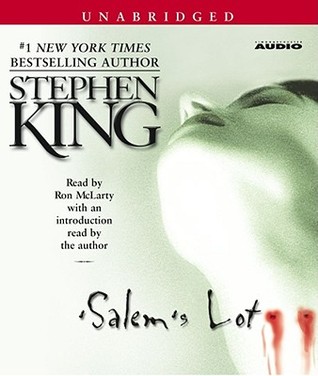
Salem’s Lot by Stephen King (audio)

Source: Public Library
Audio, 17.5 hours
I am an Amazon Affiliate

Salem’s Lot by Stephen King is just as good as I remembered it.  Author Ben Mears returns to Jerusalem’s Lot in Maine to write out the horrors of his childhood in a house on a hill.  Reading this, you’ll note nods to the great horror stories, including Dracula, but here it is not just about the vampires in the shadows, it’s about the shadows that lurk in the small town among the people.  From the Catholic priest, Father Callahan, who is not seen as fit enough to replace the previous one to the townspeople who are easily sucked into the plots of Straker and Barlow.  The consummate storyteller, King uses his main character to dig into the recesses of the town and uncover not only the mysteries of the haunted house on the hill, but the darkness beneath the quaint little town’s aesthetics.

Along the way there is love and friendship, but these things are tested in only ways that the supernatural and Stephen King can test them.  These are the horror books of my childhood, and I still love them, even on audio.  I love that vampires are what they are meant to be — blood-sucking evildoers.  I love that small towns have darkness in them, including those greedy people who will sell you down the river for a pretty penny.

Salem’s Lot by Stephen King is that creepy novel that you’ll want to stop reading but can’t put down, and when the lights go out, you’ll be trembling beneath the covers and peering over the edge at every shadow as your mind works overtime.  I cannot recommend this one enough.

About the Author:

Stephen King is the author of more than fifty books, all of them worldwide bestsellers. His recent work includes Doctor Sleep and Under the Dome, now a major TV miniseries on CBS. His novel 11/22/63 was named a top ten book of 2011 by The New York Times Book Review and won the Los Angeles Times Book Prize for Mystery/Thriller as well as the Best Hardcover Book Award from the International Thriller Writers Association. He is the recipient of the 2003 National Book Foundation Medal for Distinguished Contribution to American Letters. He lives in Bangor, Maine, with his wife, novelist Tabitha King. (Photo Credit: Denver Post)
Z for Zachariah by Robert C. O’Brien

Source: Public Library
Paperback, 249 pgs
I am an Amazon Affiliate

Z for Zachariah by Robert C. O’Brien, which was our July book club selection, and is a post-apocalyptic young adult novel in which a teen is alone on the family farm when the rest of the family ventures beyond their valley in search of other survivors.  The only survivor of the bombings, but the teen has enough knowledge to know how to grow food and care for what farm animals are left.  Soon, the teen realizes that there may be others, as smoke in the distance moves closer and closer each day.  After being alone for a long period of time, how would you react to another person, a stranger that you don’t know anything about other than that he is a scientist and has some knowledge of radiation.

“I passed the house.  Visions moved behind my eyes, and I saw the house as I had seen it as a child: climbing the front steps on the way to supper; sitting on the porch at night, watching the fireflies; my grandfather rocking me on the swing; sitting there listening to someone singing, or a phonograph; later sitting on the swing at night weaving long, romantic dreams about my life to come.”  (pg. 242)

After observing the stranger for a few days, the teen decides that to meet him face-to-face is the best option, as this is the family home in the valley.  There is a sense of responsibility not only for the farm and its buildings, but for creating a home-like atmosphere even for this stranger.  Mr. Loomis, who claims to be a chemist and knows about radiation, falls ill with radiation sickness when he throws caution to the wind and jumps into the stream without testing it.  The green lushness of the valley has lulled him into a false sense of security, and this mirrors the false sense of security the teen feels when a routine develops between them.

Z for Zachariah by Robert C. O’Brien is character-driven from a first person point of view, and while the protagonist can be insipid at times, there are moments of evolution in her character.  Some readers, however, will be angered by the teen’s reactions to Mr. Loomis and his actions.  There are moments in which readers will want to slap the teen silly, but living a farm life in a semi-religious family, it can be easy to see how the teen would have an outlook that is hopeful and positive, expecting the best from others, rather than the worse.  Mr. Loomis and the teen are nearly foils of one another in terms of worldview, and while he is paranoid and controlling because of the loneliness he felt, the teen views the world optimistically and with wonder.  Is this due to the difference in age, their upbringing, or other factors …  it is unclear.  Background information on the characters is minimal, but the story is engaging for the most part as a teen faces a series of tough decisions.

What the book club thought: (updated 9:12 AM)

Our meeting had a consensus of they liked the book for the most part, but the protagonist drove us crazy and the scientist is someone we thought was just evil — though one member made the argument that he may have experienced more damage during his radiation sickness than we thought.  We liked the premise of a valley isolated in its own weather pattern from the fallout and we liked that the young girl had survived on her own because of her farming skills, and most of us agreed that had it been an urban kid there, they would likely have had a harder time.  There were some religion vs. science themes, but it didn’t seem to be overly done to most of us.  There were two members who absolutely disliked the main character and her decisions, her inability to swear, etc., and her naivete about the world outside the farm and the necessity of killing the antagonist.  Some also had issues with the plot and overall, most were disappointed by the ending — though we agreed that because this is an older book (1973, I think, and was finished by the author’s wife and daughter from his notes) the prose was much different than today’s cinematic-style YA post-apocalyptic novels.

About the Author:

Robert Leslie Conly (better known by his pen name, Robert C. O’Brien) was an American author and journalist for National Geographic Magazine.

Revival by Stephen King (audio)

Source: Public Library
Audio, 11 cds
I am an Amazon Affiliate

Revival by Stephen King, narrated by David Morse, is more subtle in its horror than previous novels, but King’s gift for weaving a complex story with dynamic characters shines through.  Jamie Morton is a young boy in a small New England town who is wowed by the new minister, Charles Jacobs.  Like any new, young couple who enters a small town, the Jacobs’ turn heads, with the young ladies fawning over the minister and the young lads gazing at his wife.  When tragedy strikes, Jacobs shocks the small town with a final anti-religion speech that sends him packing, but even Morton cannot forget the minister’s passion or secret obsession with electricity.

Morton, however, has his own path ahead, and much of it is spent in a drug-induced haze of rock n’ roll clubs and motels as a guitar player.  While he feels like an amateur, he has enough talent to take him from band to band and earns enough money to keep his habit up.  Morse does an excellent job with the narration, and he’s sufficiently creepy.  What I found wonderful were the nods that King places to previous novels, such as Mr. Electrico in Joyland, inside Revival to provide a little extra umph to the idea of reviving or living again.

King really has a handle on childhood and growing up in small towns, and the many superstitions that can be spread about among teens and their parents.  Rumors often spread like wildfire, and in many ways, when those of us leave those small towns, we try to reinvent ourselves like Jacobs’ does.  But the difference is that his obsession with revival becomes the only focus of his life, and in the process of pursuing the truth of life and death, he ruins the lives of others, drags Morton into the darkest of places, and ultimately, leads to a truth that can never be unseen.  Revival by Stephen King, narrated by David Morse, is well told, and though slow in some places, weaves an incredible story that will have readers questioning reality and their faith.

About the Author:

Stephen King is the author of more than fifty books, all of them worldwide bestsellers. His recent work includes Doctor Sleep and Under the Dome, now a major TV miniseries on CBS. His novel 11/22/63 was named a top ten book of 2011 by The New York Times Book Review and won the Los Angeles Times Book Prize for Mystery/Thriller as well as the Best Hardcover Book Award from the International Thriller Writers Association. He is the recipient of the 2003 National Book Foundation Medal for Distinguished Contribution to American Letters. He lives in Bangor, Maine, with his wife, novelist Tabitha King. (Photo Credit: Denver Post)

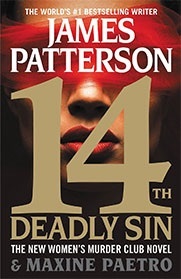
14th Deadly Sin by James Patterson and Maxine Paetro

Source: Public Library
Hardcover, 384 pgs
I am an Amazon Affiliate

14th Deadly Sin by James Patterson and Maxine Paetro brings to light the possibility of police corruption in San Francisco, and Lindsay Boxer doesn’t know who to trust.  When drug houses get hit and all of the perps are killed by men wearing SFPD windbreakers and latex masks, Boxer and her team have to determine if those men are really cops or if they are criminals trying to smear the reputation of the police department.

Meanwhile, Lindsay’s husband, Joe, has to adjust to a new set of circumstances when he becomes a stay-at-home dad.  While he loves his little girl, Julie, the adjustment is a lot harder than he expects.  A former FBI agent at home doing laundry and other household chores, while his wife is chasing bad guys all over the city, what could be more of an adjustment, especially with the long hours she keeps.  At least, that’s until he and his wife begin working on an off-the-books case regarding stabbings that happen on the same date every year.

Patterson and Paetro make a great writing team for this series.  These women are full of spunk and passion, but they’re also not married to their jobs like some.  They love to be able to come home to their families and friends and just have a good time.  These gatherings of the Women’s Murder Club are often pow-wows about their cases or stories, but they also are a great way for the ladies to blow off steam.

14th Deadly Sin by James Patterson and Maxine Paetro is a solid addition to the series, and while the audio for this one was unavailable at my library, I’m sure I would have enjoyed it much the same.  This one has got a little of everything — mystery, fun, relationships, and adjustments to new career/life situations.

About the Author:

James Patterson is a prolific author of thrillers, mysteries, young adult novels and more. His first successful series featured psychologist Alex Cross.

About the Co-Author:

Maxine Paetro collaborates with best–selling author James Patterson, co–writing The 4th Of July, The 5th Horseman, The 6th Target, The 7th Heaven, The 8th Confession, The 9th Judgment, 10th Anniversary and The 11th Hour, just released in May 2012. All are New York Times #1 best–sellers in the Women’s Murder Club Series.

Longbourn by Jo Baker (audio)

Source: Public Library
Audio, 13.5 hrs.
I am an Amazon Affiliate

Longbourn by Jo Baker, narrated by Emma Fielding, is a look at the servants behind the scenes of Pride & Prejudice by Jane Austen.  Sarah is an orphaned, hard-working housemaid in the Bennet household at Longbourn, but even as she keeps within the confines of her role, she begins to wish for something more.  Baker clearly delineates the roles of the household servants, and depicts the realities of that life with a frankness that cannot be ignored.  While readers may be cheering Sarah on in her dreams of something more, they also realize that dreaming for too much can become a devastating blow when it does not come to pass.  With the arrival of a new footman, Sarah finds herself torn between her feelings for him and that of Ptolemy Bingley, a mulatto servant of the Bingley family.  What readers will find here is that the servants interactions with the main characters of Austen’s work reinforce their flaws for the most part, which is to be expected when writing from the perspective of those in the lower class.

Fielding is a great narrator and does really well with the prose that closely mirrors that of Austen, ensuring that readers get wrapped up in the story.  The only drawback in this story is Ptolemy because he is a character who is under-developed and whose back story becomes a mere catalyst for Sarah’s evolution beyond her current status in the household.  It is almost as if he could have been someone that was talked about among the servants, rather than actually met by Sarah, as she’s only superficially tempted by him and what he represents tangentially.

It is almost as if the naive housemaid believes Ptolemy represents a greater freedom than he actually does, especially given that he was a former slave on a plantation owned by the Bingleys.  To another point, would the Bingleys actually have been plantation owners?  Perhaps not, given that most newly rich families earned their money in business dealings, not that plantation ownership could not be a business dealing.  This part of the story is not fully fleshed out, leaving readers with a very superficial view of his life and current situation.

Austen’s main story is not disrupted by Baker’s novel in any major way, with the girls being married off and some more favorably than others.  What’s strong here is the steady hand of Mrs. Hill and her ability to not only see past her own misfortunes but to also offer hope within her sage advice to Sarah.  Longbourn by Jo Baker, narrated by Emma Fielding, is engaging and captivating, while never putting window dressing on the lives of servants.

About the Author:

Jo Baker was born in Lancashire. She was educated at Oxford and at Queen’s University, Belfast, where she completed a PhD on the work of the Anglo-Irish writer Elizabeth Bowen. Her first novel, Offcomer, was published by William Heinemann in 2001. Her second book, The Mermaid’s Child, is was published in August 2004. Jo Baker has also written for BBC Radio 4, and her short stories have been included in a number of anthologies. From 2001-2003 she was the Artistic Director of the Belfast Literary Festival. She lives in Belfast with her husband, the playwright and screenwriter Daragh Carville, and their son Daniel. The Telling is her third novel.

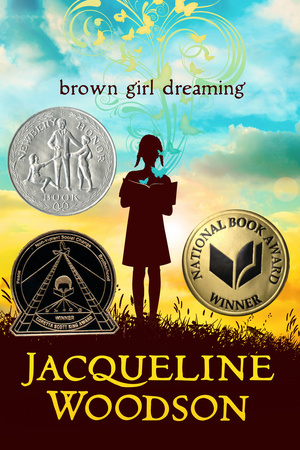
Brown Girl Dreaming by Jacqueline Woodson

Source: Public Library
Hardcover, 337 pgs.
I am an Amazon Affiliate

Brown Girl Dreaming by Jacqueline Woodson, a National Book Award Winner and Newbery Honor Book, is a coming-of-age novel in verse that is fresh and child-like in its perspective.  Jacqueline Woodson clearly bases her novel on her own experiences as a young black girl who grows up in a home with a single mother and older siblings.  Moving from Ohio and her father to Greenville, S.C., in the 1960s to live with her mother, siblings, and grandparents, Jackie is too young to understand the breakup of her family and remember her past.  Running in parallel to the Civil Rights Movement, young Jackie learning her letters and trying to keep up with her older siblings.  As she finds she doesn’t measure up to her smart sister in the classroom, she also learns that each sibling may have hidden talents, like her brother’s singing voice.

From "February 12, 1963" (pg.1-2)

I am born in Ohio but
the stories of South Carolina already run
like rivers
through my veins.

From "My Mother and Grace" (page 25-26)

Both know that southern way of talking
without words, remember when
the heat of summer
could melt the mouth,
so southerners stayed quiet

Jackie is a young girl finding her way, looking to be strong, but also learning to listen to her elders and to others influencing the civil rights movement. She hasn’t made up her mind, but she’s learning piece by piece what it means to be a young black woman in the south and how that differs from being black in New York.  Woodson’s style is frank, but firmly rooted in the point of view of a young girl who observes both the benefits of the movement and the drawbacks of fighting for what you believe in.  Along the way, she becomes friends with Maria whose mother cooks the best Hispanic food, and they do everything together, including swap dinners in the stairwell.

Brown Girl Dreaming by Jacqueline Woodson is a journey of a young black woman growing up in the 60s and 70s and serves as an excellent introduction to not only the time period, but also the struggles of black in the south and in the north for those ages 10 and up.  There are moments in which the author relies on a dream-like quality to present her narrator’s ideals, but at other points, it is very clear cut what has happened.  In many ways, this rendition is a mere outline of the harsher parts of life and it is reflected well through a child’s eyes.

About the Author:

Jacqueline Woodson is an American writer of books for children and adolescents. She is best known for Miracle’s Boys, which won the Coretta Scott King Award in 2001, and her Newbery Honor-winning titles Brown Girl Dreaming, After Tupac & D Foster, Feathers, and Show Way. Her work is filled with strong African-American themes, generally aimed at a young adult audience.

For her lifetime contribution as a children’s writer, Woodson won the Margaret Edwards Award in 2005 and she was the U.S. nominee for the biennial, international Hans Christian Andersen Award in 2014. IBBY named her one of six Andersen Award finalists on March 17, 2014. She won the National Book Award in 2014 in the category of “Young People’s Literature” for Brown Girl Dreaming.


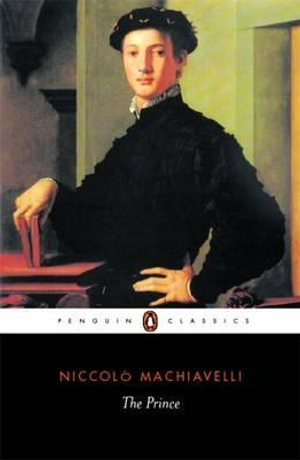
The Prince by Niccolò Machiavelli

Source: Public Library
Paperback, 85 pgs
I am an Amazon Affiliate

The Prince by Niccolò Machiavelli, which was our June book club selection and my second reading (I haven’t read this since college), is a nonfiction analysis of different types of principalities and how a prince can keep them when factions or people move against him.  The work is considered a classic and it is an examination of what traits make principalities hard to maintain or easy to keep, as well as what characteristics a prince should foster in himself to hold onto his principality.  Although this is a slim volume, the economy of the language makes it quite dense and oftentimes dry.  Many often attribute the sayings of “the ends justify the means” and “might makes right” to Machiavelli, though they are not necessarily accurate interpretations of what he espoused.

It is clear that his life experiences as a civil servant in Italy, which had been far from unified under one government and was operated more through a balance of various factions and the strength of the truth.  It is clear that Machiavelli viewed political success from a practical standpoint, without an emphasis on morality.  More accurate attributions of wisdom to him might be that you can gauge the intelligence of a prince by those he has around them or that it is better to be feared than loved.

“The main foundations of every state, new states as well as ancient or composite one, are good laws and good arms; and because you cannot have good laws without good arms, and where there are good arms, good laws inevitably follow … ” (page 40)

The Prince by Niccolò Machiavelli has become a guidebook for many leaders, and has been perverted by others, including Hitler and Stalin.  Whatever readers may take away from his advice on principalities, Machiavelli is clearly a keen observer of human behavior, especially among rulers.  It is highly humorous that he would give this book as a gift to a new ruler of the Medici family in the hope of gaining favor with the new government, especially since the book tends to provide a framework for governing as if the reader would need pointers.  How many rulers would take to that kindly?

What the book club thought:

Everyone seemed to agree that this was almost like a how-to guide on how to become a prince and maintain the power they gain, regardless of the political or geographical situation.  One member expressed the opinion that Machiavelli seemed to focus on his own ambitions, despite his couching of his advice as something to help Medici, who was currently in power at the time the book was written.  Others did not see that, and I mentioned that he was incredibly disappointed that his political and civilian government life had come to an end too quickly and that he was motivated to ensure his return to that life.  Overall, most people found the book interesting and though that it would be interesting to see what Machiavelli would have written about the U.S. presidency or if his guide would work in today’s modern world.  The book generated a great deal of discussion, and most were surprised that it was not more evil than they expected.

About the Author:

Niccolò di Bernardo dei Machiavelli was an Italian political philosopher, musician, poet, and romantic comedic playwright. He is a figure of the Italian Renaissance and a central figure of its political component, most widely known for his treatises on realist political theory (The Prince) on the one hand and republicanism (Discourses on Livy) on the other.

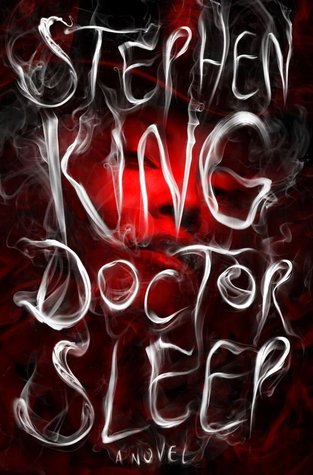
Doctor Sleep by Stephen King (audio)

Source: Public Library
Audio, 18 hrs
I am an Amazon Affiliate

Doctor Sleep by Stephen King is a sequel to The Shining, starring Dan Torrance who was just a young boy in the first book.  In this novel, we learn about the life Dan led after the infamous events at the Overlook Hotel.  Dan has struggle most of his adult life against addiction to alcohol, like his father, but in many ways, the alcohol became a way for him to hide from his gifts.  As he copes with his addiction, he finds solace in that he can help those leaving this world for the next go peacefully.  Eventually, he becomes known as Doctor Sleep in a small New Hampshire town at a nursing home.

Meanwhile, Abra Stone, a gifted twelve-year-old girl, has caught the eye of the members of the True Knot who are human and not-human.  The True Knot seems to be an unstoppable force that are sucking the life force out of those with special gifts, but they haven’t yet met their match.  This novel is a slow builder, but in true King style, the characters are varied and dynamic.  Blending not only the supernatural with small town creepiness, King creates an atmosphere that is at once familiar and other worldly.

Doctor Sleep by Stephen King is an adventure and otherworldly with interesting characters, but there were times during the audio that my mind wandered.  The narrator, Will Patton, does a great job of creating voices that are nuanced enough to be separate entities in the performance.  I enjoyed the audio performance, but felt as though Dan’s flaws lost their impact along they way — does that mean his character evolved or that they were forgotten? — and Abra has gone from a scared Shiner to a formidable foe awfully quickly.  There are some story arcs that are quickly wrapped up and others that seem glossed over, leaving readers to fill in the gaps.  However, in terms of a sequel, written so many years after the first book, King has created a book that could be read wholly on its own, but is richer if readers have read the first book.

About the Author:

Stephen King is the author of more than fifty books, all of them worldwide bestsellers. His recent work includes Doctor Sleep and Under the Dome, now a major TV miniseries on CBS. His novel 11/22/63 was named a top ten book of 2011 by The New York Times Book Review and won the Los Angeles Times Book Prize for Mystery/Thriller as well as the Best Hardcover Book Award from the International Thriller Writers Association. He is the recipient of the 2003 National Book Foundation Medal for Distinguished Contribution to American Letters. He lives in Bangor, Maine, with his wife, novelist Tabitha King.

Firefly July: A Year of Very Short Poems selected by Paul B. Janeczko, illustrated by Melissa Sweet

Source: Public Library
Hardcover, 48 pgs
I am an Amazon Affiliate

Firefly July: A Year of Very Short Poems selected by Paul B. Janeczko, illustrated by Melissa Sweet, is a collection of some of the most recognizable poems, including William Carlos Williams’ The Red Wheelbarrow, for readers ages 6-9. Most of these poems are short and fit the theme of each season — winter, spring, summer, fall — but even younger readers will enjoy these poems as they are read aloud by their parents. The illustrations are colorful, and the vibrant images perfectly capture the mood of the season.

While some of the concepts in these poems are a little above where my own daughter may be cognitively, she still enjoyed listening to me read them aloud.  I also made sure to denote which season was depicted by each of the poems in the section, and had her point to images in the poems that she found in the illustrations, which kept her attention focused.  For instance, for Raymond Souster’s poem, “Spring,” the illustration depicts the roots of the flower and the beets on the page and the flower and leaves above.

Spring

Rain beats down,
roots stretch up.

They'll meet
in a flower.
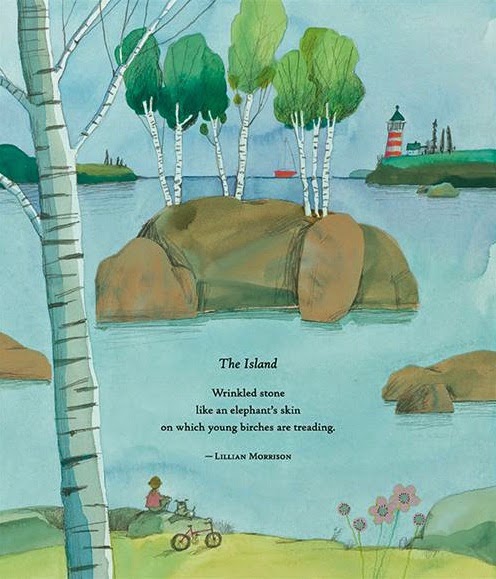
The Island

Wrinkled stone
like an elephant's skin
on which young birches are treading.

elephant


For “The Island” by Lillian Morrison, my daughter looked for the elephant talked about in the poem, and quickly found that he was the island with the trees on top. It became a word game for us, and while some poems don’t lend themselves easily to these kinds of games to keep a toddler’s interest, my daughter also loves the sounds of words, so she would often just sit and listen to me read the poems.

Firefly July: A Year of Very Short Poems selected by Paul B. Janeczko, illustrated by Melissa Sweet, contains not only those well-loved and classic poems from Williams, Dickinson, and Frost, but also poems from more contemporary poets, like Ted Kooser, Hughes, and Crapsey. Such a wide variety in a collection of poems about the seasons offer a great deal of teaching tools for young readers, from learning new words and how language works to what happens in each season scientifically.

***I first saw this book reviewed at Rhapsody in Books.***

About the Editor:

Paul Bryan Janeczko is an American poet and anthologist. He has published 40 books in the last 30 years, including poetry compilations, non-fiction guides for young writers, and books for teachers.

About the Illustrator:

Melissa Sweet has illustrated nearly 100 children’s books from board books to picture books and nonfiction titles. Her collages and paintings have appeared in the New York Times, Martha Stewart Living, Madison Park Greetings, Smilebox and for eeBoo Toys, which have garnered the Oppenheim and Parents Choice Awards.

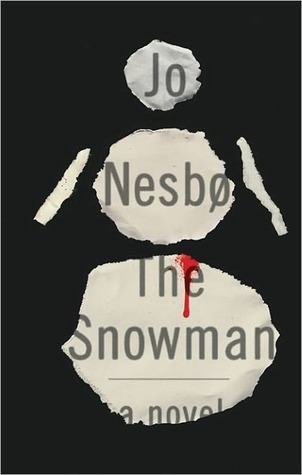
The Snowman by Jo Nesbø

Source: Public library
Hardcover, 383 pages
I am an Amazon Affiliate

The Snowman by Jo Nesbø, which was the May book club selection, is the 7th book in the Harry Hole detective series and translated by Don Bartlett.  The translation is wonderfully descriptive and never feels stilted, which is perfect when reading a mystery novel.  In fact, the clipped sentences read to me more like the pace of a mystery/thriller should be, while at the same time being descriptive, evocative, and creating an appropriate emphasis (if sometimes, over-emphasis) on the cold.

Oslo police investigator Harry Hole has solved a serial killer case before, and as his fame makes the rounds in Norway, he garners the attention of a young detective and a killer.  Mothers across the country are disappearing, and statistics reveal that about 20 percent of children are not related to the fathers they live with.  This story involves not only so called mommy issues, as one book club member stated, but also the power of genetics and survival of the fittest theories.

From the creepy snowmen that pop up after the disappearance of mothers across the city to the highly suspicious female detective Katrine Bratt, Hole has his work cut out for him in trying to solve these disappearances and murders.  As the mold is sought out in Hole’s apartment, the case has uncovered a series of ailments from Raynaud’s syndrome to scleroderma and noctambulism and other parasomnias.  These conditions play a significant role in how these characters act, react, and interact with one another, and they often lead to confusion of the facts in the snowman case.

Hole is a prototypical police detective consumed by his work, and like others, his obsession with solving his cases leads him to have a very solitary life in which alcohol plays a significant role.  What’s done really well here is the twists and turns in the case, hampered by the various ailments of the players, but also the dialogue.  It’s purposeful and witty, which can make the errors in judgment all the more ironic.

“‘I’m in the office and have had a look at what you’ve found.  You said all the missing women were married with children.  I think there could be something in that.’

‘What?’

‘I have no idea.  I just needed to hear myself say that to someone.  So that I could decide if it sounded idiotic.’

‘And how does it sound?’

‘Idiotic.  Good night.'” (page 113)

The Snowman by Jo Nesbø, translated by Don Bartlett, was a thrilling read and well written.  Hole may be an anti-hero, but he’s one you’ll want on your side to bring you justice, even if his own dysfunction can derail him.  Although this is a 7th book in the series, there was enough back story that readers would have no trouble following Hole.  Some readers may prefer to see the character’s evolution from start to finish, and for those, like myself, I recommend starting at the beginning.

What the Book Club Thought:

There were two members, including the one who nominated the book, who did not finish, and one member who skimmed through quite a bit of it.  Those who finished the book did have some issues with the set up of the narration, which shifted quite a bit between main and little used characters.  Overall, some of the crimes were intriguing, and downright gruesome, which some members enjoyed, but there was one scene in which a body was found in such a way that another member said it seemed cliche or recycled from his other book, The Son.  There were a few who rated the book 4 stars and several others rated it about three stars.  This one got mixed reviews, but for those who enjoyed it, they had no issues with the novel’s pacing or the narration.  One member found the narration to be choppy, which they thought might be due to translation, while another member thought it was the author’s style and the need to emphasize the cold.

About the Author:

Jo Nesbø is a Glass Key award-winning Norwegian author and musician. As of March 2014 more than 3 million copies of his novels have been sold in Norway, and his work has been translated into over 40 languages, selling 23 million copies.