Quantcast

Interview With Poet Rosemary Winslow

Going Home
by: Rosemary Winslow

There is no going home
as usual

the vehicle stalls

in reverse gear

in mud tracks

as essential as
the flat fields, the blades

of shadowed pines over the drive,

the sun bleeding

from the west.

On the rise the house,
painted clapboard, the color of cream,

is rented now like bodies

of water and minerals made

living by some miracle

which is to say some process
we don’t understand.

Some day we’ll have a

different owner,

a different lover,

pine trees and whirling wind
that primitive communion

a new testament

of each generation.

All going home is never going back—

there may be ruin and mud tracks
deep to make wheels spin. The only way

is slogging on,

or else walking

on water.

Or yet it may be dry
the sand flying in your nostrils

but you must breathe, must go, must go

on, which is to say, go on making

required visits, like stations

of a cross. It is a way
of finding what we lost

or never had, of learning we are only

renters, and making new covenants,

going where we belong.

Rosemary Winslow recently agreed to an interview with myself and 32 Poems. And here is what she had to say.

1. Not only are you a contributor to 32 Poems, you are also a professor of literature and writing at The Catholic University of America and have won the Larry Neal Award for Poetry twice. Which of these do you find most rewarding and why? Could you explain how you felt about winning the Larry Neal Award and how that came about?

Serena, I want to thank you for the opportunity to think more about what I do as a poet and why. I’ve been fortunate to have many poems published in 32 Poems and other really fine places. And, yes, I’ve won the Larry Neal Award for Poetry three times–third place in 2001, second place in 2002, and first place in 2006. Awards can be a wonderful affirmation of one’s work, and I’ve been pleased that there are folks out there who like poems I’ve written. I wish there were more awards and more recognition for others who write at least as well if not better than I get less recognition.

I also love teaching, especially teaching poetry. To work with students in small classes–which I’ve been given the good fortune and opportunity to do–is enormously rewarding. I’ve stayed in touch with many of my former students through the years—I get to experience the amazing transformation of students into friends, each time as interesting and unique as a poem Opening up ways of reading, both understanding meaning and also the other forces at work in fine poems, is a real joy. I feel it enriches students’ lives, and teaching them certainly enriches mine. I can’t say which is most rewarding. They go together. I couldn’t teach what, nor the way, I do if I weren’t writing poems.

The first excellent teachers and critics of literature in the U.S. were writers, they started this business and I’m pleased to be able to do in some measure what they did and envisioned for the future. Writing literature gives a teacher the capacity to teach poems from the inside, from the perspective of how they are made, how they are put together. It’s possible to teach poems as poems, as made, and verbal art, in a way not possible without knowing how to make them.

2. Do you have any obsessions that you would like to share?

Obsessions? I haven’t tried to discover what obsessions I might have. I try to confine my obsessiveness to poetry, to getting every word, line, mark of punctuation perfect, which is a way of saying a poem’s done, finished, it looks and feels right to me. Poetry’s a good place for that, much better than in other areas of life! Eamon Grennan once said a particular long poem of mine was obsessive when he read it in draft. “Obsessiveness is good,” he said. He meant, in poetry, and that’s fine with me to have it if it makes for good art. As long as it enriches instead of dampening my life!

3. What current projects are you working on and would you like to share some details with the readers?

Right now I’m working on poems about a week last month when my mother died. I’ve never written about experiences so close in time to their happening before, and I was surprised that I both felt pressured to and could actually write so soon. The experience was so intense, because I stayed with her during her last two days and nights. The sheer physicality stripped away from everything that normally occupies us, and the huge emotional range were so indescribable that I found I was too restless to sit still, or even think straight, afterward. Then one afternoon I decided to sit down and try to write poems about that week, and from that moment the restlessness ceased and hasn’t returned.

Before my mother died, I had been working on a series of poems about genocide, and then some poems that I still don’t know what they are about. Something inner, but expressed in a kind of half-surrealistic half-realistic imagery taken from nature. I grew up immersed in nature on the farm, so my mind naturally goes there. I’ve lived in cities for 20 years, but I’ve given up hoping I might write much urban poetry.

If you’ve enjoyed Rosemary’s answers so far, I suggest you check out the rest of my interview with her over at 32 Poems Blog. Once there, you can find out about her workspace, her inspirations, and much more. Feel free to leave me comments and discuss Rosemary’s work (sampled above), her interview, or your thoughts on poetry in general.

About the Poet:

Rosemary Winslow is on the faculty of the Catholic University of America, where she teaches writing and literature, and where she has directed writing programs for 19 years. Based on her work, which has appeared in numerous literary magazines and anthologies, she has received a residency grant at the Vermont Studio Center as well as a writer’s grant and three Larry Neal Awards for Poetry from the DC Commission on the Arts & Humanities. Her latest book is Green Bodies.

Interview With Poet Jeannine Hall Gailey

When Red Becomes the Wolf

In my dream you brought me fried bologna sandwiches.
“But wait,” you said, “You don’t even like bologna.”
I wolfed them down without answering.

I have never owned a red cape,
that’s asking for trouble, I knew.
In the forest by your house,

I met someone gathering wood. “Nice axe,”
I said before wandering further.
I was obtaining samples for my botany class.

How many daisies make a statistic?
I thought of Persephone, her dark gash
that allowed Hades passage. Which flower?

I was hungry, and tired. I entered someone’s
cottage, it was dark, and there was an old woman.
I volunteered to take her to get her hair done.

Alone, I mentioned I was born under the sign
of Lupus. “No,” she corrected, “Lupae.”
Later, eating sandwiches, we discussed you

and also whether I could wear her fur coat.
“It makes you look feral, with your green eyes,”
she said. Oh grandmother, what a big mouth you have.


I recently had an opportunity to interview Jeannine Hall Gailey, author of Becoming the Villainess, in conjunction with 32 Poems. The interview will be partially posted at Savvy Verse & Wit and in full at 32 Poems Blog. Without further ado, here’s what Jeannine had to say.

1. Not only are you a contributor to 32 Poems, you teach at National University’s MFA program, have published several poetry books, and volunteer on the editorial staff at Crab Creek Review. What “hat” do you find most difficult to wear and why?

I found out that despite years of resisting it, I actually adore teaching, especially teaching poetry, so I feel really lucky to be doing a little bit of graduate student teaching at National University. For me, writing and reading poetry can consume all my time, so it’s important to balance out the poetry work with paying freelance gigs and volunteering – I’ve been a volunteer in some capacity for local literary magazines for about ten years, first with Raven Chronicles, then The Seattle Review, then Silk Road (out of Pacific University) and now Crab Creek Review, which is run by some excellent editors that are also good friends. I really want to help them succeed. My hardest hat to wear is usually whatever I’m doing for money – it’s easy to get distracted by all that unpaid poetry work! I’ve been trying to do more freelance work that involves poetry – essays, interviews, articles, etc. – to kind of stave off that poetry-addict problem.


2. Could you explain your shift from an interest in biology as an undergrad to your current proclivity to literature and poetry today as an MFA graduate?

Well, I wanted to be a holistic doctor – a bit of a weird goal for someone back in 1991 — but I ended up getting sick so often while volunteering for various hospitals around campus that my doctor advised me that medicine might not be an ideal career for me. So my health problems led to me become a technical writer after getting my degree in biology, combining my love of writing and science/technology, then to life as a professional writer, editor, and manager for some big companies during the tech boom, and finally to getting back to one of my early dreams – writing poetry.

As a kid my mother encouraged me to read and memorize poetry, and my fifth-grade teacher had me bring in new poems every day, to get me in the habit of writing and revising poetry. So I think I reverted to my early training in my late twenties, and ended up going back to school – first, for an MA at University of Cincinnati, then, some years later, for my low-res MFA at Pacific University. I was fascinated by the critical work at UC, where I found out about things like “feminism” and “intertextuality” but I have to say my experience at Pacific was much more liberating and, well, it was a lot of fun to focus on my own writing for two years.

I’m still very interested in environmental science, and things like the science of virology or medical botany. I still read a lot of academic science journals just for kicks. Science creeps into my poetry every once in a while.

3. Poetry is often considered elitist or inaccessible by mainstream readers. Do poets have an obligation to dispel that myth and how do you think it could be accomplished?

I think that people who consider poetry elitist or difficult just haven’t been exposed to enough poetry. People often encounter poetry once, in high school – and form their opinion for life – probably from a sample of high modernism or poetry written hundreds of years ago; no wonder they consider it difficult!

In today’s poetry world, there are so many diverse forms and types of poetry, that there really is something for everyone. In my chapbook and first book, I worked consciously to write poetry that would be appealing and accessible to a contemporary high-school or college student – I thought poetry about superheroes and video game characters might be interesting to them. Of course, there are references to Greek and Roman mythology and 16th-century fairy tales in the book too, so I guess I couldn’t make it all too easy. I think I was using my little brother as my “ideal” reader – someone who is intelligent, who grew up playing on the computer, who was well-versed in popular culture, who was a reader, but might not pick up a book of poetry unless he liked the subject matter.

And, I should also say that when my little brother was 17 and a bit of a…hoodlum, I dragged him and some of his friends to a Louise Gluck reading – this was back when she was promoting Meadowlands. There we were in the back of the room, this bunch of teenage boys dressed in black and me. But they loved it. My brother still has her book. So you can never assume that you know what a reader might understand or enjoy. I believe we should trust readers more, not less.

I wouldn’t prescribe that all writers should try and be “accessible;” I actually like poetry that makes me work a little bit, hunting down references or making imaginative cognitive jumps. Every writer has to stay true to their own style.

4. What current projects are you working on and would you like to share some details with the readers?

I’m working on finding a good home for two manuscripts, one on Japanese folk tales and anime characters, another called “Unexplained Fevers” about fairy tales trapped in sleep states – Sleeping Beauty, Snow White, and Rapunzel. And I’m working on yet another manuscript that focuses on the history of Oak Ridge, Tennessee and my own personal history growing up there: my father, a robotics scientist and professor, consulted for Oak Ridge National Labs while we lived there. It’s probably the most personal work I’ve written.

I’d also like to get more involved in the local poetry community here in San Diego. It’s not quite as diverse or lively as the poetry community in Seattle, but I want to be an active part of it in some way. Someday, when I have enough money and time, I’d like to start my own press.

If you’ve enjoyed Jeannine’s answers so far, I suggest you check out the rest of my interview with her over at 32 Poems Blog. Once there, you can find out about her workspace, her obsessions, and much more. Feel free to leave me comments and discuss Jeannine’s work (sampled above), her interview, or your thoughts on poetry in general.

Also, stay tuned for my review of Becoming the Villainess.

About the Poet:

Jeannine Hall Gailey was born at Yale New Haven Hospital in Connecticut, and grew up in Knoxville, Tennessee. She has a B.S. in Biology and an M.A. in English from the University of Cincinnati, as well as an M.F.A. in Creative Writing from Pacific University. Her first book of poetry, Becoming the Villainess, was published by Steel Toe Books in 2006. Poems from the book were featured on NPR’s The Writer’s Almanac and on Verse Daily; two were included in 2007’s The Year’s Best Fantasy and Horror.

She recently taught with the Young Artist Project at Centrum. In 2007 she received a Washington State Artist Trust GAP Grant and a Dorothy Sargent Rosenberg Poetry Prize. She volunteers as an editorial consultant for Crab Creek Review, writes book reviews, and teaches at National University’s MFA Program.

Interview With Stacy-Deanne, Author of Melody

I’ve had the pleasure of interviewing Stacy-Deanne, author of Melody, which recently won two YGA Literary awards in 2008. Please welcome Stacy-Deanne to Savvy Verse & Wit.

1. What inspired you to write Melody, your most recent thriller? Is it based upon real-life events?

I wrote the first draft of Melody years ago and though I honestly can’t remember how I came up with the premise, I did come up with the story because I’ve always been attracted to thrillers and mysteries. It was the first suspense novel I’d written and it awoke a hunger in me because I love to read mysteries. It is not based on any real-life events. I don’t incorporate any part of my life into my writing. I simply write what comes straight from my head.

2. Have you always wanted to write in the thriller genre? And what first attracted you to the genre?

Yes. I’ve always read mystery/suspense novels and I love films of this type as well so that’s why I started to write it.

3. Do you have any obsessions and could you please share a few?

Some of my obsessions would be writing (of course), music, movies and doing hair and make-up. I love to dress up and fix myself up and do hair. I used to model but I always liked fixing myself up as a child. It’s fun just to play around in the mirror, LOL.

4. Music and art are often touted as inspirational to writers. Has music or art inspired you? If so, how? And if not, are there other objects/elements (in nature or otherwise) that have inspired your work?

I am a music lover but it hasn’t any influence on my writing. I am more influenced by books that fit my genre, also movies and other authors. But mostly my imagination.

5. Most writers will read inspirational/how-to manuals, take workshops, or belong to writing groups. Did you subscribe to any of these aids and if so which did you find most helpful? Please feel free to name any “writing” books you enjoyed most (i.e. Bird by Bird by Anne Lamott).

When I first started out I read some of the writing books but to me, the best research I found was from other authors and online. I learned more from different types of articles and writing forums than I ever did from a book. I find information on the net more relevant and more up-to-date than a lot of those how-to books.

I never was a fan of manuals because that particular author’s word (who wrote the book) is taken as law but in writing, different things work for different people. I don’t think any writer has the same experience as anyone else. We can all share our paths and what we’ve done, but no writer can say what’s best for anyone else. Publishing is a game of chance no matter how talented and determined you are. I would recommend the plot books from Writer’s Digest that show authors how to construct different genres. They helped me in the beginning and I still refer to them sometimes to help me with a story.

6. In terms of friendships, have your friendships changed since you began focusing on writing? Are there more writers among your friends or have your relationships remained the same?

I am a very solitary person so I don’t have a lot of friends. In fact I only have one friend who is my best friend. She’s an aspiring writer and poet and we have a lot in common. I never had a lot of friends because I don’t trust people and I just like to stay to myself. You won’t believe how solitary I am, LOL. I keep my writing life separate from my personal life and I am not friends with any authors. I do have authors I converse with and they are acquaintances, but they are not considered friends. I don’t get on that level with people in the industry.

I always remind myself that, no matter how friendly they are, these people are competition and writing (though I love it), is still a job and career for me. I think it’s wise not to get too close and personal with some writers. The few writers I speak with regularly are through the Internet. I’ve never ever met them in person. I also have seen from the sidelines how authors burn each other when they get too friendly. There is a lot of jealousy in this business and so you don’t keep friends long if they are authors too. I hope this doesn’t seem cold because I don’t mean it that way. But I think anyone who has been writing as long as I have and have seen the mess and drama that I have in this business will agree that keeping your personal life out of the industry and away from other writers is best. I’m also very private so I don’t like people in my business whether they are authors or not.

7. How do you stay fit and healthy as a writer?

It’s the same as just staying fit normally. I eat right, TRY to get rest (which is difficult as a writer) and overall just make sure I’m doing the best I can health wise. It doesn’t matter the occupation, really. Writers should remind themselves that resting is important. We often try to work on so many projects at once and that can be unhealthy and stressful.

8. Please describe your writing space and how it would differ from your ideal writing space. (Please feel free to include a photo or two of your workspace if you like).

My writing area is in the den. Since I’ve never written anywhere else, I’d have to say this is my ideal space too. I love my workspace. As far as how it looks, I’ll let the photo speak for itself, LOL! It’s funny but for concentration, I find a messy workstation better for me to deal with. When I write, I have papers all over the place. I am constantly doing research, jotting down notes and ideas, so being neat all the time isn’t possible.

9. What current projects are you working on and would you like to share some details with the readers?

I am always working on something. My agent happens to have three brand new manuscripts of mine that she’s shopping around. I have started a mystery and suspense series starring the detectives from my last novel, Melody. I have been focusing on that series and have already completed two books for the series. Since January of this year I’ve already finished four books and I just started another one this week. I’m on a roll!

Thank you for the opportunity! I enjoyed the interview!

Thank you for joining us here at Savvy Verse & Wit.

Please check out Stacy-Deanne’s Website and her MySpace page.


About the Book:

Melody is a mystery involving two stories of “deadly” passion. Melody Cruz is certain her sister’s new boyfriend, the wealthy, charming, and handsome Keith Taylor, has a dark past that he will do anything to hide. At the same time, a man named the “Albany Predator” has been brutally raping black women throughout the city, and Melody is convinced that her best friend is the rapist’s next target.

Interview With Poet Steve Schroeder

In conjunction with 32 Poems Blog, Savvy Verse & Wit continues to bring you interviews with contemporary poets. Please welcome, Steve Schroeder.


We Never Did Anything

by Steve Schroeder

Previously Published by Copper Nickel

We never did anything bad to him.

He never did anything bad to us, he said, he cried, he lied.

He hit the reset button.

We hit the wall with him.

We taught him to shout shit at the neighbors across the street.

He learned his words with fucking Cocoa Puffs.

He squeaked when squeezed.

We named that disease for him.

We slingshotted golf balls and ball bearings.

He bundled up in blankets and blundered through the dark.

We were a bear hungry under the stairs.

He hid the hummingbird feeder syrup.

He pounced from the ceiling fan as it spun.

We grabbed the scruff of his rubber chicken neck and shook.

He stuffed himself with fluff and hot lightbulbs.

We wrapped him in subliminal tape while he slept.

We unzipped his chest.

He was completely hole.

He never did anything bad.

We never did anything worse.

1. Not only are you a contributor to 32 Poems, but you also have a new book, Torched Verse Ends, coming out soon. Please share a bit about your experience writing the book and about how many poems you previously published that are included in the book. (And anything else you would like to share.)

Torched Verse Ends, now out from BlazeVOX, is my first book. It contains poems written from 2003 through 2008, though far from all the poems I wrote or published in that time. It’s evolved a lot since I started sending it out in 2006, when it was not yet remotely ready to be a book. The experience of writing the overall book boils down to “Whoa, I might be able to organize these poems I’ve been writing into a book,” then “God, why did I ever think this was a good way to organize a book?”

2. Do you see spoken word, performance, or written poetry as more powerful or powerful in different ways and why? Also, do you believe that writing can be an equalizer to help humanity become more tolerant or collaborative? Why or why not?

For me, the sonic and textual aspects of the best poems are inextricable, but reading a poem on the page and hearing the same poem can be vastly different experiences depending on the speaker. If you’re not a particularly good reader, do something besides reading straight into the page in a monotone, even if it’s setting off firecrackers mid-poem.

If writing improves humanity in any way, it’s going to be incidental at best and most likely completely accidental. Sure, occasionally a didactic piece like The Jungle or Uncle Tom’s Cabin achieves its goal, but mostly it’s just bad literature. That’s not to say you can’t address political or social issues, but good writing has to be paramount over trying to change the world.

3. Do you have any obsessions that you would like to share?

Almost anything I do, I do obsessively: Reading and trying to write speculative fiction and Watching and quoting The Simpsons. Fire’s another obsession, to judge by the first book. Poker, Scrabble, basketball, Competition. Publishing poetry happens to be a fun competitive game I’m pretty good at.

Check out the rest of the interview with Steve at 32 Poems Blog, here.

Interview With Poet Alexandra Teague

In conjunction with 32 Poems Blog, Savvy Verse & Wit continues to bring you interviews with contemporary poets. Please welcome, Alexandra Teague.

Nose Bleeds
by: Alexandra Teague
Previously published by 32 Poems and forthcoming in Mortal Geography (2010)

When I was the poor girl at the private school, I imagined the rich

living at higher altitudes where the air was thinner. This explained

why the girls with new penny loafers lay like swooning princesses

in the nurse’s office, their heads tilted back, nostrils trickling red

threads of refinement. They would return to class, collars stained,

Russian royalty like the hemophiliac Romanovs of whom I was

only a namesake, not an heir. At recess in winter, snow-white

kleenex drifting from pockets, white rabbit fur jackets. Years later,

my classmate, daughter of Texas’s largest fur fortune, stabbed

her father to death for money and was sentenced for life. She’d played

the mother in our 4th-grade melodrama. As her daughter, the heroine,

I could pretend to be frail. My nose never bled, no matter how

I willed thick veins to weaken. I blamed my mother, granddaughter

of a housekeeper, our ruddy bloodline that kept surviving surviving.

1. How would you introduce yourself to a crowded room of listeners hanging on your every word? What would you tell them and what wouldn’t you tell them and why?

My standard self-trivia is that I’ve visited all 50 states; I’ve also lived in 8 of them. I’ve always had a strong sense of impermanence and a wariness about getting too comfortable in one version of reality.

For years, I’ve had a hard time explaining where I’m from. Oakland is pretty homey right now, although I’ve been claiming since I moved to the Bay Area 8 years ago that I’m on my way somewhere else. I definitely love traveling: Oaxaca, Guatemala, the Kalalau Trail in Kauai, Japan.

A couple of summers ago, my boyfriend and I hiked all 220 miles of the John Muir Trail through the High Sierras. We love hiking, but we didn’t really know what we were getting into and spent a lot of our time trying to figure out how to quit. In the end, 19 days of hiking and camping was one of the most powerful, transformative things I’ve ever done. I might admit that some of my friends roll their eyes now when I say that I’m going on a trip. I’m always complaining about not having enough writing time, but the minute I get a break from teaching, I climb on a plane or pack my hiking gear. I know I might be more productive if I stayed put occasionally, but there’s too much of the world left to see.

2. Do you have any obsessions that you would like to share?

Besides maybe traveling, I don’t think of myself as having obsessions, but I can actually get pretty obsessive once I immerse myself in a project: whether it’s cleaning the house, or grading a papers, or writing a poem. Poems are definitely the worst. I always think, “I’ll just work a little more on this line, and then I’ll take a break. . . Oh, except I’ve almost got this next part, so I’ll just work on that and then I’ll stop for lunch. Oh, I’m so close to being finished, and I’ll really, really stop by dinner time. . . “ And then suddenly it’s dark, and I haven’t eaten, and I’m still changing words and line breaks in the zillionth penultimate draft.

3. What current projects are you working on and would you like to share some details with the readers?

I’m starting to draft some poems for whatever comes after Mortal Geography. I definitely didn’t know I was writing that manuscript until many years into the process, so it’s strange to be starting a little more self-consciously. I have several ideas for themes, but am also not really sure I’m the kind of writer who can, or will, delve into a single theme. I guess we’ll see. I’ve also been working on a novel for a couple of years; my mental deadlines keep getting extended, but I’m hoping to finish a draft of it this year. It’s a magical-realist story set in Arkansas—nothing that I thought I’d ever write, and I’m having an amazingly fun time with it.

Read some of Alexandra Teague’s poems.

Check out the rest of the interview with Alexandra at 32 Poems Blog, here.

Also, have you checked out my latest article on the Examiner? Here’s my D.C. Literature Examiner posting about YA novels in verse or the Michael Jackson Biography Comic.

Don’t forget my giveaways: 2-year Blogiversary, here and here and here.

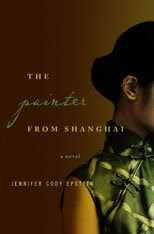
The Painter From Shanghai by Jennifer Cody Epstein

“That the buyer, if she finds one, probably won’t be able to read it means little. Yuliang doesn’t sign it for him. She signs for herself, to bind her work to her. To tattoo it with a message: she has won.” (Page 20)

Jennifer Cody Epstein’s The Painter From Shanghai, a debut novel, is a fictional account of Pan Yuliang’s rise from the ashes of her life as Xiuqing, a young child sold into prostitution. Through careful brushstrokes of her own, Epstein deftly fills her canvas with the sights, sounds, and images of China–from the dark alleys and brothels to the crowded, chaotic streets of Shanghai–in the early 1920s. Yuliang is a complex character who numbly makes her way through the obstacles she faces as a new prostitute under the thumb of corrupted merchants and a harsh and battered old woman, known as Grandmother. Emerging from the dank and corrupted halls of the brothel, she jumps into her new life as the concubine/second wife to Pan Zanhua and embarks on her career as a student and painter at the height of the Communist uprising in China during the 1930s.

“‘My husband,’ she says, twisting her wedding band, ‘writes that even more conservative Republicans will ally with the CCP now. For the nation’s sake.’

‘If anything, it’s a marriage of convenience.’ Now he looks straight into her eyes. ‘And one I doubt will last.'” (Page 318)

Epstein has a style all her own in which she easily weaves in relevant historical information through character interaction and development, but she also captures even difficult emotions with deft description and poise.

In the brothel, readers will feel Yuliang’s degradation as each man leers at her, touches her skin, and makes her kowtow to their desires. The one solace she has is the poetry of Li Qingzhao, which she recites from memory. Readers will enjoy the verse woven into the narrative as Yuliang examines herself at life-changing moments and seeks solace in the beauty of language.

Yuliang is molded by her mentors, but only truly blossoms when she becomes Zanhua’s wife and starts painting. Through painting she learns to combat her demons, her past, and her future, coming into her own as a painter and individual. As China is pulled in two directions between the republic and the communists, Yuliang is caught between her rebellious nature and Chinese tradition.

“Tearing off the sheet, she tries again, this time with better results. Use each object as a road into the next. She proceeds to the easiest object on the table, the orange . . . And in the space of a moment that neither registers nor matters, she is no longer outside the still life but working within it, running her mind’s hand over nubbly fruit skin. Pressing her face against the smooth tang of the bottle glass. Exploring a vase’s crevices with both finger and pencil tip, each item part of a visual sentence she is translating.” (Page 220)

The Painter From Shanghai
has a lot to offer book clubs, readers interested in painting, historical fiction, the struggle of women in society, China, and political history, and is one of the best novels I’ve read this year.

Check out my interview with Jennifer about her novel and writing habits.

1. Some writers will listen to music while writing and have a particular playlist for their novel or other work. Did you listen to any specific music while writing The Painter From Shanghai, and if so, could you list some of the titles? Or if you were to create a playlist for this novel, what would be the top 5 songs on that list?


I am actually highly distractible, so music is not a good idea for me in general unless it’s very low-level classical. Lyrics are bad–I can’t write words when I’m listening to other words. In general, I really just need quiet.

As for playlist: Hmmmm. Tough one with this book, as I’m not all that familiar with Chinese music from the period. I suppose the Charlston (which was the rage in Paris when Pan Yuliang was there), Verdi’s Macbeth (her first painting tutor is listening to Verdi when Yuliang first meets him); the first Shanghai pop song “Drizzzles” (Maomao yu)–a tune in folk style accompanied by New Orleans jazz-style music, Eric Satie’s Gymnopedie Number 1 (just because it’s the right general time frame and mood). And then maybe Aretha Franklin’s “Respect.”

2. Most writers will read inspirational/how-to manuals, take workshops, or belong to writing groups. Did you subscribe to any of these aids and if so which did you find most helpful? Please feel free to name any “writing” books you enjoyed most (i.e. Bird by Bird by Anne Lamott).

I loved Bird by Bird, actually. I also was a huge fan of Annie Dillard’s “The Writing Life” (I learned a ton from that) and “A Pilgrim at Tinker Creek.” In terms of workshopping–I find it enormously helpful. I went to Columbia to get my MFA and was very happy to have done so. As my husband pointed out at the time It’s expensive, and the whole precept of “teaching” writing is somewhat dubious. But for me, having mentors, feedback, criticism and–perhaps most of all–other people who were trying to do the same insane things with their lives as was I was really reaffirming.


3. The Painter From Shanghai is written with sometimes very broad and very detailed brushstrokes to mete out Pan Yuliang’s past. Have you studying painting at any point, and if not, is it something you have considered?

I took a few oil painting classes for the book, sat in on a Student Arts League class for a day, and also worked with a friend who is a painter on dissecting and trying to re-paint one of Pan Yuliang’s paintings, just to get a sense of what it feels like. I think it’s safe to say the world is lucky I paint with words only!

4. Do you have any obsessions that you would like to share?

Running. History. Good music. Frye boots. My Springer Spaniel Molly.

5. Please describe your writing space and how it would differ from your ideal writing space.

I generally write at a writer’s space, and it is pretty much ideal except for that it’s not easy to get to. I’d like to have it down my street, instead of a good half-hour by foot.
6. What current projects are you working on and would you like to share some details with the readers?
I’m currently working on a novel set in 1945, just before, during and after the Tokyo Firebombings. It’s quite different fromPainter” in that it will be told from a few different perspectives, and most of the characters aren’t as closely-based on real people. But like “Painter” it explores the intersection of different cultures, and the power of art (in this case, architecture) to both create and destroy.

Thanks, Jennifer, for taking time out of your busy schedule to answer my questions.

About the Author:

Jennifer Cody Epstein has worked in Japan, China, Hong Kong, Thailand and the U.S. for publications including The Wall Street Journal, The Asian Wall Street Journal, Mademoiselle, Self and Parents, as well as for the NBC and HBO networks. She has a Masters degree in International Affairs from Johns Hopkins SAIS and an MFA from Columbia. She lives in Brooklyn, New York, with her husband, filmmaker Michael Epstein, and their two daughters.

Check out her Web site, here.

She also very interested in speaking with Book Clubs about her novel by telephone and email if not in the New York City area or in-person if you are in New York City.

For reading group guides for The Painter From Shanghai, go here.

Here’s another interview with Jennifer at WOW! Women on Writing.

Interested in the real artist’s work, go here or here.

Check out the rest of The Painter From Shanghai tour with TLC, here.

Don’t forget my current giveaways:

2-year Blogiversary, here and here and here.

Interview With Poet H. L. Hix

Welcome to another 32 Poems Blog and Savvy Verse & Wit interview. This time, we have Harvey L. Hix, author of Legible Heavens and other poetry volumes.

1. Not only are you a contributor to 32 Poems, you are also a professor of English at the University of Wyoming. What “hat” do you find most difficult to wear and why?

The teaching, definitely. In my writing, I feel accountable, certainly, but to myself, to standards of integrity that feel as though they come from inside. In my job as a professor, though, I am accountable to the University that employs me (and ultimately to the citizens of the state whose university it is), and — more importantly — accountable to the students. I find those forms of accountability, which feel as though they impose themselves from outside, more difficult.

We live in a world populated by forces that conspire to reduce us to consumers (in which capacity it is crucial that we not think and that we not establish a unique identity), and, rightly or wrongly, I see the university as one of the few counter-forces resisting that conspiracy. Because the responsibility of resistance seems so vast, so far beyond the capacity of any one person to effect, teaching feels very oppressive to me. In the moment, conversing with students in the classroom, it is joyful, almost ecstatic, but as an ongoing fact and a duty, I find it intimidating, even overwhelming.

2. Do you see spoken word, performance, or written poetry as more powerful or powerful in different ways and why? Also, do you believe that writing can be an equalizer to help humanity become more tolerant or collaborative? Why or why not?

I myself have more interest in written poetry, because I want to be able to slow down, to re-read, to find my own path and pace through the work. And I do trust the expanded and clarified logic of the written, the complexity of thought it makes possible, which means that, yes, I think writing can/does invite tolerance and collaboration, can/does advance equality and liberty, in principle, though for various reasons I’m less certain of its doing so in fact. I’m influenced on this issue by Neil Postman’s Amusing Ourselves to Death, by Eric Havelock’s Preface to Plato, and other works.

3. Do you have any obsessions that you would like to share?

My poetry results from my obsessions, but surely the world is a better place if I don’t find any additional ways to enact or announce my obsessions.

To check out the rest of my interview with Harvey, go here. Harvey will tell you about his friendships, how he stays healthy as a writer, his writing space, and his current projects. Check out the 32 Poems Blog while your there, too.

About the Poet:

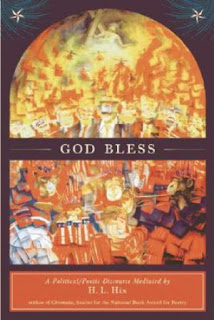
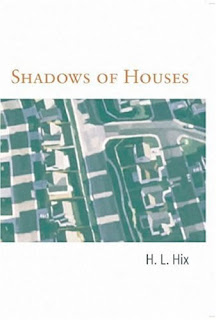
Recent Poetry Collections include God Bless: A Political/Poetic Discourse, Chromatic, which was a finalist for the 2006 National Book Award in Poetry, and Shadows of Houses, all from Etruscan Press. Translations include On the Way Home: An Anthology of Contemporary Estonian Poetry, translated with Jri Talvet. Other books include As Easy As Lying: Essays on Poetry (Etruscan) and Spirits Hovering Over the Ashes: Legacies of Postmodern Theory.

Honors & Distinctions: NEA Fellowship, KCAI Teaching Excellence Award, and the T.S. Eliot Prize

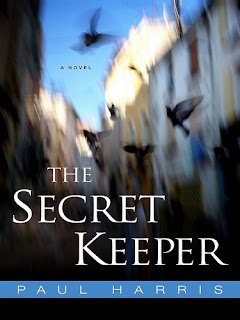
The Secret Keeper by Paul Harris

The Secret Keeper by Paul Harris does not read like a debut novel, but like a well-engineered corkscrew ride through the African heat and the deep recesses of our humanity and morality.

In the early 1990s, civil war began in Sierra Leone–a former British colony ripe with diamond mines–as rebels recruited students and children to fight against the government for more than a decade. The brutality present in the nation at this time comes across vividly in the pages of The Secret Keeper, which readers can easily attribute to the author’s personal experience. It is apparent that those images stuck with Harris as he was writing his debut novel.

“Suddenly he thought of the unopened letter in his pocket. The thick air of the tube took on a tropical whiff. It was close and stifling, clinging to the skin like it had always done back in Freetown, impossible to escape its damp hug. Danny began to sweat.” (Page 9)

Danny Kellerman is a journalist in London whose first foreign assignment takes him to war-torn Sierra Leone. Once in Africa, he is immersed in the haphazard warfare between the Sierra Leone government, the Revolutionary United Front (RUF), and eventually the British government. Danny meets Maria Tirado, falls in love, and breaks the story of a lifetime about saving former child soldiers, but once the assignment ends he must return to his London life. His content existence is soon disrupted by a hand-written letter from his lost love, Maria, who begs him to return and help her. Along the way, he reconnects with some of his old acquaintances, including his driver Kam and Ali Alhoun.

“‘I’ve been all over Africa,’ he said. ‘And there’s one way to judge if a country is in trouble. Is the brewery closed? I’ve been in the deepest bits of the Congo and they always had beer. That Primus may be shit, it may kill you if you drink two bottles, but they make it. That country will be okay.'” (Page 48)

A synopsis cannot do justice to this well-crafted novel about a war-torn nation and the impact it has on its own inhabitants, the world, and the individuals caught in its web. Readers will find themselves biting their fingernails as Danny digs deeper into Maria’s secrets. But she is not the only character with secrets in this novel. Danny and the nation of Sierra Leone have a number of secrets for readers to unravel, stare at in astonishment, and almost wish they were left hidden.

“With little or no political ideology, the RUF became a vehicle for Sankoh’s personal goals. It took over Sierra Leone’s inland diamond mines and recruited members by brutalizing the children of its victims. Its calling card was the ‘long sleeves or short sleeves’ method of cutting off people’s arms: short sleeves were above the elbow; long sleeves were above the wrist. Young boys were forced to kill their own families and then join. Their crimes meant they could never go back to their villages. The RUF became their only way of survival.” (Page 43-44)

Harris’ The Secret Keeper will have readers reaching for the “oh-shit-bar” as they rapidly make their way through this drama. Danny’s moral compass is tested time and again, while Ali and others stick to strategies that ensure not only their survival but that they come out ahead of others. The Secret Keeper is one of the best novels I’ve read this year, and it will twist readers’ emotions, ring them out to dry, and soak up the remainder of their tears.

Is the old conundrum of “sacrificing one for the benefit of the many” the way in which societies should operate? Should we determine our best course of action from this starting point? Read The Secret Keeper to find out how Danny Kellerman and his compatriots resolve these questions.

Paul was kind enough to take time out of his busy journalistic schedule to answer a few interview questions. Please give Paul a warm welcome.

1. How would you describe yourself or your writing style to a crowded room of admirers who were hanging on your every word?

I would describe myself as ‘humbled’ and also ‘very surprised’ if I were ever to find myself in a room with such a large group of admiring people. 😉 Then, having recovered from the shock, I would I say that my writing style tries to be accessible in getting across the emotions of people in often extraordinary circumstances. I would hope that it conveys the fact that people are morally complex; even the best and the worst of us. That few things are ever black and white. That the best of intentions can lead to great wrongs and that sometimes a wrong can make a right. But, above all, I would say that I hope I can simply tell a good story.

2. As an author and journalist, which hat do you find most challenging to wear and why?

I would say being a journalist is more challenging. Writing fiction is actually tremendously liberating. You just sit in front of a laptop, create a blank document and let your imagination run riot. It is fun. It is hard work, for sure. But it is enjoyable, easy hard work (if that makes any sense). With journalism there is often such a huge amount of logistics to get through. The writing part of journalism is the easy bit. The tracking down of sources, the deadlines, the trips into strange places and the understanding of complex situations in compressed periods of time is the hard stuff. Even equipment failures play a role. There is nothing worse than having a great story but not being able to file it because of a computer collapse or the fact that you are in the back of beyond or because the deadline has gone by. That never happens with fiction.

3. Do you listen to music when you write or do you have other habits/routines that motivate you?

I cannot write very easily in a place of complete solitude. I need something to distract me a little. Usually that means I write in a café near my apartment or on a hotel balcony if I have squirreled myself away somewhere for a while. I tend to write in thirty minute bursts and then need to stare into space for ten minutes when it helps to be able to people watch as a way of rebooting. The Secret Keeper was mostly written on vacation where I would disappear for two weeks at a time and just blast away at it. I am trying to develop the habit of daily writing for my second book. It is hard.

4. What’s one of the best pieces of writing advice you’ve received and how did it help you?

Write what you know. But I think I gave that advice to myself. I had first tried to write a very ambitious, very literary, magical realism novel. Looking back, it was a bit of a shambles. I gradually realised this but, instead of giving up, I decided to follow this maxim. I just looked at what I had experienced myself in my life and what I cared about and then tried to craft a story from that. It felt like cracking the code and suddenly I could see how I could really write something that would work and I could be proud of.

5. Finally, what have you been reading lately, and do you prefer fiction, nonfiction, poetry, or other genres?

I prefer non-fiction. I think as a journalist you have just often have an insatiable appetite for knowledge about the world and so non-fiction books are my first choice. I also tend to avoid a lot of fiction out of a fear that subconsciously I will end up lifting scenes or ideas and styles. I want my fiction to be my own not my version of someone else’s. But I did recently read Water For Elephants by Sara Gruen, which I enjoyed but did not love. I do, however, love Annie Proulx and I don’t fear stealing her style because it is so wonderfully unique.

Thanks, Paul, for your insightful answers about your writing process and your inspiration.

About the Author:

Paul Harris is currently the US Correspondent of the British weekly newspaper The Observer, the world’s oldest Sunday newspaper. He has held the post since 2003. Prior to that he reported from Africa for the Daily Telegraph, the Associated Press and Reuters. He has covered conflicts and trouble spots all around the world, including Iraq, Sudan, Burundi, Somalia, South Africa, Zimbabwe and Pakistan. In 2003 he was embedded with British forces during the invasion of Iraq.

The Secret Keeper was inspired by his reporting on events in 2000 in Sierra Leone as that country’s long civil war came to an end.

Paul now lives in New York and is happy to have swapped the dangers of the front line for the less obvious perils of writing about American politics and culture.

For more information about Paul Harris, visit his website.

Click here to see the rest of Paul and The Secret Keeper‘s tour stops.

Also Reviewed By:

Bloody Hell, It’s a Book Barrage

Age 30+…A Lifetime of Books

My Friend Amy

Musings of a Bookish Kitty

Maw Books

Jen’s Book Thoughts

Don’t forget my current giveaways:

2-year Blogiversary

Secrets to Happiness

Interview With Poet Sidney Wade

Welcome to the latest edition of my interviews with poets with 32 Poems magazine. The full interview with Sidney Wade was posted at 32 Poems Blog on May 11. Check out one of Sidney’s poems and then check out the interview below.

Sexual Blossoms and Their Fierce Addictions

Yesterday’s tulips in the crystal bowl

have begun to open and already they’ve

partially exposed their pistils and stamens.

In the coming days

these petals will open in a brazen

yawn, their private parts thrust

into the shocked and fascinated

room. Very soon the whole

apartment will start to misbehave–

the fainting couch and ottoman will shed their raiment,

weirdness will graze the ceiling and raise

eyebrows in the carpet lice. With sex emblazoned

on the air, the afflicted chamber will swell with lust.

A hystericalectomy is clearly indicated.

1. Not only are you a contributor to 32 Poems, you have authored five collections of poetry, edit Subtropics, and teach a variety of poetry courses. Which of these “hats” do you find most challenging or rewarding and why?

It’s nerve wracking work, writing poems, but when the work gets good and gets going, there’s nothing better in the world. So that’s probably the most challenging and rewarding at once. Editing Subtropics is easily the most simply rewarding, as I get to see, every week, every month, what very fine poems are being written around this country these days. And being able to tell people you’d like to publish their work elicits marvelously joyful responses. Who couldn’t love a regular influx of extremely happy emails? And teaching has its own pleasures and difficulties, the former fantastically outweighing the latter, thank goodness.

2. Do you have any obsessions that you would like to share?

Hunting for mushrooms. Cooking mushrooms. Pasta. Cheese. Practicing and improving, slowly, on the viola.

3. In terms of friendships, have your friendships changed since you began focusing on writing? Are there more writers among your friends or have your relationships remained the same?

Not really. Since I’ve been writing and teaching, my daily life tends to revolve around other writers, students, colleagues, etc., so by default those are the folks I get to know. My non-writer friends, however, are still with me, and always will be. Segregation is never a good idea.

4. How do you stay fit and healthy as a writer?

By reading, reading, reading.

5. What current projects are you working on and would you like to share some details with the readers?

I’m trying to find time to finish translating a book-length selection of the poems of Melih Cevdet Anday, an important Turkish poet. I also have completed about half or two-thirds of a book, tentatively entitled “run-on” which, if I can do it, will end up an entrancing and very long, skinny poem that just goes and goes and goes.

Grand Disastery

moored by fine

tethers to certain death

a hornet fizzes

on the windowsill

a spider flies

to its side

to securely bind

this abundant harvest

the hornet in shrill

thrall to agony drills

a hole in God’s

provident breast

pocket

in the sublime

cold light

of this tiny

constellation

the bald pulp

of the hornet’s diminishing

hum feeds growing eyes

and hungry sockets

the figure is clean

a small

black aster

hung among

the stars

Want to find out what Sidney’s writing space looks like? Find out what she thinks about contemporary poetry and popularity and much more. Check out the rest of my interview with Sidney here. Please feel free to comment on the 32 Poems blog and Savvy Verse & Wit.

About the Poet:

Sidney Wade is the author, most recently, of Stroke (2008) and Celestial Bodies (2002). Wade edits poetry for Subtropics, a magazine published by the University of Florida. From 2006-2007, she served as President of the Association of Writers and Writing Programs (AWP).

Don’t forget my giveaways:

1 copy of Rubber Side Down Edited by Jose Gouveia, here; Deadline is May 15 at 11:59 PM EST

2 copies of The Last Queen by C.W. Gortner, here; Deadline is May 22 at 11:59 PM EST

Interview With Poet Clive Matson, Author of Mainline to the Heart & Other Poems

I recently reviewed Mainline to the Heart & Other Poems by Clive Matson for National Poetry Month, if you missed it, go check it out, here.

Clive was good enough to take the time, read my review, email me a little compliment, and submit to some unorthodox interview questions. Here’s what he said in case you’re interested:

"Thanks for your insightful review of 
Mainline to the Heart.
I've been quoting you
at readings: 'not for the faint of
heart...
unlike other Beat poems, this volume is edgier
and
raw...some may find the images unsettling,
but it is this
nature that will encourage readers
to critically rethink
their world view and examine
their environment with new
eyes.'"

I think that’s one of the best compliment’s I’ve received. Thanks again, Clive; You made my day.

Without further ado, let’s see what Clive Matson had to say:

1. Do you have any obsessions that you would like to share?

Do I have any obsessions! Yes, there’s a flow of passion and unknown and archetypical images running through my body, and I’m obsessed with it. I sense a tide that’s much, much larger than the conscious mind can ever conceive. For some people this awareness might start with the realization that the body is an antennae, for others with the psychological truth that emotions reside in the body. For me this huge stream came into awareness through use of marijuana, hard drugs, and psychedelics. Mainline to the Heart and Other Poems (Regent Press 2009, Poets Press1966) chronicles some of that process and some of the insights from that endeavor.

Today, the tide seems inconceivably larger than emotions, far larger than what antennae can pick up, and much more stretchable than however drugs are able to expand our consciousness. Whenever I touch it I am in awe. At least for a split second, until I’m struggling with whatever wave is kicking spindrift into my face. I am small and it’s immeasurably large, some surprise that I don’t drown. But I can naturally access only a droplet at a time.

Chalcedony, though, (Chalcedony’s First Ten Songs, Minotaur Press, 2007) lives fully in that tide. She doesn’t have much patience for those of us who don’t, especially her boyfriend. She takes him to task, often, for his cluelessness. Sometimes I think I’m the real target of her rants. “Don’t you know you have to cry?” she yells, “Can’t you remember for even five minutes? For one minute?” “You don’t know how much you’re loved.”

2. Most writers will read inspirational/how-to manuals, take workshops, or belong to writing groups. Did you subscribe to any of these aids and if so which did you find most helpful? Please feel free to name any “writing” books you enjoyed most (i.e. Bird by Bird by Anne Lamott).

My how-to-write tutorial, Let the Crazy Child Write! (New World Library, 1998), has as its precedent Dorothea Brande’s Becoming A Writer (1934). Her overwhelming thesis, borne of a time when the unconscious was first coming into parlance, is that all knowledge is contained in the unconscious. Schools and universities would disappear from the planet as soon as this perception spread. This, obviously, did not happen. We’re still reading texts and going to lectures.

But, not to diminish Dorothea Brande’s thought, the book is full of practical exercises. “Morning Pages,” for one, the signature exercise in The Artist’s Way, originated in the 1930s with Brande. And we do still need the conscious mind: it’s our doorway to understanding these principles. Or indeed, anything about the world. Or, indeed, anything.

The power of this conception can push back the editorial and critical voices in our minds. This can be extremely important when those voices become overbearing, which they are wont to do. Writing straight from that unconscious tide, from the creative unconscious, especially when we don’t have the slightest idea what is coming next, gives us a wealth of raw material. We can shape and extrapolate this material.

If the critical voices had their way, though, they’d stop the process. It’s too messy! It’s too unformed! It’s too revealing! It’s embarrassing! It’s disgustingly rough! Hard for the conscious mind to understand that the tide is where our creativity starts. And the tide is huge. It’s responsible for 99 percent (or, according to some figures, a lot more, eight factors of ten more) of the human brain’s activity, and contains all our writing impulses, all our stories, all our native poetic images. Learning to write is akin to learning to swim. And the water, at first, may not feel very comfortable.

3. Poetry is often considered elitist or inaccessible by mainstream readers. Do poets have an obligation to dispel that myth and how do you think it could be accomplished?

I couldn’t agree more that our poetry should be accessible. I do believe the only poetry that works over time is direct and totally understandable. Poetry’s ancient and continuing role is to carry our culture from generation to generation, and we don’t join that tradition if our primary impulse is to show off our brilliance. Or to be witty. Or to make money. We would do well, I believe, to join the tradition with full humility.

Today, of course, this role is debased, but less than one might think. It seems so debased partly because of limited definitions of “poetry.” Advertising fits several definitions of poetry very well, and it certainly carries much of the culture. Spoken Word is totally accessible, and it’s poetry, and it’s carrying the culture for many of our young people. Same for rap.

The reading public is correct, though: what is termed “mainstream” poetry is often inaccessible. The term “mainstream” is a misnomer. It’s a marketing tool, and there’s nothing mainstream about it, other than that some successful publishers and their audiences use the term. Most mainstream poetry is oblique lyrical poetry, and it’s generally designed to be meditated on, rather than understood. But, to give it its due, we should note that mainstream poetry can be far more accessible than Language poetry, for instance, or procedural poetry.

If you read my poetry, you’ll see one way of working through this problem. And there are many ways. We should remember how accessible most of our favorite poems are, and “accessible” does accurately describe much poetry. What’s inaccessible about “rosy-fingered dawn” or “money doesn’t talk, it swears” or “the poem does not lie to us, we lie under its law” or “we were very tired, we were very merry” or “watch what they do, not what they say” or “be kind to yourself” or “the pure gold baby that melts to a shriek” or “I heard a fly buzz the day I died” or “mango warmth fills my belly”?

4. When writing poetry, prose, essays, and other works do you listen to music, do you have a particular playlist for each genre you work in or does the playlist stay the same? What are the top 5 songs on that playlist? If you don’t listen to music while writing, do you have any other routines or habits?

This world I swim in has its own inclinations, and it’s always changing. The best I can do is be open to whatever fits. I’m playing Brahms’ songs right now, and my favorites include Terry Riley, RJD2, Leonard Cohen, Hindemith, Bach, Mozart, Beethoven, Muslim Gauze, Nine Inch Nails, Eve, John Coltrane, Steve Reich, and so many others. Sometimes I’ll get in a groove and play the same album over and over. Then, on a whim, I’ll change my selection. At that moment the universe itself seems to change.

Sometimes the music comes as counteraction to what I’m doing, sometimes it augments the writing, sometimes … I have no idea what the relationship might be. And sometimes it has nothing to do with what I’m writing. Often any music can serve to create a bubble around me, and inside it I can hear what the muse is saying.

5. In terms of friendships, have your friendships changed since you began focusing on writing? Are there more writers among your friends or have your relationships remained the same?

Voltaire says, “Writing is music of the soul.” This seems a cue to give one’s writing total respect. It has taken me years and years and years to understand that the honor it earns in my inner world should also be given in the outer world. And by my friends. I have gradually sifted out of my life those who do not hold that deep respect. And I treasure those who do. Some are writers themselves, and some are not.

6. How do you stay fit and healthy as a writer?

I hike, I play basketball and table tennis, I believe in vigorous physical exercise, I meditate an extreme amount — some variation of Vipassana – and lately I’ve become a convert to Jin shin jyutsu. I eat organically as much as I can afford to and I’m as honest in my relations as I am able.

7. Do you have any favorite foods or foods that you find keep you inspired? What are the ways in which you pump yourself up to keep writing and overcome writer’s block?

I don’t “pump up” to write. It’s more like I sink into myself to write, and what’s needed is quiet space. The bubble that music creates around me in a crowded room will do just fine.

Of course, our own passions can pump us up. And then, well, all bets are off. And whatever edible object comes into view might just possibly increase the flow.

8. Please describe your writing space and how it would differ from your ideal writing space.

I like to be mobile! My preferred writing space is bed, before or after making love. I have a friend I have long conversations with, and often some funny or gripping lines come up. I’ve learned to keep a notebook by the phone, and to bring a notebook when we talk elsewhere, and I write down the lines. At workshops I like to take my notebook to the car, tilt the seat back, roll down the windows and moon roof until just the right amount of sun comes in and just the right amount of wind blows through. Long ago Diane di Prima said she likes traveling, because when you travel “wind blows through your head.” That’s exciting.

9. What current projects are you working on and would you like to share some details with the readers?

Chalcedony has written more than 90 songs. She writes them rough and quick, and I spend a lot of time re-writing them. This requires diving into the poems, swimming with them a while and feeling out their essence. She lives in that ocean of the unconscious. She’s doesn’t know anything else, she’s totally at home in the world of primordial images and raw passion, and her view of the world is utterly her own. Archetypical and strong.

The poem I’m working on now, Song 26, was written in 2005. It took me a while to realize that Chalcedony was telling her boyfriend she wants to merge with him, and she wants him to do the same. She’s sure that’s the primary impulse of love. She doesn’t care what other people think about that, and, while I’m her servant, neither to I. She doesn’t even care what I, her scribe, might think privately. I’ll write her strongest case, and, as I’m currently nearing the finish, I might be persuaded she is correct.

She often has fights with her boyfriend. She’ll rant at him, taking him to task for not understanding love and its permutations. She’s pretty sure we’re all in love, all the time, boundariless and passionate love. She gets on our case when we don’t acknowledge this. Being her scribe is quite a journey. I get to play with a different consciousness and at the same time I’m titillated that others might find Chalcedony’s songs entertaining and valuable. But more important, the world becomes a very rich place, and my preconceptions about it are challenged by the hour. Or by the minute.

About the Poet:

Clive Matson arrived on the Lower East Side of New York City in 1960, a fresh-faced adolescent with a blank notebook under his arm. He quickly fell in with the Beat Generation – his first event was a reading at the Tenth Street Coffeehouse, where he met Allen Ginsberg, Gregory Corso, and Diane di Prima.

The proto-Beat Herbert Huncke became his second father, and Matson was captivated by John Wieners’ poetry and subsequently by Alden Van Buskirk’s. Diane di Prima published Matson’s first poems, and in the introduction John Wieners wrote, “One wonders about the nature of love in these poems. Are they vicious, or not?”

Matson ultimately emerged drug-free and healthy gave him full appreciation for 1960s passion and honesty. These qualities are crucially important, he thinks, for the current era. “Coming to terms with my youthful, energetic voice has been a challenge,” he admits. “It helps that I hear, in these poems, both an urgent need to connect and full cognizance of the difficulties.”

Don’t forget my giveaways:

1 copy of Rubber Side Down Edited by Jose Gouveia, here; Deadline is May 15 at 11:59 PM EST

2 copies of The Last Queen by C.W. Gortner, here; Deadline is May 22 at 11:59 PM EST

Interview With Poet Erika Meitner

Gateway Drug by: Erika Meitner

When I asked him over beers one night

what the meaning of life was

my friend Jon replied, We all think we’re ugly,

but we’re not. And for once

I agreed with him—how seductive, the idea

that arbitrary cruelty might evaporate

if everyone felt beautiful

in their own skins. I went to talk

to the local eleventh grade class

about writing poetry, was reminded

how everyone is asymmetrical then,

heads huge and ungainly, limbs restless and taut;

the kid in the back row hiding behind a curtain of hair

carving swear words into his arm with the staple remover,

the girl in the second row sizing me up

with her jeweler’s eye. In high school

they showed us films once a year

to boost our self-esteem, keep us

off drugs—lavish multi-screened productions

with titles like The Prize, soundtracks singing,

My future’s so bright I gotta wear shades.

We are what we think we are, and one thing

inevitably leads to another—drugs to sex, sex

to cigarettes. A head leaning on a shoulder

and suddenly you’re naked, I’m naked,

air conditioner washing over us like ocean,

moon shining off the brick wall in the back

of a Tribeca art gallery, the detritus

of the party around us, trance music spinning

on a turntable, making out high like high-schoolers

in front of someone else’s locker. Remember

being the kid who had to get your lunch or math book, ask

the lip-locked couple in front of your locker to move?

Did you say, Excuse me, tap them gently?

I never had that courage, shared

a neighbor’s book, bought hot lunch. But tonight

we are as cool as our daydreams were then,

magazine pages and mirrors, straight-edge skaters,

drama queens, hair gods and punk princesses

smoking in the back row, the health teacher’s nightmare,

impossibly drugged, and when I touch

your clay lips with my iron fingers,

trace your beveled collarbone

with my fluted mouth, the tune I play

pushes hallway lockers open with gale force.

Uneaten lunches and uncovered books fly,

everything slams, and blinded

we all get a good, fluorescent look at each other.

Here’s the latest 32 Poems magazine interview, which posted on the Poetry Blog of 32 Poems on May 5. Let’s get your appetite hungry for more. Without further ado, here’s my interview with Erika Meitner:

1. Not only are you a contributor to 32 Poems, but you are also a professor at Virginia Tech and you are completing a doctorate in Religious Studies. What “hat” do you find most difficult to wear and why?

Right now the hardest of these–between teaching in a relatively new job, trying to write poems during the semester, reading all the applications to our MFA program, advising students, and mothering a toddler–is finding the time in the day to work on my doctoral research. Happily, that’s what they make summers for. It’s also hard to peel off my professor-identity, in the sense that when I meet with my religion professors, I have to inhabit my role as a student again. It’s humbling and good for me though–it reminds me, on a fairly regular basis, of how my own graduate students feel.

2. Your biography mentions that your grandparents survived concentration camps in Auschwitz, Ravensbruck, and Mauthausen. Have those stories and experiences influenced your poetry or writing? Please Explain.

I think the way that my grandparents’ experiences have influenced my work the most is that there’s always been this deep well of silence around my family history. My grandmother didn’t start talking about the war and her experiences in it until well into her 80’s, when different foundations started coming around with video cameras to record survivors’ stories. Until then–until I was in college–I had never heard about her war experiences.

When I was little, she used to tell me that the numbers on her arm were her phone number, written there so she wouldn’t forget it. Part of me writing about her in my first book was, I suspect, part of my concerted effort to combat that silence. But she also had a real streak of black humor, and I definitely think that shows up a lot in my work as well.

When I write about uncomfortable or difficult situations in my poems, I tend to temper them a bit with small moments of situational humor, to give the audience that permission to laugh. She passed away, though, on Mother’s Day of last year, so I’ve been writing elegies to her that take various forms. One of them, “Godspeed,” just came out in the most recent issue of Washington Square.

3. Do you have any obsessions that you would like to share?

I’m obsessed with Easter candy–particularly slightly stale marshmallow peeps. I think of peeps as sort-of guardian angels–the bunnies just look so benevolent, kind, and wise. I keep them everywhere. I have boxes of them that students have given me as gifts taped to my office wall; I have a yellow stuffed-animal bunny peep in the cupholder of my Civic who functions as a co-pilot of sorts. I realize this is weird. I also often gift people with peeps.

4. Most writers will read inspirational/how-to manuals, take workshops, or belong to writing groups. Did you subscribe to any of these aids and if so which did you find most helpful? Please feel free to name any “writing” books you enjoyed most (i.e. Bird by Bird by Anne Lamott).

When I teach poetry workshops, I love to use Steve Kowit’s book In the Palm of Your Hand. I find outside mini-research projects much more inspiring though, in terms of my own work. I’m currently really into Robert Smithson’s work, especially
his essays. Also, Joshua Lutz’s “Meadowlands” photos, and a book by Iain Borden called Skateboarding, Space and the City.

In terms of my own writing process, I currently belong to two virtual writing groups. One is constant, and it’s a password-protected blog where a few other poets and I post exercises and the poems that we write from them. This tends to get more active when the semester gets less busy, as most of us teach. I have another virtual group that’s a closed Google group. We pick 2-week or month-long chunks about twice a year to meet online, and when we meet, we write intensely–usually a poem-a-day. It came out of the NaPoWriMo idea, but we usually tend to meet in the summer for a month, and over winter break for a few weeks, as again, most of us teach and April (which is actually officially Poetry Month) tends to be too hectic in the academic calendar for anyone to get much writing done. We don’t comment on each other’s work, but I think we all like the group accountability of these virtual communities, and the fact that they help mitigate the loneliness of plugging away on your own a bit.

About the Poet:

Erika Meitner attended Dartmouth College, Hebrew University on a Reynolds Fellowship, and the University of Virginia, where she received her M.F.A. in 2001 as a Henry Hoyns Fellow.

She’s received additional fellowships from the Virginia Center for Creative Arts (2002, 2004, 2005, 2008, 2009), the Blue Mountain Center (2006), and the Sewanee Writers’ Conference (John N. Wall Fellowship, 2003).

Her latest book is Inventory at the All-Night Drugstore.

Want to find out what Erika’s writing space looks like? Find out what she’s working on now, her obsessions, and much more. Check out the rest of my interview with Erika here. Please feel free to comment on the 32 Poems blog and Savvy Verse & Wit.

***Giveaway Reminders***

Giveaway for Eleanor Bluestein’s Tea & Other Ayama Na Tales short story collection, here; Deadline is May 6, 2009, 11:59 PM EST.

1 copy of Rubber Side Down Edited by Jose Gouveia, here; Deadline is May 15 at 11:59 PM EST

Interview With C.M. Mayo, Author of The Last Prince of the Mexican Empire

Today is the kickoff for my Cinco de Mayo tour of C.M. Mayo‘s latest historical novel, The Last Prince of the Mexican Empire, which is set in the mid-19th century when Maximilian von Habsburg became the Emperor of Mexico, a little boy became a prince, and a struggle ensues over Mexico.

Please welcome C.M. Mayo to Savvy Verse & Wit:

1. Between writing fiction, travel pieces,
translating work, and running Tameme, you are a very busy woman. Which of these “hats” do you find most difficult to wear and why? And do any of these “hats” conflict with one another?


I hope I am a better writer because I also translate, and vice versa, and so and so forth. But of course,
I sometimes have to make (even toe-curling) choices. Would that the day had 30 hours!

2. You’ve written fiction, nonfiction, and poetry throughout your career. Is there a reason why you haven’t published a book of your poems? And how is each genre different or the same when you are crafting your pieces?


It’s all poetry, I say. If not a book per se, I’ve published a book’s worth of poetry, individual pieces in literary journals and anthologies, most recently, Robert Giron’s Poetic Voices Without Borders 2. You can read that poem, here. Is there a reason I haven’t published a book of poetry? Same answer as to question #1.

3. What set you on the path of translation and how would you describe the path you took to get there?

I started translating Mexican poetry in the early 1990s, a few years after I came to live in Mexico City. I was writing my own poetry and short fiction at the time, and so the one informed the other. I was — and remain— quite consternated by how little Mexican writing is translated into English. So I always try to encourage others, poets especially, to translate Mexican works.

I should note that in recent years there have been a few notable translations, including my own anthology of 24 Mexican writers, Mexico: A Traveler’s Literary Companion (Whereabouts Press, 2006) and, most recently, Alvaro Uribe and Olivia Sears’s Best Contemporary Mexican Fiction (Dalkey Archive, 2009), which includes one of my translations, of a story by Alvaro Enrigue. Here’s an interview on National Public Radio, “Editing a Literary Tour of Mexico.”


4. Do you have any obsessions you would like to share?

Nope.

5. Do you listen to music while you write or is it distracting? If you could create a playlist of songs for The Last Prince of the Mexican Empire, what would be the top 5 songs on that list?

For me, drifty, new agey music in a minor key works best for bringing on the Muses. There is a large literature about music and creativity. I offer a couple of blog posts (with links for more information) on this subject here and here.

Playlist of songs for The Last Prince of the Mexican Empire:

1. “La Paloma” and “Adios Mama Carlota”
This is the most famous song associated with the Emperor Maximilian– supposedly it was his favorite. There’s a documentary film about the song, which you can read about here. Here’s the protest song based on La Paloma, here.

2. Tritch-Tratch Polka by Johann Strauss; Popular Viennese dance music. This might have been played at one of the balls in Mexico City’s Imperial Palace. Here’s a link to an article by one of the guests, William Wells, “A Court Ball in the Palace of Mexico.”

3. “Se fueran los los Yankis al Guaridame;” A children’s lullaby, probably from the 1850s and still in use in the 1890s. The text is in Fanny Chambers Gooch’s Face to Face with the Mexicans.

4. “Las Campanitas” (Mazurka), by J.D.R. Sawerthal; Sawerthal was a composer and band-leader who came to Mexico with Maximilian.

5. “Le Boudin,” a military song composed in 1863 for the French Foreign Legion, which fought in Mexico. You can listen to the song, here.


6. You’ve taught at The Writer’s Center in Bethesda, Md., what has that experience done for your writing and what goals did you seek to accomplish through your workshops?

I believe teaching is an important part of being an artist— always, on multiple levels, a learning experience.

7. If writers want to use more than one point of view in a novel, how would you suggest they go about transitioning between the narrators? What tricks have you learned and are willing to share?


You need to cue the reader, give them something focus on, so they have a sense of where they need to put their attention in order to follow the narrative. You might have one character pass the other a cup of coffee, for instance. Sometimes, especially if it’s a whole new scene, just leave a space.

For me learning to transition from one point of view to the other was like learning to ride a bicycle— very difficult but, after a little practice, it becomes natural.

This is, in fact, one of the reasons it took me so long to write this novel. It has a Jamesian “roving central intelligence,” which is a fancy way of saying it dips in and out of a multitude of points of view. In early drafts, I kept trying to get rid of characters– but they did not want to go! And more kept popping up! Certainly it’s easier to sell a novel with one main character. It’s asking a lot of the reader to keep track of such a crowd. But I came to realize that all of these many characters are absolutely necessary for this story because the main protagonist is not a person but an idea: the prince is the symbol of the future of the empire— the idea of Mexico as an empire, Mexicans not as citizens, but as subjects. How does the story of the prince— the story of this idea—live, evolve and ultimately fail? We have to go into the minds of others to find out. There are a few important recurring characters, such as the prince’s parents, his nanny, Maximilian, and Charlotte, but there are also a maid, a cook, a bandit, a visiting Belgian aristocrat, General Almonte and General Bazaine, the U.S. Minister to France, his wife, a bookseller, soldiers, Prince Louis of France, a dentist, the widow of a Mexican politician, Father Fischer, Cardinal Antonelli, the Pope– yes! even Pope Pio Nono (Pius IX) — and so on. You’ll find a list of the whole crew, here.


8. How important do you think independent booksellers and publishers are in this age of digital media and do you see the paper-based book fading into the background in favor of an e-book or other format? If so, how would this change publishing for the better or worse?

Independent booksellers and publishers may confront economic challenges (certainly they are right now) but I believe they will always be necessary. They select and present— perhaps not always ideally what we might like to see or what deserves to be seen— but it is, nonetheless, an important service for readers.
Also, writers may not have the wherewithal to edit, design, distribute, publicize, or sell their books— and that’s exactly what publishers and booksellers do.

What do I think will happen? I think we’ll see more options: in the bookstores themselves we may soon see vending machines that can print on demand, perhaps while you have a cup of coffee. You might have various options of varying cost: for instance, e-book, cheap paper, acid-free paper, or hardcover. I believe there will always be a demand, however reduced, for quality hard-cover books. We still have horses and candles, after all. Right now, with the crisis, there are probably more people going to libraries— and libraries need to have durable books, not cheap things that fall apart after 2 readings.

9. How do you stay fit and healthy as a writer?

Yoga, walking and sleep. It’s also very important to stay away from industrially-produced food and “diet” drinks, which are full of chemicals. What you eat ends up in your brain.


10. Most writers will read inspirational/how-to manuals, take workshops, or belong to writing groups. Did you subscribe to any of these aids and if so which did you find most helpful? Please feel free to name any “writing” books you enjoyed most (i.e. Bird by Bird by Anne Lamott).

Here’s a link to a piece I did for ForeWord Magazine on-line column “Publishing Insider”

For the Novelist’s Bookshelf: One Dozen Books on Craft and Creating

11. What current projects are you working on and would you like to share some details with the readers about your writing space and/or routine?


I’m working on a new novel, but don’t have much to say about it yet. About space and routine, here are
“10 Tools for Organizing a Novel in Progress,” here.

I want to thank C.M. Mayo for taking time out of her busy schedule to answer my questions. Stay tuned for my review of
The Last Prince of the Mexican Empire tomorrow.

Also, C.M. Mayo will be in Bethesda, MD, promoting her book at The Writer’s Center on May 17 at 2PM for those locals interested. This is a free event.

***Giveaway Reminders***

5 Joanna Scott, author of Follow Me, books giveaway, here; Deadline May 4, 11:59 PM EST.

Giveaway for Eleanor Bluestein’s Tea & Other Ayama Na Tales short story collection, here; Deadline is May 6, 2009, 11:59 PM EST.

1 copy of Rubber Side Down Edited by Jose Gouveia, here; Deadline is May 15 at 11:59 PM EST