Quantcast

Made to Explode by Sandra Beasley

Source: Purchased
Hardcover, 88 pgs.
I am an Amazon Affiliate

Made to Explode by Sandra Beasley begins its exploration of American life with the poem, “Heirloom,” which conjures all kinds of sentiments in American thinking. It sets the stage for Beasley’s unraveling of culture taken for granted — the past passed down from one generation to the next (sometimes, it is scrubbed a little cleaner and the dark truth of it requires some digging). In these early poems, Beasley is uncovering the roots of her heritage, a father who was deployed and tries to connect with her but fails to see how she’s grown into a young woman in “Elephant.” He collects things from American icons in places of war, like Hard Rock t-shirts, while she strives to connect with him buying things at a Ranger Surplus store. Despite being family, there is a disconnect between them, they are blindly bumbling through the motions of connection. Isn’t this how many of us feel about our parents — those who have lived longer, different lives from us but have not spoken candidly of that life? A mystery to solve?

"The Conversation" (pg.10-2)
....

                 This
is how history claims us:
not in the gesture of one but
in the conversation of many,
the talk that gets the job done.
....

Without these interactions between ourselves and others that lead to action, aren’t we all forgotten as the present moves on without us? Our moments are so fleeting in the grander scheme of time and history. Beasley is picking through history and uncovering things she didn’t know, like a band in “Nostalgia” that had a name to honor Emmett Till, but spelled the name wrong. In her memory, she recalls the joy of their music, but they kept spelling the boy’s name wrong — this does not sit well.

Beasley’s examination of the past and culture expands to include monuments and figures from history, including Thomas Jefferson’s Monticello. She speaks to his “benevolence” regarding his slaves but it is clear that “kindness” extended only so far. Each poem in the collection builds onto the next in a crescendo of unraveling histories, culture lost to a country burying it’s own truth, until a reckoning is all that can be left. She reminds us in “Einstein, Midnight” that “Anything, in the right hands, can be made to explode.”

The final poem echoes C.P. Cavafy’s “Ithaka,” in that Beasley’s journey will be and has been taken through the past, into the present but this journey is not over. Like life and its various moments, we are Made to Explode. Poke into the past and what you thought you knew about yourself and others will definitely be altered, but to blithely live one’s life without examining actions, reactions, past, and present is to have lived a hollow existence without growth, love, loss, and understanding. We cannot build conversation and change without it.

RATING: Cinquain

Check out her panel discussion with Kim Addonizio, Katherine E. Young, and moderator Reuben Jackson at the virtual Gaithersburg Book Festival 2021:
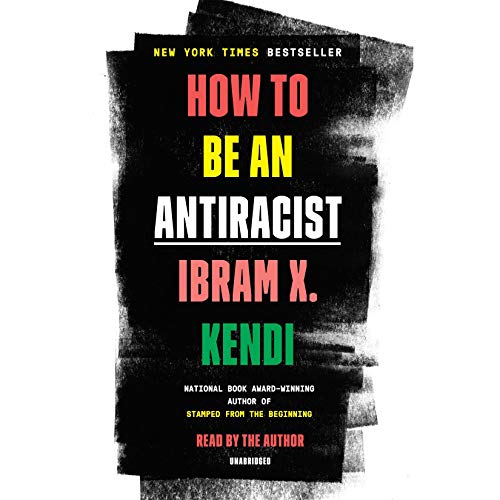
How To Be an Antiracist by Ibram X. Kendi (audio)

Source: Purchased
Audible, 10+ hrs.
I am an Amazon Affiliate

How to Be an Antiracist by Ibram X. Kendi, read by the author, is a phenomenal listen. I want to read the book as well in print. Kendi has the perfect voice for this book, and it makes the personal stories far more relateable. Much of this resonated with me because I grew up in the 1990s and I saw many of these phenomena that Kendi talks about. The idea that “color” is no longer seen is obviously ridiculous, but the sentiment is even more trying when systemic processes and socialization force us to “see” color as thug or criminal or worthy of the benefit of the doubt or forgiveness, etc.

“The hate that hate produced. … More hatred makes them more powerful,” Kendi says. He himself is a victim of this, enabling the racist policies and power to continue and gain strength. Hating white people becomes hating black people and vice versa, he adds. His arguments can be convoluted and circular in his narration, which is another reason, I’d like to read the text because I tend to absorb these kinds of concepts better in print than audio. I was particularly fascinated by his conclusion that white supremacy is actually a nuclear ideology that is anti-human because many of the policies it opposes actually would have helped their poor white brethren, so the question is which white people are supreme? Those with more money, at least so it seems from the examples provided by Kendi.

Kendi also reminds us that we often look for theories and evidence that validates our points of view or biases. None of us are immune to it, but we can be watchful for data that caters to those biases and learn how to see through the fog. The story of Kendi in college coming to a conclusion that white people are aliens and that’s why they hate blacks is an illustrate of this point. What we need to understand is that racism is the lumping of one group of people into a group to be looked down upon or turned into the “enemy” or “evil” other. We all have the power to protest racist policies, no matter where in the power structure we are.

The only drawback for me was that Kendi tends to get sidetracked and the narrative becomes convoluted, which muddles the message in some ways. His narrative also is far from linear. I do like how he personalized his examples to demonstrate that all people are capable of racism. This is a message we all need to hear and understand, so that we can be prepared to move away from racism as the human race.

How to Be an Antiracist by Ibram X. Kendi reminds us not to fall under the mind control of white supremacy that we have no power — if they control your thinking, they control you. These are wise words. Now, if you are looking for a practical guide on how to accomplish real change in policy and processes, this is not the book for you. What you need is to take the lessons in this book about identifying racism and resisting those policies, affecting change, and standing up to the oppression of yourself and others.

RATING: Quatrain

Alone! by Barry Falls

Source: Media Masters Publicity
Hardcover, 32 pgs.
I am an Amazon Affiliate

Alone! by Barry Falls is a colorful picture book that focuses on how to adapt to change, make friends, and find balance. Billy McGill lives on a hill and he lives there alone, at least until a mouse decides to enter his life. He’s distraught with all the skittering and heads into town for a solution — a cat. The only problem is that the cat and the mouse run about the house, and it forces him once again to head into town for a dog. You can see where this little story is headed by the animals on the cover.

Billy is used to being alone and having his quiet time, but as we all know, life often throws us curve balls and we have to figure out how to deal with change. Billy doesn’t do well with change at first, and gets so upset he yells, even as he turns to a vet and a hairdresser for help with these animals tearing apart his house. Falls does a really spectacular job of creating a rhyming story that doesn’t sound trite or forced, and it will definitely engage younger readers immediately.

Older readers will find Billy a bit mean at first, but as the story progresses they see him change and become more accepting and able to navigate the new things in his life, while still maintaining that peace and quiet he loves about living on the hill. Alone! by Barry Falls would be a fantastic addition to any school library or child’s home library.

RATING: Cinquain

Thresholds and Other Poems by Matt Hohner

Source: the poet
Paperback, 96 pgs.
I am an Amazon Affiliate

Threshold: the magnitude or intensity that must be exceeded for a certain reaction, phenomenon, result, or condition to occur or be manifested.

Thresholds and Other Poems by Matt Hohner explores that threshold in depth, the line that must be crossed in order for the poems to transform or manifest into their fullest selves. The collection itself opens with a dream where “predators/creep into our life like doubt,” but rather than the doubt become a burden it is manifested into something wild that must be guarded against, even when it calls from the darkness. It is one of the poems in this collection I immediately saw myself inside. Hohner captures that “doubt” so well — it is carnivorous and it is sneaky.

The darkness of our modern world is at every threshold, even more present in “Kevin,” in which two brothers have turned the corner as shots ring out and kill another neighborhood boy. There are other poems in which the narrator tells us what we already know, like in “Gulf War Veteran,” that the darkness has won many battles around us and there is no coming back.

Hohner pulls no punches in his poems; we are not allowed to turn away from the horror of 9/11 where Americans are “pelting the concrete like hail” in “Terror in the Dust” or in “Dundalk” where children come to school high on their parents pills. But even in these dark times, his verse bends toward nature’s calming hand, with “the first yellow leaves of autumn” signifying a softer fall for those 9/11 Americans or the children’s veins still pumping and “singing in joy at dawn for the promise of another day.”

Each poem is unrelenting in its exploration of the threshold — how much can we take before breaking, how much can we take before we learn to let go and forgive, how much can we take? The answer is often far more than we believe we can. It would seem why the darkness continues to push us, pressure us, test us. Thresholds and Other Poems by Matt Hohner reach “across time and space” just as the narrator does in “As I Think of You in Italy,” teaching us that thresholds must be crossed to get to the place we long to be and we can do that with an openness to love, grace, and forgiveness.

Rating: Quatrain

Photo credit: Shannon Kline

About the Poet:

Matt Hohner, a Baltimore native, has been a finalist for the Moth International Poetry Prize and taken both third and first prizes in the Maryland Writers Association Poetry Prize. He won the 2016 Oberon Poetry Prize, the 2018 Sport Literate Anything but Baseball Poetry Prize, and most recently the 2019 Doolin Writers’ Weekend Poetry Prize in Ireland. Hohner’s work has been published in numerous journals and anthologies. An editor for Loch Raven Review, Hohner’s book Thresholds and Other Poems, his first full-length book, was published by Apprentice House Press in Fall 2018. He lives in Baltimore, Maryland. Hohner has held a residency at the Virginia Center for the Creative Arts, made possible by a grant from the Mid Atlantic Arts Foundation. Hohner was recently longlisted for the University of Canberra Vice-Chancellor’s International Poetry Prize and the Live Canon 2019 Poetry Contest in the UK. Hohner has had recent work published or forthcoming in Bhubaneswar Review, Boyne Berries, The American Journal of Poetry, Prairie Schooner, Bangor Literary Journal, and elsewhere. His second collection of poetry will be published by Salmon Poetry in 2022. Visit his webpage and on Twitter.

En Route by Jesse Wolfe

Source: Publisher
Paperback, 60 pgs.
I am Amazon Affiliate

I’ve been reading a lot of poetry collections about life journeys this month, and En Route by Jesse Wolfe is no exception. Wolfe’s poems have narrators who are “en route” to somewhere or are about to embark on the next leg of their journey. The collection moves from part one in which narrators are alone to those who are accompanied to those who have almost arrived. Like in the opening poem, “Cumulus,” we are reminded that we may consider any point in our lives a beginning, but there is history behind us that heaps up, making us the well-rounded human beings we are. We shouldn’t forget the past.

From "Cumulus"

At a certain arbitrary point
you have to say, here is a beginning
(not to pretend that nothing lingers,
that the trek across the bridge was a mirage,
or the nights sleeping on abandoned farms,
accepting bread and water from strangers).

“Polliwog Park” is one of the most heartbreaking poems in the collection, with fly balls and baseball diamonds, sunburns peeling away just as a father drives off into his own “separate story.” There are moments of “cleaving” in many of these poems, but Wolfe’s poems embrace that separation, internalizing the heartbreak and using it as a tool to see beyond that momentary end to the journey ahead. Like from “Breakup,” “Or I could turn to our love that never coalesced:/you’re half an abstraction, an empty space/into which I pour my fatigue, distress,/and inchoate faith — my shameful escape/from futures withdrawing all promise of home.//”

Although these poems speak to the “will” of the narrator to move forward from heartbreak and endings, there is also the sense that life’s “momentum” cannot be controlled, like in the poem of the same name.

En Route by Jesse Wolfe’s “Homework” reminds us that “There is work I can only do/by letting go: my hands off the wheel,/the car will find its own way/down the long freeway./ … toward whatever … inarticulate – need.”

RATING: Quatrain

About the Poet:

Jesse Wolfe’s poetry has appeared in publications including Tower Journal, Good Works Review, Mad Swirl, and Eunoia Review. An English professor at California State University, Stanislaus, Wolfe previously served as Faculty Advisor to Penumbra, the campus’s student-run literary and art journal. His scholarly work includes the monograph Bloomsbury, Modernism, and the Reinvention of Intimacy (Cambridge University Press, 2011) and a forthcoming book on intimacy in contemporary British and American fiction.

Whirl Away Girl by Tricia Johnson

Source: Publisher
Paperback, 120 pgs.
I am an Amazon Affiliate

We all identify as our role in the family (mother, father, sister, brother, uncle, cousin, etc.) and we all identify ourselves with our employment (teacher, firefighter, poet, scientist, etc.), but what happens when those aspects of our lives can no longer anchor us — hold us steady? We begin to spiral away, to lose our sense of self, and this is exactly what is explored in Whirl Away Girl by Tricia Johnson. These poems express the deep harm, anger, frustration, and sadness patients with chronic illness can feel — nothing is in their control, leaving them unmoored.

from "Fatigue" (pg. 3)

You are rising in a car and its weight slides in
and down your body
Your hands too heavy to knit
Your head too heavy to raise and no words or thoughts exist

From the first poem, readers will know that they are in for a rough journey with the narrator. Many of these poems will be tough to read back to back, but that’s the point. Someone with chronic illness (like lupus or others) doesn’t get a break. It is okay if you take a break and read this volume in spurts, and it may help to generate greater empathy for the narrator — to sit and think about what she’s telling us life has been like. From the feeling of being beaten down by disease to the condescension of some medical doctors, the narrator demonstrates not only the weight of a breaking down body, but also the weight of the broken medical system and the additional burden it becomes for those who need it most. “When added together become a 10-ton hammer” (“New Doctor”).

 from "A Disillusional Song" (pg. 55)
...
My thoughts are as tangled as the bedding
Woven between my legs
I am antsy, walking, driven
Flopping back in bed, up again
...
I am a stranger caught in a mind, that is caught in itself

Whirl Away Girl by Tricia Johnson is a candid account of being out of control when chronic illness hits and there are few answers about how to improve the situation. Johnson’s poems illustrate the fear that accompanies chronic illness and the sense of loss of one’s self throughout the process. “Battle of You” is probably one of the strongest poems in this collection, but I’ll let you find that gem for yourself. As the collection progresses, the narrator does regain a sense of self and strength, found in the moments of good days and few symptoms. There is joy to be found there, even if it is fleeting.

RATING: Quatrain

Field Study by Chet’la Sebree

Source: Publisher
Paperback, 176 pgs.
I am an Amazon Affiliate

Field Study by Chet’la Sebree reminds me of those scientific notebooks kept by scientists in the field who are observing animals or others as they take notes. Peppered with quotations from bell hooks and many others, Sebree explores Black female identity and sexual desire. The poem is less like a poem than a list of observations and comments on Black identity and female desire.

Black women and girls face additional burdens of protecting the reputations of black boys and men. -- Tressie McMillan Cottom
My secret ... I'm always angry. -- Bruce Banner
 ___________

And why wouldn't I be?

In addition the female desire and the struggle of Black women who love and are attracted to white men, Sebree voices some of the issues she’s found in the Black community — how the community does not address mental health enough.

In my early twenties, I worked on an epistolary series.
I didn't know I wrote a book-length suicide note.
I titled it And If I Die Before I Wake.
A prayer and a promise.
__________

I'm alive; I'm alive; I'm alive.
Cry it with me.
It doesn't always feel like it, but it's a good thing.

Sebree has created a poetry collection in which mental health is entwined with Black female identity, the racial tensions that women feel from all sides, and the responsibility they have to project a sense that they are indeed whole. “No matter how far I go, there is never enough makeup for the bullet hole.” Field Study by Chet’la Sebree, which publishes in June, worries and rationalizes and assesses herself like a scientist. Her observations are keen and deeply probing, and she doesn’t let up on herself. This is a frank look at one woman’s struggle with desire and identity, but it has universal applications to others in all communities — less judgment and more love. Definitely not your typical, confessional poetry collection — it’s much more.

RATING: Quatrain

Emerge by Francesca Marais

Source: Poet
Hardcover, 25 pgs.
I am an Amazon Affiliate

Emerge by Francesca Marais is a chapbook about learning to let go of our angst, anxiety to learn to trust our selves to be us without worry. Marais’ water imagery calls to mind the tumultuous waves and stormy seas we can face, but also the gently lapping waves that can cradle us into calm. In “Bookworm,” the comfort of books “We could safely escape/Rattling instability,/Where our safety and fears/Were in our own hands.//” In this image, the poet reminds us that our own hands are where our safety and our fears reside. We may not always be in control of our emotions, but we can be and learn to trust ourselves.

Moving to “Inheritance,” the poet weaves in generational passage of traits from one generation to another and that there is a lineage we pass along without knowing it. “He sees them bloom amidst their agony–/Their ability to prevail, his joy./In the smiles of his children,/He sees the youth he once knew/And how it continues in them–/”

Marais’ poems teach us to breathe, learn how to be calm and observe and live. Emerge by Francesca Marais is a journey and one we all embark on at some point in our lives. Gather your own power from the darkness and the trials of your life, emerge from the ashes.

RATING Quatrain

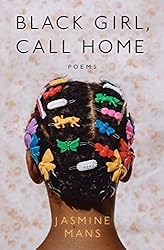
Black Girl, Call Home by Jasmine Mans

Source: Publisher
Paperback, 256 pgs.
I am an Amazon Affiliate

Black Girl, Call Home by Jasmine Mans is a collection of poems that explore mother-daughter relationships, identity, and the racism many Blacks face every day. There are so many moments in this collection where your heart will break, just as the relationship between mother-daughter breaks. The narrator of these poems struggles with who she is and how to reconcile that with her mother’s disappointments about that identity.

In “We Host These Variables,” she says, “There’s something I want to honor here. I/ want to honor the silent story, the emotions/unaccompanied by human language. I want to/honor the weight of stillness. I want to/honor the silent ceremony between mother/ and daughter.” In this poem she explores the silence that become tense between mother and daughter because they are mirrors of one another. Later, she says, “I know the/distance between mother and daughter. How/we are many burned bridges, as well as a/wealth of brick and clay, ready to be made/anew from everything unmade of us.”

Mans explores the harsh history facing Blacks — women who get the worst part of it all. Men with the dreams, but the women who bear the burden of those dreams. One of the most powerful poems in this collection that brings this history to the forefront is “Nerf Guns: Christmas 2019 Tulsa” where the past and the burdens of racism are never far away. “The/only way a bullet becomes laughter is when it/plays pretend in its own foam shadow./” In this poem, little boys play with nerf guns and play dead and the narrator was never allowed to until she was grown and playing with her cousins. She realizes the ironies and implications of this game, while her cousins do not. “My father knew death too well to let us mimic it. Or, maybe death mimicked us too well for him to allow it’s ‘pretend’ in his house.” She wraps “herself in/that joy. The joy that nothing spilled of them/but the sound of their own silly.”

Black Girl, Call Home by Jasmine Mans is a journey of identity and learning how to cope with the past to bring oneself into the future. There are truths in this collection that shouldn’t be shied away from, especially for Black men and women. We need these stories to remind us that we can do better. “I know trauma uses silence as a survival mechanism.” Let’s break that cycle and break that silence.

Rating: Cinquain

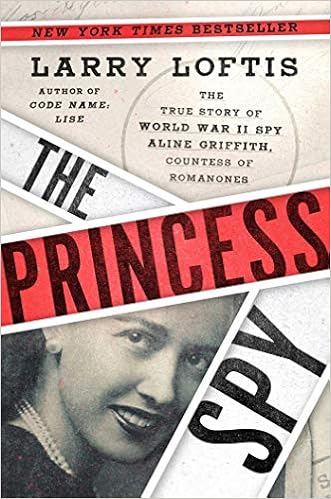
The Princess Spy by Larry Loftis

Source: Publisher
Hardcover, 384 pgs.
I am an Amazon affiliate

The Princess Spy by Larry Loftis takes another look at Aline Griffith, a small town girl looking for big adventure and to serve her country. Loftis uses source material from the National Archives, Griffith’s own fictionalized accounts of her time as a spy with the Office of Strategic Services (OSS), and many are source materials to suss out the truth of her time as a spy. Aline was a model who trained to be a spy at The Farm and her own accounts of her exploits are likely to have been embellished because as publishers will do, they want to sell books and car chases, murders, and more sell books. While Aline may have wanted to recount her life honestly, other marketing experts were at play and Loftis strives to piece out what was true from those accounts with secondary sources. I also think some people have a glamorous view of spies and what they do (e.g., James Bond), and the reality is much more mundane and nuanced — it’s about building trust and relationships that can be leveraged for information.

Was Loftis successful in finding the truth? For the most part, he did his best based on what was classified and what isn’t any longer. What I loved about Loftis’ narrative is that it read like historical fiction, and I think with any book based on research there’s a tendency to be too dry in the narrative. Because he chose to narrate it more like a novel, it was easier to eat up the pages and get engrossed in Aline’s story. Her time at The Farm was fascinating, and some may wonder why her family wasn’t in the book and asking about her whereabouts, etc., but I think it’s clear that when you become a spy and have a cover story, the family must accept it as truth and you make sure that they do. Adding those conversations would have bogged down this narrative.

Being part of the OSS coding room in Spain (considered neutral in the war) to send information to the U.S. State Department during WWII is not a glamorous job but no less important than being a spy. She spent much of her career in that room, but she also attended parties, social events, and had a semi-romance with a bullfighter. When she finally became a field agent, it is clear that all those parties and social events she was invited to opened the door for her career because she was in places where she could probe without drawing attention and could overhear conversations that might be of importance with regard to Nazi movements.

Loftis also creates a wider link between espionage and the Spanish bullfights. Like the matador, Aline lures her targets closer to her with the hope that she can evade capture, jail, and death. She’s weaving her spell on the crowd around her and she’s masterfully moving her cape to lure the bulls and create an illusion of a career woman learning about her current home — Spain. It probably helped that she was genuinely captivated by the Spanish culture.

The Princess Spy by Larry Loftis is engaging, thrilling, and insightful, and he provides a great deal of information about the spy business (but I’m not an expert). I do think there are holes and gaps that could be filled, and I would love to know more about her time doing “odd jobs” for the CIA after her marriage and her life in Spain was in full swing, but alas that information is still classified (my guess is it had a lot to do with preventing communism’s spread). Aline Griffith served her country with honesty and dignity, and she enjoyed doing it, even if she was in danger. She clearly was a people person and the relationships she maintained throughout her life are a testament to her personality and care for others. Loftis has humanized a spy who believed her efforts helped the country during WWII, but I’m still curious about some of the characters in her life like Pierre and Ryan (two figures who are much more mysterious — perhaps there’s a fictionalized account of them in Loftis’ future).

RATING: Quatrain

Review & Giveaway: The Lamps of History by Michael Sandler

Source: TLC Book Tours
Paperback, 98 pgs.
I am an Amazon Affiliate

The Lamps of History by Michael Sandler explores the human condition and our struggle to grapple with our own mortality. Sandler begins the collection with just that concept in “Gauze” where the narrator has surgery and as he goes under from anesthesia “Now breathe deeply, and I vanish,/a plastic wristband flashing Vacancy/” (pg. 9) There is that fear, especially as we age, that our lives will vanish and our bodies will be cast aside as empty shells.

It is easy for us to foster a myopic point of view — “Isolation arrests a point of view” (“Lighthousing”, pg. 19) But on occasion, changes in our view can help us see the best, like in the title poem, “Lamp,” where amber light can dull the anguish of the past. From bullying to loss, Sandler tackles many of the trials of the human condition, rooting his poems in recipes, family tradition, and advice from his father. While not all of these moments prevented sadness, anger, or loss, the narrator looks back on how each represented the care and love of family — a foundation that strengthened over time even as those family members passed.

from "Garlic Press" (pg. 44-45)

until desire flashes again.
What keeps drawing me to those blades?
When the ensuing sight of blood
subverts a show of nonchalance.
I try to take a firmer grip,
one more inexorable squeeze.

Sandler explores desire and how it draws us to things that may not be good for us. In the same collection, “Cenobite” explores shyness and antisocial behavior as the narrator walks in a dog park and finds that he’s unlike the social dogs, standing apart he fails at small talk and interacting. He needs to force himself to try to move beyond his neutral ground apart. There is a peace in aloofness and a camaraderie that can be found with animals alone.

The Lamps of History by Michael Sandler is about the human condition in all of its stripes of good and bad, memory and action. Sandler’s use of science, science fiction, and photographs helps to illustration of struggle, perseverance, and peace with what has come before and what awaits the future.

RATING: Cinquain

About the Poet:

Michael Sandler is the author of The Lamps of History, a poetry collection that explores connections between personal and historical experience while wrestling with the ambiguities (and choices) between connection/estrangement and faith/doubt. For much of his adulthood, Michael wrote poems for the desk drawer, while working as a lawyer and later as an arbitrator. He began to publish in 2009. Since then, his poems have appeared in scores of literary journals including Arts & Letters, Valparaiso Poetry Review, and Zone 3. He lives in the Seattle area. To learn more about Michael and his work, please go to sandlerpoetry.com.

GIVEAWAY: 1 copy of The Lamps of History

Leave a comment on this post about why you want to read the collection and an email where I can reach you by March. 8.

White Fragility by Robin DiAngelo (audio)

Source: Purchased
Audible, 6+ hrs.
I am an Amazon Affiliate

White Fragility: Why It’s So Hard for White People to Talk about Racism by Robin DiAngelo, narrated by Amy Landon, takes a sociologists’ approach to race (which does involve generalizations). White Americans must remember that we are products of our socialization and culture, and no aspect of society lies outside the forces of racism, even if you come from a mixed-race family, had ancestors who were once discriminated against (Irish, Italian, etc.), or experienced poverty, etc. The trick is not to see our unique experiences as making us exempt from racism but to see how those experiences shaped who we are within a racist society and to see the larger picture of how racism impacts others. Secondly, she says we need to redefine the term “racist” — we’ve been taught that racists are immoral and mean and that they consciously hate/oppress others based upon their race. However, this assumption is a societal definition propagated by a racist society. White people need to first examine what it means to be white and what that has brought them in society and cost others — this examination will be a struggle for many.

Superficial differences between races and genders are a result of geographical location and evolution, but biologically we are all the same. The race construct is just that – made up. White supremacy has taken that construct and divided resources based on a false hierarchy, hence the accessibility gaps for non-white groups and non-male groups. Many of these discussions are ones I’ve had before in college with courses and other groups — open dialogue is essential about things that are not “fact” even though they were credited as such. She does touch on exploitation as the catalyst for racism (I would read Stamped From the Beginning for more on this).

Imagine going to court to proclaim you are white because you were misclassified as another race! This actually occurred and scientific experts were called into these cases to provide “expert” testimony. DiAngelo indicates that those European immigrants are the only ones who were successful in becoming “white” after assimilation, etc. Assimilation — think about that — casting aside their customs, speaking English only, and eating only American foods, etc. Those assimilated people now benefit from their whiteness. DiAngelo also points out that if poor and working class Americans across all “races” worked together – they could become a powerful force against the upper “white” classes. However, many perceived as “white” also tend to look down on other poor and working class peoples because of their “whiteness” and the system that oppresses them both. The irony!

“Scholar Marilyn Frye uses the metaphor of a birdcage to describe the interlocking forces of oppression.16 If you stand close to a birdcage and press your face against the wires, your perception of the bars will disappear and you will have an almost unobstructed view of the bird. If you turn your head to examine one wire of the cage closely, you will not be able to see the other wires. If your understanding of the cage is based on this myopic view, you may not understand why the bird doesn’t just go around the single wire and fly away. You might even assume that the bird liked or chose its place in the cage.

But if you stepped back and took a wider view, you would begin to see that the wires come together in an interlocking pattern—a pattern that works to hold the bird firmly in place. It now becomes clear that a network of systematically related barriers surrounds the bird.

Taken individually, none of these barriers would be that difficult for the bird to get around, but because they interlock with each other, they thoroughly restrict the bird. While some birds may escape from the cage, most will not. And certainly those that do escape will have to navigate many barriers that birds outside the cage do not.”

We all have prejudices (it is the way our brain operates) or a sense of discomfort around certain people or groups — acting on those prejudices is discrimination. Racism is a structure (white supremacy) and we need to remember that we have a role to play in that structure. We need to learn to recognize our prejudices and work toward not acting on them and dismantling the structures that employ discrimination against groups different from white males. This is a tall order because many of these ideologies are reinforced in our daily lives.

One notion that came to mind, however, is the “kafkatrap” by which an accused is guilty by merely being silent. Many of us are silent, many of us fail to stand up and point out discrimination (even subtle discrimination), and does this mean we’re all complicit in racism? While this may be true, I prefer less circular arguments and prefer that we work as a human race to improve our systems for all of us. THIS will require us to have discomforting conversations and require actions that run counter to our normal daily actions. It will require us to reform and dismantle white supremacy. We’ll need to widen our view of history, particularly in schools, to acknowledge both the good and the bad, highlighting those who have exploited and committed racism to obtain the upper economic hand, among other things.

My only complaint is that DiAngelo was very repetitive toward the end. She would bring up examples she already used and talk about them again in the same manner she did in the previous chapter. I wouldn’t have noticed it as much if it wasn’t back-to-back repetition. Perhaps she believes repetition will stick with readers more and help them to see the situations she discusses in a new light. I’m unsure.

White Fragility: Why It’s So Hard for White People to Talk about Racism by Robin DiAngelo, narrated by Amy Landon, asks us to recognize our faults, work to fix them, and to question ideologies that are considered the norm. There is much work to do. Challenging racism starts with recognizing your own prejudices and being conscious of how to modify/change your reactions and behaviors going forward. This is a very academic look at racism, which some may find too high-brow for them. Racism is real and present today (across the globe) — it is not a thing of the past, and we need to tackle it head on and in a multitude of ways. While some of her arguments are circular, she provides a good overview of racism in today’s society and the reactions that white people have when confronted with its subtleties.

RATING: Quatrain