Quantcast

The Haunted Library: The Ghost at the Fire Station by Dori Hillestad Butler, illustrated by Aurore Damant

Source: Purchased

Paperback, 128 pgs.

I am an Amazon Affiliate

The Haunted Library: The Ghost at the Fire Station by Dori Hillestad Butler, illustrated by Aurore Damant, is the sixth book in this series that pairs a young elementary school girl, Claire, with a ghost boy, Kaz, and sets them off on haunted mysteries to solve. Kaz has a case of his own, tracking down his lost family, and throughout the series he’s had a little bit of luck, but there are more missing members of his family to find.

C&K Ghost Detectives, however, are called to work on another ghost mystery — this time at the local fire station. Some of the firefighters have heard moaning and their blankets have been stolen in the night. Sparky, the fire station dog, also seems to sense where the ghost is in the station, refusing to enter the TV room and sometimes the main garage where the fire trucks are. Is the dog a ghost detector or is his strange behavior due to something else? That’s what Kaz and Claire are there to find out.

My daughter loves the humor and fun in this book, as well as the antics of Little John, Kaz’s brother. This is a series that is fun and full of adventure. The illustrations are great and there are some new characters introduced who we’d like to see in future books. The Haunted Library: The Ghost at the Fire Station by Dori Hillestad Butler, illustrated by Aurore Damant, is a delight with fresh mysteries and stories to carry the books into the next. We definitely recommend reading these in order.

RATING: Quatrain
Mailbox Monday #608

It now has it’s own blog where book bloggers can link up their own mailbox posts and share which books they bought or which they received for review from publishers, authors, and more.

Leslie, Martha, and I also will share our picks from everyone’s links in the new feature Books that Caught Our Eye. We hope you’ll join us.

Here’s what we received:

Man on Terrace with Wine by Miles David Moore.

Miles Moore’s poems sing and think at the same time. Theme, vision, and form coalesce into fluid work never far from humor, always seeking the truth. Man on Terrace with Wine teaches us how to survive in this trying world. It is a magnificent collection.

Pablo Medina, author of The Cuban Comedy

Miles David Moore is back with his best book of poetry yet. Man on Terrace with Wine is a dark but always hopeful carnival that juggles both sonnet and emoticon with the ease of a poet who has been at it for a long time. This is life in the center ring, with all the tenderness and sting that comes along with it, from Godzilla in 3D to a lonely ride on an intercity bus, from Elvis in heaven to Hitler in hell. You may not know whether to laugh or cry, but that’s precisely the point. Miles Moore is a master, and Man on Terrace will stay with you long after the show is over.

James C. Hopkins, author of Ex-Violinist in Kathmandu

Miles David Moore is one of the hardest-working poets I know. Each of his poems is carefully crafted with a keen eye on a lucidity of language enriched with a deep diversity of emotions ranging from the commonplace to haunting, deeply personal recollections of times past. These poems read like a map of a tireless soul’s celebration of moments, places, and people we clearly recognize in our own lives. I recommend Man on Terrace with Wine without reservation.

Steven B. Rogers, Ph.D., historian, and editor of A Gradual Twilight: An Appreciation of John Haines

Raising King by Joseph Ross.

Poetry. RAISING KING urges readers to walk beside Dr. Martin Luther King, Jr. from Montgomery to Memphis, past police dogs, mobs, and fire hoses. Listen to his thoughts, hopes, and fears. You’ll also hear from heroes including Abernathy, Shuttlesworth, and Coretta Scott King.-Joseph Ross

In his beautiful collection of poems evoking the spirit of the Civil Rights Movement, Joseph Ross offers his readers hope and inspiration for our own difficult times. These poems call us to revive our courage, moral convictions, and belief in the ultimate redemption of humanity.-Susannah Heschel

What did you receive?

Guest Post: Annette Libeskind Berkovits Shares a Poem from her Collection, Erythra Thalassa

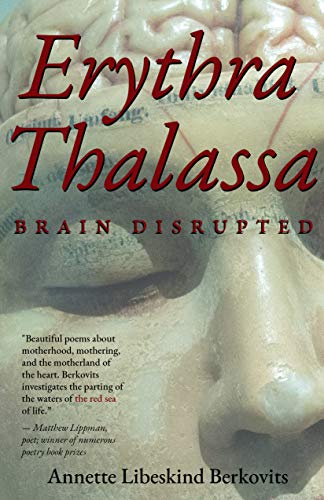
Erythra Thalassa by Annette Libeskind Berkovits is an autobiographical poetry collection that unites around the powerful image of the Red Sea as a dual symbol for both fear and larger-than-life hope.

Learn more about the book below and stay to see a sample poem and a bit of inspiration from the poet.

Book Synopsis:

Libeskind Berkovits’ words are accessible and raw in their honesty, etched from the sorrow of a bereft mother who, despite her decades-long science background, was helpless when her 46-year old son, a devoted and engaged father of two young daughters, suffered a devastating hemorrhagic stroke on an otherwise ordinary day. With her poems, she immerses the reader in the Red Sea—her Red Sea—a pulsing, emotional voyage from the very first uncomprehending ride to the emergency room, through ICU’s, tests, procedures and pain, recounting hopes raised, then dashed, then restored, later becoming an elderly caretaker for her son.

Throughout the collection, readers will be heartened by the promise of survival, the faith in science, the mystery of the human body and, most of all, the courage that remains after tragedy.
Matthew Lippman has praised the collection as “not afraid to confront the break in the body and to head straight into the red.”
 
And Story Circle wrote in their review, Some of the poems are meditative; others, cries of anguish–but all capture a mother’s inner struggle with the realities of the imperfections of life…. a wonderful book for anyone, whether serving as a family caregiver in overwhelming circumstances, or merely needing to be reminded of the temporal nature of what it means to be alive on this earth.”

Please welcome Annette Libeskind Berkovits:

1-800-Please- Help

There weren’t any virgins.
Not 72, not even one, but
I clearly saw them:
angelic telephone operators
at an old-fashioned switchboard,
sitting in neat rows
far enough from one another
so their wings didn’t tangle.
Through the buzz and celestial
interference they strained to hear
the earthly pleas, but maybe,
maybe, I thought, they’d hear mine.
‘Just let him open his eyes’
At first I whispered shyly,
didn’t want to overwhelm
them with my greed.
Didn’t want to say plain and
simple: I want him back
whole, the way he was,
seeing as they already granted
him life. Then I got bolder,
more urgent.
I shouted, then screamed
but they still refused to hear.
Just kept fussing with all those
cords, keys and jacks,
as if they really meant
to be helpful.

When my heretofore perfectly healthy and robust 46-year old son suffered a massive brain bleed—a hemorrhagic stroke—I could not sleep. The few hours I had to rest, after spending days and nights in the hospital, I lay awake, dreading that should I fall asleep, I’d miss a call from the hospital that the unimaginable had happened. If I did fall asleep, I’d wake up in a sweat and run to make a phone call to see how my son was doing. For weeks on end, the answer was “He is still in a coma.” Well, he’s still alive, there’s hope,” I’d console myself and return to bed to rest, sleepless, for a couple of hours. The sleep I wished for rarely came, until one day.

I awoke with a start, my eyes still closed, trying to tether the dream I had had to my conscious memory. Even before my son’s traumatic brain injury, dreams came to me rarely, if ever, and the ones that did, evaporated on waking, like dew on a sunny day, no matter how hard I tried to remember them and analyze in the light of day. But the dream that stuck with me vividly for six years is the one I memorialized in the poem 1-800-Please-Help.

I saw it as if it were a movie, so real I could swear I was physically there, with all the sensations, the light breeze on my skin, the cloudless sky and the expressionless Stepford wives faces on the angelic telephone operators. I struggled to make sense of it.

REM sleep, the sleep cycle in which one dreams, occupies only 15-20% of your sleeping time and since I had been sleeping so little, that vivid dream might have only taken a few minutes, maybe less. And yet, it was there, planted as firmly in my memory as an old oak tree. I knew that research has shown that dreams help you deal with stress and I surely had plenty of it, so I took having a dream as a good sign, if not the actual contents of this particular dream. Though it wasn’t of a nightmare quality exactly, it promised neither hope, nor help. It didn’t frighten me, but it increased my anxiety. I had to decipher its meaning.

It turns out that according to dream researchers, it was an epic dream in which I eventually came to a realization that unless I myself do things to help, no one is going to help deal with the tragic situation. It convinced me to act, to find ways of helping my son and his struggling, inconsolable wife.

I found the symbolism of the dream particularly interesting. Angels in dreams imply a deep spirituality. This surprised me because I am not a religious person. Could there be an inner me I know little about? Telephones, too, have particular meaning in dreams. They deal with communication. The fact the angelic operators simply fiddled with the wires without placing the call could have been suggesting I am unable to express or convey a message to someone. I don’t know.

After a while, I did not want to analyze the dream any more. To pick it apart logically seemed as if I were destroying a work of art. I just wanted to preserve the image, neither fully understood, nor diagnosed to maintain its poetic quality.

Thanks, Annette, for sharing this poem and your emotional journey.

About the Author:

Scientist, educator, conservationist, and author, Annette Libeskind Berkovits, was born in Kyrgyzstan and grew up in postwar Poland and the fledgling state of Israel before coming to America at age sixteen.

Culminating her three-decade career with the Wildlife Conservation Society in New York as Senior Vice President and recognized by the National Science Foundation for her outstanding leadership in the field, Annette spearheaded the institution’s science education programs throughout the nation and the world.

Despite being uprooted from country to country, Berkovits has channeled her passions into language study and writing. She has published two memoirs, short stories, selected poems, and completed To Swallow the World – a debut historical novel.

Erythra Thalassa: Brain Disrupted is her first poetry chapbook/ memoir about her emotional response to her son’s stroke. It is available on Amazon, or can be requested through your local bookstore.

Her stories and poems have appeared in Silk Road Review: a Literary Crossroads; Persimmon Tree; American Gothic: a New Chamber Opera; Blood & Thunder: Musings on the Art of Medicine; and The Healing Muse.

Her first memoir, In the Unlikeliest of Places, a story of her remarkable father’s survival, was published by Wilfrid Laurier University Press in September 2014 and reissued in paperback in 2016. Her second memoir, Confessions of an Accidental Zoo Curator, was published in April 2017. For more about Annette and her other books visit her website.

African American Poetry: 250 Years of Struggle and Song edited by Kevin Young

Source: NetGalley

Ebook, 1170 pgs.

I am an Amazon Affiliate

African American Poetry: 250 Years of Struggle and Song edited by Kevin Young is a compendium like no other, exploring the wide breadth of African American poetry from songs to poems and much more. There are eight sections in this collection and there are the familiar, often anthologized poems we’ve come to know, but there are also the unfamiliar poets who have been obscured by American culture for far too long. The struggle is real and it continues 250 years later, and it will likely continue into the next several decades (I’m being optimistic — I would like to see less struggle sooner).

“For African Americans, the very act of composing poetry proves a form of protest,” says Kevin Young in the introduction. From Phillis Wheatley and Lucy Terry, whose untitled poem “Bars Fight” was first composed orally and shared for generations before being in print, to the present day poets, Young says the collection covers those who experienced bondage first hand, modernist movement, the Harlem Renaissance, the Chicago Renaissance, wartime and postwar poets, Beat poets, political poets, poems about ancestry, and so much more. Young says the collection contains “poems we memorize, pass around, carry in our memory, and literally inscribe in stone.” Folk songs, ballads, and poems that have never been published. You can imagine the treasure trove within these pages.

Normally, I would share excerpts from this collection but I prefer that you discover these for yourself. I want you to journey into the African American Poetry: 250 Years of Struggle and Song edited by Kevin Young on your own without preconceived notions of what you’ll find there. There is so much more than Langston Hughes. This is a collection that should be brought to classrooms as young as elementary schools. These are the poems and truths that need to be taught so that we can learn from the past and move forward as a nation to a brighter future.

RATING: Quatrain

Cold Moon: On Life, Love, and Responsibility by Roger Rosenblatt

Source: publicist

Hardcover, 98 pgs.

I am an Amazon Affiliate

Cold Moon: On Life, Love, and Responsibility by Roger Rosenblatt is an undulating wave of stories that the author uses to illustrate the lessons: appreciate being alive, recognizing the gift and power of love, and exercising responsibility toward others. Rosenblatt relies on the image of the Cold Moon, which occurs in late December as winter solstice arrives, as a symbol for the later years of his own life. He reflects on the stories he had written for Time magazine and other outlets and what they have taught him about the resiliency and love that is still present a world that sometimes seems cold and unwelcoming.

“The only thing I’m certain of is my uncertainty.” (pg. 27)

So much of life is uncertain for all of us, despite the plans we make or the directions we wish to go. Like these times of isolation and social distancing during COVID-19, Rosenblatt’s words ring true. “And to the little mechanical hand of the self-defeating box? In the few-second interim from when the time on becomes off, why don’t you learn to play the mandolin?” (pg. 28) He also reminds us that like termites, we’re dependent upon one another. We are responsible for our survival and that of those around us, even if it seems as though we are separate and unlike others around us.

Like writing and music, life happens between the noise. Cold Moon: On Life, Love, and Responsibility by Roger Rosenblatt is a meditation that reads a little disjointed, but the messages are sound.

RATING: Tercet

Mailbox Monday #607

It now has it’s own blog where book bloggers can link up their own mailbox posts and share which books they bought or which they received for review from publishers, authors, and more.

Leslie, Martha, and I also will share our picks from everyone’s links in the new feature Books that Caught Our Eye. We hope you’ll join us.

Here’s what we received:

Cold Moon: On Life, Love, and Responsibility by Roger Rosenblatt

The Cold Moon occurs in late December, auguring the arrival of the winter solstice. Approaching the winter solstice of his own life, Roger Rosenblatt offers a book dedicated to the three most important lessons he has learned over his many years: an appreciation of being alive, a recognition of the gift and power of love, and the necessity of exercising responsibility toward one another. Rosenblatt’s poetic reflections on these vital life lessons offer a tonic for these perilous and fearful times, and attest to the value of our very existence. Cold Moon: a book to offer purpose, to focus the attention on life’s essentials, and to lift the spirit.

Political AF: A Rage Collection by Tara Campbell

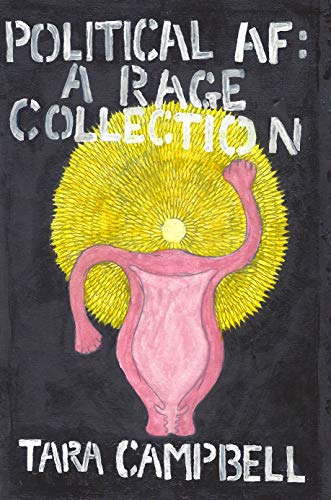
Unlikely Books is thrilled to release Political AF: A Rage Collection by Tara Campbell. The past few years have been fertile ground for work in the field of protest writing. Political AF: A Rage Collection is a hybrid chapbook of poetry and prose. The collection focuses on topics such as race, corruption, gun violence, police brutality, Confederate monuments, reproductive freedom, and the sexual harassment and abuse of women. While the current POTUS and his league of enablers are addressed in some works the bulk of the collection is, sadly, evergreen.

Brain Candy 2

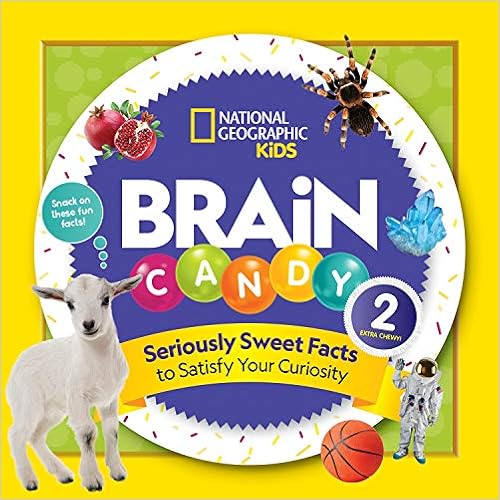
So you know that the speed of light is fast: 229,792,458 miles per second. But what does that really mean? It means that at the speed of light, you could reach the moon in 1.3 seconds. How long to travel to the sun? Just 8 minutes. And in 4.6 hours, you could reach Pluto at 4.6 billion miles away! If you like seeing far-out facts in a new light, the second book in the colorful Brain Candy series takes a deep (and delicious) dive into numbers, fun facts, and cool trivia on all kinds of topics. It’s a novel approach to feeding kids smart snackable bites about the world and is sure to be an addictive addition to the bookshelves of Weird But True! and Just Joking fans.

The Coolest Stuff on Earth: A Closer Look at the Weird, Wild, and Wonderful

Did you know that dogs can shake off a pound of water in less than a second? That some sand dunes whistle and sing? That the U.S. dollar bill is full of hidden symbols related to the number 13? Our world is filled with strange, bizarre, and weird happenings. But what do they mean? WHY are they important? And what secrets are behind them?

These secrets and MORE are revealed through cool stories, action-packed photos, fantastic infographics, and exciting Q&As with in-the-field experts. Discover the secrets of sharkskin, the mysteries behind incredible island animals, the power behind lightning, how a rare gemstone changes color, and more. Kids will be captivated by this fresh way of looking at our amazing planet.

What did you receive?

Happy Thanksgiving

Guest Post & Giveaway: Sue Barr Talks About Fitzwilliam Darcy Undone’s Cover

Please welcome Sue Barr, as she shares with us how this cover came to be:

What would Pride & Prejudice be like if Darcy and Elizabeth had a touch of magic in their lives?

First, thank you for hosting me today. Without support from you and your readers, we authors would limp along seeking an audience from all sorts of unsavoury sources… *snicker* As Lydia would say, ‘La! What a laugh.’

I thought I’d share how the cover of Fitzwilliam Darcy ~ Undone came about.

I have a wonderful cover artist, Teresa of The Midnight Muse, who excels in Regency cover art. Sometime, in 2018, I saw the image which is now the cover of my book and knew I’d found a future Mr. Darcy. At that time, I did not know when or how I’d use this image, but it called to me on a visceral level and I had to have it and also knew the story would contain a lot of heat. At the same time, I also found an image which makes me think of Wickham but haven’t reconciled a story to that wicked man – yet.

BTW: this is usually how my mind works.

I’m very visual and stories grow from the smallest kernel of thought. My first entry into the world of writing JAFF began with me finding a pre-made cover with the head shot of an absolutely beautiful red-haired woman. Without question, this was Caroline Bingley, but what to do with her? Then the question popped into my head, ‘Whatever happened to Caroline Bingley after her brother and Mr. Darcy got engaged to a Bennet sister?’, followed by this one line, which found its way into the book, ‘When did all the men in her life become so addlepated over two country misses?’

Fitzwilliam Darcy ~ Undone began from a magic themed Playground piece on the fan fiction site, A Happy Assembly. The minute I decided to turn the whole thing into a full-blown novel I knew my cover art had found a home. We all know that Darcy is handsome, and tall, and well muscled… Wait, did Jane Austen write he was well muscled??? She may have said well formed… Oh well, in my dreams he is sculpted and yummy. I also think our deep, dark Darcy is very passionate and once again, the cover reveals that.

Don’t we all secretly wish a passionate Mr. Darcy would turn his attention our way? It’s okay. You can dream a little in this safe place with other like-minded readers. I’ll wait over here in the corner with a cup of tea…

I’m well pleased with my cover and satisfied with how the story came about. I’d toyed with the idea of making this book more explicit, however, toned it down to sensual (one explicit section only, thank you) because it seemed right and the cover hinted at it being a little spicy. I hope you take a chance and delve into my magical world with Mr. Darcy and Elizabeth.

Thank you, Sue, for sharing the origin of your cover and a little bit of how your mind works (**wink**)

Book Synopsis:

She’s the outcast in her family…

Elizabeth knows she’s different from the rest of her family. She has visions and strange dreams and sees things others do not. With the advent of the odious Mr. Darcy and his friends from Netherfield Park, as well as the amiable Mr. Wickham of the _____shire Militia, her powers seem to increase and her greatest fear is that she won’t be able to contain them and will be discovered.

He has eight hundred years of tradition to uphold…

No Darcy has married a non-magical woman since arriving on the shores of England with William the Conqueror in 1066. However, his kind – Miatharans – are dwindling in numbers. Miatharan magic only flows through aristocratic blood lines, so his strange obsession with Miss Elizabeth Bennet is puzzling as she is not of noble blood. Just a country squire’s beautiful daughter who has him slowly becoming undone.

About the Author:

‘The prairie dust is in my blood but no longer on my shoes.’

Although it’s been over forty-two years since Sue called Saskatchewan home, her roots to that straight-lined province and childhood friends run deep. The only thing strong enough to entice her to pack up and leave was love. When a handsome Air Force pilot met this small-town girl, he swept her off her feet and they embarked on a fantastic adventure which found them settled in beautiful Southwestern Ontario when hubby retired from the military and began his second career as an airline pilot.

Sue started writing in 2009 and sold her first manuscript in 2010. Always a reader of Regency romance, she discovered Jane Austen Fan Fiction in 2014 and almost immediately wanted to know – Whatever happened to Caroline Bingley after her brother and Mr. Darcy became engaged to a Bennet sister? From that question, her first JAFF book was launched.

In her spare time, Sue cans and preserves her own food, cooks almost everything from scratch and grows herbs to dehydrate. Her latest venture is to create her own spice seasonings, experiment with artisan breads and make her own homemade vanilla. Hubby has no complaints other than his jeans keep shrinking. At least that’s what he claims…. Her sons, their wives and all seven grandchildren don’t mind this slight obsession either. Visit her website, Facebook, and Twitter.

GIVEAWAY:

Sue Barr will giveaway an ebook of this latest novel to 3 random winners for entire blog tour.

Follow the tour and join in the comments to be entered to win. Sue will choose the random winners and announce the winners on social media on December 5.

Mailbox Monday #606

It now has it’s own blog where book bloggers can link up their own mailbox posts and share which books they bought or which they received for review from publishers, authors, and more.

Leslie, Martha, and I also will share our picks from everyone’s links in the new feature Books that Caught Our Eye. We hope you’ll join us.

Here’s what we received:

By Broad Potomac’s Shore: Great Poems from the Early Days of Our Nation’s Capital edited by Kim Roberts

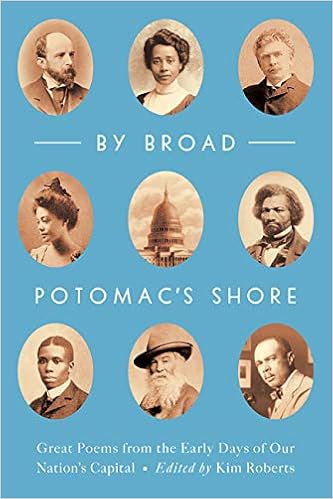
Following her successful Literary Guide to Washington, DC, which Library Journal called “the perfect accompaniment for a literature-inspired vacation in the US capital,” Kim Roberts returns with a comprehensive anthology of poems by both well-known and overlooked poets working and living in the capital from the city’s founding in 1800 to 1930. Roberts expertly presents the work of 132 poets, including poems by celebrated DC writers such as Francis Scott Key, Walt Whitman, Frederick Douglass, Paul Laurence Dunbar, Ambrose Bierce, Henry Adams, and James Weldon Johnson, as well as the work of lesser-known poets–especially women, writers of color, and working-class writers. A significant number of the poems are by writers who were born enslaved, such as Fanny Jackson Coppin, T. Thomas Fortune, and John Sella Martin.

The book is arranged thematically, representing the poetic work happening in our nation’s capital from its founding through the Civil War, Reconstruction, World War I, and the beginnings of literary modernism. The city has always been home to prominent poets–including presidents and congressmen, lawyers and Supreme Court judges, foreign diplomats, US poets laureate, professors, and inventors–as well as writers from across the country who came to Washington as correspondents. A broad range of voices is represented in this incomparable volume.

The Complete Cookbook for Young Chefs: 100+ Recipes that You’ll Love to Cook and Eat by America’s Test Kitchen Kids for someone’s present.

For the first time ever, America’s Test Kitchen is bringing their scientific know-how, rigorous testing, and hands-on learning to KIDS in the kitchen!

Using kid-tested and approved recipes, America’s Test Kitchen has created THE cookbook every kid chef needs on their shelf. Whether you’re cooking for yourself, your friends, or your family, The Complete Cookbook for Young Chefs has delicious recipes that will wow!

  • Recipes were thoroughly tested by more than 750 kids to get them just right for cooks of all skill levels―including recipes for breakfast, snacks and beverages, dinners, desserts, and more.
  • Step-by-step photos of tips and techniques will help young chefs feel like pros in their own kitchen
  • Testimonials (and even some product reviews!) from kid test cooks who worked alongside America’s Test Kitchen will encourage young chefs that they truly are learning the best recipes from the best cooks.

By empowering young chefs to make their own choices in the kitchen, America’s Test Kitchen is building a new generation of confident cooks, engaged eaters, and curious experimenters.

What did you receive?

Book Spotlight: …but that’s not me.: Fitting the pieces together. The pieces of us all. by Erika Shalene Hull and Dr. Cheryl Lejewell Jackson

New in December! …but that’s not me.: Fitting the pieces together. The pieces of us all.

Detailing the journeys of multiple women as they entered, endured, and escaped a wide range of domestic abuse, …but that’s not me. is a bold and powerful homage to strength, courage, and resilience. Stories are intertwined with hard-hitting truths about what domestic abuse is, how we find ourselves in abusive situations, the perpetuation of abuse, and the path to recovery.

The problem is not the amount or availability of information but the ability to recognize what is happening in the moments of the abuse. By telling the stories of average, hard-working women in middle-America, Hull and Jackson invite you into an awareness traditionally silenced, bringing attention to painful realities of abuse that will linger, etched on your heart, long after the book is closed.

Hull and Jackson write: “We aren’t out to hurt anyone, and it would be a lot safer and more comfortable to not tell these stories at all. But when we look at the faces of our children, our friends, and those suffering in silence, we can’t quietly sit back any longer. By having these uncomfortable conversations, we hope to encourage you to believe in yourself, learn to set better boundaries, and know that you are worthy and deserving of so much more.”

To me, these stories are important reminders that we need to care for our mental health and learn to establish boundaries that will keep us healthy and protected.