Quantcast

Inheritance of Aging Self by Lucinda Marshall

Source: Purchased/GBF
Paperback, 66 pgs.
I am an Amazon Affiliate

*** full disclosure: Lucinda, who is a member of my poetry workshop group, is a great mentor and a golden angel to poets in the poetry community***

Inheritance of Aging Self by Lucinda Marshall explores what it means to age, to see our ancestors in the mirror, and to make peace with the life we’ve led, left behind for others to make sense of, and the life we have in the present. Life is just one patchwork quilt, isn’t it? Yes, Lucinda is a quilter, a natural puzzle maker.

From "My Grandmother's Tea Cups" (pg. 1)

...
I see the you in me
as I become the wearer
of your papery skin,
an inheritance 
with its own design,

Patterns and textures take center stage in Marshall’s poems, weaving together a quilt her family will cherish always. But there are the emotional ties woven in each square, from the anger at aging and loss of youth to the acceptance of the multi-faceted you, a beauty beneath the perception of who you were then, like in “Mirror Image.”

Marshall says in “Contemplation of Succulence in Sonora”: “I do know that erosion changes us–// a whittling away, until only bones and distillation/ remain to provide the grounding” Some of us take longer to find our grounding, drifting from place to place, family to family, friend to friend, but these experiences eventually ground us in who we are and who we are not.

In this effort, we also need to learn how to create our own boundaries to preserve our mental well-being, like Marshall’s “I Do Not Ask” and “Serenity Prayer For Singular Existence” remind us. Boundaries are necessary to ensure burnout is kept at bay, that we can be our best selves when others need us, and that we can fulfill our own desires and dreams, even if others don’t quite understand.

Marshall’s collection hinges on the title poem, which comes midway through the book. Where the narrator comes to terms with aging and the potential for lost memory, lost sense of self, fewer days ahead. It is an unsettling moment when age becomes a reality you can no longer ignore. “she wonders what it feels like to be ashes,// what part of who she is will be left/,” says the narrator of “What Remains.”

Inheritance of Aging Self by Lucinda Marshall is about the universal, solitary journey we all travel on. Don’t be mistaken, we are journeying with our past, present, and future side-by-side and no one can reconcile those facets of our selves but us. We must come to terms with all that we are and what remains, what we leave behind, how others will know us and remember us, and what pursuits will be of greatest importance in our waning years. That “Unicorn” is in the surf, it’s just out of reach unless we’re willing to believe and lunge forth toward it.

RATING: Quatrain
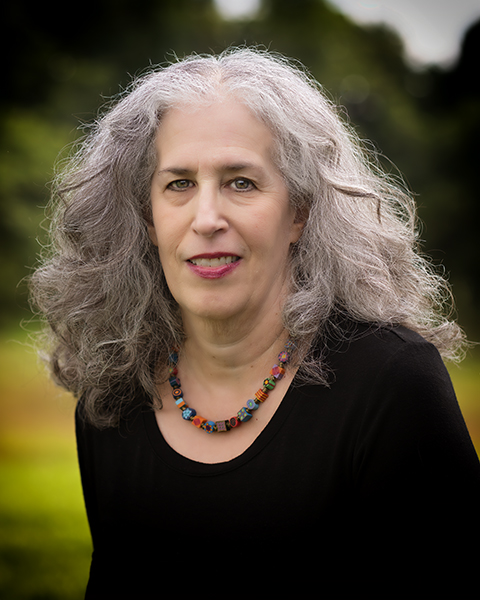
Photo Credit: Jaree Donnelly

About the Poet:

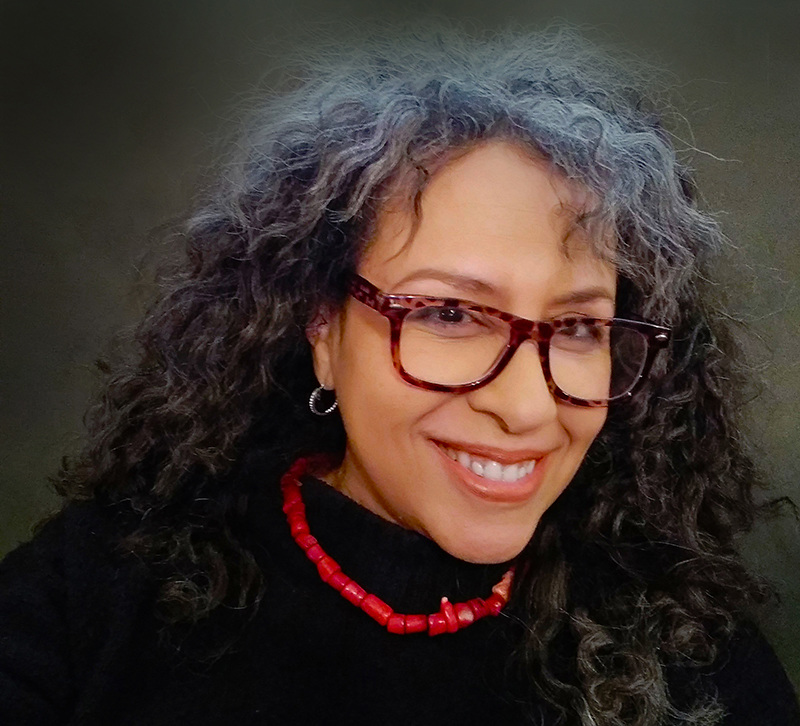
Lucinda Marshall is the author of the full-length poetry collection, Inheritance Of Aging Self (Finishing Line Press,2021) and is available for purchase from Finishing Line Press, Barnes and Noble, and Amazon. Marshall is an award-winning artist and writer whose poetry has appeared in Global Poemics, Broadkill Review, Foliate Oak, The Rising Phoenix Review, and Poetica, among others, as well as in the anthologies “Poems in the Aftermath” (Indolent Books), “You Can Hear The Ocean” (Brighten Press), “Is It Hot In Here Or Is It Just Me?” (Beautiful Cadaver Project), and “We Will Not Be Silenced” (Indie Blu(e) Publishing). Her poetry has won awards from Waterline Writers, Third Wednesday, and Montgomery Magazine.

She lives in Maryland and is the Founder of both the DiVerse Gaithersburg (MD) Poetry Reading, the Gaithersburg (MD) Poetry Workshop, and has served as a volunteer mentor for the Gaithersburg Teen Writing Workshop, part of a program run by the Maryland Writers’ Association.

The Haunted Library: The Hide-and-Seek Ghost by Dori Hillestad Butler

Source: Purchased
Paperback, 128 pgs.
I am an Amazon Affiliate

The Haunted Library: The Hide-and-Seek Ghost (book 8) by Dori Hillestad Butler, illustrated by Aurore Damant, is another caper in which Claire and Kaz are called upon to uncover a ghost at a fellow classmate’s house. Trouble is, the classmate’s mom believes her son is making up the ghost stories so they don’t sell the house and move. Oh, and this classmate has a tendency to play pranks on other students. Kaz doesn’t trust that he is telling the truth about the ghost.

Further complicating the situation is Kaz’s parents, who still view Kaz and Little John as children to shelter, but they’ve been living their lives without them.

The Haunted Library: The Hide-and-Seek Ghost (book 8) by Dori Hillestad Butler, illustrated by Aurore Damant, is another strong book in the series that will keep young readers guessing. We have more books in this series to read, but I think my daughter’s taking a break from the series as we work on her reading skills.

RATING: Quatrain

Liberty-Loving Lafayette: How ‘America’s Favorite Fighting Frenchman’ Helped Win Our Independence by Dorothea Jensen

Source: Author
Paperback, 64 pgs.
I am an Amazon Affiliate

Liberty-Loving Lafayette: How ‘America’s Favorite Fighting Frenchman’ Helped Win Our Independence by Dorothea Jensen is a rhyming narrative of Gilbert du Motier, Marquis de Lafayette, and how he came to the United States to help us fight against the British in the Revolutionary War. In well written rhyme, Jensen will engage young readers in the life of Lafayette as a young man (only 19) eager to fight for freedom.

What I love about this book is that it takes history and makes it come alive for children with verse. It includes portraits and other art from the time of the war and beyond to illustrate the story, and uses some modern phrasing, like “good to go,” to make it relatable to younger generations of readers. While this is a succinct look at Lafayette’s contributions, there are resources, a glossary of terms, and larger explanations, as well as a bibliography, in the back of the book for teachers and parents to use and help children understand history a little better.

Liberty-Loving Lafayette: How ‘America’s Favorite Fighting Frenchman’ Helped Win Our Independence by Dorothea Jensen would be a great addition to classrooms and home libraries, especially for those kids and parents interested in teaching American history. Kids will learn about no only the inspirations for Lafayette’s decision to come to the United States but also about how he played a key role in military successes.

Rating: Quatrain

Mailbox Monday #655

Mailbox Monday has become a tradition in the blogging world, and many of us thank Marcia of The Printed Page for creating it.

It now has its own blog where book bloggers can link up their own mailbox posts and share which books they bought or which they received for review from publishers, authors, and more.

Velvet, Martha, and I also will share our picks from everyone’s links in the new feature Books that Caught Our Eye. We hope you’ll join us.

This is what we received:

Liberty-Loving Lafayette: How “America’s Favorite Fighting Frenchman” Helped Win Our Independence by Dorothea Jensen for review.

“An ode to the great Lafayette, beautifully told and richly illustrated…” —Alan R. Hoffman, Translator, Lafayette in America in 1824 and 1825: Journal of a Voyage to the United States, and President,The American Friends of Lafayette.

“A great addition to the [Lafayette] canon” —Diane Shaw, Director Emerita of Special Collections & College Archives, Lafayette College

“Dorothea Jensen brings Lafayette to life for all ages”—Chuck Schwam, Publisher, American Friends of Lafayette Gazette 

Inspired by the Broadway hit, HAMILTON, and by Longfellow’s “The Midnight Ride of Paul Revere,” author Dorothea Jensen wrote this short rhyming narrative about the Marquis de Lafayette and his crucial role in our Revolutionary War.

A glossary and extensive endnotes supply further information about the historical figures and events mentioned in the poem. This playful historical account is aimed at middle schoolers, as well as young and older adults. It would be entertaining and educational to perform in a classroom or other settings, such as events celebrating the upcoming bicentennial of Lafayette’s 1824-5 Farewell Tour of America.

A Few Things You Will Learn from this Book:

  • Who the unlikely person was who inspired Lafayette to help America
  • How Lafayette’s powerful father-in-law tried to discourage his plan
  • Why such a high rank was given to an inexperienced 19-year-old
  • How Lafayette helped strengthen the crucial French Alliance
  • What Lafayette’s key successes were as a military commander in America

Jensen has previously written two historical novels for young readers (middle graders and young adults) about Lafayette and about the American Revolution. These are entitled A BUSS FROM LAFAYETTE, and THE RIDDLE OF PENNCROFT FARM.

The Rescue of Elizabeth Bennet: A Pride and Prejudice Variation (Pride and Prejudice Variations) by Bella Breen, which was free on Kindle.

Elizabeth will marry Mr. Collins even if Mrs. Bennet has to drag her to the altar.

When Mr. Bennet dies, Mr. Collins takes over Longbourn. He shows his true character when he vows to force the Bennets from their home unless he is given Elizabeth Bennet’s hand in marriage.

Elizabeth, who has promised only to marry for love, refuses. But as her mother and sisters take increasingly drastic steps to force Elizabeth to wed, how long can she resist?

Will Elizabeth make the ultimate sacrifice to save her family from being cast out?

Mr. Darcy fights his attraction to Elizabeth, but when he discovers Elizabeth is set to marry Mr. Collins, the next day, he must face his feelings before his love slips away. Can he rescue Elizabeth before it’s too late? And if so, will the pair of them survive Mr. Collins’ revenge?

What did you receive?

Guest Post & Giveaway: Why Lady Susan by Alice McVeigh, author of Susan: A Jane Austen Prequel

Welcome everyone to today’s latest guest! Alice McVeigh has written a different kind of Jane Austen story, and I love that she chose to write about Lady Susan!

Here’s a little about the book:

Familiar characters abound – Frank Churchill, Lady Catherine de Bourgh, Darcy himself – but Susan – mischievous and manipulative – is the star. This is Austen that even Austen might have loved, with a touch of Georgette Heyer in the romantic sections. Fans of Bridgerton will also relish this classic regency romance, the first in a six-book series.

Sixteen-year-old Susan Smithson – pretty but poor, clever but capricious – has just been expelled from a school for young ladies in London.

At the mansion of the formidable Lady Catherine de Bourgh, she attracts a raffish young nobleman. But, at the first hint of scandal, her guardian dispatches her to her uncle Collins’ rectory in Kent, where her sensible cousin Alicia lives and “where nothing ever happens.”

Here Susan mischievously inspires the local squire to put on a play, with consequences no one could possibly have foreseen. What with the unexpected arrival of Frank Churchill, Alicia’s falling in love and a tumultuous elopement, rural Kent will surely never seem safe again…

Please welcome Alice:

Thanks so much, Serena, for inviting me to write about my new novel, Susan: A Jane Austen Prequel. In her note Serena wrote, “Lady Susan is so interesting! And I so rarely get offered anything to do with Austen’s other works.”

Some of you will probably read that last sentence twice. I did not – not because I’m hugely clever but because I too have Pride and Prejudice fatigue.

Now before I get brick-batted, I should say that, in common with every other writer I know, I love P&P. I simply object that it is actually more “searched for” on Google than Jane Austen is.

Yes, you read that right. P&P is more famous than Jane Austen, herself. It has also inspired more film adaptations, theatre productions, spinoffs, zombies and graphic novels than every other book she wrote – all put together – not only once, but several times over.

Of course, it isn’t as complex as Emma or as autumnal and elegant as Persuasion – it really is as light and liquid as Austen herself jokingly complained (“it is too light, and bright, and sparkling; it wants shade…”) Also, unlike all her other books, it can be read as straight romance, despite Austen’s trademarked ironic social commentary. And yes, so outrageously rich is Mr Darcy that – in today’s terms – it even qualifies as “billionaire romance”!

Yet its sparkle is so rare, enviable, and skilful that I know of no serious academic who would wish her – were she still around – to alter a single word.

Despite this, I think that P&P worship has got out of hand.

The first time I noticed was when I received a disgruntled review of my new novel from an Amazon reader whose only beef was that – to her limitless grief – Mr Darcy did not appear.

My retort – which of course I never penned – would have been, “That’s because Susan: A Jane Austen Prequel is, um, a prequel to Jane Austen’s Lady Susan, and not a sequel to P&P. Mr Darcy never appears in Austen’s Lady Susan.”

Once I stopped grinding my teeth, I made cracks about how I should have included Darcy, within my own book club… At least, I did until Susan: A Jane Austen Prequel received its first Kirkus review.

I had perhaps got my hopes up a little, as Susan had already won First Place in the Global Book Awards, a gold medal in the PenCrest Book Awards, an IndieReader gold medallion, and – most amazingly – been rated 10/10 in Publishers Weekly.

The Kirkus reviewer, however, described it as “spirited but ultimately unsatisfactory”. And why? – you’ve already guessed. Because Mr Darcy and Eliza Bennet never appear. How could it be called a prequel, she or he argued, when only Lady Catherine, of all the P&P characters, really feature in my book at all?

Yes, even Kirkus, the premier source of reviews, possesses at least one reviewer who assumes that every Austenesque prequel has to be a prequel to P&P, the only book she ever wrote.

To be fair to Kirkus – once I’d stopped kicking the furniture long enough to complain – they seemed mortified. They instantly offered me a second review, free of charge, and the second reviewer really liked it. (“An intelligent prequel packed with enjoyable Austen references… McVeigh displays a brilliant, spot-on command of Austen’s diction and tone.” Thank you, Kirkus Reviews!)

But my point still stands. P&P first… the rest nowhere! ☹

And this is a terrible thing for all of Austen’s other works of utter genius. It can even be a pretty terrible thing for the stars of its numerous adaptations, with actor Colin Firth being Example A. He has publicly complained that – grateful as he was for having been cast as Mr Darcy – it had so identified him to most filmgoers that he had missed out on interesting roles afterwards. The curse of P&P!

Anyway, on to Lady Susan!

So, why did I choose to write a prequel to Lady Susan? Why didn’t I simply join other Austen-struck writers doing spinoffs of P&P?

First, because Lady Susan represents Austen’s only attempt at showcasing serious villainy. Austen’s Lady Susan makes Mrs Norris of Mansfield Park look almost civilized – and even the wickedly passionate Maria Bertram like some kind of a Girl Scout. When not amusing herself by seducing married men – or by wrecking the peace of her family by attempting to seduce their rich young heir – Austen’s Lady Susan is trying to force her gentle daughter into marrying a man she loathes. Why would anyone wish to write a book about Lady Susan?

Well, partly because I became fascinated in how she became so villainous, at 35 – her age in Austen’s Lady Susan. In my own novel she’s still just sixteen and – though certainly self-interested and notably manipulative – is also witty, engaging and affectionate. There are hints as to her ultimate character – if anyone’s character is set by their mid-thirties – but the reader is certainly hoping that her machinations will triumph with regard to her cousin Alicia’s love match – in fact, the reader’s pulling for young Susan all the way.

Yes, I give clues – she remarks at one point, “It was a very pretty letter. It was almost too pretty to burn” – but it would take an alert reader to spot them.

Why isn’t “my” Susan closer in character to Austen’s Lady Susan? – It isn’t just because I’m saving most of the character development for the sequel. It’s really because I simply find it impossible to imagine that any sixteen-year-old could be truly villainous – I don’t see how they could manage it in the time. I was also too charmed with the idea of her engaging with Frank Churchill, and with her taking the fancy of Lady Catherine de Bourgh… In fact, the whole idea of the prequel had been percolating in my brain for ages. It just took me about fifteen years to get up enough nerve to write it! (My agent was also against it, as being too close to genre fiction.)

But now I’m beginning to think that maybe, just maybe, I’ve done Jane Austen a tiny favor. I know many people who have gone back to Lady Susan and read it, mostly for the first time, having read Susan, A Jane Austen Prequel.

Of course, Susan would be selling still better had I only been smart enough to instead scribble Darcy as the Bloodthirsty Vampire Headmaster of Hogwarts or Eliza Bennet: Buttered Scones with Strawberry Jam (A Cosy Mystery).

Hmm. Now there’s a thought…

Thank you, Alice, for sharing why you wrote about Susan!

About the Author:

Alice McVeigh’s Susan: A Jane Austen Prequel is the first in a series of six Austenesque books published by Warleigh Hall Press (it is now available in audiobook). The second in the series (Harriet: A Jane Austen Variation) will be published in January. Alice has previously been published in contemporary fiction by Orion/Hachette and in speculative thrillers (using a pen name) by UK’s Unbound Publishing. You can contact Alice here.

Enter the Giveaway: (1 ebook and 1 audiobook – 2 winners)

Leave a comment and let us know if you prefer an ebook or audiobook by Nov. 5 at 11:59 p.m. EST.

Poets v. the Pandemic: This Is What America Looks Like reading

If you missed last week’s reading of Poets v. the Pandemic, where I was one of the featured readers from the This Is What America Looks Like anthology, you can view that below:

I highly recommend this anthology, not just because I have a poem inside, but because there are some stellar writers in the D.C., Maryland, and Virginia area. So many stories and poems touch not only upon the pandemic and its impact, but also racial justice, the news circus, and the world through real Americans’ eyes.

Buy a copy, I’ll sign my poem when I see you!

I am so honored to read with local poetry icons like Reuben Jackson, Karren Alenier, Elizabeth Knapp, Gregory Luce, and Fran Abrams.

Hidden Figures: The True Story of Four Black Women and the Space Race by Margot Lee Shetterly, illustrated by Laura Freeman

Source: Purchased
Paperback, 40 pgs.
I am an Amazon Affiliate

Hidden Figures: The True Story of Four Black Women and the Space Race by Margot Lee Shetterly, illustrated by Laura Freeman, is a brief look at the extraordinary lives of these brilliant mathematicians — Dorothy Vaughan, Mary Jackson, Katherine Johnson, and Dr. Christine Darden. My daughter and I read this book together and were learning a great deal about not only the role of math in the building of airplanes and spacecraft, but also the history of the time when segregation still existed and women were not allowed in meetings or even on scientific teams.

In one illustration, my daughter commented about the separate water fountains and noted that the one for “coloreds” looked more like a toilet with a spout than a water fountain. I think this was her interpretation of the differences between those facilities and she was taken aback at how awful just that aspect was. Kids are far smarter than adults sometimes.

As we read, we looked up the real women on the internet to check out more of their accomplishments and look at the projects they worked on, and my daughter was particularly interested in the wind tunnels that Mary Jackson worked with. I think it was because the visual of the giant fan behind Jackson and her team didn’t demonstrate the airplane models being tested. The internet helped with that.

While we loved the illustrations and how vivid they are, we wondered about the earrings the ladies wore — stars, planets, moons — were these accurate to their daily accessories or just a nod to their role in the space race? My daughter also loves learning about the landing on the moon and what was said, and the biographies in the back about each woman was fantastic because we learned more about each of them, though we were saddened to learn that only one of them is still alive, as Katherine Johnson passed away in 2020.

Hidden Figures: The True Story of Four Black Women and the Space Race by Margot Lee Shetterly, illustrated by Laura Freeman, is a delightful introduction to these stellar women and their accomplishments against all odds — racism and sexism. This generated some great discussion with my daughter and since she loves history, it was a great read for us.

RATING: Cinquain

About the Author:

Margot Lee Shetterly is the author of  Hidden Figures: The American Dream and the Untold Story of the Black Women Mathematicians Who Helped Win the Space Race. She is also the founder of The Human Computer Project, an endeavor that is recovering the names and accomplishments of all of the women who worked as computers, mathematicians, scientists, and engineers at the NACA and NASA from the 1930s through the 1980s. She is a Hampton, Virginia native, University of Virginia graduate, an entrepreneur, and an intrepid traveler who spent 11 years living in Mexico. She currently lives in Charlottesville, VA.

About the Illustrator:

Laura Freeman is a Coretta Scott King Illustrator Honoree. Her work on “Hidden Figures” written by Margot Lee Shetterly, was recognized with an NAACP Image Award for Outstanding Literary Work for Children, reached the New York Times Best Seller list and was listed as one of “Ten Books All Georgians Should Read”. Her art has been honored at the Society of Illustrators in NYC and in the Annuals for Communication Arts and American Illustration.

Mailbox Monday #654

Mailbox Monday has become a tradition in the blogging world, and many of us thank Marcia of The Printed Page for creating it.

It now has its own blog where book bloggers can link up their own mailbox posts and share which books they bought or which they received for review from publishers, authors, and more.

Velvet, Martha, and I also will share our picks from everyone’s links in the new feature Books that Caught Our Eye. We hope you’ll join us.

This is what we received:

Kaddish by Jane Yolen for Gaithersburg Book Festival.

Kaddish, the Jewish prayer for the dead, is recited in a time of deep sorrow. In it, the sacredness of the Almighty One is affirmed. In her new gathering of sixty poems, award-winning author Jane Yolen gives us a feminist view of Biblical themes and personalities such as Eve, Sarah, David and Goliath. The poems then morph into those about the Holocaust and after. Yolen’s unflinching and stark record of the many death camp horrors serve as reminders of that era’s brutality and the unrelenting suffering visited upon an innocent people. “Knowing means remembrance,” Yolen writes–as each poem becomes a memorial, a teaching, a warning for our and future generations. Her book concludes: “… no Jew truly escapes/that time, those places,/unscarred, unscathed./I have no numbers on my arms,/But I have studied the charts,/the cities, the deaths,/till I know them by heart.”

Inheritance of Aging Self by Lucinda Marshall, which I purchased.

Lucinda Marshall’s debut poetry collection, Inheritance Of Aging Self, explores our inherited understanding and experience of illness, death, grief, and sense of place.

In poems that she began to write during the final years of her parents’ lives, Lucinda Marshall’s debut poetry collection, Inheritance Of Aging Self, is an exploration of aging, illness, and death, as we witness them in the lives of our elders and loved ones, of grieving and ultimately the impact this heritage has on our sense of identity and place as we in turn age.

The title poem of the collection was included in the Maryland State Arts Council’s “Identity” exhibit in 2021 and “Winter Beach” was the first-place winner in Montgomery Magazine’s 2019 “Montgomery Writes” contest.

When Your Wife has Tommy John Surgery by E. Ethelbert Miller for Gaithersburg Book Festival.

Much-honored Washington, D.C. poet activist E. Ethelbert Miller delights and surprises us with his deft imaginings and portraits. Ethelbert’s poems play out in baseball rhythm and express the joy of living, despite the bitter challenges in today’s world. These poems define our time and allow us to see ourselves as human through the lens of baseball, family and music.

When Your Wife Has Tommy John Surgery and Other Baseball Stories is Miller’s second book of baseball poems. Here he touches new bases. There are poems about Marcel Duchamp and Ornette Coleman as well as Whitey Ford and Don Larsen. Miller’s poems move the outdoor game indoors where there are moments of disappointment and despair. Baseball can be a blues game. Tommy John surgery is a way of holding onto hope. Many of these poems were written during the Covid pandemic. They beckon fans back to the ballpark. They remind us to enjoy a game that is precious  and maybe even essential to our wellness. Coming after If God Invented Baseball, Miller seems to emerge from a literary dugout after a brief rain delay, ready to celebrate the American pastime again.

What did you receive?

Crooked Smiling Light by Alan W. King

Source: GBF
Paperback, 40 pgs.
I am an Amazon Affiliate

Crooked Smiling Light by Alan W. King is a powerful chapbook that tackles fatherhood, family demons and traumas, and finds the bright light in the darkness. What King always does well in his verse is to find the hope even in the darkest moments.

In the opening poem, “In Your Dreams,” the young man is dodging not only physical blows from his father and trying to sway away from his emotional jabs. He reminds us that those traumas are the past and in our reliving of them, we can change the ending and manifest that in our own, true lives. King uses these boxing metaphors in a few of the poems and it serves as a way to remind us that life is not a straight line journey from point A to point B — there are a lot of curves and turns along the way.

When the chapbook shifts to his own journey as a father, the light of hope shines brightest. I absolutely loved “The Light Inside.” It’s such a beautiful poem in which the poet is watched as he contemplates “the country of fatherhood,/where experience alone won’t grant you citizenship.//” He’s folding onesies and waiting for his daughter to arrive where “Everything hangs, waiting for you to fill them/the way your mom and I waited for you//” and “patience is the currency/of anything worth having.//”

Parenthood is a tough state but absolutely worth it for those committed to doing it and nurturing young life. And yes, like King says, “parenting is like gardening.” But in that effort, we also have to tend to our own scars and past traumas so that they don’t poorly influence how we tend our own gardens. Crooked Smiling Light by Alan W. King is a love letter to his family, his children, and his own past, as he moves forward as a father and a more whole human being. Love and hope are in every corner of this collection, and there is a push for more out of life and a recognition of simplicity, beauty, and importance.

RATING: Cinquain

About the Poet:

Alan King is an author, poet, journalist and videographer, who lives with his family in Bowie, MD. He writes about art and domestic issues on this blog. He’s a communications specialist for a national nonprofit and a senior editor at Words Beats & Life‘s global hip hop journal.

King is the author of POINT BLANK (Silver Birch Press, 2016) and DRIFT (Aquarius Press, 2012). King’s honors include fellowships from Cave (cah-veh) Canem (cah-nem) and Voices of Our Nations Arts (VONA) Foundation, three Pushcart Prize nominations as well as three nominations for Best of the Net selection.

He’s a graduate of the Stonecoast MFA Low-Residency Program at the University of Southern Maine. His poems and short stories appear in various literary journals, magazines and are featured on public radio. Visit his website, Facebook, Twitter, and on YouTube.

Exquisite Bloody, Beating Heart by Courtney LeBlanc

Source: GBF
Paperback, 101 pgs.
I am an Amazon Affiliate

Exquisite Bloody, Beating Heart by Courtney LeBlanc is a collection that will floor you with its emotional heights and its stunning imagery. The collection’s sections — “This Is What Women Do,” “All I’ve Swallowed,” “Mouthing Your Memory,” and “Exquisite Bloody, Beating Heart” — tackle larger issues facing women today in not only patriarchal society but within our own strictures that we adopt to define who we are. I love that LeBlanc opens this collection with “Autobiography of Eve” because she sets readers up for a great unfolding, demonstrating how women have been conditioned into thinking one way about love, marriage, and how the world works, as well as our place in that world. “Now that the sticky juice/of knowledge ran freely down my chin/” — isn’t the truth always a little bit sticky?

I’m going to try not to gush about this collection, but there are so many poems I love from “We Carry” where women are burdened with keys and households as well as the comments of others, the groceries, the organization and schedules, and the weight of abuse when it happens to “Alternative Names for Woman” where LeBlanc begins with those harsh truths about what we earn, how we’re perceived by others, and what we could become despite those misconceptions and putdowns.

LeBlanc talks to the women who have held onto their trauma, to those who re-traumatize themselves, to those experiencing serious heartbreak, to those who feel lost and she holds out her hands to them, hoping they will take that leap of faith for themselves – to become their true selves in spite of it all. It’s hard work this transformation, but she shows you the way in her poems. The road will never be smooth, but in the end, it may be a journey worth taking to be free and to be your unapologetic self. From “Gasoline,” “I’m peeling/back my skin/revealing/the flint of a match/crawling through my blood/my bones/I’m ready/to burn/this fucking frat party/this America to the ground.//”

Exquisite Bloody, Beating Heart by Courtney LeBlanc is an evolution of love and self. In her last poem, “Eventually Evolution,” she reminds us that change takes time, even if it seems like love can strike in a few seconds of meeting someone.

This is the second book I’ve read by LeBlanc and I have loved both of them.

RATING: Cinquain

About the Poet:

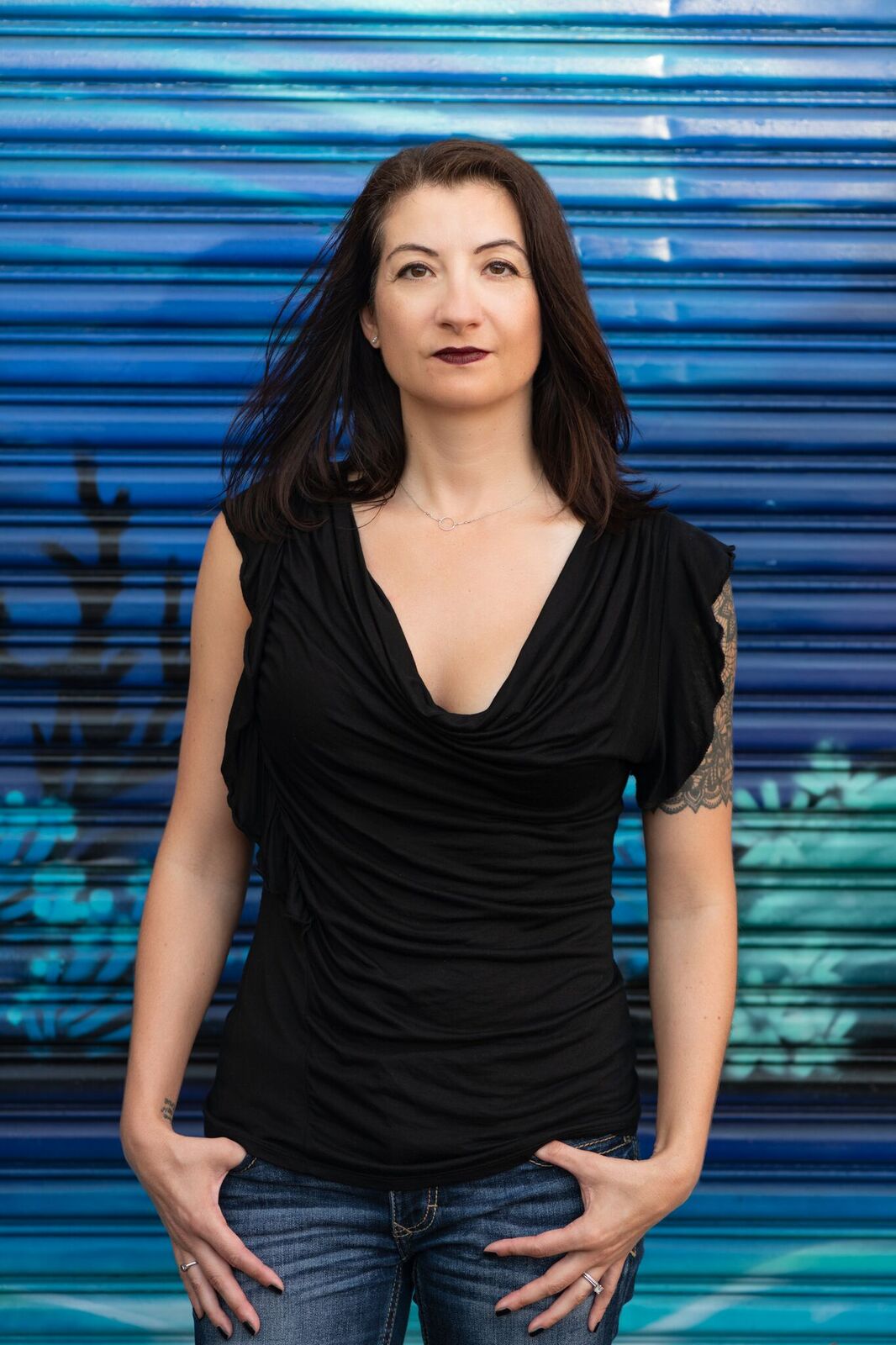
Courtney LeBlanc is the author of the full length collections Exquisite Bloody, Beating Heart (Riot in Your Throat, July 2021),  Beautiful & Full of Monsters (Vegetarian Alcoholic Press, March 2020)The Violence Within (Flutter Press, 2018, currently out of print), and All in the Family (Bottlecap Press, 2016, currently out of print) , and a Pushcart Prize  and Best of the Net nominee. She has an MFA from Queens University of Charlotte. She loves nail polish, tattoos, and a soy latte each morning. Visit her website, Twitter, Facebook, GoodReads, and her publishing house, Riot in Your Throat.

Other Reviews: