The Lotus Eaters by Tatjana Soli takes place in Vietnam between 1963 and 1975 and becomes a journal of Helen Adams’ evolution into a photojournalist from a young woman chasing the ghosts of her father and brother. The Vietnam War was one of the most controversial in American history, and journalists were on the front lines of the battles — political and physical.
“When they were fired on, the advisers called down airpower, but it dropped short, falling on them and civilians. A free-for-all clusterfuck. The SVA panicked and started firing on their own people, on civilians instead of the enemy, who had probably long retreated.” (Page 55 of ARC)
The Vietnam War thrust Americans in Asia at a time when Communism was considered one of the biggest threats to democracy. Americans entered the war following the failure of the French to colonize Vietnam and keep Ho Chi Minh out. Journalists flooded the nation, took some of the most raw and vivid shots of death, life, and struggle, but many of these were men. Women were not expected to last long in country, particularly with the SVA, corruption, American bungling in the jungle, and the NVA. Helen tags along with Sam Darrow to learn the ropes, but quickly finds that he’s not a mentor but a kindred soul. They connect on more than one level, but the war has ravaged him, leaving a shell of man who is unable to reconcile his role in the war with the ideals he once held about changing the world.
“Helen’s Saigon had always been about selling — chickens, information, or lovely young women — it didn’t matter. It had once been called the Pearl of the Orient, but by people who had not been there in a very long time. Saigon had never been Paris, but now it was a garrison town, unlovely, a stinking refugee shantyville filled with the angry, the betrayed, the dispossessed, but she made it her home, and she couldn’t bear that soon she would have to leave.” (Page 4 of the ARC)
Soli’s multi-layered tale unveils not only the horrors of war and the toll they take on individuals and the nation, but on the relationships cultivated in the most dire circumstances. Linh, Darrow’s photography assistant and ex-NVA and ex-SVA soldier, adds another complication to the mix when he falls for Helen, but seeks to protect her from harm in honor of his friend, Darrow.
“Darrow moved forward with the rest of the men, entering the waist-high marsh. She saw him as if for the first time, the truest image she would ever have: a dozen men moving out single file, visible only from the waist up, only packs, helmets, and upraised weapons to identify them; a lone bare head, an upraised camera.” (Page 91 of ARC)
Soli has a gift; she crafts a scene filled with heavy, conflicted emotion like a painter uses oil on canvas. Her characters are multi-faceted, evolving, and devolving at the same time, and like the lotus eaters in the Homer quote at the beginning of the novel, they lose sight of their home, their pasts, and themselves as they are absorbed by the beauty and the terror of the Vietnamese and their nation. The Lotus Eaters is an excellent selection for readers interested in the Vietnam War and a perspective beyond that of the soldiers. Another book for the best of list this year.
 About the Author:
Tatjana Soli is a novelist and short story writer. Born in Salzburg, Austria, she attended Stanford University and the Warren Wilson MFA Program.
Her work has been twice listed in the 100 Distinguished Stories in Best American Short Stories and nominated for the Pushcart Prize. She was awarded the Pirate’s Alley Faulkner Prize, teh Dana Award, finalist for the Bellwether Prize, and received scholarships to the Sewanee Writers’ Conference and Bread Loaf Writers’ Conference.
She lives with her husband in Orange County, California, and teaches through the Gotham Writers’ Workshop. @TatjanaSoli

Check out the rest of the TLC Book Tour.

This is my 25th book for the 2010 New Authors Challenge.
 This is my first book for the 2010 Vietnam War Reading Challenge.
***
Please also remember to check out the next stops on the National Poetry Month Blog Tour at Monniblog and Ernie Wormwood.
FTC Disclosure: Thanks to St. Martin’s Press for sending me a free copy of The Lotus Eaters for review.
 Wow, the read-a-thon was crazy, especially since I headed over to the Germantown Library sale. I got some great books this week through my own purchases and in the mail.
 I have commenced reading
 And we have an unofficial participant: Anna’s Husband!


 Are you ready for the 40th Virtual Poetry Circle this week? I hope you are because we’re continuing the celebration of National Poetry Month.
 .
. A recent article in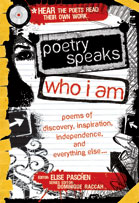
 combines written verse with audio recitation of poetry by the poets themselves on CDs spark young readers’ love of poetry and verse. Readers between the ages of 11 and 14 will find poems in this volume that speak to their struggles with love, family, growing into adulthood, and making friends.
 ***
*** This is my 24nd book for the
  Despite the mix of contemporary and classic sonnets, I think there is enough in here to count for the




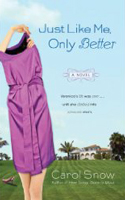
 — hits stores today, April 6. The protagonist, Veronica Czalicki, is a housewife who soon finds herself on her own when her husband leaves her for another woman — the love of his life. She’s now a financially struggling single mother, but she has other problems too. She just happens to look like a famous star. Veronica receives some respite from her daily struggles when she’s asked to become the star’s double.
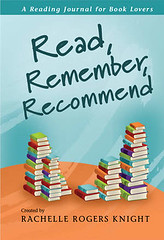
 by Rachelle Rogers Knight is an excellent organizing journal for passionate readers, but maybe not for book bloggers. As an avid reader with a to-read list in the hundreds, there are not enough pages in this book to house all of my reading wants and needs. An online version of this book may have been a better product, allowing readers to continuously add pages to their loaner and recommendation lists. . . but then wouldn’t we call it
 in 2007, and earned the Bronze Medal for “Independent Publisher of the Year” from Independent Publisher Online Magazine in 2008. Sourcebooks, Inc. is releasing new and improved editions of the self-published hit this April.