Quantcast

Interview With Poet Joseph Milford

This week at the Poetry Blog of 32 Poems Magazine my interview with poet Joseph Milford was posted.  He’s a contributor to the magazine and was a delight to interview.

First, let me tantalize you with a bit from the interview, and then you can go on over and check the rest out for yourself.

Without further ado, here’s the interview.

Do you see spoken word, performance, or written poetry as more powerful or powerful in different ways and why? Also, do you believe that writing can be an equalizer to help humanity become more tolerant or collaborative? Why or why not?

Obviously, when we hear the poems or see them “performed”, they become altered, and many times more powerful, vehicles. To see the shape of the poet’s mouth, the body posture, the diaphragm expand, the throat constrict, etc.—this is an incredible organic experience all leading to the convocation of voice. It’s a great sharing. I do think that in these moments, which at their greatest extreme could border on shamanistic, we may find ways to temper our human nature, to tune it into a more harmonious instrument, maybe. Although, I do hear my inner skeptic creeping in, so I will stop here.

How do you stay fit and healthy as a writer?

I wish I could decline this question! In any case, I don’t do much at all. I need to get fit—that’s for sure—I want to be around to watch my daughters grow into women—I have noticed that running from my responsibilities is not callisthenic.

What current projects are you working on and would you like to share some details with the readers?

I am currently shopping around a collection of poems I am calling DRUNKEN LOCUST, which I think is my best work to date. Of course, Chenelle and I are publishing SCYTHE, our literary journal, three times a year and doing The Joe Milford Poetry Show once a week. I am working on a very long poem which I doubt no one will ever be nuts enough to publish—it is currently titled BLIZZASTERISK. I think that sums it up for now—and thanks for this opportunity to talk about my interests and my love of poetry. I’m super happy to be in your journal.

Check out a sample of this mysterious large poem, BLIZZASTERISK:

From The Blizzasterisk

i wanted the specific procedure to bleed the TV sitcom families out of me.
vendettas spill over verandas and fertilize the gardens.
things were more insidious than asbestos lingering in our catacombs.
the entire population was just a few French fries short of a Happy Meal.
the ghosts of books read find slippage under the screen door into the grass to fume.
the stagecraft was amazing as the postcards shot through the crowd maiming all of us.
a mystery creature comes to you with a set of keys. you ask which door. it gnashes its teeth.
there is no power-source for the great apparatus. we still hung from the giant killswitch.

*

one can never have enough LEGOS during a mid-life crisis this is the cure to Alzheimer’s.
they kept saying my future was held in my hands’ palms. i sliced that future up with farmwork.
i can smell the musk, the scat, the sulphur, the burnt metals and plastics of a poem passing by.
like that pumpkin on the counter about to become a gourd to be hollowed out for a birdnest.
if you ever see a kid standing in golden wheat or goldenrod–rescue him. America kills.
i am made of tusks covered in leather. i move like a golem through religions. dream me.
some pop-songs are so covered in suntan lotion that i remember my sharkbites. ah, spring break.
on a white piece of construction paper, my stepdaughter killed my ninjas. it hurt nanoseconds.

*

if you paint a garden and do not like the branch then finish the painting and grab a ladder & saw.
a morphic field altered by language is a word or series of words you must own as a badge.
one must always attain a maximum intensity with a minimum of means said Miro the bullfighter.
the red fox implanted with her RFID chip runs constantly around our house stealing identities.
how does one separate the dust from anything he or she has done how does one leave earth?
amoebic vehicles harvest skeletal and biological growths amongst a sea of germinations.
without dirt there would be no clouds. without hammocks there would be no drunks. kick dust.
as a kid we had honeysuckle, crab-apples, grounded pecans, muscadines, sour-grass—plenty.

*

the ash falling was the closest thing to snowfall this hellpocket was ever going to be blessed with.
there are no inhospitable islands to vanquish sinners on–they become convenience store cashiers.
as we spread lime for next year’s tomatoes the world writhed in endless top ten lists. cuckolds.
crawdads circle like an underwater zodiac as i unhook the catfish from my chickenwire hook.
Ascletario was eaten by dogs when he should have been burned. the stars, the stars, the stars.
if i had been named Cadillac Williams and not Joe Milford i wonder what could have happened.
sea urchins thrive about the planet like the halitosis of your hangover and dust of bad checks.
Algol mer. 6:25 ev. Moon Leo. 35 degrees N. Lat 75 degrees. Long. Sun sets at 5:28. days too short.

Please check out the rest of the interview on 32 Poems Blog.
About the Poet:

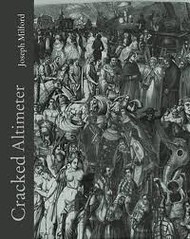
Joseph V. Milford is a Professor of English at Georgia Military College south of Atlanta. His first book, Cracked Altimeter, was published in 2010. He is the host of the weekly Joe Milford Poetry Show, which he maintains with his wife, Chenelle. He also edits the literary journal Scythe with his wife from their shack in rural Georgia. Currently, he is trying to figure out how to convert armadillo roadkill into a fuel-efficient substitute for fossil fuels.
Mailbox Monday #121

Mailbox Mondays (click the icon at the right to check out the new blog) has gone on tour since Marcia at The Printed Page passed the torch.  This month our host is I’m Booking It.  Kristi of The Story Siren continues to sponsor her In My Mailbox meme.  Both of these memes allow bloggers to share what books they receive in the mail or through other means over the past week.

Just be warned that these posts can increase your TBR piles and wish lists.

Here’s what I received this week:

1.  Monster by David Livingstone Clink from Tightrope Books for review.

2.  Come Closer by Leanne Averbach from Tightrope Books for review.

3. Staying at Daisy’s by Jill Mansell, which I received from Sourcebooks for my mother and which I’ll be reviewing this month.

What did you receive in your mailbox?

87th Virtual Poetry Circle

Welcome to the 87th Virtual Poetry Circle!

Remember, this is just for fun and is not meant to be stressful.

Keep in mind what Molly Peacock’s books suggested. Look at a line, a stanza, sentences, and images; describe what you like or don’t like; and offer an opinion. If you missed my review of her book, check it out here.

It’s a new year, and if you haven’t heard there is a new feature on the blog this year . . . my first ever, poetry reading challenge. Yup, that means everyone should be signing up because all you need to do is read 1 book of poetry.

Today, we’re going to wrap up National Black History month (I know it ended in February) with Gwendolyn Brooks from her collection, Selected Poems:

Negro Hero (page 19)
+++to suggest Dorie Miller

I had to kick their law into their teeth in order to save them.
However I have heard that sometimes you have to deal
Devilishly with drowning men in order to swim them to shore.
Or they will haul themselves and you to the trash and the fish
+++beneath.
(When I think of this, I do not worry about a few
Chipped teeth.)

It is good I gave glory, it is good I put gold on their name.
Or there would have been spikes in the afterward hands.
But let us speak only of my success and the pictures in the
+++Caucasian dailies
As well as the Negro weeklies. For I am a gem.
(They are not concerned that it was hardly The Enemy my
+++fight was against
But them.)

It was a tall time. And of course my blood was
Boiling about in my head and straining and howling and
+++singing me on.
Of course I was rolled on wheels of my boy itch to get at
+++the gun.
Of course all the delicate rehearsal shots of my childhood
+++massed in mirage before me.
Of course I was child
And my first swallow of the liquor of battle bleeding black
+++air dying and demon noise
Made me wild.

It was kinder than that, though, and I showed like a banner
+++my kindness.
I loved. And a man will guard when he loves.
Their white-gowned democracy was my fair lady.
With her knife lying cold, straight, in the softness of her
+++sweet-flowing sleeve.
But for the sake of the dear smiling mouth and the stuttered
+++promise I toyed with my life.
I threw back! — I would not remember
Entirely the knife.

Still–am I good enough to die for them, is my blood bright
+++enough to be spilled,
Was my constant back-question–are they clear
On this? Or do I intrude even now?
Am I clean enough to kill for them, do they wish me to kill
For them or is my place while death licks his lips and strides
+++to them
In the galley still?

(In a southern city a white man said
Indeed, I’d rather be dead;
Indeed, I’d rather be shot in the head
Or ridden to waste on the back of a flood
Than saved by the drop of a black man’s blood.)

Naturally, the important thing is, I helped to save them, them
+++and a part of their democracy.
Even if I had to kick their law into their teeth in order to
+++do that for them.
And I am feeling well and settled in myself because I believe
+++it was a good job,
Despite this possible horror: that they might prefer the
Preservation of their law in all its sick dignity and their
+++knives
To the continuation of their creed
And their lives.

Let me know your thoughts, ideas, feelings, impressions. Let’s have a great discussion…pick a line, pick an image, pick a sentence.

I’ve you missed the other Virtual Poetry Circles. It’s never too late to join the discussion.

Guest Interview: Melanie Huber Speaks With New York Quarterly Editor Raymond Hammond

Today’s interview with The New York Quarterly‘s Editor Raymond Hammond is brought to you by the prose editor of Leaf Garden and her own blog, Melanie Huber.

New York Quarterly is a literary magazine I’ve read off and on for several years, but the organization also publishes books.

Without further ado, please enjoy Melanie’s interview with Raymond Hammond:

1. What made you first decide to venture out into the poetry book publishing game?

Our founding editor, William Packard, had always spoken of an NYQ Books and his wish to make that happen. Shortly after his death we found several proposals that he had written over the years and we knew books were in the original charter, so it was always something in the back of my mind as well.  With the onset of one off printing and the subsequent increased quality of that industry, it became viable to begin thinking about setting up an imprint. We bounced around several ideas for a couple of years and then when the 40th anniversary came around in 2009, it seemed like the perfect time to do something like this and a fitting gesture to both the magazine as well as Bill.  So beginning in the first weeks of January of 2009 I set about releasing the older ideas we had bounced around and just made the decision to go full steam ahead with a non-profit model.  Just to do it.  By June of 2009 we released our first book.

I would like to add that in addition to the nostalgic value, I think having a press is important because it allows you to provide another venue to the poets, and to publish more work of those poets than we ever could in a hundred issues of the magazine.  There has always been at times those submission packages where you read it and want to publish the entire packet, and everything else you can get your hands on by that person.  Now we can do that.

2. I know your stance on contests, you are doing this without requiring authors to submit to contests…

You are correct, we do not believe in or run contests.  We invite our authors to publish a book from the list of poets who have already been published or accepted for publication in the magazine.  This means the vetting has already been done and we already have an established relationship with the author before embarking upon the journey to book publication.  And more importantly, it did not cost the author a dime to get noticed.

About a year or so ago I was speaking with one of our authors who told me that their first book would have never been published if it had not been for a contest.  Really? I then began asking around.  It was then that I realized how accepted the practice of the book contest path to publication had become. I was astonished, and saddened, and deeply disheartened. I knew that contests had become prevalent, but what disheartened me was to think that the book contest route has seemingly replaced the editorial route to publication in the hearts and minds of so many people.  I mean I know the editorial route to publication was a bitch and certainly lamentable for many reasons.  But contests require the same amount of energy to get noticed, offer the same if not narrower opportunity (contest=1 winner, editorially we see hundreds of poet’s work a year), get you the same result if you are lucky (book publication) all while costing you tons and tons of money. And to be clear, if you enter a contest you either win or you might as well have not entered—it is all or nothing.  Whereas with the editorial process you may not “win publication” the first or even the tenth time around, but you got noticed one way or the other—you are in the back of someone’s mind that makes the decisions, not just a guest judge.

I just do not believe in solely passing the plate in the choir loft, others have to want to keep the church doors open or there is no point in having a preacher or a choir.

3. How are you managing to stay viable?

K.I.S.S. – we keep it simple.  We are an all-volunteer non-profit.  We keep overhead to a minimum, there is no office space to rent, no salaries to pay, every dime that we get goes to publishing either the magazine or the books, and every dime we receive from the sale of those books gets returned into the upfront costs of producing another book.  The money just rolls right back into the program.  Because we use print-on-demand, we do not have large press run costs, we do not have to warehouse the books once they are printed—we simply print what we need at the moment.  We also do not sell the books directly, we only sell them through our distributors, so again, no press run, no warehousing, no fulfillment, no shipping.  And when you think about this even further, no direct sales means sales tax is kept to a minimum, accounting is kept to a minimum, everything is simpler and more manageable; therefore, cheaper; therefore, viable.

4. Contests seem to be the bread and butter of most small presses, it’s how they are able to publish what small amount they do publish and keep going, so what hopes and goals do you have for 2011?

The plan is to keep building our catalog. Build as large a catalog as quickly as possible to build the name of NYQ Books and so that the books all work together for sales—so that there is a unit of NYQ Books to promote, not just a few books.

Since January we have released 3 books, with a fourth coming out this week, then 2 more in the immediate weeks after that.  Plus we have 3 more ready and waiting to be released over the next several months.  And then for the remainder of the year we are probably looking at about a dozen in the hopper at minimum. We should end the year with approximately 20 new books all total.

5. How are you able to publish so many books?

It is simply a matter of perseverance. To this point I have done the bulk of the work on most of the books. A few books have been laid out and designed by some friends of the poets, but under our direction.  We have a wonderful cover designer who steps in on the covers that give me pause to do, and we just got another computer outfitted so that one of our other editors can assume a majority of the layout work.  Another key ingredient is organization. We have a 25+ page reference manual that each author is given at the beginning when the book is accepted for publication.  This manual takes them through everything from our philosophy, to legalities, to how to proof, to what happens after the proof is accepted–start to finish.  The more organized the author is in preparing the manuscript and the more they know what to expect along the way, the more efficient our production time can be.

The last reason we can publish so many books lies in the simplicity and economics of it all.  Again, low overhead, print on demand technology, no warehousing, no shipping, simplified accounting, etc.  The simpler one keeps all the ancillary things, the more one can get done.

6. How does the long tradition/philosophy behind the NYQ factor into your decision making regarding book publishing?

One of the philosophies of NYQ, to publish regardless of status in the literary community, contest winnings, school of thought, station in life, accomplishments, sex, race, religion, etc., provides us a great base from which to draw.  It also keeps the book series as eclectic as the magazine of which I am very proud.

And the simplicity and economics of it all allows us to publish a book that might now sell many copies right alongside a book that will sell hundreds if not thousands of copies. To be able to choose the book based upon the quality of the poetry rather than a forecast of sales, and keep it in print, is paramount to running the book program in the spirit of the magazine – the poetry first, always.

Thanks to Melanie for conducting the interview with Raymond Hammond and for Raymond for participating. Both of you rock for participating in the Indie & Small Press Celebration! You’ll be seeing more from Melanie later this month, so stay tuned.

Raymond Hammond; Copyright Amanda J. Bradley

About Raymond Hammond (from NYQ):

Raymond P. Hammond is a poet and critic who, originally from Virginia, now resides in Brooklyn and works at the Statue of Liberty NM as a law enforcement officer half of the week and as editor-in-chief of The New York Quarterly the other half. He holds an MA from New York University where most of his classes were intense studies of poetics with William Packard at the Chelsea Gallery Diner over a hamburger.

The Other Life by Ellen Meister

We’re taking a break today from the Celebrate! Indie & Small Press Month for a pre-scheduled TLC Book Tour into another world.

The Other Life by Ellen Meister chronicles the life of Quinn Braverman, a young married woman with one son and a caring husband, Lewis.  The suicide of her artist mother haunts her on a daily basis, but to cope, she enters into another life through a portal in her basement.  Her life with Eugene is without children and marriage, but is less mundane and best of all her mother is still alive.  Meister mixes a modern story line about family, suicide, and relationships with science fiction elements as Quinn travels through portals into parallel lives.

“But the important part of the secret — the part that terrified and thrilled her — was that she knew it was possible to cross from one life to the other.  There were portals.”  (page 5 of ARC)

Quinn’s life with Lewis is turned upside down when they learn that their unborn daughter’s life will not be as perfect as they imagined.  Although she’s always known that she could jump between her parallel lives, she has promised herself that she would not do it.  A promise that she cannot keep, and a promise that is quickly broken time and time again as she struggles to deal with her high-risk pregnancy, her inability to seek comfort from her mother, and the overwhelming desire to simply escape.

“She closed her hand into a fist and continued pushing.  The fissure became a hole, and the harder she pressed, the deeper it became, until her hand had disappeared up to her elbow.  She stuck her other hand inside and pressed her palms together.  Quinn closed her eyes and sensed Eugene’s energy, feeling as if the scent of his aftershave were lingering around her nostrils.”  (page 47 of ARC)

Readers who have read Linda Gray Sexton’s memoir about the legacy of suicide Half in Love (click for my review), will notice Quinn has a similar love-hate relationship with her mother and the legacy of suicide.  Her mother, Nan, has a similar artistic and impassioned charisma that Linda’s mother, Anne Sexton, had.  It is this combination that draws in the reader and the main character into Nan’s world of painting and deconstruction of her family in visual form.  Passages pepper the book with insight into Nan’s approach to her family and her work as an artist, but this pull doesn’t stop there.

“Her mother’s pull was just too strong for Quinn to float away and feel as if she were experiencing the shopping trip as an outsider looking in.”  (page 95 of ARC)

Drawn to her mother and a life where her presence is reassuring, Quinn struggles even more with her present life, and her brother’s inherited bipolar disorder only exacerbate her need for stability, which she believes can only be found in another life.  Meister does an excellent job of creating a sympathetic, mess of a character in Quinn and successfully weaves in the use of portals to demonstrate her anxiety.

Quinn is a mother wrought with anxiety, loneliness, and a forceful need to care for everyone in her life.  She’s constantly running from one crisis to another with her sword blazing, and while readers can feel for her and want her world to be right again, she can be frustrating as she jumps through portals to escape the hard decisions in her other life.  Overall, Meister’s writing is engaging, suspenseful, and easy to follow even as readers travel with Quinn between her two lives.  Readers hope that she will find the peace she is looking for and the love that she deserves, while at the same time confronting her past demons and moving into the future as a more confident woman and mother.  The Other Life by Ellen Meister would make an excellent book club selection.

About the Author:

Ellen Meister lives on Long Island with her husband and three children.

You can find out more about Ellen at her website, and you can also follow her blog and on Twitter.


Please check out the rest of the stops on the tour.


This is my 8th book for the 2011 New Authors Reading Challenge.

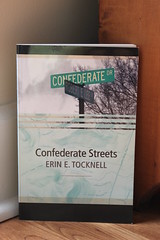
Guest Review: Confederate Streets by Erin E. Tocknell

Today’s guest review of Confederate Streets by Erin E. Tocknell comes from a new-to-me blogger, Sara from Wordy Evidence of the Fact.  She was one of the first to respond for my call for guest posts this month, and I’m thrilled to host her and her review.  I hope you enjoy it and visit Sara’s blog soon.


Title: Confederate Streets

Author: Erin E. Tocknell

Publisher: Benu Press

Publication Date: 2011

Full disclosure: This book was written by a good friend of mine.  See more below.

We had just started clearing the Thanksgiving dishes when my friend Erin called.  I thought she was just calling to wish us a Happy Thanksgiving or some other friendly formality.  Instead, I hear this: “I’m getting published.  My book won and is going to be published.” You can easily imagine the general jubilance and squealing and hopping that took place.  My family thought I had gone around the bend.  But all of you writers with maybe-someday hopes for publication out there understand just how momentous a first book is.  It is a watershed achievement, and I am proud of my friend.  Now that I’ve had the chance to read it, I can confidently say I am also proud of her book, Confederate Streets.

The competition she entered is held annually by Benu Press.  Benu Press is an independent publisher that focuses on issues of social justice and equity.  They see their work as a means of activism, and those of us who recognize the inherent power of words understand just what a mighty tool for change this work can be.  The award Erin won is called The Social Justice and Equity Award in Creative Non-Fiction. As a genre, Creative Nonfiction is most certainly undervalued.  It is different from autobiography, distinct from memoir, and not exactly journalism.  Perhaps it combines elements of all three; done well, it can produce some highly enjoyable and informative work.

Confederate Streets is a collection of interconnected pieces, each exploring Nashville, its history, Tocknell’s family, her past, and the issues of race and class that have so shaped all of these elements.  Tocknell skillfully relates various life experiences without coming across as self-absorbed; she imparts the knowledge gleaned from her research with a seemingly effortless touch, informing and inspiring at the same time; she asks hard questions of herself and of the reader and expects a thoughtful answer; and perhaps most importantly, she entertains.

One of my favorite chapters comes late in the book and is called “Leave the Driving to Us.” In this piece, Tocknell manages to overlap narratives about her tour of UVA (and other colleges) as a prospective student, her travels on a Greyhound bus, and the magnet school system / busing system in her hometown, Nashville, TN.  The highlight of the chapter comes during her brief stay in Norfolk, VA and involves a breakfast with her Uncle David at the Cozy Home Diner.  The details she provides are spot on, and what happens there can only be described as life-changing.  I don’t mean life-changing in the way a death or a birth or even a career change can be; I refer to those still, small moments when you realize that everything you once knew has shifted slightly on its axis.  It is a gift – one she was given, certainly, and one she has now given to each of her readers.  Here are her concluding thoughts on the subject:

    Though I didn’t realize it until later, the Cozy Home Diner also revealed that a great deal of my trip was a sham. I had bounced, blithely and eagerly, between a world full of choices and a world full of limitations.  My bus mates, the men and women in the cafe, the tired faces in the stations and towns along the way – most of them couldn’t decide whether or not they’d like to wear J. Crew and go to a school with a crew team or Honor Code, because that was not an option for them.  I had reveled in the simplicity of bus travel, never considering that was I saw as simple was, for others, either a dead end or an immensely complex web to navigate. (120)

Though it would be easy to dismiss Tocknell as just another privileged White kid coming to terms with her Whiteness, the complexity of her situation should not be ignored.  There was no reason for her to not consider college as the logical next step; there was no reason for her to have considered the Greyhound bus anything but a convenient and inexpensive mode of transportation; she had done nothing wrong.  Yet, an encounter, or the absence of one, in a diner changed her ability to see things so clearly.  It muddied her waters as happens to each of us when we realize that doing “nothing wrong” might also equate simply to doing nothing.  By writing this book, Tocknell has made sure she has done something to speak up about the issues of race and inequity that still exist.  She believes in the power of story to change lives, and she offers us stories that will go on changing lives through her telling of them.

Lest you think I am merely a friend blinded by loyalty, I must offer a word of critique – which Erin has already heard from me.  I believe the final chapter unbalances the collection. “Rowing Through the Ruins” is a gorgeous, award-winning essay on rowing and place and architecture and selfhood; however, it does not provide adequate closure to the lessons and history (personal and regional) she has worked to intertwine so beautifully throughout the rest of the book.

***If you want to read this fascinating book, you can get it as a kindle edition from amazon.com or from the publisher.  If you want to know more about Erin Tocknell and her work, you can read this interview with her on my blog.  And if you’d like enter to win a signed copy of this book, go to the interview, leave a comment, and cross your fingers.  I’ll choose a winner on Friday.***

Thanks, Sara, for providing a review for the Indie & Small Press Celebration! You’ll see more from Sara later in the month.

An Interview With Dan Cafaro, Publisher of Atticus Books in Maryland

Today we’re kicking off Savvy Verse & Wit’s First Annual Indie & Small Press Month Celebration with Dan Cafaro from Maryland’s very own Atticus Books.  He was gracious enough to answer a few questions about his business, books, and some more personal matters, like obsessions.

Rather than provide you with all the connection details at the end of the interview, please check out their Facebook page, the Independent Book Sellers That Rock Our World Page, and Book Blogger Central (you may even find a picture of Dan on one of these pages).

1.  As founding publisher of Atticus Books in Maryland, how long has it taken to make a name for the publishing house in the industry, and what frustrations have you overcome to make it such a local success?

We haven’t yet made a name for ourselves, but writers, damn good writers, continue to find us and that’s more than half the battle for a small press in its infancy. We began in earnest less than a year ago when we signed our first novelist (Alex Kudera) to a book contract. I had just hung our shingle in Kensington when Alex took a leap of faith in me (and I in him).  I was a solo act with no staff support in sight. He was a former adjunct from Philly with a bitterly funny academic satire to sell.  I had worked in print media for 20 years and I had just ended a publishing consulting contract with an aerospace society; trade publishing was a far cry from rocket science; it was a whole new animal and I was elated to be in position to give it a whirl.

When the entrepreneurial muse came calling, little did I know what she had in store.  After exploring every conceivable hybrid book business model known to man and industry insiders—complete with storefront, café, antiques, wine, and/or an espresso book machine (to print books on site and on demand), I elected to conserve my capital, minimize the overhead, mitigate the out-of-pocket risk, and focus my energies on the writing.  My goal became an all-consuming, wildly passionate ambition—to find the greatest writers out there who simply are not getting the attention they deserve. I wake up equally frustrated and intrinsically rewarded every day, knowing in my old-school bohemian bones that I’m driven by a desire that defies all monetary-minded rationale.  If I somehow can make a living at doing what I love by 1.) forming micro-literary villages of likeminded souls online, and 2.) helping innovate a long established (some say, struggling if not dying) profession, then I’ll be the happiest working man-child alive.

2.  What’s the breakdown of books you publish (i.e. how many poetry books, fiction, etc.)?  How many are written by local authors?

We currently have produced three titles of fiction, including two novels and one novella (The Absent Traveler & Other Stories).  In 2011, we have five titles of fiction planned for release, all novels, with other book proposals pending and in development.  We’re taking a serious look at publishing more collections of short stories (a terrific weakness of mine) as I truly admire those who can say more with less, and I believe that the short story form is due a cultural revival. Short stories often provide a taste of better things to come from developing writers, so it excites me to think that I’m supporting a fertile mind from the beginning of its artistic bell curve.  Not that all writers follow this path, but those who have mastered the short form sometimes go on to use those same characters and charming turn-of-phrase aptitude in longer, more fully layered works of magnificence.

Our writers, more than half of whom are college English professors, scatter the map, from Massachusetts, New York (3), and Maryland to South Carolina, Tennessee, and Oklahoma. Eric D. Goodman, whose debut novel, Tracks, comes out in the summer, resides in Baltimore. Tracks contains a thread of stories told by characters traveling on a train from Baltimore to Chicago. It’s richly laced with colorful descriptions and insights of the city of Baltimore. Eric is heavily involved in Baltimore’s literary scene and supports the arts regionally through his participation in DelMarVa events, readings on NPR-Baltimore, and his blog.  His dedication to the area and involvement with the Maryland Writers’ Association, the CityLit Project in Baltimore, and the F. Scott Fitzgerald Literary Conference in Rockville, Md., factored in my wanting him in our camp.

3.  From the list of authors, online contributors, editors, etc. listed on Atticus Books Website, it seems as though the working environment at the publishing house is very collaborative, almost like a large family.  Was this environment intentional, and how well does it work when deadlines arise?

In an effort to keep this answer short, let’s just say, we’re one happy, dysfunctional family—and the dysfunction comes from none other than the patriarch.  One rule, besides unceremoniously leaving the seat down in the bathroom for Libby and Lindsey (my part-time, guardian angels), is to not take ourselves (and myself) too seriously.  As a former daily news schlep, I work better under deadline, particularly when that deadline is self-imposed and I get to revise it.  Once you’ve survived the pressure of filing stories on time, within length constraints, and without typos under the watchful eye of a half-crazed editor breathing down your neck in a noisy newsroom, a mostly quiet and serene book publishing environment is a piece of cake (filled with buttercream and surprise).

4.  Atticus also has an aggressive environmental policy against using paper from endangered forests, using at least 30 percent recycled fiber, and more.  Some publishers have said adopting an aggressive stance will increase costs so much that making a profit is nearly impossible.  What prompted your decision to adopt the policy, how did you justify it, and has it been as costly as other publishers have indicated it would be?

To be honest, I’m not sure we currently print enough books to know how much impact this is having (or will inevitably have) on our bottom line.  Our books are printed on recycled paper; we’re living in environmentally conscious (and limited natural resource-sensitive, i.e., tree-hugging) times and that practice doesn’t seem to be too much to ask of any business or individual, no matter how cynical or mercenary.  Perhaps if I pinched nickels and was hyper vigilant about economies of scale, I might care to calculate the loss of margin, but that’s not how I operate.  In poetic step and verse with Oscar Wilde’s definition of a cynic, I’ve never set out to be a man who knows the price of everything and the value of nothing.  That statement someday may spell my financial ruin, but for now, it’s part of how Atticus Books says grace and carries on.

5.  In these tough economic times, do you think small publishers can make their mark on literature and the book selling market?  How best can small presses accomplish their goals?

If I didn’t think small presses and indie booksellers could make a mark on literature—I mean a real whale of a red-wine, dark chocolate-stain doozy, then I wouldn’t be in this Goethe-forsaken business.  I chose this vocation and lifestyle, partly because my selfless, well-compensated wife and a string of lucky breaks have afforded me the opportunity.  I believe in giving back to society when your circumstances grant you the luxury.  Will I always be in this fortuitous position?  Hell, if I know.  Will I fight the noble fight to the last breath to preserve the legacy of my authors?  You bet your life.

Small presses possess the opportunity to upset the landscape, upend the apple cart, tilt the paradigm, cloud the prism, and spoil the harvest of large publishers just by being.  Existing.  Resisting.  Insisting.  This is a game of Darwinian perseverance and as the inimitable Billie Holiday sang in “God Bless the Child”: “The strong survive while the weak ones fade.”  What makes the strong, strong and the weak, weak?  Beats the Oliver Twist out of me.  I’d rather leave that to sideline prognosticators and armchair quarterbacks.  Small presses need to rattle the right cages and make enough noise or create stirring silence to demand attention.  It won’t be easy, but there’s no such thing as impossible.

6.  Online reviewers, such as book bloggers, have gained additional recognition at Book Expo America and with publishers and PR staff.  Has Atticus Books tapped this market of reviewers to spread the word about its books and how formal or informal and/or important are these relationships?

We (staff aides Lindsey, Libby & I) love bloggers and I say that as a fan of anyone who has the wherewithal to post religiously without monetizing their effort.  Book Blogger Central, a page that we created on Facebook, is a service to those who blog and is a tribute to the work that book bloggers tirelessly perform.  And I say that not in the “brown-nosing, gosh, we need you to like us” sort of way, but more in the respectful, compassionate way that only a blogger (a fellow writer with far more faults and insecurities than time or patience) could understand.

I write (inconsistently).  I blog (just as inconsistently).  And I publish (consistently, I hope, though that’s a relative measurement).  What separates me, besides discipline, from those who do the first two things, but not the third?  Not much, really.  Do I have a pedigree in marketing or a Ph.D. in public relations?  No.  What I do have is instincts that I trust, authors whose abilities I believe in enough to invest hard-earned cash, and relations with individual media of which I’m just beginning to form.  Do I consider the opinion of bloggers as vital as the third rail of publishing (e.g., the New York Times Book Review section, Publishers Weekly, and/or Kirkus Reviews)?  Yes, without hesitation or fear of retribution, I can say I do.  Bloggers have their fingers pressed firmly on the pulse of contemporary culture as much as—if not more than—the establishment. In sum, bloggers, on the whole, are thoughtful, voracious readers who immeasurably influence their loyal, fast growing flock of followers as much as—and increasingly more than—those who represent the view of far-reaching institutions.

Now for a couple of fun questions:

7.  You’ve become a publisher to sift new writers into the market.  Who helped guide you to where you are today and has writing or reading  been a driving force in your own life?

Not to sound cliché  or patronizing, but I’ve been guided mostly by my parents to work hard and believe in myself, and I’ve been guided creatively by my friends and peers, particularly my best friend and contemporary—my beacon of a wife, to follow my dream.  I’ve also been guided by countless teachers, writers, artists, and people of unmistakable (though sometimes misunderstood) honor to pursue an honest living.

As an undisciplined writer and reader with undiagnosed ADD and an aversion to truthiness (vs. truth), I am driven by the responsibility of raising the clout and visibility of this generation’s unrecognized seers—i.e., the distinct, undiscovered voices of meaningful prose and poetry with unpublished works tucked away in the recesses of their underwear drawer.  My hope is that I forever keep in mind the indelible impressions left by those who’ve suffered for art and justice, the proverbial (but oft times, literal) starving artist, who personifies our best-in-class and highest-in-integrity ancestors.

8.  Do you have any particular obsessions, literary or otherwise, that help reduce your stress levels or ensure you remain on track?

My main obsessions are the Mets, Jets, pasta, single-malt scotch, and the security and well-being of my family, not necessarily in that order. These all prove to consume my time, passion, and addictions, usually more so than any Anne Sexton stanza or Edward Abbey diatribe, though I have to admit I’m affected daily by the things I haphazardly pick up to read.  One of the benefits of dropping out of the corporate world is being able to justify just about any casual reading or new literary discovery with research.

9.  When you were a young man, what was your dream job?  What’s your dream job now?

Heavy question, but definitely fun to consider.  I dreamed of being a baseball player and a doctor, but mostly, I dreamed of being a writer because it was the only vocation I thought suited me.  Writers (those who prefer words to just about anything else) are traditionally ill-suited for most conventional careers, not to mention situations.  As I grow older and make compromises (not of integrity, but age- and lifestyle-related), I realize now I’d probably make a good government worker (e.g., contract consultant) who happens to own both a funky small press and a minor league baseball franchise that barely make a profit between them.  As long as I can keep the two businesses in the black, afford to buy a round of hot dogs with relish, and support the career of the next John Steinbeck, then I’m not only living the dream, I’m creating it, too.  And that’s a dream worth pursuing.

10.  If you could give new and local writers one piece of advice about finding a publisher, particularly a small press, to publish their work, what would that be and why?

Explore and loiter on websites and blogs that speak your language; travel in the same circles as the writers and indie presses you admire.  There’s little good in being a lone wolf; run with the pack.  Find a community, a tribe that’s rightfully yours, and claim your stake in it.  Read works (and reviews of books) by small presses of kindred spirits and burrow in their collective skulls a while; plant your thoughts there; read between the lines of their fictional characters; see if you’re cut out of the same tapered cloth.  Then introduce yourself.  Howl at the yellow moon.  Play nice and bare your crooked smile.  Compliment your peer’s efforts.  (We’re all in need of a hug.)  Think of the publishing world as one large playground and the kindergartners have turned it upside down.  The runts of the litter are beginning to twist the upturned noses of the intellectually stunted bullies.  Take part in this leveling of the landscape.  Celebrate the renaissance.  Join the indie movement.

Instead of closing with a shameless plug about Atticus, let’s close with this piece of advice from E.B. White whose writing has inspired me a great deal over the years: “Advice to young writers who want to get ahead without annoying delays:  don’t write about Man, write about ‘a’ man.”

Read E.B. White.   There’s more wisdom in that man’s one pinkie (on his writing hand, of course) than I have in my entire body.

So, what did we learn today from this interview?

I can tell you what I learned:  First and foremost that there is a Indie/Small Press publisher in my own backyard!  How fantastic is that! And this big publisher (at least in my mind because of its ideals) loves bloggers.  What else do we need to know?!

I hope you enjoyed the first stop as we celebrate Indie and Small Press this month, and if you couldn’t have guessed, this was another stop on the Literary Road Trip.

Celebrate! Indie & Small Press Month Schedule

March begins tomorrow, and my celebration of Indie & Small Presses begins as well. I thought that I would post a schedule of the events for the month, so everyone could refer to it.

Think of all the diversity you’ll miss if you don’t check out the fiction, poetry, and other publishers here in the United States and Canada.  There will be guest reviews of independently published books and interviews and naturally some regular features that you’re used to here on the blog.

I’ll update the post links as the month goes along, but be sure to check back every day in March for the latest celebratory post.  Sundays will be reserved for Mailbox Mondays or simply a break from the celebration.

Please ignore the strike-through in the links; I’ve tried to eliminate it to no avail.

March 1:  Interview with Atticus Books’ Dan Cafaro

March 2:  Guest Review of Confederate Streets by Erin Tocknell

March 3:  TLC Book Tours Stop for The Other Life by Ellen Meister

March 4:  Guest Interview:  Melanie Huber Speaks with New York Quarterly Editor Raymond Hammond

March 5:  Virtual Poetry Circle #87

March 6:  Mailbox Monday

March 7:  32 Poems Interview With Joseph Milford

March 8:  Review of The Rorschach Factory by Valerie Fox

March 9:  Guest Post:  Bancroft Press’s Harrison Demchick

March 10:  Guest Post:  Caleigh Minshall from Porcupine’s Quill

March 11:  Interview With Margaret Sullivan, Author of The Jane Austen Handbook from Quirk Books

March 12:  Virtual Poetry Circle #88

March 13:  Breaking News . . .

March 14:  Guest Post:  Loving Healing Press’s Victor Volkman Talks About Small Press in the Modern Era

March 15:  Guest Post:  Story Plant’s Lou Aronica on Running a Small vs. Big Press

March 16:  Review of The Map of True Places by Brunonia Barry

March 17:  Guest Post:  Istoria Books’ Libby Sternberg

March 18:  Guest Review:  Delights & Shadows by Ted Kooser

March 19:  Virtual Poetry Circle #89

March 20:  Mailbox Monday

March 21:  Guest Interview:  Jennifer Flescher Talks With Cooper Dillon Books’ Editor Adam Deutsch

March 22:  Guest Review: 200 Nights and One Day by Margaret Rozga

March 23:  Guest Post:  Candlemark & Gleam’s Kate Sullivan Talks About Different Distribution and Payment Models

March 24:  32 Poems Interview With Andrew Kozma

March 25:  Guest Post: Adrienne Odasso Talks About Her Experiences With Small Presses

March 26:  Virtual Poetry Circle #90

March 27:  April’s National Poetry Month Celebration Announcement

March 28:  Interview with Unbridled Books’ Fred Ramey

March 29: Announcing the 2011 Indie Lit Awards

March 30:  Guest Post:  Tightrope Books Halli Villegas

March 31:  Guest Post: Vanilla Heart Books’ Kimberlee Williams on the Changing Face of Publishing

Not all of these links will be live.  Links will become active on the date of posting.

If you’re interested in filing in any of the blank dates with a guest review of an indie or small press published book, please let me know what date via email and what book you’ll be reviewing.

Reviews should contain publisher information as well.

Mailbox Monday #120

Mailbox Mondays (click the icon at the right to check out the new blog) has gone on tour since Marcia at The Printed Page passed the torch.  This month our host is Library of Clean Reads .  Kristi of The Story Siren continues to sponsor her In My Mailbox meme.  Both of these memes allow bloggers to share what books they receive in the mail or through other means over the past week.

Just be warned that these posts can increase your TBR piles and wish lists.

These came unrequested from Algonquin Books:

1.  Something for Nothing by David Anthony

2.  When Tito Loved Clara by Jon Michaud

3.  What You See in the Dark by Manuel Munoz

From the Poet Andrew Kozma:

4.  City of Regret

Baby gifts from Quirk Books, just because:

5.  Haiku Mama by Kari Anne Roy

6.  Disneystrology by Lisa Finander

7.  Women Know Everything! by Karen Weekes

8.  Baby Owner’s Manual by Louis Borgenicht, MD, and Joe Borgenicht, D.A.D.

9.  Baby: 16 Assorted Notecards & Envelopes

10.  Baby:  Owner’s Maintenance Log by Louis Borgenicht, MD, and Joe Borgenicht, D.A.D.

11.  Baby Owner’s Games and Activities Book by Lynn Rosen and Joe Borgenicht, D.A.D.

12.  Skywriting Journal by Byron Jorjonan

What did you receive in your mailbox?

Winner of $35 Credit with NextDayFlyers

With Book Expo America on the horizon, I had thought there would have been more entrants into the business card credit giveaway from NextDayFlyers.com, but alas, there were only 6 entrants.

From the 6 entrants, Random.org selected #4:  Anna from Diary of an Eccentric, who said, “I’d definitely get some cards done for my blog…especially since the old ones I made don’t reflect the new URL.  Adding this giveaway to my sidebar.”

Congrats to Anna!  I hope everyone else will check out this great resource for your business card needs.

86th Virtual Poetry Circle

Welcome to the 86th Virtual Poetry Circle!

Remember, this is just for fun and is not meant to be stressful.

Keep in mind what Molly Peacock’s books suggested. Look at a line, a stanza, sentences, and images; describe what you like or don’t like; and offer an opinion. If you missed my review of her book, check it out here.

It’s a new year, and if you haven’t heard there is a new feature on the blog this year . . . my first ever, poetry reading challenge.  Yup, that means everyone should be signing up because all you need to do is read 1 book of poetry.

This week, I wanted to share a poem from Langston Hughes, since February has been Black History Month:

Night Funeral in Harlem

 Night funeral
     In Harlem:

     Where did they get
     Them two fine cars?

Insurance man, he did not pay--
His insurance lapsed the other day--
Yet they got a satin box
for his head to lay.

     Night funeral
     In Harlem:

     Who was it sent
     That wreath of flowers?

Them flowers came
from that poor boy's friends--
They'll want flowers, too,
When they meet their ends.

     Night funeral
     in Harlem:

     Who preached that
     Black boy to his grave?

Old preacher man
Preached that boy away--
Charged Five Dollars
His girl friend had to pay.

     Night funeral
     In Harlem:

When it was all over
And the lid shut on his head
and the organ had done played
and the last prayers been said
and six pallbearers
Carried him out for dead
And off down Lenox Avenue
That long black hearse done sped,
     The street light
     At his corner
     Shined just like a tear--
That boy that they was mournin'
Was so dear, so dear
To them folks that brought the flowers,
To that girl who paid the preacher man--
It was all their tears that made
     That poor boy's
     Funeral grand.

     Night funeral
     In Harlem.

Let me know your thoughts, ideas, feelings, impressions. Let’s have a great discussion…pick a line, pick an image, pick a sentence.

I’ve you missed the other Virtual Poetry Circles. It’s never too late to join the discussion.

Interview With Poet Matthew Roth

Poet Matthew Roth

This week at the Poetry Blog of 32 Poems Magazine my interview with poet Matthew Roth was posted. He’s a contributor to the magazine and was a delight to interview.

First, let me tantalize you with a bit from the interview, and then you can go on over and check the rest out for yourself.

Without further ado, here’s the interview.

How would you introduce yourself to a crowded room eager to hang on your every word? Are you just a poet, what else should people know about you?

I am perfectly content to claim the mantle of poet, if only because saying so might inspire me to write something. Power of suggestion, etc. I also teach at a great little school in central Pennsylvania, Messiah College. Add to that husband and father, fledgling Mennonite, tender of illegal backyard chickens, bread enthusiast, and now we’re well into the archipelago of mundane islands barely worth a visit.

Poetry is often considered elitist or inaccessible by mainstream readers. Do poets have an obligation to dispel that myth and how do you think it could be accomplished?

Labeling readers as mainstream or non-mainstream seems as unhelpful as trying to judge which Americans are more “real.” To then try to write for one imaginary group or another seems like a waste of energy. To those poets who want to return to the 19th century, I invite you to read a month’s worth of poems from the daily newspapers in 1877. When you’re finished gouging out your eyes, give me a call.

How do you stay fit and healthy as a writer?

Sonnets + Hip Hop Abs!

Check out a sample poem from Matthew Roth:

No Mark

There was a high stone wall
separating our land—the small yard,
half sand, where my father grew

tomatoes—from the royal preserve.
Years ago, I was told, the king himself
hunted there among well-ordered trees,

made camp by the stream that coils
through its heart. There was even—
still it’s there, though overgrown—

a small orchard of sweet peaches
and apricots. Now thickets
lie stripped by a tangle of deer,

the high wall my father disappeared
behind one day, overthrown
by slow degrees of frost and thaw.

Many days, I have stepped through
a breach, found myself in that
odd, forbidden state, my own

and not my own. And once,
beneath the government
of a twin row of sycamores,

I found the hoofprints of a horse,
each shallow C filled in
with tarnished bronze. Amazed,

I followed, until the hooves
stopped short in a clearing
by the edge of a small reflecting pool.

A stone in its middle made it look
like a human eye. To one side
a thick-trunked magnolia leaned.

This must have been April,
the water clotted with pink,
fleshy petals. I stood wondering

when all at once the surface cleared
a moment, and I started
at the sudden flare of my face

peering into the pool, or well,
or deep oubliette, where I lay
staring up at the shadowed face,

which hovered like a stone
in the sky’s open eye. Somehow
I knew, whoever it was,

he had not come to save me.

–published in Bird Silence.

Please check out the rest of the interview on 32 Poems Blog.