Quantcast

Interview With Poet Alison Stine

I’ve been working on a interview project with Deborah at 32 Poems magazine, and she kindly allowed me to interview past contributors to the magazine. We will be posting the interviews throughout the coming months, and our fourth interview posted on Deborah’s Poetry Blog of 32 Poems on Feb. 23.

I’m going to provide you with a snippet from the interview, but if you want to read the entire interview, I’ll provide you a link for that as well.

For now, let me introduce to you 32 Poems contributor, Alison Stine:

1. Not only are you a contributor to 32 Poems, but you are also a composer and teacher. What “hat” do you find most difficult to wear and why?

And right now I’m a student too! I’ve gone back to school after six years away to pursue my PhD at Ohio University. I love it. Switching back and forth between learning and teaching isn’t as difficult as I had expected because I feel like I’m learning all the time. I feel my students really teach me. They constantly inspire me and surprise me. I learn from them, and I write for them, especially the high school students that I teach in the summer. I want to make them proud and write something they can believe in and relate to. As far as composing, at the moment, my music is very private. It’s still happening. I still write it. But it’s happening only for me. And that’s the hardest right now.

2. Most writers will read inspirational/how-to manuals, take workshops, or belong to writing groups. Did you subscribe to any of these aids and if so which did you find most helpful? Please feel free to name any “writing” books you enjoyed most (i.e. Bird by Bird by Anne Lamott).

I did get an MFA in Writing, and I’m in a PhD program now, but the best writing workshops I had were unofficial or off record. Having informal, friendly conversations about the poems really shaped them and made them strong, grow tendrils and vines I never expected. I was fortunate to be a part of two workshops in the summer at the Bread Loaf Writers’ Conference, and during the school year in a “non-school” setting at Stanford University as a Wallace Stegner Fellow. Those experiences absolutely changed my writing life. Saved it even. And those workshop leaders were the best teachers I have ever had. But everyone you meet is a potential teacher. You never know who will touch you or your poems, will come back to you years later when you need their words. I’ve never been able to finish a self-help or writing book of any sort, although I have tried. I just had a tennis book recommended to me for what it says about concentration, that that can be applied to writing. Who knows? Maybe this one will stick!

3. How do you stay fit and healthy as a writer?

I’m a new fan of the Wii Fit! My college-age brother got one for Christmas, and my parents ending up buying each of my siblings one because they’re hilarious and imaginative. I also run a lot, run and walk but don’t listen to music. I think when I’m running. I think in the silence of running. I especially love to run into the deep country and in the deep dark ice of early morning winter, when there’s no one around but snow and birds. I’m definitely a winter runner.

Want to find out what Alison’s writing space looks like? What music she listens to while she writes? Find out what she’s working on now, her obsessions, and much more. Check out the rest of my interview with Alison here. Please feel free to comment on the 32 Poems blog and Savvy Verse & Wit.

Check out some of Alison’s work at Prairie Schooner.

***Don’t forget my Arlene Ang, Secret Love Poems, giveaway***

Final Part of My Interview With Arlene Ang

Welcome Arlene Ang for her final questions from Savvy Verse & Wit. If you’ve missed the first two parts of the interview, click here and here. Additionally, you may have missed my review of her chapbook Secret Love Poems. If you have, check it out here. Stay tuned for giveaway details after the interview.

Without further ado, here’s Arlene:

7. While reading your chapbook “Secret Love Poems,” I noticed that there are five “numbered” Secret Love Poems (13th, 15th, 19th, 22nd, and 24th Secret Love Poems). Were there other numbered secret love poems that did not make the chapbook? If so, why were they not included?

The original plan was to have 69 for a book. I got as far as 35 before running out of gas. When I submitted the manuscript to Rubicon Press, the contents page looked so redundant with 1st Secret Love Poem, 2nd Secret Love Poem, etc that I decided to change most of the titles. Quite a bit of secret love poems are floating out there that weren’t included in the chapbook, mostly because they weren’t in context with the rest or were still awaiting first publication in a magazine at the time. Also, towards the end, I got a bit creative with the concept and wrote quite a lot of duds.

8. The poems included in “Secret Love Poems” obviously were chosen for their central theme. Were the poems written at the same time (Much like your self-proclaimed obsessions with words or ideas) or over a period of time in spurts?

Oh god, yes. I was obsessed with it — inspired by Apollinaire‘s secret poems (check out The 9th Secret Poem) — for a couple of months. I wrote all 35 in less than 60 days, I think.

9. Most writers will read inspirational/how-to manuals, take workshops, or belong to writing groups. Did you subscribe to any of these aids and if so which did you find most helpful? Please feel free to name any “writing” books you enjoyed most (i.e. Bird by Bird by Anne Lamott).

For many years, I was a member of the Internet Writing Workshop’s Poetry-W, a critique group that functions via e-mail. Because participation was a requirement, I was forced to write a poem at least once a week. Then I discovered SaucyVox — an online writers’ community, now defunct — which had this challenge to write 30 poems for 30 days together with other people. It was such a fun and inspiring experience that when the site closed down, the members just moved on. Right now, the 30:30 challenge is being hosted by Rachel Mallino at In The Writer’s Studio. As much as I hate to admit it, the cure for writer’s block is writing. Bookwise, my favorite is still John Drury’s Creating Poetry.

10. When writing poetry, prose, essays, and other works do you listen to music, do you have a particular playlist for each genre you work in or does the playlist stay the same? What are the top 5 songs on that playlist? If you don’t listen to music while writing, do you have any other routines or habits?

No music, no tv. I get easily distracted. One routine I learned is to start writing as soon as I wake up. Once I start thinking of other things, I’m a goner. When inspired, I usually write in bed with pen and paper. When desperate, and the 30:30 clock is ticking, I type directly on the computer. I also read something like 30-50 poems a day — between books and online journals — before writing. It works as a kind of sun salutation for me.

11. What current projects are you working on and would you like to share some details with the readers?

Valerie Fox and I might have another poetry book in the making. We’re trying to move towards real collaborative writing as opposed to writing poems based on each other’s poems. It’s rather unexpected since we just had our Bundles (of joy) last year, but we find that once we start writing in 30:30 together, we just go into collaborative writing mode. Another project would be to start updating/revising my full-length manuscript, “Seeing Birds in Church is a Kind of Adieu” for Cinnamon Press. It’s scheduled to go into print early 2010.

I want to thank Arlene for spending time with us here at Savvy Verse & Wit, and for taking time out of her busy schedule to answer my unusual questions.

***Giveaway Details:***

Originally, I had decided to pay for one or two winner to receive a copy of Secret Love Poems.

However, Arlene has generously offered to giveaway THREE copies of her chapbook, Secret Love Poems, to three lucky winners.

The giveaway is INTERNATIONAL, since she is in Italy herself, and she will be mailing out the copies. She’s such a doll, and she likes to mail things.

Deadline is FEB. 26, Midnight EST.

1. Leave a comment, ask a question, just don’t use the trite: “Please enter me” or “pick me” comments.

2. If you blog about the contest, refer someone to the contest and they drop your name, or whatever, leave me a link or comment about it and you will get another entry.

***This Just In, there are now FIVE copies of Secret Love Poems available for the giveaway, courtesy of Arlene*** Enter away!

Part 2 of My Interview with Poet Arlene Ang

Welcome to Part 2 of my interview with Arlene Ang.

I was reading over her answers to the second part of our interview, and it donned on me where else I had heard of Arlene, and it was Poems Niederngasse, which published a poem of mine in 2004. Check out Sacrifice if you are interested.

However, this is not about me, it’s about Arlene, so without further ado, let me welcome Arlene back to Savvy Verse & Wit

4. Have you edited for other magazines? And are the processes and atmospheres similar at those magazines to those at Pedestal?

Before coming to Pedestal Magazine, I was editor of Niederngasse Italian for some years. Presently, I’m also one of the Press 1 editors — more webmistress than editor actually since Valerie Fox and Phyllis Wat do most of the paper/legwork.

Editing for Pedestal is certainly different pace-wise. I find that I have to read submissions every day or get behind. When I was editor for Niederngasse Italian, I remember having to solicit poems for every issue because otherwise there wouldn’t have been any issue. Pedestal has a sleek, businesslike atmosphere. I love the database, sorting out the submissions like a postal worker (one of my dream jobs). When I’m on duty, it feels like a real job behind a real cubicle. No chitchat with co-workers, just 100% concentration.

With Press 1, we’re pretty lax. We discuss the poems we receive and take votes. Oftentimes we’re late, too. The only time, I think, that a Pedestal issue came out late was because the server got hacked.

5. If you were to describe your writing what 5 buzzwords would you choose? And could you elaborate on what those buzzwords mean to you and why they describe your work?

Difficult question. Like standing in front of the mirror and wondering which shoes go better with your dress.

Versatile is the first word that comes to mind. A friend said that, not me, because I like to try different genres from traditional forms to prose poems to photoetry. Photoetry is just how I coined the marriage of photography and poetry. There’s probably an official literary term for it. I did a couple ages ago: Like Turned Tables and Like Electricity.

Evolving. At least that’s how it feels. At some point I broke off from the straight narrative road and entered the Twilight Zone.

Godless. After thirteen years in a Catholic school, it’s hard not to be. It probably shows in my writing.

Experimental. Sometimes I actually imagine myself putting on a lab coat when I write and start poking into bodies and language that shouldn’t concern me.

Inventive. Maybe. I like to think of ways on how to lure in the reader.

6. Do you have any obsessions you would like to share?

Obsessions are my passion. My updated list includes (in alphabetical order) computer games, death, drink, food, mutation, Sims 3, and Tom Waits.

I also get obsessed with words or ideas. This month is eye-patch month and hermit crabs. Last year was amputation, gorilla suit, and shipwreck year. Like with songs I love, I just keep repeating the words or concepts in my writing until I get bored and move on to another subject. I’m worse than a virus.

Part 1 of My Interview with Poet Arlene Ang

I first saw Arlene Ang’s poetry in Pedestal Magazine, and then I saw that she became a guest editor of the magazine. I started reading her blog–Journal Writing and Other Ways to Talk to Myself–soon after, lurking about backstage and reading.

I also discovered she has her own Website where she posts some of her poetry, and offers links to her recent publications. Check out Agoraphobia published in The Chimera and The Itch on My Scalp Means published by Poetry Ireland. These are two of my favorites.

Suffice to say, Arlene and I have been chatting over email for some time and exchanging flowers on Facebook, having a grand old time. I figured since I was reviewing books, why not her chapbook, “Secret Love Poems,” and her new joint book with Valerie Fox “Bundles of Letters Including A, V, and Epsilon.” Arlene was kind enough to send me both books for review. Stay tuned for those reviews.

That brings me to today’s post, a partial interview with Arlene about her chapbook “Secret Love Poems” and her editorial position at Pedestal Magazine. Without further ado, I welcome Arlene to Savvy Verse & Wit.

1. I just love the cover of “Secret Love Poems.” Did you have a hand in selecting the cover and if so, what speaks to you about it or how does it fit the poems inside the volume?
When the publishers asked me if I had any cover image I’d like to use, I immediately started going through the deviantART galleries until I found Oana Cambrea‘s work. When I saw “Black Milk,” I just knew it was the right one. I love how the image itself is open to interpretation. One can see it as a woman lying in bed, a heart nestled in her hair. Or the woman is upside-down, hence head-over-heels, her hair turned into legs with her heart between them. But what I love best is how the white background could be seen as a tooth and the woman’s hair as caries-in many ways the secret love in these poems is like that, something that eats one up by its very nature of having to remain secret.
2. “Secret Love Poems” is a slim volume compared to some other releases I’ve seen. Is this considered a book or chapbook of poetry? Please describe the differences between the two and whether the publication process is different for each type.

“Secret Love Poems” is a chapbook because it’s under 50 pages. A full-length poetry book is at least 70 pages probably because any thinner than that and it would be impossible to bind it. Chapbooks are usually saddle-stapled while books are perfect-bound. It’s trickier to publish a chapbook, I think, since the pages have to be numbered differently because the pages are basically letter-size paper folded in half. With a laser printer, you can make chapbooks at home.
3. You are a poetry editor of Pedestal Magazine, how did you come to this position? What does your position as an editor entail? Are there any submission tricks you’d like to share with readers?

I guest-edited an issue for Pedestal Magazine in 2006. Early 2007, Pedestal editor-in-chief, John Amen asked me if I wanted to become a permanent member of the staff and I said yes. Prior to that, I was something of a regular contributor… though not without my share of rejections. Funnily enough, my first letter from Pedestal Magazine was a rejection.
As staff editor, I’m asked to read for two issues a year. It’s quite smart actually to keep a rotating staff of editors. For every issue, we get something like two thousand poems and to have to do that all year long on your own would certainly be quite overwhelming. When I’m off-duty, I just answer questions anyone might drop in my mailbox.
Submission tricks. Personally, I like to read a group of poems as opposed to just one poem. Because we’ve got different editors for each issue, it would be a good idea to send different genres. You never know who’s behind the purple door. What else? Don’t give up; you may be the next staff editor.

Thanks Arlene. We’re going to have a great time getting to know you and your work. Thanks for taking time out of your busy, busy schedule to answer questions for Savvy Verse & Wit. Stay tuned dear readers, there is more of Arlene to come.

Interview With Poet Bernadette Geyer

I’ve been working on a interview project with Deborah at 32 Poems magazine, and she kindly allowed me to interview past contributors to the magazine. We will be posting the interviews throughout the coming months, and our third interview posted on Deborah’s Poetry Blog of 32 Poems on Feb. 9.

I’m going to provide you with a snippet from the interview, but if you want to read the entire interview, I’ll provide you a link for that as well.

For now, let me introduce to you 32 Poems contributor, Bernadette Geyer:

1. Not only are you a contributor to 32 Poems, but you also have a chapbook of poems published, your own website and your own blog. What “hat” would you consider the most challenging to fulfill and why?

Before “retiring” to become a stay-at-home mother, I worked in public relations. So to me, the website and blog are fairly easy for me to keep up with when I think of them as marketing tools for my writing. The most difficult hat for me to fulfill is being a “writing parent” — it is challenging to find the emotional/psychic space I need to really get into the poem — or article-making frame of mind. I usually cannot create if she is awake and in the house. But I have developed some internal ways of keeping a “creative train of thought” active in my head even when I am doing something completely different.

2. What prompted you to start a blog? How active are you as a blogger? And what types of posts does your blog focus on? Also, do you believe a blog is essential to marketing your work or is the Web site more useful for that purpose?

I started my blog a long time ago, back even before I had “retired” from my full-time PR job. I think it was originally a way of engaging my mind by blogging about the poetic process during my lunch breaks. But I wasn’t a very active blogger. Even now I don’t consider myself very “active.” My posts tend towards the short side – thoughts on poems, references to interesting articles I read, news on my own writing, upcoming readings, or random tidbits I just feel like sharing. I do think a blog is an essential part of a writer marketing his/her work. A web site is a great tool, but very impersonal. I think readers find blogs give them a more personal relationship with a writer than just checking out a static web site. Blogs are great ways of building or broadening an audience for your work.

4. Most writers will read inspirational/how-to manuals, take workshops, or belong to writing groups. Did you subscribe to any of these aids and if so which did you find most helpful? Please feel free to name any “writing” books you enjoyed most (i.e. Bird by Bird by Anne Lamott)

I have done all of the above over the past 10-15 years that I’ve been writing. Lately I find “how-to” books to be not very useful in inspiring my work. Exercises are sometimes useful if I just want to get the pen moving (In the Palm of Your Hand by Steve Kowit and The Practice of Poetry ed. by Robin Behn & Chase Twichell, in particular). I find articles, essays and books on poetics to be more inspirational to me in thinking about how I approach my own poems. American Poetry Observed (edited by Joe David Bellamy) was a book I recommend as a collection of poets discussing their own poetics.

I also enjoy and find useful the essays and articles in The Writer’s Chronicle. I don’t have a post-graduate degree in writing, so I try to read everything I can to educate myself. Workshops are not very useful to me anymore except that I have a few good friends who I trust to read my work and provide comments.

I’ve tried forming a writing group among local writing moms, but it’s been hard to keep a regular meeting pattern. I do teach poetry workshops in public elementary schools, and have found Kenneth Koch’s Making Your Own Days and Rose, Where Did You Get That Red? to be very good reminders of how fun it can (and should) be to write for the love of words and language.

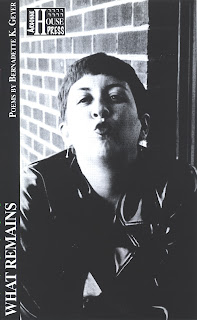
Check out Bernadette’s collection of poems, What Remains.


Want to find out what Bernadette’s writing space looks like? What music she listens to while she writes? Find out what she’s working on now, her obsessions, and much more. Check out the rest of my interview with Bernadette here.
Please feel free to comment on the 32 Poems blog and Savvy Verse & Wit.

***Here’s Bernadette’s recently published poem from 32 Poems, here, “Thumbelina’s Mother Speaks: To the Toad’s Mother.”

***Check out
The Bookword Game poll on Suey’s Blog***

Interview with Poet Stephen Alan Saft

I want to welcome Stephen Alan Saft to Savvy Verse & Wit. He was kind enough to answer some questions about his poetry and writing inspiration. If you’ve missed my review of his latest book, City Above the Sea, click on the title. Without further ado, here’s my interview with Stephen:

1. In your biography, it states that you have written essays, novels, plays, and poetry. Has any particular genre presented a challenge for you? How so?

All genres have presented a challenge for me at various times. Right now I am trying to write a sequel to my epic poem “Murdoch McLoon And His Windmill Boat” (also published in 2008) and have gotten bogged down in the storyline or plot of the new project. Such is the challenge to the poet who gets inspired to attempt to write narrative poetry. You don’t just worry about how you are going to say what it is you want to say at the moment. You worry about the sequence of events or plot of the piece, and you worry about the characters in the piece, their lives and motives.

2. Your poetry is varied from narrative to free verse and rhyming poetry. How challenging is it to write each of these forms? Do you go through spurts of writing one form or another?

Yes, I do. I am not inspired to write rhyming poetry at the moment, but that could change in the blinking of an eye. When I was writing rhyming poetry before, I was also into writing music using one of music composition software packages. Rhyming and music are strongly linked in my mind. I am debating with myself if I want to go through the effort of getting back into music and all that that entails. Recently I sang as part of a choir in a concert, and I must admit that that got me thinking about music again and how much I enjoy it.

3. What inspires you to write poems, and how long does it take to complete one poem to your satisfaction? How many revisions does it take?

I am driven by two very strong motives. One is to understand the human condition, which is to say where I stand in the continuum of discovery that should be basic to the way we live our lives and to share that understanding with others. I believe that if I am successful at sharing what I have discovered with others, we all gain in wisdom. My second motive—and I admit that the two motives are linked—is altruistic in nature. I am committed to doing good. I want to make the world a better place. This effort begins in the psyche. If we are clear headed, we have a chance to act in such a way to make the world a better place.

I have very high expectations for poetry and art including music and literature in general. Poetry at its best helps us attain clarity—both the writing and the reading. I would say that all the arts to some extent give us this capability.

Some poems are written very quickly, and I don’t do much revising. Other poems end up being long-term commitments. I’m coming back to them periodically and making changes here and there—even if it is just a case of changing one word.

4. Do you have any obsessions you would like to share?

I have many obsessions, but the one closest to my creative work is my obsession with perfection. I am a perfectionist to a fault, and I often give myself no peace because of it. Of late, I have learned to put my current work aside with the expectation of coming back to it later when I am starting to experience diminishing returns. Another issue I have been wrestling with throughout my life is fear of rejection. Of late I’ve gotten more relaxed about the problem of rejection. Earlier it was a major impediment for me and helps explain why so much of my work has been so slow to see the light of day, that is, publication.

5. Please describe your writing space and how it differs from your ideal writing space.

I compose on computer, but I also carry a pocket-size notebook. My poems often begin as images or ideas jotted down in the notebook, but they are always completed on computer. I believe that next to the achievement of writing itself the computer—and here I am referring to the specific achievement of word processing—is a reality that even surpasses the printing press. The concept of the Internet must also be understood as part and parcel of this phenomenon.

Given what I just said, you would expect to find a lot of computers in my house, and you would, but only two of the four are truly functional anymore. I am fortunate that we have a fairly roomy house in the country, and I can use a large part of the lower level for a work space. If I do get involved with music again, I’ll compose in this space as well.

I feel very fortunate to have so much space. Previously I lived in a small one-bedroom apartment in a high rise condominium in Arlington, Va. We had an impressive view from our balcony including some of downtown Washington DC, but what we didn’t have was much living space. Before that, we lived in a townhouse in Fairfax, and it was there that I composed the music for my rhyming poems.

6. Music seems to play a role in your poetry, either as an inspiration or accompaniment. What forms of music do you find most inspirational and could you name 5 favorite songs?

I love music, and my tastes are wide ranging. Recently I became a subscriber to the Sirius satellite music system. I thought that Sirius might bring me back to the classical genres, but instead I find that I’m spending far more time with their more pop-music channels, such as their 1940s channel than I would have ever guessed.

The great achievement of the music of the 1940s is that it is far more open ended, that is, less constricted, than the music of other, especially later eras. In the course of a 10 to 15 minute set one can hear a ballad by a great crooner like Bing Crosby or Fran Sinatra accompanied by a symphonic orchestra, then an energetic jazz arrangement of a Broadway show piece, perhaps played by Louie Armstrong or Duke Ellington or Count Bassie and friends, followed by a big band rendition from the likes of Glenn Miller or Artie Shaw or the Dorseys, followed by a funny, even silly presentation by something like the Spike Jones Orchestra. What variety! We have nothing like that anymore.

As for naming my five favorite songs, I couldn’t possibly do it. I’ve been immersed in far too many styles of music and loved too many compositions in each to do that.

7. How would you describe the role of poetry today compared to the Beat Generation of poets, who seem to have influenced your own writing? Do you believe the Beat Poets were more influential than the poets of today?

Yes, I do believe that the Beat poets were more influential than the poets of today, but I need to add that I do see a resurgence. Poetry comes and goes in popularity. and I do think that it is coming back. How much poetry comes back will be the result of the actions of two different groups—the writers of poetry and the readers of poetry. I hope I can be forgiven for sounding more than a little self serving, but I do think that the fact that writers of poetry are willing to tackle long forms like narrative poetry is one very healthy sign. Now will the readers of poetry including those who attend poetry performances be willing to support the longer forms? We will see.

I was recently able to purchase Seamus Heaney’s “Beowulf” at a local Walden Books store in Winston-Salem, North Carolina. I take that as a very good omen. Wow, you mean you can tell stories in poetry? Yes, you can! And those stories can be full of action, full adventure, full of emotion? Yes, they can! In fact, our oldest stories including the stories of the Bible and the epic sagas are poetic, that is, metrical in nature, and full of colorful imagery. Yes, yes, yes, poetry is coming back!

Now having said what I said, I need to quickly add that I still write short, lyrical, philosophical poems. I am not totally preoccupied with story telling through poetry. I still write the short stuff too.


8. Please describe your writing routine (i.e. do you get up early or are you a late night writer? Do you sit in your pjs or scribble on buses and in lines at the grocery store?)

I have done all of the above including scribbling on buses. Lately I have been able to use the key hours of the day, which for me are the hours after breakfast and before lunch, for writing. What a welcome change! Previously I had to sandwich my writing into days taken up with the demands of full-time jobs.

9. Many writers will use how-to manuals or writers’ workshops to garner experience. What have some of your writing experiences been like, and did you use these tools to help you? Were they effective? If so, which tools were most effective for you?

I have been a member of one writers group in my life. This was during my early years of residency in the Washington area, where I moved in 1978. Earlier, in college, I took one course with a favorite professor that provided an opportunity to share my writing with others. Both experiences were useful, but they could have been far more useful had I not been so sensitive about criticism and so sensitive about the idea of exposing my inner thoughts to others. I was terribly thin skinned during these periods of my life, and this hypersensitivity was to make me far less effective in getting my work out in the world than I should have been.

I would recommend both approaches—courses and writers groups–to people trying to get started as writers and trying to move their lives along as writers. If you have problems with hypersensitivity to criticism, as I did, you need to be working on that as a separate impediment to success. So what if so-and-so thinks something in a current work of yours could have been done better. Maybe so-and-so is right. Give some thought to the criticism and how you might alter your work accordingly.

If you think so-and-so’s problem is that he is just not in sync with your philosophy of how poetry should be written, then you’ve got to learn to walk away from his criticism. Summon up the courage in yourself to stick with your convictions—with your vision–and move on. To your own self be true.

10. What are your current writing projects or do you have any performances scheduled?

I am filled with ideas for future projects. For example, as I alluded earlier, I have begun work on a sequel to “Murdoch McLoon And His Windmill Boat,” my epic or mock epic story poem. The sequel also involves the use of technology to solve a problem facing us. Now I need a surge of energy to move the project forward. I also want to continue to write short poems, poems of self discovery. And I might even try fiction again. Never give up! Never quit! That is what I keep reminding myself.

I try to read my work as often as possible at the once-a-month Spoken Word gathering in Floyd, Virginia. Other opportunities for readings have been brought to my attention, and I hope to be able to participate in some of these events as well as soon as possible.

Thanks again, Stephen, for answering my questions. City Above the Sea is one volume of poetry that should be on everyone’s shelves.

Poet Eric Pankey Interview

I’ve been working on a interview project with Deborah at 32 Poems magazine, and she kindly allowed me to interview past contributors to the magazine. We will be posting the interviews throughout the coming months, and our second interview posted on Deborah’s Poetry Blog of 32 Poems on Feb. 5.

I’m going to provide you with a snippet from the interview, but if you want to read the entire interview, I’ll provide you a link for that as well.

For now, let me introduce to you 32 Poems contributor, Eric Pankey:

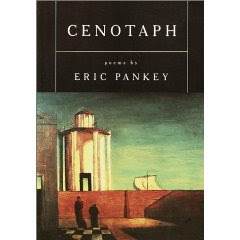
1. Not only are you a contributor to 32 Poems, you also have a published book, Cenotaph, and in an interview with Bold Type you mentioned you once wanted to be a visual artist. Would you ever consider melding the two forms–visual art and poetry? Also as a poet and professor, what “hat” do you find most difficult to wear and why?

I try to keep the poetry and visual arts separate. Each allows me a different kind of articulation, a different kind of vision.

This last year I had the good fortune to have visual artwork in several juried shows across the country. With the visual work I am just now, at almost fifty, moving out of the amateur realm and trying my hand at the professional realm. I am feeling the same thrill and excitement I felt half my life ago when my first book was accepted for publication.

I tend to be a social creature and the writing of poems happens most often in solitude. The work of teaching gives me community and conversation and that stimulation often leads me to long once again for the solitude of writing. And then the cycle repeats.

2. Poetry is often considered elitist or inaccessible by mainstream readers. Do poets have an obligation to dispel that myth and how do you think it could be accomplished?

I am not sure what a “mainstream reader” is.

I do not, for instance, read contemporary plays and really only read novels in the summer, but that is not because I find them elitist or inaccessible. I find it more pleasurable to read poetry, art history, and general nonfiction.

I think people read what they find pleasurable. Pleasure is one of the purposes of poetry.
Some people like the surface of the poetry they read to be complex, dense, and even hermetic. Some like a surface that is transparent, clear, uncluttered. Some like poetry that is laugh-out-loud funny. Some people like deeply brooding poetry. I think the variety of American poetry is great and that there is poetry out there for all sorts of tastes.

3. How do you stay fit and healthy as a writer?

Sometimes my dog will take me for a walk, but mostly I am out of shape.

About the Poet:

Eric Pankey was born on February 25, 1959 in Kansas City, Missouri, the son of James A. and Frances Pankey both of whom were accountants. In 1985 he married Jennifer Atkinson a writer whose papers are also in Special Collections. Pankey obtained degrees from the University of Missouri at Columbia, B.S., 1981 and the University of Iowa, M.F.A., 1983. He taught at Washington University from 1987 to 1996 and is now Professor of English at George Mason University in Washington, D.C. He was awarded the Walt Whitman Award from the Academy of American Poets in 1984 for his collection, For the New Year. Since then he has written other books including his collections, Heartwood: Poems (1988), The Late Romances: Poems (1997), Apocrypha: Poems (1991) and Cenotaph (2000). His work has been supported by fellowships from The Ingram Merrill Foundation, The National Endowment for the Arts, and The John Simon Guggenheim Memorial.

Want to find out what Eric’s writing space looks like? What music he listens to while he writes? Find out what he’s working on now, and much more. Check out the rest of my interview with Eric here. Please feel free to comment on the 32 Poems blog and Savvy Verse & Wit.

Also, check out this interview with Eric on How a Poem Happens.

Interview of Me by Monica of Monniblog

I was hopping through my Google Reader a few days ago and stumbled upon a fantastic idea, interviewing other bloggers as a meme. Monica’s questions–asked by Ruth— and answers can be found here.
I offered to be Monica’s guinea pig, and she sent me five questions to answer. So here is Monica’s interview with me.

1. Why did you call your blog “Savvy Verse & Wit”?

I toyed with a lot of different names for my blog. I wanted the blog name to signify its content, which I hoped would be writing, reading, and a bit of humor. I always loved verse as a poet and I love the word Savvy, so all that was left was Wit. It is really not that great of a story to tell. Kind of lame, right?!

2. You read and review a lot of books, but what was the first book you fell in love with as a kid?

The first book I fell in love with as a kid was The Cat in the Hat by Dr. Seuss, but it was a short time later that I fell in love with Shel Silverstein’s A Light in the Attic, Where the Sidewalk Ends, and The Giving Tree. Those were my favorite books as a kid, but I graduated from those on my own to Hamlet and King Lear on my own before I read them in school. It was a short time later that I discovered Jane Austen’s Pride and Prejudice and Emily Bronte’s Wuthering Heights.

3. If you could live anywhere in the world (money not an issue) where would it be and why?

This is a loaded question because there are a ton of places I would love to live. I think that I’m a bit of a nomad. There are three places I would love to live if I had the money. Number one on the list is Boston, downtown, in a penthouse apartment with my hubby and my fluffy Keeshond. Number two on that list is Terceira, Azores because that’s where some of my family lives, though I don’t speak Portuguese fluently. I think that would be something to remedy before moving there. Third on the list is somewhere in Ireland, probably somewhere rural. I just love the scenery of the Irish countryside and would love to soak that in. I guess I was only to pick one…never said I like to follow the rules.

4. Where do you see yourself in 10 years?

In 10 years, I haven’t got a clue. I would like to say that I would have a few published books of poetry, but one completed manuscript would be fantastic. I’d like to also think I would be in Boston, living there with the hubby and fluffy Keeshond. Perhaps one kid, but you never know what life brings. I try to live my life one moment at a time and make the most of it.

5. You have joined a lot of book challenges, and hosted too… what is it that interests you about reading challenges?

Reading challenges help me focus on areas that I want to read and keep me reading even when I really want to just sit and watch television, mindlessly. The worlds created by books are far more enriching and worth spending the time on. I love the feeling of accomplishment I get when I finally finish challenges. I’ve only joined 2 challenges, officially completing one of them. The second challenge I had to switch out some books to complete it on time. The WWII challenge is one of my favorites, and I am happy to cohost it with Anna at Diary of an Eccentric. I look forward to examining this time period in depth through nonfiction works and fiction works. I can’t wait to unveil the 2010 challenge; it’s another of my favorite time periods, and it was controversial and still may be.

For those of you who might want to be interviewed, here are the directions:

  • Leave me a comment saying, “Interview me.”
  • I will respond by emailing you five questions. (I get to pick the questions).
  • You will update your blog with the answers to the questions.
  • You will include this explanation and an offer to interview someone else in the same post.
  • When others comment asking to be interviewed, you will ask them five questions.


Writing Goal Week #4
:

I forgot to tell you that progress did not occur last week on the poem at all! I’m disappointed in myself once again, but perhaps this struggle to get back into the writing habit will spout new ideas.

Anyway, the goal remains the same this week to finish the poem I began.

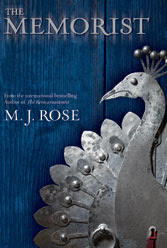
The Memorist by M.J. Rose

I received the The Memorist by M.J. Rose as part of a TLC Book Tour. Please stay tuned for my interview with M.J. Rose after my review.

The Memorist is the second in a series of books about reincarnation, lost memory tools, and the struggle of Meer Logan to find herself through her past. Her father had struggled to help Meer recall her past-life memories to the surface, but she found her life bearable only when she avoided the triggers that called those memories to the surface. Readers also will find the historical bits about the Nazis and their experiments undertaken in Vienna disturbing.

M.J. Rose’s narrative technique easily transports readers to Vienna, the home of Ludwig von Beethoven, and to Vienna in the past when Beethoven lived and taught in the city. She carefully weaves a suspenseful tale to find a lost memory tool once in the possession of Beethoven. Meer not only struggles with the surfacing memories, but with whom she should trust of her father’s friends and how deeply she should not only confide in them but lean on them when the memories flood her mind.

“Margaux’s lovely home was filled with cleaver and important people, fine food and charming music. It was all a patina. The threads that held the partygoers’ polite masks in place were fragile. Everyone in Vienna had an agenda and a plan for how the reapportionment of Europe would work best for them now that Napoleon was in exile. . . . So even here tonight, at what purported to be a totally social gathering, nothing was as it seemed.” (Page 226)

This paragraph illustrates the facades built up around her father, her long-time confidant Malachai, and her father’s sorrowful, new friend Sebastian. The face they present to one another does not represent reality; her father hides many things from her, just as she prepares speeches she believes he wants to hear. While this story is a thriller reminiscent of The Da Vinci Code, it is much more. It illuminates the relationship between Meer and her father and the secrets that lie beneath.

“‘Yes, behind the facades of these elegant buildings are ugly secrets and dirty shadows. . . .'” (Page 297)

Readers will enjoy the shifting perspectives from chapter to chapter and the subplot that lurks beneath the surface, which could change everything for the main characters and Vienna. Music, art, and mystery are the order of the day in The Memorist, and they are woven together beautifully.

“Lifting the plastic cover over the keys she put her fingers on the yellowed ivory and began. The piano had obviously been kept tuned and she was surprised at how differently this two-hundred-year-old instrument played from the ones she was used to. There was more power and feel to its sound, less control, less sustaining power and it seemed she could do more with its loudness and softness.” (Page 252)

Meer underestimates her abilities, and readers will love the evolution of her character. The only drawback in the novel for readers may be the repetition of several descriptive lines as Meer enters her past memories–“a metallic taste fills her mouth.” Aside from this minor annoyance, which quickly fades into the background after several chapters, this novel is action-packed, thrilling, and absorbing. M.J. Rose has done her research and created a believable world in which reincarnation is a viable theory that can be put into action through the recovery and use of various tools.

Check out The Memorist Reading Guide and an excerpt from the book.

Without further ado, here’s my interview with M.J. Rose:

1. When writing The Memorist did you listen to music? If you had to chose five songs that coordinated with The Memorist what would they be and why?

All of Beethoven’s symphonies because he is part of the book and the music of Doug Scofield because he wrote two songs for the book.


2.
Do you have any obsessions that you would like to share?


I love visiting museums, reading, walking our dog in any and all parks, and the ocean.


3.
Most writers will read inspirational/how-to manuals, take workshops, or belong to writing groups. Did you subscribe to any of these aids and if so which did you find most helpful? Please feel free to name any “writing” books you enjoyed most (i.e. Bird by Bird by Anne Lamott).


Definitely not Bird by Bird. 🙂 I might the only writer who couldn’t even finish that book. Not knocking it – just not my cup of tea. What helps me is keeping a journal of my character’s life, and reading and rereading great books that I’ve loved over the years, plus I read John Gardner’s The Art of Fiction once a year.

This is one area M.J. Rose and I disagree. Check out my review of The Art of Fiction.


4.
A great deal of writing advice suggests that amateur writers focus on what they know or read the genre you plan to write. Does this advice hold true for you? How so (i.e., what authors do you read)?

I read too many to mention – but I love Paul Auster and Steve Berry and Lisa Tucker and Alice Hoffman and Daniel Silva and Daphne Du Maurier and F. Scott Fitzgerald and Laurie King and Louis Bayard and on and on and on … and from that list you can see I don’t agree on reading in the genre you want to write exclusively at all. I don’t really believe in genres – I believe in good books – genres are what publishers do to books to figure out what to buy and where to put it in the store.

5. Do you have any favorite food or foods that you find keep you inspired? What are the ways in which you pump yourself up to keep writing and overcome writer’s block?


I think writers block comes from not knowing your character and writing too soon in the process. I don’t think you should just sit down and write every day. I think you need to get inside your story and the people who inhabit its world however you need to do that – for me it requires swimming a lot and a lot of long walks where I focus on the characters for hours a time.

Foods, no. I drink green tea while I’m working but I don’t nibble at the computer:) Just when I’m done.


6.
Please describe your writing space and how it would differ from your ideal writing space.


I have trained myself to write anywhere so my writing space is my laptop wherever it needs to be. And as long as my dog is nearby, it’s ideal.

About the Author (From her Website):

M.J. Rose, is the international bestselling author of 10 novels; Lip Service, In Fidelity, Flesh Tones, Sheet Music, Lying in Bed, The Halo Effect, The Delilah Complex, The Venus Fix, The Reincarnationist, and The Memorist.

Rose is also the co-author with Angela Adair Hoy of How to Publish and Promote Online, and with Doug Clegg of Buzz Your Book.

She is a founding member and board member of International Thriller Writers and the founder of the first marketing company for authors: AuthorBuzz.com. She runs two popular blogs; Buzz, Balls & Hype and Backstory.

Poet Andrea Hollander Budy Interview

I’ve been working on a interview project with Deborah at 32 Poems magazine, and she kindly allowed me to interview past contributors to the magazine. We will be posting the interviews throughout the coming months, and our first interview posted on Deborah’s Poetry Blog of 32 Poems on Jan. 21.

I’m going to provide you with a snippet from the interview, but if you want to read the entire interview, I’ll provide you a link for that as well.

For now, let me introduce to you 32 Poems contributor, Andrea Hollander Budy:

1. Not only are you a contributor to 32 Poems, but you also are a teacher and attend quite a number of conferences. What “hat” would you consider the most challenging to wear and why?

Yes, not only do I write, but guide others both as the Writer-in-Residence at Lyon College and, during the summers, at a variety of writers’ conferences. I also work one-on-one as a long-distance writing tutor (via the mail and telephone). But at all times I wear the same “hat,” because even when I teach others, I do so as a colleague who has enough experience with the craft of creating poems that I can provide insight into the process and help my students or tutees grow stronger as writers and revisers of their own work. Creating one’s own poems is indeed a continual challenge. But whether I am teaching others about this challenge or facing my own blank page, the important point is to enable myself and others to do the best work through continual devotion to doing the work in the first place.

2. Do you have any obsessions that you would like to share?

It’s the writing itself that reveals my deeper obsessions to me. If I am obsessed with anything, it’s with the process of writing itself, with the joy of making discoveries through writing, and with the pleasures of learning through reading the work of others, as well.

3. I noticed that much of your poetry has been categorized as conversational in tone. Do you believe that to be an accurate depiction. Why or why not? Has this always been the style you’ve used?

I have always tried to write as clearly as possible in language that is free of decoration. A poem is already by its nature a dense enterprise — relatively few words attempt to engage readers and provide a compelling experience — and while I don’t wish to write simplistic poems, I do want readers to easily enter a poem and to discover there something valuable not only the first time they read or hear it, but for them to want to enter the poem again and again and to be ushered more deeply into it each time.

About the Poet:

Born in Berlin, Germany, of American parents, raised in Colorado, Texas, New York, and New Jersey, and educated at Boston University and the University of Colorado, Andrea Hollander Budy is the author of three full-length poetry collections: Woman in the Painting, The Other Life, and House Without a Dreamer, which won the Nicholas Roerich Poetry Prize. Other honors include the D. H. Lawrence Fellowship, a Pushcart Prize for prose memoir, the Runes Poetry Award, two poetry fellowships the National Endowment for the Arts, and two from the Arkansas Arts Council. Most recently Budy received the 2008 Subiaco Award for Literary Merit for Excellence in the Writing and Teaching of Poetry.

Want to find out what Andrea’s writing space looks like? What music she listens to while she writes? How she stays fit? and much more? Check out the rest of my interview with Andrea here.

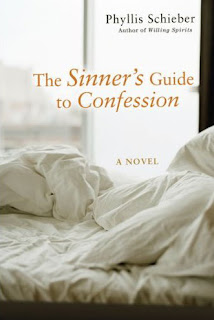
Interview with Phyllis Schieber, Author of The Sinner’s Guide to Confession

I want to welcome Phyllis Schieber, author of The Sinner’s Guide to Confession, to Savvy Verse & Wit. If you missed my review of her novel, check it out here. There’s also a chance to win her novel at the bottom of my review.

Without further ado, here’s my interview with Phyllis:

1. Most writers will read inspirational/how-to manuals, take workshops, or belong to writing groups. Did you subscribe to any of these aids and if so which did you find most helpful? Please feel free to name any “writing” books you enjoyed most (i.e. Bird by Bird by Anne Lamott).

I think writing groups are great. I studied writing with the late Hayes Jacobs at The New School for Social Research. In fact, I wrote Willing Spirits, my novel that will be re-released in paperback this coming March, in Hayes’s class. I took several writing classes with him and then applied to his seminar. I remained in that seminar for almost ten years.

I used Elizabeth Benedict’s The Joy of Writing Sex when I was working on The Sinner’s Guide to Confession. I’ve read many books about writing, such as Writing Fiction by R.V Cassill, Fiction Writer’s Handbook by Hallie and Whit Burnett, A Writer’s Life by Annie Dillard, On Writing by Eudora Welty, and I loved Bird by Bird by Anne Lamott.

These are some great books for writers to check out. Many of us have read Bird by Bird by Anne Lamott, but I would love to pick up some of these other fiction writing handbooks. Thanks for the recommendations, Phyllis.

2. A great deal of writing advice suggests that amateur writers focus on what they know or read the genre you plan to write. Does this advice hold true for you? How so (i.e. what authors do you read)?

I was an English major in college, so I’ve read all the classics, of course. I also have an M.A. in Literature, so I’ve covered a lot of ground. I love Carol Shields, Fay Weldon, Shirley Hazzard, Alison Lurie, Anne Tyler, Alice Hoffman, Dorothy Allison and Jane Smiley. I seem to be drawn to women writers. I have read and loved Richard Yates, the short stories of Gabriel Garcia Marquez and Yasunari Kawabata. I love different works for different reasons.

3. With Sinner’s Guide to Confession, did you have a playlist that you used while writing to keep you inspired? And if so, what are the top 5 songs on that list? If you don’t listen to music while writing, do you have any other routines or habits?

I do listen to music when I write, bit it’s typically classical. It doesn’t distract me. I can listen to the same CD all day. In fact, I can listen to it all week or all month. I just push replay. I like Bach and Mozart. But I also love the soundtrack to the movie Frida and the soundtrack to The Piano. I listen to Andrea Bocelli because his voice is so sweet. And sometimes I’m in the mood for Otmar Liebert, an amazing guitarist. I also listen to opera as well. My son is studying voice with the intent to be an opera singer, so I am trying to hone my taste and knowledge of opera.

I tend to have opera or classical music on when writing poetry. It seems to inspire me, though I prefer Dvorak. I do love Bocelli’s voice.

4. In terms of friendships, have your friendships changed since you began focusing on writing? Are there more writers among your friends or have your relationships remained the same?

I dedicated The Sinner’s Guide to Confession to “Everyone who asked.” It was sort of a jab at the people who never ask me about my writing and a tribute to those who do. I have a few friends who are writers, not many. Most of my friends are not writers. However, I have some really good friends who never ask about my work. That amazes me. I think it’s because they don’t know what to ask. They don’t understand that you ask about writing the same way you would ask about any job. “So, how’s your work going?” That’s all it takes. I’ve more or less trained my closest friends to ask me about my work the same way I would ask about their jobs. I think those relationships have grown. Two of the four people who read for me are not writers, and their insights and criticisms are extremely helpful.

I wonder if non-writer friends are afraid that writing is too personal to ask about or that they feel writing is just a hobby? An interesting question.

5. How do you stay fit and healthy as a writer?

I don’t. I try to, but I struggle. I am just getting back to yoga. I have a stationary bike that I do get up and use when I am writing for a long stretch. I’ll do ten minutes on the bike. I like to put my legs up against the wall periodically and stretch out. Yoga is the best exercise for me. I also take twenty minute naps at intervals. I just stretch out on the floor in my office, and I’m out. I love those naps.

6. Do you have any favorite foods or foods that you find keep you inspired? What are the ways in which you pump yourself up to keep writing and overcome writer’s block?

Perseverance is the only way to overcome writer’s block. If you wait for the muse to sit on your shoulder, you’re in trouble. I find that the more I write, the less I have writer’s block. Food doesn’t inspire me. I like to eat because it tastes good. I like coffee when I write and tea and soup, but only if it’s homemade. That’s easy to eat while I’m working. Otherwise, I’ll take a break and have something.

7. Please describe your writing space and how it would differ from your ideal writing space.

I’m happy with my writing space. We converted half the garage into an office for me. It’s quite nice with floor to ceiling built-in bookcases, lots of framed posters and photographs on the wall. I have an old armoire that I use as a storage unit. I have a nice big chair for reading, an old desk and a great Herman Miller chair. It’s a nice office, very comfortable. I have one window, but I usually keep the shade drawn because I am too easily distracted. In my other house, my office was in a space in a converted attic, really high up. I liked that a lot too.

Thanks to Phyllis for joining us. I wish her well with her latest novel and her future projects.

Breathing Out the Ghost by Kirk Curnutt

I received Kirk Curnutt‘s Breathing Out the Ghost for a TLC Book Tour. Kirk also graciously agreed to answer a few questions and giveaway 3 copies of his book to 3 lucky winners anywhere in the world! Stay tuned for the interview and giveaway details.

How would you react if you lost a child? What is the appropriate reaction for a parent who has lost a child? These are the questions tackled in Breathing Out the Ghost. Moving on after a child has disappeared or has been murdered is unimaginable, but life does move on; but how it moves on is up to the family impacted by these tragedies.

“From inside the cab of the combine, Pete watched the reels of the header bat down row after row of soybeans. As the stalks fell backwards, their stems snipped clean by a line of saw teeth on the header’s bottom cutter bar, the bean pods scratched against the metal of the machinery, making the sound of a whisking broom on carpet.” (page 244)

This passage signifies how both Sis and Pete Pruitt and Colin and Kimm St. Claire tackle their grief and pick up the remnants of their lives. The process of rebuilding is a series of fits and starts and restarts; it’s not pretty and it’s never complete. Like the stalks cut down in this passage, lives are halted and lives are skinned raw. While Sis and Pete continue with their lives as best as possible and become a source of selfless comfort for others hit by tragedy in their town, Kimm is left to her own devices when her husband Colin, who calls himself a modern Ahab of the highway, sets out on a journey to find their lost son, A.J. Both stories are separate and connected, but only begin to intersect when St. Claire finds Sis Pruitt at a local fair where she and her group, Parents of Murdered Children, share their photo quilt.

Curnutt doesn’t bob and weave around the anguish these families feel, but he does ensure that each member of these families expresses sorrow and loss in their own way. He’s masterful at creating believable characters, even complex players like Robert Heim, who chose to leave behind his family to save St. Claire from himself.

However, this novel is more than a look at loss, it gauges the inability of control over life and what we as individuals do with that realization. The inability to control life is most evident in St. Claire’s actions, but it peeks out from behind Sis’ veil of normalcy as well. When Sis works with her community members to provide food for volunteers searching for a lost boy, she loses herself in the kitchen conversation, almost fooling herself into believing she’s normal. It’s only when she expresses herself and her memories of her dead daughter, Patty, that she realizes normalcy is not hers.

Through masterful language and description, Curnutt paints a vivid Midwest landscape in which these characters languish in grief and yet flourish in it. From Michigan to Indiana, readers will picture the asphalt highway that becomes St. Claire’s home, office, and escape and the Pruitt’s farm that provides them with order in a town where they feel they have been branded by the murder of their daughter.

One of the best passages in this book is found on page 219, where St. Claire is recording his thoughts on cassette tape for his lost son:

“When I see myself I don’t see anything organic, anything original. I steal my aphorisms from outside sources. My actions pantomime the exploits of others. I’m all imitation, a gloss of a citation. Somewhere along the line I began compiling myself from the excerpts of better men.”

Many of these characters are looking for ways to fill the holes inside them left by loss. And this novel is not just about the loss of loved ones; it is a novel about losing oneself in that loss, allowing it to swallow you whole. The introduction of Sis’ grandmother, Ethel, who has dementia, is a nice addition to the cast. Not only has she experienced the loss of loved ones, but also her own memories and sense of self. However, she is less tortured by that loss, as she is not bound by time lines or turning points that she would like to have a chance to do over. Regret and a lack of control over life can sometimes be more powerful than actual loss. While there are some graphic details involving sexual predator Dickie-Bird, St. Claire’s mythical white whale, this novel is an insightful look at grief, family, and perseverance.

Here’s my short interview with Kirk regarding his writing and advice for amateur writers.
Click on his photo to check out his Website.

1. Writers tend to be drawn to a particular genre and style. What would you consider your style? What genre are you most drawn to when writing and when reading? How do the genres you are drawn to when reading and writing differ or are they the same?

I like to think of myself as a lyrical writer. I’m very much influenced by F. Scott Fitzgerald in terms of colors and textures. I also like the way he described emotions. A lot of his stuff is romantic in that it stops just short of sentimentality, and I find myself drawn to that border too. So I like writing with a density to it: Toni Morrison, for example. And Moby-Dick is a biggie for me. I love to get lost in “The Whiteness of the Whale” chapter. I’m not a big fan of stripped-down prose and simple sentences, despite the fact that in my other life I’m a Hemingway scholar. Hemingway is great for aspiring writer because you can learn a lot about how to write landscape.


Because I teach, I read a wide range of books, though mostly 19th and 20th century American novels. I suppose I’m drawn to sadder books these days, but only because I find the characters a bit more complex than in comedy. A lot of humor anymore is satirical, meaning the dramatis personae tend to be stereotypes of predictable behavior. This gets particularly irksome in gender comedies. One of my favorite contemporary writers is Thomas Sanchez, who did a great book about Key West called Mile Zero about twenty years ago. His writing tends to be over the top. I also like Andre DuBois II―you can tell he cares about his characters. I try to balance out the more literary stuff with crime books, too. I’m a huge noir fan, and I read all the Hard Case Crime paperbacks when they come out, though I enjoy some more than others. Noir is tricky to do because it’s so stylized―it can come off a little too jokey if the characters aren’t compelling.

2. Most writers will read inspirational/how-to manuals, take workshops, or belong to writing groups. Did you subscribe to any of these aids and if so which did you find most helpful? Please feel free to name any “writing” books you enjoyed most (i.e. Bird by Bird by Anne Lamott)


I think you can learn practical steps from manuals and workshops, but really, a lot of development depends upon being an honest observer of your own strengths and weaknesses. I took several writing workshops when I was in my twenties, but I didn’t particularly find them helpful because people were too competitive and there was a lot of posturing instead of work.


I have a small circle of fellow writers who share their work in progress, and it’s the best thing in the world because we’re mutually supportive. We can call each other on deficiencies without hurting each other’s feelings. I also tend to read a lot of literary criticism and narrative theory for ideas and techniques. I loved James Wood’s How Fiction Works, even though I disagree with a lot of his orthodoxies.


3. There is a great deal of poetic prose in your novel, Breathing Out the Ghost. Have you written poetry or have you considered it? Why or Why not?


No, I’ve never tried poetry, in part, I think, because I’m too attached to plot. I do love poetic prose, however, and I think a writer should test the limits of language. That’s part of the reason that I love folks like Melville, Fitzgerald, Faulkner, and Morrison, as different as they all are. I read and teach modernist poetry regularly―I love Hilda Doolittle, for example―and it’s taught me a lot about imagery and symbolism. What a dash of poetry can bring to the prose is simply greater sensuousness. So much of the world feels flat and simplified today; we’ve gotten a bit of a tin ear when it comes to metaphor. So the poetic part is just there to challenge myself to appreciate the richness we tend to overlook.


4. A great deal of writing advice suggests that amateur writers focus on what they know or read the genre you plan to write. Does this advice hold true for you? How so (i.e. what authors do you read)?


I think the “write what you know” dictum is the worst thing that ever happened to writing. It’s been bad for two reasons: it’s encouraged people to believe that personal experience is the only font of knowledge that’s worth exploring, and, as a result, it has discouraged people from learning new things. To me a far better philosophy would be, “If you want to write about something you don’t know, go out and learn it.” And the reality is that professional writers do this on a daily basis.


In my own case, I knew zilch about farming except for some embarrassing memories about how useless I was when I was a child and I would try to help my grandparents milk and harvest. I wanted to know the language of combines and hogs, however, so I went out and educated myself, both by visiting farms and reading books. I’m fortunate that I have a very tolerant uncle who entertains a lot of my stupid questions.


The other downside of only writing what you know is that writers tend to create characters that are only variations of themselves. As much as I love Hemingway and Fitzgerald, they and their generation are to blame for this tendency. At its most reductive, the idea gets boiled down to the notion that men can’t create convincing female characters and that women have the same problem with men. I think what actually happens is that sometimes we as writers don’t extend our characters the courtesy of empathy: we create them as foils whose behavior is the axe we want to grind.


Take the two spouses in Ghost, for example. It was very important to me that readers be able to identify with the dilemmas of both Pete Pruitt and Kim St. Claire as much as the narrative sympathies encourage them to care about Sis and Colin respectively. In essence, I wanted the audience to see the lack of generosity in my main characters’ resentments toward their families, because otherwise all I would have is an unemotional husband and an unfaithful wife. Motives are more complex. I guess the key word is empathy: I think challenging yourself to write about people who aren’t you is both artistically and ethically beneficial. It teaches you a bit of humility about your own opinions, and it allows you to feel for the things other people have suffered without pity or condescension.


5. If you were to create a playlist for your novel, what are the top five songs on that list?


This is a great question! I actually had a group of songs I would play as I was writing. Music is great inspiration because it’s such a different medium and it’s a productive challenge to try to translate its effect into words. The top songs would include:


a) “Yer Blues” by the Beatles. From The White Album, of course. I actually imagined Colin St. Claire listening to this song in the opening chapter, if only because I have memories of listening to it when I was in my very early teens. The Beatles may have been my first earphone album―you know, the kind of record that you end up spending heaps of time listening to in your own little world. Years later I read a quote from Eric Clapton talking about how hard it was for him to take this song seriously because it was so intense it seemed like a parody of the blues. I mean, the lyrics are way over the top: Yes I’m lonely / Wanna die.… etc. etc. Whatever John Lennon’s feelings for it were― and I don’t think he really cared for it―”Yer Blues” has always struck me as that kind of primal scream that’s as much about showing off one’s desperation as it is actually experiencing it. In that way, it seemed to capture for me the solipsism of Colin St. Claire’s quest for his lost son. Here is a version from the Rolling Stones’ Rock ‘n’ Roll Circus: http://www.youtube.com/watch?v=LAjdRHzH4M8


I just love the Beatles! I have to go out and find this song…perhaps the next time I’m at my parents. My dad has the White Album on LP!


b) “You R Loved” by Victoria Williams. This is a great bit of horn-tinged gospel that’s always embodied for me generosity and redemption. Victoria is often depicted as a sort of hippie kook, but there’s a deeply caring side to her music that makes me think of the word healing. I love the chorus: Jesus walked on the water / He turned the water into wine / He went down to the drunkards / To tell them everything is fine / You R loved, You R loved, You R loved. This is the song St. Claire’s daughter would sing to her father. http://www.youtube.com/watch?v=Go4D_sht00Y


c) “Little Bird” by the Beach Boys. Yes, the Beach Boys. I’m the world’s biggest BB nerd. There’s a real dark side to their late-60s music that only folks who can see past “Surfin’ U.S.A.” are aware of. This song, which appears on their extremely weird 1968 LP Friends, was the first song Dennis Wilson wrote. He later went on to make one of the best albums of the seventies, Pacific Ocean Blue. It would probably upset his fans to know this was the song I had in mind for the villain of Ghost, Dickie-Bird Johnson. “Little Bird” is often described as a gentle, child-like song, but to me it was always creepy. I mean, it was written while Dennis was hanging out with Charles Manson. It doesn’t get creepier than that. http://www.youtube.com/watch?v=1BLyXRPl1aE

I have to interject here that I would think that writing a song while hanging out with Charles Manson would indeed be very creepy!


d) “Every Grain of Sand” by Bob Dylan. Not really well-known, but a beautiful song about humility that appeared in the early eighties at the end of his Christian phrase. I snipped a couple of lines for dialogue here and there in the book. http://www.youtube.com/watch?v=lueCTMdAfrw


e) “If I Should Fall Behind” by Bruce Springsteen. To my thinking, a great love song for people who’ve been together long enough to be disappointed and yet forgiving. I played this over and over while I was writing the scenes between Sis and Pete. There are several versions of this song; it’s been recorded by everybody from Dion (doo-wop) to Linda Ronstadt (jazz). My favorite is the version Springsteen did with the E Street Band c. 2000. Each member of the group takes turns singing a verse, even Clarence Clemmons. It’s a really effective arrangement―way better than the 1992 original. Now everyone dreams of a love lasting and true / But you and I know what this world can do―that’s my favorite line. http://www.youtube.com/watch?v=qSAevK9__3k&feature=related


6. In terms of friendships, have your friendships changed since you began focusing on writing? Are there more writers among your friends or have your relationships remained the same?


I’m pretty good at compartmentalizing, so my friendships really haven’t changed in the years I’ve been trying to write seriously. I do have four or five really close friends who are in this game, but the majority of my friends have their own interests. Some are painters, some mechanics, some farmers, some Air Force lieutenants, some bartenders. I think it’s healthy to have a wide circle of folks who aren’t writers. You learn more by hanging out with people who aren’t like you because they know things you don’t. Friends are great sources of knowledge.

I also agree that having friends who aren’t writers is a benefit!


7. Please describe your writing space and how it would differ from your ideal writing space.


I have what’s called a “hidden room” in my house. It’s basically a half-attic that’s been converted into a spare bedroom. I use it for an office. I keep it pretty stark: a little computer table, bookshelves, and a table to hold my coffee cup. I’m usually up in it by five so I can write before work. For years I had a laptop and worked anywhere I could: sometimes at Panera’s or Barnes and Noble, sometimes in my room, sometimes in the car. What’s most important is that you keep up your schedule by being able to write wherever you’re at. Life is going to conspire to mess with your schedule, so you have to adapt.


Thanks so much for these questions! Thank you, Kirk, for graciously taking the time to answer my questions.

About the Author:

Kirk Curnutt is the author of eleven books of fiction and criticism, including the forthcoming thriller Dixie Noir (Fall 2009); Coffee with Hemingway (2007), an entry in Duncan Baird’s series of imaginary conversations with great historical figures: and the story collection, Baby, Let’s Make a Baby (2003).

Breathing Out the Ghost was named Best Fiction in the Indiana Center for the Book’s 2008 Best Books of Indiana Competition. It also won a bronze IPPY from the Independent Publishers Association and was a finalist for ForeWord Magazine’s Book of the Year Awards. Curnutt’s other awards include three consecutive Hackney Awards for short-story writing (2004-2006) and the gold medal in nonfiction in the 2008 William Faulkner-William Wisdom Creative Writing Competition sponsored by the Pirate’s Alley Faulkner Society.

A passionate devotee of all things F. Scott Fitzgerald, he is vice-president of the F. Scott Fitzgerald Society and a board member of the Scott and Zelda Fitzgerald Museum in Montgomery, Alabama.

Now for the giveaway information: (Don’t forget to leave me an email or working blog profile)

1. One entry for a comment left on this post regarding why you want to read Breathing out the Ghost.

2. A second entry if you blog about or mention this contest in your sidebar, don’t forget to come back here and leave me a link.

3. A third entry if you comment on a previous or subsequent tour stop and leave me a link to the post you commented on.

Deadline for entries is Jan. 17 at Midnight EST

Here are the other TLC Book Tour Stops:

Monday, January 5th: Diary of an Eccentric

Tuesday, January 6th: Ramya’s Bookshelf Review and Guest Post

Wednesday, January 7th: The Sleepy Reader and Guest Post

Thursday, January 8th: Crime Ne.ws, formerly Trenchcoat Chronicles

Monday, January 12th: Savvy Verse and Wit

Tuesday, January 13th: Educating Petunia

Wednesday, January 14th: Michele- Only One ‘L’

Thursday, January 15th: Book Nut

Friday, January 16th: Anniegirl1138

Monday, January 19th: Caribou’s Mom

Tuesday, January 20th: Lost in Lima, Ohio

Wednesday, January 21st: A Novel Menagerie

Monday, January 26th: Catootes

Wednesday, January 28th: Bloody Hell, it’s a Book Barrage!

Thursday, February 12th: She is Too Fond of Books