Quantcast

Girl in Translation by Jean Kwok

Jean Kwok‘s Girl in Translation is a coming of age story involving immigrant Kimberly Chang, who comes to America with her mother from Hong Kong and finds that the land of opportunity is what you make it.  Kimberly is a smart girl and was often praised by her teachers in Hong Kong, but when she and her mother were forced to come to America following the death of her father, she finds that school is harder for her.  Facing a number of obstacles to her successful education from the language and cultural barriers to misplaced accusations of cheating and teacher bias, Kimberly must work ten times as hard as her fellow students.  But her hardships do not end with her new school, she and her mother also must repay Aunt Paula and her family for bringing them to America by working diligently in a clothing factory.

“A sheet of ice lay over the concrete, I watched my rubber boots closely, the way the toes slid on the ice, the way the heels splintered it.  Ice was something I had only known in the form of small pieces in red bean drinks.  This ice was wild ice, ice that defied streets and buildings.”  (page 5 of ARC)

Told from Kimberly’s point of view as she looks on her past, readers retrace her steps as a young girl finding her way into adolescence.  She has many of the same challenges of her American counterparts, but as she matures, finds boys attractive, and searches for peer approval, she must overcome her “foreign-ness,” cultural norms she’s grown up with on how to act ladylike, and her self-imposed separateness.

“Even now, my predominant memory of that phase of my life is of the cold.  Cold like the way your skin feels after you’ve been slapped, such painful tingling that you can hardly tell if it’s hot or cold.  It simply registers as suffering.  Cold that crept down your throat, under your toes and between your fingers, wrapped itself around your lungs and your heart. ”  (page 44 of ARC)

Kwok’s prose is full of imagery, emotion, and passion that weaves a vivid tale of poor Chinese immigrants in New York, who face a number of financial hardships — even at the hands of their family.  As depressing as their situation becomes, there are lighter moments when Kimberly remembers the joy her mother felt playing music and the awkward moments of bra shopping when her mother does not speak English and she barely speaks it.

Unlike other Asian-American stories, including those from Amy Tan, Kwok relies less on the mystical beliefs and traditions of Chinese culture and the clash between mother and daughter and more upon the love between mother and daughter and a daughter’s determination to improve their situation to craft a memorable story of growing up.  In spite of those obstacles, Kimberly maintains a sense of self.  One element that readers will enjoy is the use of skirts to quantify the Chang family’s purchases of new shoes or gum, which emphasizes the youth of the narrator.

“There’s a Chinese saying that the fates are winds that blow through our lives from every angle, urging us along the paths of time.  Those who are strong-willed may fight the storm and possibly choose their own road, while the weak must go where they are blown.  I say I have not been so much pushed by winds as pulled forward by the force of my decisions.”  (page 1 of ARC)

Overall, Girl in Translation provides a look at the life of a poor immigrant and her family and the determination that it takes to adapt and mature enough to create their own future.  Readers will become absorbed by the Chang’s plight and cheer them on as they make headway against the forces working against them.  Kwok’s novel could generate hours of discussion for book clubs as it demonstrates cultural differences, the harsh realities and bravery required to emigrate to another country, and the consequences and regret that sometimes accompany the hardest decisions we can make in our daily lives.

***If you missed yesterday’s guest post from Jean Kwok, please check it out here.
 

This is my 16th book for the 2011 New Authors Reading Challenge.


This is my 7th book for the 2011 Wish I’d Read That Challenge.

The Map of True Places by Brunonia Barry

Brunonia Barry‘s (check out her writing space) The Map of True Places (out on March 22 in paperback) is set in New England — Boston and Salem with a touch of Irish charm — much like her first book The Lace Reader (my review).  Zee Finch is a psycotherapist working for the prestigious practice of Dr. Liz Mattei and with patients who have bi-polar disorder.  Her patients’ symptoms remind her of her deceased mother in many ways, but Lilly Braedon, her problems, and her suicide take center stage for Zee.

“She carefully placed the bottle into the trash compactor, then flipped the switch, waiting for the pop and the smash.  The bag was almost full, so she removed it and took it out to the deck, walking all the way back down the stairs in her bare feet, placing the compacted bottle into the bottom of the garbage bin, not with the recyclables, as she would have preferred, but with the regular trash, so that there would be no evidence of the bottle.”  (page 21-2, hardcover)

Like the puzzle of the underground tunnels in The Lace Reader and the patterns in the lace, The Map of True Places presents a series of puzzles, mazes, and other patterns to follow as Zee struggles to put the pieces of her past back together so that she can deal with them one-on-one rather than burying them deep inside.  Unlike her professional persona that helps her patients discuss their internal turmoil and family problems, Zee continues to struggle with the death of her mother and the emotional absence of her father throughout her adolescence.  The broken wine bottle is just one significant image in Barry’s book in that it signifies how Zee deals with her problems and hides from confrontation as much as possible.

Barry’s prose is complex, full of imagery, and engaging.  She easily weaves her puzzles, leading readers through the narrative without revealing too much before it needs to be.  Zee is a broken character who tries to put a good face on her life even when she is not as sure about her choices as she should be.  Zee not only needs to deal with her past, but also determine if her present and future will include her fiance Michael, one of the state’s most eligible bachelors.  Overall, The Map of True Places is an engaging novel that navigates the past, present, and future simultaneously as Zee examines herself and her choices searching for her true path.

This is my 6th book for the 2011 Wish I’d Read That Challenge.

The Rorschach Factory by Valerie Fox

The Rorschach Factory by Valerie Fox is a collection of poems that are left up to the interpretation of the reader in many cases.  Much like the inkblot test, these poems provide snippets of color, image, and story to provide an outline for readers, and those readers are then tasked with filling in the blanks and interpreting what is there.  Some poems seem to carry a personal history in many of the lines, while others are whimsical in their interpretations of pop culture and real-life relationships.

From “This Is Not My Cousin” (page 9):
This is not the sensational human
condition.  God is not in the picture
just me and trees and my cousin’s shadow.
We like how I am standing on the high place
a smiling paperdoll propped up on the edge
about to step back, waving to Columbus.

From “You’re No Axl Rose” (page 43):

You’re no Axl Rose but your sentences are
as complex as your hair, in an unintended,
wiry, I will live forever way, the way Axl
swings his hips and smokes just enough
to achieve his pristine scratchy scream.
You’re no James Dean but when you can afford
to drive a Porsche I’ll let you drive me
to the Acme to buy aspirin or milk.

Fox’s writing style leaves room for the imagination of the reader so that each new audience can take their own journey.  In other poems, there is a clear tone that shines through the lines, like in “The Temple” (page 37) where the narrator talks about her time with a poet who thought of himself as upper class, but of her as much lower.  The poet was slumming it with the narrator, but you can tell from turns of certain phrases that this view was not accurate:  “He’s my essay.//Soon enough/he ran out of money./I’m a poet, and I’d squirreled a bit of currency away./This became my motto-//’I got mine.'” (page 38)

Broken down into four sections — Out of Time, The One Who Leaves You, Accomplice, and Unrest — the narrator has set up a collection of poems that would appear to be drenched in despair and regret, but readers will be surprised by the not only whimsical poems but also the humor with which she highlights pop culture and elements of the ridiculous in intimate relationships.  Overall, The Rorschach Factory by Valerie Fox is a collection that you can read in one sitting, piecemeal, and revisit over and over, finding nuances to each poem that may not have been as prominent upon first reading.

About the Poet:

Dr. Fox’s most recent book is Bundles of Letters, Including A, V and Epsilon (Texture Press), written with Arlene Ang. Previous books of poems are The Rorschach Factory (Straw Gate Books) and Amnesia, or, Ideas for Movies (Texture Press). Her work has appeared in many magazines, including Hanging Loose, The World, Feminist Studies, Siren, Phoebe, Watershed, sonaweb, and West Branch.

She was a founding co-editor of 6ix magazine (1990-2000), and currently edits Press 1, a journal featuring poetry, short fiction, opinion, and photography.  Very involved in collaborative writing, she and Arlene Ang have collaborated in the writing of poetry and fiction, publishing in magazines such as Admit 2, Origami Condom, Per Contra and Qarrtsiluni.  At Drexel, Dr. Fox teaches Freshman Writing, Creative Writing (poetry), and Readings in Poetry. She’s particularly interested in experimental poetics and online teaching/e-learning.

About the Indie/Small Press:

Straw Gate Books published Valerie Fox’s The Rorschach Factory and was founded in 2005 by poet and co-founding editor of 6ix magazine (1990-2000) Phyllis Wat in Philadelphia, Pa.  Here’s a snippet of their mission:

“We are particularly interested in works by women and non-polemical writing with an underlying social content. We also feature new authors and authors whose work is underserved.”

This is my 3rd book for the Fearless Poetry Exploration Reading Challenge.


This is my 9th book for the 2011 New Authors Reading Challenge.


Here’s a confession, I’ve had this book for a couple of years, and I believe it came from the author or her good friend Arlene Ang.  I’m just now getting around to it.  This is my 5th book for the 2011 Wish I’d Read That Challenge.
Jarrettsville by Cornelia Nixon

Jarrettsville by Cornelia Nixon begins in 1869, four years after the Confederate surrender and the assassination of President Abraham Lincoln, in Jarrettsville, Md., just below the Mason-Dixon line.  Tensions continue to run high in this town with former Confederate and Union soldiers continue to hold their prejudices and wear them on their faces and express them in their venomous words.

With tensions running high, the only possible outcome for a young love between Martha Jane Cairnes, the daughter of a Southern and loyal Confederate family, and Nick McComas, a former Union soldier and advocate of Black rights, is heartache and murder.

Nixon rips pages from events in her family history to create a novel that breaths life into the tensions following the U.S. Civil War.  Despite the reunification of our nation, both sides are unwilling to let go and reconcile.

“‘We’ve got to get the Black Code back, by God.  Negroes roaming around free, reeling drunk, menacing descent women? We can’t have that here!’

‘And the women are worse than the fellows.  They’re degenerates, full of disease, corrupting our youth.  Even the little girls, I swear.’

‘That’s right, Negro girls can’t help themselves.  They’re overheated by nature, worse than the fellows, I swear.'”  (page 106 of ARC)

Martha is a strong-willed woman who sets her sights on what she wants and goes after it, while Nick is more deliberate and cautious in his approach to decisions.  However, when love takes them over, passions get out of control, leading them into compromising situations.  Then the rumors begin among the former Confederates about Nick and Martha, equally untrue and equally damaging to their reputations.  Unfortunately, these rumors are what slices and dices their relationship, particularly since it is so new and untested and both sides are tragically unable to confide in one another with the depth that friends would do.

The novel is broken into four parts, plus an epilogue, and those readers looking for integrated points of view throughout the story will find Nixon took a different approach, instead breaking up the narrative into parts dominated by one point of view or by several witness’ points of views in the final section.  The format is a bit disconcerting when the first sections end in the same place, but are told from different points of view.  However, although the events are similar, there are moments where more is revealed by one point of view than another, which helps explain more of the characters’ motivations.  Although not an ideal format for this historical fiction novel, it is easy to understand Nixon’s decision for choosing it.

Overall, Jarrettsville by Cornelia Nixon provides an inside look at the tensions that still plagued the south following the resolution of the civil war and how it tore apart families, friends, and neighbors.  Additionally, it depicts the struggles that the families in the south faced in light of scarce resources and finances.  Nixon is a talented writer who can deftly translate a portion of her ancestral history into a compelling tale of fiction.

About the Author:

Cornelia Nixon is the author of two novels, Now You See It and Angels Go Naked, as well as a study of D. H. Lawrence. She won first prize in the 1995 O. Henry Awards. She teaches in the M.F.A. program at Mills College, near San Francisco.

I hope you enjoyed this latest Literary Road Trip in Jarrettsville, Md., following the U.S. Civil War and assassination of President Abraham Lincoln.

This is my 1st book for the U.S. Civil War Reading Challenge 2011.

This is my 6th book for the 2011 New Authors Reading Challenge.

Confession time, I’ve wanted to read this book since I picked up an ARC at the 2009 Book Expo America.  This is my 4th book for the 2011 Wish I’d Read That Challenge.

Open Slowly by Dayle Furlong

Open Slowly by Dayle Furlong begins with poems steeped in Spring imagery and the unfolding blossoms of that season.  For instance, “She Seeks Beauty” is like a flower beginning as a bulb, growing, and releasing the beauty of its petals like a surprise ending.

She Seeks Beauty (page 11)

She seeks beauty everywhere
foraging for flowers in fog
as the metallic din of machinery bordering
the park clangs and disturbs — she dislikes
comments we make about the weight of bulbs
all they have to do is sit, look pretty, and breathe
in truth, they’re fibrous, sturdy, necessary for life.

She’s culpable as any, flesh covers bone
like a clenched fist
taut in sections, ample in others
the weight of water and salt,
breath noxious

she tells us flowers deceive like a woman
warns us to watch out for the men hiding behind them

they cast shadows on sun
etch their place
on earth, bodies pyramids
of accomplishment.

While we sit pretty and still, necessary.

However, there seems to be a sinister undercurrent or a blatant dark side that emerges in some of these poems, illuminating the truth that nature is not all beauty and peace, but also darkness and violence.  Furlong’s lines are not abstract mysteries, but the poems as a whole reveal a mystery or hidden truth that causes readers to rethink their initial impressions at the beginning of the poems.  In a way many of these poems discuss the impermanence of memory and the past, those people, places, and events that we think we will always remember, but that grow fuzzier with time and blur into nothingness.

From Lazy Eye (page 30)

like the faces I meet in the street —
the people in my life
mere puddles waiting to evaporate
right before my eyes.

There are three sections to Open Slowly:  Impossible Permanence; Tonic & Brevity; and Litany of Desire.  While the first section deals with the impermanence of memory and people and events, the second section wallows in that impermanence, dunking the reader fully into memories that are previous and filled with not only joy and passion, but regret.  Readers will note a reluctance in the narrator to leave the past behind and jump into the present.  It continues with the theme of opening blossoms in spring, clinging to the protection of the bulb but eager to emerge.

From Hooks (page 45)

Little fish on hooks
gulp and cry
worms will die
but you keep me dancing
on a line
not hanging exactly
but hoping for their return.

Protection melts away and the darkness emerges, taking hold of the reader and drawing blood and fear from within. Furlong’s nature images serve not only the light but the dark in these poems, easily turning poems upside down and inside out.  In the final section, there is a violence in the passion between the narrator and the men and the narrator and children, but not violence in the sense of harm, but in terms of emotion.  A passion rampant and uncontrollable.

Open Slowly by Dayle Furlong is a mesmerizing collection of poems that search for the beauty in everything, but does not always find it.  Rather than dwell on the darkness in nature — human nature — each poem pushes beyond those moments to seek out the light and the beauty that can come from it or in spite of it.

Copyright Liz Martin

About the Poet:

Dayle Furlong studied English Literature & Fine Arts at York University. Her poetry & fiction has appeared in Kiss Machine, The Puritan, Word & The Voice. She works as a literary publicist and has worked as a screenwriter’s assistant for the Showcase television series Slings & Arrows. Her debut collection of poetry, Open Slowly was published by Tightrope Books in spring 2008.  Check out her interview with Rob McLennan.

This is my 3rd book for the 2011 Wish I’d Read That Challenge.


This is my 5th book for the 2011 New Authors Reading Challenge.

This is also my 2nd book for the 2011 Fearless Poetry Exploration Reading Challenge.

Lady Susan by Jane Austen

Lady Susan by Jane Austen is a short novel written in the form of letters until the conclusion where the author takes over.  Lady Susan is the widow of Mr. Vernon’s brother, and she has a daughter named, Frederica, whom Lady Susan believes needs more schooling and is better off in the care of others.  Lady Susan has a rather sultry reputation in society as a woman who flirts relentlessly and may even take it too far for polite society.

“She is really excessively pretty.  However you may choose to question the allurements of a lady no longer young, I must for my own part declare that I have seldom seen so lovely a woman as Lady Susan.”  (page 49)

What is truth and what is fiction about Lady Susan is tough to discern as each character’s opinion of her becomes more fluid, changing as new situations and information come to light.  She comes to live with her brother-in-law and his wife, Catherine, whom she tried to prevent from marrying her husband’s brother.  Once in Churchill, she meets Catherine’s brother Reginald, who already has a negative opinion of her, and she takes on the challenge of changing his mind, though to outsiders it looks as though she is flirting and making romantic inroads with him.  Enter Frederica, and her “lover” Sir James Martin.  The stage is set for great drama and entanglements.

“Her behavior to him, independent of her general character, has been so inexcusably artful and ungenerous since out marriage was first in agitation, that no one less amiable and mild than himself could have overlooked it at all; and though as his brother’s widow and in narrow circumstances it was proper to render her pecuniary assistance, I cannot help thinking his pressing invitation to her to visit us at Churchill perfectly unnecessary.”  (page 46)

Unlike Austen’s other novels and unfinished pieces, Lady Susan is not the typical heroine because she lives on the outskirts of society and enjoys herself in many ways.  She’s conniving in her machinations to find a match for her daughter, convince others of her propriety and social graces, and rightness of her decisions.  She is not a character that many readers will like or even come to like, but Austen seems to be using her negative personality traits to illustrate the machinations that are often done behind the scenes in Regency society as mothers seek husbands for their daughters and widows seeks to find another husband at an advanced age.

Overall, Lady Susan is an ambitious short novel that attempts to tackle society from a different angle.  Rather than place the young ladies eligible for husbands at the center of a (sort-of) conceit in which Lady Susan is the opposite of well-mannered society women and the men in her life are not in control of the situation nor their emotions.  Austen has tackled another difficult aspect of Regency society.

***I’ve wanted to read this novel since Anna embarked on her journey to read all of Austen’s works.***

This is my 2nd book for the 2011 Wish I’d Read That Challenge.
Interested in my other reviews of Austen’s unfinished novels, check out The Watsons and Sanditon.

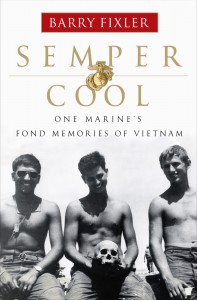
Semper Cool by Barry Fixler

Semper Cool by Barry Fixler is a memoir of one marine’s time before, during, and after the Vietnam War.  Fixler’s writing style is accessible for all readers, though some who have read a number of military books may find themselves skipping over definitions of terms they already know, which are defined for less experienced military readers.  Through clear sentence structure, fast-paced flashbacks, and frankness about boot camp and other aspects of a marine’s training, readers get a feel for the grit these men must have to survive boot camp and beyond.

“If you were alive, that meant your unit was in one of the less dangerous places in Vietnam.  If you were a basket case, your unit was in a pretty bad place.  If you were dead, that meant you were headed straight into the deep shit.  Your unit was in the middle of the worst of the worst combat.”  (page 80 of ARC)

Fixler became obsessed with the U.S. Marines after hearing crazy stories from his father, a WWII veteran who survived the bombing of Pearl Harbor, about the rigorous training marines endured even during war and the antics they engaged in.  These stories, plus his father’s patriotism helped fuel Fixler’s desire to enter the military to find direction and discipline shortly after graduating high school.  At age 19, Fixler was a “green” marine with no combat experience, and men who were considered seasoned were generally in their early- to mid-20s.

Readers are taken on a journey through Fixler’s latter adolescent years, the trouble he caused with his friends, and the decision to enter the military, which he kept from his parents until the day before he shipped off to boot camp.  Once in boot camp, readers learn first hand what it means to become a marine in the physical and mental sense, and this foundation is what carries Fixler, a survivor of the 77-day siege of Khe Sanh or Hill 861-A, through his time in Vietnam.  When the subtitle suggest fond memories from Vietnam, the author is serious about the relationships he forged, the discipline he learned, the mental toughness he created for himself, and the achievements he made while in country.

“Minutes before, we were talking about home, watching through binoculars,’ Mike said years later, ‘and the mortars started coming in and he was completely disintegrated, no head at all.'”  (page 173)

However, readers should be prepared for blood, guts, horror, and disappointments, but those are tempered with moments of incredible luck — even what some would call miracles — and hilarity.  There are odd moments in which Fixler seems to remind himself of a moment before the war, and the narration sometimes takes a turn that is unexpected and outside the scope of the war and his military life.  While initially, these moments can jolt the reader out of the narrative flow, they help to give readers a fuller picture of Fixler’s character.

Semper Cool is a well-balanced war memoir that illustrates the good and the bad that comes with war and returning home.  Fixler’s story deviates from the typical memoir or war novel in which the atmosphere is constantly grim and dire or the protagonist is spiraling out of control mentally.  The main takeaways from this memoir are believe in yourself, remain focused, and achieve success in all you set out to do.

***It is great knowing that proceeds from the sale of this book will be shared with those military personnel in need of medical assistance that the government has either forgotten, run out of money to care for, or does not know have fallen through the cracks.***

About the Author:

After graduating from Syosset High School in Long Island, New York, Barry Fixler enlisted in the U.S. Marine Corp and was shipped off to Vietnam where he fought as a member of Echo Company at the legendary Siege of Khe Sanh. He is now a jeweler living in Bardonia, New York, with his wife Linda.

Please check out the Semper Cool Website.

Yes, the Vietnam War Reading Challenge ended in 2010, but I wish I had read Semper Cool by Barry Fixler then.  Thankfully, it qualifies for this year’s Wish I’d Read that Challenge and the New Authors Reading Challenge.

This is my 4th book for the 2011 New Authors Reading Challenge.

This is my 1st book for the 2011 Wish I’d Read That Challenge.

My 2011 Reading Challenges

With the baby coming in the new year, I’m going light on the reading challenges, though I do still have the perpetual Reagan Arthur Challenge, which will carry into the new year and beyond until I quit.

Let’s start off with the challenge I will host in 2011 and the one I co-host every year with Anna at Diary of an Eccentric.

I’ll be reading about 5-10 poetry books, one of which will be for the group read-a-long and discussion, for my Fearless Poetry Exploration Reading Challenge.  The challenge officially requires participants to only read 1 book and just give poetry a chance in 2011.  I’m hoping a lot more of you that don’t read poetry will sign up to try just one book.  The challenge runs from January through December 2011.  Check out the details here.

War Through the Generations, a blog dedicated to war-related reading challenges, is hosting a U.S. Civil War reading challenge in the new year.  For this one, I’m going light with 3-5 books (or up to 2 movies).  I could end up reading more books, but I don’t want to over-commit myself.  The challenge runs through January through December 2011.  I hope many of you will join us for this challenge.

I really enjoyed this challenge this year, and I’m signing up to do it again in 2011.  While I did increase my goal to 50 new-to-me authors this year, in 2011, I will be sticking with the 25 new authors limit.  I read way more than 50 new-to-me authors this year, reaching 62.

These new authors don’t have to be debut authors, and the challenge runs from January through December 2011.  Check it out.

I’ll be signing up for the Wish I’d Read That Challenge 2011 at the curious level, with 3 books.  I could end up reading more than that.  One book I’ll plan on reading is Persuasion by Jane Austen and perhaps the Stieg Larsson series.  The challenge runs from January through December 2011.

I also enjoyed the Ireland Reading Challenge this year, and I am signing up to read for it again.  Carrie has a great list of suggested books and authors.  The challenge runs from January through November 30, 2011.  I’ll be signing up for the Shamrock level again with 2 books, and I plan on participating in the read-a-long.

Finally, I’m signing up for the Nordic Reading Challenge 2011, which runs from January through December 2011.  I’ll be reading for the Freya level of 3-5 books, with the intention of reading the Stieg Larsson series. I’ve meant to read these books for a long time.

That’s it for now.  How many have you signed up for?

***As of Jan. 6, 2011***

Ok, I broke down and signed up for a more informal challenge because I failed the Sookie Stackhouse Reading challenge last year, and this one gives me a chance to redeem myself.

Dar at Peeking Between the Pages is hosting her own 2011 Sookie Stackhouse Reading Challenge, and I’ve decided to throw in too.

I’ll be reading the remaining books in the series that I failed to read in 2010.

I hope you’ll join us.